Article

Climate Effects on Phenology of Two Deciduous Forest Species Across Southern Europe

1
Department of Agricultural Crop Production and Rural Environment, University of Thessaly, Fytokou Str., 384 46 Volos, Greece
2
NEO Patron Athinon 202, 264 43 Patra, Greece
*
Author to whom correspondence should be addressed.
Forests 2025, 16(4), 608; https://doi.org/10.3390/f16040608
Submission received: 13 February 2025 / Revised: 26 March 2025 / Accepted: 28 March 2025 / Published: 30 March 2025
(This article belongs to the Section Forest Meteorology and Climate Change)

Abstract

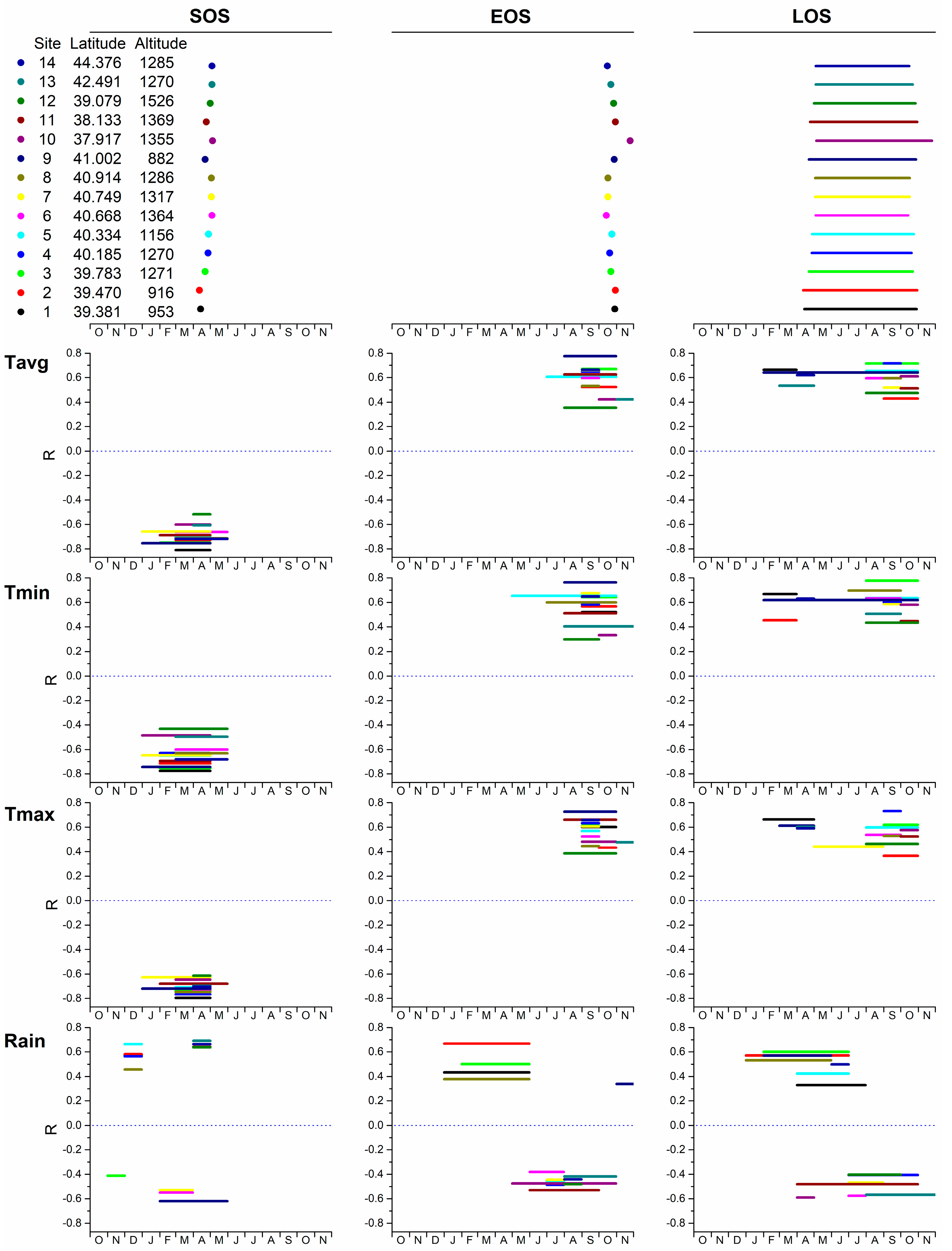
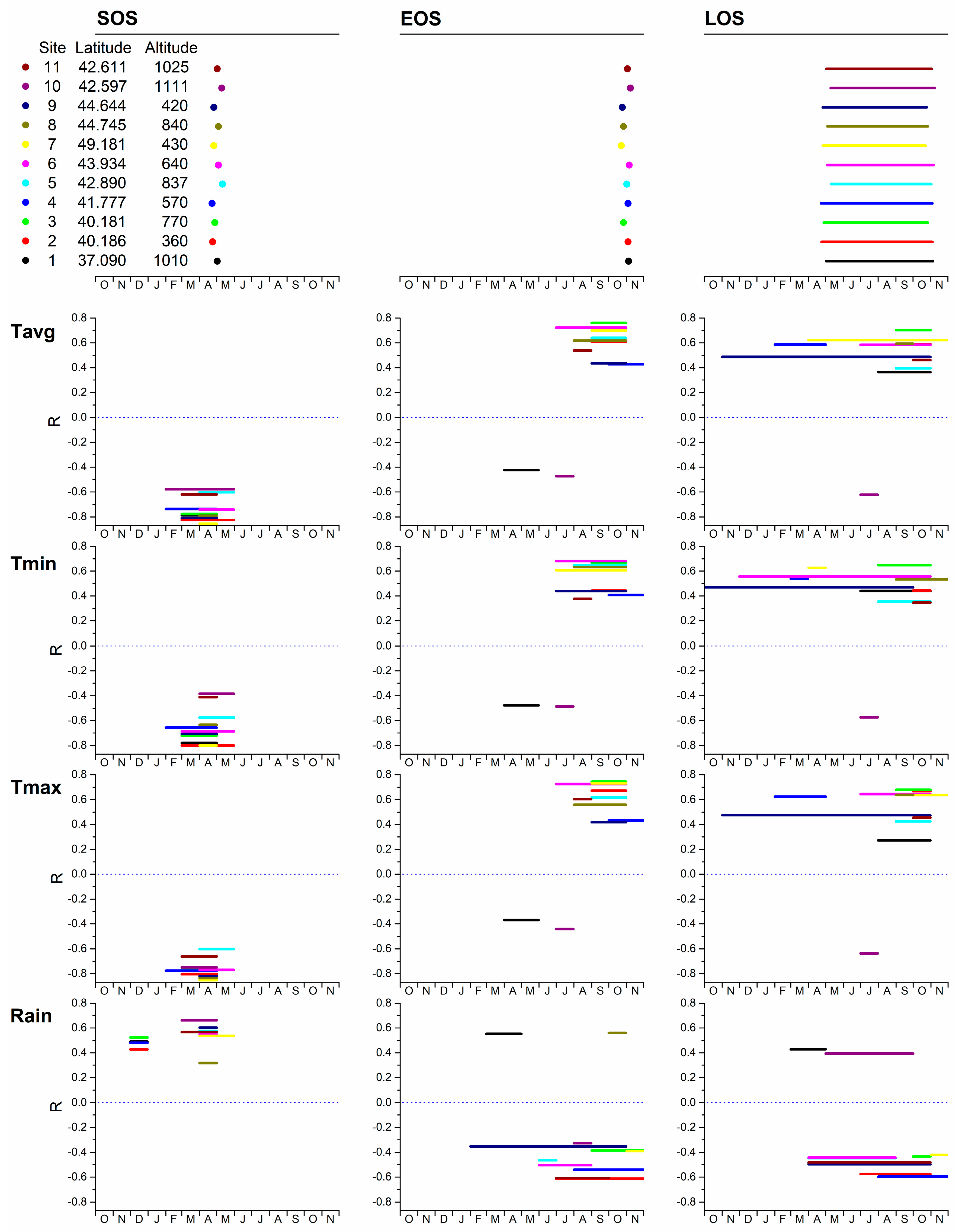
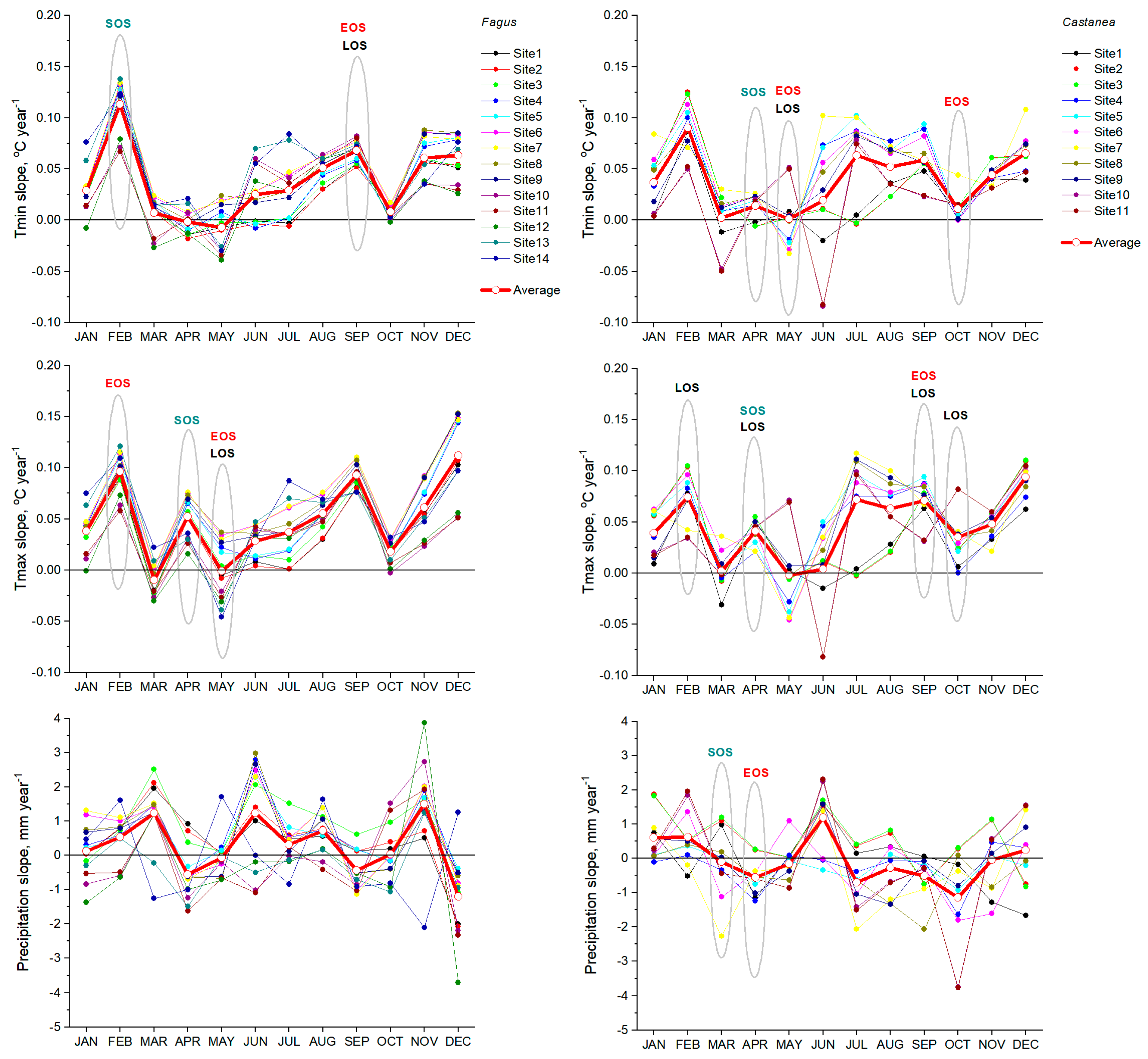
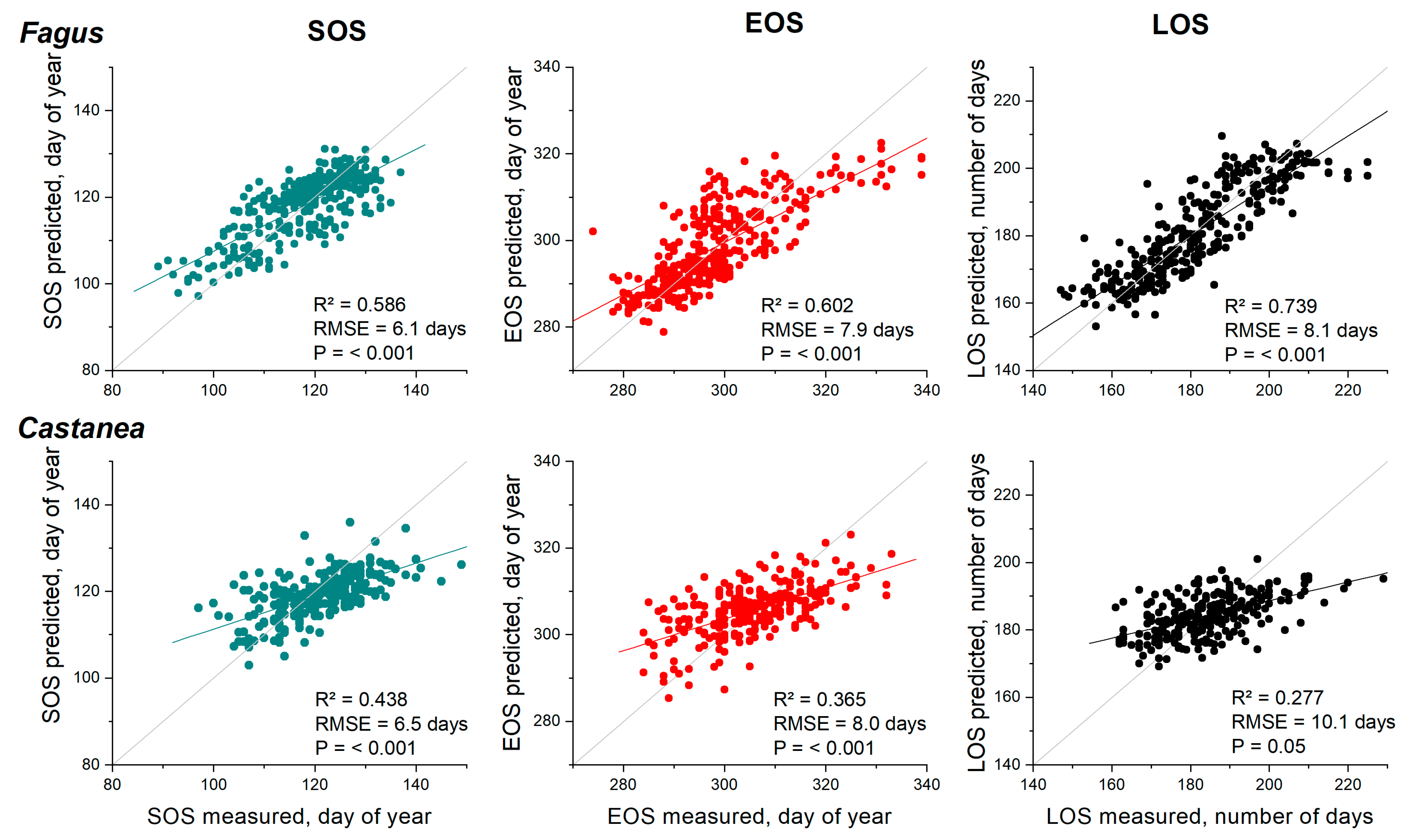
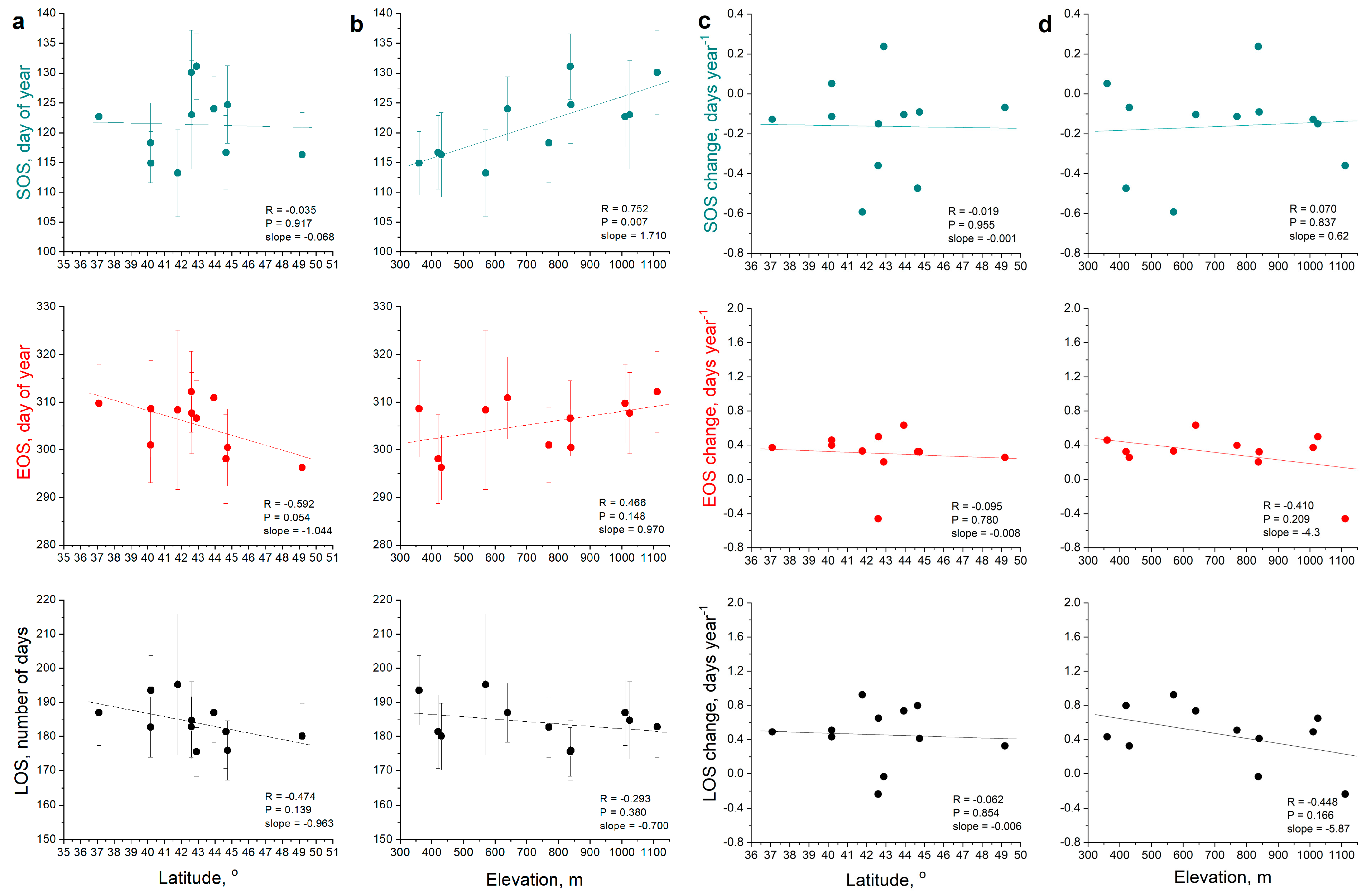
Monitoring vegetation phenology is crucial for understanding how plants respond to climate change and how the latter affects the role of vegetated ecosystems in biosphere cycles. It has been reported that the growing season has been extended, leading to an increase in global terrestrial productivity, but not much attention has been given to how different climatic variables affect specific tree species’ phenology. This study focuses on the main phenological events (SOS, Start Of Season; EOS, End Of Season; and LOS, Length Of Season) of two deciduous species (Fagus sylvatica L. and Castanea sativa Mill.) and the effects of temperature and precipitation on them. The analysis concerns a 23-year period (2000–2022) of various sites across southern Europe. The dates for each phenological event are estimated based on NDVI timeseries from MODIS satellite sensor. Both species show an elongation of their growing season, with SOS occurring 2.09 and 1.63 days/decade earlier and EOS 2.97 and 3.03 days/decade later for Fagus sylvatica and Castanea sativa, respectively, with this trend appearing more intense at lower altitudes. Temperature seems to be the major driver for these changes for both species, with higher temperatures before each phenological event leading to earlier SOS and delayed EOS. The effects of precipitation are less homogenous, showing different trends between sites and species.
Keywords: Fagus sylvatica; Castanea sativa; MODIS; NDVI; phenology; climate change Fagus sylvatica; Castanea sativa; MODIS; NDVI; phenology; climate change