
Article

Development of an Indicator Assessment Framework for Urban Forest Effects Through a Scoping Review

Livable Urban Forests Research Center, National Institute of Forest Science, 57 Hoegiro, Dongdaemun-gu, Seoul 02455, Republic of Korea
*
Authors to whom correspondence should be addressed.
Forests 2025, 16(12), 1870; https://doi.org/10.3390/f16121870
Submission received: 18 November 2025 / Revised: 12 December 2025 / Accepted: 14 December 2025 / Published: 17 December 2025
(This article belongs to the Special Issue Ecological Functions of Urban Green Spaces)

Abstract

Urban forests offer a range of environmental, climatic, economic, and social benefits to citizens. However, these effects have not been systematically measured owing to the localized nature of urban forests. This study developed a framework to assess the effects of urban forest ecosystem services and elucidate the service and benefit pathways of its indicators. Two PRISMA-guided scoping reviews were conducted using Web of Science and Scopus to identify English peer-reviewed articles (2015–2024) on the effects of urban forests and indicators. The studies on the urban forest effects were analyzed to systematically code and classify the criteria, effects, methods, and techniques based on the nature-based solutions. In terms of indicators, the ecosystem service cascade was employed to organize indicators across four pathways with structures/function, service, benefit, and value. The review revealed that temperature regulation, air pollution reduction, and carbon sequestration were the most studied effects, followed by social effects; in contrast, economic benefits and sound and noise were the least studied and assessed. Furthermore, indicator pathways were found to vary by effects. Drawing on this scoping review, a standard and expanded indicator assessment framework was developed. The proposed framework provides a decision-support tool to assess urban forest performance based on evidence, facilitating link between biophysical properties and human outcomes.

1. Introduction

Urban forests are essential components of sustainable cities, functioning as key natural assets that deliver numerous ecosystem services, such as climate regulation, environmental improvement, economic contributions, and social well-being [1,2,3]. Urban forest is defined as all tree stands and individual trees [4,5]. Urban forests are tree-dominated ecosystems located within cities, encompassing remnant woodlands, street trees, and institutional or park forests [4]. While they are part of the broader system of urban green spaces, urban forests are distinguished by their structural complexity, canopy continuity, vegetation composition, and ecological functions [6]. Urban forests are embedded in densely populated and socioeconomically diverse areas, which amplifies their contextual impact [7]. Their “public good” nature implies that their benefits are closely tied to how well they are managed, maintained, and integrated into urban policy goals [2].
As the concept of ecosystem services, pertaining to the benefits and goods provided by nature to humans, has become widely recognized in environmental science and policy, the Nature’s Contributions to People (NCP) framework has emerged to reflect a broader, more inclusive understanding of human–nature interactions [8,9]. For urban areas, this shift has led to top–down approaches emphasizing the quantitative expansion of green spaces from administrative perspectives and supply planning. However, these often focus on tree cover and urban green space areas without adequately considering their effects or functionality [1,9].
Urban green spaces such as forests generate a number of perceived benefits [10]. Environmental benefits, such as temperature mitigation and air pollutant reduction, have been well-documented and analyzed through measurements and modeling [2,11,12]. In contrast, their economic and social benefits remain underexplored, particularly in terms of quantitative analysis. However, quantifying such benefits through measurable indicators and methods remains challenging because of their complex and localized nature [13,14]. Furthermore, to attain the multifunctional benefits of urban forests, urban forest planning must also consider effectiveness. Urban forests have gained prominence in urban sustainability agendas worldwide as a nature-based solution (NbS) by reversing adverse environmental effects [15]. This can be achieved by implementing a rigorous evidence-based NbS framework [16,17,18,19].
Despite the varying levels of benefits obtained from urban forests, standardized evaluation frameworks for their impacts are lacking. Positive outcomes such as property value increases, local economic growth, and physical and mental health betterment are difficult to isolate and standardize because of their context-dependent and localized nature [20,21]. Although previous studies have suggested evaluation frameworks for urban green space and urban forest impacts, these theoretical frameworks rarely consider such effects comprehensively [7,22,23,24]. Furthermore, despite the increasing availability of spatial and environmental data, research on their applications for evaluating urban forest effects remains lacking.
To improve the sustainability and accountability of urban greening, a set of quantifiable indicators is necessary to assess whether urban forests provide their intended effects, not only for administrative decision making but also for citizen awareness and engagement. In this context, this study aimed to develop an indicator assessment framework for assessing the effects of urban forests and their pathways for delivering ecosystem services, demonstrating the relationship between biophysical components, functions, ecosystem services, benefits, and value.
Quantitative indicators are useful for evaluating performance by quantifying achievements relative to targets and measuring the impacts of policies [25,26]. Consequently, we conducted a scoping review of the measurable effects of urban forests in terms of their actual and quantifiable effects. Furthermore, the indicators for urban forest evaluation were identified to compare them with those that can be proven effective. We then performed two Preferred Reporting Items for Systematic Reviews and Meta-Analyses extension for Scoping Reviews (PRISMA-ScR) analyses.
This study offers a standardized framework for assessing the effects of urban forests that is intended to help policymakers, citizens, and public officials link policies on urban forests to evidence-based assessment [17,27]. This can help in visualizing the differentiated functions of various types of urban forests and provide a foundation for long-term monitoring [19,22].

2. Data and Methods

2.1. Scoping Review Process

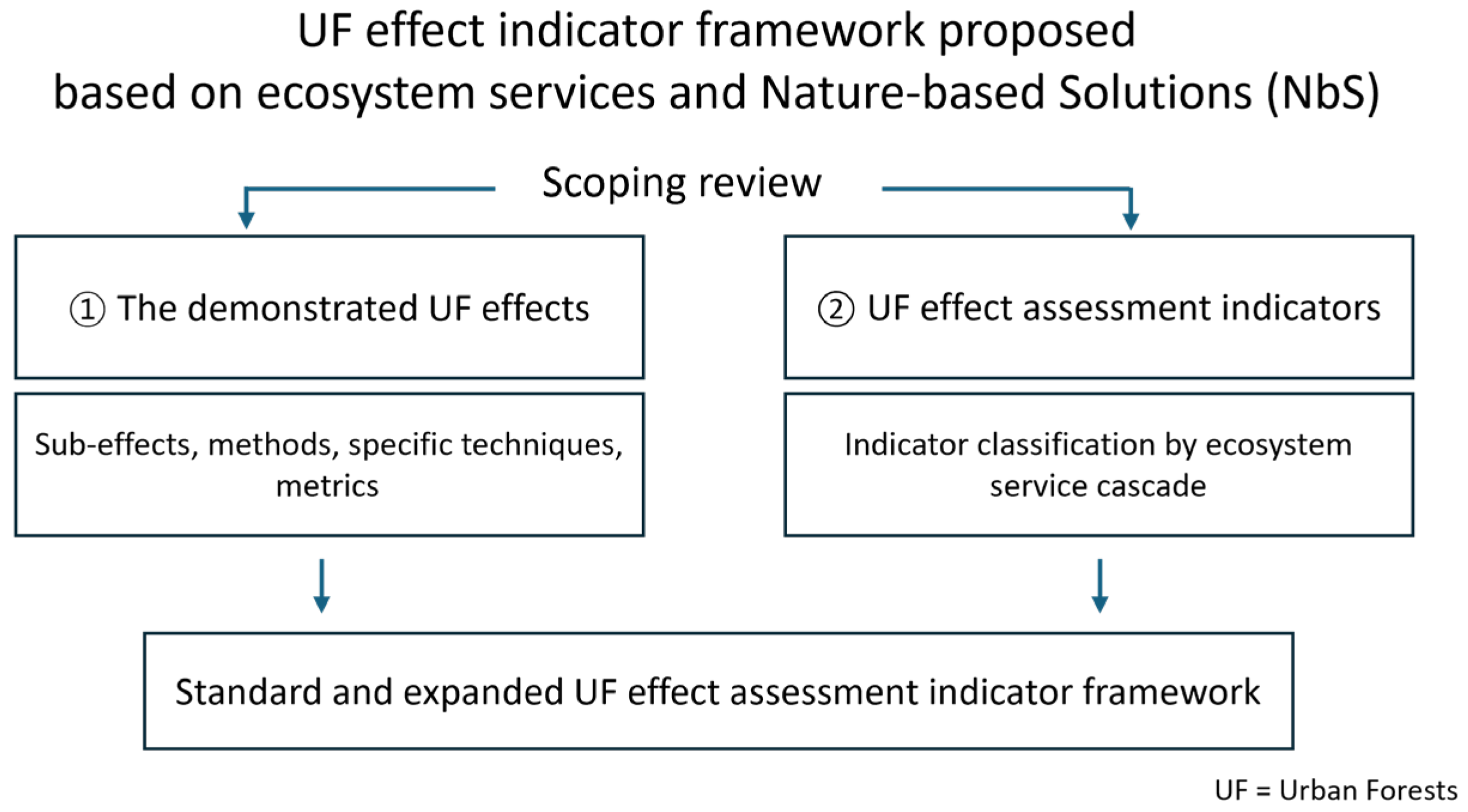
The workflow of this study is illustrated in Figure 1. Two scoping reviews were conducted to examine the effects of, and indicators for, urban forests.
Scoping reviews are useful for identifying the scope, extent, and nature of research conducted on a specific topic and uncovering gaps and deviations in knowledge or evidence [28]. This study conducted scoping reviews in accordance with the PRISMA guidelines, selecting studies that measured or estimated the effects and impacts of urban forests. To ensure the comprehensiveness of the results, Web of Science (WOS) and Scopus were used as the primary databases. A topic search was employed for WOS, and a title–abstract–keyword search was utilized for SCOPUS. The search was restricted to peer-reviewed journal articles published in the last ten years (2015–2024), written in English, and indexed in the WOS and Scopus databases.
The first search query was
(“urban forest*”) AND (effect OR effects OR impact OR impacts) AND (assess* OR evaluat* OR measur*)
This first query sought to identify articles focused on the effects or impacts of urban forests. A Boolean query was designed to retrieve the articles that encompassed all types of effects or impacts of urban forests, including ecological and social aspects.
The second search query was
((“urban forest*” OR “urban vegetation” OR “urban green space*” OR “urban tree*”) AND (effect* OR benefit* OR “ecosystem service*”) AND (assess* OR evaluat* OR measur*) AND (indicator* OR metric* OR criteri*))
This second query addressed (1) urban forest or green space contexts, (2) their effects or benefits to humans, and (3) efforts to assess or evaluate these effects through indicators or metrics. This ensured that the query captured literature that bridged the evaluation of ecosystem services or benefits and indicators of urban greenery, including urban forests or trees.
Concepts such as urban vegetation, green space, and green infrastructure are similar to urban forests [9]. Because this study focused on the effects of urban forests or trees rather than facilities or systems, terms such as “urban park”, “green infrastructure”, and “urban greenery” were removed to narrow the search scope. Additionally, “street tree(s)” were not included in the search terms because they were included in urban forests.
The first scoping review considered only urban forests to restrict the search range, but the second scoping review included “urban green spaces” to evaluate the direct and indirect social interactions or activities in such spaces, as many studies on urban green spaces also discussed urban forests.
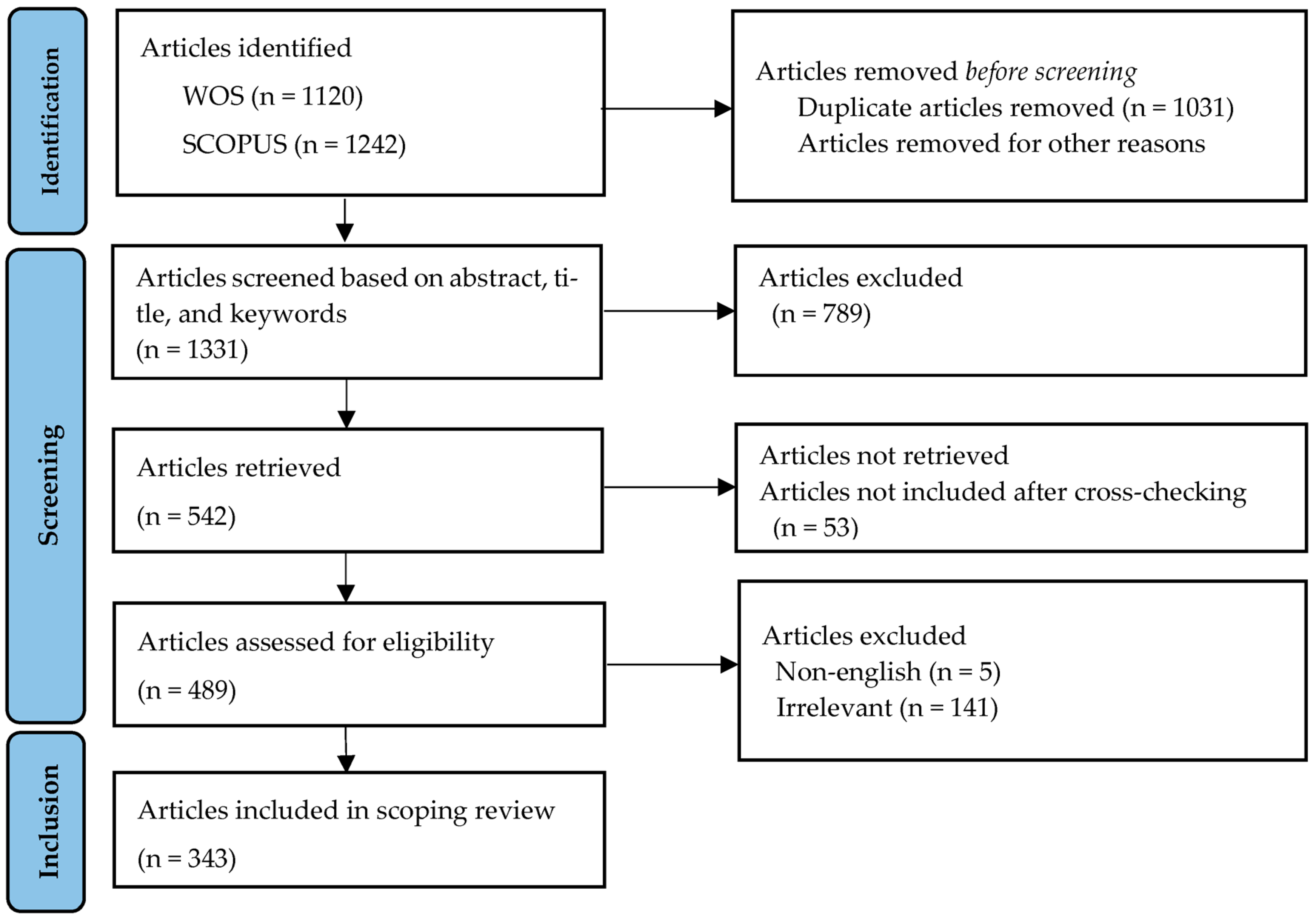
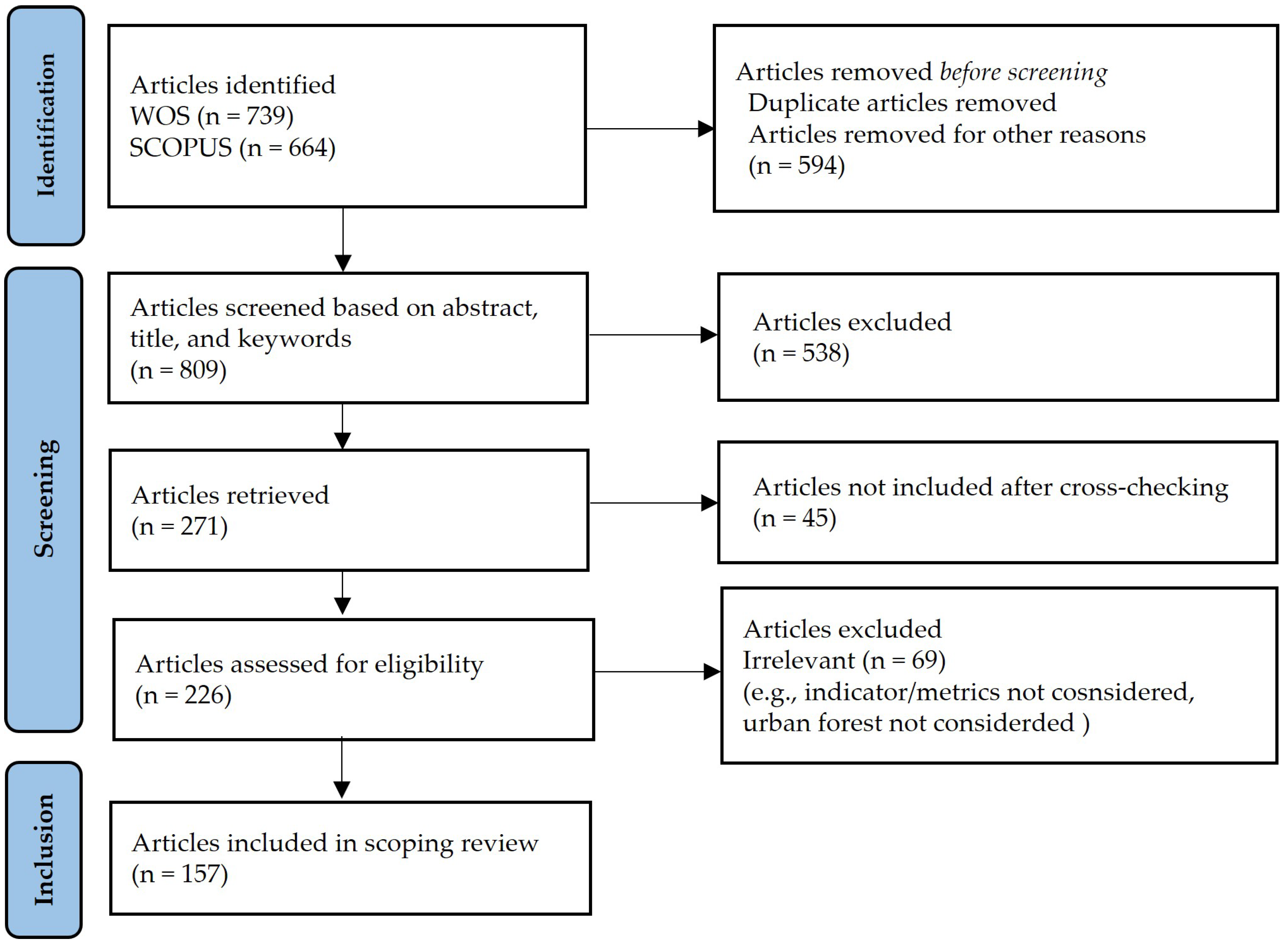
Through the filtering process and crosschecking, irrelevant research was excluded, and the final articles for review were selected (Figure 2 and Figure 3).

2.2. Urban Forest Effect Classification and Indicator Identification

The concepts of urban ecosystem services and NbS were used to classify the articles selected for the scoping review [3,29]. The ecosystem service concept was mainstreamed by the Millennium Ecosystem Assessment, which distinguished provisioning, regulating, cultural, and supporting services [30]. The regulation of air, water, soil, and climate by urban forests leads to impacts such as air quality improvement, soil and water restoration, microclimate regulation, and CO2 removal from the atmosphere [2,31]. Urban forests also provide habitats for biodiversity and influence genetic diversity. In cities, they primarily deliver regulation and maintenance services as well as cultural services, whereas provisioning services are provided less frequently [32,33].
The NbS approach has been developed by IUCN, EC and the World Bank, who have been seeking solutions that work with ecosystems instead of traditional engineering interventions [34]. Urban forests have been studied an integral NbS with environmental, social, and economic dimensions to solve urban disasters [1,35,36]. The use of urban parks, green walls and roofs, and street trees to offset the urban heat island effect and reduce energy use for cooling [37,38], as well as the mental and physical health benefits of urban green infrastructure [39]. New urban forests, based on the principles of NbS, can also improve inequitable environmental benefits, taking into account both environmental and social perspectives [40,41,42].
This study identified the most commonly studied effects and indicators. Comprehensive classification criteria for urban forest effects were defined based on the literature [2,29,43]. Based on the above theoretical foundation, the retrieved papers were classified accordingly, and the studies belonging to the specific sub-effects were also categorized into a new sub-effect. We identified air quality improvement (increased O2 and reduced air pollutants), microclimate regulation, and carbon sequestration as regulation ecosystem services. For soil and water, water pollution reduction and water and soil restoration were considered. Habitat quality and biodiversity provision were regarded as provisioning services. Cultural and historical benefits were considered cultural ecosystem services, such as landscape esthetics, recreation and tourism. Notably, some services were converted into benefits and value through the ecosystem service cascade. Economic and social impacts, including community development and increases in income, real estate prices (property), and the monetary value, were also considered ecosystem services. Social impacts encompassed physical, psychological, and social health as well as recreational services and overall well-being. Sound and noise impacts included noise levels, psychological health, and soundscapes.
Following this classification, retrieved studies were classified based on the scoping review. The criteria for the classification of methods used in the articles reviewed were as follows: field measurements, surveys/interviews, spatial analysis (e.g., GIS), field sampling and laboratory analyses, modeling and computer simulations, experiments, literature analysis, field observations, and open data usage [44]. The specific analysis techniques and metrics were presented.
Indicator identification was done following the ecosystem service cascade model. The ecosystem service cascade model was developed to capture the production chain linking ecological and biophysical structures and processes and elements of human well-being [45,46]. There is a series of intermediate stages between them, so it can help to frame how we value the contributions that ecosystem services make to human well-being and avoid the problem of double-counting [45]. Double-counting occurs in the ecosystem service cascade when overlapping steps–such as functions, services, benefits, and values–are counted more than once due to unclear boundaries between them [45,47]. The multiple stages of the function-service–benefit–value must be distinguished to identify proper indicators, given the process of converting ecosystem functions into ecosystem services, benefits, and values.
The ecosystem service cascade model helps distinguish these concepts [45,46] by identifying links between ecosystem functions, benefits, and effects. This study classified the indicators of effects, ecosystem services, and benefits within the ecosystem service cascade to enhance their comparability. Herein, “ecosystem service” refers to the potential capacity or present condition of urban forests to function. “Benefit” refers to what individuals gain from urban forests. “Effects” are closer to benefits, considering the outcome or results demonstrated. Finally, “value” indicates that the benefit has a monetary worth.

2.3. Indicator Assessment Framework

Drawing on the scoping review, a standard and expanded indicator framework for urban forest effects was proposed. The framework was developed using the most frequently demonstrated effects and indicators within each category and was designed to facilitate the comparison of indicators across the pathways of each ecosystem service cascade. Indicators may not be within the same pathways, which can complicate the comparison of urban forest effects unless this is considered. Consequently, identifying the pathways of each indicator helps determine whether it evaluates function/structure, ecosystem services, benefits, and values [48].

3. Results

3.1. Distribution of the Measured Effects of Urban Forests

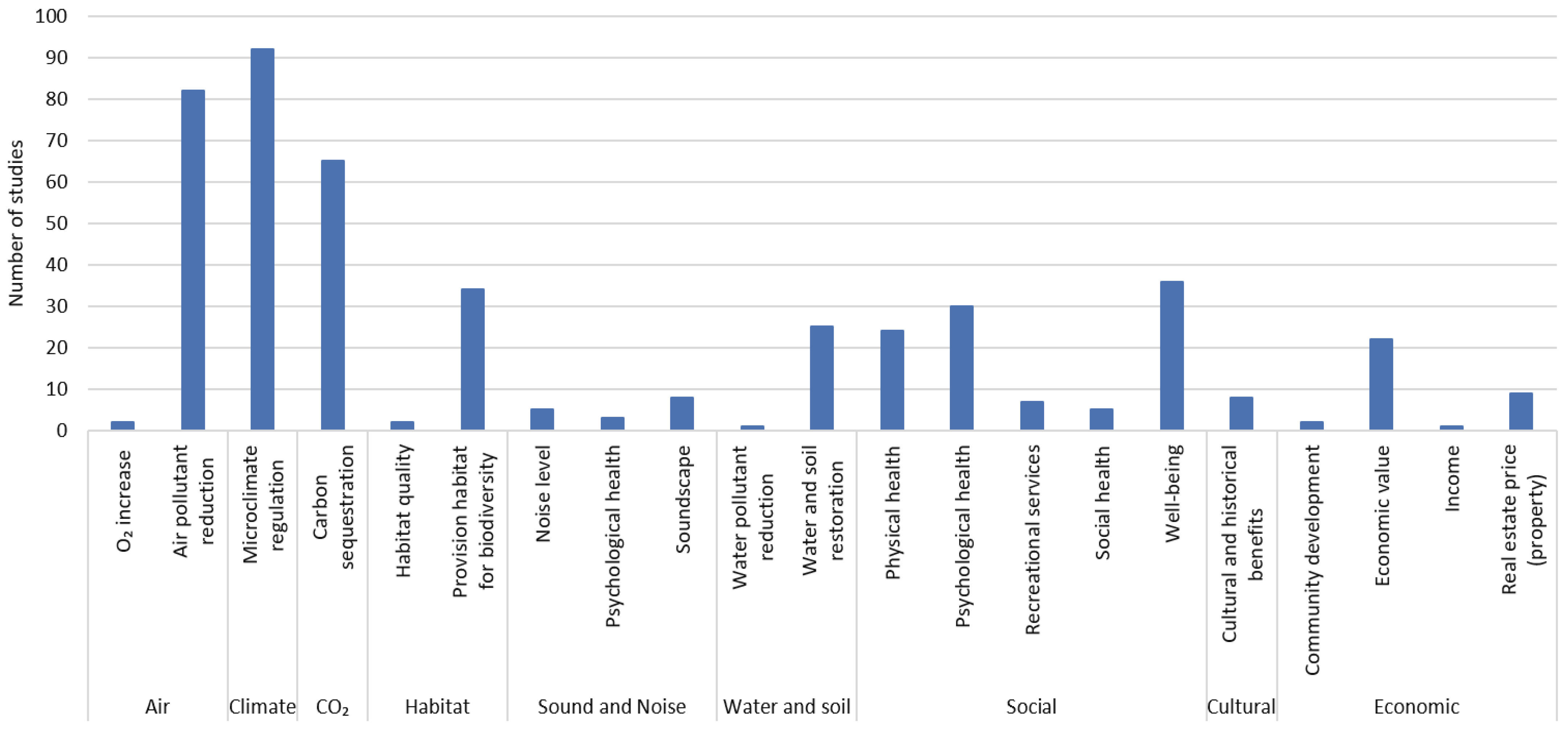
Figure 4 presents the measured effects of urban forests identified in the articles included in the first scoping review. The ecosystem services of urban forests largely overlapped with those of traditional forests but exhibited distinct characteristics within the urban forest context.
Most of the articles reviewed reported on effects within the climate, air, and CO2 categories, such as air quality and microclimatic effects. In contrast, O2 increase was rarely identified as an urban forest effect. Both habitat provision and water and soil restoration were moderately discussed in the reviewed studies. A considerable number of studies also covered the social effects of urban forests, such as physical and psychological health and overall well-being. However, a limited number of studies discussed recreational services, social health, and cultural effects. Studies on the economic category were also not extensive and primarily investigated the monetary value of ecosystem services.
Table 1 presents the distribution of the categories of the effects and sub-effects of urban forests. Among the air pollutant reduction effects, the most empirically studied were the reductions in PM and gaseous pollutants. For the microclimate regulation effect, studies on temperature reduction were the most common. Urban carbon sequestration was also considerably studied. In the habitat category, the primary focus was on habitat provision for biodiversity, particularly for birds and plants.
For sound and noise, existing research focused on the positive effects of natural or biodiversity-based sounds, particularly in relation to the soundscape. In terms of water and soil restoration, most studies evaluated runoff reduction. For the social effects, heart rate reduction was the most frequently reported physiological effect on physical health. More specifically, depression and stress were the most frequently reported sub-effects for psychological health, and those for well-being were increased satisfaction and happiness.
In terms of the cultural and historical benefits, landscape esthetics were studied more often than recreation and tourism. Studies on monetary valuations of regulation ecosystem services were the most commonly studied economic effects. Research on the effects of urban forests on real estate prices (property) was moderately conducted, whereas community development and income were rarely studied.

3.2. Methods and Metrics of Urban Forest Effects

The distribution of the methods employed and metrics used for urban forest effects is shown in Table 2. The investigation was deliberately restricted to high-frequency sub-effects. The air pollutant reduction and O2 increase effects of urban forests were evaluated primarily through modeling/computer simulations and recording field measurements. A common method employed was the i-Tree Eco (Urban Forest Effects Model). The key metrics included air quality and air pollutant removal. Particulate matter (PM) concentration and removal (efficiency) were used for PM. For temperature reduction, field measurements and open data, meteorological data, or remote sensing imagery were common methods. A range of tools and metrics were employed, including ENVI-met, satellite image analysis (ECOSTRESS, Land Surface Temperature (LST), MODIS, Landsat, Sentinel, and normalized difference vegetation index (NDVI)), and metrics such as LST, Urban Heat Island (UHI) intensity, cooling effect, and air temperature reduction. Field measurements and modeling/computer simulations were primarily used for carbon sequestration. Tools such as i-Tree Eco, i-Tree Canopy, and Integrated Valuation of Ecosystem Services and Tradeoffs (InVEST) were predominantly used to measure carbon storage and absorption. Animal diversity (birds) (e.g., evenness and richness) was assessed using field observations.
Reduction in noise pollution was measured through field measurements, quantifying aspects such as average noise reduction rates or noise intensity. Soundscape quality was measured via field measurements and assessed using the acoustic index. Runoff reduction was calculated using computer simulations (e.g., i-Tree tool) to determine the amount of runoff or rainfall interception.
Social effect measurements were mainly determined through experiments and surveys/interviews. For physical health, heart rate reduction was measured experimentally. For psychological health, subjective scores were measured for conditions such as depression, anxiety, sleep quality, and stress. Recreational services and social contact were measured using questionnaires and face-to-face surveys. Well-being, happiness, and satisfaction were measured through surveys/interviews as well as quantitative scores or emotional levels using word analysis from social media data or facial expression analysis. In terms of the cultural and historical effects, landscape esthetics were measured through surveys and interviews assessing visual quality or cultural ecosystem services.
The monetary value of ecosystem services (regulations) was primarily estimated using tools such as i-Tree, InVEST, and return on investment (ROI). The economic impact of urban forests as reflected in housing prices was estimated using open data. Hedonic pricing models were used to determine the extent to which urban forests contributed to the value of residential properties.

3.3. Indicators Based on Ecosystem Service Cascade Model

The second scoping review determined the indicators for the effects, ecosystem services, and benefits of urban forests. Table 3 presents the indicators classified according to the ecosystem service cascade model. The effect pathways of urban forests varied depending on the category and effect. In the air category, indicators were primarily concentrated in the service pathway. This included structural and functional indicators, such as the leaf area index, canopy structure, and landscape indices, and service indicators, including oxygen production, PM dry deposition, concentration, and removal rates. Subsequently, the pathways linking respiratory-related indicators (mortality rates and healthcare utilization) and the monetary value of doctor visits were identified.
For climate (microclimate) regulation, structural and functional indicators such as NDVI, green area, and canopy were used as functional indicators. Service indicators such as temperature change, LST, cooling capacity, cooling efficiency, and cooling distance were the main metrics, often extending to human benefit indicators such as thermal comfort and physiologically equivalent temperature. This demonstrates the entire ecosystem service cascade that connects each pathway. Urban forests can help reduce temperatures (ecosystem services), thereby increasing thermal comfort (benefits), and can also reduce the number of patients with heatstroke (value).
CO2 studies mainly focused on service indicators such as carbon storage/absorption based on the canopy and growth structure. The habitat effect primarily utilized indicators such as diversity, abundance, and species composition based on green space coverage and canopy cover, with some extending to human benefit paths, including perceived resilience. The noise and sound domains focused on service indicators, such as noise exposure (noise maps) and acoustic diversity, and human benefit indicators, including perceived noise and characteristics of public recreational behavior. Water and soil restoration were evaluated primarily at the service level using runoff reduction, retention, and soil services.
In terms of social effects, pathways for physical health were frequently reported, extending from structural/functional indicators, such as NDVI, green space exposure and contact, and canopies, to physiological indicators and hospital visits (human benefits), ultimately leading to changes in pharmaceutical sales (value). The evaluation of psychological health, recreation, and well-being focused on human benefit indicators such as social cohesion, positive emotional index, sentiment level, and community satisfaction. This was followed by structural/functional indicators, such as the green view index (GVI), visible green index (VGI), floor GVI, visit frequency, 3–30–300 index, and park vitality, as well as service indicators, including recreation utilization efficiency, visit activities, and satisfaction levels. Health impact assessments evaluated the relationship between various physiological and mental health issues and the diverse indicators of urban forests (green spaces). The relationship between health effects and urban forests was clarified using landscape indices, urban forest accessibility, and various urban forest indicators (such as tree cover and canopy cover). Notably, health effects were obtained not only through exposure to urban forests, but also active physical engagement with them at various levels.
The cultural category began with structural and functional indicators such as GVI, VGI, landscape indices, and urban green space (UGS) functions, and progressed to service indicators, including cultural landscapes and cultural ecosystem services. Evaluations extended to human benefit pathways, including perceived sensory dimensions and perception levels. For economic effects, replacement cost and monetary value of ecosystem services were determined in the value pathway. For real estate, a distinct pattern emerged, with structural/functional indicators (such as area and accessibility) directly connected to value indicators, including housing price changes.
The pathways through which indicator assessment occurs primarily differed by category. Air quality had a relatively clear pathway extending to its value. Habitats, sounds, noise, and psychological health also exhibited clear ecosystem service cascades. Focusing on physical and social health, well-being, and recreational services were found to be beneficial. Climate and culture mainly led to services and human benefits, and carbon and hydrology focused on structure, function, and services.

4. Discussion

4.1. Imbalance Among Studies on Urban Forest Effects

Through the scoping review, this study elucidated the various effects of urban forests. Most studies on urban forest effects have focused on air, climate, and carbon sequestration. This is because the data and methods for studying air quality and air temperature have become more accessible over the past several decades [49,50,51]. Social effects have also received considerable attention, with many studies focusing on identifying the mechanisms by which urban forests affect human well-being and health [33,52,53]. Recently, social media and mobile data have been used to explore recreational services and perceptions of cultural ecosystem services [54]. Notably, many studies investigated the habitat provision for biodiversity effect of urban forests, underscoring the importance of their ecological effects for urban ecosystems and sustainable cities [55].
In contrast, the economic effects of urban forests have not been sufficiently studied. These are difficult to determine because they involve many factors that cannot be derived from available data or determined using complex analysis methods [56]. Nevertheless, studies investigating the impact of urban forests on properties or community commercial areas were found upon examining studies on urban green spaces or parks [56]. Although hedonic models can be used to isolate the price-increasing effects of urban forests from the mixed effects of other factors, including transportation and infrastructure, to measure the rate of increase in economic value, such methods are expensive and time consuming.
This study further highlighted the need to consider measurable indicators in assessments of the effects of urban forests for long-term monitoring [57,58]. In particular, the health effects of urban forests, including reductions in doctor visits and mortality rates, require long-term monitoring. These finding collectively demonstrate that, as an NbS approach, urban forests can enhance the ecological and social sustainability of cities and contribute to their productivity [59].

4.2. Indicator Assessment Framework for Urban Forest Effects

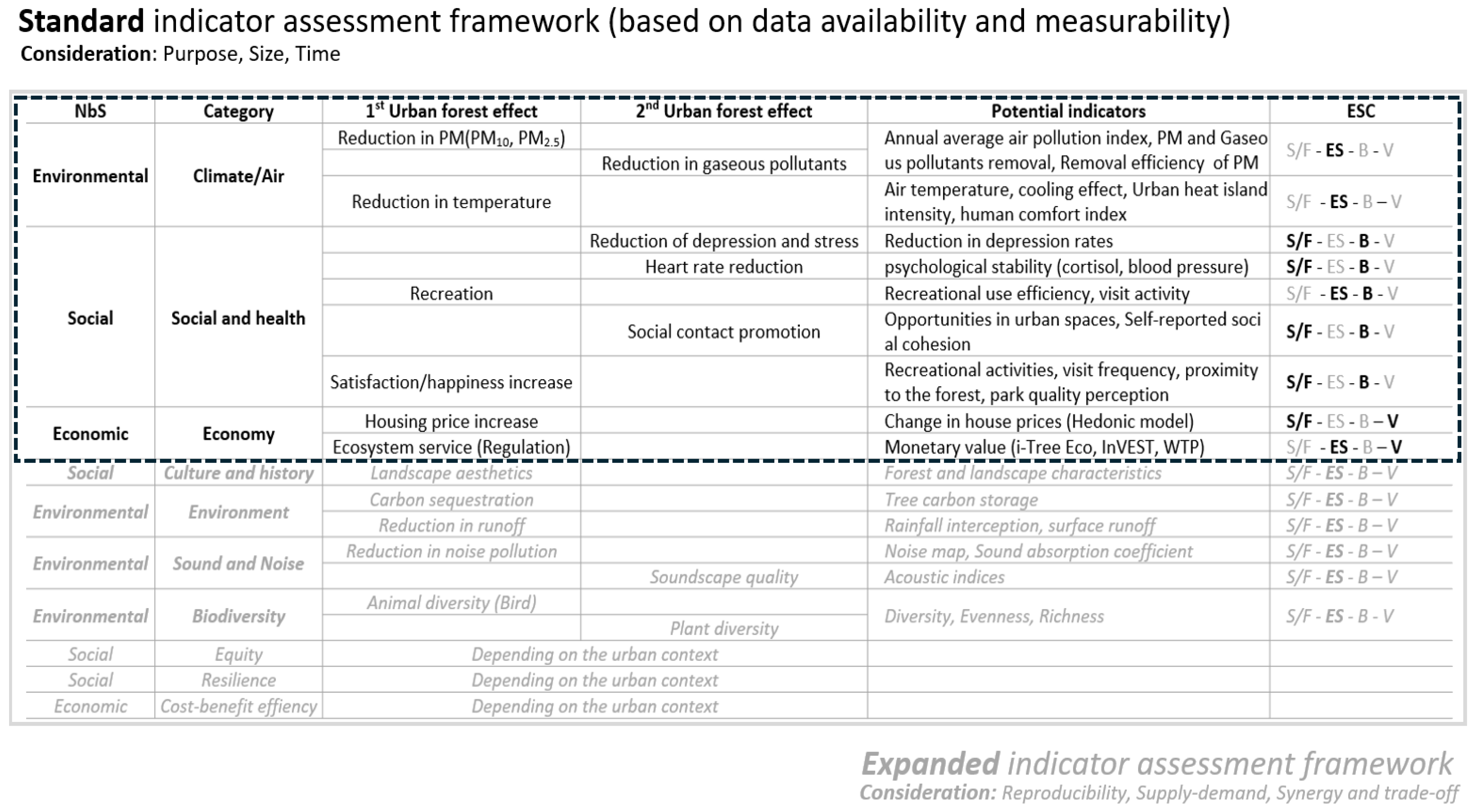
This study proposed a standard and an expanded indicator assessment framework for the multifaceted effects offered by urban forests (Figure 5). To enable comparisons between regions and urban forests, a standard indicator assessment needs to be developed. As a minimum requirement, this assessment should include indicators that have been most extensively researched and have demonstrated effectiveness. Although the scoping review analysis revealed the diverse effects of urban forests, objectively comparing these effects still remains challenging.
Given the diversity of urban forest types, characteristics, scales, and geographic features, a standardized set of indicators is necessary to compare their effects. The standard indicator assessment framework should be applicable to all the regions and urban forest sites for general evaluation and comparison. If the first-level urban forest effect is inapplicable, a secondary effect in the same category or NbS can be used as an alternative. Air/climate, social, health, and economic effects were selected as the common assessment categories. The indicators in the first effect of the standard framework on urban forest effects can serve as representative metrics across environmental, social, and economic dimensions in resource-limited cities. Reduction in PM and temperature represents climate and air categories. Recreation and increases in satisfaction/happiness can be used to examine social and health effects. Housing price increases and ecosystem services of regulation demonstrate the economic effects of urban forests. There are potential indicators that can quantify each effect; their use depends on data availability and measurability. Nevertheless, in line with the increasing understanding of the relationships between ecosystem components, services, and effects, this framework can be updated to include additional indicators [24]. Practitioners should apply the standard framework for basic performance measurement and comparisons with other regions. When addressing specific regional issues or requiring in-depth analysis from a long-term perspective, the extended framework can be employed and adjusted flexibly.
The expanded version is tailored to further suit local contexts. NbSs can be modified according to the context of each place, scale, and problem and possess co-benefits [19,46]. Because the functions of urban forests may vary from region to region, the evaluation system must be adjusted based on the primary effects of urban forests in each region [13,14,60]. Considering that not all urban forest sites require the same set of functions, designs, and management, multifunctionality should be encouraged at the site level [61]. Several studies on the effects of urban forests have shown that local contexts and regional conditions require a flexible indicator assessment framework that considers equity and resilience as comprehensive categories. Moreover, the consideration of financial efficiency allows for an assessment of cost-effectiveness, similar to the principles of NbS [62].

4.2.1. NbS Assessment Framework

The joint approach of NbS and urban ecosystem services can be helpful in supporting policy and practice because targeted ecosystem services can be considered key benefits and non-targeted services can also be regarded as co-benefits [63,64]. An assessment framework for urban forest effectiveness should consider the NbS evaluation framework with practical indicators [11,33,65]. Best practices for NbS can be established through consistent applications of evidence-based approaches and assessments of the effectiveness of solutions using indicator assessments [13,16].
Applying this framework to real-world cases and accumulating use cases that serve as references for different regions can help in addressing urban challenges and generating co-benefits [13]. A key challenge and opportunity for NbSs is determining how small-scale interventions can be scaled up, connected, and integrated into broader and potentially more impactful interventions. The proposed framework is based on the effects of urban forests derived from existing literature, which can contribute positively to addressing the environmental and social problems targeted by NbS.

4.2.2. Data Availability and Measurability for Practical Indicators

Indicators must be comparable and flexible, with simple, novel, and repeatable measures [25]. More specifically, urban forest indicators must emphasize the appropriateness, reliability, measurability, cost-effectiveness, and relevance of urban forests [66]. As suggested, the specific potential indicators in the framework must consider data availability and measurability, such as open data usage and quantitative methods. For example, if the temperature reduction effect has not been quantified, it could instead be estimated using a reference that derives temperature reduction from LST.
The expanded indicator assessment framework should encompass more urban forest effects once open data and quantitative methods become available. In addition, reproducibility is necessary to validate the proposed framework. The data collection for each effect indicator should consider accessibility, time, and budget constraints.
Furthermore, the proposed framework can facilitate communication between experts and non-experts by summarizing data and simplifying its interpretation [67]. Stakeholders such as policymakers and citizens must collectively agree on the indicators considering ease of applicability at an appropriate level. Such efforts will increase the acceptance of policies on urban forests, as this approach will enable citizens to intuitively understand urban forest effects. This would also improve the monitoring of urban forests and help refine policies for the benefit of practitioners.

4.2.3. Spatiotemporal Scale and Geographical Characteristics

Urban forest effects depend strongly on scale, largely determined by the size of the forest and its distance from receptors [22]. The application of the proposed framework to actual urban forest projects requires consideration of their spatiotemporal scale and geographical characteristics. Targeted urban forests require sufficient time to stabilize and demonstrate their effects after establishment. For instance, reductions in temperature and fine dust vary depending on the size and maturity of urban forests [14]. Indicators comprising the standard framework can be used to monitor and evaluate the effects of urban forests over time, inform maintenance goals, and facilitate the analysis of outcomes of urban forest policies on well-being [32]. UFORE-Hydro or InVEST model could improve cross-site applicability of urban forests effects assessment because they can provide spatially and temporally explicit simulations. These models enable simulation-based analysis of biophysical processes (e.g., hydrological regulation or biodiversity support) across different urban scales, thereby enhancing the precision and transferability of ecosystem service assessments. Accounting for these considerations, measuring the effects of small urban forests is challenging. This makes it necessary to evaluate the effectiveness of urban forests based on their spatiotemporal scales and geographical characteristics at which their effects can be measured.

4.3. Limitations and Future Research

Developing an assessment framework also presents limitations because urban forests often overlap conceptually with urban greenery, green spaces, and green infrastructure, making it difficult to isolate their specific effects [5,9]. To further incorporate the full range of urban forest effects, an expanded and detailed literature review is necessary for each component and concept.
Although this review examined broad themes, it did not provide a detailed evaluation for each specific effect category. Consequently, the selected indicators did not fully represent all ecosystem services, benefits, and effects provided by urban forests. Moreover, the effectiveness of urban forests may be underestimated when converting complex ecological and social effects into a single numerical value, which must be considered. Notably, the social category, unlike the climatic and economic categories, lacks the data needed to comprehensively evaluate urban forest effects; therefore, efforts are necessary to reflect both quantitative and qualitative aspects. This study also did not address trade-offs, synergies, or disservices-such as allergies or biogenic volatile organic compounds-which should be included in future frameworks [68].
Finally, this study is subject to potential language and database biases, as it included only English language publications. Consequently, studies published in other languages-particularly from regions with active research on urban forests-may have been overlooked. Moreover, cultural ecosystems services (CES) remain unevenly represented in the existing literature. Empirical evidence concerning cultural identity, heritage values, and place attachment is relatively limited, resulting in a constrained foundation for developing CES-related indicators within the proposed framework.

5. Conclusions

This study used a scoping review to identify measurable indicators that can support quantitative assessment of urban forest effect. The scoping review revealed that most studies on urban forests focused on effects related to temperature regulation, air pollution reduction, and carbon sequestration, followed by social effects, whereas economic benefits, sound, and noise were the least studied. Based on the results of the review, a framework consisting of a two-level (standard and expanded) indicator system categorized according to environmental, economic, and social aspects was proposed. The standard framework was based on measurable indicators, while the expanded framework included metrics requiring long-term evaluation and criteria, such as synergy, trade-off, and demand–supply.
The proposed framework can help quantify urban forest performance and serve as a decision-support tool for planners and policymakers. The use of quantitative indicators can help evaluate urban forest performance by quantifying achievements relative to goals or measuring the effects of policies. This study can serve as a policy basis for maintaining healthy urban ecosystems and human well-being, and the proposed framework may support improved public understanding of the diverse effects of urban forests and help inform their contributions to the development of sustainable cities as an NbS.

Supplementary Materials

The supporting information can be downloaded at https://www.mdpi.com/article/10.3390/f16121870/s1, File S1: Coded dataset of studies used for the scoping review 1; File S2: Coded dataset of studies used for the scoping review 2.

Author Contributions

Conceptualization, J.J., H.-D.S. and C.-R.P.; data curation, J.J.; formal analysis, J.J. and H.-R.J.; funding acquisition, S.C., H.-D.S. and C.-R.P.; investigation, J.J. and H.-R.J.; methodology, J.J. and C.-R.P.; project administration, S.C. and H.-D.S.; resources, J.J., S.C. and H.-D.S.; software, J.J. and H.-R.J.; supervision, J.J. and C.-R.P.; validation, J.J. and H.-R.J.; visualization, J.J.; writing—original draft preparation, J.J.; writing—review and editing, J.J. and C.-R.P. All authors have read and agreed to the published version of the manuscript.

Funding

This research was funded by the National Institute of Forest Science of Korea, grant number NIFOS FE0100-2024-03-2025.

Institutional Review Board Statement

Not applicable.

Data Availability Statement

Dataset available upon request from the authors.

Conflicts of Interest

The authors declare no conflicts of interest.

References

  1. O’Brien, L.E.; Urbanek, R.E.; Gregory, J.D. Ecological Functions and Human Benefits of Urban Forests. Urban For. Urban Green. 2022, 75, 127707. [Google Scholar] [CrossRef]
  2. Nowak, D.J.; Dwyer, J.F. Understanding the Benefits and Costs of Urban Forest Ecosystems. In Urban and Community Forestry in the Northeast; Kuser, J.E., Ed.; Springer: Dordrecht, The Netherlands, 2007; pp. 25–46. ISBN 978-1-4020-4289-8. [Google Scholar]
  3. Haase, D.; Larondelle, N.; Andersson, E.; Artmann, M.; Borgström, S.; Breuste, J.; Gomez-Baggethun, E.; Gren, Å.; Hamstead, Z.; Hansen, R.; et al. A Quantitative Review of Urban Ecosystem Service Assessments: Concepts, Models, and Implementation. Ambio 2014, 43, 413–433. [Google Scholar] [CrossRef] [PubMed]
  4. Endreny, T.A. Strategically Growing the Urban Forest Will Improve Our World. Nat. Commun. 2018, 9, 1160. [Google Scholar] [CrossRef] [PubMed]
  5. Konijnendijk, C.C.; Ricard, R.M.; Kenney, A.; Randrup, T.B. Defining Urban Forestry—A Comparative Perspective of North America and Europe. Urban For. Urban Green. 2006, 4, 93–103. [Google Scholar] [CrossRef]
  6. Mitchell, M.G.E.; Devisscher, T. Strong Relationships between Urbanization, Landscape Structure, and Ecosystem Service Multifunctionality in Urban Forest Fragments. Landsc. Urban Plan. 2022, 228, 104548. [Google Scholar] [CrossRef]
  7. Oleyar, M.D.; Greve, A.I.; Withey, J.C.; Bjorn, A.M. An Integrated Approach to Evaluating Urban Forest Functionality. Urban Ecosyst. 2008, 11, 289–308. [Google Scholar] [CrossRef]
  8. Díaz, S.; Pascual, U.; Stenseke, M.; Martín-López, B.; Watson, R.T.; Molnár, Z.; Hill, R.; Chan, K.M.A.; Baste, I.A.; Brauman, K.A.; et al. Assessing Nature’s Contributions to People. Science 2018, 359, 270–272. [Google Scholar] [CrossRef]
  9. Escobedo, F.J.; Giannico, V.; Jim, C.Y.; Sanesi, G.; Lafortezza, R. Urban Forests, Ecosystem Services, Green Infrastructure and Nature-Based Solutions: Nexus or Evolving Metaphors? Urban For. Urban Green. 2019, 37, 3–12. [Google Scholar] [CrossRef]
  10. Giannico, V.; Spano, G.; Elia, M.; D’Este, M.; Sanesi, G.; Lafortezza, R. Green Spaces, Quality of Life, and Citizen Perception in European Cities. Environ. Res. 2021, 196, 110922. [Google Scholar] [CrossRef]
  11. Bowler, D.E.; Buyung-Ali, L.; Knight, T.M.; Pullin, A.S. Urban Greening to Cool Towns and Cities: A Systematic Review of the Empirical Evidence. Landsc. Urban Plan. 2010, 97, 147–155. [Google Scholar] [CrossRef]
  12. Nowak, D.J.; Hirabayashi, S.; Doyle, M.; McGovern, M.; Pasher, J. Air Pollution Removal by Urban Forests in Canada and Its Effect on Air Quality and Human Health. Urban For. Urban Green. 2018, 29, 40–48. [Google Scholar] [CrossRef]
  13. Sowińska-Świerkosz, B.; García, J. A New Evaluation Framework for Nature-Based Solutions (NBS) Projects Based on the Application of Performance Questions and Indicators Approach. Sci. Total Environ. 2021, 787, 147615. [Google Scholar] [CrossRef]
  14. Dumitru, A.; Frantzeskaki, N.; Collier, M. Identifying Principles for the Design of Robust Impact Evaluation Frameworks for Nature-Based Solutions in Cities. Environ. Sci. Policy 2020, 112, 107–116. [Google Scholar] [CrossRef]
  15. Cohen-Shacham, E.; Andrade, A.; Dalton, J.; Dudley, N.; Jones, M.; Kumar, C.; Maginnis, S.; Maynard, S.; Nelson, C.R.; Renaud, F.G.; et al. Core Principles for Successfully Implementing and Upscaling Nature-Based Solutions. Environ. Sci. Policy 2019, 98, 20–29. [Google Scholar] [CrossRef]
  16. Kabisch, N.; Frantzeskaki, N.; Pauleit, S.; Naumann, S.; Davis, M.; Artmann, M.; Haase, D.; Knapp, S.; Korn, H.; Stadler, J.; et al. Nature-Based Solutions to Climate Change Mitigation and Adaptation in Urban Areas: Perspectives on Indicators, Knowledge Gaps, Barriers, and Opportunities for Action. Ecol. Soc. 2016, 21, 39. [Google Scholar] [CrossRef]
  17. Elmqvist, T.; Setälä, H.; Handel, S.; van der Ploeg, S.; Aronson, J.; Blignaut, J.; Gómez-Baggethun, E.; Nowak, D.; Kronenberg, J.; de Groot, R. Benefits of Restoring Ecosystem Services in Urban Areas. Curr. Opin. Environ. Sustain. 2015, 14, 101–108. [Google Scholar] [CrossRef]
  18. Livesley, S.J.; McPherson, E.G.; Calfapietra, C. The Urban Forest and Ecosystem Services: Impacts on Urban Water, Heat, and Pollution Cycles at the Tree, Street, and City Scale. J. Environ. Qual. 2016, 45, 119–124. [Google Scholar] [CrossRef]
  19. Raymond, C.M.; Frantzeskaki, N.; Kabisch, N.; Berry, P.; Breil, M.; Nita, M.R.; Geneletti, D.; Calfapietra, C. A Framework for Assessing and Implementing the Co-Benefits of Nature-Based Solutions in Urban Areas. Environ. Sci. Policy 2017, 77, 15–24. [Google Scholar] [CrossRef]
  20. de la Barrera, F.; Reyes-Paecke, S.; Banzhaf, E. Indicators for Green Spaces in Contrasting Urban Settings. Ecol. Indic. 2016, 62, 212–219. [Google Scholar] [CrossRef]
  21. Tyrväinen, L.; Pauleit, S.; Seeland, K.; de Vries, S. Benefits and Uses of Urban Forests and Trees. In Urban Forests and Trees: A Reference Book; Konijnendijk, C., Nilsson, K., Randrup, T., Schipperijn, J., Eds.; Springer: Berlin/Heidelberg, Germany, 2005; pp. 81–114. ISBN 978-3-540-27684-5. [Google Scholar]
  22. Hutchins, M.; Fletcher, D.; Hagen-Zanker, A.; Jia, H.; Jones, L.; Li, H.; Loiselle, S.; Miller, J.; Reis, S.; Seifert-Dähnn, I.; et al. Why Scale Is Vital to Plan Optimal Nature-Based Solutions for Resilient Cities. Environ. Res. Lett. 2021, 16, 044008. [Google Scholar] [CrossRef]
  23. Charoenkit, S.; Piyathamrongchai, K. A Review of Urban Green Spaces Multifunctionality Assessment: A Way Forward for a Standardized Assessment and Comparability. Ecol. Indic. 2019, 107, 105592. [Google Scholar] [CrossRef]
  24. Andersson-Sköld, Y.; Klingberg, J.; Gunnarsson, B.; Cullinane, K.; Gustafsson, I.; Hedblom, M.; Knez, I.; Lindberg, F.; Ode Sang, Å.; Pleijel, H.; et al. A Framework for Assessing Urban Greenery’s Effects and Valuing Its Ecosystem Services. J. Environ. Manag. 2018, 205, 274–285. [Google Scholar] [CrossRef] [PubMed]
  25. Dobbs, C.; Escobedo, F.J.; Zipperer, W.C. A Framework for Developing Urban Forest Ecosystem Services and Goods Indicators. Landsc. Urban Plan. 2011, 99, 196–206. [Google Scholar] [CrossRef]
  26. Bressane, A.; da Cunha Pinto, J.P.; de Castro Medeiros, L.C. Countering the Effects of Urban Green Gentrification through Nature-Based Solutions: A Scoping Review. Nat.-Based Solut. 2024, 5, 100131. [Google Scholar] [CrossRef]
  27. Haase, D.; Kabisch, S.; Haase, A.; Andersson, E.; Banzhaf, E.; Baró, F.; Brenck, M.; Fischer, L.K.; Frantzeskaki, N.; Kabisch, N.; et al. Greening Cities—To Be Socially Inclusive? About the Alleged Paradox of Society and Ecology in Cities. Habitat. Int. 2017, 64, 41–48. [Google Scholar] [CrossRef]
  28. Arksey, H.; O’Malley, L. Scoping Studies: Towards a Methodological Framework. Int. J. Soc. Res. Methodol. 2005, 8, 19–32. [Google Scholar] [CrossRef]
  29. Roeland, S.; Moretti, M.; Amorim, J.H.; Branquinho, C.; Fares, S.; Morelli, F.; Niinemets, Ü.; Paoletti, E.; Pinho, P.; Sgrigna, G.; et al. Towards an Integrative Approach to Evaluate the Environmental Ecosystem Services Provided by Urban Forest. J. For. Res. 2019, 30, 1981–1996. [Google Scholar] [CrossRef]
  30. Millennium Ecosystem Assessment. Ecosystems and Human Well-Being; Island Press: Washington, DC, USA, 2005. [Google Scholar]
  31. Chen, W.Y.; Jim, C.Y. Assessment and Valuation of the Ecosystem Services Provided by Urban Forests. In Ecology, Planning, and Management of Urban Forests: International Perspectives; Carreiro, M.M., Song, Y.-C., Wu, J., Eds.; Springer: New York, NY, USA, 2008; pp. 53–83. ISBN 978-0-387-71425-7. [Google Scholar]
  32. Pukowiec-Kurda, K. The Urban Ecosystem Services Index as a New Indicator for Sustainable Urban Planning and Human Well-Being in Cities. Ecol. Indic. 2022, 144, 109532. [Google Scholar] [CrossRef]
  33. Carmen, R.; Jacobs, S.; Leone, M.; Palliwoda, J.; Pinto, L.; Misiune, I.; Priess, J.A.; Pereira, P.; Wanner, S.; Ferreira, C.S.; et al. Keep It Real: Selecting Realistic Sets of Urban Green Space Indicators. Environ. Res. Lett. 2020, 15, 095001. [Google Scholar] [CrossRef]
  34. Cohen-Shacham, E.; Walters, G.; Janzen, C.; Maginnis, S. Nature-Based Solutions to Address Global Societal Challenges. IUCN Gland. Switz. 2016, 97, 2036. [Google Scholar]
  35. Zhao, J.; Davies, C.; Veal, C.; Xu, C.; Zhang, X.; Yu, F. Review on the Application of Nature-Based Solutions in Urban Forest Planning and Sustainable Management. Forests 2024, 15, 727. [Google Scholar] [CrossRef]
  36. Kong, X.; Zhang, X.; Xu, C.; Hauer, R.J. Review on Urban Forests and Trees as Nature-Based Solutions over 5 Years. Forests 2021, 12, 1453. [Google Scholar] [CrossRef]
  37. Gill, S.E.; Handley, J.F.; Ennos, A.R.; Pauleit, S. Adapting Cities for Climate Change: The Role of the Green Infrastructure. Built Environ. 2007, 33, 115–133. [Google Scholar] [CrossRef]
  38. Pataki, D.E.; Carreiro, M.M.; Cherrier, J.; Grulke, N.E.; Jennings, V.; Pincetl, S.; Pouyat, R.V.; Whitlow, T.H.; Zipperer, W.C. Coupling Biogeochemical Cycles in Urban Environments: Ecosystem Services, Green Solutions, and Misconceptions. Front. Ecol. Environ. 2011, 9, 27–36. [Google Scholar] [CrossRef]
  39. Liu, Y.; Kwan, M.-P.; Wong, M.S.; Yu, C. Current Methods for Evaluating People’s Exposure to Green Space: A Scoping Review. Soc. Sci. Med. 2023, 338, 116303. [Google Scholar] [CrossRef]
  40. Albert, C.; Brillinger, M.; Guerrero, P.; Gottwald, S.; Henze, J.; Schmidt, S.; Ott, E.; Schröter, B. Planning Nature-Based Solutions: Principles, Steps, and Insights. Ambio 2021, 50, 1446–1461. [Google Scholar] [CrossRef]
  41. Konijnendijk, C.C. Evidence-Based Guidelines for Greener, Healthier, More Resilient Neighbourhoods: Introducing the 3–30–300 Rule. J. For. Res. 2023, 34, 821–830. [Google Scholar] [CrossRef]
  42. Battisti, L.; Giacco, G.; Moraca, M.; Pettenati, G.; Dansero, E.; Larcher, F. Spatializing Urban Forests as Nature-Based Solutions: A Methodological Proposal. Cities 2024, 144, 104629. [Google Scholar] [CrossRef]
  43. Roy, S.; Byrne, J.; Pickering, C. A Systematic Quantitative Review of Urban Tree Benefits, Costs, and Assessment Methods across Cities in Different Climatic Zones. Urban For. Urban Green. 2012, 11, 351–363. [Google Scholar] [CrossRef]
  44. Sundara Rajoo, K.; Karam, D.S.; Abdu, A.; Rosli, Z.; James Gerusu, G. Urban Forest Research in Malaysia: A Systematic Review. Forests 2021, 12, 903. [Google Scholar] [CrossRef]
  45. Potschin, M.B.; Haines-Young, R.H. Ecosystem Services: Exploring a Geographical Perspective. Prog. Phys. Geogr. Earth Environ. 2011, 35, 575–594. [Google Scholar] [CrossRef]
  46. de Groot, R.S.; Alkemade, R.; Braat, L.; Hein, L.; Willemen, L. Challenges in Integrating the Concept of Ecosystem Services and Values in Landscape Planning, Management and Decision Making. Ecol. Complex. 2010, 7, 260–272. [Google Scholar] [CrossRef]
  47. Fu, B.-J.; Su, C.-H.; Wei, Y.-P.; Willett, I.R.; Lü, Y.-H.; Liu, G.-H. Double Counting in Ecosystem Services Valuation: Causes and Countermeasures. Ecol. Res. 2011, 26, 1–14. [Google Scholar] [CrossRef]
  48. Zhang, C.; Li, J.; Zhou, Z. Ecosystem Service Cascade: Concept, Review, Application and Prospect. Ecol. Indic. 2022, 137, 108766. [Google Scholar] [CrossRef]
  49. Khalili, S.; Kumar, P.; Jones, L. Evaluating the Benefits of Urban Green Infrastructure: Methods, Indicators, and Gaps: Heliyon. Available online: https://www.cell.com/heliyon/fulltext/S2405-8440(24)14477-5?uuid=uuid%3A6c523c92-e2b2-4f29-86b6-f6bbcaf5a259 (accessed on 6 November 2025).
  50. Vigevani, I.; Corsini, D.; Comin, S.; Fini, A.; Ferrini, F. Methods to Quantify Particle Air Pollution Removal by Urban Vegetation: A Review. Atmos. Environ. X 2024, 21, 100233. [Google Scholar] [CrossRef]
  51. Yin, Y.; Li, S.; Xing, X.; Zhou, X.; Kang, Y.; Hu, Q.; Li, Y. Cooling Benefits of Urban Tree Canopy: A Systematic Review. Sustainability 2024, 16, 4955. [Google Scholar] [CrossRef]
  52. Nastran, M.; Pintar, M.; Železnikar, Š.; Cvejić, R. Stakeholders’ Perceptions on the Role of Urban Green Infrastructure in Providing Ecosystem Services for Human Well-Being. Land 2022, 11, 299. [Google Scholar] [CrossRef]
  53. Xie, X.; Jiang, Q.; Wang, R.; Gou, Z. Correlation between Vegetation Landscape and Subjective Human Perception: A Systematic Review. Buildings 2024, 14, 1734. [Google Scholar] [CrossRef]
  54. Zhu, X.; Cheng, X.; Zhang, B.; Mihalko, C. A User-Feedback Indicator Framework to Understand Cultural Ecosystem Services of Urban Green Space. Ecol. Indic. 2023, 154, 110642. [Google Scholar] [CrossRef]
  55. Alvey, A.A. Promoting and Preserving Biodiversity in the Urban Forest. Urban For. Urban Green. 2006, 5, 195–201. [Google Scholar] [CrossRef]
  56. Ewane, E.B.; Bajaj, S.; Velasquez-Camacho, L.; Srinivasan, S.; Maeng, J.; Singla, A.; Luber, A.; de-Miguel, S.; Richardson, G.; Broadbent, E.N.; et al. Influence of Urban Forests on Residential Property Values: A Systematic Review of Remote Sensing-Based Studies. Heliyon 2023, 9, e20408. [Google Scholar] [CrossRef] [PubMed]
  57. Nilon, C.H.; Aronson, M.F.J.; Cilliers, S.S.; Dobbs, C.; Frazee, L.J.; Goddard, M.A.; O’Neill, K.M.; Roberts, D.; Stander, E.K.; Werner, P.; et al. Planning for the Future of Urban Biodiversity: A Global Review of City-Scale Initiatives. BioScience 2017, 67, 332–342. [Google Scholar] [CrossRef]
  58. Schwarz, N.; Moretti, M.; Bugalho, M.N.; Davies, Z.G.; Haase, D.; Hack, J.; Hof, A.; Melero, Y.; Pett, T.J.; Knapp, S. Understanding Biodiversity-Ecosystem Service Relationships in Urban Areas: A Comprehensive Literature Review. Ecosyst. Serv. 2017, 27, 161–171. [Google Scholar] [CrossRef]
  59. Lafortezza, R.; Chen, J.; van den Bosch, C.K.; Randrup, T.B. Nature-Based Solutions for Resilient Landscapes and Cities. Environ. Res. 2018, 165, 431–441. [Google Scholar] [CrossRef]
  60. Raymond, C.; Breil, M.; Nita, M.; Kabisch, N.; de Bel, M.; Enzi, V.; Frantzeskaki, N.; Geneletti, G.; Lovinger, L.; Cardinaletti, M.; et al. An Impact Evaluation Framework to Support Planning and Evaluation of Nature-Based Solutions Projects. Report Prepared by the EKLIPSE Expert Working Group on Nature-Based Solutions to Promote Climate Resilience in Urban Areas; Centre for Ecology and Hydrology: Wallingford, UK, 2017; ISBN 978-1-906698-62-1. [Google Scholar]
  61. Hansen, R.; Olafsson, A.S.; van der Jagt, A.P.N.; Rall, E.; Pauleit, S. Planning Multifunctional Green Infrastructure for Compact Cities: What Is the State of Practice? Ecol. Indic. 2019, 96, 99–110. [Google Scholar] [CrossRef]
  62. Balzan, M.V.; Zulian, G.; Maes, J.; Borg, M. Assessing Urban Ecosystem Services to Prioritise Nature-Based Solutions in a High-Density Urban Area. Nat.-Based Solut. 2021, 1, 100007. [Google Scholar] [CrossRef]
  63. González-García, A.; Palomo, I.; Codemo, A.; Rodeghiero, M.; Dubo, T.; Vallet, A.; Lavorel, S. Co-Benefits of Nature-Based Solutions Exceed the Costs of Implementation. Cell Rep. Sustain. 2025, 2, 100336. [Google Scholar] [CrossRef]
  64. Remme, R.P.; Meacham, M.; Pellowe, K.E.; Andersson, E.; Guerry, A.D.; Janke, B.; Liu, L.; Lonsdorf, E.; Li, M.; Mao, Y.; et al. Aligning Nature-Based Solutions with Ecosystem Services in the Urban Century. Ecosyst. Serv. 2024, 66, 101610. [Google Scholar] [CrossRef]
  65. de Lima, A.P.M.; Rodrigues, A.F.; Latawiec, A.E.; Dib, V.; Gomes, F.D.; Maioli, V.; Pena, I.; Tubenchlak, F.; Rebelo, A.J.; Esler, K.J.; et al. Framework for Planning and Evaluation of Nature-Based Solutions for Water in Peri-Urban Areas. Sustainability 2022, 14, 7952. [Google Scholar] [CrossRef]
  66. Barron, S.; Sheppard, S.R.J.; Condon, P.M. Urban Forest Indicators for Planning and Designing Future Forests. Forests 2016, 7, 208. [Google Scholar] [CrossRef]
  67. Segnestam, L. Indicators of Environment and Sustainable Development Theories and Practical Experience; World Bank: Washington, DC, USA, 2003. [Google Scholar]
  68. Gu, S.; Guenther, A.; Faiola, C. Effects of Anthropogenic and Biogenic Volatile Organic Compounds on Los Angeles Air Quality. Environ. Sci. Technol. 2021, 55, 12191–12201. [Google Scholar] [CrossRef]
Figure 1. Workflow employed in this study.
Forests 16 01870 g001
Figure 2. The PRISMA-ScR process employed for urban forest impacts.
Forests 16 01870 g002
Figure 3. The PRISMA-ScR process employed for urban forest indicators.
Forests 16 01870 g003
Figure 4. Distribution of urban forest effects based on the first scoping review.
Forests 16 01870 g004
Figure 5. Proposed indicator assessment frameworks for urban forest effects: standard (black dashed box) and expanded (gray solid box) versions. Bold in ESC indicates the stage at which the indicator is primarily used in ESC. Abbreviations: NbS, Nature-based solutions; ESC, ecosystem service cascade; S/F, structure/function; ES, ecosystem service; B, benefit; V, value.
Forests 16 01870 g005
Table 1. Frequency distribution of urban forest effects.
Category/Effect/Sub-EffectFrequencyCategory/Effect/Sub-EffectFrequency
Air84Social102
O2 increase2Physical health24
Oxygen production2Behavior change1
Air pollutant reduction82Healthcare utilization3
Reduction in air pollution3Physical activity promotion3
Reduction in air pollution (haze)1Blood pressure reduction1
Reduction in air pollution (smog)1Heart rate reduction14
Reduction in gaseous pollutants26Mortality reduction2
Reduction in PM48Psychological health30
Reduction in SO42−1Mental health improvement2
Reduction in toxic elements2Psychological restoration7
Climate92Anxiety reduction1
Microclimate regulation92Depression alleviation8
Increase in relative humidity7Mental disorder reduction2
Increase in winter temperature1Stress alleviation9
Reduction in temperature82Sleep quality improvement1
Reduction in wind speed2Recreational services7
CO265Recreation increase7
Carbon sequestration65Social health5
Carbon sequestration65Learning improvement1
Habitat36Social contact promotion4
Habitat quality2Well-being36
Habitat quality2Attention dynamics1
Provision habitat for biodiversity34Comfort improvement2
Animal diversity1Exercise satisfaction increase3
Animal diversity (Arthropod)4Greater happiness9
Animal diversity (Bird)13Satisfaction increase20
Animal diversity (Mammal)3Safety perception improvement1
Habitat quality3Cultural8
Plant diversity9Cultural and historical benefits8
Endangered species population sustainment1Landscape esthetics7
Sound and Noise16Recreation and tourism1
Noise level5Economic34
Reduction in noise pollution5Community development2
Psychological health3Community income1
Psychological restoration1Job opportunities1
Depression alleviation1Economic value22
Stress alleviation1Ecosystem service (Culture)
Soundscape8Ecosystem service (Regulation)16
Increased satisfaction3Income1
Soundscape quality5Monthly income1
Water and soil26Real estate price (property)9
Water pollutant reduction1Housing price increase8
Reduction in total nitrogen and phosphorus1Land price increase1
Water and soil restoration25Total463
Evapotranspiration3
Polycyclic aromatic hydrocarbon (PAH) concentration1
Rainfall erosivity1
Rainfall interception1
Reduction in runoff18
Soil erosion mitigation1
Table 2. Common methodologies and metrices employed to measure urban forest effects.
EffectMethods *Analysis TechniquesMetrics
Air
O2 increase
Oxygen productionField measurement (2/5)i-Tree Eco (urban forest effects model, UFORE)Oxygen production
Reduction in air pollutants
Reduction in gaseous pollutantsModeling/computer simulations (14/38),
field measurement (12/38),
open data usage (6/38)
i-Tree Eco (UFORE), i-Tree Canopy, structure from motion (SfM), unmanned aerial systems (UAS), WRF-ChemAir quality,
air pollutant removal efficiency
Reduction in PM (PM10, PM2.5)Field measurement (19/72),
modeling/computer simulations (18/72),
field sampling and laboratory analysis (12/72),
open data usage (9/72)
Eddy covariance tower, EddyPro software, ENVI-met, internet of things (IoT) technology, remote sensing imagery (Landsat, MODIS, Google satellite), Minitab 17,
National stations and modeling (AERMOD), Wind tunnels, i-Tree Eco (UFORE), SfM, UAS
PM concentration,
PM removal (efficiency)
air quality
Climate
Microclimate regulation
Reduction in temperatureField measurement (41/132), open data usage (30/132), spatial analysis (29/132), modeling/computer simulations (25/132)Fixed/mobile measurements, GIS, (Geographically weighted regression (GWR)),
ENVI-met, satellite images analysis (ECOSTRESS, LST, MODIS, landsat, sentinel, NDVI), unmanned aerial vehicle (UAV), computational fluid dynamics (CFD), WRF-Chem,
local data assimilation and prediction system (LDAPS)
LST
intensity of urban heat island,
cooling effect,
air temperature reduction,
shade effect
CO2
Carbon sequestration
Carbon sequestrationModeling/computer simulations (34/110)
Field measurement (31/110)
Open data usage (20/110)
i-Tree Eco, i-tree canopy, eddy covariance method,
Plot-level carbon density models, life cycle assessment (LCA), regression analysis, integrated valuation of ecosystem services and trade-offs (InVEST), land change modeler (LCM), gis (Kriging interpolation)
Carbon sequestration/storage/stocks
CO2 concentration/removal/uptake amount
Habitat
Provision habitat for biodiversity
Animal diversity (Bird)Field observation (8/21),
open data usage (5/21)
Diversity, evenness, richness,
structural equation modeling (SEM)
Species richness/abundance,
species community composition
Sound and Noise
Noise level
Reduction in noise pollutionField measurement (4/8)Measurement of microphone impedance tubesAverage noise reduction rate,
noise intensity
Soundscape
Soundscape qualityField measurement (5/7)Raven sound analysis program,
sound pressure level (SPL),
soundscape (pleasantness, eventfulness)
Acoustic index,
sound attribute
Water and soil
Restoration of water and soil
Reduction in runoffModeling/computer simulations (11/28),
field measurement (6/28)
Urban forest effects—hydrology model (UFORE-Hydro),
i-Tree Eco (UFORE), IoT technology, LiDAR
Avoided runoff,
rainfall interception
Social
Physical health
Heart rate reductionExperiment (11/16)Ovako Working Posture Assessment System (OWAS),
Standard deviation of normal-to-normal intervals (SDNN)
Blood pressure,
heart rate
Psychological health
Depression alleviationExperiment (8/12), survey/interviews (4/12)Human emotions,
Profile of Mood States (POMS)
Depression, anxiety, and sleep quality scores,
rehabilitation from exhaustion disorder
Stress alleviationSurvey/interviews (7/13),
experiment (6/13)
POMS, positive and negative affect schedule (PANAS),
restorative outcome scale (ROS), subjective vitality scale (SVS)
Stress level,
restoration and mood after nature experience
Recreational services
Recreation increaseSurvey/interviews (3/9)Questionnaire survey, SEMEcological and esthetic benefits,
satisfaction
Social health
Social contact promotionSurvey/interviews (4/6)Post-intervention surveys, face-to-face surveys,
general health questionnaire
Social cohesion
Social connection
Well-being
Greater happinessExperiment (4/14),
open data usage (3/14),
survey/interviews (3/14)
Questionnaire survey, measurement of emotional states of forest visitors, facial expression analysisFacial expressions scores
Emotional perception
Degree of satisfaction
Happiness level
Positive emotion index (PEI)
Computer vision (Street view images)
Satisfaction increaseSurvey/interviews (17/27)
experiment (4/27),
text analysis (2/27)
Questionnaire survey, high-frequency words analysis,
social media data (text)
Life satisfaction,
visitors’ perceptions of experience/park
activities and recreational use,
facial expression scores
Cultural
Cultural and historical benefits
Landscape estheticsSurvey/interviews (4/10),
spatial analysis (2/10),
experiment (2/10)
Questionnaire survey,
semantic differential method
Visual quality,
cultural ecosystem services
Economic
Real estate price (property)
Housing price increaseOpen data usage (6/16),
modeling/computer simulations (5/16)
Hedonic pricing model, SEM, willingness to payHousing prices,
willingness to pay
Economic value of ecosystem service
Ecosystem service (Regulation)Modeling/computer simulations (12/24)
open data usage (8/24)
InVEST, i-Tree Eco, EPA Ben MAP model, return on investmentEcological benefits
ecosystem service values
return on investment
Social cost
* The frequency of the methods was determined, with duplicates permitted. Detailed information (diverse analysis techniques and metrics) can be found in File S1. File S1 classified each study by the spatial scale (i.e., local, regional, national, international).
Table 3. Urban forest effect indicators based on ecosystem service cascade model.
EffectFunctional/Structural IndicatorsEcosystem Service IndicatorsHuman Benefit IndicatorsValue Indicators
Air
O2 increase Production of O2
Reduction in air pollutantsNormalized pigment chlorophyll ratio index (NPCI), species, diameter at breast height (DBH), leaf area index (LAI), landscape index Dry deposition flux of PM, PM concentrations, Reduction in air pollutants Respiratory mortality, green exposure Monetary value of doctor visit
Climate
Microclimate regulationNDVI, landscape index, green space area and ratio, tree canopy, green vegetation index Change in temperature (ΔT), LST, Temperature reduction, cooling supply index, cooling capacity value, cooling efficiency (CE), cooling distance Thermal comfort index, thermal stress index, physiologically equivalent temperature (PET)
CO2
Carbon sequestration Carbon sequestration and storage amount
Habitat
Habitat qualityGreen space range
Provision habitat for biodiversityGreen space area and canopy cover Diversity and abundance index, species composition, forest functional diversity index Perceived restorative properties and self-reported benefits
Sound and Noise
Noise level Noise exposure (noise map) Self-reported perception of noise exposure
SoundscapeSoundscape diversity index, acoustic indicators Characteristics of public recreational behavior
Water and soil
Restoration of water and soilLandscape index Reduction in runoff, indicator of run-off retention service, soil ecosystem service (e.g., nutrient retention and release, water storage)
Social
Physical healthNDVI, quality of green space, green space exposure, nature Contact within UGS, Natural outdoor environments, canopy cover, green view index (GVI), visible green index (VGI), floor GVI, visits to green space, number of trees and tree traits, health-oriented index system (availability, accessibility, features), 3–30–300 green space indicators, park vitality Physiological index, doctor visit Sales of medication
Psychological health Mental health indicators (stress, general health), physiological indicators (heart rate), self-reported mental health
Recreational services Recreational use efficiency, visit activity, spatial perception satisfaction preference,
Social health Opportunities in urban spaces, self-reported social cohesion
Well-being Positive emotional index (PEI), sentiment level, resilience assessment, community life satisfaction
Cultural
Cultural and historical benefitsGVI, landscape index, function of UGS, green canopy, VGI Cultural landscape service, cultural ecosystem service indicator (sense of place, recreation, psychological value, esthetic value, social value) Perceived sensory dimensions (PSD), perception level
Economic
Economic value Ecological ecosystem services Replacement value, monetary value
Real estate price (property)Green space area and accessibility Change in home price
The indicators are diverse because the approach of this study broadly encompasses the overall effects of urban forests and certain indicators may not be included due to limitations of the research methodology. To understand the detailed information (e.g., effects and urban nature type) on each indicator, refer to File S2. The arrows in the first row illustrate how urban forest effect indicators progress through the ecosystem service cascade—from functional or structural indicators to value.
Disclaimer/Publisher’s Note: The statements, opinions and data contained in all publications are solely those of the individual author(s) and contributor(s) and not of MDPI and/or the editor(s). MDPI and/or the editor(s) disclaim responsibility for any injury to people or property resulting from any ideas, methods, instructions or products referred to in the content.