1. Introduction
Moringa oleifera L. or commonly known as drumstick tree is a multipurpose medicinal tree species belonging to family Moringaceae which includes 13 other known Moringa species [
1,
2]. It is a fairly large tree that can reach 10–12 m in height, native to northwestern India, and widely cultivated in tropical and subtropical regions. The tree can tolerate a wide range of environmental conditions but prefers a neutral to slightly acidic soils (pH 6.3–7.0), well-drained sandy or loamy soil, annual rainfall of 250–3000 mm, and temperature ranging from 25 to 35 °C [
3]. The Moringa tree, widely known as the “miracle tree”, has been used for centuries for its medicinal properties and health benefits due to its antifungal, antiviral, antidepressant, antioxidative, and anti-inflammatory activities. [
4,
5,
6,
7]. Almost all parts of the tree are consumed as vegetables or used as key ingredients in traditional herbal medicine. The tree serves as a critical dietary ingredient for populations lacking nutrients from other food such as meat, milk cheese, eggs, or fish, due to its high content of vitamins A, B, and C, minerals, such as calcium and iron and essential amino acids [
8,
9]. Fully developed seeds can be harvested and processed to extract clear, sweet, and odorless oil suitable for consumption or use in health and beauty regimens. The roots are widely used to treat various conditions, including asthma, digestive disorders, and skin ailments, due to their notable antibiotic properties [
10]. The productivity and yield of Moringa can only be increased if farmers and plantation developers have access to high-quality planting material. The lack of such material, coupled with limited number of individuals, has been identified as a major constraint to the widespread adoption of Moringa cultivation techniques. Recognition of this challenge had prompted the development of various selection and improvement programs. Moringa exhibits high heterozygosity, and genotypes from diverse geographical areas have been exploited for various purposes in crop improvement programs [
11,
12]. Research has demonstrated wide phenotypic variation among Moringa trees and population, providing opportunities for the development of high-yielding varieties suitable for commercialization [
13,
14]. Extensive efforts to develop high-yielding varieties have been ongoing worldwide for many years, including screening for traits such as high fruit and leaf production, dwarf or semidwarf growth forms, profuse branching, rapid growth, broad environmental adaptability, high survival rates, increased seed and oil production, and resistance to pest and diseases.
Several selected Moringa varieties have been evaluated for their nutritional composition and chemical content across different locations to identify high-yielding genotypes [
15,
16,
17,
18,
19]. In some regions, Moringa is cultivated as annual crop with breeding objectives focused on increasing pod number and ensuring yield stability, such as in India. In Tanzania, breeding programs have emphasized the selection of varieties with higher oil content. Some high-yielding varieties have been successfully developed, and seed sources are now available for establishing commercial plantation worldwide. It is one of the most important commercially planted crop species in countries such as India, Ethiopia, Sudan, and several nations in Asia and central America [
20]. India remains the largest producer of Moringa, with almost 90% of its plantation located in the southern states [
15]. As of 2025, commercial cultivation in Malaysia was still in its early stages, with limited planting of improved high-yielding varieties.
Moringa tree can be propagated through direct seeding, or cuttings, under favorable conditions, can be cultivated anytime during the year.
M. oleifera has also been successfully propagated using tissue culture methods [
21,
22,
23,
24,
25]. However, most studies on tissue culture techniques have been conducted for experimental purposes, and the post-culture field performance of these plants has not been tested widely. Large-scale planting of
M. oleifera in Malaysia has increased in recent years. Seed sources for cultivation have primarily been established and maintained by local farmers, but information on their genetic quality remains limited. Cuttings are more commonly used for cultivation because seed-raised trees exhibit high outcrossing rates, which can hinder the production of true-to-type trees [
8]. Despite this, seed-based propagation remains important for practical nursery operations, as many farmers rely on seed as their primary planting material. Improving germination efficiency and seedling management can enhance early establishment and overall planting success.
In the present study, seed pretreatment and seedling media trials were included, not to produce clonal uniformity, but to strengthen baseline propagation protocols, complement vegetative propagation, and provide a complete framework applicable to diverse production systems. Clonal propagation remains the preferred method for producing true-to-type superior genotypes, while seed-based techniques contribute to practical field applicability and sustainable planting stock development. Most recommendations of suitable planting materials are based on limited studies, and complete, standardized propagation protocols through cuttings have not been fully reported.
Developing reliable propagation protocols is crucial to ensure uniform, vigorous, and high-quality planting material for Moringa cultivation. This study was conducted to optimize propagation techniques for Moringa species through a series of experiments, including selection of trees based on morphological traits and astragalin content, evaluation of seed pretreatments to enhance germination and growth in the nursery, investigation of the effects and relationship between cutting position and girth on rooting and shooting responses, and establishment of an effective air-layering protocol. Overall, the research aims to provide a scientific basis for improving the propagation efficiency of Moringa species, thereby supporting genetic conservation efforts as well as sustainable and commercially viable cultivation.
2. Materials and Methods
All experiments were conducted under controlled conditions in the nursery of the Forest Research Institute Malaysia, Kepong, Selangor. The study spanned eight months, from November 2024 to June 2025. The raw materials used in the study (seeds, branch cuttings, and air-layered ramets) were selectively chosen from identified potential mother trees to ensure high-quality planting stock. The experiment was conducted under standardized nursery conditions. Planting materials were maintained in an open nursery environment covered with 50% shade netting and an additional plastic sheet to moderate light intensity and prevent excessive moisture loss. Irrigation was applied manually twice daily. Ambient temperatures were maintained between 25–28 °C, with relative humidity averaging 60%–70%. These conditions were kept consistent throughout the experimental period to ensure standardized growth. Additional growth parameters specific to each experiment are described in the corresponding subsections of the Methods section.
2.1. Potential Mother Tree Selection for Genotype Screening
Mother trees were selected based on their morphological traits, particularly their ability to produce healthy leaves and pods. The selected trees were mature at the time of selection. Individual trees were chosen from various sites representing populations across Peninsular Malaysia. Selection was based on observable phenotypic characteristics, including heavy branching with healthy leaves and pods, canopy and pods size, and apparent resistance to pest and disease. Trees were selected from different ecological zones with varying environmental conditions that could influence growth traits and morphology. This variation was used as an initial screening criterion for further genotype evaluation under uniform nursery conditions.
2.2. Seed Collection and Germination of Superior Moringa Genotype
Healthy Moringa pods were collected from the selected mother trees. Only mature, brown pods were used for seed collection. The pods were opened vertically, and the seeds were cleaned by removing the wings and any debris attached to the seeds. Seeds were sterilized in a 1% Benocide 50 WP (Hextar Chemicals, Pelabuhan Klang, Malaysia) solution (1 g L
−1 water) (fungicide) for 5 min at room temperature, followed by rinsing under running tap water for 10 min. The sterilized seeds were placed on wet tissue paper in sterile Petri dishes and sprayed with water once daily. Forty uniform-sized seeds were selected per treatment, and the experiment was repeated three times as to assess the effect of seed pretreatment on germination rate. Treatments were determined based on preliminary studies on seed germination ability (
Table 1). A seed was considered fully germinated only when both the plumule and radicle had emerged and reached at least 2.0 mm in length.
The mean germination time is the mean time taken by the overall seeds to complete the mechanism of germination. Thus, MGT was calculated according to Ellis et al. [
26] Equation (1):
where
n is the number of seeds germinated on day
D, and
D is counted from the first day of germination.
The germination percentage (GP) was calculated according to Equation (2):
The test was done at 28−30 °C under a 12-h light/12-h dark with a light photon flux density of 26−30 µmol m−2s−1.
2.3. Evaluation of Growth Media on Early Development of Moringa Seedlings
After germination, one-month-old seedlings with both plumule and radicle emergence were carefully transplanted into different growth media to evaluate early growth performance and determine the optimum growth medium formulation. The experiment was conducted under standardized nursery condition, with seedlings maintained under 50% shade netting and regular irrigation. For each treatment, 40 germinated seedlings were used with three replicates per treatment, resulting in a total sample size of 120 seedlings per treatment. The soils and substrates were sourced from consistent, commercially available materials commonly used in local nurseries. The compost used in this study was a commercially sourced organic material composed primarily of decomposed plant residues. Cocopeat (coconut coir pith) was used as an organic component in the seedling due to its high water-holding capacity and good aeration properties. Sand used in the study was clean, coarse-textured river sand, primarily composed of silica, with minimal clay, silt, or organic matter. It was sieved to remove large particles and debris, ensuring uniform particle size and good drainage in the substrate mixture. Seedling growth parameters, including height, collar diameter, and survival rate, were evaluated after two months.
Table 2 summarizes the treatments applied to one-month-old seedlings in the growth medium study.
2.4. Collection and Preparation of Branch Cuttings for Propagation
Branches were collected during the rainy season, around mid-November 2024, to minimize moisture loss during transportation to the nursery. Primary or secondary branch segments were obtained from the selected mother tree by cutting the stems with a hand saw. The branches were then segmented into a smaller stem cutting approximately 60 cm in length and 4–6 cm in diameter. A slant cut was made at the base of each cutting to increase the survival rate and to distinguish the basal from the top part of the cutting before planting. The criteria for the branch selection and cutting sizes were based on protocols developed by Muniandi et al. [
27]. After segmentation, the cuttings were kept covered to prevent fungal infection from the cut ends. Additionally, the bases of the cuttings were briefly immersed in a 1% Benocide 50 WP solution (1 g L
−1 water) to reduce fungal growth during shoot initiation from the nodes.
2.5. Shooting Ability of Moringa Genotypes Branch Cuttings
Prepared branches were placed on the soil surface slightly greater than 60° above ground level. The base of each cutting was covered with a mixture of topsoil, sand, and compost (3:1:1). Thirty cuttings in three replications (10 cuttings of each genotype served as one replication) were used to evaluate shoot production across 10 potential genotypes. The cuttings were maintained in an open area under full sunlight where ambient temperature ranged between 25–32 °C, to stimulate the shoot induction from the nodes of the cuttings. The cuttings were irrigated manually twice a day. After 3 months, the survival rate, shooting percentage, and the number, length, and girth of shoots per cutting were recorded.
2.6. Identification of High-Yielding Moringa Genotypes with Higher Astragalin (AG) (kaempferol-3-O-glucoside) Content
Screening was conducted to identify Moringa genotypes with the highest concentrations of bioactive compound astragalin. Fresh leaves were collected from each selected mother tree, sealed in polyethylene bags, and transported to the laboratory at ambient temperature. The samples were cleaned to remove stalks and debris, oven-dried at 45 °C for three days and ground into a fine powder. The powdered samples were passed through a 0.45 µm laboratory test sieve to obtain a uniform particle size. HPLC analysis was performed using a WATERS system equipped with a 2535 quaternary gradient pump, a 2707 autosampler, and a 2998 photodiode array (PDA) detector (Waters Corporation, Milford, MA, USA). Separation was achieved on a Luna C18 column (5 µm, 250 mm × 4.6 mm; Phenomenex, Torrance, CA, USA). The mobile phase consisted of solvent A (0.1% formic acid in water) and solvent B (acetonitrile), using a gradient elution program optimized for astragalin separation. The injection volume was 1 mL, and the total run time was 40 min. Detection was performed at 340 nm, corresponding to the absorption maximum of astragalin. Calibration curves were generated from standard solutions of known astragalin concentrations, with each concentration measured in 3 replicates. Peak purity was confirmed via PDA spectral analysis. Method validation included linearity, precision (intra- and inter-day), and accuracy tests to ensure reliable quantification. The astragalin content in each sample was expressed based on peak area integration relative to the calibration curve. Moringa genotypes exhibiting the highest astragalin concentrations were selected as the initial plant material for subsequent propagation experiments.
2.7. Effect of Cutting Position on the Shooting and Rooting Ability of Moringa Branch Cuttings
The effect of cutting position on the shooting and rooting ability of Moringa cuttings was evaluated using stem segments from the top, middle, and bottom parts of each branch, with each segment measuring 60 cm in length. No leaves were retained on the cuttings, except for the leaf apical meristem at the tip of the top stem. All cuttings were treated with IBA Rootmone (Hextar Chemicals, Malaysia) by dipping their basal ends in the solution for 5 min. A slurry was prepared by mixing 200 g of Rootmone powder with 1 L of water The branch segments were planted vertically in black polythene bags containing a mixture of topsoil, sand, and compost (3:1:1) with the cuttings inserted at least 10 cm below the soil surface. The bags were placed under nursery condition, and irrigation was applied twice daily to maintain soil moisture. Growth was continuously monitored, and after three months, data on shoot number, length, and girth as well as root number, length, and girth, were recorded.
2.8. Effect of Branch Cuttings Size on the Rooting and Shooting Ability of Moringa Genotypes
To examine the influence of cutting size on root and shoot development, stem cuttings were grouped into four girth classes based on their basal diameter. The classes were defined as follows: Class 1 (25–40 mm), Class 2 (40–55 mm), Class 3 (55–70 mm), and Class 4 (70–85 mm). Each cutting was measured using a digital calliper to ensure accurate classification. These size categories were used to assess differences in root and shoot production, including the number of roots and shoots per cutting, and to evaluate the relationship between cutting girth and propagation success. Cuttings were carefully removed from the rooting medium to avoid root damage and gently washed with tap water to remove adhering soil before data recording. After four months, data were collected on the number, length, and thickness of roots and shoots, as well as the number of active nodes producing new shoots under nursery condition. produced per cutting, shoot and root thickness, shoot and root length as well as number of active nodes with new shoots were recorded after 4 months under nursery condition.
2.9. Development of Air Layering Techniques for Selected Moringa Genotypes
The effect of the rooting substrate on the rooting ability and survival of air-layered Moringa branches was evaluated using different rooting substrates. Healthy branches with a girth of approximately 15 to 20 mm were girdled by completely removing about 2.5 cm of the outer layer (bark). A thin layer of commercial rooting hormone powder, Agradix 2 (4-Indol-3-ylbutyric acid), was applied to the upper parts of the exposed section. The wound was then covered with one of four rooting substrates (
Table 3). Transparent polyethylene film was wrapped around each substrate, and both ends of the film were tightly secured with a twist tie. Small holes were made in the film to improve aeration. For each treatment, 10 air-layers were used per replicate, and the experiment was repeated three times, resulting in a total of 30 air-layers per treatment. This experiment was conducted under nursery conditions using clonal plants derived from selected mother trees grown from branch cuttings. The clonal materials were 10 months old at the time of the experiment. After roots had formed, the rooted ramets were separated from the mother trees and transplanted into a new medium containing a mixture of topsoil, sand, and compost (3:1:1). Data on vegetative growth including the number, length, and girth of roots per ramets as well as rooting percentage, were recorded.
2.10. Data Collection and Statistical Analysis
All statistical analyses were performed using IBM SPSS Statistics version 29.0 (IBM Corp., Armonk, NY, USA) to assess potential treatment effects at a significance level of p < 0.05. This was followed by a post hoc test using Duncan’s multiple range test (DMRT) for comparison of the mean ANOVA value among the treatments. Graphs and tables were prepared using Microsoft Excel. Data represented as mean ± standard error (SE). The Shapiro–Wilk test was applied to assess the normality of data distributions for cutting diameter, number of roots, and number of shoots. The relationship between cutting diameter and the number of roots or shoots was evaluated using Spearman’s rank-order correlation coefficient (ρ).
3. Results and Discussion
Seed propagation plays a crucial role in practical nursery operations, particularly in regions where clonal materials are limited. In this study, seed-based experiments were included to improve early establishment practices and to complement the vegetative propagation techniques developed later. This integrated approach aligns with the overall objective of creating a propagation framework. While clonal propagation techniques, such as cuttings and air-layering, remain the primary strategy for maintaining superior, true-to-type genotypes, optimized seed practices provide additional flexibility for large-scale or resource-limited planting programs.
The germination percentage of Moringa seeds was not significantly affected by the different pre-treatment techniques used in the study (
p < 0.05) (
Table 4). Germination ranged from 66.67% in T1 to 73.33% in T3, indicating that all treatments resulted in satisfactory seed germination. Although the variation among pre-treatments was not statistically significant, the results from this study suggest that Moringa seeds possess high viability and germination capacity, consistent with earlier studies reporting germination rates of more than 60% [
28]. Non-significant differences in germination percentage imply that pretreatment primarily influences germination time (mean germination time, MGT) rather than the overall ability of seeds to germinate across treatments. This observation aligns with previous findings where different soaking treatments had limited effects on the final germination percentage but altered the speed of germination [
29]. In contrast, Kacem [
28] reported that seed pre-treatments significantly improved germination percentage, with pretreated seeds achieving germination values more than 80%, while untreated seeds in the control treatment exhibited lower germination. The discrepancy between these findings may be attributed to differences in seed lot vigour, environmental conditions during germination, or the specific techniques and duration of exposure to the pretreatments. Among the treatments in the study, seeds subjected to T2 exhibited the shortest MGT (2.46 days), germinating more rapidly than those in T1 (3.50 days), T4 (3.20 days), and T3 (4.46 days).
These results indicate that, although the final germination percentage was similar across treatment, pre-treatments differed in their ability to accelerate the germination process. Faster germination, as observed in T2, is needed for synchronized seedling emergence and improved nursery establishment. The enhanced germination speed in T2 may be attributed to sufficient water absorption and metabolic activation, possibly due to partial softening of the seed coat or increased enzyme activity, which promotes radicle protrusion [
30]. According to Korsor et al. [
31], Moringa exhibits rapid germination because of its thin seed coat and high metabolic activity, while Corbineau et al. [
32] emphasized that environmental and physiological factors, such as hydration and oxygen availability, play crucial roles in achieving optimal germination. Yasak et al. [
33] reported that soaking Moringa seeds in warm water for 24 h, followed by treatment with 1000 ppm GA
3 for 24 h, resulted in the highest germination rate and shortest germination time. In contrast, the present study demonstrates that simple soaking in water at room temperature for 12 h is sufficient to achieve high germination, indicating that additional hormonal treatment may not be necessary for germination and subsequent seedling growth.
The early survival rate and growth performance of Moringa seedlings varied across the different growing media (
Table 5). Seedlings grown in M1 exhibited the highest survival percentage (73.33%), followed by M3 (70.00%). Treatment M2 (53.33%) and M4 (60.00%) recorded lower survival rates compared to M1 and M3. Growing media M1 and M3 might have provided a more favourable balance of aeration, and moisture retention, which are essential for early root establishment of germinated seed. In terms of growth performance, seedlings in M2 attained the greatest height (47.67 cm) and collar diameter (6.66 mm), significantly higher (
p < 0.05) than the other treatments. The improved growth in M2 may reflect superior nutrient availability or better root aeration that promoted stem elongation. Substrate characteristics, particularly organic matter content and porosity, are crucial for supporting vigorous early seedling growth. The enhanced collar diameter in M2 also indicates stronger stem development, which is vital for successful transplantation to the field. Overall, while M1 and M3 promoted better seedling survival, M2 proved superior for growth parameters, suggesting that an optimal substrate for Moringa propagation should integrate both adequate aeration and nutrient-rich components to balance survival and growth potential.
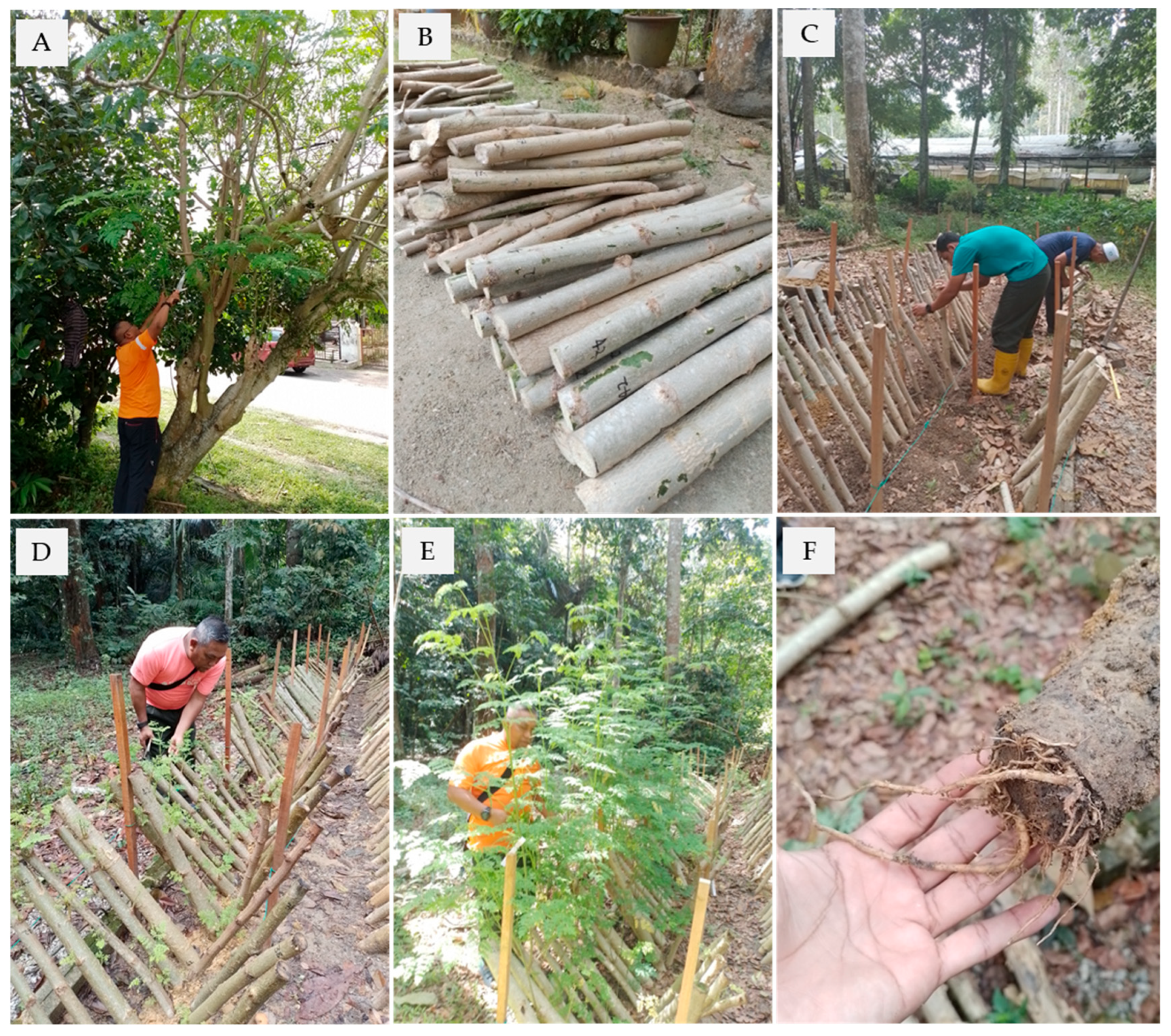
Cuttings were collected from all identified potential mother trees and propagated under uniform nursery conditions, ensuring that subsequent differences in phytochemical content reflected genotype-dependent variation rather than environmental or management factors (
Figure 1). Significant genotypic variation was observed among the selected Moringa genotypes for all measured vegetative traits (
Table 6). Genotype 1 produced the greatest mean shoot number (18.33), significantly higher than the other genotypes. Genotype 8 exhibited greater shoot elongation (135.80 cm), and the largest shoot girth (11.56 mm) while Genotype 2 showed similarly large stem girth (11.18 mm). Genotype 10 had the highest node number per cutting (8.00). Genotypes 3, 6 and 9 generally produced shorter or thinner shoots and fewer nodes. These results indicate clear genotype-dependent differences in vegetative growth trait of Moringa branch cuttings. The observed differences demonstrate that genotype strongly influences both the number of shoots produced per cutting and the subsequent shoot elongation. The high shoot number in Genotype 1 suggests a stronger capacity for bud break and axillary shoot proliferation likely reflecting differences in bud activity, dormancy release, or carbohydrate allocation in the stem tissues used as cuttings.
Genotypes can have significant effect in sprouting, shoot elongation and shoot thickness during vegetatively propagation. The observed variation among genotypes suggests intrinsic genetic control over propagation efficiency. Different genotypes may vary in tissue maturity, carbohydrate reserves, and hormone responsiveness, which are critical for root induction and shoot growth [
8,
27,
34]. Genotypes with higher endogenous auxin levels or more favourable auxin-to-cytokinin ratios may enhance root initiation, while those with more vigorous apical meristems may allocate more resources to shoot development. Similar genotype-dependent rooting patterns have been reported in other clonal propagation studies, emphasizing the importance of selecting genotypes with high propagation potential [
35,
36]. Additionally, bud position or the maturity of the cutting, reflected in varying node numbers, may influence performance among genotypes. Larger cutting diameter and higher carbohydrate reserves have been associated with higher shoot and root production in Moringa cuttings and other woody cuttings [
37].
Rooting ability varied significantly among the ten Moringa genotypes, with rooting percentages ranging from 36.66% to 76.66% (
Table 7). Genotype 8 recorded the highest rooting success and produced the greatest number of roots, indicating superior root initiation capacity, while Genotypes 2 and 5 produced the longest roots, and Genotype 2 produced the thickest root. These results demonstrate substantial genotypic variation in rooting behaviour, which may be attributed to differences in endogenous auxin distribution, carbohydrate availability, and their interaction at the cutting base [
38,
39]. Similarly genotype dependent rooting have been widely reported at the molecular level in some other species. For example, transcriptomic comparisons in
Populus revealed that easy-to-root and difficult-to-root genotypes exhibit contrasting expression of transcription factors, hormone-responsive genes, and ROS-regulating proteins that directly influence adventitious root formation [
40]. Comparable findings have been reported in chestnut, where rooting competence in genotypes varied due to variation in lignin biosynthesis pathways, auxin sensitivity and carbohydrate metabolism at the molecular level [
34]. In addition, QTL-mapping in
Populus identified multiple genomic regions controlling both root and shoot traits, demonstrating that rooting capacity is genetically regulated and varies strongly among genotypes [
41]. Although exogenous IBA and cutting size influence rooting response in previous Moringa studies, the stronger genotype-specific reaction observed in this study aligns with these molecular level insights, confirming that rooting efficiency is fundamentally genotype-driven [
8,
27,
42].
Astragalin, a bioactive flavonoid with notable pharmacological properties, has garnered increasing attention for its therapeutic potential [
27,
43,
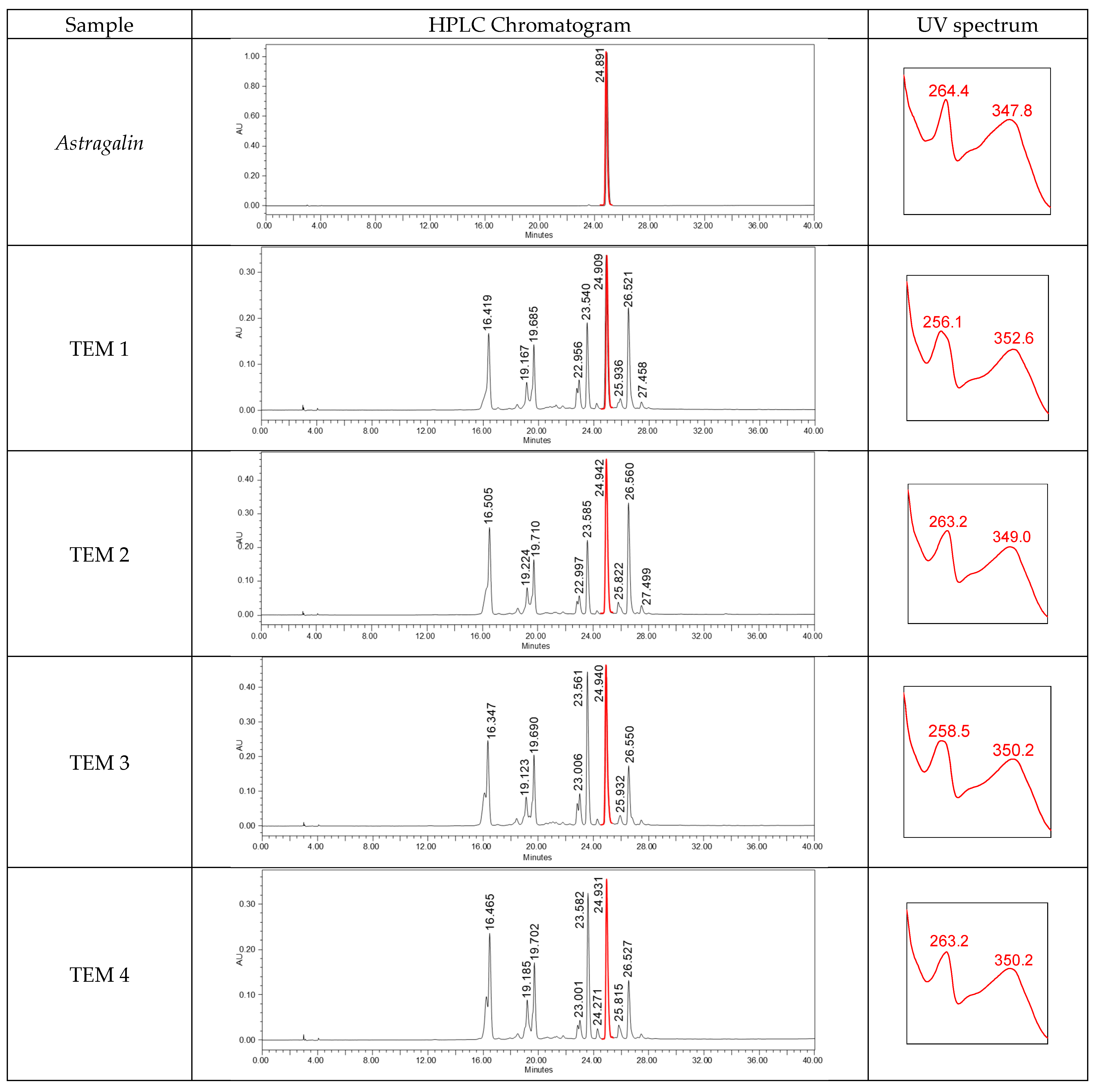
44]. In the context of genetic improvement, identifying genotypes that combine high biomass yield with elevated astragalin content is crucial for both agricultural and pharmaceutical applications. Screening of genotypes was conducted to identify high-yielding variants with elevated levels of astragalin, aiming to support breeding program and commercial cultivation of Moringa. Leaf samples from the ten best-performing genotypes, exhibiting vigorous shoot and root development, were analysed for astragalin content using high-performance liquid chromatography (HPLC). The representative HPLC chromatogram shows distinct peaks corresponding to astragalin (red peak) in each genotype, confirming the compound’s presence and retention time (
Figure 2).
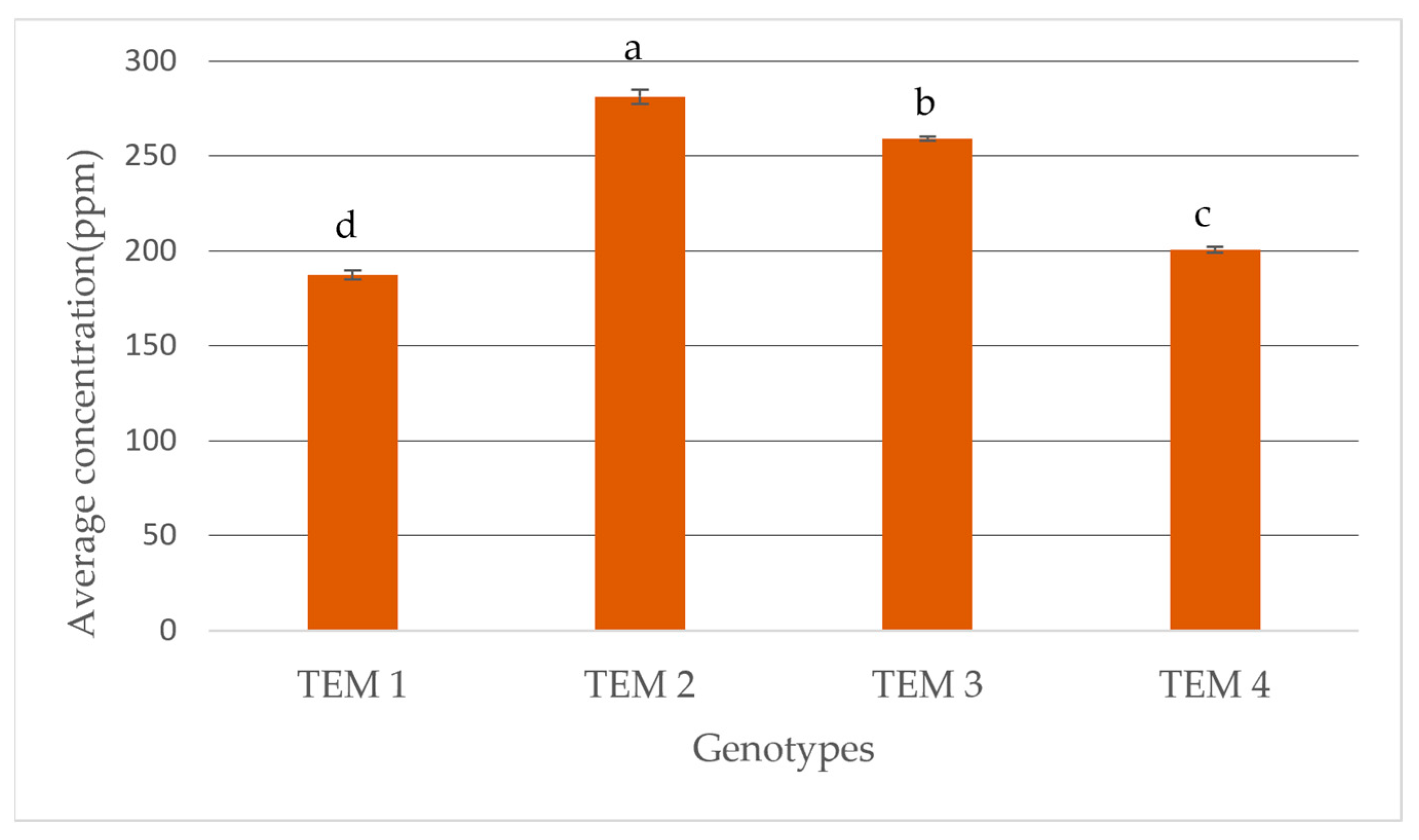
Results revealed significant variation among genotypes, with four genotypes exhibiting higher astragalin concentrations. These findings highlight the potential of integrating morphological selection with phytochemical profiling to optimize both growth performance and bioactive compound yield for industrial and nutraceutical applications. The highest astragalin content of four selected Moringa genotypes, determined by HPLC at 340 nm, is presented in
Figure 3. Significant differences (
p < 0.05) were observed among genotypes, with concentration ranging from 187.24 ppm to 281.37 ppm. TEM 2 exhibited the highest level (281.37 ppm), followed by TEM 3 (259.05 ppm), TEM 4 (200.39 ppm), and TEM 1 (187.24 ppm). The current findings corroborate earlier reports indicating that genotypic variation plays a decisive role in the biosynthesis and accumulation of phenolic compounds and flavonoids in Moringa [
27,
45,
46]. Significantly high astragalin content in TEM 2 suggests that this genotype possesses a higher capacity for flavonoid biosynthesis or glycosylation efficiency, making it a promising candidate for propagation and use in nutraceutical or pharmaceutical applications. Elevated astragalin concentration has been linked with enhanced antioxidant and anti-adipogenic properties in Moringa extracts [
43,
44]; thus, selecting genotypes with naturally higher astragalin levels could directly improve bioactivity and consistency in value-added formulations.
The effect of cutting position on both shooting and rooting performance of Moringa cuttings is presented in
Table 8 and
Table 9. Cutting position significantly influenced all measured shoot and root traits (
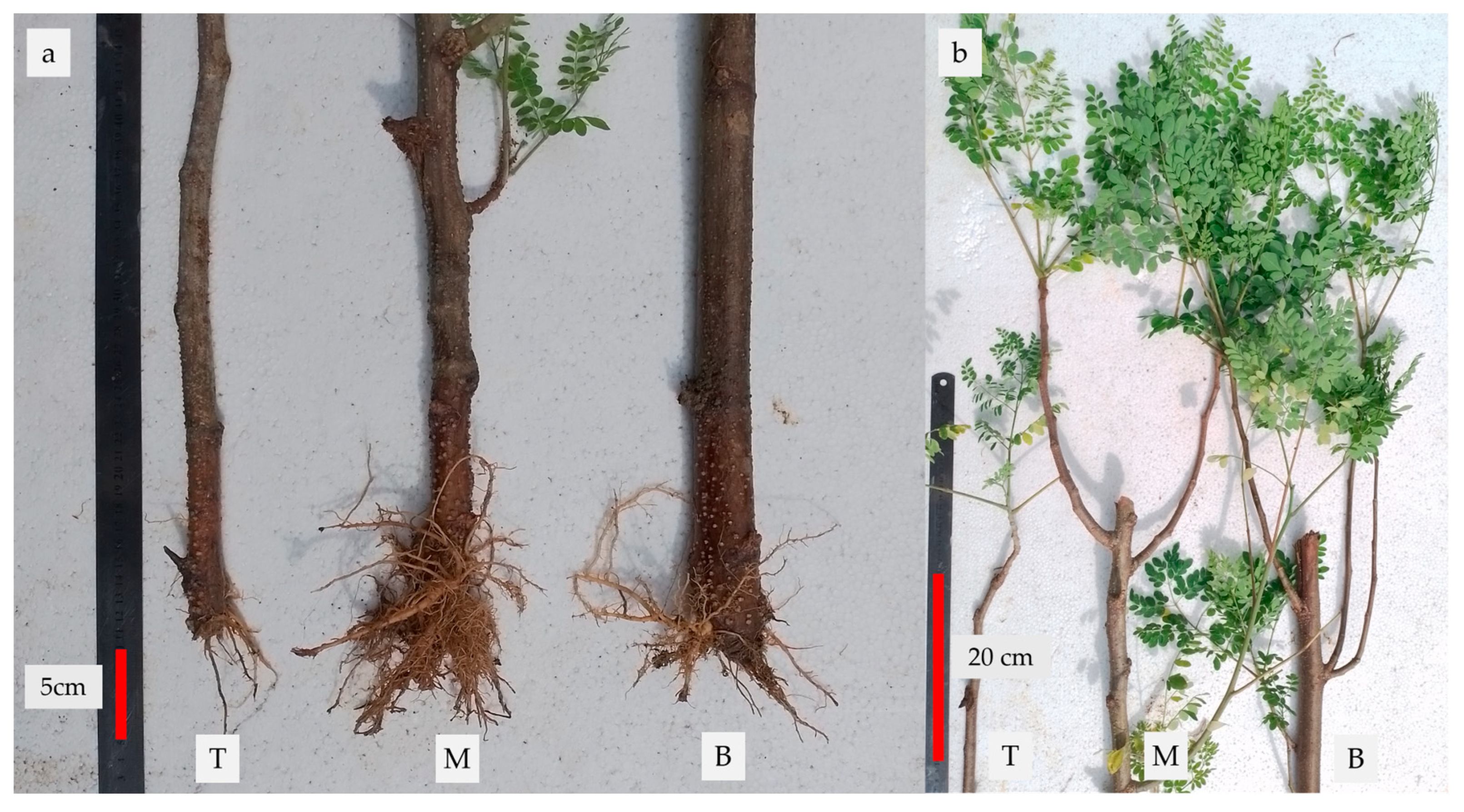
p < 0.05). Bottom (Basal) cuttings achieved the highest shooting percentage (100%), followed by middle (77.80%) and top (apical) cuttings (44.43%). Bottom cuttings also produced the greatest number of shoots (4.22), nodes (5.00) and the thickest shoots (24.65 mm). In contrast, middle cuttings developed the longest shoots (40.21 cm), while top cuttings performed poorly across all shoot traits (
Figure 4). Similarly, rooting traits were strongly affected by cutting position (
Table 9). Bottom cuttings showed the highest rooting percentage (100%), followed by middle (66.70%) and top cuttings (55.56%). Middle cuttings had the greatest root number (32.83), whereas bottom cuttings produced fewer roots (24.22) but thicker roots (4.40 mm). Root length was comparable among all positions (9.90–12.92 cm) indicating that root elongation is less sensitive to cutting position than shoot traits.
These findings suggest that bottom cuttings favour root emergence and the development of thicker roots, whereas middle cuttings promote greater lateral root proliferation. Top cuttings showed both lower rooting percentages and thinner roots, likely reflecting reduced physiological maturity and lower nutrient reserves [
47,
48,
49]. Overall bottom cuttings proved optimal for propagation success, achieving 100% shooting and rooting percentages alongside vigorous, thick shoots and roots. Our observation that all bottom cuttings rooted and produced shoots is consistent with previous reports demonstrating the high regenerative capacity of cuttings under optimized propagation conditions. Several studies have documented 100% rooting and shoot formation in cuttings subjected to controlled environmental conditions, various growing media, and auxin treatments [
50,
51,
52,
53,
54,
55]. These results indicate that the physiological status of the cuttings, combined with appropriate hormonal application and environmental management, contributes to consistently high rooting and shoot development. The uniform rooting and shoot growth observed in our study can be attributed to the combination of genotype vigour, physiological status of the cuttings, optimized substrate, controlled environmental factors, and auxin-based treatment. Nevertheless, these outcomes may vary under field conditions or with different genotypes; thus, the results reported here are specific to the controlled experimental setup employed in this study.
Variation in both shoot and root traits reflects physiological differences along the stem. These include tissue maturity, carbohydrate content, and hormone distribution, which directly affect regenerative potential in woody species [
48,
56,
57]. Basal segments generally contain higher carbohydrate reserves and favourable endogenous hormone levels such as auxins and cytokinin. This support both root initiation and thick shoot growth. Middle segments have slightly fewer reserves but often contain more active meristematic tissues. This promotes root elongation and lateral root formation. Apical segments are more lignified and have lower nutrient reserves near the shoot tip. As a result, rooting and shoot growth in these segments can be limited [
58,
59]. Similar position-dependent rooting patterns have been observed in other species, although some species may root better from apical segments depending on species, media or season [
60,
61,
62]. The combination of carbohydrate availability, hormonal balance, and tissue maturity underlies these differences, emphasizing the importance of selecting appropriate cutting positions for clonal propagation.
The effect of cutting size on the shooting and rooting ability of Moringa under nursery conditions after four months is summarized in
Table 10 and
Table 11. Stem girth significantly influenced both shoot and root development (
p < 0.05). Larger cuttings (Class 4) produced the highest number of shoots (9.75) and the longest shoots (66.77), followed by Class 3 (7.00 shoots, 58.25 cm). In contrast, smaller cuttings (Classes 1 and 2) developed fewer shoots (4.86–6.67) and shorter shoot lengths. Shoot girth was greatest in intermediate-sized cuttings (Class 3: 12.30 mm), whereas Class 4, despite producing the most shoots, had thinner shoots (5.75 mm). Node number was highest in Class 1 (13.14) and Class 4 (11.25), while Classes 2 and 3 had fewer nodes. These observations indicate that larger cuttings possess greater meristematic potential and stored carbohydrates, supporting more vigorous shoot proliferation and elongation. Rooting responses showed an inverse trend. Smaller and intermediate cuttings (Class 1 and Class 2) produced the highest root numbers (14.71 and 14.00) whereas larger cuttings (Class 3 and Class 4) developed fewer roots (8.25 and 4.50). Root length was comparable across all classes (11–13 cm), and root girth did not differ significantly among cutting sizes. Thus, Class 4 maximized shoot production but had the lowest root number, while Class 1 favoured root development and showed moderate growth. Class 3 provided a balanced outcome, supporting both moderate rooting and substantial shoot elongation.
These patterns reflect the physiological and biochemical mechanism that govern adventitious propagation. Thicker cuttings, which are older and more mature, contain larger carbohydrates reserves. These reserves fuel shoot proliferation and elongation. However, thicker cuttings are also more lignified, which can inhibit adventitious root initiation by limiting cell dedifferentiation and primordia formation [
63,
64,
65]. Thinner cuttings have less lignified tissues and are more responsive to endogenous and applied auxins which will promotes root initiation. However, their lower carbohydrate reserves restrict shoot development. This inverse relationship between shoot and root formation represents a trade-off in resource allocation, which is well documented in woody species [
47,
58]. The observed effects of cutting size also integrate with broader propagation physiology concepts. Carbohydrate availability, hormonal gradients (auxin-to-cytokinin ratios), and the proportion of active cambial tissue together determine whether energy is directed toward root or shoot growth.
Larger cuttings with more reserves and meristematic tissue prioritize shoot growth, while smaller cuttings with less reserves but more responsive tissue favour rooting. These findings align with prior studies demonstrating that anatomical limitation due to tissue lignification, metabolic status, resource allocation and endogenous hormone levels are critical for adventitious rooting and vegetative propagation success [
66,
67,
68]. For Moringa propagation, intermediate to large cuttings (Class 3 and 4) are recommended depending on the propagation objective. Class 3 cuttings provide a balanced outcome, supporting both root formation and shoot elongation. Class 4 cuttings are optimal when the goal is to maximize shoot proliferation for biomass or yield. This mechanism-based understanding emphasizes the importance of selecting cutting size in combination with knowledge of physiological status, hormone dynamics, and tissue structure to optimize clonal propagation success.
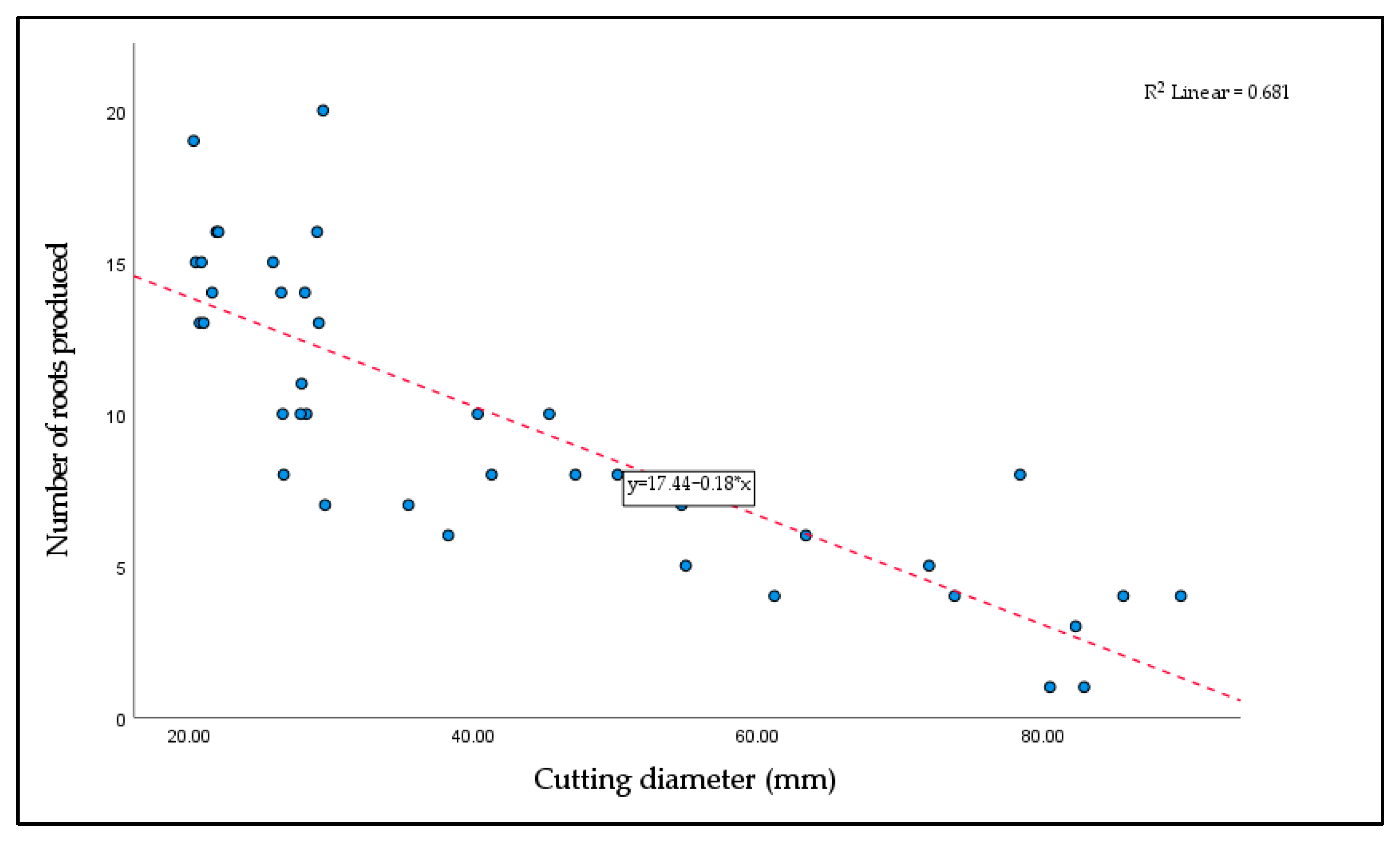
Normality testing (Shapiro–Wilk) revealed that cutting diameter was not normally distributed (
p < 0.001), whereas the number of roots did not significantly deviate from normality (
p < 0.05). Consequently, Spearman’s rank-order correlation was performed to assess the relationship between cutting diameter and the number of roots produced. The results demonstrated a strong, negative correlation between the two variables, rs (37) = −0.855,
p < 0.001, indicating that cuttings with larger diameters tended to produce significantly fewer roots (
Figure 5). This suggests that smaller-diameter cuttings may possess a higher potential for root initiation and development under the conditions evaluated.
The Shapiro–Wilk test indicated that both cutting diameter (
p < 0.001) and the number of shoots (
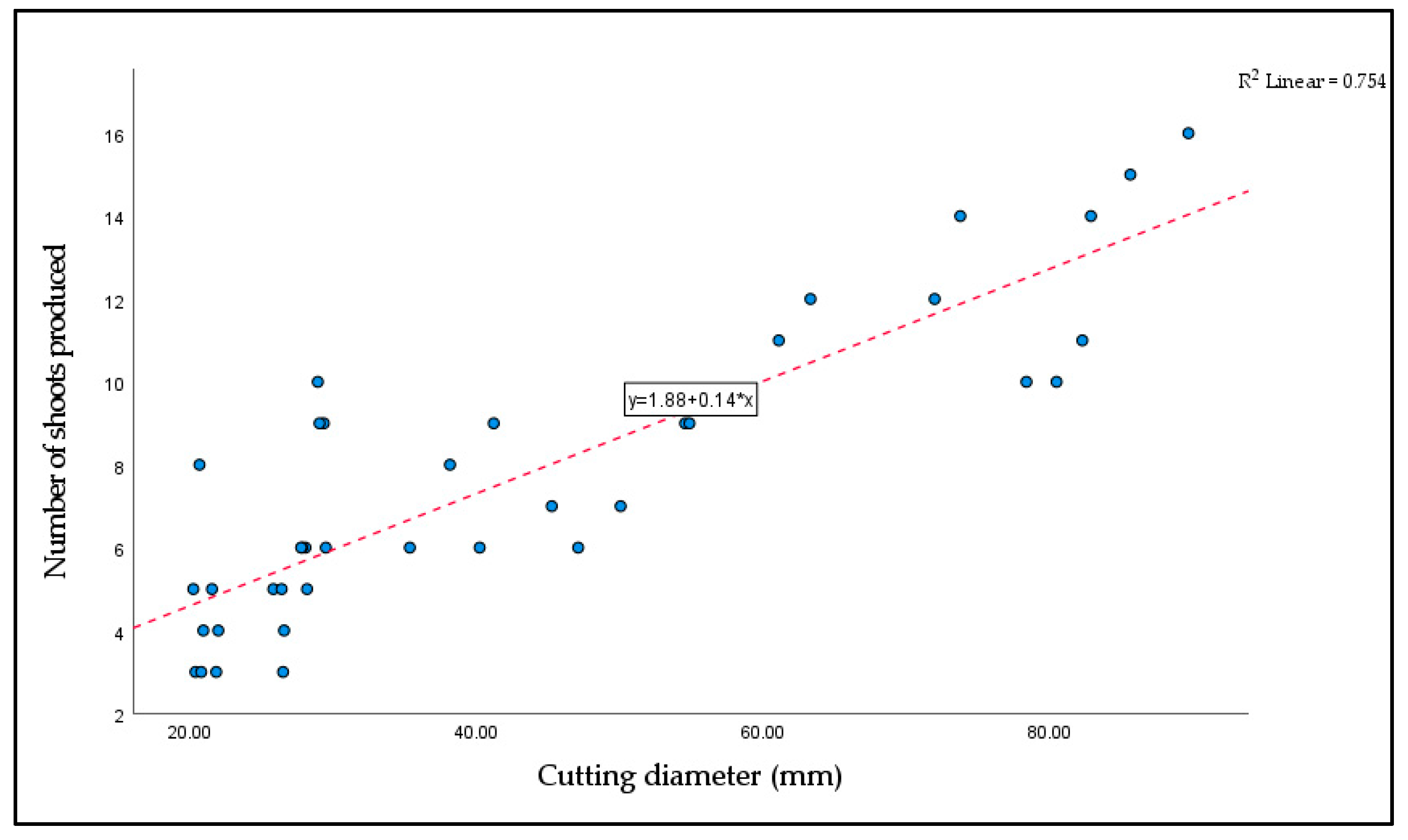
p = 0.028) significantly deviated from normality, and thus nonparametric analysis was used. Spearman’s rank-order correlation analysis revealed a strong, positive correlation between the two variables, rs (37) = 0.867,
p < 0.001, indicating that cuttings with larger diameters produced significantly more shoots (
Figure 6). These results suggest that cutting size plays an important role in shoot initiation and development under the tested propagation conditions.
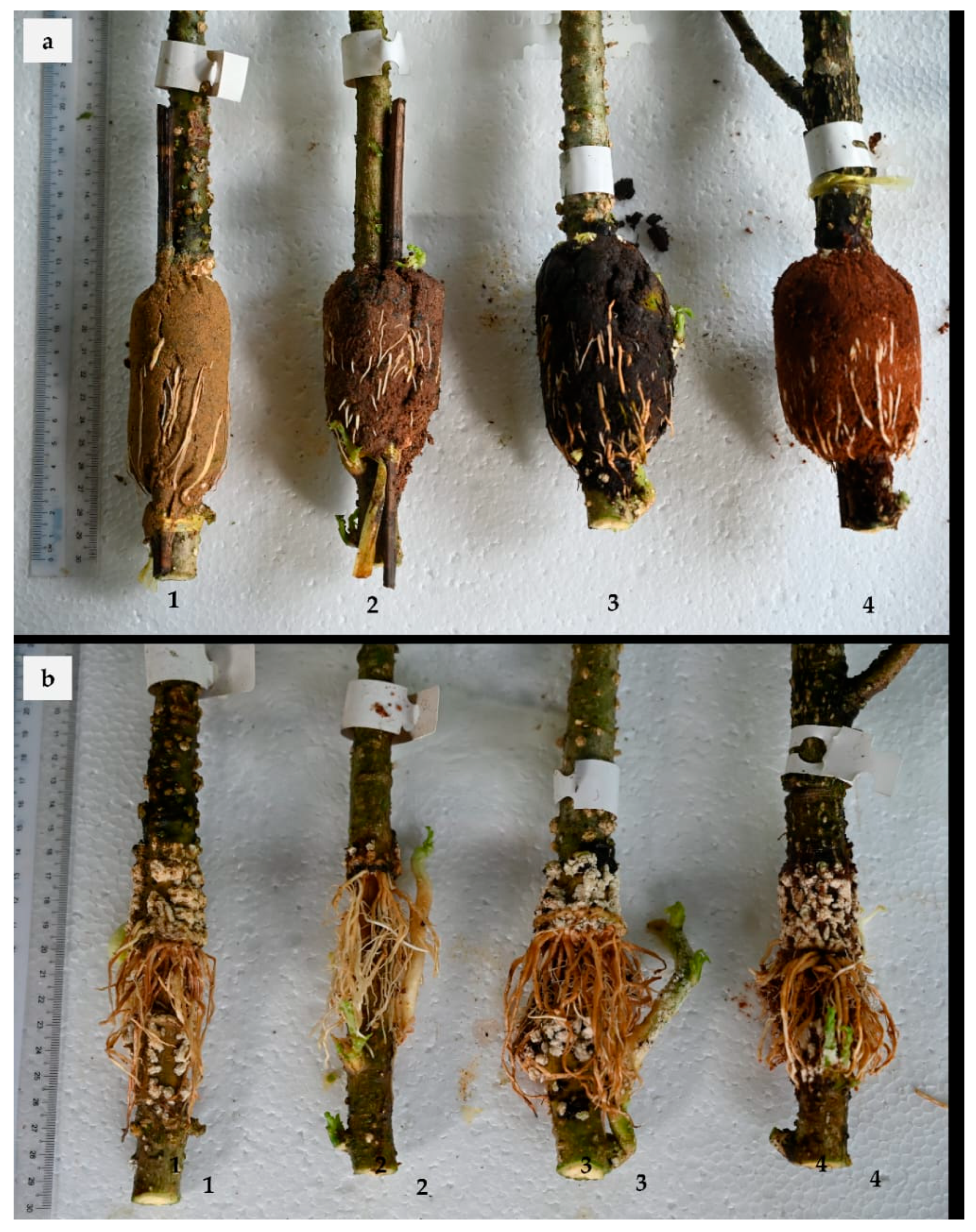
The type and composition of rooting substrates significantly influenced the rooting ability of Moringa branches in air-layering propagation (
Table 12). As shown in
Figure 7, distinct variations in root development were observed among the different treatments. Among the substrates, Jiffy 7 pellets (100% coconut coir, T3) produced the highest number of roots (43.83) and the longest roots (7.23 cm), indicating that the fibrous, well-aerated structure of coconut coir promotes both root initiation and elongation. Mixture of topsoil and cocopeat (T1: 2:1; T2: 1:2) resulted in intermediate root numbers (28.67 and 36.75, respectively), with T2 producing the thickest roots (3.34 mm). This may be attributed to higher organic matter and moisture retention in the substrate with increased cocopeat, enhancing root girth development. Pure coarse cocopeat (T4) produced the fewest roots (21.33) and moderate root girth (2.64 mm), suggesting that while cocopeat retains moisture, it may limit root proliferation compared to more fibrous substrates. Overall, these results indicate that air layering propagation is strongly influenced by substrate composition, aeration, and water-holding capacity. Practically, T3 (100% Jiffy 7 pellets) was the most favourable substrate for air-layering propagation of Moringa, providing both abundant and elongated roots, whereas T2 supports thicker but slightly fewer roots. These findings highlight the importance of selecting an appropriate substrate to optimize root system architecture and ensure successful vegetative propagation of Moringa.




 ,
,