Article

Urban Roadside Forests as Green Infrastructure: Multifunctional Ecosystem Services in a Coastal City of China

by
Wenjing Niu
1,
Xiang Yu
2 and
Lu Ding
3,4,*
1
Forestry College, Beihua University, Jilin 132013, China
2
Environmental Science, College of Natural Resources, University of Idaho, Moscow, ID 83844, USA
3
Community Design Center, Jiangsu Foreign Expert Workshop, Jiangsu University, Zhenjiang 212013, China
4
Department of Computer Graphics Technology, Purdue University, West Lafayette, IN 47907, USA
*
Author to whom correspondence should be addressed.
Forests 2025, 16(12), 1841; https://doi.org/10.3390/f16121841
Submission received: 27 October 2025 / Revised: 23 November 2025 / Accepted: 25 November 2025 / Published: 10 December 2025
(This article belongs to the Special Issue Growth, Maintenance, and Function of Urban Trees)

Abstract

Urban roadside forests are vital components of green infrastructure that provide multiple ecosystem services, contributing to climate regulation, environmental quality, and urban resilience. This study assessed the multifunctional ecosystem services of roadside tree communities along four representative road types—Coastal Scenic, Commercial Arterial, Residential Secondary, and Industrial Park Roads—in Weihai, a coastal city in eastern China. Based on a complete tree inventory (6742 individuals from 38 species) integrated with the i-Tree Eco model, we quantified three key ecosystem services, carbon storage and annual sequestration, air-pollutant removal, and stormwater interception, and monetized their benefits. Results indicate that roadside forests stored approximately 1120 tons of carbon and sequestered 78 tons annually (≈USD 0.53 million; CNY 3.85 million), removed 1.28 tons of air pollutants per year (≈USD 9370; CNY 68,400), and intercepted 1560 m3 of stormwater (≈USD 5560; CNY 40,600). Commercial Arterial and Coastal Scenic Roads yielded the highest total ecosystem-service values, while Residential Secondary Roads achieved the greatest per-area efficiency. These findings highlight the significant contribution of urban roadside forests to sustainable and climate-resilient city development and underscore their potential role in urban forest planning and management.

1. Introduction

Urban mobility, economic expansion, and social connectivity are widely acknowledged as key dimensions of modern urban development [1,2]. However, mainstream planning approaches have traditionally prioritized the optimization of vehicular flow and traffic safety, giving insufficient consideration to the ecological and environmental roles of roadside greenery as an integral component of urban green infrastructure [3]. In rapidly urbanizing environments, road networks not only intensify challenges such as noise, air pollution, and heat accumulation but also provide valuable linear spaces that can enhance biodiversity, regulate microclimates, and strengthen ecological resilience in cities [4]. Recognizing and optimizing the ecological potential of roadside green spaces is therefore fundamental to sustainable and climate-adaptive urban development.
Roadside greenery provides multiple ecosystem services (ES) that support climate regulation and human well-being [5,6,7]. Well-designed tree plantings can mitigate air pollution [8,9], moderate microclimates [10,11], and manage stormwater and soil conservation [12,13,14]. Although these benefits are well recognized, existing studies often focus on individual services or specific metropolitan areas. Comparatively little attention has been given to how different urban road types—such as coastal scenic, commercial, residential, and industrial corridors—differ in their capacity to deliver multiple ecosystem services, particularly under coastal climatic and salt-stress conditions. Therefore, understanding such variations is crucial for integrating roadside vegetation into green-infrastructure and ecosystem-based-adaptation (EbA) strategies [15,16].
Importantly, ecological functions differ across road types. Commercial arterial roads, subject to heavy traffic and pollution, are typically planted with pollution-tolerant, fast-growing species, resulting in low diversity but relatively high pollutant-removal performance [17]. Residential secondary roads emphasize livability and esthetics, usually featuring denser, continuous planting but limited species composition [18]. Industrial park roads, often constrained by land use and freight traffic, rely on fast-growing trees that deliver quick canopy cover but limited long-term stability. Coastal scenic roads, exposed to salt spray and strong winds, require stress-tolerant species to sustain ecological functions [19]. These contrasts suggest that uniform greening strategies are unlikely to succeed across all road types [20,21].
Planting configurations also determine ecological benefits. Studies have shown that continuous, structured roadside vegetation significantly reduces air pollutants and heat loads, while fragmented plantings provide limited effects [22]. International evidence further highlights road-type differences: in European cities, tree diversity and service outputs systematically vary by road category, influenced by planning and management regimes [23]; in rapidly urbanizing regions such as Brazil, insufficient differentiation has led to over-reliance on a few dominant species [24]. In China, nationwide surveys revealed clear north–south contrasts, with southern cities dominated by Cinnamomum camphora and Cedrus deodara, and northern cities by Populus and Salix [25]. In Guangzhou, only 16 species were recorded [26], while in Dalian merely 28 species were found, with Ginkgo biloba, Platanus acerifolia, and Sophora japonica accounting for 64% of all individuals [27]. These findings underline the importance of biodiversity-oriented NbS in roadside vegetation planning.
Quantitative tools have advanced ecosystem service evaluation. The i-Tree Eco model, developed by the U.S. Forest Service, has been widely applied to urban forests and roadside vegetation [28]. It estimates carbon storage and sequestration, pollutant removal, and hydrological services [29,30]. Recent studies confirm that structural differences in roadside vegetation directly shape resilience and multifunctional service delivery [31]. Comparative work further suggests that residential roads often outperform major arterials in per-area service efficiency [32]. Moreover, roadside tree diversity has been shown to correlate strongly with urban ecological resilience, enabling more stable service delivery under disturbance [33].
Despite notable progress, research on medium-sized coastal cities remains limited. Existing studies have largely concentrated on metropolitan cores or highway systems, while neglecting second- and third-tier urban centers that play an increasingly important role in regional sustainability and land-use transitions. In the context of China, megacities (e.g., Beijing, Shanghai) dominate urban ecological studies, whereas smaller cities (population < 0.5 million) and large metropolitan areas have received disproportionate attention. Medium-sized cities such as Weihai—located between these two extremes—represent a transitional category characterized by rapid yet spatially constrained urbanization, with distinct socio-environmental challenges [34]. Therefore, localized and road-type-specific assessments framed within the context of ecosystem-based adaptation (EbA) are urgently needed. These cities differ from large metropolises in their land-use intensity, infrastructure patterns, and financial resources for green-space management, which in turn affect roadside vegetation composition and maintenance practices. Existing studies have primarily addressed metropolitan cores or highway systems, with little attention to intra-urban road corridors that experience varying degrees of environmental stress, planting design, and management capacity. Under the combined pressures of climate change, salt exposure, and spatial expansion, medium-sized coastal cities like Weihai provide unique contexts in which roadside trees exhibit distinct structural and functional characteristics. Therefore, localized and road-type-specific assessments framed within ecosystem-based adaptation (EbA) perspectives are urgently needed [35]. In this study, the term urban roadside forest refers to continuous or semi-continuous tree-lined green corridors located along urban roadways. These corridors typically feature multi-row plantings, connected canopies, and measurable ecological functions such as carbon storage, air purification, and microclimate regulation. While they may not meet the legal definition of “forest” in land-use classification systems (which often require a minimum area of 0.10 ha), this term emphasizes the functional and ecological role of roadside vegetation as part of the broader urban forest network. Such usage follows earlier studies adopting an ecological perspective on urban trees.
To address this gap, we focus on Weihai, a coastal city in eastern China, and analyze four representative road categories: coastal scenic routes, commercial arterials, residential secondary roads, and industrial park corridors. Drawing on a full tree census integrated with the i-Tree Eco model, we evaluate three critical ecosystem services: (i) carbon storage and sequestration, (ii) pollutant removal, and (iii) stormwater interception. The specific objectives are to:
  • Measure and compare ecosystem service outcomes among different road categories;
  • Identify the dominant species driving service provision;
  • Develop planning and management recommendations tailored to each road type.
By situating roadside tree communities within the framework of ecosystem-based adaptation and green infrastructure, this study advances the ecological assessment of urban road corridors in China. It provides practical insights for Weihai and transferable lessons for other rapidly urbanizing coastal regions facing similar socio-ecological challenges.

2. Materials and Methods

2.1. Study Area

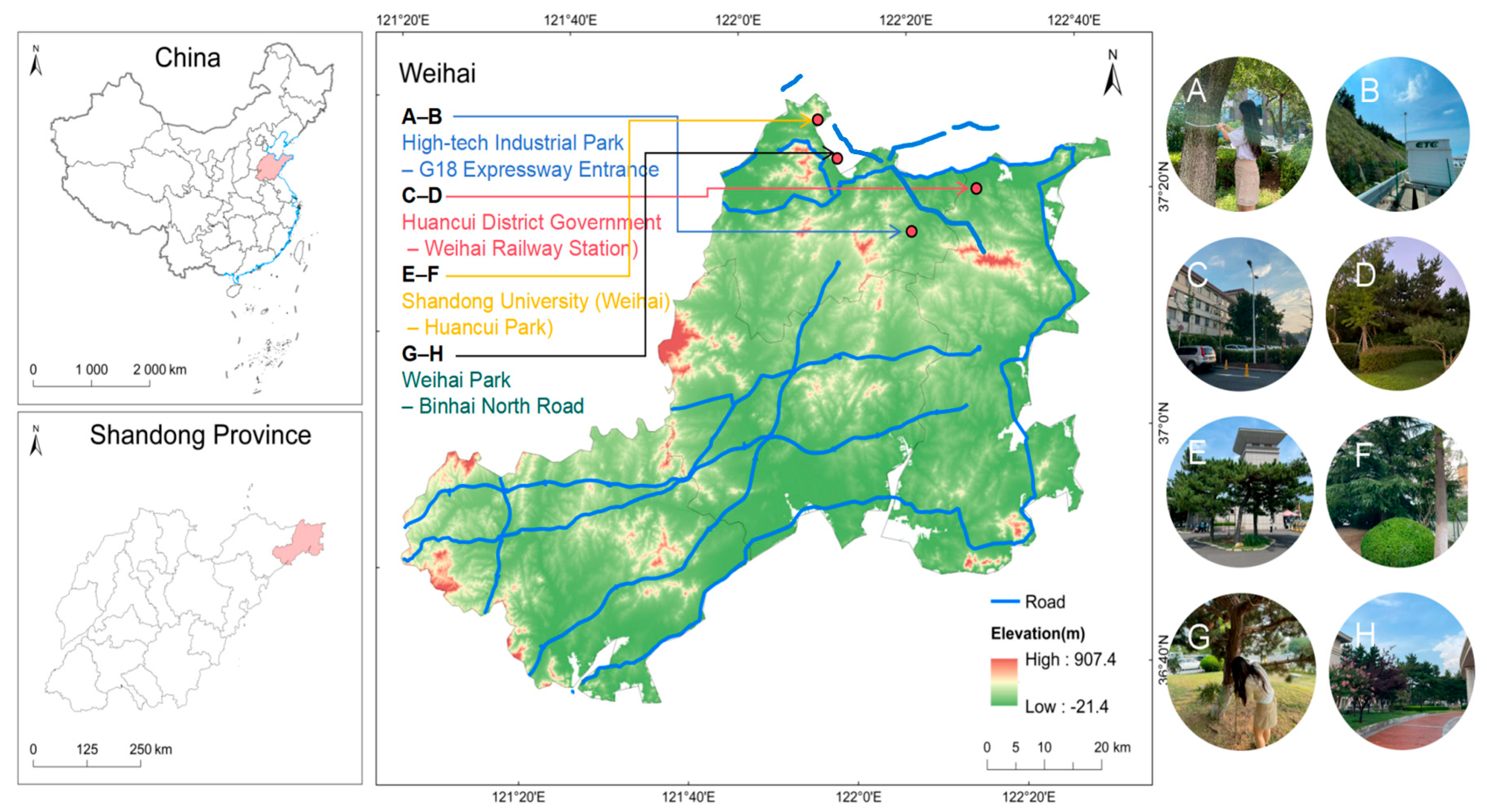
This study was conducted in Weihai City, located in eastern Shandong Province, China (37°30′–37°35′ N, 122°00′–122°10′ E). Four representative urban road types with associated street trees and green verges were selected as primary research sites: arterial roads, secondary roads, coastal scenic roads, and commercial district roads (Figure 1). These road types represent distinct traffic intensities, landscape functions, and management regimes, providing a diverse basis for comparative analysis.
The selected sites were distributed across the central urban area and surrounding districts, with a total surveyed road length of approximately 24 km. Each site included both the planted street trees and their associated green verges, enabling an integrated assessment of vegetation structure and ecosystem services. Weihai has a temperate monsoon climate influenced by its coastal location, characterized by four distinct seasons and mild temperatures. The annual average temperature is approximately 12.2 °C, with the warmest month in August (average 25.1 °C) and the coldest in January (average −2.5 °C). The city receives an average annual precipitation of around 800–950 mm, concentrated mainly between June and August. Its unique climatic conditions, salt-laden winds, and urban development pressures create specific challenges for roadside tree growth and management.

2.2. Valuation of Ecosystem Services via i-Tree Eco

We employed the i-Tree Eco v6.0.1 model (USDA Forest Service, Washington, DC, USA; available at www.itreetools.org), to measure the ecosystem services (ES) of urban trees in the study region. This tool is extensively applied in urban forestry and planning, offering standardized and replicable methods to evaluate tree structure and ecological performance across different spatial contexts [36]. Its credibility has been supported by broad international applications [37,38].
For this research, data collected from the full tree inventory were combined with site-specific meteorological and environmental datasets to estimate ES with i-Tree Eco. The evaluation concentrated on three primary functions: carbon capture and storage, air quality improvement through pollutant removal, and rainfall interception. Furthermore, the system translated ecological outcomes into economic terms by applying its default valuation coefficients. More specific details of the valuation metrics and price references are provided in Section 3.2.

2.2.1. Tree Data Collection

We conducted a full inventory of trees and their green verges along four representative road corridors in Weihai—namely, coastal scenic routes, commercial arterials, residential secondary streets, and industrial park roads. Fieldwork occurred between April and June 2024, adhering to the standardized i-Tree Eco v6 protocol [39].
A complete census was conducted, documenting every tree within the defined roadside corridors—including both edges, central medians, and adjacent verges—rather than employing sample plots or subsections. This approach was adopted because the total survey length (~24 km) and number of trees (6742 individuals) allowed for full coverage, ensuring data consistency and eliminating sampling bias when comparing different road types. Recorded attributes included species, diameter at breast height (DBH), tree height, crown width, crown base height, and overall health condition (Table 1).
For each tree, we recorded taxonomic identity (verified using local floras and expert input), diameter at breast height (DBH, measured at 1.3 m using a diameter tape; Haglöf, Långsele, Sweden), total height (measured with a laser rangefinder; Nikon Forestry Pro II, Tokyo, Japan), and crown width (derived from LiDAR data or field measurements following standard urban forestry protocols). Crown base height was determined visually using a telescopic pole, and overall condition was assessed based on crown loss, dieback percentage, and crown exposure indices [40]. All observations were compiled in Microsoft Excel 2019 (Microsoft Corp., Redmond, WA, USA) for subsequent analysis of structural attributes and ecosystem services.

2.2.2. Meteorological and Air Quality Inputs

Given Weihai’s coastal location, the nearest available meteorological proxy was identified in Qingdao (Shandong Province, China), approximately 220 km southwest of the study area, which shares highly similar maritime climatic and environmental conditions. Hourly meteorological and air quality datasets were obtained from the Liuting Weather Station (NCEI ID: 548570-99999; elevation 10.1 m; latitude 36.266° N, longitude 120.374° E) and subsequently imported into the i-Tree Eco model [41].
Meteorological data for 2023, including temperature, humidity, wind speed, and precipitation, were retrieved from this station. Annual precipitation was reported as 903.224 mm (based on 6-hourly NCEI records), reflecting typical temperate monsoon climate conditions in the region. Hourly air quality parameters, including CO, NO2, O3, PM10, PM2.5, and SO2, were obtained from national monitoring stations in Qingdao; these are compatible with the i-Tree Eco database. This integration ensured that the simulation of ecosystem services accurately reflected local atmospheric and meteorological conditions without requiring custom data uploads.

2.3. Structure and Function

2.3.1. Trees Structure

Composite Index of Importance (IV)
Importance Value (IV) was calculated as a composite measure incorporating three structural parameters—relative abundance, proportional leaf area, and canopy coverage—by averaging them to produce a composite score. This index, ranging from 0 to 100, represents the ecological dominance or relative importance of each tree species within the roadside community, with higher values reflecting greater structural and spatial influence [42].
The computation followed the expression:
IVs = (RAs + RLAs + RCCs)/3
where IVs is the importance value for species s, RAs is its relative abundance, RLAs is its relative leaf area, and RCCs is its relative canopy coverage.
Structural Age Composition
Based on diameter at breast height (DBH), street trees were grouped into four developmental stages: young (0–15 cm), semi-mature (15–30 cm), mature (30–60 cm), and over-mature (>60 cm). This scheme enabled assessment of structural equilibrium and regeneration capacity.

2.3.2. Quantification of Tree Ecosystem Services

Species-level biomass equations available in the literature were employed to estimate stored carbon, applying a 20% downward adjustment to represent reduced growth potential in urban habitats. Yearly sequestration was modeled according to diameter growth increments, differentiated by genus, size category, and tree condition, thereby projecting carbon gain from year xxx to x + 1x + 1x + 1. The economic value was determined at 179.42 USD per metric ton [43,44].
The overall carbon storage was derived using the formula:
CS = CF × CC × A
where CF is the carbon factor, CC the canopy cover rate, and A the study area.
Atmospheric Pollutant Mitigation by Trees
Pollutant removal was quantified by integrating canopy traits—such as coverage, leaf area index, and proportion of evergreen foliage—with localized meteorological and air quality inputs. The model produced annual removal estimates for CO, NO2, O3, SO2, PM2.5, and PM10. Economic valuation applied pollutant-specific unit prices: USD 1519.98/t (CO), 1069.46/t (O3), 10,703.98/t (NO2), 2619.82/t (SO2), and 7146.72/t (PM2.5, PM10) [41,45].
The removal flux was computed as:
The flux of pollutant removal was computed using:
F = Vd × C
where F is the pollutant removal flux (g·m−2·s−1), Vd represents the deposition velocity (m·s−1), and C denotes the ambient pollutant concentration (g·m−3).
Runoff Reduction
To estimate runoff reduction, rainfall interception by canopy cover was compared to a tree-free condition. The avoided runoff volume was valued at USD 2.35/m3 [46,47]. The estimation applied the following formula:
RD = V × Cis × P
RD = annual avoided runoff; V = study area; Cis = fraction of impervious surface; P = mean annual rainfall.

3. Results

3.1. Species Diversity and Structural Traits of Weihai’s Roadside Trees

3.1.1. Species Diversity and Abundance

Across the four surveyed road categories in Weihai, a total of 6742 individual trees were identified, representing 38 species, 32 genera, and 23 families. While Table 2 lists the 15 most common species, all recorded taxa were included in the ecosystem service calculations. Deciduous species dominated the population, making up 72.5%, with evergreens accounting for the remaining 27.5%. The ten most abundant species comprised 69.3% of all individuals (Table 2). The leading six were Sophora japonica (13.6%), Platanus orientalis (11.2%), Ginkgo biloba (9.8%), Robinia pseudoacacia (8.4%), Populus tomentosa (7.5%), and Koelreuteria paniculata (6.1%).
The Coastal Scenic Road recorded 1742 trees with 21 species, dominated by Pinus thunbergii and Populus tomentosa. The Commercial Arterial Road contained 2063 trees with 26 species, with Platanus orientalis and Sophora japonica most abundant. The Residential Secondary Road had 1324 trees of 19 species, where Ginkgo biloba and Koelreuteria paniculata were common. The Industrial Park Road supported 1613 trees of 15 species, largely consisting of Robinia pseudoacacia and Populus tomentosa.

3.1.2. Ecological Dominance of Major Roadside Tree Species

The ten most dominant species together made up 65.1% of the inventoried trees (4393 of 6742). With an Importance Value (IV) of 36.5, Sophora japonica emerged as the dominant species, representing 13.6% of all individuals and accounting for 24.1% of total leaf area.
Platanus orientalis followed with 11.2% of the total count and significant contributions to canopy cover and leaf area (18.7%), giving it an IV of 28.4. Ginkgo biloba was also important, representing 9.8% of trees and reaching an IV of 22.6, largely because of its broad canopy and leaf area share.
Other key contributors included Robinia pseudoacacia (IV = 19.5), Populus tomentosa (IV = 18.7), and Koelreuteria paniculata (IV = 17.3). Although occurring at lower frequencies than S. japonica and P. orientalis, these taxa contributed notably to canopy leaf area, underscoring their ecological significance within Weihai’s roadside tree assemblages (Table 3).

3.1.3. Age Structure

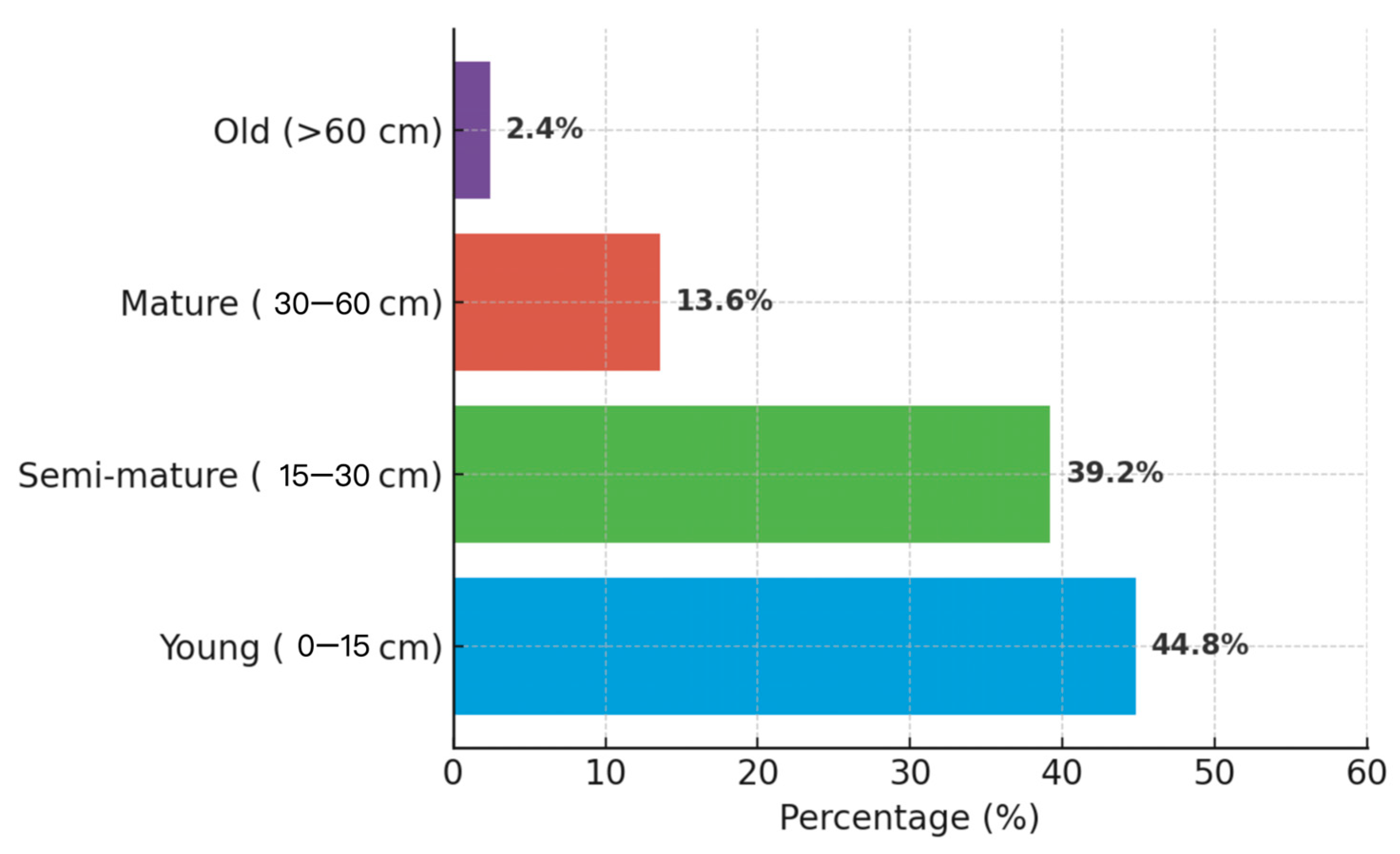
The age distribution of roadside trees across the four surveyed road types in Weihai showed an uneven pattern. The majority of roadside trees fell into the young and semi-mature categories, representing 44.8% and 39.2% of the population, respectively. Mature individuals (30–60 cm DBH) contributed 13.6%, while only 2.4% exceeded 60 cm DBH and were considered old. The latter group mainly included long-lived species such as Ginkgo biloba and Sophora japonica, which had been planted several decades earlier (Figure 2).

3.2. Assessment of Ecosystem Services in Weihai’s Roadside Tree Communities

3.2.1. Carbon Stocks and Sequestration Potential of Roadside Trees

In total, roadside trees in the surveyed corridors stored approximately 1120.4 t of carbon, generating an estimated economic value of ≈USD 0.49 million (CNY 3.60 million). The greatest contributions came from Commercial Arterial Roads (32.7%) and Coastal Scenic Roads (28.5%). Although the Residential Secondary Road had a lower overall carbon stock, it displayed the highest efficiency per hectare (82.4 t/ha), reflecting dense planting and canopy cover in residential neighborhoods (Table 4).
The dominance of Sophora japonica and Platanus orientalis reflected not only their numerical abundance and biomass but also functional characteristics such as broad crowns, substantial leaf area, and tolerance to urban stressors.
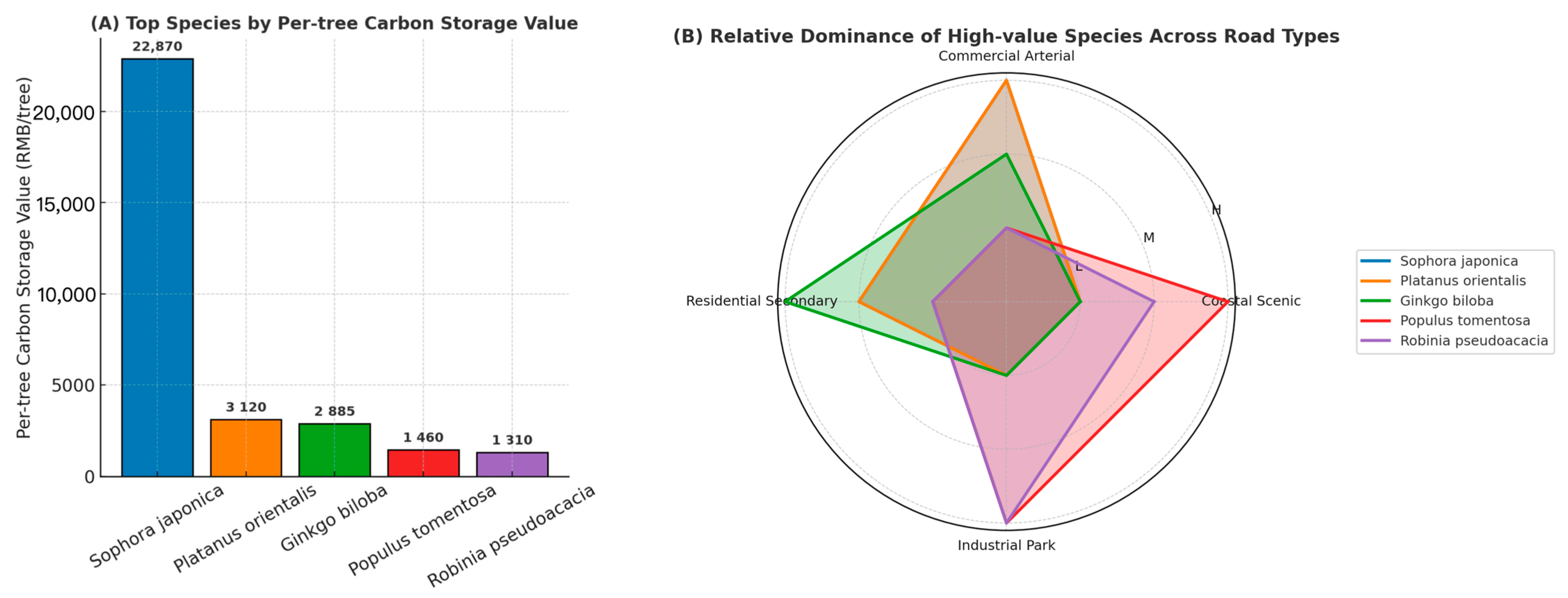
The analysis revealed that S. japonica provided the greatest per-tree carbon-storage benefit, with an estimated value of ≈USD 3130 (CNY 22,870) per tree, and was particularly prevalent in commercial arterial corridors. Additional high-performing species included P. orientalis (≈USD 430; CNY 3120/tree), G. biloba (≈USD 395; CNY 2885/tree), P. tomentosa (≈USD 200; CNY 1460/tree), and R. pseudoacacia (≈USD 180; CNY 1310/tree). All of these species exceeded the weighted average of ≈USD 150 (CNY 1120/tree), highlighting their functional roles in urban ecosystem services (Figure 3).
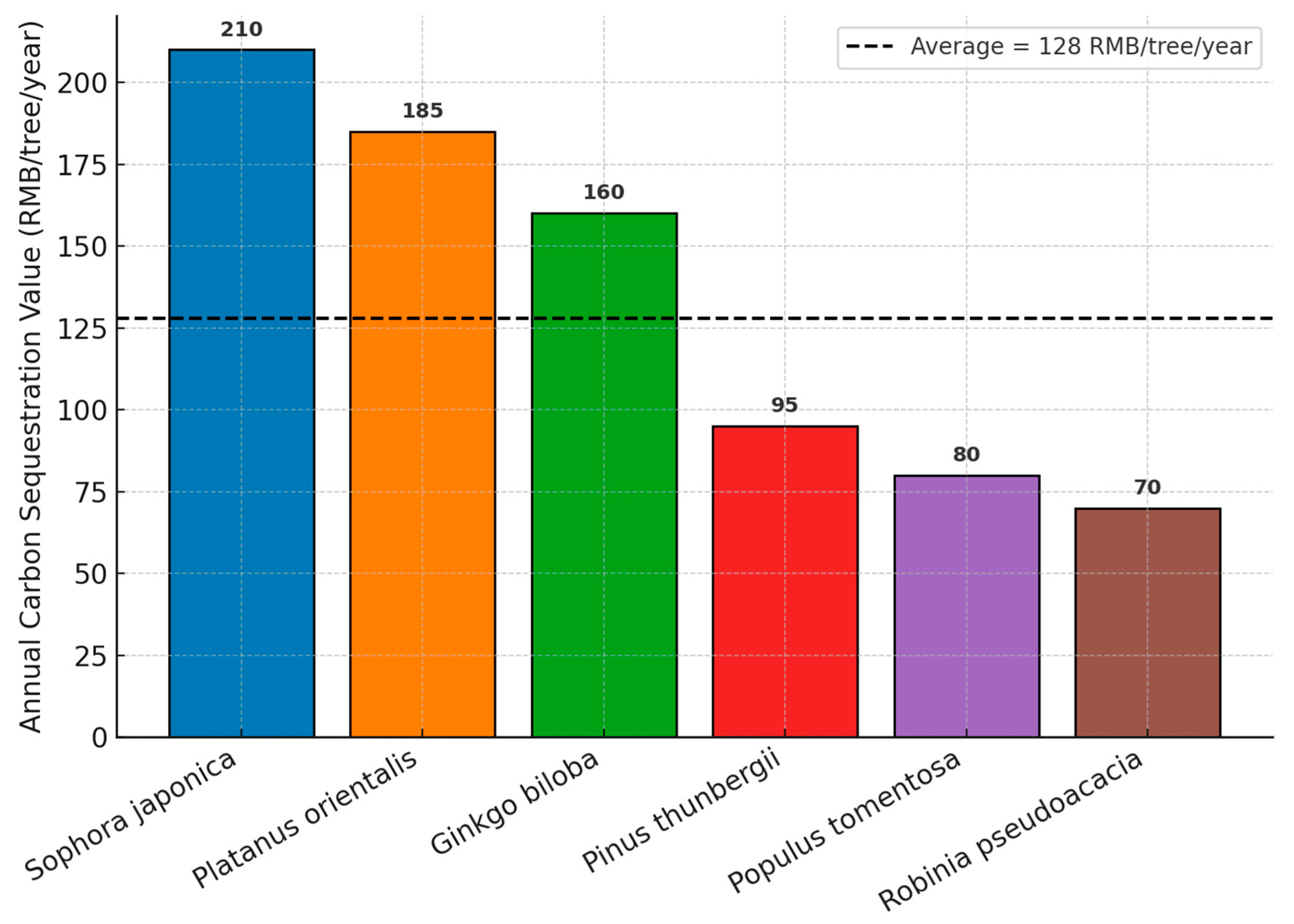
Annual carbon sequestration of the roadside tree population reached 78.4 t, generating an economic benefit estimated at ≈USD 34,520 (CNY 252,000). At the species level, S. japonica provided the greatest per-tree annual sequestration benefit (≈USD 29 per tree per year; CNY 210/tree/year), followed by P. orientalis (≈USD 25; CNY 185/tree/year) and G. biloba (≈USD 22; CNY 160/tree/year). Species with moderate sequestration capacity but high adaptability to coastal environments, such as Pinus thunbergii (≈USD 13; CNY 95/tree/year), also contributed to the long-term stability of the urban carbon sink (Table 5).
The mean annual benefit was estimated at ≈USD 18 (CNY 128) per tree across all corridors, whereas only a limited number of species—S. japonica, P. orientalis, and G. biloba—exceeded this benchmark substantially (Figure 4).

3.2.2. Tree Canopy Contributions to Air Quality Improvement

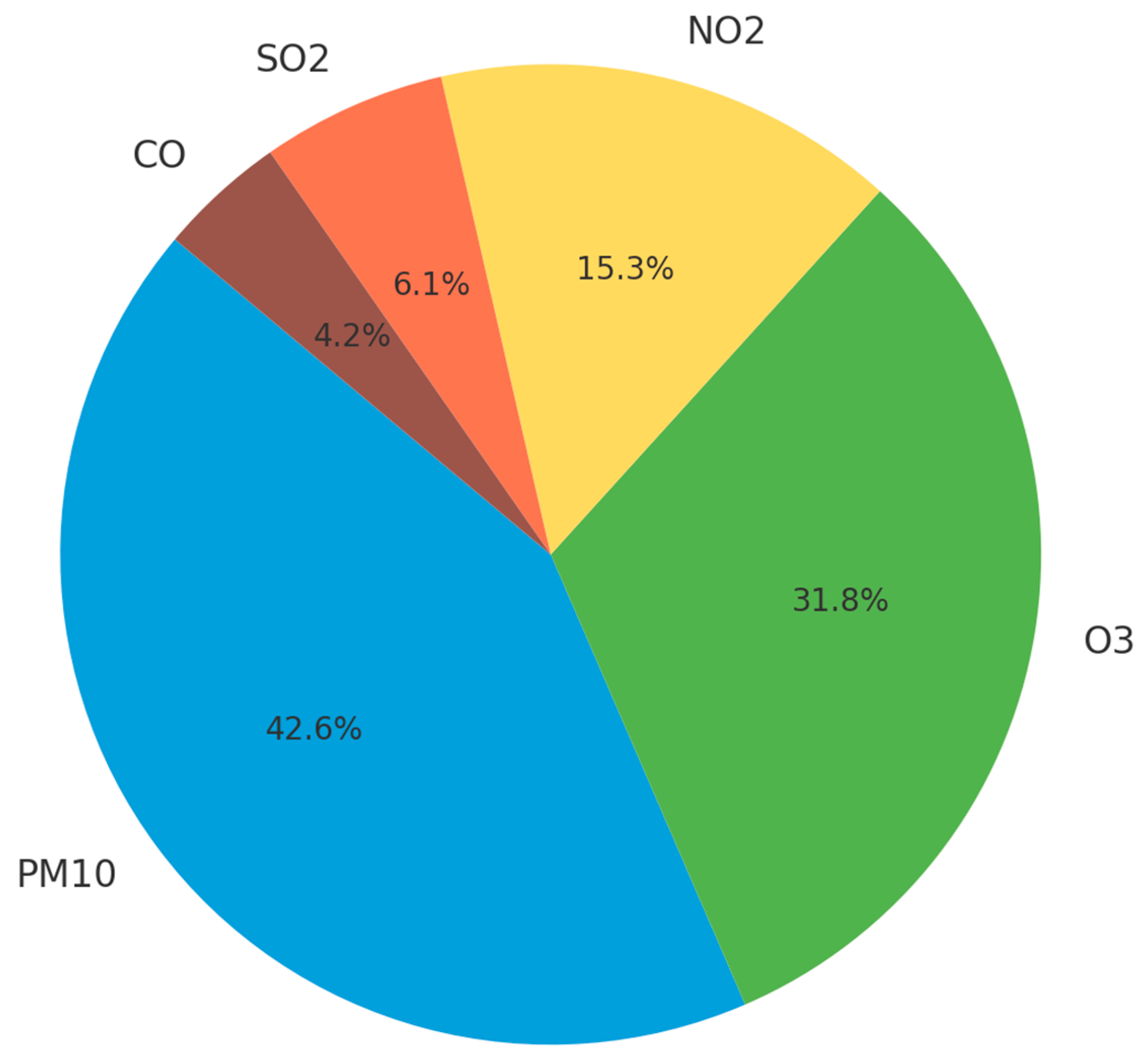
The total annual removal of air pollutants by roadside tree communities was estimated at 1.28 t, with a corresponding benefit of about ¥68,400. The majority of this service was attributable to PM10 (42.6%) and O3 (31.8%). When expressed as economic value, PM10 contributed 41.2% and O3 27.6%, highlighting their significance in determining the total ecological benefits (Figure 5).
Across road categories, the Commercial Arterial Road showed the strongest performance, removing 480 kg of pollutants annually with an economic value of ≈USD 3550 (CNY 25,920). This was followed by the Coastal Scenic Road (390 kg year−1, ≈USD 2830 (CNY 20,670)), while the Industrial Park Road accounted for 270 kg year−1 (≈USD 1960; CNY 14,310), and the Residential Secondary Road contributed the least, at 140 kg year−1 (≈USD 1030; CNY 7500).
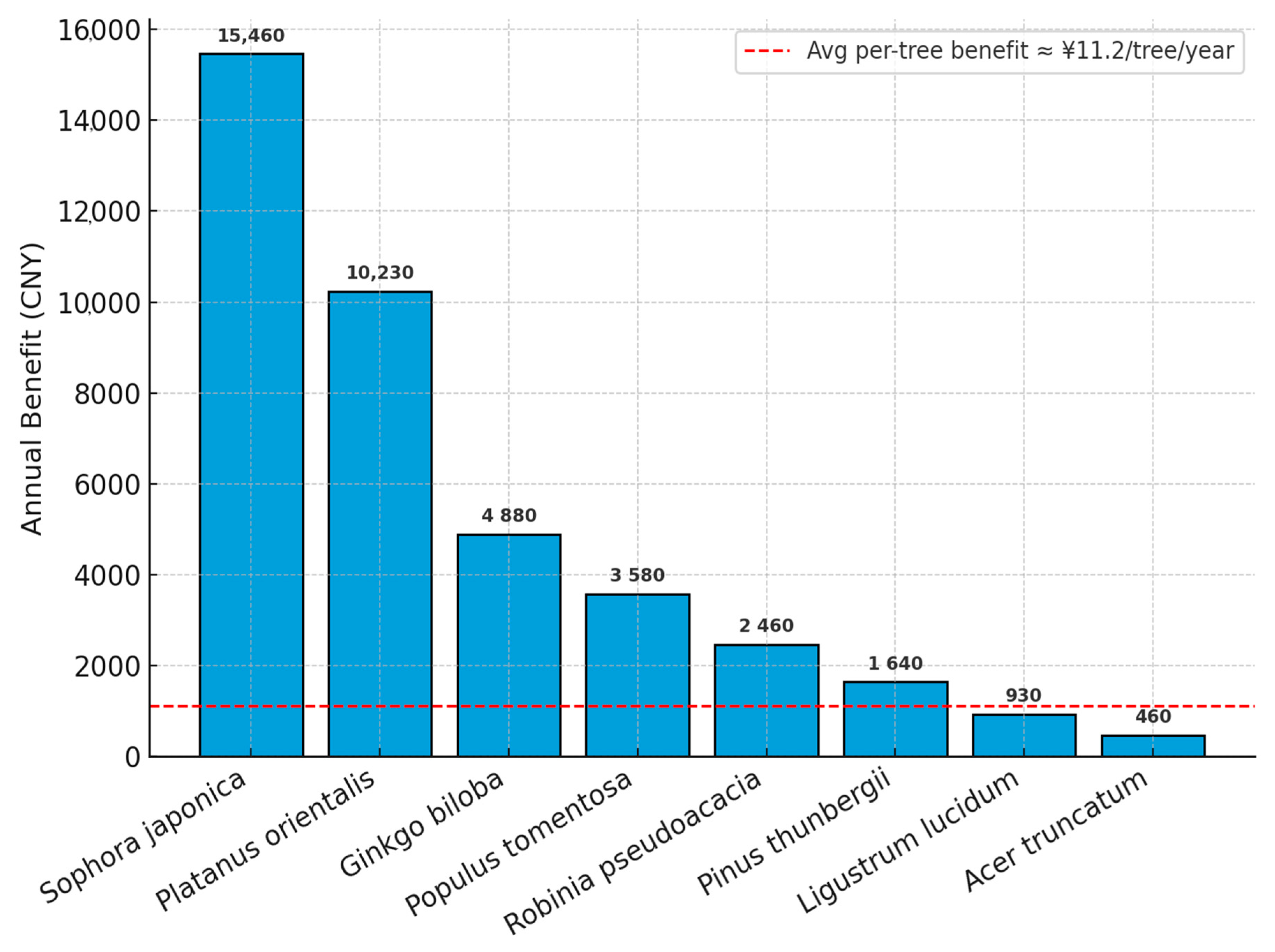
Among species, Sophora japonica was the leading contributor, generating ≈USD 2120 (CNY 15,460) per year, followed by Platanus orientalis (≈USD 1400; CNY 10,230) and Ginkgo biloba (≈USD 670; CNY 4880). These species were most common in commercial arterial and residential corridors, where canopy density and leaf-area index (LAI) values tended to be higher.
On a per-tree level, Populus tomentosa provided the greatest efficiency (≈USD 9.8 per tree per year; CNY 71.4/tree/year), although its overall contribution was modest because of its limited abundance. S. japonica also exhibited strong performance, ranking first in total benefits (22.6%) while maintaining a high per-tree value (≈USD 4.6 per tree per year; CNY 33.7/tree/year). Both P. orientalis and G. biloba showed balanced contributions in aggregate and per-tree terms. By contrast, species such as Ligustrum lucidum and Acer truncatum demonstrated relatively weak performance, with low totals and individual benefits, suggesting reduced effectiveness for air-pollutant removal.
Across all species, the weighted mean annual benefit was ≈USD 1.5 (CNY 11.2) per tree (Table 6, Figure 6).

3.2.3. Rainfall Retention and Runoff Mitigation

Roadside trees along the four road types in Weihai were estimated to intercept roughly 1520 m3 of rainfall annually, corresponding to an economic value of ≈USD 3510 (CNY 25,600). Among road types, the Commercial Arterial Road provided the greatest contribution (520 m3 year−1; ≈USD 1200 [CNY 8750]), followed by the Coastal Scenic Road (420 m3 year−1; ≈USD 960 [CNY 7050]), the Industrial Park Road (330 m3 year−1; ≈USD 750 [CNY 5500]), and the Residential Secondary Road (250 m3 year−1; ≈USD 590 [CNY 4300]).
On a per-area scale, however, the Residential Secondary Road achieved the highest interception efficiency (11.5 m3 ha−1 year−1), reflecting dense canopy cover and moderate planting intensity in residential strips.
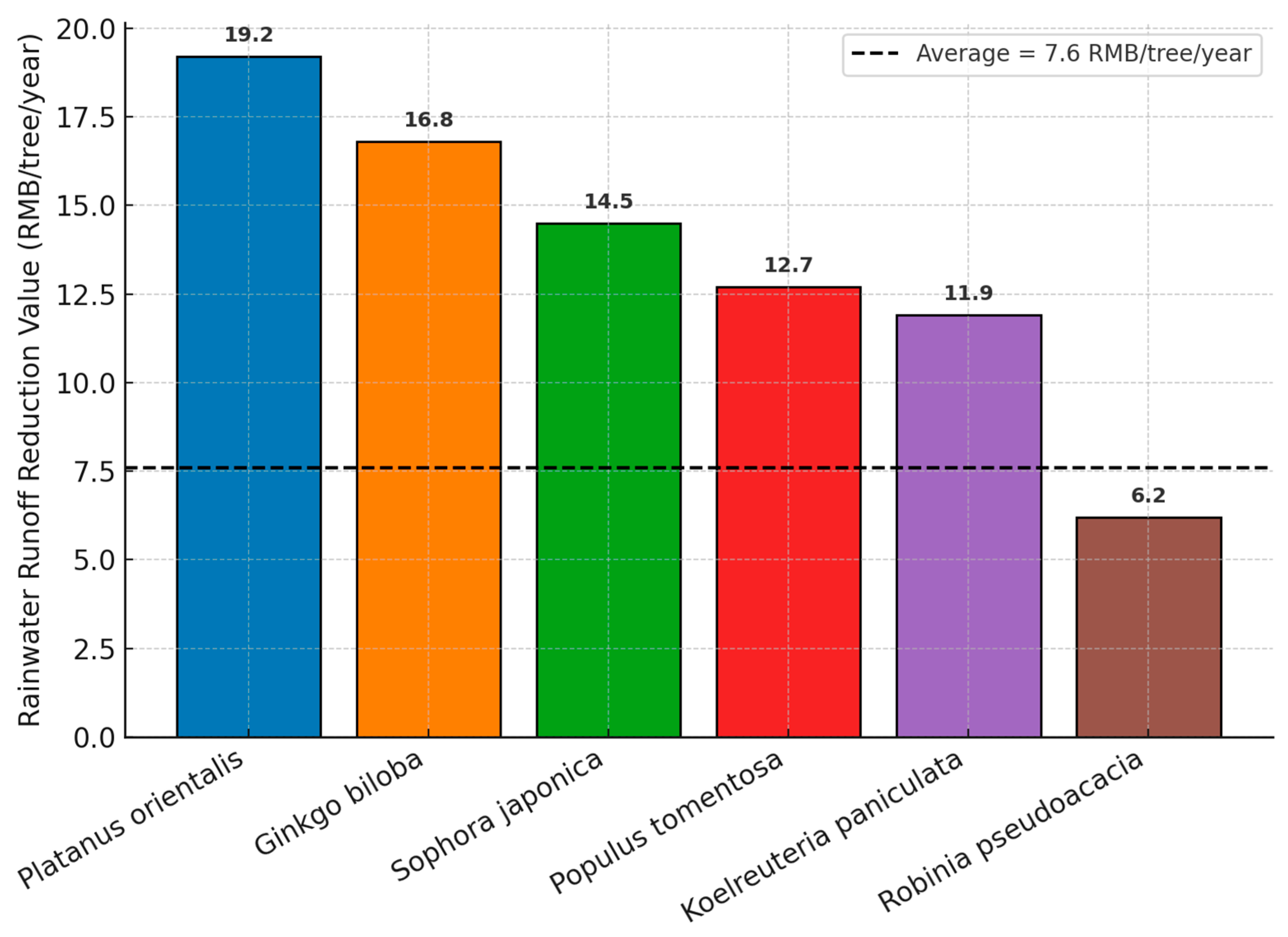
Species varied markedly in per-tree storm-water interception benefits. Platanus orientalis, Ginkgo biloba, and Sophora japonica provided the greatest returns (≈USD 2.6 [CNY 19.2], ≈USD 2.3 [CNY 16.8], and ≈USD 2.0 [CNY 14.5] per tree per year, respectively), while Populus tomentosa and Koelreuteria paniculata also surpassed the mean (≈USD 1.7 [CNY 12.7] and ≈USD 1.6 [CNY 11.9] vs. ≈USD 1.0 [CNY 7.6] per tree per year). Robinia pseudoacacia, despite its widespread presence in industrial corridors, showed lower interception efficiency (≈USD 0.85 [CNY 6.2] per tree per year) but still made a significant contribution to total interception due to its abundance (Figure 7).

3.3. Synthesis of Ecosystem Service Contributions from Roadside Vegetation

The ecosystem services supplied by roadside trees across the four road categories in Weihai were valued at approximately ≈USD 0.54 million (CNY 3.95 million) per year. Of this, carbon storage was the dominant contributor (≈USD 0.49 million; CNY 3.60 million; 91.3%), while annual carbon sequestration accounted for ≈USD 34,520 (CNY 252,000; 6.4%). The benefits from air pollution removal and stormwater regulation were smaller in monetary terms, estimated at ≈USD 9370 (CNY 68,400; 1.7%) and ≈USD 3510 (CNY 25,600; 0.6%), respectively (Table 7).
This pattern highlights that although carbon-related functions make up the majority of the total economic valuation, the ecological importance of air purification and runoff control should not be overlooked. These services contribute to microclimatic regulation, air quality improvement, and enhanced resilience against urban flooding.

4. Discussion

4.1. Strategic Guidelines for Urban Roadside Tree Planting

This survey documented 6742 trees belonging to 38 species, 32 genera, and 23 families across four types of urban road corridors in Weihai, reflecting a moderate diversity level. When compared with other studies, the species richness of Weihai’s roadside trees was neither extremely high nor particularly low. A survey of street trees along the Nanjing Ring Expressway recorded 7985 individuals from 45 species, with Cinnamomum camphora as the dominant species, followed by Koelreuteria paniculata, C. japonicum, and Populus nigra [48]. In Guangzhou, only 16 tree species were documented in the tree layer of urban green spaces, significantly lower than that of natural forests [49]. Similarly, a survey in Dalian identified merely 28 species, with Ginkgo biloba, Platanus acerifolia, and Sophora japonica accounting for approximately 64.1% of all individuals, reflecting a pronounced dominance of a few species [50].
Beyond China, international comparisons also provide meaningful insights. A study on street trees in Brazilian cities revealed a highly concentrated composition, suggesting that fast-urbanizing regions in developing countries often suffer from limited species diversity and an over-reliance on dominant taxa [24]. In contrast, European urban forestry studies have shown much higher overall richness, but with significant variation in composition across different road types, indicating the importance of management regimes and design patterns [51]. Furthermore, modeling-based research has emphasized that variation in road vegetation structure can lead to substantial differences in ecosystem service outputs, highlighting the potential for optimized design strategies [52].
Taken together, these comparisons suggest that Weihai’s urban road tree communities occupy an intermediate position: they are more diverse than some highly simplified urban systems, but fall short of the richness observed in more diversified cases. This underscores the opportunity to enhance ecosystem services by optimizing species composition and planting structures, thereby reducing ecological risks associated with over-dominance and improving resilience under urban environmental pressures.
Importantly, species composition and diversity also varied across different road types in Weihai. Commercial Arterial Roads were dominated by Sophora japonica and Platanus orientalis, reflecting design choices that prioritize shade and resilience under heavy traffic, but also exposing these corridors to potential risks from pest outbreaks or canopy homogenization. Coastal Scenic Roads featured salt- and wind-tolerant species such as Pinus thunbergii, yet the overall richness was slightly lower than in inner-city corridors, suggesting that site conditions constrained species choice. In contrast, Residential Secondary Roads showed relatively higher diversity per unit length, with a mixture of ornamental and native species, providing both ecological and social benefits to surrounding communities. Industrial Park Roads displayed the lowest diversity, with a strong reliance on fast-growing, hardy species like Robinia pseudoacacia, which offer rapid greening but limited long-term ecological resilience. These differences indicate that strategic planting recommendations should be tailored not only at the city scale but also by road type, ensuring that corridor-specific functions and risks are adequately addressed.
In Weihai, the ten most common tree species represented nearly 70% of all recorded individuals, with Sophora japonica alone exceeding 13%. This exceeds the commonly cited “10–20–30 guideline” for urban tree diversity, which suggests limiting dominance to ≤10% for a single species, ≤20% for a genus, and ≤30% for a family [46]—suggesting ecological vulnerability in existing roadside planting practices. Such concentration of a few dominant taxa is often observed in fast-urbanizing areas, where landscape planning prioritizes trees that are fast-growing, pollution-tolerant, and visually appealing, such as S. japonica and Platanus orientalis. However, in coastal cities, these monocultural tendencies increase susceptibility to pests, diseases, and salt-laden winds, threatening long-term ecological resilience [53].
It is noteworthy that some less abundant species, such as Ginkgo biloba, demonstrated relatively high Importance Values (IVs) due to their broad crown spread and longevity. Comparable results have been documented in previous urban street tree studies [48,52], showing that species with intermediate frequency but high structural biomass contribute disproportionately to ecosystem services. These outcomes highlight the value of selecting long-lived and structurally resilient species for planting, as they can deliver substantial ecological benefits even when present at moderate densities.
To enhance resilience and mitigate ecological risks, future roadside tree planning in Weihai should gradually adopt a resilience-oriented design framework. Specific recommendations include:
  • Controlling the dominance of a few species, strictly following the 10–20–30 biodiversity safety threshold;
  • Promoting the use of native, stress-resilient tree species—such as Liquidambar formosana, Quercus variabilis, and Celtis sinensis—to enhance multifunctional benefits and strengthen adaptive capacity;
  • Establishing stratified planting structures by combining canopy, sub-canopy, and shrub layers, thereby enhancing spatial heterogeneity and buffering against ecological shocks.
In summary, the management of roadside tree communities should not only focus on short-term ecosystem service delivery (e.g., shading, carbon storage, air purification) but also emphasize sustaining ecological resilience and safeguarding biodiversity over the long term, thereby supporting the adaptation and transformation of urban green infrastructure under climate change.

4.2. Cross-Service Evaluation of Roadside Vegetation

In addition to enabling transportation and economic flows, urban road corridors perform vital ecological roles through their tree cover. Our survey of 6742 individuals across four representative road types in Weihai demonstrated contributions to three principal services: carbon storage and sequestration, pollutant mitigation, and stormwater regulation. These findings are consistent with prior studies that underscore the multifunctionality of roadside vegetation in cities [48].
Carbon-related services represented the largest share, with roadside trees in Weihai storing an estimated 1120 tons of carbon (≈USD 0.49 million; CNY 3.60 million) and sequestering about 78 tons annually, equivalent to ≈USD 34,520 (CNY 252,000). The Commercial Arterial Road contributed the most to total carbon storage (366.5 t; 32.7%), while the Coastal Scenic Road followed closely (319.4 t; 28.5%). In contrast, the Residential Secondary Road stored a smaller total amount (184.7 t) but showed the highest storage efficiency (~82.4 t ha−1), reflecting intensive planting and high canopy coverage in residential areas. The Industrial Park Road accounted for 249.8 t of carbon storage but had relatively low per-tree values, mainly due to younger tree age and smaller crown development. Sophora japonica and Platanus orientalis were distinguished by both their numerical dominance and biomass, as well as functional traits—including expansive crowns, large leaf surface areas, and tolerance to urban stress—that contributed to high carbon sequestration potential. The results suggest that integrating these dominant species with native multifunctional taxa (e.g., Quercus variabilis, Celtis sinensis) could maximize ecological benefits while improving biodiversity.
Weihai’s roadside corridors—particularly Commercial Arterial Roads (≈USD 285 per tree; CNY 2076) and Coastal Scenic Roads (≈USD 200 per tree; CNY 1460)—exhibited greater per-tree carbon-storage efficiency than values commonly reported for Guangzhou (≈USD 140–220 per tree; CNY 1000–1600/tree) [54]. This supports the argument of Nowak and Crane [55] that species composition and planting strategies are decisive factors shaping urban carbon outcomes.
Roadside trees were estimated to remove about 1.28 tons of air pollutants annually, corresponding to an economic benefit of roughly ≈USD 9370 (CNY 68,400). Among the road types, the Commercial Arterial Road again dominated, removing about 480 kg annually (≈USD 3550; CNY 25,920), owing to heavy traffic flows and dense canopy structure, factors that enhanced pollutant absorption. The Coastal Scenic Road, although exposed to stronger winds and greater atmospheric exchange, showed relatively higher O3 absorption. The Residential Secondary Road, despite its smaller scale, performed well due to compact planting and continuous green strips. By contrast, the Industrial Park Road—while exposed to significant emissions from heavy vehicles—was dominated by fast-growing species such as Robinia pseudoacacia, which provided limited per-tree pollutant-removal efficiency. Among pollutants, PM10 and O3 accounted for the largest shares of removal (42.6% and 31.8%), confirming the important role of roadside trees in mitigating traffic-derived emissions. By contrast, PM2.5 removal was relatively limited, which may be linked to leaf-surface traits of dominant taxa such as S. japonica, P. orientalis, and G. biloba. While these species contribute strongly to other ecosystem services, their morphological characteristics (e.g., smoother or waxy leaves) appear less effective in trapping fine particles. This emphasizes the importance of species selection in improving particulate removal in high-traffic urban corridors [55].
Notable differences in rainwater runoff regulation were observed across both species and road categories. The Residential Secondary Road showed the highest interception efficiency (11.5 m3 ha−1 year−1), reflecting its dense canopy and green-strip continuity. The Commercial Arterial Road and Coastal Scenic Road contributed substantial interception volumes (520 and 420 m3 year−1, respectively), playing a critical role during coastal storm events. In contrast, the Industrial Park Road, with narrow green strips and uneven vegetation distribution, delivered the lowest hydrological benefit. At the species level, Platanus orientalis, Ginkgo biloba, and Sophora japonica showed the highest per-tree interception benefits, reaching ≈USD 2.6 (CNY 19.2), ≈USD 2.3 (CNY 16.8), and ≈USD 2.0 (CNY 14.5) per tree per year, respectively—well above the overall average of ≈USD 1.0 (CNY 7.6). Their broad canopies and high leaf area indices enhanced rainfall interception and delayed surface runoff. Robinia pseudoacacia, though widely distributed in industrial zones, showed relatively lower per-tree interception (≈USD 0.85 [CNY 6.2]) but still made a significant contribution to total interception due to its abundance (Figure 7). Our results are consistent with earlier research emphasizing that tree architecture and spatial arrangement strongly influence hydrological ecosystem services [56,57].
Overall, the findings confirm that urban road corridors act as vital green infrastructure within metropolitan ecological networks, providing ecosystem services on par with those of parks or university campuses. Performance, however, varied across road types: Commercial Arterial and Coastal Scenic Roads contributed the largest total benefits; Residential Secondary Roads showed the highest efficiency; while Industrial Park Roads performed weakest but hold notable potential if species selection and structural design are optimized. Enhancing age-class diversity and introducing species with strong pollutant tolerance and hydrological efficiency could further strengthen these functions. Moving forward, ecological assessment should be integrated into transport infrastructure planning and roadside tree management to jointly secure mobility and ecological benefits.

4.3. Limitations and Perspectives

This study systematically examined the species composition and ecosystem service provision of roadside trees in Weihai. Nevertheless, several limitations remain, particularly regarding methodology and the comparison of road types.
This research adopted the i-Tree Eco model to evaluate carbon storage, sequestration, air quality regulation, and stormwater mitigation. However, as the model was calibrated for U.S. urban forests, even with localized input data, certain allometric relationships and pollution-response modules may not fully correspond to the physiological characteristics of tree species in Weihai and similar coastal Chinese cities, where stressors such as salt spray and heavy traffic pollution are prevalent. Future research should emphasize local calibration to enhance the accuracy of ecosystem service quantification.
Second, limitations of Commercial Arterial Roads. These corridors were dominated by Sophora japonica and Platanus orientalis, reflecting a high concentration of a few species. While their ecosystem service contributions were substantial, such dependence on dominant species creates high ecological risks. Future research should integrate diversity indices and functional redundancy analyses to avoid service loss from species-specific failures.
Third, limitations of Coastal Scenic Roads. Roadside vegetation in coastal corridors relied heavily on salt- and wind-tolerant species such as Pinus thunbergii. Overall species richness was relatively low, and this study did not fully address how to balance ecological services with esthetic functions in these areas. Future work should explore mixed planting schemes of ornamental and native stress-tolerant species to enhance multifunctionality.
Fourth, limitations of Residential Secondary Roads. Although these corridors demonstrated high efficiency of ecosystem services per unit area due to dense planting and continuous canopy cover, this study was based on cross-sectional surveys and did not capture seasonal or long-term dynamics. Nor did it incorporate resident perceptions or usage patterns. Long-term monitoring combined with social surveys would provide a more comprehensive evaluation of both ecological and social benefits.
Fifth, limitations of Industrial Park Roads. These corridors were constrained by narrow green strips and intensive land use, with vegetation dominated by fast-growing, hardy species such as Robinia pseudoacacia. Some roadside sections were inaccessible, potentially leading to underestimation of species diversity. Moreover, while industrial areas are subject to high pollution levels, this study lacked high-resolution air quality data, introducing uncertainty into pollution removal estimates. Future studies should employ UAV monitoring and integrate site-specific pollution data to improve accuracy.
Sixth, spatial representativeness. This study concentrated on four road types within a single city. While these corridors reflect key differences in traffic load, land use, and landscape function, they cannot fully capture the diversity of roadside vegetation nationwide. Expanding future research to include multiple cities and larger spatial scales, while incorporating urban planning indicators such as land-use intensity, traffic density, and pollution exposure, would improve both the generalizability and the policy relevance of the results.
In summary, this study highlights both the distinct contributions and the specific limitations of four road types in Weihai. Future research should adopt differentiated assessment frameworks tailored to road type characteristics, while integrating long-term monitoring and socio-cultural dimensions. Such approaches will provide more targeted strategies for optimizing urban roadside tree planning and management.

4.4. Theoretical Implications

This study makes several theoretical contributions to the growing body of literature on urban roadside vegetation and green infrastructure. First, by conducting a complete census of 6742 roadside trees across functionally distinct road types, the study provides empirical evidence that challenges the traditional perception of roadside plantings as marginal or ancillary to urban greening. Instead, our findings demonstrate that roadside corridors function as structurally complex and ecologically productive systems whose ecosystem services often match or exceed those of parks or institutional campuses.
Second, the study extends the theoretical understanding of road-type heterogeneity in shaping ecosystem service outcomes. While prior research has typically focused on metropolitan cores or highways, our analysis of a medium-sized coastal city highlights how micro-environmental conditions, planting regimes, and traffic patterns jointly influence carbon storage, pollutant removal, and stormwater mitigation. This contributes to a more nuanced framework for evaluating how ecosystem functions vary across intra-urban transport landscapes.
Third, by situating roadside ecosystem services within the broader context of ecosystem-based adaptation (EbA), this research advances theoretical integration between urban forestry, climate resilience strategies, and coastal urban ecology. The case of Weihai illustrates how roadside vegetation can serve dual roles in both environmental regulation and climate adaptation, providing evidence that medium-sized coastal cities represent important but understudied contexts for advancing EbA theory.

4.5. Policy and Managerial Implications

The study also offers several actionable policy and management recommendations.
At the local municipal level, our findings indicate that road-type-specific strategies are necessary to balance ecological performance with spatial constraints. Commercial arterial roads provide the highest total ecosystem service values and should be prioritized for canopy expansion and protection. Residential secondary roads, which exhibit high efficiency per hectare, offer opportunities for strengthening continuous green corridors in dense neighborhoods. Industrial park roads require targeted interventions—such as structural planting redesign and incorporation of species with greater pollutant tolerance—to address performance gaps.
At the species-selection level, the dominance of Sophora japonica and Platanus orientalis highlights both functional benefits and risks related to structural imbalance. Municipal managers should adopt diversified planting schemes that incorporate resilient native or regionally adapted species (e.g., Quercus variabilis, Celtis sinensis) to enhance long-term stability and reduce vulnerability to pests, diseases, and climate extremes.
At the broader regional and national level, the study provides evidence supporting the integration of roadside vegetation into urban climate adaptation and emission-reduction policies. Our results underscore the need to include urban road corridors in green-infrastructure planning frameworks, particularly for coastal cities exposed to salt stress, high winds, and stormwater challenges. Policymakers can use the quantified economic valuation of ecosystem services to justify sustained investments in roadside greening, maintenance budgets, and species-specific management guidelines.
Overall, this study emphasizes that urban roadside forests are not merely esthetic enhancements but essential components of resilient urban ecological networks. Strengthening their management can yield substantial ecological, climatic, and societal benefits.

5. Conclusions

This study evaluated roadside tree communities across four urban road categories in Weihai—Coastal Scenic, Commercial Arterial, Residential Secondary, and Industrial Park Roads—using a full field inventory and the i-Tree Eco model. Results demonstrate that roadside trees, though often overlooked in urban planning, provide substantial ecological benefits that support climate regulation, air purification, and stormwater mitigation in coastal urban environments.
A total of 6742 trees representing 38 species were recorded, with Sophora japonica and Platanus orientalis dominating the structure. While overall diversity was moderate, the strong dominance of a few species exceeded the “10–20–30” diversity guideline, indicating potential ecological vulnerability. Among road types, Commercial Arterial and Coastal Scenic Roads contributed the most to total ecosystem-service value, whereas Residential Secondary Roads achieved the highest efficiency per unit area.
The findings highlight the importance of integrating road-type-specific vegetation design and management into urban forestry and resilience strategies. Promoting species diversity, structural complexity, and stress-tolerant taxa can enhance the long-term stability of roadside forests. Conceptually, this research reinforces the view of roadside vegetation as a vital component of urban green infrastructure and ecosystem-based adaptation (EbA). Practically, it provides evidence for data-driven, resilience-oriented greening policies in medium-sized coastal cities.


Author Contributions

Conceptualization, W.N. and X.Y.; Methodology, W.N.; Software, W.N.; Validation, W.N.; Formal analysis, W.N.; Investigation, W.N.; Resources, W.N. and X.Y.; Data curation, W.N.; Writing—original draft, W.N.; Writing—review & editing, L.D.; Visualization, X.Y. and L.D.; Supervision, L.D.; Project administration, X.Y. and L.D.; Funding acquisition, L.D. All authors have read and agreed to the published version of the manuscript.

Funding

This research received no external funding.

Data Availability Statement

The original contributions presented in this study are included in the article. Further inquiries can be directed to the corresponding author.

Conflicts of Interest

The authors declare no competing interests.

References

  1. Pratama, A.P.; Yudhistira, M.H.; Koomen, E. Highway expansion and urban sprawl in the Jakarta Metropolitan Area. Land Use Policy 2022, 112, 105856. [Google Scholar] [CrossRef]
  2. Sunitiyoso, Y.; Wicaksono, A.; Pambudi, N.F.; Rahayu, W.A.; Nurdayat, I.F.; Hadiansyah, F.; Nuraeni, S.; Muhammad, A.A. Future of mobility in Jakarta metropolitan area: A multi-stakeholder scenario planning. Transp. Res. Interdiscip. Perspect. 2023, 19, 100810. [Google Scholar] [CrossRef]
  3. Rog, M.E. Highway to the danger zone: Urban sprawl, land use, and the environment. Georget. Environ. Law Rev. 2009, 22, 707. [Google Scholar]
  4. Choi, J.; Tay, R.; Kim, S. Effects of changing highway design speed. J. Adv. Transp. 2013, 47, 239–246. [Google Scholar] [CrossRef]
  5. Gibreel, G.M.; Easa, S.M.; Hassan, Y.; El-Dimeery, I.A. State of the art of highway geometric design consistency. J. Transp. Eng. 1999, 125, 305–313. [Google Scholar] [CrossRef]
  6. Zhao, Q.; Zhou, Y.; Zhai, J. Bridging beauty and biodiversity: Coupling diversity and aesthetics through optimized plant communities in urban riverfront landscapes. Sci. Total Environ. 2024, 950, 175278. [Google Scholar] [CrossRef] [PubMed]
  7. Tallis, M.; Taylor, G.; Sinnett, D.; Freer-Smith, P. Estimating the removal of atmospheric particulate pollution by the urban tree canopy of London, under current and future environments. Landsc. Urban Plan. 2011, 103, 129–138. [Google Scholar] [CrossRef]
  8. Janhäll, S. Review on urban vegetation and particle air pollution—Deposition and dispersion. Atmos. Environ. 2015, 105, 130–137. [Google Scholar] [CrossRef]
  9. Jiao, S.J.; Li, L.F.; Li, Y.W. Analysis on influence factors for the whole life-cycle carbon emissions of highway and carbon accounting. Adv. Mater. Res. 2014, 869, 826–831. [Google Scholar] [CrossRef]
  10. Song, X.H.; Wu, Q.Q.; Yu, D.M.; Piao, Y.J.; Cho, T.D. Noise-reduction function and its affecting factors of plant communities. J. Environ. Sci. Int. 2016, 25, 1407–1415. [Google Scholar] [CrossRef]
  11. Lu, J.; Xiao, Y.; Shao, Y. Research on the comprehensive noise reduction effectiveness of plant communities in urban green spaces. Landsc. Archit. Front. 2025, 13, 76–91. [Google Scholar]
  12. Shen, G.; Song, Z.; Xu, J.; Zou, L.; Huang, L.; Li, Y. Are ecosystem services provided by street trees at parcel level worthy of attention? A case study of a campus in Zhenjiang, China. Int. J. Environ. Res. Public Health 2023, 20, 880. [Google Scholar] [CrossRef]
  13. Wang, Y.; Chang, Q.; Li, X. Promoting sustainable carbon sequestration of plants in urban greenspace by planting design: A case study in parks of Beijing. Urban For. Urban Green. 2021, 64, 127291. [Google Scholar] [CrossRef]
  14. Yin, S.; Peng, L.L.H.; Feng, N.; Wen, H.; Ling, Z.; Yang, X.; Dong, L. Spatial-temporal pattern in the cooling effect of a large urban forest and the factors driving it. Build. Environ. 2022, 209, 108676. [Google Scholar] [CrossRef]
  15. Hayes, A.T.; Jandaghian, Z.; Lacasse, M.A.; Gaur, A.; Lu, H.; Laouadi, A.; Ge, H.; Wang, L. Nature-based solutions for mitigating urban heat island (UHI) effects in Canadian cities. Buildings 2022, 12, 925. [Google Scholar] [CrossRef]
  16. Armson, D.; Stringer, P.; Ennos, A.R. The effect of street trees and amenity grass on urban surface water runoff in Manchester, UK. Urban For. Urban Green. 2013, 12, 282–286. [Google Scholar] [CrossRef]
  17. Ma, B.; Hauer, R.J.; Wei, H.; Koeser, A.K.; Peterson, W.; Simons, K.; Timilsina, N.; Werner, L.P.; Xu, C. An assessment of street tree diversity: Findings and implications in the United States. Urban For. Urban Green. 2020, 56, 126826. [Google Scholar] [CrossRef]
  18. Jim, C.Y.; Liu, H.T. Species diversity of three major urban forest types in Guangzhou City, China. For. Ecol. Manag. 2001, 146, 99–114. [Google Scholar] [CrossRef]
  19. Säumel, I.; Weber, F.; Kowarik, I. Toward livable and healthy urban streets: Roadside vegetation provides ecosystem services where people live and move. Environ. Sci. Policy 2016, 62, 24–33. [Google Scholar] [CrossRef]
  20. Park, J.C.; Kim, J.Y. Urban planning measurements in pursuit of a low-carbon green city—Case analyses of basic planning elements and spatial urban structures in Korea and Japan. J. Korean Reg. Dev. Assoc. 2010, 22, 17–51. [Google Scholar]
  21. Lovell, S.T.; Taylor, J.R. Supplying urban ecosystem services through multifunctional green infrastructure in the United States. Landsc. Ecol. 2013, 28, 1447–1463. [Google Scholar] [CrossRef]
  22. Nagendra, H.; Gopal, D. Street trees in Bangalore: Density, diversity, composition and distribution. Urban For. Urban Green. 2010, 9, 129–137. [Google Scholar] [CrossRef]
  23. Li, M.; Shi, Y.; Zhou, G.; Zhou, D.; Zhang, J.; Zhang, Y. Measurement of carbon sequestration of highway afforestation in Jiaxing, Zhejiang, China. J. Zhejiang Univ. 2013, 31, 329–335. [Google Scholar]
  24. Francisco, B.L.; Bobrowski, R.; Junior, S.A.C.; Santos, G.A.; Santos, J.M.; Chami, M.E. Changes in the provision of ecosystem services based on sidewalk tree-composition scenarios. Rev. Bras. Ciência Tecnol. Inovação 2023, 8, 132–143. [Google Scholar] [CrossRef]
  25. Forman, R.T.T.; Hersperger, A.M. Road ecology and road density in different landscapes, with international planning and mitigation solutions. In Transportation and Wildlife: Reducing Wildlife Mortality and Improving Wildlife Passageways Across Transportation Corridors; Florida Department of Transportation/Federal Highway Administration: Washington, DC, USA, 1996; pp. 1–23. [Google Scholar]
  26. Wu, C.F.; Lin, Y.P.; Chiang, L.C.; Huang, T. Assessing highway’s impacts on landscape patterns and ecosystem services: A case study in Puli Township, Taiwan. Landsc. Urban Plan. 2014, 128, 60–71. [Google Scholar] [CrossRef]
  27. Tan, X.; Hirabayashi, S.; Shibata, S. Estimation of ecosystem services provided by street trees in Kyoto, Japan. Forests 2021, 12, 311. [Google Scholar] [CrossRef]
  28. Bennett, V.J.; Smith, W.P.; Betts, M.G. Toward understanding the ecological impact of transportation corridors. In General Technical Report PNW-GTR-846; U.S. Department of Agriculture, Forest Service, Pacific Northwest Research PanStation: Portland, OR, USA, 2011; 40p. [Google Scholar]
  29. Shi, C.; Hong, W.; Wu, Y. Investigation and analysis on plant diversity and application in interchange green space along eastern Guangdong expressways. Guangdong Landsc. Archit. 2016, 38, 82–85. (In Chinese) [Google Scholar]
  30. Xu, W.; Dong, C. Design of plant community patterns in interchange areas along the He-Da Expressway. J. Northeast. For. Univ. 2013, 41, 44–46+69. (In Chinese) [Google Scholar]
  31. Lee, E.; Kim, G. Green space ecosystem services and value evaluation of three-dimensional roads for sustainable cities. Land 2023, 12, 505. [Google Scholar] [CrossRef]
  32. Phillips, B.B.; Bullock, J.M.; Osborne, J.L.; Gaston, K.J. Ecosystem service provision by road verges. J. Appl. Ecol. 2020, 57, 488–501. [Google Scholar] [CrossRef]
  33. Richards, D.R.; Edwards, P.J. Quantifying street tree regulating ecosystem services using Google Street View. Ecol. Indic. 2017, 77, 31–40. [Google Scholar] [CrossRef]
  34. Hudalah, D.; Firman, T.; Woltjer, J. Extended urbanization in small and medium-sized cities: The case of Cirebon, Indonesia. Habitat Int. 2020, 97, 102114. [Google Scholar]
  35. Berland, A.; Hopton, M.E. Comparing street tree assemblages and associated stormwater benefits among communities in metropolitan Cincinnati, Ohio, USA. Urban For. Urban Green. 2014, 13, 734–741. [Google Scholar] [CrossRef]
  36. Nowak, D.J.; Crane, D.E.; Stevens, J.C.; Hoehn, R.E.; Walton, J.T.; Bond, J. A ground-based method of assessing urban forest structure and ecosystem services. Arboric. Urban For. 2008, 34, 347–358. [Google Scholar] [CrossRef]
  37. Hintural, W.P.; Jeon, H.J.; Kim, S.Y.; Go, S.; Park, B.B. Quantifying regulating ecosystem services of urban trees: A case study of a green space at Chungnam National University using i-Tree Eco. Forests 2024, 15, 1446. [Google Scholar] [CrossRef]
  38. Sharma, R.; Bakshi, B.R.; Ramteke, M.; Kodamana, H. Quantifying ecosystem services from trees by using i-Tree with low- resolution satellite images. Ecosyst. Serv. 2024, 67, 101611. [Google Scholar] [CrossRef]
  39. Nowak, D.J. Understanding i-Tree. In GTR NRS-200-2021; USDA Forest Service: Washington, DC, USA, 2021. [Google Scholar]
  40. Flora of China Editorial Committee. Flora of China; CAB International: Wallingford, UK, 2018. [Google Scholar]
  41. Nowak, D.J.; Hirabayashi, S.; Bodine, A.; Greenfield, E. Tree and forest effects on air quality and human health in the United States. Environ. Pollut. 2014, 193, 119–129. [Google Scholar] [CrossRef] [PubMed]
  42. Gatsuk, L.E.; Smirnova, O.V.; Vorontzova, L.I.; Zaugolnova, L.B.; Zhukova, L.A. Age states of plants of various growth forms: A review. J. Ecol. 1980, 68, 675–696. [Google Scholar] [CrossRef]
  43. Nowak, D.J.; Greenfield, E.J.; Hoehn, R.E.; Lapoint, E. Carbon storage and sequestration by trees in urban and community areas of the United States. Environ. Pollut. 2013, 178, 229–236. [Google Scholar] [CrossRef]
  44. Nowak, D.J. Atmospheric carbon dioxide reduction by Chicago’s urban forest. In Chicago’s Urban Forest Ecosystem: Results of the Chicago Urban Forest Climate Project; U.S. Department of Agriculture, Forest Service: Washington, DC, USA, 1994; pp. 83–94. [Google Scholar]
  45. Hirabayashi, S.; Kroll, C.N.; Nowak, D.J. Component-based development and sensitivity analyses of an air pollutant dry deposition model. Environ. Model. Softw. 2011, 26, 804–816. [Google Scholar] [CrossRef]
  46. Hirabayashi, S. i-Tree Eco Biogenic Emissions Model Descriptions; United States Forest Service: Syracuse, NY, USA, 2012. [Google Scholar]
  47. Hirabayashi, S. i-Tree Eco Precipitation Interception Model Descriptions; US Department of Agriculture Forest Service: Washington, DC, USA, 2013. [Google Scholar]
  48. Xu, M.; Ding, L. Evaluating ecological contributions of tree assemblages in urban expressway interchange landscapes: A case study from Nanjing, China. Forests 2025, 16, 1355. [Google Scholar] [CrossRef]
  49. Guan, D.; Yu, C. Status of urban vegetation in Guangzhou City. J. For. Res. 2003, 14, 249–252. [Google Scholar] [CrossRef]
  50. Wang, X.; Yao, J.; Yu, S.; Miao, C.; Chen, W.; He, X. Street trees in a Chinese forest city: Structure, benefits and costs. Sustainability 2018, 10, 674. [Google Scholar] [CrossRef]
  51. Monteiro, M.V.; Handley, P.; Doick, K.J. An insight to the current state and sustainability of urban forests across Great Britain based on i-Tree Eco surveys. For. Int. J. For. Res. 2020, 93, 107–123. [Google Scholar] [CrossRef]
  52. Ma, N.; Chen, W.; He, X. Structure and ecological benefits evaluation of street trees in Shenyang based on i-Tree (STRATUM) model. In Proceedings of the 2011 International Conference on Computer Distributed Control and Intelligent Environmental Monitoring, Changsha, China, 19–20 February 2011; pp. 1295–1298. [Google Scholar]
  53. Huang, J.; Wu, S.; Gao, L.; Yang, L. Diagnosis and damage of weevil pest Pagiophloeus tsushimanus on camphor tree. J. Zhejiang Univ. 2014, 31, 764–767. [Google Scholar]
  54. Fu, D.; Bu, B.; Wu, J.; Singh, R.P. Investigation on the carbon sequestration capacity of vegetation along a heavy traffic load expressway. J. Environ. Manag. 2019, 241, 549–557. [Google Scholar] [CrossRef] [PubMed]
  55. Nowak, D.J.; Crane, D.E. Carbon storage and sequestration by urban trees in the USA. Environ. Pollut. 2002, 116, 381–389. [Google Scholar] [CrossRef]
  56. Xiao, Q.; McPherson, E.G. Rainfall interception by Santa Monica’s municipal urban forest. Urban Ecosyst. 2002, 6, 291–302. [Google Scholar] [CrossRef]
  57. Selbig, W.R.; Loheide, S.P.; Shuster, W.; Scharenbroch, B.C.; Coville, R.C.; Kruegler, J.; Nowak, D. Quantifying the storm- water runoff volume reduction benefits of urban street tree canopy. Sci. Total Environ. 2002, 806, 151296. [Google Scholar] [CrossRef] [PubMed]
Figure 1. Location of the study area in Weihai City, Shandong Province, China, showing the distribution of four representative urban road types, showing the distribution of four representative urban road types. A–H represent field photographs taken along the four surveyed road corridors: A,B show segments of the High-tech Industrial Park Road; C,D correspond to the Commercial Arterial Road; E,F represent the Residential Secondary Road; G,H illustrate views from the Coastal Scenic Road.
Forests 16 01841 g001
Figure 2. DBH-Based Age Distribution of Roadside Trees in Weihai.
Forests 16 01841 g002
Figure 3. (A) Per-tree carbon storage value of dominant tree species and (B) their relative dominance across four urban road types in Weihai.
Forests 16 01841 g003
Figure 4. Annual carbon sequestration value per tree of dominant roadside tree species in Weihai, with average value indicated.
Forests 16 01841 g004
Figure 5. Share of Annual Air Pollutant Removal by Type in Weihai.
Forests 16 01841 g005
Figure 6. Contribution of Major Tree Species to Annual Pollutant Removal in Weihai.
Forests 16 01841 g006
Figure 7. Annual rainwater runoff reduction value per tree of dominant species in Weihai.
Forests 16 01841 g007
Table 1. Summary of the Four Surveyed Urban Road Corridors in Weihai City.
Road TypeCorridor NameFrom–ToLength (km)NotesPhotos
Coastal Scenic RoadBinhai North RoadFrom Haibin Park to Weihai Port8.2Coastal road with high tourism and scenic value, salt spray influenceForests 16 01841 i001
Commercial Arterial RoadQianshan RoadFrom Huancui District Government to Weihai Railway Station6.5Main commercial corridor with high pedestrian and vehicle flowForests 16 01841 i002
Residential Secondary RoadHuancui East StreetFrom Shandong University (Weihai) to Huancui Park4.8Residential area road with moderate traffic and community greeneryForests 16 01841 i003
Industrial Park RoadHigh-tech Zone AvenueFrom Weihai High-tech Industrial Park entrance to G18 Rongwu Expressway connection7.1Industrial zone road with heavy freight traffic, sparse vegetationForests 16 01841 i004
Table 2. Fifteen Most Abundant Tree Species Recorded in the Study Area.
FamilyGenusSpeciesTotal CountProportion (%)
FabaceaeSophoraSophora japonica91613.6
PlatanaceaePlatanusPlatanus orientalis75411.2
GinkgoaceaeGinkgoGinkgo biloba6639.8
FabaceaeRobiniaRobinia pseudoacacia5678.4
SalicaceaePopulusPopulus tomentosa5077.5
SapindaceaeKoelreuteriaKoelreuteria paniculata4066.1
OleaceaeLigustrumLigustrum lucidum3655.4
PinaceaePinusPinus thunbergii3024.5
AceraceaeAcerAcer truncatum2754.1
CupressaceaeMetasequoiaMetasequoia glyptostroboides2333.5
MoraceaeBroussonetiaBroussonetia papyrifera1802.7
RosaceaePrunusPrunus cerasifera1682.5
BignoniaceaeCatalpaCatalpa bungei1542.3
UlmaceaeCeltisCeltis sinensis1392.1
MagnoliaceaeMagnoliaMagnolia denudata1131.7
Table 3. Dominant Ten Tree Species According to Importance Value.
Tree SpeciesNumber of IndividualsShare of Total Population (%)Leaf Area Contribution (%)IV Score
Sophora japonica91613.624.136.5
Platanus orientalis75411.218.728.4
Ginkgo biloba6639.815.622.6
Robinia pseudoacacia5678.412.419.5
Populus tomentosa5077.511.118.7
Koelreuteria paniculata4066.110.317.3
Ligustrum lucidum3655.48.714.6
Pinus thunbergii3024.57.813.7
Acer truncatum2754.16.912.4
Metasequoia glyptostroboides2333.56.211.9
Table 4. Distribution of Carbon Storage Benefits across Road Types in Weihai.
Road TypeCarbon Stock (t)Storage Density (t/ha)Overall Value (×104 RMB ≈ ×103 USD)Mean Value per Tree (RMB ≈ USD)Share Above Average (%)
Coastal Scenic Road319.441.8102.7 (≈USD 140.8 k)102.7 (≈USD 140.8 k)38.5%
Commercial Arterial Road366.552.3118.0 (≈USD 161.6 k)118.0 (≈USD 161.6 k)42.3%
Residential Secondary Rd.184.782.459.5 (≈USD 81.5 k)59.5 (≈USD 81.5 k)45.6%
Industrial Park Road249.826.780.8 (≈USD 110.7 k)80.8 (≈USD 110.7 k)27.1%
Total1120.4360.9 (≈USD 494.6 k)
Table 5. Comparative Carbon Sequestration Benefits among Four Road Categories in Weihai.
Species NamePollutant Removal per Year (kg)Yearly Economic Value (CNY ≈ USD)Share of Total Benefit (%)Average Benefit per Tree (CNY ≈ USD)Species Name
Sophora japonica154.615,460 (≈USD 2120)22.633.7 (≈USD 4.6)Sophora japonica
Platanus orientalis102.310,230 (≈USD 1400)15.018.4 (≈USD 2.5)Platanus orientalis
Ginkgo biloba58.94880 (≈USD 670)7.112.3 (≈USD 1.7)Ginkgo biloba
Populus tomentosa48.23580 (≈USD 490)5.271.4 (≈USD 9.8)Populus tomentosa
Robinia pseudoacacia32.62460 (≈USD 340)3.69.2 (≈USD 1.3)Robinia pseudoacacia
Table 6. Contribution of Abundant Tree Species to Air Quality Regulation in Weihai.
Species NamePollutant Removal per Year (kg)Yearly Economic Value (CNY ≈ USD)Share of Total Benefit (%)Average Benefit per Tree (CNY ≈ USD)
Sophora japonica154.615,460 (≈USD 2120)22.633.7 (≈USD 4.6)
Platanus orientalis102.310,230 (≈USD 1400)15.018.4 (≈USD 2.5)
Ginkgo biloba58.94880 (≈USD 670)7.112.3 (≈USD 1.7)
Populus tomentosa48.23580 (≈USD 490)5.271.4 (≈USD 9.8)
Robinia pseudoacacia32.62460 (≈USD 340)3.69.2 (≈USD 1.3)
Pinus thunbergii21.71640 (≈USD 225)2.48.1 (≈USD 1.1)
Ligustrum lucidum12.4930 (≈USD 125)1.43.6 (≈USD 0.5)
Acer truncatum6.1460 (≈USD 63)0.72.1 (≈USD 0.3)
Table 7. Yearly Ecosystem Service Benefits of Trees in Highway Interchanges.
Service TypeEstimated Yearly Value (CNY ≈ USD)Share of Total (%)
Carbon storage3,600,000 (≈USD 493,000)91.3
Gross carbon sequestration252,000 (≈USD 34,520)6.4
Pollution removal68,400 (≈USD 9370)1.7
Avoiding runoff25,600 (≈USD 3510)0.6
Total value3,946,000 (≈USD 540,400)
Disclaimer/Publisher’s Note: The statements, opinions and data contained in all publications are solely those of the individual author(s) and contributor(s) and not of MDPI and/or the editor(s). MDPI and/or the editor(s) disclaim responsibility for any injury to people or property resulting from any ideas, methods, instructions or products referred to in the content.