Review

Impact of Planting Depth on Urban Tree Health and Survival

1
Seattle Parks and Recreation, 1600 S Dakota Street, Seattle, WA 98108, USA
2
Department of Biochemistry and Molecular Biology, University of Massachusetts, Amherst, MA 01003, USA
3
Department of Environmental Conservation, University of Massachusetts, Amherst, MA 01003, USA
*
Author to whom correspondence should be addressed.
Forests 2025, 16(12), 1788; https://doi.org/10.3390/f16121788
Submission received: 23 October 2025 / Revised: 20 November 2025 / Accepted: 24 November 2025 / Published: 28 November 2025
(This article belongs to the Special Issue Growing the Urban Forest: Building Our Understanding)

Abstract

Deep planting of young trees—defined as the burial of the root collar below soil grade—is widely recognized by practitioners as an improper technique that can impair tree development and establishment. Despite this knowledge, research has shown that urban trees are frequently planted too deeply. To better understand the impacts of planting depth on the urban forest, we conducted a literature review of peer-reviewed and professional studies relevant to the effects of planting depth in urban trees. Most studies reported effects on tree establishment (34%), growth (23%), and root development (22%). A general conclusion across reviewed articles was evident: trees planted too deep exhibited higher mortality, slower establishment, and reduced growth, primarily due to poor root development. Effects of planting depth were also species-specific—Norway Maple (Acer platanoides L.), Turkish Hazel (Corylus colurna L.), White Ash (Fraxinus americana L.), and Green Ash (Fraxinus pennsylvanica Marshall) showed minimal differences in performance when deeply planted, while Baldcypress (Taxodium distichum L. Rich), which tolerates anoxic conditions, performed better at or below grade than when planted above grade, although the findings in these studies only measured the effects of planting depth relative to limited measured parameters. We also compiled a reference table that links tree species to their performance based on planting depth. These findings highlight the critical role of planting depth in shaping root architecture and long-term success, emphasizing the need for adherence to best practices concerning proper planting, tree maintenance (e.g., mulching), and production in the nursery.

1. Introduction

The value and benefits of trees in the urban landscape have been recognized historically in ancient civilizations and increasingly in modern cities [1,2,3]. Dr. Eric Jorgenson from the University of Toronto developed the term “Urban Forestry” in the post-World War II era, defining it as the practice of planting and caring for trees in the built environment [4]. The establishment of urban forestry as a discipline was rooted in the idea that trees could contribute to the physiological, social, and economic well-being of urban society, including the provision of recreational and general amenity value [4]. Today, tree planting in urban settings across the U.S. and worldwide is predominantly driven by the myriad benefits of trees: urban trees provide socio-ecological benefits such as reduced energy use in buildings due to lower ambient air temperatures within urban heat islands, reduced atmospheric carbon dioxide, improved stormwater capture, improved air quality, and better-regulated regional climate and water cycles [5,6,7,8]. Urban trees also provide public health benefits, and studies have shown a positive correlation between overall physical health and the amount of accessible urban green space [8,9]. Additionally, studies have found that the association between green spaces and improved physical health in the community (e.g., reduced obesity in children) is likely due to the opportunity for more physical activities outdoors, as well as improved cognitive function, mental health, and overall lower stress levels [8,10]. Finally, there are economic benefits of urban greenery, which include the potential for reduced heating and cooling costs, increased property values, and partial mitigation of the local effects of climate change [5,6,11]. An emerging body of literature also advocates for the benefits of urban greening initiatives that focus on environmental justice by supporting equitable access to green spaces [8,12,13].
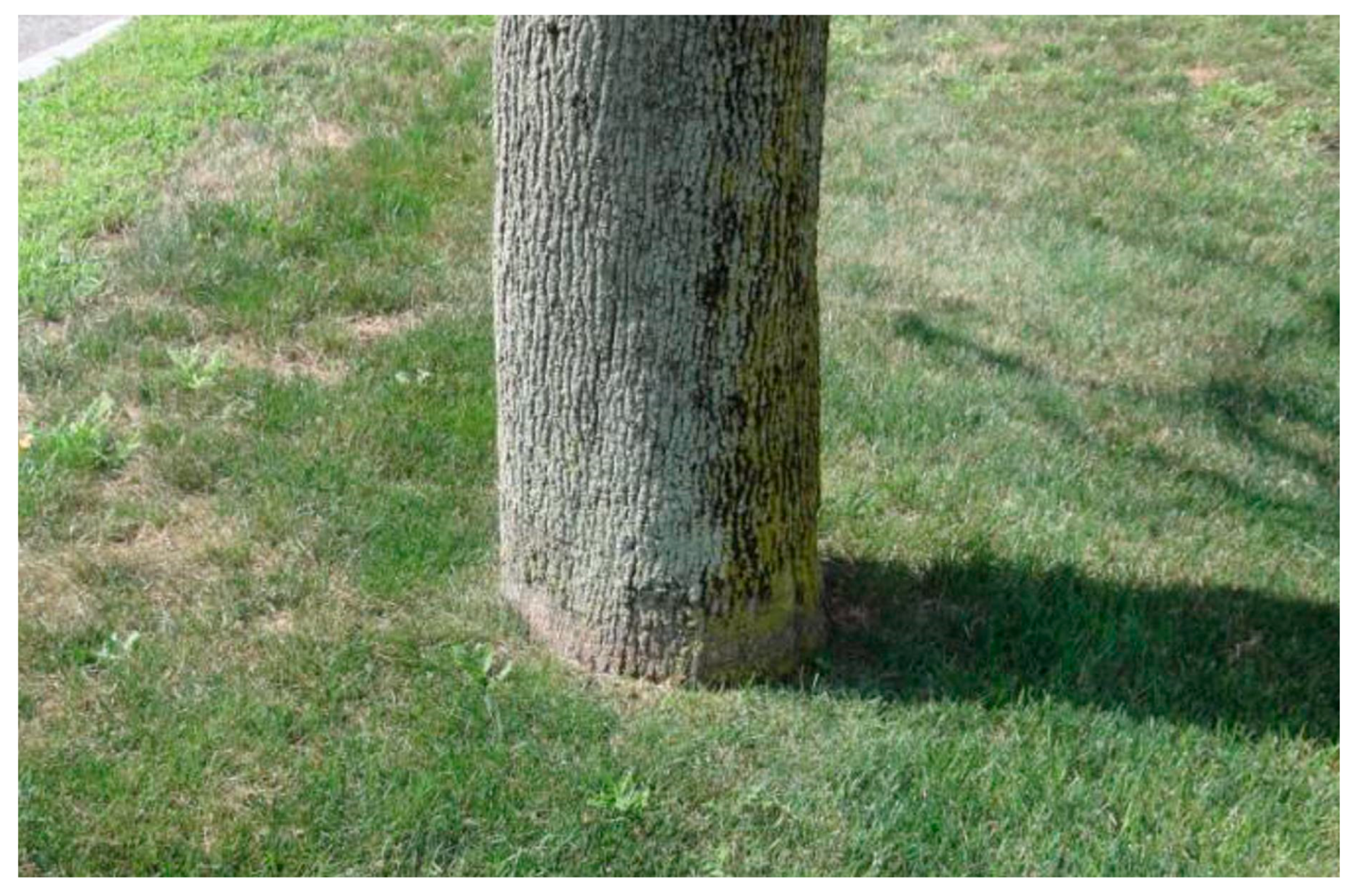
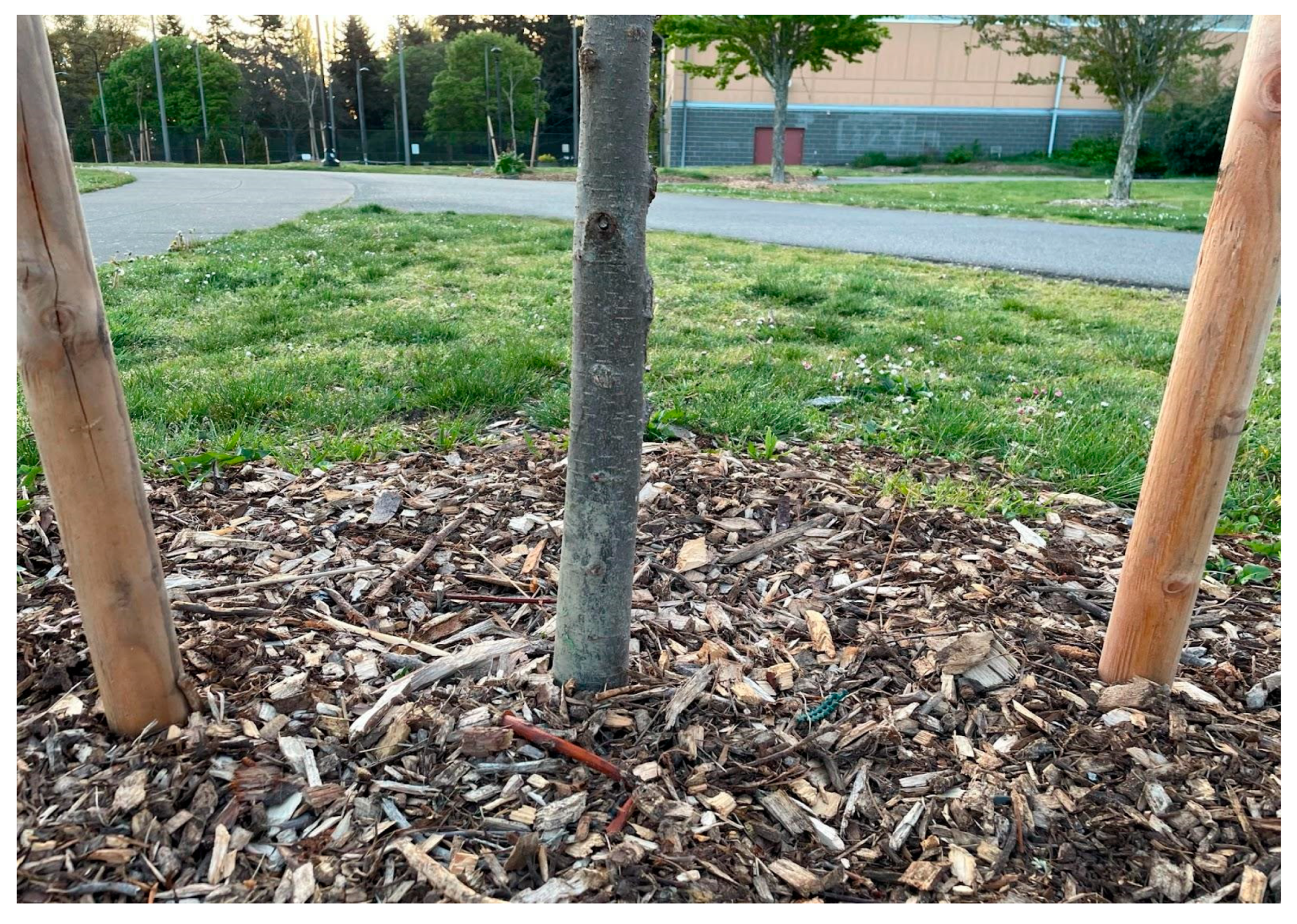
Despite the known benefits of urban tree planting, tree longevity is often compromised in urban environments, undermining the positive benefits that trees provide [14,15,16]. For example, the estimated mean life expectancies for urban trees range from 7 to 13 years to 19 to 28 years [17,18]—considerably less than would be expected in more favorable conditions, such as a traditional forest environment. Studies have found that improper planting techniques and harsh urban conditions are factors that can decrease the lifespans of urban trees [17,18]. Notably, in the early 2000s, concern over the effects of deep planting (see Figure 1 and Figure 2) reached a critical level, as the prevalence of deep or buried structural roots was widely believed to cause tree decline [19]. One report found that 12% of trees were planted too deeply and 42% of trees were unstable in a survey of the urban forest in Melbourne, Australia [20]. In a 1991 survey, Smiley and Booth [21] found that 93% of trees planted by practitioners were subject to root collar burial by soil or mulch. In a University of Rhode Island Sustainable Landscape Arboretum survey, 75% of nursery-grown trees were found to be deeply planted, and root collar burial ranged from 8 cm (3 in) to 30 cm (12 in) below the soil line [22]. Operationally, the variability of deep planting could be influenced by the practitioner (e.g., competency of the practitioner, level of training or awareness of industry planting standards and best practices) or the transplanting practice in nursery production.
In 2011, a research symposium on urban tree growth and longevity identified planting depth as the fifth most important research topic about tree production, growth, and longevity [23]. While academic research and anecdotal knowledge from industry professionals have recognized the problem of deep planting, most studies have focused on localized cases or individual species [24,25,26]. This review aims to synthesize existing evidence across species and environments to identify consistent trends in tree response to planting depth, examine underlying physiological and morphological mechanisms, and highlight research gaps that limit broader generalization. The outcomes of this synthesis are intended to provide a scientific basis for refining planting standards, improving nursery and planting practices, and ultimately enhancing the establishment, longevity, and resilience of urban trees.

2. Review Method

Directed literature searches were conducted using Google Scholar and the University of Massachusetts Amherst Library’s resources and online databases to identify studies examining the effects of planting depth on tree development, establishment, and survival. Google Scholar was selected as the primary search tool because of its broad disciplinary coverage and ability to retrieve applied and professional literature relevant to arboriculture, horticulture, and urban forestry. Additionally, the University of Massachusetts Amherst Library’s institutional resources were used to access full-text articles and additional materials available through academic subscriptions, ensuring inclusion of both peer-reviewed and practitioner-oriented studies.
The literature search was designed to be comprehensive and included searching for all available studies on tree planting depth published to date, without restrictions on publication year, and extending through 2024. The search was limited to publications written in English due to the constraints of translation tools and search engines in reliably retrieving and interpreting non-English studies relevant to this topic. Searches employed combinations of key terms and Boolean operators including “planting depth,” “tree planting depth,” “root collar,” “root flare,” “root architecture,” “deep planting,” “urban forestry,” and “urban trees.” Searches were also global in scope to ensure the review captured all relevant research on tree planting depth, regardless of region, but most of the literature originated from North America and some studies were from the Asia Pacific regions. This approach was intended to provide a comprehensive and comparative perspective on planting depth practices and outcomes across different climatic and management contexts worldwide.
To ensure transparency and focus, publications were included if they presented experimental or observational data on tree planting depth and its effects on establishment, growth, survival, root morphology, or related physiological parameters. In contrast, studies conducted in forestry or silvicultural settings, particularly those investigating seedling or small-container stock (e.g., reforestation and forest restoration practices), were excluded because these planting contexts differ substantially from urban tree planting in objectives, stock size, management practice and environment. Additionally, studies unrelated to urban trees and non-English publications were not included in this review.
Because the studies reviewed varied widely in experimental design, tree species, and environmental conditions, the synthesis was conducted as a narrative literature review rather than a systematic or meta-analytic review. This approach enabled qualitative integration of empirical and applied findings across diverse contexts while acknowledging the heterogeneity of study designs. The collected literature was examined through a thematic qualitative analysis, in which each publication was reviewed to identify its primary focus, methodology, and outcomes related to planting depth. Findings were then organized into recurring themes: root development, tree growth, establishment and survival, stability, and susceptibility to pests or pathogens, which then structured the Section 3 (Table 1). This qualitative synthesis facilitated the identification of common trends and species-specific responses while preserving the contextual nuances of each study.
Plant nomenclature was verified for consistency using the Integrated Taxonomic Information System (ITIS) online database (https://www.itis.gov, accessed on 22 October 2025).

3. Results

We identified 43 publications evaluating tree planting depth in urban settings. The majority of the articles came from peer-reviewed academic journals; some professional journal publications related to workshop or conference proceedings were also included. Of the studies reviewed, 34% focused on the effects of planting depth on tree establishment (Table 1).
A smaller selection of studies (22%) investigated the effects of planting depth on root development, and 23% of studies examined the impact of planting depth on above-ground growth. A smaller number of the reviewed studies addressed the effects of deep planting on abiotic and biotic stress responses, tree stability, and fruit quality and yield. In addition to the various categories of effects on planting depth identified in studies, some studies also focused on one or more distinct tree species. We synthesized and identified the corresponding ideal planting depths for these species and described their responses to improper (i.e., typically deep) planting (Table 2).

3.1. Effects of Planting Depth on Root Development

Studies investigating effects of planting depth on root development have primarily focused on the formation of stem girdling roots, adventitious roots, and deep structural roots. Deep planting (burial of the root collar) is a primary contributing factor to stem girdling root formation [29,32], occurring when roots encircle or run tangential to the stem of a tree. Stem girdling roots cause compression of both woody and non-woody tissues in the stem, which can lead to physiological decline and structural instability in the tree [38]. Wells et al. [29] found that planting Red Maple (Acer rubrum L.) 15 cm (6 in) below grade of the root flare generated a 30% increase in stem-girdling root development when compared to the control trees; planting trees 30 cm (12 in) below grade increased stem-girdling root development by about an additional 20%, relative to trunk circumference [29]. In another study, planting 30 cm (12 in) below-grade led to increased girdling root development in Turkish Hazel (Corylus colurna) [32]. In contrast, Sugar Maple (Acer saccharum) and Littleleaf Linden (Tilia cordata Mill.) did not show signs of stem girdling root formation when planted at 25 cm (10 in) and 13 cm (5 in) below grade [30]. There was no significant difference in the girdling root formation of Yoshino Cherry (Prunus x yedoensis Matsum) under the same planting depth treatments [29]. Wells et al. [29] and Harris et al. [28] found that deep planting had no lasting effects on the root collars of Red Oak (Quercus rubra L.). Across species, girdling root formation appears most common in Acer spp. and Fraxinus spp., which consistently display high sensitivity to below-grade planting, while Tilia, Corylus, and Prunus species exhibit more variable or limited responses. These differences likely reflect inherent anatomical traits, such as rooting habit, bark thickness, and tolerance to hypoxic conditions.
Deep planting has also resulted in particular tree species developing adventitious roots as an adaptive response. Adventitious roots form as an adaptive response to buried conditions, which may be anoxic [39,40,41,42]. The formation of adventitious roots was taxa-specific, where some species demonstrated the ability to develop adventitious roots from buried stems: Pin Oak (Quercus palustris Münchh), White Spruce (Picea glauca (Moench) Voss), Red Maple (Acer rubrum), and Green Ash (Fraxinus pennsylvanica) [30,40,43]. In contrast, Turkish Hazel (Corylus colurna), Littleleaf Linden (Tilia cordata), and Domestic Apple (Malus domestica Borkh) did not develop adventitious roots when planted below grade [32,40]. The formation of adventitious roots is influenced not only by species traits but also by soil physical conditions. Coarse-textured or well-aerated soils tend to limit adventitious rooting by allowing more oxygen diffusion, whereas compacted or fine-textured soils retain moisture and reduce aeration, amplifying hypoxic stress and increasing the likelihood of buried-stem rooting responses.
The development of deep structural roots is another consequence of deep planting, with significant implications for tree stability and health. Typically, most tree roots are concentrated in the upper 15 cm (6 in) of soil where nutrients and minerals are most abundant [44,45]. However, deep planting shifts root mass distribution deeper into the soil. Multiple studies have demonstrated consistent findings that structural roots develop deeper in the soil layer when trees are deeply planted. For example, Wells et al. [29] analyzed the root mass density of Red Maple (Acer rubrum) and Yoshino Cherry (Prunus x yedoensis) from different planting depths (at grade and below grade) and found that planting depth had no effect on root mass density in the top 61 cm (24 in) of soil, but had a strong impact on depth distribution of root mass density. The authors found that one full year after transplant, deep-planted trees had significantly fewer roots in the upper soil layers than properly planted trees. Giblin et al. [30] observed the effects of different tree species being planted deeply in containers and found an increase in root mass volume as planting depth increased, while Gilman and Harchick [40] found that presence of trunk flare and surface roots decreased with increasing planting depth, suggesting that these factors could be used as an indicator of primary root depth. Gilman and Grabrosky [26] investigated the impacts of planting depth and irrigation on root, trunk growth, and lateral tree stability, and found that trees planted more deeply had (a) deeper roots measured 115 cm (45 in) horizontally from the trunk and (b) deeper root flares. Trees with deeper structural roots also tend to have roots that ascend to the surface at steeper angles, a morphological adaptation likely to enhance access to oxygen and water in the upper soil profile. Trees with deeper root flares are also more likely to develop stem girdling roots, which may result in adverse effects on long-term tree establishment and growth.
Overall, the strength of evidence for planting-depth effects varies: while multiple studies confirm consistent trends in root deformation and altered root distribution, many experiments were short-term, conducted under controlled conditions, or limited to specific species and soil types. Field conditions involving compacted urban soils, fluctuating moisture, and climatic extremes may intensify these responses, but comparative long-term data remain limited.

3.2. Effects of Planting Depth on Tree Establishment

A tree establishment period occurs as transplanted trees regenerate enough roots to survive without irrigation [46]. Deep planting has been found to slow establishment and increase mortality and stress during the immediate post-planting phase. For example, Gilman and Grabosky [47] investigated the effects of planting depth on tree establishment in Southern Live Oak (Quercus virginiana Mill.). They installed 48 trees at depths ranging from 5 cm (2 in) above grade to 18 cm (7 in) below grade and measured water stress. While planting depth did not affect water stress in the first four weeks, stress increased with planting depth after the first dry period, even with light irrigation. This suggests that standard irrigation was insufficient to penetrate soils deeply enough to reach the root ball in deeply planted trees, and that root function may have been additionally compromised at increased depths.
Consistent findings among studies have shown an association between increased planting depth and mortality rates across various species. Bryan et al. [25] reported significantly higher mortality rates in American Sycamore (Platanus occidentalis L.) with deep planting treatments. Green Ash (Fraxinus pennsylvanica) and Golden Rain-tree (Koelreuteria bipinnata) had significant reductions in survival rates (40% and 91% mortality rates, respectively) when they were planted below grade, which were further exacerbated by mulch applications [24,34]. In addition to Green Ash (Fraxinus pennsylvanica) and Golden Rain Tree (Koelreuteria bipinnata Franch), Bryan et al. [34] further expanded the experiment to include a broader range of species like American Sycamore (Platanus occidentalis), Oleander (Nerium oleander L. ‘Cranberry Cooler’), and Chaste Tree (Vitex agnus-castus L. ‘LeCompte’). With the exception of Chaste Tree (Vitex agnus-castus ‘LeCompte’), all other tree species showed a direct relationship with increased mortality and increased planting depth over three years. Wells et al. [29] observed a 50% reduction in survival for Yoshino Cherry (Prunus × yedoensis) planted at depths of 15 cm (6 in) or 31 cm (12 in) below grade, likely due to impaired water and nutrient acquisition. Giblin et al. [30] reported higher mortality rates in deeply planted Sugar Maple (Acer saccharum).
Despite these consistent findings, some studies did not show a significant effect of deep planting on tree mortality. Wells et al. [29] found no significant difference in survival rates for Red Maple (Acer rubrum) across different planting depths. Bryan et al. [34] also found that deep planting did not affect survival rates in Crape Myrtle (Lagerstroemia indica L. × L. fauriei Koehne ‘Basham’s Party Pink’). Day and Harris [32] observed no impact on establishment and survival in Turkish Hazel (Corylus colurna) planted 30 cm (12 in) below grade over a 7.5-year period, despite root girdling. Finally, the mortality rate of Littleleaf Linden (Tilia cordata) did not differ at the various investigated levels of grade (at grade, 13 cm/5 in below grade, and 25 cm/10 in below grade) over a three-year period [30].

3.3. Effects of Planting Depth on Tree Growth

Many studies have examined the effects of deep planting on tree growth by measuring changes in trunk diameter, tree height and shoot elongation. Bryan et al. [34] found that Green Ash (Fraxinus pennsylvanica), American Sycamore (Platanus occidentalis), Crape Myrtle (Lagerstroemia indica × L. fauriei ‘Basham’s Party’), Oleander (Nerium oleander ‘Cranberry Cooler’), and Chaste Tree (Vitex agnus-castus L. ‘LeCompte’) were negatively impacted relative to vertical growth, trunk diameter, and cross-sectional area when planted 7.6 cm (3 in) below grade. Survival rates of all species except Chaste Tree (Vitex agnus-castus ‘LeCompte’) were significantly reduced. Baldcypress (Taxodium distichum) and American Sycamore (Platanus occidentalis) experienced significant reduction in relative height and diameter growth when planted 7.6 cm (3 in) below grade. Deep planting slowed the growth of Red Oak (Quercus rubra) when comparisons were made between specimens planted 30 cm (12 in) below grade [28] and Baldypress (Taxodium distichum) experienced reduced shoot development and more negative stem water potential when planted below grade [48].
Some studies did not find any change in tree growth despite being deeply planted. Though observations were limited to two growing seasons, Jarecki et al. [27] found no difference in trunk caliper at both 15 cm (6 in) above a graft union as well as 15 cm (6 in) above soil surface in White Ash (Fraxinus americana), Green Ash (Fraxinus pennsylvanica), ‘Shademaster’ Thornless Honeylocust (Gleditsia triacanthos f. inermis ‘Shademaster’), and Norway Maple (Acer platanoides). Authors expressed that the quality of soil was germane to these findings, suggesting that variations in soil quality in the urban forest may lead to differing outcomes in tree growth and survival. Finally, Bryan et al. [25] compared the effects of deep planting on Baldcypress (Taxodium distichum) and American Sycamore (Platanus occidentalis), and found that Baldcypress (Taxodium distichum) had reduced growth rates when planted above grade, compared to those that were planted at grade or below grade. The authors speculated that a possible reason for this finding was due to Baldcypress (Taxodium distichum) being naturally adapted and tolerant to hypoxic conditions, therefore this species planted at or below grade was able to grow at higher rates than others.

3.4. Effects of Planting Depth on Tree Stability

Of the literature we reviewed, only two studies investigated the effects of deep planting on tree stability. Smiley [49] conducted post-hurricane studies and found that trees with buried root collars were more prone to root-related tree failure. Another study by Giblin et al. [50] investigated the practice of intentional deep planting of trees in containers as a means of reducing windthrow and excessive lean. The authors found that pot-in-pot produced Whitespire Birch (Betula platyphylla × B. japonica ʹWhitespireʹ), Green Ash (Fraxinus pennsylvanica), Spring Snow Crabapple (Malus ‘Spring Snow’), and Swamp White Oak (Quercus bicolor Willd.) showed no significant increases in windthrow occurrences among trees planted at grade. Overall, the evidence pertaining to the effects of deep planting on tree stability is limited and conflicting.
A possible hypothesis to explain the negative effects of planting depth on tree stablility is that in young trees, because wind loading appears to lead to increased growth of lateral roots rather than tap roots, development of lateral roots may therefore ensure better anchorage of young trees that are subjected to wind loading [51]. Studies have shown that tree stability in terms of root anchorage is a factor of 4 components: (1) the mass of the roots and soil levered out of the ground, (2) the strength of the soil and depth of root penetration under the root plate, (3) the resistance to failure in tension of tree roots on the windward side as the upward movement of the root–soil plate causes roots to pull out of the soil with or without first breaking, and (4) the length of the lever arm (where the roots hinge) on the leeward side, which is affected by root diameter and resistance to bending of the tree roots [52,53,54,55]. Therefore, any change in each of these components may have a significant effect on tree anchorage. For example, an increase in root plate diameter consistently results in an increase in the weight of the root plate and the length of the lever arm between the trunk and the roots surrounding the root plate, leading to improved anchorage [56]. Thus, the density of root plate diameter plays a role in tree anchorage, and this density is related to the development of structural roots and root architecture [56], which may be impacted by deep planting.

3.5. Effects of Planting Depth on Susceptibility to Abiotic and Biotic Stress

In this review, we found that few studies examined the relationship between planting depth and pest or pathogen susceptibility. Specifically, regarding young or newly planted trees, no studies found a direct correlation between deep planting and a predisposition to pest or pathogen susceptibility [28]. A study by Roppolo and Miller [57] investigated how cultural practices (pruning and deep planting), tree injuries (root and trunk injuries) and a combination of both cultural practices and injuries can predispose a tree to sunscald, which is a tissue injury that may occur from direct exposure to the sun (often in the southwest direction). The study examined the response of two tree species, Norway Maple (Acer platanoides) and Littleleaf Linden (Tilia cordata), which were subjected to 7 different treatments and observed for the development of sunscald and overall survival. For Norway Maple (Acer platanoides), sunscald was found to occur in relation to water stress, and borer populations (and their affiliated injuries) occurred due to plant volatiles that were also generated as a result of plant stress. In the two treatment groups that included deep planting (one cohort was subject to deep planting only, and the other was subject to both deep planting and trunk injuries), trees planted deeply with no trunk injuries developed significantly less sunscald than all other treatments, except in the treatment group planted on street sides. The authors suggested that a possible explanation for the latter findings was that 9 out of 15 trees died, resulting in a small sample size that may have contributed to the development of sunscald. Additionally, the treatment groups of trees planted deeply, and trees planted on street sides had significantly less development of sunscald. They also observed that the deep planting and target-pruning treatment groups had the highest mortality rates. The authors posited that deep planting treatments resulted in fewer incidences of sunscald, possibly due to soil covering the trunk and the graft union, which decreased exposure to sunlight.
Deeply planted trees are more susceptible to infection by root and butt rot pathogens, such as Phytophthora spp., Fusarium spp., and Armillaria spp., likely due to contact and continual moisture at the trunk surface and root deformations [32]. A study by Harris et al. [28] postulated that cultural practices can cause deep structural roots, and that tree decline could be due to a variety of factors including limited soil water conditions, poor aeration, girdling roots, and increased likelihood of pathogen infection. Trunk sleeves were found to alleviate the effects of buried roots and could prevent the formation and growth of adventitious roots while reducing the risk of negative effects of pathogens [29,58,59]. Another study by Day et al. [60] examined the impact of soil grade changes on tree growth, survival and physiological function by conducting a biopsy of twelve Oak trees (Quercus spp.) which had decaying buried trunk wood to determine if there were pathogenic fungi present. The biopsies found three types of saprophytic fungi species, including Penicillium, Trichoderma, and Pestalotia, on Oak trees (which, at the time, were not known to cause tree decline). The authors also noted that evidence from outside their study suggested that decomposing bark may predispose other tree species to infection by pathogens. In conclusion, some evidence suggests that deeply planted trees may be more susceptible to certain root and butt rot pathogens, likely due to chronic stress, bark decay, and persistent moisture around the buried trunk. Furthermore, when investigating the effects of planting depth on biotic stress, the presence of pathogens in nursery stock itself is a variable to consider as it could impact the individual tree growth and establishment or a possible infection risk for urban landscape plants, which are important practical considerations. For example, a recent study by Laurence et al. [61] found a high incidence (22% positive rate) of phytopathogenic Phytophthora spp. in amenity tree nursery stock in eastern Australia. The increased occurrence of Phytophthora spp. in the live plant trade poses a biosecurity risk by facilitating the harboring and spread of pathogens into the urban landscape. The current state of knowledge establishes causal links between the effects of planting depth and pathogenic infections, and future research could investigate direct links of specific tree species that may be more prone to pathogenic infections, including how planting depth may affect risk of infection.

3.6. Distinct Species Effects in Response to Planting Depth

Table 2 shows 17 different tree species that have been studied for the various effects of planting depth. These tree species were mostly commonly planted urban landscape trees and hence they were studied to better understand and extrapolate practical applications in urban tree planting. Overall, tree species had varied responses to different planting depths, with most species generally responding negatively in tree growth and tree establishment to deep planting, except Norway Maple (Acer platanoides); Turkish Hazel (Corylus colurna); White Ash (Fraxinus americana) and Green Ash (Fraxinus pennsylvanica), which had no observable difference in the specific parameters measured during the study periods. The remaining tree species showed some negative relationship in aspects of tree growth, tree establishment, root growth and root development. These species-specific differences may reflect inherent physiological traits: some taxa, such as Acer and Fraxinus species, can temporarily tolerate lower oxygen availability or develop limited adventitious roots, which can delay visible stress responses. In contrast, species without these adaptations exhibit more immediate reductions in establishment and growth when planted below grade. Importantly, these short-term responses do not necessarily indicate long-term tolerance to deep planting.

4. Discussion

The anecdotal experiences of urban forestry practitioners support that planting depth can impact tree success in the urban landscape, particularly that planting trees too deeply (root collar below soil grade or buried) is both (a) commonly observed in the field and (b) a cause of tree decline and failure. This review corroborates those experiential findings by demonstrating that scientific inquiry has resulted in similar conclusions—that the effects of tree planting depth can impact root development, tree establishment and tree growth rates, and these can in turn reduce structural stability and long-term success and survivability of urban trees. As planting efforts in many cities are rapidly increasing, ensuring that practitioners installing and caring for young trees know and follow best practices is essential to secure the positive long-term impact of these increasing planting efforts.
Overall, the literature consistently shows that deeply planted trees experience higher mortality rates, slower establishment and reduced growth compared to those planted at the appropriate depth, primarily through its effect on proper root development. Deep planting can lead to the development of stem girdling roots which can eventually cause tree decline and poor root stability, potentially increasing the risk of tree failure. However, some tree species adapt to deep planting by forming adventitious roots, which increases root mass and facilitates nutrient and water uptake, thereby supporting tree establishment and survival. For example, Baldcypress (Taxodium distichum) performed better at or below grade, possibly due to its ability to tolerate anoxic conditions with production of adventitious roots [25]. Although some studies reported minimal short-term effects of deep planting on species such as Norway maple (Acer platanoides) and Turkish hazel (Corylus colurna), these observations largely reflect the specific metrics and limited timeframes evaluated. Both species exhibit relatively slow early root expansion and may maintain functional root activity even when the root collar is buried, which can delay visible symptoms. In addition, Norway maple (Acer platanoides) had comparatively thicker basal bark and a capacity to temporarily tolerate low-oxygen microsites, potentially reducing immediate stress responses. Similarly, Turkish hazel (Corylus colurna) has been shown to maintain stable early growth under varied soil conditions, which may mute short-term growth differences when planting depth is altered. However, these traits do not imply long-term tolerance; other studies have documented later development of girdling roots, reduced stability, or decline in these same genera when planted too deeply. Thus, the minimal early effects observed in some experiments reflect the limitations of short-term measurement rather than true resilience to below-grade planting. Ultimately, while some tree species such as Norway Maple (Acer platanoides) and Turkish Hazel (Corylus colurna), may not suffer immediate growth penalties, they can still be susceptible to poor root development and architecture which can lead to long-term decline or structural failure. Therefore, an important consideration for practitioners to note in this review is that “no observable difference” does not mean that planting depth of these tree species should be ignored, and industry best practices for recommended planting depth should still be followed.
Some studies suggested that deeply planted trees are more susceptible to pathogens than properly planted trees, due to factors such as increased overall tree stress, reduced moisture retention capabilities and compromised root health. The susceptibility to pathogens increases vulnerability of young trees to compromised vitality, increases long-term maintenance costs and decreases the success rate of young tree establishment, ultimately undermining the benefits of urban tree planting efforts.
Fewer studies discussed the impacts of trees planted above grade, but these studies similarly found that planting too shallow can also foster negative impacts related to tree structure, root health, and long-term viability. Trees planted too shallow also tend to exhibit slower growth rates, likely due to shallow surface roots that were more exposed to heat and more likely to experience desiccation. However, the relative prevalence of studies focused on too deep versus too shallow tree planting, in concert with anecdotal evidence from practitioners, suggests that excessively deep planting is the more pervasive issue in the urban landscape.
Compared to the myriad challenges that urban trees face that require more complex solutions (e.g., compacted soils, road salt, pollution), deep planting could be corrected through education and training of practitioners on proper planting practices, such as industry standards and best management practices. Those who install trees in the urban landscape may not have formal training in arboriculture or urban forestry—depending on the urban forestry program within a given city, tree planting may not be performed or overseen by urban foresters. Trees in cities are frequently planted by landscaping companies, construction contractors, community institutions like schools and faith-based organizations, or homeowners [62,63]. Furthermore, those maintaining urban trees are often not individuals with training in arboriculture or urban forestry, and deep planting may be exacerbated during maintenance, when individuals administer excessive amounts of mulch around the base of the stem [21,24]. Though mulch is often applied to preclude foot traffic and maintenance equipment (e.g., lawn mowers, string-trimmers), to prevent the establishment of weed populations, and to maintain soil moisture [64], profuse amounts may also reduce watering efficacy and encourage moisture accumulation/decay at the base of the stem [65]. Additionally, excessive backfilling of soil around the root flares of trees either from improper planting techniques or trees impacted by construction and development projects can also result in similar conditions of buried root collars. With proper training and adherence to tree planting best practices among professionals, including raising awareness and education among the public on the proper tree planting techniques, these measures could help increase better standards of tree planting and hence increased tree survival and establishment. The studies in this review provide the basis for justifying funding and capacity for programs that support education, training, stricter compliance and adherence checks by managing authorities’ enforcement.
This literature review summarized the impacts of planting trees with excessive soil on their root systems in the urban landscape (Table 2) and provided clear reasons for decision makers in cities to work on resolving the problem of deep planting (and planting at improper depths in general), particularly as tree planting efforts are ramping up. Future studies could also expand the investigation of species-specific planting depth to encompass a wider range of tree selection that practitioners can use for field applications in urban landscape design, as many of the studies focused on species that are no longer recommended for urban planting, like Ash (Fraxinus spp.) and Norway Maple (Acer platanoides). In expanding the review and understanding of species-specific planting depth suitability will be meaningful to broaden the practical knowledge and application for species specific planting. Municipal urban foresters can apply the findings from this review by developing science-based technical specifications, requiring appropriate training or certification for planters, and promoting the use of nursery stock that facilitates proper planting depth. These measures would help ensure trees are planted in ways that support healthy root systems and long-term urban forest sustainability.
A common limitation among the studies reviewed was the presence of other variables in the experimental conditions that are difficult to control for and are inevitably present in the urban or natural environment. For example, interactions between soil type, water content and planting depth could influence tree survival. Trees planted deeply in compacted or fill soil may experience low oxygen conditions due to poor drainage, reducing the risk of hypoxia, in which different tree species may be more or less adaptable to such conditions [24,29,41]. However, soil type and climate can impact survival rates, with species like Green Ash (Fraxinus pennsylvanica) and American Sycamore (Platanus occidentalis) exhibiting reduced survival when planted below grade [33]. Soils with poor drainage inhibit root growth and gas exchange, while sandy or amended soils show less severe effects [33,34]. Compacted soil and narrow street widths can also affect root development and tree health [38,66] and are therefore additional variables that could compound the interactions of deep planting in an urban environment. Because of the numerous environmental variables that influence young tree performance in urban settings, isolating or controlling for all environmental factors experimentally is still a challenge in urban forestry studies. Therefore, it is important to note that many of the existing studies investigating the effects of planting depth are limited to measurement of specific parameters, and may not fully reflect the tolerance of the species to planting depth in all settings. This review focuses specifically on how planting depth influences tree growth and physiology within the broader variability of urban environments.
Additionally, much of the research conducted in a controlled environment could only investigate a few variables, which cannot wholly encompass the myriad conditions in the urban forest. This limitation was also stated in a conference proceeding on deep planting and its effects on root conditions: In a study by Jarecki et al. [27], their results over two growing seasons did not find that trunk caliper growth was affected by planting depth and the authors postulated that this was likely due to the quality of soils in the experimental design that allowed for the specimen trees to overcome any impacts of planting depth. However, the authors noted the limitation of the soil quality in their study would not account for the highly disturbed soil that may be found in urban areas. Another study by Bryan et al. [34] investigated the effects of planting depth and cultural practices and found that excessive mulching can contribute to the detrimental effects of deep planting. The authors also concluded that on-going studies are underway to include the consideration of other site factors like soil characteristics, irrigation regimes, nursery production practices and seasonality of the processes to understand how these factors interact with planting depth.
In many studies, planting depth was often investigated with several other variables such as mulching and irrigation, making it difficult to parse and determine direct consequences of deep planting. Recognizing that other interaction effects may also play a role in the impact of deep planting on tree health, Arnold et al. [33] proposed that further research should be conducted to investigate the impacts of various factors such as soil types, irrigation schedules, planting times, stock size, and other post-transplantation cultural practices on either improving or exacerbating plant responses to deep planting. These limitations speak to the emerging nature of this research and also highlight the opportunity for future study of the effects of planting depth conducted in controlled experiments and observational studies.

5. Conclusions

There is consensus in current literature that planting depth has a negative impact on tree growth, physiology and structure. While deep planting may have certain benefits in specific contexts, such as mitigating burrknots in Yoshino Cherry (Prunus × yedonesis) [29], the overall evidence points to a higher risk of negative consequences, including formation of poor root development that includes stem girdling root, reduced establishment and growth, increased mortality, and predispose trees to susceptibility to pests and pathogens, with few exceptions of certain taxa. Root collar excavation is a recommended mitigation action for trees planted too deeply and deep planting should be addressed as early as possible to avoid future complications in root development and overall impacts to tree health and structure.
Based on the synthesis of current findings, it is evident that preventing root-collar burial at the time of planting, through accurate identification of the flare and verification of grade both before and after backfilling, is the most consistently supported approach for reducing long-term structural defects. Studies show that even modest burial of root collar below grade increases the likelihood of girdling roots, adventitious rooting, and compromised establishment, highlighting the importance of ensuring proper planting depth at installation.
In addition, the literature demonstrates that deep planting can originate in the nursery rather than the landscape. High frequencies of buried structural roots in container and field-grown stock suggest that standardizing nursery practices such as exposing the root flare, correcting potting-up errors, and removing excess substrate can significantly reduce downstream planting-depth problems. Improving nursery-to-field continuity in planting-depth protocols would help urban foresters and landscape practitioners install trees with higher long-term success.
Gaps in current research pertaining to planting depth largely relate to limitations of experimental set up to parse out the singular effect of deep planting, which is inevitably often investigated with other complicating factors like tree species and soil conditions. Further research may explore the complex interactions between planting depth, tree species, environmental factors, and management practices to inform best practices and mitigate risks in tree planting and management programs. Because of the large investments in tree planting programs and wide recognition of the multitude of benefits of urban trees, there is strong interest in further investigating the cause of deep planting. Additional research may investigate the direct impacts and consequences of deep planting to develop and advance best management practices that promote successful tree establishment, enabling urban foresters to install and maintain trees with increased success. Future research can also build upon this qualitative synthesis by employing standardized experimental designs and quantitative meta-analytic approaches to better isolate and measure the specific physiological and growth responses of trees to varying planting depths.

Author Contributions

Conceptualization, R.W.H. and K.S.A.; methodology, K.S.A., J.L., C.B.P. and R.W.H.; software, K.S.A. and J.L.; validation, K.S.A., J.L., C.B.P. and R.W.H.; formal analysis, J.L. and K.S.A.; investigation, J.L., K.S.A., C.B.P. and R.W.H.; resources, R.W.H., K.S.A. and J.L.; data curation, J.L. and K.S.A.; writing—original draft preparation, K.S.A. and R.W.H.; writing—review and editing, J.L., K.S.A., C.B.P. and R.W.H.; visualization, J.L., K.S.A., C.B.P. and R.W.H.; supervision, R.W.H. and K.S.A.; project administration, R.W.H. All authors have read and agreed to the published version of the manuscript.

Funding

This research received no external funding.

Data Availability Statement

Not applicable.

Acknowledgments

The authors gratefully acknowledge Nicholas Brazee (UMass Extension), David Lefcourt (City of Cambridge) and Eric E. Griffith (Utah State University). During the preparation of this manuscript, the author(s) used ChatGPT (OpenAI GPT-4o-mini, April 2025 version) for refining text. The authors have reviewed and edited the output and take full responsibility for the content of this publication.

Conflicts of Interest

The authors declare no conflicts of interest.

References

  1. Campana, R. Arboriculture: History and Development in North America (No. 20167); Michigan State University Press: East Lansing, MI, USA, 1999. [Google Scholar]
  2. Johnston, M. Trees in Towns and Cities: A History of British Urban Arboriculture; Oxbow Books: Oxford, UK, 2015; ISBN 1-909686-62-X. [Google Scholar]
  3. Miller, R.W.; Hauer, R.J.; Werner, L.P. Urban Forestry: Planning and Managing Urban Greenspaces, 3rd ed.; Waveland Press Inc.: Long Grove, IL, USA, 2015; ISBN 1-4786-0637-1. [Google Scholar]
  4. Jorgensen, E. Urban Forestry in the Rearview Mirror. Arboric. J. 1986, 10, 177–190. [Google Scholar] [CrossRef]
  5. McPherson, E.G.; Simpson, J.R.; Xiao, Q. Million Trees Los Angeles Canopy Cover and Benefit Assessment. Landsc. Urban Plan. 2011, 99, 40–50. [Google Scholar] [CrossRef]
  6. Nowak, D.J.; Stevens, J.C.; Sisinni, S.M.; Luley, C.J. Effects of Urban Tree Management and Species Selection on Atmospheric Carbon Dioxide. Arboric. Urban For. (AUF) 2002, 28, 113–122. [Google Scholar] [CrossRef]
  7. Oliveria, S.; Andrade, H.; Vaz, T. The Cooling Effect of Green Spaces as a Contribution to the Mitigation of Urban Heat: A Case Study in Lisbon. Build. Environ. 2011, 46, 2186–2194. [Google Scholar] [CrossRef]
  8. Schwarz, K.; Fragkias, M.; Boone, C.G.; Zhou, W.; McHale, M.; Grove, J.M.; O’Neil-Dunne, J.; McFadden, J.P.; Buckley, G.L.; Childers, D.; et al. Trees Grow on Money: Urban Tree Canopy Cover and Environmental Justice. PLoS ONE 2015, 10, e0122051. [Google Scholar] [CrossRef]
  9. Mei, P.; Harper, R.W.; Jiménez, J.M. Air Pollution, Human Health and the Benefits of Trees: A Biomolecular and Physiologic Perspective. Arboric. J. 2021, 43, 19–40. [Google Scholar] [CrossRef]
  10. Bell, J.F.; Wilson, J.S.; Liu, G.C. Neighborhood Greenness and 2-Year Changes in Body Mass Index of Children and Youth. Am. J. Prev. Med. 2008, 35, 547–553. [Google Scholar] [CrossRef]
  11. Donovan, G.H.; Butry, D.T. The Effect of Urban Trees on the Rental Price of Single-Family Homes in Portland, Oregon. Urban For. Urban Green. 2011, 10, 163–168. [Google Scholar] [CrossRef]
  12. Eisenman, T.S.; Flanders, T.; Harper, R.W.; Hauer, R.J.; Lieberknecht, K. Traits of a Bloom: A Nationwide Survey of U.S. Urban Tree Planting Initiatives (TPIs). Urban For. Urban Green. 2021, 61, 127006. [Google Scholar] [CrossRef]
  13. Locke, D.H.; Grove, J.M. Doing the Hard Work Where It’s Easiest? Examining the Relationships Between Urban Greening Programs and Social and Ecological Characteristics. Appl. Spat. Anal. 2016, 9, 77–96. [Google Scholar] [CrossRef]
  14. Ko, Y.; Lee, J.-H.; McPherson, E.G.; Roman, L.A. Factors Affecting Long-Term Mortality of Residential Shade Trees: Evidence from Sacramento, California. Urban For. Urban Green. 2015, 14, 500–507. [Google Scholar] [CrossRef]
  15. Roman, L.A. How Many Trees Are Enough? Tree Death and the Urban Canopy. 2014. Available online: https://www.fs.usda.gov/nrs/pubs/jrnl/2014/nrs_2014_roman_001.pdf (accessed on 22 October 2025).
  16. Roman, L.A.; Battles, J.J.; McBride, J.R. Determinants of Establishment Survival for Residential Trees in Sacramento County, CA. Landsc. Urban Plan. 2014, 129, 22–31. [Google Scholar] [CrossRef]
  17. Roman, L.A.; Scatena, F.N. Street Tree Survival Rates: Meta-Analysis of Previous Studies and Application to a Field Survey in Philadelphia, PA, USA. Urban For. Urban Green. 2011, 10, 269–274. [Google Scholar] [CrossRef]
  18. Wattenhofer, D.J.; Johnson, G.R. Understanding Why Young Urban Trees Die Can Improve Future Success. Urban For. Urban Green. 2021, 64, 127247. [Google Scholar] [CrossRef]
  19. Day, S.D.; Watson, G.; Wiseman, P.E.; Harris, J.R. Causes and Consequences of Deep Structural Roots in Urban Trees: From Nursery Production to Landscape Establishment. Arboric. Urban For. 2009, 35, 182–191. [Google Scholar] [CrossRef]
  20. Leers, M.; Moore, G.M.; May, P.B. Assessment of Six Indicators of Street Tree Establishment in Melbourne, Australia. Arboric. Urban For. (AUF) 2018, 44, 12–22. [Google Scholar] [CrossRef]
  21. Smiley, E.T.; Booth, D.C. Grown to Die. Am. Nurserym. 2000, 191, 48–54. [Google Scholar]
  22. Maynard, B.K. A Problem of Great Depth. Some Nursery Production Practices May Be Leading to Trees Being Planted Too Deeply. Yank. Nurs. Q. 1995, 5, 1–4. [Google Scholar]
  23. Leibowitz, R. Urban Tree Growth and Longevity: An International Meeting and Research Symposium White Paper. Arboric. Urban For. 2012, 38, 237–241. [Google Scholar] [CrossRef]
  24. Arnold, M.A.; McDonald, G.V.; Bryan, D.L. Planting Depth and Mulch Thickness Affect Establishment of Green Ash (Fraxinus pennsylvanica) and Bougainvillea goldenraintree (Koelreuteria bipinnata). Arboric. Urban For. (AUF) 2005, 31, 163–170. [Google Scholar] [CrossRef]
  25. Bryan, D.L.; Arnold, M.A.; Volder, A.; Watson, W.T.; Lombardini, L.; Sloan, J.J.; Valdez-Aguilar, L.A.; Cartmill, A.D. Planting Depth During Container Production and Landscape Establishment Affects Growth of Ulmus Parvifolia. HortScience 2010, 45, 54–60. [Google Scholar] [CrossRef]
  26. Gilman, E.F.; Grabosky, J. Quercus Virginiana Root Attributes and Lateral Stability after Planting at Different Depths. Urban For. Urban Green. 2011, 10, 3–9. [Google Scholar] [CrossRef]
  27. Jarecki, M.; Williams, D.; Kling, G. Planting Depth and Growth of Nursery Trees; The Morton Arboretum: Lisle, IL, USA, 2005; pp. 11–16. [Google Scholar]
  28. Harris, J.R.; Day, S.D.; Kane, B. Growth and Stability of Deep Planted Red Maple and Northern Red Oak Trees and the Efficacy of Root Collar Excavations. Urban For. Urban Green. 2016, 18, 19–24. [Google Scholar] [CrossRef]
  29. Wells, C.; Townsend, K.; Caldwell, J.; Ham, D.; Smiley, E.T.; Sherwood, M. Effects of Planting Depth on Landscape Tree Survival and Girdling Root Formation. Arboric. Urban For. 2006, 32, 305–311. [Google Scholar] [CrossRef]
  30. Giblin, C.; Gilman, J.; Hanson, D.; Johnson, G.; Weicherding, P. The Effects of Soil Depth on the Long-Term Health and Frequency of Storm Damage to Trees in the Upper Midwest; Morton Arboretum: Lisle, IL, USA, 2005; pp. 33–39. [Google Scholar]
  31. Hauer, R.J.; Johnson, G.R. Relationship of Structural Root Depth on the Formation of Stem Encircling Roots and Stem Girdling Roots: Implications on Tree Condition. Urban For. Urban Green. 2021, 60, 127031. [Google Scholar] [CrossRef]
  32. Day, S.D.; Harris, J.R. Growth, Survival, and Root System Morphology of Deeply Planted Corylus Colurna 7 Years after Transplanting and the Effects of Root Collar Excavation. Urban For. Urban Green. 2008, 7, 119–128. [Google Scholar] [CrossRef]
  33. Arnold, M.A.; McDonald, G.V.; Bryan, D.L.; Denny, G.C.; Watson, W.T.; Lombardini, L. Below-Grade Planting Adversely Affects Survival and Growth of Tree Species from Five Different Families. Arboric. Urban For. 2007, 33, 64–69. [Google Scholar] [CrossRef]
  34. Bryan, D.L.; Arnold, M.A.; McDonald, G.V.; Watson, W.T.; Lombardini, L.; Cartmill, A.D.; Denny, G.C. Planting Depth and Cultural Practices. In Proceedings of the Getting the Roots Right Conference, Lisle, IL, USA, 10 November 2005; pp. 17–24. [Google Scholar]
  35. Mullin, R.E. Influence of Planting Depth on Survival and Growth of Red Pine. For. Chron. 1964, 40, 384–391. [Google Scholar] [CrossRef]
  36. Bryan, D.L.; Arnold, M.A.; Volder, A.; Watson, W.T.; Lombardini, L.; Sloan, J.J.; Valdez-Aguilar, L.A.; Cartmill, A.D. Transplant Season, Irrigation, and Planting Depth Effects on Landscape Establishment of Baldcypress and Sycamore. Arboric. Urban For. 2010, 36, 57–65. [Google Scholar] [CrossRef]
  37. Bryan, D.L.; Arnold, M.A.; Volder, A.; Watson, W.T.; Lombardini, L.; Sloan, J.J.; Alarcón, A.; Valdez-Aguilar, L.A.; Cartmill, A.D. Planting Depth and Soil Amendments Affect Growth of Quercus Virginiana Mill. Urban For. Urban Green. 2011, 10, 127–132. [Google Scholar] [CrossRef]
  38. Johnson, G.; Hauer, R. A Practitioner’s Guide to Stem Girdling Roots of Trees; University of Minnesota Extension: St Paul, MN, USA, 2000. [Google Scholar]
  39. Gilman, E.F.; Paz, M.; Harchick, C. Retention Time in Three Nursery Container Volumes Impacts Root Architecture. Arboric. Urban For. 2015, 41, 146–154. [Google Scholar] [CrossRef]
  40. Gilman, E.F.; Harchick, C. Planting Depth in Containers Affects Root Form and Tree Quality. J. Environ. Hortic. 2008, 26, 129–134. [Google Scholar] [CrossRef]
  41. Harris, J.R.; Day, S.D. Planting Depth at Onset of Container Production and Subsequent Root Ball Remediation at Transplanting Affects Pin Oak and Littleleaf Linden. HortScience 2010, 45, 1793–1797. [Google Scholar] [CrossRef]
  42. Lyons, C.G.; Byers, R.E.; Yoder, K.S. Influence of Planting Depth on Growth of Young Apple Trees. J. Environ. Hortic. 1987, 5, 163–164. [Google Scholar] [CrossRef]
  43. Gilman, E.F. Tree Root Depth Relative to Landfill Tolerance. HortScience 1989, 24, 857. [Google Scholar] [CrossRef]
  44. Kozlowski, T.T.; Pallardy, S.G. Physiology of Woody Plants, 2nd ed.; Academic Press: San Diego, CA, USA, 1997. [Google Scholar]
  45. Sillick, J.M.; Jacobi, W.R. Healthy Roots and Healthy Trees; Colorado State University Extension: Fort Collins, CO, USA, 2013; Fact Sheet No. 2.926. [Google Scholar]
  46. Gilman, E.; Sadowski, L. Planting and Establishing Trees; University of Florida: Gainesville, FL, USA, 2007. [Google Scholar]
  47. Gilman, E.F.; Grabosky, J. Mulch and Planting Depth Affect Live Oak (Quercus virginiana Mill.) Establishment. J. Arboric. 2004, 30, 311–317. [Google Scholar]
  48. Bryan, D.L.; Arnold, M.A.; Volder, A.; Watson, W.T.; Lombardi, L.; Sloan, J.J.; Cartwell, A.D. Overview of Selected Studies on the Influence of Planting Depth on Landscape Establishment on Container-Grown Trees. In Proceedings of the International Workshop on Tree Root Development in Urban Soils; International Society of Arboriculture: Champaign IL, USA; Morton Arboretum: Lisle, IL, USA, 2008. [Google Scholar]
  49. Smiley, T. Root Collar Excavations to Improve Tree Health. In Getting the Roots Right Conference Proceedings; Morton Arboretum: Lisle, IL, USA, 2005; pp. 49–50. [Google Scholar]
  50. Giblin, C.; Gillman, J.; Johnson, G.; Hanson, D.; Weicherding, P. The Effects of Planting Depth on Windthrow, Stability, and Growth for Four Tree Species in Containers. Arboric. Urban For. (AUF) 2011, 37, 247–253. [Google Scholar] [CrossRef]
  51. Tamasi, E.; Stokes, A.; Lasserre, B.; Danjon, F.; Berthier, S.; Fourcaud, T.; Chiatante, D. Influence of Wind Loading on Root System Development and Architecture in Oak (Quercus robur L.) Seedlings. Trees 2005, 19, 374–384. [Google Scholar] [CrossRef]
  52. Blackwell, P.G.; Rennolls, K.; Coutts, M.P. A Root Anchorage Model for Shallowly Rooted Sitka Spruce. Forestry 1990, 63, 73–91. [Google Scholar] [CrossRef]
  53. Coutts, M.P. Development of the Structural Root System of Sitka Spruce. Forestry 1983, 56, 1–16. [Google Scholar] [CrossRef]
  54. Coutts, M.P. Components of Tree Stability in Sitka Spruce on Peaty Gley Soil. Forestry 1986, 59, 173–197. [Google Scholar] [CrossRef]
  55. Kodrik, J.; Kodrik, M. Root Biomass of Beech as a Factor Influencing the Wind Tree Stability. J. For. Sci. 2002, 48, 549–564. [Google Scholar] [CrossRef]
  56. Watson, G.; Hewitt, A.; Custic, M.; Lo, M. The Management of Tree Root Systems in Urban and Suburban Settings II: A Review of Strategies to Mitigate Human Impacts. Arboric. Urban For. (AUF) 2014, 40, 249–271. [Google Scholar] [CrossRef]
  57. Roppolo, D.J., Jr.; Miller, R.W. Factors Predisposing Urban Trees to Sunscald. J. Arboric. 2001, 27, 246–254. [Google Scholar] [CrossRef]
  58. Day, S.D.; Seiler, J.R.; Kreh, R.; Smith, D.W. Overlaying Compacted or Uncompacted Construction Fill Has No Negative Impact on White Oak and Sweetgum Growth and Physiology. Can. J. For. Res. 2001, 31, 100–109. [Google Scholar] [CrossRef]
  59. Jacobs, K. The Potential of Mulch to Transmit Three Tree Pathogens. Arboric. Urban For. (AUF) 2005, 31, 235–242. [Google Scholar] [CrossRef]
  60. Day, S.D.; Harris, J.R.; Stipes, R.J. Buried Trunks: How Deep Planting Affects Trunk Tissue, Adventitiouss Rooting and Tree Growth. In Getting the Roots Right Conference Proceedings; The Morton Arboretum: Lisle, IL, USA, 2005; pp. 45–48. [Google Scholar]
  61. Laurence, M.H.; Mertin, A.A.; Scarlett, K.; Pang, C.; Tabassum, S.; Leishman, M.R.; Burgess, T.I.; Guest, D.I.; Summerell, B.A. Phytophthora in Urban Tree Planting Stock: Are We Managing the Risk to the Urban Forest and Natural Ecosystems? Plant Pathol. 2024, 73, 2030–2042. [Google Scholar] [CrossRef]
  62. Hauer, R.J.; Peterson, W.D. Municipal Tree Care and Management in the United States: A 2014 Urban & Community Forestry Census of Tree Activities; University of Wisconsin: Madison, WI, USA, 2016. [Google Scholar]
  63. Lipkis, A.; Lipkis, K. The Simple Act of Planting a Tree: A Citizen Forester’s Guide to Healing Your Neighborhood, Your City, and Your World; TreePeople: Los Angeles, CA, USA, 1990. [Google Scholar]
  64. Watson, G.W.; Himelick, E.B. The Practical Science of Planting Trees; International Society of Arboriculture: Atlanta, GA, USA, 2013. [Google Scholar]
  65. Drilias, M.J.; Kuntz, J.E.; Worf, G.L. Collar Rot and Basal Canker of Sugar Maple. J. Arboric. 1982, 8, 29–33. [Google Scholar] [CrossRef]
  66. Gilman, E.F. Tree Root Growth and Development. I. Form, Spread, Depth and Periodicity. J. Environ. Hortic. 1990, 8, 215–220. [Google Scholar] [CrossRef]
Figure 1. A juvenile urban tree with root collar buried under excessive soil and mulch. Photo credit: J. Lim.
Forests 16 01788 g001
Figure 2. Mature urban tree with a buried root collar (note the lack of observable root flare). Photo credit: D. Lefcourt.
Forests 16 01788 g002
Table 1. The total count and percentage of reviewed studies evaluating common categories of effects of planting depth. In descending order of total counts and percentage, tree establishment was the most common effect of planting depth that had been studied.
* CategoryTotalPercent
Tree Establishment2634%
Tree Growth1823%
Root Development1722%
Pests and Pathogens56%
Stability34%
Industry standards23%
Tree Quality23%
Fruit Quality11%
Soil Aeration11%
Total count of categories77100%
* Definitions of Category: Tree Establishment: survival, establishment success, or transplant performance; Tree Growth: height, caliper, biomass, or annual growth metrics; Root Development: root architecture, depth and adventitious roots growth; Pests and Pathogens: susceptibility or incidence of biotic stress; Stability: anchorage, tilt, windthrow resistance; Industry Standards: recommendations or guidelines published in industry standards related to planting depth; Tree Quality: nursery or planting quality assessments; Fruit Quality: fruit yield or fruit size indicators; Soil Aeration: soil oxygen levels or aeration effects.
Table 2. Summary of urban tree species evaluated in planting-depth studies and the performance metrics assessed. “Effects” refers only to the observed effects of the planted trees’ response to specific parameters measured during the study period (e.g., short-term caliper growth).
SpeciesPlanting DepthEffectsExperimental Design *Reference
Norway Maple (Acer platanoides)−15 cm (−6 inches), grade, slightly above gradeNo difference in caliper growthRandomized complete block design (2 growing seasons)[27]
Red Maple (Acer rubrum)−30 cm (−12 inches), grade55% of deep-planted specimens exhibited root girdling, 25% exhibited adventitious rootsRandomized complete block design (9 growing seasons)[28]
−31 cm (−12 inches), −15 cm (6 inches), gradeNo effect on mortality; 14% of trunk girdled at grade, 48% at −15 cm (−6 inches), 71% at −31 cm (−12 inches)Randomized complete block design (2 years)[29]
Sugar Maple (Acer saccharum Marshall)−25 cm (−10 inches), −12 cm (−5 inches), gradeHigher mortality with increasing planting depthRandomized complete block design (17 weeks)[30]
Deeply planted, previously established specimensReduced condition; increased stem encircling/girdling rootsObservational (10–20 years) [31]
Hackberry (Celtis occidentalis L.)Deeply planted, previously established specimensReduced condition; increased encircling/girdling rootsObservational (10–20 years) [31]
Turkish Hazel (Corylus colurna)−15 cm (−6 inches), −30 cm (−12 inches)More root girdling at −30 cm; no impact on trunk size/survivalRandomized complete block design (7 years)[32]
White Ash (Fraxinus americana)−15 cm (−6 inches), grade, slightly above gradeNo difference in caliper growthRandomized complete block design (2 growing seasons)[27]
Green Ash (Fraxinus pennsylvanica)−8 cm (−3 inches)Reduced survivalCompletely randomized factorial design (3 growing seasons) [24,33]
−8 cm (−3 inches), grade, +8 cm (+3 inches)Below-grade survival ↓40%; slight reductions in height and diameterRandomized complete block design, factorial—Study #1, Completely randomized factorial design—Study #2 (3 growing seasons) [34]
−15 cm (−6 inches), grade, slightly above gradeNo difference in caliper growthRandomized complete block design (2 growing seasons)[27]
‘Shademaster’ Thornless Honeylocust (Gleditsia triacanthos f. inermis ‘Shademaster’)−15 cm (−6 inches), grade, slightly above gradeNo observable difference in deep plantingsRandomized complete block design (2 growing seasons)[27]
Golden Rain Tree (Koelreuteria bipinnata)−8 cm (−3 inches)Significant reduction in survivalCompletely randomized factorial design (3 growing seasons)[24]
−8 cm (−3 inches), grade, +8 cm (+3 inches)Below-grade survival ↓91%; slight reductions in height and diameterRandomized block design, factorial (2 years)[34]
Crape Myrtle (Lagerstroemia spp.)−8 cm (−3 inches)Reduced survivalCompletely randomized factorial design (3 growing seasons)[33]
−8 cm (−3 inches), grade, +8 cm (+3 inches)Reduced survivalRandomized block design, factorial (3 growing seasons) [34]
Red Pine (Pinus resinosa Aiton)−5 cm (−2 inches), −3 cm (−1 inch), at grade, +5 cm (+2 inches), +3 cm (+1 inch)Deep-planted had higher 10-year survival; at/above grade grew tallerSplit plot with Latin Square Factorial Subplots (13 years)[35]
American Sycamore (Platanus occidentalis)−8 cm (−3 inches)Reduced survivalCompletely randomized factorial design (3 growing seasons)[33]
−8 cm (−3 inches), grade, +8 cm (+3 inches)Reduced height/trunk diameter, Reduced survivalRandomized complete block design (2 years)[36]
Yoshino Cherry (Prunus x yedoensis)−30 cm (−12 inches), −15 cm (6 inches) gradeIncreasing mortality at −15 cm (−6 inches) and −30 cm (−12 inches)Randomized complete block design (2 years for study on survival and 3 years for study on root girdling)[29]
Red Oak (Quercus rubra)−30 cm (−12 inches), grade33% at −30 cm (−12 inches) had root crossingComplete randomized design (9 years)[28]
Southern Live Oak (Quercus virginiana)−8 cm (−3 inches), grade, +8 cm (+3 inches)Reduced survival after 3 yearsSplit plot design (9 months)[34]
−8 cm (−3 inches), grade, +8 cm (+3 inches)Below grade: reduced diameter and growth rate; above grade: increased mortalityRandomized complete block design (9 months) [37]
−18 cm (−7 inches), −10 cm (−4 inches), grade, +5 cm (+2 inches)Growth unaffected; deeper planting ↑ root matting, adventitious rootsRandomized complete block design (6 years)[26]
Baldcypress (Taxodium distichum)−7.6 cm (−3 inches), grade, +7.6 cm (+3 inches)Above-grade reduced height/diameter; best at or below grade Randomized complete block design (2 growing seasons)[25]
Littleleaf Linden (Tilia cordata)−25 cm (−10 inches), −12 cm (−5 inches), at gradeHigher mortality, more encircling roots; significant girdling at −12 cmRandomized complete block design (17 weeks)[30]
−18 cm (−7 inches), −10 cm (−4 inches), grade, +5 cm (+2 inches)No adventitious roots; circling roots vigorous in deep plantingsCompletely randomized design (5 years)[26]
Deeply planted, previously established specimensDecreased condition; increased girdling/encircling rootsObservational (10–20 years)[31]
* Experimental designs were categorized as follows: “Randomized complete block design” assigns treatments randomly within blocks to control site variability; “completely randomized design” distributes treatments entirely at random assuming uniform conditions; “completely randomized factorial design” tests combinations of two or more factors randomly assigned to all experimental units; “randomized complete block design, factorial” combines a factorial structure within blocks to examine multiple variables across controlled variation; “split plot design” applies one factor to large plots and others to smaller subplots nested within; “split-plot with Latin square factorial subplots” layers split-plot structure with Latin square blocking to manage two blocking factors; and “observational” studies evaluate naturally occurring conditions in previously established trees without researcher-applied treatments.
Disclaimer/Publisher’s Note: The statements, opinions and data contained in all publications are solely those of the individual author(s) and contributor(s) and not of MDPI and/or the editor(s). MDPI and/or the editor(s) disclaim responsibility for any injury to people or property resulting from any ideas, methods, instructions or products referred to in the content.