Article

Characteristics of Long-Term Soil Respiration Variability in a Temperate Deciduous Broadleaf Forest

1
Department of Biological Sciences, Konkuk University, Seoul 05029, Republic of Korea
2
National Institute of Ecology, Seocheon 33657, Republic of Korea
*
Author to whom correspondence should be addressed.
Forests 2025, 16(11), 1720; https://doi.org/10.3390/f16111720
Submission received: 10 October 2025 / Revised: 30 October 2025 / Accepted: 10 November 2025 / Published: 12 November 2025
(This article belongs to the Special Issue The Role of Forests in Carbon Cycles, Sequestration, and Storage)

Abstract

As climate change accelerates, environmental factors are expected to fluctuate as well. To gain insight into soil respiration (Rs) dynamics, it is essential to conduct long-term measurements of Rs alongside environmental variations. To this end, we examined Rs associated with environmental variables from 2018 to 2024 at a site located on Mt. Jeombong, which is situated in a temperate deciduous broadleaf forest. The interannual variation in Rs was not explained by soil temperature but was primarily associated with rainfall regimes. The mean Rs for April–November was substantially different during the study period and was strongly correlated with cumulative rainfall at all measurement points (R2 = 0.68–0.94). These variations were largely attributed to changes in autotrophic respiration (Ra). Furthermore, Rs differed significantly between nearby measurement points (p < 0.05), despite their proximity within a 100 m by 100 m plot, apparently reflecting point-level differences in responses of Rs to environmental drivers that were likely modulated by uneven litter accumulation. Overall, at our site located in temperate deciduous forests, Rs primarily fluctuates as a result of rainfall variation, and Rs variations are strongly influenced by the heterogeneity in the litter deposition.

1. Introduction

Global warming, driven by greenhouse gases, is accelerating and is expected to worsen risks, including biodiversity loss and economic damage [1,2]. If the current emissions and policy trajectories persist, projections indicate that the mean global surface temperature could rise beyond 2 °C by the end of the 21st century, relative to the pre-industrial baseline [3,4,5]. Global warming affects temperature but also intensifies the variability of rainfall [6]. Under a changing climate, evapotranspiration tends to increase with warming [7]. However, it also results in complex spatiotemporal variations in rainfall patterns, such as altered rainfall regimes, including decreases in rainfall in some regions [8]. Given that alterations in rainfall and warming affect soil greenhouse gas emissions [9], it is essential to understand these climatic impacts to elucidate the dynamics of soil biogeochemical cycles.
Forests are a major carbon stock that hold approximately 870 ± 61 Pg C, about 45% of which resides in forest soils [10]. Large amounts of carbon stored in the forest soil are released by soil respiration (Rs), which is the second most substantial carbon flux in terrestrial ecosystems [11]. Therefore, to understand the variations in soil biogeochemical cycles under climate change, a comprehensive understanding of soil respiration is essential. Rs is largely divided into two components: autotrophic respiration (Ra), which is defined as the respiration of the root and the symbiotic microorganism inhabiting it, and heterotrophic respiration (Rh), which is released through decomposition by soil microorganisms and mesofauna [12]. Under climate change, this process is predicted to alter over a long period of time [13,14], but substantial uncertainties regarding the projections still remain [15]. Thus, numerous short-term studies have been performed, but they have limitations in predicting in situ changes in soil respiration over prolonged periods of time [16,17]. To address this gap, long-term, field-based studies on soil respiration are essential.
Soil temperature (Ts) is the primary factor that affects Rs. Rs increases exponentially with rising Ts, leading to pronounced changes in soil respiration under varying soil temperature [18]. Nevertheless, long-term dynamics of soil respiration cannot be explained solely by variability in Ts [19]. Rs is affected by multiple environmental factors [20,21], resulting in complex patterns. Rainfall, which is a major contributor to soil moisture [22], is one of the key factors that alters soil respiration [23]. It causes changes in soil respiration due to its moisture supply and physical effects [24]. As climate change advances, these environmental conditions vary on decadal scales. To examine the effects of these changes on Rs, multiple short-term studies have been conducted, including manipulative temperature and rainfall treatment experiments [23]. However, the degree of change in Rs resulting from rainfall fluctuations and soil warming differs depending on the duration of the study period, making short-term studies limited in explaining the effects of rainfall on Rs [23,25]. Furthermore, previous studies about the effects of Ts and rainfall on Rs are insufficient to account for the heterogeneity of litter conditions. Litter, which is one of the important contributors to Rs [26,27], its stock being influenced by biotic and abiotic factors [28,29,30], leads to heterogeneity in its accumulation [30]. Given that differences in litter accumulation have a significant impact on Rs [31], investigations into long-term variations in Rs due to rainfall and Ts, considering the spatial variability in litter environment, are essential. Therefore, in this study, we conducted a long-term investigation of the effects of rainfall and Ts on Rs, incorporating the differences in litter. Furthermore, we examined the long-term dynamics of Ra and Rh with respect to environmental variability to assess component-specific responses.
Here, we examine the long-term variations in Rs, alongside changes in Ts and rainfall. For this purpose, we measured Rs at Mt. Jeombong, which is situated in a temperate deciduous forest, from 2018 to 2024 using manual chamber-based measurements. Additionally, we measured litter conditions to elucidate Rs fluctuations under diverse litter decomposition. This study aims to advance our knowledge of Rs dynamics under global climate change. There was neither a clear upward trend nor spatial heterogeneity in Ts; however, interannual variability in rainfall and across-site variation in litter accumulation was evident. Our main hypotheses are (a) variability in rainfall affects the interannual fluctuations in Rs; (b) spatial variations in Rs are influenced by litter accumulation.

2. Materials and Methods

2.1. Site Description

Our study site was Mt. Jeombong (128°25′–128°30′ E, 38°0′–38°5′ N), situated in the middle of the Korean Peninsula. In terms of vegetation composition, it lies in the temperate deciduous broadleaf forest zone, which the Korean Peninsula falls within [32]. Quercus mongolica Fisch. ex Ledeb. is the principal species of the canopy layer, which is one of the representative broadleaf species of the Korean Peninsula [33], and Acer pseudosieboldianum (Pax) Kom. forms the sub-canopy layer.
The mean annual air temperature (Ta) at Mt. Jeombong is 9.9 °C, with an average annual rainfall of 1114 mm [34]. Most rainfall is concentrated during the summer period [34], which is a common characteristic of the Korean Peninsula situated within the monsoon climate zone [35]. Owing to its well-preserved ecosystem, Mt. Jeombong is suitable for long-term ecological monitoring, and consequently, multiple studies have been carried out in this area [36,37]. Therefore, well-equipped facilities are accessible, and there is also the possibility of incorporating the findings with other biogeochemical studies conducted at this site. For this reason, we conducted investigations at this site.
The elevation of the research site was 786 m. The soil bulk density was 0.71 ± 0.08 g cm−3, and the soil organic carbon content was 5.95 ± 1.85%, from a depth of 0 to 30 cm. The research site was categorized into the ridge, eastern slope, and western slope. Measurement points were established in distinct 12 m × 12 m subplots within a 100 m × 100 m plot. The slope gradient was 5° at the ridge, 18° at the eastern slope, and 25° at the western slope, and the meridian angle was 32° at the ridge, 75° at the eastern slope, and 213° at the western slope. For the ridge, it was largely divided into ridge-west and ridge-east to examine the effects of spatially heterogeneous litter conditions on Rs.

2.2. Soil Respiration

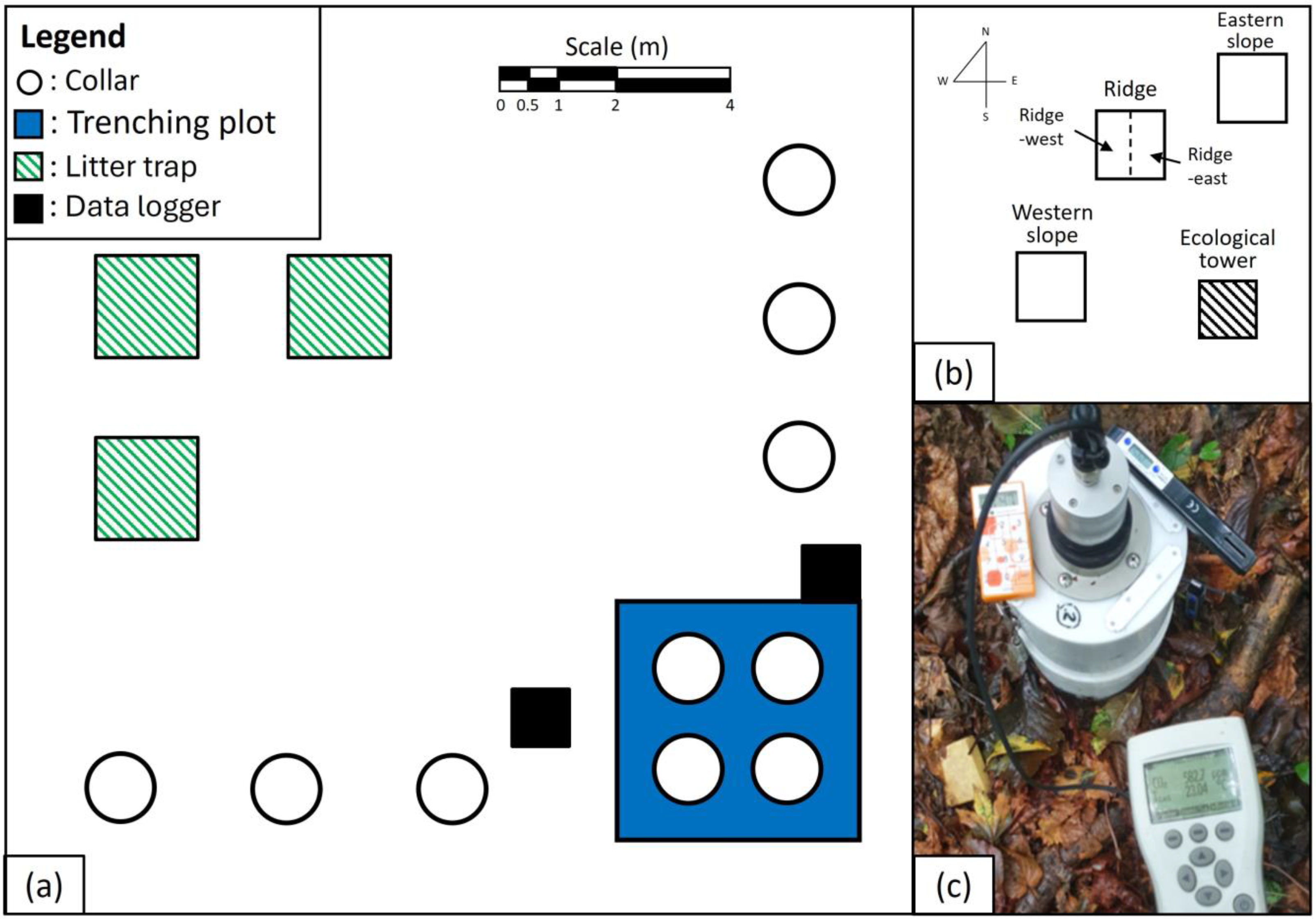
We investigated Rs through manual measurements. Manual Rs measurements were conducted by a GMP-343 (Vaisala, Helsinki, Finland), a type of infrared gas analyzer. The GMP-343 was calibrated according to the manufacturer’s calibration guidelines, and the calibration status was checked prior to the field deployments. These measurements were conducted at the ridge, eastern slope, and the western slope. At each measuring point, 10 acrylic cylindrical collars with a diameter of 16 cm and a height of 12 cm were established on the soil surface layer with a depth of 5 cm, and measurements were conducted once per chamber (n = 10 per point; these ranged from 6–10 due to field constraints). Four of them were installed to measure Rh (n = 4 per point; these ranged from 3–4). To this end, they were installed on the trench plot, which was carried out by establishing a 1 × 1 m quadrat and then digging the perimeter to a depth of 80 cm to induce root mortality, and inserting plastic panels to prevent root ingrowth. The trenching plots were established separately at the ridge, eastern slope, and the western slope, respectively. They were stabilized for more than 1 year, and to prevent plant regrowth within the plot, we constantly removed the grass during the whole research period. The other six collars were installed near the trench plot, each on the ridge, eastern slope, and the western slope, to assess total Rs (n = 6 per point; measurements were ranged from 3–6). A subplot was established on the eastern slope and another on the western slope. Additionally, the subplot on the ridge was subdivided into ridge-west and ridge-east to capture the impact of heterogeneity in litter conditions (Figure 1). All collars were kept in place persistently after installation, and in case of dislodgement, they were reseated, and the affected Rs data were excluded from analysis. The total number of respiration measurements were 865 for total Rs and 605 for Rh.
Rs was calculated by establishing an enclosed space and measuring the CO2 concentration through the GMP-343. Prior to measurements, two springs mounted on the cap were secured to the rings on both sides of the collar to establish an enclosed headspace between the soil, the cap, and the collar. The concentration of CO2 in that enclosed space increased due to the metabolic activity of soil microorganisms and plant roots, and this fluctuation in concentration was measured using the GMP-343 connected to the cap. Rs was calculated through this measured change in CO2 concentration. Following stabilization, Rs measurement was carried out for 3 min, and the CO2 concentration was recorded at 1-min intervals. The equation used for Rs calculations is as follows [38].
Soil respiration (mg CO2 m−2 h−1) = A × C × ρ × V/S
A denotes the conversion factor, C indicates the increasing rate of CO2 concentration per unit time (ppm min−1), ρ is the density of CO2 (mg m−3), V refers to the volume of the enclosed space (m3), and S indicates the surface area of soil enclosed by the collar (m2). Rs measurements were conducted around 10:00 AM to prevent the diurnal vias. Measurements were conducted from 2018 to 2024 once a month during the April–November period, and Rs were not measured during the winter period due to freezing and snow-related access restrictions.

2.3. Environmental Factors

The investigations of environmental factors were categorized into measurements using data loggers and manual methods. Measurements made using data loggers involved measurements of Ts, Ta, rainfall, and soil moisture content (SMC). Rainfall was monitored with a rain gauge (metric) data logger (RG3-M, Onset, Bourne, MA, USA) mounted on an ecological tower extending above the forest canopy, which was constructed within a long-term ecological research project located tens of meters from the Rs measurement plots to avoid blockage by canopy litter. The Ts and Ta were measured using the temperature sensor (S-TMB-M002, Onset, Bourne, MA, USA) at the ridge, eastern slope, western slope, trench plot of the ridge, trench plot of the eastern slope, and trench plot of the western slope. SMC data was obtained using a soil moisture sensor (S-TMB-005, Onset, Bourne, MA, USA) at the ridge, eastern slope, western slope, trench plot of the ridge, trench plot of the eastern slope, and trench plot of the western slope. The collected environmental data was logged by a data logger (HOBO Micro Station, Onset, Bourne, MA, USA). Measurements were conducted from 2018 to 2024, and the gaps in the dataset were imputed using gap-filling. To minimize disturbance, data loggers for the trenching plot were positioned outside the plot, with only probes installed inside (Figure 1).
Although measurements through data loggers can continuously monitor environmental variables, limitations exist in capturing the environmental conditions of each Rs chamber. To fill this gap, we measured temperature and SMC of each chamber by manual measurements. Ts was measured using a portable thermometer. SMC was measured using a TDR soil moisture sensor (CS-659, Campbell Scientific, Logan, UT, USA) from 0 to 10 cm at an average depth of 5 cm. Manual measurements were made twice for each Rs measurement, and the two obtained values were averaged and compared with Rs. The manual SMC and Ts data were gap-filled using the data obtained from the data logger when it was not measured properly due to instrument error or soil texture.

2.4. Litter

The litter environment was examined by measuring litter-fall production and accumulation. Litter-fall production was measured using a litter trap, which is composed of nylon mesh and a stainless-steel frame with dimensions of 1 m × 1 m. Three litter traps were established—one each at the ridge, eastern slope, and the western slope. Litter was collected monthly during the period of April–November from 2018 to 2024. Due to the structural failure of the litter traps in 2022, production for that year was excluded from the estimation.
Litter accumulation was measured using quadrats with dimensions of 30 cm × 30 cm in November. Measurements of litter accumulation were conducted by installing the quadrat and cutting all the litter within and outside the quadrat boundary using pruning shears and collecting the litter inside it. These measurements were performed at three times at the ridge-west, ridge-east, eastern slope, and the western slope. Litter accumulation was also conducted near the trench plot of the ridge. Collected litter samples were oven-dried for 48 h at 80 °C using a litter dryer to assess litter-fall production and accumulation by measuring the dry weight.

2.5. Data Analysis

To analyze the relationship between Rs and environmental conditions, we performed quadratic regression analysis, logarithmic regression analysis, and linear regression analysis. We summarized these associations through Pearson’s correlation coefficient. Furthermore, we conducted a one-way ANOVA to examine the spatial heterogeneity of Rs and environmental conditions. Additionally, to assess the heterogeneity in litter accumulation, we used Welch’s t-test. The criterion for statistical significance was determined at a p < 0.05 level, and the statistical analyses were performed using Microsoft Excel (Microsoft, Redmond, WA, USA). We replicated the statistical results and conducted Tukey’s HSD post hoc test in R version 4.4.2 (R Core Team, Vienna, Austria). Furthermore, clustering analysis was implemented through R version 4.4.2 (R Core Team, Vienna, Austria), utilizing the fpc and cluster packages to identify the characteristics of Rs at each measurement point.

3. Results

3.1. Rs and Environmental Variations

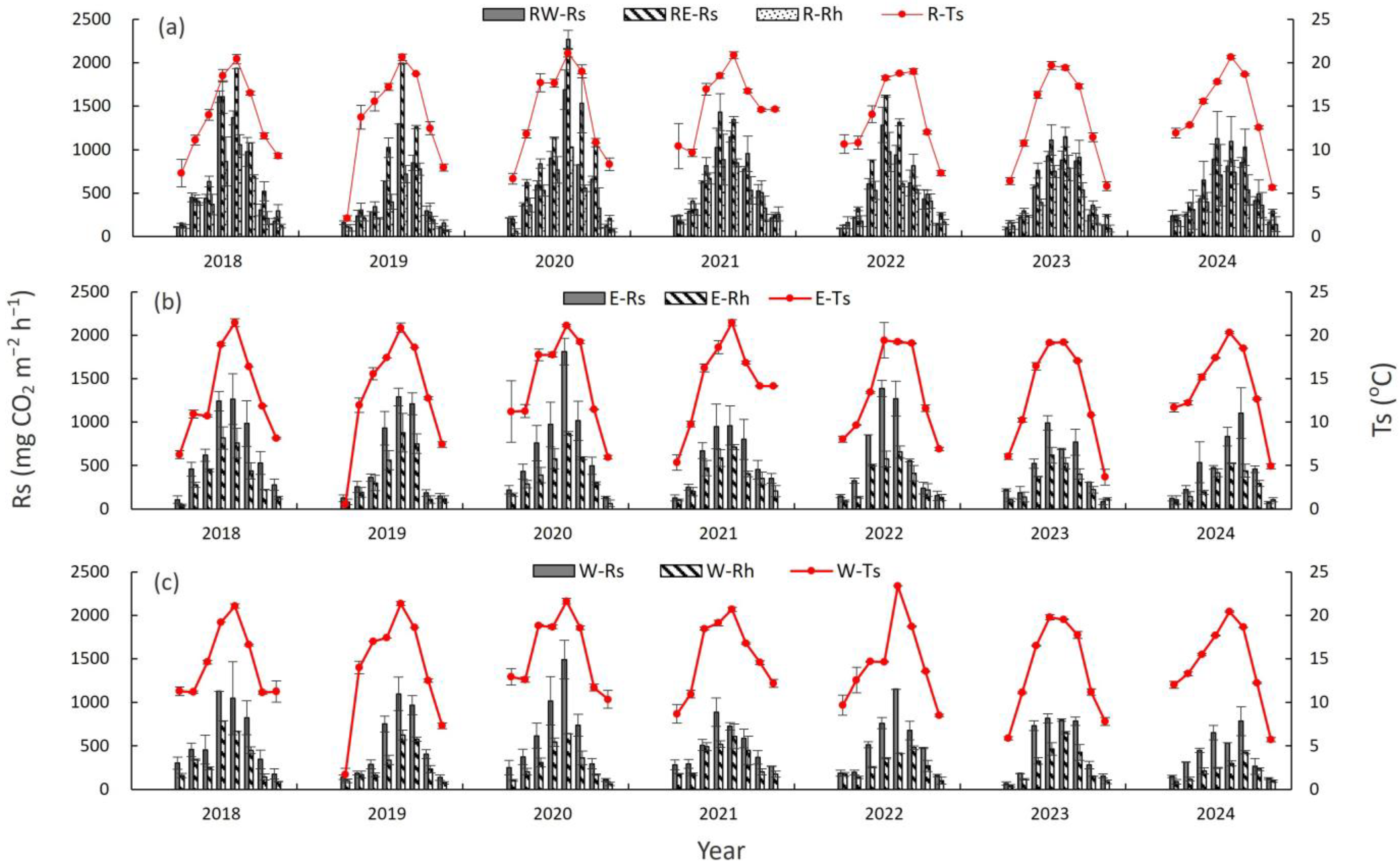
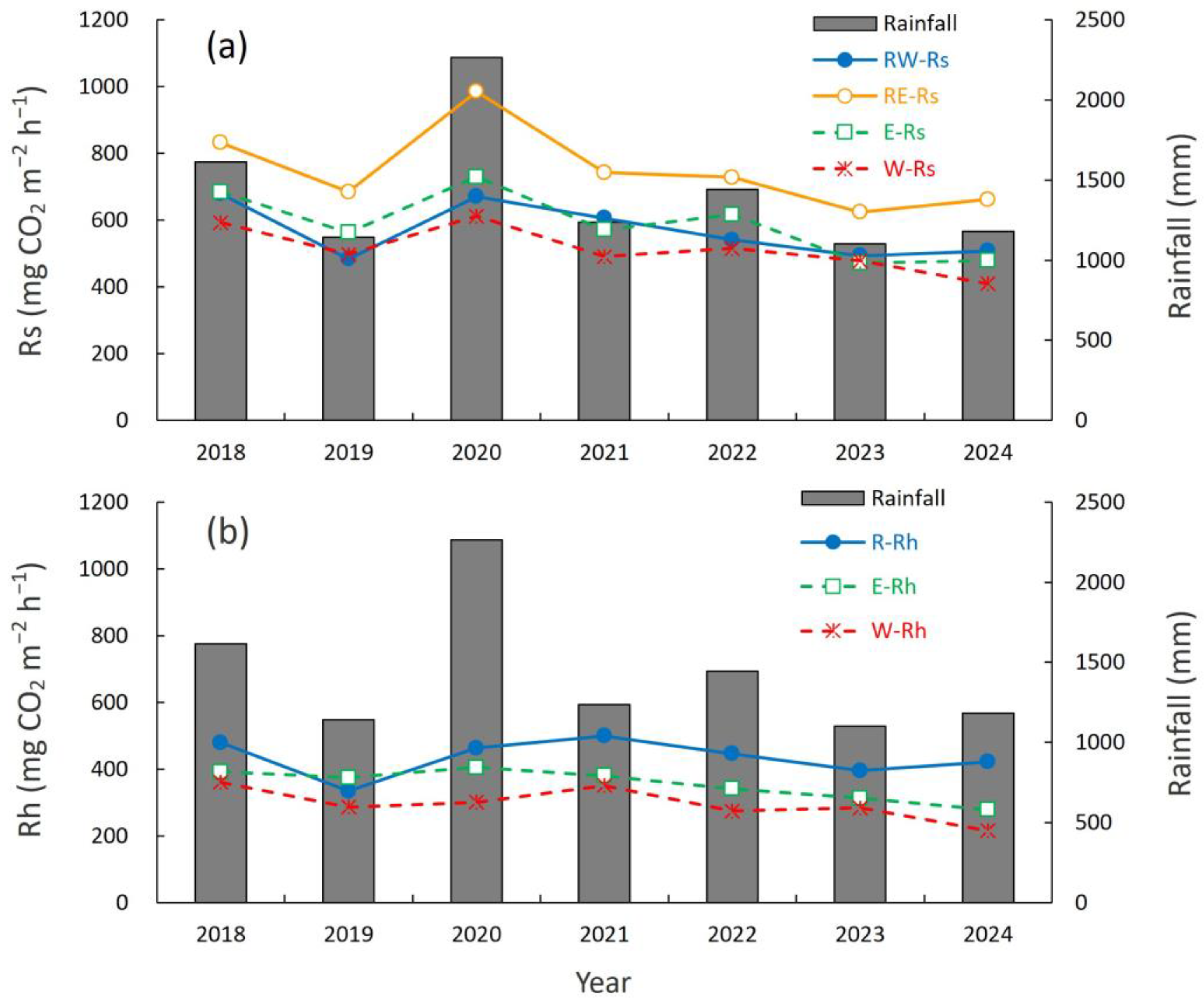
Rs and Ts varied seasonally and spatially. Values were higher in the period of July–September and broadly co-varied with Ts seasonally (Figure 2). The mean Rs from April to November for each measurement point was 568.9 ± 83.0 mg CO2 m−2 h−1 at the ridge-west, 751.5 ± 122.8 mg CO2 m−2 h−1 at the ridge-east, 588.2 ± 97.3 mg CO2 m−2 h−1 at the eastern slope, and 513.7 ± 69.2 mg CO2 m−2 h−1 at the western slope (mean ± standard deviation across years, n = 7). The mean Rs at the ridge-west for April–November was highest in 2018, with a value of 678.8 mg CO2 m−2 h−1, and lowest in 2019, with a value of 483.8 mg CO2 m−2 h−1. The mean Rs at the ridge-east for April–November was highest in 2020, with a recorded value of 985.6 mg CO2 m−2 h−1, and lowest in 2023, with a value of 624.3 mg CO2 m−2 h−1. The mean value of Rs was significantly different among the sites (p < 0.05). Average Rh of that period for each point was 434.0 ± 56.1 mg CO2 m−2 h−1 at the ridge, 354.7 ± 45.9 mg CO2 m−2 h−1 at the eastern slope, and 295.9 ± 49.1 mg CO2 m−2 h−1 at the western slope (mean ± standard deviation across years, n = 7), respectively (Figure 3).
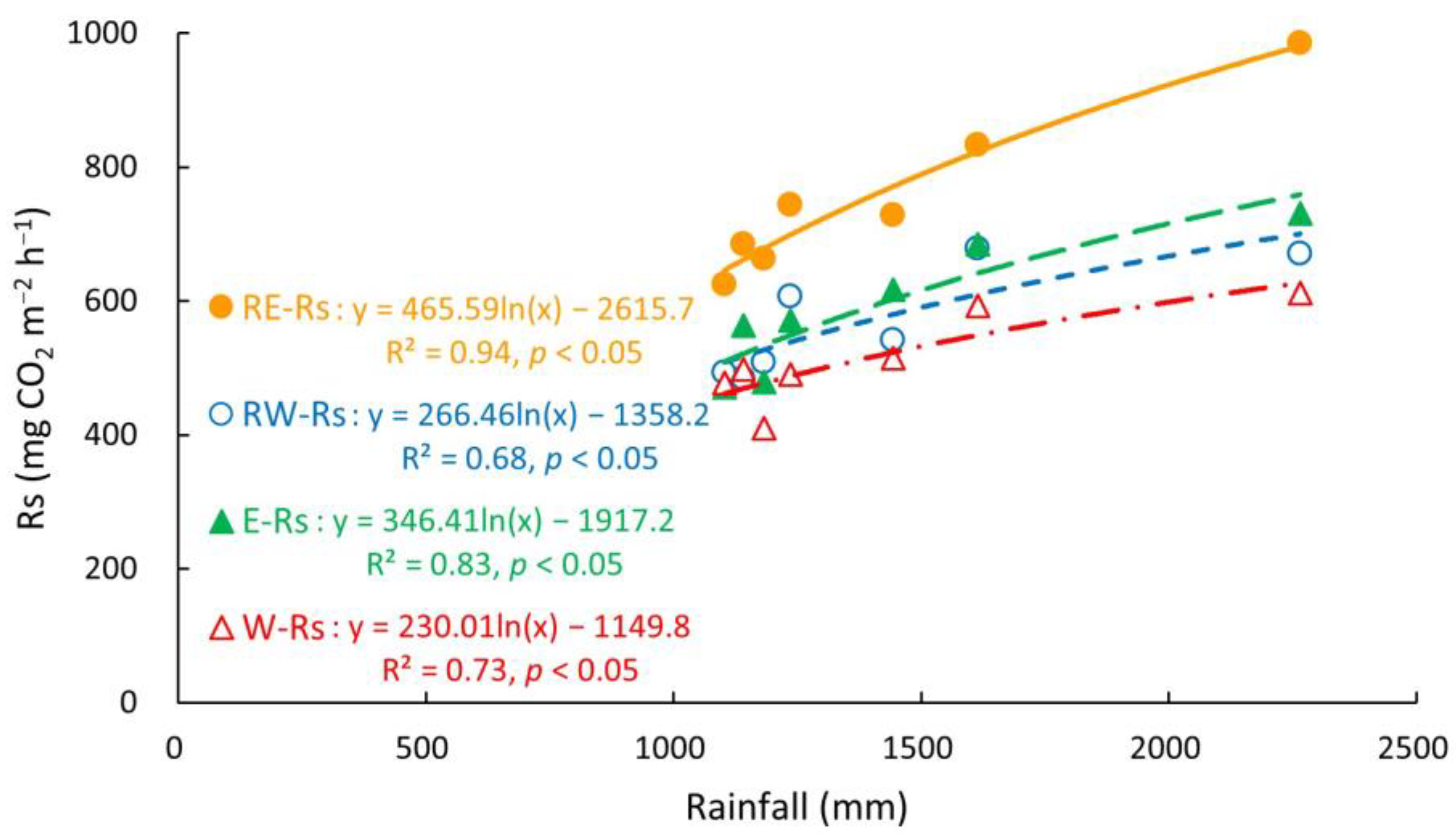
Across years, the mean cumulative rainfall from April through November in the research period was 1426.2 ± 412.3 mm (Figure 3). Average Ts from April to November was 14.3 ± 0.7 °C at the ridge-west, 13.8 ± 0.6 °C at the ridge-east, 13.8 ± 0.6 °C at the eastern slope, and 14.6 ± 0.6 °C at the western slope (Table 1) (mean ± standard deviation across years, n = 7). Rs showed a large difference by measurement point (p < 0.05) and by year, while the spatial difference in Ts was nonsignificant (p = 0.078). The relationship between mean Ts and Rs from April to November was not significant (p = 0.387–0.946), and no significant relationship was found between average Ts and Rh during the same period (Figure S1). The relationship between accumulated rainfall and mean Rs from April to November was significant (p < 0.05), with a coefficient of determination between the two factors being 0.68 to 0.94 (Figure 4).

3.2. Contrasting Response of Rs Components to Rainfall

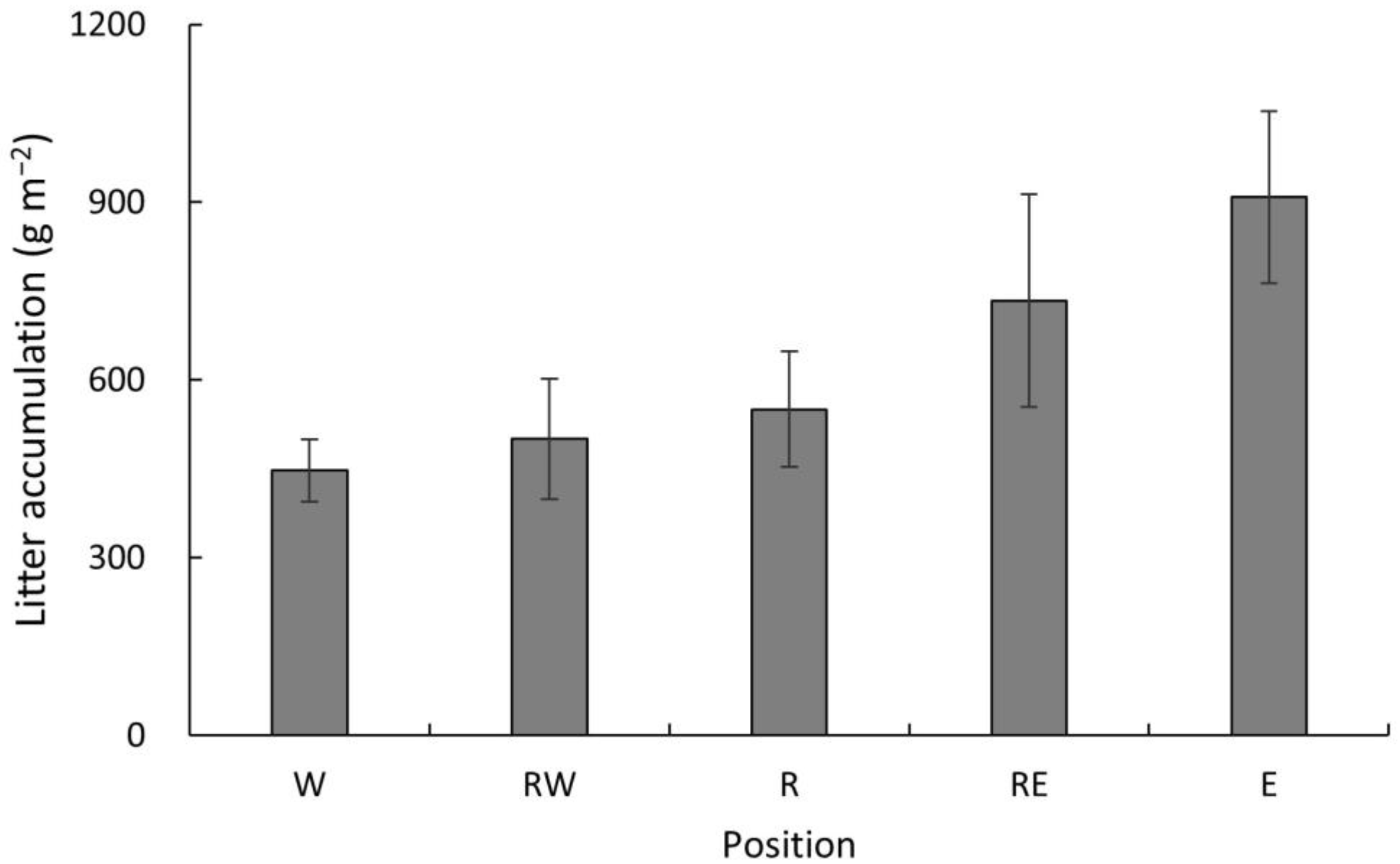
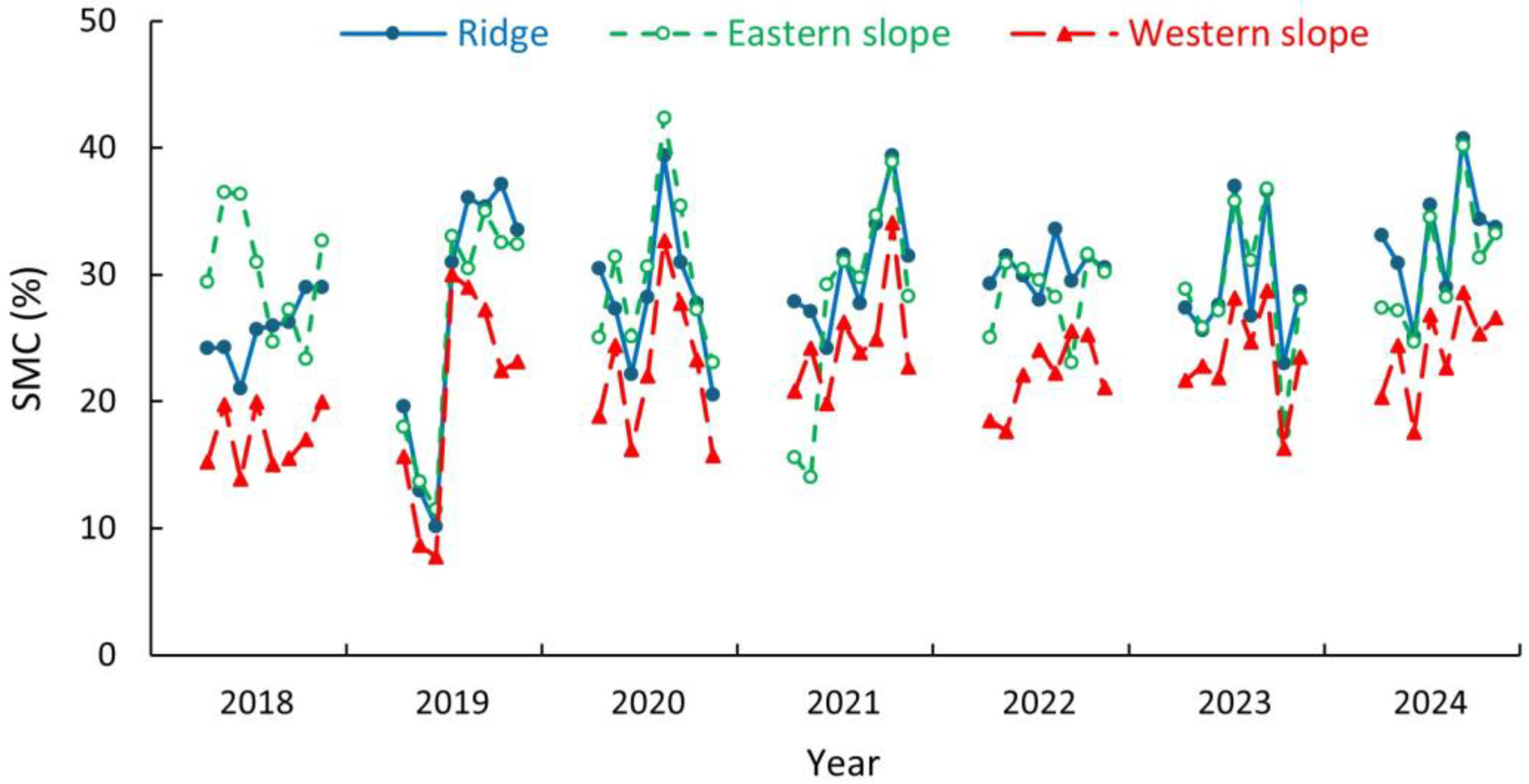
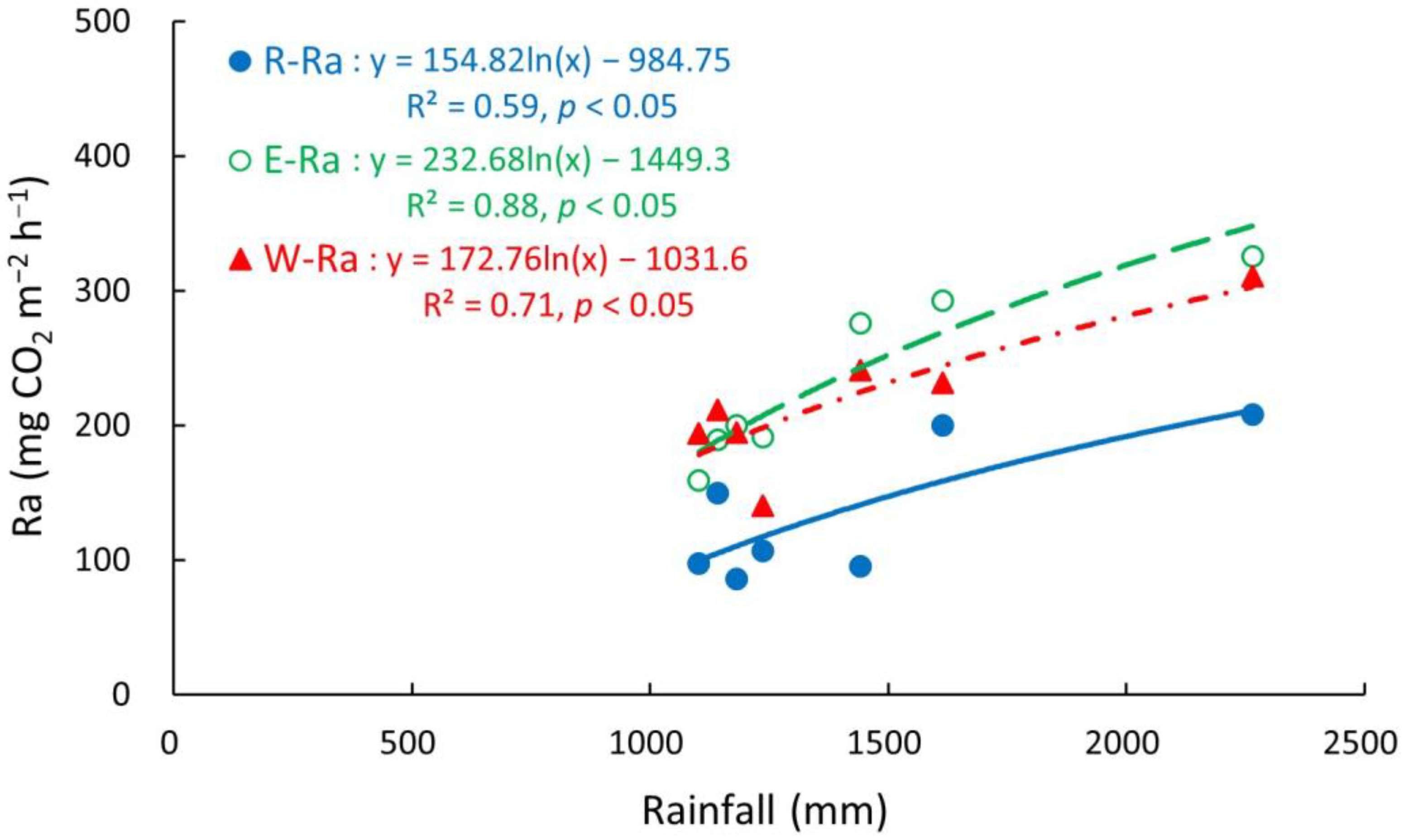
Ra was assessed by excluding Rh from the total Rs. Because litter accumulation differed between points (Figure 5), Rh at the ridge was estimated using values from the ridge-west, where litter accumulation was similar to that of the ridge trench plot (550.4 ± 97.4 g m−2), with 500.4 ± 101.6 g m−2. Mean Ra for April–November was 134.9 ± 51.6 mg CO2 m−2 h−1 at the ridge, 233.5 ± 63.5 mg CO2 m−2 h−1 at the eastern slope, and 217.8 ± 52.6 mg CO2 m−2 h−1 at the western slope. The mean values of SMC for that period were 29.1 ± 2.4% at the ridge-trench plot (R-Rh), 28.9 ± 1.7% at the trench plot of the eastern slope (E-Rh), and 22.0 ± 2.6% at the trench plot of the western slope (W-Rh) (Figure 6). Mean annual Ra contribution from Rs was 35.0 ± 4.9% during the research period (Table 2). The coefficient of variation (CV) of the mean value for April–November ranged from 24.2% to 38.2% for Ra and 12.9% to 16.6% for Rh (Figure S2). Moreover, the mean Ra in that period was significantly correlated with cumulative rainfall (p < 0.05), and the R2 value was 0.59 to 0.88 (Figure 7).

3.3. Effect of Litter on Rs

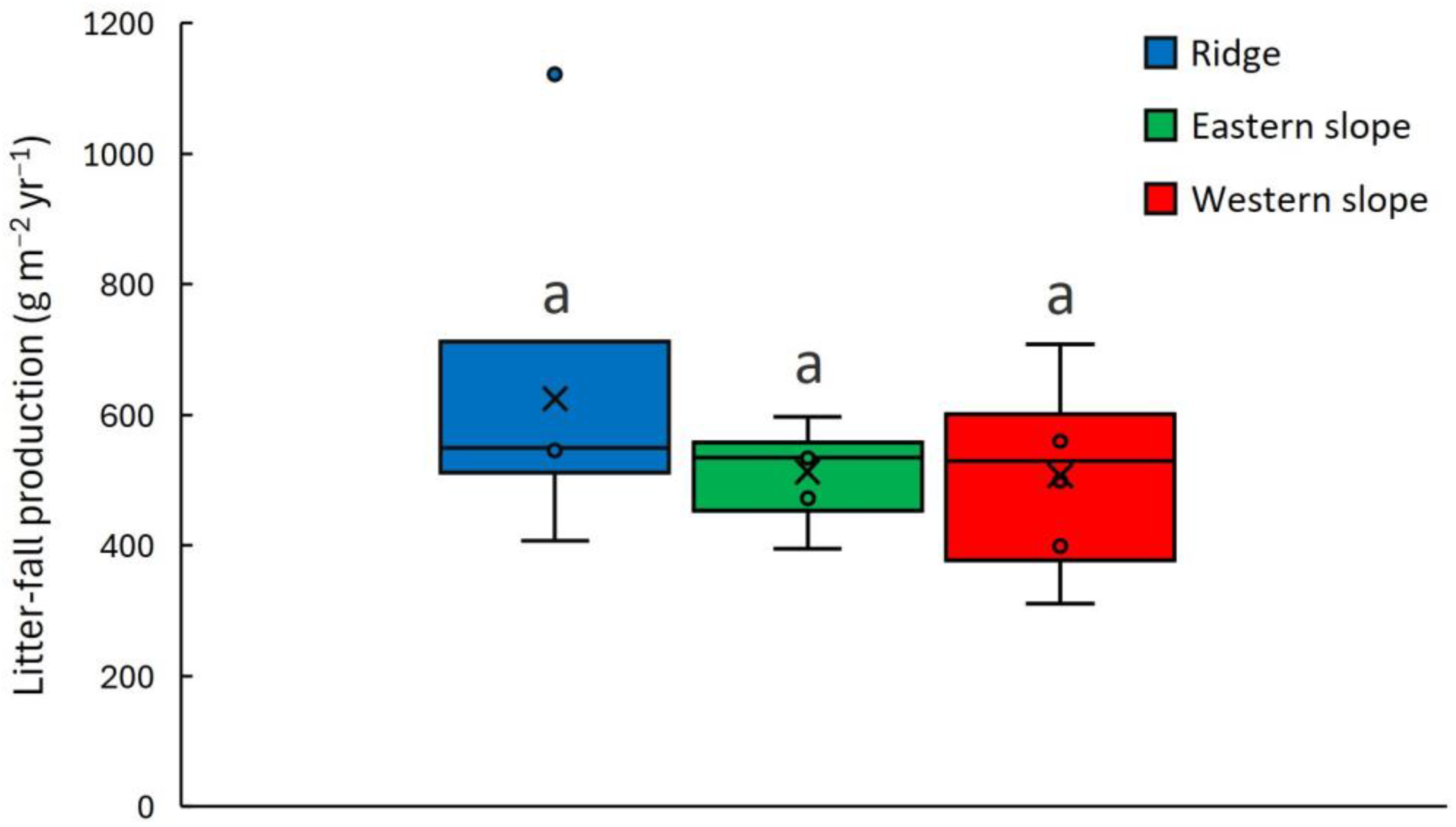
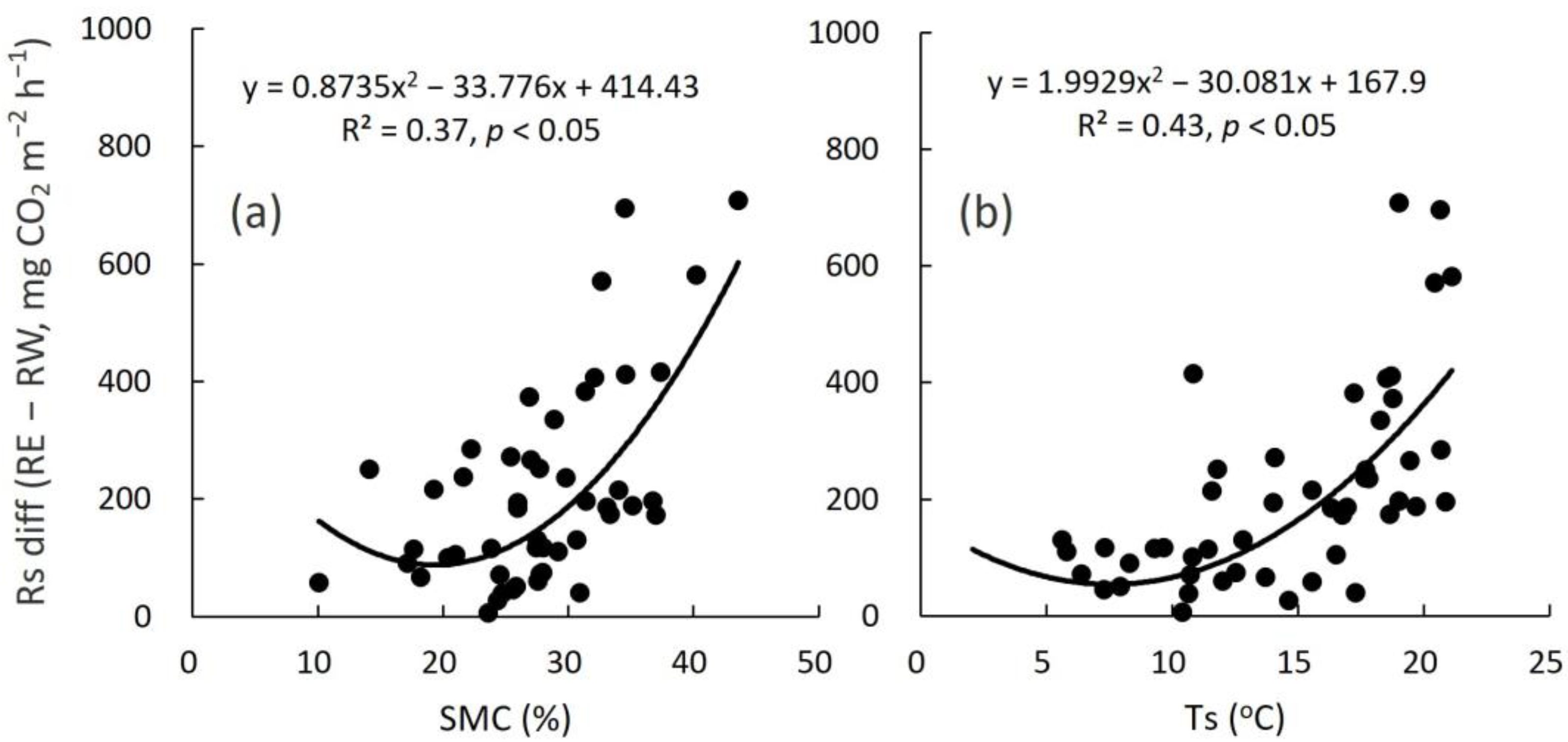
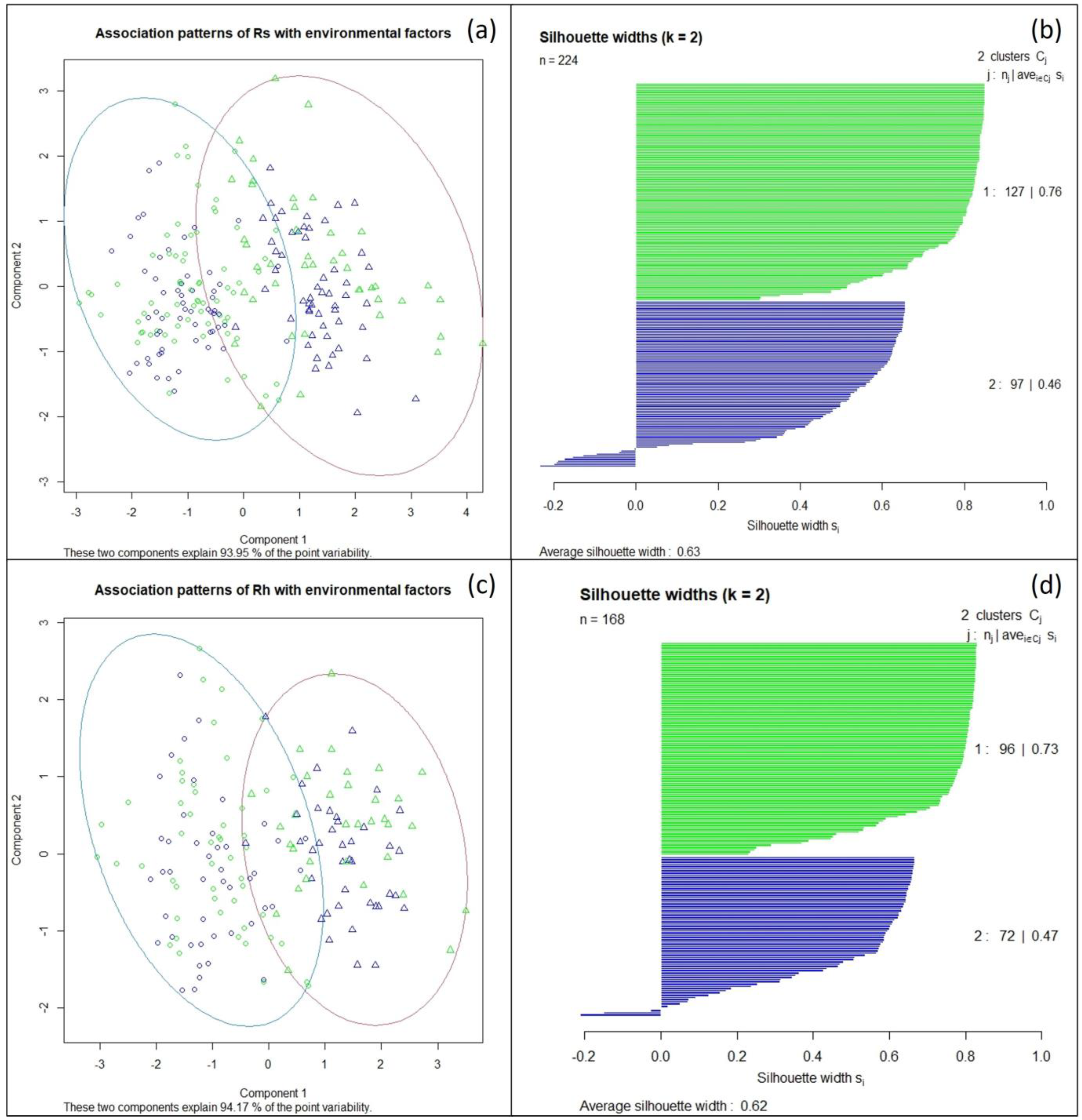
To assess the effects of litter on the carbon cycle, we investigated litter-fall production and litter accumulation. The mean annual litter-fall production was 625.1 ± 250.5 at the ridge g m−2 yr−1, 513.0 ± 70.2 g m−2 yr−1 at the eastern slope, and 506.9.0 ± 70.2 g m−2 yr−1 at the western slope (mean ± standard deviation across years, n = 6). In 2022, due to the structural failure of litter traps at the slopes, the data for 2022 was excluded (Figure 8). The spatial differences in litter-fall production were not significant among the Rs plots (p = 0.421). In terms of litter accumulation, measurement points are largely divided into two groups: the ridge-west and the western slope group as well as ridge-east and the eastern slope group (p < 0.05). While Rs at measurement points under comparable microenvironmental conditions had p-values of 0.417 for SMC and 0.197 for Ts (mean ± standard deviation across years, n = 7), ridge-east and ridge-west appeared to show different associations with environmental variables. The differences in Rs between the two measurement points were significantly correlated with SMC and Ts (Figure 9). The response of monthly Rs and Rh to environmental factors of SMC and Ts was partitioned into two clusters (Figure 10). The average silhouette coefficient was 0.63 for Rs and 0.62 for Rh. The explanation of the variability on the first two components was 93.95% for Rs and 94.17% for Rh.

4. Discussion

As global warming intensifies, it is essential to understand the variations in Rs, one of the primary carbon fluxes [11]. In response, numerous short-term studies have been conducted, but they lacked an examination of long-term variations in Rs [16,17]. To examine this gap, we investigated long-term variations in Rs in temperate deciduous forests taking into account the litter environment.
During the study period, Rs showed marked spatial heterogeneity. Despite the proximity within a 100 × 100 m subplot, differences in mean Rs values over April–November were up to 40%. Additionally, the range between the highest and lowest mean Rs values for April to November during the study period was up to 50% in some measurement points. These patterns indicate pronounced spatial and temporal heterogeneity in Rs, which is consistent with previous studies conducted in forests [39,40]. However, Ts showed no significant differences among the sites. Furthermore, Ts, which is a major contributor to Rs [18], varied with the seasonal changes in Rs but could not account for the interannual variations in Rs (Figure 2 and Figure S1). These results indicate that spatiotemporal variation in Rs cannot be solely attributed to Ts, and it was affected by other environmental factors. As temperatures rise under global warming, Rs has increased over the past decades [41,42], and global Rs is projected to rise further in the future due to climate change [43]. Nevertheless, such spatial dynamics were not observed in this study. It was consistent with the findings of a previous study that there are instances where a long-term positive trend in Rs is not evident at the plot scale under climate change [17]. These observations suggest that to investigate the variability in Rs on a narrow scale, it is essential to relate Rs to other environmental factors. To explore the effects of other environmental factors on long-term variations in Rs, we analyzed the relationship between environmental datasets and recorded Rs values.
Interannual mean values of Rs from April to November were positively associated with cumulative rainfall. Given the nonsignificant relationship between interannual Rs and Ts, it suggests that rainfall regimes emerged as the primary factor correlated with interannual variability in Rs at this research site. Rainfall, which is a major driver of SMC [22], affects Rs through SMC variations and physical effects on the soil, including oxygen diffusion and dissolved organic carbon [44,45]. Furthermore, annual rainfall is also strongly associated with the interannual temperature sensitivity of Rs [46]. In line with rainfall-driven changes, annual rainfall regimes are associated with interannual fluctuations in Rs, as reported in numerous studies conducted over a long period at specific sites [17,47,48]. The relationship between rainfall and Rs identified in this study supports rainfall-related fluctuations in Rs, which is consistent with previous studies. By component, these variations in Rs were evident in Ra, with the interannual CV of Ra substantially higher than that of Rh. The sensitivity of Ra and Rh to rainfall, the key components of Rs, differs among studies. Some studies reported that the increase in total Rs with rainfall is mainly attributed to Rh [44,45]. On the other hand, others reported that Ra mainly declined due to rainfall decreases, and fluctuations caused by rainfall did not appreciably appear in Rh [49,50]. Moreover, it was also reported that Rh decreased during rainfall events, in contrast to overall Rs in temperate forests [51]. Such component-specific responses to rainfall vary with vegetation density [52]. These responses also reflect the site-specific differences in moisture conditions that vary depending on the study. Rh does not continuously rise with increasing soil moisture but tends to decrease when exceeding a specific optimal moisture range [53]. A previous study conducted in similar vegetation zones reported an optimal SMC of 24.5% [51], and the mean SMC in trenching plots in our study was at or above this level. Taken together, rainfall-associated changes in Rs are interpreted as being driven primarily by Ra. As the two components of soil respiration varied differently, the mean annual Ra contribution from Rs varied substantially, ranging from up to 42.2% to at least 26.6% (Table 2).
Although the rainfall regime accounts for the variations in interannual Rs, it does not explain the spatial heterogeneity in Rs. To complement this, we analyzed the effects of the litter environment on the carbon cycle, one of the drivers of Rs [26,27]. Spatial differences in annual litter-fall production were not significant during the study period, in contrast to spatial heterogeneity in Rs. Therefore, litter-fall production did not clearly explain the carbon dynamics at this research site. Given these observed patterns, it is necessary to analyze the heterogeneity in Rs through litter accumulation, which previous research reported as being unevenly accumulated at this site due to the influence of wind [31]. At this research site, litter accumulation varied considerably from point to point. The litter accumulation was the lowest at the western slope, which inclined towards the south, and it tended to increase as it transitioned to the eastern slope. As a result, the western slope and the ridge-west showed similar litter accumulation levels of 447.4–500.4 g m−2, and the ridge-east and the eastern slope also showed similar litter accumulation levels of 733.7–908.6 g m−2. Thus, the research area can be broadly classified into two groups, one with lower litter accumulation and the other with higher litter accumulation (p < 0.05). To assess the impacts of this pattern, we analyzed the difference in Rs at two points, the ridge-west and the ridge-east, where SMC and Ts were comparable. The differences in Rs between the two points were significantly associated with Ts and SMC (Figure 9), and these differences tended to increase when the two environmental factors were high. The supply of litter promotes the decomposition of existing soil organic carbon, leading to high Rs values at points with high accumulation of litter [26,54]. This litter-driven promotion in Rs is greatly affected by SMC, and this effect substantially increases under high temperatures [55]. Considering that the difference in SMC and Ts between the two points was nonsignificant, and these two points were assigned to different groups in terms of litter accumulation, although the pairwise contrast was underpowered given the number of replications, this is interpreted as consistent with heterogeneity in litter accumulation having a role in these differences. To determine whether differences in Rs according to litter environment corresponded to the entire research site, we additionally performed cluster analysis (Figure 10). As a result of clustering, the association patterns between Rs and the environmental factors (Ts and SMC) segregated into two clusters. Given the difference in Rs between the ridge-west and the ridge-east under similar environmental factors, it is interpreted as being attributable to heterogeneity in litter accumulation, with differences in the Rs–environment relationship and associated with spatial variations in Rs. Collectively, these findings indicate that to reveal the long-term variation in Rs, it is essential to incorporate litter accumulation, along with dynamics of temperature and rainfall.
Our findings highlight the long-term variability in Rs under rainfall regimes. Under climate change, the variability and intensity of rainfall tend to increase over decades [6,56] and are projected to further amplify in the future [57,58,59]. Therefore, a comprehensive consideration of the dynamics of the carbon cycle under these rainfall changes is crucial for investigating the impacts of climate change. In this study, Rs fluctuated due to interannual variability in rainfall, indicating that as the variability in rainfall increases in the future, fluctuations in Rs are also likely to be amplified. Furthermore, spatiotemporal variations in Rs are also affected by the litter environment in this study. This result suggests that microenvironmental factors, such as heterogeneity in litter accumulation, should be considered in the long-term dynamics of Rs. Considering that litter-fall production varies over decade-long scales and is correlated with climate variables [60], it can improve the interpretation of Rs variations that occur due to future climate-driven shifts. Our results are expected to provide valuable insights for modeling and managing carbon cycles under climate change, particularly in temperate deciduous forests, where a large amount of litter is supplied seasonally.
Although this study demonstrates the interannual variability in Rs, its discontinuous monitoring design limits our ability to examine high-frequency dynamics of Rs during rainfall events. It is known that not only does rainfall raise Rs, but the physical effects of rain, including soil pore filling and subsequent CO2 replacement, can produce complex within-event response patterns in Rs [51]. To better characterize Rs responses to rainfall regimes, continuous measurements of Rs are warranted in future studies. Additionally, although this study demonstrates that variability in Ra is a major driver of annual Rs fluctuations, it lacks plant physiological indicators to strengthen the understanding of plant activity. To fill this gap, Rs measurements need to be combined with plant activity indicators, including sap flow and gross primary production, which have been used in previous studies to examine the relationship between Rs and plant activity [61,62]. Incorporating these elements in subsequent studies will expand our findings. Furthermore, considering that Rs reduction due to soil drying differed between forests and grasslands [63], extending this research across diverse vegetation types would contribute to a more comprehensive understanding of the carbon cycle processes on a broader scale.

5. Conclusions

At the research site, long-term dynamics of Rs are strongly aligned with rainfall. Our results suggest that as rainfall variability increases, fluctuations in Rs intensify. These variations differ component-wise and are driven predominantly by increases in Ra. The difference in litter accumulation is also a factor that alters Rs, changing the response of Rs to environmental variables. Our findings are consistent with the main hypotheses: (a) variations in rainfall affect long-term fluctuations in Rs; (b) spatial variation in Rs is highly associated with the litter environment.
This study revealed the long-term relationship between rainfall and Rs. It indicates that the impact of Rs variations on the global carbon cycle may increase as rainfall regimes become more intensified under future climate change. Our findings also reveal substantial spatial heterogeneity in Rs accompanied by litter accumulation. It suggests that long-term changes and non-uniform litter deposition also play a key role in Rs dynamics. Considering these points, it is essential to take into account not only temperature, but also rainfall and litter, to understand long-term spatiotemporal changes in Rs. These insights are expected to be further applied for global carbon cycle estimates and models. Future studies that integrate Rs patterns in winter, the integration of plant indicators, and event-scale variability across diverse vegetation types would enhance the generalizability of our findings.

Supplementary Materials

The following supporting information can be downloaded at: https://www.mdpi.com/article/10.3390/f16111720/s1, Figure S1: The relationship between mean soil temperature (Ts), soil respiration (Rs), and heterotrophic respiration (Rh) from April to November by year (means across years, n = 7); Figure S2: Coefficient of variation (CV) of the average heterotrophic respiration (Rh) and average autotrophic respiration (Ra) from April to November during the study period each year (CV of the April–November mean values across years, n = 7).

Author Contributions

Conceptualization, M.L. and J.L.; methodology, J.L.; formal analysis, M.L.; investigation, M.L., D.S., J.P., H.W. and J.L.; data curation, M.L., D.S. and J.L.; writing—original draft preparation, M.L.; writing—review and editing, M.L., D.S., J.P., H.W. and J.L.; visualization, M.L.; supervision, J.L.; project administration, J.P.; funding acquisition, J.L. All authors have read and agreed to the published version of the manuscript.

Funding

This study was funded by the National Institute of Ecology (grant number NIE-B-2024-02).

Data Availability Statement

Data from this manuscript are being used for related research and are available upon request after consultation.

Conflicts of Interest

The authors declare no conflicts of interest.

Abbreviations

The following abbreviations are used in this manuscript:
RsSoil respiration
RaAutotrophic respiration
RhHeterotrophic respiration
TsSoil temperature
TaAir temperature
SMCSoil moisture content
RWRidge-west
RERidge-east
RRidge
EEastern slope
WWestern slope
CVCoefficient of variation
R-RhTrench plot of the ridge
E-RhTrench plot of the eastern slope
W-RhTrench plot of the western slope

References

  1. IPCC. Intergovernmental Panel on Climate Change. Climate Change 2022, Impacts, Adaptation and Vulnerability Summary for Policymakers; IPCC: Geneva, Switzerland, 2022. [Google Scholar]
  2. IPCC. Climate Change 2014: Mitigation of Climate Change: Working Group III Contribution to the IPCC Fifth Assessment Report, 1st ed.; Cambridge University Press: Cambridge, UK, 2015. [Google Scholar]
  3. Lenton, T.M.; Xu, C.; Abrams, J.F.; Ghadiali, A.; Loriani, S.; Sakschewski, B.; Zimm, C.; Ebi, K.L.; Dunn, R.R.; Svenning, J.-C.; et al. Quantifying the human cost of global warming. Nat. Sustain. 2023, 6, 1237–1247. [Google Scholar] [CrossRef]
  4. Meinshausen, M.; Lewis, J.; McGlade, C.; Gütschow, J.; Nicholls, Z.; Burdon, R.; Cozzi, L.; Hackmann, B. Realization of Paris Agreement pledges may limit warming just below 2  °C. Nature 2022, 604, 304–309. [Google Scholar] [CrossRef]
  5. Song, J.; Tong, G.; Chao, J.; Chung, J.; Zhang, M.; Lin, W.; Zhang, T.; Bentler, P.M.; Zhu, W. Data driven pathway analysis and forecast of global warming and sea level rise. Sci. Rep. 2023, 13, 5536. [Google Scholar] [CrossRef]
  6. Zhang, W.; Zhou, T.; Wu, P. Anthropogenic amplification of precipitation variability over the past century. Science 2024, 385, 427–432. [Google Scholar] [CrossRef]
  7. Ma, N.; Szilagyi, J.; Zhang, Y. Hydrological responses to warming: Insights from centennial-scale terrestrial evapotranspiration estimates. Water Resour. Res. 2025, 61, e2025WR041001. [Google Scholar] [CrossRef]
  8. Nazeri Tahroudi, M. Comprehensive global assessment of precipitation trend and pattern variability considering their distribution dynamics. Sci. Rep. 2025, 15, 22458. [Google Scholar] [CrossRef] [PubMed]
  9. Yang, J.; Jia, X.; Ma, H.; Chen, X.; Liu, J.; Shangguan, Z.; Yan, W. Effects of warming and precipitation changes on soil GHG fluxes: A meta-analysis. Sci. Total Environ. 2022, 827, 154351. [Google Scholar] [CrossRef] [PubMed]
  10. Pan, Y.; Birdsey, R.A.; Phillips, O.L.; Houghton, R.A.; Fang, J.; Kauppi, P.E.; Keith, H.; Kurz, W.A.; Ito, A.; Lewis, S.L.; et al. The enduring world forest carbon sink. Nature 2024, 631, 563–569. [Google Scholar] [CrossRef]
  11. Xu, M.; Shang, H. Contribution of soil respiration to the global carbon equation. J. Plant Physiol. 2016, 203, 16–28. [Google Scholar] [CrossRef]
  12. Zeng, J.; Zhou, T.; Cao, L.; Yu, Y.; Tan, E.; Zhang, Y.; Wu, X.; Zhang, J.; Zhang, Q.; Qu, Y.; et al. Various responses of global heterotrophic respiration to variations in soil moisture and temperature enhance the positive feedback on atmospheric warming. Commun. Earth Environ. 2025, 6, 475. [Google Scholar] [CrossRef]
  13. Li, Q.; Liu, Y.; Kou, D.; Peng, Y.; Yang, Y. Substantial non-growing season carbon dioxide loss across Tibetan alpine permafrost region. Glob. Change Biol. 2022, 28, 5200–5210. [Google Scholar] [CrossRef]
  14. Nissan, A.; Alcolombri, U.; Peleg, N.; Galili, N.; Jimenez-Martinez, J.; Molnar, P.; Holzner, M. Global warming accelerates soil heterotrophic respiration. Nat. Commun. 2023, 14, 3452. [Google Scholar] [CrossRef]
  15. Feng, L.; Jiang, J.; Hu, J.; Zhu, C.; Wu, Z.; Li, G.; Chen, T. Global spatial projections of forest soil respiration and associated uncertainties. Forests 2024, 15, 1982. [Google Scholar] [CrossRef]
  16. Liang, G.; Stefanski, A.; Eddy, W.C.; Bermudez, R.; Montgomery, R.A.; Hobbie, S.E.; Rich, R.L.; Reich, P.B. Soil respiration response to decade-long warming modulated by soil moisture in a boreal forest. Nat. Geosci. 2024, 17, 905–911. [Google Scholar] [CrossRef]
  17. Eom, J.Y.; Jeong, S.H.; Chun, J.H.; Lee, J.H.; Lee, J.S. Long-term characteristics of soil respiration in a Korean cool-temperate deciduous forest in a monsoon climate. Anim. Cells Syst. 2018, 22, 100–108. [Google Scholar] [CrossRef] [PubMed]
  18. Lloyd, J.; Taylor, J.A. On the temperature dependence of soil respiration. Funct. Ecol. 1994, 8, 315–323. [Google Scholar] [CrossRef]
  19. Possinger, A.R.; Driscoll, C.T.; Green, M.B.; Fahey, T.J.; Johnson, C.E.; Koppers, M.M.K.; Martel, L.D.; Morse, J.L.; Templer, P.H.; Uribe, A.M.; et al. Increasing soil respiration in a northern hardwood forest indicates symptoms of a changing carbon cycle. Commun. Earth Environ. 2025, 6, 418. [Google Scholar] [CrossRef]
  20. Jacobson, K.; van Diepeningen, A.; Evans, S.; Fritts, R.; Gemmel, P.; Marsho, C.; Seely, M.; Wenndt, A.; Yang, X.; Jacobson, P. Non-rainfall moisture activates fungal decomposition of surface litter in the Namib Sand Sea. PLoS ONE 2015, 10, e0126977. [Google Scholar] [CrossRef]
  21. Lei, J.; Guo, X.; Zeng, Y.; Zhou, J.; Gao, Q.; Yang, Y. Temporal changes in global soil respiration since 1987. Nat. Commun. 2021, 12, 403. [Google Scholar] [CrossRef]
  22. Yang, R.; Wang, F.; Tang, X.; Cui, J.; Wang, G.; Guo, L.; Zhang, H. Quantification of Soil Water Dynamics Response to Rainfall in Forested Hillslope Based on Soil Water Potential Measurement. Forests 2025, 16, 75. [Google Scholar] [CrossRef]
  23. Zhang, Z.; Li, Y.; Williams, R.A.; Chen, Y.; Peng, R.; Liu, X.; Qi, Y.; Wang, Z. Responses of soil respiration and its sensitivities to temperature and precipitation: A meta-analysis. Ecol. Inform. 2023, 75, 102057. [Google Scholar] [CrossRef]
  24. Lee, X.; Wu, H.-J.; Sigler, J.; Oishi, C.; Siccama, T. Rapid and transient response of soil respiration to rain. Glob. Change Biol. 2004, 10, 1017–1026. [Google Scholar] [CrossRef]
  25. Chen, X.; Hu, H.; Wang, Q.; Wang, X.; Ma, B. Exploring the Factors Affecting Terrestrial Soil Respiration in Global Warming Manipulation Experiments Based on Meta-Analysis. Agriculture 2024, 14, 1581. [Google Scholar] [CrossRef]
  26. Bréchet, L.M.; Lopez-Sangil, L.; George, C.; Birkett, A.J.; Baxendale, C.; Castro Trujillo, B.; Sayer, E.J. Distinct responses of soil respiration to experimental litter manipulation in temperate woodland and tropical forest. Ecol. Evol. 2018, 8, 3787–3796. [Google Scholar] [CrossRef] [PubMed]
  27. Fang, X.; Zhao, L.; Zhou, G.; Huang, W.; Liu, J. Increased litter input increases litter decomposition and soil respiration but has minor effects on soil organic carbon in subtropical forests. Plant Soil 2015, 392, 139–153. [Google Scholar] [CrossRef]
  28. Luo, Y.; Zhao, X.; Li, Y.; Liu, X.; Wang, L.; Wang, X.; Du, Z. Wind disturbance on litter production affects soil carbon accumulation in degraded sandy grasslands in semi-arid sandy grassland. Ecol. Eng. 2021, 171, 106373. [Google Scholar] [CrossRef]
  29. Lee, D.; Yoo, G.; Oh, S.; Shim, J.H.; Kang, S. Significance of aspect and understory type to leaf litter redistribution in a temperate hardwood forest. Korean J. Biol. Sci. 1999, 3, 143–147. [Google Scholar] [CrossRef]
  30. Wang, J.; Yang, Q.; Qiao, Y.; Zhai, D.; Jiang, L.; Liang, G.; Sun, X.; Wei, N.; Wang, X.; Xia, J. Relative contributions of biotic and abiotic factors to the spatial variation of litter stock in a mature subtropical forest. J. Plant Ecol. 2019, 12, 769–780. [Google Scholar] [CrossRef]
  31. Lee, J.-S. Effect of micro-environment in ridge and southern slope on soil respiration in Quercus mongolica forest. J. Ecol. Environ. 2018, 42, 26. [Google Scholar] [CrossRef]
  32. Walter, H. General Section. In Vegetation of the Earth and Ecological Systems of the Geo-Biosphere, 3rd ed.; Springer: Berlin/Heidelberg, Germany, 1985; pp. 19–38. ISBN 978-3-642-96859-4. [Google Scholar]
  33. Cho, E.-S.; Yang, G.-S.; Kim, Y.-S.; Cho, D.-G. Community structure and growth rate of Korean Quercus mongolica forests by vegetation climate zone. Sustainability 2023, 15, 6465. [Google Scholar] [CrossRef]
  34. Won, H.-Y.; Lee, Y.-S.; Lee, J.-S.; Lee, I.-H. Correlation between litter decomposition rate of Quercus mongolica leaf and microclimatic factors at Mt. Jeombongsan. Korean J. Environ. Biol. 2022, 40, 455–463. [Google Scholar] [CrossRef]
  35. Baek, H.J.; Kim, M.K.; Kwon, W.T. Observed short-and long-term changes in summer precipitation over South Korea and their links to large-scale circulation anomalies. Int. J. Climatol. 2017, 37, 972–986. [Google Scholar] [CrossRef]
  36. Lee, K.; Cha, J.-Y.; Lee, E.-J.; Lee, S.-C.; Son, S.; Kim, S.; Jin, X.; Choi, J.W.; Oh, N.-H. Biogeochemical Properties of a Forest Stream Dissolved Organic Matter at Mt. Jeombong, a Korean Long-term Ecological Research (KLTER) Site. J. Korean Soc. Water Environ. 2025, 41, 54–69. [Google Scholar] [CrossRef]
  37. Kim, G.-S.; Son, H.-K.; Lee, C.-H.; Cho, H.-J.; Lee, C.-S. Ecological comparison of Mongolian oak (Quercus mongolica Fisch. ex Ledeb.) community between Mt. Nam and Mt. Jeombong as a Long Term Ecological Research (LTER) site. J. Ecol. Environ. 2011, 34, 75–85. [Google Scholar] [CrossRef]
  38. Kong, H.Y.; Park, S.A.; Shim, K.Y.; Kim, T.K.; Lee, J.S.; Suh, S.U. A study on annual carbon emission characteristic changes affected by rainfall. J. Climate Change Res. 2016, 7, 397–405. [Google Scholar] [CrossRef]
  39. Chen, Z.; Cai, Y.; Pan, C.; Jiang, H.; Jia, Z.; Li, C.; Zhou, G. Spatial Heterogeneity of Soil Respiration and Its Relationship with the Spatial Distribution of the Forest Ecosystem at the Fine Scale. Forests 2025, 16, 678. [Google Scholar] [CrossRef]
  40. Aranda-Barranco, S.; Serrano-Ortiz, P.; Kowalski, A.S.; Sánchez-Cañete, E.P. Spatial and temporal heterogeneity of soil respiration in a bare-soil Mediterranean olive grove. Soil 2025, 11, 213–232. [Google Scholar] [CrossRef]
  41. Hashimoto, S.; Ito, A.; Nishina, K. Divergent data-driven estimates of global soil respiration. Commun. Earth Environ. 2023, 4, 460. [Google Scholar] [CrossRef]
  42. Hashimoto, S.; Carvalhais, N.; Ito, A.; Migliavacca, M.; Nishina, K.; Reichstein, M. Global spatiotemporal distribution of soil respiration modeled using a global database. Biogeosciences 2015, 12, 4121–4132. [Google Scholar] [CrossRef]
  43. Jian, J.; Steele, M.K.; Day, S.D.; Thomas, R.Q. Future global soil respiration rates will swell despite regional decreases in temperature sensitivity caused by rising temperature. Earth’s Future 2018, 6, 1539–1554. [Google Scholar] [CrossRef]
  44. Zhao, C.; Miao, Y.; Yu, C.; Zhu, L.; Wang, F.; Jiang, L.; Hui, D.; Wan, S. Soil microbial community composition and respiration along an experimental precipitation gradient in a semiarid steppe. Sci. Rep. 2016, 6, 24317. [Google Scholar] [CrossRef]
  45. Lv, W.; Liu, X.; Ding, H. Characteristics, Sources, and Mechanisms of Soil Respiration under Simulated Rainfall in a Native Karst Forest in Southwestern China. Forests 2024, 15, 945. [Google Scholar] [CrossRef]
  46. Kurganova, I.; Lopes de Gerenyu, V.; Khoroshaev, D.; Myakshina, T.; Sapronov, D.; Zhmurin, V. Temperature sensitivity of soil respiration in two temperate forest ecosystems: The synthesis of a 24-year continuous observation. Forests 2022, 13, 1374. [Google Scholar] [CrossRef]
  47. Diao, H.; Hao, J.; Yang, Q.; Gao, Y.; Ma, T.; Han, F.; Liang, W.; Chang, J.; Yi, L.; Pang, G.; et al. Soil environment and annual rainfall co-regulate the response of soil respiration to different grazing intensities in saline-alkaline grassland. Catena 2024, 236, 107709. [Google Scholar] [CrossRef]
  48. Kume, T.; Tanaka, N.; Yoshifuji, N.; Chatchai, T.; Igarashi, Y.; Suzuki, M.; Hashimoto, S. Soil respiration in response to year-to-year variations in rainfall in a tropical seasonal forest in northern Thailand. Ecohydrology 2013, 6, 134–141. [Google Scholar] [CrossRef]
  49. Balogh, J.; Papp, M.; Pintér, K.; Fóti, S.; Posta, K.; Eugster, W.; Nagy, Z. Autotrophic component of soil respiration is repressed by drought more than the heterotrophic one in dry grasslands. Biogeosciences 2016, 13, 5171–5182. [Google Scholar] [CrossRef]
  50. Hinko-Najera, N.; Fest, B.; Livesley, S.J.; Arndt, S.K. Reduced throughfall decreases autotrophic respiration, but not heterotrophic respiration in a dry temperate broadleaved evergreen forest. Agric. For. Meteorol. 2015, 200, 66–77. [Google Scholar] [CrossRef]
  51. Jeong, S.-H.; Eom, J.-Y.; Lee, J.-H.; Lee, J.-S. Effect of rainfall events on soil carbon flux in mountain pastures. J. Ecol. Environ. 2017, 41, 37. [Google Scholar] [CrossRef]
  52. Kumari, T.; Singh, R.; Verma, P.; Raghubanshi, A.S. Monsoon-phase regulates the decoupling of auto-and heterotrophic respiration by mediating soil nutrient availability and root biomass in tropical grassland. Catena 2022, 209, 105808. [Google Scholar] [CrossRef]
  53. Evans, S.E.; Allison, S.D.; Hawkes, C.V. Microbes, memory and moisture: Predicting microbial moisture responses and their impact on carbon cycling. Funct. Ecol. 2022, 36, 1430–1441. [Google Scholar] [CrossRef]
  54. Feng, J.; Wang, C.; Gao, J.; Ma, H.; Li, Z.; Hao, Y.; Qiu, X.; Ru, J.; Song, J.; Wan, S. Changes in plant litter and root carbon inputs alter soil respiration in three different forests of a climate transitional region. Agric. For. Meteorol. 2024, 358, 110212. [Google Scholar] [CrossRef]
  55. Zhang, Y.; Guo, S.; Liu, Q.; Jiang, J. Influence of soil moisture on litter respiration in the semiarid loess plateau. PLoS ONE 2014, 9, e114558. [Google Scholar] [CrossRef] [PubMed]
  56. Contractor, S.; Donat, M.G.; Alexander, L.V. Changes in observed daily precipitation over global land areas since 1950. J. Clim. 2021, 34, 3–19. [Google Scholar] [CrossRef]
  57. Pendergrass, A.G.; Knutti, R.; Lehner, F.; Deser, C.; Sanderson, B.M. Precipitation variability increases in a warmer climate. Sci. Rep. 2017, 7, 17966. [Google Scholar] [CrossRef]
  58. Zhang, W.; Furtado, K.; Wu, P.; Zhou, T.; Chadwick, R.; Marzin, C.; Rostron, J.; Sexton, D. Increasing precipitation variability on daily-to-multiyear time scales in a warmer world. Sci. Adv. 2021, 7, eabf8021. [Google Scholar] [CrossRef]
  59. Giorgi, F.; Raffaele, F.; Coppola, E. The response of precipitation characteristics to global warming from climate projections. Earth Syst. Dyn. 2019, 10, 73–89. [Google Scholar] [CrossRef]
  60. Wang, C.G.; Zheng, X.B.; Wang, A.Z.; Dai, G.H.; Zhu, B.K.; Zhao, Y.M.; Dong, S.J.; Zu, W.Z.; Wang, W.; Zheng, Y.G.; et al. Temperature and precipitation diversely control seasonal and annual dynamics of litterfall in a temperate mixed mature forest, revealed by long-term data analysis. J. Geophys. Res. Biogeosci. 2021, 126, e2020JG006204. [Google Scholar] [CrossRef]
  61. Barba, J.; Lloret, F.; Poyatos, R.; Molowny-Horas, R.; Yuste, J.C. Multi-temporal influence of vegetation on soil respiration in a droughtaffected forest. iForest 2018, 11, 189–198. [Google Scholar] [CrossRef]
  62. Han, G.; Luo, Y.; Li, D.; Xia, J.; Xing, Q.; Yu, J. Ecosystem photosynthesis regulates soil respiration on a diurnal scale with a short-term time lag in a coastal wetland. Soil Biol. Biochem. 2014, 68, 85–94. [Google Scholar] [CrossRef]
  63. Khoroshaev, D.; Kurganova, I.; Lopes de Gerenyu, V.; Sapronov, D.; Kivalov, S.; Aloufi, A.S.; Kuzyakov, Y. Vegetation and Precipitation Patterns Define Annual Dynamics of CO2 Efflux from Soil and Its Components. Land 2024, 13, 2152. [Google Scholar] [CrossRef]
Figure 1. Schematic map of the research site and measurement of soil respiration (Rs). Panels: (a) Composition of Rs plots, which are 12 m square, including collars, trenching plot, litter traps, and data loggers; (b) arrangement of overall Rs plots and ecological towers; (c) measurement of Rs using GMP-343.
Forests 16 01720 g001
Figure 2. Seasonal variations in soil respiration (Rs), heterotrophic respiration (Rh), and soil temperature (Ts) from 2018 to 2024. Abbreviations RW, RE, R, E, and W denote ridge-west, ridge-east, ridge, eastern slope, and the western slope, respectively. Panels: (a) Temporal variations in Rs, Rh, and Ts at the ridge; (b) temporal variations in Rs, Rh, and Ts at the eastern slope; (c) temporal variations in Rs, Rh, and Ts at the western slope.
Forests 16 01720 g002
Figure 3. Mean soil respiration (Rs), mean heterotrophic respiration (Rh), and cumulative rainfall from April to November during the study period across years. Panels: (a) Temporal variation in Rs and rainfall; (b) temporal variation in Rh and rainfall. Abbreviations RW, RE, R, E, W indicate ridge-west, ridge-east, ridge, eastern slope, and western slope.
Forests 16 01720 g003
Figure 4. The relationship between mean soil respiration (Rs) and cumulative rainfall from April to November during the study period by year (mean across years, n = 7). RE-Rs refers to Rs measured at the ridge-east, RW-Rs refers to Rs measured at the ridge-west, E-Rs refers to Rs measured at the eastern slope, and W-Rs refers to Rs measured at the western slope. Significance was evaluated at a significance level of p < 0.05.
Forests 16 01720 g004
Figure 5. Litter accumulation (g m−2) measured at the research site. W, RW, R, RE, and E indicate the western slope, ridge-west, near the ridge trench plot, ridge-east, and the eastern slope, respectively.
Forests 16 01720 g005
Figure 6. Dynamics of soil moisture content (SMC, %) during the study period in trenching plots. The mean SMC during the study period were 29.1 ± 2.4% at the ridge, 28.9 ± 1.7% at the eastern slope, and 22.0 ± 2.6% at the western slope (mean ± standard deviation across years, n = 7).
Forests 16 01720 g006
Figure 7. The relationship between the mean autotrophic respiration (Ra) values and cumulative rainfall from April to November during the study period by year (mean across years, n = 7). R-Ra refers to Ra measured at the ridge, E-Ra refers to Ra measured at the eastern slope, and W-Ra refers to Ra measured at the western slope. Statistical significance was evaluated at a level of p < 0.05.
Forests 16 01720 g007
Figure 8. The annual litter-fall production (g m−2 yr−1) during the study period at the ridge, eastern slope, and the western slope (mean ± standard deviation across years, n = 6). In 2022, litter-fall production at the slopes was not measured due to a structural failure of the litter traps; therefore, the data from 2022 was excluded from the box plot. One-way ANOVA and Tukey’s HSD post hoc test were performed to analyze the spatial difference, and the same letters indicate that there were no significant differences during the study period.
Forests 16 01720 g008
Figure 9. The relationship between differences (ridge-east (RE) and ridge-west (RW)) in monthly soil respiration (Rs diff, mg CO2 m−2 h−1) and environmental factors. Panels: (a) The relationship between the Rs diff and soil moisture content (SMC, %); (b) The relationship between Rs diff and soil temperature (Ts, °C). Significance was assessed at a significance level of p < 0.05.
Forests 16 01720 g009
Figure 10. The monthly soil respiration (Rs), heterotrophic respiration (Rh) data and associated environmental variables, soil temperature, and soil moisture content were clustered using the K-Medoids clustering algorithm. Panels: (a) Cluster plot for Rs on the first two components, which explain 93.95% of the variability; (b) Silhouette plot for Rs at k = 2, with an average silhouette width of 0.63; (c) Cluster plot for Rs on the first two components, which explain 94.17% of the variability; (d) Silhouette plot for Rh at k = 2, with an average silhouette width of 0.62.
Forests 16 01720 g010
Table 1. Mean soil temperature (Ts, °C) from April to November during the study period across years. RW indicates the ridge-west, RE indicates ridge-east, E indicates the eastern slope, and W indicates the western slope. One-way ANOVA and Tukey’s HSD post hoc test were performed, and the same superscripts in the mean annual row indicate that there were no significant differences during the study period.
YearRW-Ts (°C)RE-Ts (°C)E-Ts (°C)W-Ts (°C)
201814.0 ± 4.313.2 ± 4.913.1 ± 5.314.5 ± 4.0
201913.8 ± 6.213.3 ± 6.013.2 ± 6.613.7 ± 6.5
202014.4 ± 5.613.9 ± 5.214.3 ± 5.215.3 ± 4.2
202115.7 ± 3.514.9 ± 4.314.5 ± 5.115.3 ± 4.3
202214.1 ± 4.313.5 ± 4.613.3 ± 5.214.9 ± 4.8
202313.4 ± 5.713.3 ± 5.414.2 ± 6.014.0 ± 5.4
202414.5 ± 4.814.4 ± 4.814.0 ± 4.914.4 ± 4.7
Mean annual14.3 ± 0.7 a13.8 ± 0.6 a13.8 ± 0.6 a14.6 ± 0.6 a
Table 2. Annual contribution (%) of autotrophic respiration (Ra) to soil respiration (Rs) for the April–November period across years (n = 7).
Year2018201920202021202220232024Average
Ra contribution to Rs (%)37.1 ± 6.935.7 ± 6.142.2 ± 10.126.6 ± 8.136.4 ± 16.331.4 ± 10.635.4 ± 16.235.0 ± 4.9
Disclaimer/Publisher’s Note: The statements, opinions and data contained in all publications are solely those of the individual author(s) and contributor(s) and not of MDPI and/or the editor(s). MDPI and/or the editor(s) disclaim responsibility for any injury to people or property resulting from any ideas, methods, instructions or products referred to in the content.