


Investigating the Wind Flow Modulation of Tree Crown Morphology and Layout at Different Heights

Abstract
1. Introduction
2. Materials and Methods
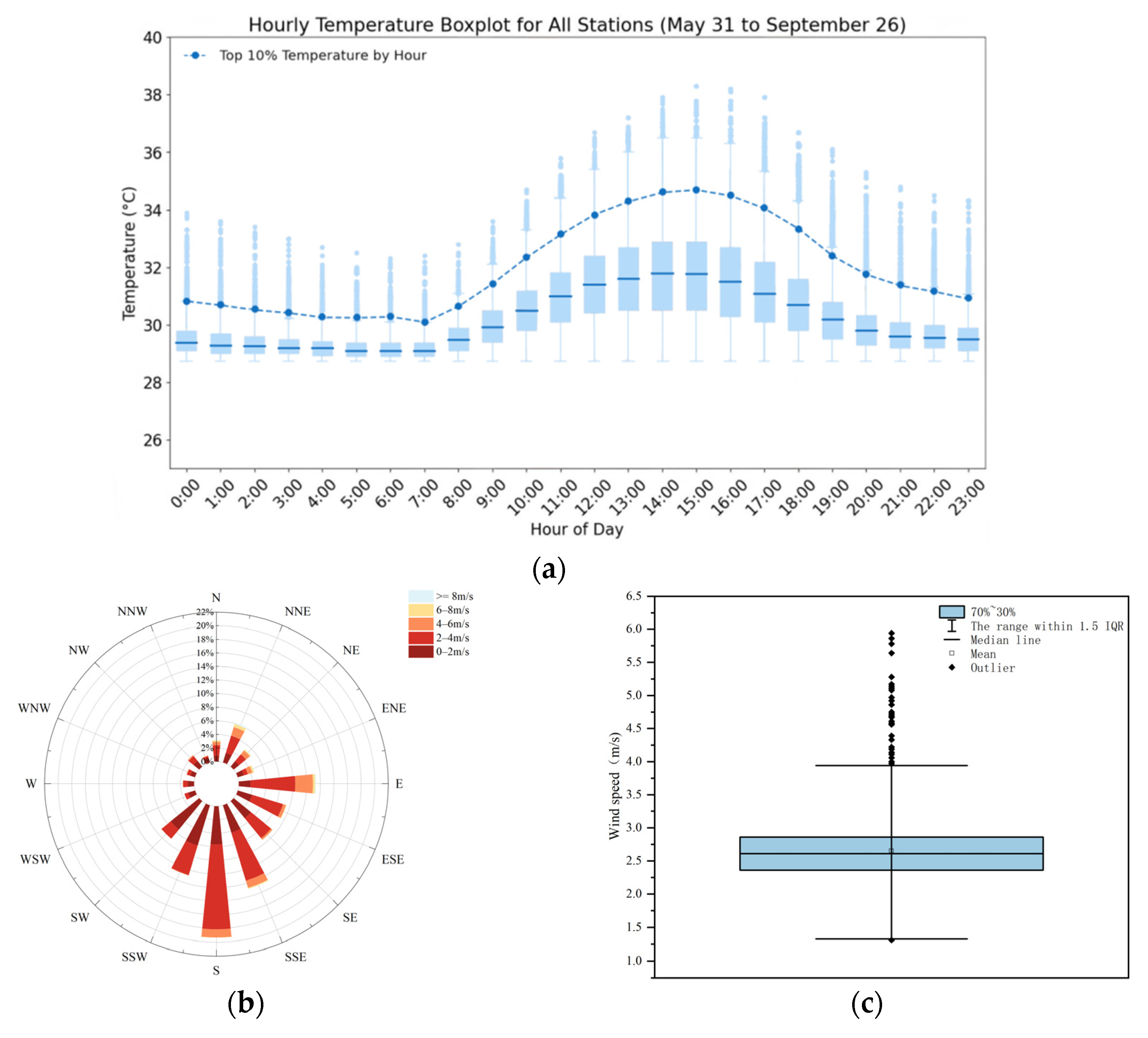
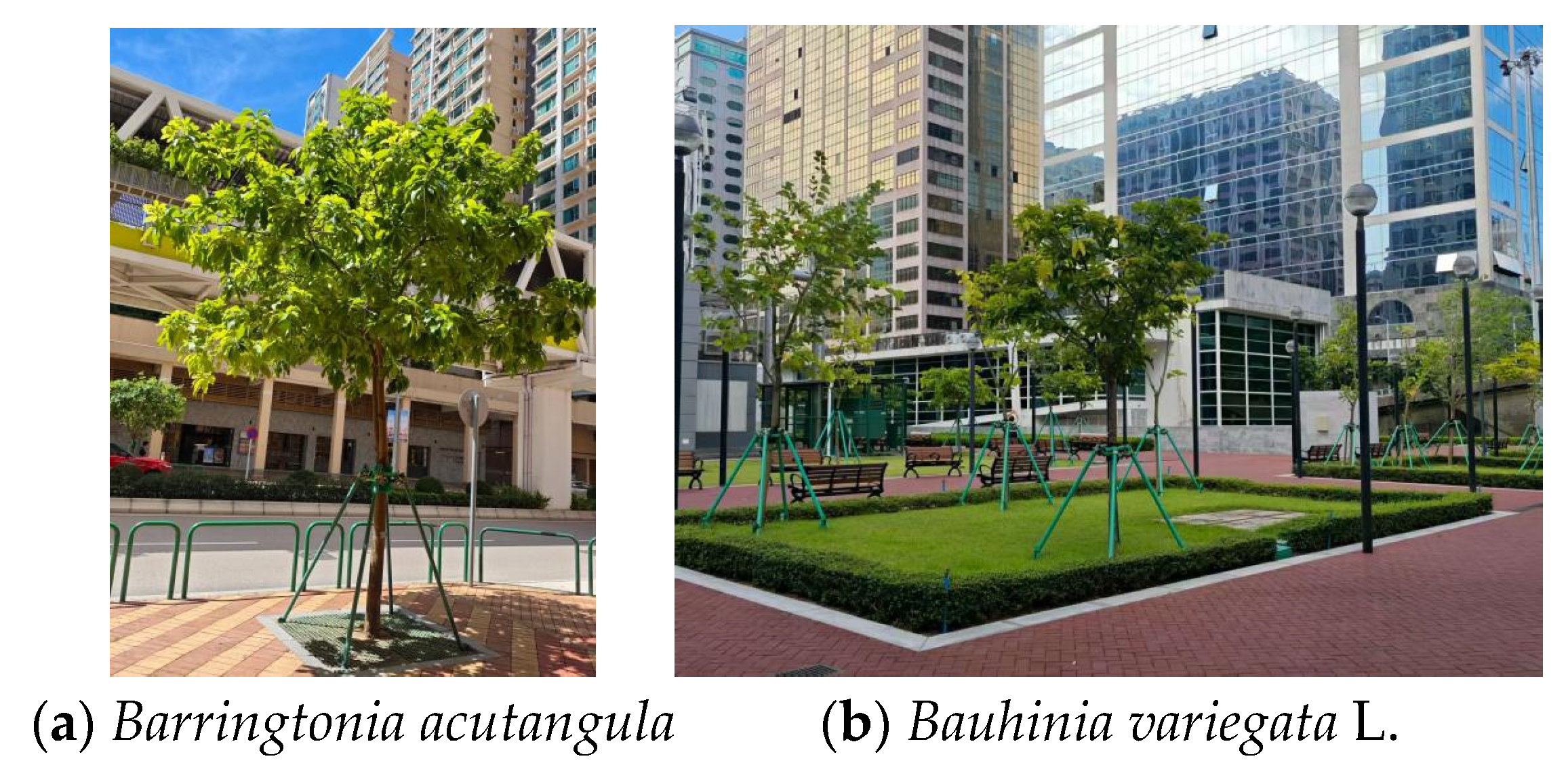
2.1. Study Area
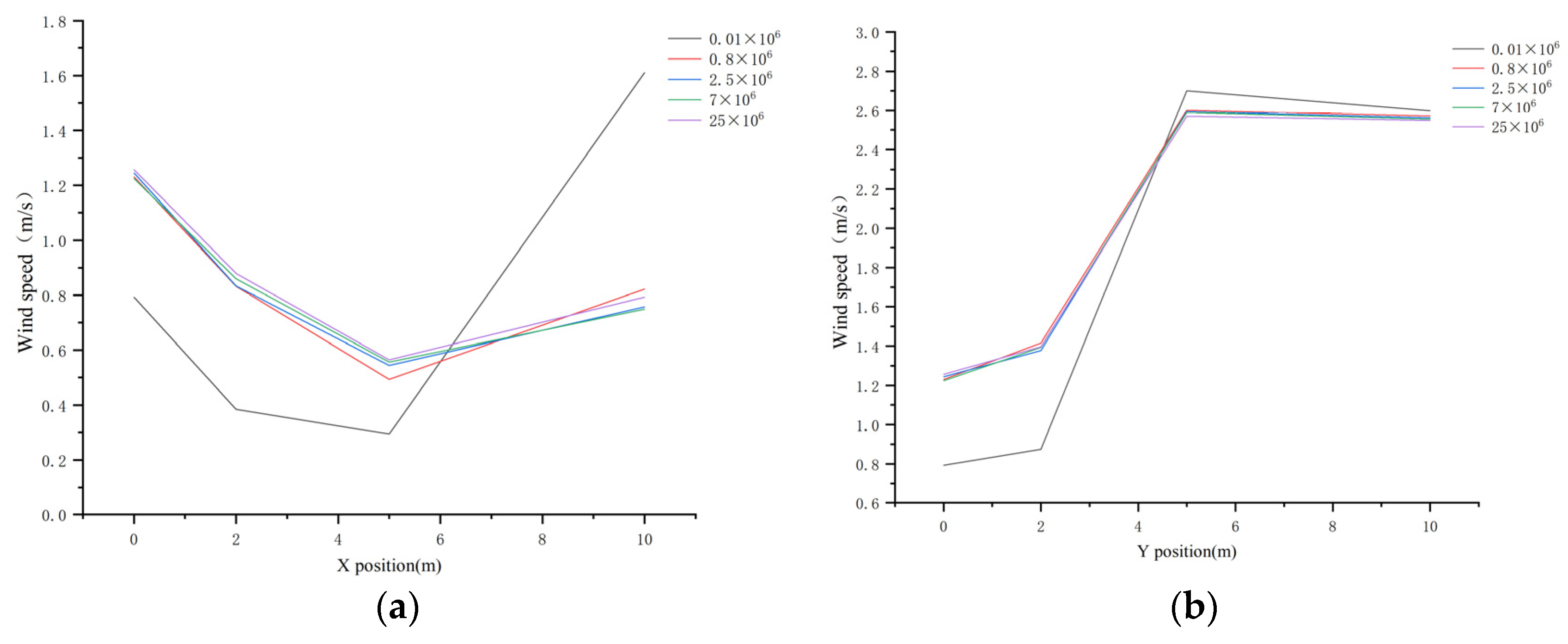
2.2. Computational Fluid Dynamics (CFD) Simulation
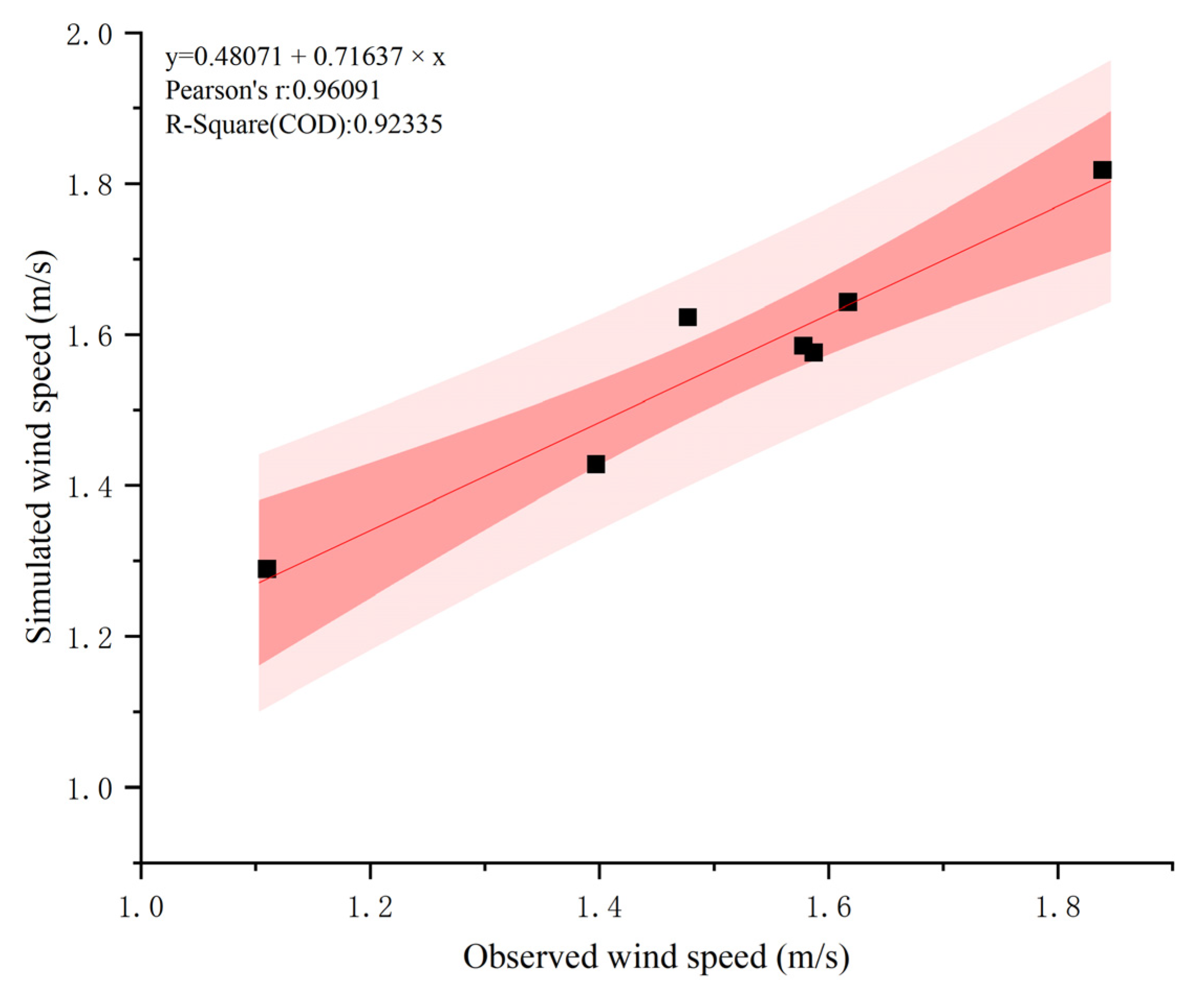
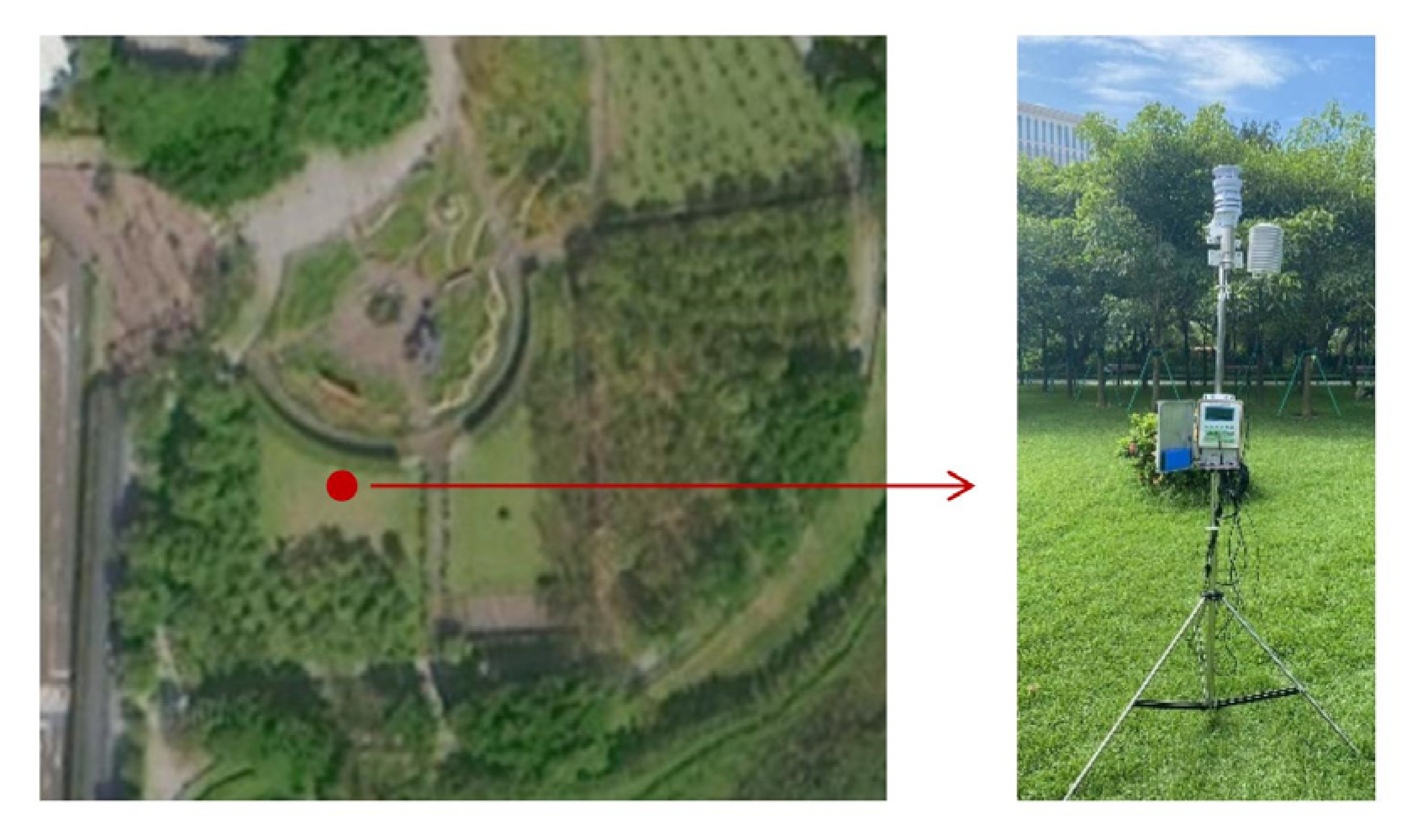
2.3. Model Validation Against Field Measurements
2.4. Quantification and Visualization
- (i)
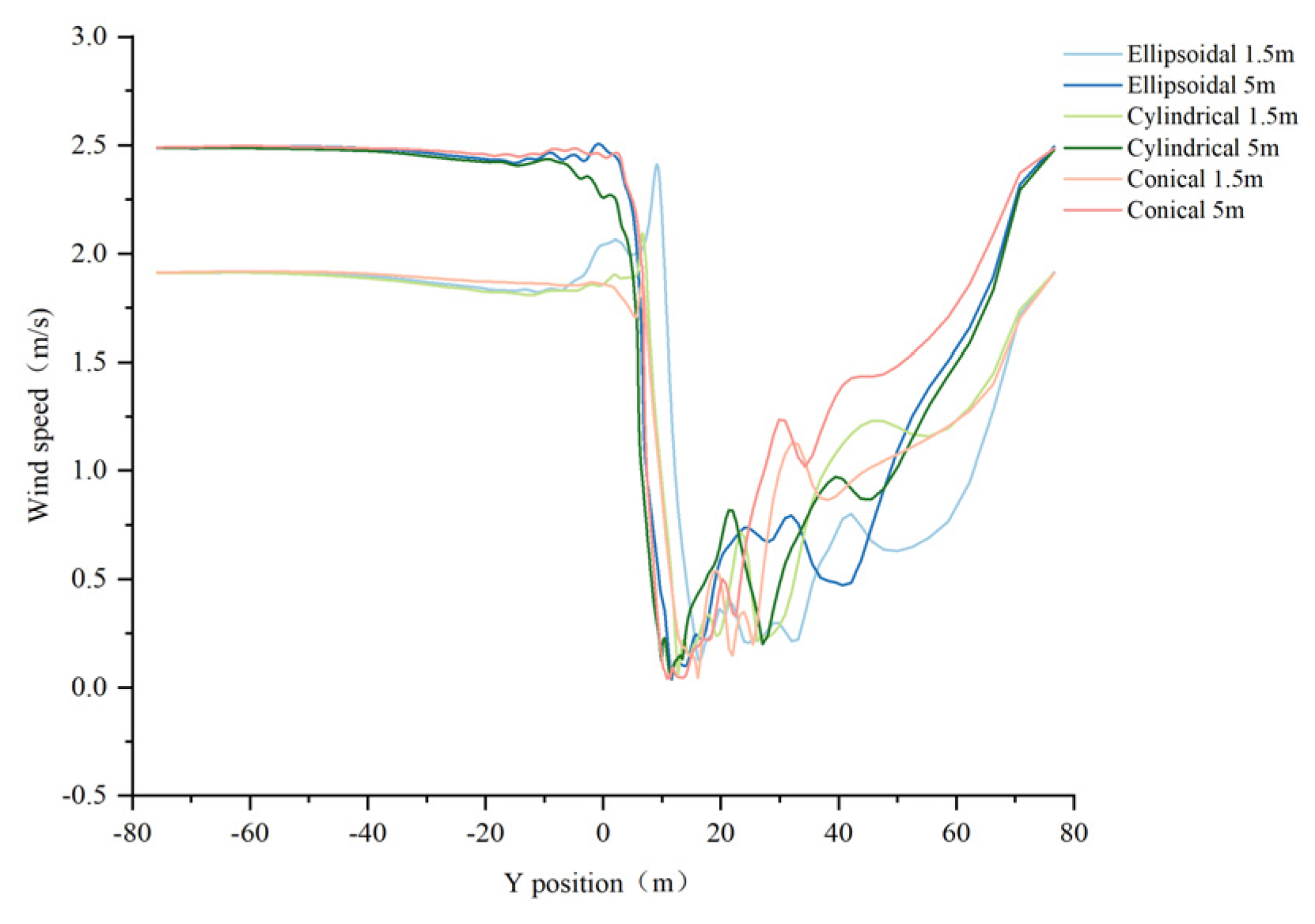
- Relative wind velocity , the nondimensional mean speed normalized by the upstream reference at the same height;
- (ii)
- Wind-velocity reduction efficiency ( = (1 − /u0) × 100%), a compact measure of leeward deceleration magnitude;
- (iii)
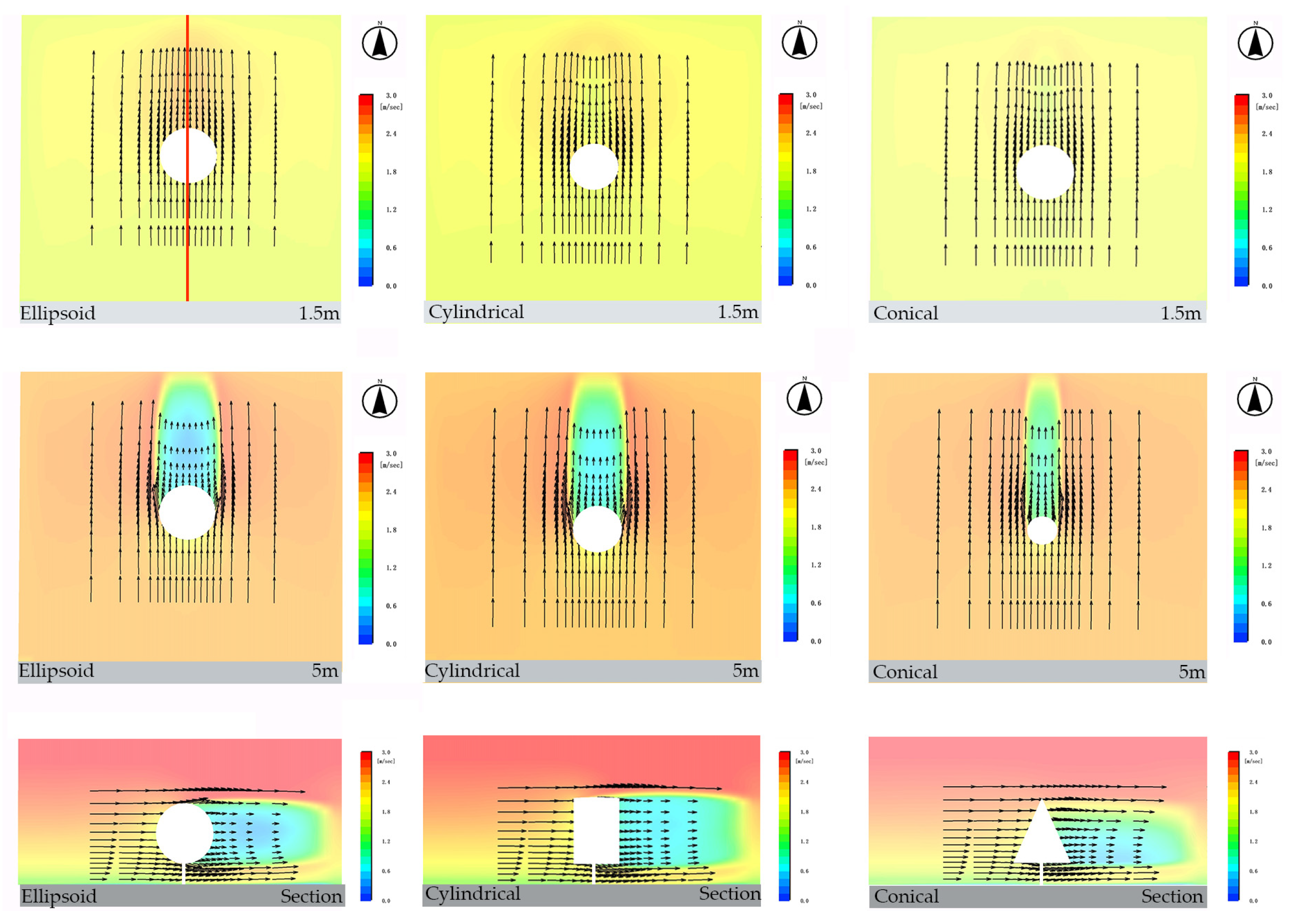
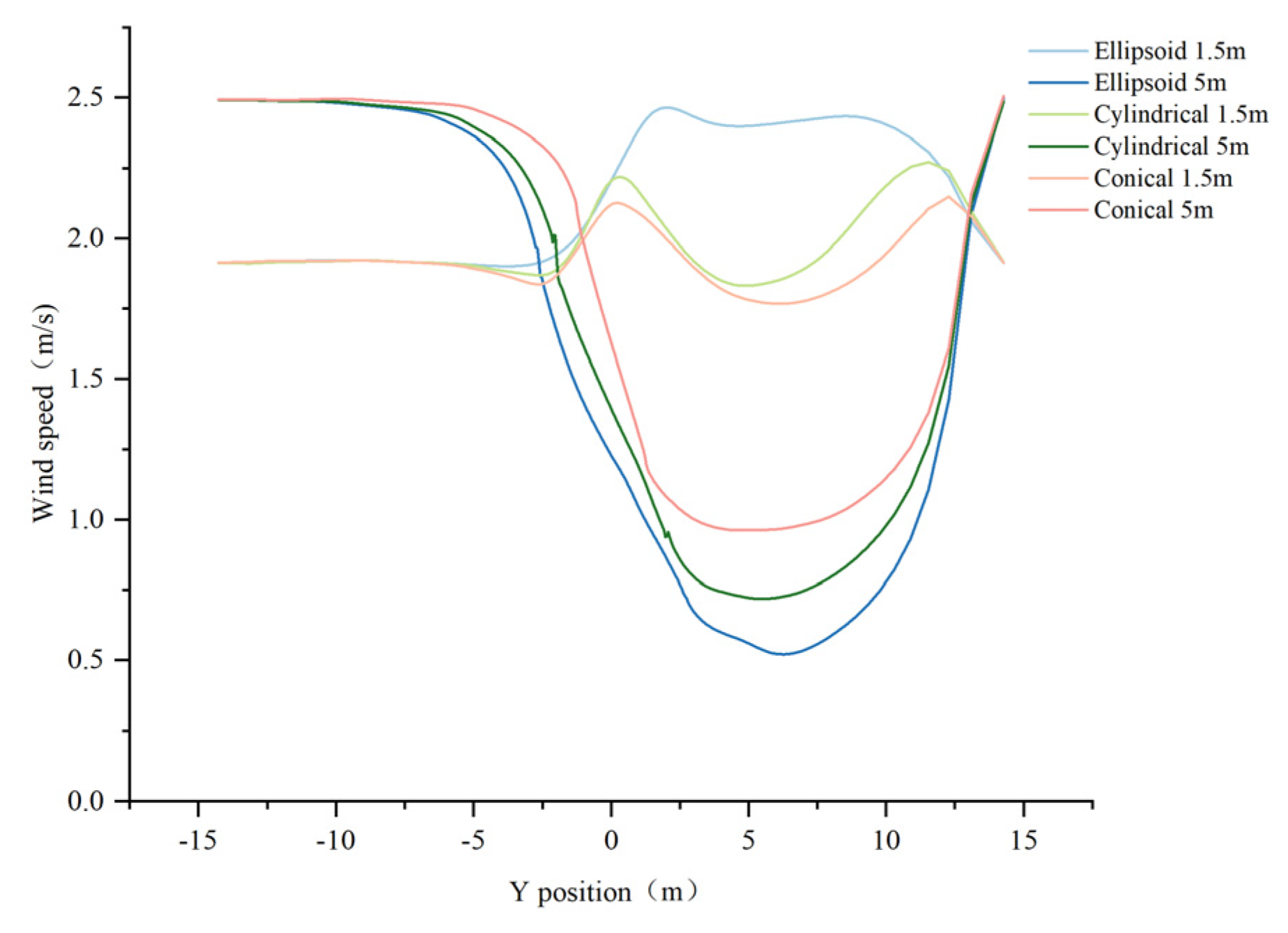
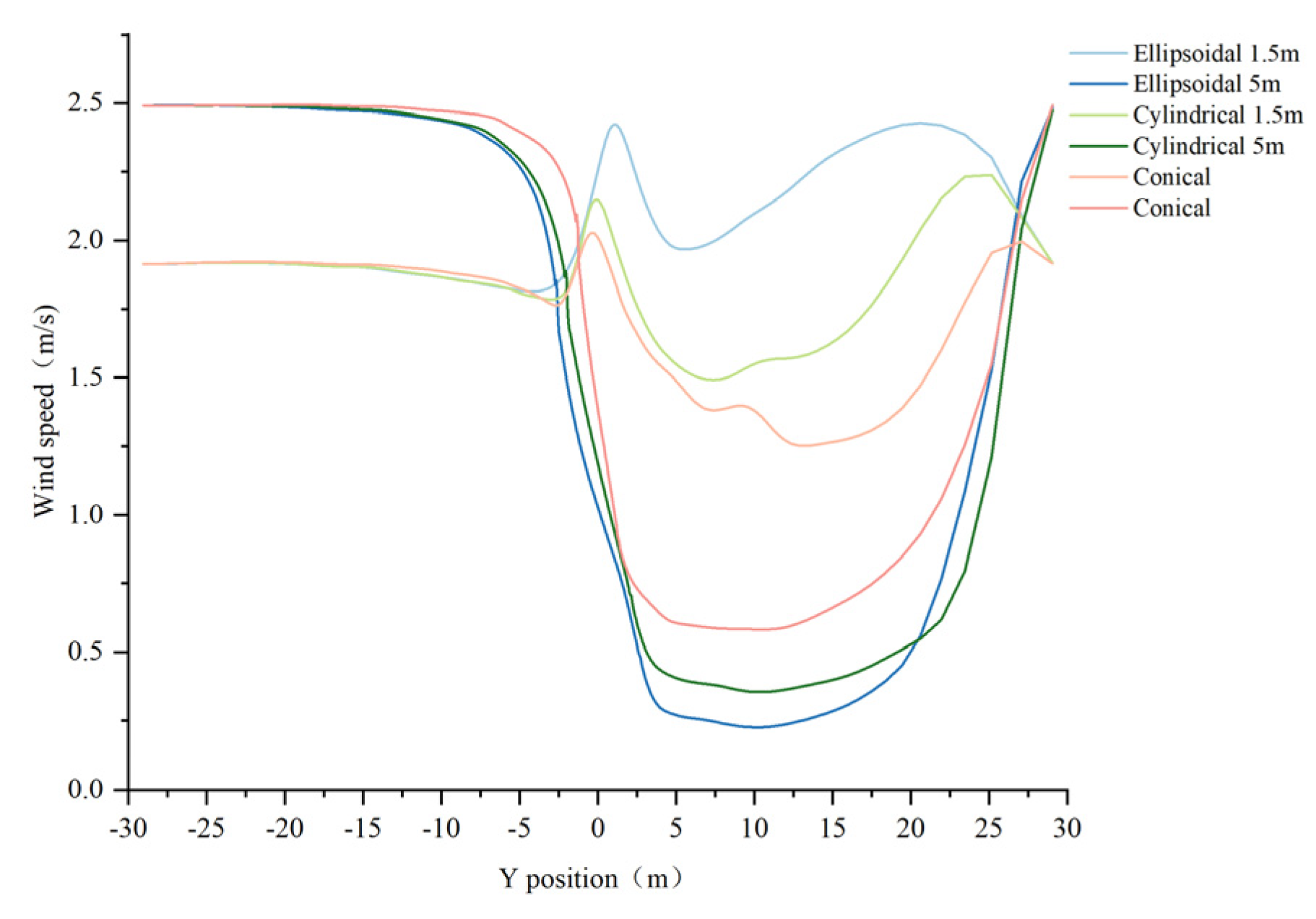
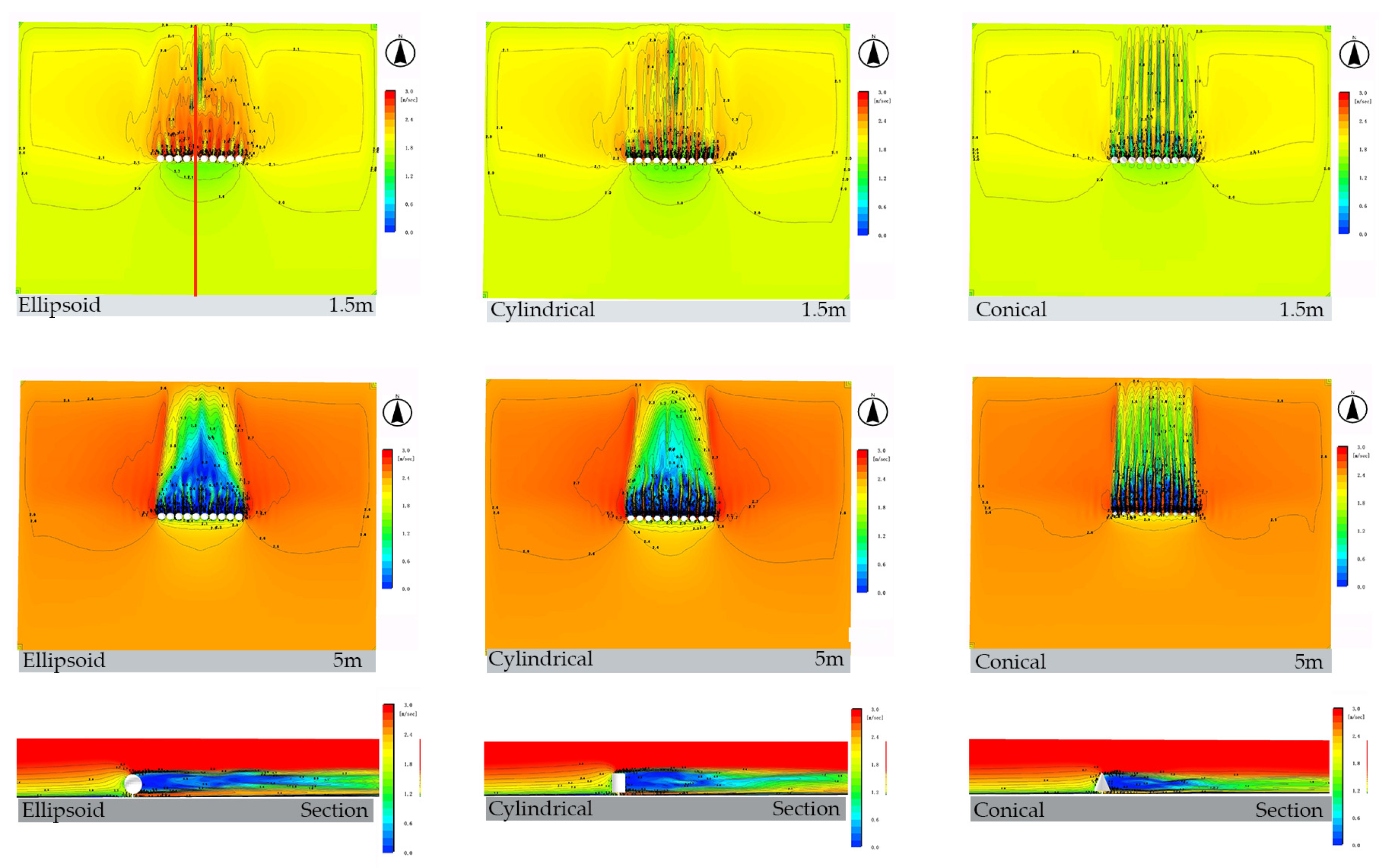
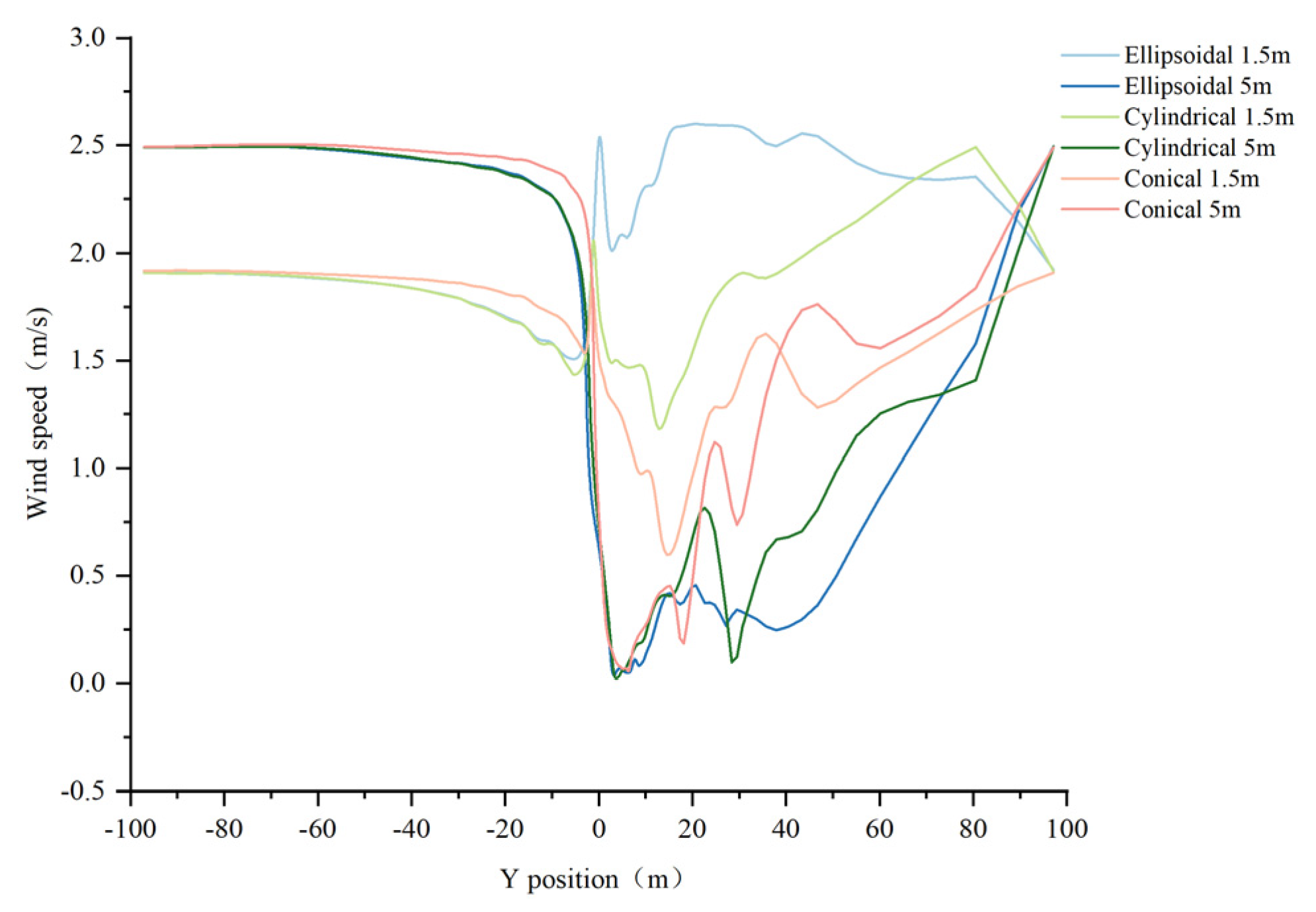
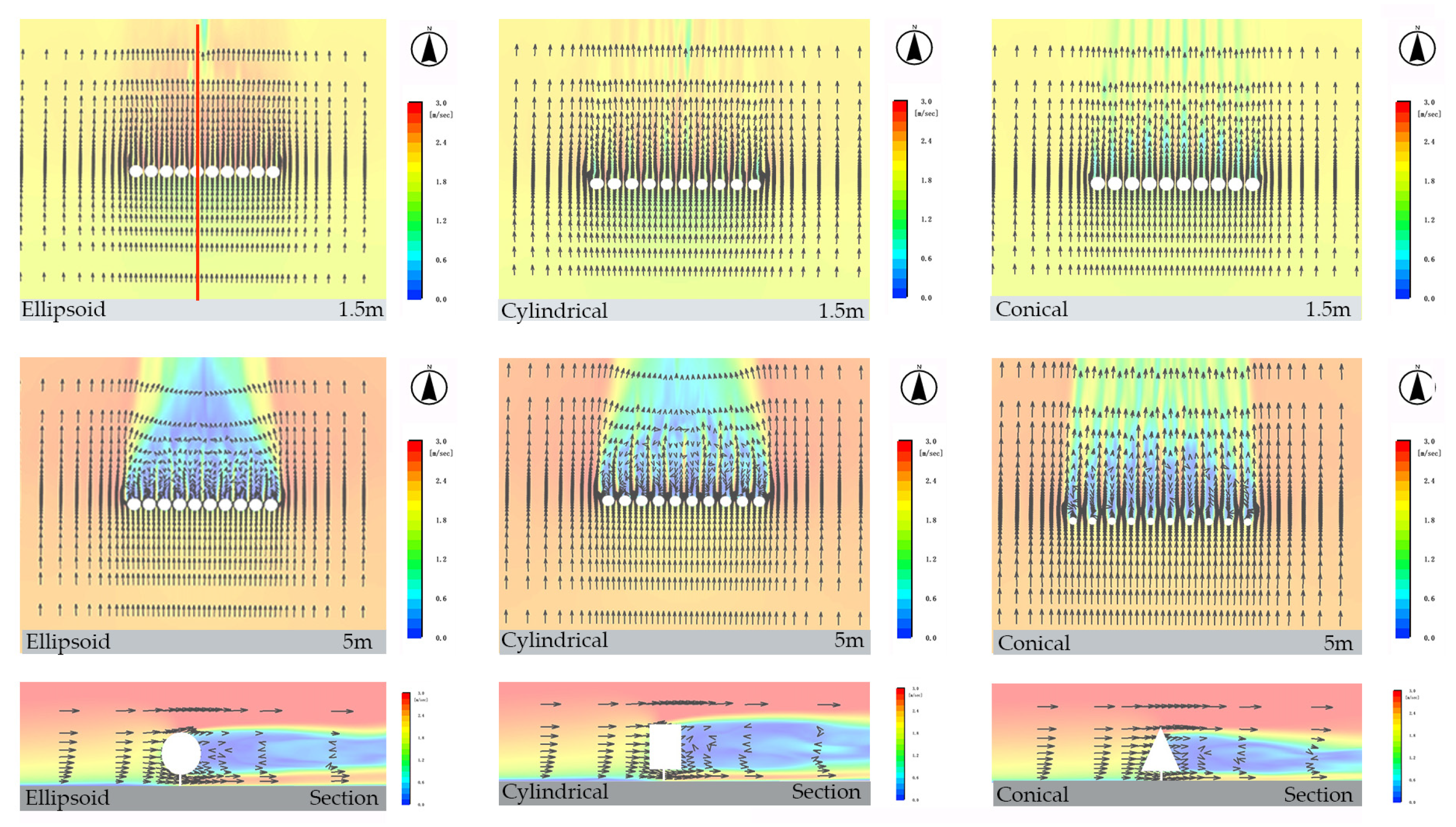
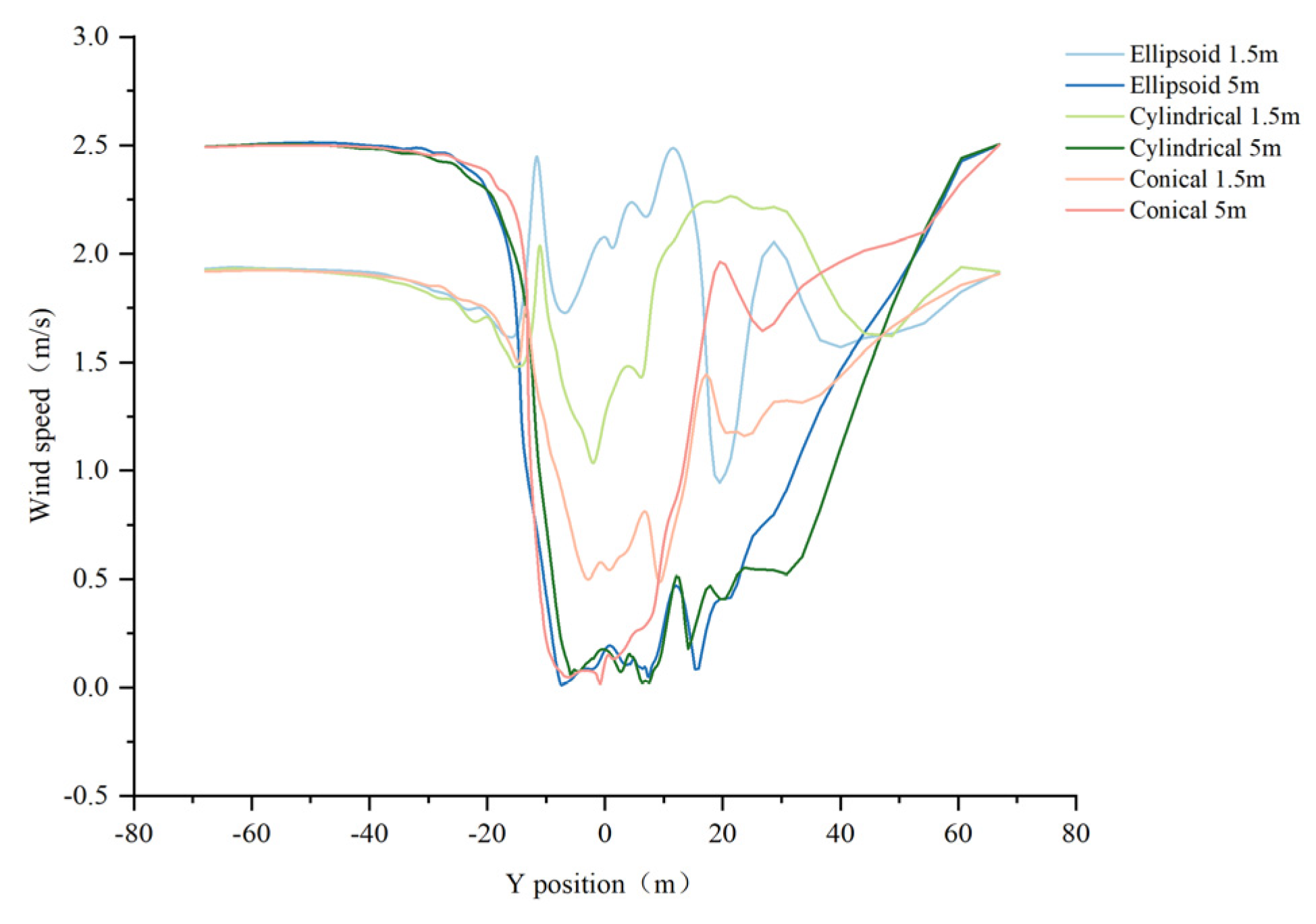
- A threshold-based shelter-distance concept analogous to the effective shelter distance , here implemented as two solver-agnostic proxies—the downstream distance to 95% recovery (first ) and the 50% shelter depth (farthest ).
3. Results
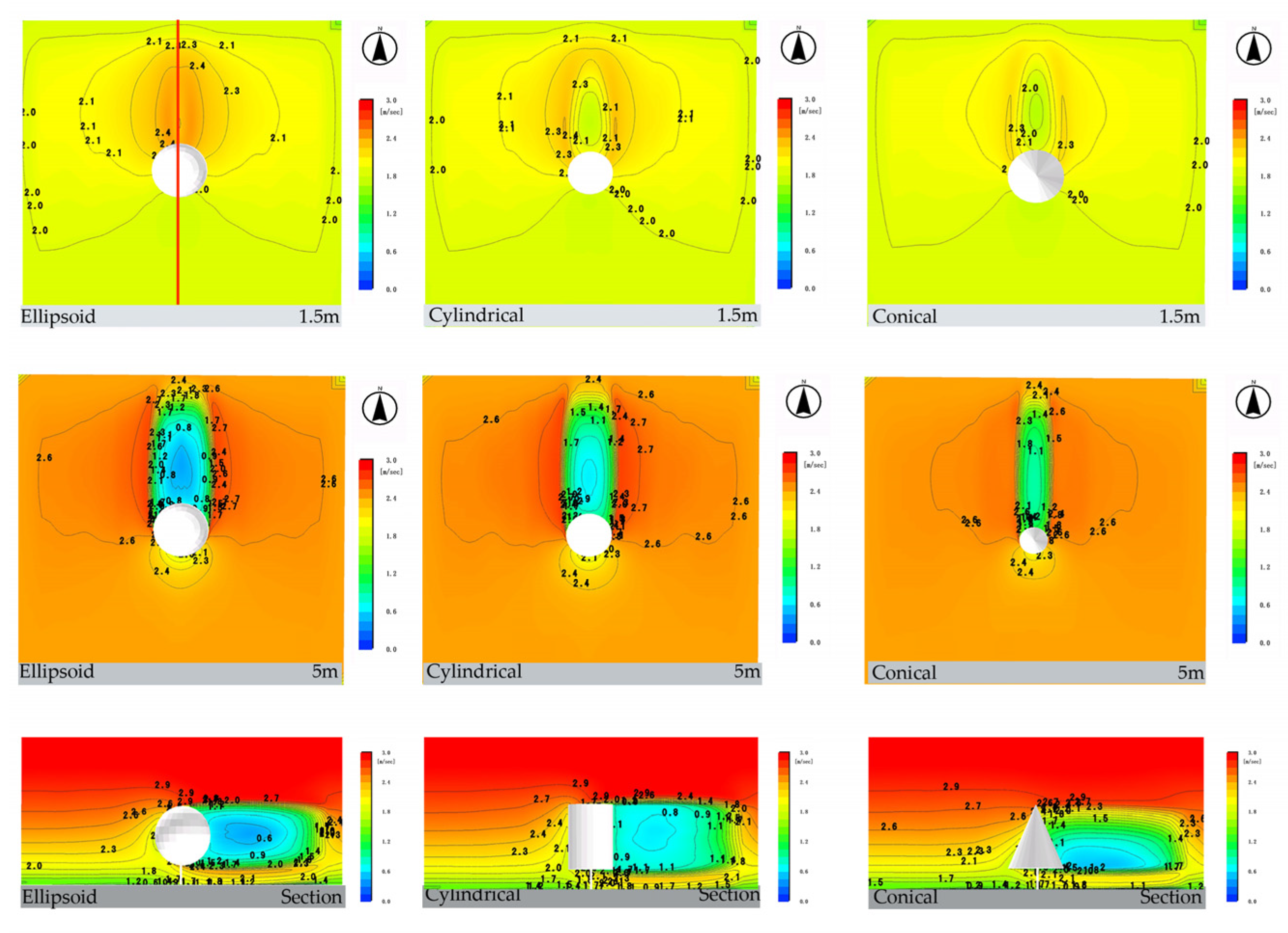
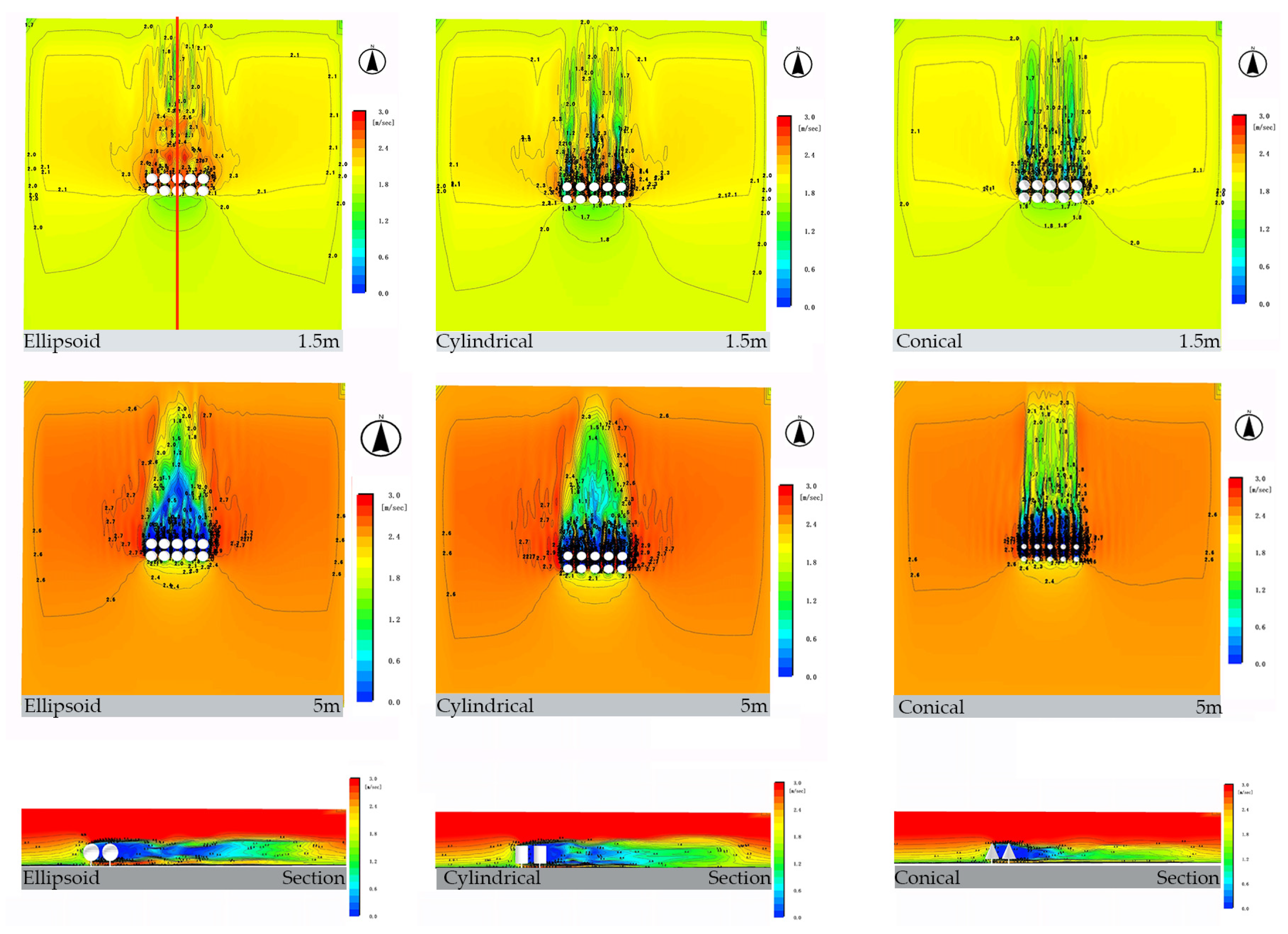
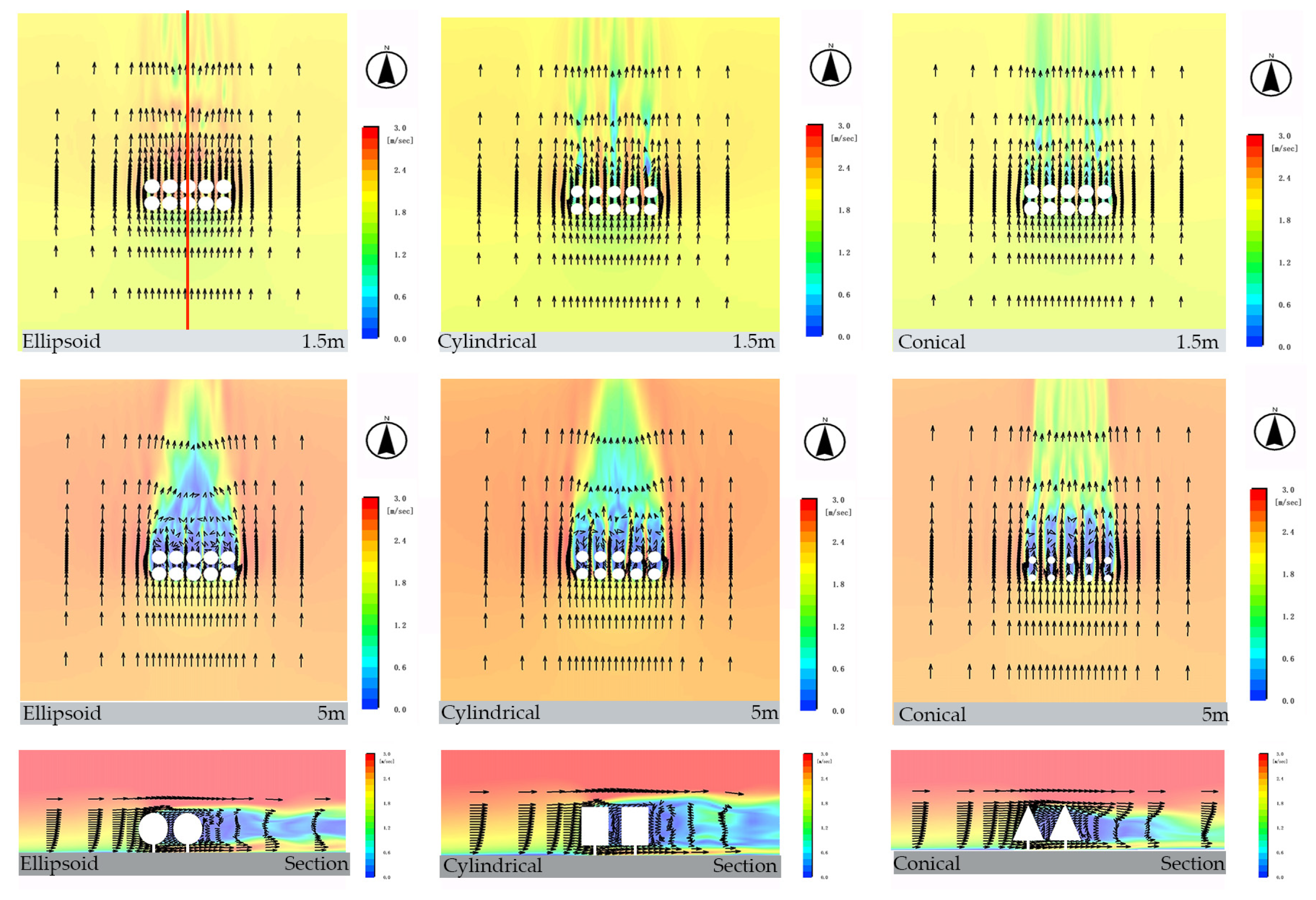
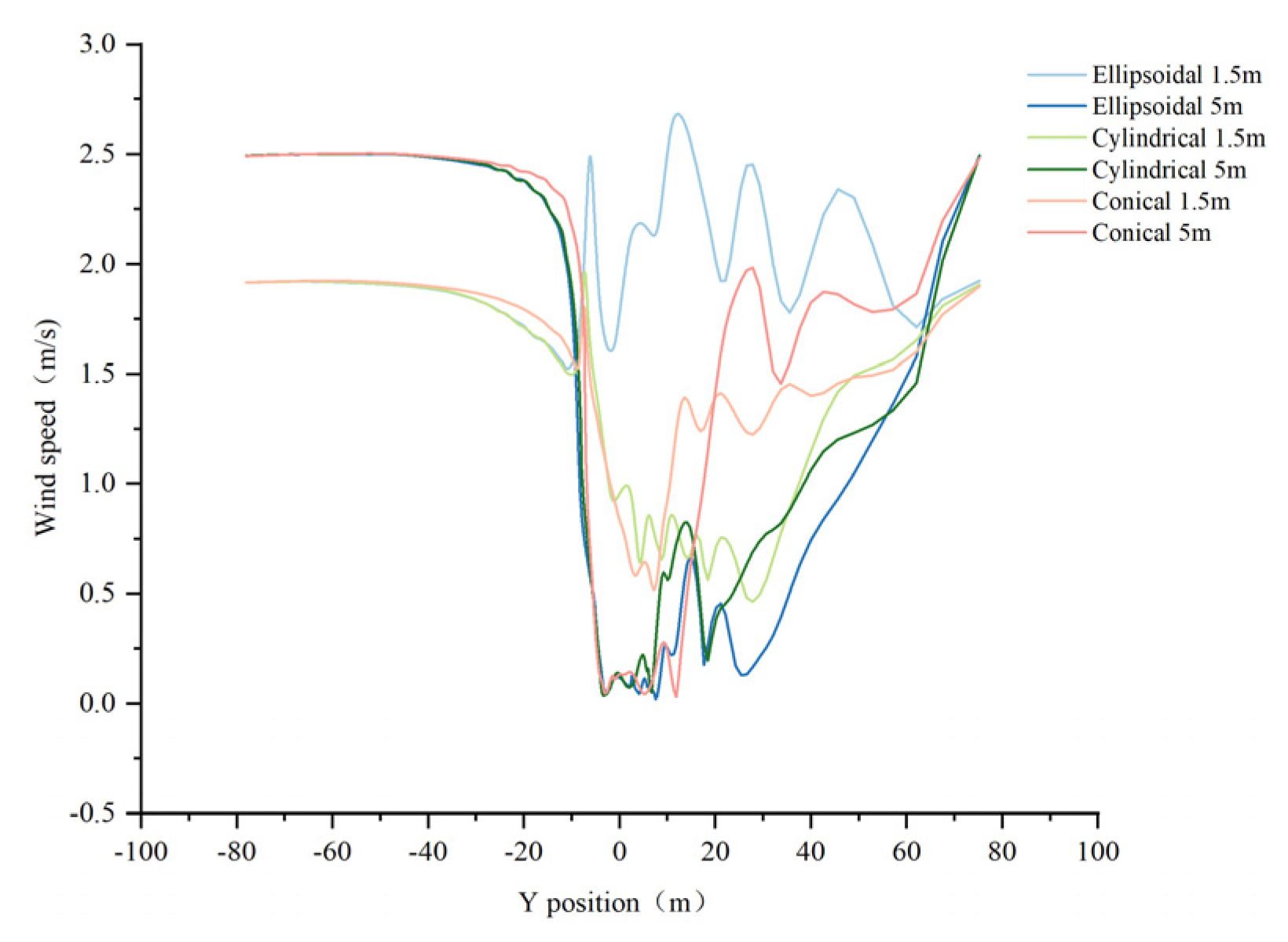
3.1. Impact of Tree Crown Morphology on the Wind Environment
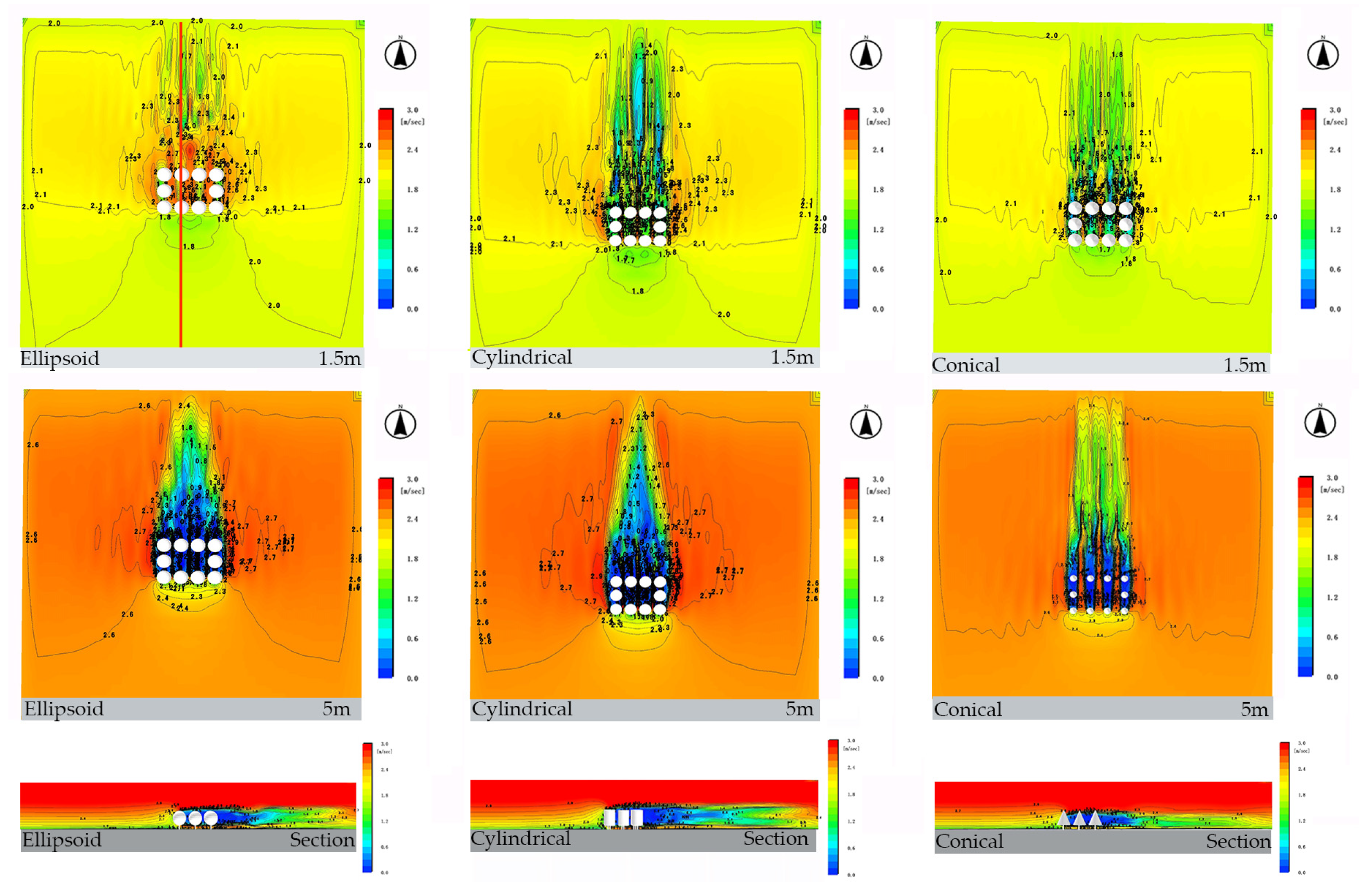
3.2. Impact of Tree Planting Layout on the Wind Environment
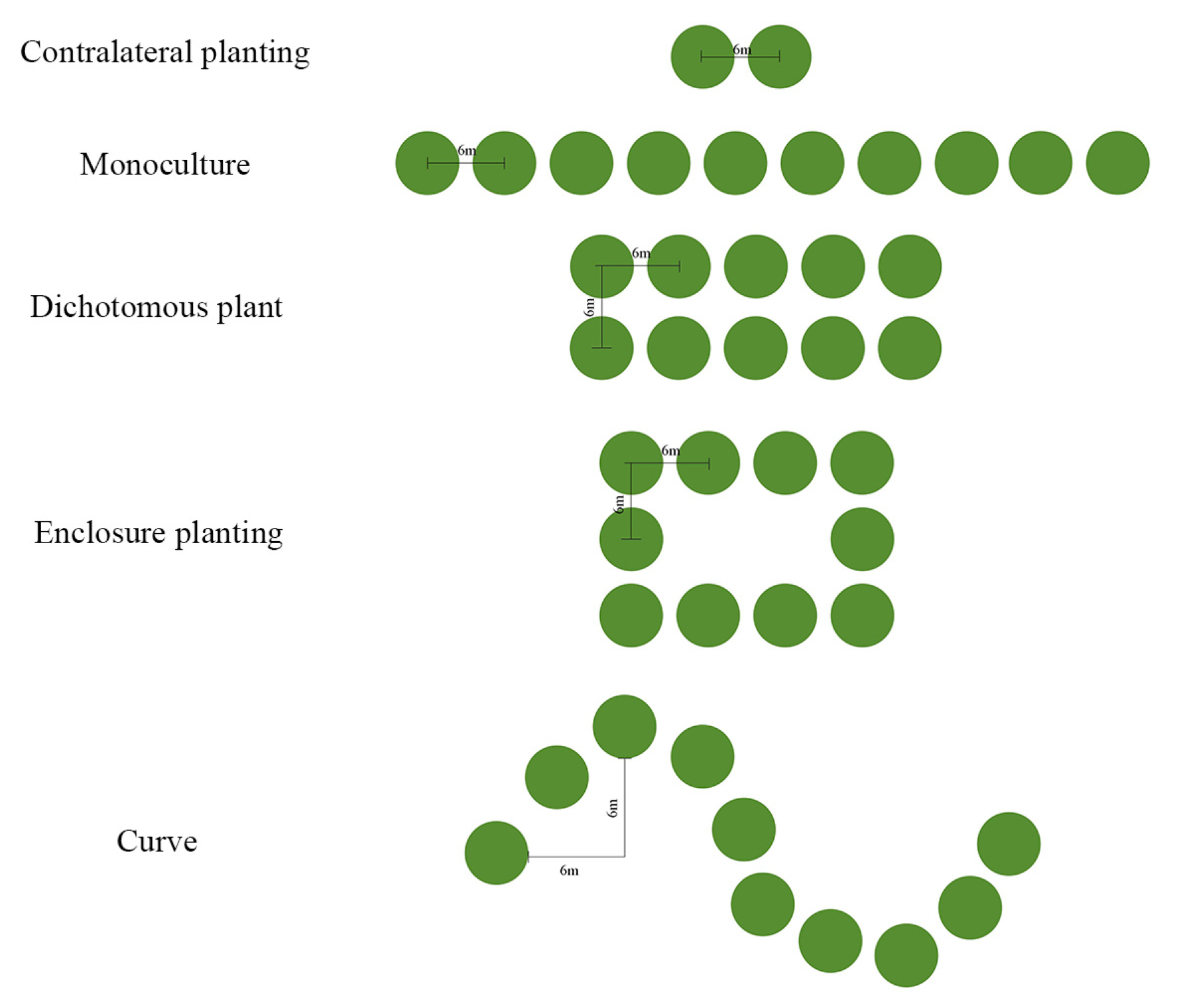
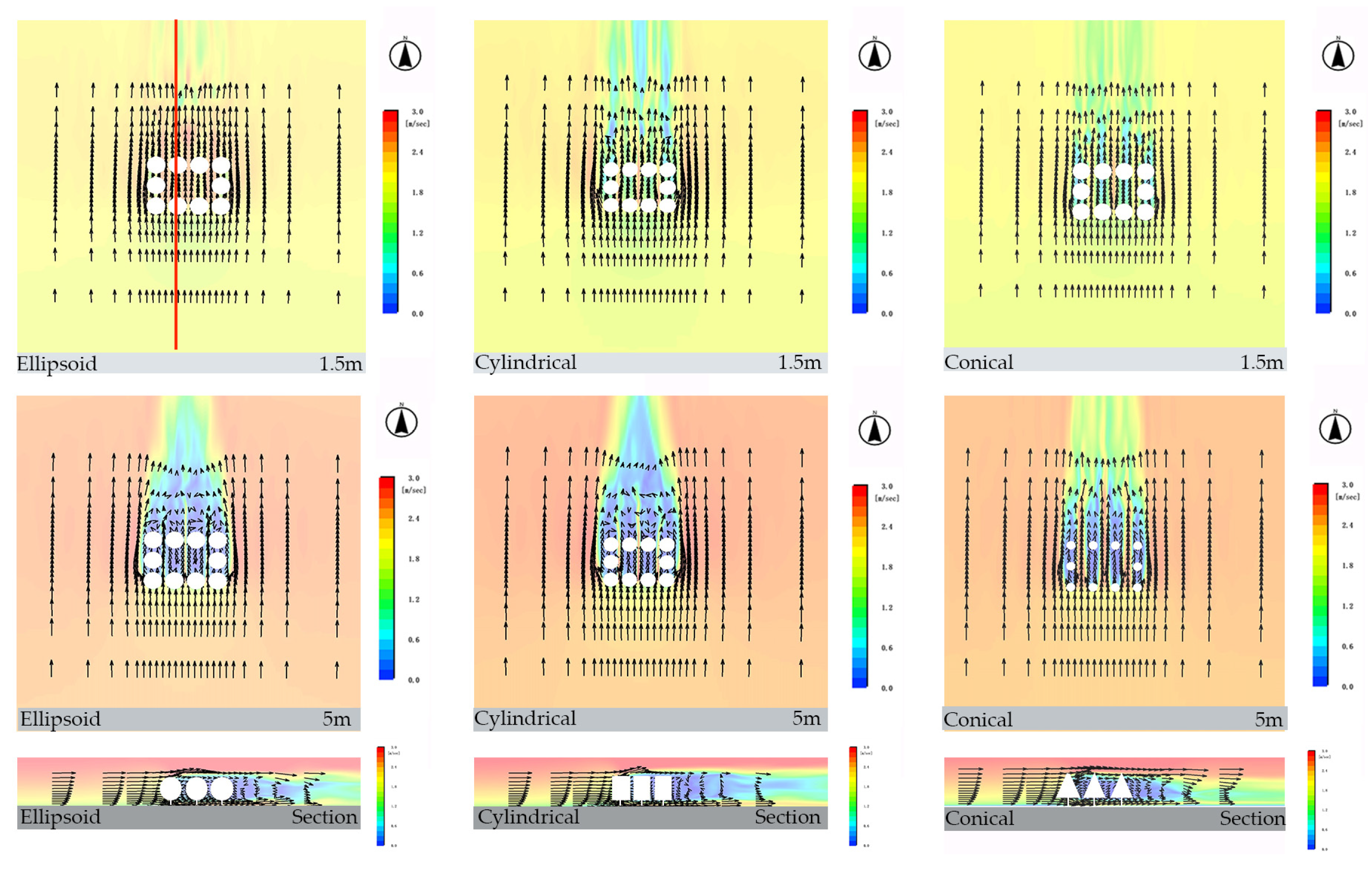
3.2.1. Opposite Tree Planting
3.2.2. Single-Row Planting
3.2.3. Opposite Tree Pair Planting
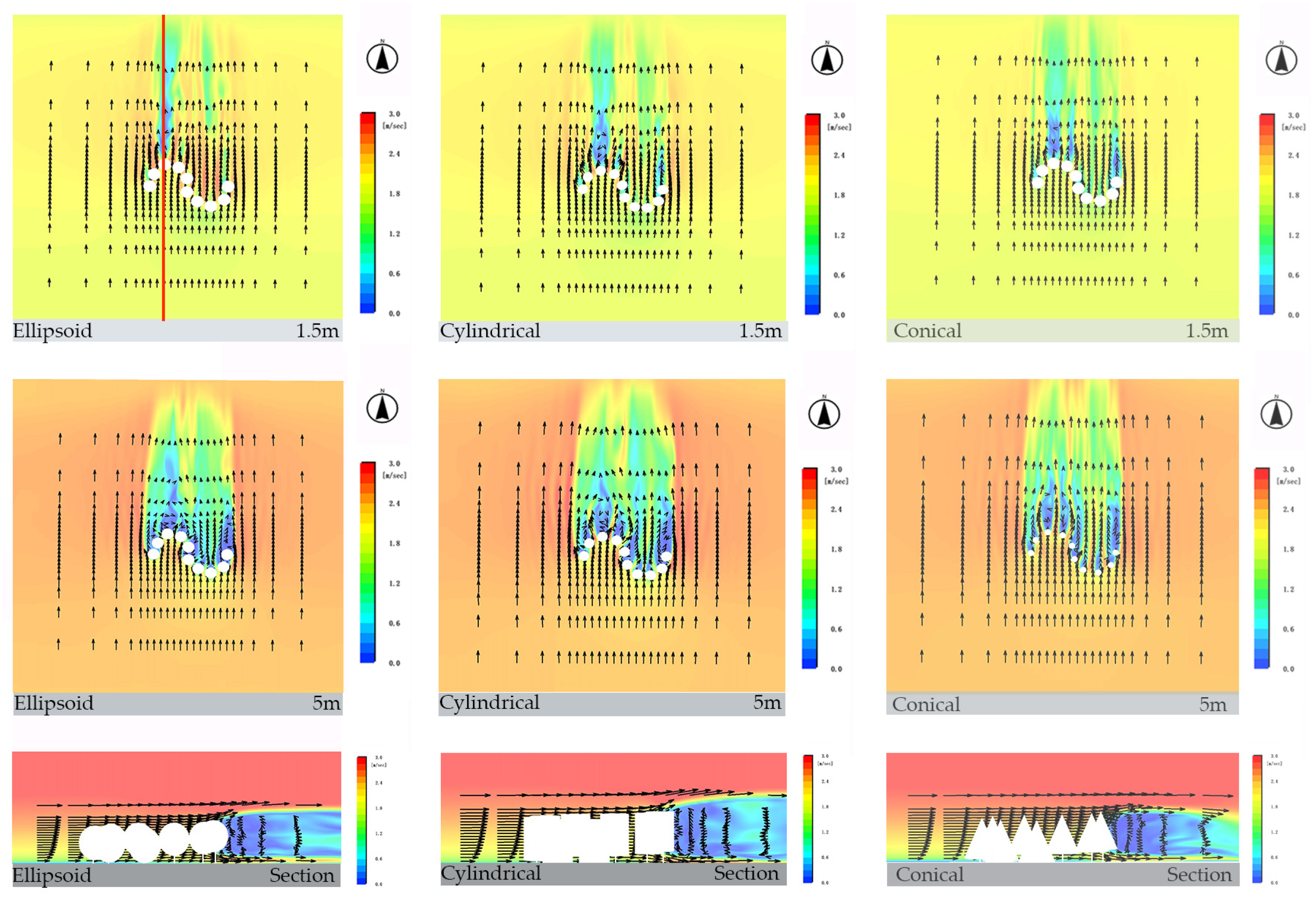
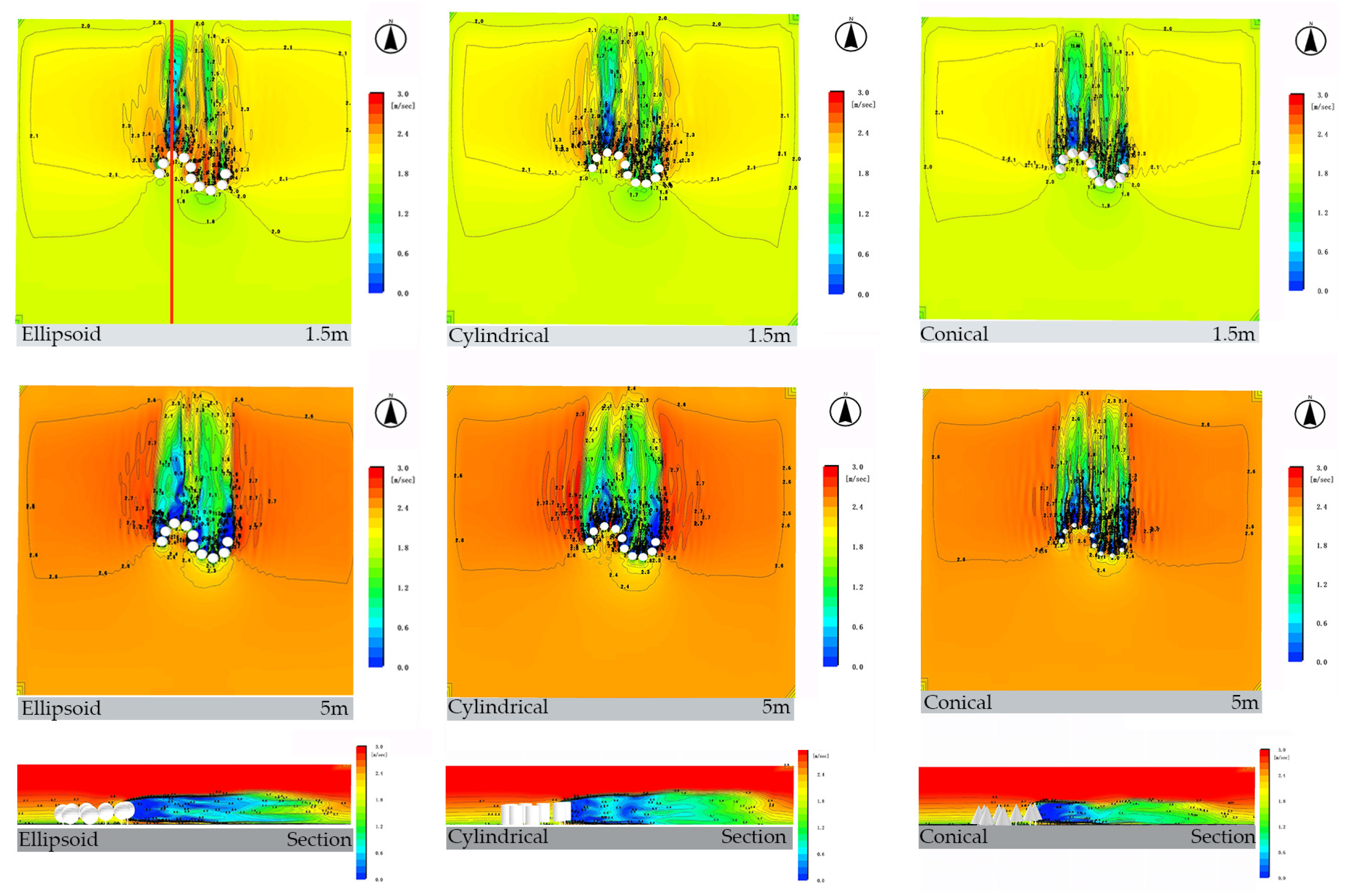
3.2.4. Enclosure Planting
3.2.5. Curved Planting
4. Discussion
4.1. Vertical Stratification of Tree Crown Morphology as a Regulatory Mechanism for Wind Environments
4.2. Effects of Planting Configuration on Wind Speed and Optimization Strategies
4.3. Practical Implications for Urban Planning and Wind Environment Optimization
4.4. Limitations of the Study and Future Research
5. Conclusions
Author Contributions
Funding
Informed Consent Statement
Data Availability Statement
Acknowledgments
Conflicts of Interest
Appendix A

| Instrument Name | Model | Quantity | Range | Resolution | Accuracy |
|---|---|---|---|---|---|
| Total Solar Radiation Sensor | HQJYF | 1 | 0–2000 W/m2 | 1 W/m2 | Spectral Range: 0.3–3 μm Response Time: <5 s Temperature Dependence: <±0.08%/°C |
| Air Temperature Sensor | HQWD | 1 | −50 to +100 °C | 0.1 °C | Accuracy: ±0.5 °C |
| Air Humidity Sensor | HQSD | 1 | 0–100% RH | 0.1%RH | Accuracy: ±5% RH |
| Wind Speed Sensor | HQFS | 1 | 0–70 m/s (starting threshold ≤ 0.5 m/s) | 0.1 m/s | Accuracy: ±(0.3 + 0.03 V) m/s |
| Wind Direction Sensor | HQFX | 1 | 0–360° (starting threshold ≤ 0.5 m/s) | 1° | Accuracy: ±3° |
References
- Hua, J.; Zhang, X.; Ren, C.; Shi, Y.; Lee, T.-C. Spatiotemporal Assessment of Extreme Heat Risk for High-Density Cities: A Case Study of Hong Kong from 2006 to 2016. Sustain. Cities Soc. 2021, 64, 102507. [Google Scholar] [CrossRef]
- Xi, Z.; Li, C.; Zhou, L.; Yang, H.; Burghardt, R. Built Environment Influences on Urban Climate Resilience: Evidence from Extreme Heat Events in Macau. Sci. Total Environ. 2023, 859, 160270. [Google Scholar] [CrossRef] [PubMed]
- Liu, J.; Wu, X.; Pan, L.; Hsieh, C.-M. Multi-Scale Analysis of the Mitigation Effect of Green Space Morphology on Urban Heat Islands. Atmosphere 2025, 16, 857. [Google Scholar] [CrossRef]
- Li, D.; Wu, S.; Liang, Z.; Li, S. The Impacts of Urbanization and Climate Change on Urban Vegetation Dynamics in China. Urban For. Urban Green. 2020, 54, 126764. [Google Scholar] [CrossRef]
- Chen, X.; Zhao, P.; Hu, Y.; Ouyang, L.; Zhu, L.; Ni, G. Canopy Transpiration and Its Cooling Effect of Three Urban Tree Species in a Subtropical City- Guangzhou, China. Urban For. Urban Green. 2019, 43, 126368. [Google Scholar] [CrossRef]
- Li, Z.; Zhang, H.; Juan, Y.-H.; Lee, Y.-T.; Wen, C.-Y.; Yang, A.-S. Effects of Urban Tree Planting on Thermal Comfort and Air Quality in the Street Canyon in a Subtropical Climate. Sustain. Cities Soc. 2023, 91, 104334. [Google Scholar] [CrossRef]
- Wei, Y.-Y.; Cheng, C.-Y.; Lin, T.-P. The Influence of Trees Shade Level on Human Thermal Comfort and the Development of Applied Assessment Tools. Landsc. Urban Plan. 2025, 263, 105436. [Google Scholar] [CrossRef]
- Yang, Y.; Xu, Y.; Duan, Y.; Zhang, S.; Zhang, Y.; Xie, Y. How Can Trees Protect Us from Air Pollution and Urban Heat? Associations and Pathways at the Neighborhood Scale. Landsc. Urban Plan. 2023, 236, 104779. [Google Scholar] [CrossRef]
- Rajagopalan, P.; Lim, K.C.; Jamei, E. Urban Heat Island and Wind Flow Characteristics of a Tropical City. Sol. Energy 2014, 107, 159–170. [Google Scholar] [CrossRef]
- Wang, W.; Yao, X.; Shu, J. Air Advection Induced Differences between Canopy and Surface Heat Islands. Sci. Total Environ. 2020, 725, 138120. [Google Scholar] [CrossRef]
- Han, J.-Y.; Baik, J.-J. A Theoretical and Numerical Study of Urban Heat Island–Induced Circulation and Convection. J. Atmospheric Sci. 2008, 65, 1859–1877. [Google Scholar] [CrossRef]
- Santamouris, M. Using Cool Pavements as a Mitigation Strategy to Fight Urban Heat Island—A Review of the Actual Developments. Renew. Sustain. Energy Rev. 2013, 26, 224–240. [Google Scholar] [CrossRef]
- Pillai, S.S.; Yoshie, R. Flow Velocity and Surface Temperature Effects on Convective Heat Transfer Coefficient from Urban Canopy Surfaces by Numerical Simulation. J. Urban Environ. Eng. 2013, 7, 74–81. [Google Scholar] [CrossRef]
- Ryu, Y.-H.; Baik, J.-J.; Lee, S.-H. A New Single-Layer Urban Canopy Model for Use in Mesoscale Atmospheric Models. J. Appl. Meteorol. Clim. 2011, 50, 1773–1794. [Google Scholar] [CrossRef]
- Oke, T.R.; Mills, G.; Christen, A.; Voogt, J.A. Urban Climates; Cambridge University Press: Cambridge, UK, 2017; ISBN 978-0-521-84950-0. [Google Scholar]
- Sun, T.; Grimmond, C.S.B.; Ni, G.-H. How Do Green Roofs Mitigate Urban Thermal Stress under Heat Waves? J. Geophys. Res. Atmos. 2016, 121, 5320–5335. [Google Scholar] [CrossRef]
- Schindler, D.; Bauhus, J.; Mayer, H. Wind Effects on Trees. Eur. J. For. Res. 2012, 131, 159–163. [Google Scholar] [CrossRef]
- Fan, L.; Zhao, M.; Huo, J.; Sha, Y.; Zhou, Y. The Impact of Vegetation Layouts on Thermal Comfort in Urban Main Streets: A Case Study of Youth Street in Shenyang. Sustainability 2025, 17, 1755. [Google Scholar] [CrossRef]
- Hsieh, C.-M.; Jan, F.-C.; Zhang, L. A Simplified Assessment of How Tree Allocation, Wind Environment, and Shading Affect Human Comfort. Urban For. Urban Green. 2016, 18, 126–137. [Google Scholar] [CrossRef]
- Hsieh, C.-M.; Huang, H.-C. Mitigating Urban Heat Islands: A Method to Identify Potential Wind Corridor for Cooling and Ventilation. Comput. Environ. Urban Syst. 2016, 57, 130–143. [Google Scholar] [CrossRef]
- Ricci, A.; Burlando, M.; Repetto, M.P.; Blocken, B. Static Downscaling of Mesoscale Wind Conditions into an Urban Canopy Layer by a CFD Microscale Model. Build. Environ. 2022, 225, 109626. [Google Scholar] [CrossRef]
- Wong, N.H.; He, Y.; Nguyen, N.S.; Raghavan, S.V.; Martin, M.; Hii, D.J.C.; Yu, Z.; Deng, J. An Integrated Multiscale Urban Microclimate Model for the Urban Thermal Environment. Urban Clim. 2021, 35, 100730. [Google Scholar] [CrossRef]
- Tabassum, A.; Hong, S.-H.; Park, K.; Baik, J.-J. Simulating Urban Heat Islands and Local Winds in the Dhaka Metropolitan Area, Bangladesh. Urban Clim. 2025, 59, 102284. [Google Scholar] [CrossRef]
- Ng, E.; Yuan, C.; Chen, L.; Ren, C.; Fung, J.C.H. Improving the Wind Environment in High-Density Cities by Understanding Urban Morphology and Surface Roughness: A Study in Hong Kong. Landsc. Urban Plan. 2011, 101, 59–74. [Google Scholar] [CrossRef]
- Li, J.; Zheng, B.; Ouyang, X.; Chen, X.; Bedra, K.B. Does Shrub Benefit the Thermal Comfort at Pedestrian Height in Singapore? Sustain. Cities Soc. 2021, 75, 103333. [Google Scholar] [CrossRef]
- Hong, B.; Lin, B. Numerical Studies of the Outdoor Wind Environment and Thermal Comfort at Pedestrian Level in Housing Blocks with Different Building Layout Patterns and Trees Arrangement. Renew. Energy 2015, 73, 18–27. [Google Scholar] [CrossRef]
- Liu, J.; Niu, J.; Xia, Q. Combining Measured Thermal Parameters and Simulated Wind Velocity to Predict Outdoor Thermal Comfort. Build. Environ. 2016, 105, 185–197. [Google Scholar] [CrossRef]
- Yuan, C.; Norford, L.; Ng, E. A Semi-Empirical Model for the Effect of Trees on the Urban Wind Environment. Landsc. Urban Plan. 2017, 168, 84–93. [Google Scholar] [CrossRef]
- Yang, S.; Wang, L.L.; Stathopoulos, T.; Marey, A.M. Urban Microclimate and Its Impact on Built Environment—A Review. Build. Environ. 2023, 238, 110334. [Google Scholar] [CrossRef]
- Hefny Salim, M.; Heinke Schlünzen, K.; Grawe, D. Including Trees in the Numerical Simulations of the Wind Flow in Urban Areas: Should We Care? J. Wind Eng. Ind. Aerodyn. 2015, 144, 84–95. [Google Scholar] [CrossRef]
- Ai, J.; Kim, M. Research on Plant Landscape Design of Urban Industrial Site Green Space Based on Green Infrastructure Concept. Plants 2025, 14, 747. [Google Scholar] [CrossRef]
- Zhu, J.; Luo, X.; Zhai, Y.; Zhang, G.; Zhou, C.; Chen, Z. Study on the Impact of Tree Species on the Wind Environment in Tree Arrays Based on Fluid–Structure Interaction: A Case Study of Hangzhou Urban Area. Buildings 2024, 14, 1409. [Google Scholar] [CrossRef]
- Amani-Beni, M.; Tabatabaei Malazi, M.; Dehghanian, K.; Dehghanifarsani, L. Investigating the Effects of Wind Loading on Three Dimensional Tree Models Using Numerical Simulation with Implications for Urban Design. Sci. Rep. 2023, 13, 7277. [Google Scholar] [CrossRef] [PubMed]
- Buccolieri, R.; Santiago, J.-L.; Rivas, E.; Sanchez, B. Review on Urban Tree Modelling in CFD Simulations: Aerodynamic, Deposition and Thermal Effects. Urban For. Urban Green. 2018, 31, 212–220. [Google Scholar] [CrossRef]
- Wang, X.; Liu, F.; Xu, Z. Analysis of Urban Public Spaces’ Wind Environment by Applying the CFD Simulation Method: A Case Study in Nanjing. Geogr. Pannonica 2019, 23, 308–317. [Google Scholar] [CrossRef]
- Swarno, H.A.; Ahmad, N.H.; Mohammad, A.F.; Othman, N.E. Numerical Simulation of the Tree Effects on Wind Comfort and Wind Safety Around Coastline Building Resort. J. Adv. Res. Fluid Mech. Therm. Sci. 2024, 117, 1–42. [Google Scholar] [CrossRef]
- Pan, L.; Hsieh, C.-M.; Yu, C.-Y.; Xian, T.; Wu, X. Do Parks Act as Cool Islands? A Cross-Scale Evaluation of Their Daytime Cooling Dynamics through Land Surface Temperature and Thermal Comfort in Macau. Sustain. Cities Soc. 2025, 130, 106617. [Google Scholar] [CrossRef]
- Wang, B.; Shen, S.; Weng, L., I; Kan, L.W.; Chan, I.T.; He, C.B.; He, J.Q.; Wong, U.H.; Lao, E.P.L.; Smith, R.D. Associations of Ambient Temperature and Relative Humidity with Hospital Admissions in Macau, China Using Time Series Analysis. Sci. Rep. 2025, 15, 25968. [Google Scholar] [CrossRef]
- Hsieh, C.-M.; Aramaki, T.; Hanaki, K. The Feedback of Heat Rejection to Air Conditioning Load during the Nighttime in Subtropical Climate. Energy Build. 2007, 39, 1175–1182. [Google Scholar] [CrossRef]
- Hsieh, C.-M.; Aramaki, T.; Hanaki, K. Managing Heat Rejected from Air Conditioning Systems to Save Energy and Improve the Microclimates of Residential Buildings. Comput. Environ. Urban Syst. 2011, 35, 358–367. [Google Scholar] [CrossRef]
- American Society of Mechanical Engineers. Standard for Verification and Validation in Computational Fluid Dynamics and Heat Transfer: An American National Standard; American Society of Mechanical Engineers: New York, NY, USA, 2009. [Google Scholar]
- Wang, T.; Qu, J.; Niu, Q.; An, Z.; Gao, Y.; Wang, H.; Niu, B. Aerodynamic Properties and Shelter Effects of a Concrete Plate-Insert Sand Fence Along the Lanzhou-Xinjiang High-Speed Railway in Gobi Regions Under Strong Winds. Front. Environ. Sci. 2022, 10, 861063. [Google Scholar] [CrossRef]
- Mayaud, J.R.; Wiggs, G.F.S.; Bailey, R.M. Characterizing Turbulent Wind Flow around Dryland Vegetation. Earth Surf. Process. Landf. 2016, 41, 1421–1436. [Google Scholar] [CrossRef]
- Khodayari, N.; Hami, A.; Farrokhi, N. The Effect of Trees with Irregular Canopy on Windbreak Function in Urban Areas. Int. J. Archit. Eng. Urban Plan. 2021, 31, 1–12. [Google Scholar]
- Loehle, C. Biomechanical Constraints on Tree Architecture. Trees 2016, 30, 2061–2070. [Google Scholar] [CrossRef]
- Kang, G.; Kim, J.-J.; Choi, W. Computational Fluid Dynamics Simulation of Tree Effects on Pedestrian Wind Comfort in an Urban Area. Sustain. Cities Soc. 2020, 56, 102086. [Google Scholar] [CrossRef]
- Li, W.; Wang, F.; Bell, S. Simulating the Sheltering Effects of Windbreaks in Urban Outdoor Open Space. J. Wind Eng. Ind. Aerodyn. 2007, 95, 533–549. [Google Scholar] [CrossRef]
- Blocken, B.; van Hooff, T.; Aanen, L.; Bronsema, B. Computational Analysis of the Performance of a Venturi-Shaped Roof for Natural Ventilation: Venturi-Effect versus Wind-Blocking Effect. Comput. Fluids 2011, 48, 202–213. [Google Scholar] [CrossRef]
- Ren, X.; Zhang, G.; Chen, Z.; Zhu, J. The Influence of Wind-Induced Response in Urban Trees on the Surrounding Flow Field. Atmosphere 2023, 14, 1010. [Google Scholar] [CrossRef]
- Yoon, T.K.; Lee, S.; Lee, S.; Lee, S.; Hussain, M.; Lee, S.; Chung, H.; Chung, S. A Wind Tunnel Test for the Effect of Seed Tree Arrangement on Wake Wind Speed. Forests 2024, 15, 1772. [Google Scholar] [CrossRef]
- Zhang, L.; Zhan, Q.; Lan, Y. Effects of the Tree Distribution and Species on Outdoor Environment Conditions in a Hot Summer and Cold Winter Zone: A Case Study in Wuhan Residential Quarters. Build. Environ. 2018, 130, 27–39. [Google Scholar] [CrossRef]
- Liu, C.; Zheng, Z.; Cheng, H.; Zou, X. Airflow around Single and Multiple Plants. Agric. For. Meteorol. 2018, 252, 27–38. [Google Scholar] [CrossRef]
- Peterson, C.J.; Cannon, J.B. Modelling Wind Damage to Southeastern Us Trees: Effects of Wind Profile, Gaps, Neighborhood Interactions, and Wind Direction. Front. For. Glob. Chang. 2021, 4, 719813. [Google Scholar] [CrossRef]
- Mirzaei, P.A.; Haghighat, F. A Novel Approach to Enhance Outdoor Air Quality: Pedestrian Ventilation System. Build. Environ. 2010, 45, 1582–1593. [Google Scholar] [CrossRef]
- Tan, Z.; Lau, K.K.-L.; Ng, E. Planning Strategies for Roadside Tree Planting and Outdoor Comfort Enhancement in Subtropical High-Density Urban Areas. Build. Environ. 2017, 120, 93–109. [Google Scholar] [CrossRef]
- Ren, F.; Qiu, Z.; Liu, Z.; Bai, H.; Gao, H.O. Trees Help Reduce Street-Side Air Pollution: A Focus on Cyclist and Pedestrian Exposure Risk. Build. Environ. 2023, 229, 109923. [Google Scholar] [CrossRef]
- Hong, B.; Lin, B.; Qin, H. Numerical Investigation on the Effect of Avenue Trees on PM2.5 Dispersion in Urban Street Canyons. Atmosphere 2017, 8, 129. [Google Scholar] [CrossRef]
- Huang, N.; Sun, J.; Zhao, Y.; Zhang, J.; Pei, B. Modeling Plant Canopy through Numerical Simulation of Cylindrical Array. Comput. Fluids 2025, 289, 106551. [Google Scholar] [CrossRef]
- Wang, L.; Su, J.; Gu, Z.; Tang, L. Numerical Study on Flow Field and Pollutant Dispersion in an Ideal Street Canyon within a Real Tree Model at Different Wind Velocities. Comput. Math. Appl. 2021, 81, 679–692. [Google Scholar] [CrossRef]
- Marchi, L.; Gaspari, J.; Fabbri, K. Outdoor Microclimate in Courtyard Buildings: Impact of Building Perimeter Configuration and Tree Density. Buildings 2023, 13, 2687. [Google Scholar] [CrossRef]
- Ren, Z.; Nikolopoulou, M.; Mills, G.; Pilla, F. Evaluating the Influence of Urban Trees and Microclimate on Residential Energy Consumption in Dublin Neighbourhoods. Build. Environ. 2025, 269, 112441. [Google Scholar] [CrossRef]
- Nazarian, N.; Krayenhoff, E.S.; Bechtel, B.; Hondula, D.M.; Paolini, R.; Vanos, J.; Cheung, T.; Chow, W.T.L.; De Dear, R.; Jay, O.; et al. Integrated Assessment of Urban Overheating Impacts on Human Life. Earths Future 2022, 10, e2022EF002682. [Google Scholar] [CrossRef]
- Ma, W.; Yu, Z.; Yang, W.; Zhang, Y.; Hu, Y.; Hu, J.; Zhang, H.; Yang, G. Optimizing Vegetation and Building Configurations for Streetscape Heat Mitigation: A Multi-Scale Analysis under Extreme Heat. Build. Environ. 2025, 283, 113331. [Google Scholar] [CrossRef]
- Loughner, C.P.; Allen, D.J.; Zhang, D.-L.; Pickering, K.E.; Dickerson, R.R.; Landry, L. Roles of Urban Tree Canopy and Buildings in Urban Heat Island Effects: Parameterization and Preliminary Results. J. Appl. Meteorol. Climatol. 2012, 51, 1775–1793. [Google Scholar] [CrossRef]
- Tan, Z.; Lau, K.K.-L.; Ng, E. Urban Tree Design Approaches for Mitigating Daytime Urban Heat Island Effects in a High-Density Urban Environment. Energy Build. 2016, 114, 265–274. [Google Scholar] [CrossRef]
- Park, M.; Hagishima, A.; Tanimoto, J.; Narita, K. Effect of Urban Vegetation on Outdoor Thermal Environment: Field Measurement at a Scale Model Site. Build. Environ. 2012, 56, 38–46. [Google Scholar] [CrossRef]
- Ooka, R.; Chen, H.; Kato, S. Study on Optimum Arrangement of Trees for Design of Pleasant Outdoor Environment Using Multi-Objective Genetic Algorithm and Coupled Simulation of Convection, Radiation and Conduction. J. Wind Eng. Ind. Aerodyn. 2008, 96, 1733–1748. [Google Scholar] [CrossRef]
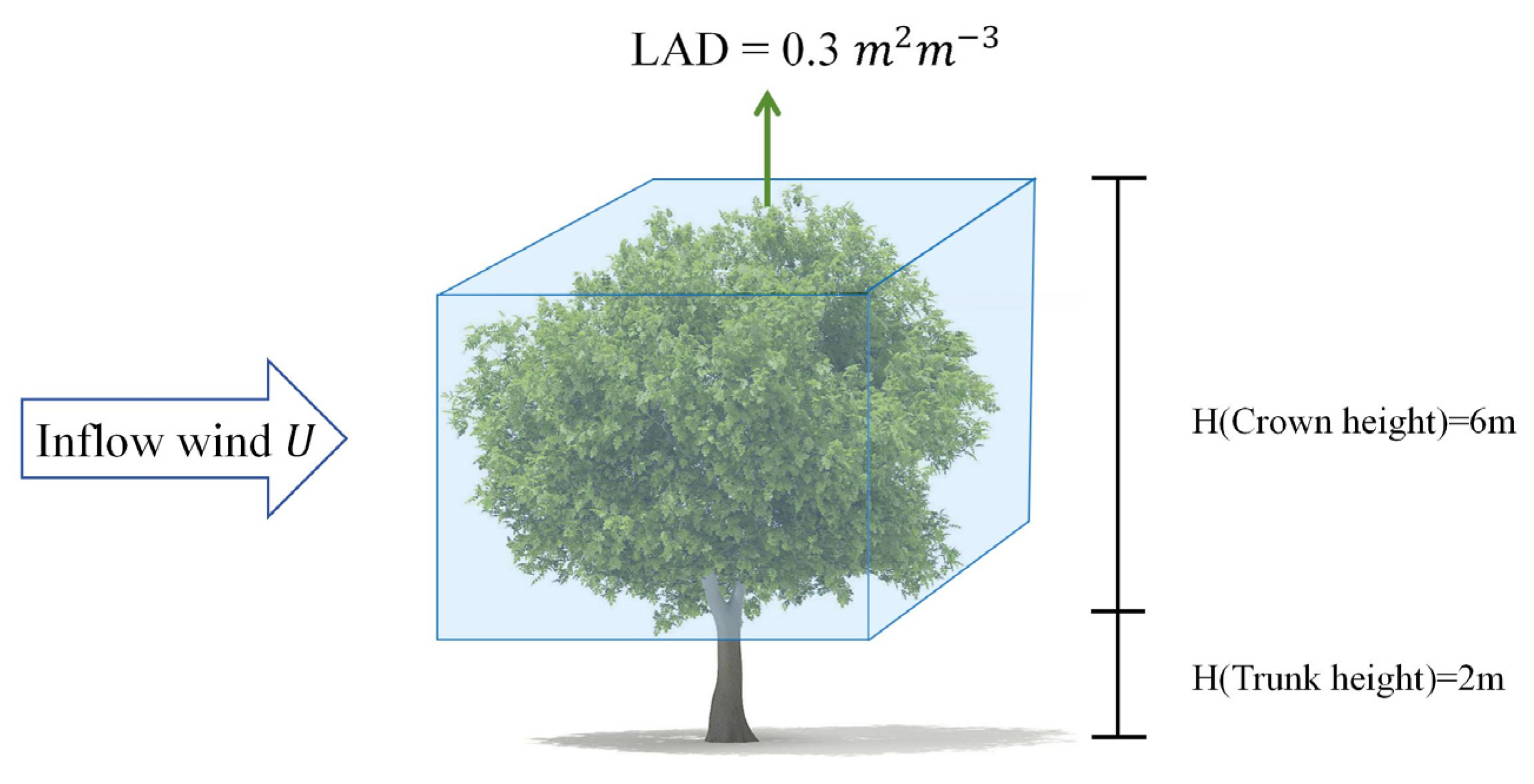
| Ellipsoid | Cylindrical | Conical | |
|---|---|---|---|
| Crown type | 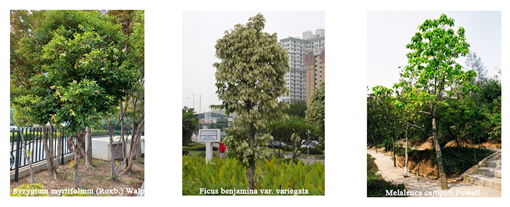 | ||
 |  |  | |
| Crown height (m) | 6 | 6 | 6 |
| Trunk height (m) | 2 | 2 | 2 |
| Item | Setting |
|---|---|
| Inflow direction | South |
| Velocity | at 10 m |
| Control equation type | Navier–Stokes equations |
| Minimum spacing | Δx ≈ 0.05 m; Δy ≈ 0.05 m; Δz ≈ 0.04 m (common to all cases) |
| Discretization | Non-uniform meshing |
| Cell count (range) | ≈ 7.1–17.5 × 10⁶ (varies with array/domain scaling) |
| Canopy porosity treatment | LAD = 0.3 m2 m−3 |
| Power law profile () | 0.15 |
| Ground surface roughness (z0) | 0.20 m |
| Latitude and longitude | N. latitude 22°12′, E. longitude 113°32′ |
| Crown | z (m) | u0 (Reference Speed) | Min (u/u0) (Leeward) | Rw_Max (%) | y_at_Min (m) | D_0.95 (m) | D_0.50 (m) |
|---|---|---|---|---|---|---|---|
| Ellipsoidal | 1.5 | 1.92 | 1.00 | 0.23 | 14.27 | 0.03 | 0.00 |
| 5 | 2.46 | 0.21 | 78.83 | 6.28 | 14.27 | 11.54 | |
| Cylindrical | 1.5 | 1.92 | 0.96 | 4.41 | 4.93 | 0.03 | 0 |
| 5 | 2.47 | 0.29 | 70.9 | 5.39 | 14.27 | 10.88 | |
| Conical | 1.5 | 1.92 | 0.92 | 7.76 | 6.09 | 0.03 | 0 |
| 5 | 2.49 | 0.39 | 61.3 | 4.78 | 14.27 | 10.3 |
Disclaimer/Publisher’s Note: The statements, opinions and data contained in all publications are solely those of the individual author(s) and contributor(s) and not of MDPI and/or the editor(s). MDPI and/or the editor(s) disclaim responsibility for any injury to people or property resulting from any ideas, methods, instructions or products referred to in the content. |
© 2025 by the authors. Licensee MDPI, Basel, Switzerland. This article is an open access article distributed under the terms and conditions of the Creative Commons Attribution (CC BY) license (https://creativecommons.org/licenses/by/4.0/).
Share and Cite
Qin, H.; Pan, L.; Wu, X.; Hsieh, C.-M.; Guo, S. Investigating the Wind Flow Modulation of Tree Crown Morphology and Layout at Different Heights. Forests 2025, 16, 1698. https://doi.org/10.3390/f16111698
Qin H, Pan L, Wu X, Hsieh C-M, Guo S. Investigating the Wind Flow Modulation of Tree Crown Morphology and Layout at Different Heights. Forests. 2025; 16(11):1698. https://doi.org/10.3390/f16111698
Chicago/Turabian StyleQin, Heyang, Liyu Pan, Xueying Wu, Chun-Ming Hsieh, and Shuyi Guo. 2025. "Investigating the Wind Flow Modulation of Tree Crown Morphology and Layout at Different Heights" Forests 16, no. 11: 1698. https://doi.org/10.3390/f16111698
APA StyleQin, H., Pan, L., Wu, X., Hsieh, C.-M., & Guo, S. (2025). Investigating the Wind Flow Modulation of Tree Crown Morphology and Layout at Different Heights. Forests, 16(11), 1698. https://doi.org/10.3390/f16111698

