Article

Improving the Site Index and Stand Basal Area Model of Picea asperata Mast. by Considering Climate Effects

1
Precision Forestry Key Laboratory of Beijing, Beijing Forestry University, Beijing 100083, China
2
Industry Development and Planning Institute, National Forestry and Grassland Administration, Beijing 100010, China
3
Faculty of Transportation, Southeast University, Nanjing 211189, China
*
Author to whom correspondence should be addressed.
Forests 2024, 15(7), 1076; https://doi.org/10.3390/f15071076
Submission received: 27 May 2024 / Accepted: 18 June 2024 / Published: 21 June 2024
(This article belongs to the Special Issue Integrated Measurements for Precision Forestry)

Abstract

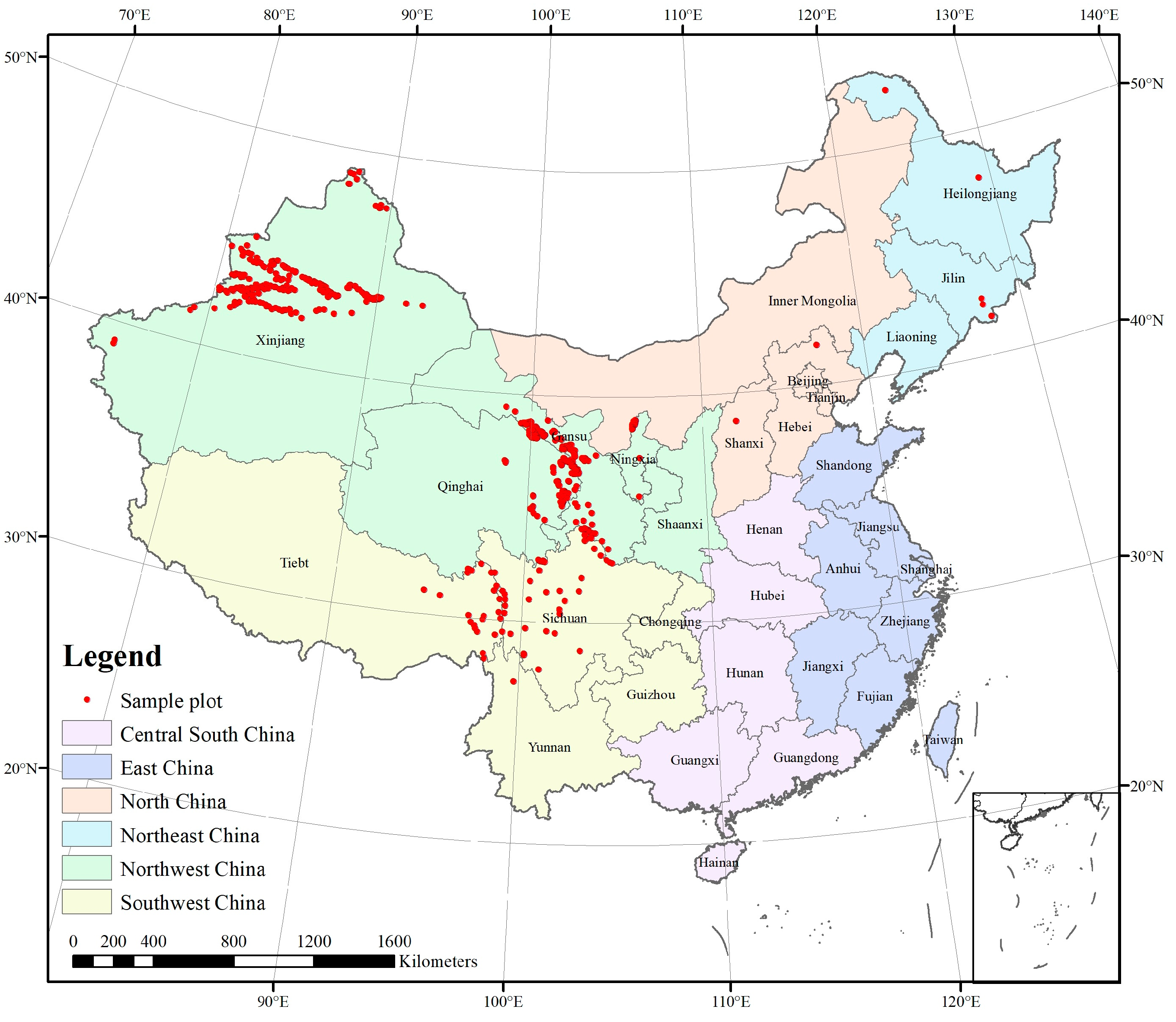
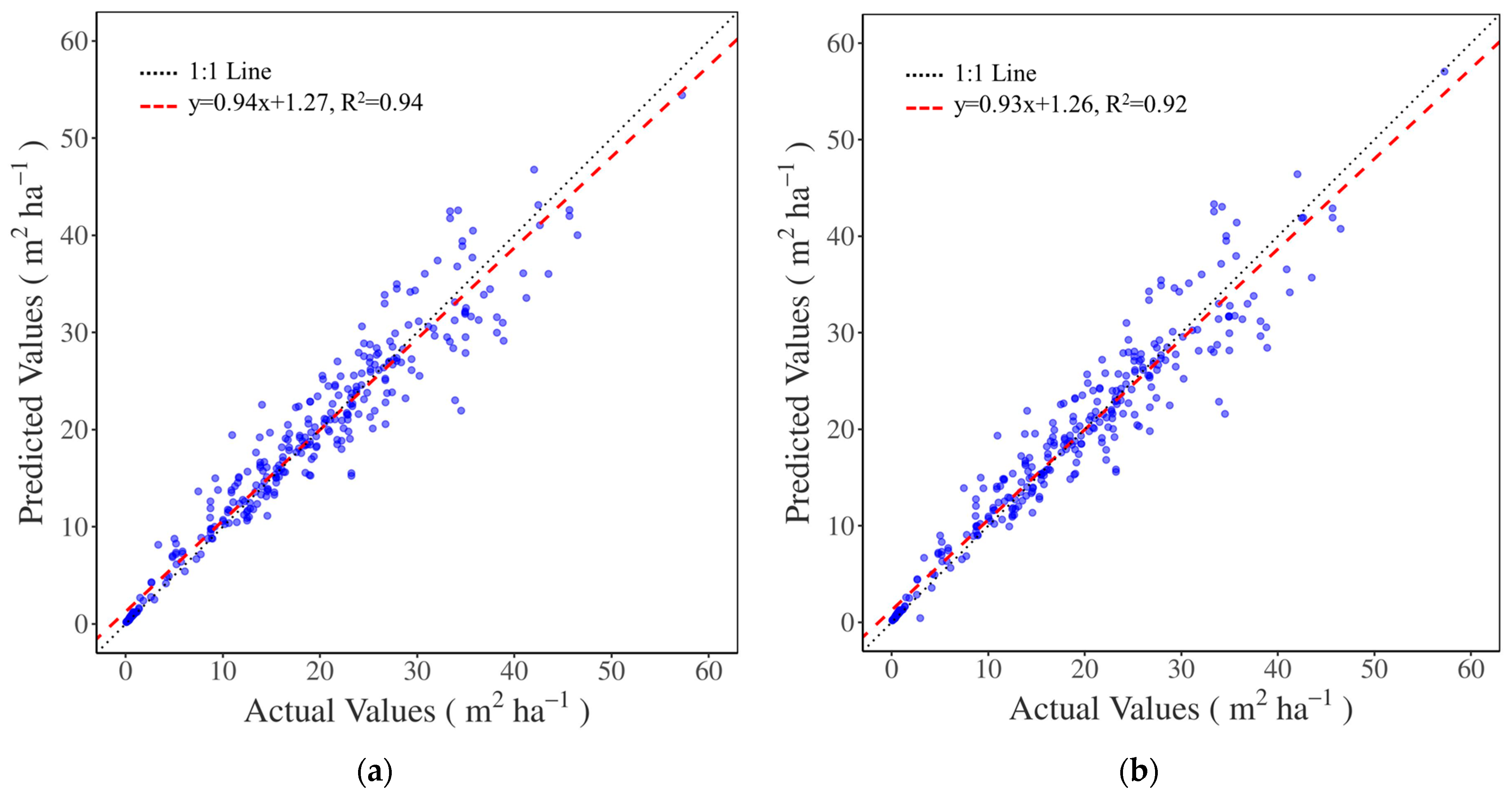
The stand basal area, closely related to age, site quality, and stand density, is an important factor for predicting forest growth and yield. The accurate estimation of site quality is especially a key component in the stand basal area model. We utilized sample plots with Picea asperata Mast. as the dominant species in the multi-period National Forest Inventory (NFI) dataset to establish a site index (SI) model including climate effects through the difference form of theoretical growth equations and mixed-effects models. We combined the SI calculated from the SI model, stand age, and stand density index to construct a basal area growth model for Picea asperata Mast. stands. The results show that the Korf model is the best SI base model for Picea asperata Mast. The mean temperatures in summer and winter precipitation were used as the fixed parameters to construct a nonlinear model. Ultimately, elevation, origin, and region, as random effects, were incorporated into the mixed-effects model. The coefficients (R2) of determination of the base model, the nonlinear model including climate, and the nonlinear mixed-effects model are 0.869, 0.899, and 0.921, with root-mean-square errors (RMSEs) of 1.320, 1.315, and 1.301, respectively. Among the basal area models, the Richards model has higher precision. And the basal area model including an SI incorporating climatic factors had a higher determination coefficient (R2) of 0.918 than that of the model including an SI without considering climatic effects. The mixed-effects model incorporating climatic and topographic factors shows a better fitting performance of SI, resulting in a higher precision of the basal area model. This indicates that in the development of forest growth models, both biophysical and climatic factors should be comprehensively considered.
Keywords: Picea asperata Mast.; site index; climatic factors; stand basal area model; nonlinear mixed-effects model Picea asperata Mast.; site index; climatic factors; stand basal area model; nonlinear mixed-effects model