Article

The Importance of Initial Seedling Characteristics in Controlling Allocation to Growth and Reserves under Different Soil Moisture Conditions

by
Simon M. Landhäusser
1,*,†,
Erin T. Wiley
2,†,
Kevin A. Solarik
3,
Shaun P. Kulbaba
1 and
Alexander E. Goeppel
1
1
Department of Renewable Resources, University of Alberta, Edmonton, AB T6G 2H1, Canada
2
Department of Biology, University of Central Arkansas, Conway, AR 72035, USA
3
National Council for Air and Stream Improvement, Inc. (NCASI), 2000 McGill College Avenue, Montreal, QC H3A 3H3, Canada
*
Author to whom correspondence should be addressed.
These authors contributed equally to this work.
Forests 2023, 14(4), 796; https://doi.org/10.3390/f14040796
Submission received: 2 March 2023 / Revised: 6 April 2023 / Accepted: 9 April 2023 / Published: 13 April 2023
(This article belongs to the Special Issue Production in Forest Nurseries and Field Performance of Seedlings)

Abstract

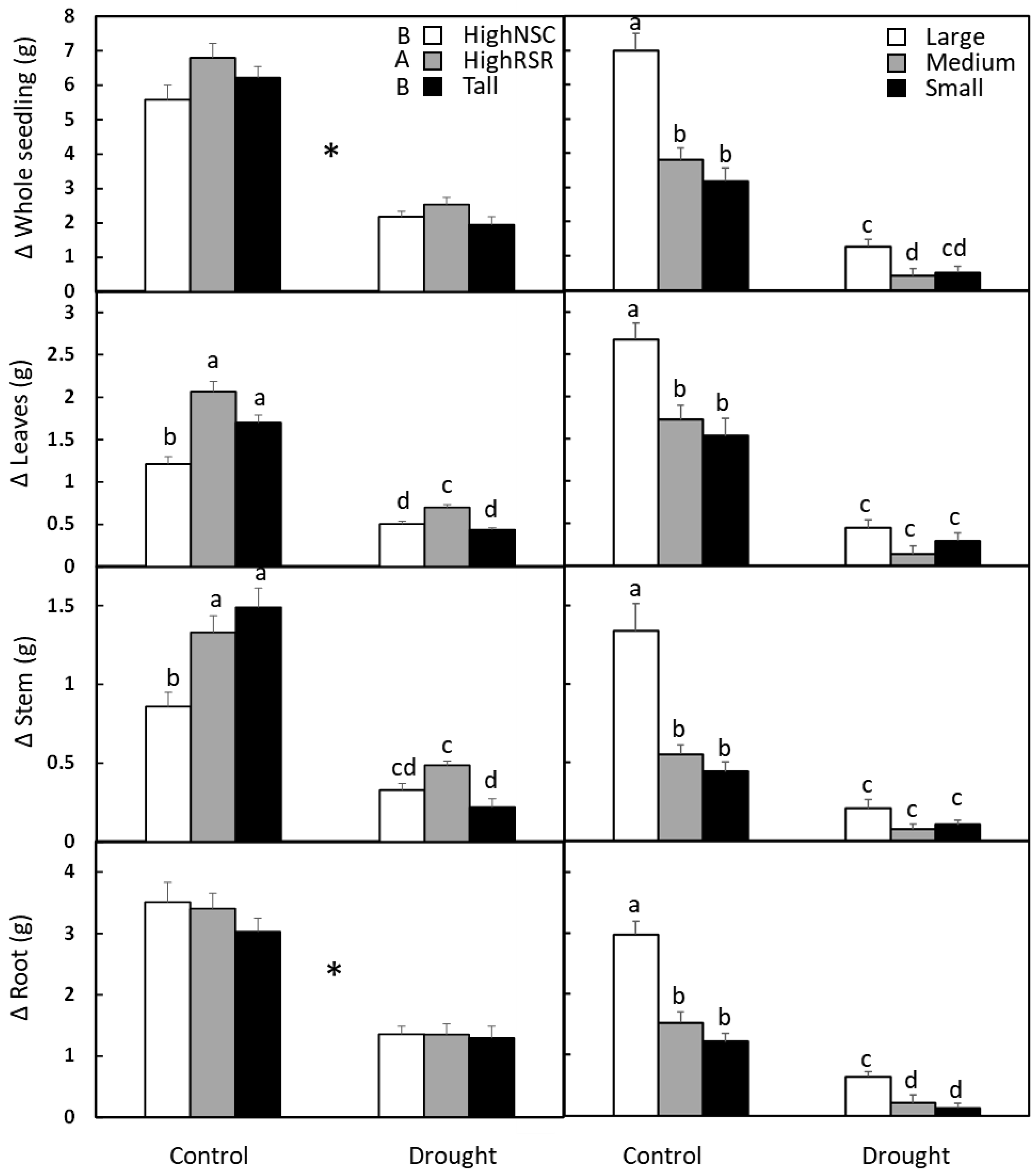
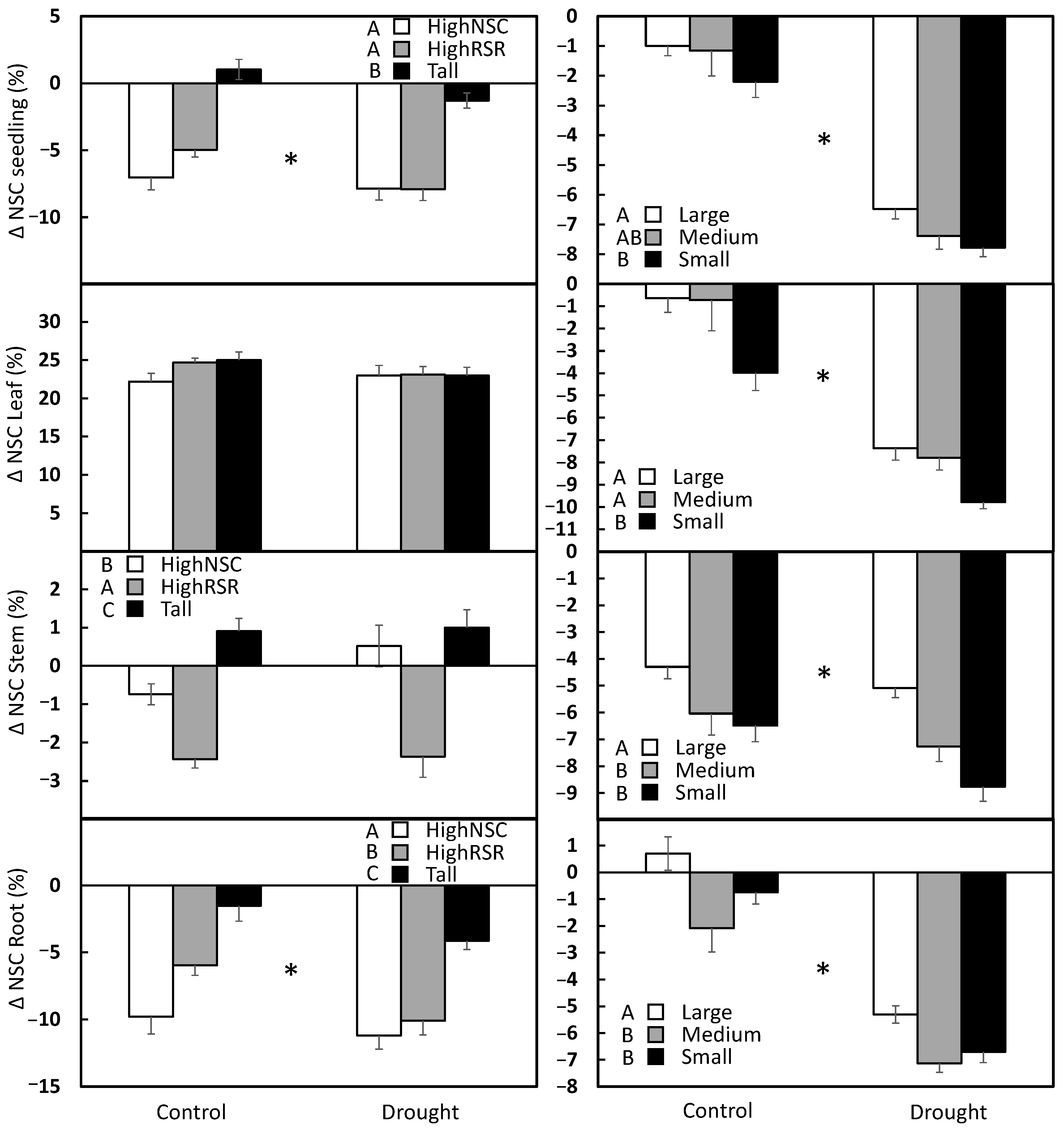
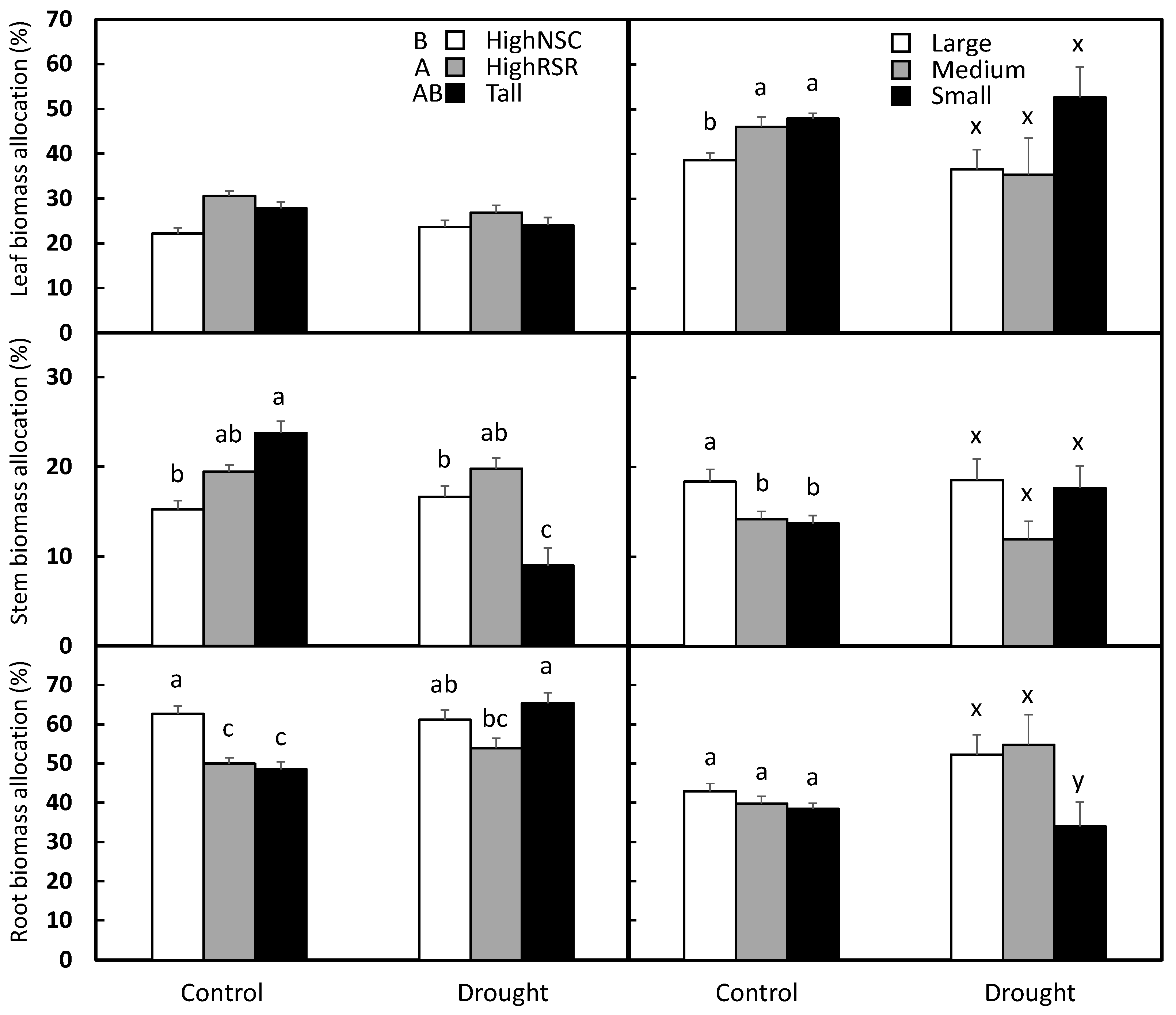
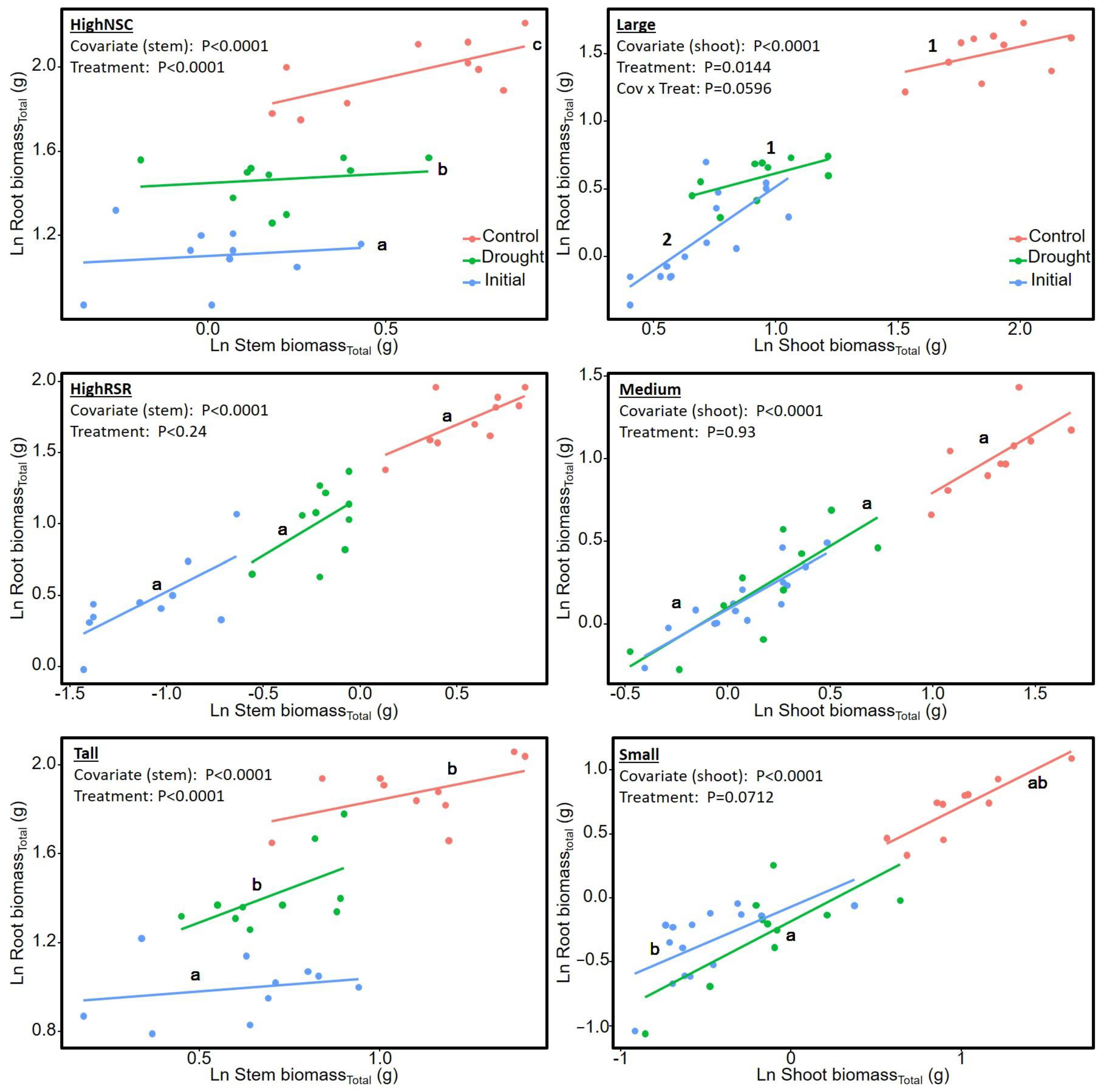
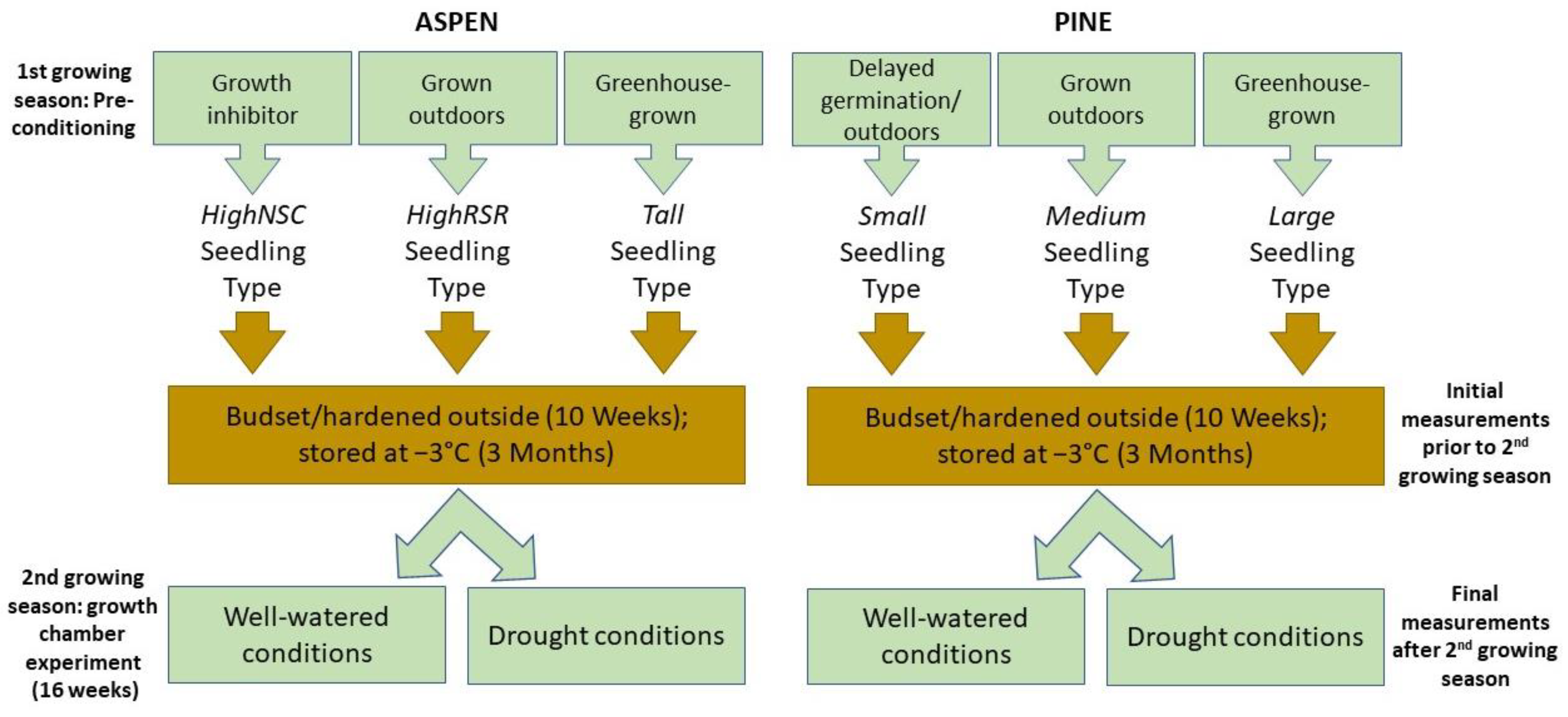
After disturbance, forest regeneration and resiliency depend on the ability of seedlings to respond, survive, and grow under a variety of stress conditions, including drought. Despite recent efforts to improve our fundamental knowledge surrounding plant response mechanisms to stress and their application in seedling quality research, initial seedling characteristics are often ignored when exploring seedling responses to stress in field plantings or ecophysiological studies. Here, we explore how initial differences in size, biomass allocation, and non-structural carbohydrate (NSC) storage affect the subsequent partitioning of new biomass, growth potential, and drought response in seedlings of a deciduous broad-leaved (Populus tremuloides) and an evergreen coniferous species (Pinus banksiana). We exposed seedlings of both species to different growing conditions in their first growing season in order to manipulate the aforementioned seedling characteristics. In a second growing season, we exposed these different seedling types to a subsequent drought stress. While drought reduced both structural growth and NSC storage in all seedling types, the expected shift in allocation favoring roots was only observed in seedling types with initially low root:shoot or root:stem ratios. Overall, we also found that the traits associated with greater growth were quite different between pine and aspen. While larger seedlings led to greater growth in pine, it was the smallest seedling type in aspen with the largest root:stem ratio that produced the most new growth. In aspen, this smaller seedling type was the only one that did not undergo a shift in biomass relative to its initial allometry, suggesting that adjustments in biomass allocation made by other, larger seedling types must have come at the cost of lower growth. In contrast, adjustments in allocation did not appear to negatively impact pine, possibly because reduced root:shoot ratios of larger seedlings did not reduce NSC storage, as it did in aspen. Our results highlight (1) the complexity of how differences in biomass allocation and changes in seedling size may alter storage and the response of species to drought, and (2) the importance of accounting for initial seedling characteristics (both morphological and physiological) when predicting seedling growth and the impacts of environmental stressors.
Keywords: biomass; allocation; reserve; drought; conditioning; structural and non-structural carbohydrates; organs; Populus tremuloides; Pinus banksiana; seedling; quality biomass; allocation; reserve; drought; conditioning; structural and non-structural carbohydrates; organs; Populus tremuloides; Pinus banksiana; seedling; quality