Article

Assessing Forest Biodiversity: A Novel Index to Consider Ecosystem, Species, and Genetic Diversity

by
Jana-Sophie Ette
*,
Markus Sallmannshofer
and
Thomas Geburek
Austrian Research Centre for Forests, Department for Forest Growth, Silviculture, and Genetics, Seckendorff-Gudent Weg 8, 1130 Vienna, Austria
*
Author to whom correspondence should be addressed.
Forests 2023, 14(4), 709; https://doi.org/10.3390/f14040709
Submission received: 27 December 2022 / Revised: 26 February 2023 / Accepted: 2 March 2023 / Published: 30 March 2023
(This article belongs to the Special Issue Biodiversity and Conservation of Forests)

Abstract

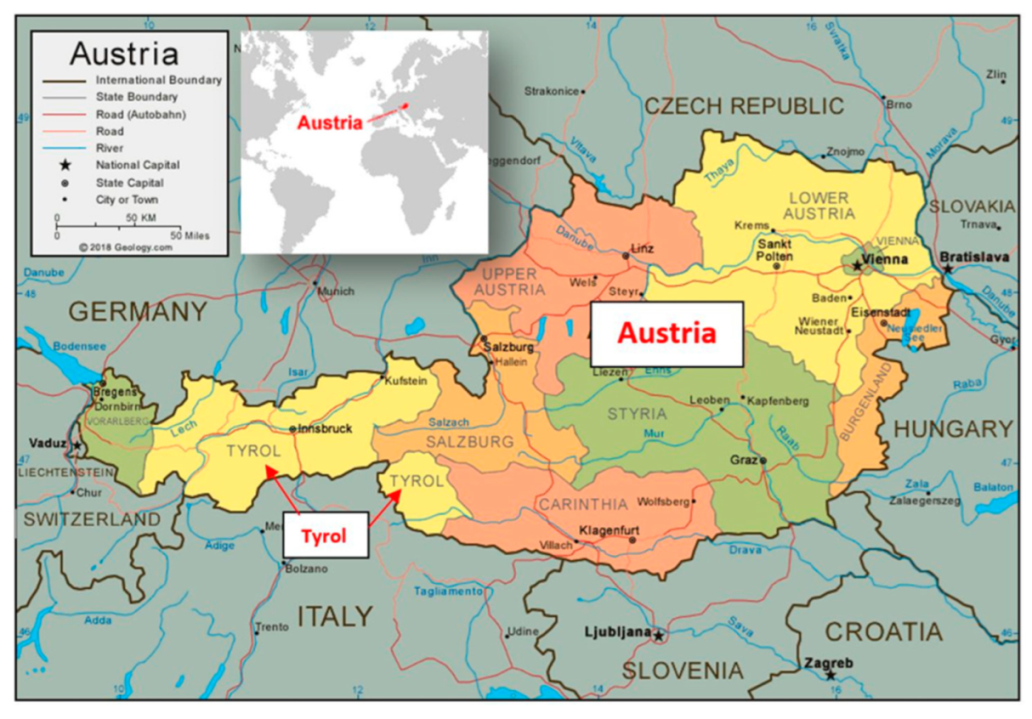
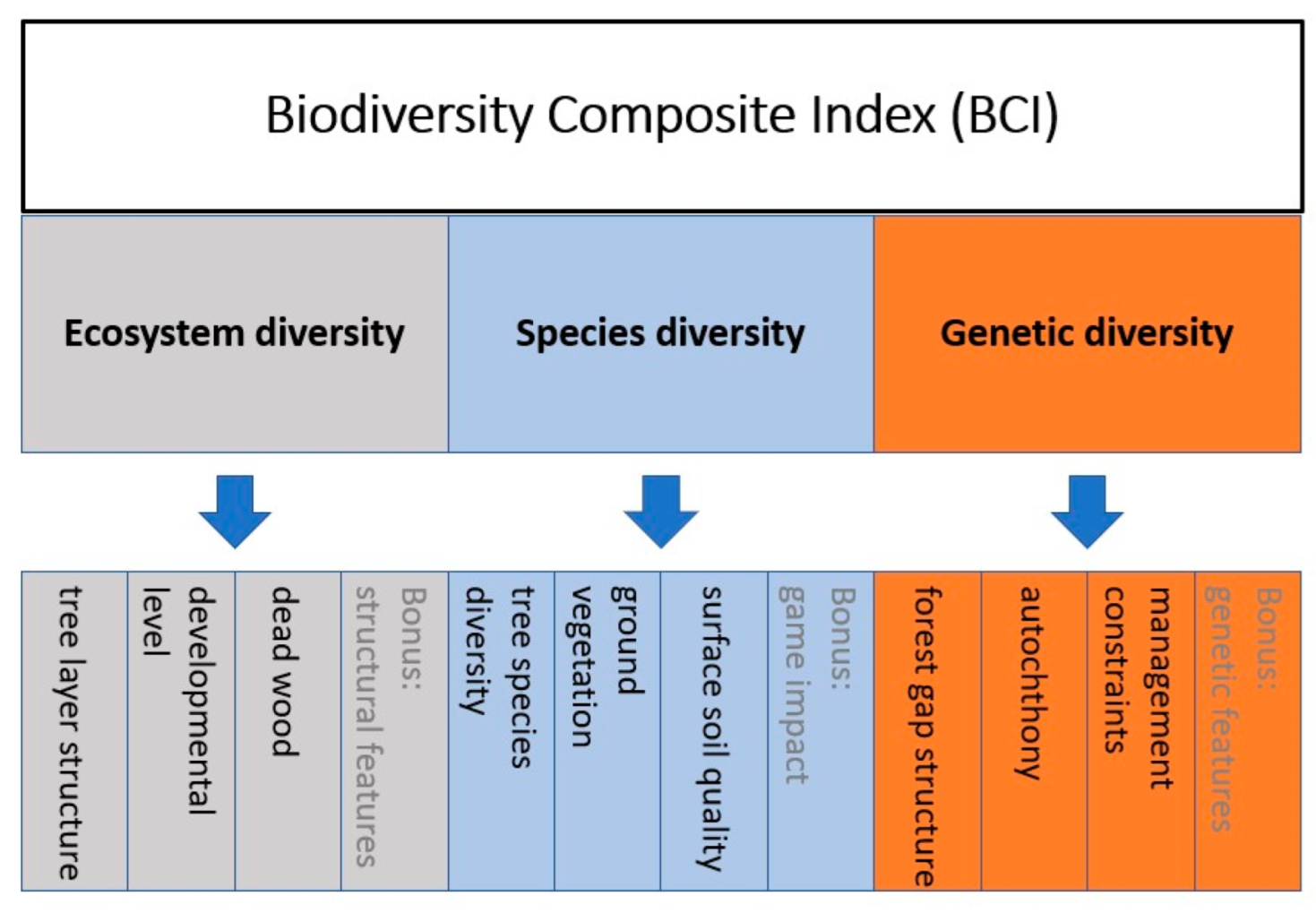
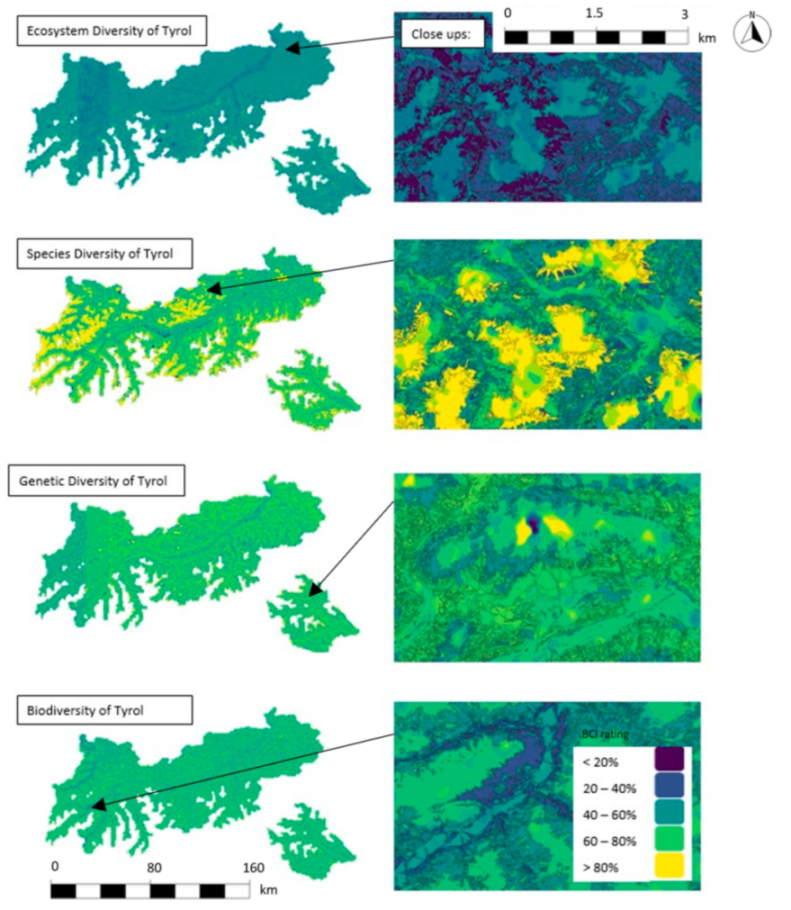
Rates of biodiversity loss remain high, threatening the life support system upon which all human life depends. In a case study, a novel biodiversity composite index (BCI) in line with the Convention on Biological Diversity is established in Tyrol, Austria, based on available national forest inventory and forest typing data. Indicators are referenced by ecological modeling, protected areas, and unmanaged forests using a machine learning approach. Our case study displays an average biodiversity rating of 57% out of 100% for Tyrolean forests. The respective rating for ecosystem diversity is 49%; for genetic diversity, 53%; and for species diversity, 71%. Coniferous forest types are in a more favorable state of preservation than deciduous and mixed forests. The BCI approach is transferable to Central European areas with forest typing. Our objective is to support the conservation of biodiversity and provide guidance to regional forest policy. BCI is useful to set restoration priorities, reach conservation targets, raise effectiveness of financial resources spent on biodiversity conservation, and enhance Sustainable Forest Management.
Keywords: convention on biological diversity; national forest inventory; dynamic forest typing; machine learning; sustainable forest management; temperate forests convention on biological diversity; national forest inventory; dynamic forest typing; machine learning; sustainable forest management; temperate forests