Article

Does Spontaneous Secondary Succession Contribute to the Drying of the Topsoil?

1
Water Centre, Institute of Environmental Engineering, Warsaw University of Life Sciences, Nowoursynowska 159, 02-776 Warsaw, Poland
2
Department of Forest Botany, Institute of Forest Sciences, Warsaw University of Life Sciences, Nowoursynowska 159, 02-776 Warsaw, Poland
3
Department of Environmental Protection and Dendrology, Institute of Horticultural Sciences, Warsaw University of Life Sciences, Nowoursynowska 159, 02-776 Warsaw, Poland
4
Department of Biometry, Institute of Agriculture, Warsaw University of Life Sciences, Nowoursynowska 166, 02-776 Warsaw, Poland
5
Department of Soil Science and Microbiology, Faculty of Agriculture and Forestry, University of Warmia and Mazury in Olsztyn, Pl. Łódzki 3, 10-727 Olsztyn, Poland
6
Department of Biochemistry and Microbiology, Institute of Biology, Warsaw University of Life Sciences, Nowoursynowska 166, 02-787 Warsaw, Poland
*
Author to whom correspondence should be addressed.
Forests 2023, 14(2), 356; https://doi.org/10.3390/f14020356
Submission received: 26 January 2023 / Revised: 6 February 2023 / Accepted: 9 February 2023 / Published: 10 February 2023

Abstract

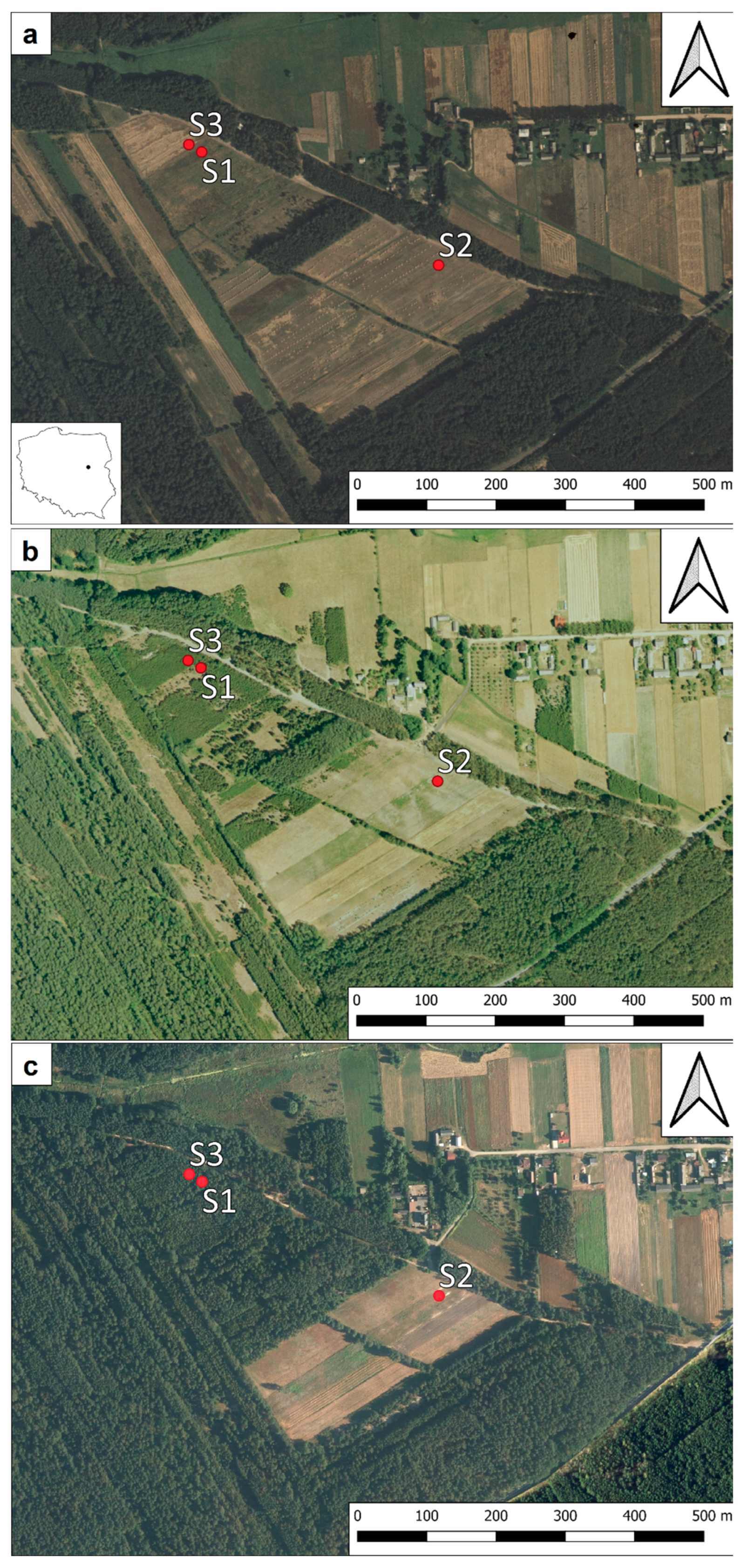
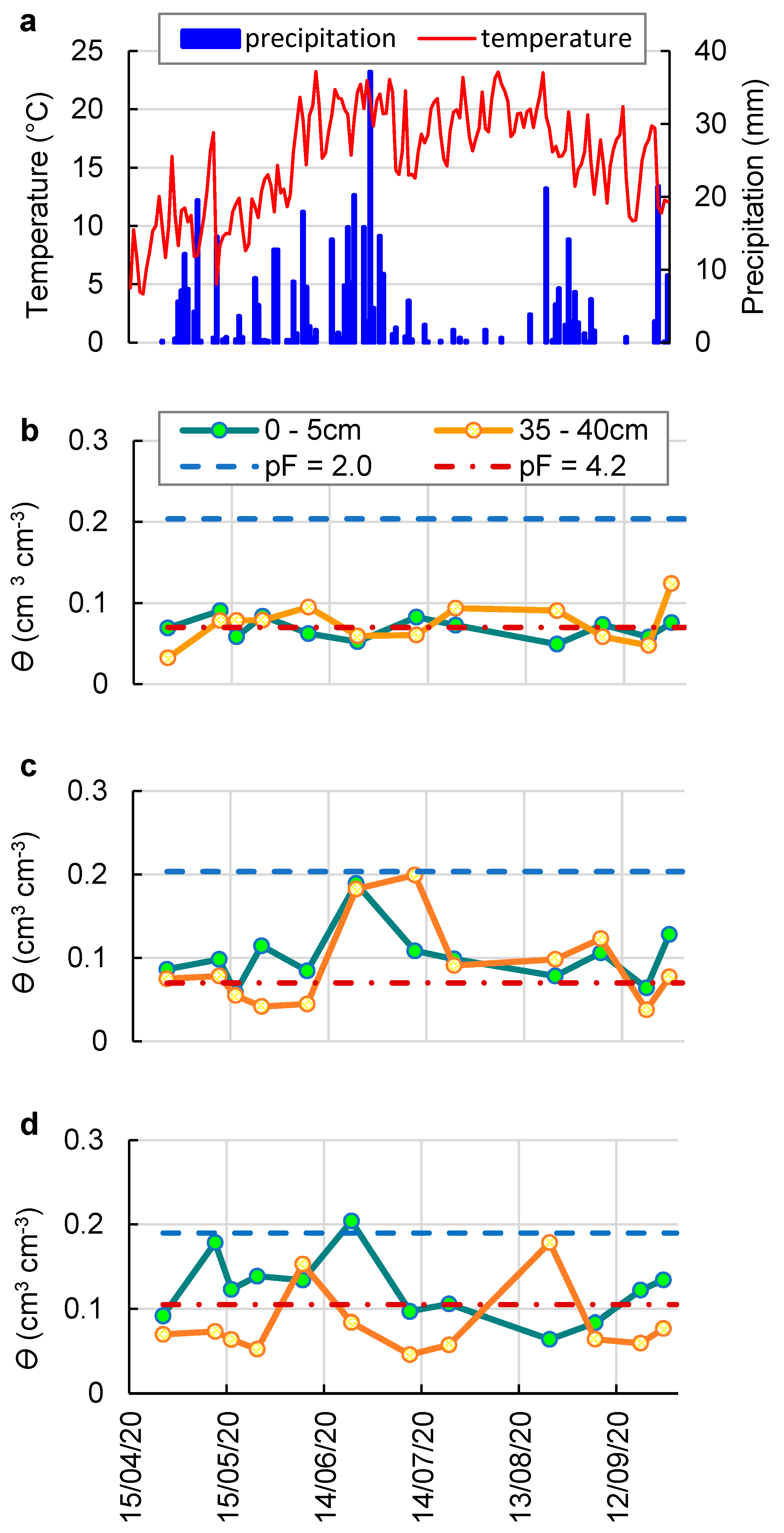
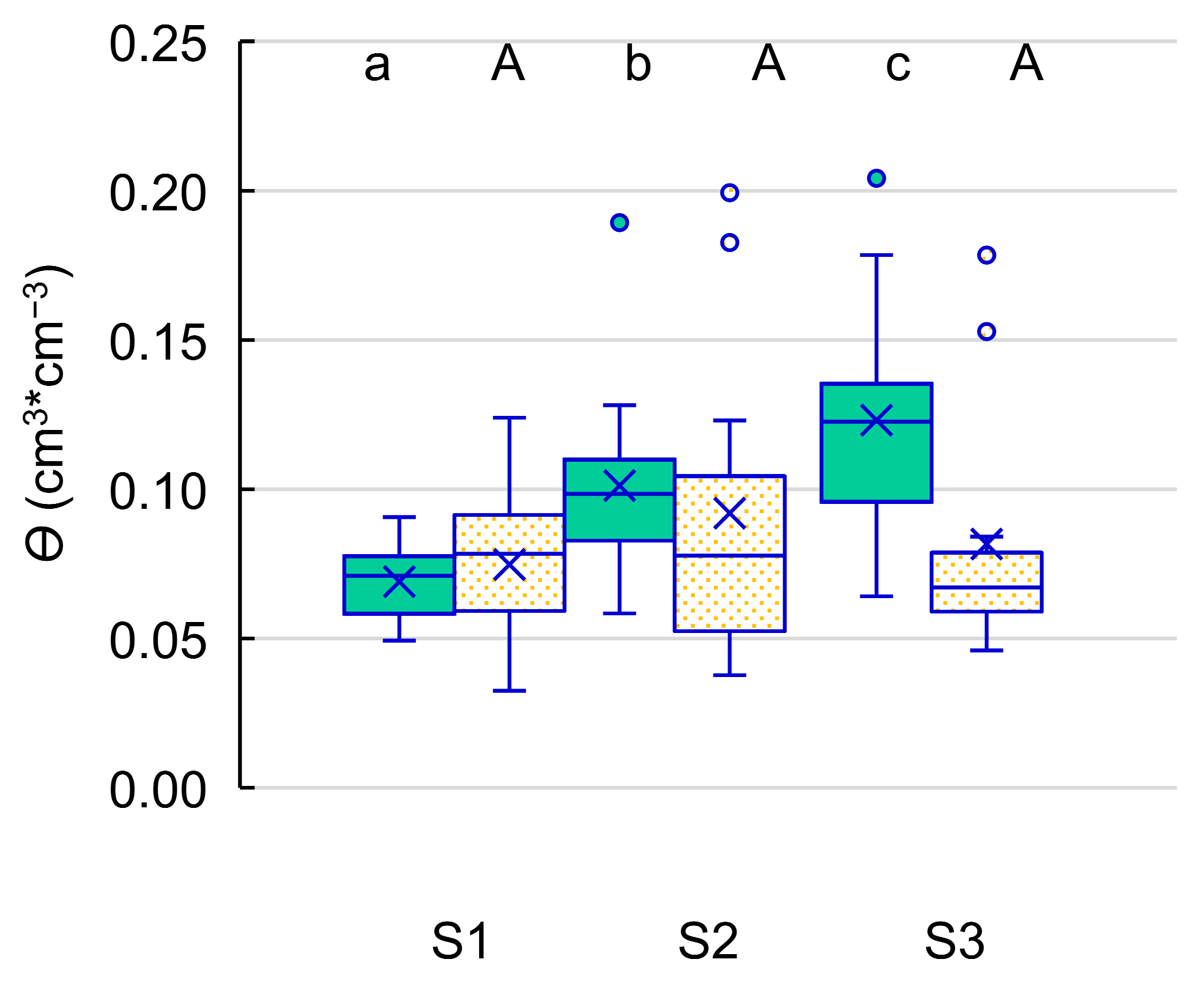
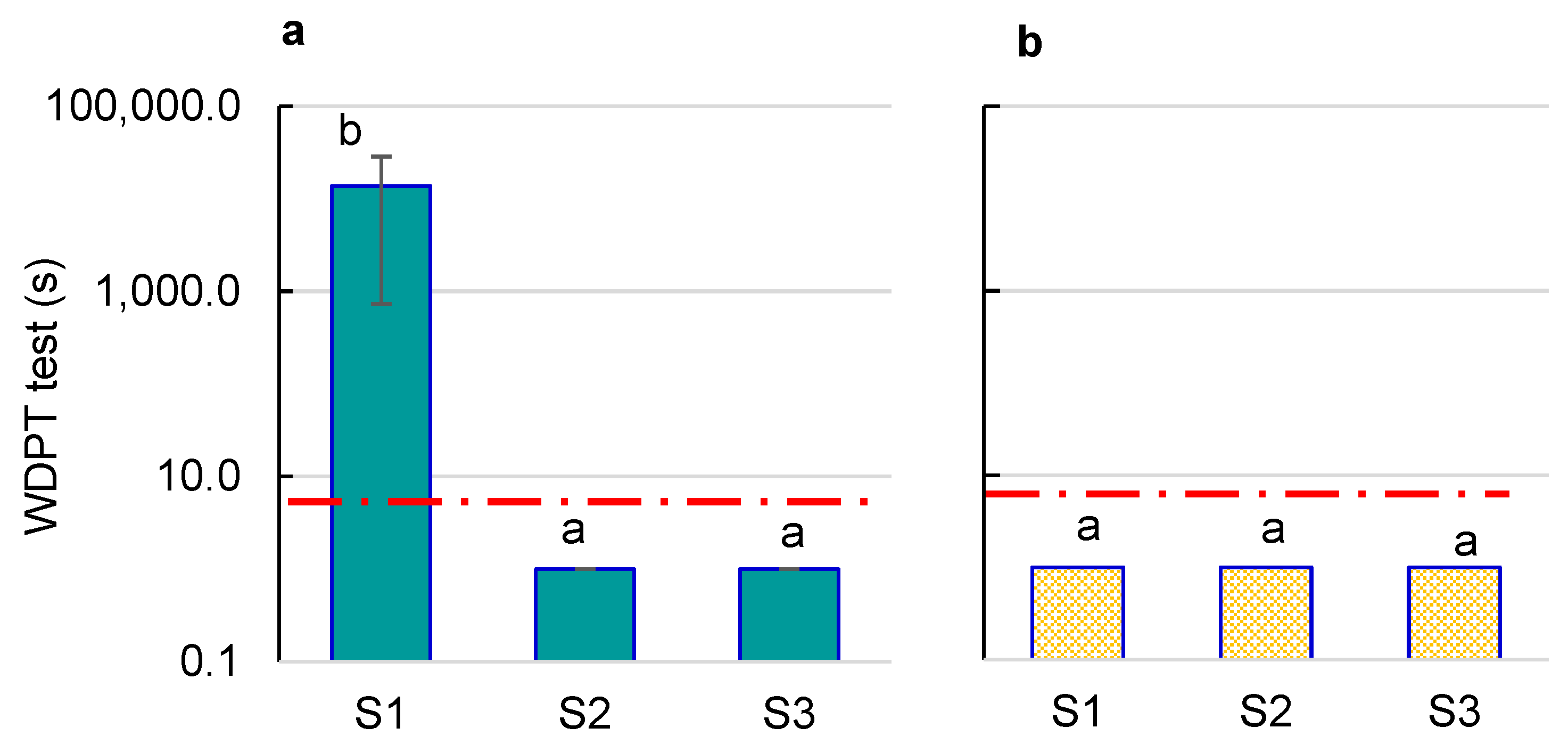
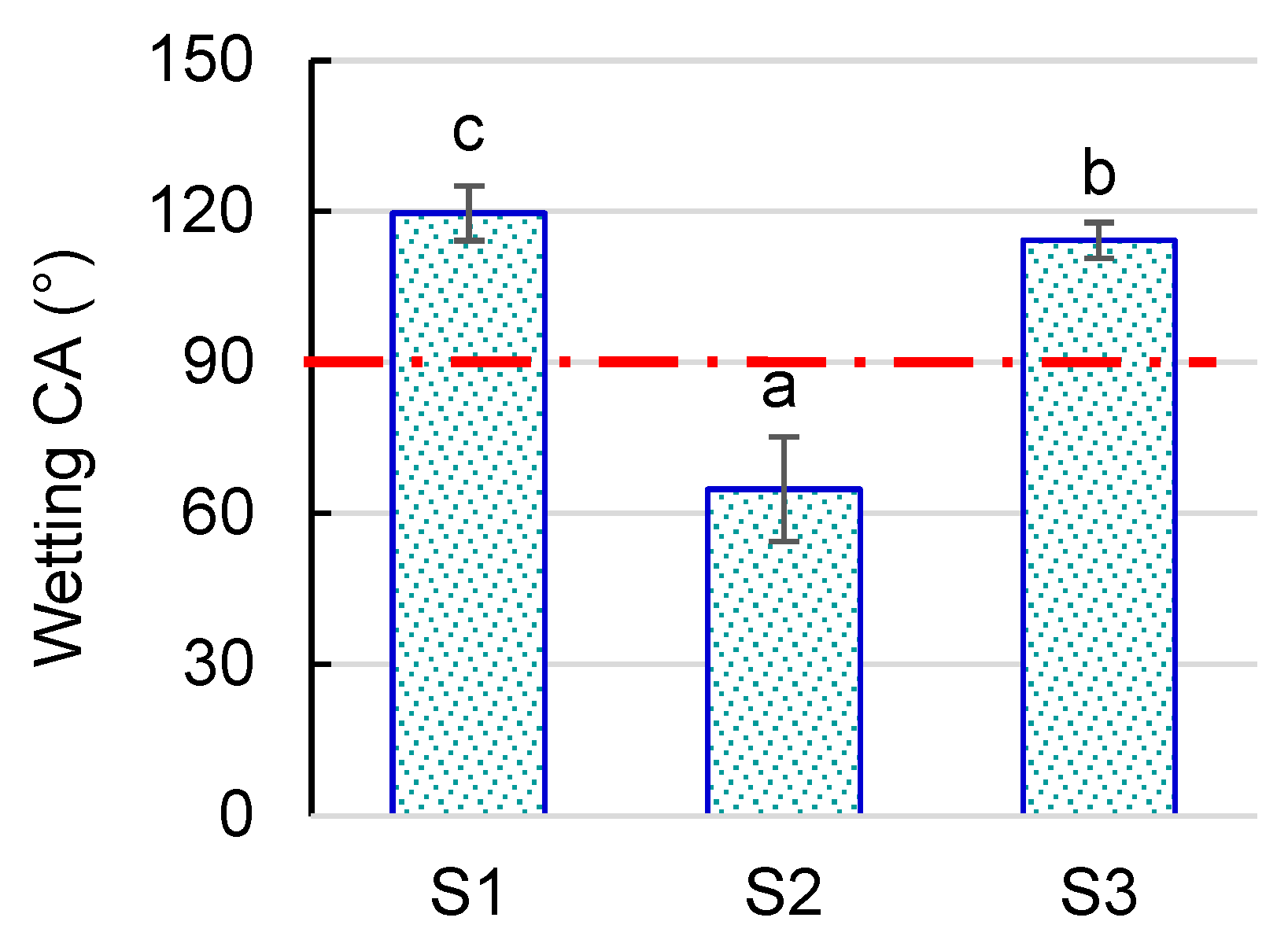
The aim of the study was to analyse the moisture content (θ) and the persistence and strength of water repellency (SWR) on sandy soil excluded from cultivation and then undergoing spontaneous afforestation or weed infestation during an abnormally warm period. Three site plots in close proximity were selected, i.e., Scots pine forest—S1 (Dicrano-Pinion), birch forest—S3 (Molinio-Frangulion) 25 years old, and an abandoned field—S2 (Scleranthion annui) 1 year old, in Central Poland. The study covers the growing period in 2020 for the two upper soil layers. For the top layer, the average θ values for S1, S2, and S3 were 0.069, 0.101, and 0.123 cm3cm−3, respectively. In S1, the θ values were close to the permanent wilting point, and the actual SWR classes (water drop penetration time WDPT test) indicated the top layer as belonging to the extremely repellent class continuously for almost the whole study period. For other sites and soil layers, the wettable SWR classes were assessed. Whereas the severity of the potential SWR, based on measured values of the wetting contact angle (sessile drop method), also showed hydrophobicity for the top layer under the birch forest. The study provides new information regarding the risk of drying out the soil due to the SWR in sandy soils, depending on land use and climate warming.
Keywords: afforestation; soil hydrophobicity; bio-hydro-physical soil properties; sandy soil; soil moisture content afforestation; soil hydrophobicity; bio-hydro-physical soil properties; sandy soil; soil moisture content