Article

Improvement of Surface Coating and Interfacial Properties of Hot-Waxed Wood Using Maleic Anhydride Grafted Polypropylene Wax

Key Laboratory of Bio-Based Material Science and Technology of the Ministry of Education, Northeast Forestry University, Harbin 150040, China
*
Author to whom correspondence should be addressed.
Forests 2022, 13(8), 1205; https://doi.org/10.3390/f13081205
Submission received: 23 June 2022 / Revised: 25 July 2022 / Accepted: 28 July 2022 / Published: 31 July 2022
(This article belongs to the Section Wood Science and Forest Products)

Abstract

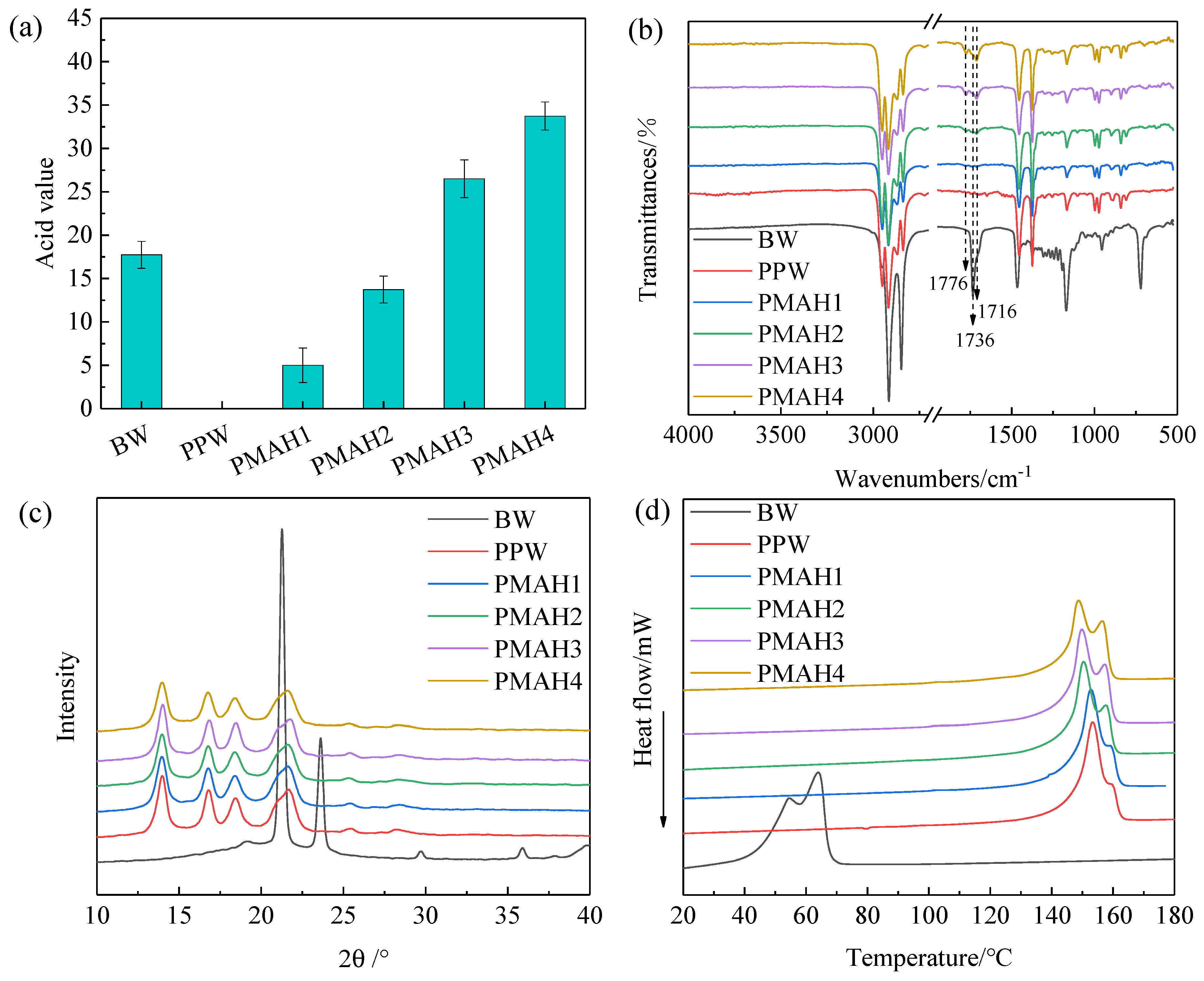
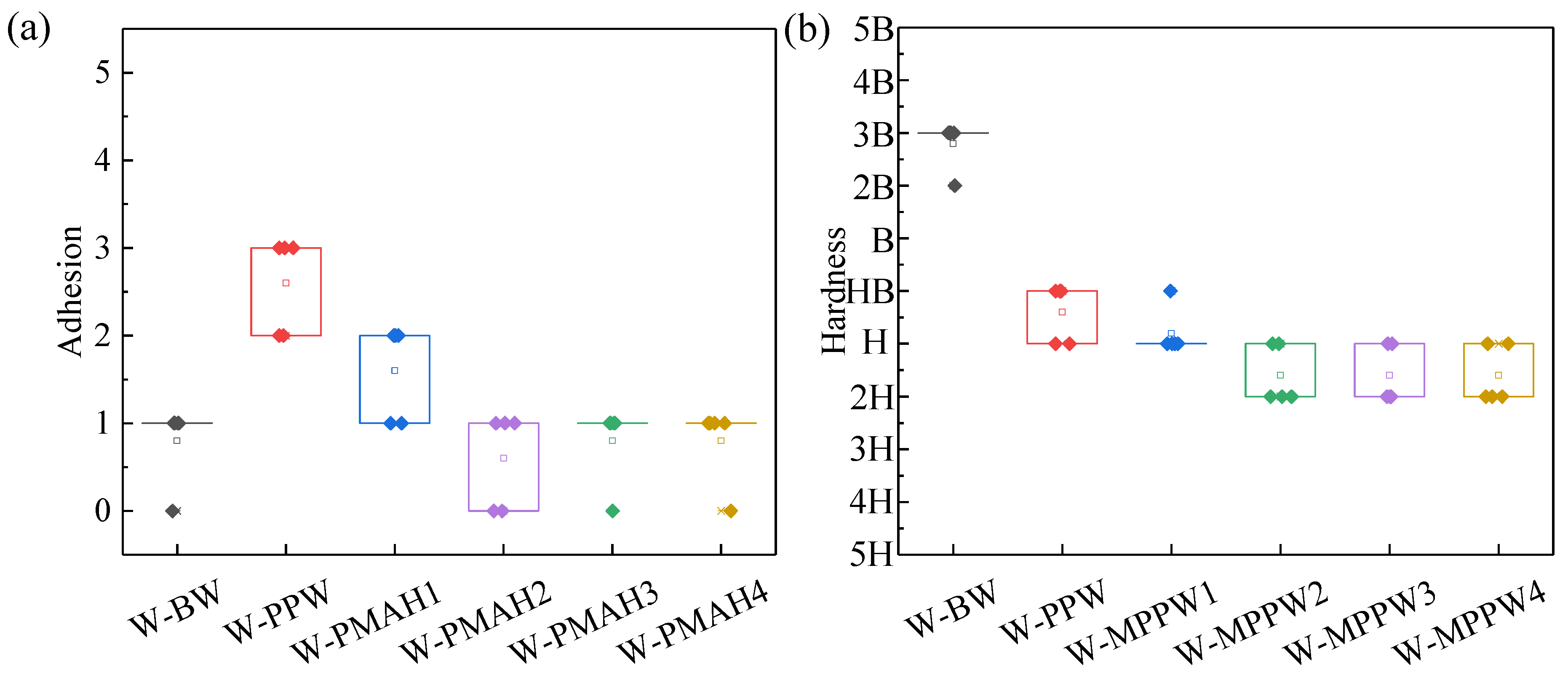
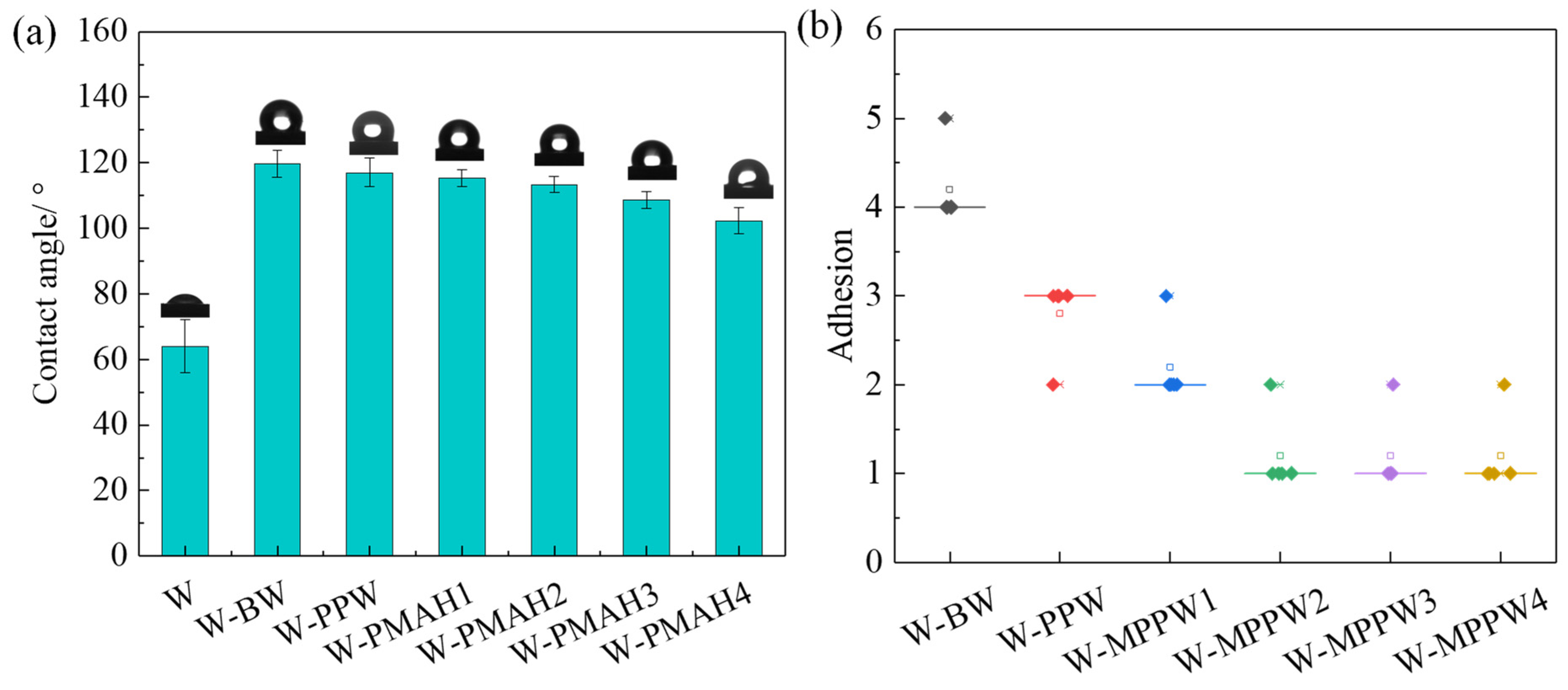
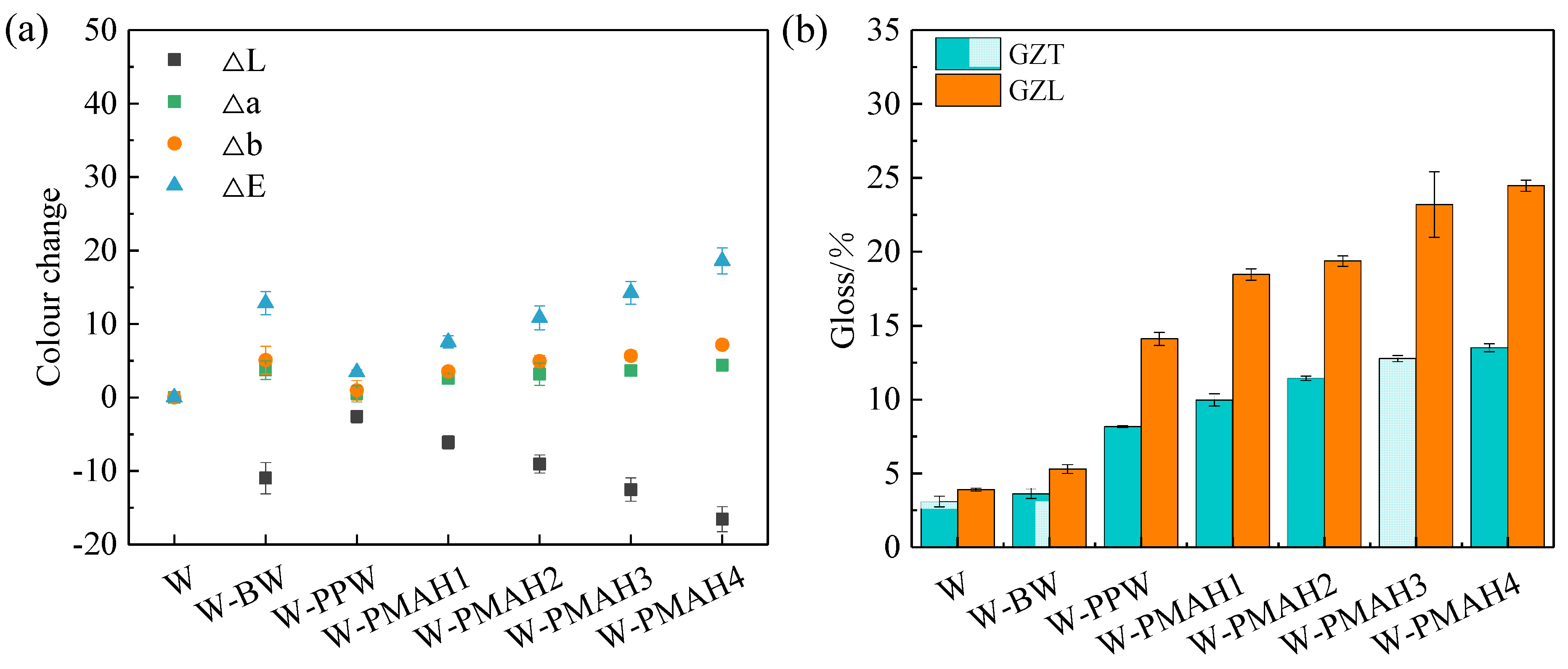
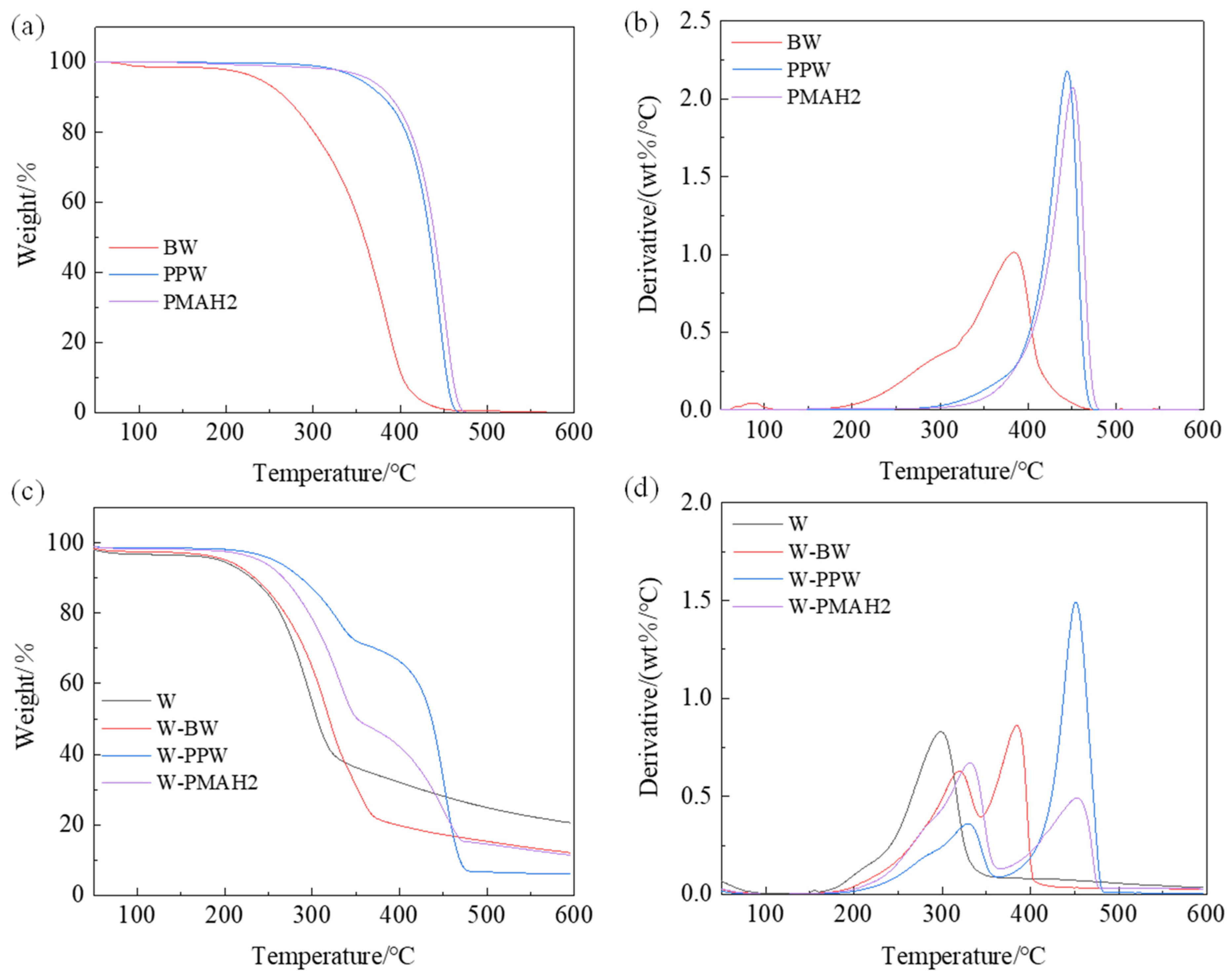
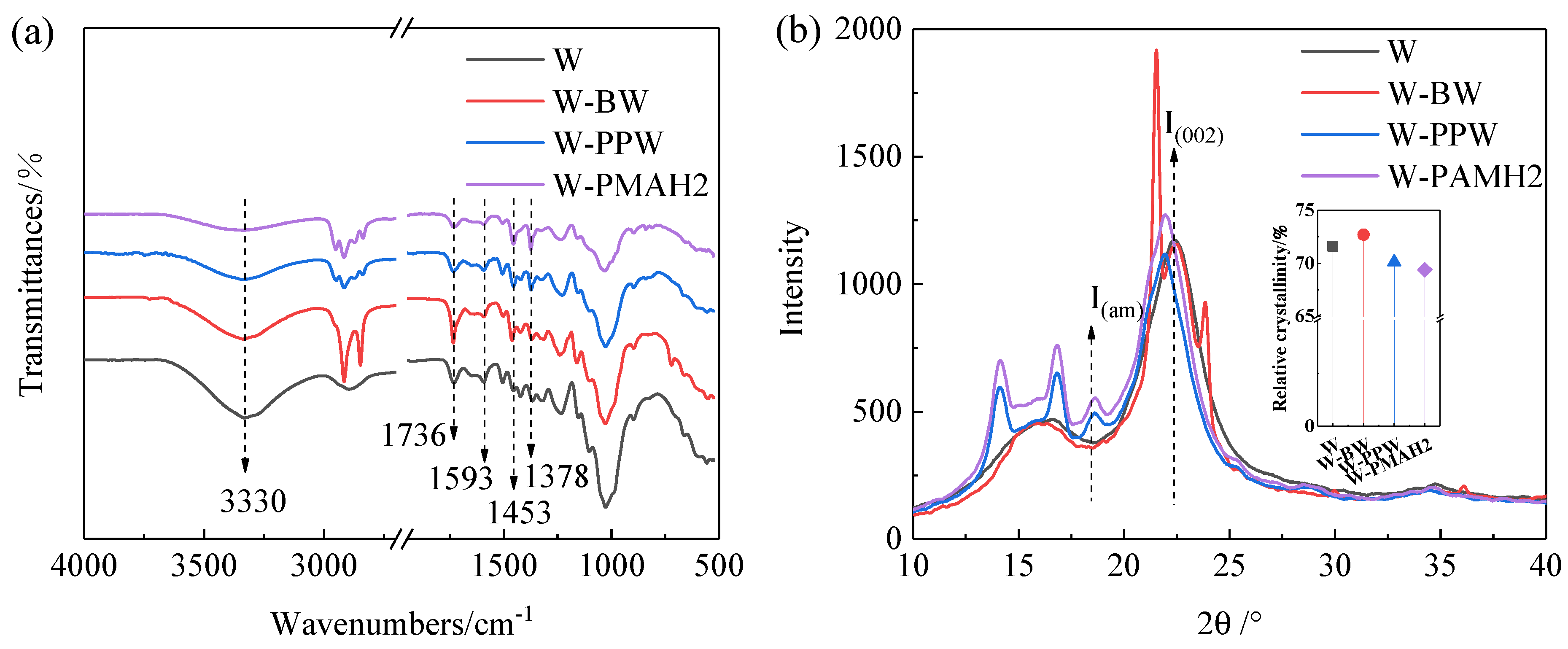
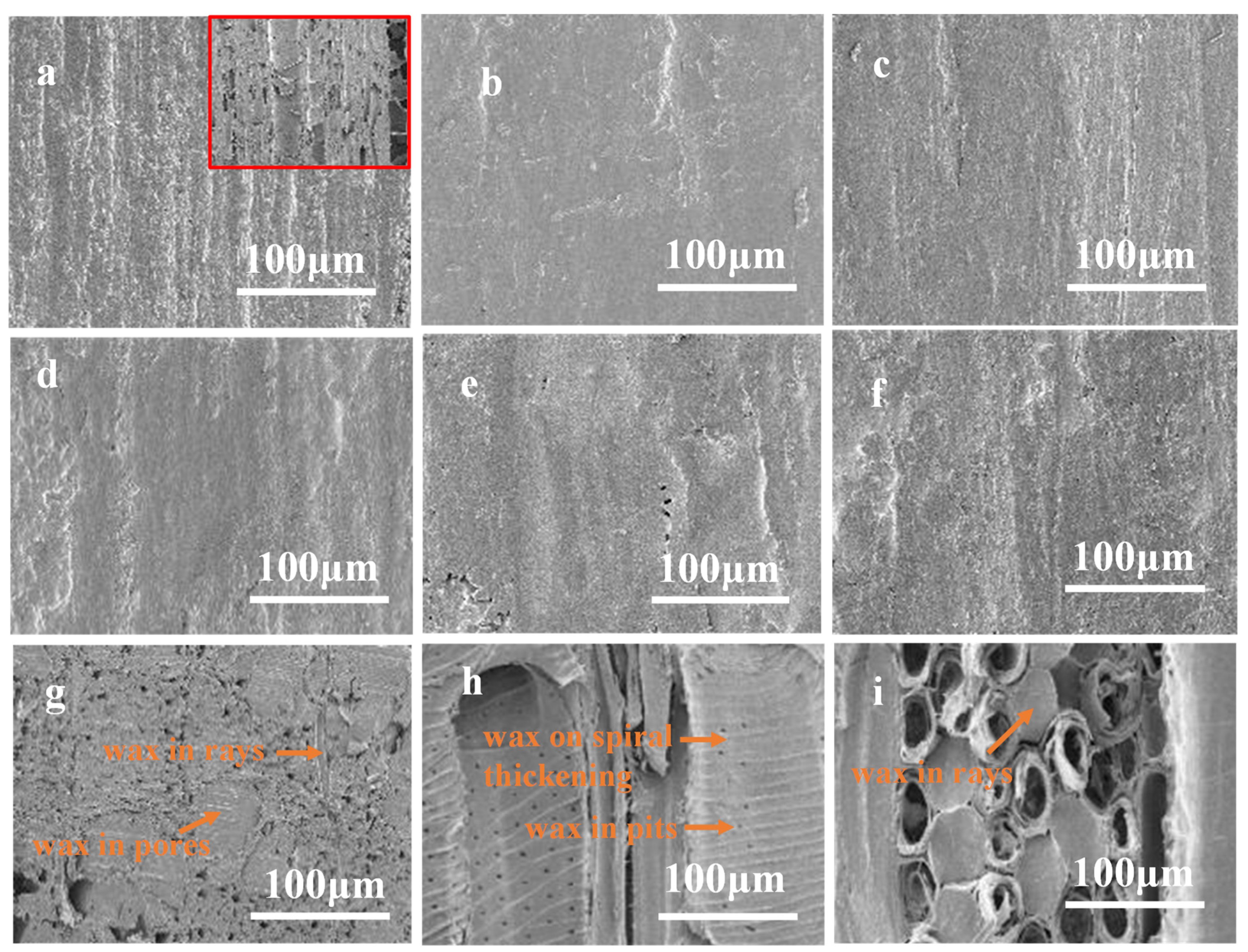
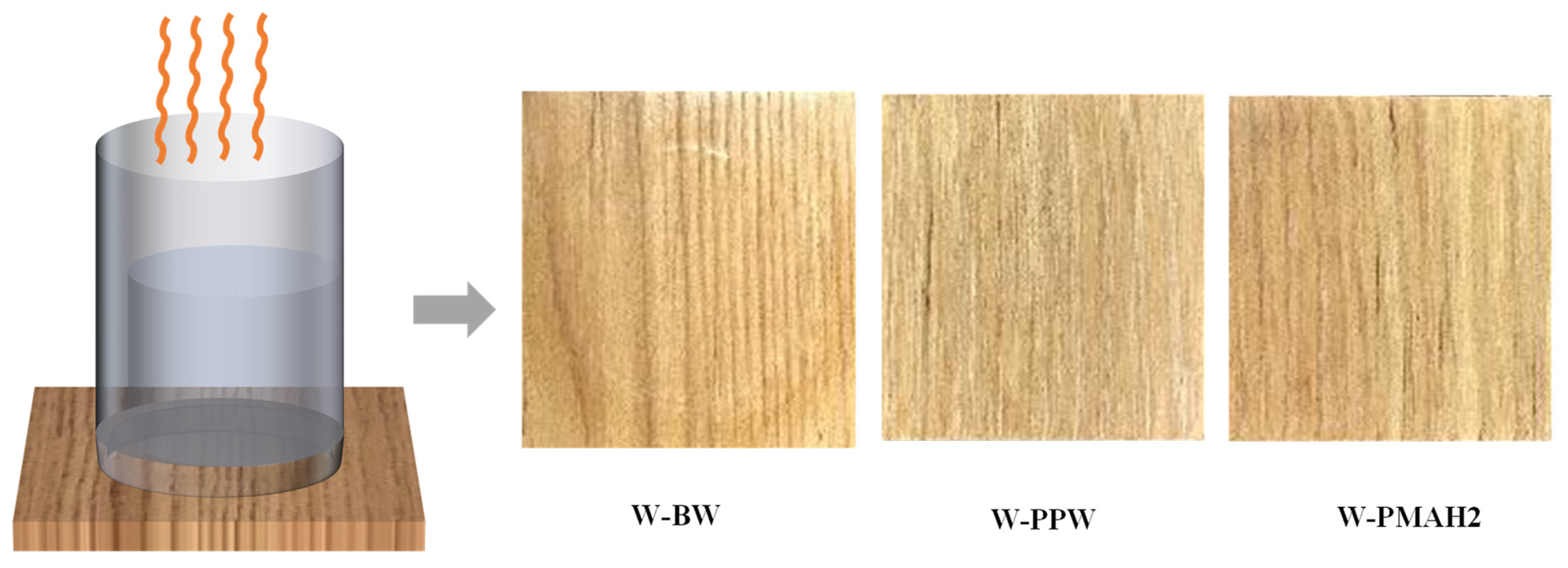
Beeswax is used on wood furniture surfaces in China. Beeswax is expensive and has a low melting temperature, and the wax film is easily softened and destroyed. To overcome these problems, a modified polypropylene wax grafted with maleic anhydride, with a high melting temperature and low price, was used in hot-waxed wood. The adhesion, hardness, hydrophobic properties, heat resistance, color, and gloss of hot-waxed woods were also examined. The surface and interfacial properties were characterized by FTIR, XRD, and SEM. The modified polypropylene wax showed a higher melting temperature than beeswax by DSC, and the heat resistance of hot-waxed wood using it was revealed by TG. The adhesion for the modified polypropylene wax hot-waxed wood surface was shown to achieve grade 1. In addition, it maintained original grades in adhesion after soaking in water and was greater than beeswax hot-waxed wood. The hot-waxed wood surfaces become hydrophobic compared with untreated wood, and the hydrophobicity of the modified polypropylene wax hot-waxed wood surfaces, with a decreased water contact angle, were slightly weaker than beeswax hot-waxed wood and polypropylene wax hot-waxed wood. Moreover, in hardness, the modified polypropylene wax hot-waxed wood surfaces (2H) were harder than beeswax hot-waxed wood (3B), representing stronger scratch resistance and performing well in decorative characteristics, such as color and gloss. The results of SEM, FTIR, and XRD showed mechanical and weak chemical bonding between the waxes and the surface of the wood with the presence of wax in a wood structure. Therefore, the modified polypropylene wax could be used in hot-waxed wood with great heat resistance, adhesion, and surface performance. The study is beneficial for the application of wood coatings using synthetic wax in the future.
Keywords: polypropylene wax; maleic anhydride grafted; wood; hot-waxed wood; surface coating properties; interfacial properties polypropylene wax; maleic anhydride grafted; wood; hot-waxed wood; surface coating properties; interfacial properties