Article

Chloroplast Genomic Variation in Euonymus maackii Rupr. and Its Differentiation Time in Euonymus
1
College of Informatics, Huazhong Agricultural University, Wuhan 430070, China
2
Key Laboratory of Horticultural Plant Biology (Ministry of Education), College of Horticulture and Forestry Science, Huazhong Agricultural University, Wuhan 430070, China
*
Author to whom correspondence should be addressed.
Forests 2022, 13(2), 265; https://doi.org/10.3390/f13020265
Submission received: 8 December 2021 / Revised: 27 January 2022 / Accepted: 2 February 2022 / Published: 8 February 2022
(This article belongs to the Section Genetics and Molecular Biology)

Abstract

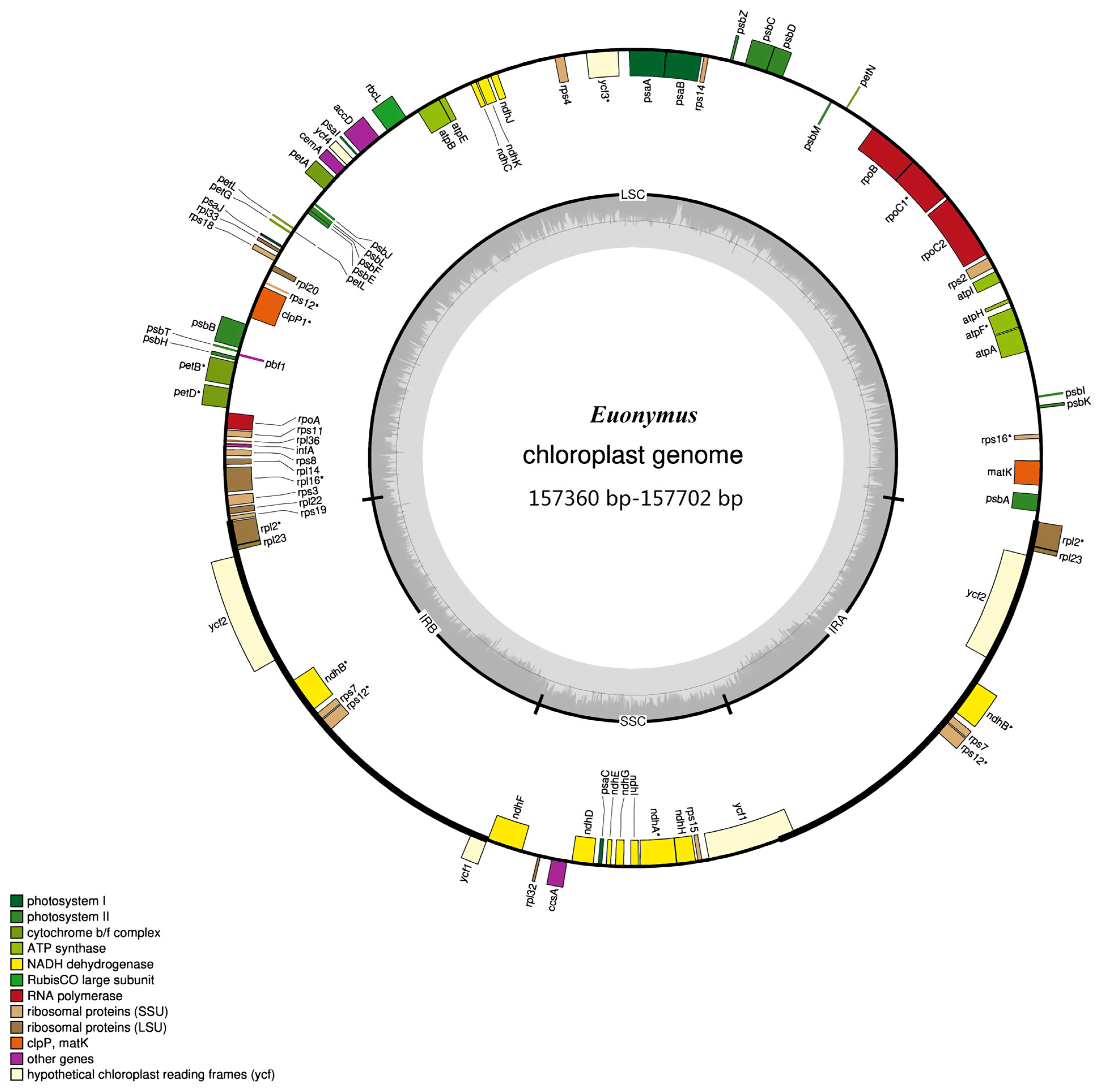
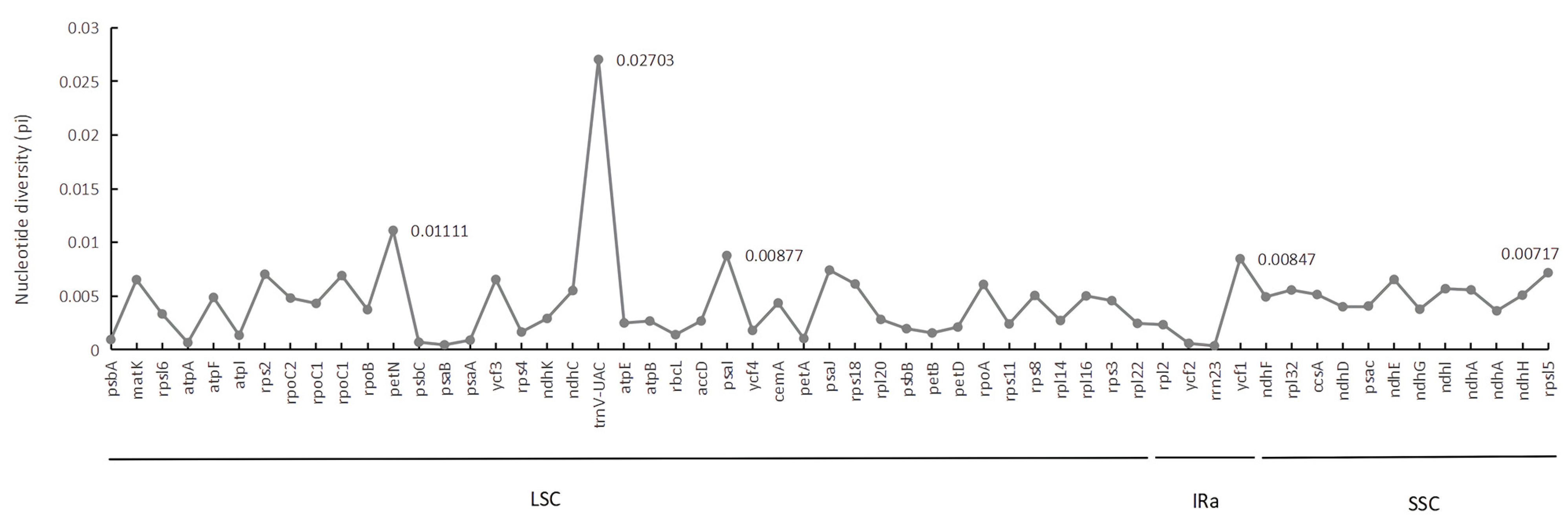
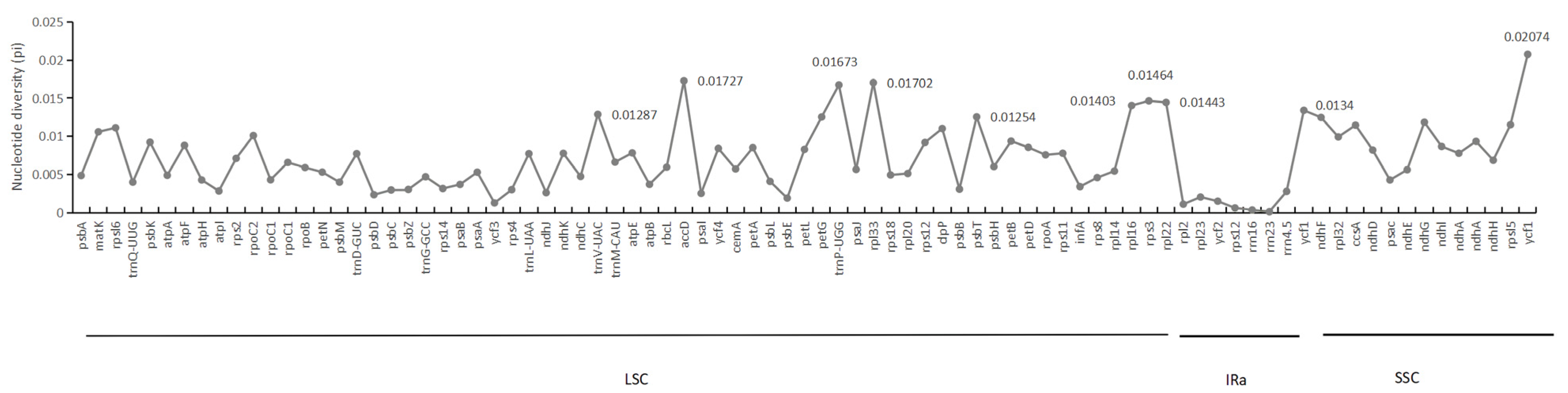
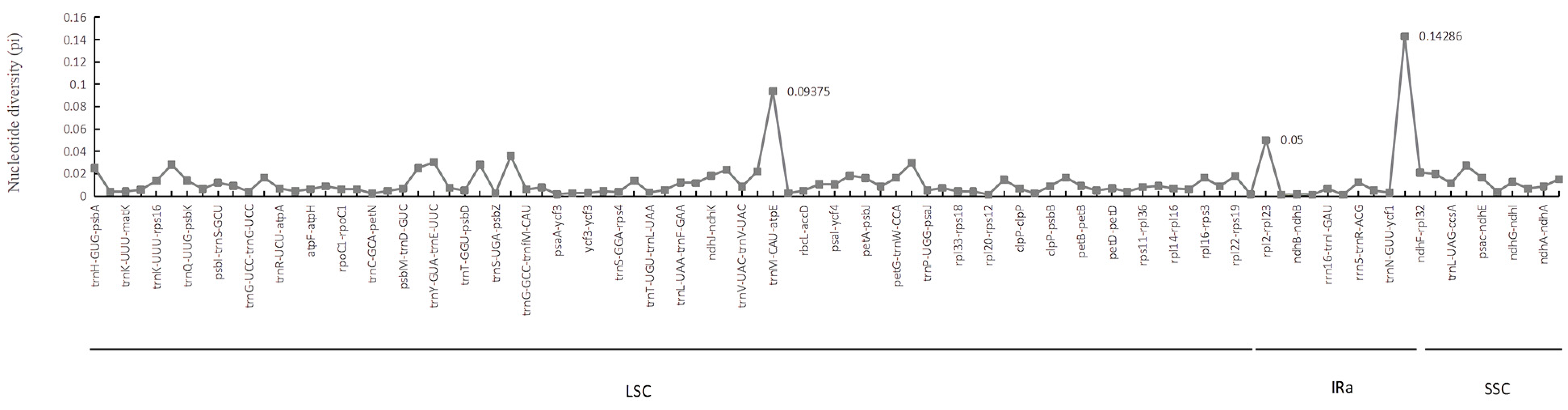
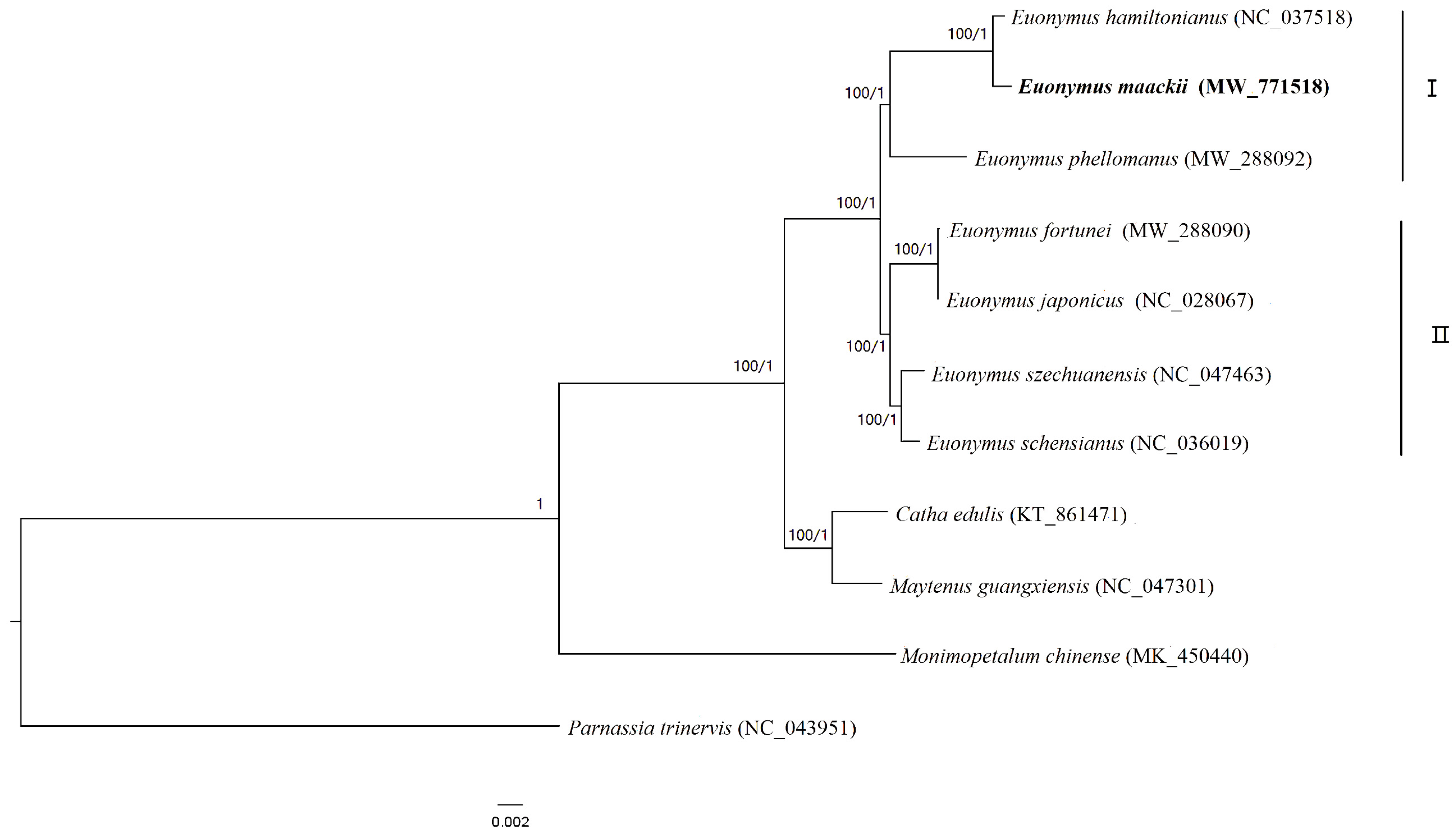
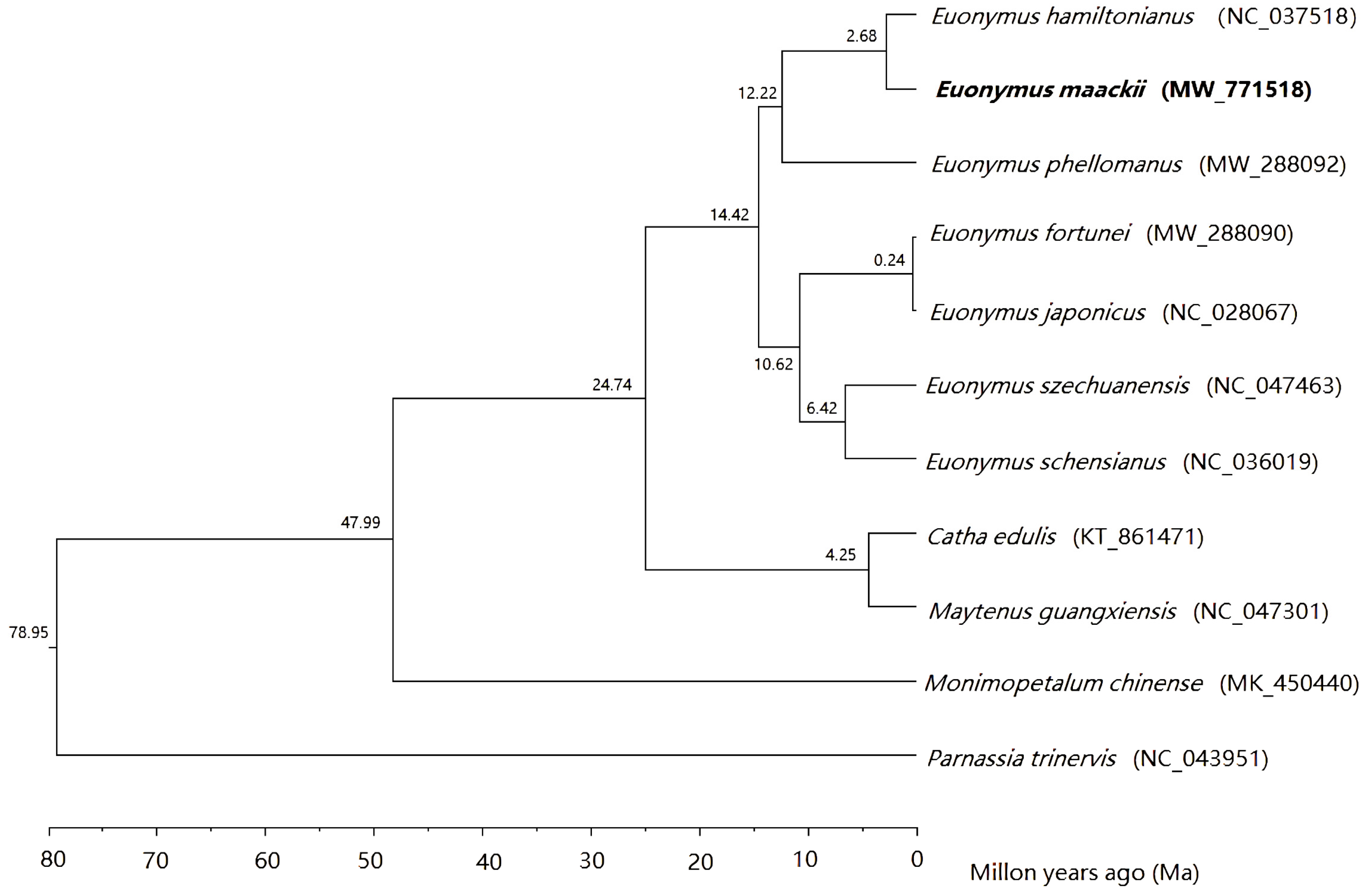
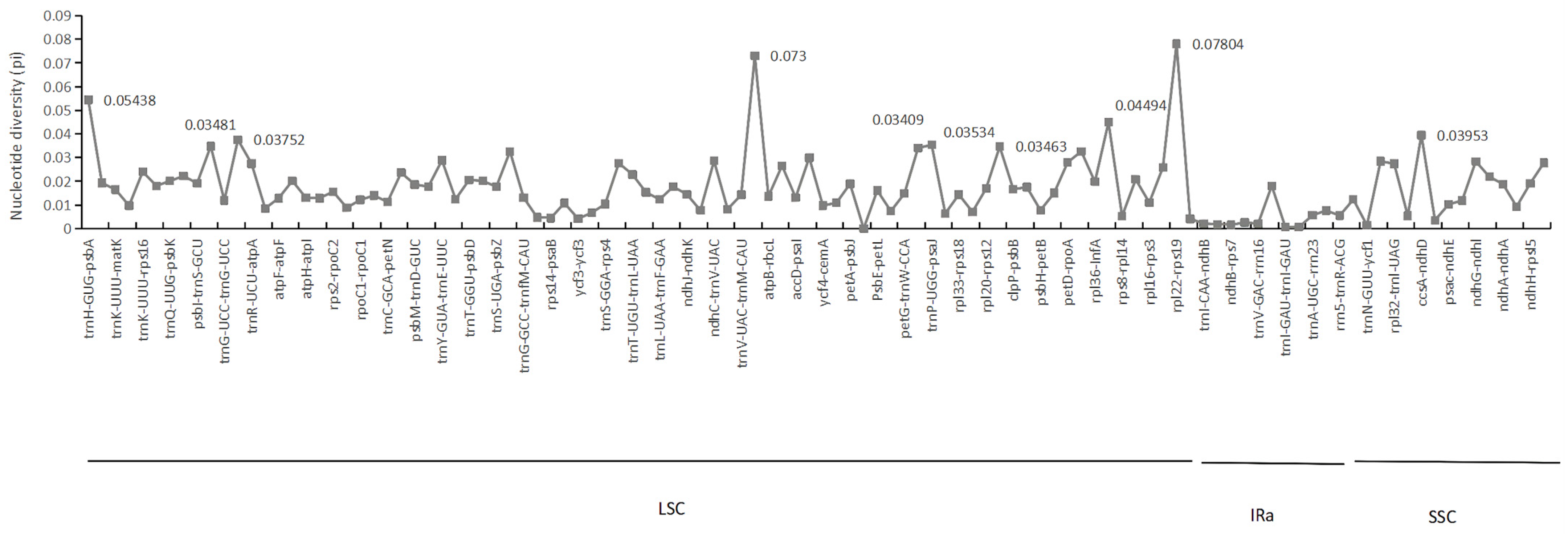
Euonymus maackii Rupr. is a small deciduous tree belonging to family Celastraceae. It is an important ornamental tree and a potential medicinal plant resource. Here, we assembled and annotated the chloroplast (cp) genome of E. maackii. By combining this genome with seven available cp genomes from Euonymus species, we performed plastome variation analysis of E. maackii and Euonymus. Furthermore, we reconstructed a phylogenetic tree and estimated the differentiation time of E. maackii. The newly assembled cp genome of E. maackii was 157,551 bp in size and had a typical quadripartite structure, which consisted of one large single-copy (LSC 86,524 bp) region, one small single-copy (SSC 18,337 bp) region, and a pair of inverted repeat regions (26,345 bp). A total of 652 single nucleotide polymorphisms (SNPs) and 65 insertions/deletions (indels) were detected between the two cp genomes of E. maackii, with overall genetic variation of 4.1 SNPs per kb or a π value of 0.00443, reflecting a high level of intraspecific variation. Some coding and noncoding regions with higher variation were identified, including trnV-UAC, petN, ycf1-ndhF, trnM-CAU-atpE, rpl2-rpl23, psbZ-trnG-GCC, trnY-GUA-trnE-UUC, trnW-CCA-trnP-UGG, rps16-trnQ-UUG, and psbC-trnS-UGA. The hypervariable coding and noncoding regions in E. maackii were not the same as those in Euonymus. The phylogenetic tree and divergence time based on the whole cp genomes showed that the seven Euonymus species formed a clade, which was sister to that formed with Catha edulis and Maytenus guangxiensis, and they separated 24.74 million years ago. E. maackii and E. hamiltonianus were most closely related, having separated from each other only approximately 2.68 million years ago. Our study provides important genetic information for further studies of E. maackii, such as studies on its phylogeography, population genetics and molecular ecology, and provides new insights into the evolution of the cp genome in Euonymus.
Keywords: Euonymus maackii; intraspecific variation; chloroplast genome; phylogenetic tree; divergence time Euonymus maackii; intraspecific variation; chloroplast genome; phylogenetic tree; divergence time