Article

Processing and Wood Factors Influence Medium Density Fiberboard Production from Young Eucalyptus grandis, E. amplifolia, Corymbia torelliana, and Cottonwood Grown in Florida USA


by
Donald L. Rockwood
1,*,
Jerrold E. Winandy
2,† and
Neil R. Gribbins
2
1
School of Forest, Fisheries, and Geomatics Sciences, University of Florida, Gainesville, FL 32611, USA
2
US Forest Service Forest Products Laboratory (FPL), Madison, WI 53726, USA
*
Author to whom correspondence should be addressed.
Retired.
Forests 2022, 13(2), 266; https://doi.org/10.3390/f13020266
Submission received: 16 January 2022 / Revised: 1 February 2022 / Accepted: 6 February 2022 / Published: 8 February 2022
(This article belongs to the Special Issue Tree Improvement for Promising New Forest Products and Applications)

Abstract

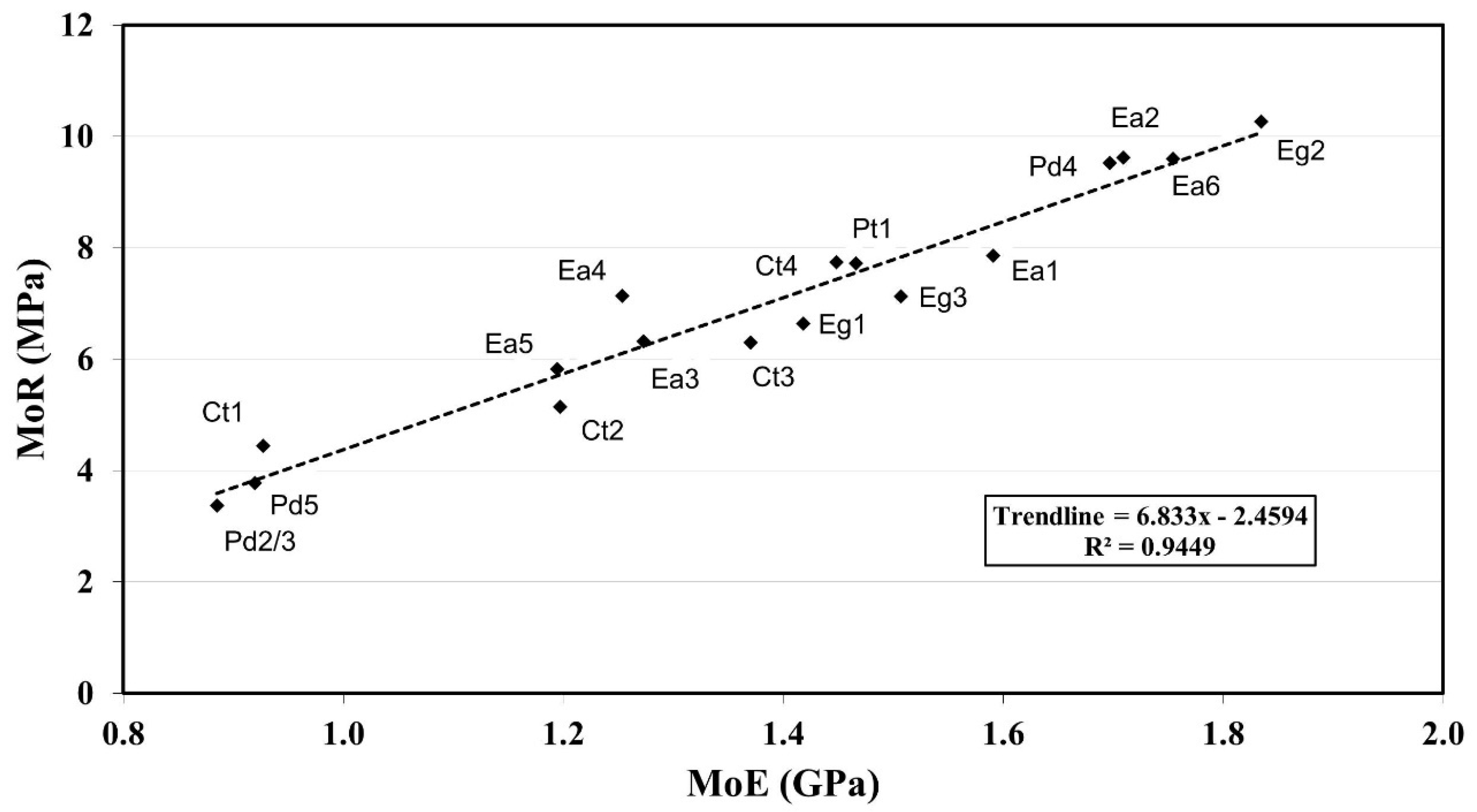
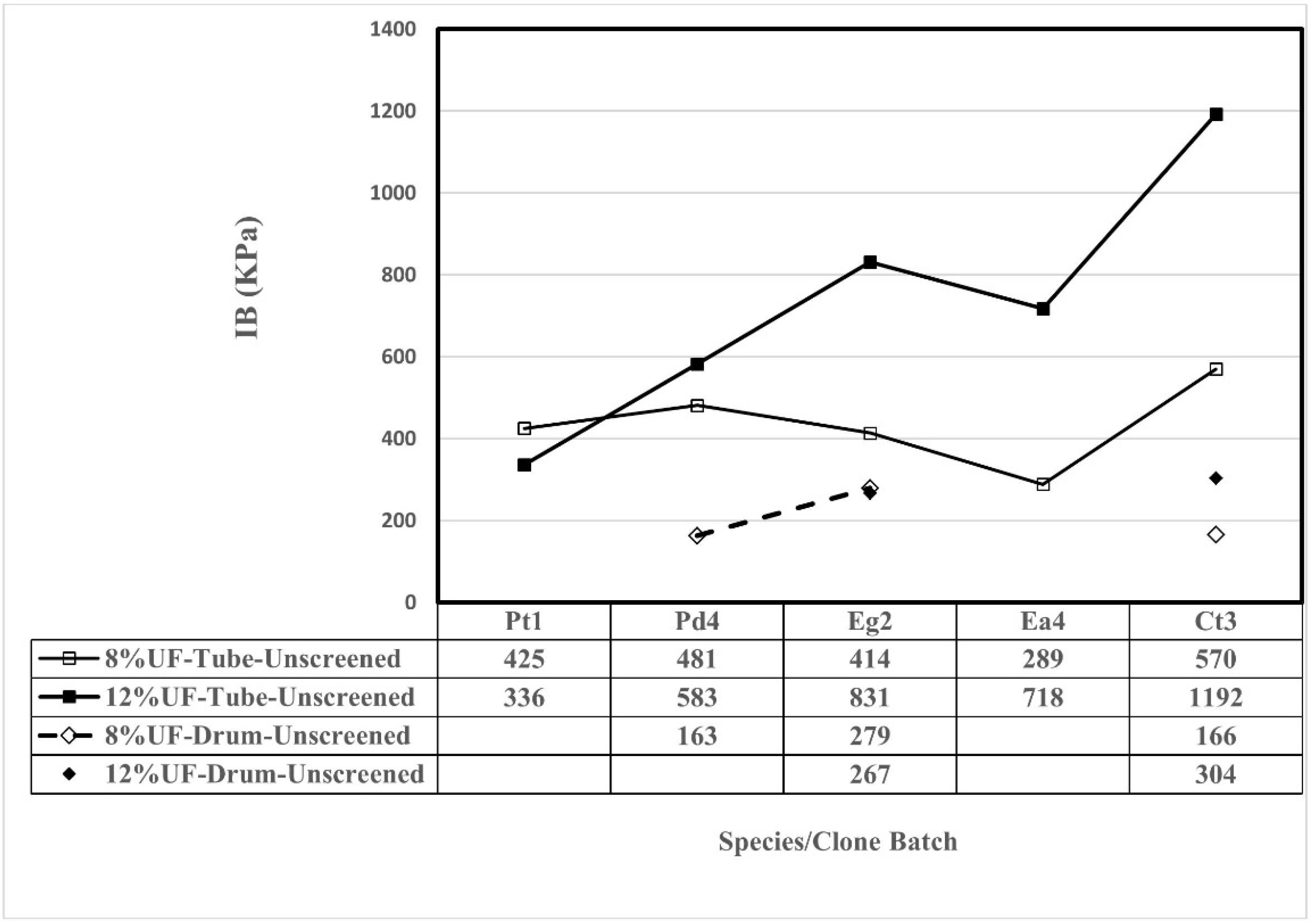
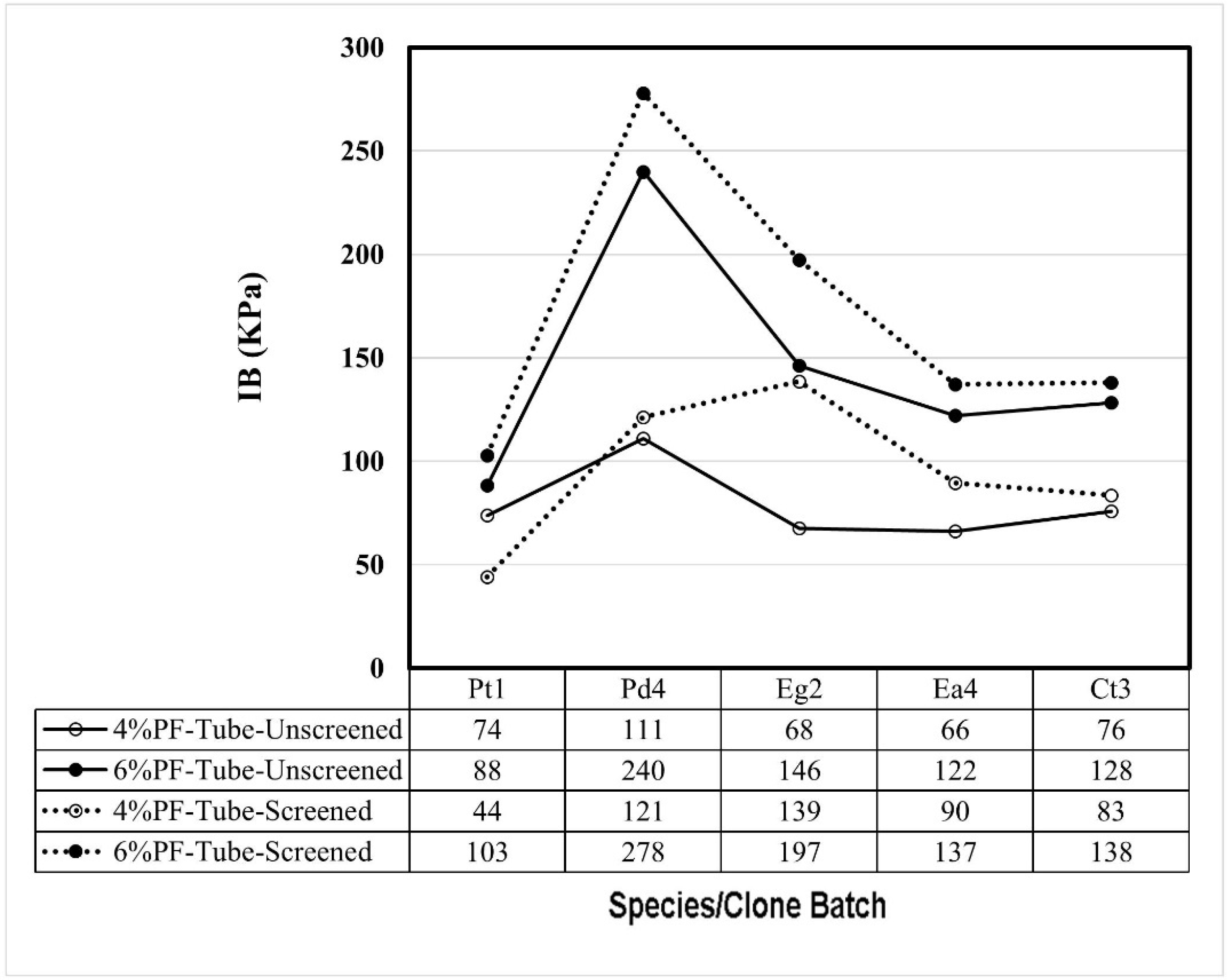
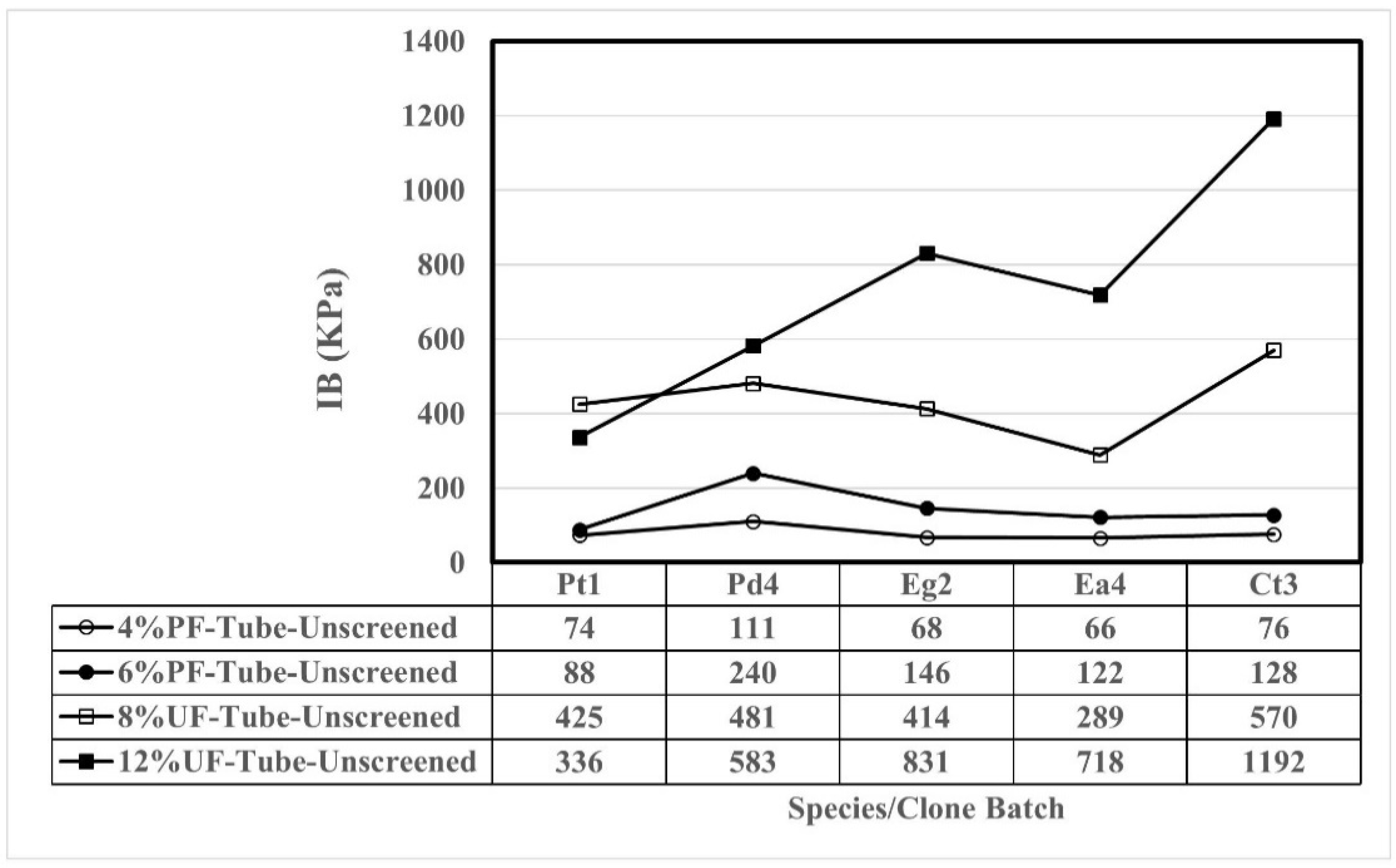
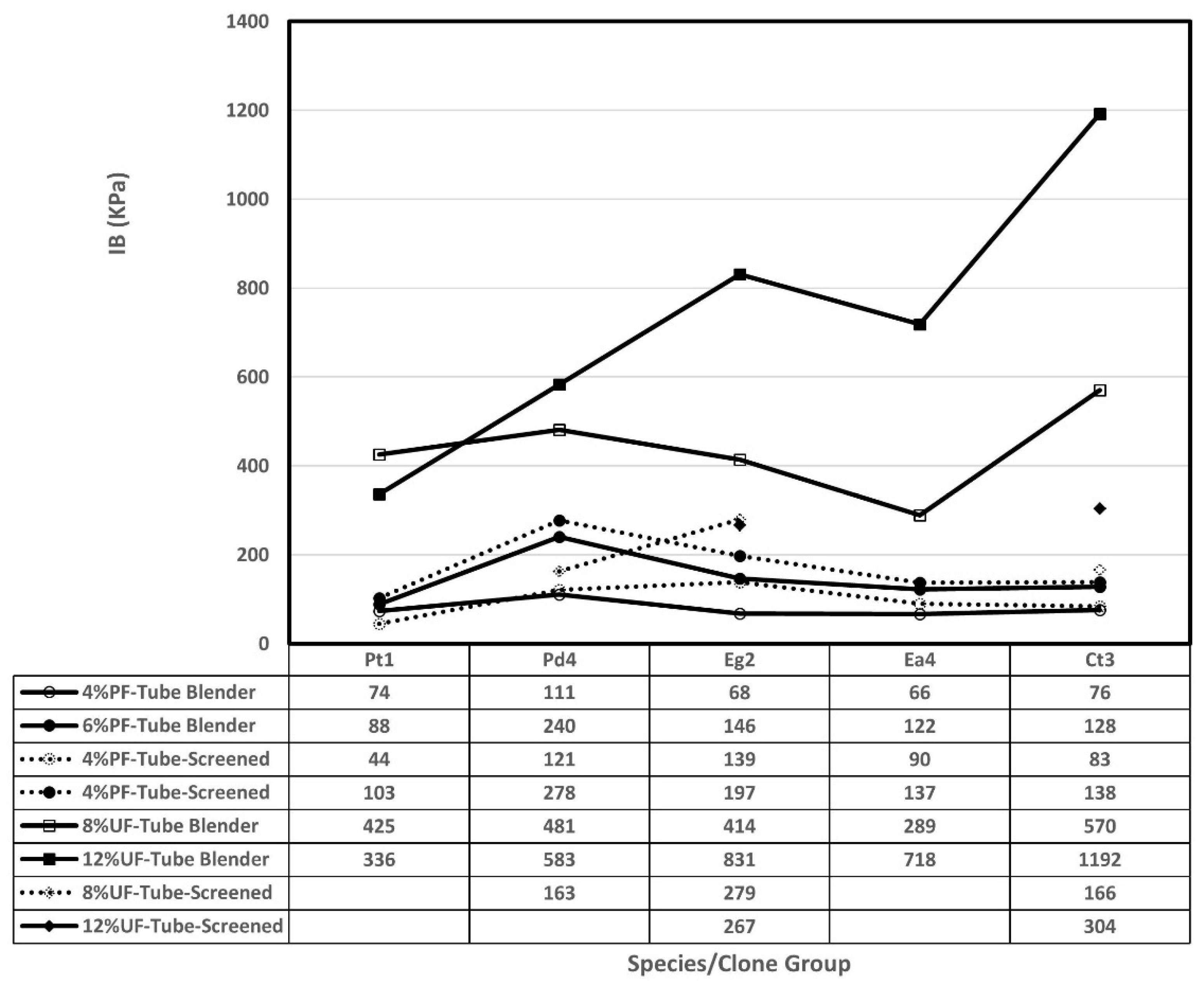
Fast growing Eucalyptus grandis W. Hill ex Maiden (EG), E. amplifolia Naudin (EA), Corymbia torelliana (F.Muell.) K.D.Hill & L.A.S.Johnson (CT), and Populus deltoides W.Bartram ex Marshall (PD) may be deployed in Short Rotation Woody Crop (SRWC) systems in the lower Southeastern USA, especially in Florida. To evaluate these species for possible use as medium density fiberboard (MDF) and other composites, 2.5 m logs of three EG clones, three PD clones, six EA progenies, four CT trees, and one P. tremuloides Michx. (PT) tree from northern Wisconsin as a control were characterized for basic wood properties before being chipped, pulped, and pressed into MDF. The chips were thermomechanically pulped (TMP) for a two-phase study of the factors expected to influence suitability for MDF production: wood characteristics, refining system, resin system, and MDF formation. Phase I used TMP and 4% phenol-formaldehyde (PF) resin to produce 17 MDF species/genotype batches (S/GB). Thickness Swell (TS), Water Absorption (WA), Internal Bonding (IB), Modulus of Elasticity (MOE), and Modulus of Rupture (MOR) were evaluated to: (1) assess within species and within tree variation, (2) relate basic wood properties to MDF potential, and (3) examine repeatability of MDF-making. There was considerable variation among and within species, but only minor within tree variation. Six of the seventeen S/GBs had superior physical and mechanical MDF properties. In Phase II, two of the six better performing Phase I S/GBs were evaluated, along with three average Phase I S/GBs. Phase II compared the effects on IB from using tube and drum blenders for resin application, the influence of using unscreened versus screened fibers, and the differences of using PF resin at 4% or 6% versus urea-formaldehyde (UF) resin at 8% or 12%. Overall, genetic variation among species, and particularly within these species, affected their potential for commercial MDF. Log specific gravity (SG), fines, MDF SG, and fiber length influenced MDF properties, as did refining and MDF-processing variables. Further study of specific processing requirements can optimize the potential of young EG, EA, PD, and CT genotypes for MDF and other composites.
Keywords: Eucalyptus grandis; Eucalyptus amplifolia; Corymbia torelliana; Populus deltoides; Populus tremuloides; cottonwood; aspen; genetic variation; MDF; wood composites Eucalyptus grandis; Eucalyptus amplifolia; Corymbia torelliana; Populus deltoides; Populus tremuloides; cottonwood; aspen; genetic variation; MDF; wood composites