Article

The Reproductive Strategy as an Important Trait for the Distribution of Lower-Trunk Epiphytic Lichens in Old-Growth vs. Non-Old Growth Forests


1
TerraData Environmetrics, Spin-Off Company of the University of Siena, 58025 Monterotondo Marittimo, Italy
2
DIFAR, University of Genova, 16148 Genova, Italy
3
STEBICEF, University of Palermo, 90128 Palermo, Italy
*
Author to whom correspondence should be addressed.
Forests 2021, 12(1), 27; https://doi.org/10.3390/f12010027
Submission received: 11 November 2020 / Revised: 23 December 2020 / Accepted: 24 December 2020 / Published: 28 December 2020
(This article belongs to the Special Issue Modeling of Species Distribution and Biodiversity in Forests)

Abstract

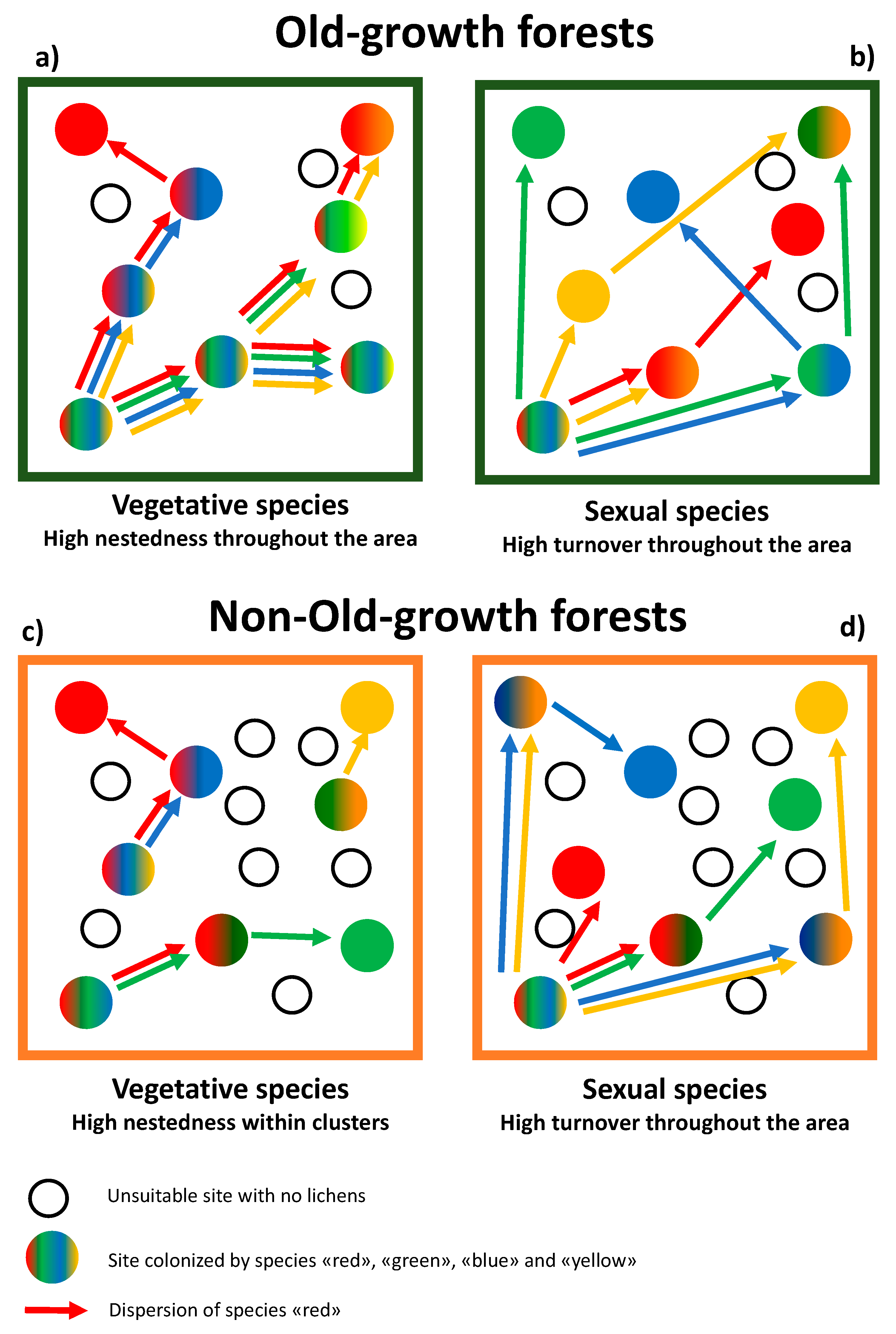
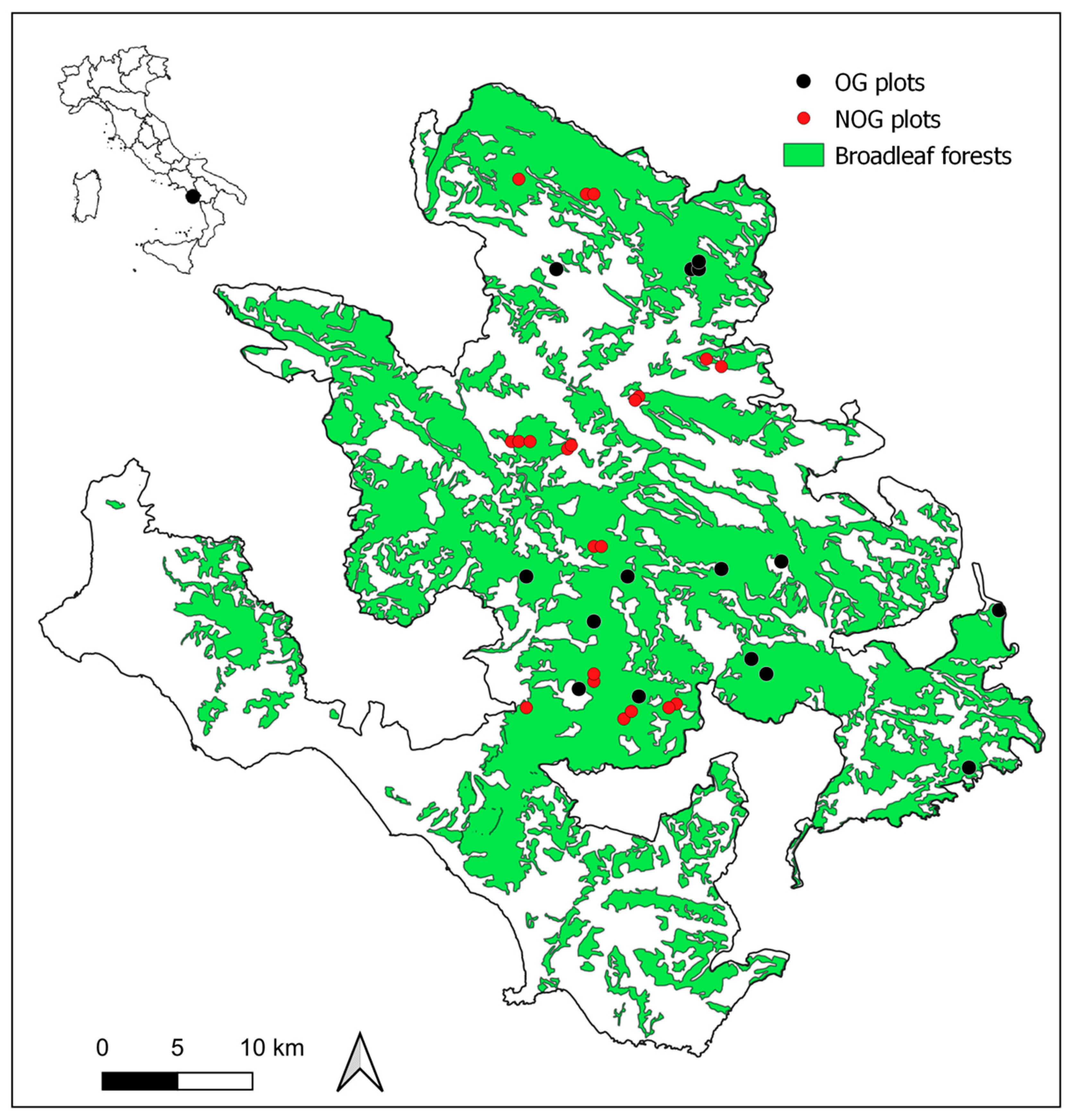
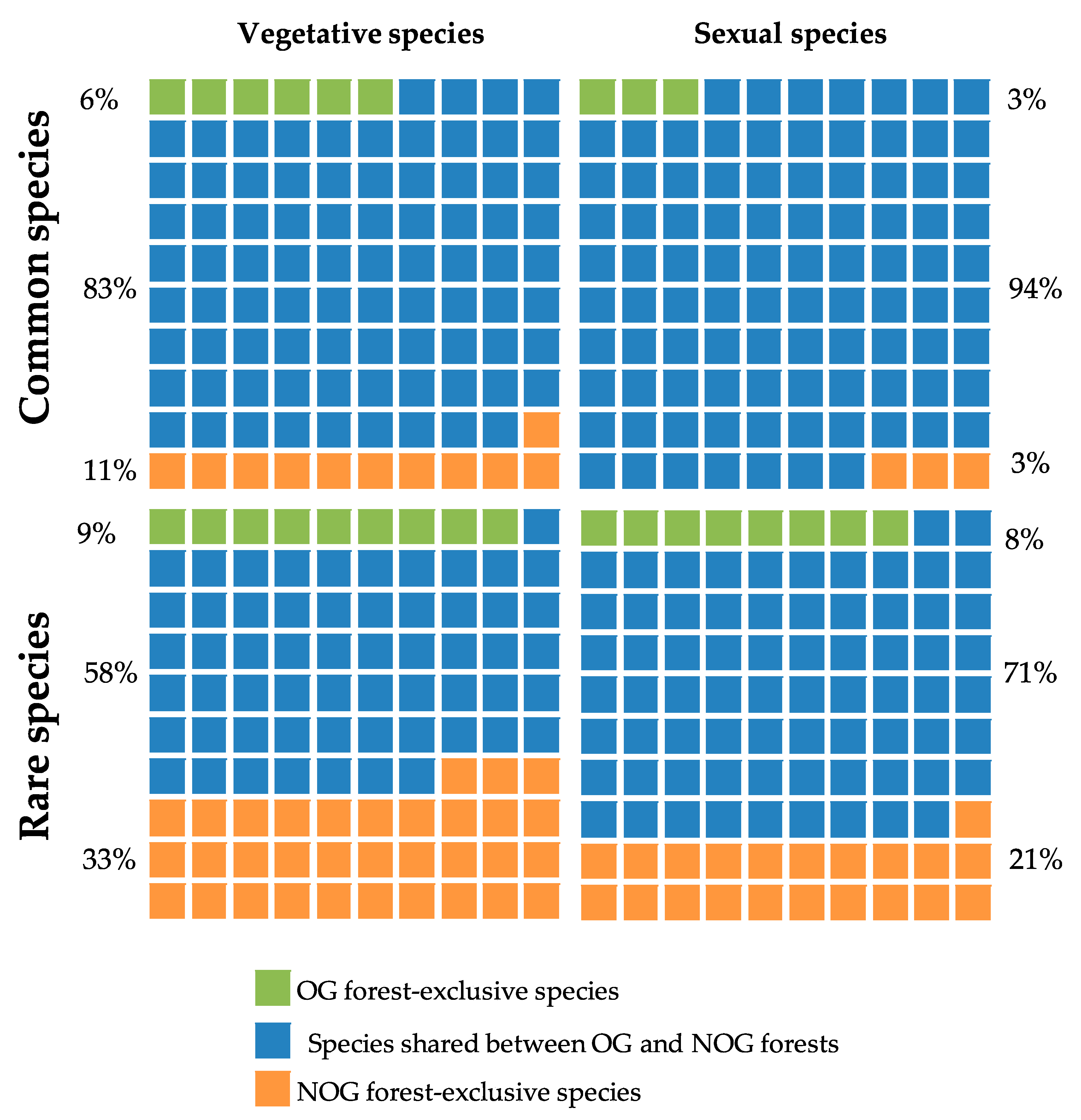
(1) Research Highlights: The work studied the beta diversity patterns of epiphytic lichens as a function of their reproductive strategies in old-growth and non-old growth forests from the Mediterranean area. (2) Background and Objectives: The reproductive strategies of lichens can drive the dispersal and distribution of species assemblages in forest ecosystems. To further investigate this issue, we analyzed data on epiphytic lichen diversity collected from old-growth and non-old growth forest sites (36 plots) located in Cilento National Park (South Italy). Our working hypothesis was that the dispersal abilities due to the different reproductive strategies drove species beta diversity depending on forest age and continuity. We expected a high turnover for sexually reproducing species and high nestedness for vegetative ones. We also considered the relationship between forest continuity and beta diversity in terms of species rarity. (3) Materials and Methods: we used the Bray–Curtis index of dissimilarity to partition lichen diversity into two components of beta diversity for different subsets (type of forest, reproductive strategy, and species rarity). (4) Results: The two forest types shared most of the common species and did not show significant differences in alpha and gamma diversity. The turnover of specific abundance was the main component of beta diversity, and was significantly greater for sexually reproducing species as compared to vegetative ones. These latter species had also the least turnover and greater nestedness in old-growth forests. Rare species showed higher turnover than common ones. (5) Conclusions: Our results suggest that sexually reproducing lichen species always have high turnover, while vegetative species tend to form nested assemblages, especially in old-growth forests. The rarity level contributes to the species turnover in lichen communities. Contrary to what one might expect, the differences between old-growth and non-old growth forests are not strong.
Keywords: sexual reproduction; vegetative propagules; forest management; functional traits; beta diversity sexual reproduction; vegetative propagules; forest management; functional traits; beta diversity