Article

Transport Work for the Supply of Pine Sawlogs to the Sawmill


by
Grzegorz Trzciński
* and
Łukasz Tymendorf
Department of Forest Utilization, Institute of Forest Sciences, Warsaw University of Life Sciences-SGGW, 159 Nowoursynowska St., 02-776 Warsaw, Poland
*
Author to whom correspondence should be addressed.
Forests 2020, 11(12), 1340; https://doi.org/10.3390/f11121340
Submission received: 23 November 2020 / Revised: 13 December 2020 / Accepted: 14 December 2020 / Published: 16 December 2020

Abstract

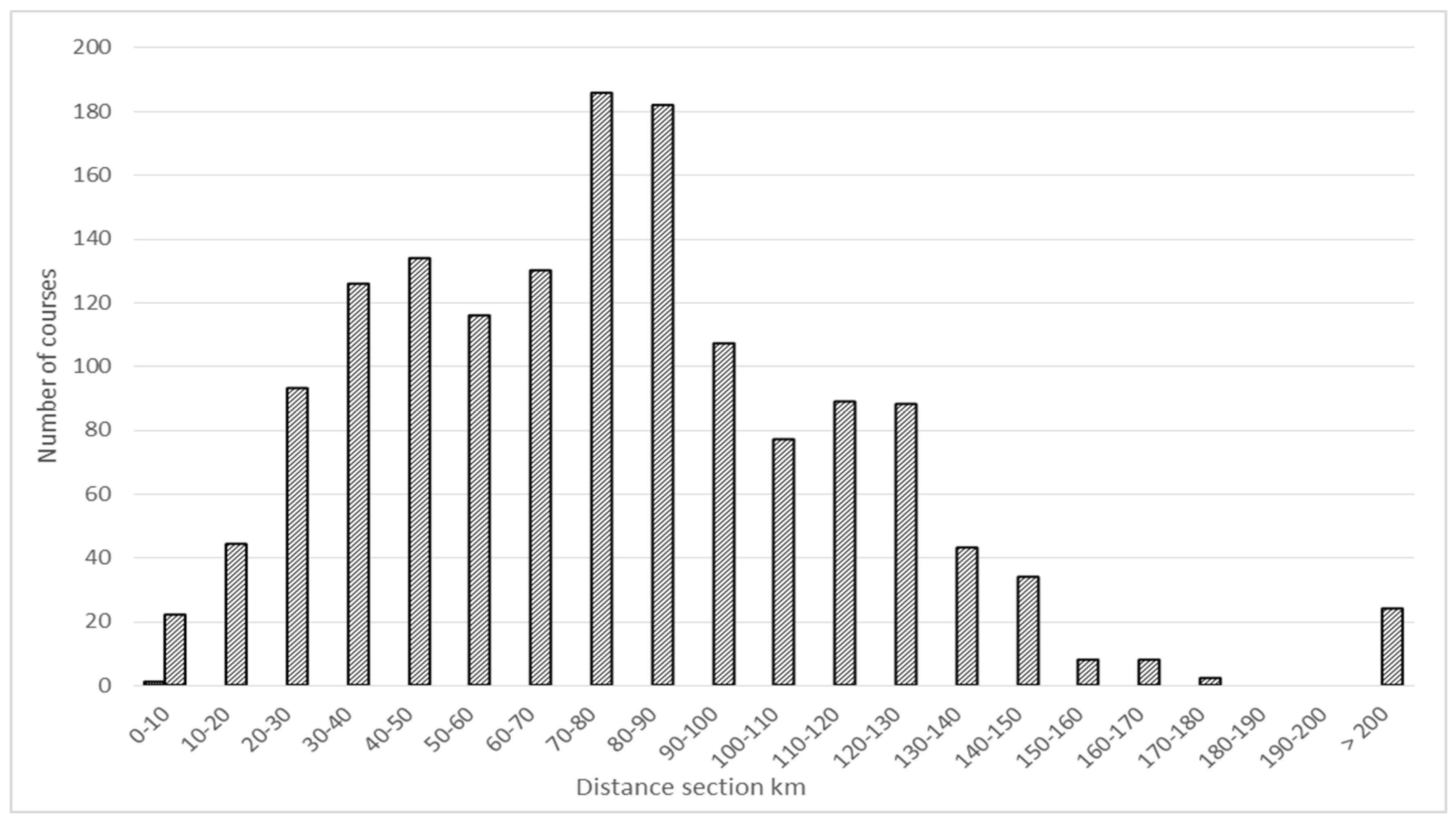
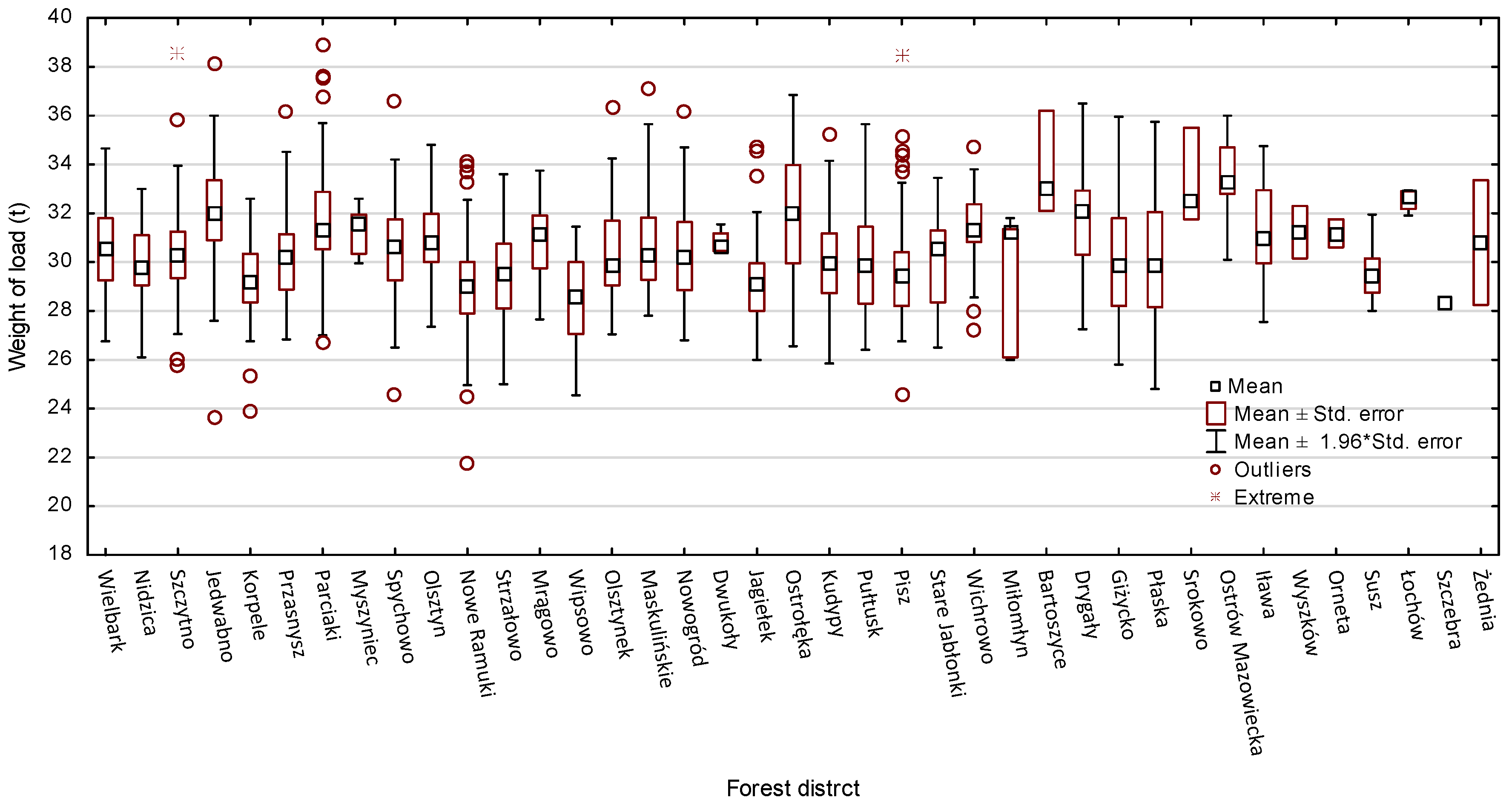
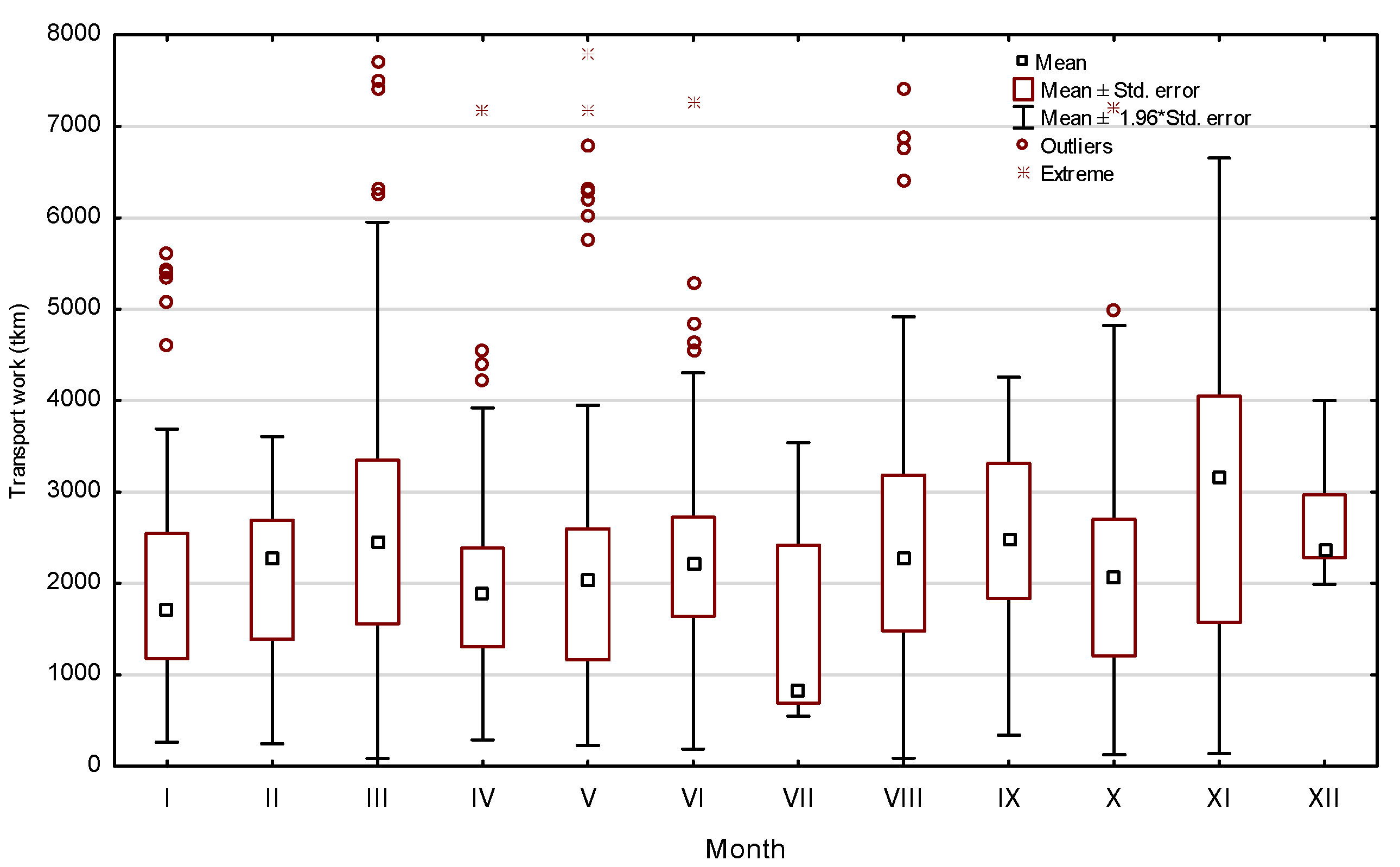
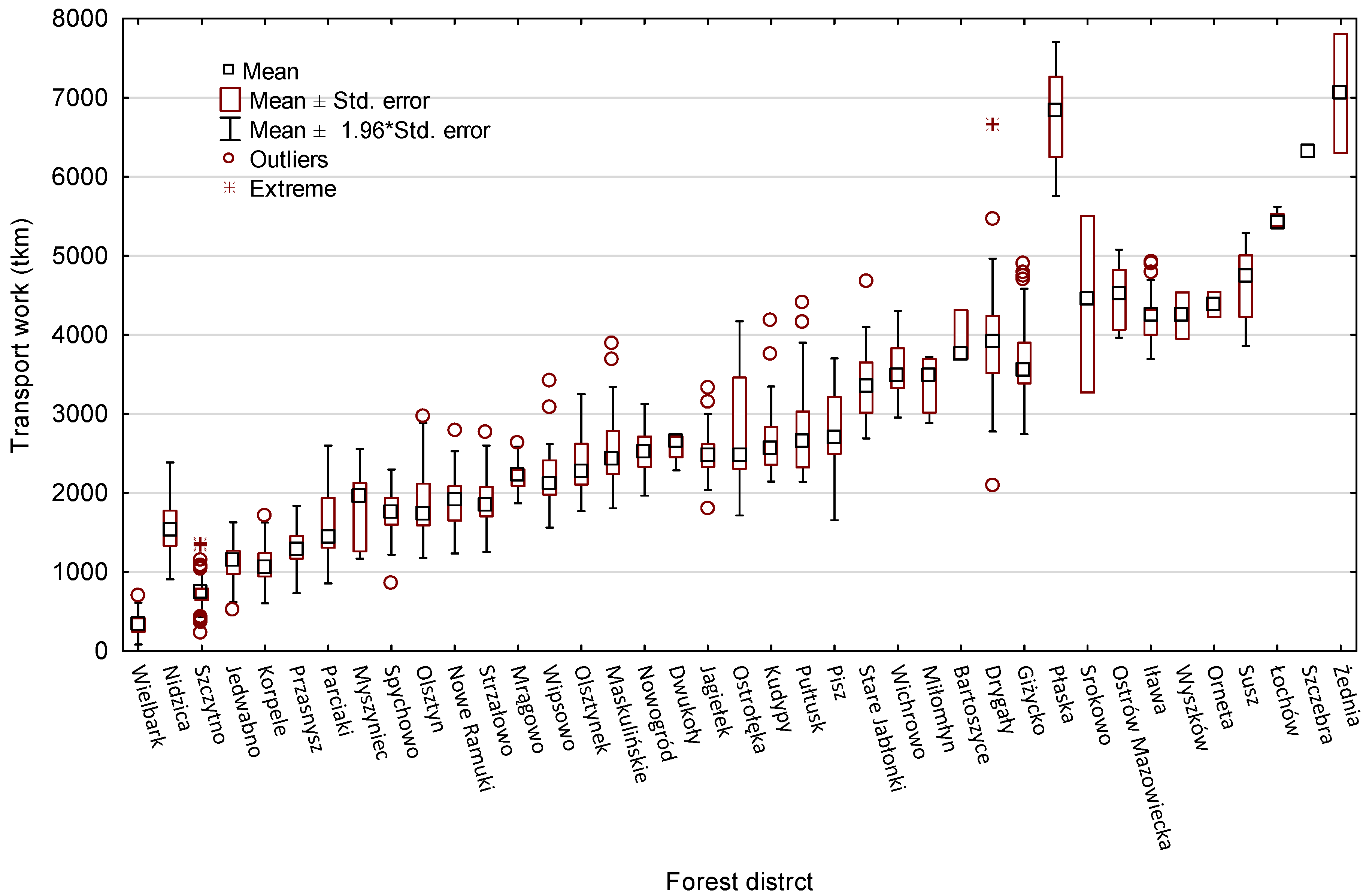
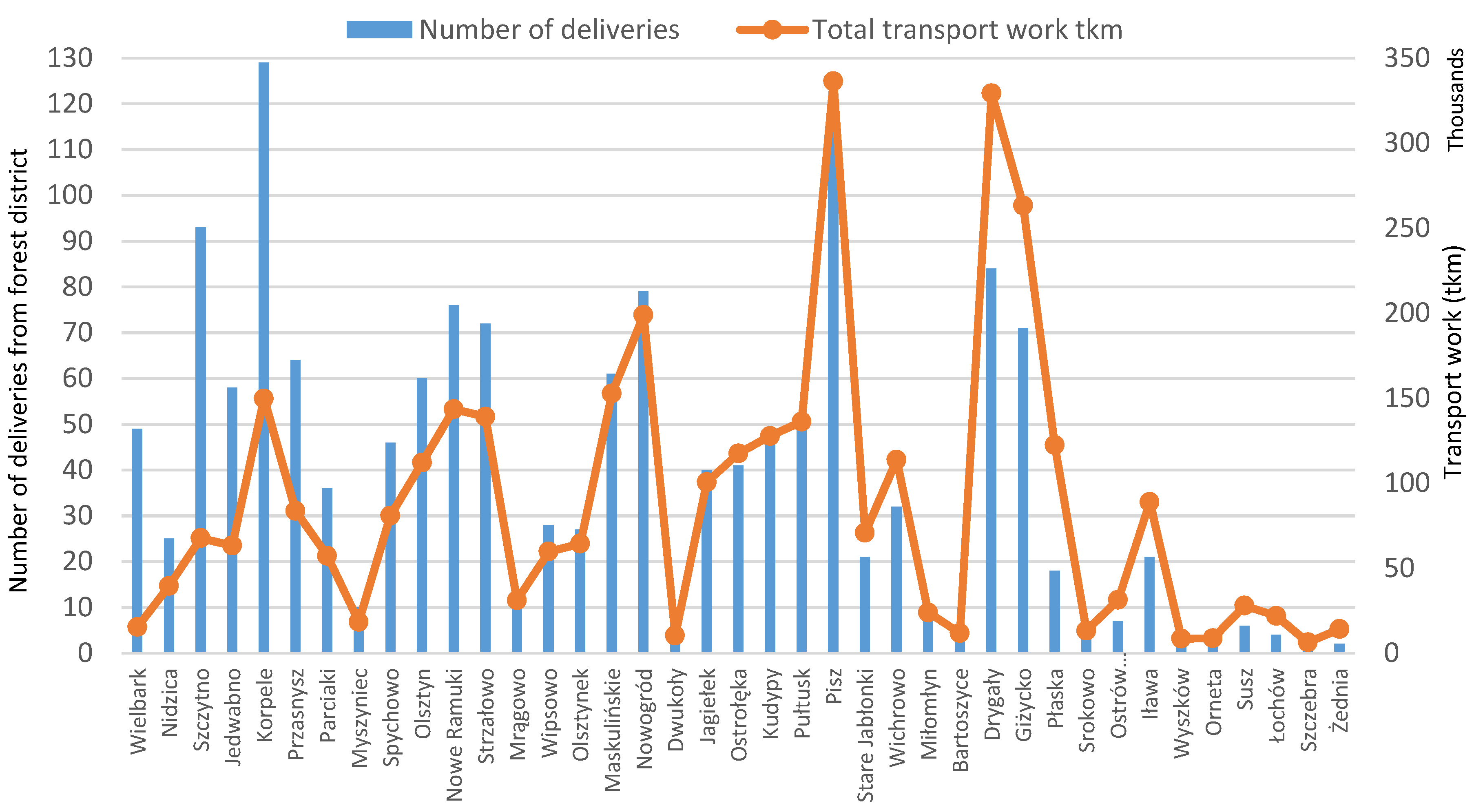
The aim of the presented research is to characterize the scale of transport work performed on the supply of large-size pine wood to the sawmill, with indication of factors influencing structure and parameters. Analyzes were carried out for deliveries to a sawmill in northern Poland, which supplies pine sawlogs and long wood assortments. The distance of deliveries on public and forest roads was determined, as well as transport work for each type of road and the total value. The transport work was defined as a multiplication of driven kilometers with the load and the weight of the load in ton kilometers. Data on the transport distance were obtained on the basis of information from the driver, and the parameters of the transported pine sawlogs from the delivery note. Based on the collected data over a period of 12 months, the transport work was determined for selected courses. The total transport work for the 1509 analyzed deliveries was 3,447,486 ton-kilometers (tkm). The average transport work for one course amounted to 2286 tkm and was characterized by a high variability SD = 1207. The minimum value of the transport work was recorded at the level of 83 tkm, and the maximum as much as 7803 tkm. The median of the analyzed deliveries was 2220 tkm, while the first quartile Q1 = 1358, and the third quartile Q3 = 2997. With very similar cargo volumes (m3) and cargo weight (kg) the transport distance and the total number of deliveries have a significant effect on the transport work performed with the transport of timber. Purchase of wood in seven forest districts located up to 50 km from the sawmill accounts for 30.1% of the analyzed deliveries (1509), resulting in only transport work at the level of 476,104 tkm, which is only 13.8% of the total transport work of all deliveries.
Keywords: round wood transport; wood supply chain; transport work optimization; sawlogs deliveries; sawlogs sourcing round wood transport; wood supply chain; transport work optimization; sawlogs deliveries; sawlogs sourcing