Article

Simulating Combined Self-Loading Truck and Semitrailer Truck Transport in the Wood Supply Chain


Institute of Production and Logistics, University of Natural Resources and Life Sciences, Vienna, Feistmantelstrasse 4, 1180 Vienna, Austria
*
Author to whom correspondence should be addressed.
Forests 2020, 11(12), 1245; https://doi.org/10.3390/f11121245
Submission received: 20 October 2020 / Revised: 20 November 2020 / Accepted: 23 November 2020 / Published: 25 November 2020

Abstract

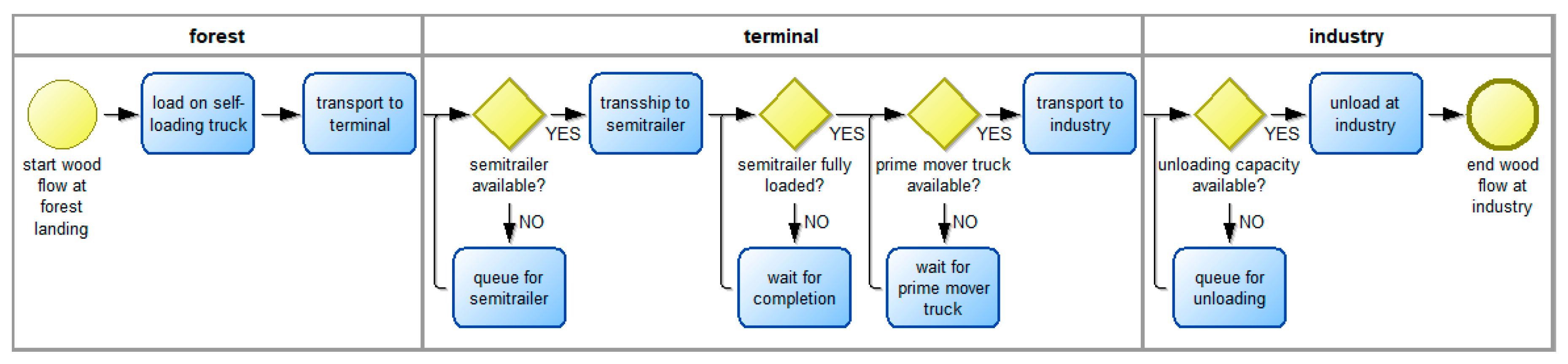
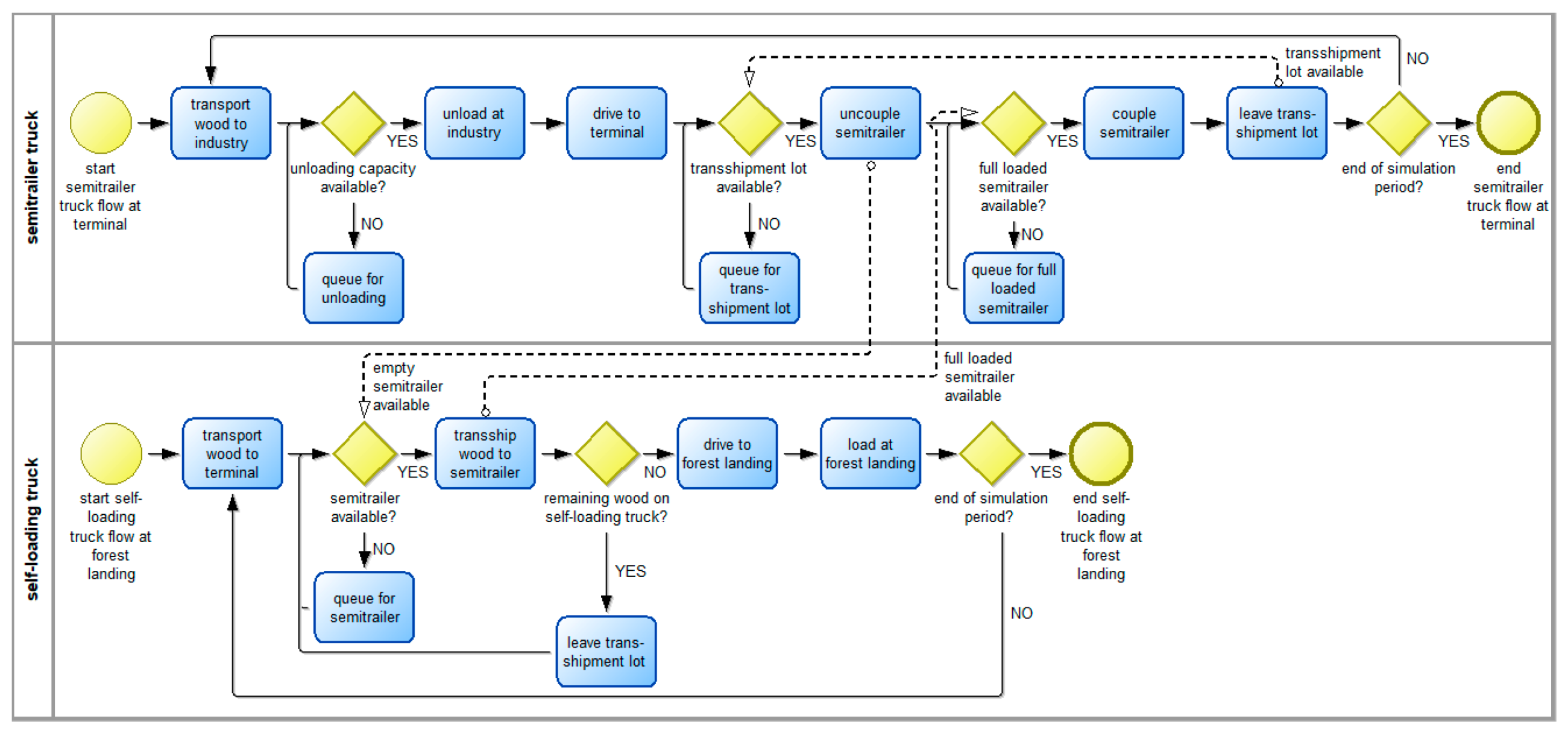
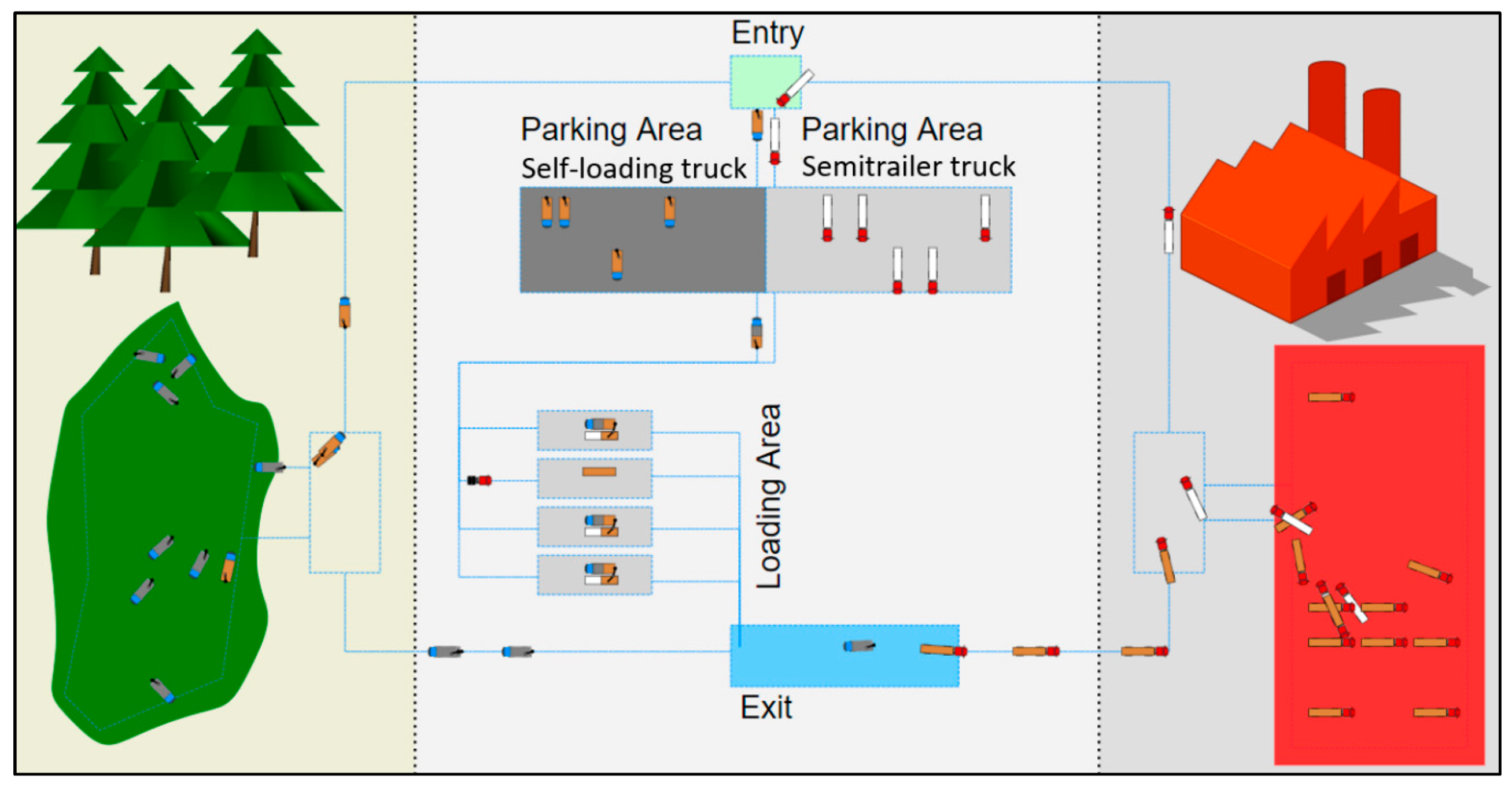
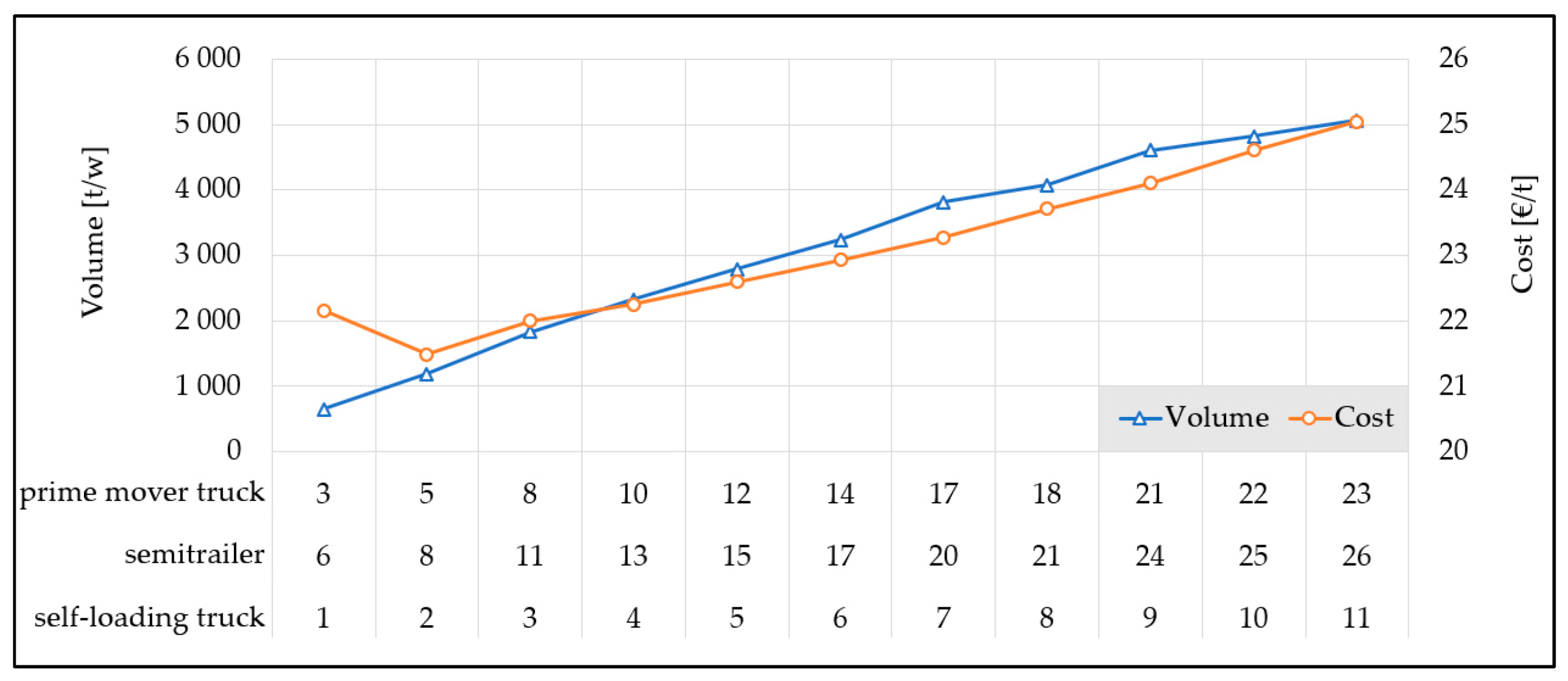
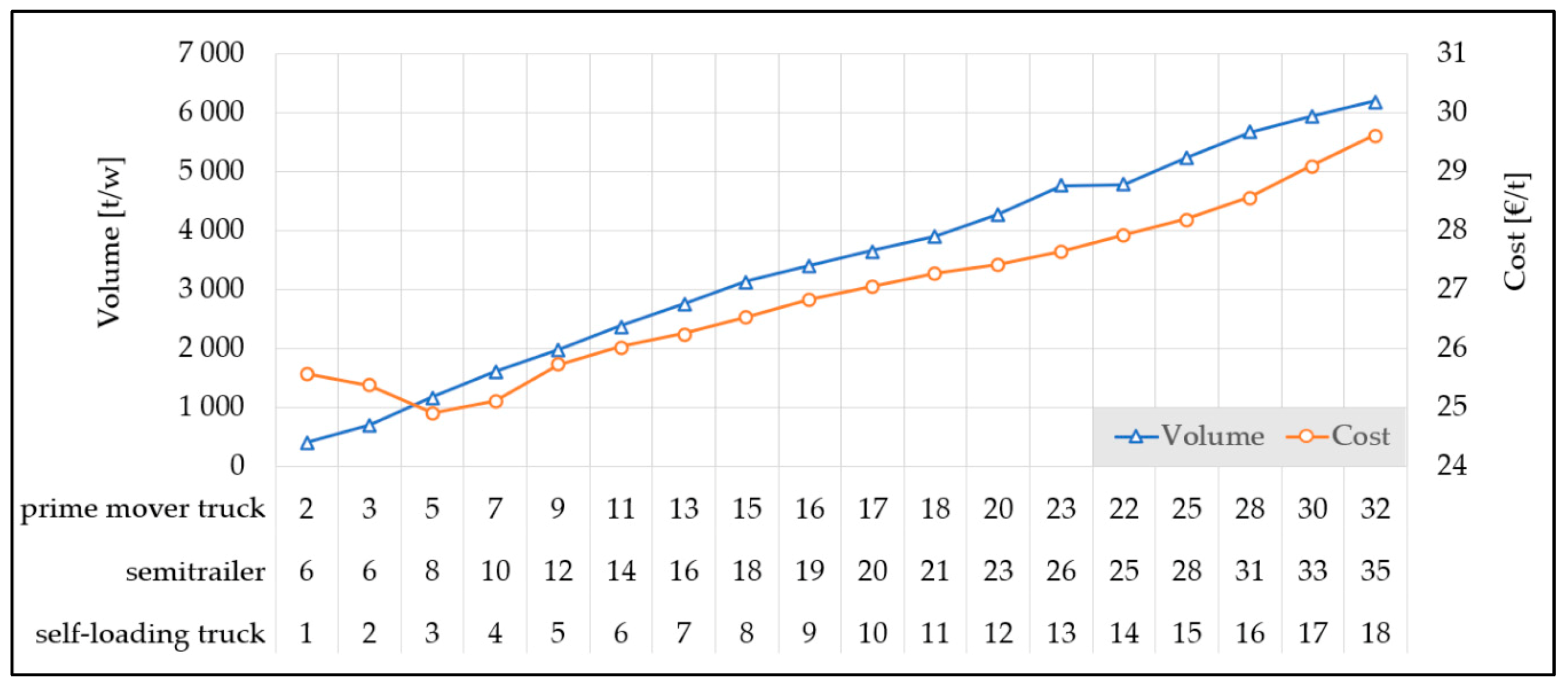
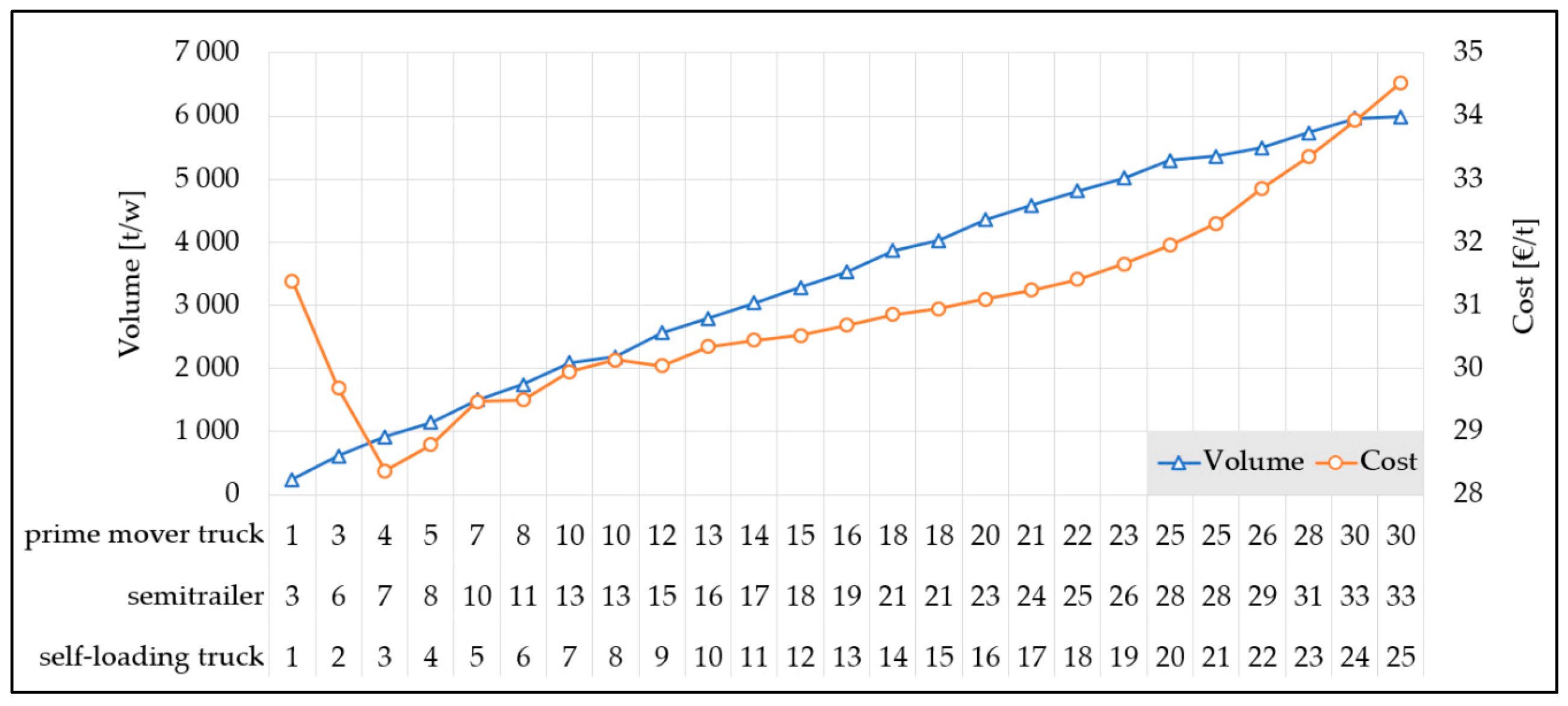
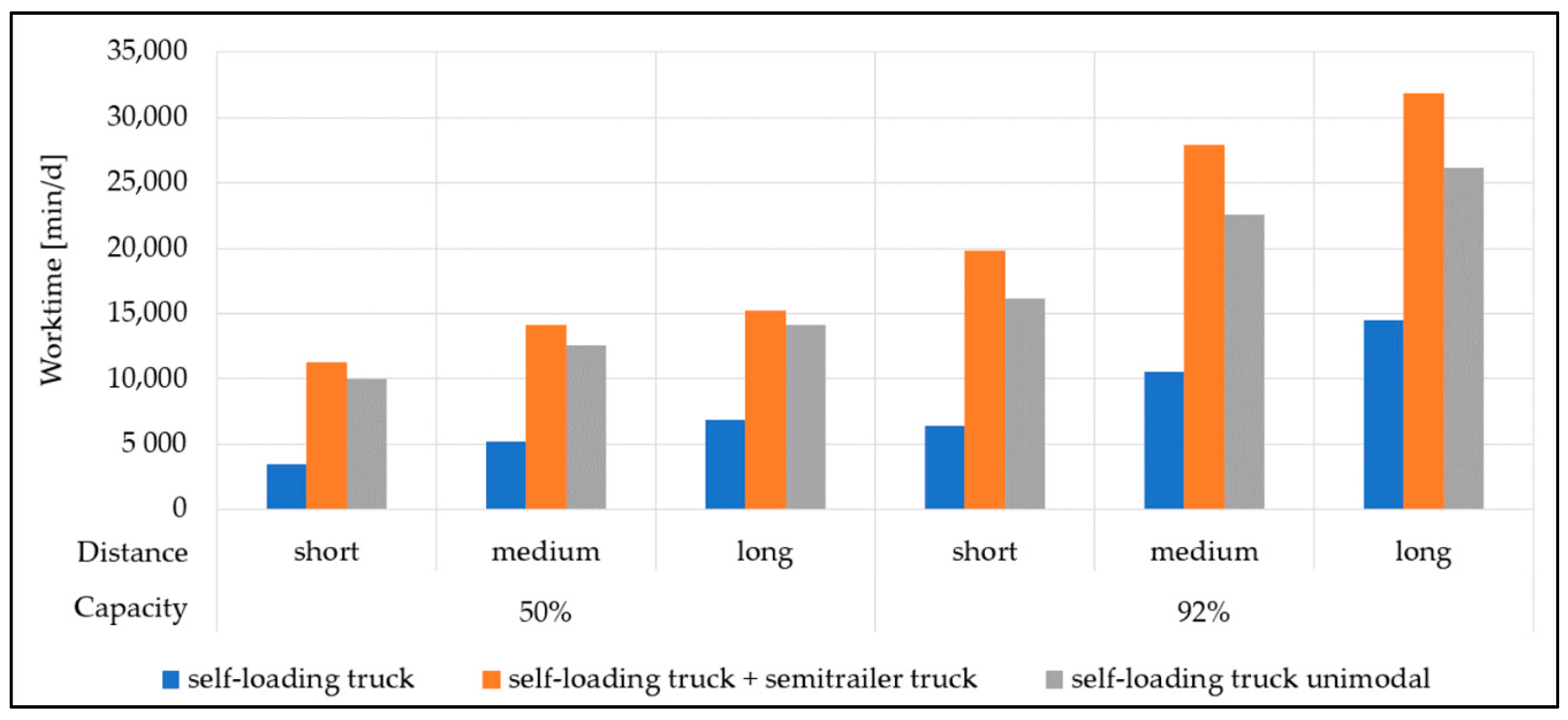
Forestry faces frequent and severe natural calamities causing high amounts of salvage wood. Especially under mountainous conditions, regional available self-loading truck capacity is often the main limiting factor causing transport capacity bottlenecks. Therefore, innovative logistics strategies are needed to ensure quick transport of high amounts of salvage wood. Consequently, a multi-echelon unimodal transport concept, where timber is synchronously transshipped at a truck terminal with four transshipment lots from self-loading trucks to semitrailers, was modeled by means of a discrete event simulation. The simulation model calculates key performance indicators such as transshipped volumes and costs and support estimations of optimal truck fleet configuration. The results provide cost-optimal truck fleet configurations in terms of the number of self-loading trucks, semitrailers and prime mover trucks for varying transshipment volumes, delivery time to terminal and legal truck payload scenarios. Applying the truck terminal concept considerably decreases the number of self-loading trucks needed to transport the same volume when compared to unimodal wood transport, which is most common under mountainous conditions in Europe. In the majority of delivery time to terminal and terminal transshipment volume scenarios, the number of self-loading trucks was reduced by more than 50%. Increasing the legal gross vehicle weight for timber transport from 44 t up to 50 t reduces the number of self-loading trucks needed by 20% to 38%, depending on the scenario setting. Additionally, less self-loading trucks arriving at the terminal also cuts queuing times and system efficiency increases as transport cost/t is reduced by 6% to 11% depending on the scenario setting. Expanding the truck terminal concept by adding storage capacity as well as varying the number of transshipping lots and also including costs for terminal construction and operations in the economic analyses are promising topics for future studies.
Keywords: logistics; supply chain management; multi-echelon unimodal transport; wood-based industry; discrete event simulation model; risk; natural calamities; decision support logistics; supply chain management; multi-echelon unimodal transport; wood-based industry; discrete event simulation model; risk; natural calamities; decision support