Article

The Biological Durability of Thermally- and Chemically-Modified Black Pine and Poplar Wood Against Basidiomycetes and Mold Action


by
Vasiliki Kamperidou
Faculty of Forestry and Natural Environment, Department of Harvesting and Technology of Forest Products, Aristotle University of Thessaloniki, 54124 Thessaloniki, Greece
Forests 2019, 10(12), 1111; https://doi.org/10.3390/f10121111
Submission received: 18 November 2019 / Revised: 3 December 2019 / Accepted: 3 December 2019 / Published: 5 December 2019
(This article belongs to the Special Issue Wood Protection and Preservation)

Abstract

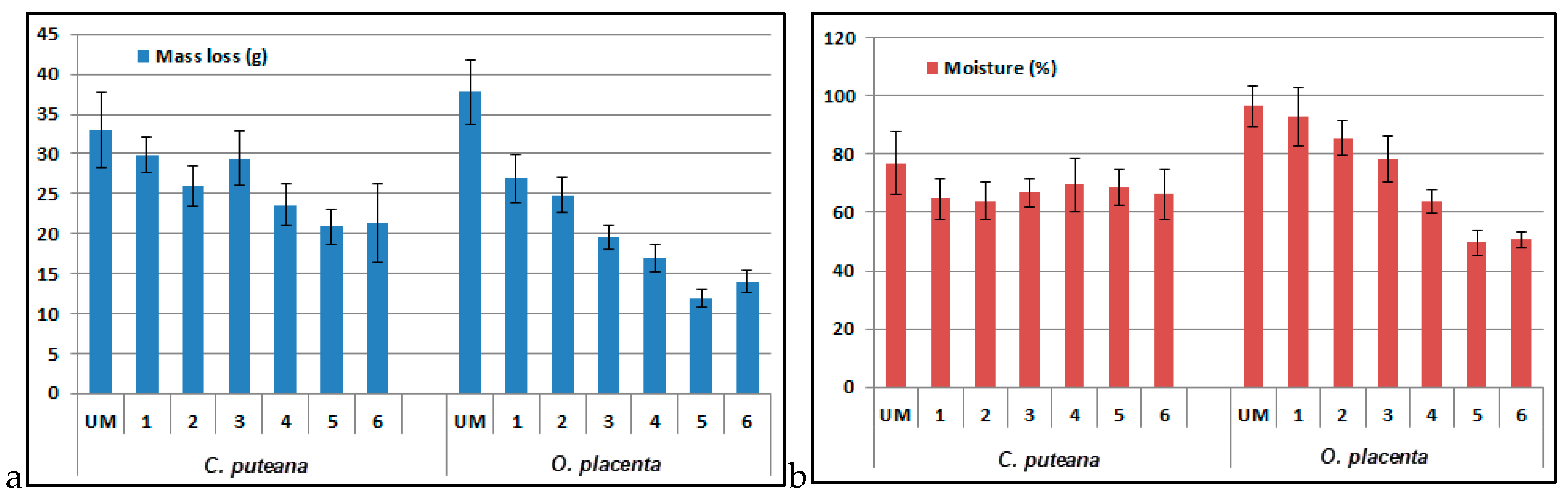
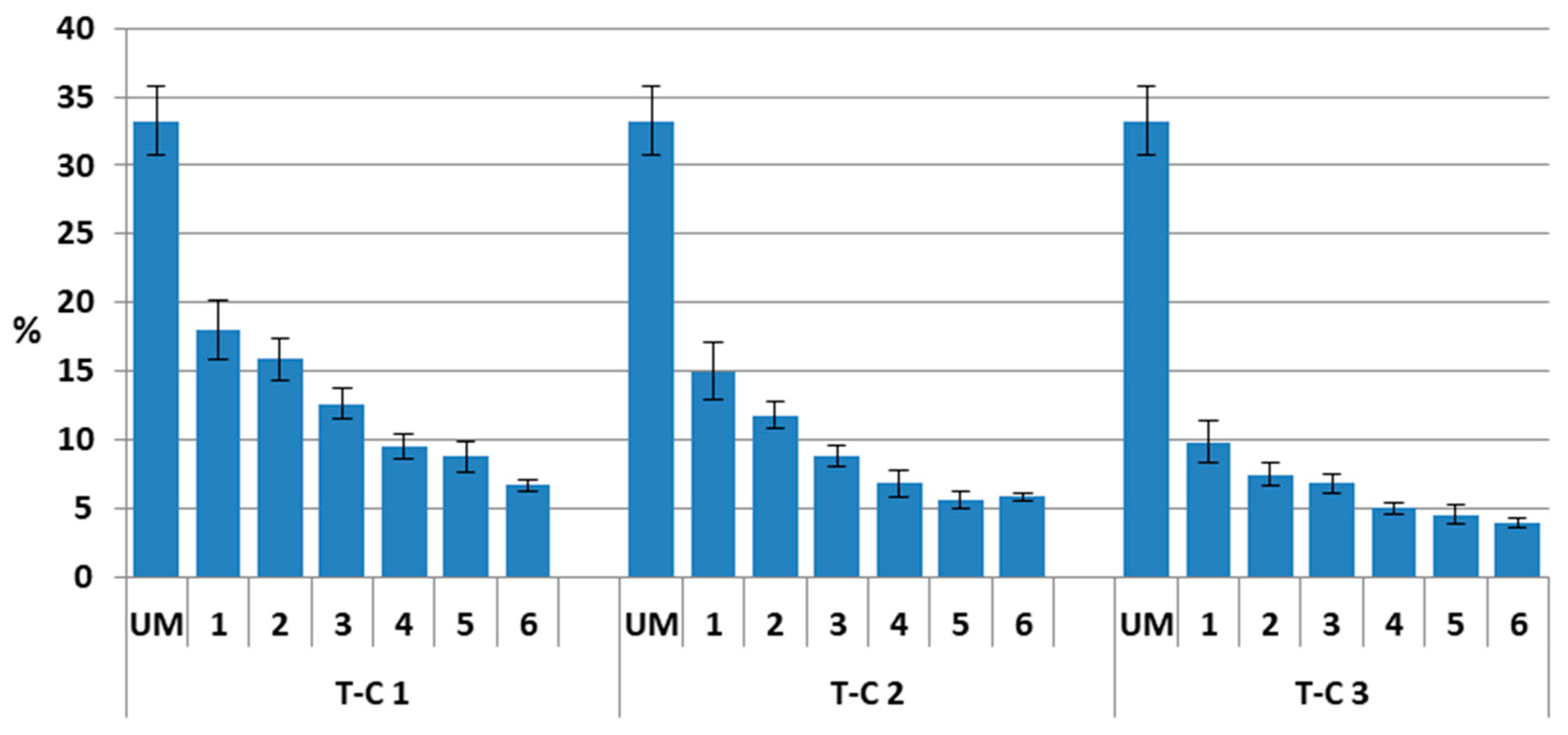
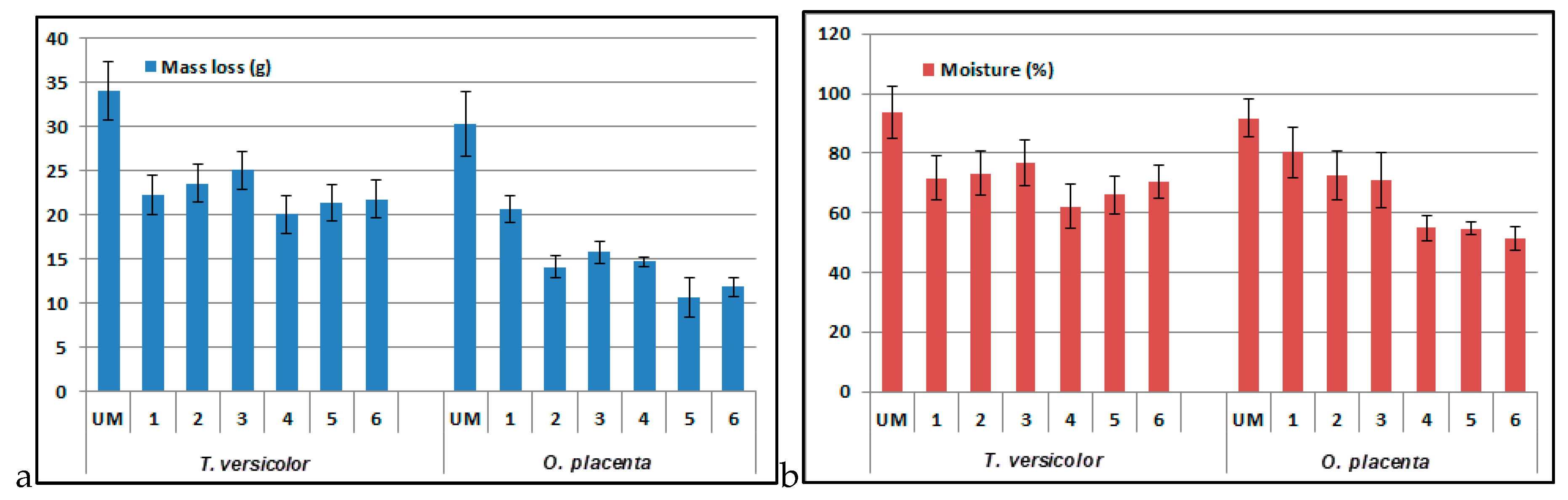
Wood of black pine and poplar species were subjected to thermal modification under variant conditions, while subsequently, a number of the thermally-modified black pine specimens were subjected to surface modification with organosilane solutions, and the biological resistances of the different materials were examined using laboratory agar block tests against the action of basidiomycetes and microfungi. Thermally-modified pine specimens were exposed to the brown rot fungi Coniophora puteana and Oligoporus placenta, whereas poplar wood was exposed to the white rot fungus Trametes versicolor and O. placenta. Regarding the biological durability of thermally-chemically-treated pine wood with organosilanes, it was tested against the action of C. puteana. Additionally, both of the thermally-treated wood species, as well as thermally-chemically-treated pine wood were exposed to a microfungi mixture, so that the wood treatments efficacy would be evaluated through a visual assessment of fungal growth on the specimen’s surface The thermal treatments seem to increase the biological resistance of black pine against C. puteana by 9.65–36.73% compared to unmodified wood. The most significant increase in biological durability among all the thermally-treated wood categories was recorded by O. placenta, with 28.75–68.46% lower mass losses in treated pine specimens and 31.98–64.72% in thermally-treated poplar, respectively, compared to unmodified wood. The resistance of treated poplar against T. versicolor was also found increased (13.25–46.08%), compared to control. Thermal modification affected positively the biological resistance of both species, though it did not manage to protect effectively pine and poplar wood from the microfungi action. The combination of thermal and organosilanes treatment revealed a significant improvement of the durability of pine wood compared to? control (45.68–87.83% lower mass losses against C. puteana), as well as against the microfungi action, with the presence of benzin to have a positive effect on the silanes solutions performance and protective action.
Keywords: basidiomycetes; heat; molds; pine wood; poplar wood; silanes; thermal treatment basidiomycetes; heat; molds; pine wood; poplar wood; silanes; thermal treatment