1. Introduction
Mobile robots have become a key educational tool in Engineering and Applied Science Education, bridging theory and practice in programming, control, and design [
1]. They provide students with opportunities to tests their skills and enhance problem-solving abilities [
2]. Moreover, the availability of low-cost prototypes has fueled mechatronics projects and competitions [
3], fostering creativity and active learning [
4]. Among the most common approaches are line-following robots—small autonomous machines that use optical sensors to detect trajectories. These systems have evolved from simple designs into platforms with complex sensor arrays and algorithms [
5], primarily developed for competitions such as the Robo Cup, where accuracy and speed are critical [
6].
Similarly, obstacle-avoiding robots, based on ultrasonic or infrared sensors, adjusts their trajectory in real time [
7]. Since their early versions in the 1980s, which relied on contact sensors, they have advanced into platforms integrating sensor fusion and artificial intelligence, becoming central to autonomous navigation research [
8]. Likewise, Bluetooth-controlled robots facilitate the teaching of wireless communication [
9], self-localization [
10], and visualization of motor speed or sensor readings using ESP32 modules [
11], Arduino boards, or Bluetooth HC-05 modules. These robots also participate in categories such as sumo robots or Robo Soccer [
12].
The development of educational mobile robots typically involves five stages: (1) design, (2) manufacturing, (3) implementation/instrumentation, (4) coding, and (5) testing, each presenting distinct challenges. The chassis is designed as the central assembly piece using 3D software models, reducing time and costs. Additive manufacturing has become increasingly common, accelerating prototype creation [
13]. While electronic instrumentation varies depending on the robot’s purpose, it may include advanced features such as teleoperation with augmented reality [
14].
Programming robots to accomplish tasks has evolved beyond traditional software design incorporating Deep Learning, where robots learn from visual, sensory, and interaction data to recognize objects, make real-time decisions, and adapt to complex environments [
15]. In parallel, AI-assisted development tools such as Vibe Coding have emerged as alternative programming approaches, accelerating code generation and optimizing instructions through prompt engineering [
16]. This paradigm is transforming software engineering, particularly for non-expert programmers [
17]. Its success lies in fostering collaboration between developers and Generative AI (GenAI) systems, eliminating the need for specialized language [
18]. Vibe Coding encompasses actions such as prompting, scanning, testing, debugging, and manual editing, offering developers a sense of self-satisfaction [
19]. Current conversational AI code-generating assistants include Claude, Microsoft Copilot, Cursor, GitHub free, Windsurf, Bolt, or ChatGPT, which serve as accessible private instructors. Nevertheless, a programming foundation remains essential to balance speed in debugging with code quality.
Both Vibe Coding and agentic coding rely on Leverage Large Language Models (LLLMs), but they differ in the developer’s role [
20]. Vibe Coding promotes active collaboration through prompts where the programmer verifies task fulfillment rather than writing code directly [
21], encouraging creativity in educational robots [
22]. In contrast, agentic coding assigns a passive role to developers, delegating most tasks with minimal supervision, though without guaranteeing reliability [
23]. As an emerging area, these approaches require safety standards and mechanisms, which are only beginning to be established. Notably, there have been no reported applications for Vibe Coding in educational robotics.
Therefore, this article presents a multimodal mobile robot for educational competitions, from conception to operation. The contribution lies in a hybrid methodology that balances developer collaboration in design, construction, and instrumentation with the use of “Vibe Coding” as an alternative programming approach. This integration accelerates prototyping while enhancing functionality. The robot’s innovation resides in offering three independent operating modes within a single product: (1) line following, (2) obstacle avoidance, and (3) Bluetooth control. Furthermore, the robot is characterized by a modular architecture and self-learning capabilities. The results demonstrate successful operation in all three modes, validating its relevance for both educational and competitive contexts.
2. Materials and Methods
This article proposes a hybrid methodology for developing a multimodal mobile robot, aiming to accelerate prototyping and foster multidisciplinary projects for undergraduate engineering students, particularly in competitive contexts. The methodology consists of five phases: (1) 3D design and modeling, (2) 3D printing, (3) instrumentation, (4) programming with Vibe Coding, and (5) Testing. Each phase is detailed below.
2.1. Design
The primary objective was to conceive a modular educational robot capable of operating in three operating modes: (1) line following, (2) obstacle avoiding, and (3) Bluetooth control. To ensure versatility, a core hardware architecture was defined, comprising a microcontroller, proto shield, active buzzer, OLED display, DC motors with their controller, and rechargeable batteries. These components were selected to provide the necessary configurations for reliable operation.
The design also emphasized visual appeal, inspired by racing cars esthetics, while maintaining an intuitive and accessible assembly process suitable for educational environments.
Functional Requirements
Power autonomy: the robot must provide sufficient energy density through rechargeable batteries to power all operational modes.
I/O efficiency: integration of the Arduino board and motor controller must supply the required input/output pins without additional expansion modules.
Component accessibility: sensors and actuators must be COTS (Commercial Off-The-Shelf), ensuring easily sourced and comprehension in educational environments.
Dimensions: the robot must not exceed standard competition measurements (25 cm × 25 cm in length and width), with no restriction on height.
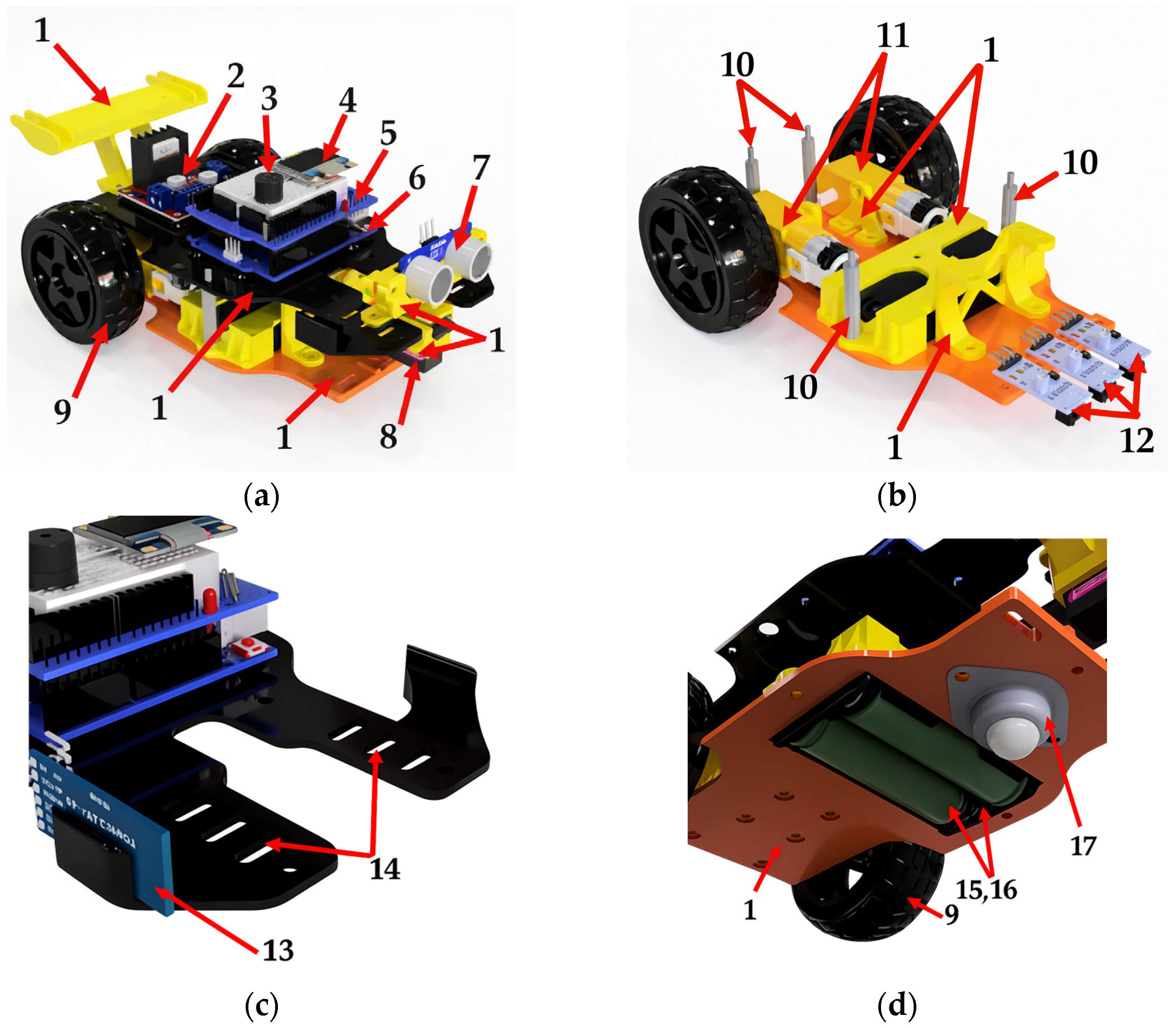
The final prototype is characterized by its compact and modular design (430 g; 22 cm × 14 cm). The chassis was modeled using Computer-Aided Design (CAD) software to integrate electronic and mechanical components efficiently. The model incorporated specific mounting points and slots for each module, ensuring structural robustness and ease of assembly. The parametric design was developed in Autodesk Fusion 360
® with all components listed in
Table 1 and illustrated in the final assembly shown in
Figure 1.
2.2. Manufacturing
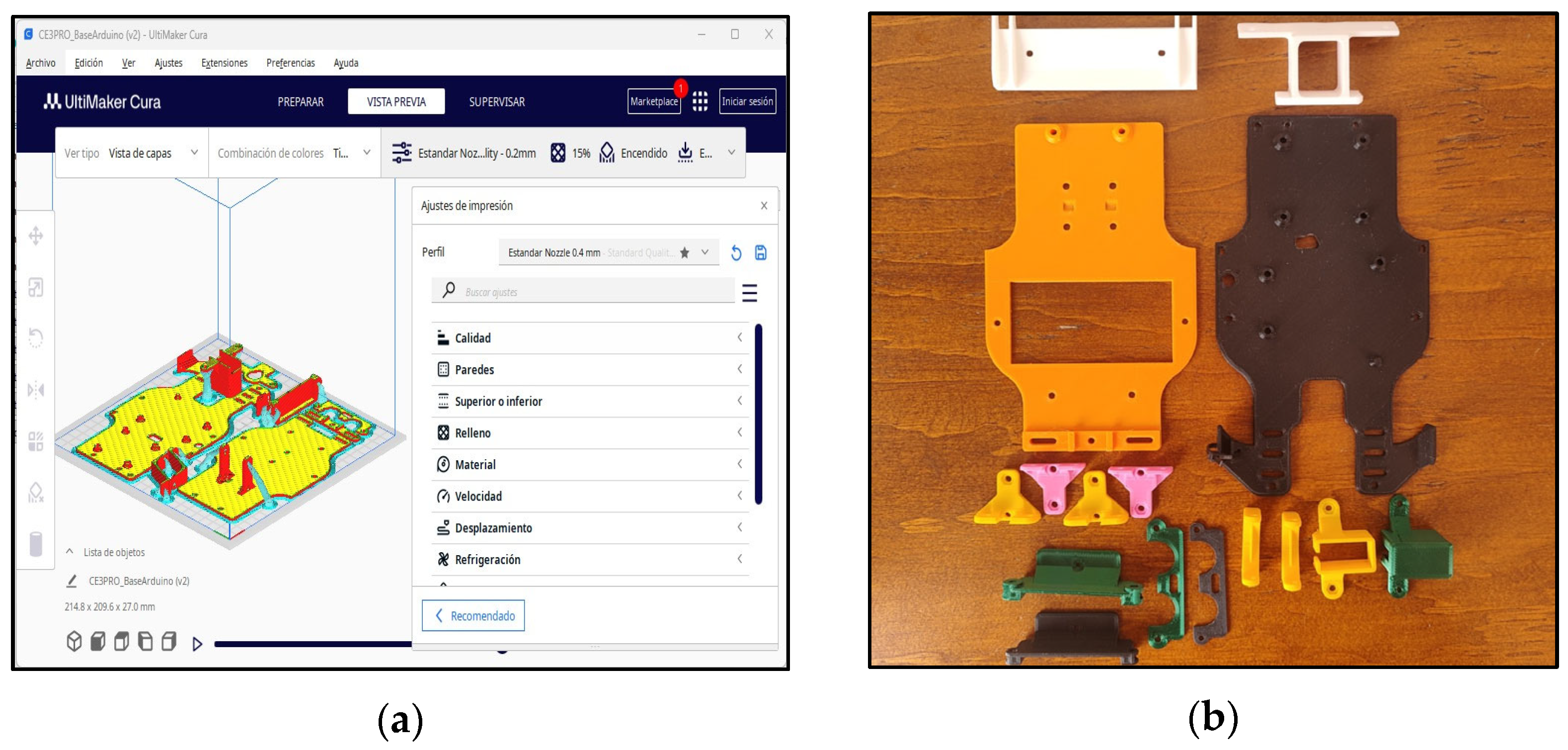
Following the completion of the design phase, manufacturing was performed using Fused Deposition Modeling (FDM) with an Ender K1 Pro Creality® 3D printer. Standard printing parameters were applied: a 0.4 mm nozzle diameter, 0.2 mm layer height, 3 mm wall thickness, 15% infill, and a print speed of 50 mm/s. Initial prototypes were produced to verify dimensional accuracy. Once the chassis components met the design requirements, the final structural parts were printed. These settings ensure an optimal balance between surface finish, print time, and the structural integrity of the components.
Polylactic Acid (PLA) filament was selected as the manufacturing material, given that the components are not subjected to significant mechanical stress or elevated temperature conditions. PLA also represents a cost-effective and readily available option, enabling resource optimization during development.
The slicing process was carried out using Ultimaker
® Cura, which generated the G-code for all components. The workflow is illustrated in
Figure 2, highlighting the transition from CAD modeling to final printed parts.
2.3. Instrumentation
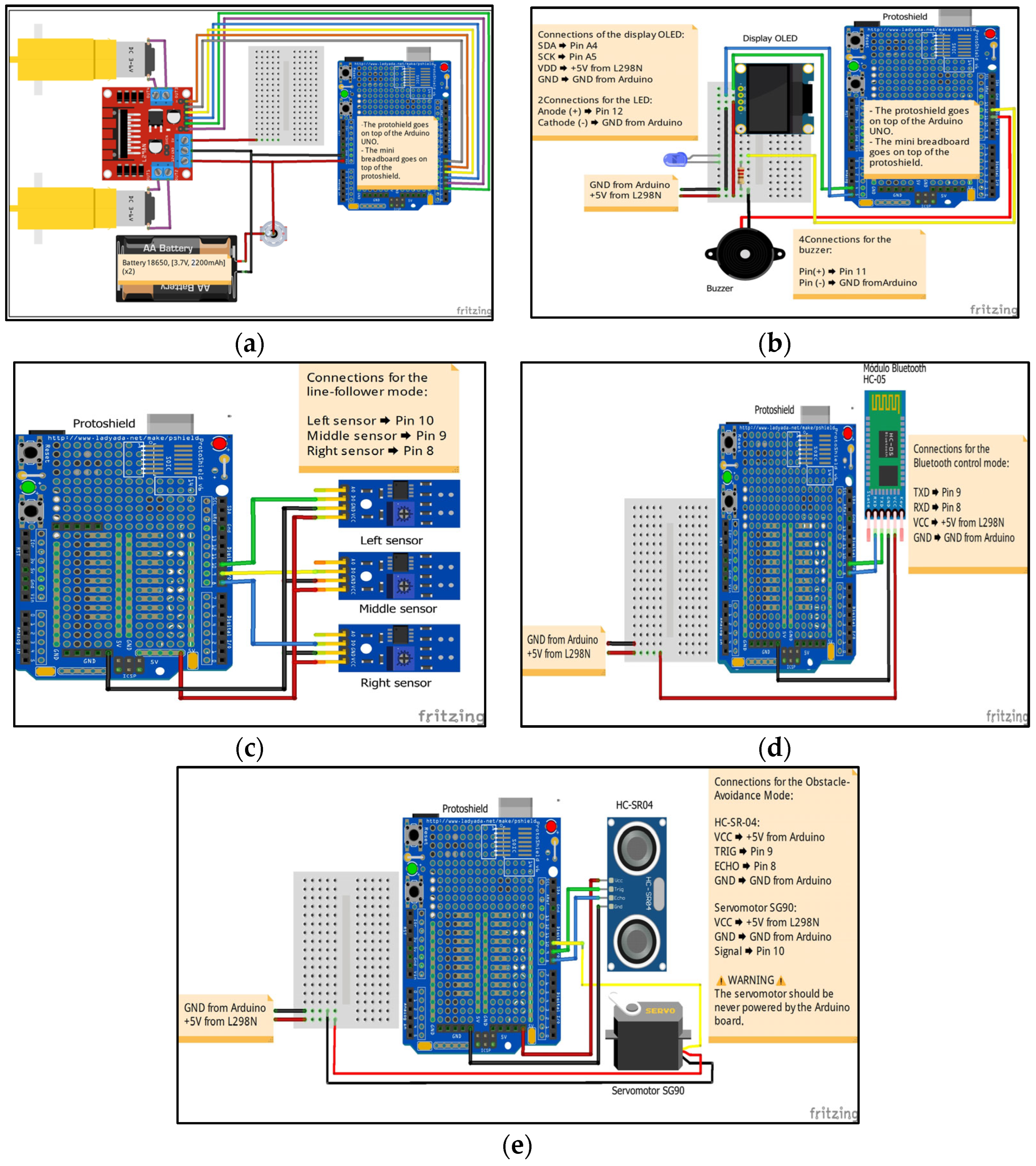
During this phase, the necessary hardware components were integrated to provide the robot with sensory capabilities, processing power, and actuation. All electrical schematics and wiring diagrams (
Figure 3a–e) were developed exclusively using Fritzing
®, an open-source CAD software designed for documenting interactive electronic prototypes. Fritzing
® facilitated the transition from breadboard sketches to professional-quality PCB designs and formal circuit diagrams.
Figure 3a–e illustrate the system’s electrical schematics, detailing the interconnection of all components and their respective functions.
The following subsections describe the specific hardware configurations for each operating state: the Arduino’s main power supply, the line-following sensor array, and the obstacle avoidance scanning configuration.
2.3.1. Control Unit
An Arduino Uno® board with ATmega328P MCU (14 Digital I/O 6 PWM, 6 Analog Inputs, 16 MHz clock) was used as the main processing unit for sensor data and actuator logic management in all modes. Positioned at the center of the robot chassis, its orientation was optimized to simplify cable routing and ensure unobstructed access to the USB port for firmware updates and iterative programming.
2.3.2. Motor Driver
An L298N dual H-Bridge motor controller (rated up to 2 A per channel, 5–35 V operating voltage) was selected to enable bidirectional DC motor control and speed regulation via PWM signals. Powered at 7.4 V, the integrated regulator provided an auxiliary +5 V output, used to supply various modules. The controller was mounted at the rear of the chassis, strategically close to the motors, minimizing cable length and simplifying wiring architecture.
2.3.3. Syb-170 Proto Shield
Mounted on top of the Arduino Uno® board, the Syb-170 proto shield served as the central node for modular assembly and interconnection of the OLED display, buzzer, and LEDs. With 170 connection points, it provided a versatile workspace for hardware expansion, enhancing modularity and allowing seamless integration of new circuits or specialized modules.
2.3.4. Actuation System
Two DC geared motors (~200 RPM at 5 V, ~0.8 kg·cm torque, 150–200 mA current draw) were selected for their reliability, cost-effectiveness, and availability. Integrated into the lower chassis, they share structural support with the battery holder.
2.3.5. Power Supply Source
The robot was powered by two 18650 lithium-ion batteries (3.7 V nominal, 7.4 V in series, 2200 mAh capacity), providing up to 4.4 h of continuous operation at 0.5 A. The batteries were housed in a dedicated holder secured with a custom 3D-printed bracket, enabling quick swapping during extended testing or competitions.
2.3.6. Micro-Servo
A SG90 servomotor (1.8 kg·cm torque, 180° rotation, 4.8–6 V operating voltage) was used to drive the ultrasonic sensor, extending the obstacle detection range. Mounted at the front of the chassis with custom 3D-printed brackets, it formed a dynamic scanning turret with the HC-SR04 sensor attached to its shaft.
2.3.7. TCRT5000 Module
A TCRT5000 reflective IR sensor module (2–15 mm detection range) was used for line-following tasks. Three sensors were arranged in an array at the lower front of the chassis, maintaining <10 mm ground clearance. This positioning ensured optimal detection range and allowed quick adjustment via chassis slots.
2.3.8. Ultrasonic Sensor
An HC-SR04 ultrasonic sensor (2–400 cm range, ±3 mm accuracy, 15° angle) was mounted on the servomotor shaft to measure frontal distances for obstacle avoidance maneuvers.
2.3.9. Bluetooth Control
An HC-05 Bluetooth module (UART, 10 m range, Bluetooth 2.0) was integrated for wireless communication, enabling smartphone control via a custom application. It was mounted at the front top of the chassis to maximize signal strength.
2.3.10. Buzzer
A 5 V active buzzer (~2.5 kHz resonant frequency) was mounted on the proto shield to provide acoustic feedback and obstacle proximity warnings.
2.3.11. Screen Display
A 0.96 in” OLED display (128 × 64 resolution, SSD1306, I2C interface) was mounted on the proto shield to serve as a control panel. It displayed:
Operational information: current operating mode (line following, obstacle avoidance, or Bluetooth control).
System telemetry: real-time sensor data from the sensor (binary states of TCRT5000 modules and HC-SR04 distance readings).
2.3.12. Signaling Systems
A high-brightness LED (20 mA direct current) was integrated as visual “headlights,” enhancing signaling and visibility.
It is important to note that this phase of the project was carried out without AI intervention. Each schematic was designed and verified manually to ensure technical accuracy and to provide a clear visual representation of the hardware interconnections. This approach guarantees that the robot’s structural foundation—its electrical wiring and component allocation—is firmly based on traditional engineering design principles, reinforcing reliability and reproducibility in educational contexts.
2.4. Programming
Software development for the multimodal robot traditioned from traditional syntax-heavy to an AI-assisted Vibe Coding approach. This methodology uses Leverage Large Language Models (LLLMs) to translate high-level functional intent into executable C++ code for the Arduino environment [
21]. Unlike conventional programming, which relies on manual syntax input, this process emphasizes prompt engineering and system auditing. The LLLMs employed were ChatGPT-5.3 (for operating modes 1 and 2) and Claude 4.6 Sonnet (for operating mode 3).
Development followed a rigorous Hardware-in-the-Loop (HITL) iterative process, structured into four stages:
Strategic Definition: Based on the core hardware architecture (see
Section 2.1), specific logic for each mode was drafted in natural language.
Modular Generation: The AI was prompted to generate discrete functions (e.g., PWM motor control or movement routines) rather than a monolithic script, ensuring modularity and ease of debugging.
Prompt Engineering Process: Each interaction with the AI focused on minimizing algorithmic errors and ensuring hardware compatibility. The hardware was explicitly defined (e.g., Arduino Uno microcontroller, L298N motor driver, sensor pin mapping), along with operational constraints such as a 15 cm obstacle detection limit and PWM speed constants. An iterative feedback loop was established, instructing the AI to wait for empirical data from physical tests (e.g., motor drift, sensor noise) before refining subsequent versions.
Iterative Debugging Cycle: A continuous feedback loop was implemented: code upload to Arduino® board (provided by AI) → physical testing → observational debugging → AI refinement. If the robot’s behavior deviated from the expected logic, errors were described to the AI in natural language, which then generated a corrected versions. This cycle enabled rapid prototyping, with the developer acting as a system architect rather than a syntax-focused programmer.
2.4.1. Line-Following Mode
The primary objective of this mode is to enable the robot to autonomously follow a trajectory defined by a black line on a white surface. The AI implemented a discrete control algorithm using the three TCRT500 modules.
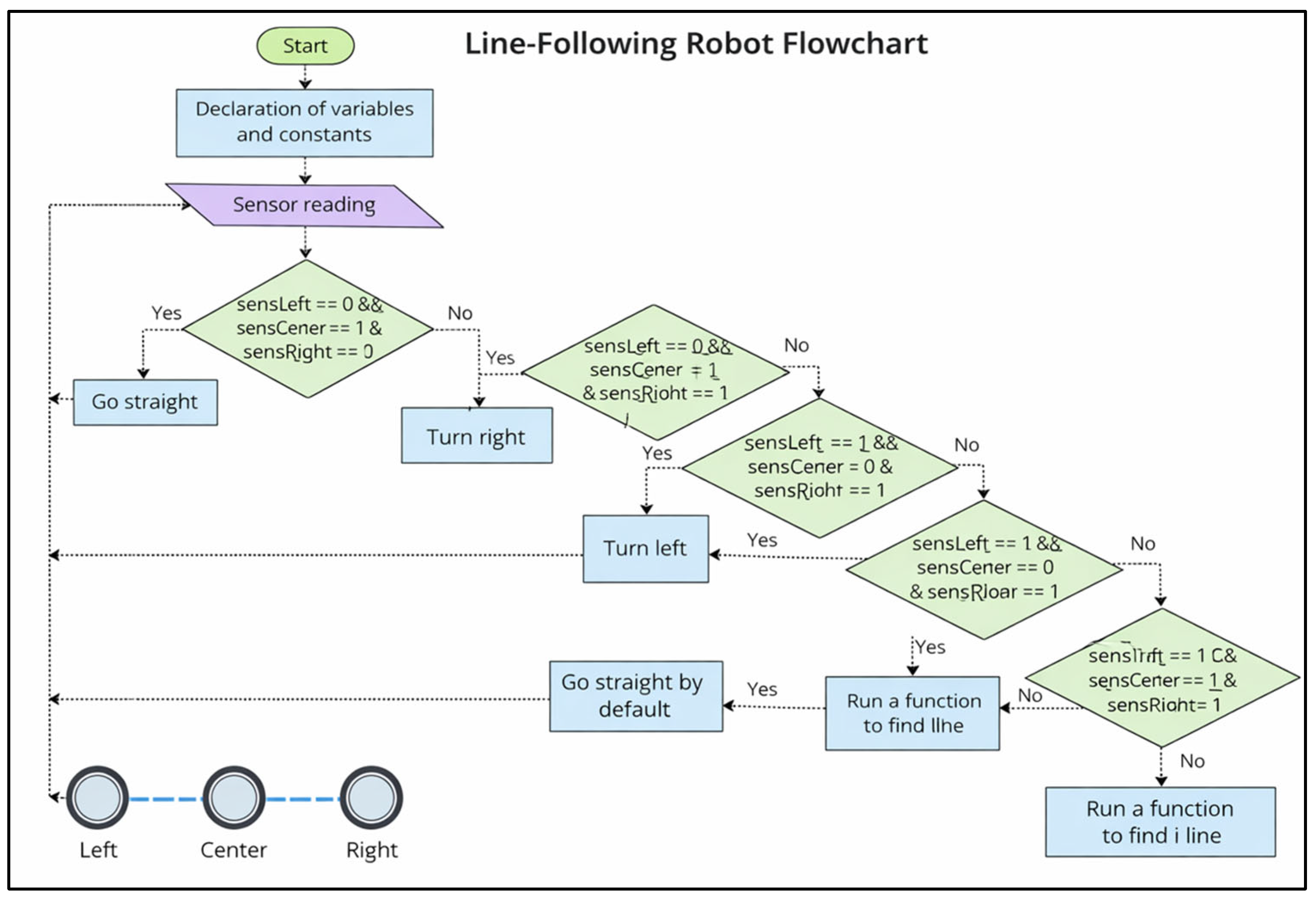
Figure 4 illustrates the flowchart; the system continuously consults the three sensors to maintain the robot centered on the path.
A key enhancement in this mode is the integration of Real-Time Telemetry via the OLED display. After a 2 s mode identification screen, the OLED display provides a dynamic data matrix from the sensors. The system maps sensor states into a binary representation (1 for line detection, 0 for white background).
To implement the line-following behavior, the AI was provided with a structured prompt containing the truth table in
Table 2. This allowed the model to assign each sensor combination to a specific motion state, generating the corresponding control logic. The AI-driven synthesis translated these input–output relationships into an optimized conditional structure, ensuring efficient trajectory correction and stable navigation.
It is important to highlight that
Table 2 can be interpreted as a Mealy-type Finite State Machine (FSM). The control logic is not purely combinational; instead, it incorporates a state variable to resolve the “lost line” condition (000). This ensures that the system’s output depends not only on the current sensory input but also on the immediate historical trajectory. By embedding this state awareness, the robot can recover from temporary loss of line detection, maintaining continuity in navigation and improving robustness during competitive tasks.
The control system can be formally defined by the quintuple:
where:
Input Alphabet (I): A three-bit vector representing the left, center, and right infrared sensors.
State Space (S): A binary state representing the last known lateral position of the line relative to the robot’s direction.
Output Alphabet (O): The duty cycle commands for the actuators,
Transition Function (): , which updates the internal memory based on the peripheral sensors signals.
Output Function (ω): , which relates current perception and memory to motor actions.
The core of the navigation algorithm is based on the persistence of state S. While the robot detects the trajectory
, the system operates in a combinational regime. However, when the sensors transition to the null state (I [0, 0, 0]), the transition function δ preserves the last valid directional orientation to initiate a recovery routine. The mathematical behavior is characterized by the following piecewise output function:
In the recovery state, the robot executes a search pattern proportional to recovery state,
. If the last state was
, the robot performs a clockwise rotation (Equation (1)). Conversely, if the last state was
it performs a counterclockwise rotation (Equation (2)).
This modeling guarantees that the “Line Lost” condition is not treated as a failure state, but rather as a predictable transition within the navigation manifold, ensuring continuity and robustness in trajectory tracking.
2.4.2. Obstacle Avoidance Mode
The primary objective of this mode is autonomous navigation through the proactive detection and avoidance of obstacles within a 15 cm threshold. The system’s decision-making logic is based on identifying the path with the maximum clear space.
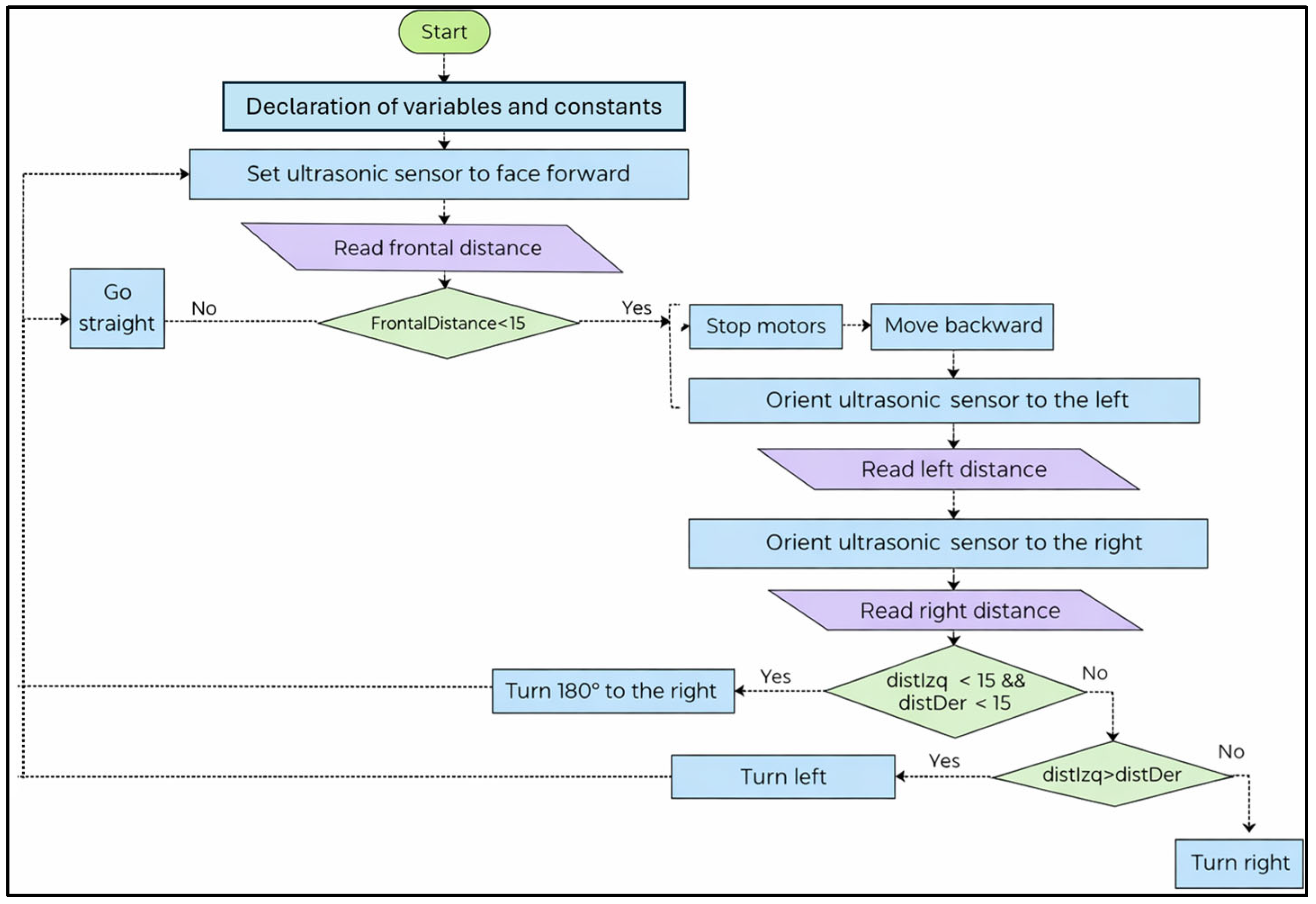
Upon detecting an obstruction, the robot executes a programmed sequence: it stops, performs a brief tactical turn, and initiates a lateral scan of the environment using a synchronized SG90 servomotor and the HC-SR04 ultrasonic sensor. As illustrated in
Figure 5, the algorithm evaluates the detected distances on both sites and selects the orientation corresponding to the path with the fewest obstacles.
This real-time validation is displayed on the OLED display, allowing the developer to monitor the system’s heuristic reasoning. Consequently, this approach represents a paradigm shift from traditional syntax-oriented programming toward the validation of complex autonomous behaviors, where AI-assisted coding enables adaptive decision-making in dynamic environments.
2.4.3. Bluetooth Control Mode
The implementation of the third operating mode followed a consultative AI workflow. Unlike the previous modes, which emphasized autonomous logic, this phase required the integration of a custom Android application to interact with the main hardware architecture via the HC-05 Bluetooth module.
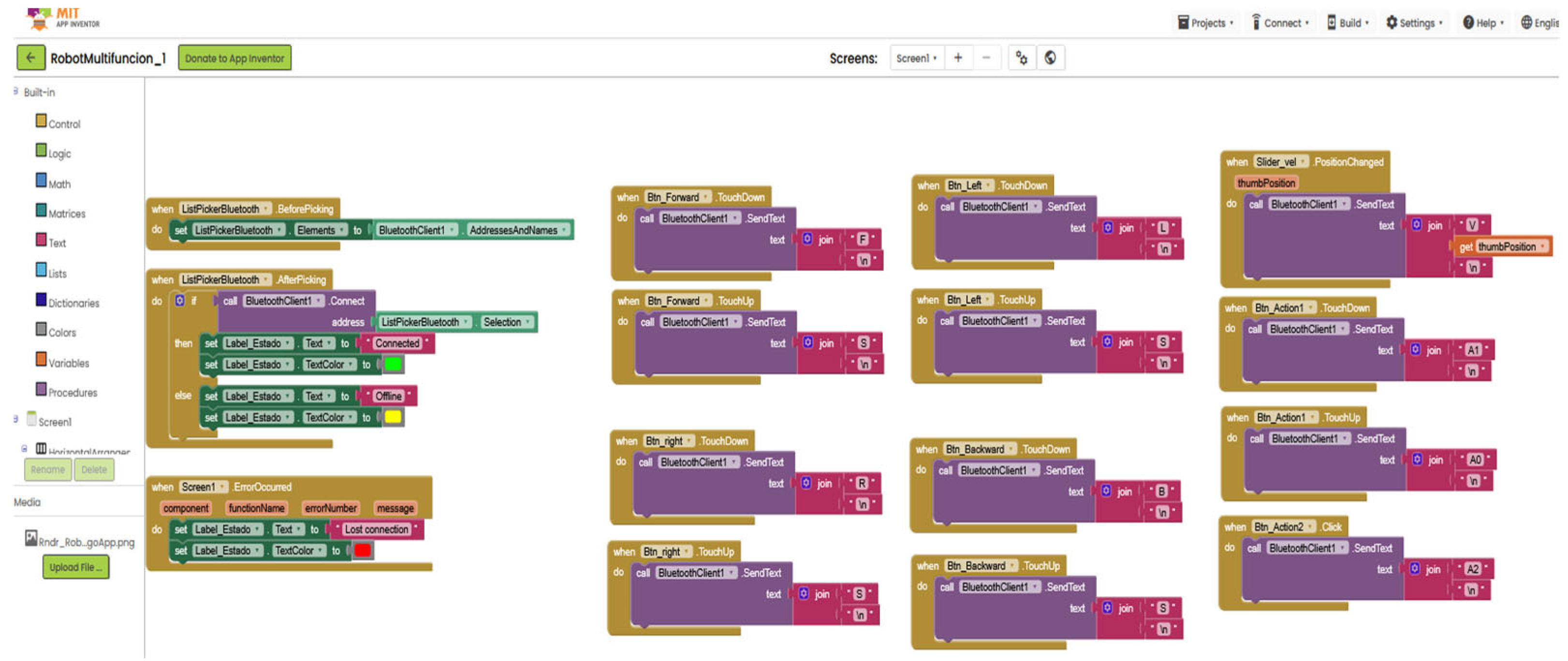
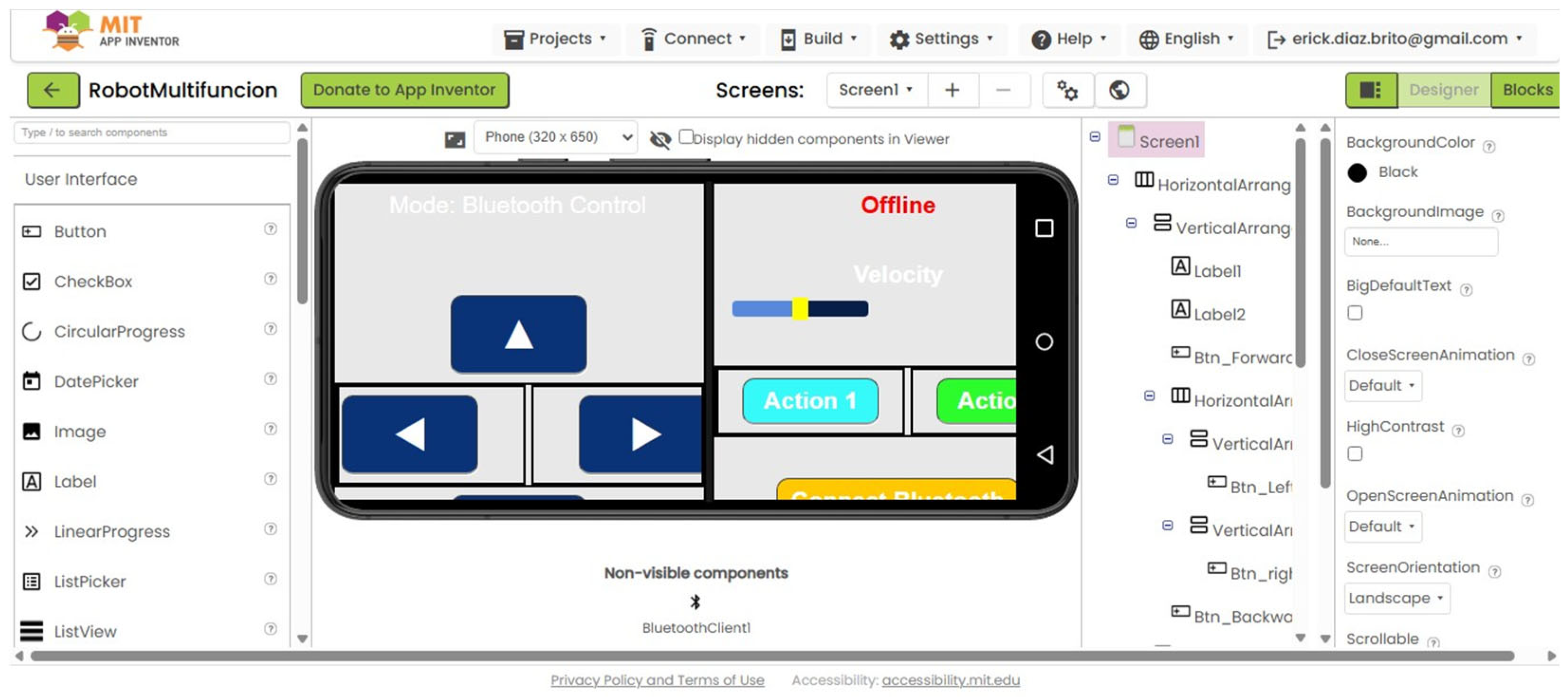
Claude 4.6 Sonnet was used as a specialized technical instructor, guiding the development process from the start to finish. After evaluating several implementation options, the MIT App Inventor platform was selected due to its robust documentation and the ability to maintain full ownership of the generated software, as shown in
Figure 6.
Android Application Implementation
The AI-driven workflow encompassed the following stages:
Onboarding Platform: Step-by-step guidance through the MIT App Inventor environment.
App Architecture: Design of the user interface (UI) and block-based logic for wireless data transmission. The interface was logically divided into four primary functional modules:
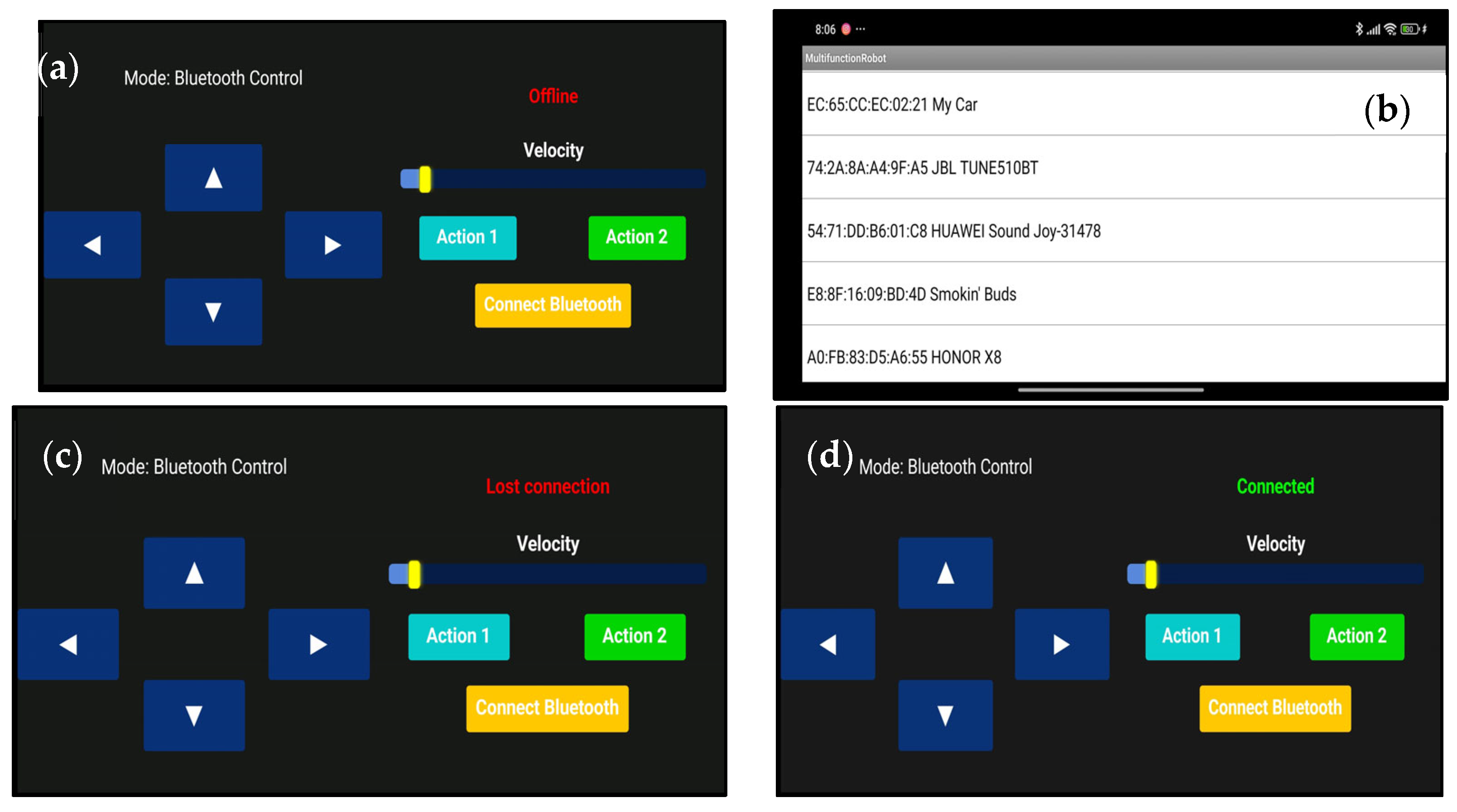
Connectivity Management: A dedicated “Device List” button allows the user to search for and select the robot’s HC-05 Bluetooth module from the pre-paired devices. A dynamic status label provides immediate visual telemetry of the connection state (e.g., Offline, Connected, or Connection Lost).
Motion Control Suite: The left side of the user interface features a Directional Pad (D-pad) with four intuitive navigation buttons. Additionally, a Linear Slider provides precise speed control, mapping user input to 8-bit PWM values for the DC motors.
Auxiliary Action Triggers: On the right side of the screen there are two multifunction action buttons. In the current configuration, these serve as switches for the digital speaker (buzzer) and headlights (LEDs).
General-Purpose Modularity: To maintain the project’s modular philosophy, these action buttons are assigned to independent digital pins on the Arduino UNO®. This allows users to reassign them to alternative hardware without requiring a redesign of the mobile interface.
Block-Based Logic Synthesis
This phase involved the AI translating the robot’s state machine into Block Logic (see
Figure 7). The AI-guided instructions focused on two critical aspects:
Event-Driven Programming: Logical strings were created to activate specific ASCII characters (e.g., ‘F’ for Forward, ‘S’ for Stop) when buttons were pressed. This ensured that user inputs were consistently mapped to motor actions through standardized command signals.
Error Handling: Conditional blocks (“If–Then”) were design to prevent application crashes in the event of a lost Bluetooth connection. This safeguard-maintained system stability and ensured that the robot could resume operation once connectivity was restored.
By synthesizing the robot’s control logic into block-based programming structures, the workflow bridged the gap between state machine modeling and user-friendly mobile application design. This integration not only simplified the programming process but also reinforced the project’s educational value, allowing students to visualize and interact with the robot’s logic in real time.
Figure 7.
Block logic in MIT App Inventor.
Figure 7.
Block logic in MIT App Inventor.
Compilation and Implementation: The final stage of this mode involved APK generation, installation on the Android device, and real-time troubleshooting during the initial pairing phase. This ensured seamless connectivity between the mobile interface and the robot’s hardware architecture.
Integration with the Arduino Firmware: For firmware integration, Claude 4.6 Sonnet was provided with a base Arduino sketch containing pre-configured motor pins, motion functions, and OLED display drivers (originally generated by ChatGPT-5.3 for operating mode 1). Subsequently, targeted code injection was performed to incorporate the Serial UART communication logic required to interpret incoming Bluetooth commands.
This integration allowed the robot to execute remote movements while simultaneously displaying the connection status in real time on the smartphone. In doing so, the workflow effectively closed the loop between the mobile interface and the physical actuators, ensuring synchronized operation across hardware and software layers.
3. Experimental Evaluation
The modular multifunctional mobile robot was subjected to a series of experimental tests to validate its performance across three operating modes: (1) line following, (2) obstacle avoidance, and (3) Bluetooth control. The results are presented below.
3.1. Line-Following Mode Performance
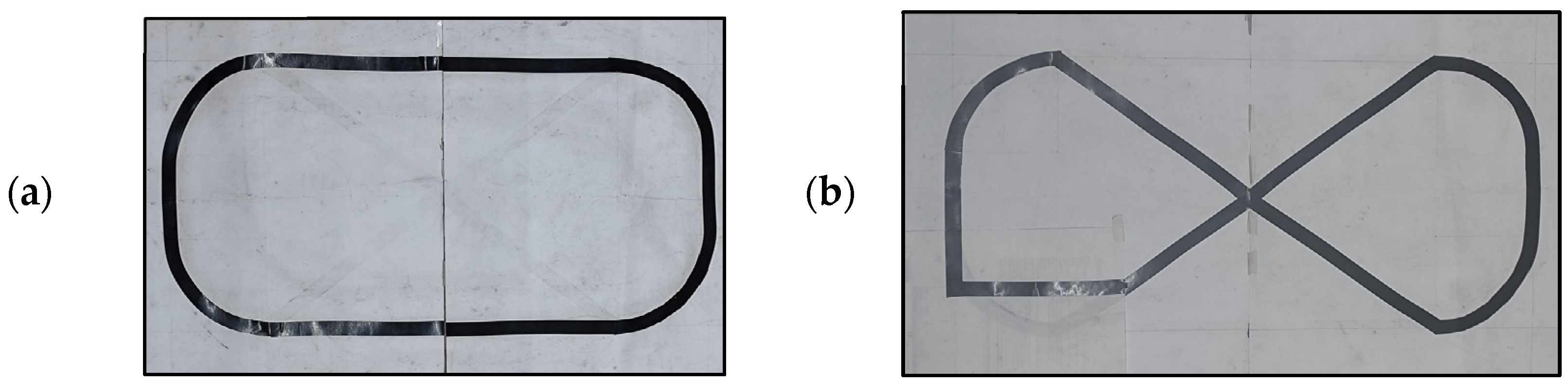
The performance tests for the line-following mode were conducted on two distinct tracks, combining straight and curved paths (
Figure 8). The results are summarized as follows:
Track A (1.8 m): The robot achieved a 95% success rate, completing the circuit in approximately 10 s. This indicates high stability on standard curves and straight segments.
Track B (2.1 m): Due to more complex geometries or sharper turns, the success rate was 75%, with a completion time of approximately 12 s.
Figure 8.
(a) Track A. (b) Track B.
Figure 8.
(a) Track A. (b) Track B.
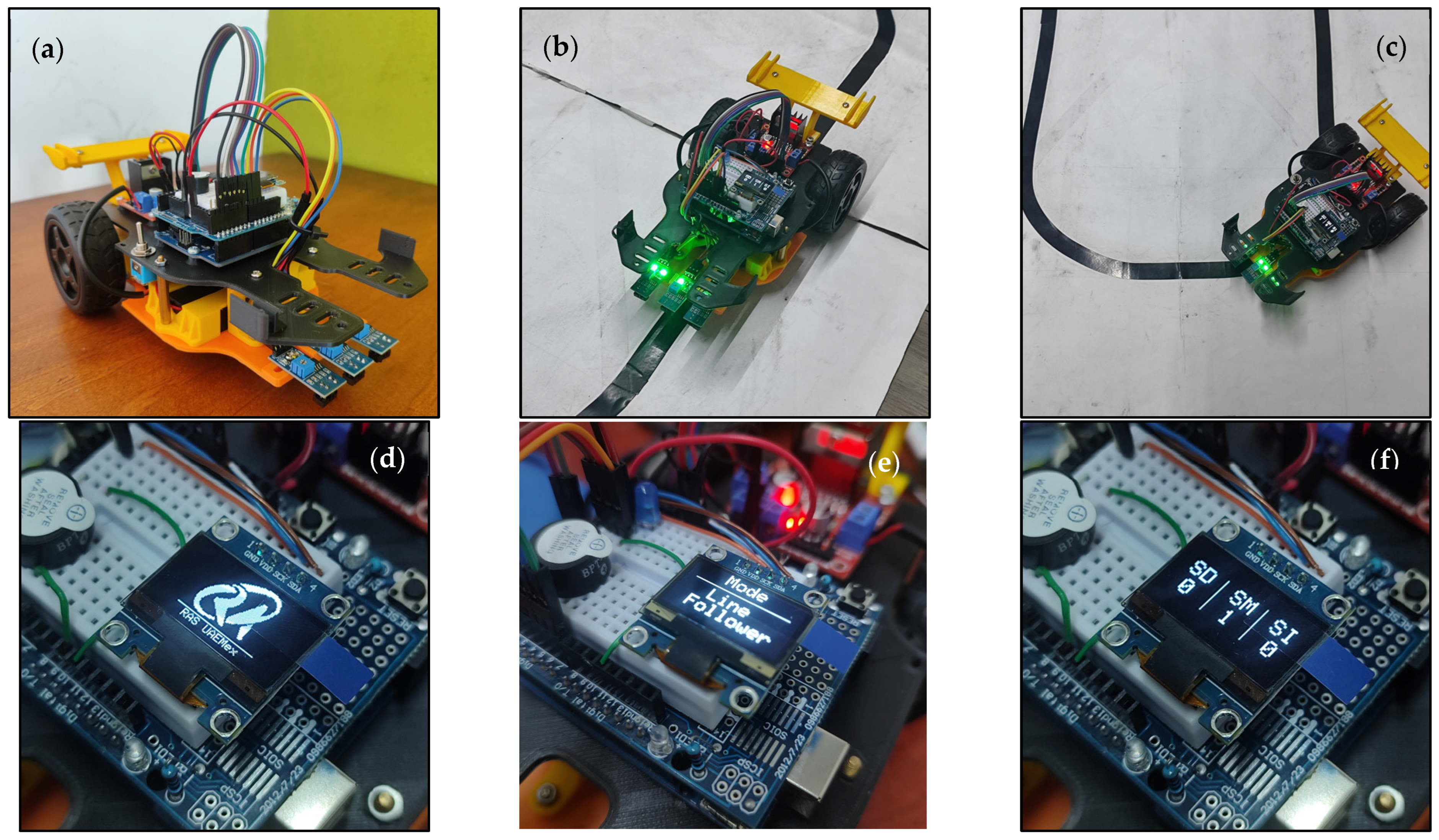
The system reached a maximum speed of 0.25 m/s and maintained a constant average speed of 0.25 m/s, as shown in
Figure 9a–c. This performance surpasses that of standard educational kits that employ only two sensors. The AI-developed logic of the three-sensor array provided superior steadiness by offering: greater accuracy in line detection, improved stability on curves, and faster correction when the robot deviated from the trajectory. Furthermore, the OLED display showed the real-time state of the TCRT5000 sensors, which provided essential for rapid sensor calibration. This feature allowed immediate hardware adjustments without requiring a PC connection, as illustrated in
Figure 9d–f.
3.2. Obstacle Avoidance Mode Performance
In this mode, the robot successfully navigated environments with solid obstacles by executing a “Scan-and-Decide” logic.
Decision Making: As shown in
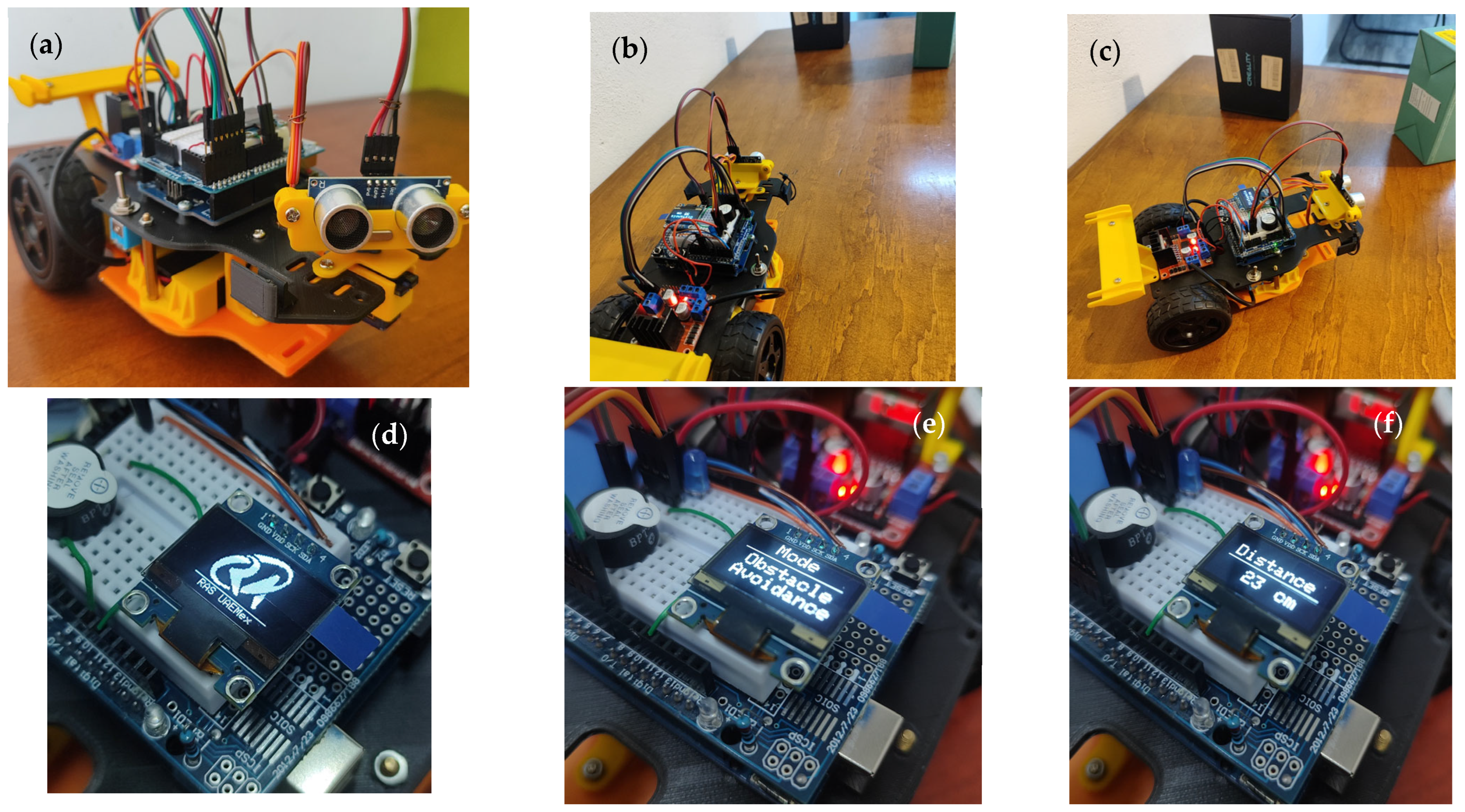
Figure 10a–c, the robot consistently identified the path with the greatest clearance, demonstrating reliable heuristic reasoning in dynamic environments.
Validation: The OLED display provided real-time distance readings from the HC-SR04 ultrasonic sensor, allowing the user to compare the physical measurements with the robot’s internal logic (defined in the flowchart in
Figure 5). This confirmed that the AI-generated obstacle thresholds were executed accurately (
Figure 10d–f).
The experimental evaluation revealed that the measurement accuracy of the HC-SR04 ultrasonic sensor is significantly influenced by the robot’s kinetic state.
Table 3 summarizes obstacle avoidance performance at different speed settings.
A non-linear increase in relative error was observed as the motor speed increased from 100 to 255 PWM. At maximum velocity (255 PWM), the relative error peaked at 16.0% for 30 cm, in contrast to stable error of 1.5% at lower speeds. This decrease in performance is primarily attributed to mechanical vibration, destabilizing sensor readings during high-speed movement. And changes in ultrasonic wave reception were influenced by the Doppler Effect, which alters signal timing and accuracy at elevated speeds. These findings justify the implementation of a conservative obstacle detection threshold of 15 cm within the Vibe Coding framework, compensating for sensor uncertainty at maximum operating speeds. By adopting this threshold, the system ensures reliable obstacle avoidance even under dynamic conditions, reinforcing the robot’s robustness in both educational demonstrations and competitive environments.
3.3. Bluetooth Control Mode Performance
The integration between the Android app and the HC-05 module demonstrated seamless synchronization across hardware and software layers.
Range and Stability: The system maintained a stable connection without pairing failures, demonstrating a reliable operating range of up to 5 m.
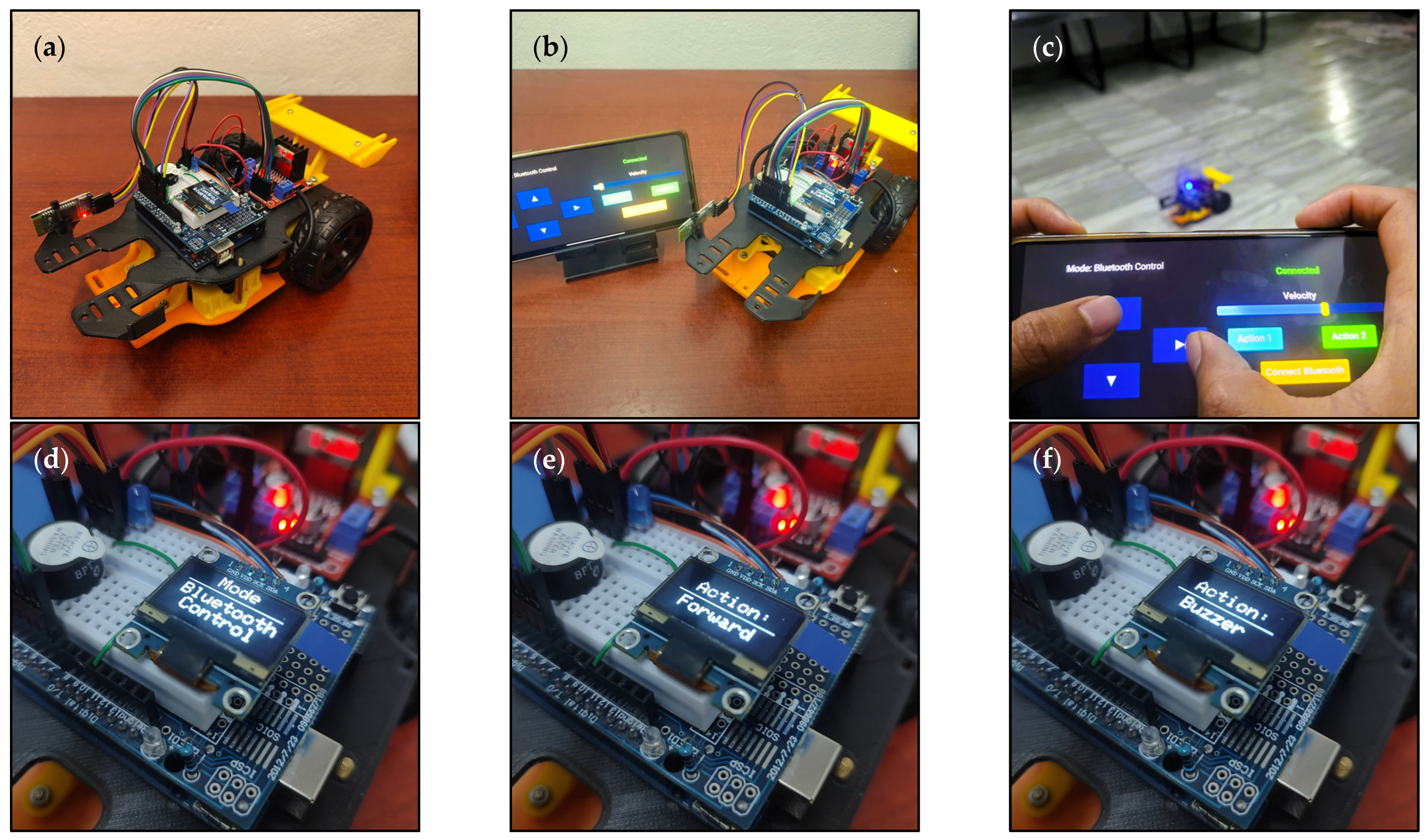
User Interaction: Custom status messages and LED triggers responded with minimal latency, confirming that the targeted code injection provided by Claude 4.6 Sonnet was functionally correct and fully compatible with the main hardware architecture. Furthermore, the interface labels displayed real-time connection information between the smartphone and the robot, as illustrated in
Figure 11 and
Figure 12.
This evaluation validates the effectiveness of the consultative AI workflow in mobile interface development. By combining block-based programming with targeted firmware integration, the system achieved responsive and reliable remote control. The results highlight the potential of Bluetooth connectivity as a didactic tool, enabling students to directly interact with embedded systems through intuitive mobile applications.
4. Discussion
Robotics remains fundamental to the development of devices that assist humans in diverse tasks, driving efficiency, innovation, and safety across sectors ranging from manufacturing and healthcare to entertainment, education, and everyday life. Robots not only automate repetitive processes but also enable greater precision, reduce risks to people, and open new opportunities for technological advancement.
The results of the mobile robot can be interpreted in greater depth from the perspective of symmetry and modularity. Its balanced mechanical structure, distributed sensors, and a modular architecture allow the execution of three navigation tasks: (1) line following, (2) obstacle avoidance, and (3) Bluetooth control—each requiring asymmetric control actions to correct deviations and respond to environmental uncertainties. The detection system used provides real-time information, but its effectiveness depends not only on the number of sensors, but also on their quality, sensitivity, accuracy, and cost considerations. The architecture further supports an interchangeable sensor mount, enhancing adaptability for future upgrades.
Designing a mobile robot requires consideration of mechanics, electronics, and programming, making it inherently multidisciplinary. Educationally, robots broaden students’ horizons by fostering problem-solving, programming, and engineering skills. In the state of the art, most mobile robots—line followers, obstacle avoiders, or sumo robots—are limited to a single task. The proposed robot stands out for its multifunctionality and modularity, integrating design, manufacturing, instrumentation, control, and performance strategies into a unified platform. A key design feature was the inclusion of strategically designed chassis slots to support the Arduino, enabling integration of additional modules. Combined with Bluetooth wireless control, this opens opportunities for adaptation to competitions such as Rob Soccer or sumo robotics, enriching hands-on experiences for students.
The use of 3D-printing-accelerated prototyping facilitated the assembly of components, primarily manufactured with thermoplastics such as PLA and ABS. Innovation was sought through custom designs of small, complex hollow geometries with sufficient strength for this application. Unlike commercial kits, which cannot be easily modified, this platform balances design flexibility, cost, and quality, with component selection tailored to accuracy, task requirements, and budget constraints.
The integration of AI through Vibe Coding provided a new, intuitive approach to software optimization and accelerated prototyping. However, developers require a solid programming foundation to optimize this process, reduce debugging time, and ensure successful task execution. AI-generated algorithms enabled autonomous navigation, path plotting, and obstacle detection, complemented by a backup remote control interface. Crucially, AI logic acted as an accelerator, not a substitute for engineering expertise. The “expert-in-the-loop” requirement was evident: effectiveness depended on structured technical guidance (e.g., the truth table in
Table 2). Similarly, debugging remained essential, as engineers had to resolve physical interaction issues such as baud rate mismatches or pin conflicts.
Performance metrics confirmed robust power management: motors operated at 45% of maximum duty cycle, with endurance times of 2.7 h (line following), 2.4 h (obstacle avoidance), and 3.1 h (Bluetooth control). Maximum speeds reached 0.35 m/s in line following and 0.45 m/s in Bluetooth control, with average speeds of 0.25–0.28 m/s. These results highlight the robot’s versatility and dynamic real-time control capabilities.
4.1. Hardware and Mechanical Constraints
Performance and Mass: Standard DC motors limited the torque-to-weight ratio. The modular shield and battery pack increased mass, reducing speed.
Surface Traction: Rubber wheels exhibited sub-optimal friction, causing slippage on smooth surfaces and affecting sharp maneuvers.
4.2. Sensory and Environmental Sensitivity
Ambient Lighting: TCRT5000 sensors required manual calibration to account for interference. Variations between sunlight and indoor lighting altered detection thresholds.
Obstacle Detection Latency: The scanning turret (servo + ultrasonic) introduced mechanical latency, limiting safe approach speeds.
4.3. The Human–AI “Vibe Coding” Paradigm
The “Expert-in-the-Loop”: AI effectiveness depended on structured prompts and technical guidance.
Debugging Necessity: Engineers were required to resolve hardware-level issues despite syntax-perfect AI code.
All metrics obtained across the three operating modes reflect a balance between energy efficiency, speed, and precision, solidifying the mobile robot’s performance as a functional and versatile teaching platform. By implementing robots in competitions, this approach strengthens technical expertise while fostering creativity, resilience, and teamwork—skills essential for training modern engineers.
5. Conclusions
This article presented the design, manufacturing, instrumentation, programming, and experimental evaluation of a modular multifunctional mobile robot. The proposed platform integrates three operating modes—line following, obstacle avoidance, and Bluetooth control—implemented through a hybrid methodology that combines traditional engineering principles with AI-assisted Vibe Coding approach.
The robot’s mechanics stand out for the innovative and lightweight chassis, which supports modular reconfiguration and component exchange. With a weight of 430 g and dimensions of 22 cm × 14 cm, the design meets competition standards while remaining accessible for educational use. Overall, the robot achieved a balance between energy efficiency, speed, and precision, solidifying its role as a functional and versatile teaching platform.
The experimental results validated the robot’s performance, demonstrating high stability and accuracy in line-following tasks through a Mealy-type FSM with recovery routines; adaptive navigation in obstacle avoidance mode, supported by conservative thresholds to compensate for sensor uncertainty at high speeds; and seamless mobile integration in the Bluetooth control mode, enabling responsive user interaction via a custom Android application. Functionally, the robot achieved an 80% success rate in complex line-following scenarios (e.g., intersections and 90° turns), surpassing basic educational robots that rely on only two sensors.
Beyond technical validation, the robot’s modular architecture and 3D-printed design highlight its adaptability for educational and competitive contexts. The inclusion of interchangeable sensor mounts, wireless connectivity, and customizable firmware expands its potential applications, from classroom demonstrations to robotics competitions such as Rob Soccer or sumo robotics.
A critical observation of the human–AI coding paradigm is that AI-generated logic acts as an accelerator rather than a substitute for engineering expertise. The effectiveness of Vibe Coding depended on structured technical prompts and expert debugging, underscoring the importance of the “human-in-the-loop” requirement. Therefore, this work highlights that co-design between humans and AI is a fundamental principle in modern robotics. Controlled symmetry enables adaptive and intelligent behavior, while the hybrid methodology fosters creativity, resilience, teamwork, and technical expertise—skills that are essential for training the next generation of engineers.
6. Patents
For this research, three industrial models and one patent have been registered to the IMPI (Mexican Institute of Intellectual Property) related to the mobile robot:
MX/f/2025/001158
MX/f/2025/003960
MX/f/2025/003961
MX/a/2026/004891
Author Contributions
Conceptualization, E.-D.D.-B. and J.-M.D.-V.; methodology, E.-D.D.-B. and J.-M.D.-V.; software, E.-D.D.-B., J.Z.L. and R.M.V.; validation, G.M.C.-M., E.-D.D.-B. and L.-A.Z.-A.; investigation, E.-D.D.-B. and J.-M.D.-V.; resources, R.M.V. and L.-A.Z.-A.; writing—original draft preparation, E.-D.D.-B. and J.-M.D.-V.; writing—review and editing, E.-D.D.-B., J.-M.D.-V., G.M.C.-M., R.M.V., J.Z.L., H.M.Z. and L.-A.Z.-A.; funding acquisition, R.M.V. and H.M.Z. All authors have read and agreed to the published version of the manuscript.
Funding
This research was funded by SECIHTI (Secretaría de Ciencia, Humanidades, Tecnología e Innovación), through the EPM 2024(1) grant number 406476.
Data Availability Statement
The data presented in this study are available on request from the corresponding author (the data are not publicly available due to privacy or ethical restrictions).
Acknowledgments
The authors want to thank the RAS IEEE student chapter of the Faculty of Engineering at UAEMéx for their valuable participation in the robotics competitions, as well as the MIT App Inventor platform for free use.
Conflicts of Interest
The authors declare no conflicts of interest.
Abbreviations
The following abbreviations are used in this manuscript:
| LLLMs | Leverage Large Language Models |
| HITL | Hardware-in-the-Loop |
| AI | artificial intelligence |
| PWM | Pulse Width Modulation |
| FDM | Fused Deposition Modeling |
| MCU | Microcontroller Unit |
| UI | User Interface |
| mAh | Milliampere per Hour |
| PLA | Polylactic Acid |
| DC | direct current |
| COTS | Commercial Off-The-Shelf |
| CAD | Computer-Aided Design |
| UART | Universal Asynchronous Receiver–Transmitter |
| MIT | The Massachusetts Institute of Technology |
| PCB | Printed Circuit Board |
References
- Goncalves, J.; Pinto, V.H.; Costa, P. A Line Follower Educational Mobile Robot Performance Robustness Increase Using a Competition as Benchmark. In 2019 6th International Conference on Control, Decision and Information Technologies (CoDIT), Paris, France, 23–26 April 2019; IEEE: Piscataway, NJ, USA, 2019; pp. 934–939. [Google Scholar] [CrossRef]
- Toh, L.P.E.; Causo, A.; Tzuo, P.-W.; Chen, I.-M.; Yeo, S.H. A Review on the Use of Robots in Education and Young Children. Educ. Technol. Soc. 2016, 19, 148–163. [Google Scholar]
- Brancalião, L.; Gonçalves, J.; Conde, M.Á.; Costa, P. Systematic Mapping Literature Review of Mobile Robotics Competitions. Sensors 2022, 22, 2160. [Google Scholar] [CrossRef] [PubMed]
- Bano, S.; Atif, K.; Mehdi, S.A. Systematic review: Potential effectiveness of educational robotics for 21st century skills development in young learners. Educ. Inf. Technol. 2024, 29, 11135–11153. [Google Scholar] [CrossRef]
- Engin, M.; Engin, D. Path planning of line follower robot. In 2012 5th European DSP Education and Research Conference (EDERC), Amsterdam, The Netherlands, 13–14 September 2012; IEEE: Piscataway, NJ, USA, 2012; pp. 1–5. [Google Scholar] [CrossRef]
- Latif, A.; Widodo, H.A.; Rahim, R.; Kunal, K. Implementation of Line Follower Robot based Microcontroller ATMega32A. J. Robot. Control (JRC) 2020, 1, 70–74. [Google Scholar] [CrossRef]
- Ismail, R.; Omar, Z.; Suaibun, S. Obstacle-avoiding robot with IR and PIR motion sensors. IOP Conf. Ser. Mater. Sci. Eng. 2016, 152, 012064. [Google Scholar] [CrossRef]
- Tabassum, F.; Lopa, S.; Masud, M. Obstacle Avoiding Robot. Glob. J. Res. Eng. 2017, 17, 19–23. [Google Scholar]
- Wu, Y.-S.; Chen, C.-W.; Samani, H. Development of wireless charging robot for indoor environment based on probabilistic roadmap. In Interactive Collaborative Robotics; Springer: Cham, Switzerland, 2016; pp. 55–62. [Google Scholar]
- Adorni, G.; Cagnoni, S.; Enderle, S.; Kraetzschmar, G.K.; Mordonini, M.; Plagge, M.; Ritter, M.; Sablatnög, S.; Zell, A. Vision-based localization for mobile robots. Robot. Auton. Syst. 2001, 36, 103–119. [Google Scholar] [CrossRef]
- Gupta, S.; Ray, K.; Kaiser, S. Self-Balancing Mobile Robot with Bluetooth Control: Design, Implementation, and Performance Analysis. Automation 2025, 6, 42. [Google Scholar] [CrossRef]
- Almeida, L.; Azevedo, J.; Cardeira, C.; Costa, P.; Fonseca, P.; Lima, P.; Ribeiro, F.; Santos, V. Mobile Robot Competitions: Fostering Advances in Research, Development and Education in Robotics, 2000. Available online: https://www.semanticscholar.org/paper/Mobile-robot-competitions%3A-fostering-advances-in-in-Almeida-Azevedo/917f2cefef9eec5fddf34046c251c395b45c6863 (accessed on 2 June 2026).
- Castelli, K.; Giberti, H. Additive Manufacturing as an Essential Element in the Teaching of Robotics. Robotics 2019, 8, 73. [Google Scholar] [CrossRef]
- Hedayati, H.; Walker, M.; Szafir, D. Improving Collocated Robot Teleoperation with Augmented Reality. In Proceedings of the 2018 ACM/IEEE International Conference on Human-Robot Interaction, Chicago, IL, USA, 5–8 March 2018; ACM: New York, NY, USA, 2018; pp. 78–86. [Google Scholar] [CrossRef]
- Contreras, S.; De La Rosa, F. Aplicación de deep learning en robótica móvil para exploración y reconocimiento de objetos basados en imágenes. In 2016 IEEE 11th Colombian Computing Conference (CCC), Popayan, Colombia, 27–30 September 2016; IEEE: Piscataway, NJ, USA, 2016; pp. 1–8. [Google Scholar] [CrossRef]
- Ray, P. A Review on Vibe Coding: Fundamentals, State-of-the-art, Challenges and Future Directions. Authorea Prepr. 2025. Preprints. [Google Scholar] [CrossRef]
- Fawzy, A.; Tahir, A.; Blincoe, K. Vibe Coding in Practice: Motivations, Challenges, and a Future Outlook—A Grey Literature Review. arXiv 2025, arXiv:2510.00328. [Google Scholar] [CrossRef]
- Meske, C.; Hermanns, T.; Von Der Weiden, E.; Loser, K.-U.; Berger, T. Vibe Coding as a Reconfiguration of Intent Mediation in Software Development: Definition, Implications, and Research Agenda. IEEE Access 2025, 13, 213242–213259. [Google Scholar] [CrossRef]
- Sarkar, A.; Drosos, I. Vibe coding: Programming through conversation with artificial intelligence. arXiv 2025, arXiv:2506.23253. [Google Scholar] [CrossRef]
- Horvat, M. What is Vibe coding and when should you use it (or not)? Authorea Prepr. 2025. Preprints. [Google Scholar] [CrossRef]
- Ge, Y.; Mei, L.; Duan, Z.; Li, T.; Zheng, Y.; Wang, Y.; Wang, L.; Yao, J.; Liu, T.; Cai, Y.; et al. A Survey of Vibe Coding with Large Language Models. arXiv 2025, arXiv:2510.12399. [Google Scholar] [CrossRef]
- Geng, F.; Shah, A.; Li, H.; Mulla, N.; Swanson, S.; Soosai Raj, G.; Zingaro, D.; Porter, L. Exploring Student-AI Interactions in Vibe Coding. In Proceedings of the 28th Australasian Computing Education Conference, Melbourne, VIC, Australia, 9–13 February 2026; ACM: New York, NY, USA, 2026; pp. 45–54. [Google Scholar] [CrossRef]
- Sapkota, R.; Roumeliotis, K.I.; Karkee, M. Vibe Coding vs. Agentic Coding: Fundamentals and Practical Implications of Agentic AI. arXiv 2025, arXiv:2505.19443. [Google Scholar] [CrossRef]
Figure 1.
(a) Isometric view of the robot model. (b) Components at the bottom of the chassis. (c) HC-05 module and slots. (d) Isometric view of the lower chassis.
Figure 1.
(a) Isometric view of the robot model. (b) Components at the bottom of the chassis. (c) HC-05 module and slots. (d) Isometric view of the lower chassis.
Figure 2.
(a) Preview of the sliced pieces in Ultimaker Cura software, (b) physical 3D-printed prototype components.
Figure 2.
(a) Preview of the sliced pieces in Ultimaker Cura software, (b) physical 3D-printed prototype components.
Figure 3.
Electrical diagrams for: (a) power and motor driver, (b) display OLED, buzzer, and LED. (c) TCRT5000 IR sensor modules, (d) SG90 servomotor and HC-SR04 ultrasonic sensor, and (e) HC-05 Bluetooth module.
Figure 3.
Electrical diagrams for: (a) power and motor driver, (b) display OLED, buzzer, and LED. (c) TCRT5000 IR sensor modules, (d) SG90 servomotor and HC-SR04 ultrasonic sensor, and (e) HC-05 Bluetooth module.
Figure 4.
Flowchart for the line follower.
Figure 4.
Flowchart for the line follower.
Figure 5.
Flowchart for the obstacle avoidance mode.
Figure 5.
Flowchart for the obstacle avoidance mode.
Figure 6.
App developed in MIT App Inventor with Claude 4.6 Sonnet’s assistance.
Figure 6.
App developed in MIT App Inventor with Claude 4.6 Sonnet’s assistance.
Figure 9.
(a) Robot chassis assembly in line follower mode, (b) straight path navigation, and (c) curved path navigation. (d) Personalized logo displayed in the OLED display, (e) showing the current mode in the OLED display and (f) current state from the three sensors.
Figure 9.
(a) Robot chassis assembly in line follower mode, (b) straight path navigation, and (c) curved path navigation. (d) Personalized logo displayed in the OLED display, (e) showing the current mode in the OLED display and (f) current state from the three sensors.
Figure 10.
(a) Robot assembly in obstacle avoidance mode, (b) clear path navigation, and (c) obstacle detection and avoidance test, (d) personalized logo displayed in the OLED display, (e) showing the current mode in the OLED display, and (f) real-time distance reading with ultrasonic sensor.
Figure 10.
(a) Robot assembly in obstacle avoidance mode, (b) clear path navigation, and (c) obstacle detection and avoidance test, (d) personalized logo displayed in the OLED display, (e) showing the current mode in the OLED display, and (f) real-time distance reading with ultrasonic sensor.
Figure 11.
Application interface states: (a) initial screen before connection, (b) list of pre-paired Bluetooth devices, (c) visual alert for lost connection with the HC-05 module, and (d) interface successfully synchronized with the HC-05 module.
Figure 11.
Application interface states: (a) initial screen before connection, (b) list of pre-paired Bluetooth devices, (c) visual alert for lost connection with the HC-05 module, and (d) interface successfully synchronized with the HC-05 module.
Figure 12.
(a) Robot assembly in Bluetooth control mode, (b) remote interface operation via smartphone, (c) system functional validation, (d) showing the current mode in the OLED display and (e,f) showing the action selected by the user and performed by the robot in the OLED display.
Figure 12.
(a) Robot assembly in Bluetooth control mode, (b) remote interface operation via smartphone, (c) system functional validation, (d) showing the current mode in the OLED display and (e,f) showing the action selected by the user and performed by the robot in the OLED display.
Table 1.
Components of the mobile robot.
Table 1.
Components of the mobile robot.
| Item No. | Component | Item No. | Component |
|---|
| 1 | 3D-printed chassis part | 9 | Wheel for DC motors |
| 2 | Motor driver L298N | 10 | Brass separators, 30 mm |
| 3 | Buzzer | 11 | DC Motors |
| 4 | Display OLED | 12 | TCRT5000 optical sensors |
| 5 | Proto shield | 13 | HC-05 Bluetooth module |
| 6 | Arduino UNO® board | 14 | Slots for different modules |
| 7 | Ultrasonic sensor HC-SR04 | 15, 16 | Li-ion battery 18650 & holder |
| 8 | SG90 Servomotor | 17 | Ball Caster |
Table 2.
Truth table for each combination of the sensors.
Table 2.
Truth table for each combination of the sensors.
Left
Sensor
LS | Middle
Sensor
MS | Right
Sensor
RS | Action to Perform |
|---|
| 0 | 0 | 0 | Lost line. Run a function to find the line. |
| 0 | 0 | 1 | Turn slightly right. |
| 0 | 1 | 0 | Go straight. |
| 0 | 1 | 1 | Turn right. |
| 1 | 0 | 0 | Turn slightly left. |
| 1 | 0 | 1 | Indefinite. It advances straight by default. |
| 1 | 1 | 0 | Turn left. |
| 1 | 1 | 1 | Go straight. |
Table 3.
Performance of the obstacle avoidance mode through different settings of velocity.
Table 3.
Performance of the obstacle avoidance mode through different settings of velocity.
PWM
[0, 255] | Velocity
(%) | Real Distance | Measured Distance (cm) | Relative Error (%) |
|---|
| 100 | 39 | 15 | 15.22 | 1.40% |
| 20 | 20.35 | 1.70% |
| 25 | 25.4 | 1.60% |
| 30 | 30.55 | 1.80% |
| 150 | 59 | 15 | 15.65 | 4.30% |
| 20 | 20.88 | 4.40% |
| 25 | 26.15 | 4.60% |
| 30 | 31.45 | 4.80% |
| 200 | 78 | 15 | 16.1 | 7.30% |
| 20 | 21.62 | 8.10% |
| 25 | 27.18 | 8.70% |
| 30 | 32.85 | 9.50% |
| 255 | 100 | 15 | 16.85 | 12.30% |
| 20 | 22.7 | 13.50% |
| 25 | 28.65 | 14.60% |
| 30 | 34.8 | 16.00% |
| Disclaimer/Publisher’s Note: The statements, opinions and data contained in all publications are solely those of the individual author(s) and contributor(s) and not of MDPI and/or the editor(s). MDPI and/or the editor(s) disclaim responsibility for any injury to people or property resulting from any ideas, methods, instructions or products referred to in the content. |




 ,
,