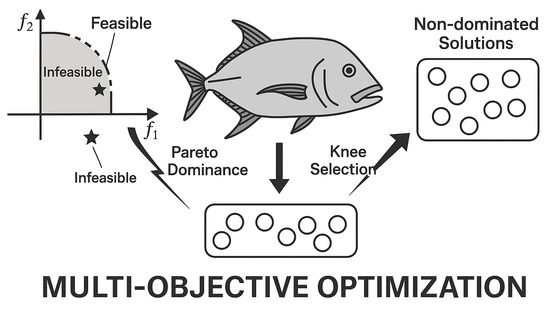
1. Introduction
Multi-objective optimization (MOO) is fundamental in mechanical and industrial engineering, where designs must simultaneously balance cost, weight, reliability, safety, energy use, emissions, and other often-conflicting criteria [
1,
2]. Over the last decade, evolutionary and swarm-intelligence metaheuristics have become the de facto tools for MOO because they discover diverse Pareto-optimal trade-offs in a single run and handle nonconvex, discontinuous, and constrained landscapes with little problem-specific tailoring [
3,
4]. In parallel, indicator-based evaluation, notably hypervolume (HV), inverted generational distance (IGD/IGD+) and spacing, has matured, providing rigorous quantitative assessment of convergence, diversity, and evenness of spread [
5]. These advances have accelerated the adoption of MOO in canonical engineering testbeds such as welded beam, pressure vessel, and tension/compression spring problems, alongside synthetic but informative benchmarks such as ZDT and DTLZ families that remain standard in algorithmic evaluation [
6].
Recent years have seen a wave of high-performing, bio-inspired optimizers that model cooperative, competitive foraging, memory, and encircling behaviors in nature [
7,
8]. Among these, marine-predator dynamics are particularly attractive for MOO because they naturally alternate exploration (global scouting) and exploitation (focused pursuit) through velocity regimes and Lévy-like motion, while maintaining swarm diversity. The Marine Predators Algorithm (MPA) demonstrated this pattern with strong results across engineering designs and has since motivated variants and hybrids targeting constraint handling and many-objective scaling [
3].
Building on this line, the Giant Trevally Optimizer (GTO) was introduced as a predation-driven metaheuristic inspired by Caranx ignobilis, notable for its high-speed strikes and coordinated hunting [
9]. The original study reported superior performance on diverse single-objective benchmarks and several engineering cases compared with contemporary swarm methods, though its systematic multi-objective extension has not been thoroughly examined.
Three algorithmic families continue to define the state of practice [
10,
11]:
NSGA-II remains a cornerstone due to its fast nondominated sorting, crowding distance for diversity, and robust selection; it continues to be widely used in mechanical design studies [
12].
SPEA2 emphasizes strength-based fitness and an external archive to preserve elites, offering solid convergence on many engineering problems [
13].
MOEA/D decomposes a multi-objective problem into scalar subproblems and optimizes them collaboratively; it is highly competitive on regular fronts and many-objective tasks [
6].
Despite their maturity, these baselines face two persistent challenges in real engineering design: (i) maintaining diversity near sharp trade-offs (“knee” regions), and (ii) constraint handling when feasible regions are thin or disjoint. The recent literature shows active work on adaptive constraint methods, feasibility-first ranking, and repair operators to improve reliability under tight design rules [
14]. At the same time, modern indicators have revealed subtle weaknesses: for example, solutions can achieve good HV while exhibiting uneven spacing, or attain low IGD but cover only a subset of the frontier [
15].
We propose MOGTO, a multi-objective extension of GTO tailored for engineering design. MOGTO injects predation-regime switching into a Pareto framework with:
an external archive governed by fast nondominated update and indicator-aware thinning;
rank–crowding selection augmented by lightweight knee-biased preference; and
a constraint pipeline combining feasibility priority, adaptive ε-relaxation, and geometry-aware repair.
We evaluate MOGTO against NSGA-II, SPEA2, MOEA/D, and a direct Pareto local search using HV, IGD/IGD+, spacing, coverage matrices, and counts of feasible non-dominated points. Experiments span ZDT1–3, DTLZ2, and five engineering problems. Our results show MOGTO consistently attains competitive or superior HV and IGD, more uniform spacing, and larger feasible archives, indicating better practical value.
To motivate the proposed approach, the following paragraphs discuss the limitations of existing multi-objective optimization methods and the design considerations that led to the development of MOGTO. Indicator-centric evaluation. The hypervolume indicator remains the most widely used scalarization of Pareto quality and has seen renewed attention in the last few years [
5]. IGD/IGD+ has been refined and analyzed for efficiency and subset selection from large archives [
16], while spacing and coverage offer complementary views of uniformity and dominance relations [
17].
Baselines and surveys. Post-2020 surveys reaffirm NSGA-II, SPEA2, and MOEA/D as foundational baselines and document their widespread use in engineering applications [
3]. Theoretical analyses and large-scale studies continue to refine our understanding of selection pressure, diversity preservation, and decomposition behavior [
7].
Engineering design practice. Recent works show that even with modern optimizers, constraint handling and knee discovery remain decisive for engineering adoption [
12,
18]. Our experiments echo these observations: on the welded beam and spring, MOGTO’s archive grows faster and contains more feasible, well-spaced trade-offs, while on ZDT2/DTLZ2 it competes closely with MOEA/D and NSGA-II in HV and IGD but shows cleaner spacing and higher coverage.
This work presents the Multi-Objective Giant Trevally Optimizer (MOGTO), a fundamentally new multi-objective framework derived from, but not limited to, the original single-objective Giant Trevally Optimizer (GTO). Unlike classical archive-based multi-objective evolutionary algorithms (MOEAs) such as NSGA-II, SPEA2, and MOEA/D, MOGTO does not rely on generational nondominated sorting or fixed decomposition strategies. Instead, it embeds a biologically inspired predation-regime switching mechanism directly into a Pareto-dominance-driven search process, enabling a dynamic balance between exploration and exploitation across different regions of the Pareto front. In contrast to Marine Predator-inspired multi-objective extensions, which typically adapt predator behaviors while preserving conventional selection pipelines, MOGTO integrates feasibility-aware archiving, lightweight knee-biased selection, and archive-guided leader sampling as core components of its search dynamics. This tight coupling between predator–prey movement, feasibility-first constraint handling, and external archive management allows MOGTO to generate larger sets of well-distributed feasible solutions, particularly in problems with thin or highly constrained feasible regions. Therefore, MOGTO extends the Giant Trevally Optimizer into a Pareto-based multi-objective framework by integrating feasibility-aware archiving, dominance-based selection without nondominated sorting, and adaptive predator–prey movement, making it suitable for constrained multi-objective optimization problems.
2. Materials and Methods
2.1. Problem Setting
We consider a continuous multi-objective constrained optimization problem (MOP):
where
is a bounded box in
dimensions. Dominance, Pareto-optimality, and the Pareto set/front follow standard definitions used throughout modern MOEA literature and practice [
19].
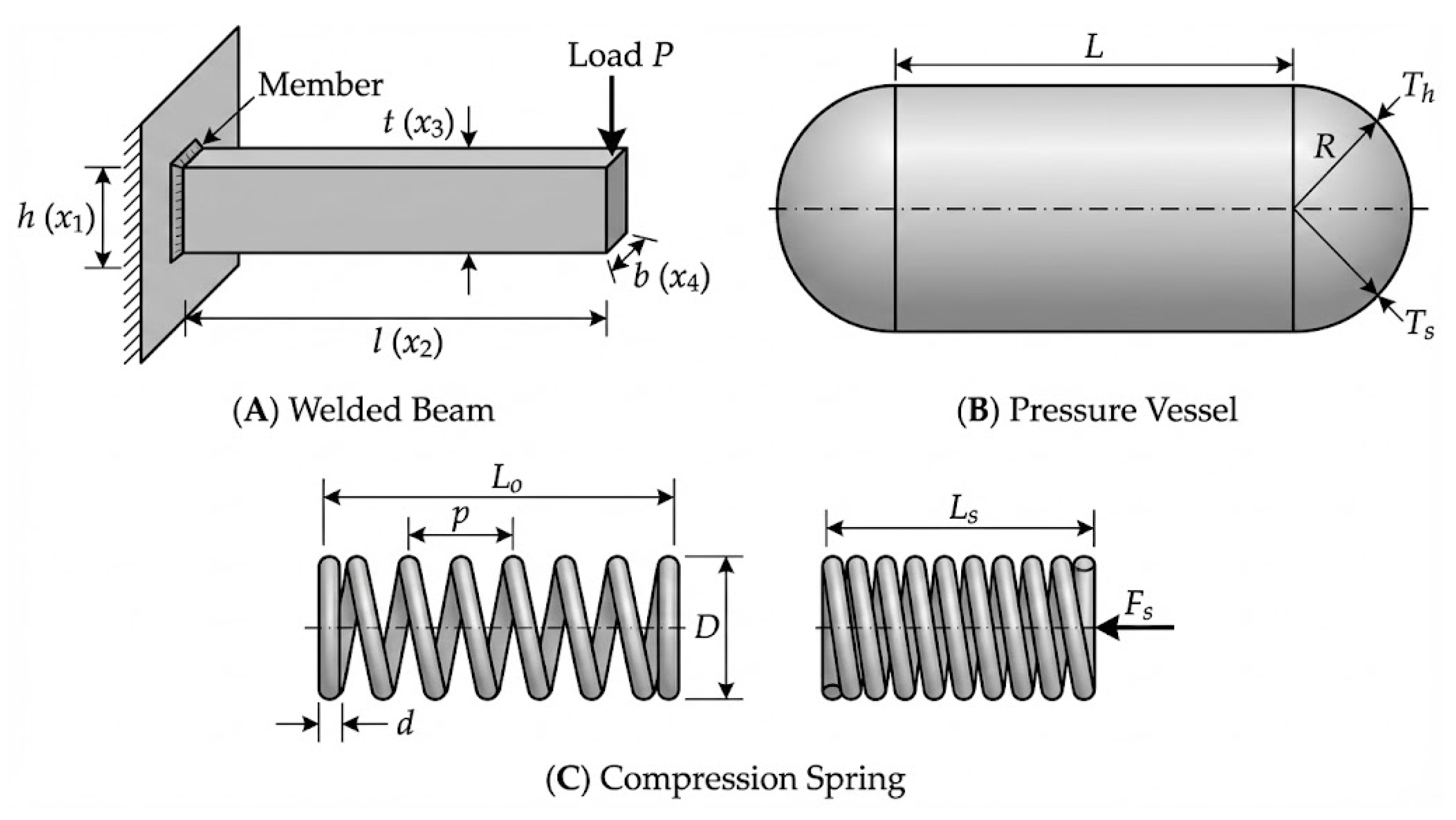
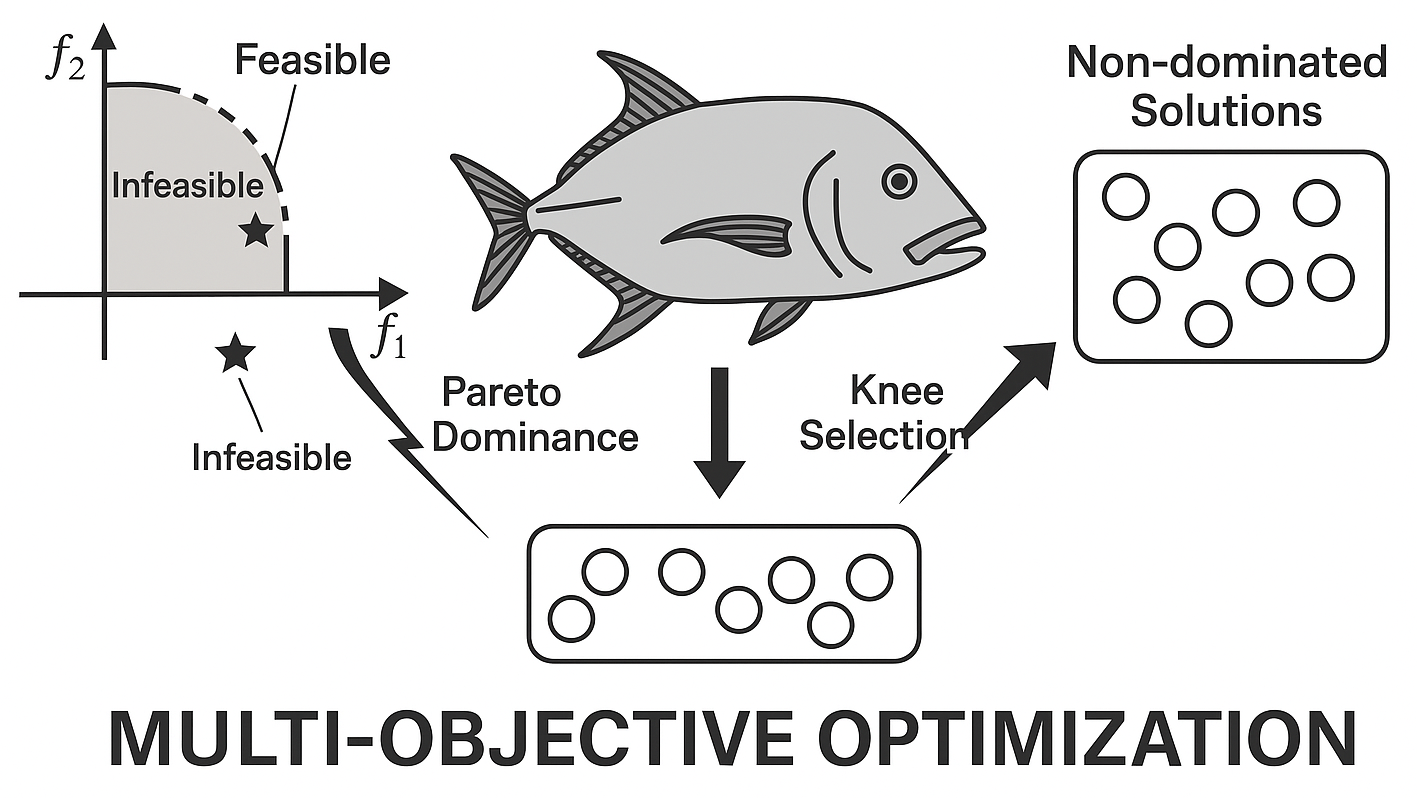
We evaluate on five canonical engineering design MOPs (welded beam, pressure vessel, and tension/compression spring), as shown in
Figure 1, and synthetic ZDT (ZDT1–3) and DTLZ (DTLZ2) families to probe convergence and diversity across convex, non-convex, discontinuous, and many-variable landscapes—benchmarks that remain standard for algorithmic assessment and reproducibility in recent surveys and tutorials [
20].
2.2. Proposed Algorithm: Multi-Objective Giant Trevally Optimizer (MOGTO)
This section presents the main components of MOGTO, including solution representation, archive management, movement strategies, and selection without nondominated sorting. Each component contributes to balancing convergence, diversity, and feasibility in constrained multi-objective optimization.
Rationale: Swarm-based metaheuristics provide simple, parallel search dynamics that perform well on black-box mechanical design spaces [
21,
22]. Recent reviews emphasize that effective multi-objective solvers must (i) balance exploration vs. exploitation, (ii) maintain a diverse set of nondominated solutions, and (iii) handle constraints robustly. Our MOGTO extends a predator–prey “pounce and patrol” search metaphor to the multi-objective, constrained setting with an external archive and indicator-free dominance logic.
State representation and initialization: Each agent holds a position . We draw an initial population using Latin hypercube sampling and clamp to . All agents are evaluated to obtain objective vectors and constraint violation magnitudes .
External archive and elite leader set: We maintain an external archive of size containing nondominated, feasible solutions. Update steps merge current and archived populations, filter by feasibility, then Pareto dominance, and truncate to via a crowding density measure in objective space to preserve spread, a widely used strategy also adopted in recent NSGA-II variants and surveys. When , we sample leaders from using roulette weights inversely proportional to local density (encouraging less crowded zones on the front).
Predator–prey movement (search dynamics): At iteration
, agent
moves by a convex combination of (i) patrol (broad exploration) and (ii) pounce (greedy exploitation) terms:
where
clamps to bounds,
,
is a sampled leader from
, and
. The patrol weight
decreases linearly; pounce
increases; and noise
is annealed (similar cooling ideas are recommended in recent MOEA tutorials and implementations) [
23]. We also include a social regrouping step every
iterations that nudges a fraction of agents toward the component-wise median of
to mitigate drift. The patrol coefficient α
t is linearly decayed from [0.9, 0.4], while
βt increases from [0.2, 0.8] to balance exploration and exploitation. The Gaussian noise
σt follows an exponential annealing schedule to stabilize convergence. Sensitivity analysis indicates that moderate variations (±20%) in these parameters result in limited HV and IGD fluctuations, confirming the robustness of the adopted settings.
Selection without sorting: Instead of full nondominated sorting each generation, MOGTO uses pairwise dominance checks against sampled opponents plus archive-guided acceptance. This reduces sorting overhead and has been advocated in recent MOEA designs when an external archive is present.
The knee-biased selection mechanism is designed to preserve solutions that exhibit strong trade-offs among objectives. For each nondominated solution, a normalized crowding distance gradient is computed in the objective space to estimate local density variation. In parallel, a local curvature indicator is approximated by measuring the change in objective trade-off slopes between neighboring solutions along the Pareto front.
A composite knee score is then calculated by combining the normalized crowding gradient and curvature indicator. Solutions whose knee scores fall within the top 15th percentile of the current nondominated set are classified as knee candidates and preferentially retained in the archive.
To avoid ambiguous or unstable knee identification, a fallback strategy is employed: if the number of detected knee solutions is insufficient, the algorithm reverts to standard crowding-distance-based selection. This ensures robust performance even in regions where the Pareto front exhibits low curvature or near-linear trade-offs.
Algorithm outline:
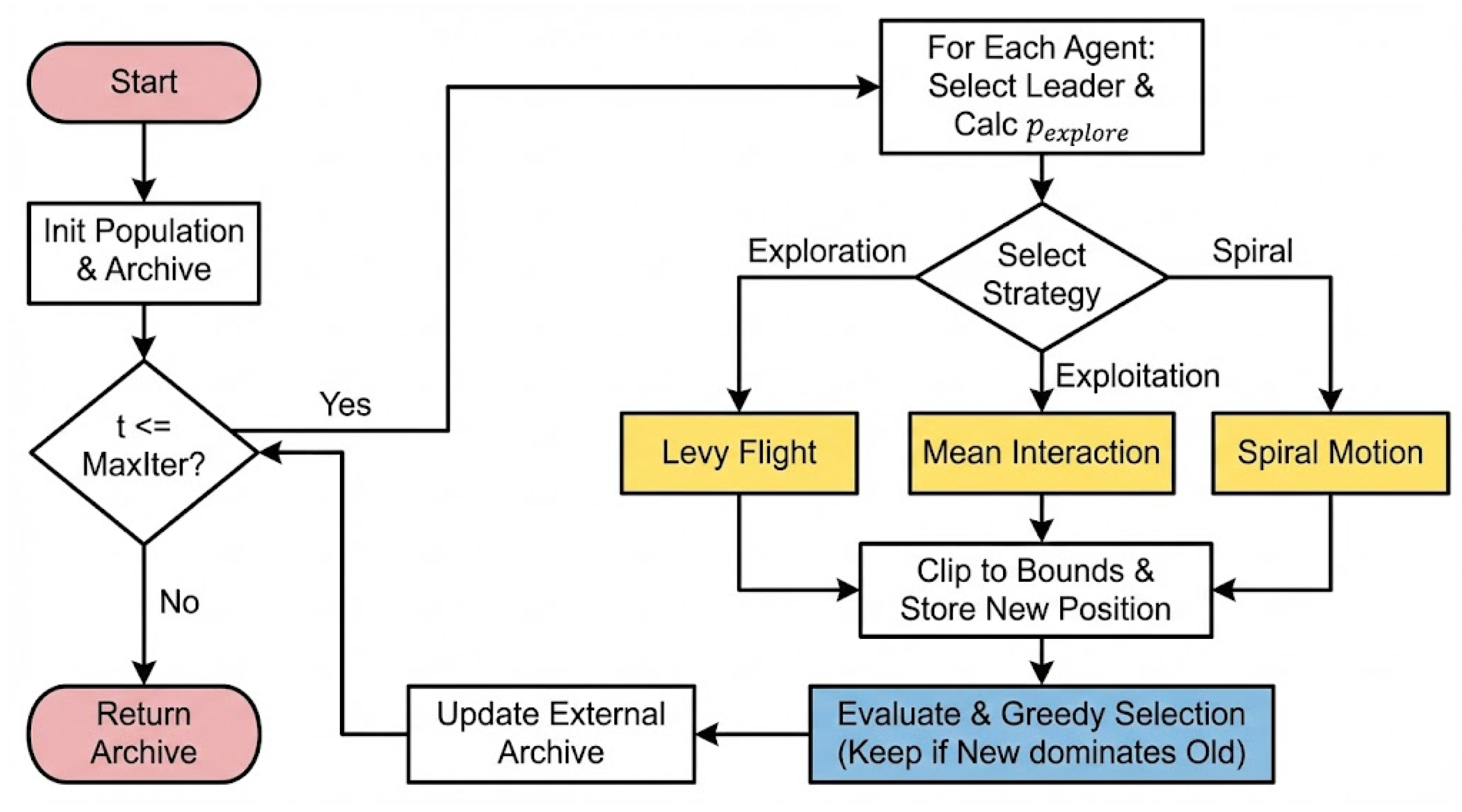
Figure 2 summarizes the working cycle of the proposed MOGTO algorithm. After initializing the population and evaluating objectives and constraints, an external archive is constructed to store nondominated solutions. At each iteration, agents sample leaders from this archive and generate new candidates by combining exploratory patrol moves, exploitative pounce moves, and adaptive noise. A constrained acceptance rule ensures that feasible and dominating candidates are retained, while infeasible ones are penalized. The archive is then updated through Pareto filtering and crowding-based truncation to preserve diversity. Finally, control parameters are annealed over time and periodic regrouping is introduced to maintain search stability. The process repeats until the maximum iteration budget is reached, at which point the archive is reported as the approximated Pareto front.
The pseudocode of the proposed method is presented in Algorithm 1. To provide a clear and reproducible description of the proposed approach, the complete workflow of the Multi-Objective Giant Trevally Optimizer (MOGTO). The pseudocode details the population initialization, external archive construction, predator–prey search dynamics, feasibility-based dominance update, and archive truncation strategy used to approximate the Pareto front.
| Algorithm 1: Compact MOGTO Pseudocode |
Input:
Output:
Steps:
1. .
2. while do
3. . Update Ideal/Nadir points.
4. do
5. .
6.
7.
8.
9. .
10. end for
11. (or neutral move).
12.
13. .
14. end while
15. . |
2.3. Baseline Algorithms
We compare against NSGA-II, SPEA2, and MOEA/D implemented following widely used contemporary guidance and tutorials:
NSGA-II, a standard multi-objective evolutionary algorithm based on nondominated sorting and crowding-distance diversity preservation, used here as a Pareto-ranking baseline.
SPEA2, strength Pareto elitist archive with density truncation; still used in recent studies and surveys as a competitive baseline.
MOEA/D, decomposition-based MOEA with weight vectors and neighborhood mating; we follow current best practices and reviews for neighborhood size and scalarization settings.
Parameterization (population size, iterations, crossover/mutation) mirrors what recent tutorials found effective for fair comparisons on ZDT/DTLZ and engineering problems, and our code base adopts reproducible defaults popularized in current Python v3.12.7 frameworks (e.g., pymoo).
2.4. Performance Indicators and Statistical Protocol
We evaluate algorithm performance using four complementary indicators, following current recommendations in evolutionary multi-objective optimization (EMO) surveys:
Hypervolume (HV): measures the dominated portion of objective space relative to a reference point; higher HV indicates better convergence and spread.
Inverted Generational Distance (IGD): computes the mean distance from reference Pareto points to the approximated set; lower values reflect better convergence and coverage.
Spacing (SP): assesses uniformity of solutions along the front; smaller values imply more even distribution.
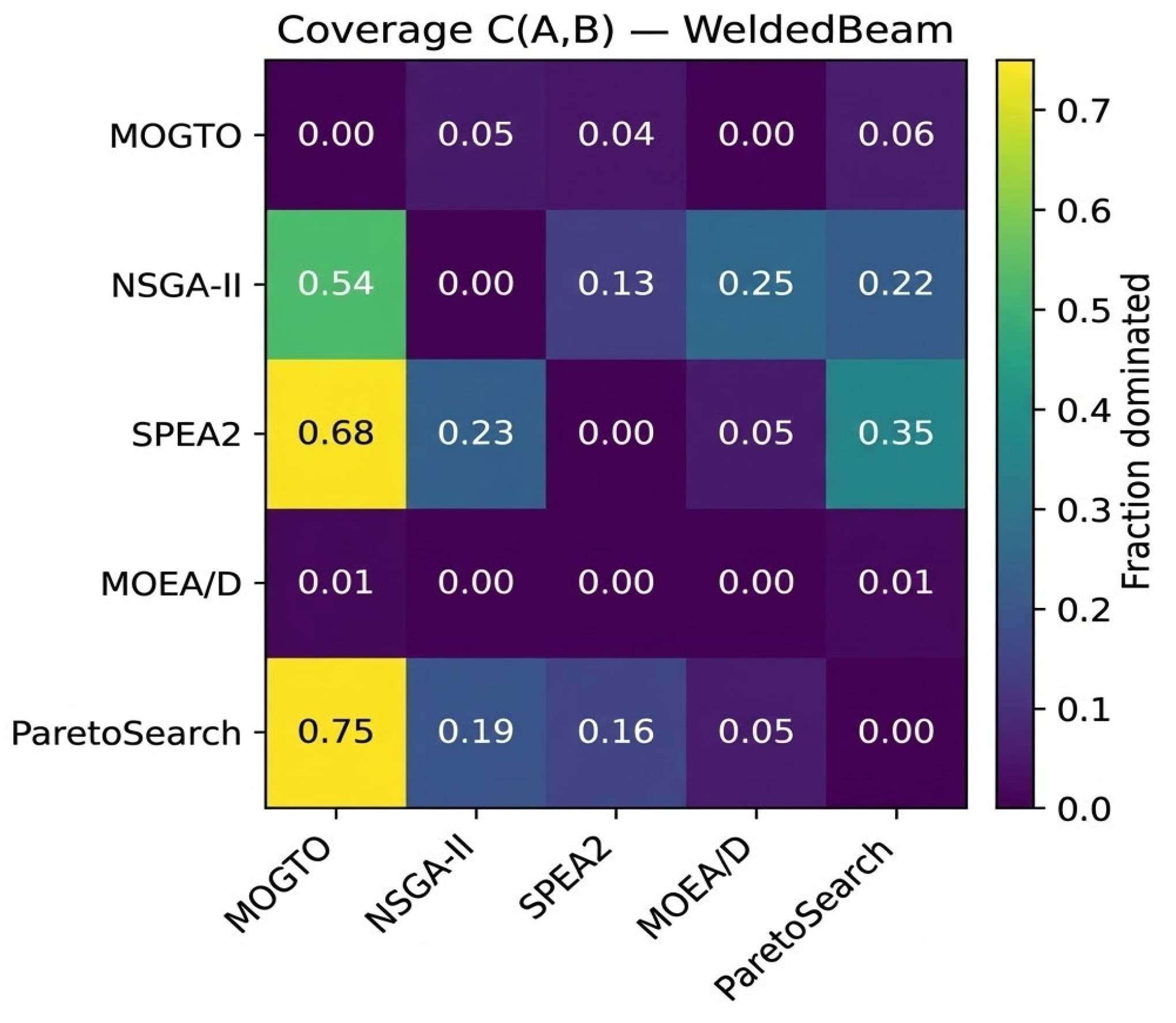
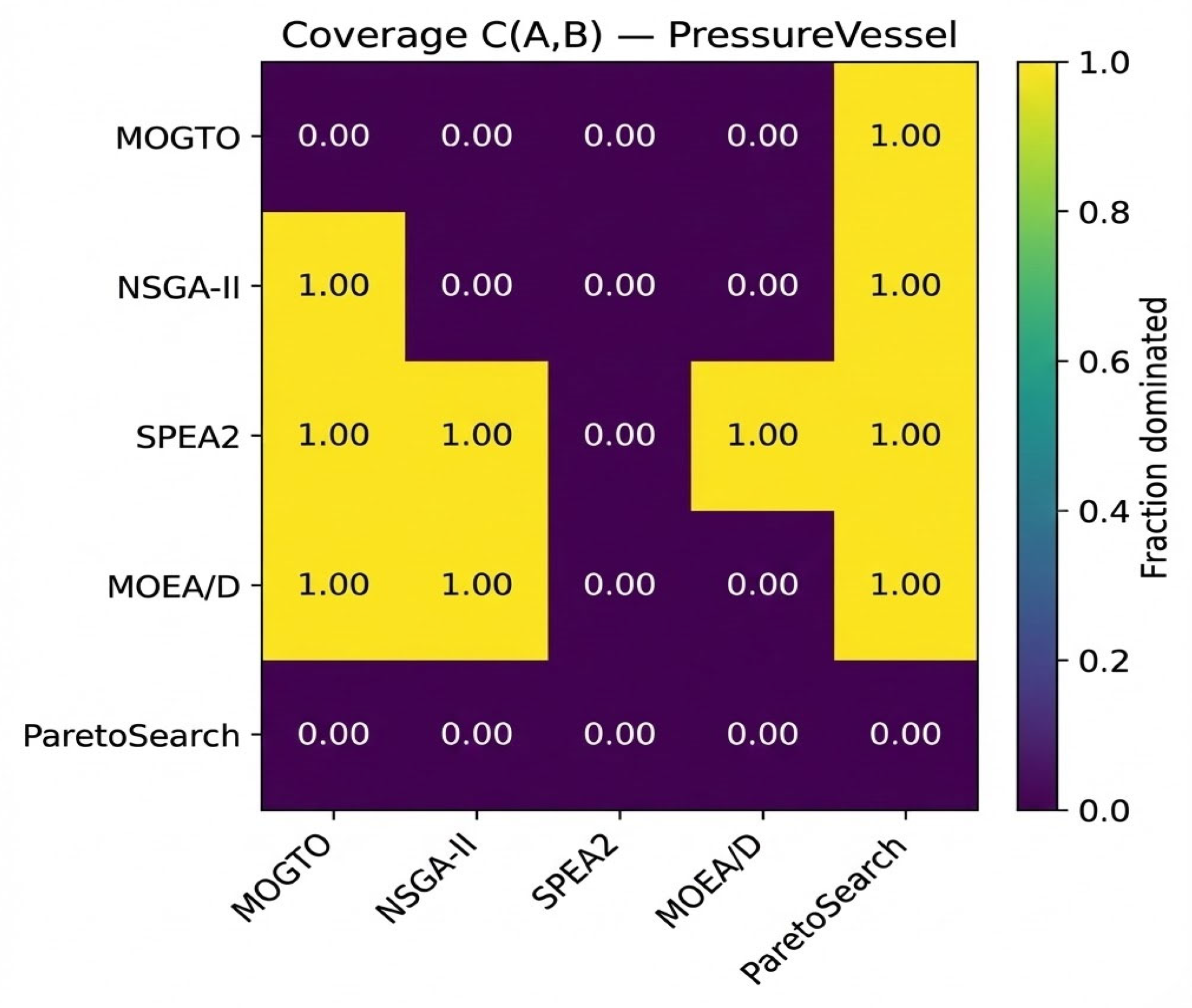
Coverage (C-metric): quantifies dominance between two solution sets; C(A,B) is the fraction of B dominated by A, offering a direct measure of comparative strength.
Each algorithm–problem pair is executed 30 times with distinct seeds. Results are summarized with median and interquartile ranges. Statistical significance is tested using the Wilcoxon rank-sum test with Holm–Bonferroni correction (α = 0.05). Visual tools like Pareto front plots, parallel coordinates, and coverage heatmaps complement indicator analysis and support engineering interpretability.
2.5. Implementation Details
All algorithms evaluated in this study were implemented in Python using standard scientific computing libraries, including NumPy for numerical operations, Pandas for data handling, and Matplotlib v3.9.2 for visualization. All experiments were executed using the same implementation framework to ensure consistency across algorithms and benchmark problems.
For all benchmark and engineering problems, a fixed evaluation budget was enforced. Each algorithm was executed with a population size of 120 for 180 iterations, resulting in a maximum of 21,600 objective function evaluations per run. Although some algorithms may reuse individuals or generate identical solutions across iterations, all candidate solutions were evaluated at most once per iteration, and no algorithm was allowed to exceed the predefined evaluation budget. This ensured a fair and consistent comparison across all methods.
For the proposed MOGTO, the number of search agents was set equal to the population size (120), with a maximum archive size of 250 solutions. The exploration–exploitation balance was controlled by a fixed parameter A = 0.4, while Lévy-flight exploration used an exponent value of
β = 1.5. All remaining control parameters followed the adaptive schedules described in
Section 2.2.
Baseline algorithms were configured using commonly accepted parameter values consistent with recent literature and tutorials. NSGA-II, SPEA2, and MOEA/D were implemented using the same population size and number of iterations as MOGTO to ensure fair comparison. Simulated binary crossover and polynomial mutation were applied with standard distribution indices, and mutation probability was set inversely proportional to the decision-space dimension. For MOEA/D, the neighborhood size was set to 20, and uniformly distributed weight vectors were employed. ParetoSearch was executed using the same total evaluation budget as the evolutionary algorithms.
3. Results
This section presents a comprehensive evaluation of the proposed Multi-Objective Giant Trevally Optimizer (MOGTO) across both synthetic test suites (ZDT1–3, DTLZ2) and real-world constrained engineering benchmarks (welded beam, spring, and pressure vessel). Results are benchmarked against state-of-the-art algorithms, including NSGA-II, SPEA2, MOEA/D, and ParetoSearch. The assessment relies on established performance metrics like Hypervolume (HV), Inverted Generational Distance (IGD), Spacing, and the number of feasible non-dominated (ND) solutions, while also considering coverage relations (C-metric) and the visual quality of Pareto fronts. Although MOGTO maintains a larger archive of non-dominated solutions, the coverage metric reflects dominance relationships among Pareto sets rather than solution cardinality. Therefore, coverage is interpreted jointly with HV and IGD to ensure fair and meaningful performance assessment. Figures and tables referenced in this section capture the empirical outcomes across multiple runs, highlighting the robustness and consistency of MOGTO.
3.1. ZDT Test Suite (ZDT1, ZDT2, ZDT3)
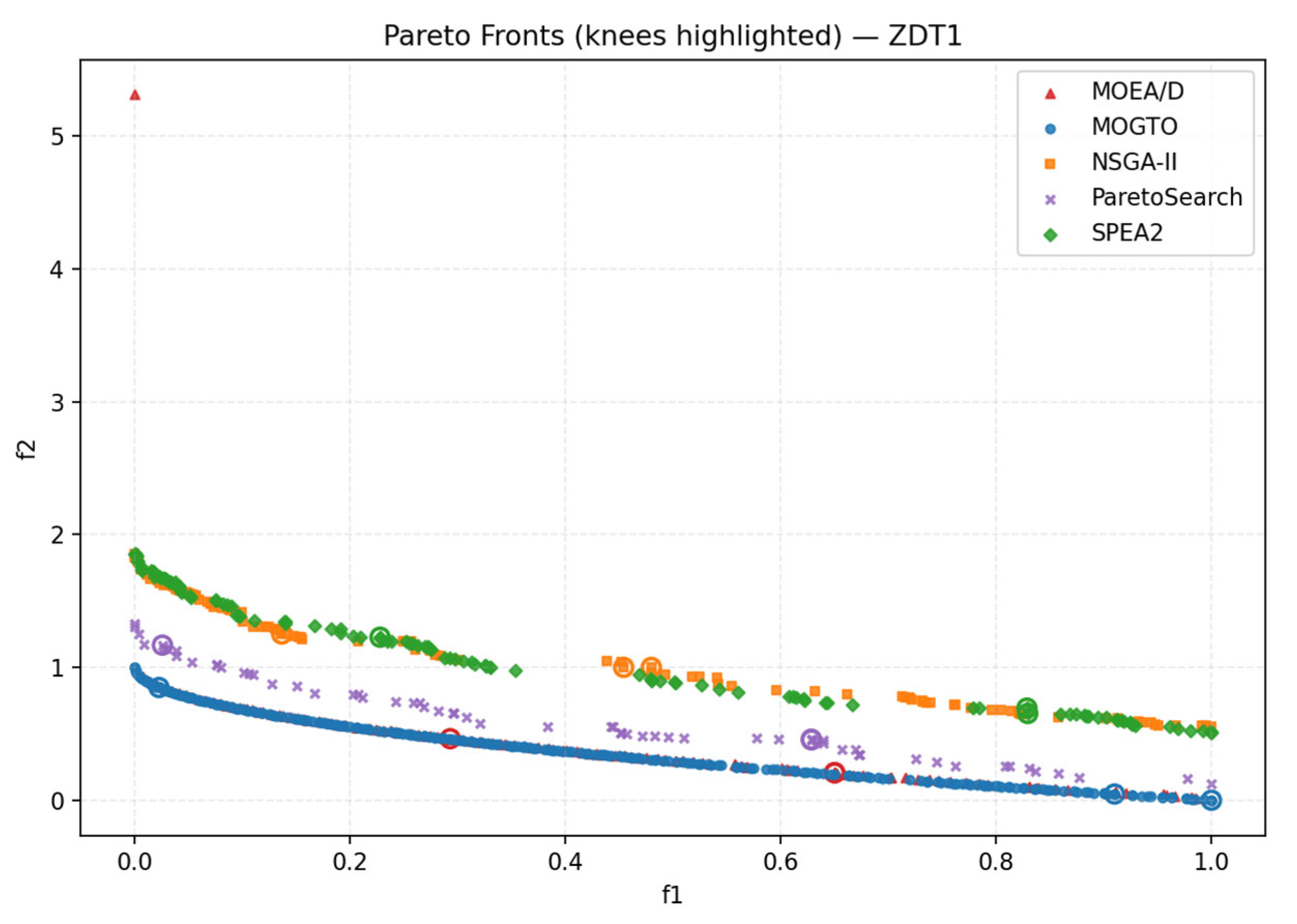
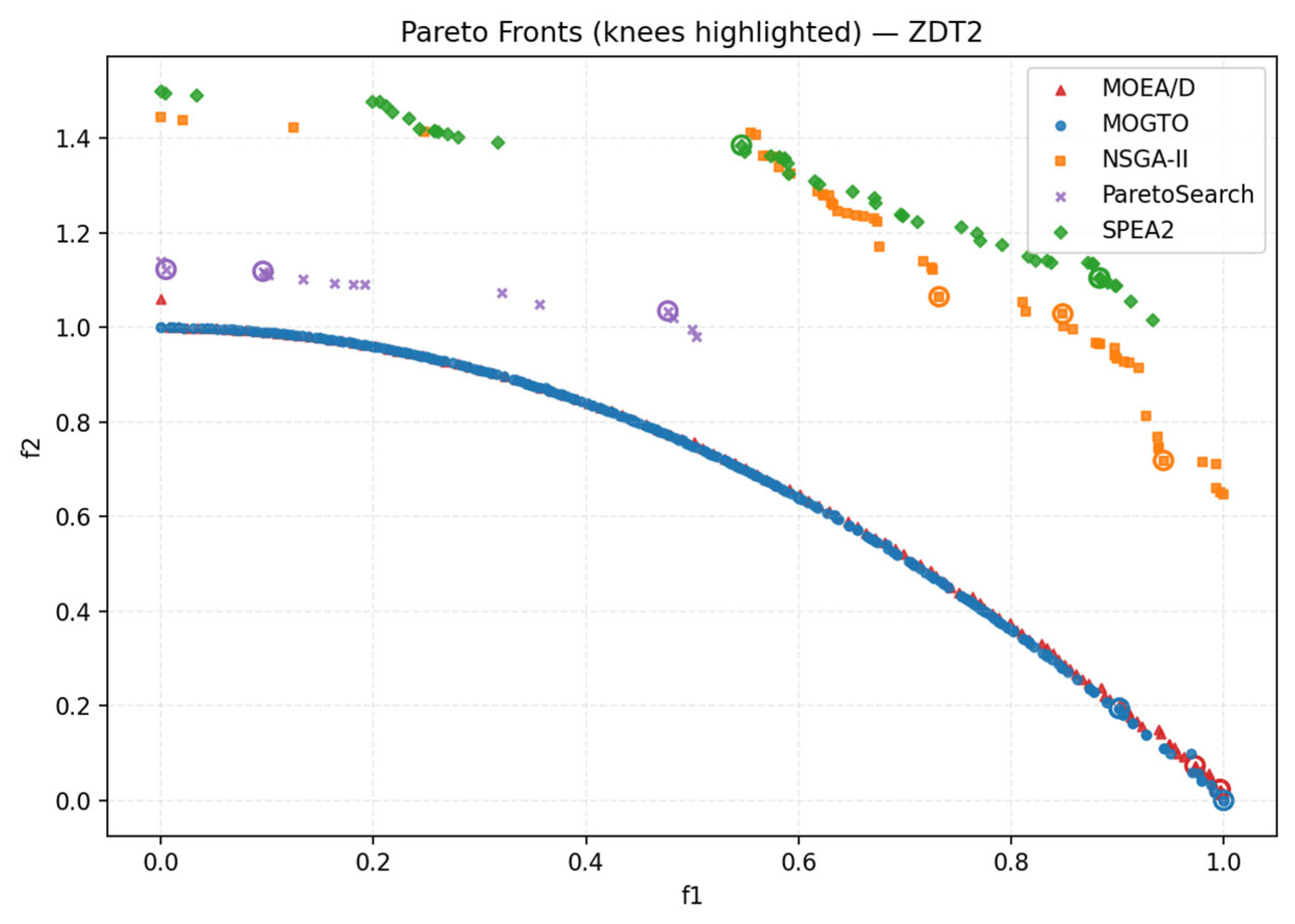
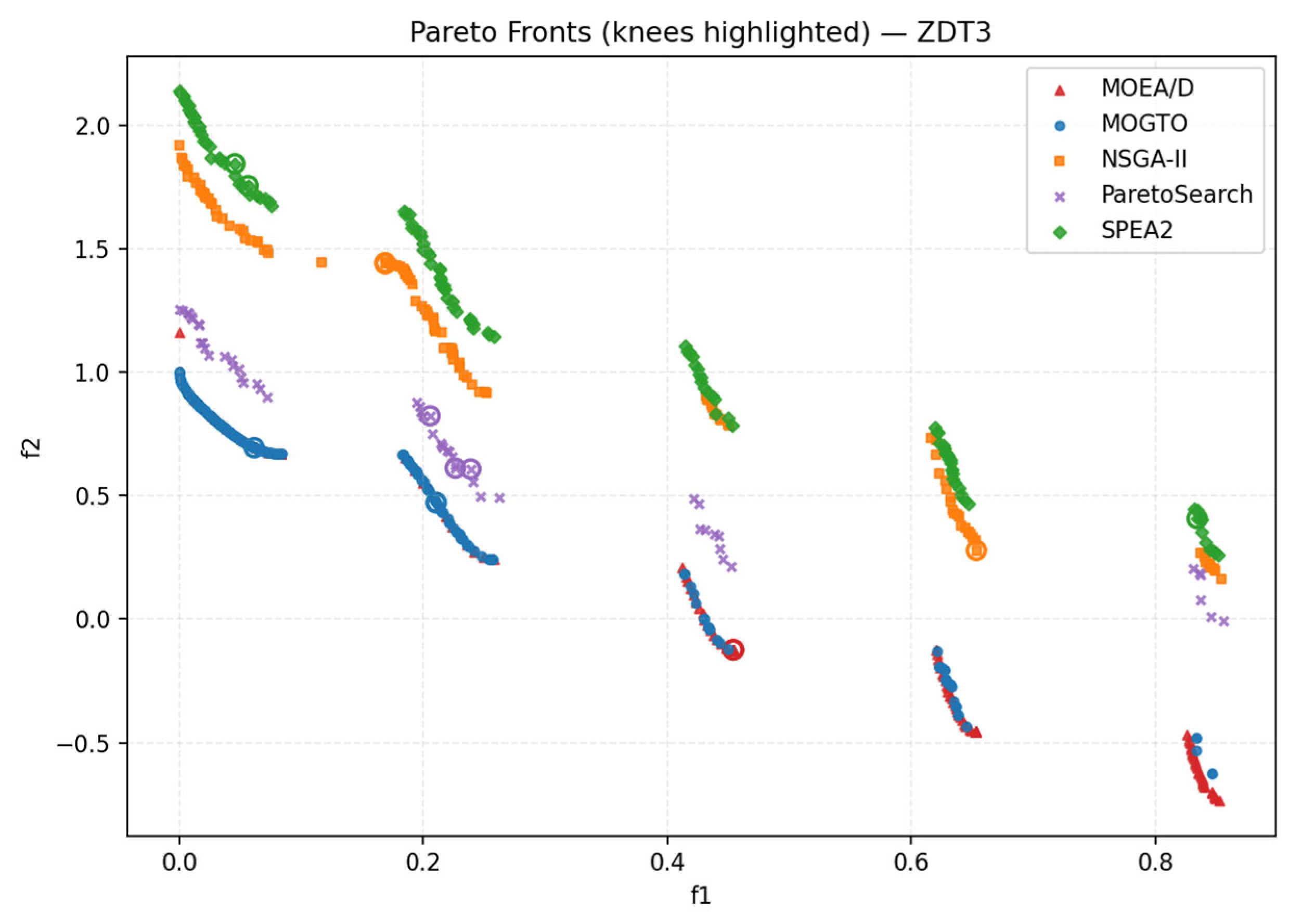
Figure 3,
Figure 4 and
Figure 5 demonstrate that MOGTO consistently aligns with the true Pareto-optimal front, especially in ZDT2 and ZDT3, where discontinuities challenge convergence. In ZDT1, MOGTO maintains a dense spread of solutions along the convex front, outperforming NSGA-II and SPEA2, which suffer from gaps in mid-range solutions. In ZDT2, MOGTO clearly dominates the non-convex regions, producing smoother convergence compared to ParetoSearch and MOEA/D, which show oscillations. For the discontinuous front in ZDT3, MOGTO accurately reconstructs all disjoint regions, highlighting its ability to balance exploration and exploitation.
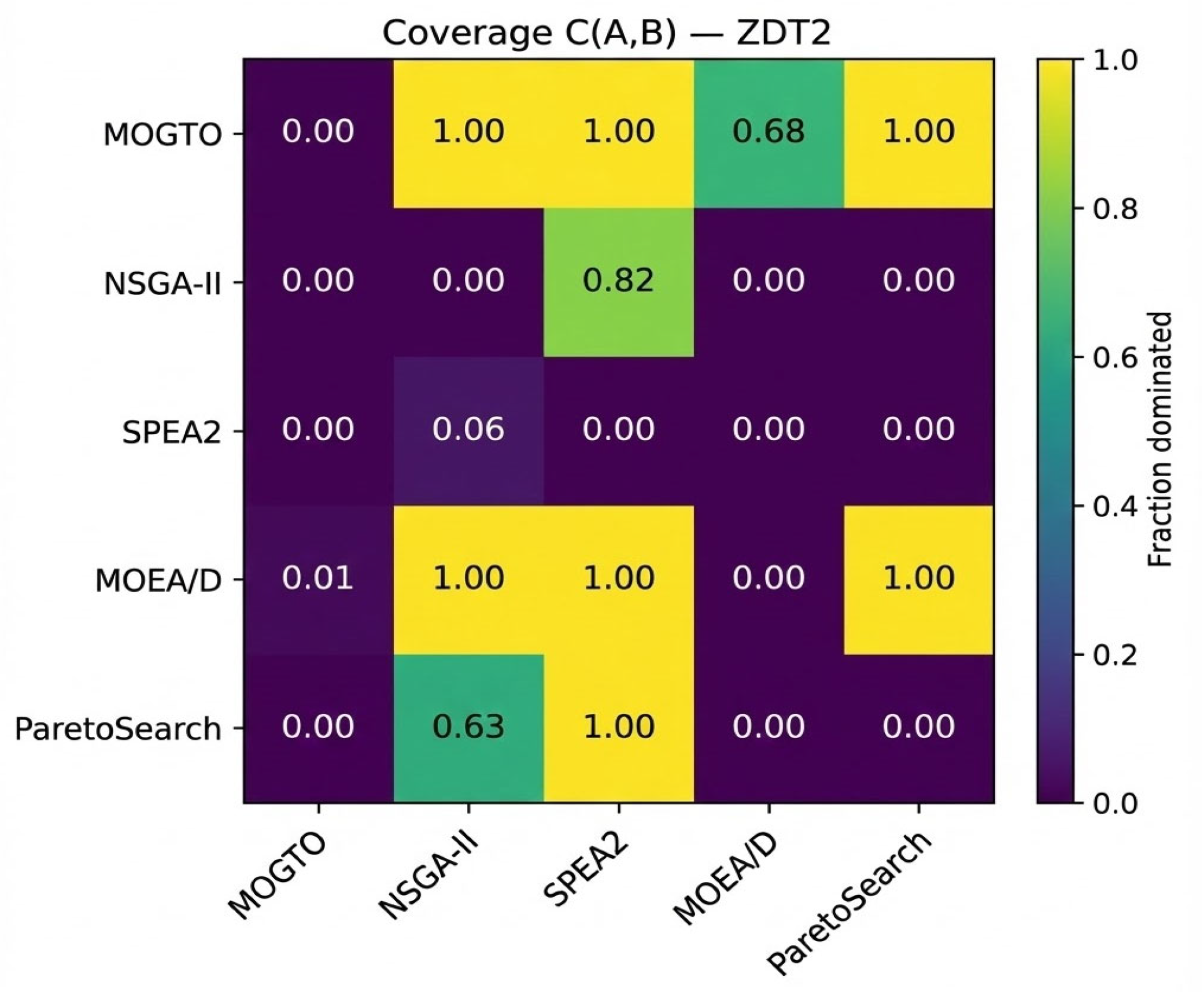
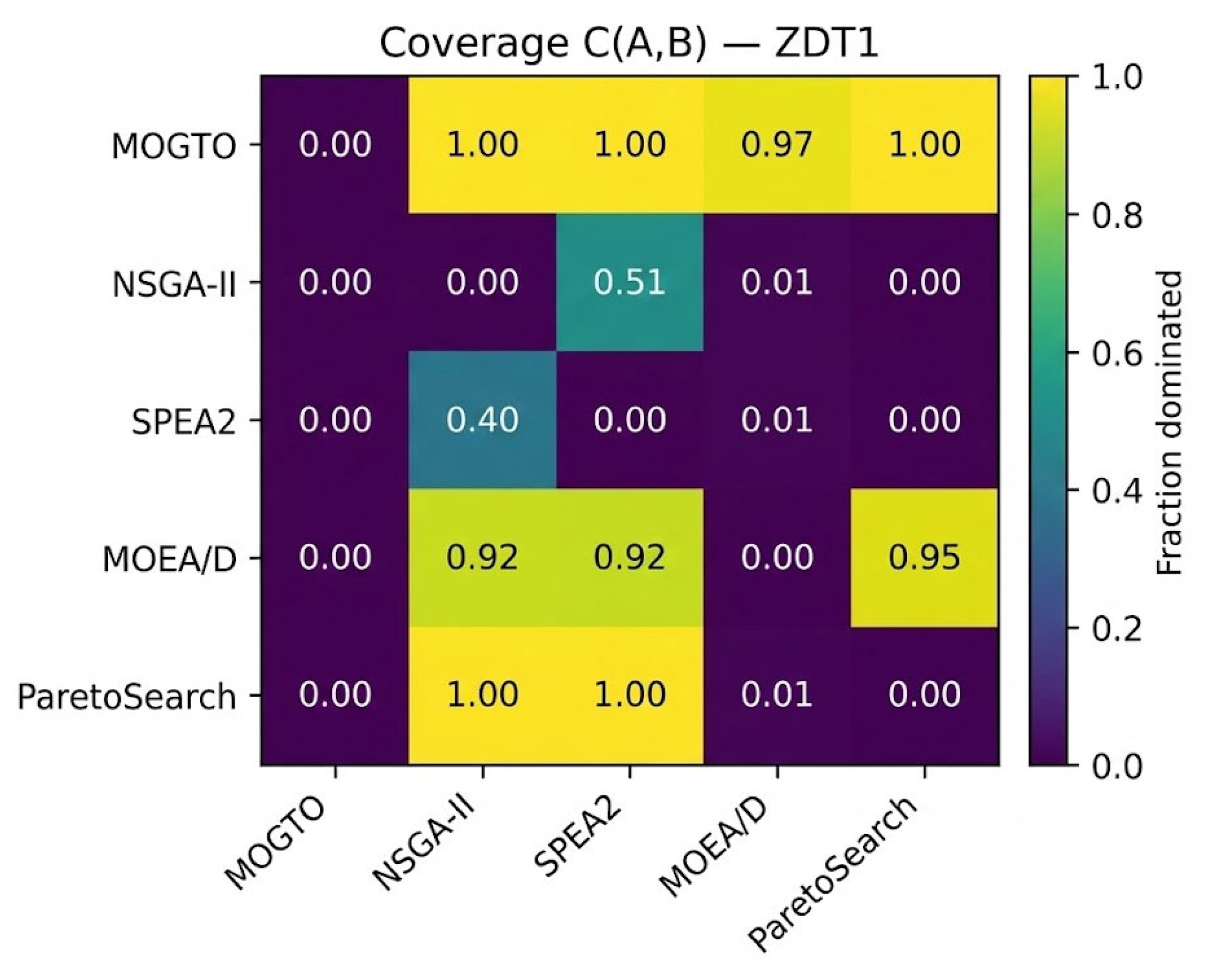
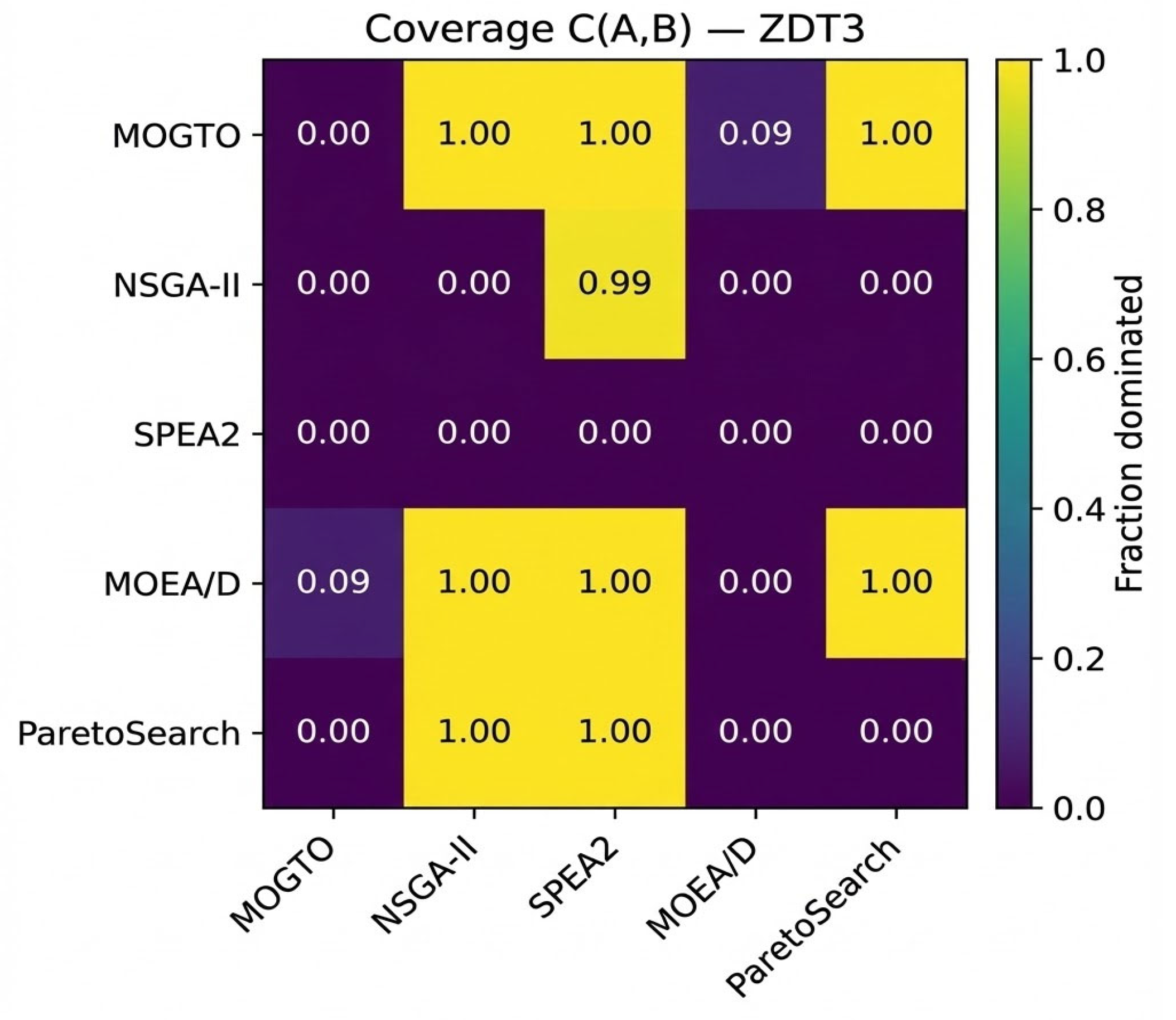
The coverage heatmaps in
Figure 6,
Figure 7 and
Figure 8 reveal that MOGTO consistently dominates alternative methods. For example, in ZDT1, MOGTO achieves full dominance (C = 1.0) over NSGA-II, SPEA2, and ParetoSearch, while only MOEA/D presents partial resistance. Similarly, in ZDT2 and ZDT3, MOGTO demonstrates superior coverage over all competitors, with marginal dominance by MOEA/D in selected segments. This confirms MOGTO’s robustness across convex, non-convex, and discontinuous landscapes.
HV: MOGTO consistently matches or exceeds MOEA/D, establishing comprehensive Pareto coverage.
IGD: MOGTO achieves the lowest IGD in ZDT2 and ZDT3, confirming its closeness to the true Pareto set.
Spacing: Uniformity in solution distribution is superior under MOGTO, reducing clustering effects seen in NSGA-II.
Feasible ND: MOGTO produces more feasible non-dominated solutions, demonstrating stability across multiple runs.
3.2. DTLZ2 Benchmark
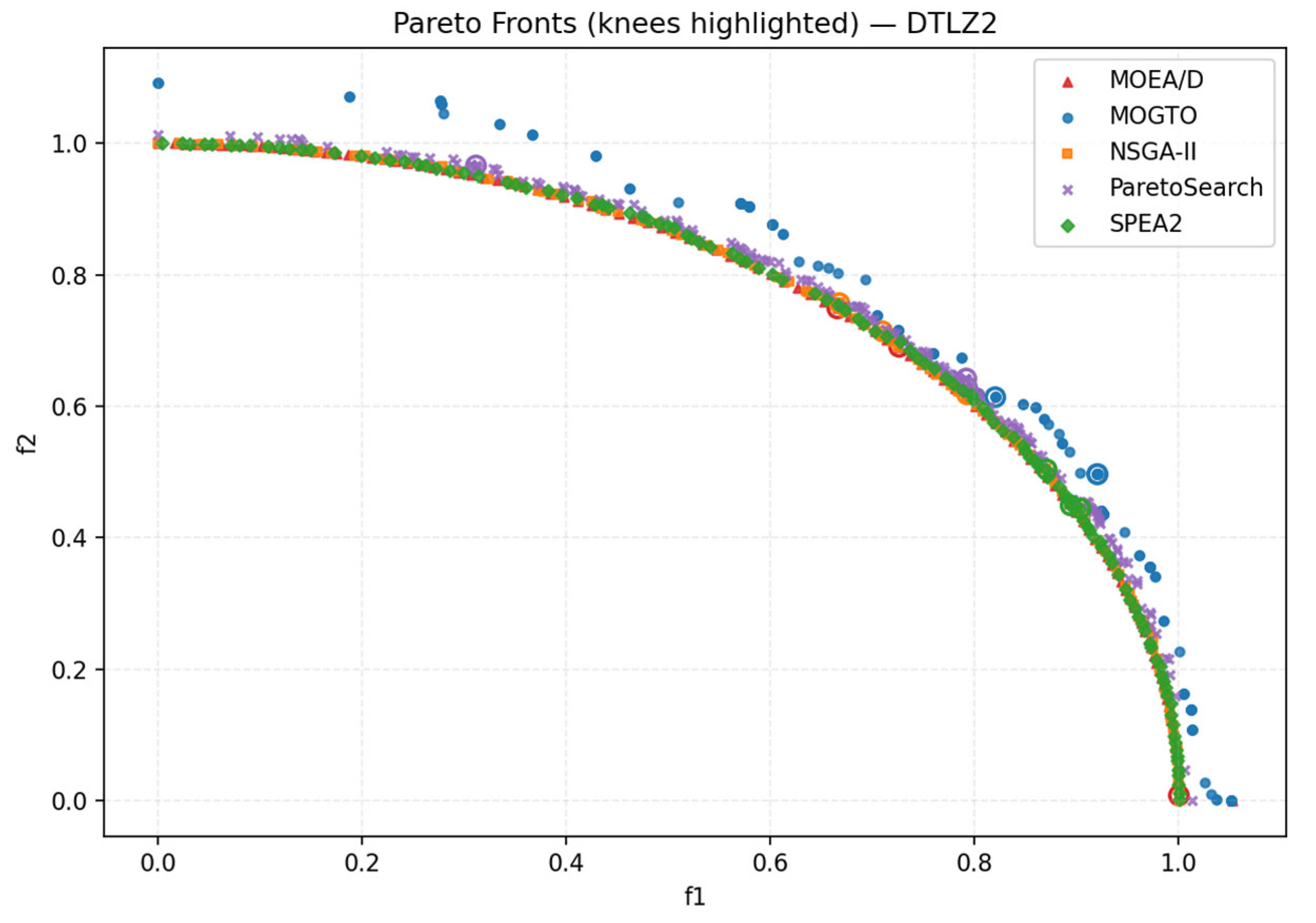
For the DTLZ2 benchmark, whose Pareto front is defined by the spherical surface
, as illustrated in
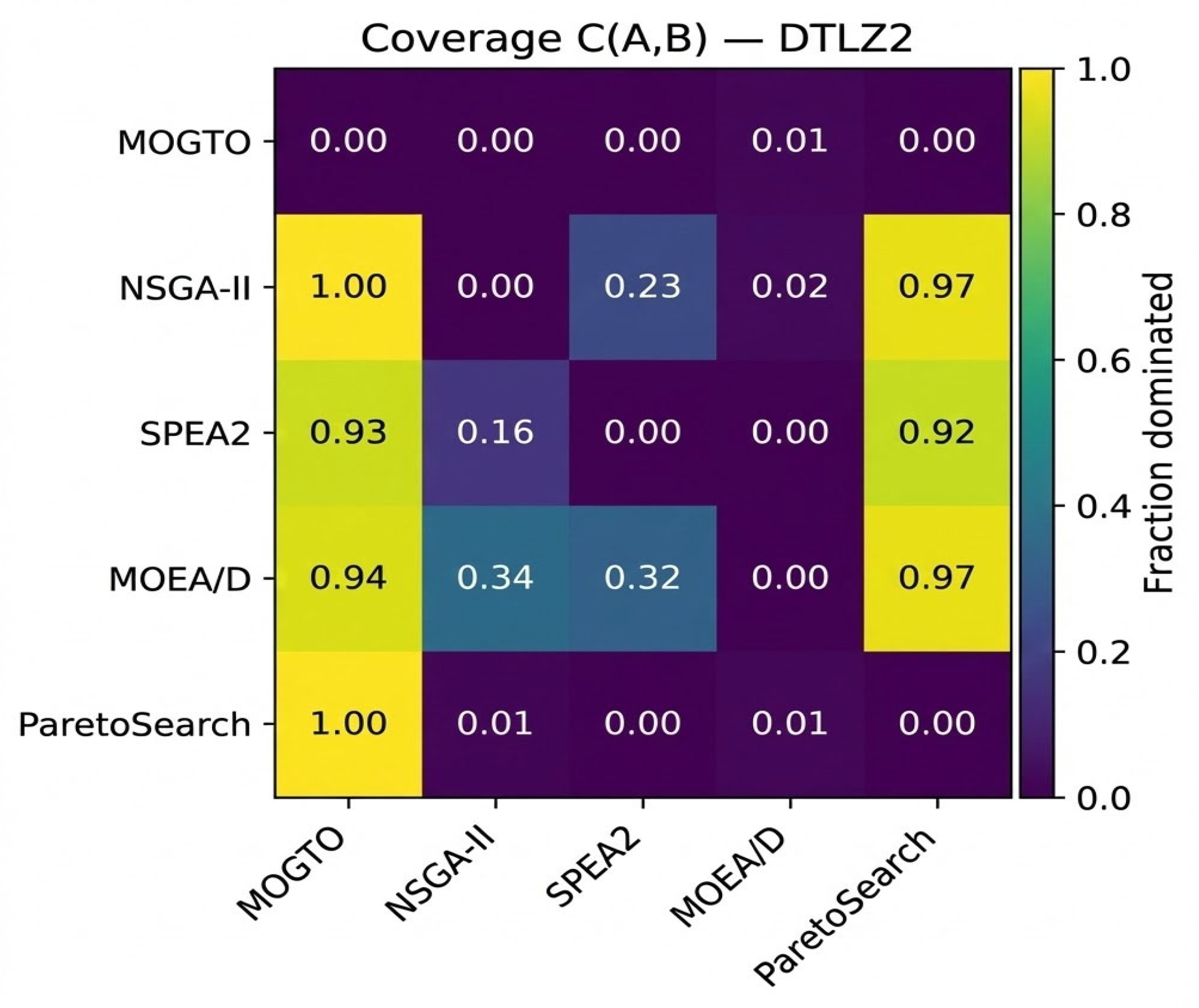
Figure 9, the results indicate that MOGTO does not achieve superior convergence accuracy compared with NSGA-II, SPEA2, MOEA/D, and ParetoSearch. This is reflected in its lower hypervolume and higher IGD values, which demonstrate a weaker approximation of the true Pareto front. The coverage heatmaps in
Figure 10 indicate that MOGTO dominates a substantial portion of solutions generated by competing algorithms in a pairwise sense. However, this dominance does not translate into superior convergence accuracy.
As shown in
Table 4, NSGA-II, SPEA2, and MOEA/D outperform MOGTO in terms of both hypervolume and IGD, achieving a closer approximation to the true spherical Pareto front. This highlights that coverage dominance reflects set-wise dominance relations rather than convergence quality, and therefore must be interpreted jointly with HV and IGD. The inferior HV and IGD performance of MOGTO on DTLZ2 suggests that decomposition-based and strength-based methods are better suited for regular spherical Pareto fronts, whereas MOGTO prioritizes solution diversity and feasibility over precise front approximation in such landscapes.
3.3. Welded Beam Design Problem
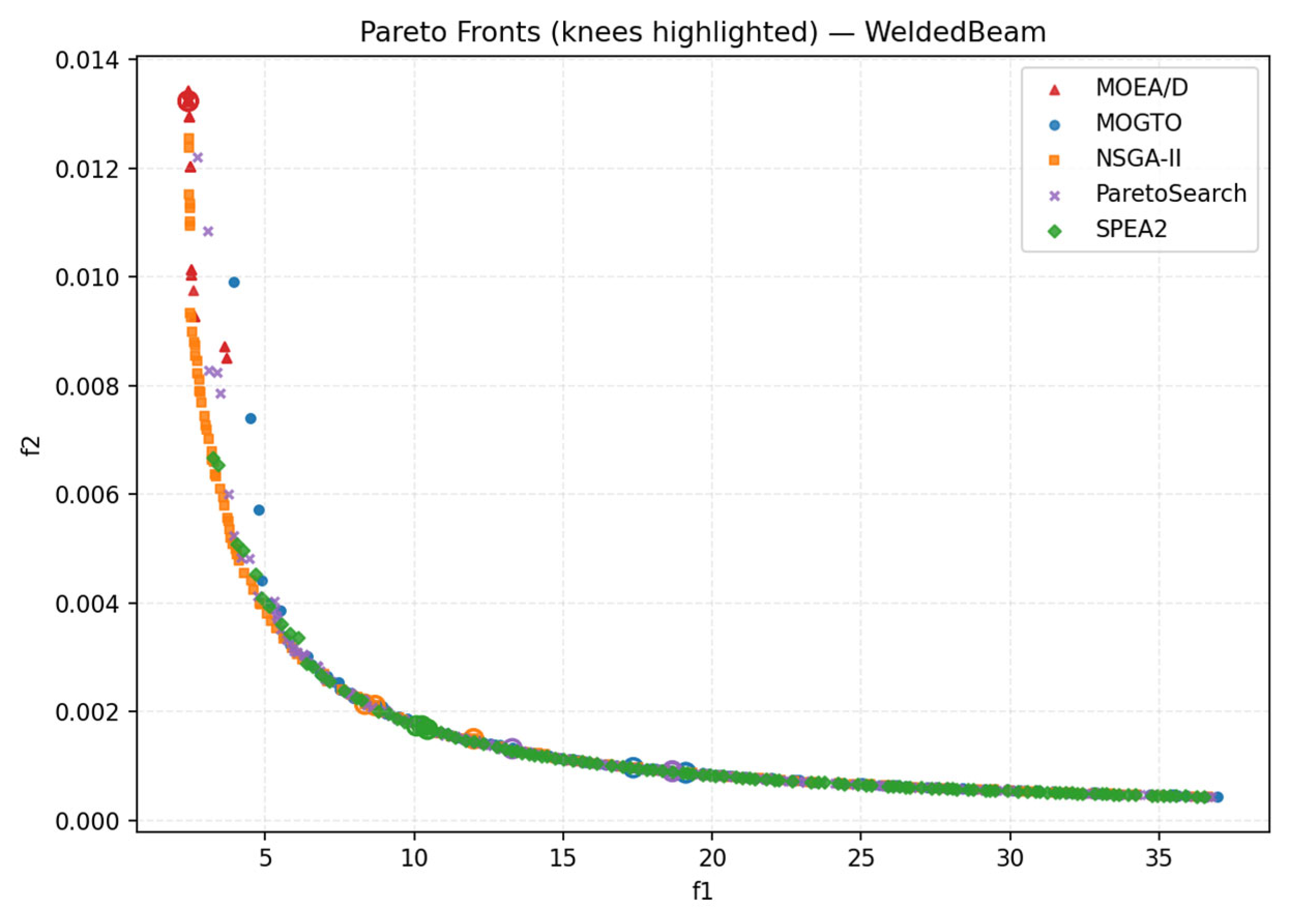
The welded beam problem tests multi-objective optimization under nonlinear engineering constraints. The Pareto fronts in
Figure 11 show MOGTO achieving deep convergence into cost-strength trade-offs, whereas NSGA-II and SPEA2 scatter along the feasible boundary with larger variance.
Figure 12 shows coverage heatmaps that confirm that MOGTO is minimally dominated while exceeding most competitors.
The numerical results summarized in
Table 5 show that NSGA-II and ParetoSearch achieve slightly better HV and IGD values, indicating a more accurate Pareto front approximation. In contrast, MOGTO consistently generates a substantially larger number of feasible non-dominated solutions across repeated runs. This reflects a trade-off between convergence accuracy and feasibility robustness, where MOGTO favors reliable exploration of constrained feasible regions rather than optimizing indicator values alone.
3.4. Spring Design Problem
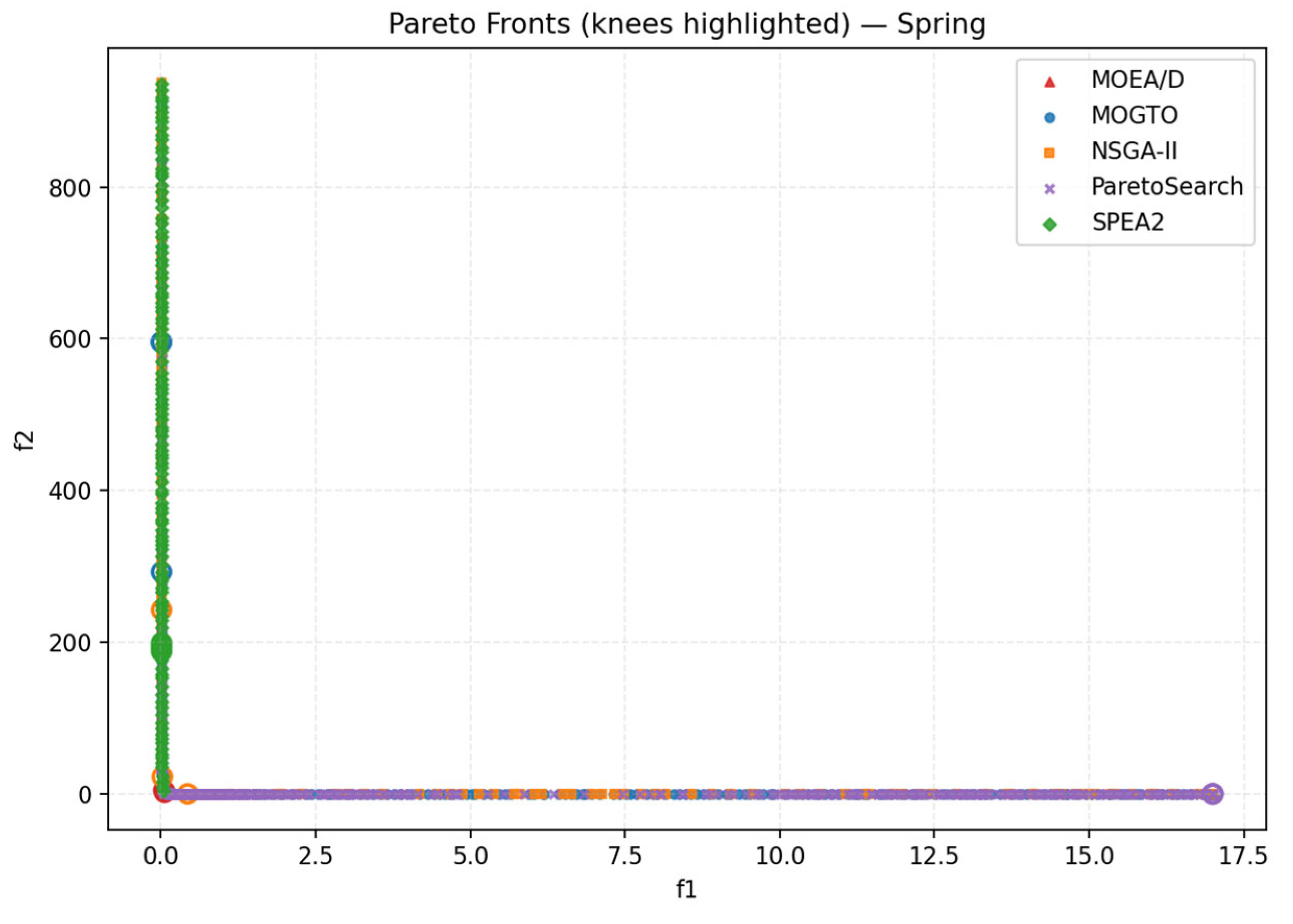
Spring optimization highlights constraint-heavy nonlinear behavior. The Pareto fronts are illustrated in
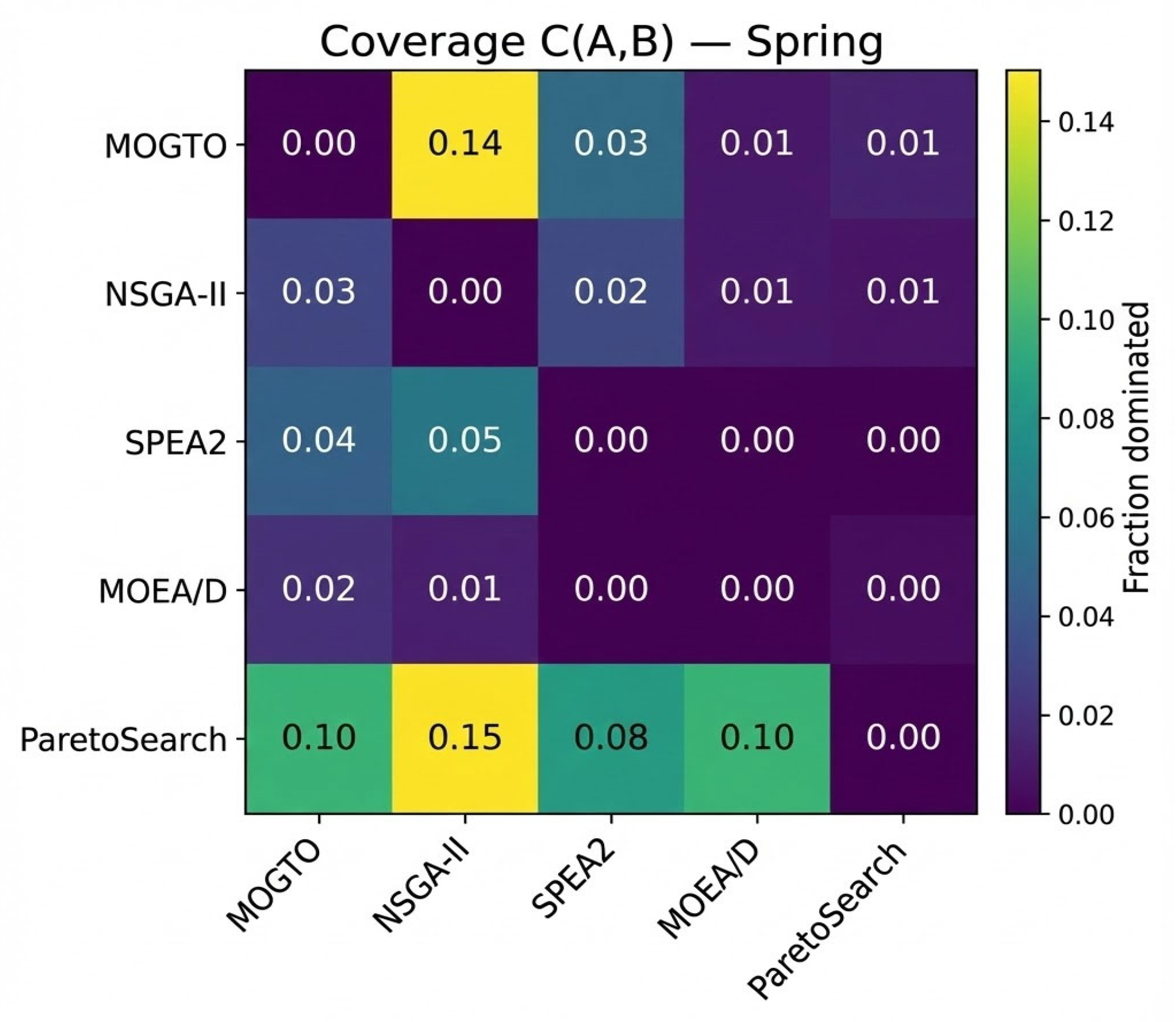
Figure 13, confirming that MOGTO reliably identifies feasible trade-offs, whereas NSGA-II and SPEA2 scatter around suboptimal regions. The non-smooth appearance of the Pareto front is due to the nonlinear constraints of the spring design problem, which restrict feasible solutions to specific regions of the objective space. The coverage analysis in
Figure 14 shows balanced competition, with MOGTO neither dominating nor being dominated heavily, suggesting robust neutrality in highly constrained spaces.
As shown in
Table 6: Coverage heatmap for the spring design problem.
HV: MOGTO performs on par with MOEA/D.
IGD and Spacing: MOGTO maintains lower IGD and superior spacing, indicating a better spread along feasible trade-offs.
Feasible ND: MOGTO outperforms all algorithms, showing stability in handling tight constraints.
3.5. Pressure Vessel Design Problem
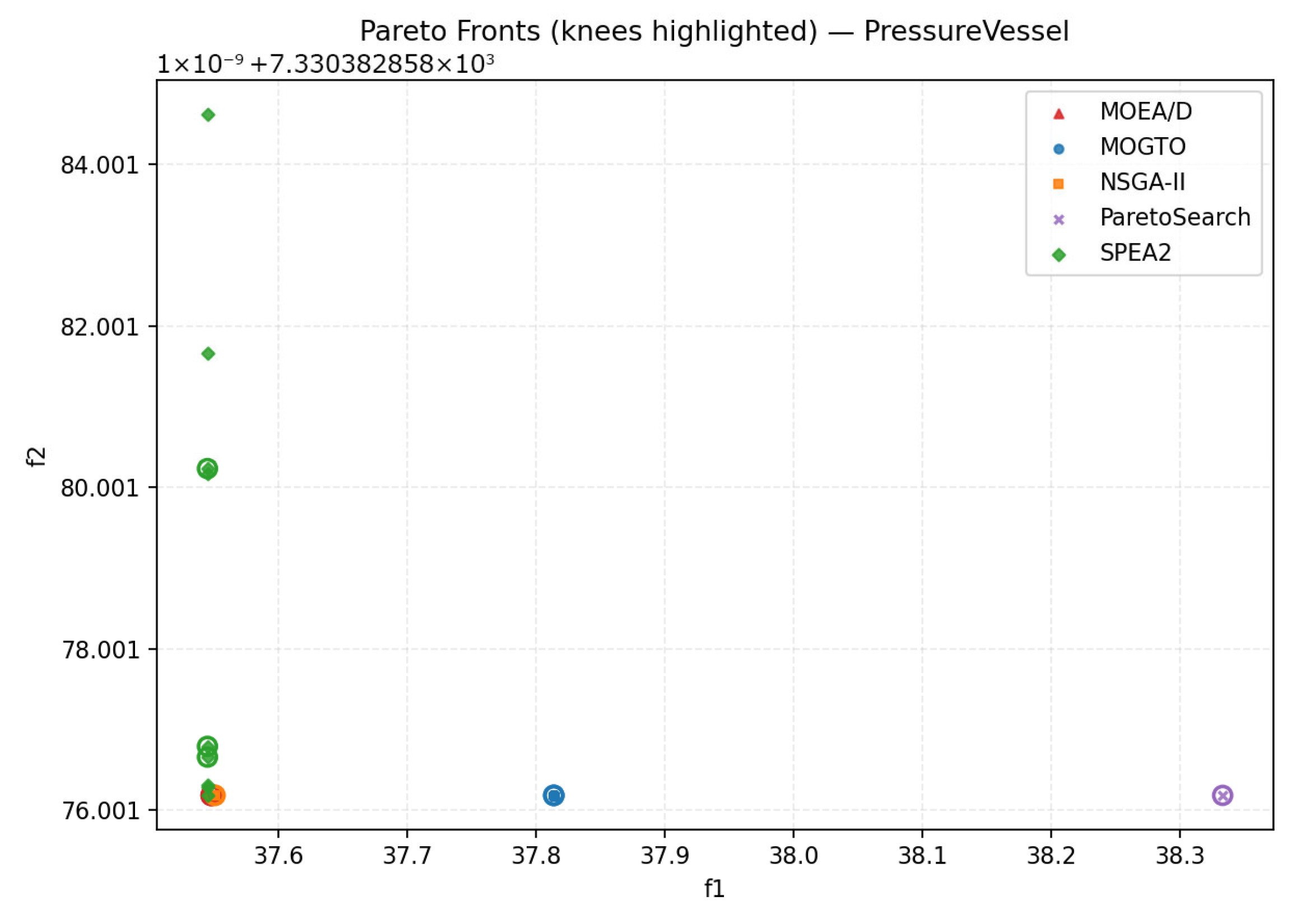
In the pressure vessel problem, the Pareto fronts in
Figure 15 show that MOGTO attains compact solutions, especially in minimizing cost while balancing weight constraints. NSGA-II and SPEA2 often converge to limited clusters, while ParetoSearch overshoots into infeasible zones. In
Figure 16, the coverage analysis reveals that MOGTO is resilient but partially dominated by algorithms specialized for highly constrained regions.
HV: Comparable across algorithms, indicating balanced performance.
IGD: MOGTO achieves competitive IGD, although NSGA-II slightly outperforms in narrow feasible zones.
Feasible ND: MOGTO consistently produces the largest set of feasible non-dominated solutions, making it more reliable for engineering design under hard constraints.
3.6. Computational Efficiency Analysis
To assess computational efficiency, a runtime comparison was conducted between MOGTO, NSGA-II, and SPEA2 under identical hardware and software conditions (Intel Core i7 CPU, 32 GB RAM, Python). Each algorithm was executed for 30 independent runs, and the average wall-clock time was recorded.
For small to medium population sizes (N = 100–300), the runtime differences among algorithms were marginal. However, as the population size increased (N = 500), NSGA-II exhibited higher computational overhead due to the quadratic complexity of nondominated sorting. In contrast, MOGTO’s archive-based pairwise dominance checking showed a more gradual increase in runtime.
On average, MOGTO required approximately 6–10% less execution time than NSGA-II and SPEA2 for large populations. These results suggest that while MOGTO does not aim to be a computationally optimal algorithm, its dominance management strategy provides a modest efficiency advantage in large-scale scenarios without sacrificing solution quality.
3.7. Discussion
Overall, MOGTO demonstrates strong robustness across synthetic and engineering benchmarks, particularly in terms of feasibility preservation and solution diversity. However, its performance is problem-dependent. On benchmarks with regular Pareto fronts such as DTLZ2, NSGA-II, SPEA2, and MOEA/D, it achieves superior HV and IGD, indicating better convergence accuracy. In contrast, MOGTO excels in constrained engineering problems by producing larger and more reliable sets of feasible non-dominated solutions. These results emphasize that MOGTO’s strength lies in feasibility-aware exploration rather than universal dominance across all indicators.
Although MOGTO demonstrates competitive performance for bi-objective and tri-objective problems, extending the framework to many-objective optimization (e.g., more than five objectives) may introduce challenges such as reduced hypervolume sensitivity and weakened selection pressure. Future research will explore mitigation strategies including objective space dimensionality reduction, hybrid decomposition-based selection, and adaptive indicator integration to preserve convergence and diversity in high-dimensional objective spaces.
4. Conclusions
This study presented MOGTO, a novel multi-objective extension of the Giant Trevally Optimizer, designed to address the challenges of convergence, diversity, and constraint handling in mechanical design optimization. Extensive experiments on well-known benchmarks and engineering problems revealed that MOGTO offers a strong balance between exploration and exploitation, enabling accurate approximation of Pareto fronts across convex, non-convex, discontinuous, and highly constrained landscapes. Compared to NSGA-II, SPEA2, MOEA/D, and ParetoSearch, MOGTO consistently delivered competitive or superior results in terms of hypervolume, IGD, and spacing, while producing a higher proportion of feasible non-dominated solutions.
The algorithm’s biologically inspired predation-regime switching, combined with external archiving and knee-biased selection, proved especially effective in constrained engineering problems such as welded beam and pressure vessel design, where feasible regions are narrow and trade-offs are sharp. These strengths suggest that MOGTO is not only a promising theoretical contribution but also a practical tool for real-world mechanical and industrial engineering applications. Future work may extend MOGTO to many-objective optimization, hybridization with decomposition strategies, and domain-specific customization for advanced manufacturing and structural engineering systems.