Article

Robust Client Selection Strategy Using an Improved Federated Random High Local Performance Algorithm to Address High Non-IID Challenges


1
Department of Computer Science and Information Technology, Faculty of Science, Naresuan University, Phitsanulok 65000, Thailand
2
Department of Mathematics, Faculty of Science, Naresuan University, Phitsanulok 65000, Thailand
3
Center of Excellence in Nonlinear Analysis and Optimization, Faculty of Science, Naresuan University, Phitsanulok 65000, Thailand
*
Author to whom correspondence should be addressed.
Algorithms 2025, 18(2), 118; https://doi.org/10.3390/a18020118
Submission received: 30 January 2025 / Revised: 15 February 2025 / Accepted: 17 February 2025 / Published: 19 February 2025
(This article belongs to the Section Evolutionary Algorithms and Machine Learning)

Abstract

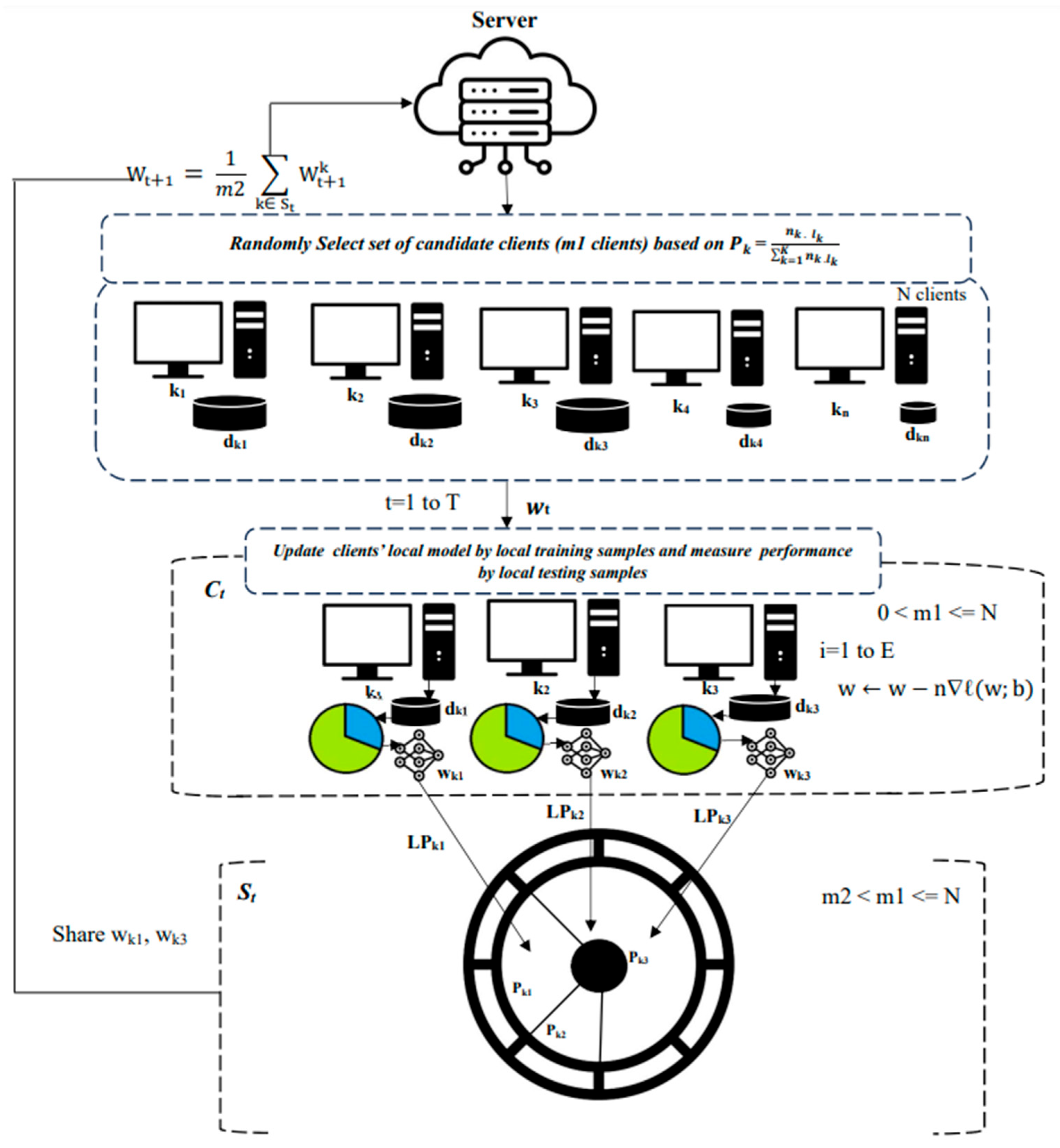
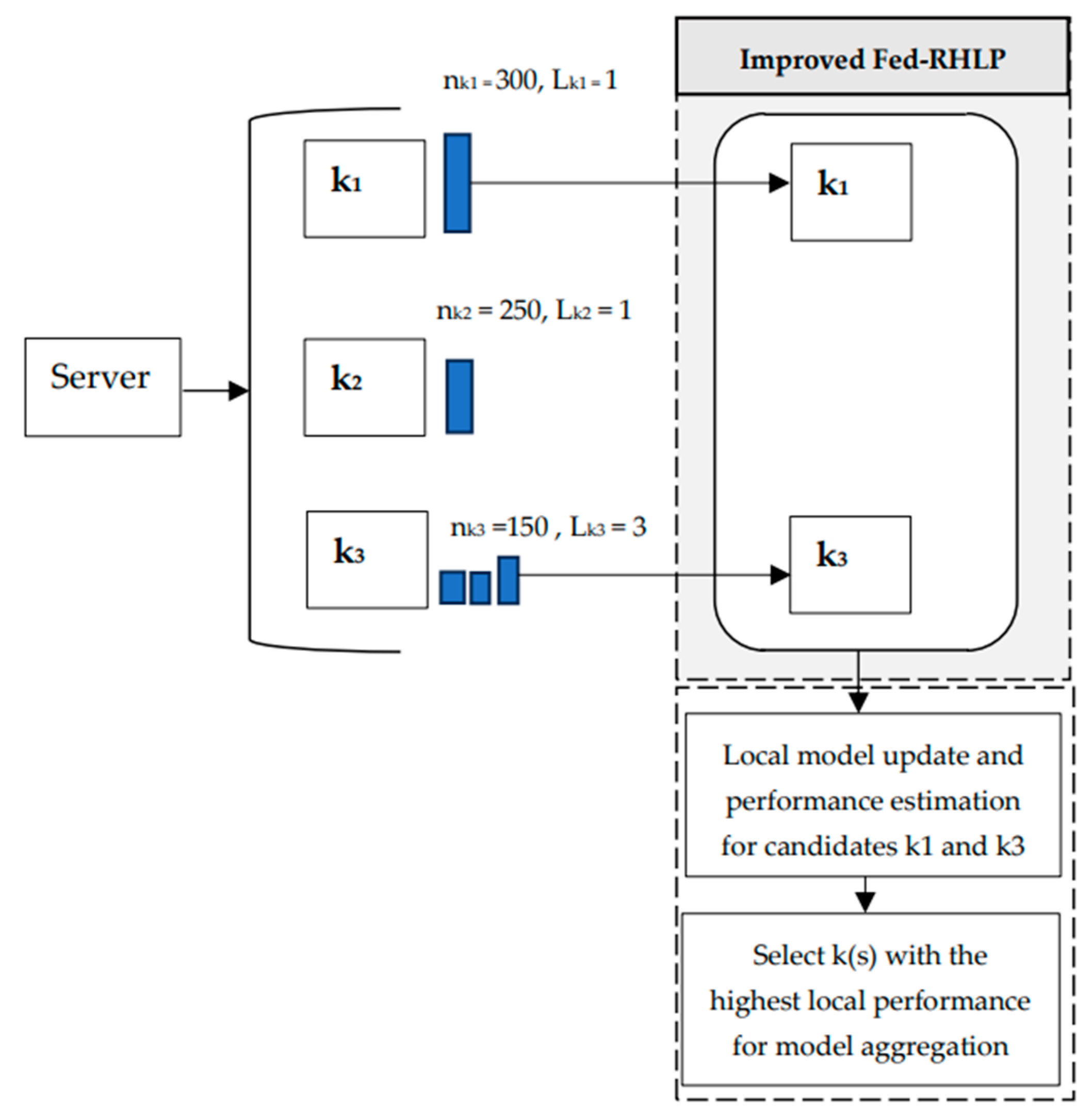
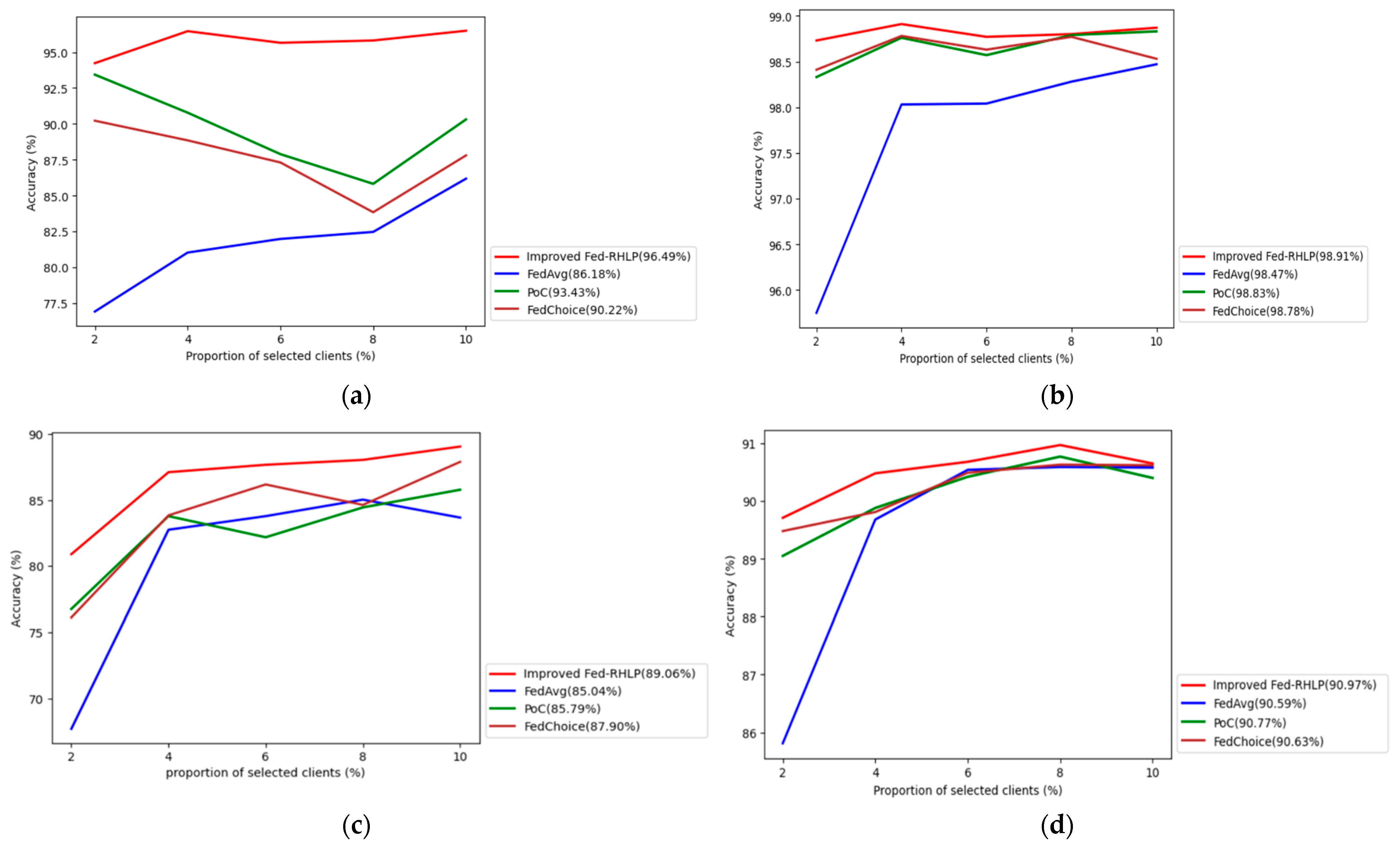
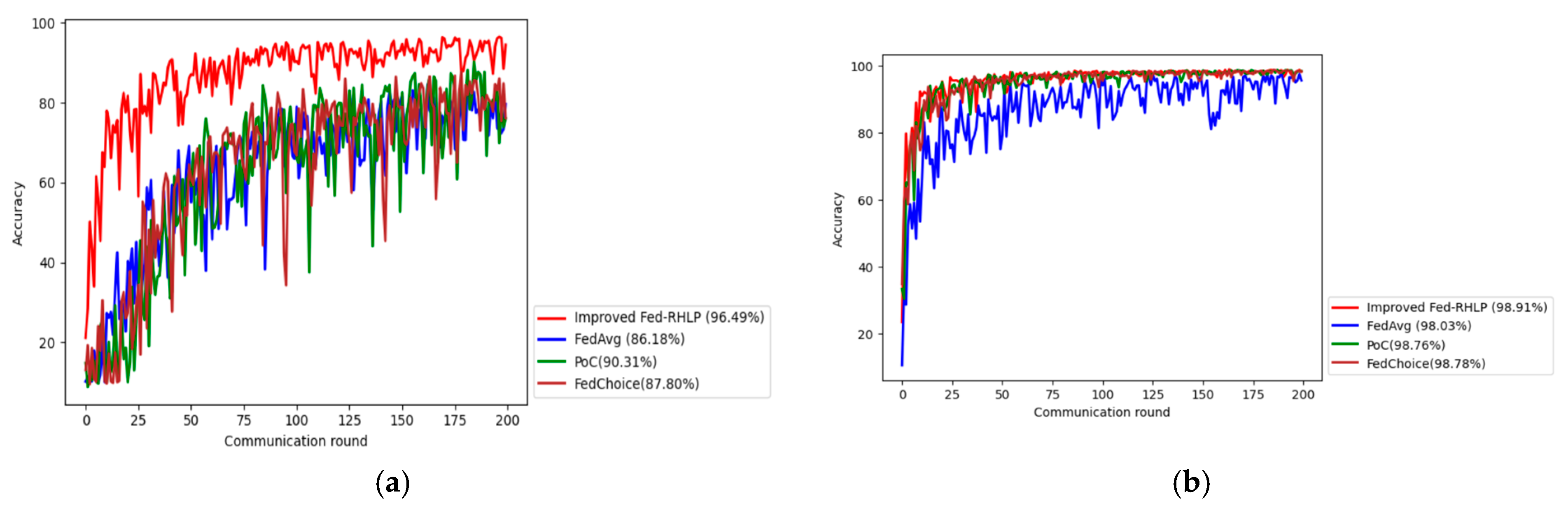
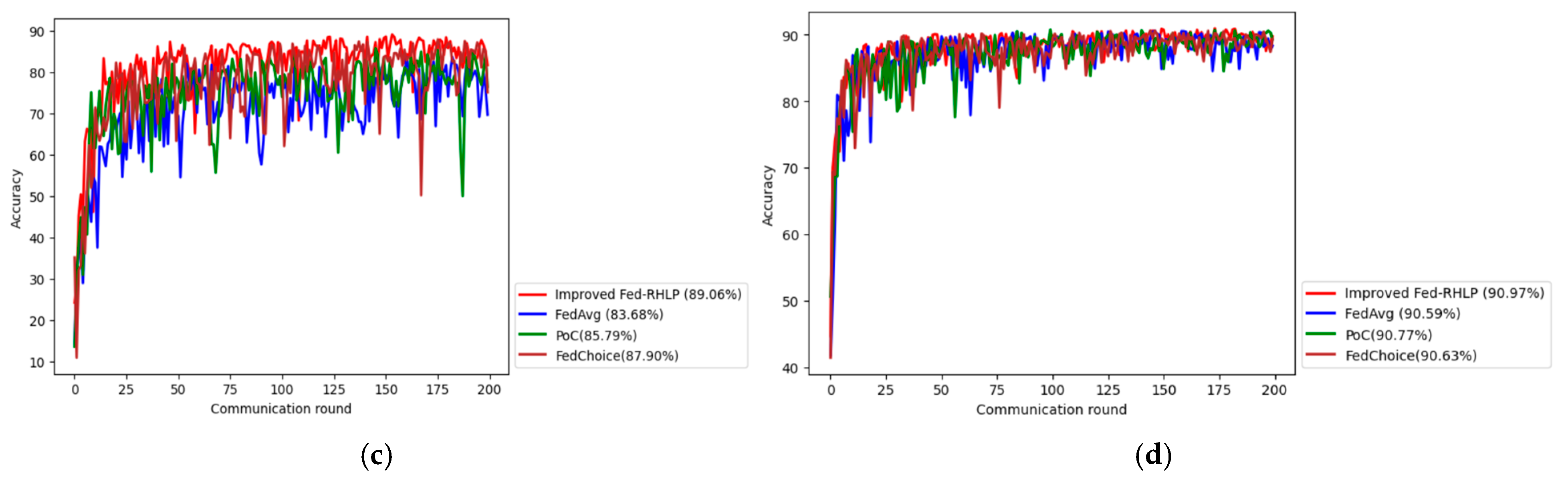
This paper introduces an improved version of the Federated Random High Local Performance (Fed-RHLP) algorithm, specifically aimed at addressing the difficulties posed by Non-IID (Non-Independent and Identically Distributed) data within the context of federated learning. The refined Fed-RHLP algorithm implements a more targeted client selection approach, emphasizing clients based on the size of their datasets, the diversity of labels, and the performance of their local models. It employs a biased roulette wheel mechanism for selecting clients, which improves the aggregation of the global model. This approach ensures that the global model is primarily influenced by high-performing clients while still permitting contributions from those with lower performance during the model training process. Experimental findings indicate that the improved Fed-RHLP algorithm significantly surpasses existing methodologies, including FederatedAveraging (FedAvg), Power of Choice (PoC), and FedChoice, by achieving superior global model accuracy, accelerated convergence rates, and decreased execution times, especially under conditions of high Non-IID data. Furthermore, the improved Fed-RHLP algorithm exhibits resilience even when the number of clients participating in local model updates and aggregation is diminished in each communication round. This characteristic positively influences the conservation of limited communication and computational resources.
Keywords: client selection; improved Fed-RHLP algorithm; Non-IID issue; model aggregation client selection; improved Fed-RHLP algorithm; Non-IID issue; model aggregation