Article

Comparison of Satellite Repeat Shift Time for GPS, BDS, and Galileo Navigation Systems by Three Methods

1
Global Navigation Satellite System (GNSS) Research Center, Wuhan University, Wuhan 430070, China
2
School of Communication Engineering, Hangzhou Dianzi University, Hangzhou 310018, China
*
Author to whom correspondence should be addressed.
Algorithms 2019, 12(11), 233; https://doi.org/10.3390/a12110233
Submission received: 25 August 2019 / Revised: 20 October 2019 / Accepted: 29 October 2019 / Published: 5 November 2019

Abstract

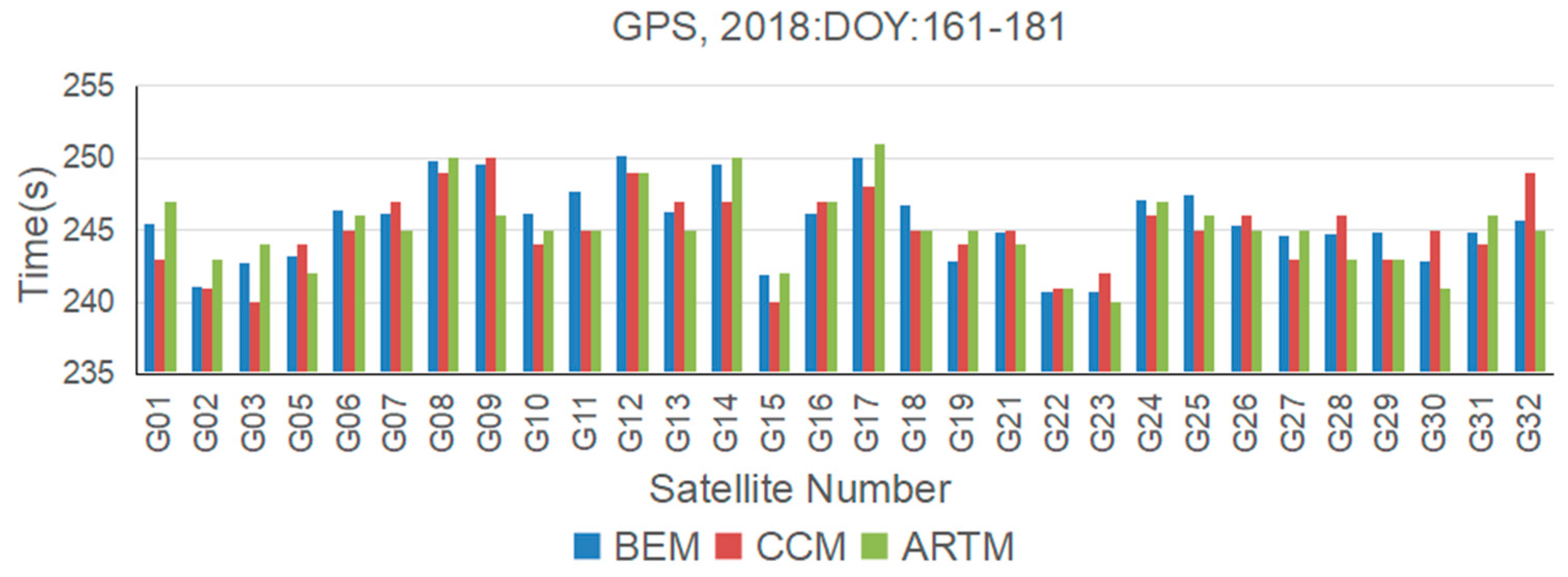
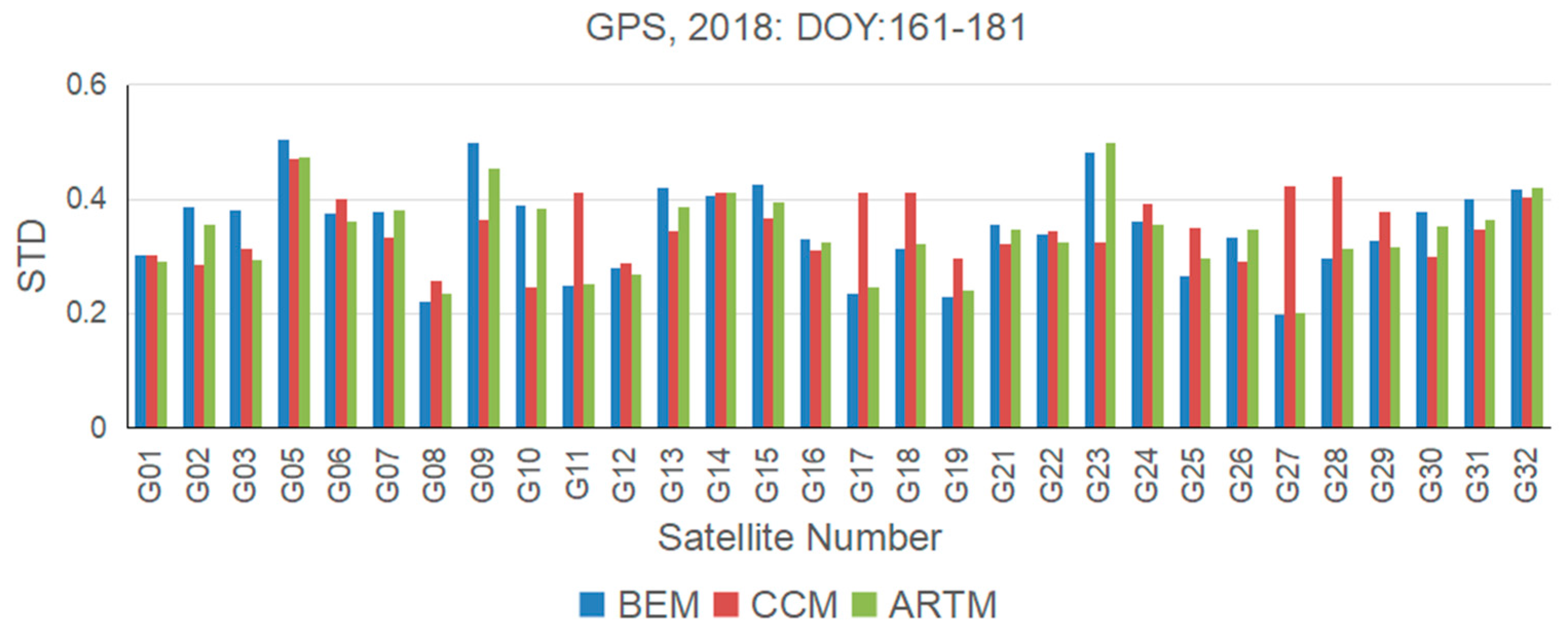
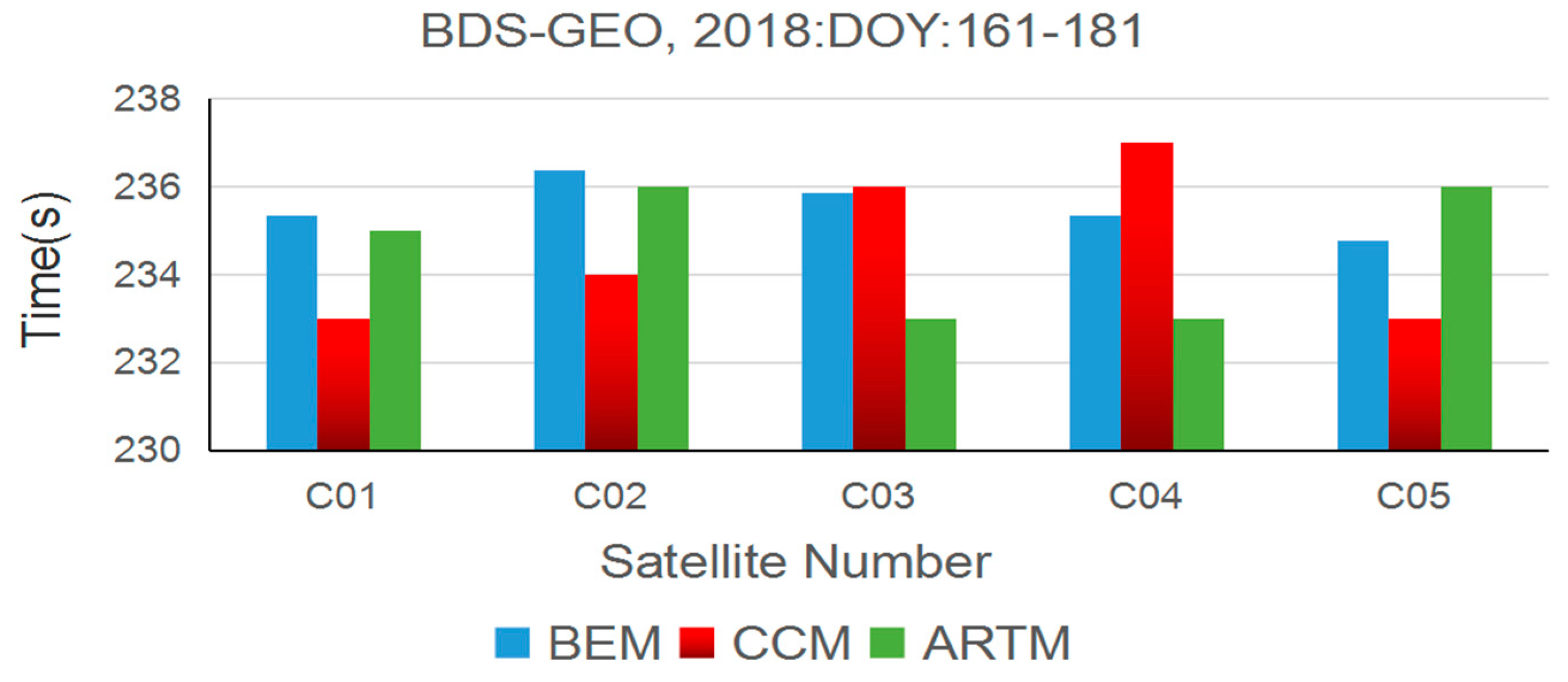
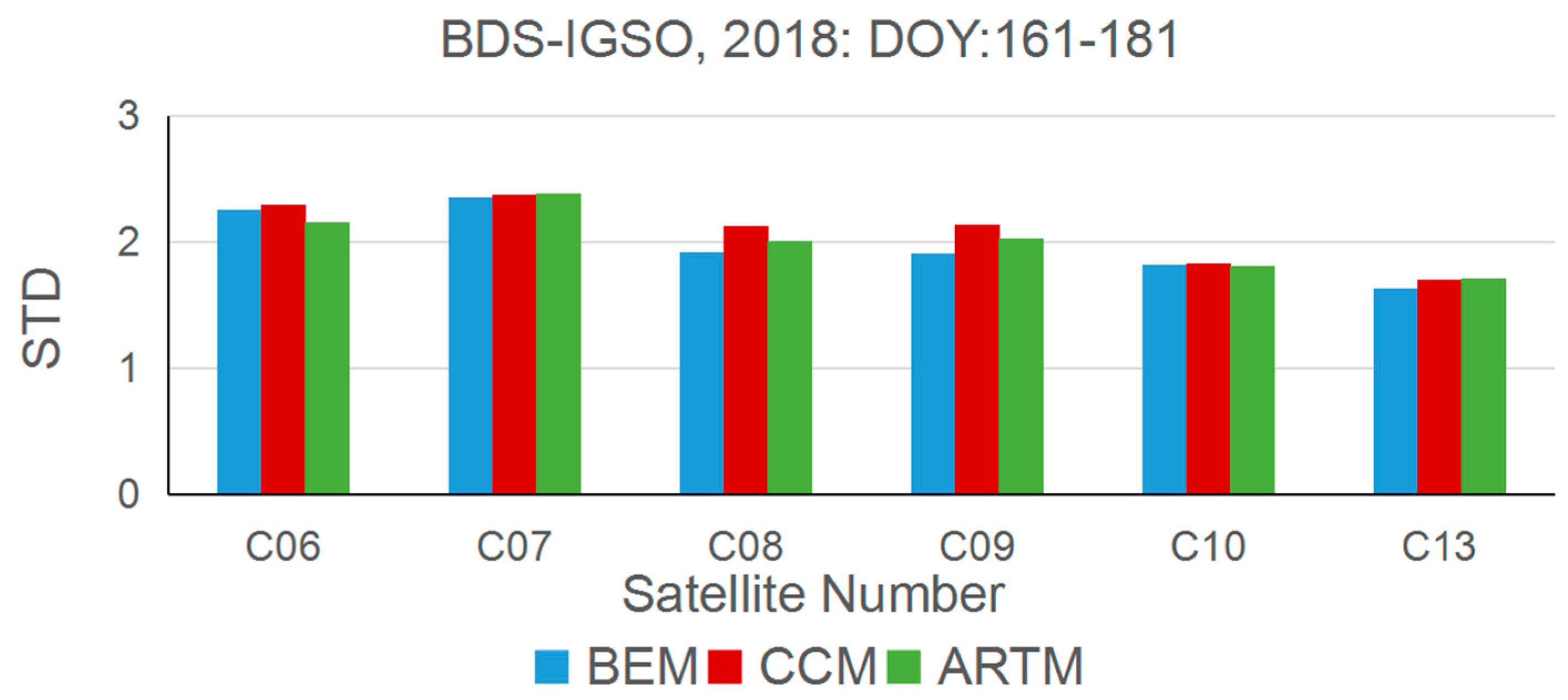
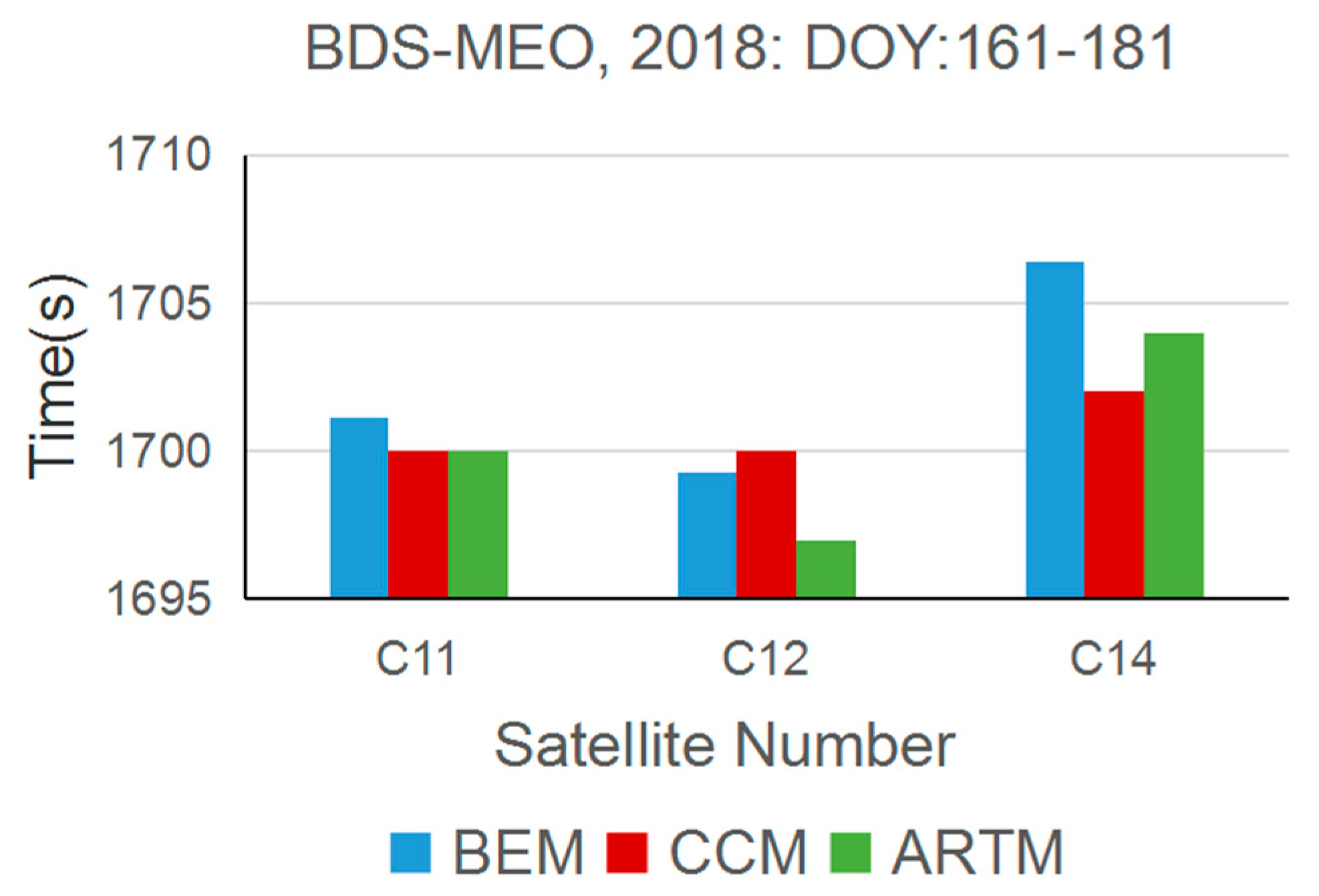
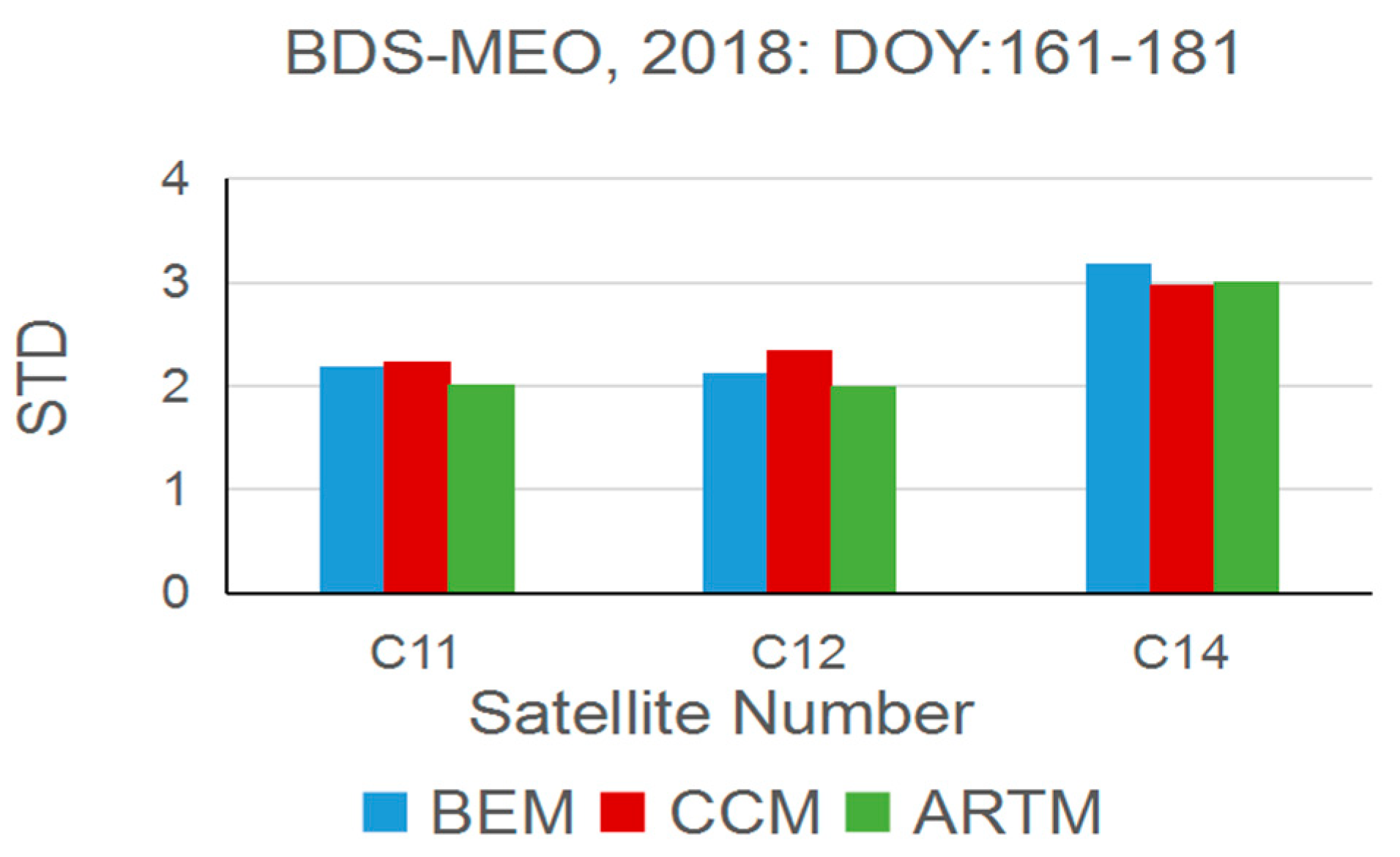
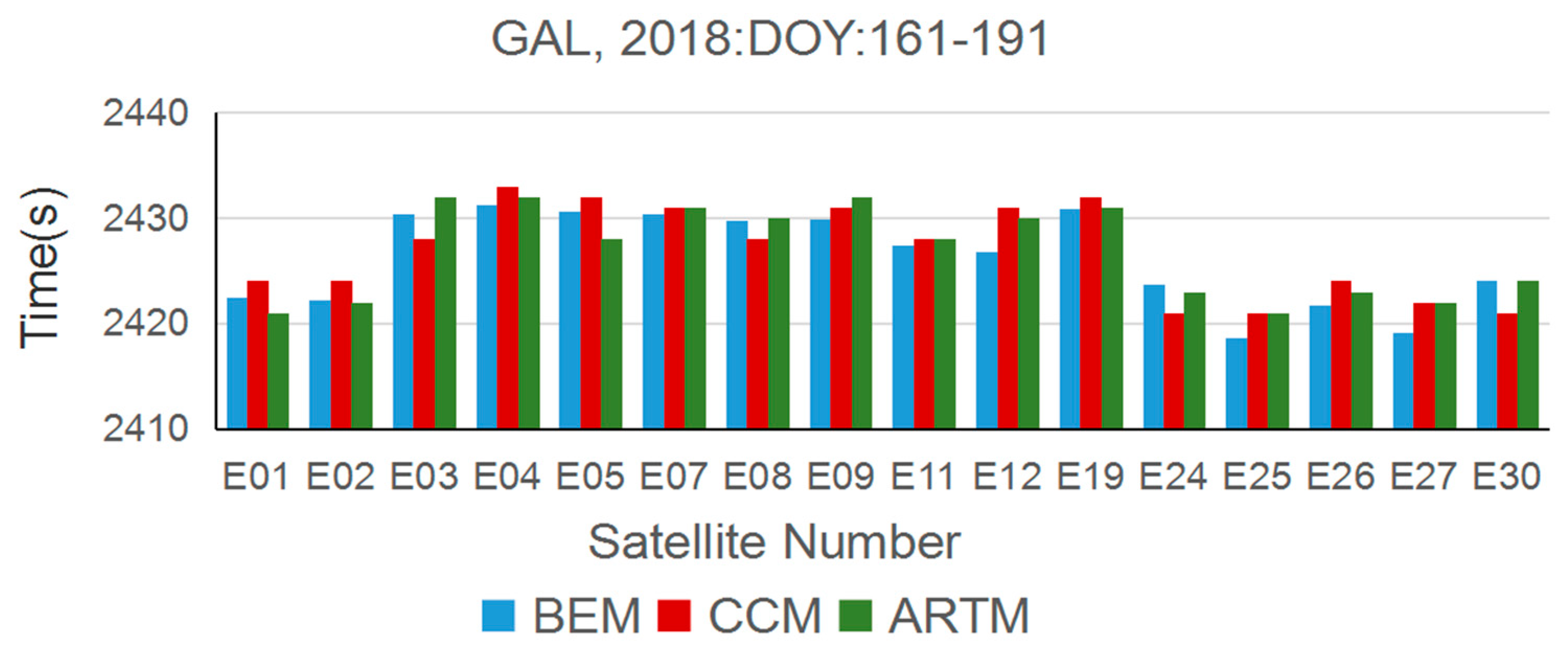
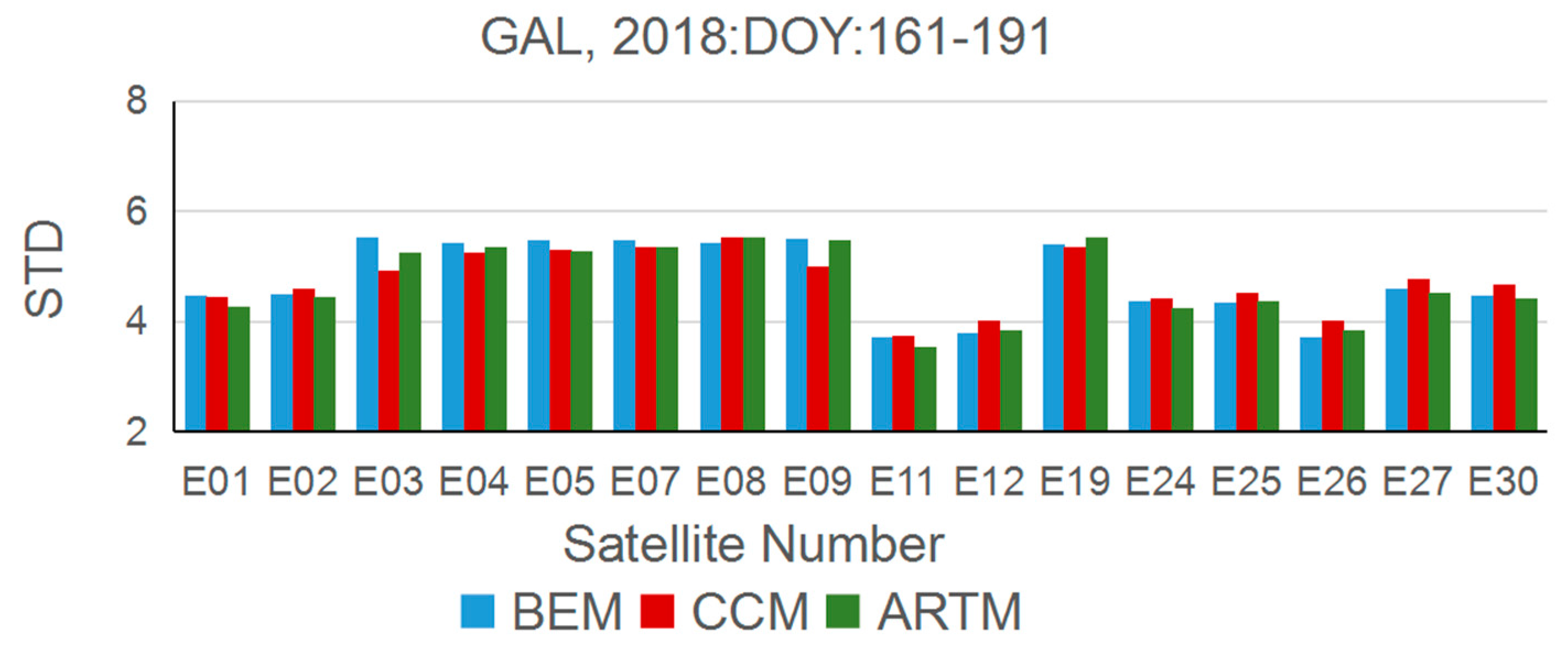
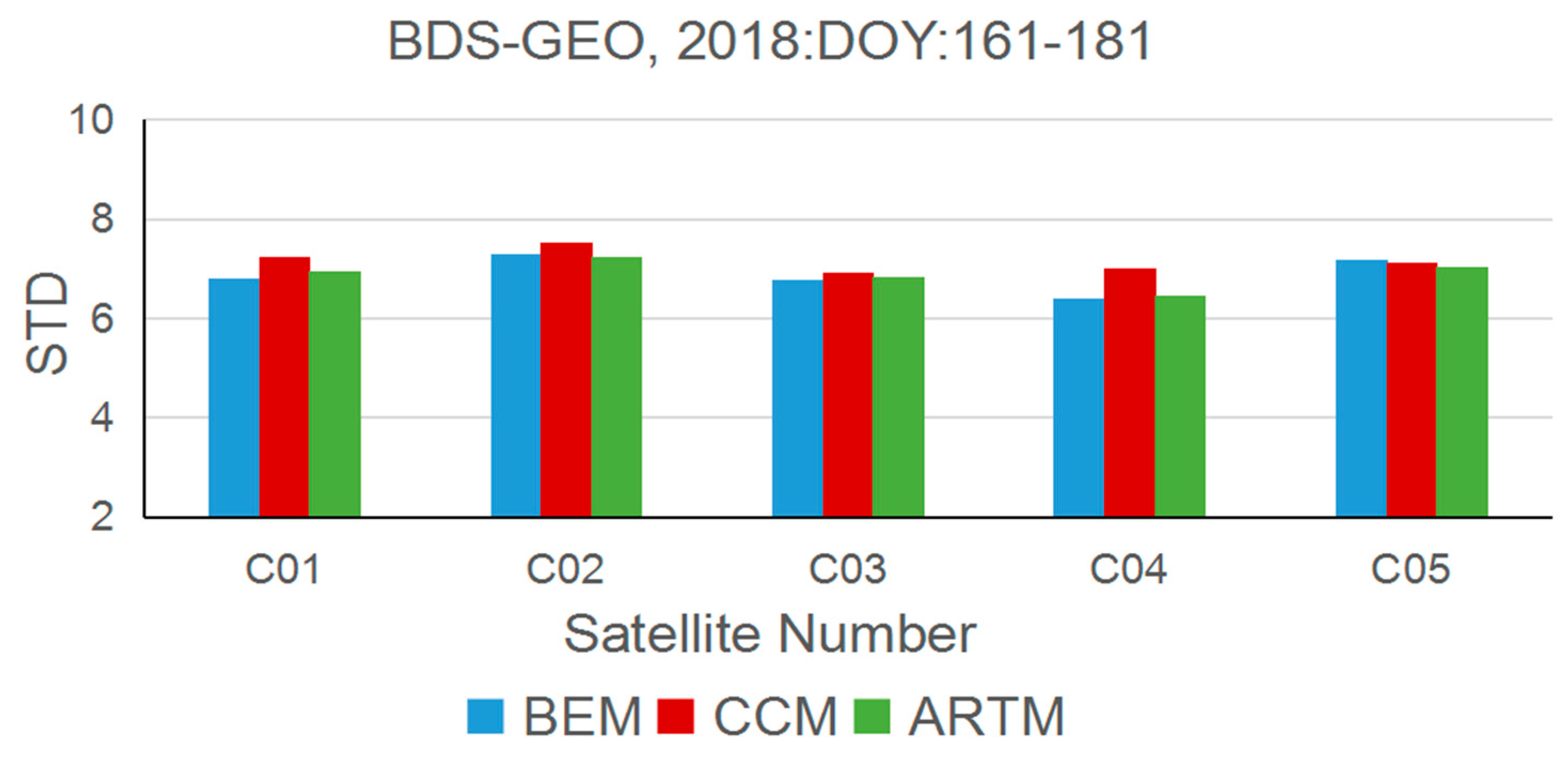
The characteristic of the satellite repeat shift time can reflect the status of the satellite operation, and is also one of the key factors of the sidereal filtering multipath correction. Although some methods have been developed to calculate the repeat shift time, few efforts have been made to analyze and compare the performance of this feature for the GPS (Global Positioning System), BDS (BeiDou System), and Galileo in depth. Hence, three methods used for calculating the repeat shift time are presented, and used to compare and analyze the three global systems in depth, named the broadcast ephemeris method (BEM), correlation coefficient method (CCM), and aspect repeat time method (ARTM). The experiment results show that the repeat shift time of each satellite is different. Also, the difference between the maximum and minimum varies from different systems. The maximum difference is about 25 s for the BDS IGSO (Inclined Geosynchronous Orbit) and the minimum is merely 10 s for the GPS system. Furthermore, for the same satellite, the shift time calculated by the three methods is almost identical, and the maximum difference is only about 7 s between the CCM and the ARTM method for the BDS MEO (Medium Earth Orbit) satellite. Although the repeat shift time is different daily for the same satellite and the same method, the changes are very small. Moreover, in terms of the STD (Standard Deviation) of the BS (between satellites) and MS (mean shift for the same satellite), the GPS system is the best, the performance of the BDS system is medium, and the Galileo performs slightly worse than the GPS and BDS.
Keywords: satellite repeat period; satellite repeat shift time; GPS; BDS; Galileo satellite repeat period; satellite repeat shift time; GPS; BDS; Galileo