Predicting the Coupling Properties of Axially-Textured Materials

 , ,
, ,
Abstract
:
1. Introduction
2. Mathematical Background

 [28]:
[28]:


 :
:

 are expansion coefficients. The limits M(l) and N(l) depend respectively on crystal and sample symmetry.


 are spherical harmonics adapted to the sample’s symmetry and the coefficients
  are calculated by:


 corresponding to Equation (11). Pl(ϕ) are the Legendre polynomials.
| Texture symmetry | Representative samples | N(l) |
|---|---|---|
| Triclinic | Rocks | 2l + 1 |
| Orthorhombic | Laminated sheets | ⌊l/2⌋ + 1 |
| Axial | Wires, functional ceramics | 1 |
 , given by Equation (12). By effective polycrystal property it is understood the magnitude < K > that satisfies the following condition:


 (Equation (13)) represents the effective property if the independent variable remains invariant in the sample volume. Effective polycrystal properties not only depend on the distribution of orientations, but also on crystallites’ shapes, sizes and relative positioning, i.e., on sample’s stereography.
 .
.
3. Estimating the Effective Properties for Coupling Interactions. The Piezoelectric Case
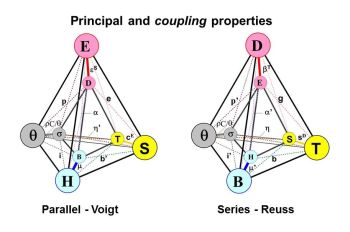
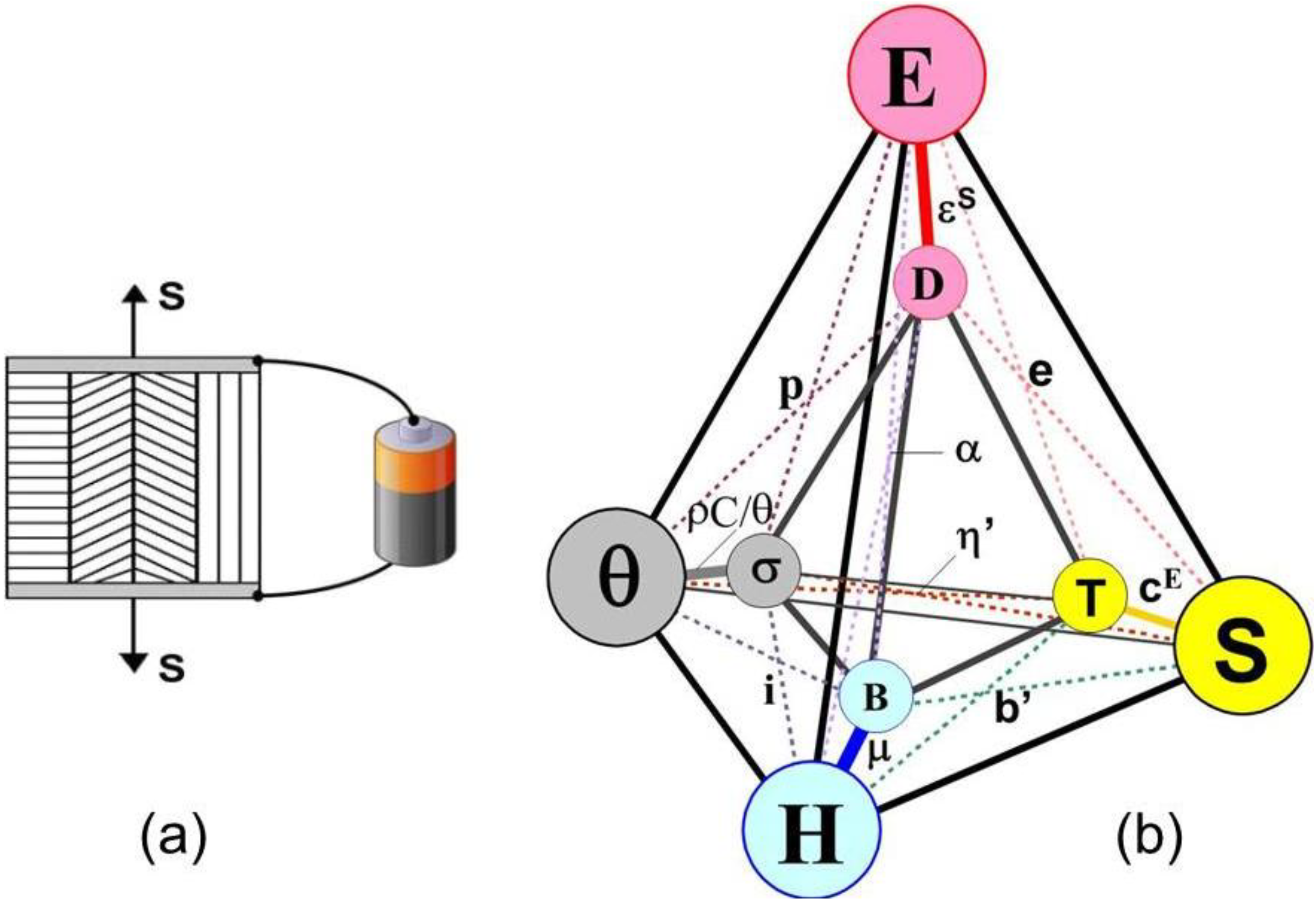
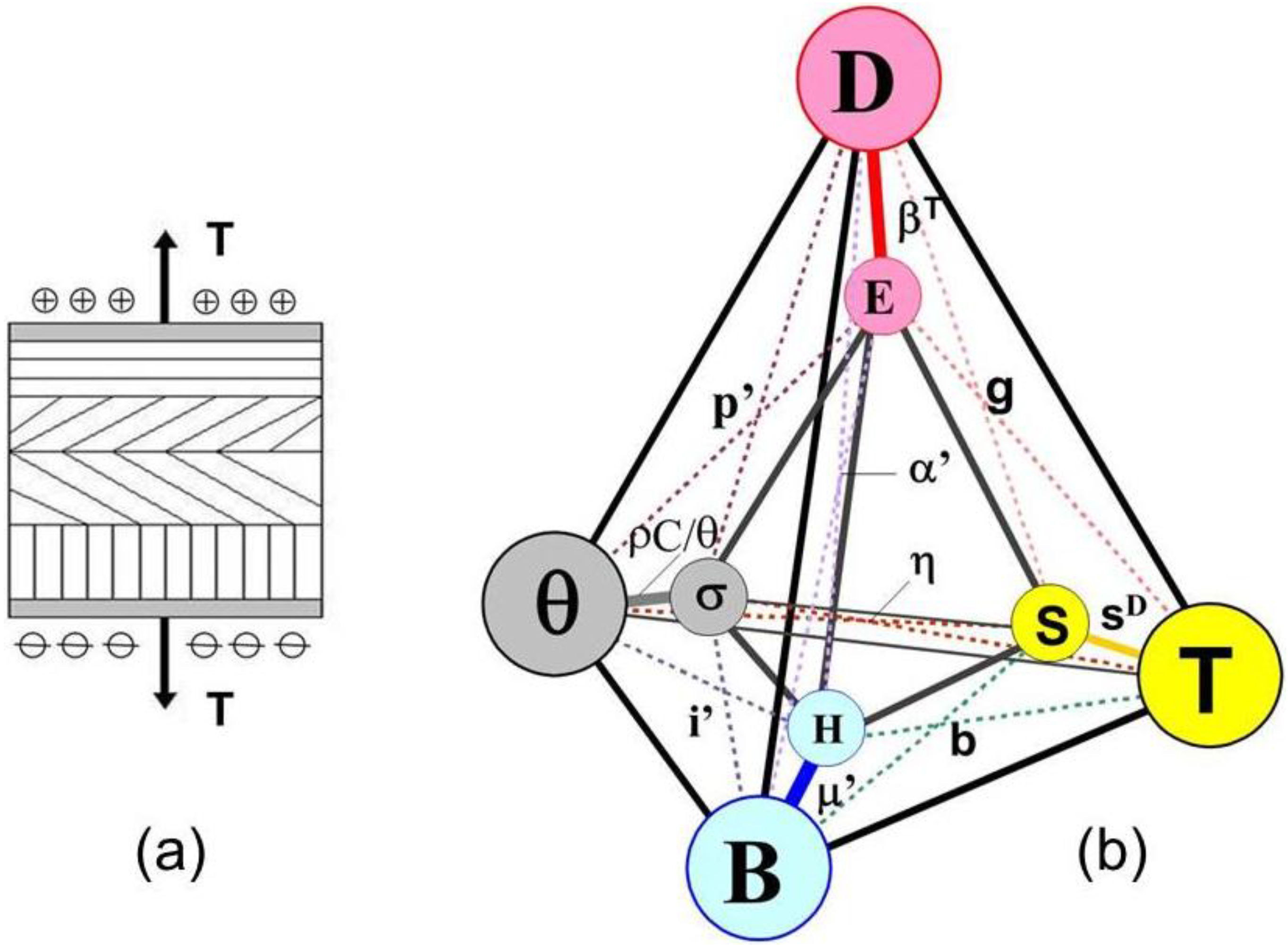
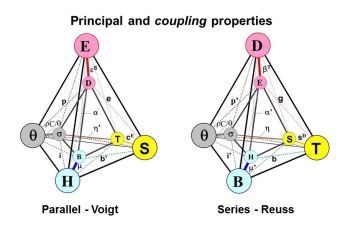
- Thermodynamics: Homogeneity of temperature defines the thermal equilibrium condition for any thermodynamic system.
- Elasticity: In a series configuration, mechanical equilibrium imposes continuity of T across inter-crystalline boundaries. In parallel, geometrical integrity leads to continuity of S.
- Electricity: In series arrangement, Gauss law applied to boundaries without free charge (𝛁 · D = 0) gives D = constant. In parallel, the conservative nature of electrostatic field (𝛁 × E = 0) imposes E = constant.
- Magnetism: In series-like polycrystals, Gauss law for magnetism (𝛁 · B = 0) implies B = constant. In parallel condition, Ampere law in absence of free currents (𝛁 × H = 0) leads to homogeneity of H.
| Configuration | Thermodynamics | Elasticity | Electricity | Magnetism |
|---|---|---|---|---|
| Series (Reuss) | Temperature (θ) | Stress (T) | Electric displacement (D) | Magnetic induction (B) |
| Parallel (Voigt) | Strain (S) | Field intensity (E) | Field intensity (H) |


 .
.


4. SAMZ Program
5. Results and Discussion
5.1. A Case Study. Piezoelectricity in PMN-PT


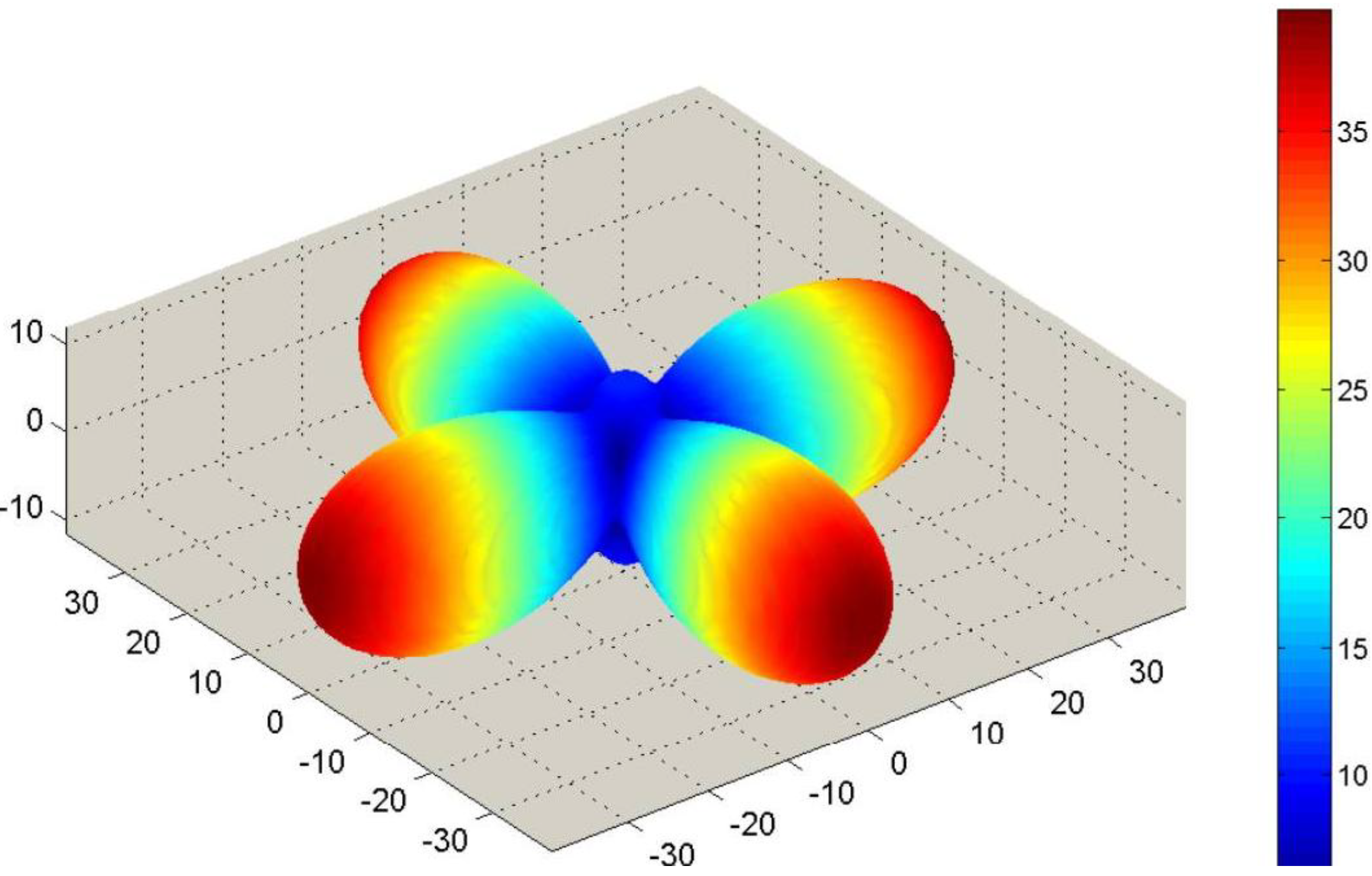

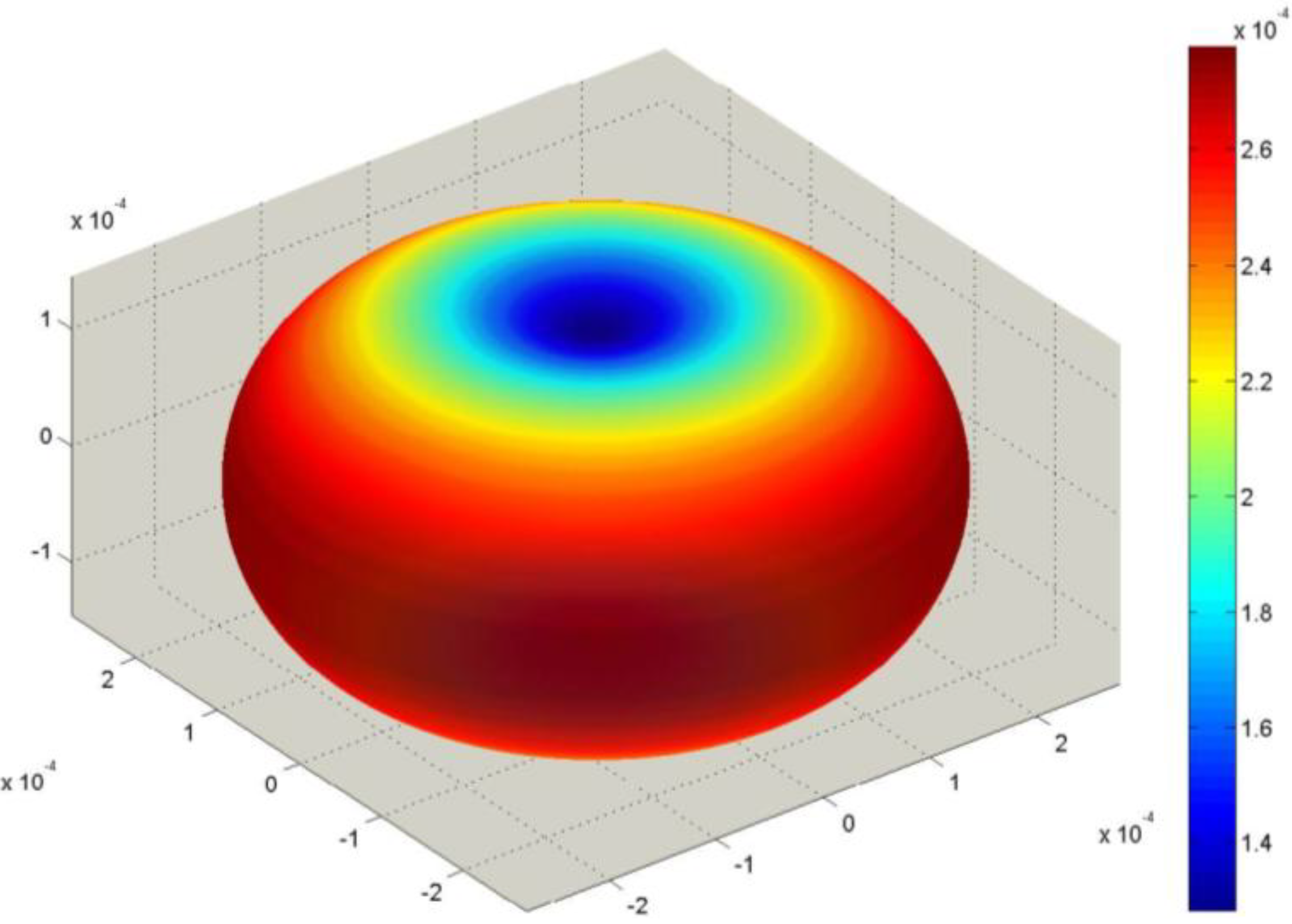
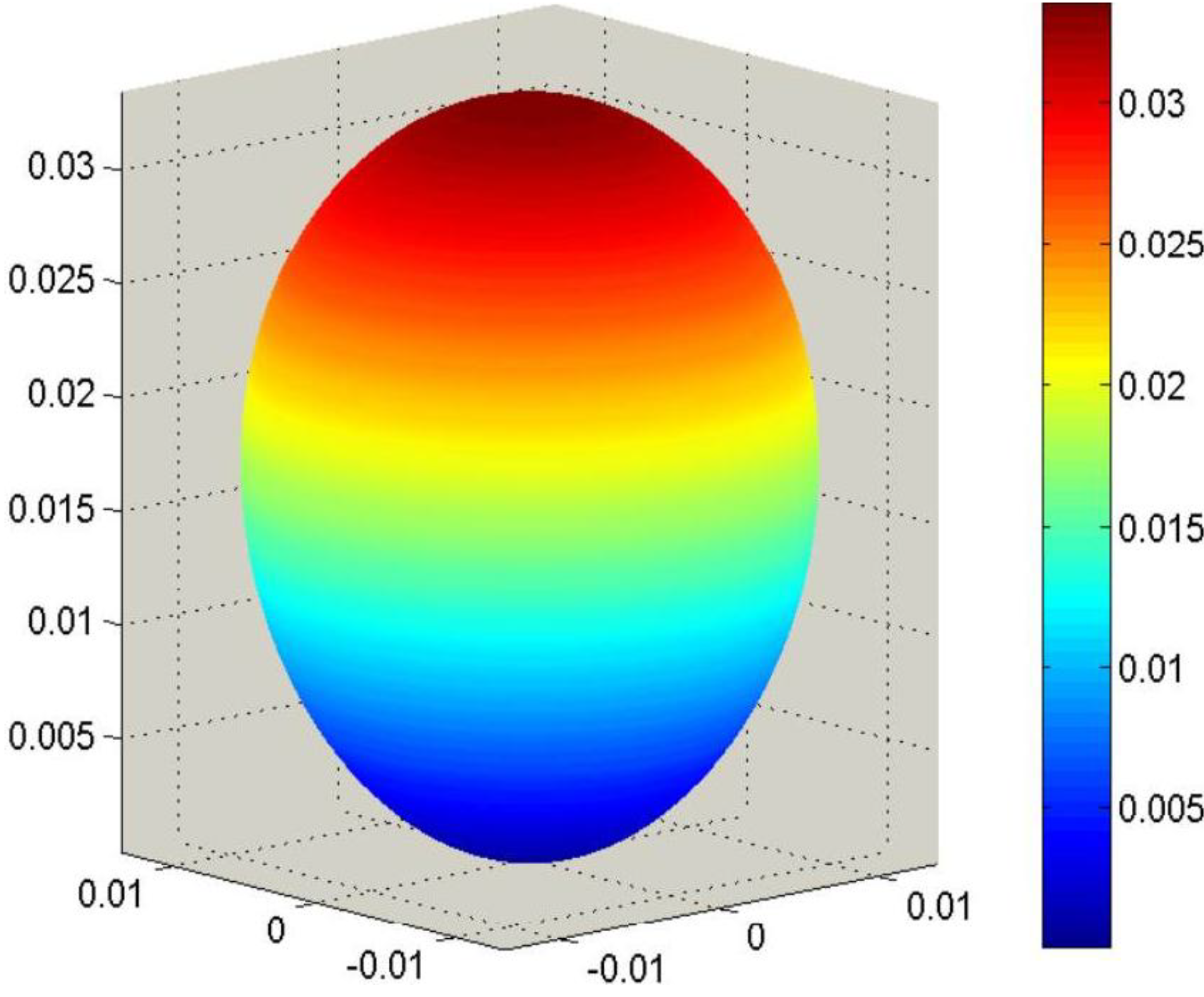
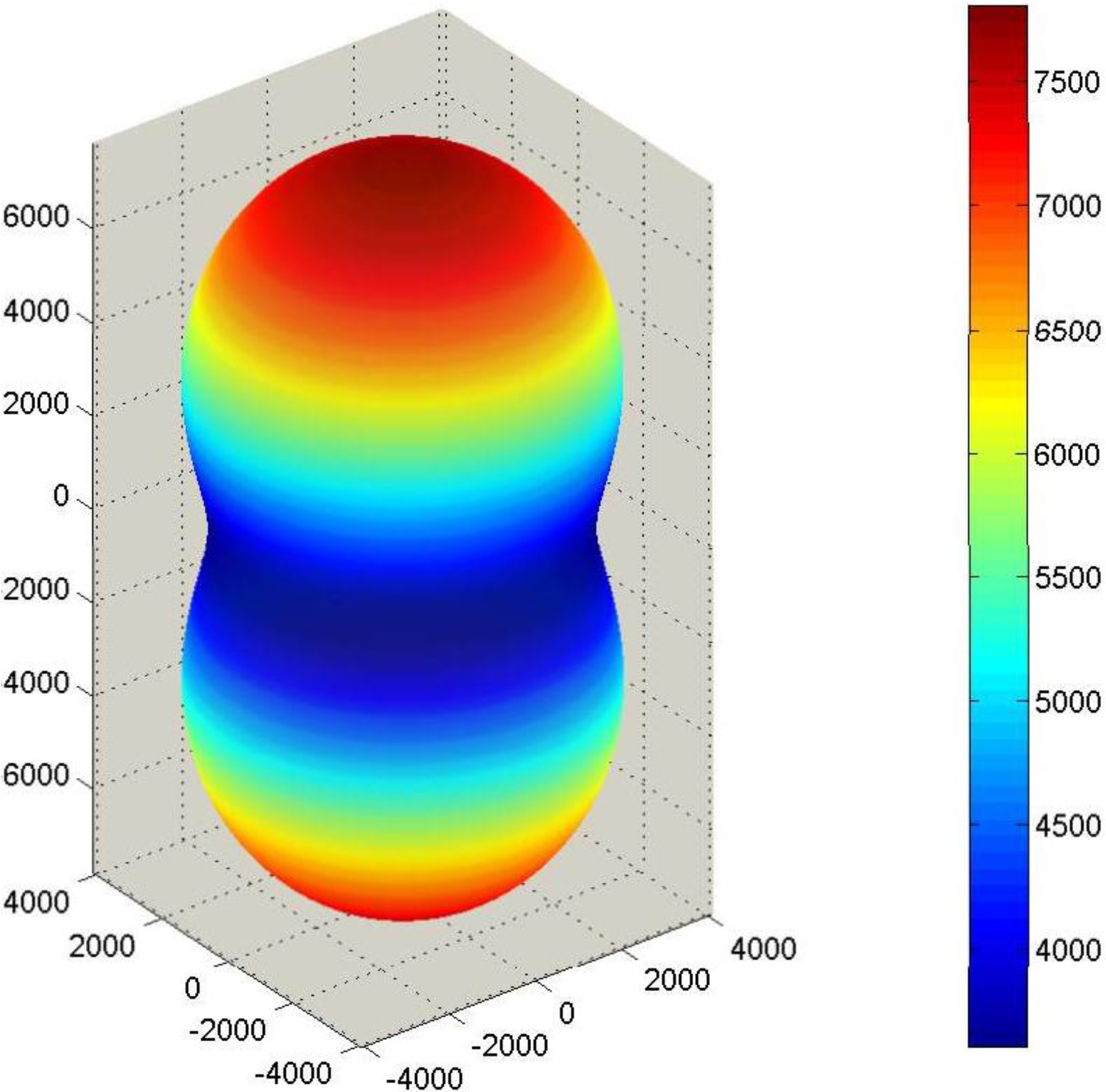
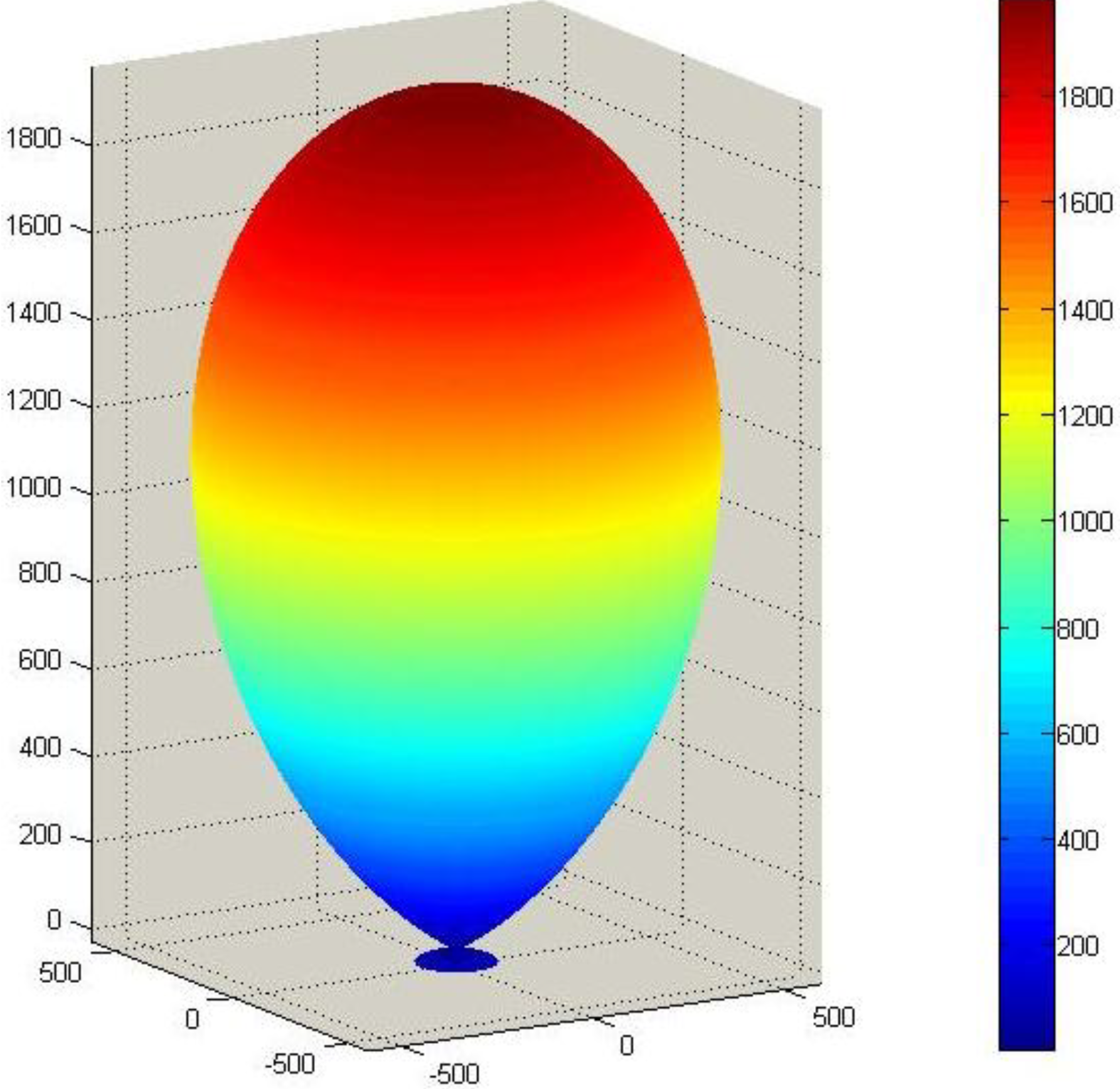
 are required (see Equation (32)). The necessary calculations (Equations (6), (11), (14) and (15)) are performed by SAMZ.
 and voltage piezoelectric constant
  .
.

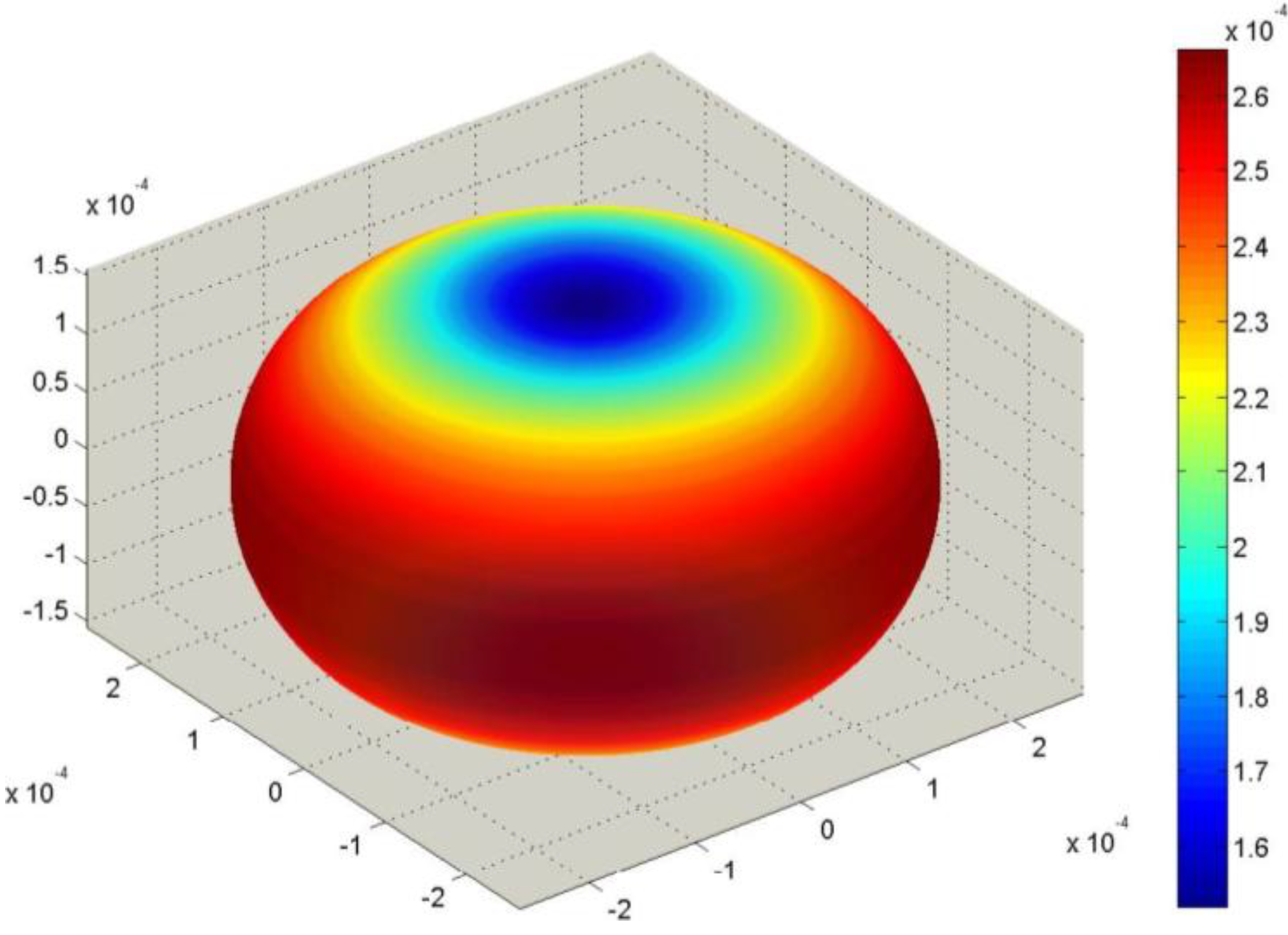
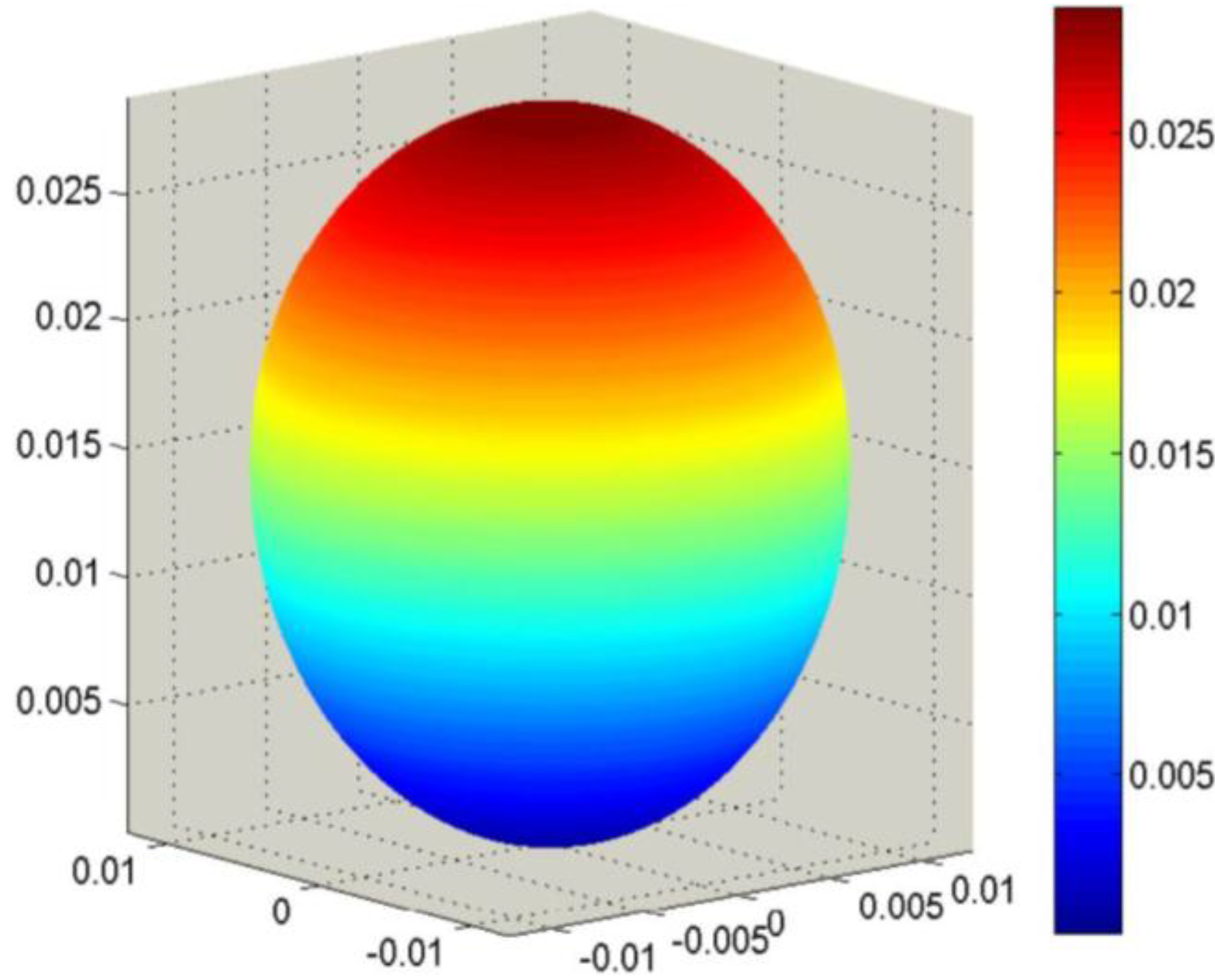
 . In our particular case the calculation is rather simple:

5.2. Discussion
6. Conclusions
Acknowledgments
Conflicts of Interest
References
- Yan, Z.; Zaman, M.; Jiang, L. Thermo-electro-mechanical analysis of a curved functionally graded piezoelectric actuator with sandwich structure. Materials 2011, 4, 2151–2170. [Google Scholar] [CrossRef]
- Friak, M.; Counts, W.A.; Ma, D.; Sander, B.; Holec, D.; Raabe, D.; Neugebaure, J. Theory-guided materials design of multi-phase Ti-Nb alloyswith bone-matching elastic properties. Materials 2012, 5, 1853–1872. [Google Scholar] [CrossRef]
- Bunge, H.J.; Kiewei, R.; Reinert, Th.; Fritsche, L. Elastic properties of polycrystals—Influence of texture and stereology. J. Mech. Phys. Solids 2000, 48, 29–66. [Google Scholar] [CrossRef]
- Böhlke, T.; Jöchen, K.; Kraft, O.; Löhe, D.; Schulze, V. Elastic properties of polycrystalline microcomponents. Mech. Mater. 2010, 42, 11–23. [Google Scholar] [CrossRef]
- Sheng, G.; Bhattacharyya, S.; Zhang, H.; Chang, K.; Shang, S.L.; Mathaudhu, S.N.; Liu, Z.K.; Chen, L.Q. Effective elastic properties of polycrystals based on phase-field description. Mater. Sci. Eng. A 2012, 554, 67–71. [Google Scholar] [CrossRef]
- Bunge, H.J.; Morris, P.R. Texture Analysis in Materials Science: Mathematical Methods; Butterworths: London, UK, 1982. [Google Scholar]
- Gruber, J.A.; Brown, S.A.; Lucadamo, G.A. Generalized Kearns texture factors and orientation texture measurement. J. Nucl. Mater. 2011, 408, 176–182. [Google Scholar] [CrossRef]
- Voigt, W. Lehrbuch der Kristallphysik:(Mit Ausschluss der Kristalloptik) (in German); Teubner: Berlin, Germany, 1910. [Google Scholar]
- Reuss, A. Berechnung der flieβgrenze von mischkristallen auf grund der plastizitätsbedingung für einkristalle (in German). Z. Angew. Math. Mech. 1929, 9, 49–58. [Google Scholar] [CrossRef]
- Hill, R. The elastic behaviour of a crystalline aggregate. Proc. Phys. Soc. Sect. A 1952, 65, 349–354. [Google Scholar] [CrossRef]
- Kocks, U.F.; Tomé, C.N.; Wenk, H.-R. Texture and Anisotropy: Preferred Orientations in Polycrystals and Their Effect on Materials Properties; Cambridge University Press: Cambridge, UK, 2000. [Google Scholar]
- Topolov, V.Y.; Bowen, C.R. Effective electromechanical properties in piezo-composites. In Electromechanical Properties in Composite Based on Ferroelectrics; Springer: London, UK, 2009. [Google Scholar]
- Knezevic, M.; Kalidindi, S.R. Fast computation of first-order elastic–plastic closures for polycrystalline cubic-orthorhombic microstructures. Comput. Mater. Sci. 2007, 39, 643–648. [Google Scholar] [CrossRef]
- Fast, T.; Knezevic, M.; Kalidindi, S.R. Application of microstructure sensitive design to structural components produced from hexagonal polycrystalline metals. Comput. Mater. Sci. 2008, 43, 374–383. [Google Scholar] [CrossRef]
- Gawad, J.; Van Bael, A.; Eyckens, P.; Samaey, G.; Van Houtte, P.; Roose, D. Hierarchical multi-scale modeling of texture induced plastic anisotropy in sheet forming. Comput. Mater. Sci. 2013, 66, 65–83. [Google Scholar] [CrossRef]
- Matthies, S. On the combination of self-consistent and geometric mean elements for the calculation of the elastic properties of textured multi-phase samples. Solid State Phenom. 2010, 160, 87–93. [Google Scholar] [CrossRef]
- Chateigner, D.; Ricote, J. Quantitative texture analysis of polycrystalline ferroelectrics. In Multifunctional Polycrystalline Ferroelectric Materials; Pardo, L., Ricote, J., Eds.; Springer: Dordrecht, The Netherlands, 2011. [Google Scholar]
- Ramírez, M.; Nava-Gómez, G.G.; Sabina, F.J.; Camacho-Montes, H.; Guinovart-Díaz, R.; Rodríguez-Ramos, R.; Bravo-Castillero, J. Enhancement of Young’s moduli and auxetic windows in laminates with isotropic constituents. Int. J. Eng. Sci. 2012, 58, 95–114. [Google Scholar] [CrossRef]
- Camacho-Montes, H.; Sabina, F.J.; Bravo-Castillero, J.; Guinovart-Díaz, R.; Rodríguez-Ramos, R. Magnetoelectric coupling and cross-property connections in a square array of a binary composite. Inter. J. Eng. Sci. 2009, 47, 294–312. [Google Scholar] [CrossRef]
- Lebensohn, R.A.; Kanjarla, A.K.; Eisenlohr, P. An elasto-viscoplastic formulation based on fast Fourier transforms for the prediction of micromechanical fields in polycrystalline materials. Int. J. Plast. 2012, 32–33, 59–69. [Google Scholar] [CrossRef]
- Du, Q.; Li, J.; Nothwang, W.; Cole, M.W. The dielectric behavior of polycrystalline ferroelectric films with fiber textures. Acta Mater. 2006, 54, 2577–2587. [Google Scholar] [CrossRef]
- Muñoz-Romero, A.; Aquino De Los Ríos, G.; Domínguez-Barrera, P.; Fuentes-Montero, L.; Camarillo-Cisneros, J.; Camacho-Montes, H.; Fuentes-Montero, M.E.; Montero-Cabrera, M.E.; García-Guaderrama, M.; Fuentes-Cobas, L. From nano to bulk: Computer- and synchrotron-aided investigation of the structure-properties relationship. Integr. Ferroelectr. 2011, 125, 61–72. [Google Scholar] [CrossRef]
- Muñoz-Romero, A.; de los Ríos, G.A.; Fuentes-Cobas, L. SAMZ Home Page. http://crystal.cimav.edu.mx/samz/ (accessed on 25 October 2013).
- Eerenstein, W.; Mathur, N.; Scott, J.F. Multiferroic and magnetoelectric materials. Nature 2006, 442, 759–765. [Google Scholar] [CrossRef] [PubMed]
- Fuentes-Cobas, L.; Matutes-Aquino, J.; Fuentes-Montero, M. Magnetoelectricity. In Handbook of Magnetic Materials; Buschow, K.H.J., Ed.; Elsevier: Anmsterdam, The Netherlands, 2011. [Google Scholar]
- Fuentes-Cobas, L.; Fuentes-Montero, M. La Relación Estructura-Simetría-Propiedades en Cristales y Policristales (in Spanish); Reverte Ediciones: Mexico DF, Mexico, 2008. [Google Scholar]
- Nye, J. The Physical Properties of Crystals; Oxford University Press: Oxford, UK, 1985. [Google Scholar]
- Raymond, O.; Fuentes, L.; Gómez, J.I. Surface representation of polycrystal physical properties: All crystal classes, simple average approximation. Textures Microstruct. 1996, 28, 81–92. [Google Scholar] [CrossRef]
- Gómez, J. Computer-oriented real spherical harmonics for texture and properties analyses. Texture Stress Microstruct. 1996, 28, 93–104. [Google Scholar] [CrossRef]
- Knezevic, M.; Kalidindi, S.R.; Mishra, R.K. Delineation of first-order closures for plastic properties requiring explicit consideration of strain hardening and crystallographic texture evolution. Int. J. Plast. 2008, 24, 327–342. [Google Scholar] [CrossRef]
- Wu, X.; Proust, G.; Knezevic, M.; Kalidindi, S.R. Elastic–plastic property closures for hexagonal close-packed polycrystalline metals using first-order bounding theories. Acta Mater. 2007, 55, 2729–2737. [Google Scholar] [CrossRef]
- Shaffer, J.B.; Knezevic, M.; Kalidindi, S.R. Building texture evolution networks for deformation processing of polycrystalline fcc metals using spectral approaches: Applications to process design for targeted performance. Int. J. Plast. 2010, 26, 1183–1194. [Google Scholar] [CrossRef]
- Graczykowski, B.; Mielcarek, S.; Breczewski, T.; No, M.; San-Juan, J.; Mroz, B. Martensitic phase transition in Cu-14%Al-4% Ni shape memory alloys studied by Brillouin light scattering. Smart Mater. Struct. 2013, 22. [Google Scholar] [CrossRef]
- Berryman, J.G. Computing elastic constants for random polycrystals of orthotropic MgSiO3, related polymorphs, and CaIrO3 analogs. J. Comput. Phys. 2013. doi:http://dx.doi.org/10.1016/j.jcp.2013.06.038. [Google Scholar]
- Meitzler, A.; Tiersten, H.; Warner, A.; Berlincourt, D.; Couqin, G.; Welsh, F., III. IEEE Standard on Piezoelectricity “ANSI/IEEE Std 176–1987”; The Institute of Electrical and Electronics Engineers, Inc.: New York, NY, USA, 1987. [Google Scholar]
- Ehrlich, S.; Ballato, A.; Butler, J.; Clark, A.; Moffett, M.; Pozzo, W.; Ricketts, D.; Tims, A. IEEE Standard on Magnetostrictive Materals: Piezomagnetic Nomenclature “IEEE Std 319–1990”; The Institute of Electrical and Electronics Engineers, Inc.: New York, NY, USA, 1990. [Google Scholar]
- Slodczyk, A.; Colomban, P. Probing the nanodomain origin and phase transitionmechanisms in (un)poled PMN-PT single crystals and textured ceramics. Materials 2010, 3, 5007–5028. [Google Scholar] [CrossRef]
- Andreeta, E.R.M.; dos Santos, H.F.L.; Andreeta, M.R.B.; Lente, M.H.; Garcia, D.; Hernandes, A.C.; Eiras, J.A. Anisotropy on SrTiO3 templated textured PMN–PT monolithic ceramics. J. Eur. Ceram. Soc. 2007, 27, 2463–2469. [Google Scholar] [CrossRef]
- Kwon, S.; Sabolsky, E.M.; Messing, G.L.; Trolier-McKinstry, S. High strain, <001> textured 0.675Pb(Mg1/3Nb2/3)O3–0.325PbTiO3 ceramics: Templated grain growth and piezoelectric properties. J. Am. Ceram. Soc. 2005, 88, 312–317. [Google Scholar]
- Zhang, R.; Jiang, W.; Jiang, B.; Cao, W. Elastic, dielectric and piezoelctric coefficients of domain engineered 0.70Pb(Mg1/3Nb2/3)O3–0.30PbTiO3 single crystal. AIP Conf. Proc. 2002, 626, 188–197. [Google Scholar]
- Sabolsky, E.M.; Trolier-McKinstry, S.; Messing, G.L. Dielectric and piezoelectric properties of <001> fiber-textured 0.675Pb (Mg1/3Nb2/3)O3-0.325PbTiO3 ceramics. J. Appl. Phys. 2003, 93, 4072–4080. [Google Scholar]
- Zhao, W.; E, L.; Ya, J.; Liu, Z.; Zhou, H. Synthesis of high-aspect-ratio BaTiO3 platelets by topochemical conversion and fabrication of textured Pb(Mg1/3Nb2/3)O3-32.5PbTiO3 ceramics. Bull. Korean Chem. Soc. 2012, 33, 2305–2308. [Google Scholar] [CrossRef]
- Brosnan, K.H.; Messing, G.L.; Meyer, R.J.; Vaudin, M.D. Texture measurements in <001> fiber-oriented PMN–PT. J. Am. Ceram. Soc. 2006, 89, 1965–1971. [Google Scholar] [CrossRef]
© 2013 by the authors; licensee MDPI, Basel, Switzerland. This article is an open access article distributed under the terms and conditions of the Creative Commons Attribution license (http://creativecommons.org/licenses/by/3.0/).
Share and Cite
Fuentes-Cobas, L.E.; Muñoz-Romero, A.; Montero-Cabrera, M.E.; Fuentes-Montero, L.; Fuentes-Montero, M.E. Predicting the Coupling Properties of Axially-Textured Materials. Materials 2013, 6, 4967-4984. https://doi.org/10.3390/ma6114967
Fuentes-Cobas LE, Muñoz-Romero A, Montero-Cabrera ME, Fuentes-Montero L, Fuentes-Montero ME. Predicting the Coupling Properties of Axially-Textured Materials. Materials. 2013; 6(11):4967-4984. https://doi.org/10.3390/ma6114967
Chicago/Turabian StyleFuentes-Cobas, Luis E., Alejandro Muñoz-Romero, María E. Montero-Cabrera, Luis Fuentes-Montero, and María E. Fuentes-Montero. 2013. "Predicting the Coupling Properties of Axially-Textured Materials" Materials 6, no. 11: 4967-4984. https://doi.org/10.3390/ma6114967
APA StyleFuentes-Cobas, L. E., Muñoz-Romero, A., Montero-Cabrera, M. E., Fuentes-Montero, L., & Fuentes-Montero, M. E. (2013). Predicting the Coupling Properties of Axially-Textured Materials. Materials, 6(11), 4967-4984. https://doi.org/10.3390/ma6114967