Article

Effect of Solution Treatment Temperature on Microstructural Evolution and Mechanical Properties of GH4698 Superalloy

1
High-Temperature Materials Research Laboratory, School of Materials Science and Engineering, University of Science and Technology Beijing, Beijing 100083, China
2
Institute of High-Temperature Materials, Central Iron & Steel Research Institute, Beijing 100081, China
*
Author to whom correspondence should be addressed.
Materials 2026, 19(9), 1806; https://doi.org/10.3390/ma19091806
Submission received: 11 February 2026 / Revised: 17 March 2026 / Accepted: 17 March 2026 / Published: 29 April 2026

Abstract

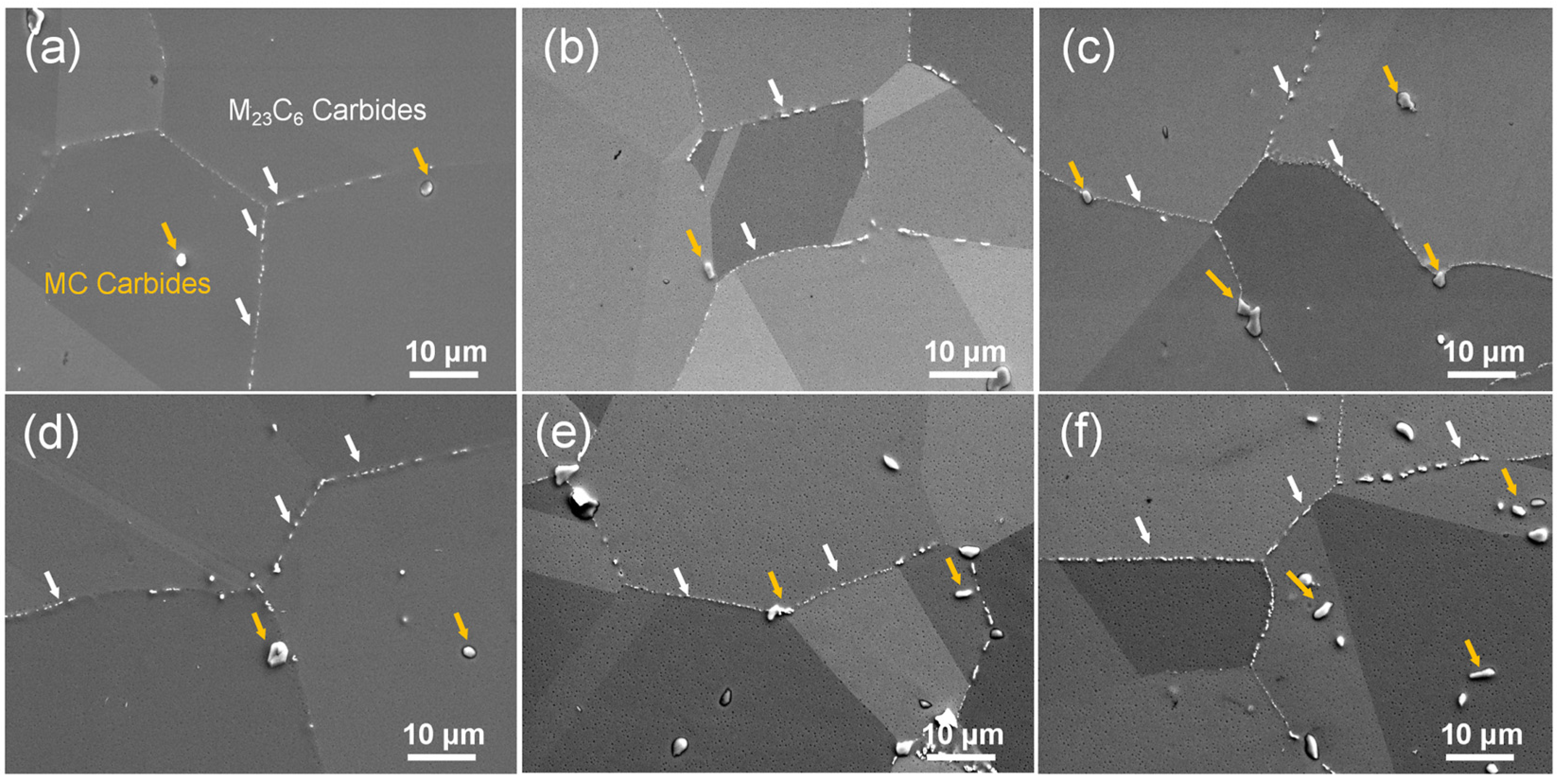
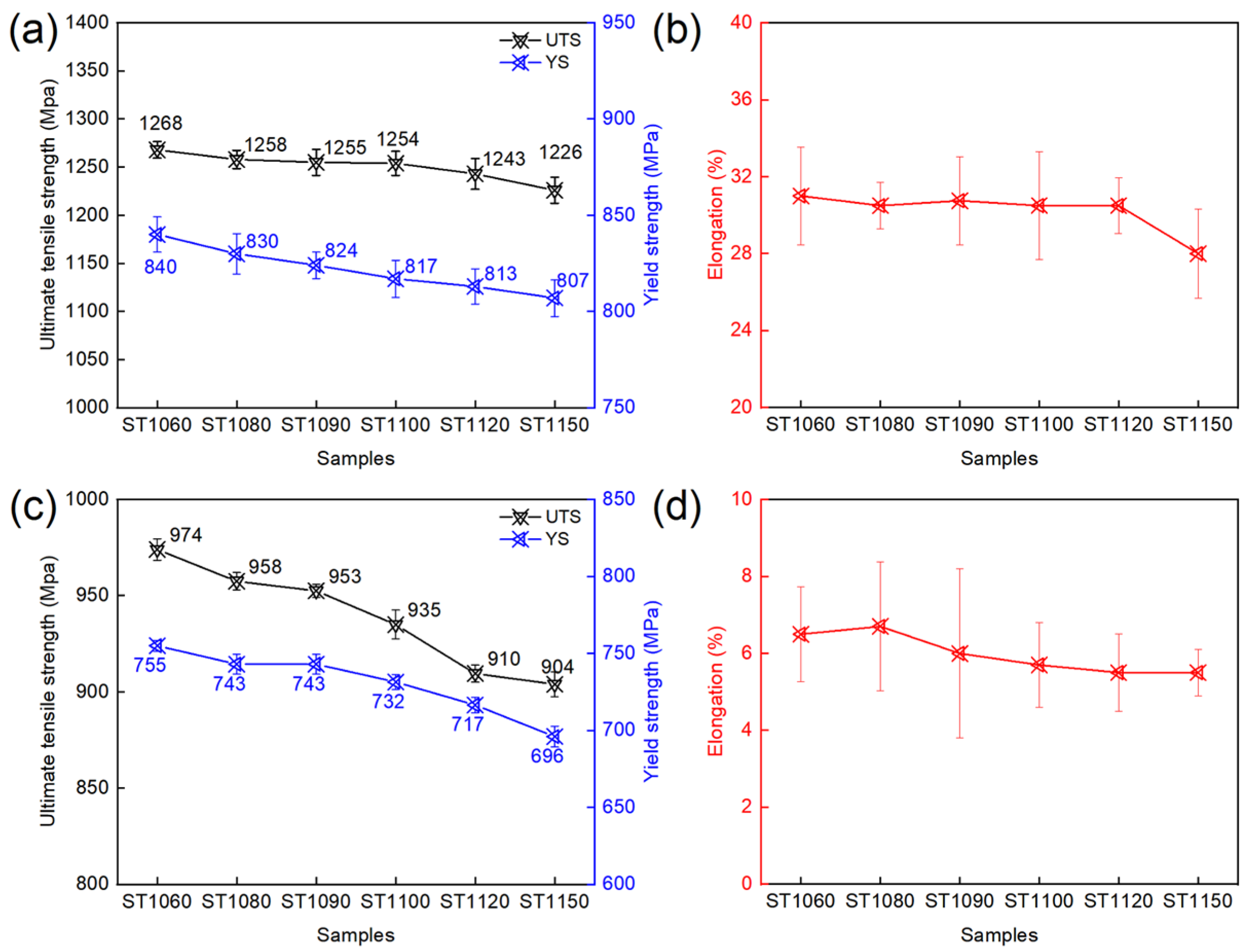
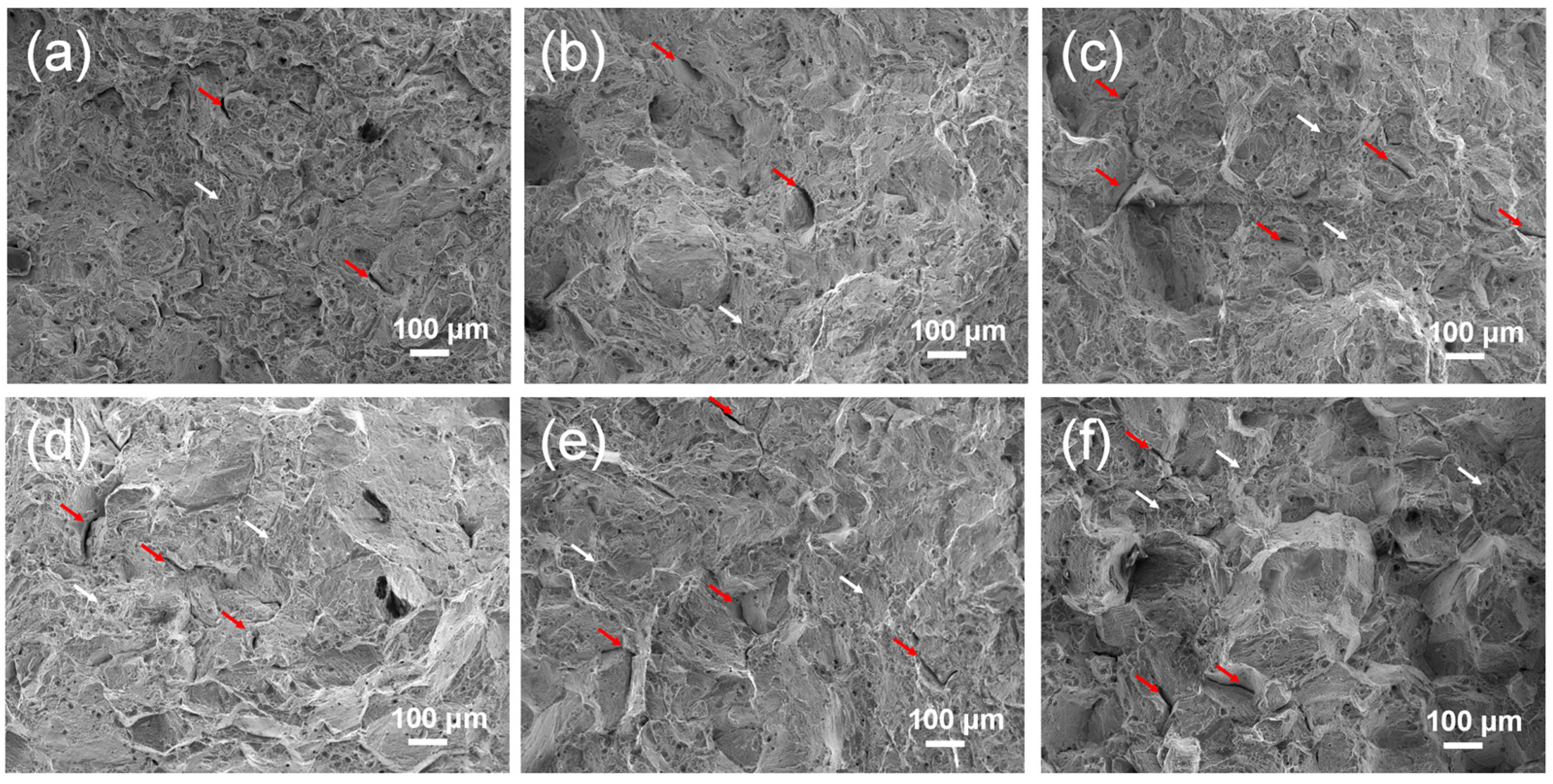
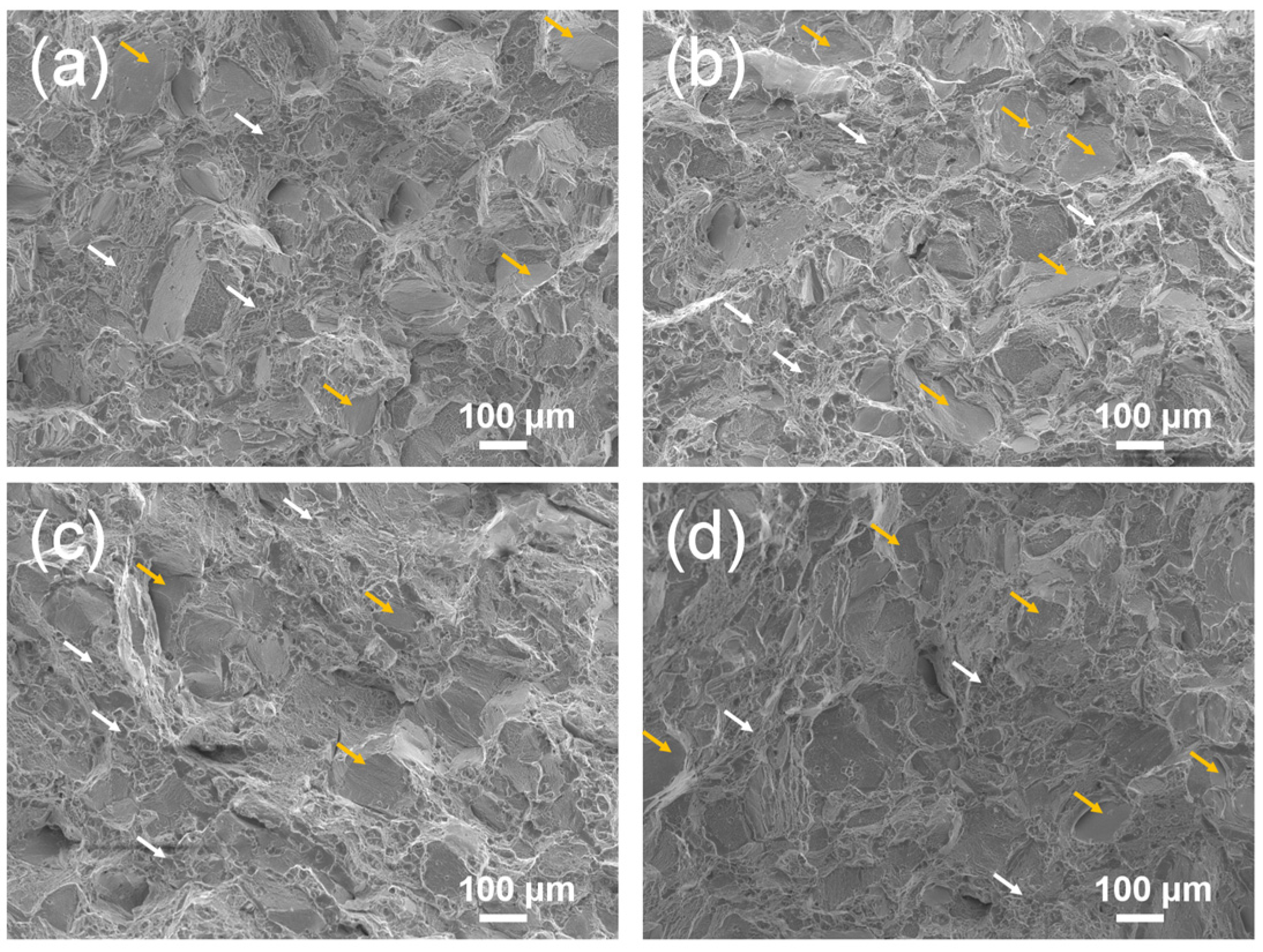
This study systematically investigates the effects of solution temperature ranging from 1060 to 1150 °C on grain growth kinetics, microstructural evolution, and tensile properties of GH4698 superalloys. The results indicate that grain size coarsens parabolically with increasing solution temperature. Based on the Sellars model, the grain growth time exponent n is determined to be 3.4 and the activation energy Q is 478.7 kJ·mol−1. This confirms that the grain growth process is significantly influenced by both MC carbide pinning and alloying element drag effects. Additionally, due to the coarsening of grains, the precipitation density of M23C6 carbides per unit grain boundary length increased from 0.26 μm−1 to 0.39 μm−1. The ultimate tensile strength at room temperature decreased from 1268 MPa to 1226 MPa, and the yield strength decreased from 840 MPa to 807 MPa, while the elongation remained at 28–32%. At 700 °C, the ultimate tensile strength decreases from 974 MPa to 904 MPa, and the yield strength decreases from 755 MPa to 696 MPa, with the elongation remaining at ~6%. Quantitative analysis reveals that the decrease in strength is primarily due to the weakening of grain boundary strengthening caused by grain coarsening. At 700 °C, the deformation mechanism transitions from dislocation shearing at room temperature to stacking fault shearing. This not only leads to a reduction in strength but also, accompanied by grain boundary weakening, results in a decrease in elongation.
Keywords: superalloy; GH4698; microstructure; deformation mechanisms; tensile behavior superalloy; GH4698; microstructure; deformation mechanisms; tensile behavior