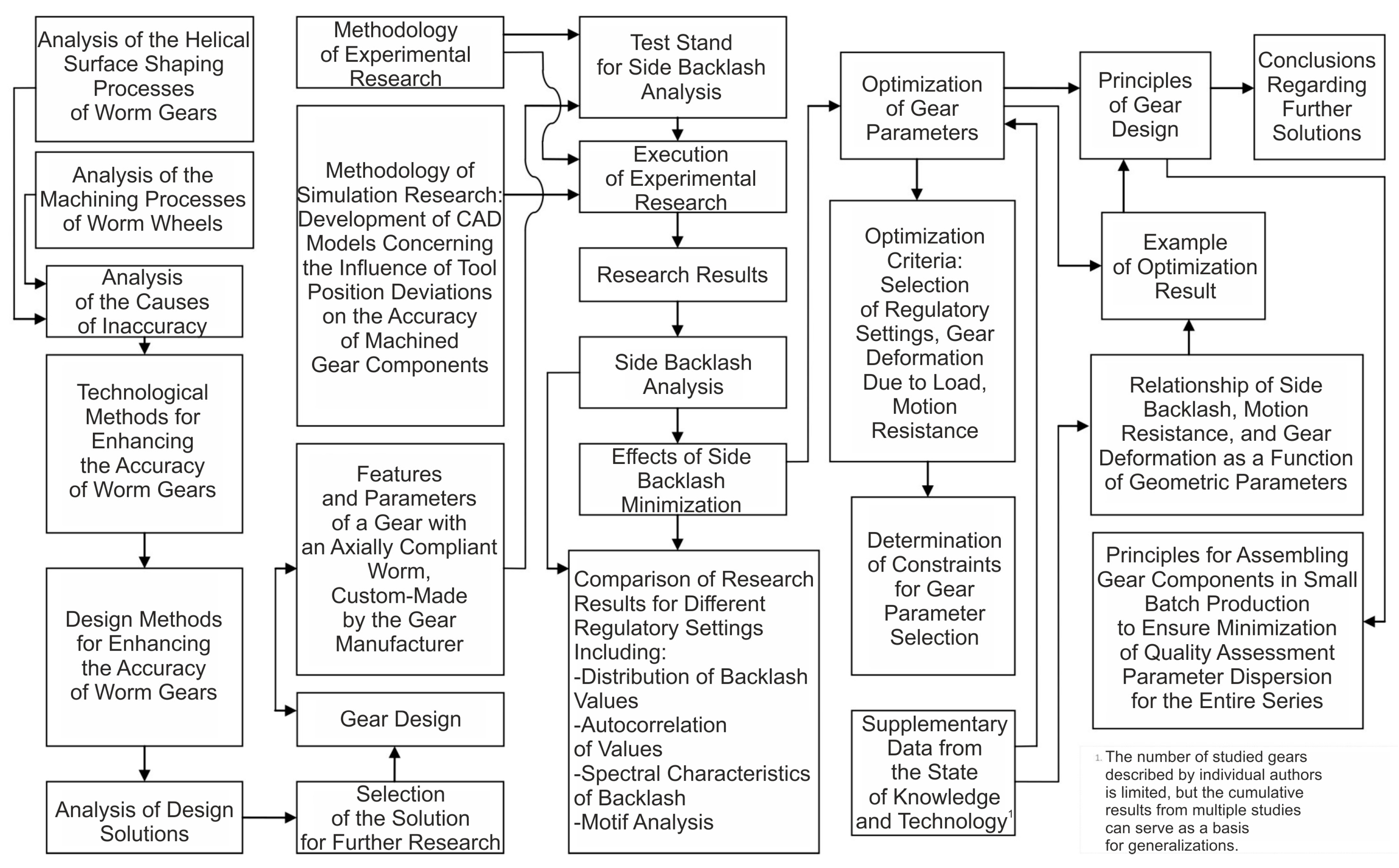
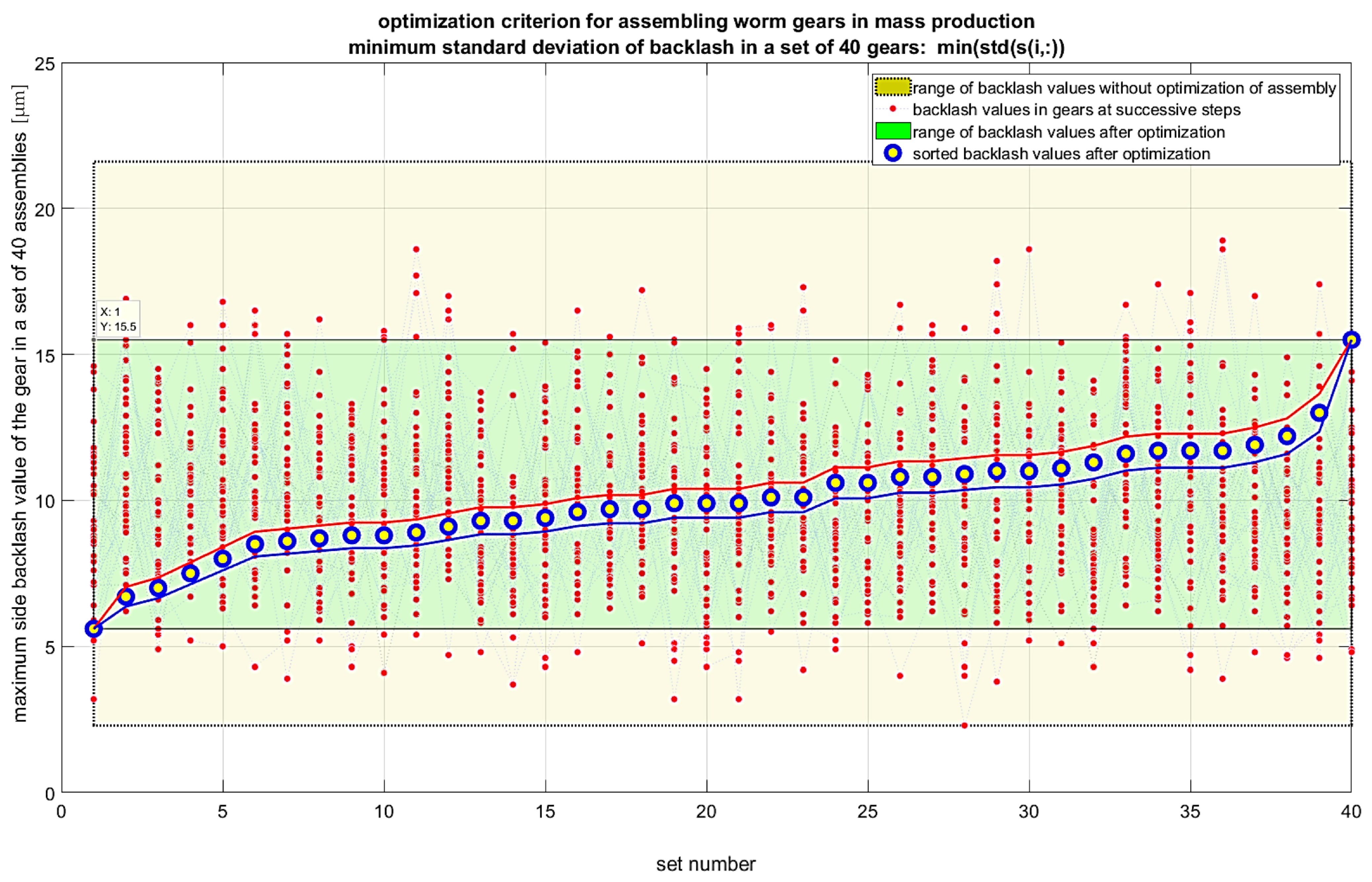
After analyzing technological and design methods for minimizing side backlash in worm gears, the subsequent part of this publication presents analyses regarding various criteria for the optimal assembly of precision worm gears in small batch production. It is considered that the gear components—the housing, worm, and worm wheel—manufactured within specified accuracy tolerances, exhibit differences in shape and dimension deviations. As a result of assembling gears composed of elements with varying accuracy without applying optimization procedures, the resulting set of gears can have significantly varied kinematic deviation or side backlash. The developed optimization procedures aim to minimize the differences in accuracy among individual gears within the entire production series.
2.1. Remarks on Technological Methods for Enhancing the Accuracy of Worm Gears
The accuracy of worm gears significantly depends on the precision of machining the interacting helical surfaces of worm threads and worm wheel teeth. The most critical requirements concern the high accuracy of the worm lead and the pitch of the worm wheel teeth. This precision determines the positioning accuracy of the moved elements, while the profile accuracy affects the load-bearing capacity and durability of the gear. The technical observations presented here serve as the basis for understanding the causes of errors that are then analyzed when modeling the accuracy of the helical surface, as well as their influence on backlash. The helical surfaces of worm threads with a hardness below 36 HRC can be ground or machined using turning or milling operations, employing special tools and small cutting depths. Accurate helical surfaces with a hardness above 36 HRC require grinding. Grinding helical surfaces, considering the shape and position of the machining zone (
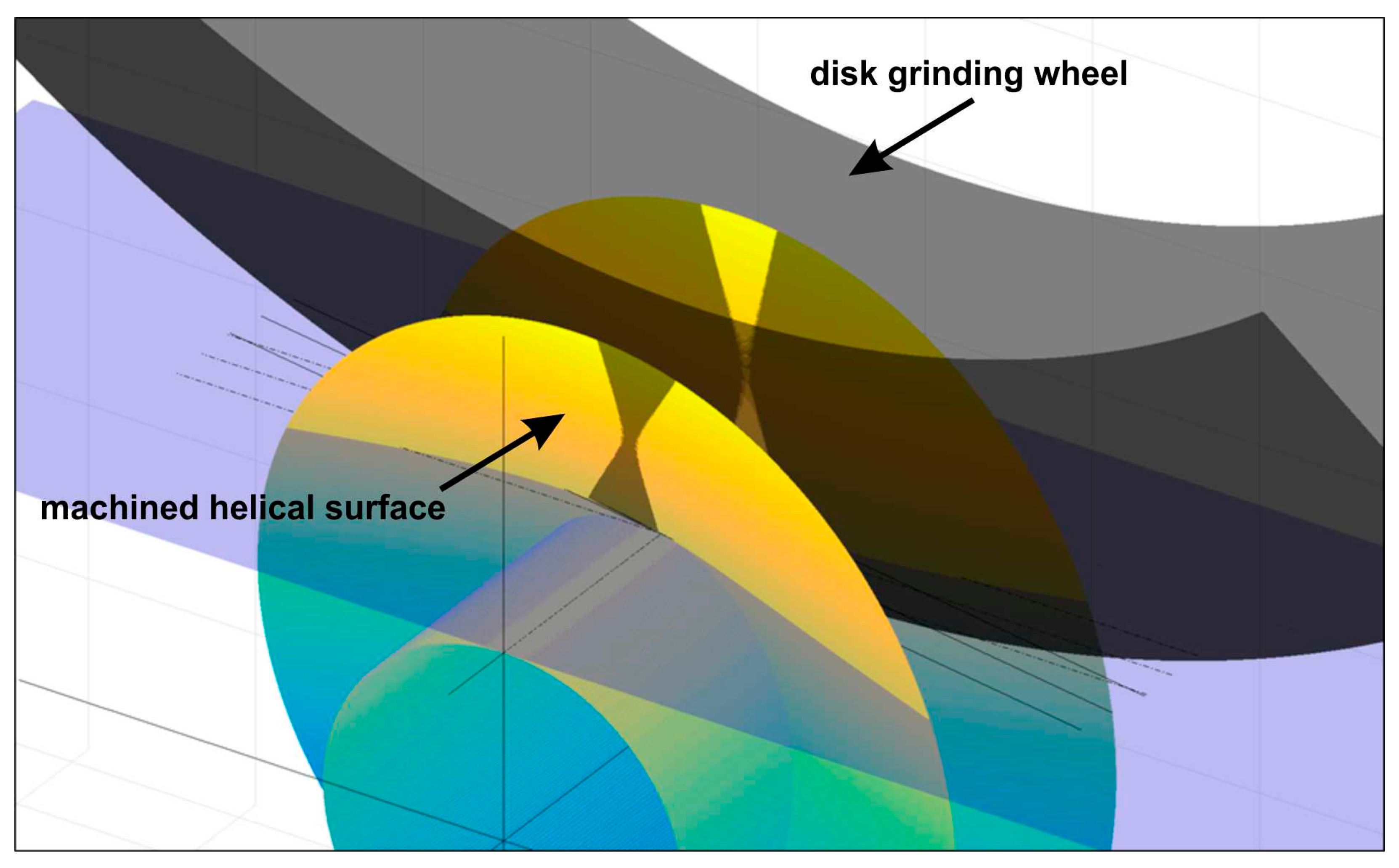
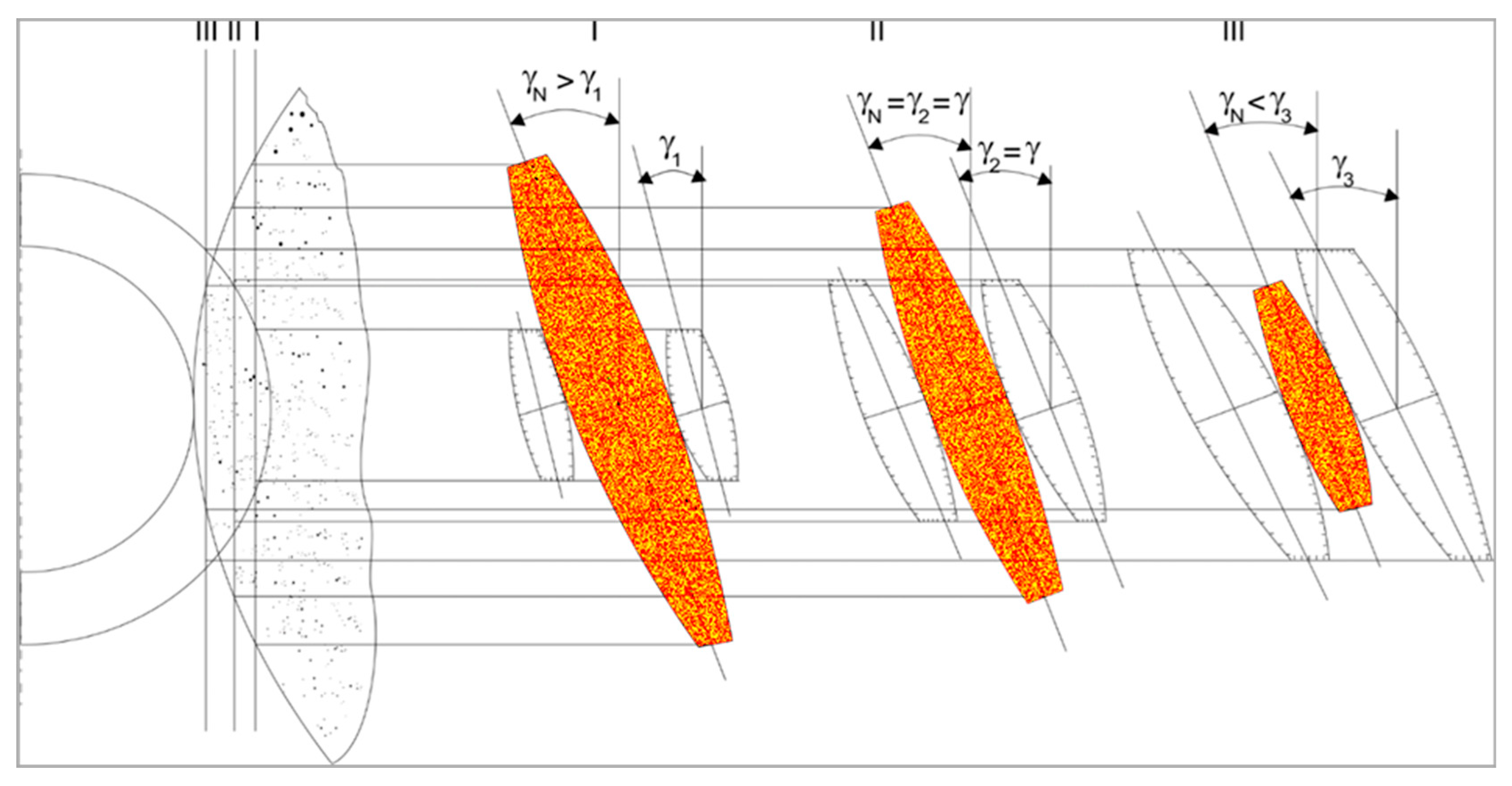
Figure 4), is a process that necessitates the proper selection of grinding wheel characteristics, methods for shaping their surfaces, and ensuring high positioning accuracy of the movable elements in the technological system. Recommendations for assessing the state of the working surface of abrasive tools, their wear, and the methodology for evaluating the geometric structure and quality of ground surfaces can be utilized in this context. Helical surfaces are most commonly ground using disk grinding wheels. Finger, ring, or cup wheels can also be used, although using finger wheels severely limits grinding efficiency due to their low rigidity. Additionally, the small active surface area results in low shape durability. Cup and ring wheels do not allow simultaneous grinding of both sides of the groove, which eliminates their production utility. Disk grinding wheels are characterized by high rigidity, have a large active surface area, and enable simultaneous machining of both sides of the groove. This allows for high grinding efficiency but requires solving the problems of shaping the grinding wheel profile to match the specific helical surface shape. The helical surface shape is then the envelope of the tool’s shape in its relative helical movement concerning the machined surface (
Figure 5). The helical surface shaped in the grinding process with a disk grinding wheel is the envelope of the tool’s active surface moving helically relative to it. Such a helical surface, in the general case, is not rectilinear. The mathematical relationships describing the geometric features of axial or normal profiles of helical surfaces are complex, especially for cone-derived and torus-derived surfaces. Occasionally, deviations from the proper nominal grinding wheel profile for grinding a specific helical surface may be acceptable if the profile error of the helical surface caused by this deviation is small compared to the permissible profile deviation, and the profile curvature increases slightly. To define the geometric features of the helical surface ground with a disk grinding wheel, it is necessary to specify: the nominal profile and dimensions of the tool, as well as its position relative to the axis of the machined surface. This method of definition arises from the fact that the helical surface shape and its profile in a specific cross-section depend on both the active surface profile of the tool and its diameter, as well as the position of the tool axis relative to the axis of the machined surface, for example, an inclination at an angle different from the lead angle of the helical line of the machined surface on the pitch cylinder.
Figure 5 shows the concept of forming the helical surface by grinding process. The orange zones depict the positions of the wheel of the grinding device used at three different cross-sections (I, II, and III), showing the effect of the orientation of the axis of the grinding device on the profile formed on the surface of the helix. Hence, the figure enables an understanding of the geometry of the grinding wheel relative to the surface of the worm gear.
The profiles of helical surfaces most commonly used in engineering are standardized. The nominal profile of the helical surfaces of most threads is a straight line in the axial section. Standardized nominal profiles of worm helical surfaces are straight for:
Archimedean worm A, whose nominal section is an axial section, and the nominal profile of the tooth is a straight line.
Normal convolute worm N, whose nominal section is a normal section, and the nominal profile of the tooth is a straight line.
Curvilinear profiles are characteristic of:
Axial-arc worm AR, whose nominal profile is a circular arc in the axial section.
Normal-arc worm NR, whose nominal profile is a circular arc in the normal section.
Involute worm E, which is a cylindrical involute gear.
Additionally, helical surfaces of worms can be defined by the nominal profile of a disk tool (these surfaces are non-rectilinear):
Cone-derived worm K, whose nominal section is a normal section, and the nominal profile of the disk tool is a straight line.
Toroidal-derived worm KR, whose nominal section is a normal section, and the nominal profile of the disk tool is a circular arc.
Other profiles can also be adopted, but this complicates the selection of tools for machining worm wheel teeth, as the profiles of the worm thread and the worm wheel teeth must have a specific geometric association. Justified profile modifications can be used when minor deviations from the nominal tool profile do not significantly alter the working conditions of the worm and worm wheel. In such cases, the worm and the worm gear milling cutter should be ground under identical conditions.
2.2. Mechanisms of Cumulative Effects of Inaccuracies
Considering the dimensional and form inaccuracies of ground worm helical surfaces and worm wheel teeth, it is not sufficient to determine only the measures of location and variability of the statistical set of results for a single realization of the process. What is important is not so much the distribution of results obtained for a completed batch of products, but rather the distribution of results for all possible process realizations.
In the present analysis, it was assumed that these distributions result from the combined effects of multiple causes of deviations.
The problem of selecting an appropriate distribution model for the analyzed characteristic in the general population cannot be solved solely by searching for a model that fits a given dataset. An analysis of the mechanism responsible for the occurrence of a specific dimensional or form deviation is indispensable. This reduces the probability of inconsistency between the adopted model and the results obtained in subsequent realizations, especially under changed operating conditions.
Changes in the condition of the active grinding wheel surface cause dimensional and form deviations to arise from processes that cannot be regarded as stationary. As a consequence of process non-stationarity, the overall distribution of these deviations differs from the instantaneous distribution and depends on both the length of the observation interval and the starting moment of data acquisition.
Based on analyses of numerous precision grinding processes, a methodological procedure was formulated, comprising the following sequence of research steps:
Evaluation of the causes of deviations and the locations of their occurrence within the technological system.
Analysis of the statistical characteristics of the causes of deviations and assessment of whether the deviation:
Results from a stationary or a non-stationary random process;
Contains a non-random component that is either constant or time-varying;
Is characterized by a high coefficient of variation.
Analysis of the effect of the considered cause on the occurrence of specific inaccuracy features, in particular an assessment of:
The transmission characteristics of random and deterministic signals through the technological system.
The probabilistic characteristics of the system response to excitation constituting the cause of the deviation.
Analysis of the mechanism of accumulation of the effects of multiple diverse causes on the resulting deviation distribution.
A deterministic analysis of the causes of deviations in the position of the tool surface relative to the machined surface is usually sufficient to identify the main causes of inaccuracy of the machined part. However, it does not make it possible to determine the influence of various causes on the nature and degree of dispersion of the values of the analyzed inaccuracy characteristic.
A dimensional or form deviation is often the result of the action of many factors of minor influence, none of which is dominant. In such a case, determining the cumulative effects of multiple influences makes it possible to infer the existence of specific causal relationships.
The mechanisms of the accumulation of inaccuracy effects may be described by an arithmetic sum, a geometric sum, a product, a set of extreme values, or a more complex function. For a process regarded as stationary, the following model cases can be distinguished:
The resulting distribution is the distribution of the sum of random variables, with one or several factors having a decisive influence.
The distribution is the sum of many factors, none of which dominates the others.
The distribution of the analyzed inaccuracy characteristic is the distribution of the geometric sum of random variables.
The dimensional or form deviation, as a random variable, depends on the product of a large number of other variables, or the main cause of the deviation results from the action of a multiplicative mechanism.
The resulting distribution is the distribution of the scalar or vector product of random variables.
The distribution of the analyzed inaccuracy characteristic is the distribution of extreme values of the component effects.
If none of the many causes of inaccuracy dominates the others, and these variables are not highly dependent, then the distribution of the sum of effects is close to the normal distribution.
In the grinding of worm helical surfaces and the hobbing of worm wheel teeth, it may be assumed that deviations are formed partly as a result of summation of elementary geometric effects. Even if the normal distribution is a consequence of the laws governing the dispersion of the values of the analyzed inaccuracy characteristic, its adequacy for describing a dataset decreases with increasing distance from the mean value. In the case of a small sample size, this may lead to serious errors.
A frequently encountered case of a multiplicative mechanism of deviation formation during grinding is the division of stock allowance into multiple passes. Each pass reduces the dimensional or form deviation randomly, in proportion to its value. The value of the deviation after the n-th pass is equal to the product of the deviation before that pass (n − 1) and a random factor representing the reduction in the deviation.
The resulting random variable, and in this particular case the resulting dimensional or form deviation, when the number of spark-out passes is large, is the product of a considerable number of other variables, and examining and describing each of them individually is impossible.
However, it is possible to determine the resulting distribution provided that the conditions associated with the central limit theorem are satisfied. In that case, the dispersion of deviation values is described by the log-normal distribution.
In the assessment of inaccuracies of ground elements, it often happens that quality is determined by the largest dimensional or form deviation. In worm gear elements, the principal inaccuracy characteristic of the worm may be the maximum value of the cumulative pitch deviation, whereas in worm wheels it may be the maximum deviation of the sum of any number of pitches.
In the above-mentioned cases, the maximum value xmx_mxm among nnn random variables x1, …, xn is sought. If the variables xi satisfy the assumptions of independence and identical distribution, then the distribution of the values xi has a relatively small effect on the distribution of the variable xm = max(xi). For form deviations of abrasively machined surfaces, the above assumptions are satisfied more often than for surfaces machined by other methods.
The Type I extreme value distribution is obtained under the assumption that the probability of occurrence of unboundedly increasing values of the variables x
i decreases exponentially. This means that the probability density function takes the form:
where g(x) is an increasing function of the variable.
The probability density function of the maximum values then takes the form:
where u is the mode of the distribution of the variable x
m, whereas α is a measure of dispersion. The constants 0.577 and 1.645 correspond to the Euler–Mascheroni constant and the variance of the Type I extreme value (Gumbel) distribution, respectively. The expected value and variance are then expressed by the following approximate relationships:
and the skewness coefficient is equal to 1.1396.
The Type II limiting distribution of the largest values occurs when the random variable is bounded below by zero and unbounded above. In that case, the probability density functions of the value x and of the maximum values x
m take the following forms:
The relationship between the Type II and Type I distributions is the same as that between the log-normal and the normal distributions. If xm has a Type II distribution, then ln(xm) has a Type I distribution. In another case, the Type III limiting distribution of the largest values corresponds to random variables bounded above and is known as the Weibull distribution.
2.3. Mathematical Modeling of the Geometric Properties of the OUPN Process System
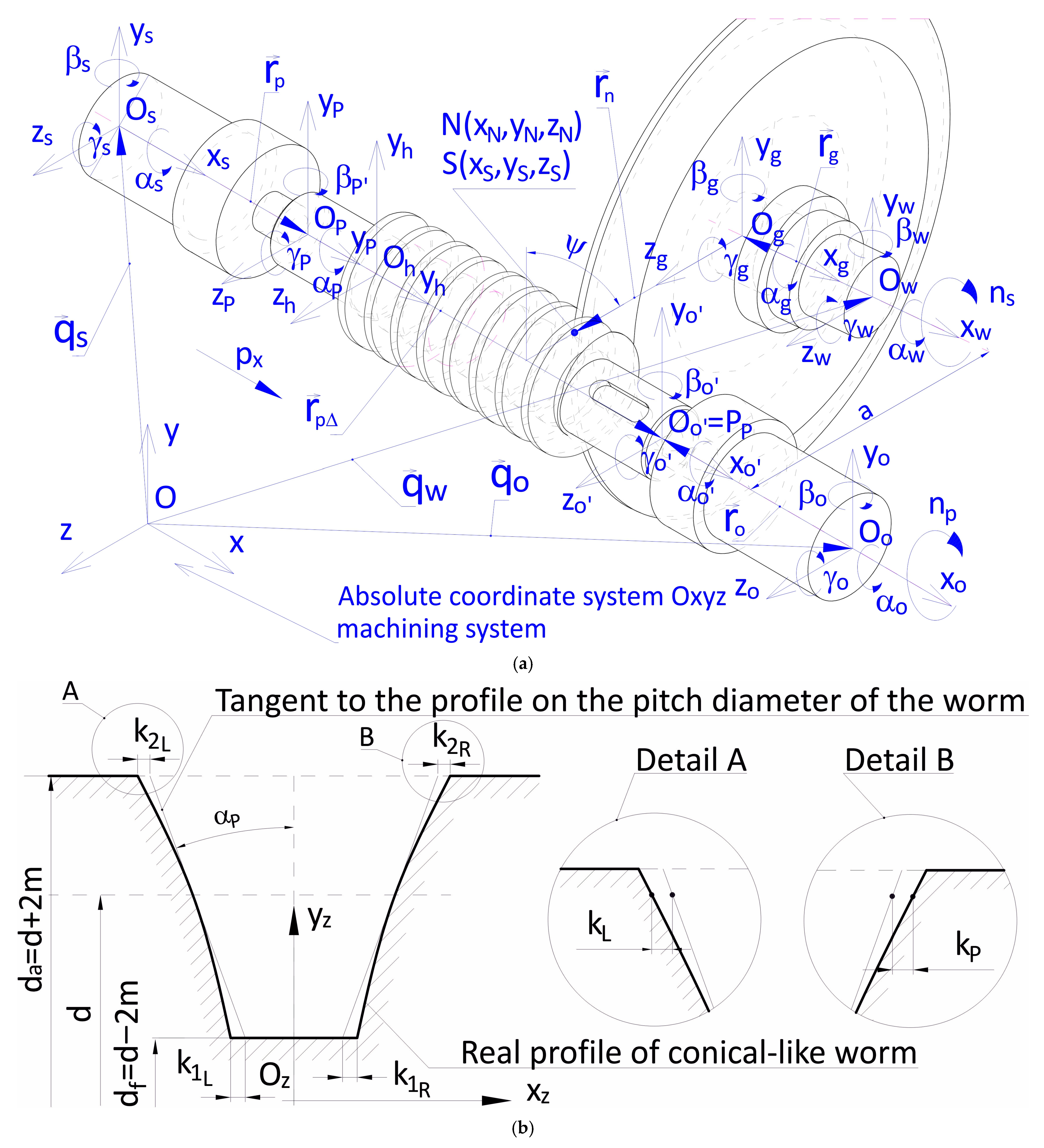
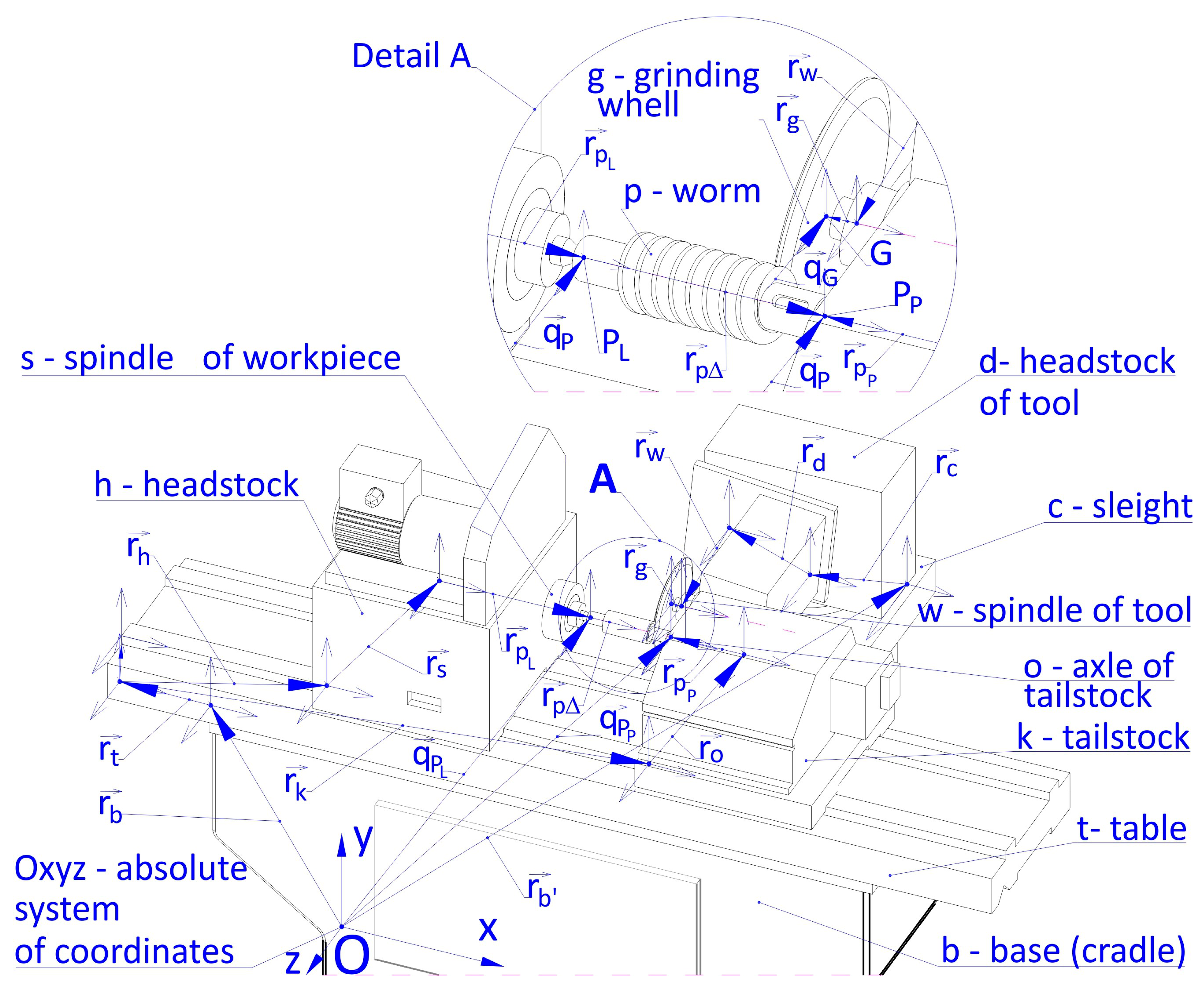
The mathematical model of the machining system comprises relations between the parameters defined in local systems of coordinates presented in
Figure 6, which reflects the mutual geometric and kinematic relationships between the basic sets of the machine tool, starting from the base (bed) b, grinder table t, headstock of workpiece h, workpiece spindle s, tool headstock sled c, abrasive wheel headstock d, abrasive wheel spindle w, abrasive wheel g, knight k, knight axis o and workpiece p.
The positioning of the workpiece fastened in lathe centers (base points P
L and P
P) in an absolute coordinate system Oxyz, is determined with vectors
and
:
The position of the grinding wheel (point G—start of the local coordinate system of the tool) in an absolute coordinate system Oxyz is determined with vector
:
In a general case, the value of the closing link
of the spatial dimensional chain of the OUPN system, which determines the positions of the worm machined, in an absolute system of coordinates Oxyz is calculated based on the following formula:
where
i
are the vectors that determine the position of points P
L and P
P, which determine the position of the workpiece p fastened in w lathe centers, in relation to the global system of coordinates Oxyz.
The deviation of the angular position of the axis of the workpiece
, which is the result of the deviation of the axis of the knight in relation to the spindle axis, as a link that closes the spatial angular dimensional chain, may be calculated from the following formula:
where
is the scalar product of the vectors
i
and
i
are the lengths of vectors
i
.
2.3.1. Mathematical Model of the Helical Surface of the Worm
The conical-like helical surface is formed as a result of a relative rotational and translational motion of the surface being formed and a rotational motion of the grinding wheel with a trapezoidal axial profile. During machining, the abrasive wheel axis is tilted in relation to the worm axis by the pitch angle of the helical line
γN on a cylinder with a specified diameter (usually pitch diameter). By selecting the tilting angle of the abrasive wheel axis
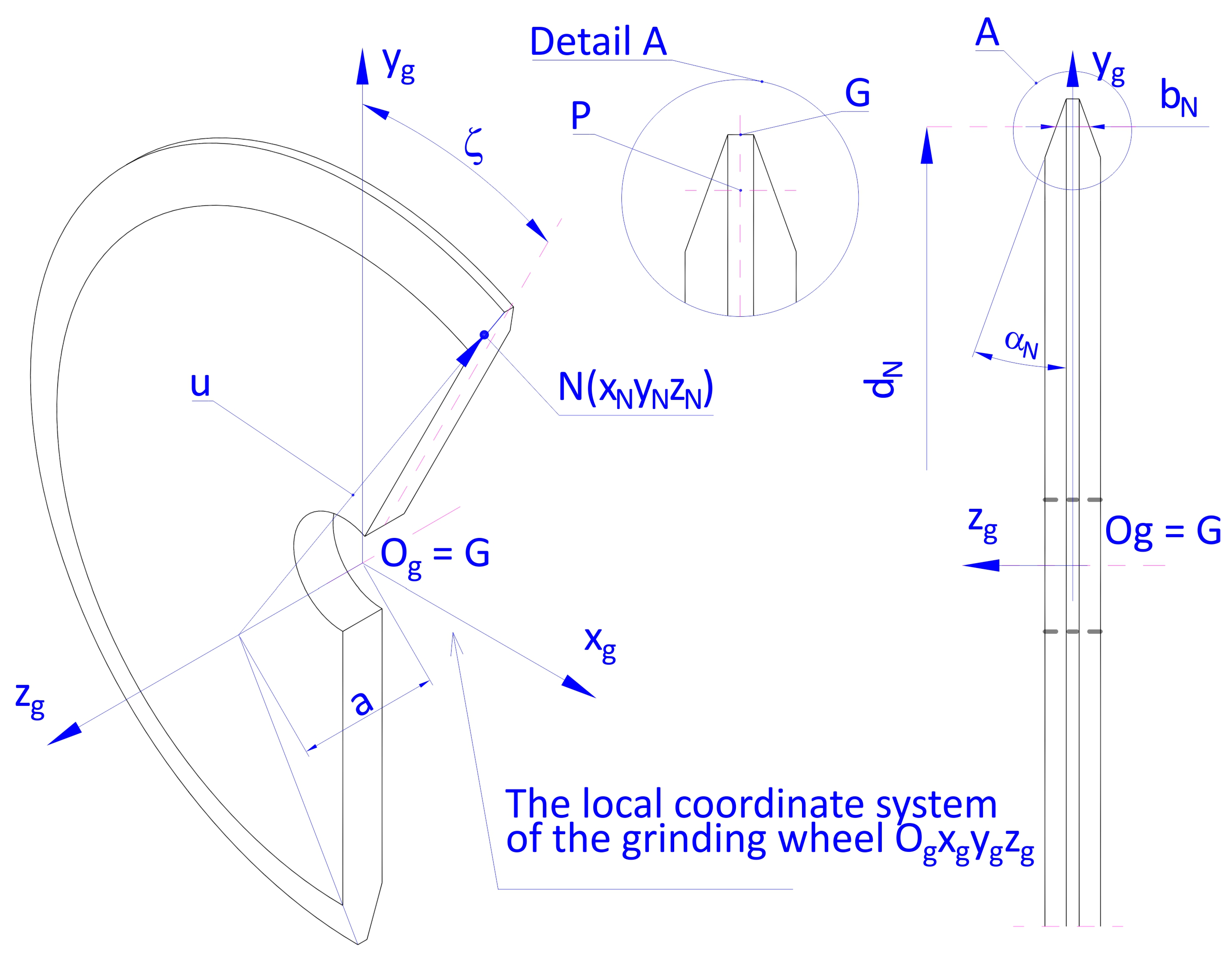
γN, one may exert influence on the values of deviations from the rectilinearity of the worm axial profile on the apex and on the thread base. The helical surface of the worm is an envelope of the conical surface of the tools as a result of relative helicoidal movement. The parameters that describe the surface of the tool in conical shape, presented in
Figure 7, in a local system of coordinates O
gx
gy
gz
g will be as follows:
where u is the distance of point
N′(xN′yN′zN′) from the cone apex,
αN is the cone profile angle, and
ζ is the angle of rotation in relation to axis
zg.
The height of the cone a of the side surface of the tool may be calculated from the following formula:
where
dN is the pitch diameter of the tool, and
bN is the width of the grinding wheel on the diameter corresponding to the worm pitch diameter:
.
In the absolute system of coordinates Oxyz—in the part of the OUPN system: grinder base
b, tool headstock sled
c, tool headstock
d, abrasive wheel spindle
w and abrasive wheel
g—the position of point
N is described with vector
, which may be calculated from the following formula:
In the calculations above the sum of the vectors there occur rotation matrices that determine the rotation of the local systems of coordinates related to the grinder base b, grinder table t, tool headstock sled c, tool headstock d and the abrasive wheel spindle in relation to their axes and translation matrices, which describe linear shifts in the local systems of coordinates.
The worm helical surface machined with a disk tool, which is an envelope of the tool active surface, which is in helicoidal movement, one that is concentric with the helical surface axis, is not a ruled surface in a general case. In order to explicitly determine such a helical surface, the following is to be provided: the rated profile and dimensions of the abrasive wheel and its situation in relation to the helical surface. In order to generate a general equation of a helical surface machined with a disk tool, the following can be used: the envelope theory, the division method of the disk tool into an infinite number of elementary tools with an infinitely small width or the determination method of the family of the lines of the contact between the helical surface and the tool.
What was used for the purpose of further considerations was the relationships in the Oxyz coordinate system accepted and in the local coordinate systems, presented in detail in
Figure 8.
In the coordinate system
Oxs’ys’zs’ of the workpiece, the coordinates of the contact line between the tool and the helical surface of the worm are obtained based on the perpendicularity condition of the normal vector
to the surfaces in contact and the relative velocity vector
in helicoidal movement.
In Dependence (15), the components of the normal vector can be computed based on Equation (12), which describes the tool surface as the adequate determinant in relation to the conical surface parameters u and ζ. The components of the tangent vector are calculated based on the vector of the relative velocity of the tool shift in relation to the worm being formed. By performing the calculations, equations are obtained which, together with Dependence (12), form a system of equations that describe the contact line of the tool surface and the worm in the tool’s coordinate system Ogxgygzg. The worm helical surface is formed as a result of a rotation by angle ψ and the corresponding shift, where p is the pitch of the helical surface.
The final form that describes the conical-like helical surface of the worm tooth in the local coordinates system of the workpiece O
s’x
s’y
s’z
s’ in a general notation is as follows:
In a general case, the equation was derived of the helical surface machined with a disk tool, where the deviations of the geometric parameters that occur in Equation (17) amount to zero. The vector
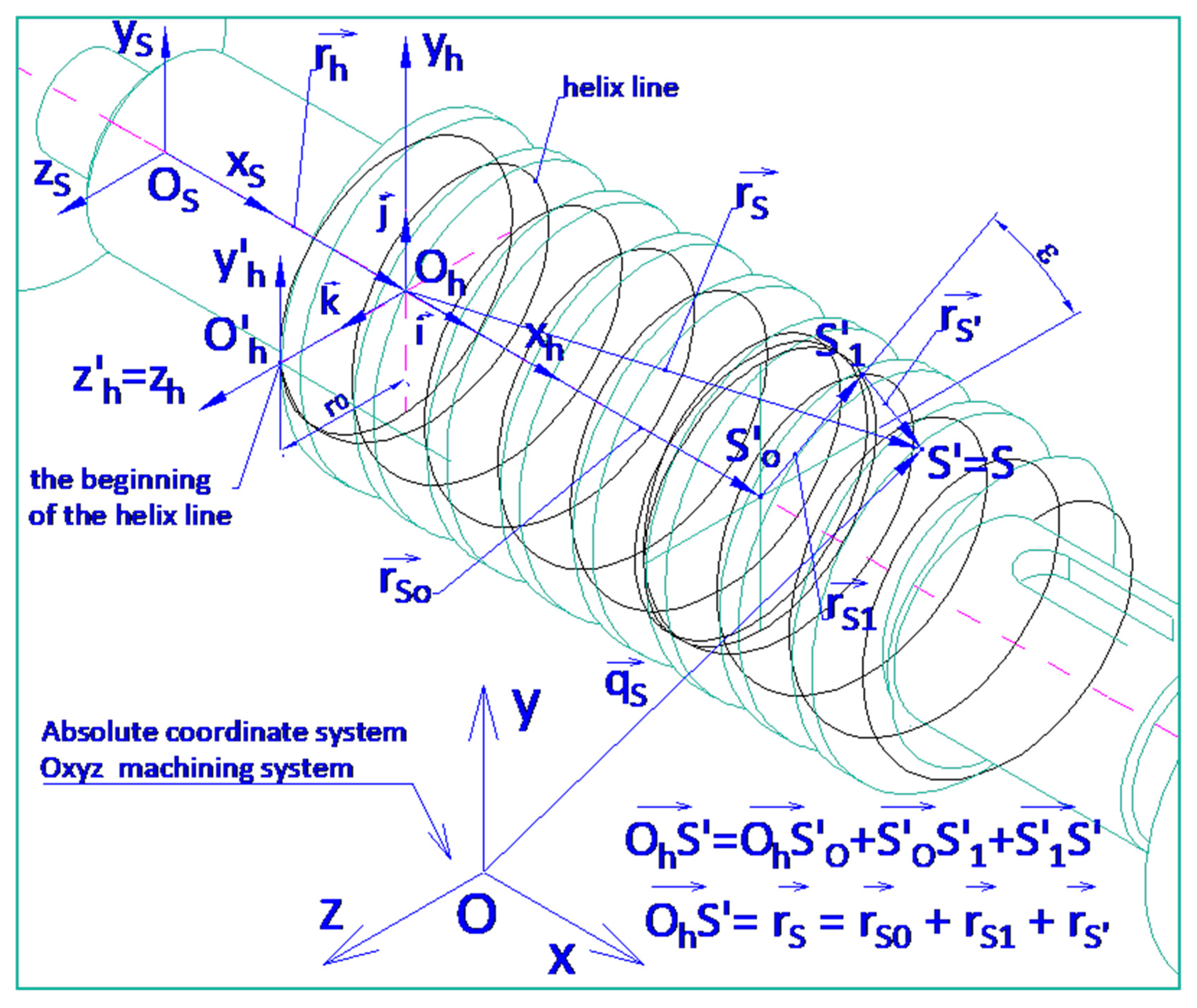
of any helical surface point (
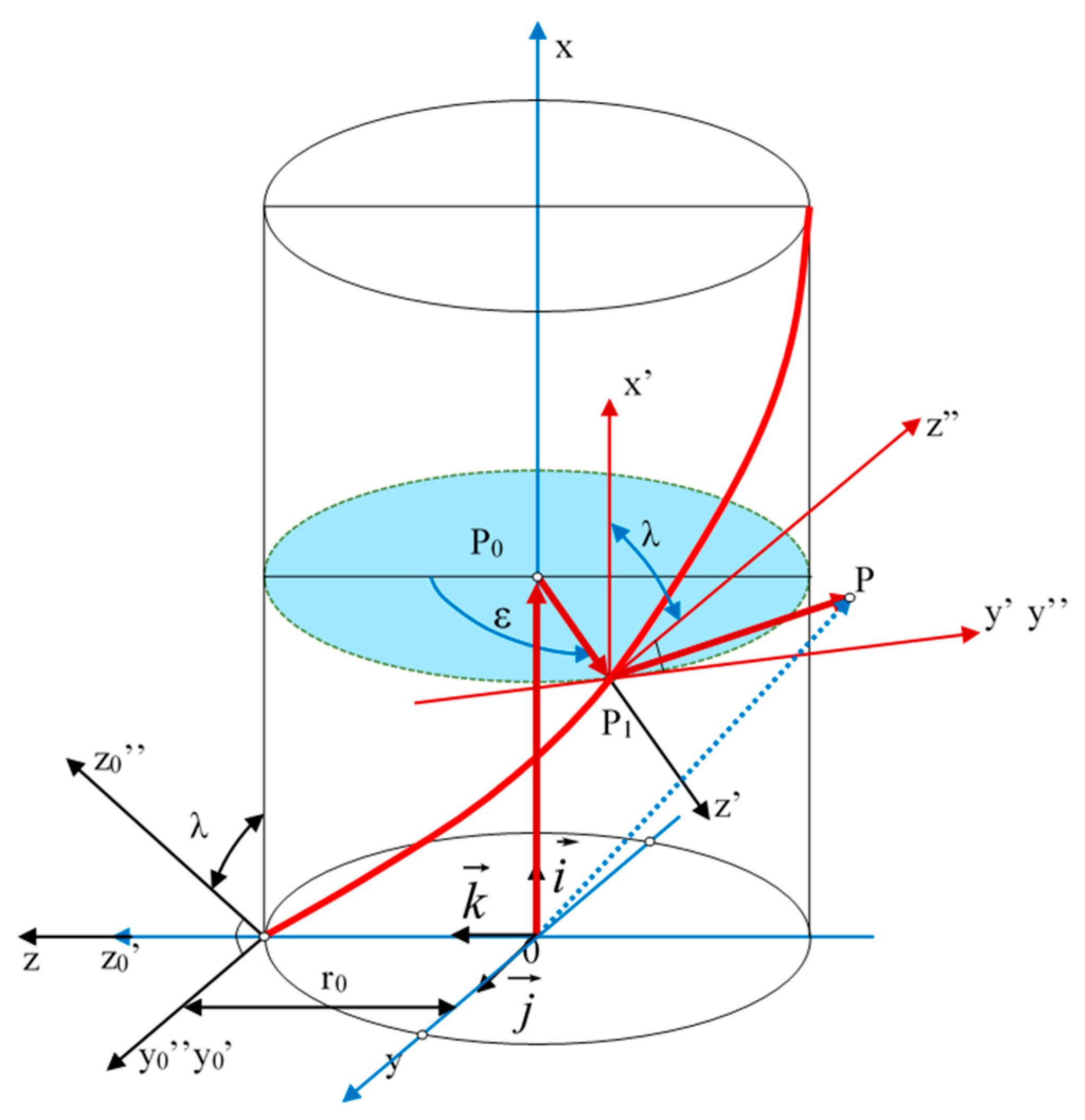
Figure 9) is the sum of vectors
,
,
:
The vector is the shift in the movable system O′hx′hy′hz′h in relation to the local system of coordinates Ohxhyhzh in parallel to the helicoid axis.
The vector is the result of the shift in the movable system O′hx′hy′hz′h in relation to the local system of coordinates Ohxhyhzh by the quantity of the shift r0 and rotation of the system O′hx′hy′hz′h in relation to the system Ohxhyhzh by angle ε. The vector is the radius vector of the helical surface profile.
Based on the considerations above, the following equation was derived of the helical surface in the local system of coordinates O
hx
hy
hz
h:
2.3.2. Grinding Accuracy of the Helical Surface of the Worm
For the proper grinding process of helical surfaces, it is necessary to solve not only geometric problems but also numerous technological problems.
The helical surface formed in the grinding process with a disk grinding wheel (
Figure 7 and
Figure 8) is an envelope of the active surface of the tool that is traveling in relation to it in helicoidal movement.
For the purpose of an explicit determination of the helical surface being machined with a disk tool, the following is to be provided:
A number of factors have an impact on the accuracy of the pitch quality of the thread helical surface; these may be classified as follows:
Causes that are characteristic of grinders for threads: deviations of the pitch of the lead screw, non-rectilinearity of the table movement, deviations of the shape and position, inaccuracies of the guides, kinematic deviations of the drives;
Causes that are variable during machining and that are dependent on the machine tool: thermal deformations of the bed and table, thermal deformations of the lead screw, thermal expansion of the grinding wheel spindle, shape-related wear of the grinding wheel, elastic strains of the machine tool;
Causes that are variable during machining and that are dependent on the workpiece: thermal deformations of the workpiece, elastic strains of the workpiece by machining forces, deviations to the workpiece position.
It was demonstrated that a deviation of the distance of the workpiece axis and the grinding wheel axis ΔaN and a deviation of the distance between dressing wheel blades is the cause of the dimensional deviations of the helical surface being machined. A deviation of the grinding wheel tilt angle ΔγN, a deviation of the tilt angle of the dressing wheel head Δγobc = β and a deviation of the grinding wheel profile angle ΔαNobc are the causes of the shape deviations of the helical surface.
Deviations of the shape of the abrasive wheel active surface and deviations of its position in relation to the grinding of the helical surface are of crucial importance to the machining accuracy. These deviations depend to a significant extent on the inaccuracy in the settings of the machine tool.
Based on the considerations described with Equations (17) and (18), a helical surface equation was derived (vector
in the local system of coordinates O
hx
hy
hz
h), machined with a disk tool. Whole deviations from the nominal position are Δα
N and Δa
N.
whereas
In a particular case, a conical-like helical surface, the following set of equations was obtained:
where
ΔαN, ΔγN, ΔaN, ΔbN are the deviations of the following respectively: abrasive wheel axial profile angle, abrasive wheel axis tilt angle, distance of the abrasive wheel axis from the helical surface axis and the abrasive wheel width on the pitch diameter.
The same surface is described with vector S that determines its location in the absolute system Oxyz of the OUPN process system:
where R
S (R
b, R
t, R
c, R
d, R
w, R
h, R
s, R
k, R
o, R
p) are the rotation matrices that determine the rotation of the local systems of coordinates related with base b, grinder table t, sled of the tool headstock c, tool headstock d, abrasive wheel spindles w, headstock PO h, spindles PO s, knight k and its axis o.
TN (Tb, Tt, Tc, Td, Tw, Rh, Rs, Rk, Ro, Rp) are the translation matrices that describe linear shifts in the local coordinate systems of the process system elements.
An analytical description of the configuration of the OUPN kinematic system comprises the transformations of Equations (8)–(27) until those dependences have been obtained that determine the angular and linear parameters. However, it needs to be emphasized that for the present OUPN process system, entangled dependences are obtained based on which the coordinates of the surface or only the profile (e.g., axial profile) can be determined using numerical methods. The coordinates of the helical surface can also be determined through logical operations on a set of solids in the CAD environment.
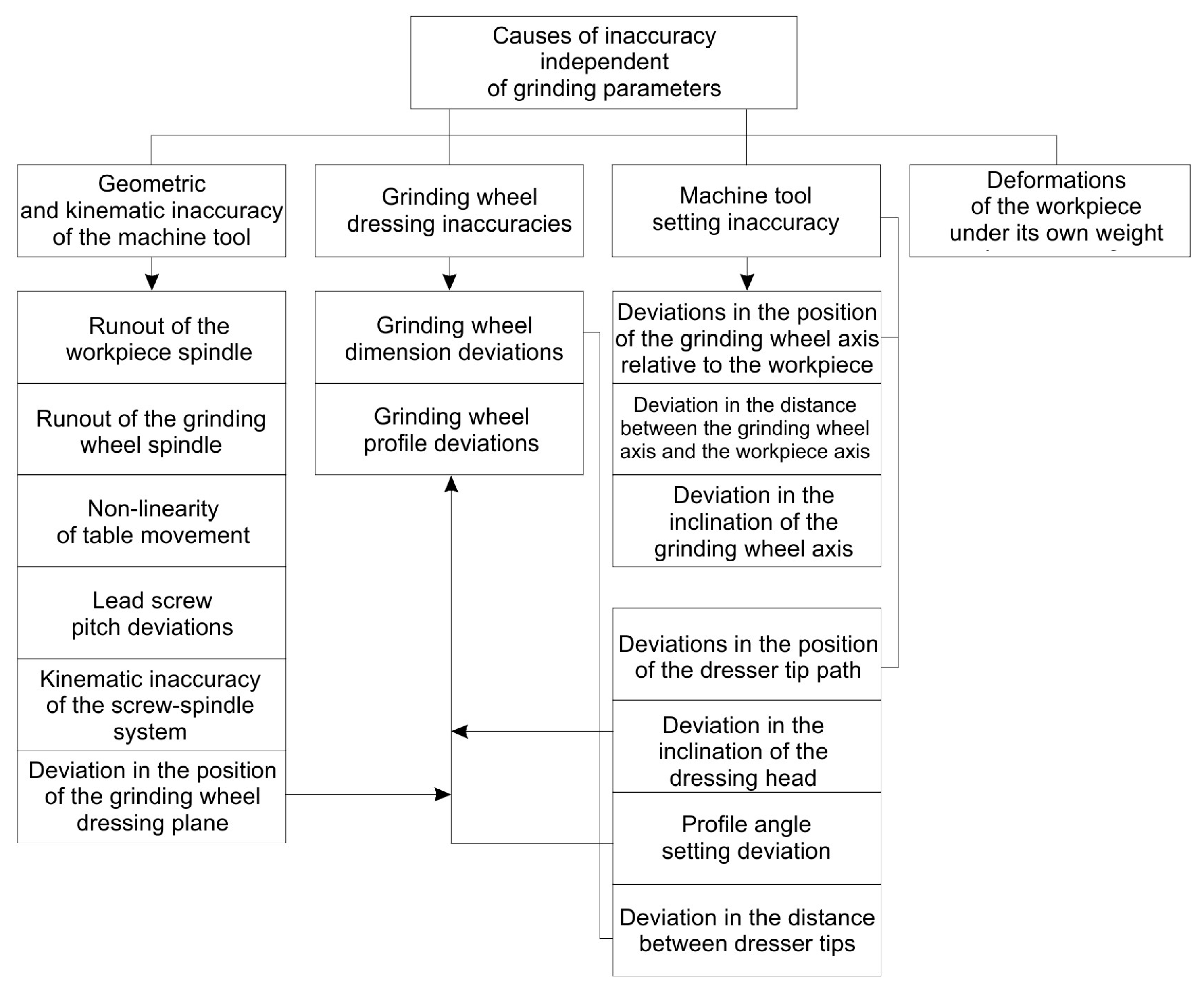
Analysis of machining accuracy in the technological system (
Figure 10) indicates that the main causes of profile deviations can be attributed to three direct causes:
Deviations in the position of the grinding wheel relative to the axis of the workpiece [
28];
Deviations in the inclination angle of the grinding wheel axis relative to the axis of the machined helical surface;
Deviations in the grinding wheel profile.
The profile deviation of the grinding wheel can be caused by inaccuracies in the profiling device and deviations in its position, but the main reason is shape wear during machining. Geometric accuracy deviations and deformations of machine tools cause profile deviations of less than 0.001 mm. The inclination angle deviation of the grinding wheel axis significantly affects the profile deviation value. The mechanisms for setting the inclination angle of the grinding wheel axis require improvements or the use of additional measuring instruments.
2.4. Design Methods for Enhancing Gear Accuracy
Gears capable of ensuring backlash-free operation of a technical system are considered special gears [
12,
29]. They can differ in the type and shape of the interacting surface elements [
13]. They also vary in methods for reducing the groove width in worm wheels and solutions that allow for reducing the axial pitch of the worm without disassembling the gear [
18]. A mechanism that allows changing the distance between the axes of the worm and the worm wheel can be used to minimize side backlash. Another solution is a gear in which the worm wheel has a rim that can move elastically relative to the hub (
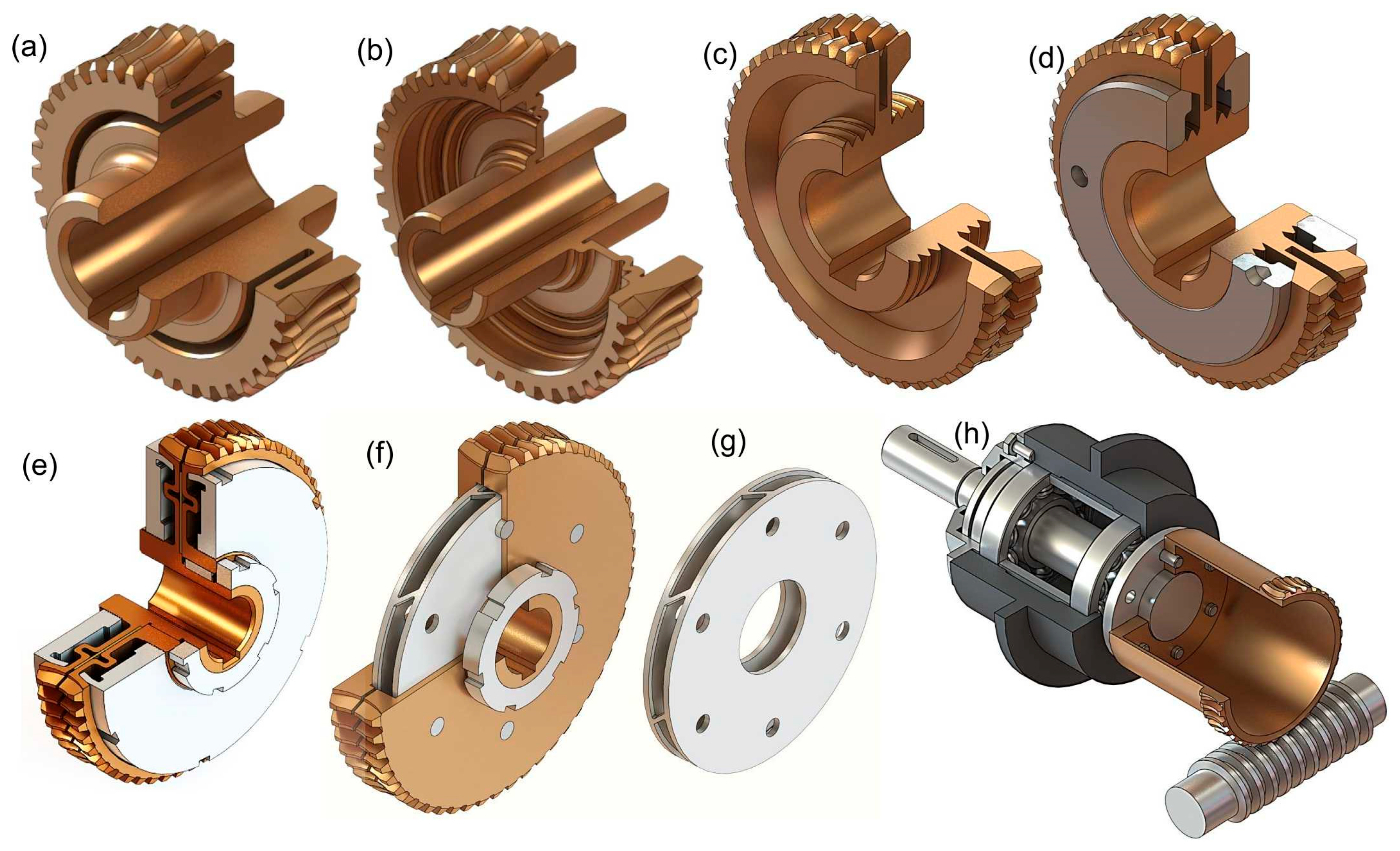
Figure 11) or has a peripheral slot, the width of which can be reduced by deforming the separated sides of the rim, or the worm wheel is divided into two parts [
18], with the division surface defined by a plane passing through the center of the worm wheel and perpendicular to its axis of rotation. Both parts are mounted on a common hub. Angular displacement of one half relative to the other allows increasing the thickness of the worm wheel teeth, for example, through axial compression of a disk with oblique ribs. Examples of such design solutions are presented in
Figure 11, which illustrates several variants of worm wheels intended for periodic backlash adjustment. Worm wheel with an axially flexible diaphragm-type connection between the hub and the rim (
Figure 11a); worm wheel with a radially corrugated wall connecting the rim with the hub (
Figure 11b); worm wheel with a circumferential deep groove providing increased axial compliance of both sides of the rim (
Figure 11c); worm wheel with conical clamping of both sides of the rim, ensuring reduction in the groove width and bringing the outer parts of the teeth closer together (
Figure 11d); worm wheel with tensioning disks providing elastic support of the rim (
Figure 11e); worm wheel composed of two disk-shaped parts connected by a plate in the form of two circular segments joined by inclined ribs, which causes a slight relative rotation of the worm wheel halves as a result of their axial compression, leading to an increase in tooth thickness and thus reduction in backlash (
Figure 11f); view of the plate for the gear shown in
Figure 11f (
Figure 11g); worm wheel with a toothed rim mounted on a thin compliant sleeve.
When evaluating different design solutions, the following criteria can be used, representing the following requirements:
A wide range of side backlash adjustment;
The ability to adjust backlash without the need to disassemble gear components;
Self-minimization of backlash within a certain range of regulatory settings;
A positive impact on gear durability;
Low production costs;
Gear sizes not exceeding those of conventional designs;
Reduction in dynamic reactions to load changes;
Absence of local increases in pressure on interacting surfaces.
The conclusion from the analysis of the features of various designs is as follows [
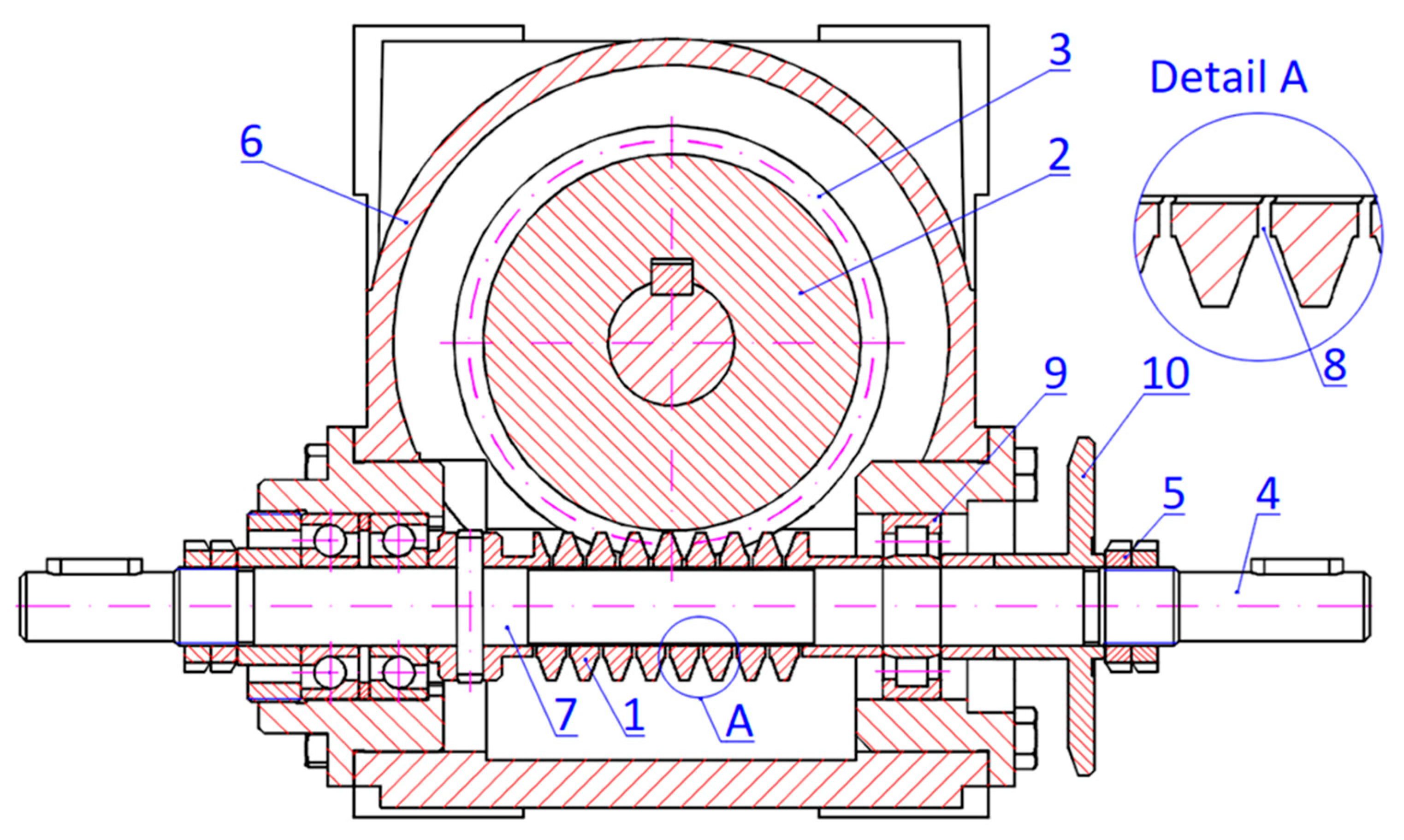
25]—the solution meeting most of the requirements is the gear with an axially compliant worm (
Figure 2 and
Figure 12).
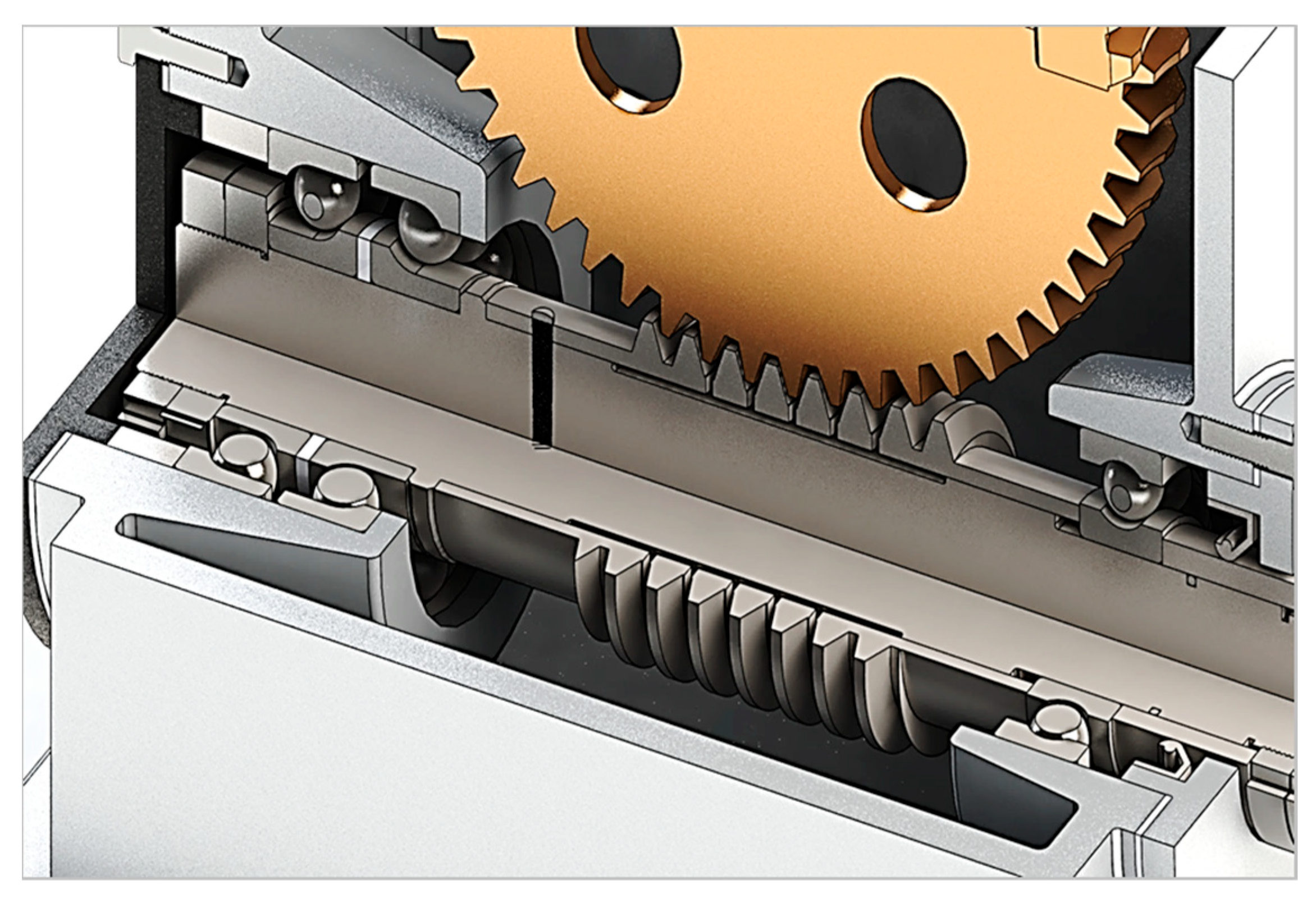
Figure 12 shows the design idea of the worm gear with an axially flexible worm. This flexibility is achieved by making a careful change in the design of the thread roots, thus enabling backlash control by axial movement. Flexibility in this case is achieved through a local change in the structure, namely, by cutting a slot at the bottom of the threads to form a region of elasticity.
The rolling bearing (9) provides adequate support for the moving part, allowing for the necessary movement along the axis of the system. Thus, flexibility is achieved locally and does not significantly reduce the rigidity of the entire system.
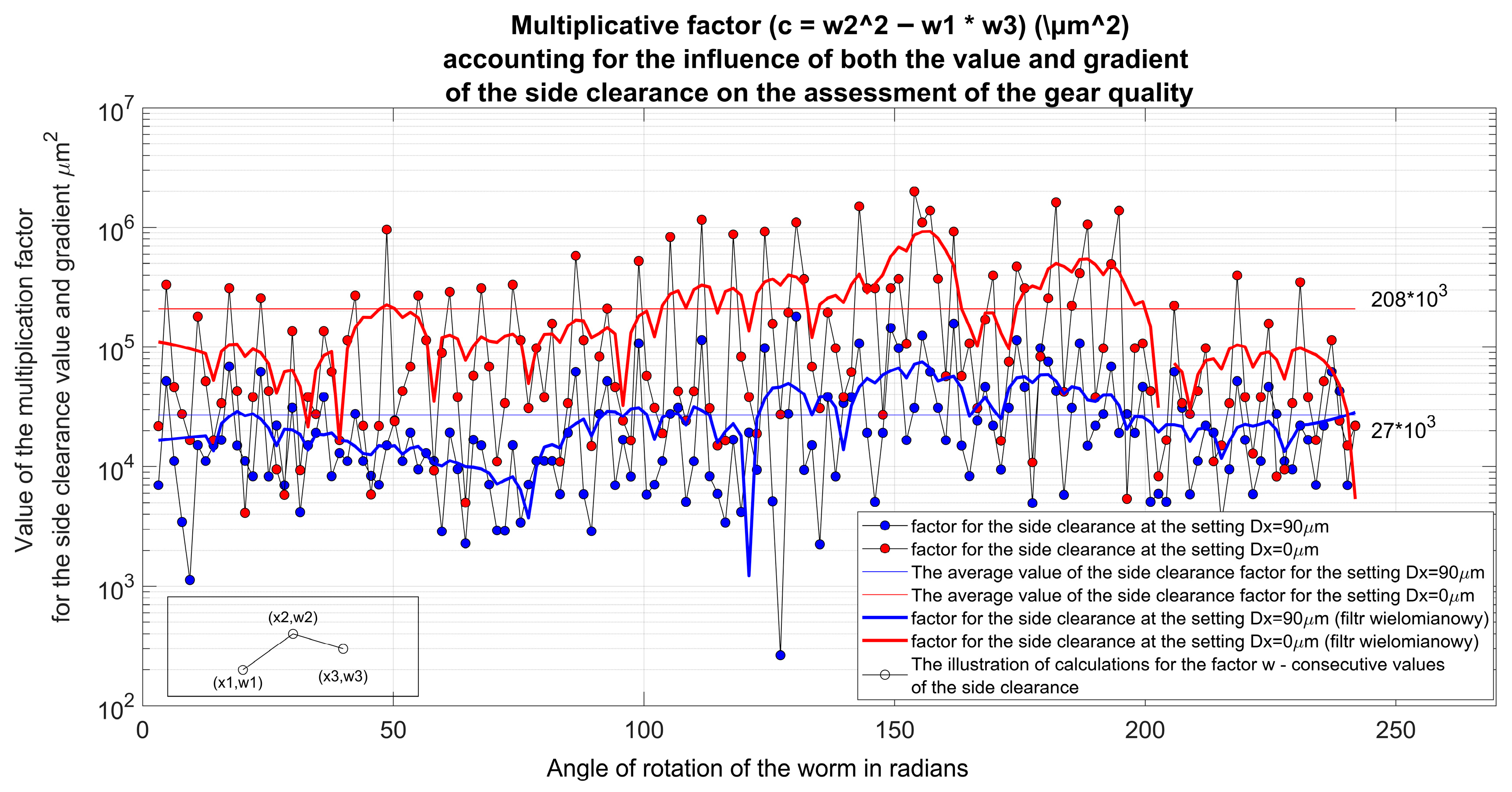
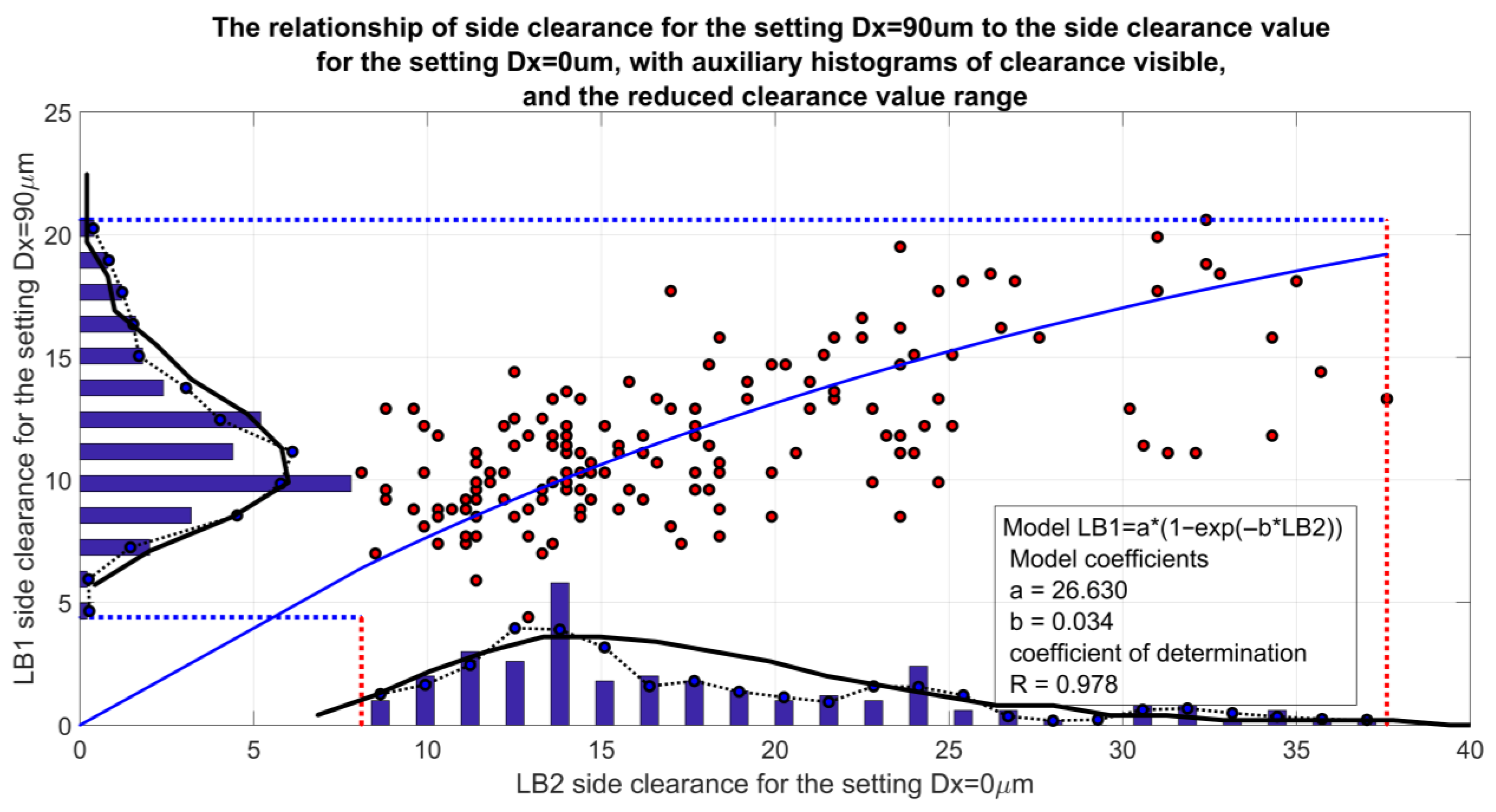
The range of side backlash adjustment in this gear is considerable, and the adjustment itself is easy because the adjustment mechanism is located outside the housing. The gear features good lubrication of the interacting elements and allows for multiple backlash adjustments in response to the progressive wear of the worm and worm wheel. Introducing an adjustment setting of Dx > 0 causes a reduction in the axial pitch of the worm thread and a decrease in backlash value (
Figure 13). Gradually, a state is reached in which, in one of the relative positions of the worm and worm wheel, a determined minimum backlash value is achieved (in
Figure 13, this is 5 micrometers). It is also possible to set a zero side backlash value for one of the angular positions. In this state, the force causing axial deformation of the worm does not affect the gear’s motion resistance, which depends solely on the gear load. Beyond this state, a slight increase in the setting (axial compression of the worm) is permissible, but it is limited to a few micrometers to avoid increasing the gear’s motion resistance. Reducing backlash to negative values in a specific position increases motion resistance due to local deformation of the worm wheel rim.
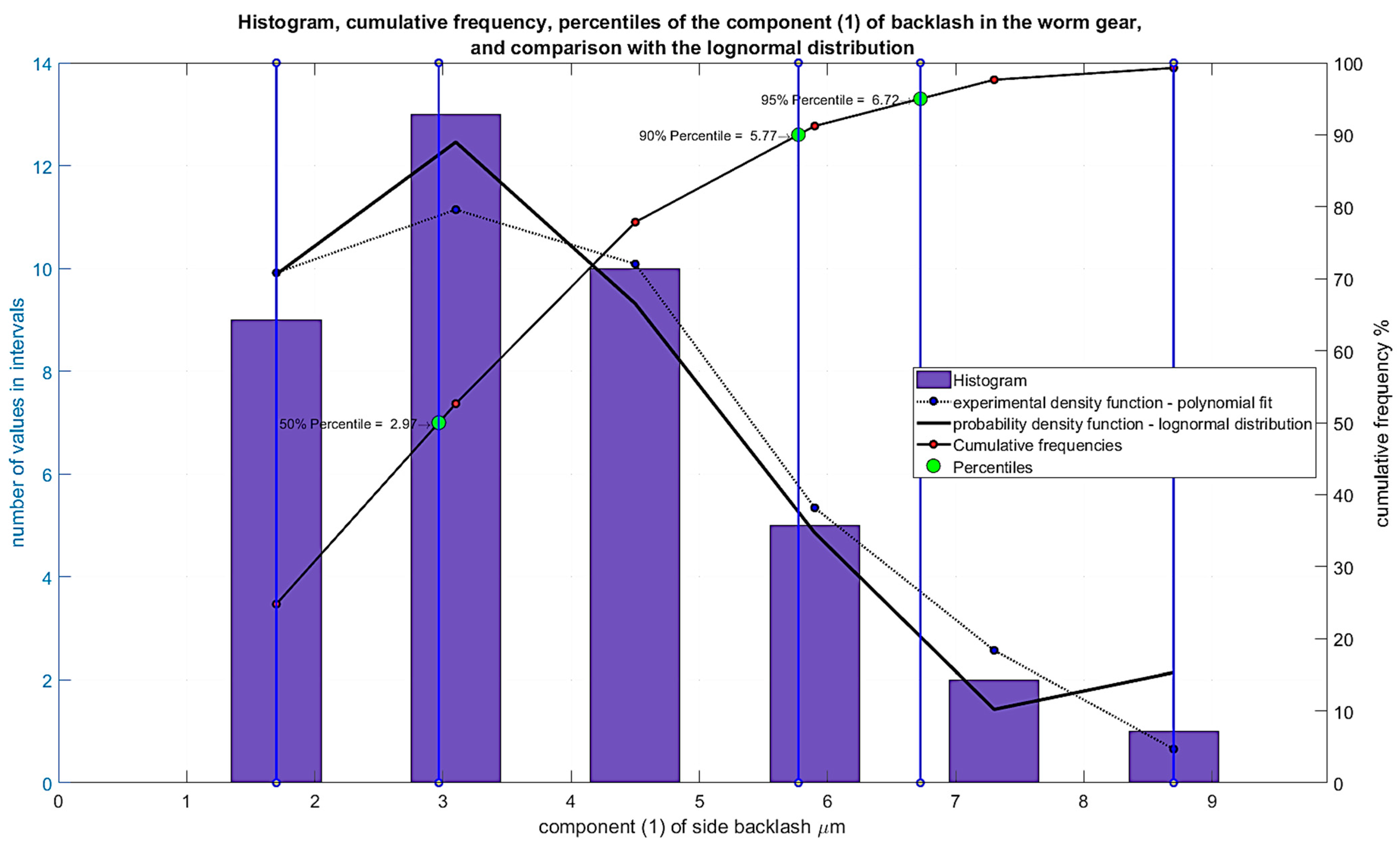
The quality assessment of the gear can be conducted based on an indicator that incorporates the product of the local backlash value and the absolute value of the backlash gradient (
Figure 14). The variables w
1, w
2, and w
3 refer to the clearance value taken at three consecutive angles of rotation of the worm and are used to calculate the variance in clearance by means of the coefficient c. The usefulness of this indicator arises from the fact that large backlash values and significant gradient values are unfavorable in a given position of the interacting elements. From the presented results, it can be concluded that the studied design solution with the described backlash adjustment significantly enhances the quality of the gear. Further beneficial effects can be achieved by optimizing the assembly of components: the worm, worm wheel, and gear housing. Additionally, this described design allows for the introduction of additional material into the gap formed after cutting the root of the worm thread, to beneficially impact vibration damping or to increase the load capacity of the gear by stiffening the worm.
2.5. Procedures for Optimal Assembly of Precision Worm Gears in Small Batch Production for Various Accuracy Evaluation Criteria of the Entire Series
The procedures discussed in this section are based on the algorithmic structure and optimization approach developed in the current research. Therefore, the component assembly approaches discussed here must be considered a direct result of the chosen mathematical model for backlash formation and variance. These procedures provide a structured approach to choosing and matching gears to minimize backlash and variance in small batches. The backlash in the meshing is caused by deviations in the gear elements such as worm thread lead, worm thread pitch, worm thread thickness, worm thread runout, worm thread profile, worm wheel teeth circumferential pitch, worm wheel teeth runout, worm wheel teeth thickness and distance between worm and worm wheel axes. The influence of these deviations is dependent on their components in the circumferential direction of the worm wheel and the axial direction of the worm. In most cases where more than one worm wheel tooth is in mesh, the assessment of the influence of each characteristic must take into account the amplitude of the envelope of their instantaneous values, which are locally variable. For the analyses related to the selection of the method to assemble the gear elements the following criteria to optimize the entire production series of gears were used:
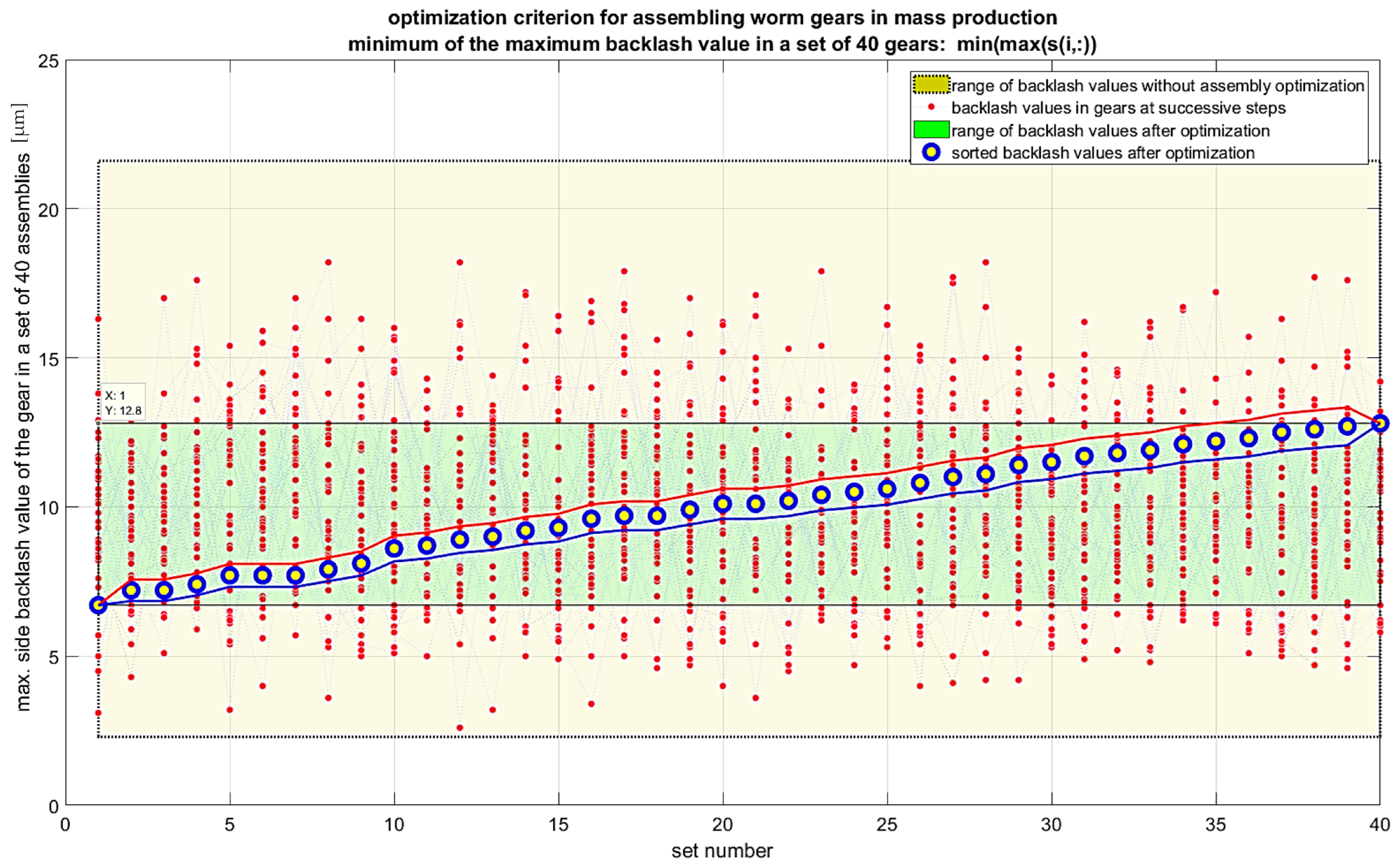
Minimum of the maximum backlash value in the set of maximum values for each gear;
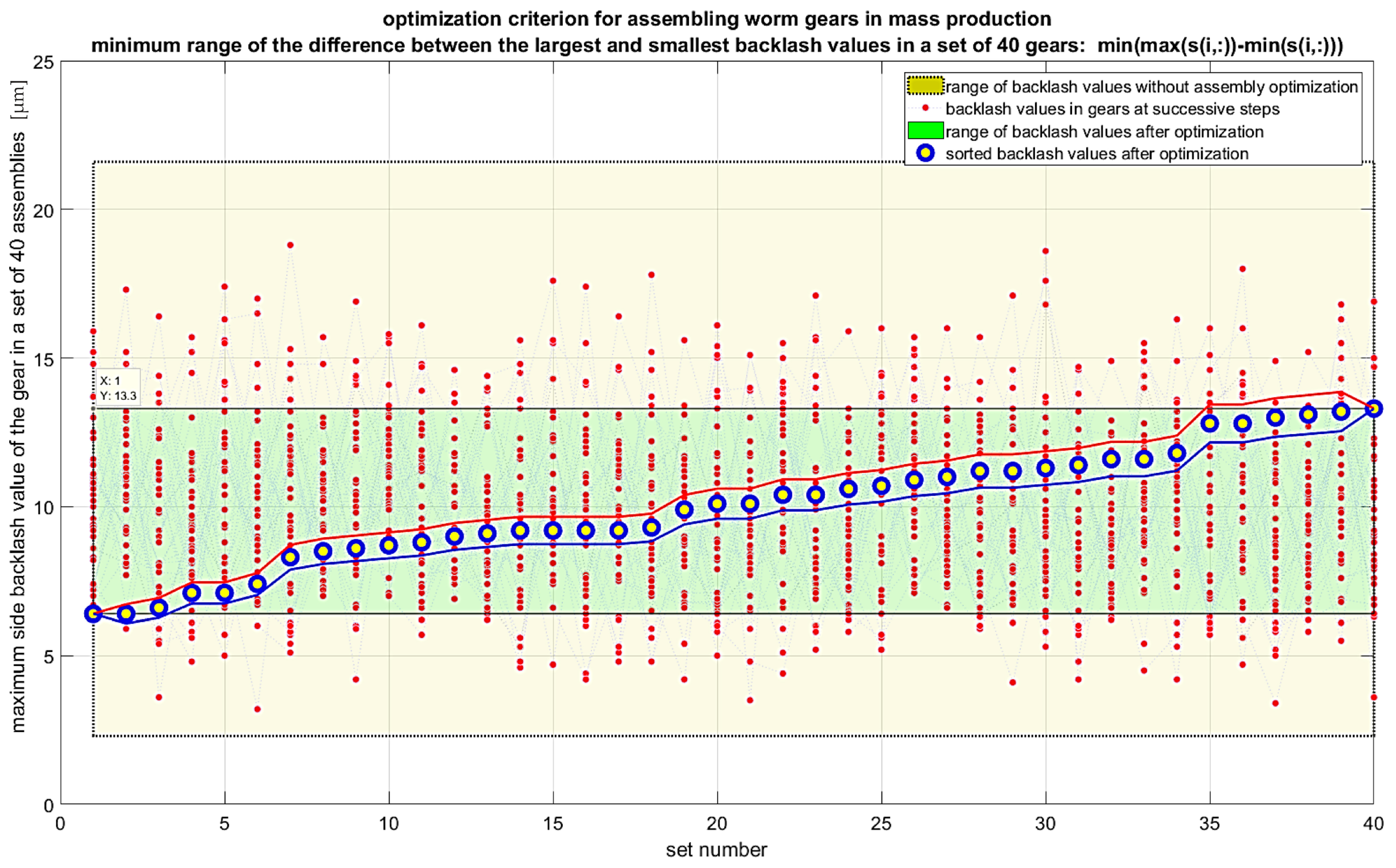
Minimum range of backlash values in the set of maximum values for each gear;
Minimum standard deviation of backlash values in the set of maximum values for each gear;
Minimum of the product of the maximum value and the standard deviation of backlash for all gears;
Minimum of the maximum product of the backlash gradient and backlash value in the set of maximum values for each gear in the entire production series;
Maximum arithmetic mean of backlash values in the set of maximum values for each gear in the entire production series (maximizing the arithmetic mean means minimizing the variation in backlash values among individual gears).
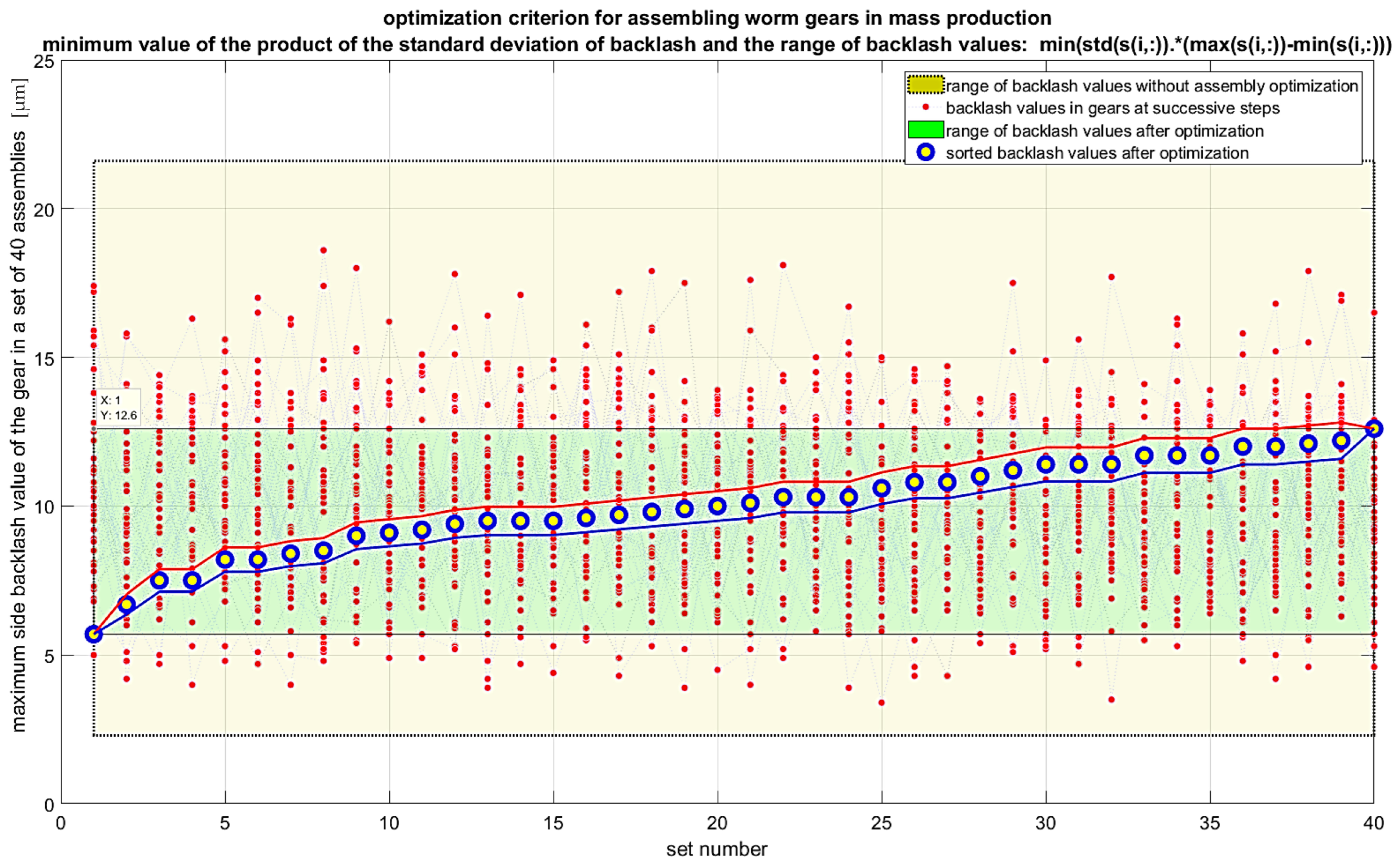
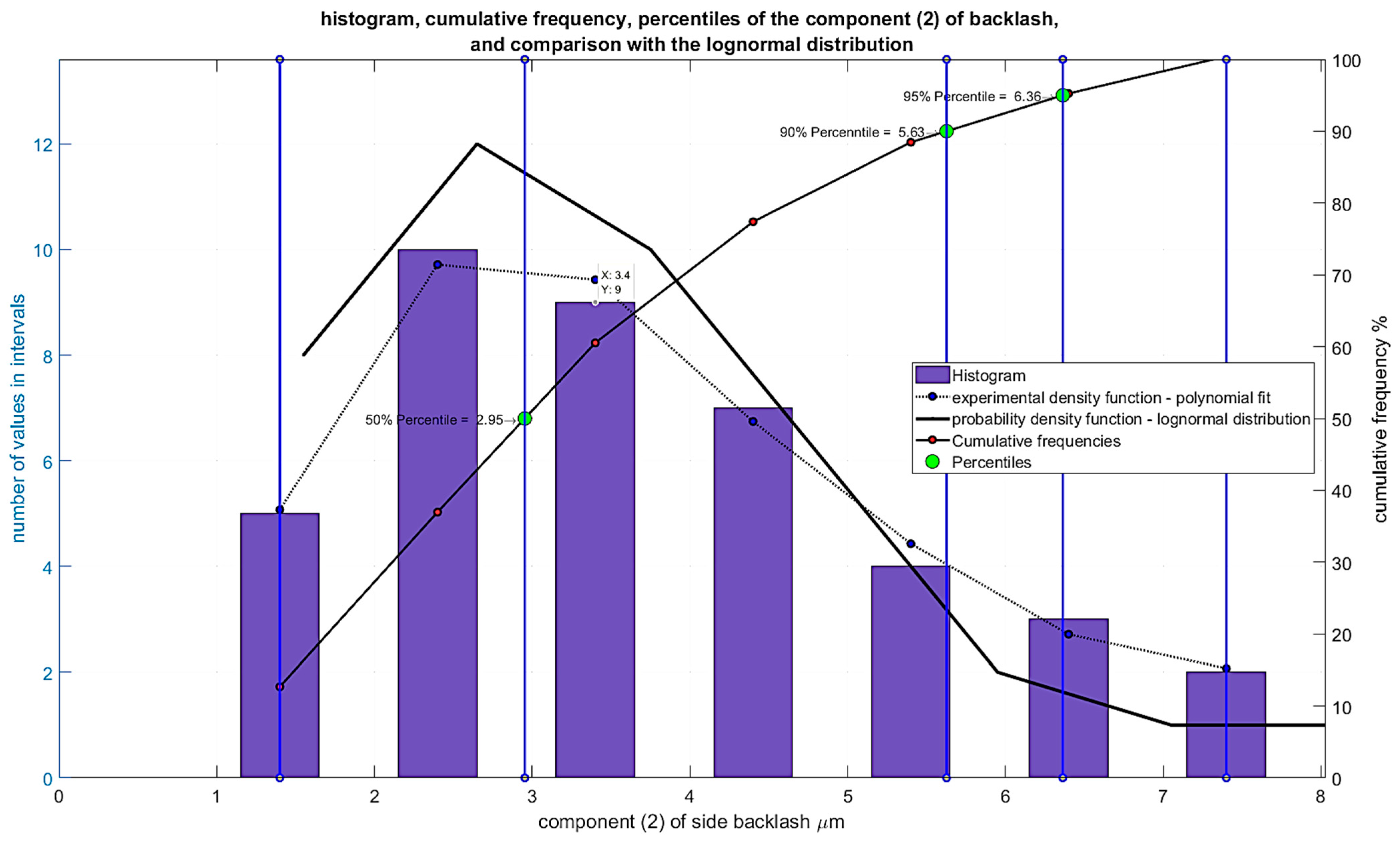
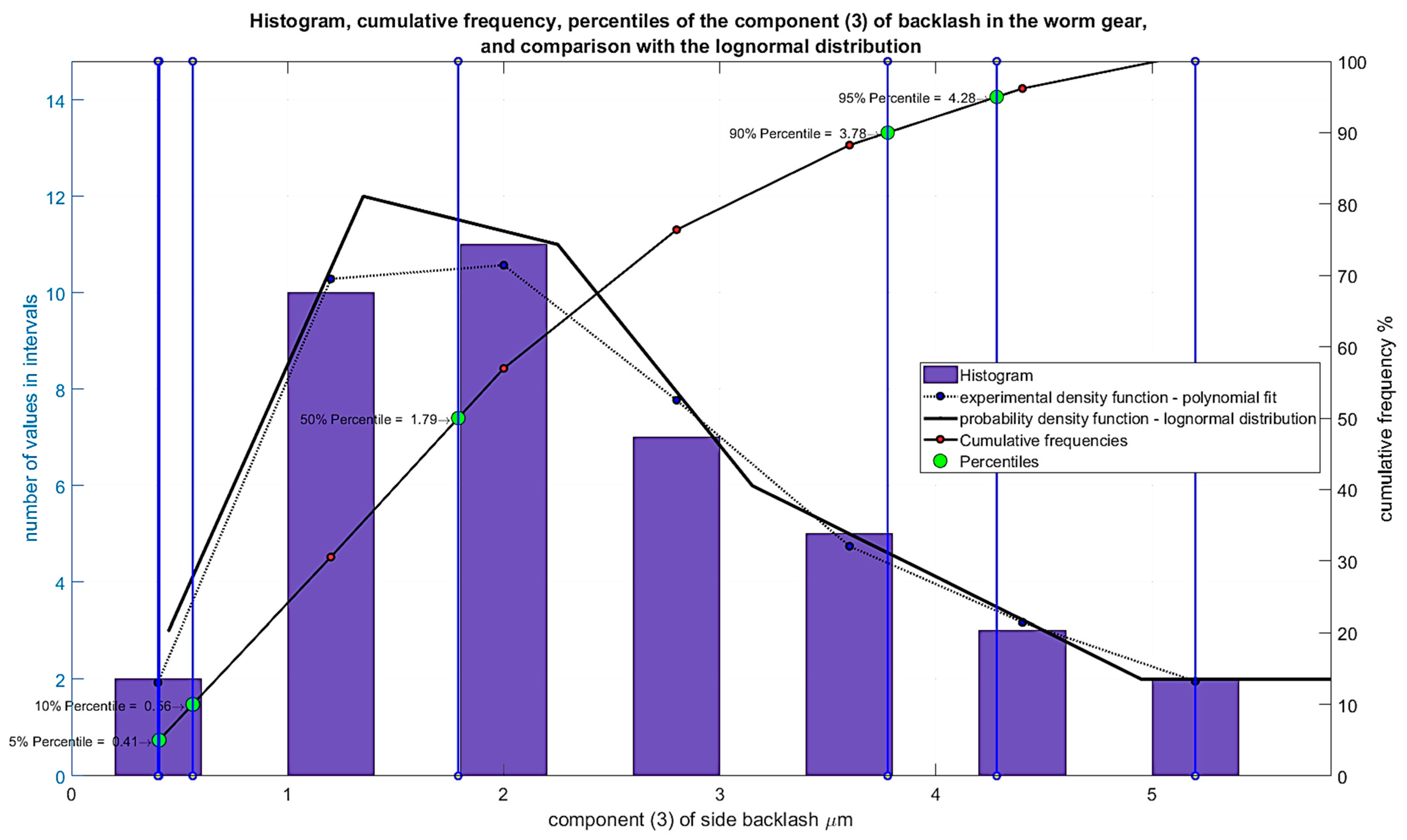
Assembling gears from elements with different accuracy without optimization results in gears where kinematic deviation (backlash) can be very variable, which means big quality differences. When the quality of the entire series is determined by the worst result it lowers the production quality rating. Here are the optimization results for assembling precision gears with an axially compliant worm to find a set of assemblies where the level of differentiation of the maximum backlash value for each gear is minimal. In the further analysis, each gear will be characterized by the maximum backlash value in the meshing, which is usually at one angular position of the worm and worm wheel. Therefore the set of backlash values for all gears will contain the maximum value for each of them. For simplicity these values will be referred to as gear backlash. The influence of the worm, worm wheel, and gear housing on the backlash was determined using the calculation procedure based on the adopted geometrical and technological model. The effects of deviations such as worm thread lead deviation, worm thread pitch deviation, worm thread thickness deviation, worm thread runout, worm thread profile deviation, worm wheel teeth circumferential pitch, worm wheel teeth runout, worm wheel teeth thickness deviation and deviation of the distance between worm and worm wheel axes aw were calculated on the basis of the mathematical relationships given in Equations (19)–(27). These deviations affect the creation of backlash to different extents depending on their components in the circumferential direction of the worm wheel, i.e., in the axial direction of the worm. It was considered that when more than one worm wheel tooth is in mesh at a given angular position, the backlash in the mesh is the value of the envelope of locally variable instantaneous values. The individual deviations of the gear element characteristics under control such as worm thread lead deviation, worm thread pitch deviation, worm thread thickness deviation, worm thread runout, worm thread profile deviation, worm wheel teeth circumferential pitch, worm wheel teeth runout, worm wheel teeth thickness deviation and deviation of the distance between worm and worm wheel axes affect the creation of backlash to different extents depending on their components in the circumferential direction of the worm wheel and the axial direction of the worm. Moreover when more than one worm wheel tooth is in mesh at a given position the backlash in the mesh is the envelope of locally variable instantaneous values. The accuracy of the worm is mainly determined by the last operation, which is grinding the thread surface. The factors that most affect the backlash value are lead, profile, thread thickness deviations and radial runout of the thread. Usually the accuracy of worm wheels is lower than the accuracy of worms. The teeth of worm wheels are usually shaped during hobbing. The factors that most affect the deviations of the tooth surfaces are then the kinematic accuracy deviations of the machine tool, the positioning deviations of the worm wheel and tool and the geometric deviations of the hobs caused by uneven wear of the cutting edges or their sharpening. Therefore, the factors that most affect the accuracy of the worm wheel are tooth thickness deviations, circumferential pitch deviations, tooth profile deviations and tooth runout. A common deviation is the runout of the worm wheel teeth caused by the deviation of its mounting on the locating pin.




 ,
,