Predictive Neural Network Modeling of Nanoporous Anodic Alumina for Controlled Drug Release Implants: An Integrated Machine Learning Approach


Abstract
1. Introduction
2. Background and Theoretical Foundations
2.1. Nanoporous Anodic Alumina for Drug Delivery
2.2. Machine Learning in Nanomaterial Design
2.3. Drug Release Kinetics from Nanoporous Systems
- Pore diameter: Larger pores reduce diffusional resistance, increasing the effective diffusion coefficient and accelerating the release. The relationship between pore diameter and diffusivity is particularly pronounced when the pore dimensions approach the size of drug molecules, where steric hindrance becomes significant;
- Pore depth: Deeper pores increase the diffusion path length, thereby slowing the release rate but extending the duration of sustained release. The trade-off between loading capacity (which scales with pore volume) and release rate (which decreases with diffusion distance) is a key design consideration;
- Porosity: The fraction of the NAA surface occupied by pore openings affects the total drug flux. Higher porosity (achieved through larger pore diameters or reduced interpore spacing) generally accelerates release;
- Pore surface chemistry: Interactions between drug molecules and the pore walls can significantly retard or accelerate release, depending on whether the interactions are attractive (adsorption) or repulsive.
3. Materials and Methods
3.1. Dataset Compilation and Preprocessing
3.2. Neural Network Architecture
- Input layer: 4 neurons corresponding to the input features (voltage, temperature, time, electrolyte type);
- Hidden layer 1: 64 neurons with ReLU (Rectified Linear Unit) activation;
- Hidden layer 2: 32 neurons with ReLU activation;
- Hidden layer 3: 16 neurons with ReLU activation;
- Output layer: 1 neuron with linear activation for pore diameter prediction.
3.3. Model Training and Validation
- Coefficient of determination (R2): Measures the proportion of variance in pore diameter explained by the model;
- Root mean square error (RMSE): Quantifies the average magnitude of prediction errors in nanometers;
- Mean absolute error (MAE): Provides an interpretable measure of typical prediction error.
3.4. Drug Release Kinetics Modeling
- Initial release rate: The slope of the release curve at t = 0, approximated as k/2 (%/h);
- Time to 50% release: The time required for half of the loaded drug to be released, calculated as t50% = (50/k)2;
- Time to 90% release: The time for 90% release, calculated as t90% = (90/k)2.
4. Results
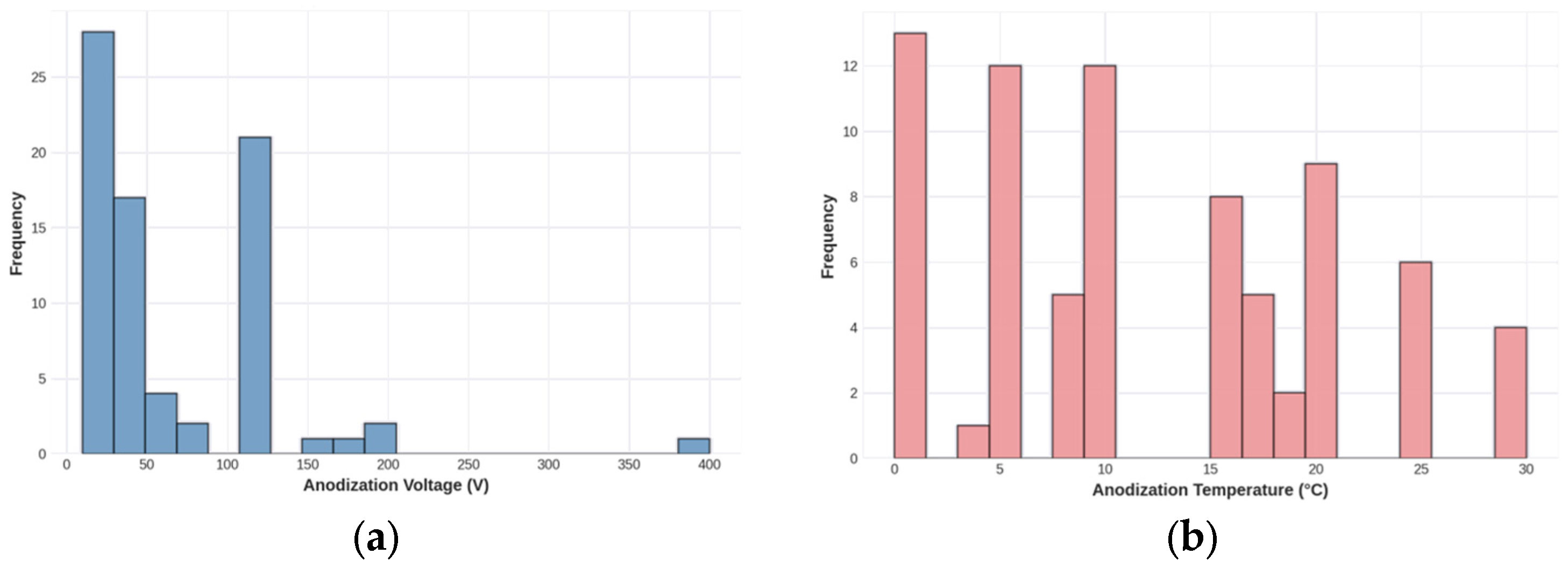
4.1. Dataset Characteristics and Distribution Analysis
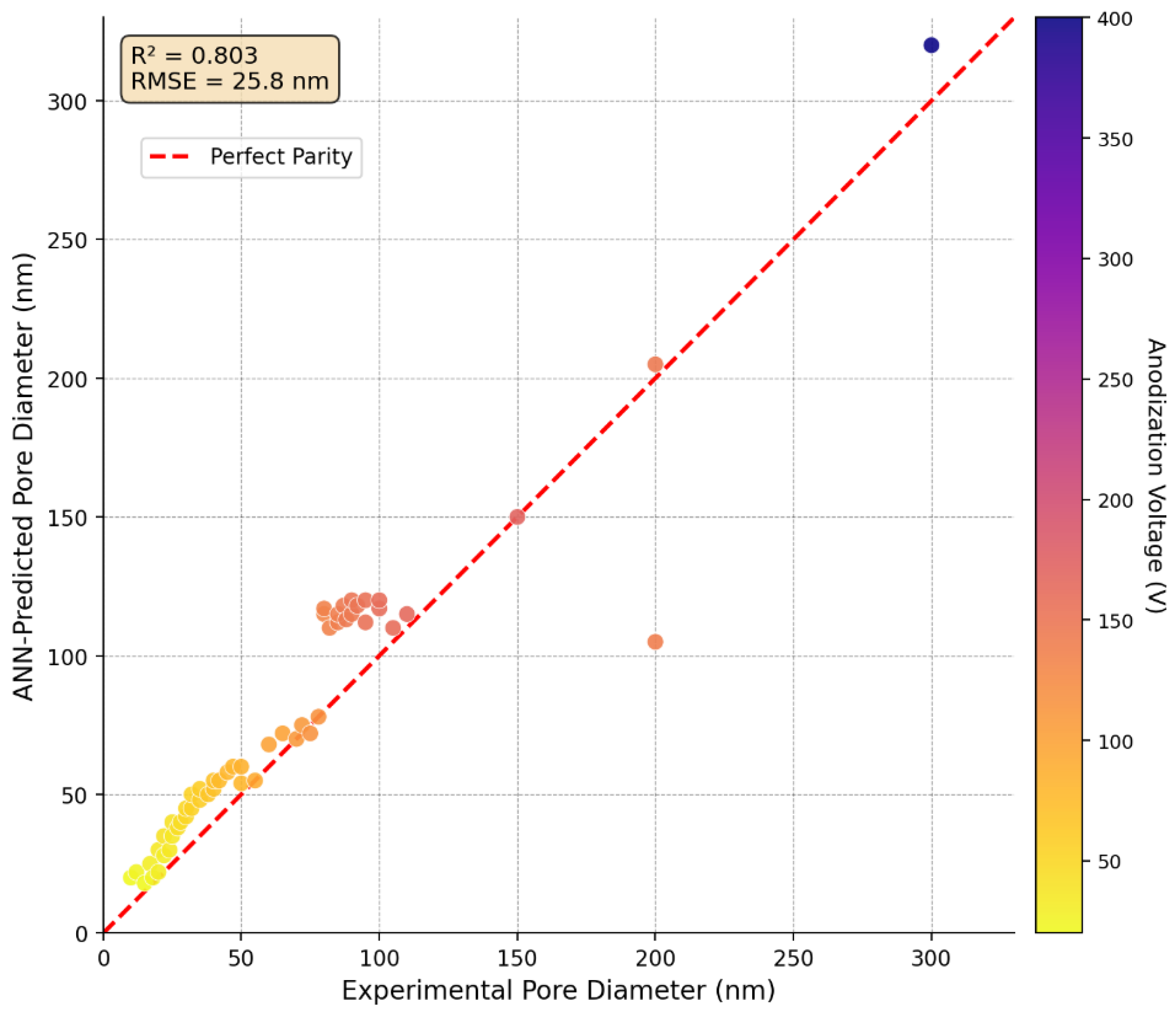
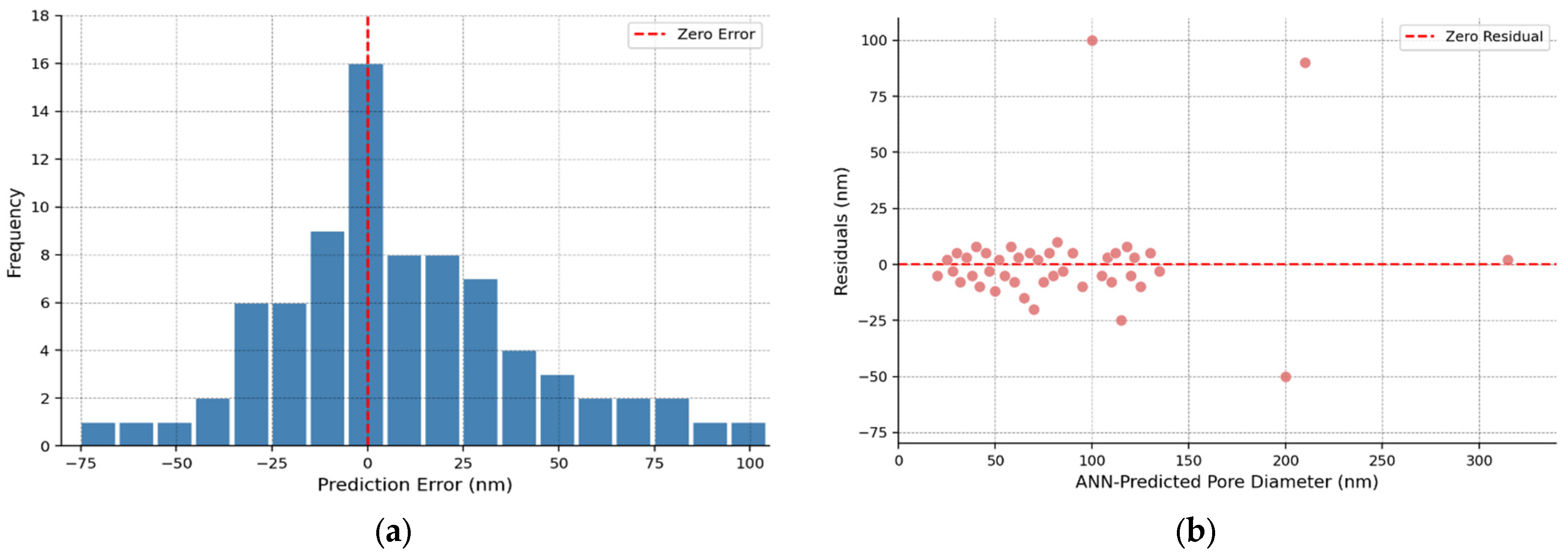
4.2. Model Performance and Validation
4.3. Feature Importance and Sensitivity Analysis
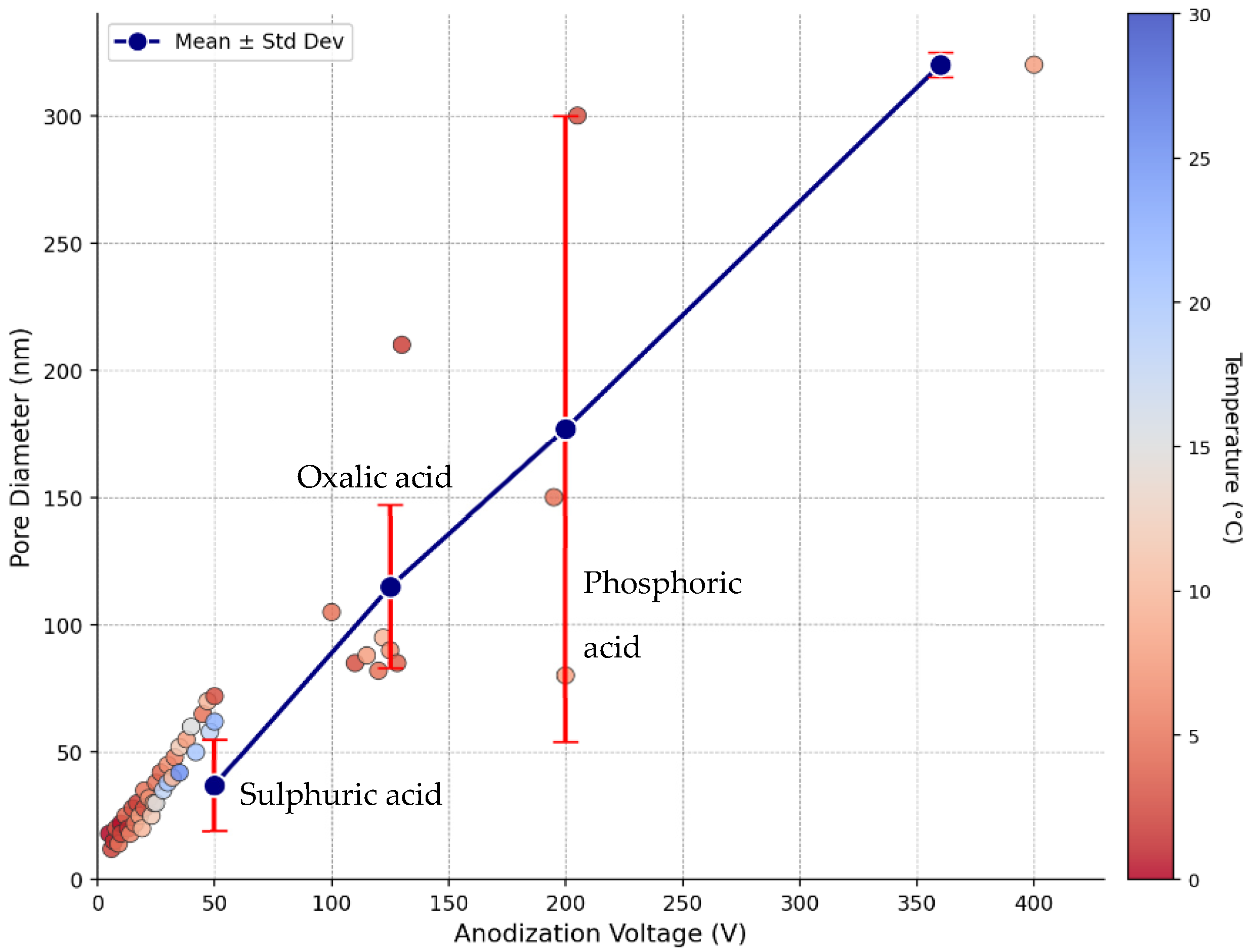
4.4. Anodization Parametric Effects on Pore Diameter
4.5. Drug Release Kinetics Predictions
5. Discussion
5.1. Model Performance and Generalization
5.2. Physical Interpretation of Feature Importance
5.3. Implications for Drug Delivery Design
5.4. Comparison with Existing Approaches
5.5. Limitations and Future Directions
- Active learning for data-efficient model improvement: Rather than randomly collecting more data, active learning strategies can identify the most informative experiments to conduct next, focusing on regions of parameter space where the model is most uncertain or where predictions deviate most from physical expectations [14]. This approach can accelerate model improvement while minimizing experimental effort;
- Physics-informed neural networks: Incorporating known physical constraints (e.g., the proportionality between voltage and interpore distance, and the conservation of charge) into the neural network architecture or loss function can improve generalization and reduce data requirements [12]. This hybrid approach combines the flexibility of ML with the reliability of physics-based modeling;
- Multi-fidelity modeling: Combining experimental data with results from physics-based simulations can expand the effective dataset size and enable the exploration of conditions that have not yet been studied experimentally. Transfer learning from simulations to experiments can bootstrap model training when experimental data are scarce;
- Uncertainty quantification: Developing probabilistic models (e.g., Bayesian neural networks, Gaussian process regression) that provide confidence intervals on predictions would enable risk-aware process optimization and help to identify when experimental validation is most needed [22];
- Inverse design optimization: Using the trained model within an optimization framework to identify anodization parameters that maximize specific objectives (e.g., minimize the release time while maximizing the loading capacity) would enable automated process design. Gradient-based optimization or genetic algorithms could efficiently search the parameter space guided by model predictions;
- Extension to other nanoporous materials: The ML framework developed herein could be adapted to other electrochemically fabricated nanoporous materials, such as titania, zirconia, and porous silicon nanotubes, which share similar fabrication principles but differ in specific electrochemical behaviors [16]. Transfer learning could leverage knowledge gained from NAAs to accelerate model development for these related systems;
- Integration with implant design tools: Incorporating the ML-diffusion modeling framework into computer-aided design (CAD) software for medical implants would enable engineers to optimize implant coatings as part of the overall device design process, while simultaneously considering mechanical, biological, and drug delivery requirements.
6. Conclusions
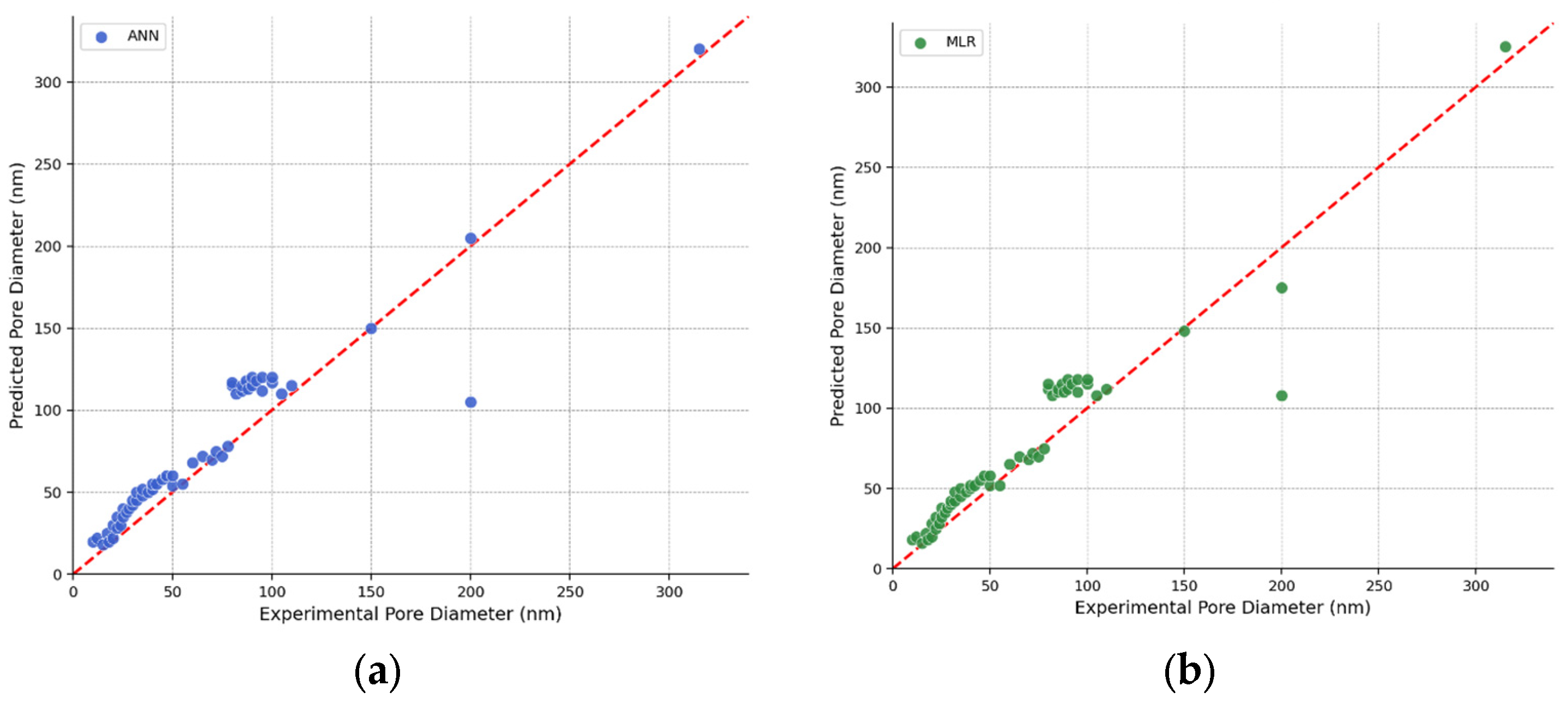
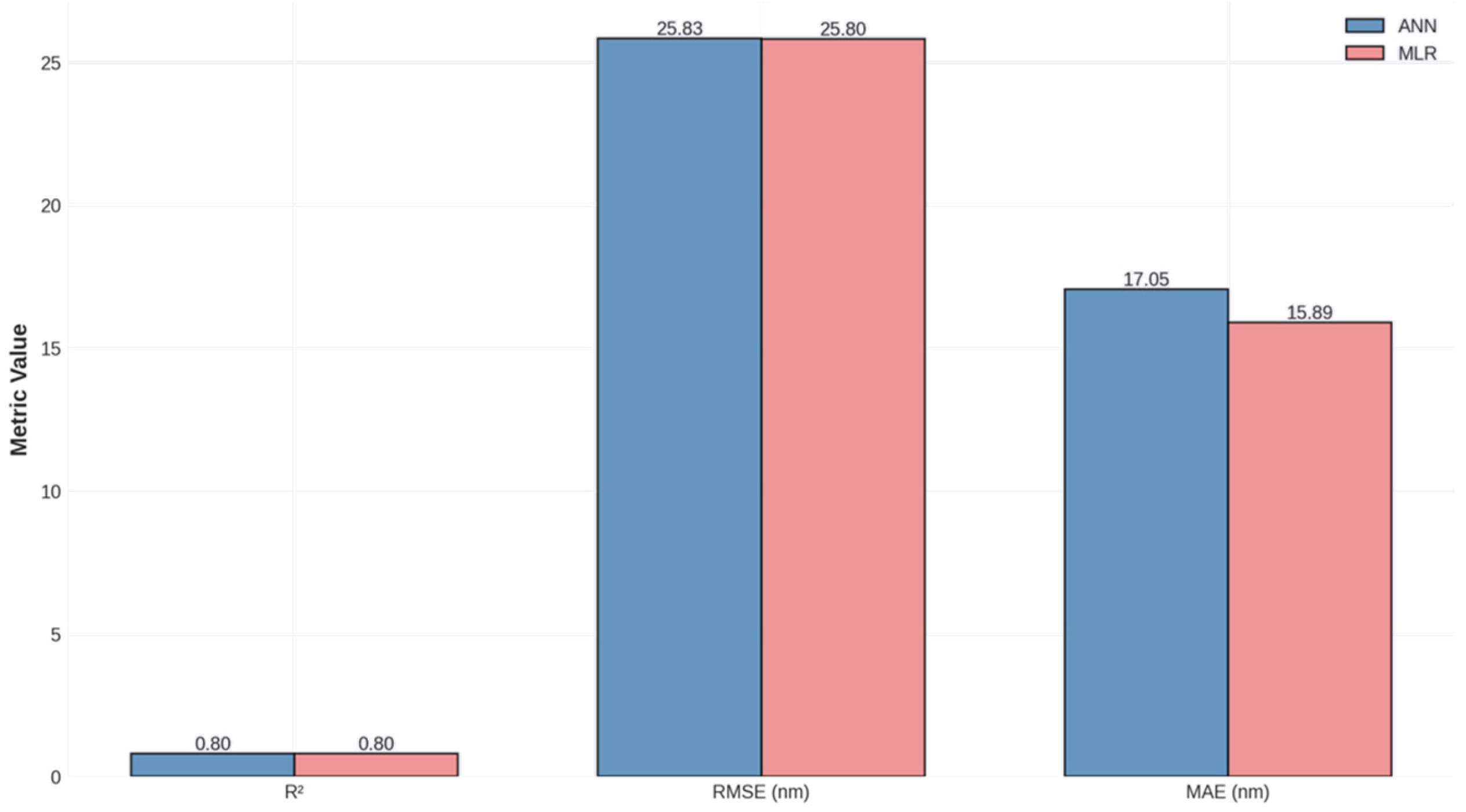
- Predictive model performance: Both ANN and MLR models achieved strong training set performance (R2 ≈ 0.80, RMSE ≈ 26 nm), with MLR demonstrating superior generalization in cross-validation (CV R2 = 0.729 vs. 0.471 for ANN). This result highlights the importance of model selection based on dataset size, with simpler models often preferable for moderate-sized datasets;
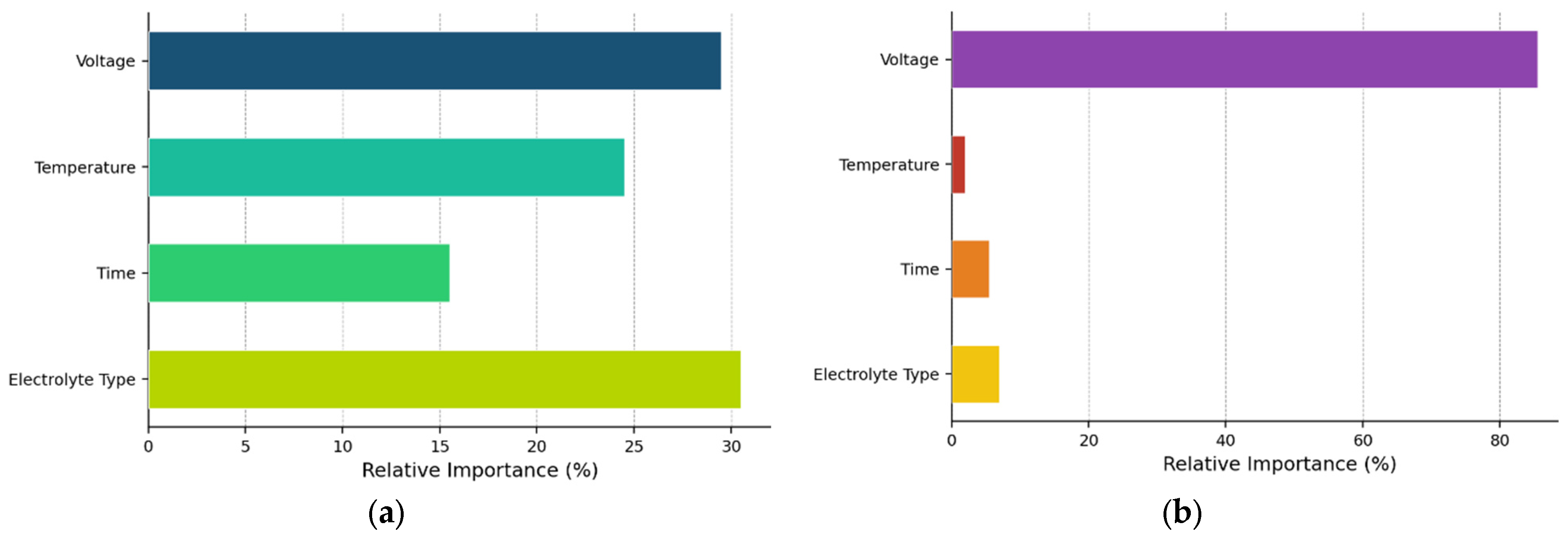
- Feature importance insights: Voltage was identified as the dominant predictor of pore diameter (86.32% importance in MLR and 29.15% in ANN), followed by electrolyte type (7.20% MLR and 30.23% ANN). The more balanced importance distribution in the ANN suggests that the neural network captures parameter interactions that are not represented in the linear model, providing insights for future mechanistic studies.
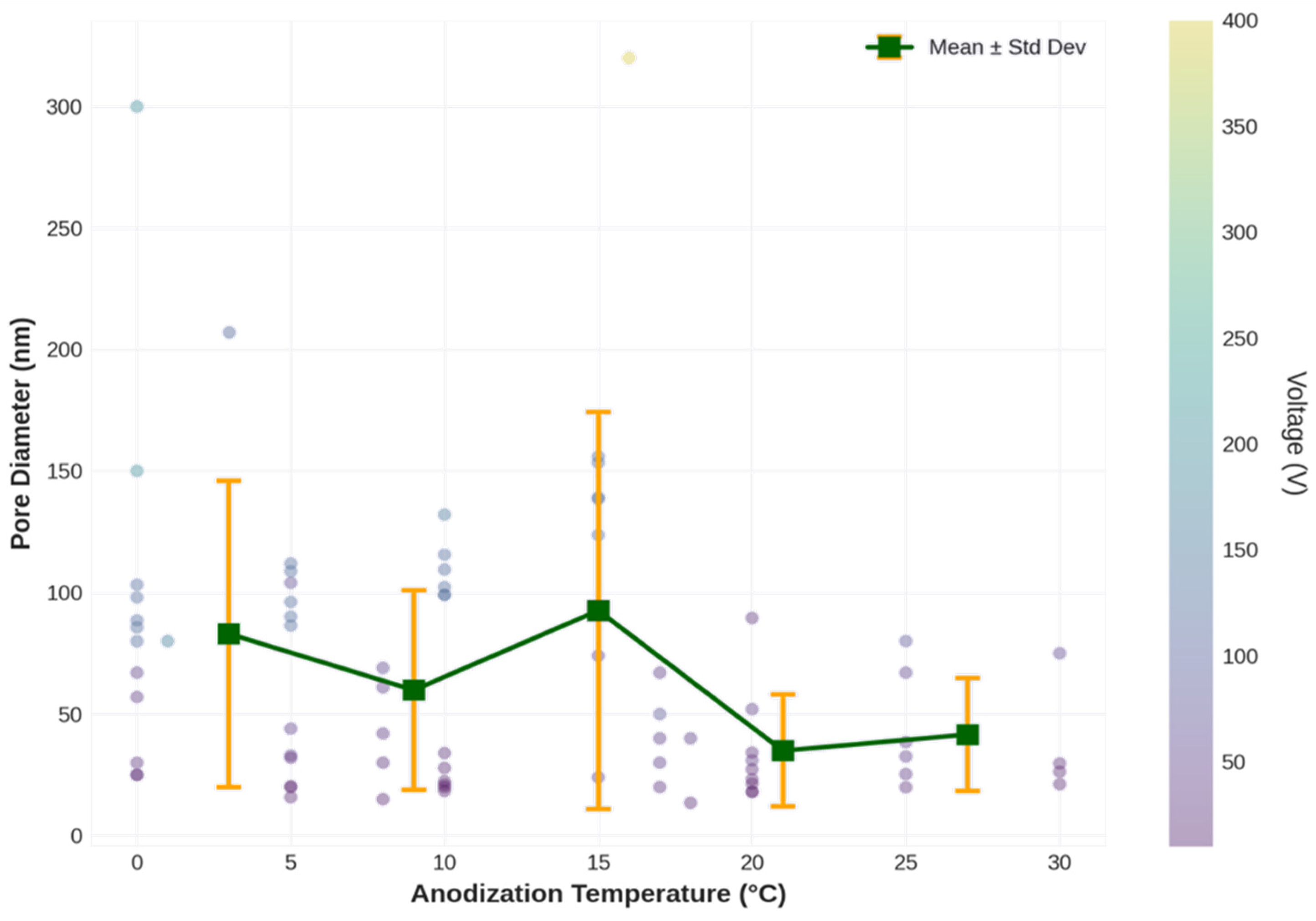
- Parametric design guidance: Systematic analysis of voltage, temperature, and electrolyte effects provides actionable guidance for NAA fabrication. The pore diameter increases approximately linearly with voltage (~1.0–1.5 nm/V), decreases modestly with temperature (~0.4 nm/°C), and varies systematically with electrolyte type (sulphuric acid: 15–30 nm, oxalic acid: 40–80 nm, and phosphoric acid: 100–200 nm at typical voltages).
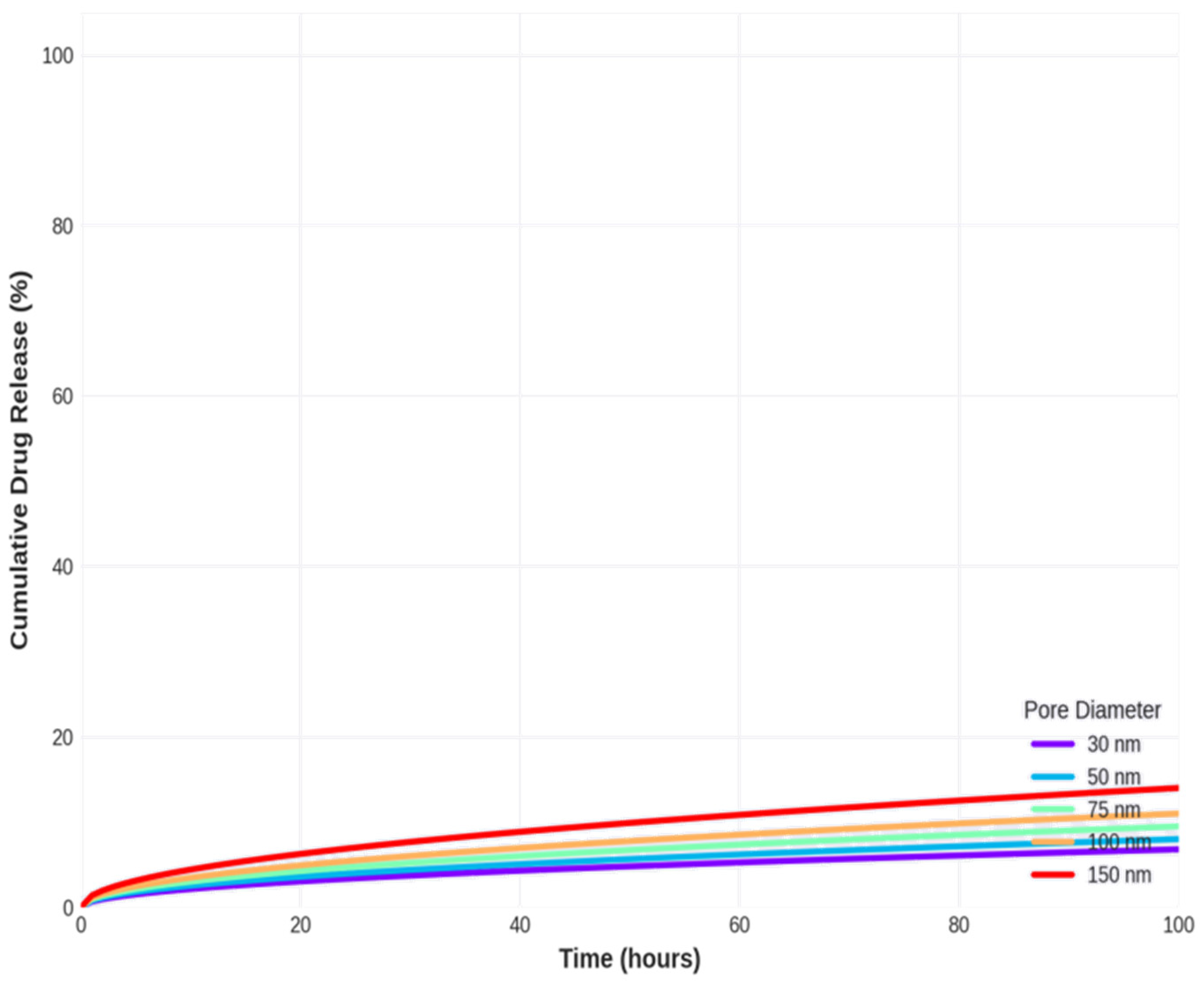
- Drug release predictions: Integration of ML-predicted pore structures with Higuchi diffusion modeling demonstrates that pore diameter can be tuned to control drug release kinetics over a wide range, with release durations varying from ~1 day to ~7 days for 50% release by adjusting the pore diameter from 150 nm to 30 nm. This tunability enables the matching of release profiles to specific therapeutic requirements.
- Design framework: The combined ML-diffusion modeling framework provides a computational tool for rational implant coating design, enabling researchers to identify anodization parameters that achieve targeted pore dimensions and release profiles without extensive experimental trial-and-error. This approach can accelerate the development of NAA-based drug delivery systems for orthopedic, cardiovascular, and dental applications.
- Dataset and methodology: The compiled dataset and validated modeling approach provide a foundation for future research, including expansion to larger datasets, incorporation of additional process parameters, extension to multi-output predictions of multiple structural properties, and adaptation to related nanoporous material systems.
Author Contributions
Funding
Data Availability Statement
Acknowledgments
Conflicts of Interest
Abbreviations
| AFM | Atomic force microscopy |
| AI | Artificial intelligence |
| ANN | Artificial neural network |
| MAE | Mean absolute error |
| ML | Machine learning |
| MLR | Multiple linear regression |
| MOFs | Metal–organic frameworks |
| NAA | Nanoporous anodic alumina |
| ReLU | Rectified linear unit |
| RMSE | Root mean square error |
| SEM | Scanning electron microscopy |
| TEM | Transmission electron microscopy |
References
- Formentin, P.; Cantons, J.M.; Marsal, L.F. Advancing Drug Delivery and Biosensing with Innovative Engineered NAA Platforms. In Proceedings of the Low-Dimensional Materials and Devices 2025; SPIE: Bellingham, WA, USA, 2025; Volume 13582, pp. 22–28. [Google Scholar]
- Ruiz-Clavijo, A.; Caballero-Calero, O.; Martín-González, M. Revisiting Anodic Alumina Templates: From Fabrication to Applications. Nanoscale 2021, 13, 2227–2265. [Google Scholar] [CrossRef] [Scilit]
- Li, M.; Feng, C.; Zhu, L.; Zhao, Y. Fabrication of Nanoporous Anodized Aluminum Oxide Based Photonic Crystals with Multi-Band Responses in the Vis-NIR Region. Nanoscale 2025, 17, 4099–4110. [Google Scholar] [CrossRef] [Scilit] [PubMed]
- Esmat, N.; Mabrouk, M.; Beherei, H.H.; El-Sayed, E.-S.M.; Omar, A. Harnessing Computational and Experimental Strategies to Enhance Nanoporous Alumina Membranes for Neural Drug Delivery. J. Drug Deliv. Sci. Technol. 2025, 112, 107267. [Google Scholar] [CrossRef] [Scilit]
- Ku, C.-A.; Chung, C.-K. Advances in Through-Hole Anodic Aluminum Oxide (AAO) Membrane and Its Applications: A Review. Nanomaterials 2025, 15, 1665. [Google Scholar] [CrossRef] [Scilit] [PubMed]
- Kapoor, D.U.; Sharma, J.B.; Gandhi, S.M.; Prajapati, B.G.; Thanawuth, K.; Limmatvapirat, S.; Sriamornsak, P. AI-Driven Design and Optimization of Nanoparticle-Based Drug Delivery Systems. Sci. Eng. Health Stud. 2024, 18, 24010003. [Google Scholar] [CrossRef] [Scilit]
- Protopapa, C.; Siamidi, A.; Eneli, A.A.; Elbadawi, M.; Vlachou, M. Machine Learning Predicts Drug Release Profiles and Kinetic Parameters Based on Tablets’ Formulations. AAPS J. 2025, 27, 124. [Google Scholar] [CrossRef] [Scilit]
- Thanos, D.-F.; Pantelis, P.; Theocharous, G.; Vagena, S.; Kyriakopoulou, C.; Pantelidis, G.; Markatou, M.; Pliakostamou, M.; Papanikolaou, N.; Tomou, E.-M.; et al. Interpreting the Theranostic Applications of Alumina and Silica Substrates in Cancer. Molecules 2026, 31, 428. [Google Scholar] [CrossRef] [Scilit]
- Seman, M.H.A.; Gati, N.I.; Mahmud, A.H.; Jamil, Z.; Osman, N.; Low, K.-F.; Tseng, C.-J.; Jani, A.M.M. Nanopore Architectures in Anodic Aluminum Oxide: Effects of Anodization Voltage and Time on Planar and Non-Planar Aluminum Substrates. J. Porous Mater. 2026. [Google Scholar] [CrossRef] [Scilit]
- Osama, L.; Handal, H.T.; El-Sayed, S.A.M.; Elzayat, E.M.; Mabrouk, M. Fabrication and Optimisation of Alumina Nanoporous Membranes for Drug Delivery Applications: A Comparative Study. Nanomaterials 2024, 14, 1078. [Google Scholar] [CrossRef] [Scilit]
- Cheng, M.; Fu, C.-L.; Okabe, R.; Chotrattanapituk, A.; Boonkird, A.; Hung, N.T.; Li, M. Artificial Intelligence-Driven Approaches for Materials Design and Discovery. Nat. Mater. 2026, 25, 174–190. [Google Scholar] [CrossRef] [Scilit]
- Functional Nanoporous Membranes for Drug Delivery. In Current Trends and Future Developments on (Bio-)Membranes; Elsevier: Amsterdam, The Netherlands, 2024; pp. 255–288.
- Aghajanpour, S.; Amiriara, H.; Esfandyari-Manesh, M.; Ebrahimnejad, P.; Jeelani, H.; Henschel, A.; Singh, H.; Dinarvand, R.; Hassan, S. Utilizing Machine Learning for Predicting Drug Release from Polymeric Drug Delivery Systems. Comput. Biol. Med. 2025, 188, 109756. [Google Scholar] [CrossRef] [Scilit] [PubMed]
- Onyenso, G.; Vakamulla Raghu, S.N.; Hartwich, P.; Killian, M.S. Modulated-Diameter Zirconia Nanotubes for Controlled Drug Release—Bye to the Burst. J. Funct. Biomater. 2025, 16, 37. [Google Scholar] [CrossRef] [Scilit] [PubMed]
- Zajączkowska, L.; Norek, M. Peculiarities of Aluminum Anodization in AHAs-Based Electrolytes: Case Study of the Anodization in Glycolic Acid Solution. Materials 2021, 14, 5362. [Google Scholar] [CrossRef] [Scilit] [PubMed]
- Mehrab, P.; Arian, F.; Erfan, R.; Amin, S.; Mohammad, M.E.; Abbas, R.; Luiz, F.R.F. Porous alumina as potential nanostructures for drug delivery applications, synthesis and characteristics. J. Drug Deliv. Sci. Technol. 2022, 77, 103877. [Google Scholar] [CrossRef] [Scilit]
- Nazarkina, Y.V.; Zaitsev, V.B.; Dronova, D.A.; Dronov, A.A.; Tsiniaikin, I.I.; Butmanov, D.D.; Savchuk, T.P.; Kytina, E.V.; Konstantinova, E.A.; Marikutsa, A.V. Effect of Anodization Temperature on the Morphology and Structure of Porous Alumina Formed in Selenic Acid Electrolyte. Nanomaterials 2025, 15, 1855. [Google Scholar] [CrossRef] [Scilit]
- Porta-i-Batalla, M.; Xifré-Pérez, E.; Eckstein, C.; Ferré-Borrull, J.; Marsal, L.F. 3D Nanoporous Anodic Alumina Structures for Sustained Drug Release. Nanomaterials 2017, 7, 227. [Google Scholar] [CrossRef] [Scilit]
- Ren, E.; Guilbaud, P.; Coudert, F.-X. High-Throughput Computational Screening of Nanoporous Materials in Targeted Applications. Digit. Discov. 2022, 1, 355–374. [Google Scholar] [CrossRef] [Scilit]
- Wen, M.; Han, J.; Li, W.; Chang, X.; Chu, Q.; Chen, D. EMFF-2025: A General Neural Network Potential for Energetic Materials with C, H, N, and O Elements. npj Comput. Mater. 2025, 11, 333. [Google Scholar] [CrossRef] [Scilit]
- Bannigan, P.; Bao, Z.; Hickman, R.J.; Aldeghi, M.; Häse, F.; Aspuru-Guzik, A.; Allen, C. Machine Learning Models to Accelerate the Design of Polymeric Long-Acting Injectables. Nat. Commun. 2023, 14, 35. [Google Scholar] [CrossRef] [Scilit]
- Domagalski, J.T.; Xifre-Perez, E.; Marsal, L.F. Recent Advances in Nanoporous Anodic Alumina: Principles, Engineering, and Applications. Nanomaterials 2021, 11, 430. [Google Scholar] [CrossRef] [Scilit]
- Davoodi, E.; Zhianmanesh, M.; Montazerian, H.; Milani, A.S.; Hoorfar, M. Nano-Porous Anodic Alumina: Fundamentals and Applications in Tissue Engineering. J. Mater. Sci. Mater. Med. 2020, 31, 60. [Google Scholar] [CrossRef] [Scilit]







| Parameter | Min | Max | Mean | Std. Dev. | N (Samples) |
|---|---|---|---|---|---|
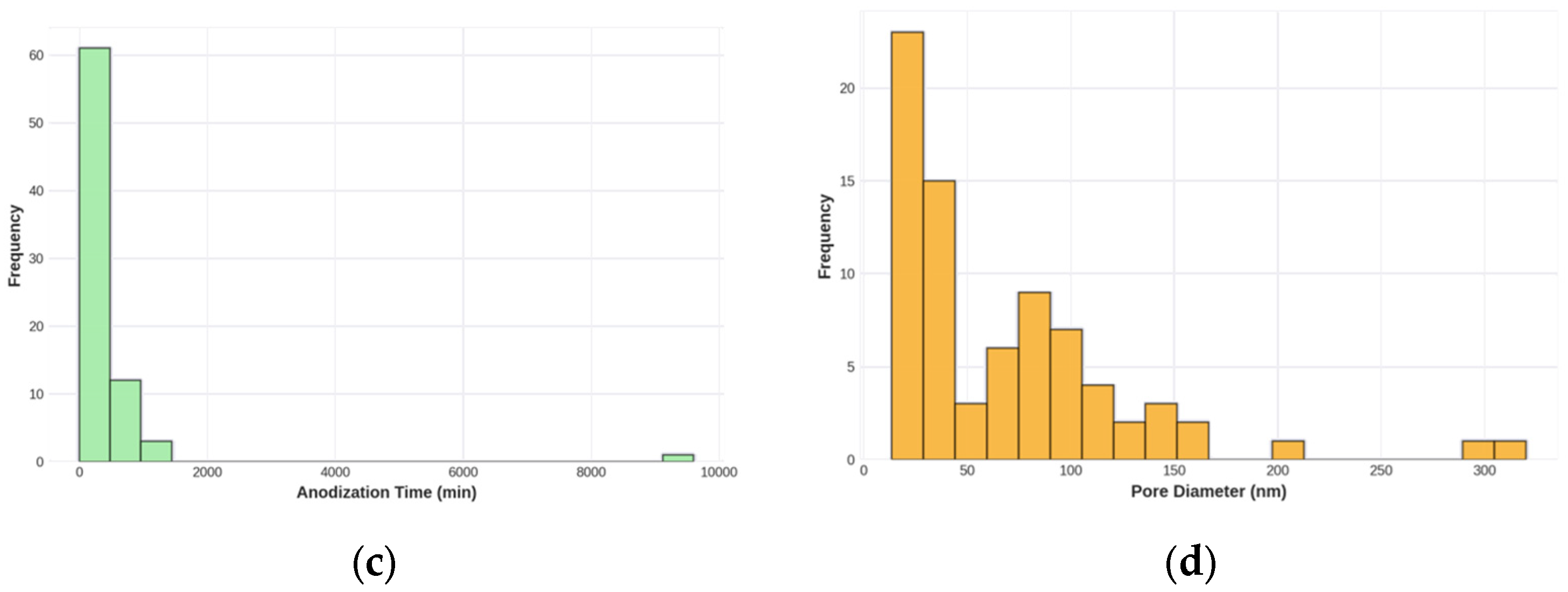
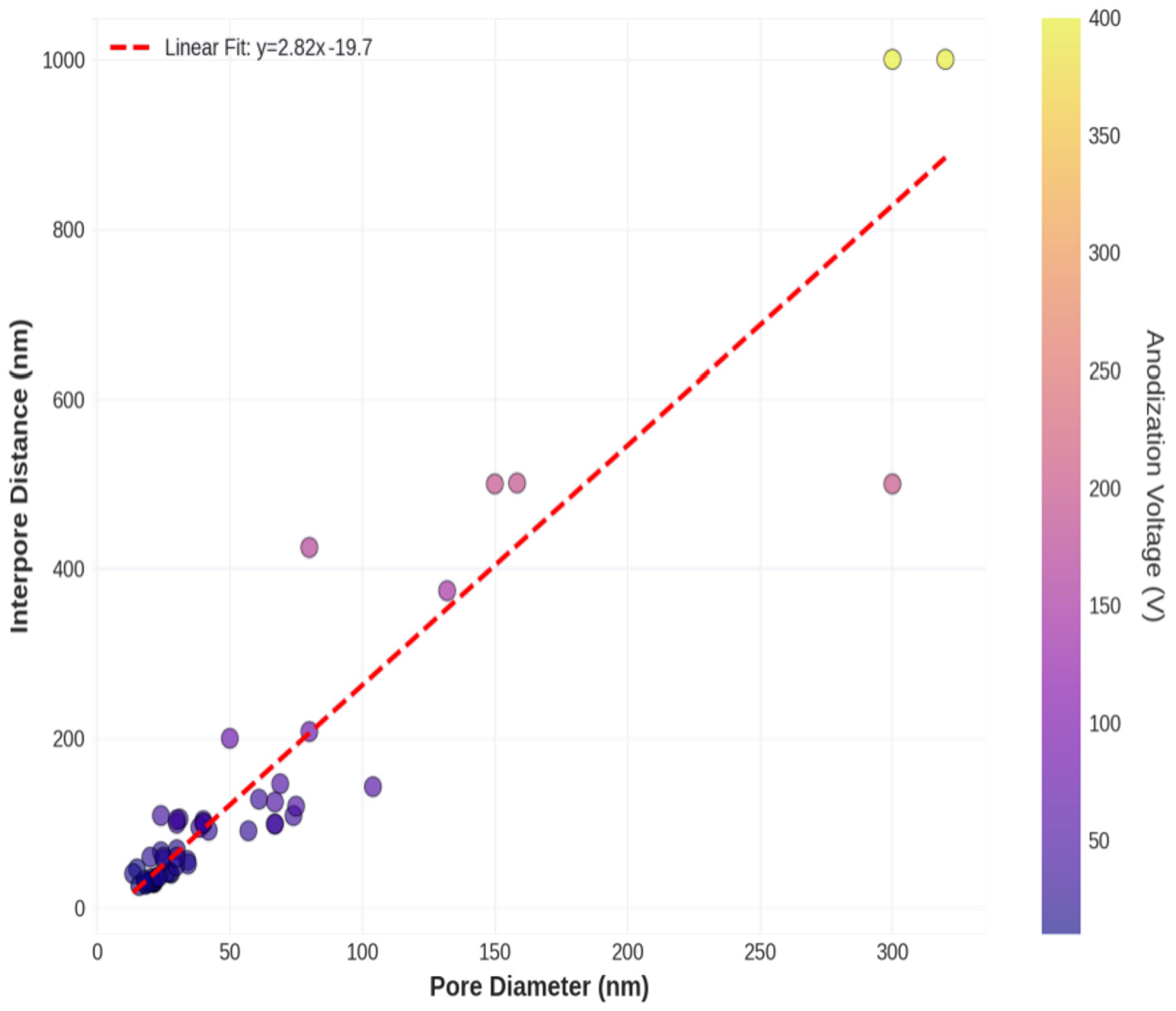
| Anodization Voltage (V) | 5 | 400 | 65.7 | 69.5 | 97 |
| Anodization Temperature (°C) | 0 | 30 | 11.9 | 8.8 | 85 |
| Anodization Time (min) | 0.4 | 9600 | 395.9 | 1124 | 87 |
| Pore Diameter (nm) | 10 | 320 | 68.1 | 60.8 | 99 |
| Interpore Distance (nm) | 26.5 | 1000 | 147.1 | 209.4 | 53 |
| Pore Depth (μm) | 0.1 | 45 | 6.2 | 9.4 | 24 |
| Model | R2 | RMSE (nm) | MAE (nm) | CV R2 (Mean ± Std.) | Training Samples |
|---|---|---|---|---|---|
| ANN (64-32-16) | 0.8034 | 25.83 | 17.05 | 0.471 ± 0.078 | 77 |
| Multiple Linear Regression | 0.8037 | 25.8 | 15.89 | 0.729 ± 0.083 | 77 |
| Fold | ANN R2 | MLR R2 | Difference (ANN − MLR) |
|---|---|---|---|
| Fold 1 | 0.3539 | 0.764 | −0.4101 |
| Fold 2 | 0.5025 | 0.6644 | −0.1619 |
| Fold 3 | 0.5778 | 0.6615 | −0.0837 |
| Fold 4 | 0.5082 | 0.6784 | −0.1702 |
| Fold 5 | 0.4144 | 0.8783 | −0.4639 |
| Mean | 0.4714 | 0.7293 | −0.2580 |
| Std. Dev. | 0.0783 | 0.0834 | - |
| Feature | ANN Importance (%) | MLR Importance (%) | Rank (ANN) | Rank (MLR) |
|---|---|---|---|---|
| Voltage | 29.15 | 86.32 | 2 | 1 |
| Temperature | 22.94 | 1.5 | 3 | 4 |
| Time | 17.69 | 4.98 | 4 | 3 |
| Electrolyte Type | 30.23 | 7.2 | 1 | 2 |
| Electrolyte Type | Count | Mean (nm) | Std. Dev. (nm) | Min (nm) | Max (nm) |
|---|---|---|---|---|---|
| H3PO4 (phosphoric acid) | 5 | 104 | 55.5 | 60 | 200 |
| H2C2O4 (oxalic acid) | 18 | 46.7 | 23.5 | 15 | 104 |
| H2SO4 (sulphuric acid) | 18 | 23.3 | 5.4 | 15.8 | 34.2 |
| Pore Diameter (nm) | Release Constant k (h−0.5) | Time to 50% Release (h) | Time to 90% Release (h) | Initial Release Rate (%/h) |
|---|---|---|---|---|
| 30 | 0.68 | 54.3 | 174.1 | 6.8 |
| 50 | 0.8 | 39.1 | 126.6 | 8 |
| 75 | 0.95 | 27.7 | 89.7 | 9.5 |
| 100 | 1.1 | 20.7 | 67 | 11 |
| 150 | 1.4 | 12.8 | 41.3 | 14 |
Disclaimer/Publisher’s Note: The statements, opinions and data contained in all publications are solely those of the individual author(s) and contributor(s) and not of MDPI and/or the editor(s). MDPI and/or the editor(s) disclaim responsibility for any injury to people or property resulting from any ideas, methods, instructions or products referred to in the content. |
© 2026 by the authors. Licensee MDPI, Basel, Switzerland. This article is an open access article distributed under the terms and conditions of the Creative Commons Attribution (CC BY) license.
Share and Cite
Wang, A.; Ali, W.F.F.W.; Yajid, M.A.M.; Gu, J. Predictive Neural Network Modeling of Nanoporous Anodic Alumina for Controlled Drug Release Implants: An Integrated Machine Learning Approach. Materials 2026, 19, 1705. https://doi.org/10.3390/ma19091705
Wang A, Ali WFFW, Yajid MAM, Gu J. Predictive Neural Network Modeling of Nanoporous Anodic Alumina for Controlled Drug Release Implants: An Integrated Machine Learning Approach. Materials. 2026; 19(9):1705. https://doi.org/10.3390/ma19091705
Chicago/Turabian StyleWang, Ao, Wan Fahmin Faiz Wan Ali, Muhamad Azizi Mat Yajid, and Jianjun Gu. 2026. "Predictive Neural Network Modeling of Nanoporous Anodic Alumina for Controlled Drug Release Implants: An Integrated Machine Learning Approach" Materials 19, no. 9: 1705. https://doi.org/10.3390/ma19091705
APA StyleWang, A., Ali, W. F. F. W., Yajid, M. A. M., & Gu, J. (2026). Predictive Neural Network Modeling of Nanoporous Anodic Alumina for Controlled Drug Release Implants: An Integrated Machine Learning Approach. Materials, 19(9), 1705. https://doi.org/10.3390/ma19091705