Research on Early-Age Shrinkage and Prediction Model of Ultra-High-Performance Concrete Based on the BO-XGBoost Algorithm


Abstract
1. Introduction
2. Materials and Methods
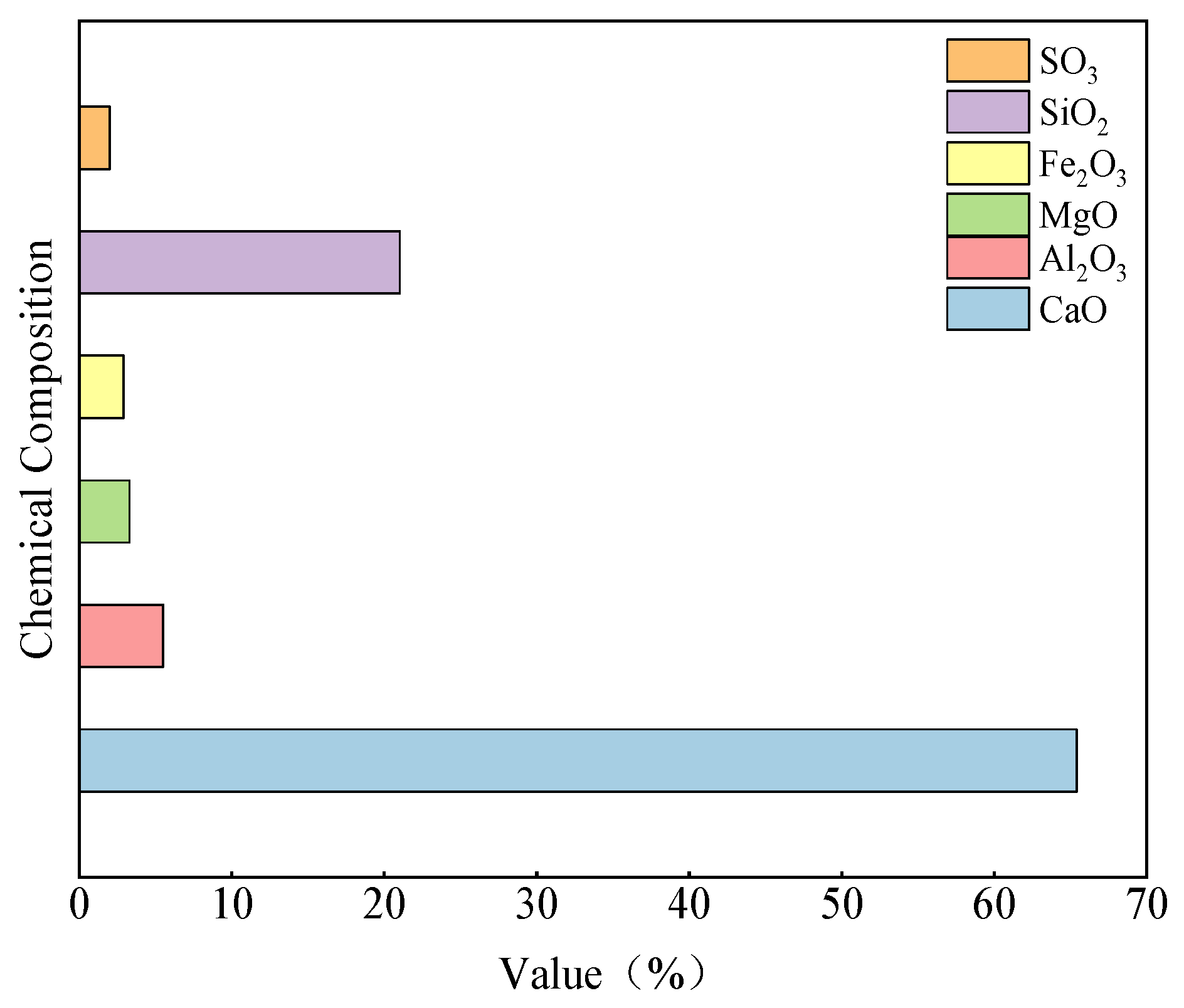
2.1. Materials and Mix Proportion
2.2. Experimental Design and Testing Methods
- (1)
- Specimen preparation
- (2)
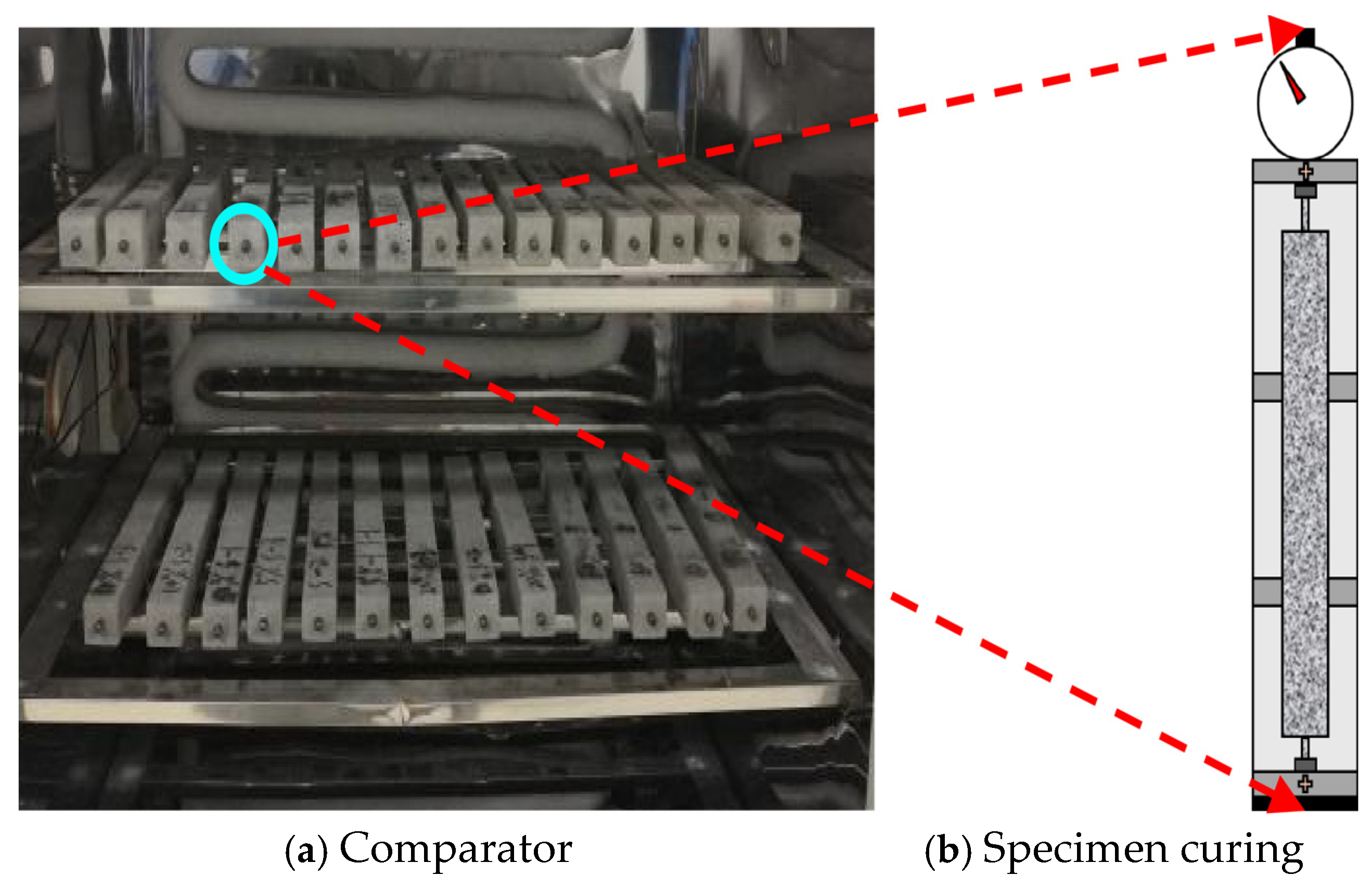
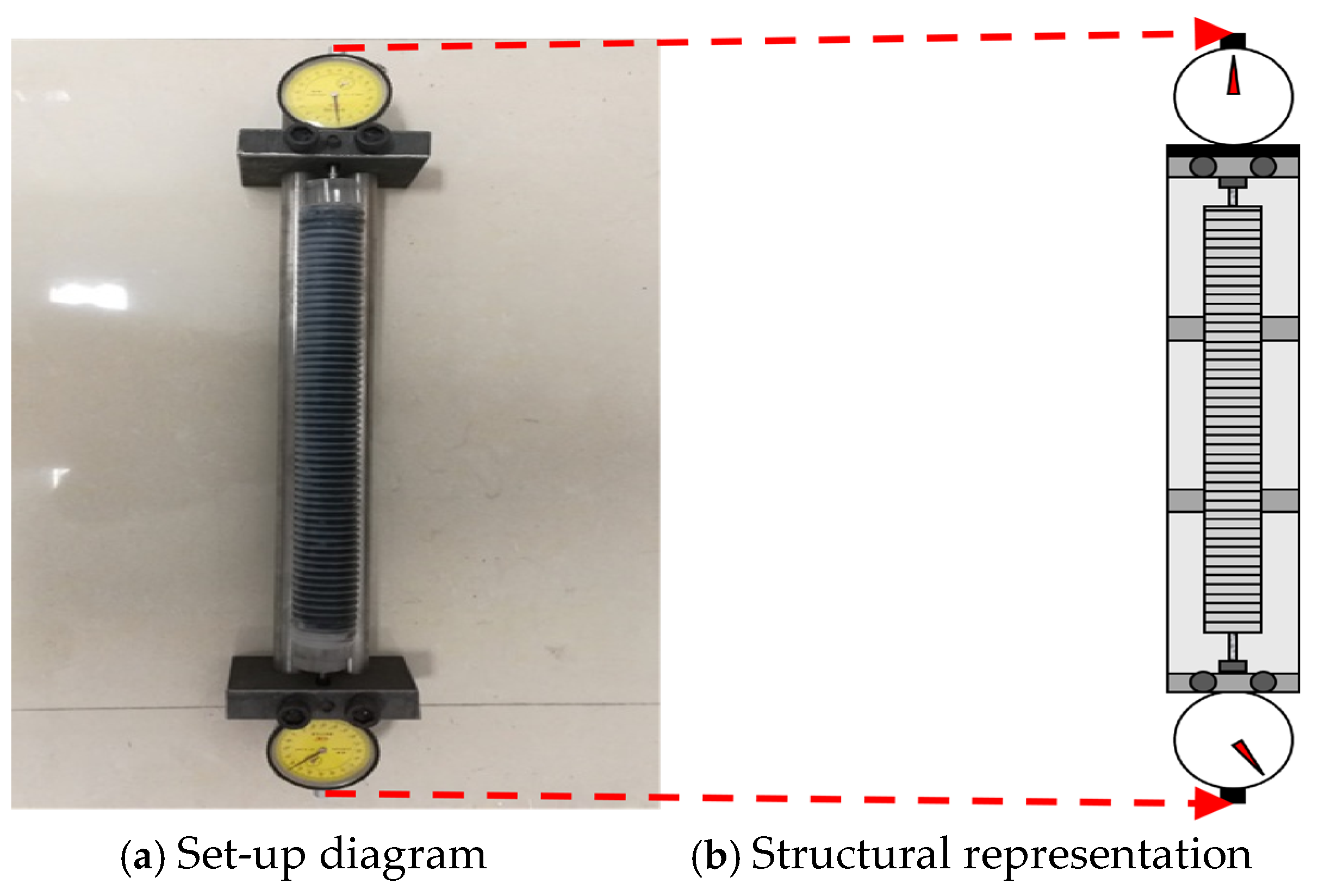
- Curing and measurement
2.3. Experimental Results
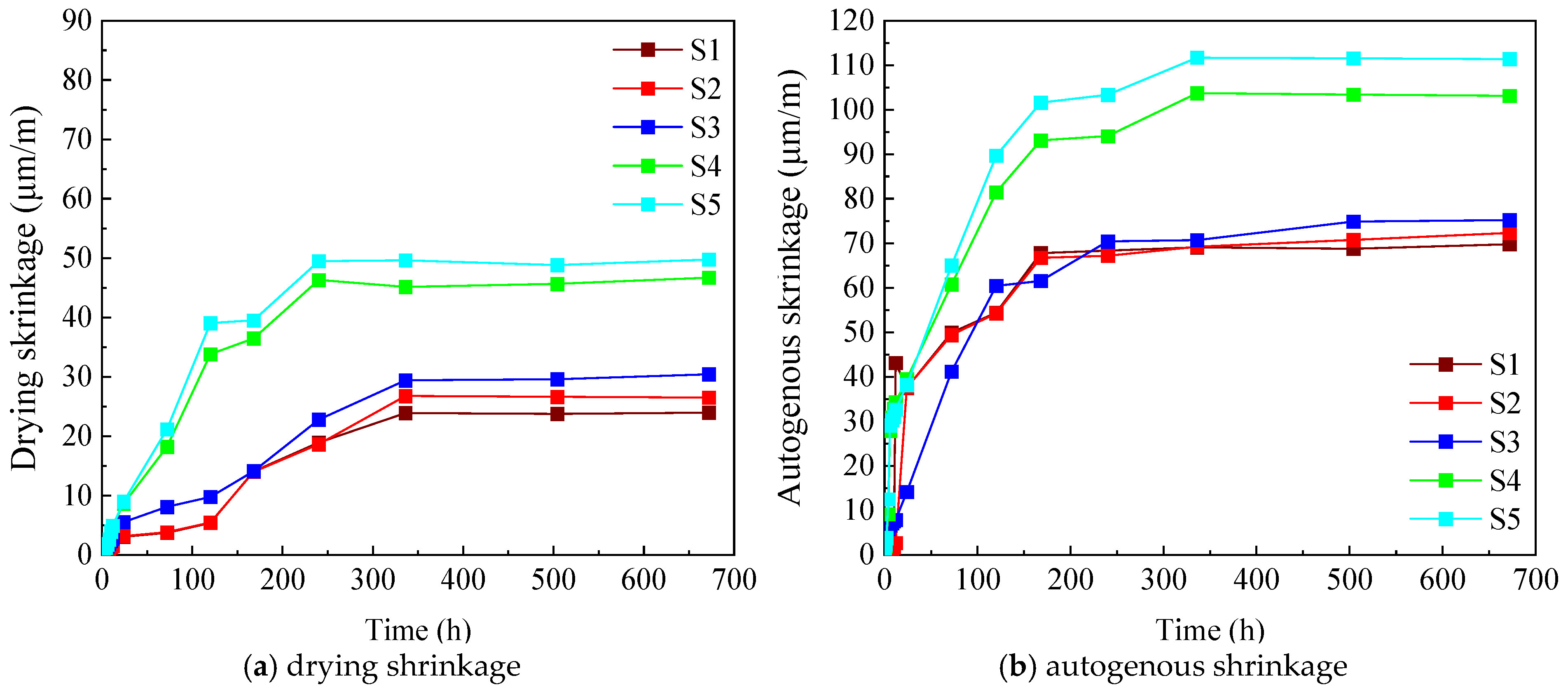
2.3.1. Effect of Binder-to-Sand Ratio on Early-Age Shrinkage of UHPC
2.3.2. Effect of Water-to-Binder Ratio on Early-Age Shrinkage of UHPC
2.3.3. Effect of Fiber Type and Dosage on Early-Age Shrinkage of UHPC
2.3.4. Effect of Curing Condition on Early-Age Shrinkage of UHPC
3. Early-Age Shrinkage Prediction Model
3.1. Datasets and Input Parameters
3.2. Introduction to Machine Learning Algorithms
3.3. Model Evaluation Indicators
3.4. Comparison of Machine Learning Model Predictions
3.4.1. Early Drying Shrinkage Model of UHPC
3.4.2. Early Autogenous Shrinkage Model of UHPC
3.5. Results and Discussion
3.5.1. Results
3.5.2. Discussion
4. Conclusions
- (1)
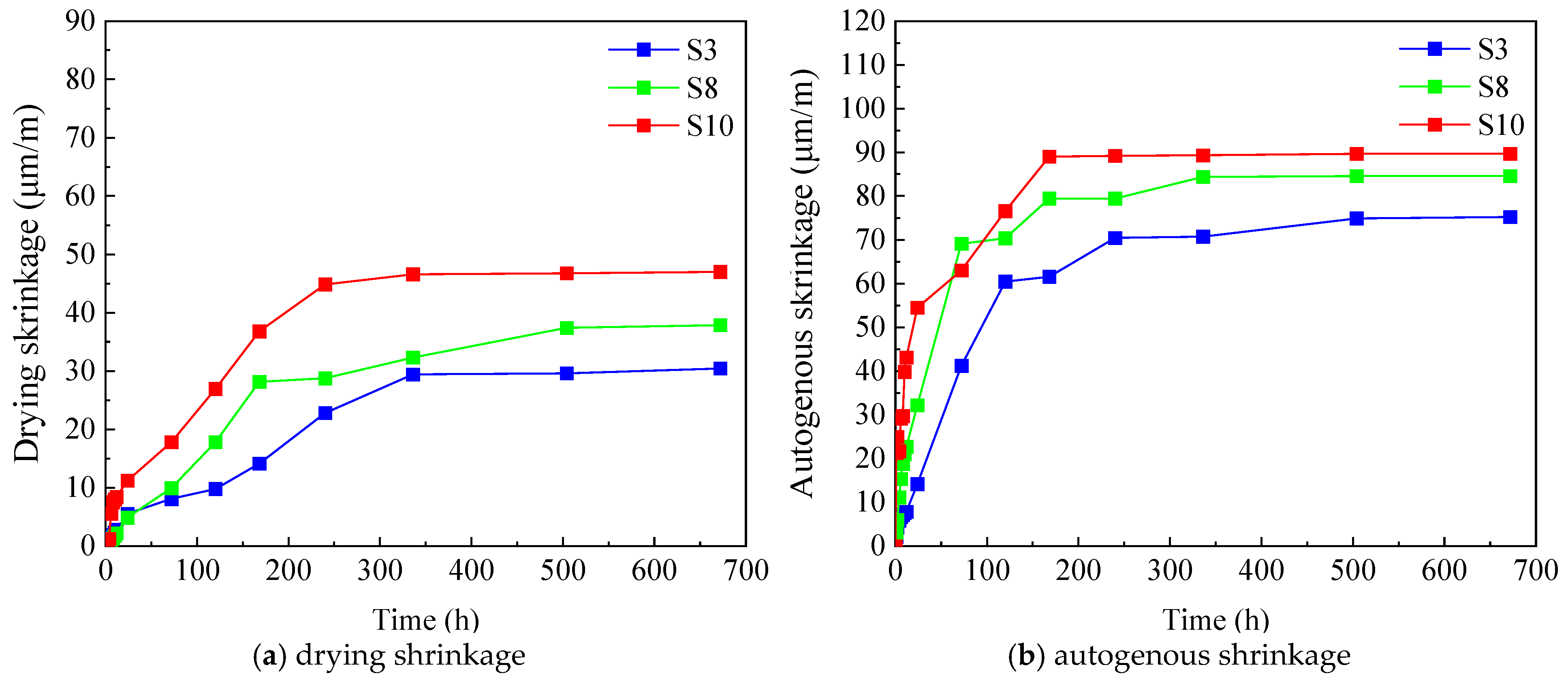
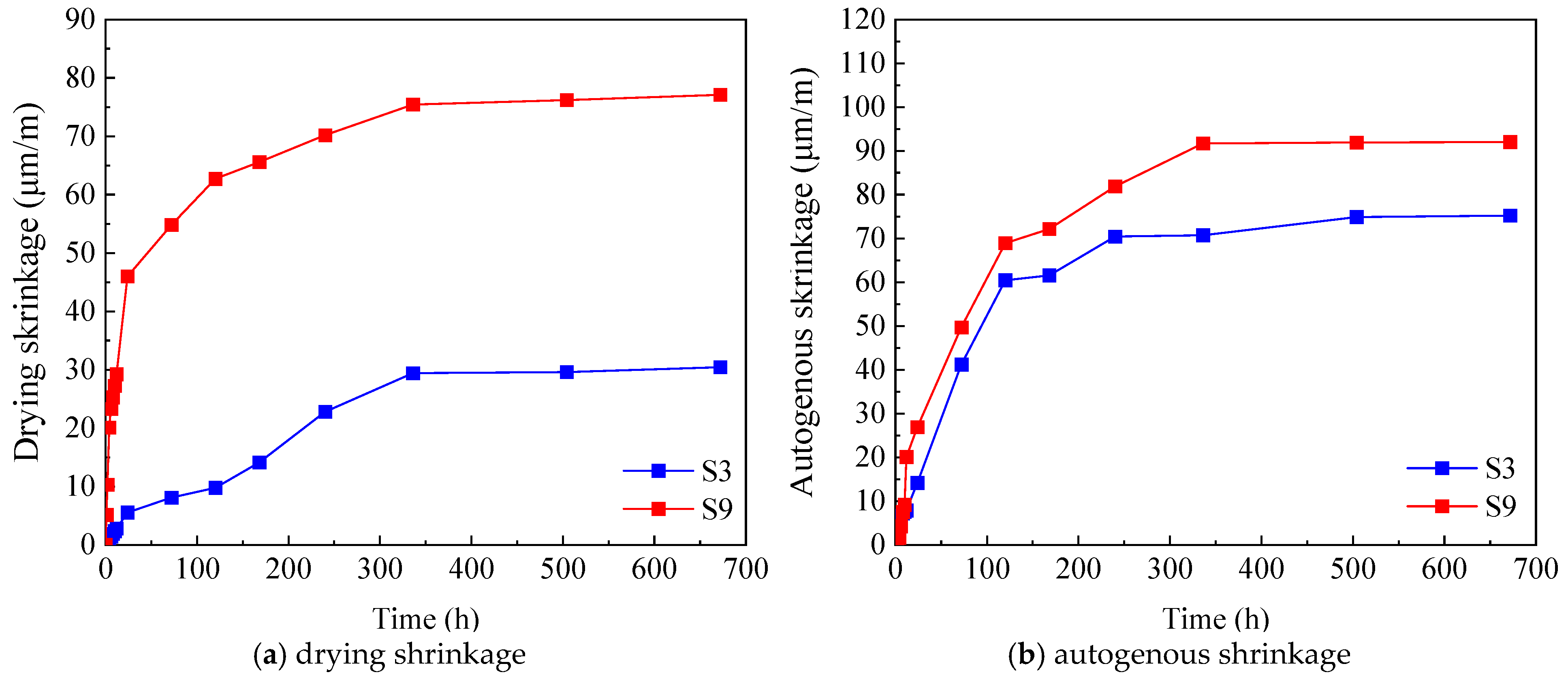
- Both early drying shrinkage and autogenous shrinkage of UHPC increase significantly with an increasing binder-to-sand ratio and decreasing water-to-binder ratio. Polypropylene fiber shows the most effective shrinkage mitigation at a volume fraction of approximately 0.10%, whereas lower or higher dosages lead to reduced effectiveness. A dry curing environment markedly intensifies drying shrinkage, with its magnitude being about 2.5 times that under standard curing, highlighting the critical role of early-age humidity control.
- (2)
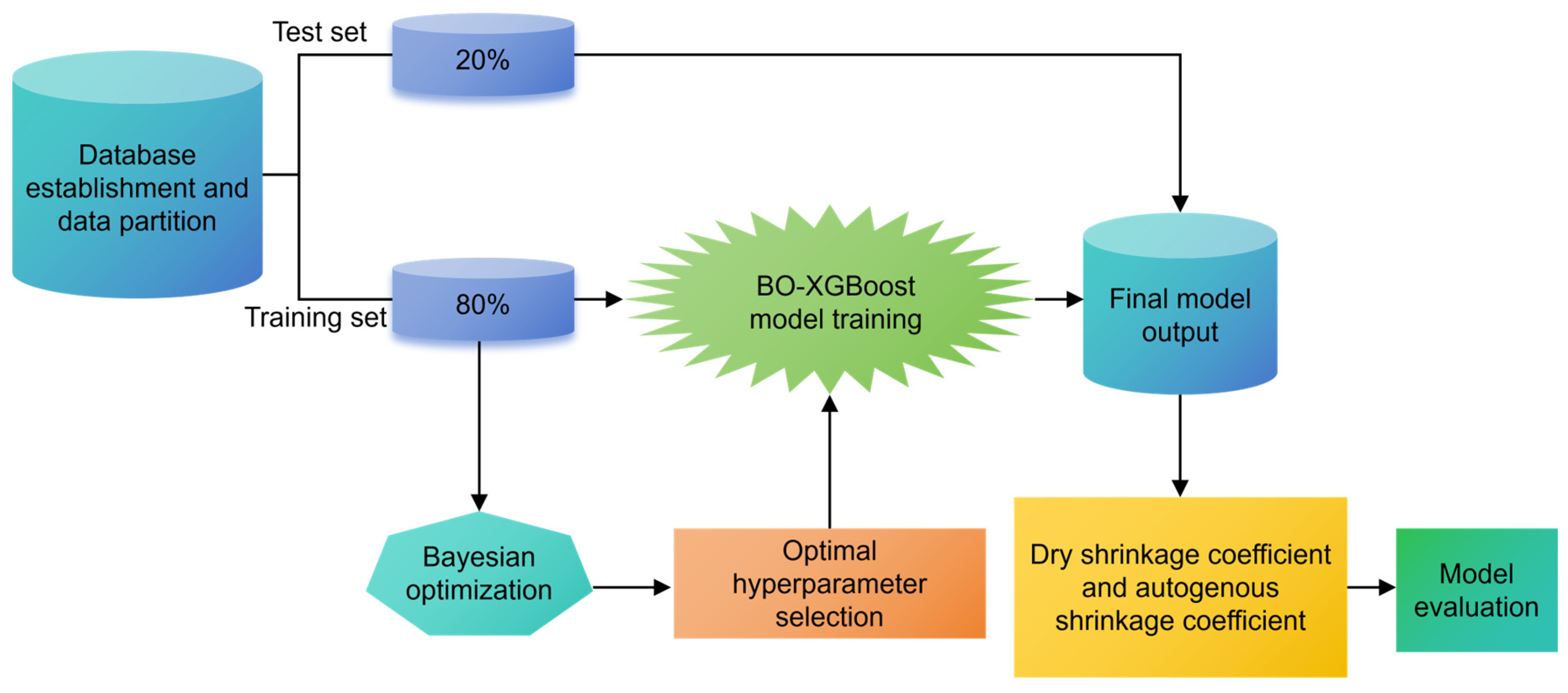
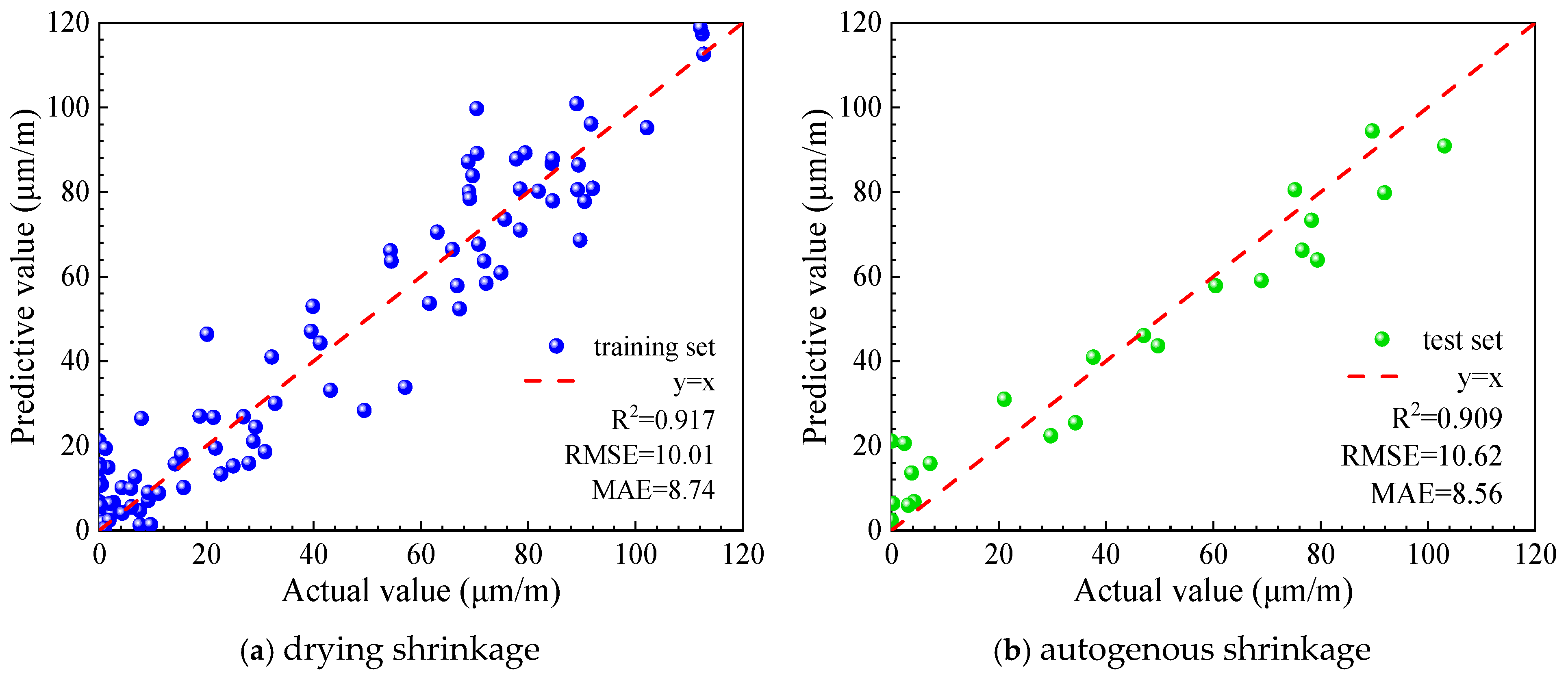
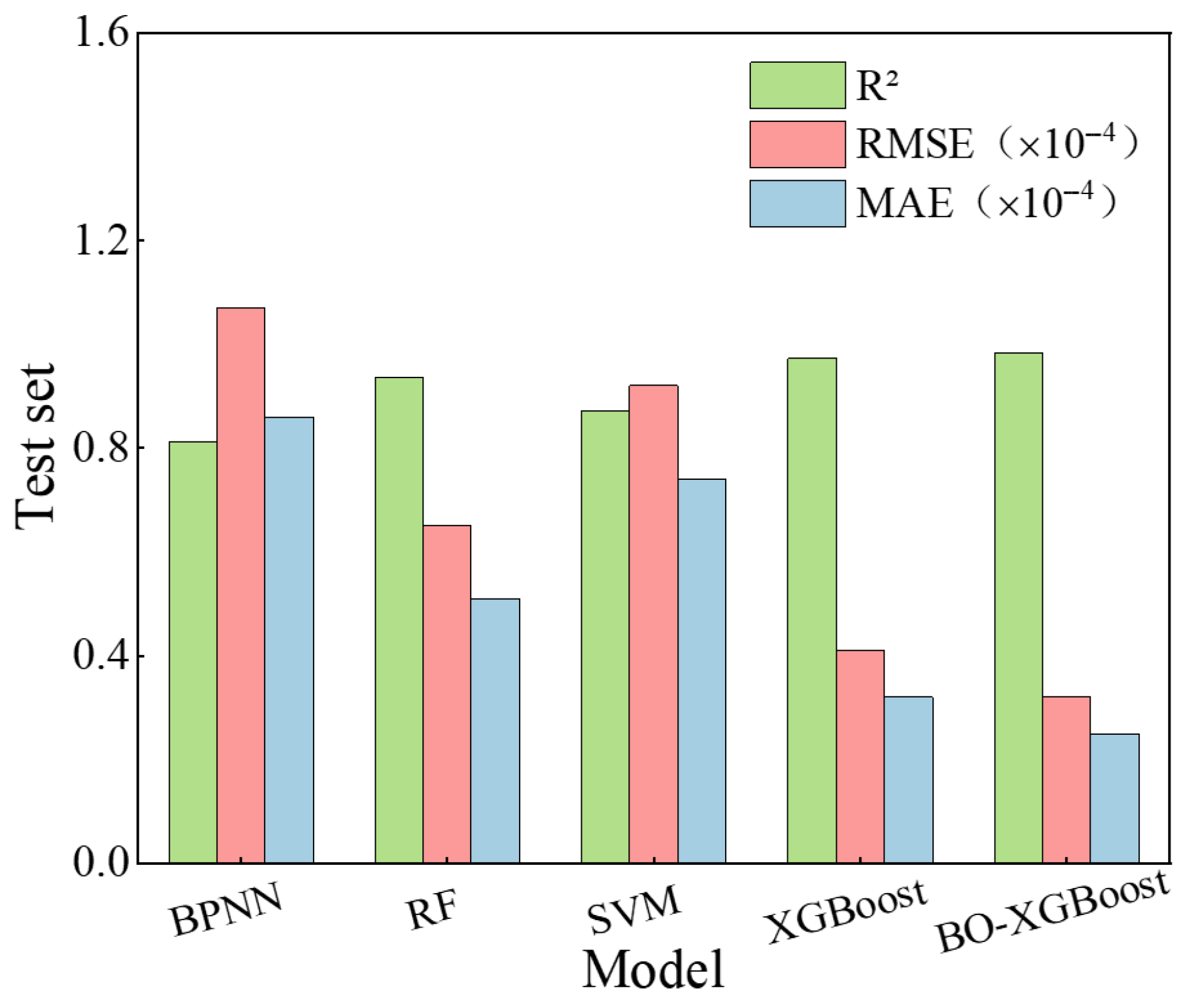
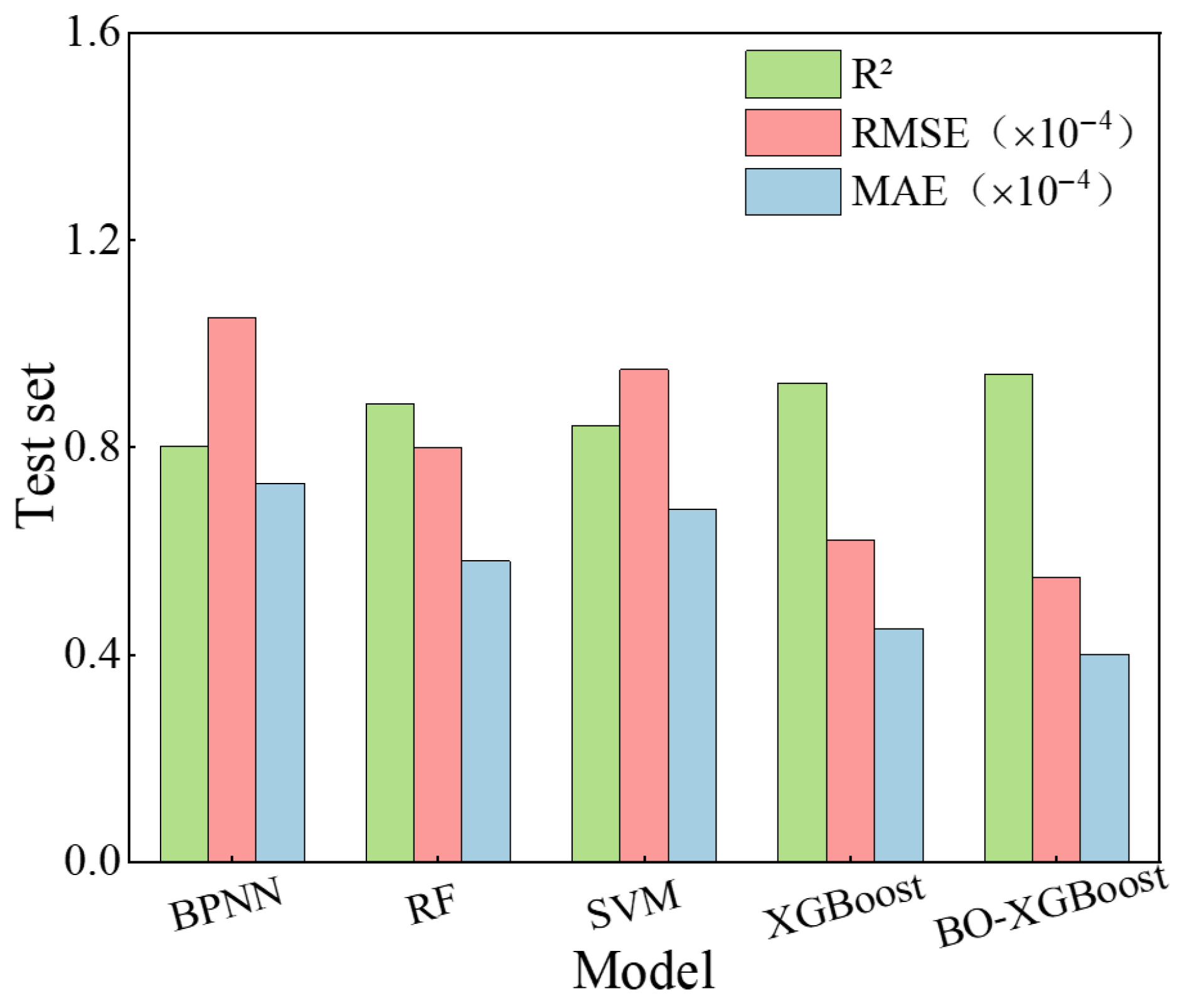
- This study successfully introduces the XGBoost algorithm, particularly the Bayesian-optimized BO-XGBoost model, for high-accuracy prediction of early-age shrinkage in UHPC. Compared with conventional models such as BPNN, RF, and SVM, the BO-XGBoost model exhibits superior prediction accuracy, robustness, and generalization ability, with these advantages being especially pronounced under small-sample conditions. On the test dataset, the model achieved R2 values of 0.938 and 0.909 for early drying shrinkage and autogenous shrinkage, respectively, together with the lowest RMSE and MAE values.
- (3)
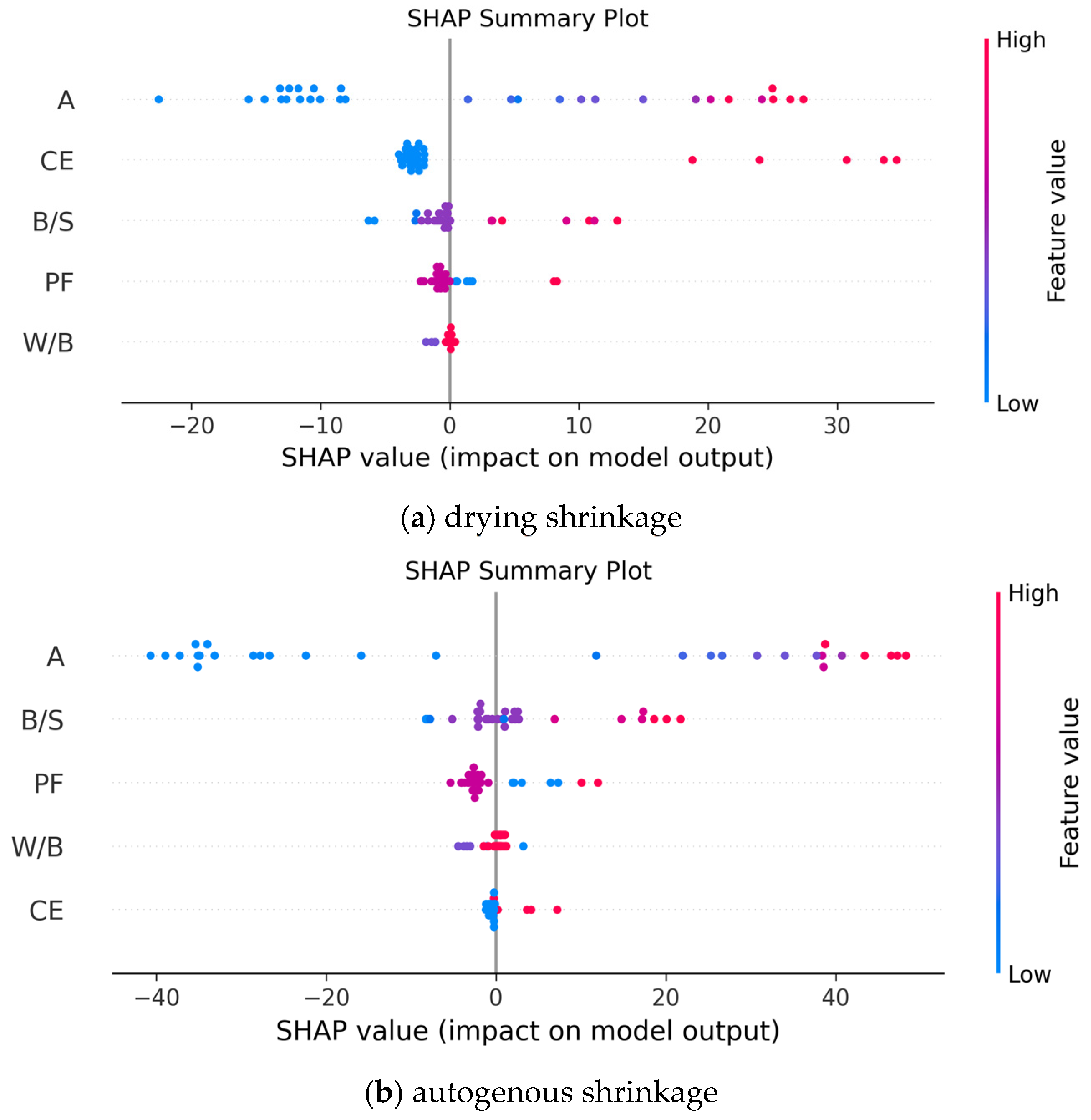
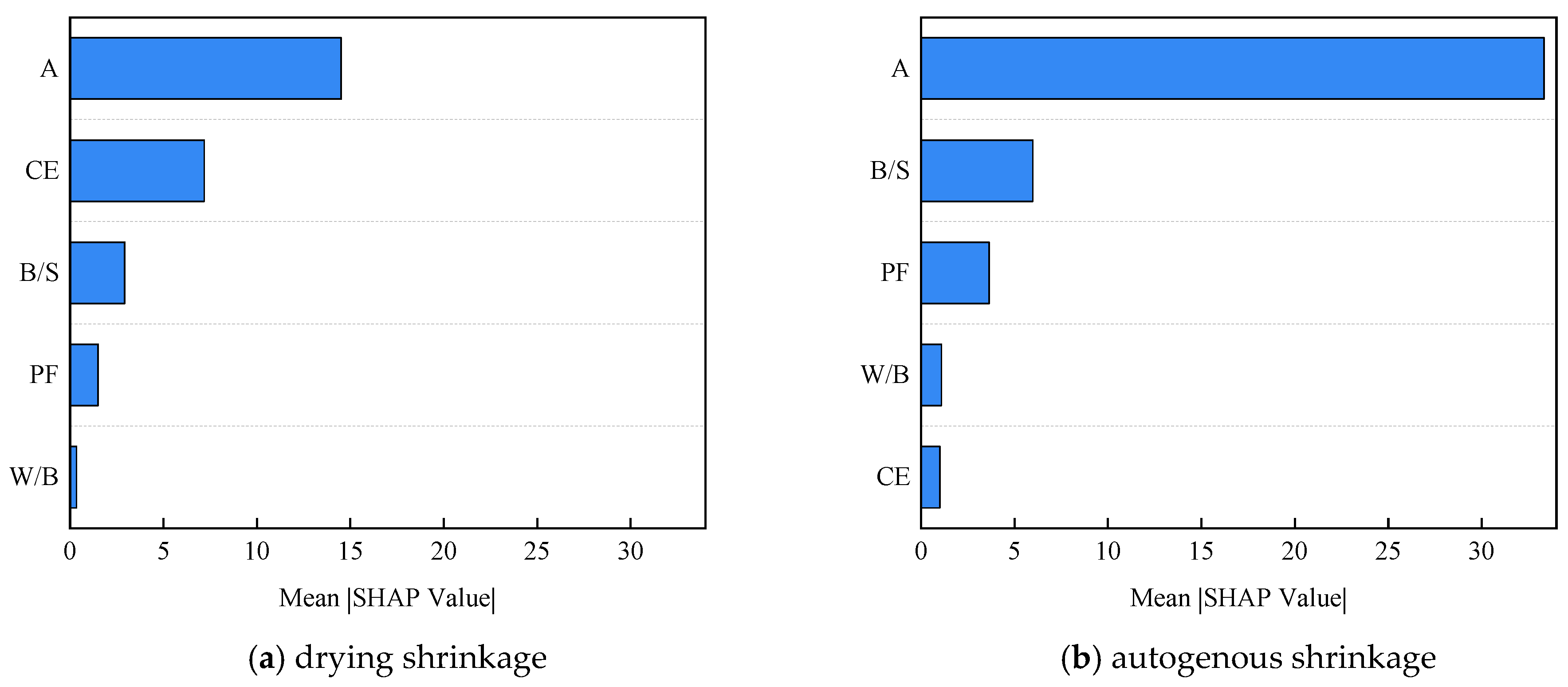
- Based on the feature importance analysis of the BO-XGBoost model combined with the SHAP interpretation framework, the contribution of each input variable was quantitatively evaluated. For drying shrinkage, the curing environment is identified as the most influential factor, followed by curing age and water-to-binder ratio. For autogenous shrinkage, curing age plays a dominant role, followed by water-to-binder ratio and binder-to-sand ratio. The SHAP analysis further reveals pronounced nonlinear effects, including the existence of an optimal polypropylene fiber dosage range, as well as interaction effects such as the coupling between low water-to-binder ratio and extended curing age. These findings provide data-driven support for established material mechanisms and offer clear guidance for mix proportion optimization.
- (4)
- The results demonstrate the strong potential and practical applicability of the Bayesian-optimized XGBoost algorithm in predicting UHPC performance. The proposed model offers a reliable tool for precision mix design and intelligent control of UHPC, contributing to the mitigation of early-age cracking risk.
Author Contributions
Funding
Data Availability Statement
Conflicts of Interest
References
- Bajaber, M.A.; Hakeem, I.Y. UHPC evolution, development, and utilization in construction: A review. J. Mater. Res. Technol. 2021, 10, 1058–1074. [Google Scholar] [CrossRef] [Scilit]
- Hung, C.C.; EL-Tawil, S.; Chao, S.H. A review of developments and challenges for UHPC in structural engineering: Behavior, analysis, and design. J. Struct. Eng. 2021, 147, 03121001. [Google Scholar] [CrossRef] [Scilit]
- Du, J.; Meng, W.; Khayat, K.H.; Bao, Y.; Guo, P.; Lyu, Z.; Abu-Obeidah, A.; Nassif, H.; Wang, H. New development of ultra-high-performance concrete (UHPC). Compos. Part B Eng. 2021, 224, 109220. [Google Scholar] [CrossRef] [Scilit]
- Fehling, E.; Schmidt, M.; Walraven, J.; Leutbecher, T.; Fröhlich, S. Ultra-High Performance Concrete UHPC; Ernst & Sohn: Berlin, Germany, 2014; pp. 25–32. [Google Scholar]
- Amran, M.; Huang, S.-S.; Onaizi, A.M.; Makul, N.; Abdelgader, H.S.; Ozbakkaloglu, T. Recent trends in ultra-high performance concrete (UHPC): Current status, challenges, and future prospects. Constr. Build. Mater. 2022, 352, 129029. [Google Scholar] [CrossRef] [Scilit]
- Gao, Y.; Zhang, H.; Tang, S.; Liu, H. Study on early autogenous shrinkage and crack resistance of fly ash high-strength lightweight aggregate concrete. Mag. Concr. Res. 2013, 65, 906–913. [Google Scholar] [CrossRef] [Scilit]
- Jiao, Y.; Wang, J.; Xu, Q.; Qi, J.; Yao, Y. Experimental study on early-age autogenous shrinkage and shrinkage induced stress of CA-UHPC under uniaxial restrained condition: Effects of coarse aggregate size and steel fiber volume fraction. Constr. Build. Mater. 2025, 482, 141236. [Google Scholar] [CrossRef] [Scilit]
- Al Moman, A.; Sundar, D.; Zeng, K.; Tatar, J.; Radlińska, A.; Rajabipour, F. Autogenous and drying shrinkage in Ultra-High-Performance Concrete (UHPC) and the effectiveness of internal curing. Constr. Build. Mater. 2025, 464, 140217. [Google Scholar] [CrossRef] [Scilit]
- Soliman, A.M.; Nehdi, M.L. Effect of partially hydrated cementitious materials and superabsorbent polymer on early-age shrinkage of UHPC. Constr. Build. Mater. 2013, 41, 270–275. [Google Scholar] [CrossRef] [Scilit]
- Wang, J.Q.; Liu, H.; Sun, J.B.; Huang, B.; Wang, Y.; Zhao, H.; Saafi, M.; Wang, X. Research on concrete early-age shrinkagecharacteristics based on machine learning algorithms for multi-objective optimization. J. Build. Eng. 2024, 89, 109415. [Google Scholar] [CrossRef] [Scilit]
- Mustapha, I.B.; Abdulkareem, Z.; Abdulkareem, M.; Ganiyu, A. Predictive modeling of physical and mechanical properties of pervious concrete using XGBoost. Neural Comput. Appl. 2024, 36, 9245–9261. [Google Scholar] [CrossRef] [Scilit]
- Omer, B.; Jaf, D.K.I.; Abdalla, A.; Mohammed, A.S.; Abdulrahman, P.I.; Kurda, R. Advanced modeling for predicting compressive strength in fly ash-modified recycled aggregate concrete: XGboost, MEP, MARS, and ANN approaches. Innov. Infrastruct. Solut. 2024, 9, 61. [Google Scholar] [CrossRef] [Scilit]
- Abbas, Y.M.; Babiker, A.; Ismail, F.I. Optimized XGBoost-Based Framework for Robust Prediction of the Compressive Strength of Recycled Aggregate Concrete Incorporating Silica Fume, Slag, and Fly Ash. Comput. Model. Eng. Sci. 2025, 145, 3279–3307. [Google Scholar] [CrossRef] [Scilit]
- Simwanda, L.; Sykora, M. Prediction of moment capacity of ultra-high-performance con-crete beams using explainable extreme gradient boosting ma-chine learning model. In Proceedings of the 1st International Conference on Synergy Between Multi-Physics/Multi-Scale Modeling and Machine Learning, Prague, Czech Republic, 19–21 June 2024; p. 84. [Google Scholar]
- Ergen, F.; Katlav, M. Machine and deep learning-based prediction of flexural moment capacity of ultra-high performance concrete beams with/out steel fiber. Asian J. Civ. Eng. 2024, 25, 4541–4562. [Google Scholar] [CrossRef] [Scilit]
- Shrestha, A.; Sapkota, S.C. Hybrid machine learning model to predict the mechanical properties of ultra-high-performance concrete (UHPC) with experimental validation. Asian J. Civ. Eng. 2024, 25, 5227–5244. [Google Scholar] [CrossRef] [Scilit]
- Alabdullah, A.A.; Iqbal, M.; Zahid, M.; Khan, K.; Amin, M.N.; Jalal, F.E. Prediction of rapid chloride penetration resistance of metakaolin based high strength concrete using light GBM and XGBoost models by incorporating SHAP analysis. Constr. Build. Mater. 2022, 345, 128296. [Google Scholar] [CrossRef] [Scilit]
- Xu, J.-G.; Chen, S.-Z.; Xu, W.-J.; Shen, Z.-S. Concrete-to-concrete interface shear strength prediction based on explainable extreme gradient boosting approach. Constr. Build. Mater. 2021, 308, 125088. [Google Scholar] [CrossRef] [Scilit]
- He, Y.; Ding, R.; Wang, C.; Fan, J.-S. Investigation of seismic performance of UHPC-RC frame based on deep learning with composite features. J. Build. Eng. 2025, 103, 112178. [Google Scholar] [CrossRef] [Scilit]
- Zhang, Z.; Zeng, T.; Zeng, Y.; Zhu, P. Explainable Prediction of UHPC Tensile Strength Using Machine Learning with Engineered Features and Multi-Algorithm Comparative Evaluation. Buildings 2025, 15, 3217. [Google Scholar] [CrossRef] [Scilit]
- Zhang, L.; Zhu, D.; Nehdi, M.L.; Marani, A.; Wang, D.; Zheng, D.; Tursun, G.; Pan, Z.; Zhang, J. Machine learning prediction of drying shrinkage for alkali-activated materials and multi-objective optimization. Mater. Today Commun. 2025, 45, 112326. [Google Scholar] [CrossRef] [Scilit]
- Wang, Q.; Dai, R.; Zhang, H.; Zheng, H.; Liang, X. Machine learning-based prediction method for drying shrinkage of recycled aggregate concrete. J. Build. Eng. 2024, 96, 110493. [Google Scholar] [CrossRef] [Scilit]
- Ocak, A.; Bekda, G.; Ikda, M.; Işıkdağ, Ü.; Nigdeli, S.M.; Bilir, T. Drying shrinkage and crack width prediction using machine learning in mortars containing different types of industrial by-product fine aggregates. J. Build. Eng. 2024, 97, 110737. [Google Scholar] [CrossRef] [Scilit]
- Khan, M.I.; Abbas, Y.M.; Fares, G.; Alqahtani, F.K. Strength prediction and optimization for ultrahigh-performance concrete with low-carbon cementitious materials–XGboost model and experimental validation. Constr. Build. Mater. 2023, 387, 131606. [Google Scholar] [CrossRef] [Scilit]
- Wan, S.; Li, S.; Chen, Z.; Tang, Y. An ultrasonic-AI hybrid approach for predicting void defects in concrete-filled steel tubes via enhanced XGBoost with Bayesian optimization. Case Stud. Constr. Mater. 2025, 22, e04359. [Google Scholar] [CrossRef] [Scilit]
- Gogineni, A.; Panday, I.K.; Kumar, P.; Paswan, R.K. Predicting compressive strength of concrete with fly ash and admixture using XGBoost: A comparative study of machine learning algorithms. Asian J. Civ. Eng. 2024, 25, 685–698. [Google Scholar] [CrossRef] [Scilit]
- Deng, C.; Li, Y.; Xiong, F.; Zeng, Y. Void damage detection of rubber bearings in bridge structures under laboratory conditions using the active sensing method and BO-XGBoost algorithm. Struct. Health Monit. 2025, 14759217251329167. [Google Scholar] [CrossRef] [Scilit]
- Sun, Z.; Li, Y.; Yang, Y.; Su, L.; Xie, S. Splitting tensile strength of basalt fiber reinforced coral aggregate concrete: Optimized XGBoost models and experimental validation. Constr. Build. Mater. 2024, 416, 135133. [Google Scholar] [CrossRef] [Scilit]
- Shoko, T.; Verster, T.; Dube, L. Comparative analysis of classical and Bayesian optimisation techniques: Impact on model performance and interpretability in credit risk modelling using SHAP and PDPs. Data Sci. Financ. Econ. 2025, 5, 320–354. [Google Scholar] [CrossRef] [Scilit]
- GB/T 29417-2012; Standard Test Methods for Drying Shrinkage Stress and Cracking Possibility of Cement Mortar and Concrete. Standardization Administration of China: Beijing, China, 2026.
- ASTM C188-17; Standard Test Method for Density of Hydraulic Cement. ASTM International: West Conshohocken, PA, USA, 2017; pp. 1–3.
- Zhang, J.; Dongwei, H.; Wei, S. Experimental study on the relationship between shrinkage and interior humidity of concrete at early age. Mag. Concr. Res. 2010, 62, 191–199. [Google Scholar] [CrossRef] [Scilit]
- Abel, J.; Hover, K. Effect of water/cement ratio on the early age tensile strength of concrete. Transp. Res. Rec. 1998, 1610, 33–38. [Google Scholar] [CrossRef] [Scilit]
- Kheir, J.; Klausen, A.; Hammer, T.; De Meyst, L.; Hilloulin, B.; Van Tittelboom, K.; Loukili, A.; De Belie, N. Early age autogenous shrinkage cracking risk of an ultra-high performance concrete (UHPC) wall: Modelling and experimental results. Eng. Fract. Mech. 2021, 257, 108024. [Google Scholar] [CrossRef] [Scilit]
- Hoque, A.; Shrestha, A.; Sapkota, S.C.; Ahmed, A.; Paudel, S. Prediction of autogenous shrinkage in ultra-high-performance concrete (UHPC) using hybridized machine learning. Asian J. Civ. Eng. 2025, 26, 649–665. [Google Scholar] [CrossRef] [Scilit]
- Ghafari, E.; Ghahari, S.A.; Costa, H.; Júlio, E.; Portugal, A.; Durães, L. Effect of supplementary cementitious materials on autogenous shrinkage of ultra-high performance concrete. Constr. Build. Mater. 2016, 127, 43–48. [Google Scholar] [CrossRef] [Scilit]
- Childs, C.; Miller, A.; Neiswanger, W.; Poczos, B.; Stewart, L.; Kurtis, K.; Washburn, N. Bayesian machine learning for inverse design of ultra-high-performance concrete. Philos. Trans. R. Soc. A Math. Phys. Eng. Sci. 2025, 383, 20240041. [Google Scholar] [CrossRef] [Scilit] [PubMed]



| Sample | Binder-Sand Ratio | Water-Binder Ratio | Mass Content of Water Reducer/% | Steel Fiber Volume Content/% | Polypropylene Fiber Volume Content/% | Curing Condition |
|---|---|---|---|---|---|---|
| S1 | 0.8 | 0.17 | 0.8 | 2 | 0.10 | Standard curing |
| S2 | 0.9 | 0.17 | 0.8 | 2 | 0.10 | Standard curing |
| S3 | 1.0 | 0.17 | 0.8 | 2 | 0.10 | Standard curing |
| S4 | 1.1 | 0.17 | 0.8 | 2 | 0.10 | Standard curing |
| S5 | 1.2 | 0.17 | 0.8 | 2 | 0.10 | Standard curing |
| S6 | 1.0 | 0.15 | 0.8 | 2 | 0.10 | Standard curing |
| S7 | 1.0 | 0.16 | 0.8 | 2 | 0.10 | Standard curing |
| S8 | 1.0 | 0.17 | 0.8 | 2 | 0.05 | Standard curing |
| S9 | 1.0 | 0.17 | 0.8 | 2 | 0.10 | Dry curing |
| S10 | 1.0 | 0.17 | 0.8 | 2 | 0.15 | Standard curing |
| Model Types | XGBoost | BO-XGBoost | ||
|---|---|---|---|---|
| Training Set | Test Set | Training Set | Test Set | |
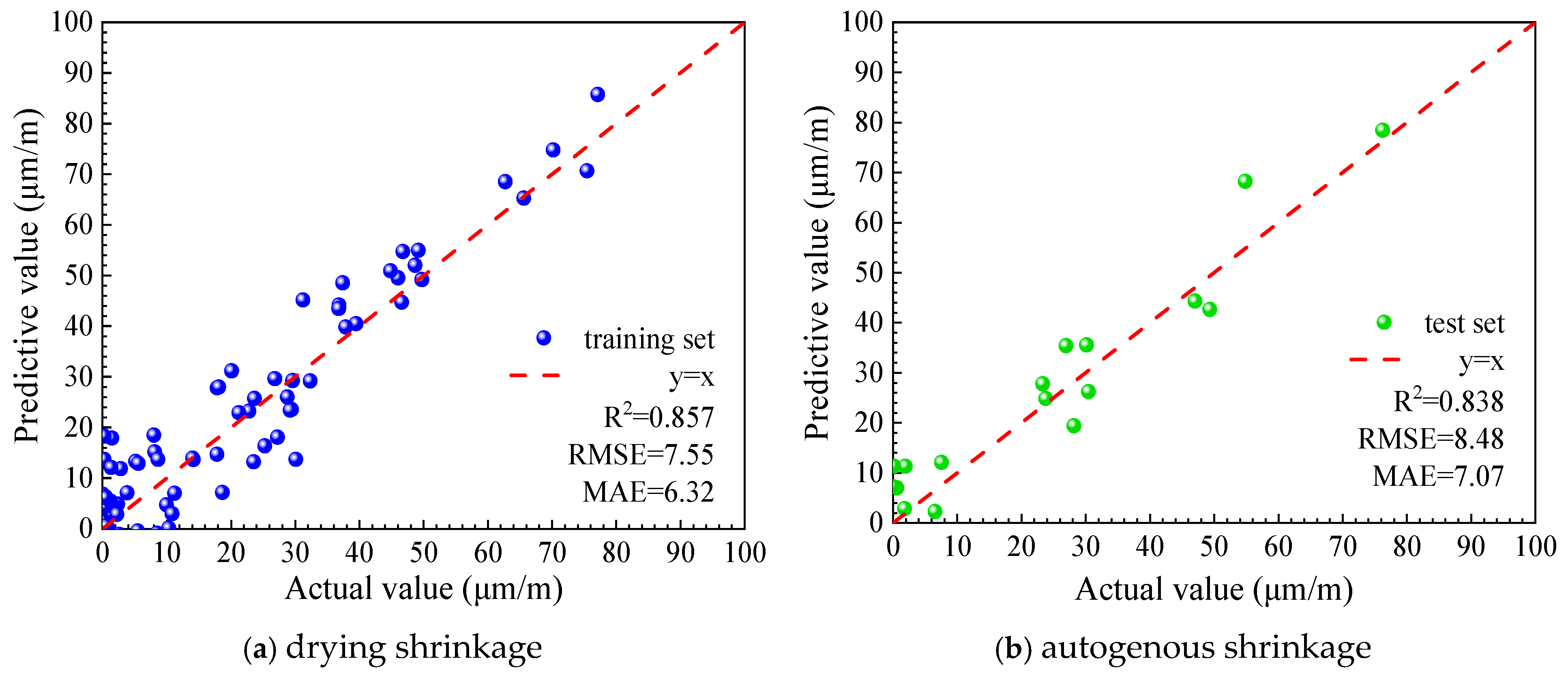
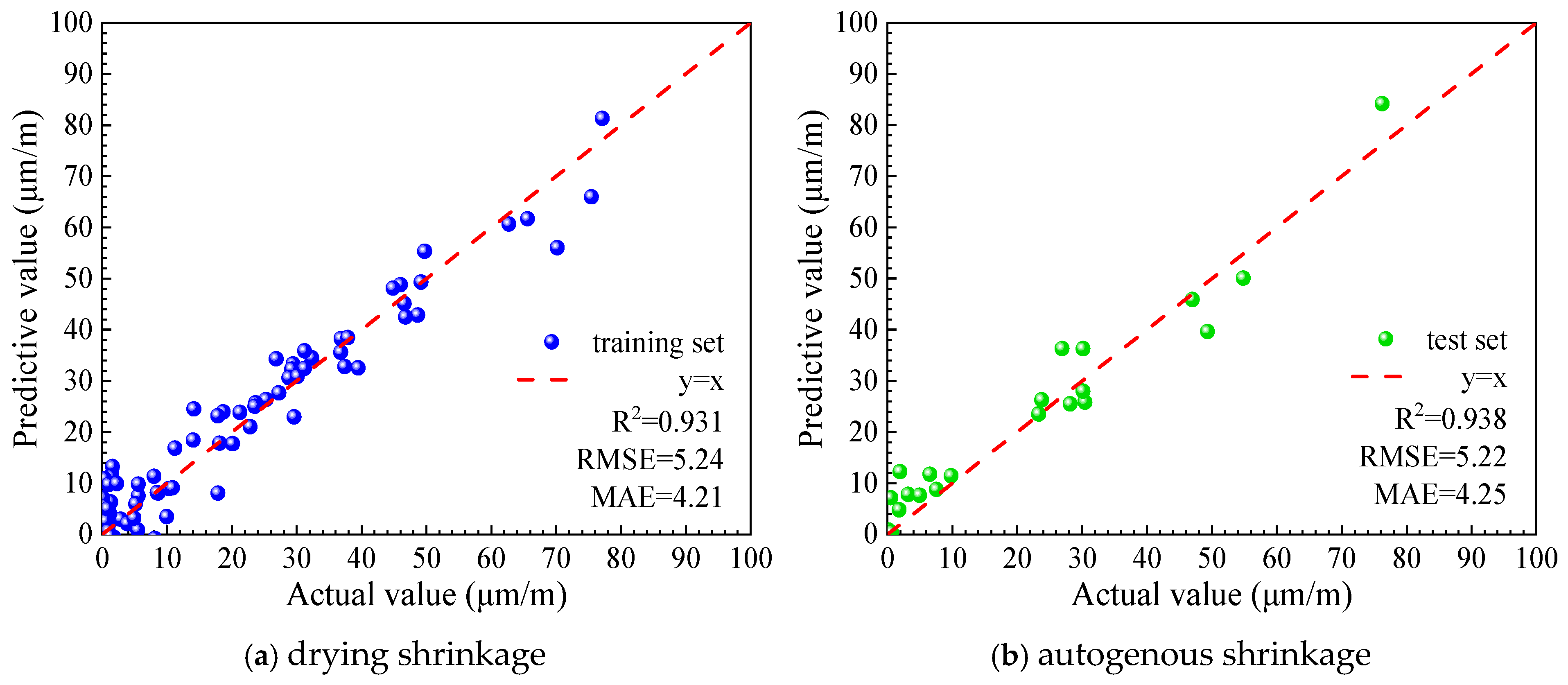
| RMSE | 7.55 | 8.48 | 5.22 | 5.24 |
| MAE | 6.32 | 7.07 | 4.25 | 4.21 |
| R2 | 0.857 | 0.838 | 0.938 | 0.931 |
| Model Types | XGBoost | BO-XGBoost | ||
|---|---|---|---|---|
| Training Set | Test Set | Training Set | Test Set | |
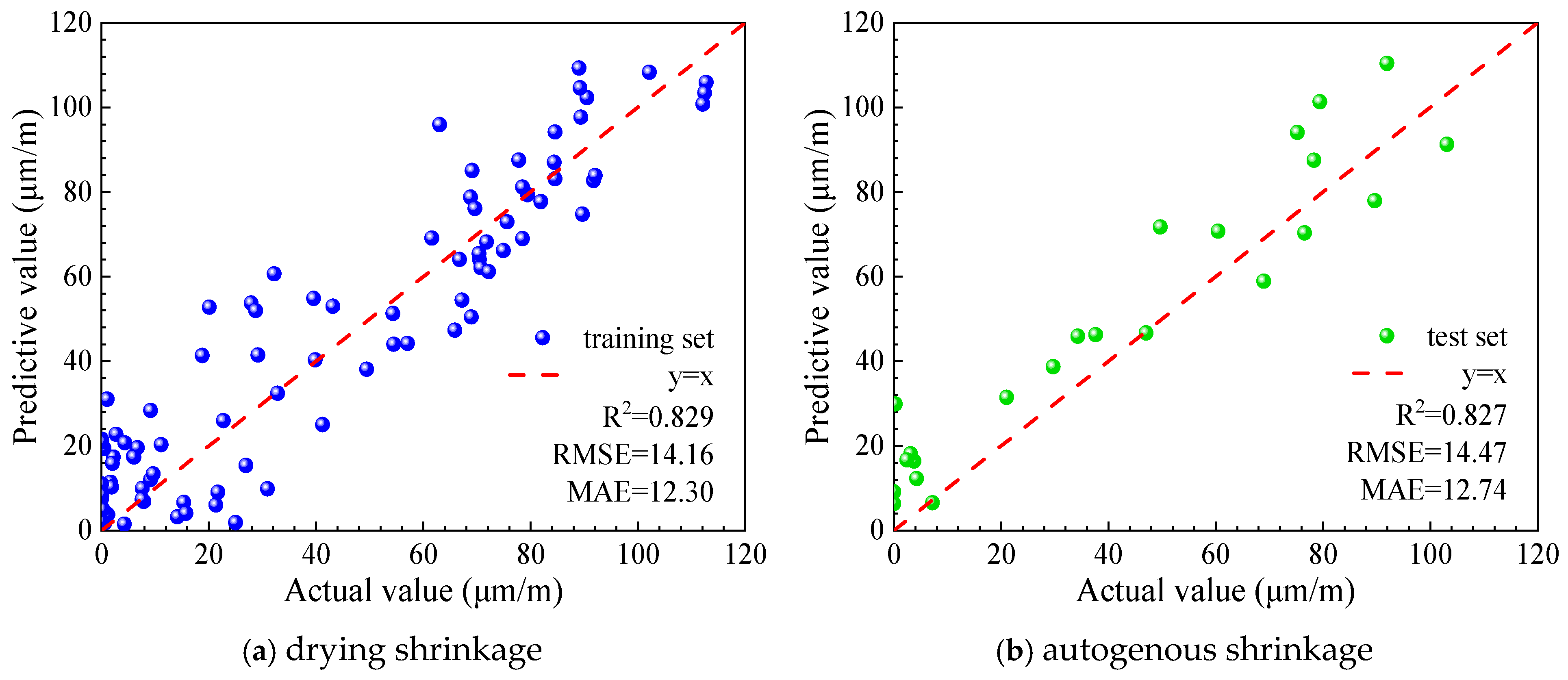
| RMSE | 14.16 | 14.47 | 10.01 | 10.62 |
| MAE | 12.30 | 12.74 | 8.74 | 8.56 |
| R2 | 0.829 | 0.827 | 0.917 | 0.909 |
Disclaimer/Publisher’s Note: The statements, opinions and data contained in all publications are solely those of the individual author(s) and contributor(s) and not of MDPI and/or the editor(s). MDPI and/or the editor(s) disclaim responsibility for any injury to people or property resulting from any ideas, methods, instructions or products referred to in the content. |
© 2026 by the authors. Licensee MDPI, Basel, Switzerland. This article is an open access article distributed under the terms and conditions of the Creative Commons Attribution (CC BY) license.
Share and Cite
Luo, F.; Wang, J.; Zhu, C.; Yang, J. Research on Early-Age Shrinkage and Prediction Model of Ultra-High-Performance Concrete Based on the BO-XGBoost Algorithm. Materials 2026, 19, 1624. https://doi.org/10.3390/ma19081624
Luo F, Wang J, Zhu C, Yang J. Research on Early-Age Shrinkage and Prediction Model of Ultra-High-Performance Concrete Based on the BO-XGBoost Algorithm. Materials. 2026; 19(8):1624. https://doi.org/10.3390/ma19081624
Chicago/Turabian StyleLuo, Fang, Jun Wang, Chenhui Zhu, and Jie Yang. 2026. "Research on Early-Age Shrinkage and Prediction Model of Ultra-High-Performance Concrete Based on the BO-XGBoost Algorithm" Materials 19, no. 8: 1624. https://doi.org/10.3390/ma19081624
APA StyleLuo, F., Wang, J., Zhu, C., & Yang, J. (2026). Research on Early-Age Shrinkage and Prediction Model of Ultra-High-Performance Concrete Based on the BO-XGBoost Algorithm. Materials, 19(8), 1624. https://doi.org/10.3390/ma19081624