Thermal and Morphological Effect of Low-Tenor Alkali Treatment on Flax and Hemp Fibre Scraps: A Parametric Study

 ,
,  , , , ,
  and
and 
Highlights
- In a low-tenor NaOH treatment on hemp and flax scraps, the temperature of the solution appears to be the most significant factor in modifying fibre characteristics by removing loose and worn-out matter.
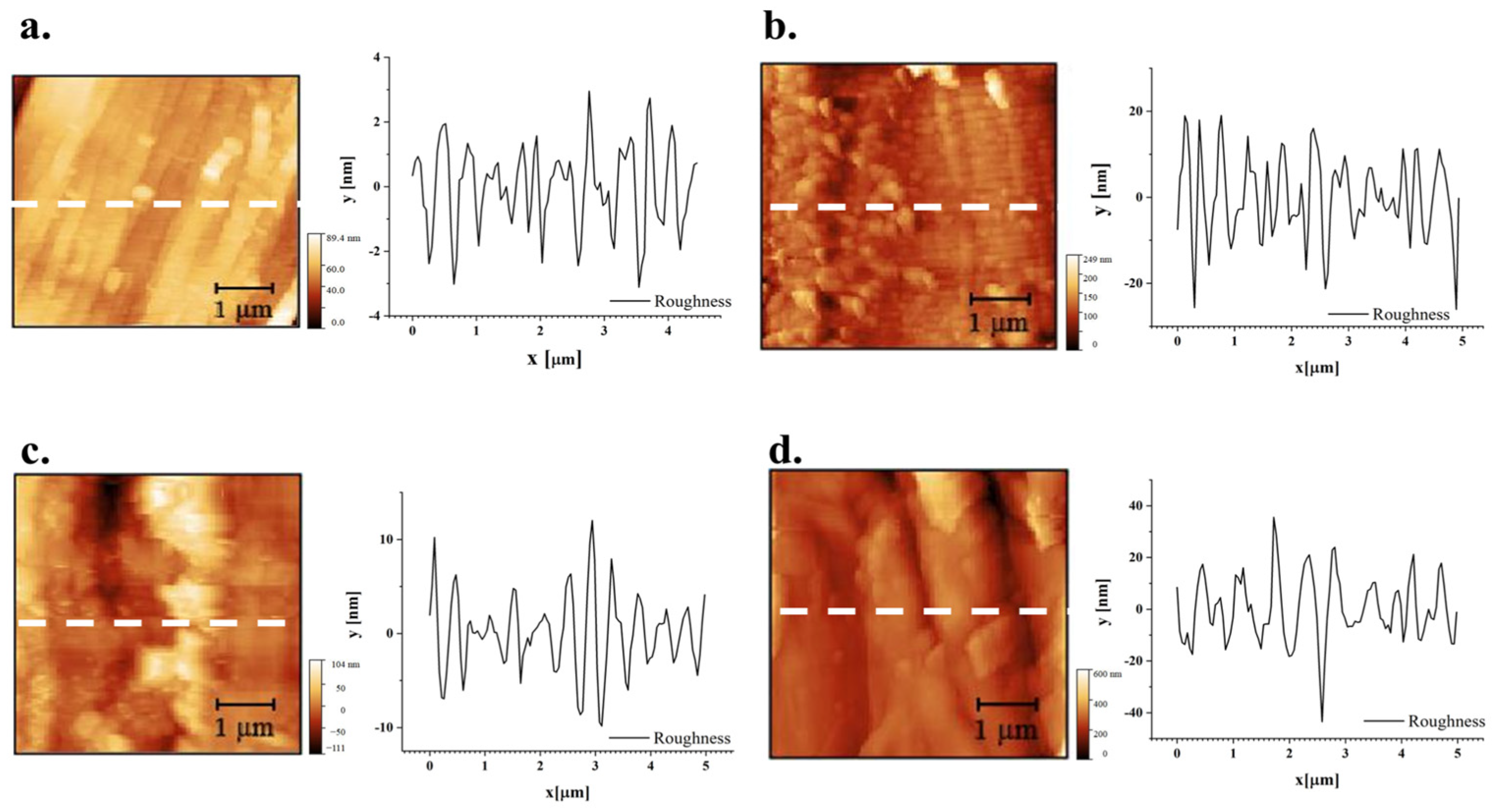
- The effect on fibre roughness of a higher temperature and immersion time is proven on hemp and less so on flax.
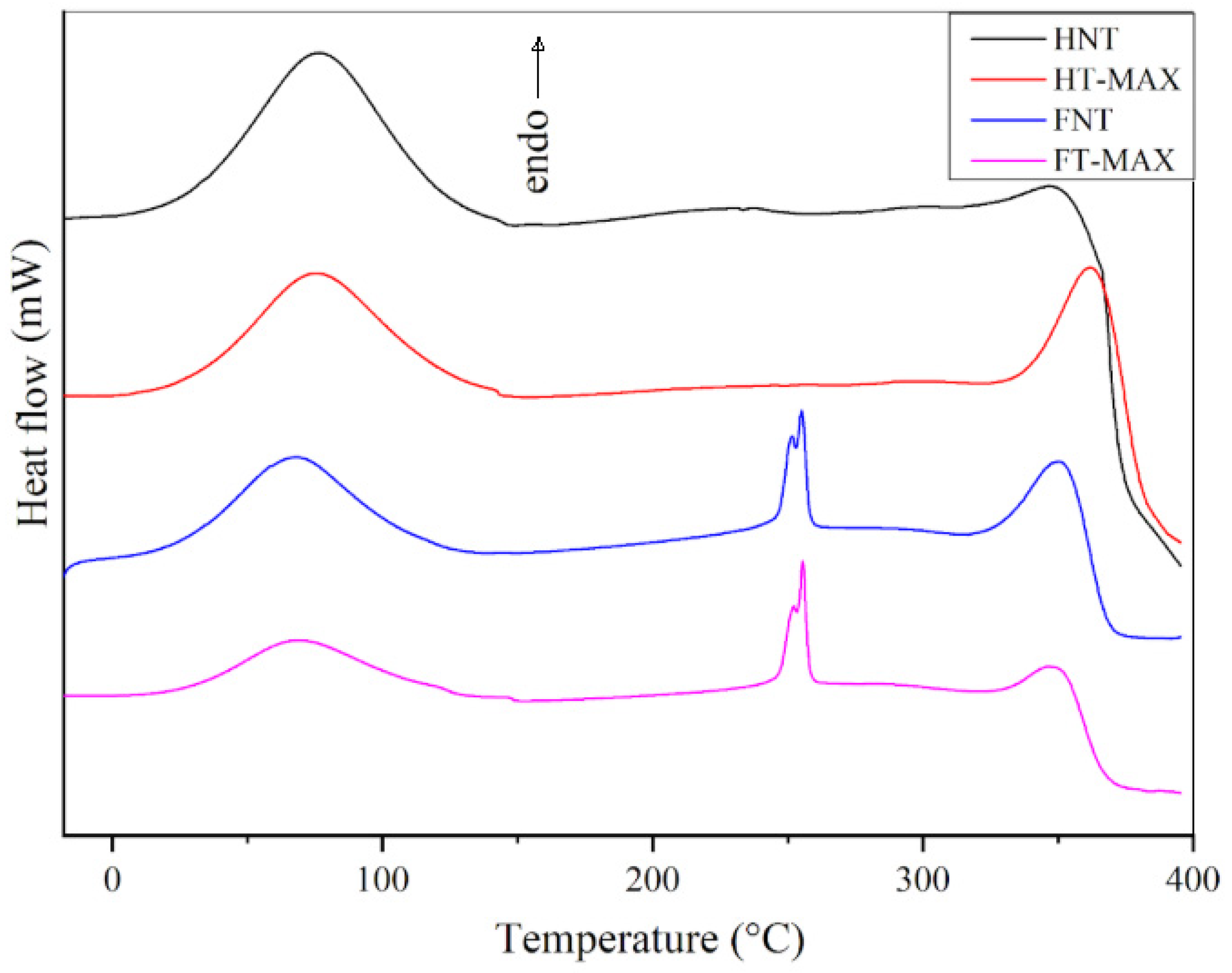
- Calorimetric values on flax indicate a possible modification to the fibre structure at around 250 °C, which might indicate an onset of degradation, which does not appear to be resolved by alkali treatment.
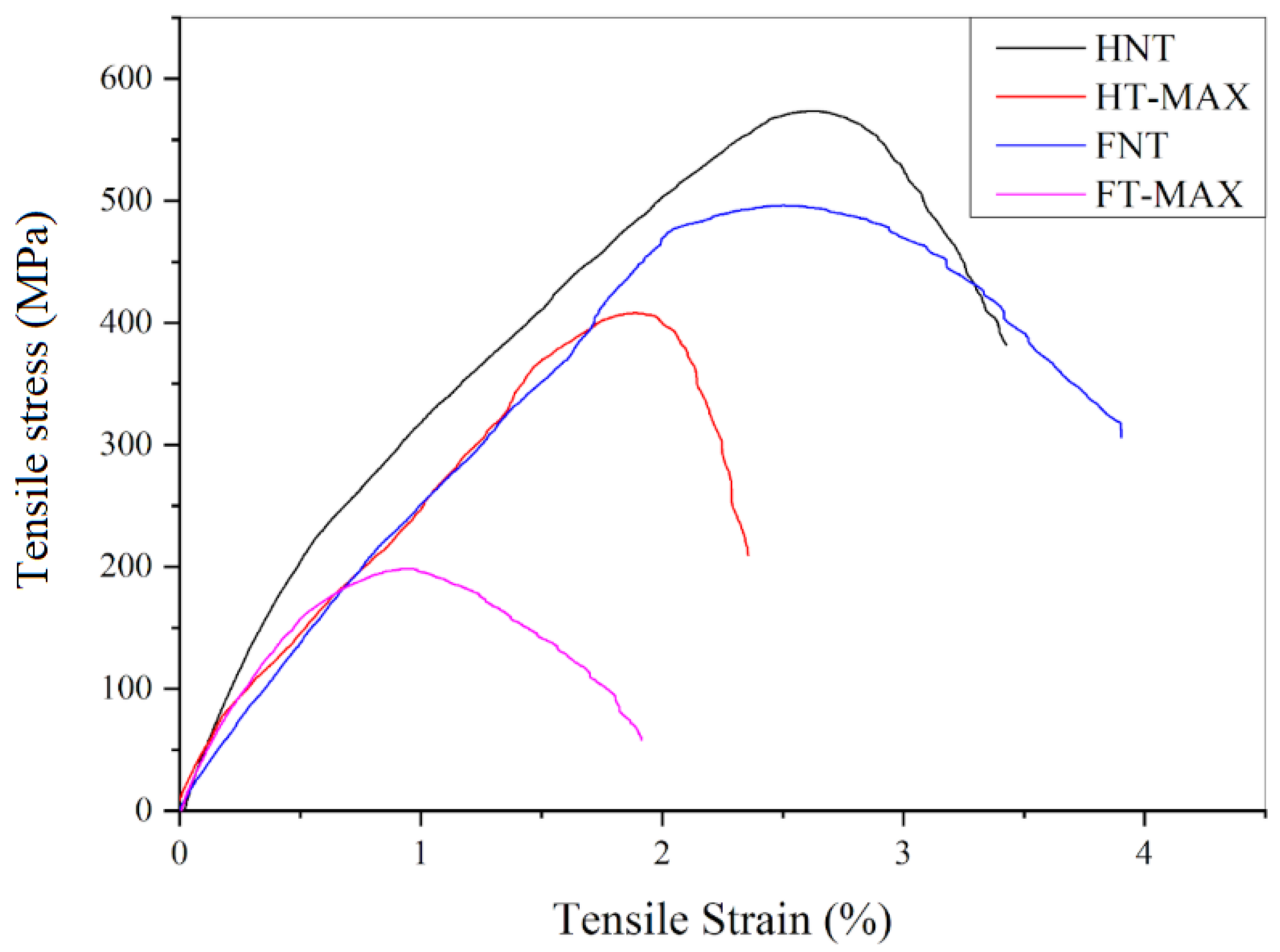
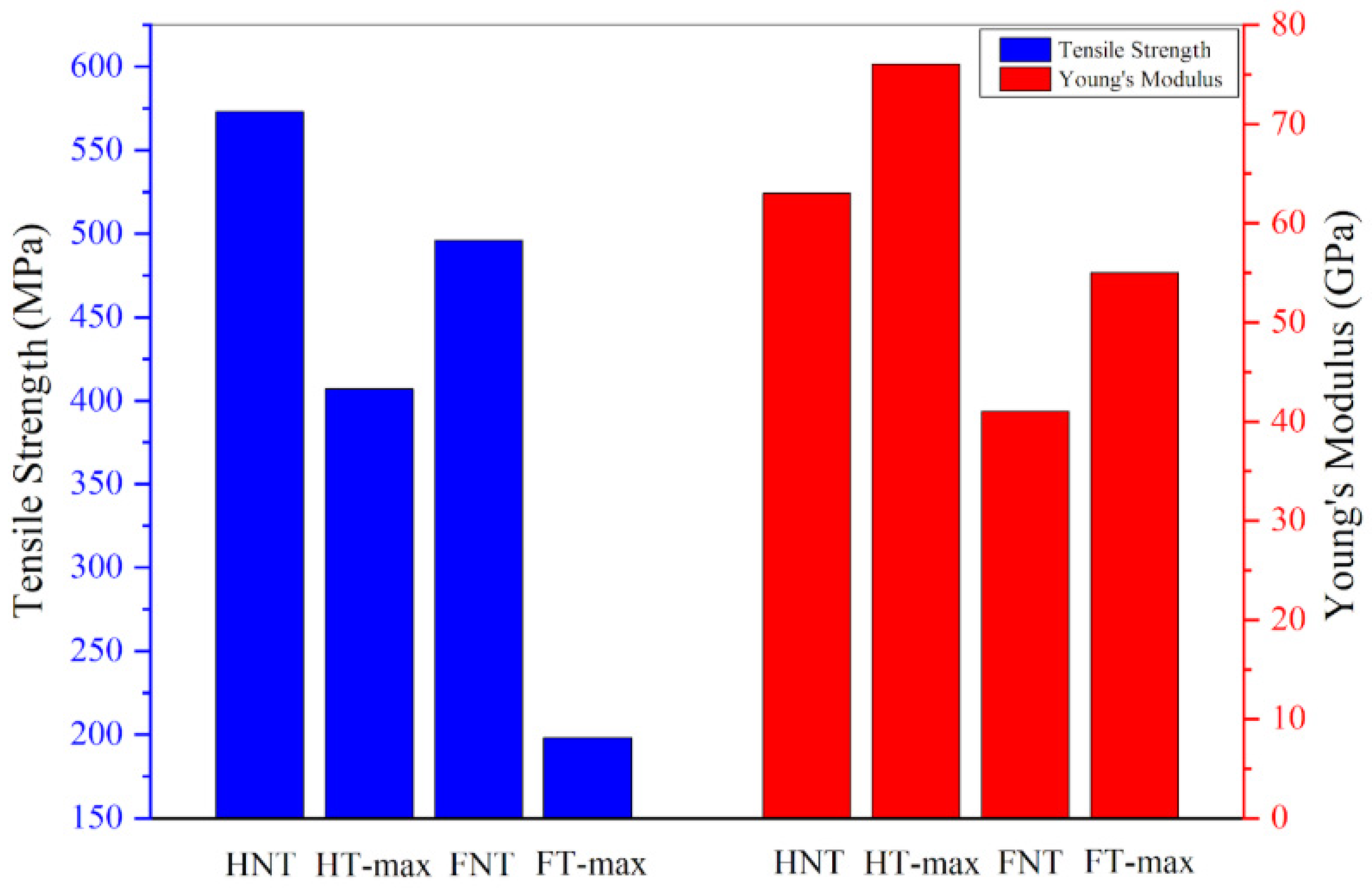
- While treatment stiffens both fibres, its effect on the tensile strength of flax, despite the low tenors used, can be considered seriously damaging.
- It appears to be easier to recover hemp than flax scraps for potential use in composites, especially due to their lower proneness to preservation of micro-voids after treatment.
- The possible inclusion of fibre scraps in pellets for thermoplastic processing appears largely conditioned by their different surface characteristics and appears limitedly affected by treatment.
Abstract
1. Introduction
2. Materials and Methods
2.1. Materials and Treatment
2.2. Characterization Methods
3. Results and Discussion
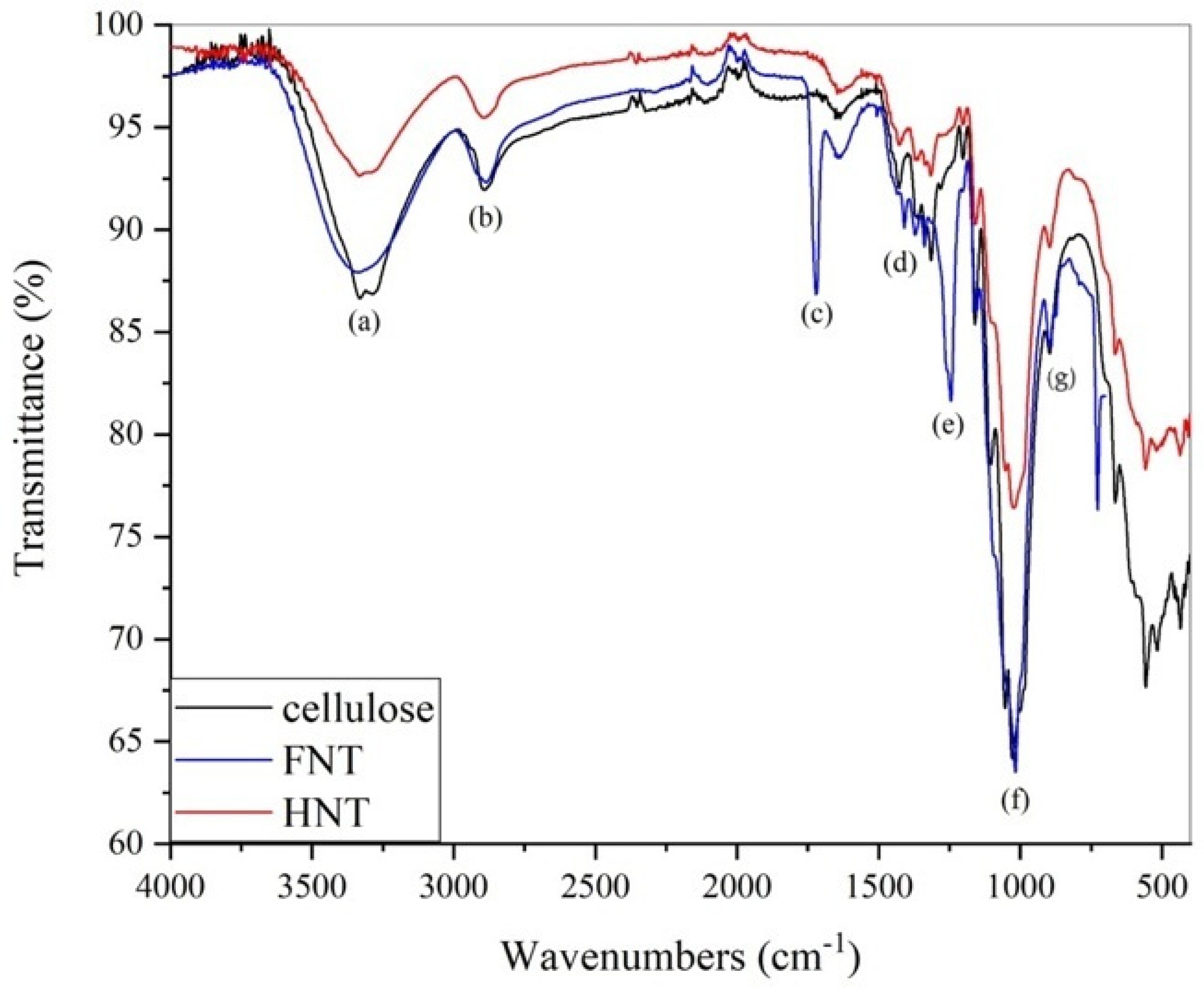
3.1. Chemical Groups of Extracted Fibres by FTIR
- (a)
- An intense broad band is present (3600–3200 cm−1), culminating at 3312 cm−1, which is due to hydroxyl (-OH) group stretching. These groups are present on the repeated glucopyranoside units, through which intra-chain interactions among the hydrogen atoms are allowed.
- (b)
- Between 2970 and 2840 cm−1, a number of lower-intensity absorptions are detected, which correspond to the stretches of aliphatic C-H bonds [39].
- (c)
- A similarly intense band is present at 1712 cm−1, associated with non-conjugated carbonyl vibrations, which are suggested to be typical of the presence of ester groups, indicative of the lignin content [40].
- (d)
- Two low-intensity absorptions are present at 1408 and 1338 cm−1, associated with bending of C-H and O-H bonds [41].
- (e)
- The band at 1241 cm−1 can be assigned to the ethereal groups of aromatic substances, typical of lignin [42].
- (f)
- Very intense absorption peaks are present between 1100 and 1000 cm−1, corresponding to C-O-C stretches of acetal groups present in cellulose [43].
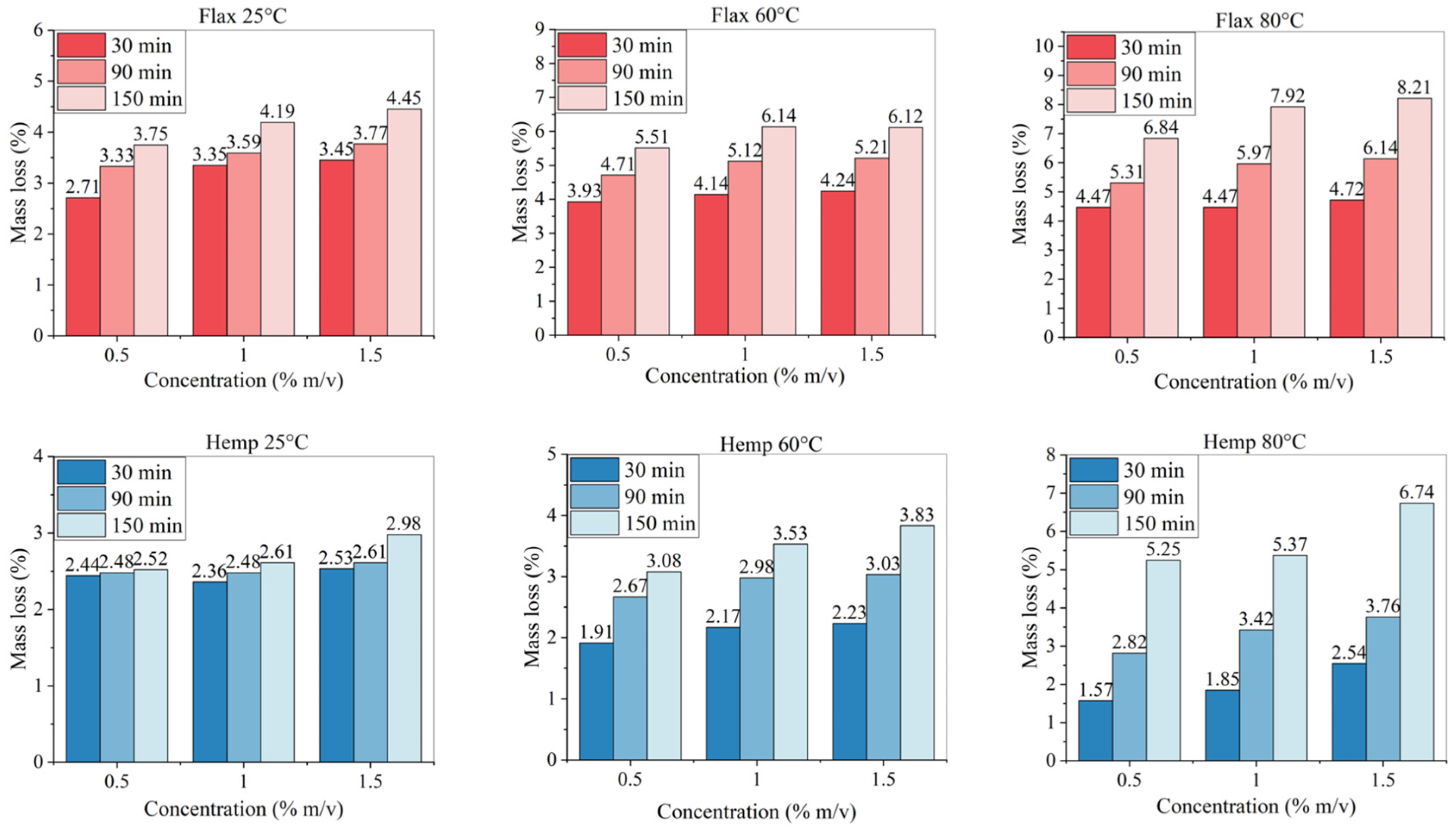
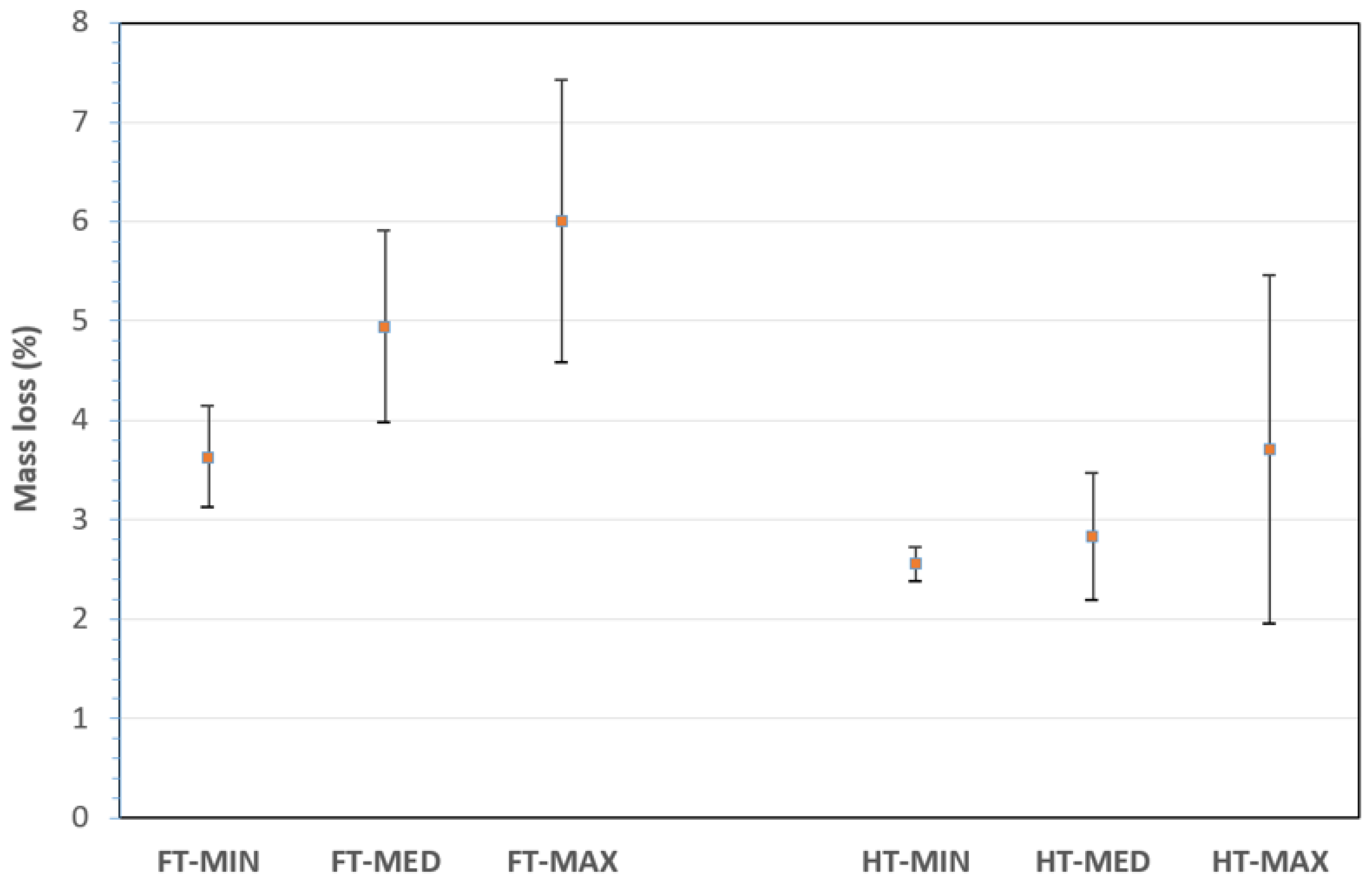
3.2. Conditions of Chemical Treatment and Mass Loss
3.3. Thermal Properties of Untreated and Treated Fibres
3.4. Crystallinity Measurements by X-Ray Diffraction (XRD)
3.5. Study of Absorption/Desorption Isotherms to Measure Pore Distribution
3.6. Fibre Surface Morphology
3.7. Tensile Fibre Measurements
4. Conclusions
Author Contributions
Funding
Institutional Review Board Statement
Informed Consent Statement
Data Availability Statement
Acknowledgments
Conflicts of Interest
Abbreviations
| AFM | Atomic Force Microscopy |
| BET | From the Brunauer–Emmet–Teller theory |
| FTIR | Fourier Transform Infrared Spectroscopy |
| NIR | Near-Infrared Spectroscopy |
| NL-DFT | Non-Local Density Functional Theory |
| SEM | Scanning Electron Microscopy |
| TGA | Thermogravimetric Analysis |
| XRD | X-Ray Diffraction |
References
- Naik, V.; Kumar, M. A review on natural fiber composite material in automotive applications. Eng. Sci. 2022, 18, 1–10. [Google Scholar] [CrossRef]
- Chen, Y.; Chiparus, O.; Sun, L.; Negulescu, I.; Parikh, D.V.; Calamari, T.A. Natural fibers for automotive nonwoven composites. J. Ind. Text. 2005, 35, 47–62. [Google Scholar] [CrossRef]
- Huda, M.S.; Drzal, L.T.; Ray, D.; Mohanty, A.K.; Mishra, M. Natural-fiber composites in the automotive sector. In Properties and Performance of Natural-Fibre Composites; Pickering, K., Ed.; Woodhead Publishing: Cambridge, UK, 2008; pp. 221–268. [Google Scholar]
- Holbery, J.; Houston, D. Natural-fiber-reinforced polymer composites in automotive applications. JOM 2006, 58, 80–86. [Google Scholar] [CrossRef]
- Ferreira, F.V.; Pinheiro, I.F.; de Souza, S.F.; Mei, L.H.; Lona, L.M. Polymer composites reinforced with natural fibers and nanocellulose in the automotive industry: A short review. J. Compos. Sci. 2019, 3, 51. [Google Scholar] [CrossRef]
- Ramli, N.; Mazlan, N.; Ando, Y.; Leman, Z.; Abdan, K.; Aziz, A.A.; Sairy, N.A. Natural fiber for green technology in automotive industry: A brief review. IOP Conf. Ser. Mater. Sci. Eng. 2018, 368, 012012. [Google Scholar] [CrossRef]
- Elseify, L.A.; Midani, M.; El-Badawy, A.; Jawaid, M. Manufacturing Automotive Components from Sustainable Natural Fiber Composites; Springer International Publishing: Cham, Switzerland, 2021; pp. 53–65. [Google Scholar]
- Dunne, R.; Desai, D.; Sadiku, R.; Jayaramudu, J. A review of natural fibres, their sustainability and automotive applications. J. Reinf. Plast. Compos. 2016, 35, 1041–1050. [Google Scholar] [CrossRef]
- Sreenivas, H.T.; Krishnamurthy, N.; Arpitha, G.R. A comprehensive review on light weight kenaf fiber for automobiles. Int. J. Lightweight Mater. Manuf. 2020, 3, 328–337. [Google Scholar] [CrossRef]
- Sangilimuthukumar, J.; Kumar, T.S.M.; Santulli, C.; Chandrasekar, M.; Senthilkumar, K.; Siengchin, S. The use of pineapple fiber composites for automotive applications: A short review. J. Mater. Sci. Res. Rev. 2020, 6, 39–45. [Google Scholar]
- Al-Oqla, F.M.; Sapuan, S.M. Natural fiber reinforced polymer composites in industrial applications: Feasibility of date palm fibers for sustainable automotive industry. J. Clean. Prod. 2014, 66, 347–354. [Google Scholar] [CrossRef]
- Getu, D.; Nallamothu, R.B.; Masresha, M.; Nallamothu, S.K.; Nallamothu, A.K. Production and characterization of bamboo and sisal fiber reinforced hybrid composite for interior automotive body application. Mater. Today Proc. 2021, 38, 2853–2860. [Google Scholar] [CrossRef]
- Miniappan, P.K.; Marimuthu, S.; Kumar, S.D.; Gokilakrishnan, G.; Sharma, S.; Li, C.; Dwivedi, S.P.; Abbas, M. Mechanical, fracture-deformation, and tribology behavior of fillers-reinforced sisal fiber composites for lightweight automotive applications. Rev. Adv. Mater. Sci. 2023, 62, 20230342. [Google Scholar] [CrossRef]
- Balda, S.; Sharma, A.; Capalash, N.; Sharma, P. Banana fibre: A natural and sustainable bioresource for eco-friendly applications. Clean Technol. Environ. Policy 2021, 23, 1389–1401. [Google Scholar] [CrossRef]
- Niranjan, R.R.; Junaid Kokan, S.; Sathya Narayanan, R.; Rajesh, S.; Manickavasagam, V.M.; Ramnath, B.V. Fabrication and testing of abaca fibre reinforced epoxy composites for automotive applications. Adv. Mater. Res. 2013, 718, 63–68. [Google Scholar]
- Alves, C.; Silva, A.; Reis, L.; Ferrão, P.; Freitas, M. Sustainable design of automotive components through jute fiber composites: An integrated approach. In New Trends and Developments in Automotive Industry; InTech: Houston, TX, USA, 2011; pp. 223–254. [Google Scholar]
- Kumar, N.; Das, D. Fibrous biocomposites from nettle (Girardinia diversifolia) and poly (lactic acid) fibers for automotive dashboard panel application. Compos. Part B Eng. 2017, 130, 54–63. [Google Scholar] [CrossRef]
- La Rosa, A.D.; Cozzo, G.; Latteri, A.; Mancini, G.; Recca, A.; Cicala, G. A comparative life cycle assessment of a composite component for automotive. Chem. Eng. Trans. 2013, 32, 1723–1728. [Google Scholar]
- Kerwan, K.; Coles, S. Natural materials in automotive design. In Designing with Natural Materials; Ormondroyd, G.A., Morris, A.F., Eds.; CRC Press: Boca Raton, FL, USA, 2018; pp. 165–179. [Google Scholar]
- Ma, H.; Guna, V.; Raju, T.; Murthy, A.N.; Reddy, N. Converting flax processing waste into value added biocomposites. Ind. Crops Prod. 2023, 195, 116434. [Google Scholar] [CrossRef]
- Pernevan, M.S.; Marsavina, L.; Pernevan, I.; Popescu, M. Comparative analysis regarding the mechanical properties of polymer matrix based biocomposites reinforced with hemp scraps. In International Multidisciplinary Scientific GeoConference (SGEM) Proceedings; Albena Resort & SPA: Varna, Bulgaria, 2012; Volume 4, p. 667. [Google Scholar]
- Bledzki, A.K.; Fink, H.-P.; Specht, K. Unidirectional Hemp and Flax EP- and PP-Composites: Influence of Defined Fiber Treatments. J. Appl. Polym. Sci. 2004, 93, 2150–2156. [Google Scholar] [CrossRef]
- Väisänen, T.; Batello, P.; Lappalainen, R.; Tomppo, L. Modification of Hemp Fibers (Cannabis sativa L.) for Composite Applications. Ind. Crops Prod. 2018, 111, 422–429. [Google Scholar] [CrossRef]
- Khalid, M.Y.; Imran, R.; Arif, Z.U.; Akram, N.; Arshad, H.; Al Rashid, A.; Garcia Marquez, F.P. Developments in chemical treatments, manufacturing techniques and potential applications of natural-fibers-based biodegradable composites. Coatings 2021, 11, 293. [Google Scholar] [CrossRef]
- Tanasă, F.; Zănoagă, M.; Teacă, C.; Nechifor, M.; Shahzad, A. Modified hemp fibers intended for fiber-reinforced polymer composites used in structural applications—A Review. I. Methods of Modification. Polym. Compos. 2020, 41, 5–31. [Google Scholar] [CrossRef]
- Fiore, V.; Di Bella, G.; Valenza, A. The effect of alkaline treatment on mechanical properties of kenaf fibers and their epoxy composites. Compos. Part B Eng. 2015, 68, 14–21. [Google Scholar] [CrossRef]
- Hassan, F.; Zulkifli, R.; Ghazali, M.J.; Azhari, C.H. Kenaf Fiber Composite in Automotive Industry: An Overview. Int. J. Adv. Sci. Eng. Inf. Technol. 2017, 7, 315. [Google Scholar] [CrossRef]
- Akil, H.M.; Omar, M.F.; Mazuki, A.A.M.; Safiee, S.; Ishak, Z.A.M.; Abu Bakar, A. Kenaf fiber reinforced composites: A Review. Mater. Des. 2011, 32, 4107–4121. [Google Scholar] [CrossRef]
- Makarov, I.S.; Smyslov, A.G.; Palchikova, E.E.; Vinogradov, M.I.; Shandryuk, G.A.; Levin, I.S.; Arkharova, N.A.; Kulichikhin, V.G. Nonwoven materials based on natural and artificial fibers. Cellulose 2024, 31, 1927–1940. [Google Scholar] [CrossRef]
- Md Salim, R.; Asik, J.; Sarjadi, M.S. Chemical Functional Groups of Extractives, Cellulose and Lignin Extracted from Native Leucaena Leucocephala Bark. Wood Sci. Technol. 2021, 55, 295–313. [Google Scholar] [CrossRef]
- Ouajai, S.; Shanks, R.A. Composition, Structure and Thermal Degradation of Hemp Cellulose after Chemical Treatments. Polym. Degrad. Stab. 2005, 89, 327–335. [Google Scholar] [CrossRef]
- Bahrami, R.; Bagheri, R.; Dai, C. Influence of fine structure on the variations of thermal and mechanical properties in flax fibers modified with different alkaline treatment conditions. J. Nat. Fibers 2022, 19, 5239–5257. [Google Scholar] [CrossRef]
- Gassan, J.; Mildner, I.; Bledzki, A.K. Influence of Fiber Structure Modification on the Mechanical Properties of Flax Fiber-Epoxy Composites. Mech. Compos. Mater. 1999, 35, 435–440. [Google Scholar] [CrossRef]
- Mendonça, M.; Dias, M.C.; Martins, C.C.N.; Durães, A.F.S.; Damásio, R.A.P.; Tonoli, G.H.D. Alkaline pretreatment facilitate mechanical fibrillation of unbleached cellulose pulps for obtaining of cellulose micro/nanofibrils (MFC). J. Nat. Fibers 2022, 19, 13385–13400. [Google Scholar] [CrossRef]
- Ariawan, D.; Akbar, H.I. Adhesion energy and roughness observation on alkali treated natural fiber as composites reinforcement. In Proceedings of the Conference on Broad Exposure to Science and Technology 2021 (BEST 2021) Proceedings, Serang, Indonesia, 14–15 August 2021; Atlantis Press: Dordrecht, The Netherlands, 2021; pp. 464–469. [Google Scholar]
- d’Almeida, A.L.F.S.; Barreto, D.W.; Calado, V.; d’Almeida, J.R.M. Thermal analysis of less common lignocellulose fibers. J. Therm. Anal. Calorim. 2008, 91, 405–408. [Google Scholar] [CrossRef]
- Segal, L.; Creely, J.J.; Martin, A.E.; Conrad, C.M. An Empirical Method for Estimating the Degree of Crystallinity of Native Cellulose Using the X-Ray Diffractometer. Text. Res. J. 1959, 29, 786–794. [Google Scholar] [CrossRef]
- Salem, K.S.; Kasera, N.K.; Rahman, A.; Jameel, H.; Habibi, Y.; Eichhorn, S.J.; French, A.D.; Pal, L.; Lucia, L.A. Comparison and assessment of methods for cellulose crystallinity determination. Chem. Soc. Rev. 2023, 52, 6417–6446. [Google Scholar] [CrossRef]
- Manaila, E.; Stelescu, M.D.; Craciun, G.; Surdu, L. Effects of benzoyl peroxide on some properties of composites based on hemp and natural rubber. Polym. Bull. 2014, 71, 2001–2022. [Google Scholar] [CrossRef]
- Neumann, M.; Wagner, S.; Noske, R.; Tiersch, B.; Strauch, P. Morphology and structure of biomorphous silica isolated from Equisetum hyemale and Equisetum telmateia. Z. Fur. Naturforsch. B 2010, 65, 1113–1120. [Google Scholar] [CrossRef]
- Atakan, R.; Bical, A.; Celebi, E.; Ozcan, G.; Soydan, N.; Sarac, A.S. Development of a flame retardant chemical for finishing of cotton, polyester, and CO/PET blends. J. Ind. Text. 2019, 49, 141–161. [Google Scholar] [CrossRef]
- Popescu, C.M.; Popescu, M.C.; Vasile, C. Structural analysis of photodegraded lime wood by means of FT-IR and 2D IR correlation spectroscopy. Int. J. Biol. Macromol. 2011, 48, 667–675. [Google Scholar] [CrossRef]
- Abidi, N.; Cabrales, L.; Haigler, C.H. Changes in the cell wall and cellulose content of developing cotton fibers investigated by FTIR spectroscopy. Carbohydr. Polym. 2014, 100, 9–16. [Google Scholar] [CrossRef]
- Seghini, M.C.; Touchard, F.; Chocinski-Arnault, L.; Placet, V.; François, C.; Plasseraud, L.; Bracciale, M.P.; Tirillò, J.; Sarasini, F. Environmentally friendly surface modification treatment of flax fibers by supercritical carbon dioxide. Molecules 2020, 25, 438. [Google Scholar] [CrossRef] [PubMed]
- Himmelsbach, D.S.; Akin, D.E. Near-infrared Fourier-transform Raman spectroscopy of flax (Linum usitatissimum L.) stems. J. Agric. Food Chem. 1998, 46, 991–998. [Google Scholar] [CrossRef]
- Del Masto, A.; Trivaudey, F.; Guicheret-Retel, V.; Placet, V.; Boubakar, L. Nonlinear tensile behaviour of elementary hemp fibres: A numerical investigation of the relationships between 3D geometry and tensile behaviour. J. Mater. Sci. 2017, 52, 6591–6610. [Google Scholar] [CrossRef]
- Gogoli, K.; Gehring, F.; Poilâne, C.; Morales, M. Analysis of morphological variations of flax fibre bundles by Fraunhofer diffraction. Ind. Crops Prod. 2021, 171, 113856. [Google Scholar] [CrossRef]
- Enakiev, Y.I.; Grishina, E.A.; Belopukhov, S.L.; Dmitrevskaya, I.I. Application of NIR spectroscopy for cellulose determination in flax. Bulg. J. Agric. Sci. 2018, 24, 897–901. [Google Scholar]
- Bourmaud, A.; Morvan, C.; Bouali, A.; Placet, V.; Perre, P.; Baley, C. Relationships between micro-fibrillar angle, mechanical properties and biochemical composition of flax fibers. Ind. Crops Prod. 2013, 44, 343–351. [Google Scholar] [CrossRef]
- Shahzad, A. Hemp fiber and its composites—A review. J. Compos. Mater. 2012, 46, 973–986. [Google Scholar] [CrossRef]
- Orm, E.B.; Sutton-Charani, N.; Bayle, S.; Benezet, J.C.; Bergeret, A.; Malhautier, L. Influence of field retting on physicochemical and biological properties of “Futura 75” hemp stems. Ind. Crops Prod. 2024, 214, 118487. [Google Scholar] [CrossRef]
- Bismarck, A.; Aranberri-Askargorta, I.; Springer, J.; Lampke, T.; Wielage, B.; Stamboulis, A.; Shenderovich, I.; Limbach, H.-H. Surface characterization of flax, hemp and cellulose fibers; surface properties and the water uptake behavior. Polym. Compos. 2002, 23, 872–894. [Google Scholar] [CrossRef]
- Mijas, G.; Manich, A.; Lis, M.J.; Riba-Moliner, M.; Algaba, I.; Cayuela, D. Analysis of lignin content in alkaline treated hemp fibers: Thermogravimetric studies and determination of kinetics of different decomposition steps. J. Wood Chem. Technol. 2021, 41, 210–219. [Google Scholar] [CrossRef]
- Pasangulapati, V.M.; Ramachandriya, K.D.; Kumar, A.; Wilkins, M.R.; Jones, C.L.; Huhnke, R.L. Effects of cellulose, hemicellulose and lignin on thermochemical conversion characteristics of the selected biomass. Bioresour. Technol. 2012, 114, 663–669. [Google Scholar] [CrossRef]
- Hosoya, T.; Kawamoto, H.; Saka, S. Cellulose–hemicellulose and cellulose–lignin interactions in wood pyrolysis at gasification temperature. J. Anal. Appl. Pyrolysis 2007, 80, 118–125. [Google Scholar] [CrossRef]
- Thygesen, A.; Oddershede, J.; Lilholt, H.; Thomsen, A.B.; Ståhl, K. On the determination of crystallinity and cellulose content in plant fibres. Cellulose 2005, 12, 563–576. [Google Scholar] [CrossRef]
- Palanisamy, S.; Rajan, V.K.; Mani, A.K.; Palaniappan, M.; Santulli, C.; Alavudeen, A.; Ayrilmis, N. Extraction and characterization of fiber from the flower stalk of Sansevieria cylindrica. Physiol. Plant. 2024, 176, e14279. [Google Scholar] [CrossRef] [PubMed]
- Le Troedec, M.; Sedan, D.; Peyratout, C.; Bonnet, J.P.; Smith, A.; Guinebretiere, R.; Gloaguen, V.; Krausz, P. Influence of various chemical treatments on the composition and structure of hemp fibres. Compos. Part A Appl. Sci. Manuf. 2008, 39, 514–522. [Google Scholar] [CrossRef]
- Ye Xue, Y.; Hu, W.; Hu, X. Thermal analysis of natural fibers. In Thermal Analysis of Textiles and Fibers; Jaffe, M., Menczel, J.D., Eds.; Woodhead Publishing: Sawston, UK, 2020; pp. 105–132. [Google Scholar]
- Arbelaiz, A.; Fernandez, B.; Ramos, J.A.; Mondragon, I. Thermal and crystallization studies of short flax fibre reinforced polypropylene matrix composites: Effect of treatments. Thermochim. Acta 2006, 440, 111–121. [Google Scholar] [CrossRef]
- Mwaikambo, L.Y.; Ansell, M.P. The effect of chemical treatment on the properties of hemp, sisal, jute and kapok for composite reinforcement. Macromol. Mater. Eng. 1999, 272, 108–116. [Google Scholar] [CrossRef]
- Amit, T.A.; Roy, R.; Raynie, D.E. Thermal and structural characterization of two commercially available technical lignins for potential depolymerization via hydrothermal liquefaction. Curr. Res. Green Sustain. Chem. 2021, 4, 100106. [Google Scholar] [CrossRef]
- Reddy, J.P.; Rhim, J.W. Extraction and characterization of cellulose microfibers from agricultural wastes of onion and garlic. J. Nat. Fibers 2018, 15, 465–473. [Google Scholar] [CrossRef]
- Terinte, N.; Ibbett, R.; Schuster, K.C. Overview on native cellulose and microcrystalline cellulose I structure studied by X-ray diffraction (WAXD): Comparison between measurement techniques. Lenzing. Berichte 2011, 89, 118–131. [Google Scholar]
- Zheng, D.; Ding, R.Y.; Lei, Z.; Xingqun, Z.; Chong-Wen, Y. Thermal properties of flax fiber scoured by different methods. Therm. Sci. 2015, 19, 939–945. [Google Scholar] [CrossRef]
- Lazić, B.D.; Janjić, S.; Rijavec, T.; Kostić, M. Effect of chemical treatments on the chemical composition and properties of flax fibers. J. Serbian Chem. Soc. 2017, 82, 83–97. [Google Scholar] [CrossRef]
- Palanikumar, K.; Natarajan, E.; Markandan, K.; Ang, C.K.; Franz, G. Targeted pre-treatment of hemp fibers and the effect on mechanical properties of polymer composites. Fibers 2023, 11, 43. [Google Scholar] [CrossRef]
- Dai, D.; Fan, M. Characteristic and performance of elementary hemp fibre. Mater. Sci. Appl. 2010, 1, 336. [Google Scholar] [CrossRef]
- Naderi, M. Surface area: Brunauer–Emmett–Teller (BET). In Progress in Filtration and Separation; Tarleton, E.S., Ed.; Academic Press: Cambridge, MA, USA, 2015; pp. 585–608. [Google Scholar]
- Célino, A.; Fréour, S.; Jacquemin, F.; Casari, P. The hygroscopic behavior of plant fibers: A review. Front. Chem. 2014, 1, 43. [Google Scholar] [CrossRef] [PubMed]
- Xiao, X.; Cheng, M.; Zhong, Y. Effects of alkali treatment on the mechanical properties and moisture absorption behavior of flax/polypropylene composites. J. Nat. Fibers 2022, 19, 9201–9222. [Google Scholar] [CrossRef]
- ArunRamnath, R.; Murugan, S.; Sanjay, M.R.; Vinod, A.; Indran, S.; Elnaggar, A.Y.; Fallatah, A.M.; Siengchin, S. Characterization of novel natural cellulosic fibers from Abutilon Indicum for potential reinforcement in polymer composites. Polym. Compos. 2023, 44, 340–355. [Google Scholar] [CrossRef]
- Melelli, A.; Durand, S.; Arnould, O.; Richely, E.; Guessasma, S.; Jamme, F.; Beaugrand, J.; Bourmaud, A. Extensive investigation of the ultrastructure of kink-bands in flax fibres. Ind. Crops Prod. 2021, 164, 113368. [Google Scholar] [CrossRef]
- Pacaphol, K.; Aht-Ong, D. Preparation of hemp nanofibers from agricultural waste by mechanical defibrillation in water. J. Clean. Prod. 2017, 142, 1283–1295. [Google Scholar] [CrossRef]
- Melelli, A.; Arnould, O.M.; Beaugrand, J.; Bourmaud, A. The middle lamella of plant fibers used as composite reinforcement: Investigation by atomic force microscopy. Molecules 2020, 25, 632. [Google Scholar] [CrossRef]
- George, M.; Mussone, P.G.; Abboud, Z.; Bressler, D.C. Characterization of chemically and enzymatically treated hemp fibres using atomic force microscopy and spectroscopy. Appl. Surf. Sci. 2014, 314, 1019–1025. [Google Scholar] [CrossRef]
- Coste, R.; Pernes, M.; Tetard, L.; Molinari, M.; Chabbert, B. Effect of the interplay of composition and environmental humidity on the nanomechanical properties of hemp fibers. ACS Sustain. Chem. Eng. 2020, 8, 6381–6390. [Google Scholar] [CrossRef]
- Ding, L.; Han, X.; Cao, L.; Chen, Y.; Ling, Z.; Han, J.; He, S.; Jiang, S. Characterization of natural fiber from manau rattan (Calamus manan) as a potential reinforcement for polymer-based composites. J. Bioresour. Bioprod. 2022, 7, 190–200. [Google Scholar] [CrossRef]
- Wang, B.; Pierre-Antoine, A.; Guillaume, M.; Yang, G.; Zhou, S. Sustainable additive manufacturing: Microstructural evolution and mechanical viability of recycled Flax/PP via fused granular fabrication. Ind. Crops Prod. 2015, 236, 121997. [Google Scholar] [CrossRef]
- Chaishome, J.; Rattanapaskorn, S. The influence of alkaline treatment on thermal stability of flax fibres. IOP Conf. Ser. Mater. Sci. Eng. 2017, 191, 012007. [Google Scholar] [CrossRef]
- Gassan, J.; Bledzki, A.K. Possibilities for improving the mechanical properties of jute/epoxy composites by alkali treatment of fibres. Compos. Sci. Technol. 1999, 59, 1303–1309. [Google Scholar] [CrossRef]
- Sosiati, H.; Pratiwi, H.; Wijayanti, D.A.; Soekrisno, S. The influence of alkali treatments on tensile strength and surface morphology of cellulose microfibrils. Adv. Mater. Res. 2015, 1123, 147–150. [Google Scholar]
- Baley, C. Analysis of the flax fibres tensile behaviour and analysis of the tensile stiffness increase. Compos. Part A Appl. Sci. Manuf. 2002, 33, 939–948. [Google Scholar] [CrossRef]
- Marrot, L.; Lefeuvre, A.; Pontoire, B.; Bourmaud, A.; Baley, C. Analysis of the hemp fiber mechanical properties and their scattering (Fedora 17). Ind. Crops Prod. 2013, 51, 317–327. [Google Scholar] [CrossRef]



| Sample Category | Temperature (°C) | Time (min) | NaOH Concentration (g/100 mL) |
|---|---|---|---|
| FNT | Untreated | ||
| FNT-MIN | 25 | 30 | 0.5 |
| FNT-MED | 60 | 90 | 1 |
| FNT-MAX | 80 | 150 | 1.5 |
| HNT | Untreated | ||
| HNT-MIN | 25 | 30 | 0.5 |
| HNT-MED | 60 | 90 | 1 |
| HNT-MAX | 80 | 150 | 1.5 |
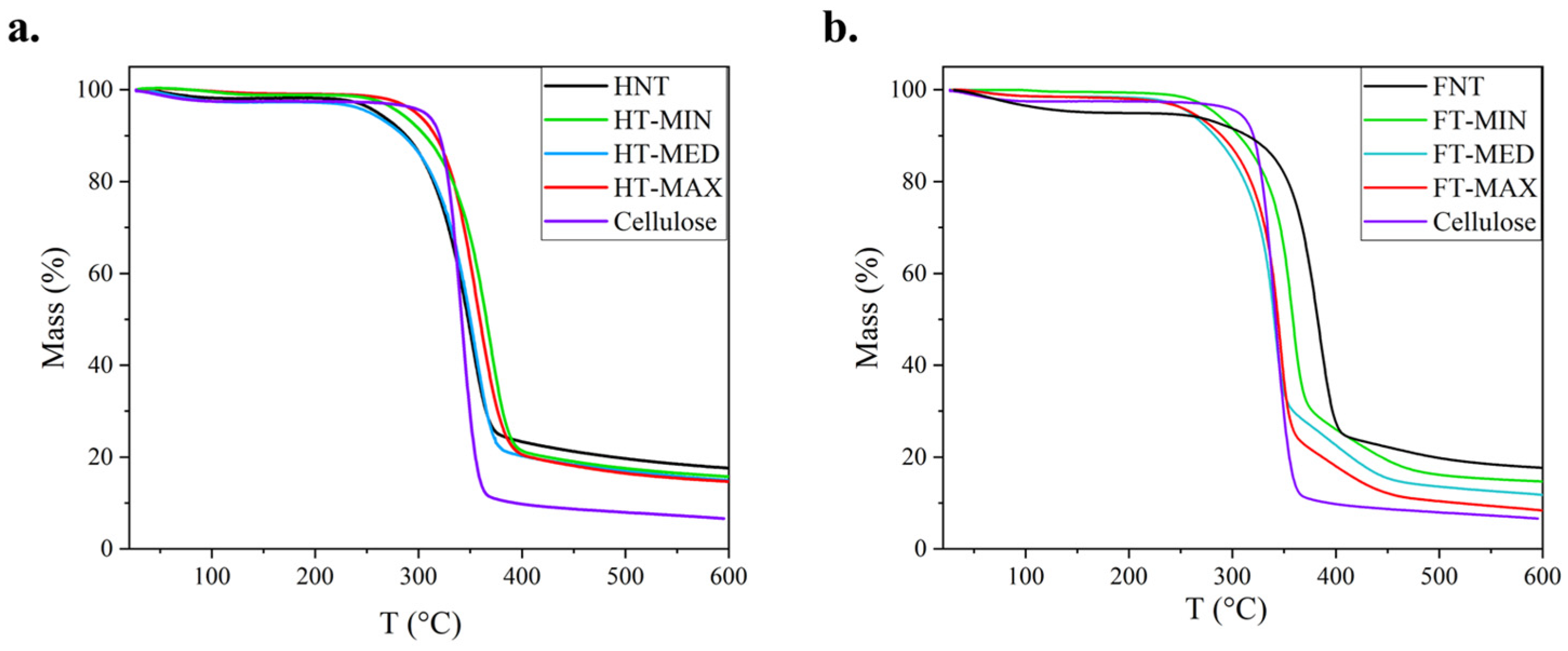
| Sample | Tonset (°C) | Tendset (°C) | Mass Loss Below Tonset (%) | Mass Loss Between Tonset and Tendset (%) | Residue at 600 °C (%) |
|---|---|---|---|---|---|
| Cellulose | 306 | 365 | 5.1 | 83.7 | 6.3 |
| FNT | 309 | 408 | 10.9 | 61 | 20.7 |
| FT-MIN | 290 | 370 | 6.3 | 62.6 | 14.7 |
| FT-MED | 261 | 359 | 5.8 | 64.8 | 12.2 |
| FT-MAX | 262 | 391 | 5.2 | 76.3 | 8.3 |
| HNT | 273 | 368 | 8.3 | 66.9 | 19.2 |
| HT-MIN | 283 | 395 | 5.8 | 71.9 | 14.9 |
| HT-MED | 272 | 365 | 8.1 | 66.7 | 13.3 |
| HT-MAX | 303 | 393 | 6.9 | 72.6 | 13.1 |
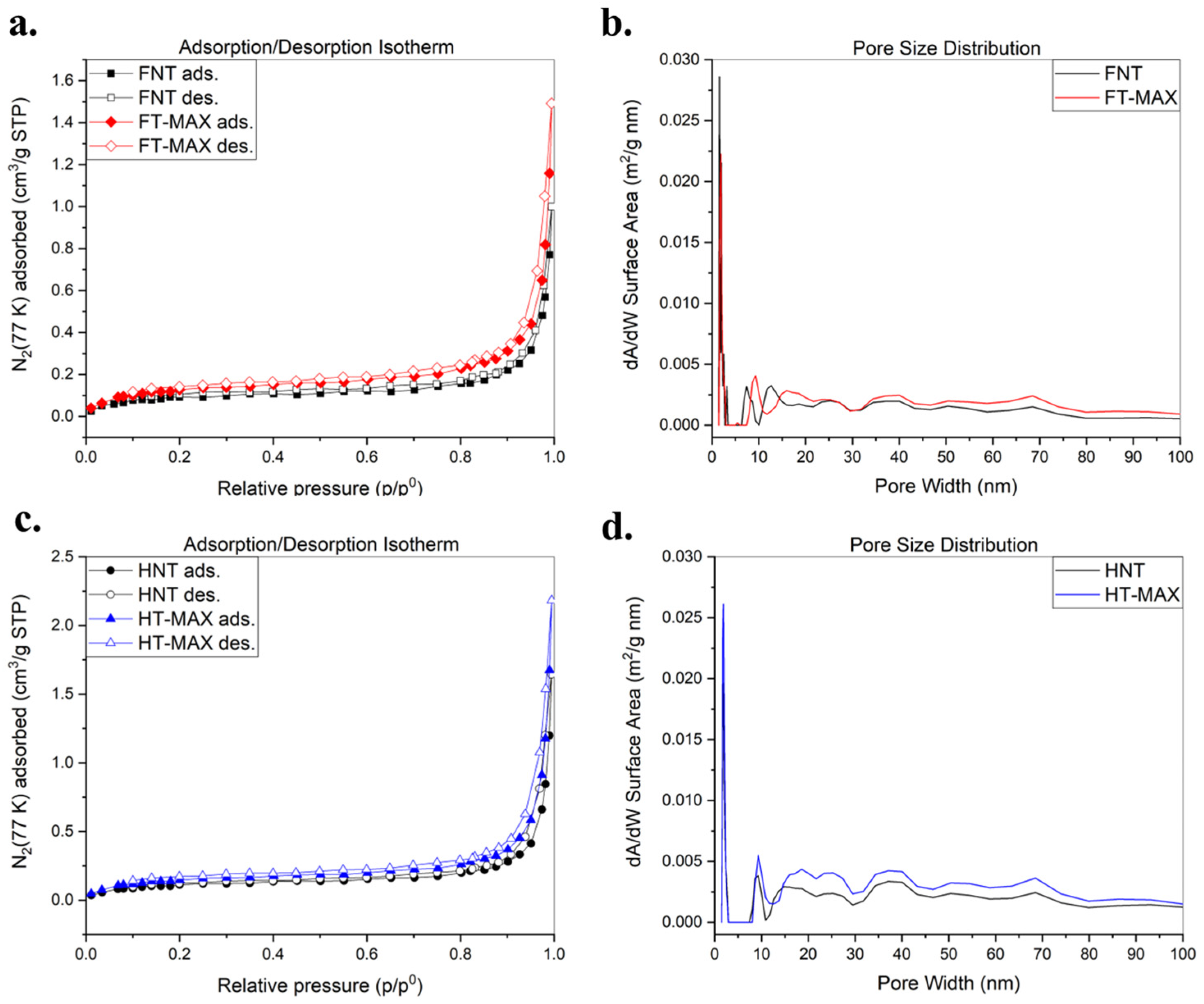
| Sample Category | δBET (m2 g−1) |
|---|---|
| HNT | 0.369 ± 0.01 |
| HT-MAX | 0.534 ± 0.011 |
| FNT | 0.316 ± 0.008 |
| FT-MAX | 0.458 ± 0.01 |
| Parameter | Flax Samples | Hemp Samples | ||||||
|---|---|---|---|---|---|---|---|---|
| FNT | FT-MIN | FT-MED | FT-MAX | HNT | HT-MIN | HT-MED | HT-MAX | |
| Rp (nm) | 26.72 | 18.49 | 19.94 | 38.15 | 2.95 | 19.00 | 12.02 | 35.50 |
| Rv (nm) | 42.02 | 20.35 | 27.86 | 32.02 | 2.57 | 26.05 | 9.84 | 43.45 |
| Rz (nm) | 56.07 | 28.41 | 33.01 | 53.07 | 4.96 | 40.06 | 19.58 | 50.28 |
| Rt (nm) | 68.74 | 38.84 | 47.80 | 70.17 | 6.06 | 45.04 | 21.86 | 78.95 |
| Ra (nm) | 9.92 | 4.88 | 5.90 | 11.91 | 1.02 | 7.28 | 3.03 | 9.76 |
| Rq (nm) | 12.97 | 6.38 | 7.79 | 14.50 | 1.26 | 9.08 | 3.99 | 12.28 |
| Rsk | −0.60 | −0.25 | −0.67 | −0.04 | −0.29 | −0.23 | 0.11 | 0.04 |
| Rku | 3.83 | 3.89 | 4.42 | 2.47 | 2.75 | 3.12 | 3.53 | 3.73 |
| Sample | Tensile Strength (MPa) | Strain at Break (%) | Young’s Modulus (GPa) |
|---|---|---|---|
| FNT | 496 (150) | 3.9 (0.3) | 41 (5.8) |
| FT-MAX | 198 (44) | 1.9 (0.1) | 55 (8.9) |
| HNT | 573 (77) | 3.4 (0.6) | 63 (9.2) |
| HT-MAX | 407 (149) | 2.3 (0.2) | 76 (12) |
Disclaimer/Publisher’s Note: The statements, opinions and data contained in all publications are solely those of the individual author(s) and contributor(s) and not of MDPI and/or the editor(s). MDPI and/or the editor(s) disclaim responsibility for any injury to people or property resulting from any ideas, methods, instructions or products referred to in the content. |
© 2026 by the authors. Licensee MDPI, Basel, Switzerland. This article is an open access article distributed under the terms and conditions of the Creative Commons Attribution (CC BY) license.
Share and Cite
Xhafa, S.; Pietracci, L.; Giacomantonio, R.; Marchetti, F.; Castorani, V.; Antonini, M.; Gunnella, R.; Mattiello, S.; Fragassa, C.; Santulli, C. Thermal and Morphological Effect of Low-Tenor Alkali Treatment on Flax and Hemp Fibre Scraps: A Parametric Study. Materials 2026, 19, 1573. https://doi.org/10.3390/ma19081573
Xhafa S, Pietracci L, Giacomantonio R, Marchetti F, Castorani V, Antonini M, Gunnella R, Mattiello S, Fragassa C, Santulli C. Thermal and Morphological Effect of Low-Tenor Alkali Treatment on Flax and Hemp Fibre Scraps: A Parametric Study. Materials. 2026; 19(8):1573. https://doi.org/10.3390/ma19081573
Chicago/Turabian StyleXhafa, Sonila, Lorenzo Pietracci, Roberto Giacomantonio, Fabio Marchetti, Vincenzo Castorani, Marco Antonini, Roberto Gunnella, Sara Mattiello, Cristiano Fragassa, and Carlo Santulli. 2026. "Thermal and Morphological Effect of Low-Tenor Alkali Treatment on Flax and Hemp Fibre Scraps: A Parametric Study" Materials 19, no. 8: 1573. https://doi.org/10.3390/ma19081573
APA StyleXhafa, S., Pietracci, L., Giacomantonio, R., Marchetti, F., Castorani, V., Antonini, M., Gunnella, R., Mattiello, S., Fragassa, C., & Santulli, C. (2026). Thermal and Morphological Effect of Low-Tenor Alkali Treatment on Flax and Hemp Fibre Scraps: A Parametric Study. Materials, 19(8), 1573. https://doi.org/10.3390/ma19081573