Temperature-Responsive Adsorption and Hydration Control of a Wide-Gradient Retarder in Oilwell Cementing (40 °C–120 °C)


Abstract
1. Introduction
2. Materials and Experimental Setup
2.1. Materials
2.2. Sample Preparation
2.3. Adsorption Measurement
2.4. Performance Testing
- Thickening Time: Tests were conducted at 120 °C at a pressure of 47 MPa using an HTHP consistometer (Bassrett, Shenyang, China), following API RP 10B-2 standards [23]. The heating rate was maintained at 5 °C/min.
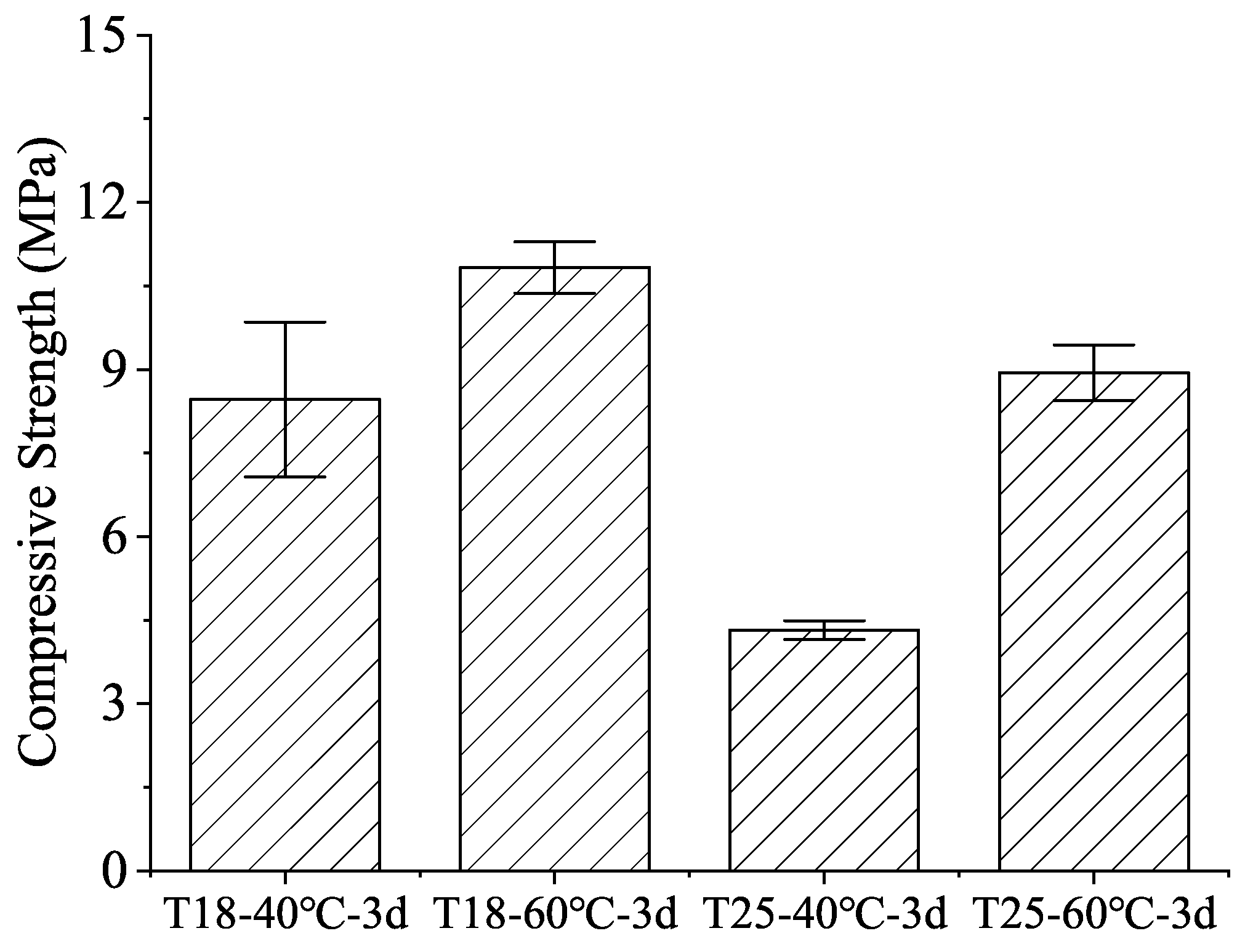
- Compressive Strength: Strength development was evaluated under two conditions: (i) Constant HTHP curing at 120 °C/21 MPa for up to 28 days; (ii) A cooling-cycle simulation where samples were heated to 120 °C for 20 min and then cooled to 40 °C or 60 °C for a 3-day curing period to simulate the ”top-of-cement” environment. The compressive strength of each cement slurry formulation was determined using five replicates at each hydration age. The results are presented as the mean ± standard deviation, ensuring the statistical accuracy and reproducibility of the mechanical performance data.
2.5. Microstructural Characterization
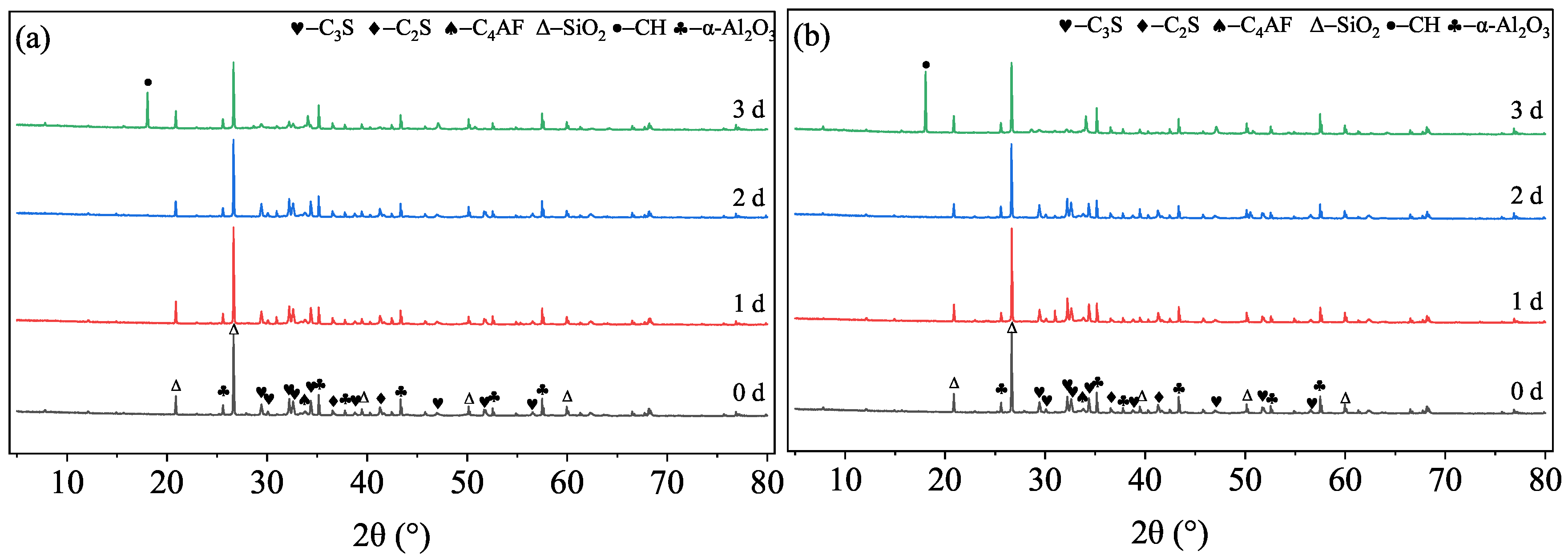
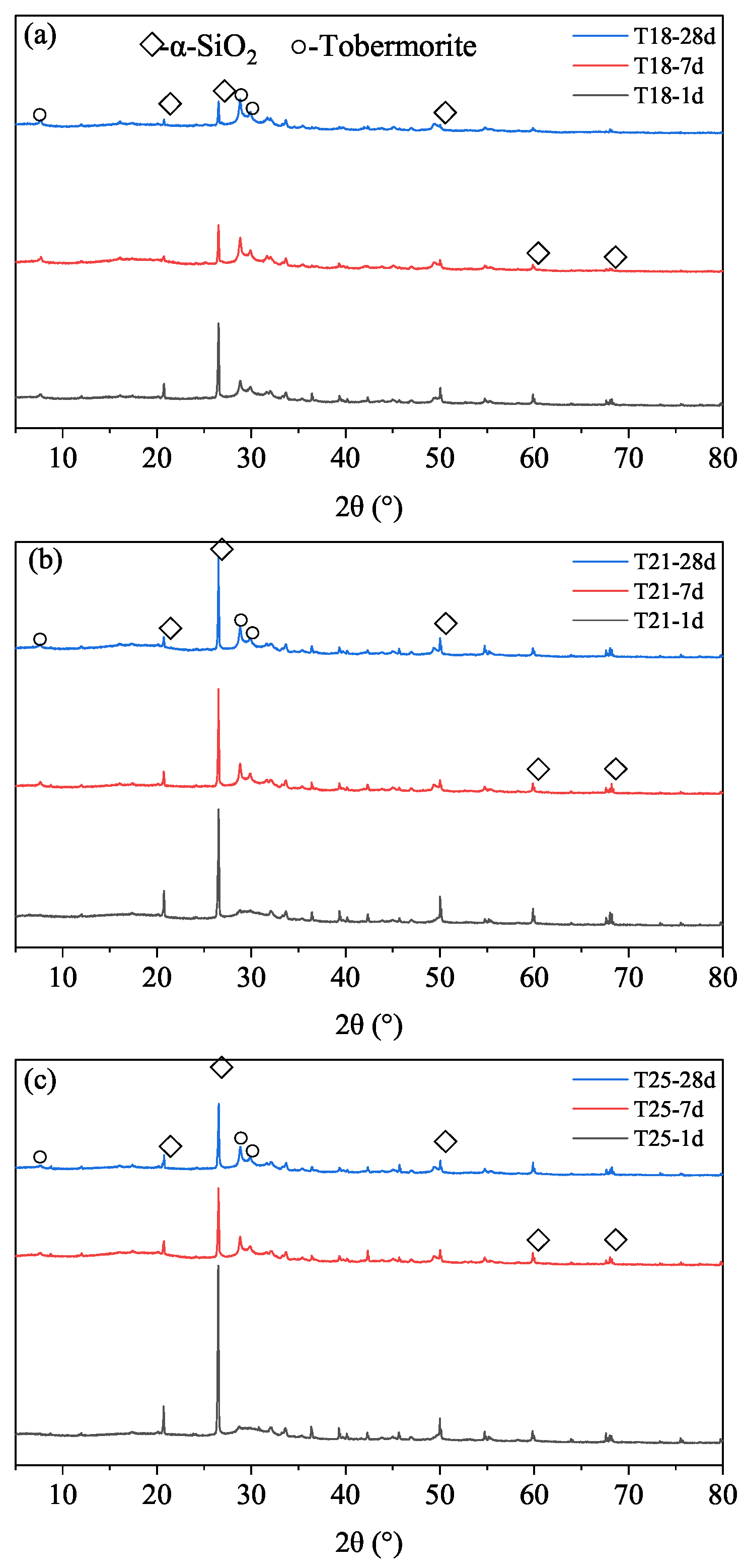
- X-ray Diffraction (XRD): Quantitative phase analysis was performed on samples after specific curing ages. At each hydration interval, the hydration was terminated by the solvent exchange method using isopropyl alcohol. The samples were subsequently ground to a particle size below 45 μm and stored in a vacuum desiccator to prevent carbonation prior to XRD analysis. Patterns were collected using a Rigaku diffractometer (Rigaku Corporation, Tokyo, Japan) (Cu-K, 40 kV/40 mA) over a 2 range of 5–80°.
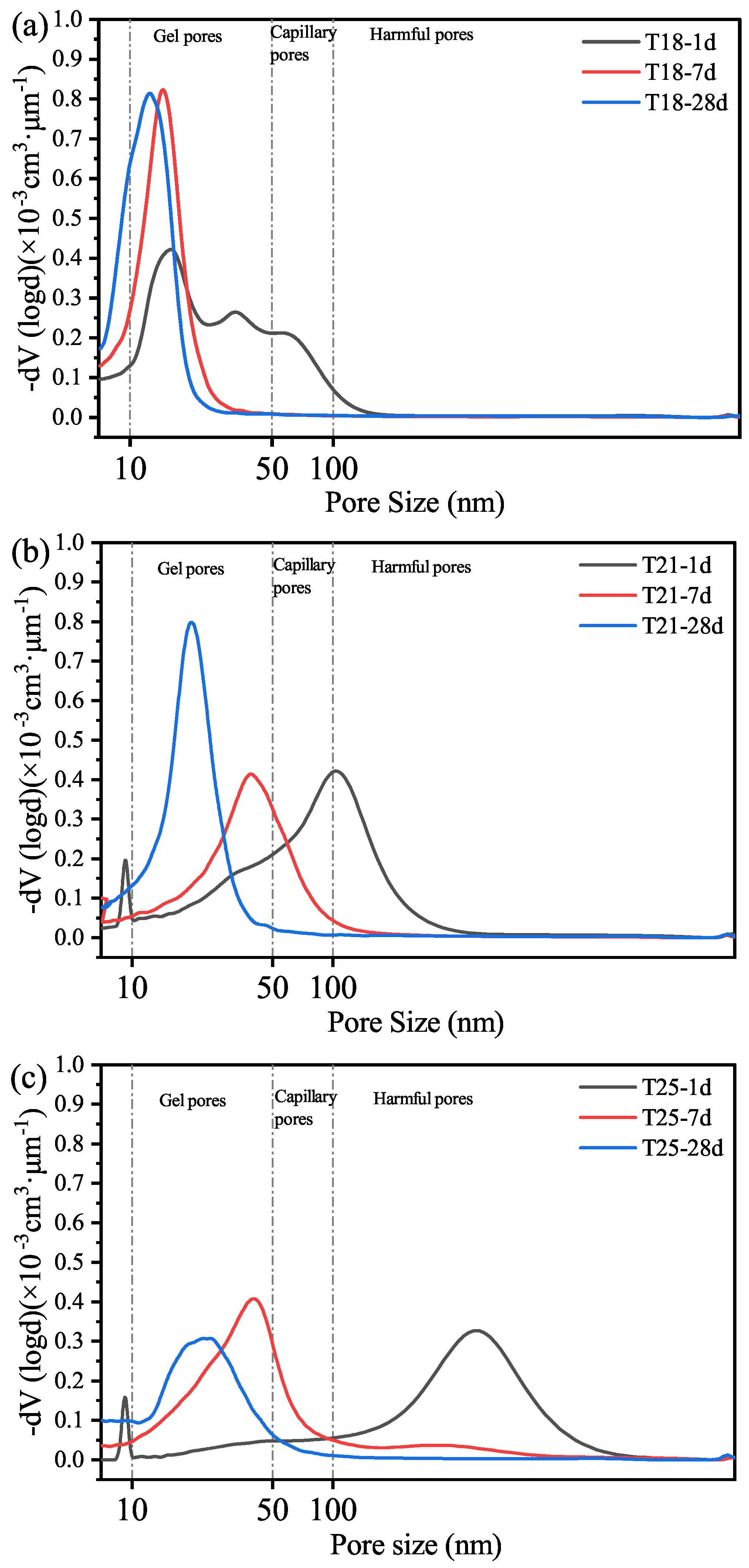
- Mercury Intrusion Porosimetry (MIP): For MIP measurements, representative samples were cut into small cubes (approximately 3–5 mm) and immersed in isopropyl alcohol for 48 h. After solvent exchange, the samples were vacuum-dried at 40 °C to remove the internal moisture while preserving the delicate pore structure. Pore size distribution and total porosity were measured using a GT-60 porosimeter (QUANTACHROME, Boynton Beach, FL, USA) (pressure range 0.14–206.84 MPa) on crushed samples (∼3 mm) to assess the densification of the hydration products.
3. Results and Discussion
3.1. Adsorption Behavior of TL-2
3.2. Macroscopic Performance: Thickening Time and Compressive Strength
3.2.1. Thickening Time at HTHP
3.2.2. Compressive Strength Development
3.3. Hydration Kinetics and Phase Evolution at Low Temperatures (40 °C–60 °C)
3.3.1. Qualitative Phase Identification
3.3.2. Quantitative Kinetics via Rietveld Analysis
3.4. Phase Stability and Microstructural Development at High Temperature (120 °C)
3.4.1. Tobermorite Formation and Crystallinity
3.4.2. Pore Structure Densification (MIP)
3.5. Thermal Regulation Mechanism of TL-2
- (a)
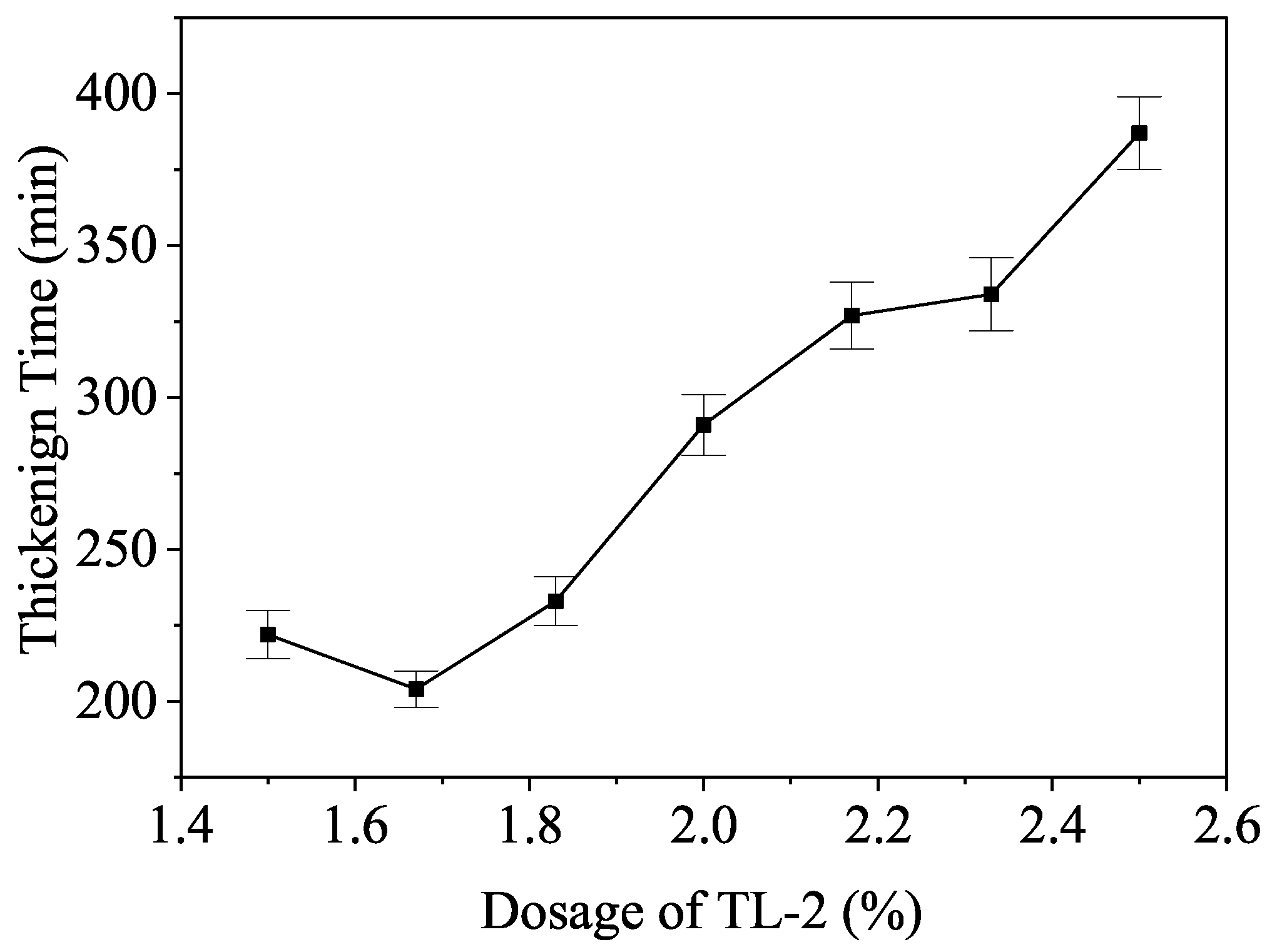
- Bottom-hole Stability (120 °C): The sustained surface coverage of TL-2 offsets the accelerated dissolution of polyaluminates and silicates. By preserving a robust interfacial barrier, TL-2 yields a predictable, linear dosage-thickening response (Figure 2), even under severe HTHP conditions.
- (b)
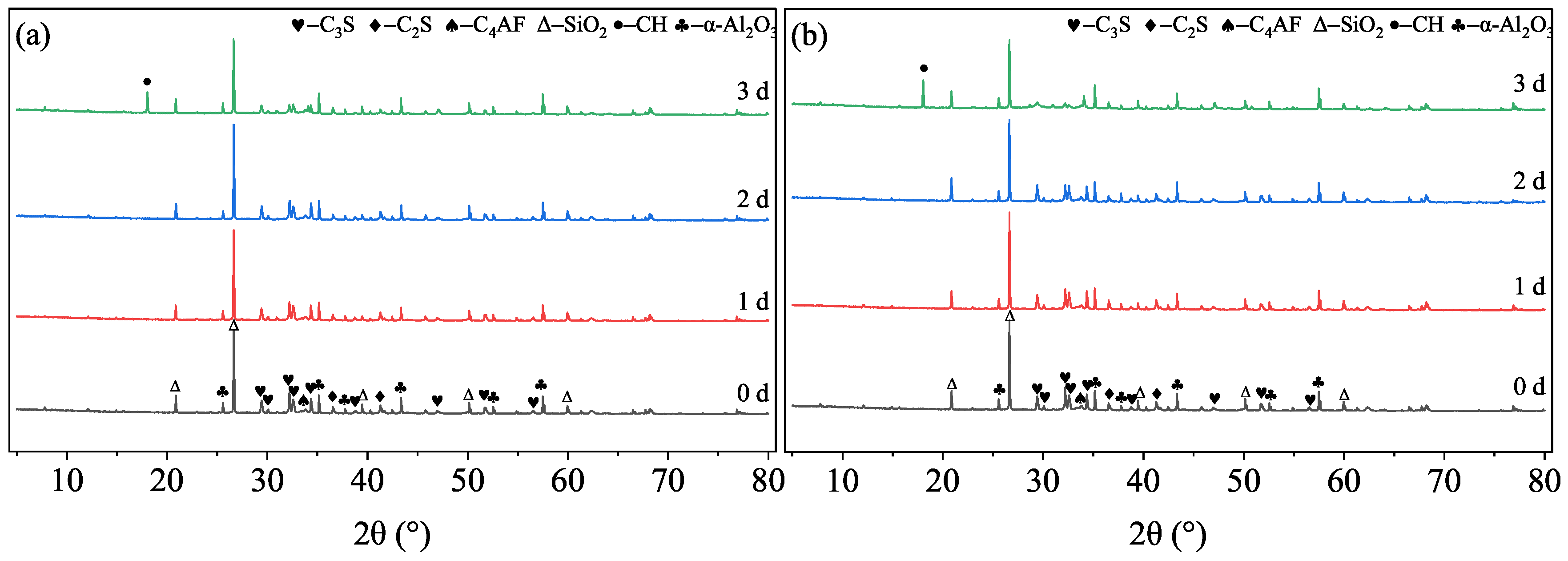
- Top-of-Cement Set Control (40–60 °C): While the retarder remains active at lower temperatures, the quantitative XRD results clarify that this inhibition is a time-dependent induction rather than an irreversible blockage. Once the retarding molecules are integrated into initial hydration products (typically after 48–72 h), the C3S consumption accelerates rapidly, ensuring early strength development at the top of the cement column without the “non-set” risk inherent to over-retarded designs.
4. Conclusions
- (a)
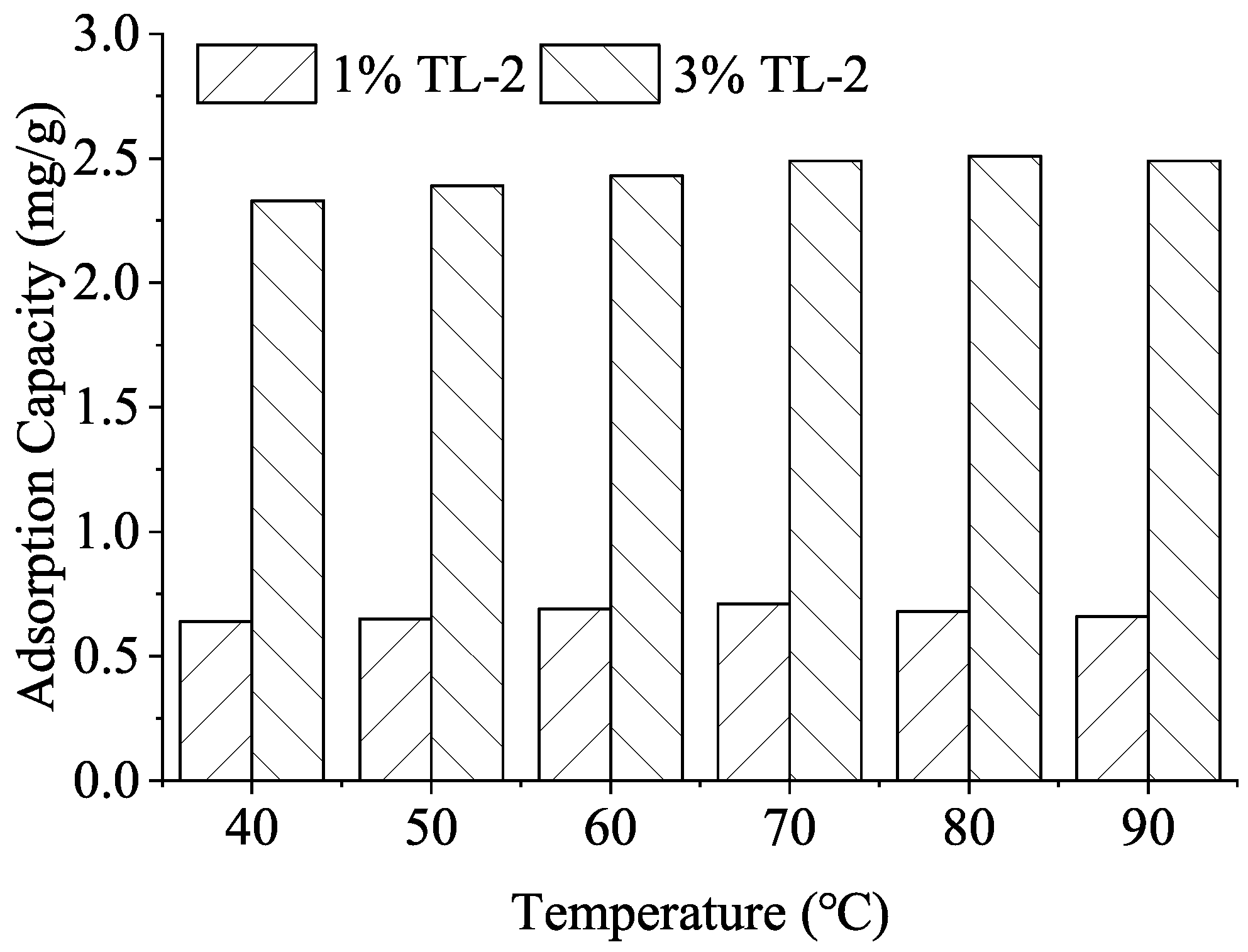
- TL-2 adsorption on cement grains remains stable or increases with temperature (2.33 to 2.49 mg/g), representing a robust adsorption capacity that provides an inherent “buffer” against thermal hydration acceleration.
- (b)
- Linear dosage control over thickening time was achieved at 120 °C, while top-section mechanical integrity was preserved, with strengths reaching 4–8 MPa within 3 days even after cooling from 120 °C.
- (c)
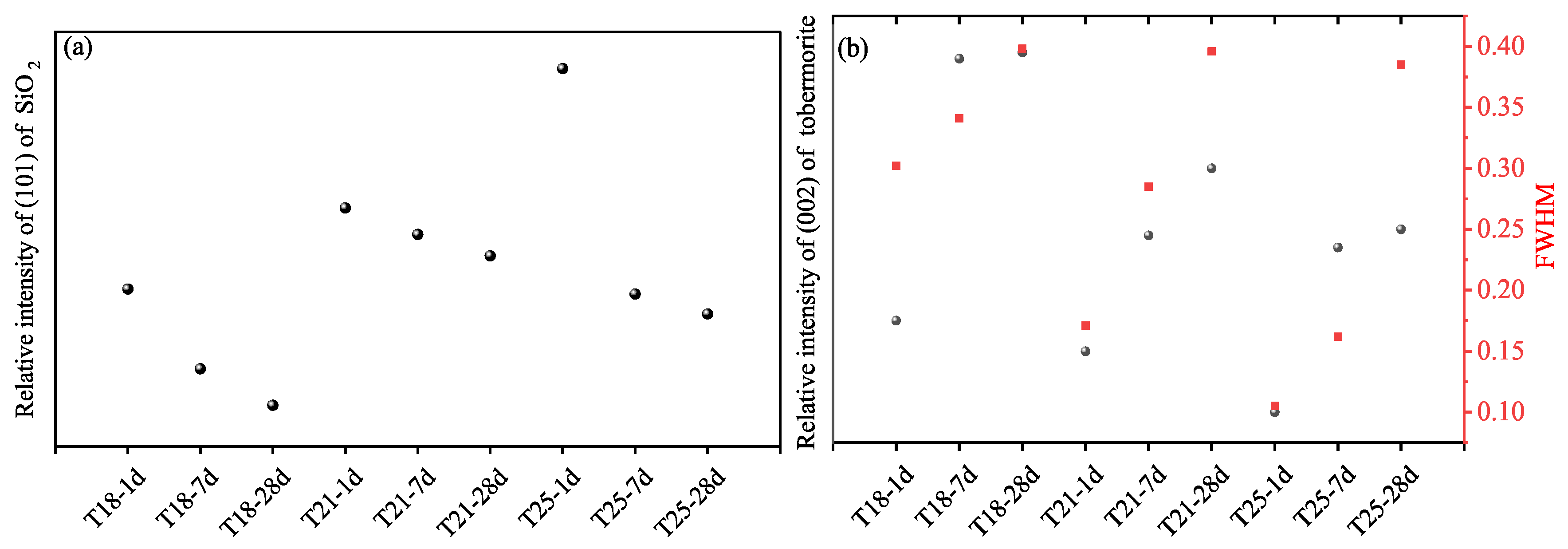
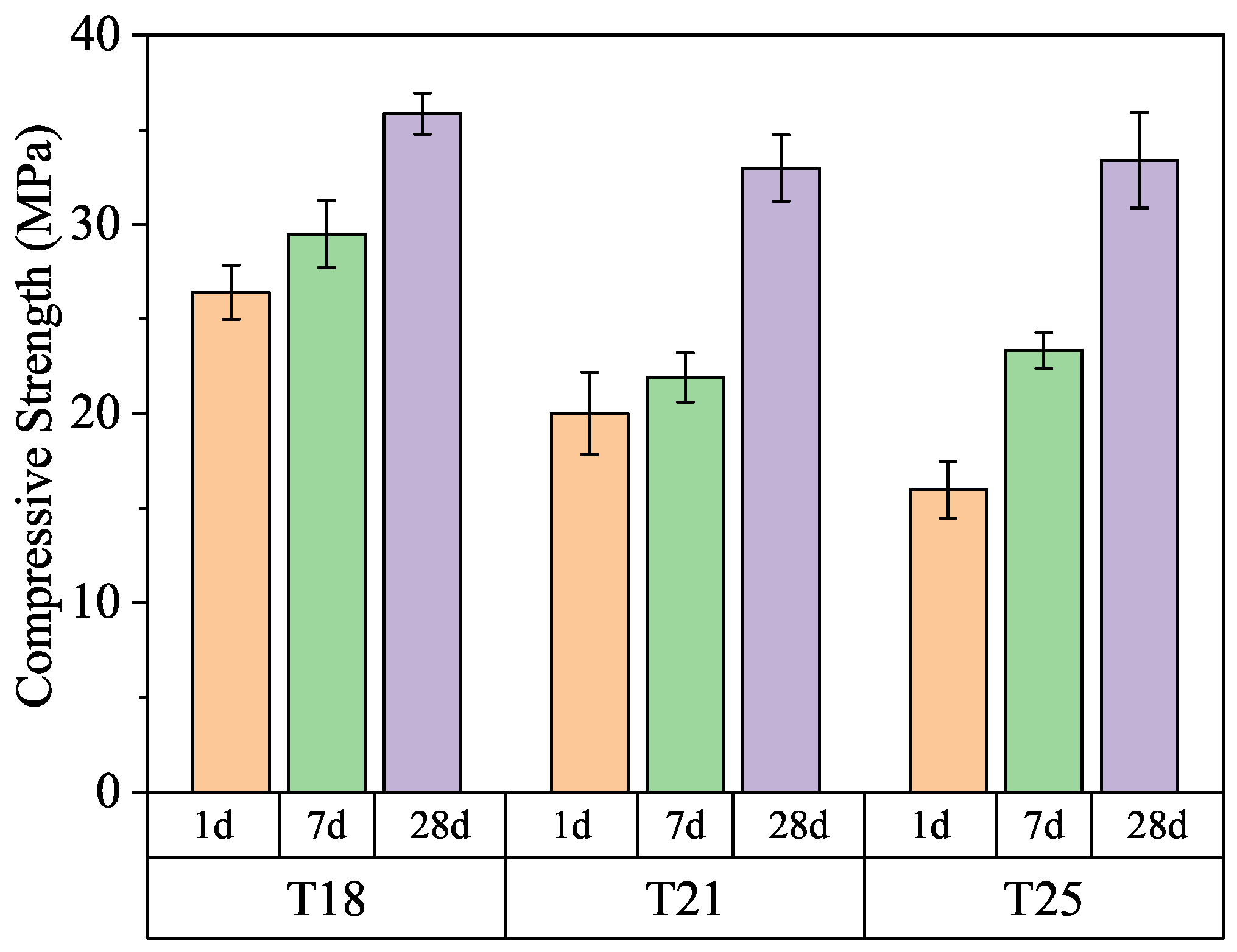
- Quantitative Rietveld analysis linked the observed 48 h hydration lag at low temperatures to a controlled induction period, followed by rapid phase transition to amorphous C-S-H. At 120 °C, the slurry matured into a compact matrix of well-crystallized tobermorite with refined gel porosity, ensuring a final strength of 33–36 MPa without retrogression.
Author Contributions
Funding
Data Availability Statement
Conflicts of Interest
References
- Li, H.; Pang, X.; Ghabezloo, S.; Zhang, J.; Shi, X.; Qin, J. Influence of testing temperature and pressure on the mechanical behavior of well cementing materials. J. Mater. Res. Technol. 2023, 26, 3992–4006. [Google Scholar] [CrossRef]
- Xia, X.; Yu, Y.; Qi, F.; Liu, H.; Qu, C. Research on Key Materials and Systems of Ultra High Temperature Cement Slurry for Ultra-Deep Wells Cementing. In Proceedings of the SPE Asia Pacific Oil and Gas Conference and Exhibition, Perth, Australia, 15–17 October 2024; p. D021S018R002. [Google Scholar] [CrossRef]
- Wang, H.; Huang, H.; Bi, W.; Ji, G.; Zhou, B.; Zhuo, L. Deep and ultra-deep oil and gas well drilling technologies: Progress and prospect. Nat. Gas Ind. B 2022, 9, 141–157. [Google Scholar] [CrossRef]
- Guo, Y.; Li, X.; Feng, S.; Zhang, C.; Liu, R.; Zhang, Z.; Li, T.; Guo, P.; Wang, R.; Taoutaou, S.; et al. Cementing Practices to Solve Well Integrity Challenges of Ultra Deep High Temperature Wells in Western China. In Proceedings of the Abu Dhabi International Petroleum Exhibition and Conference, Abu Dhabi, United Arab Emirates, 7–10 November 2016; p. D011S019R002. [Google Scholar] [CrossRef]
- Cheng, G.; Pang, X.; Wang, H.; Sun, J.; Qiu, Z. Anti-strength retrogression cementing materials for deep and ultra-deep wells. Constr. Build. Mater. 2024, 411, 134407. [Google Scholar] [CrossRef]
- Wang, X.; Zou, Q.; Zhou, J.; Wang, W. Influence mechanisms of the calcium lignosulfonate on the pore structure of cement in coalbed methane well cementing. Geoenergy Sci. Eng. 2025, 246, 213660. [Google Scholar] [CrossRef]
- Bassioni, G.; Ali, M.M. The effect of counterion in lignosulfonates as oil-well cement retarders. Adv. Cem. Res. 2013, 25, 245–253. [Google Scholar] [CrossRef]
- Chaudhari, O.; Biernacki, J.J.; Northrup, S. Effect of carboxylic and hydroxycarboxylic acids on cement hydration: Experimental and molecular modeling study. J. Mater. Sci. 2017, 52, 13719–13735. [Google Scholar] [CrossRef]
- Guo, S.; Bu, Y.; Lu, Y. Addition of tartaric acid to prevent delayed setting of oil-well cement containing retarder at high temperatures. J. Petrol. Sci. Eng. 2019, 172, 269–279. [Google Scholar] [CrossRef]
- Tiemeyer, C.; Plank, J. Working mechanism of a high temperature (200 °C) synthetic cement retarder and its interaction with an AMPS®-based fluid loss polymer in oil well cement. J. Appl. Polym. Sci. 2012, 124, 4772–4781. [Google Scholar] [CrossRef]
- Zhang, R.; Huo, J.; Peng, Z.; Feng, Q.; Chen, D.; Wang, J. Investigation of poly (AM/AMPS/MA) on the retarding performance of oil well cement. Appl. Magn. Reson. 2016, 47, 987–1001. [Google Scholar] [CrossRef]
- Zhang, H.; Zhang, X.; Xia, X.; Hu, M.; Ma, X.; Ying, Y.; Li, P.; Cao, J.; Cheng, Y.; Guo, J. Physical properties and chemical structure evolution mechanism of AMPS-based copolymer oil well cement retarder in ultra-high temperature alkaline solution environment. Polym. Degrad. Stab. 2025, 238, 111333. [Google Scholar] [CrossRef]
- Yu, Y.; Zhang, C.; Gu, T.; Xu, W.; Zhang, J.; Zhang, G.; Huang, S.; Liu, K.; Cheng, X. Synthesis and evaluation of a new type of oil-well cement temperature-resistant retarder. Constr. Build. Mater. 2021, 302, 124153. [Google Scholar] [CrossRef]
- Ahmad, A.; Ahmed, A.; Elkatatny, S.; Al Dugaither, A.; Heinold, T.; Zahrani, B.H.; Abahussain, A.A.; Al Hamouz, O.C.S. A study of a new polymeric retarder for enhanced rheology and its effects on properties of oil well cement. Constr. Build. Mater. 2025, 472, 140913. [Google Scholar] [CrossRef]
- Wang, C.; Wang, L.; Yao, X.; Du, J.; Zhai, W.; Guo, S.; Zhou, A. The effect of rutin on the early-age hydration of oil well cement at varying temperatures. Cem. Concr. Compos. 2022, 128, 104438. [Google Scholar] [CrossRef]
- Zhang, Y.; Wang, C.; Chen, Z.; Yu, Y.; Jing, J.; Xia, X.; Liu, H.; Meng, R. Research on the strength retrogression and mechanism of oil well cement at high temperature (240 °C). Constr. Build. Mater. 2023, 363, 129806. [Google Scholar] [CrossRef]
- Dai, T.; Liu, T.; Zheng, T.; Fang, C.; Zheng, S.; Lei, G. Effect of waste clay brick powder on microstructure and properties in blended oil well cement pastes at HTHP conditions. Geoenergy Sci. Eng. 2024, 237, 212823. [Google Scholar] [CrossRef]
- Liu, X.; Qin, J.; Dai, R.; Zhou, H.; Pang, X.; Chen, X. High-performance oil well cement with modified calcium carbonate whiskers: Enhancing durability under HTHP conditions. Materials 2025, 18, 1021. [Google Scholar] [CrossRef]
- Cheng, G.; Li, H.; Liu, H.; Wei, H.; Zhou, S.; Fang, K. Strength retrogression mechanisms of silica-enriched oil well cement under 240 °C curing conditions. Chem. Pap. 2025, 80, 1653–1663. [Google Scholar] [CrossRef]
- Bian, J.; Ye, Z.; Zheng, X.; Deng, C.; Tang, L. High-temperature resistant copolymer oil well cement retarder: Synthesis, assessment of performance, and mechanism of retardation. J. Appl. Polym. Sci. 2024, 141, e55316. [Google Scholar] [CrossRef]
- Guo, S.; Bu, Y.; Liu, H.; Guo, X. The abnormal phenomenon of class G oil well cement endangering the cementing security in the presence of retarder. Constr. Build. Mater. 2014, 54, 118–122. [Google Scholar] [CrossRef]
- Fikeni, K.G.; Pang, X.; Yu, Y.; Xia, X.; Sun, F.; Wang, H.; Lv, K.; Sun, J. An overview of oil well cement retarders and the retardation mechanisms. Geoenergy Sci. Eng. 2024, 241, 213116. [Google Scholar] [CrossRef]
- API RP 10B-2:2024; Recommended Practice for Testing Well Cements. The American Petroleum Institute: Washington, DC, USA, 2024.
- Krakowiak, K.J.; Thomas, J.J.; James, S.; Abuhaikal, M.; Ulm, F.J. Development of silica-enriched cement-based materials with improved aging resistance for application in high-temperature environments. Cem. Concr. Res. 2018, 105, 91–110. [Google Scholar] [CrossRef]
- Thomas, J.J.; Allen, A.J.; Jennings, H.M. Density and water content of nanoscale solid C–S–H formed in alkali-activated slag (AAS) paste and implications for chemical shrinkage. Cem. Concr. Res. 2012, 42, 377–383. [Google Scholar] [CrossRef]
- Richardson, I. Tobermorite/jennite- and tobermorite/calcium hydroxide-based models for the structure of C-S-H: Applicability to hardened pastes of tricalcium silicate, β-dicalcium silicate, Portland cement, and blends of Portland cement with blast-furnace slag, metakaolin, or silica fume. Cem. Concr. Res. 2004, 34, 1733–1777. [Google Scholar] [CrossRef]
- Shaw, S.; Clark, S.; Henderson, C. Hydrothermal formation of the calcium silicate hydrates, tobermorite (Ca5Si6O16(OH)2·4H2O) and xonotlite (Ca6Si6O17(OH)2): An in situ synchrotron study. Chem. Geol. 2000, 167, 129–140. [Google Scholar] [CrossRef]





| Oxide | SiO2 | Al2O3 | Fe2O3 | TiO2 | CaO | MgO | SO3 | K2O | Na2O | LOI * |
|---|---|---|---|---|---|---|---|---|---|---|
| CEM | 20.54 | 3.79 | 4.94 | 0.27 | 62.34 | 3.15 | 2.42 | 0.65 | 0.21 | 1.34 |
| Silica flour | 98.18 | 0.93 | 0.065 | 0.059 | 0.029 | 0.029 | 0.089 | 0.20 | 0.038 | 0.19 |
| Mixture | CEM | Silica Flour | Retarder (TL-2) | Water |
|---|---|---|---|---|
| T18 | 65 | 35 | 1.95 | 42.05 |
| T21 | 65 | 35 | 2.28 | 41.72 |
| T25 | 65 | 35 | 2.71 | 41.29 |
| Curing Temp. | Age (d) | C3S | C2S | C4AF | CH | SiO2 | Amorphous |
|---|---|---|---|---|---|---|---|
| – | 0 d | 44.03 | 14.16 | 11.73 | 0.87 | 25.01 | 4.20 |
| 40 °C | 1 d | 42.82 | 12.03 | 9.03 | 1.43 | 24.57 | 10.12 |
| 2 d | 40.32 | 8.18 | 8.87 | 3.13 | 24.02 | 15.48 | |
| 3 d | 30.02 | 6.62 | 7.53 | 8.96 | 22.96 | 23.91 | |
| 60 °C | 1 d | 41.32 | 12.63 | 7.38 | 2.25 | 23.07 | 13.35 |
| 2 d | 39.66 | 8.08 | 7.05 | 4.58 | 24.31 | 16.32 | |
| 3 d | 26.35 | 7.66 | 6.80 | 9.15 | 23.68 | 26.36 |
| Curing Temp. | Age (d) | C3S | C2S | C4AF | CH | SiO2 | Amorphous |
|---|---|---|---|---|---|---|---|
| – | 0 d | 45.14 | 15.81 | 11.43 | 0.12 | 25.30 | 2.20 |
| 40 °C | 1 d | 43.42 | 13.53 | 9.95 | 0.72 | 25.13 | 7.25 |
| 2 d | 40.92 | 10.97 | 9.77 | 0.32 | 24.47 | 13.55 | |
| 3 d | 36.41 | 8.67 | 7.51 | 5.65 | 23.75 | 18.01 | |
| 60 °C | 1 d | 43.60 | 12.11 | 9.75 | 0.20 | 24.96 | 9.38 |
| 2 d | 41.90 | 7.47 | 7.72 | 3.81 | 24.11 | 14.99 | |
| 3 d | 33.88 | 6.05 | 6.98 | 7.90 | 23.43 | 21.76 |
Disclaimer/Publisher’s Note: The statements, opinions and data contained in all publications are solely those of the individual author(s) and contributor(s) and not of MDPI and/or the editor(s). MDPI and/or the editor(s) disclaim responsibility for any injury to people or property resulting from any ideas, methods, instructions or products referred to in the content. |
© 2026 by the authors. Licensee MDPI, Basel, Switzerland. This article is an open access article distributed under the terms and conditions of the Creative Commons Attribution (CC BY) license.
Share and Cite
Wang, C.; Peng, J.; Wang, C. Temperature-Responsive Adsorption and Hydration Control of a Wide-Gradient Retarder in Oilwell Cementing (40 °C–120 °C). Materials 2026, 19, 1555. https://doi.org/10.3390/ma19081555
Wang C, Peng J, Wang C. Temperature-Responsive Adsorption and Hydration Control of a Wide-Gradient Retarder in Oilwell Cementing (40 °C–120 °C). Materials. 2026; 19(8):1555. https://doi.org/10.3390/ma19081555
Chicago/Turabian StyleWang, Chong, Jinlong Peng, and Chunyu Wang. 2026. "Temperature-Responsive Adsorption and Hydration Control of a Wide-Gradient Retarder in Oilwell Cementing (40 °C–120 °C)" Materials 19, no. 8: 1555. https://doi.org/10.3390/ma19081555
APA StyleWang, C., Peng, J., & Wang, C. (2026). Temperature-Responsive Adsorption and Hydration Control of a Wide-Gradient Retarder in Oilwell Cementing (40 °C–120 °C). Materials, 19(8), 1555. https://doi.org/10.3390/ma19081555