1. Introduction
As the core material of modern infrastructure construction, cement concrete has been widely used in the world because of its excellent compressive performance, easy forming and economy [
1,
2,
3]. As the world’s largest cement producer, China is more dependent on it in infrastructure construction. However, the inherent brittleness and low tensile strength of concrete materials make it easy for cracks to form during service. These cracks continue to expand under the combined action of load and environment, which not only significantly weakens the bearing capacity and durability of the structure, but also brings high maintenance costs and even causes catastrophic accidents in extreme cases, which seriously threatens public safety.
In order to effectively improve the crack resistance and toughening performance of concrete, fiber reinforcement technology has become one of the most promising modification methods in engineering applications [
4]. Among available reinforcement strategies, fiber-reinforced concrete has emerged as the most extensively studied composite system, with comprehensive reviews documenting performance improvements across compressive, tensile, and flexural responses for both steel and synthetic fiber types [
5]. By uniformly incorporating a large number of short and discrete fibers into the cement matrix, the technology uses the interfacial bonding force between the fiber and the matrix to form an effective ‘bridging’ stress at the tip of the micro-crack, thereby inhibiting the initiation and expansion of the crack, so that the concrete can still maintain a certain residual strength and significant deformability after cracking [
6]. Among many fiber types, steel fiber can achieve efficient stress transfer and energy absorption due to its thermal expansion coefficient similar to that of concrete, its high elastic modulus, and its excellent tensile strength, thus occupying a dominant position in structural applications [
7]. A large number of engineering practices [
8,
9] show that the incorporation of steel fiber can significantly improve the tensile, bending, impact and fatigue resistance of concrete. Critically, beyond these strength improvements, steel fibers are well known to substantially enhance the ductility and energy absorption capacity of concrete. Plain concrete fails in a sudden and brittle manner under tensile and flexural loading; fiber incorporation fundamentally changes this behavior by bridging cracks and sustaining residual load after first cracking, thereby enabling a quasi-ductile failure mode that is essential for structural safety.
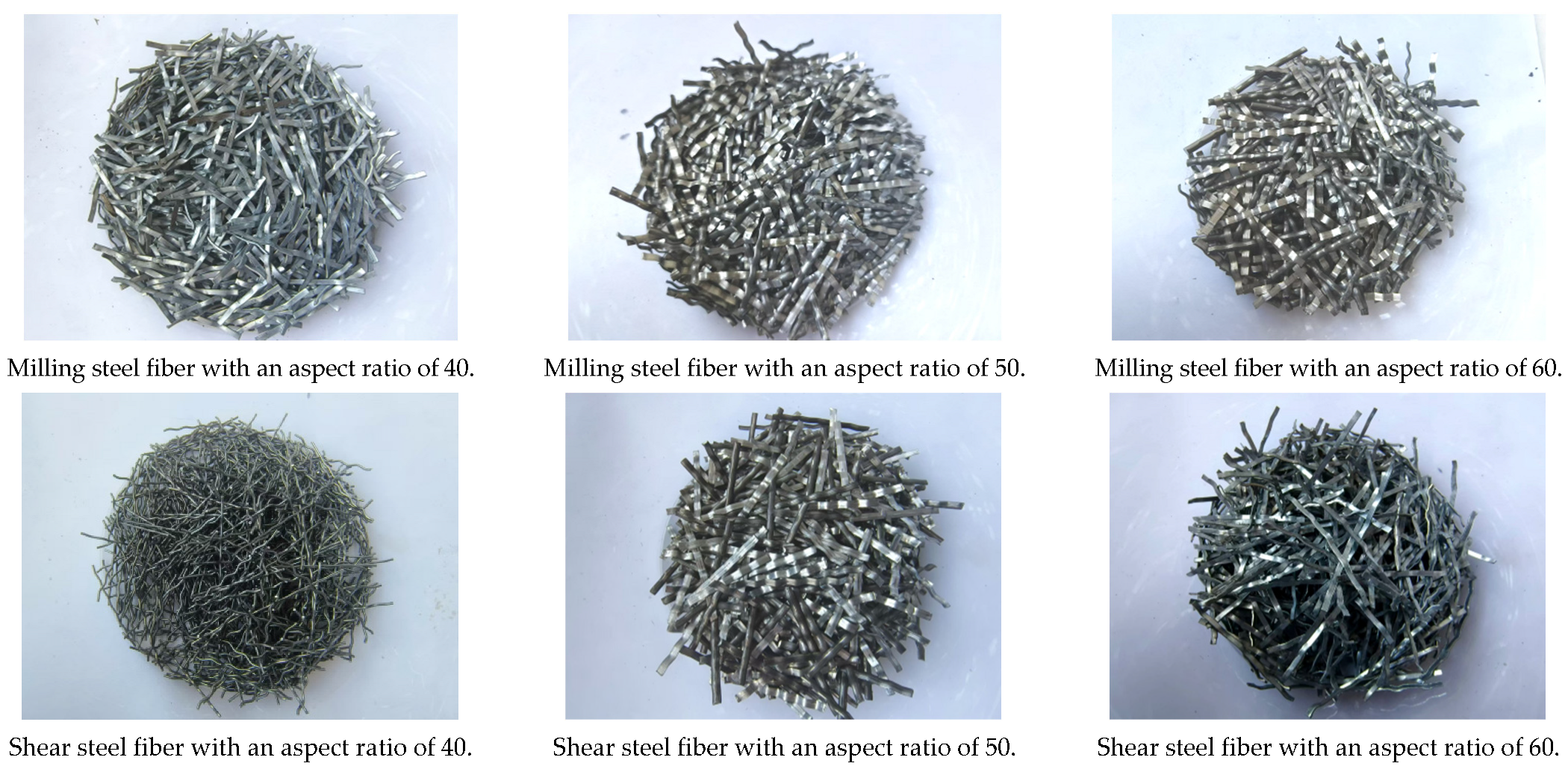
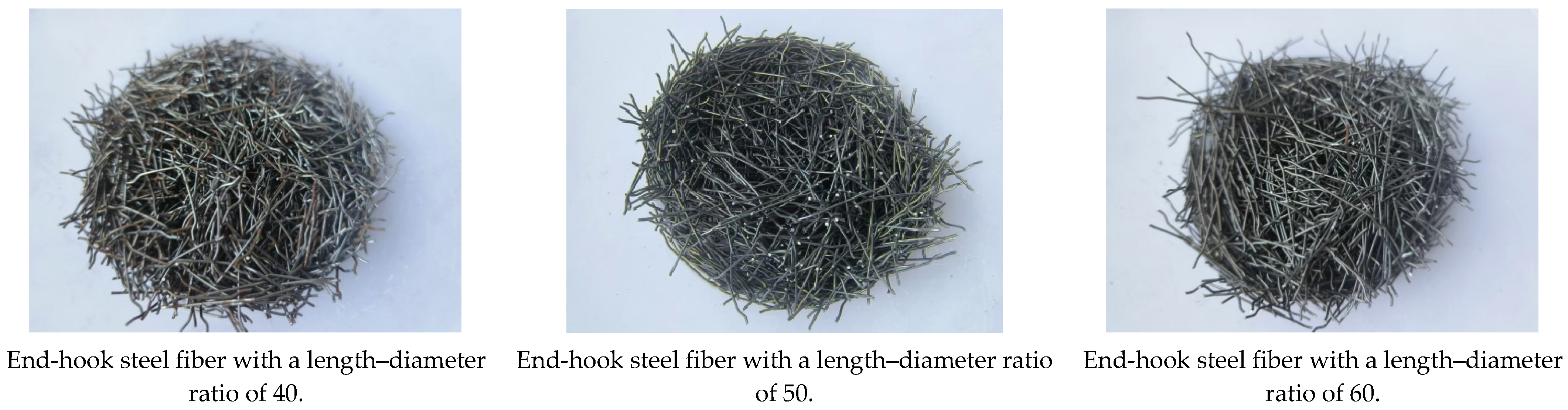
The reinforcement effect of steel fiber on concrete is affected by its own geometric and physical parameters. The key parameters include the shape of the fiber (such as end-hook type, shear type, and milling type) [
10], aspect ratio (ratio of length to diameter) [
11], volume content [
12] and surface state [
13] (such as smooth, copper plating, or corrosion). These parameters directly determine the dispersion of the fiber in the mixture, the spatial distribution and orientation in the hardened body, and the interfacial bonding properties formed with the cement matrix. For example, the end-hook fiber enhances the mechanical bite force through the anchoring effect of the end [
14]; single-fiber pull-out studies have further quantified the anchoring contribution of the hooked end, demonstrating that mechanical anchorage can account for more than 50% of total pull-out energy [
15]; the aspect ratio affects the pull-out work and toughening efficiency of the fiber. In particular, the effects of aspect ratio on flexural and mechanical performance have been systematically evaluated across both recycled and conventional aggregate concrete [
12], and the equivalency of corrugated and hooked fibers in bond strength has been established [
16]. The volume content is directly related to the average spacing of the fibers and the number of bridging cracks [
17,
18,
19,
20,
21]. These beneficial effects have been consistently demonstrated across a wide range of concrete strength grades, from normal- to ultra-high-strength matrices, with fiber dosage and length simultaneously exerting a synergistic influence on the tensile and flexural response [
19]. In the domain of ultra-high-performance matrices, Yoo et al. [
20] examined the interplay of fiber shape, aspect ratio, and volume fraction on flexural performance simultaneously, providing a multi-factor perspective; yet such systematic investigations remain scarce for normal-strength concrete, particularly when different fiber types are tested within a unified experimental framework.
The mechanical behavior of cracked concrete and the theoretical framework for describing it have been progressively established through decades of systematic research. Research on the fracture mechanics of concrete has undergone decades of development, accumulating extensive theoretical and experimental achievement [
22]; the development of a series of theories and models (such as fiber spacing theory [
23] and the equivalent crack model [
24]) has gradually deepened the understanding of material fracture behavior. Systematic research of steel-fiber-reinforced concrete has also been carried out. From the early mechanism exploration to the later performance characterization and model establishment, rich results have been accumulated. Although Chinese scholars started relatively late in this field, they quickly kept up with the international pace through continuous experimental research [
25], theoretical innovation and engineering practice, and formulated relevant design and construction procedures [
26,
27,
28,
29,
30], which greatly promoted the standardized application of steel-fiber-reinforced concrete. In recent years, with the development of new cement-based materials such as ultra-high-performance concrete, steel fiber, as its key reinforcing component, has shown a broader application prospect [
31]. Alongside these material-level advances, a parallel and increasingly prominent research trend has emerged: the integration of systematic experimental validation with data-driven predictive modeling. This combined paradigm has proven effective in capturing the complex, nonlinear relationships governing the mechanical behavior of fiber-reinforced cementitious systems. Shafaie et al. [
32] demonstrated this approach by coupling push-out and slant shear tests with a fuzzy logic inference system to predict the interfacial bond strength of fiber-reinforced self-compacting concrete, achieving high predictive accuracy with a limited number of experimental runs. In the domain of steel-fiber-reinforced concrete (SFRC) property prediction, Kang et al. [
33] integrated an extensive literature-based experimental database with machine learning algorithms to simultaneously predict compressive and flexural strengths, systematically quantifying the influence of fiber volume fraction and mix design parameters. Zheng et al. [
34] further demonstrated that ensemble learning methods exhibit a distinct advantage in modeling the nonlinear flexural response of SFRC, with an optimal R
2 of 0.96. Congro et al. [
35] employed artificial neural networks to predict the residual flexural strength of fiber-reinforced concrete across multiple fiber and matrix parameters, with all regression coefficients exceeding 0.92. Beyond machine learning approaches, response surface methodology (RSM) has been widely validated as a statistical optimization tool for cementitious mix design, capable of modeling nonlinear multi-factor interactions with far fewer experimental runs than full factorial designs [
36]. At the level of individual performance indices, RSM with D-optimal design has been applied directly to SFRC systems, simultaneously optimizing fiber volume fraction and aspect ratio to maximize splitting tensile strength and toughness under multi-objective constraints [
37]. Despite these advances, existing modeling studies predominantly rely on aggregated published datasets and tend to focus on single mechanical performance indices, without systematically addressing the interaction effects among fiber shape, aspect ratio, and volume content within a unified experimental framework, nor targeting the simultaneous optimization of multiple mechanical properties.
Despite remarkable research outcomes, several important directions in current SFRC research require further exploration. First, as mentioned, the lack of studies on multi-parameter coupling effects makes it difficult to achieve the optimal balance between performance and cost in material design. Second, recent studies employing scanning electron microscopy (SEM) have introduced the concept of a Fiber Interfacial Transition Zone (FITZ)—a 30 μm wide strip around the fiber that is more susceptible to microcracking than the conventional aggregate–paste ITZ [
38]—while nano-modification studies have shown that the pore structure and microhardness of the ITZ can be systematically improved [
3]. The microstructure, composition of hydration products, chemical bonding state, and their evolution during stress in the ITZ are key to deeply understanding stress transfer, fiber pull-out, and damage mechanisms, yet related research is still insufficient. Additionally, comparative studies between different fiber materials are notably lacking. For example, the actual effectiveness of copper-plated steel fiber in improving corrosion resistance and the long-term effect of corroded steel fiber on interfacial properties are crucial for the scientific selection of fibers in engineering practice. Finally, existing mechanical performance prediction models often fail to fully consider key factors such as complex fiber shape, three-dimensional random distribution, and interface bond–slip constitutive relationships, resulting in limited model accuracy and generalizability.
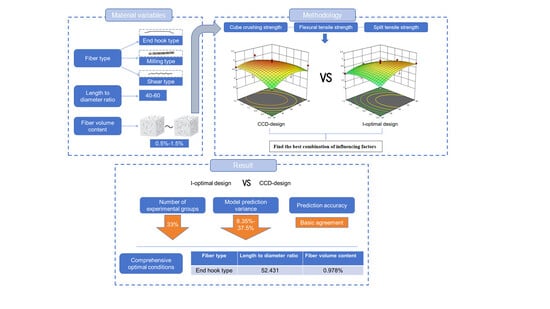
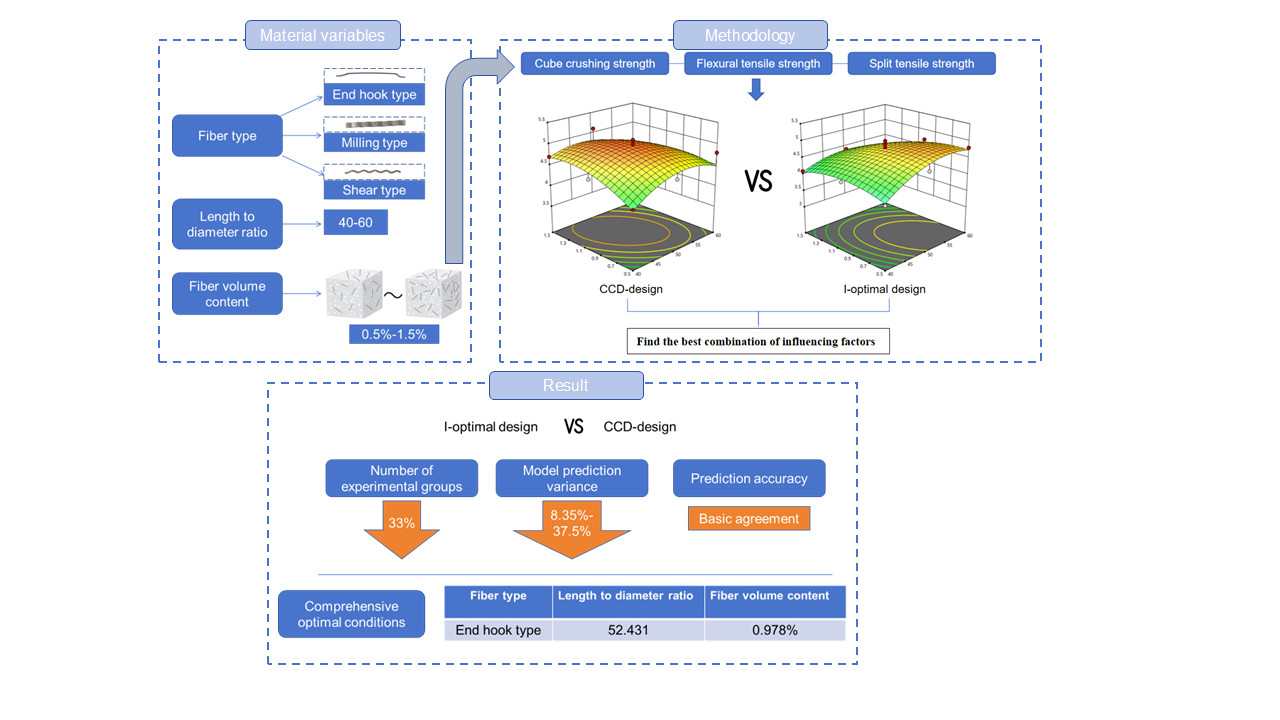
To address the aforementioned challenges, this study aims to conduct systematic research. The core contents include: designing and implementing mechanical property tests for SFRC covering different fiber types (end hook, shear, and milling), different aspect ratios, and different volume contents, with comparisons to copper-plated and corroded steel fibers to comprehensively evaluate the characteristics and application potential of various fibers. In terms of theoretical modeling, a mechanical performance prediction model considering multiple factors (fiber type, aspect ratio, and content) will be constructed based on response surface methodology (RSM) and I-optimal experimental design. Multi-objective optimization of the mix proportion will subsequently be performed to identify the optimal combination of fiber parameters.
In summary, steel fiber reinforcement technology holds clear and significant value for improving the safety, durability, and sustainability of concrete structures. Through systematic experimentation and data modeling methods, this study aims to expand the existing research and provide solid theoretical support and feasible technical solutions for the efficient and precise application of steel-fiber-reinforced concrete in highway engineering and other infrastructure fields. This study focuses on quantifying the macroscopic effects of fiber parameters through experimental design and statistical modeling, and discusses the underlying mechanisms based on observed mechanical responses.
3. Test Results and Analysis of Mechanical Properties
In this study, a total of 34 distinct fiber-reinforced concrete mixtures, including one plain concrete reference group, were designed and tested. For each mechanical property—cube compressive strength, flexural strength, and splitting tensile strength—three replication specimens were made and tested for each mixture. The strength value for each mixture was calculated in accordance with GB/T 50081–2019 [
42]: the arithmetic mean of the three measurements was reported as the representative strength if the difference between any individual test result and the median of the three replicates did not exceed 15% of the median; if not, the median value was adopted. All results are expressed as measured representative intensity values, with the standard deviation of each dataset shown as error bars in the figures.
3.1. Cube Compressive Strength
In this study, the effects of fiber type, aspect ratio, and volume content on the cube compressive strength of cement concrete were systematically investigated. The results indicate that fiber incorporation significantly influences compressive strength, with the degree of enhancement or reduction depending on the synergistic interaction between fiber material, geometry, and content. Ordinary steel fibers generally exhibited a good reinforcing effect. In contrast, copper-plated and corroded steel fibers performed poorly within the tested dosage range, even leading to a deterioration in the matrix strength.
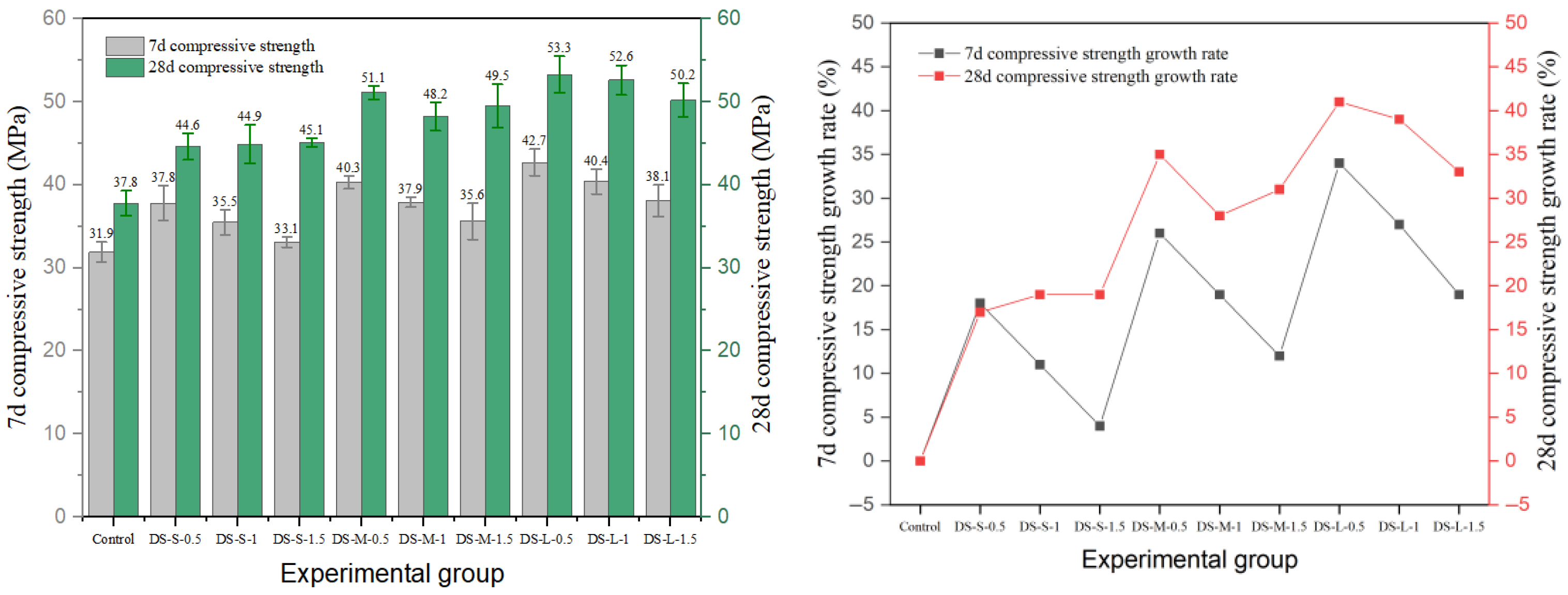
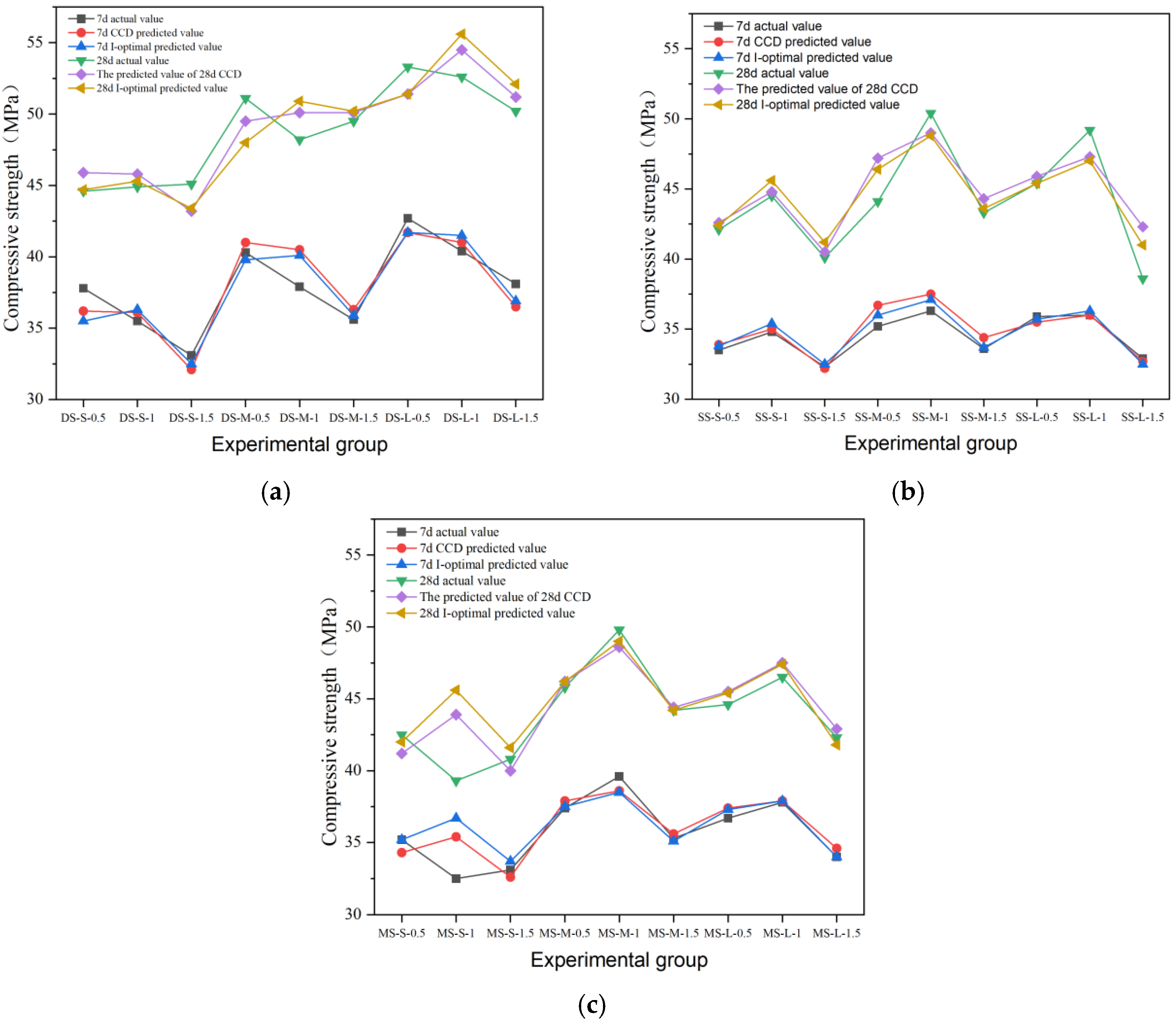
Among the three kinds of steel fibers, the reinforced effect of end-hook steel fiber on cement concrete is more prominent, as shown in
Figure 10, and its 28-day compressive strength is the highest among all fiber groups. The 28-day strength of the DS-L-0.5 group reached 53.3 MPa, which was 41% higher than that of the reference group (37.8 MPa). This level of enhancement is consistent with the range reported in the literature: Zhang et al. [
1] found that hooked-end fibers with 1.0–1.5% content increased compressive strength by 4–24% in normal-strength concrete, while the effect is amplified in higher-strength matrices due to improved fiber–matrix compatibility. The reinforcement effect of end-hook fiber is highly sensitive to the dosage. Under each aspect ratio, 0.5% dosage usually corresponds to the highest 7-day strength. When the content increased to 1.0%, the 28-day strength decreased slightly; although the strength increased to 1.5%, it did not exceed the peak value of the 0.5% dosage group. This shows that excessive fibers may introduce local defects and weaken the compactness of the matrix, thus offsetting the reinforcement effect. This inversely correlated trend at higher dosages has been corroborated by multiple prior studies, wherein compressive strength reached a plateau or even decreased beyond a 1.0–1.5% fiber volume fraction due to fiber agglomeration and matrix discontinuity [
1,
9]. From the long-term performance, the end-hook fiber significantly promoted later strength growth: the strength growth rate of the control group was 18% from 7 days to 28 days, while that of the end-hook fiber group was generally between 25% and 39%, which reflected its positive role in bridging micro-cracks and delaying damage accumulation.
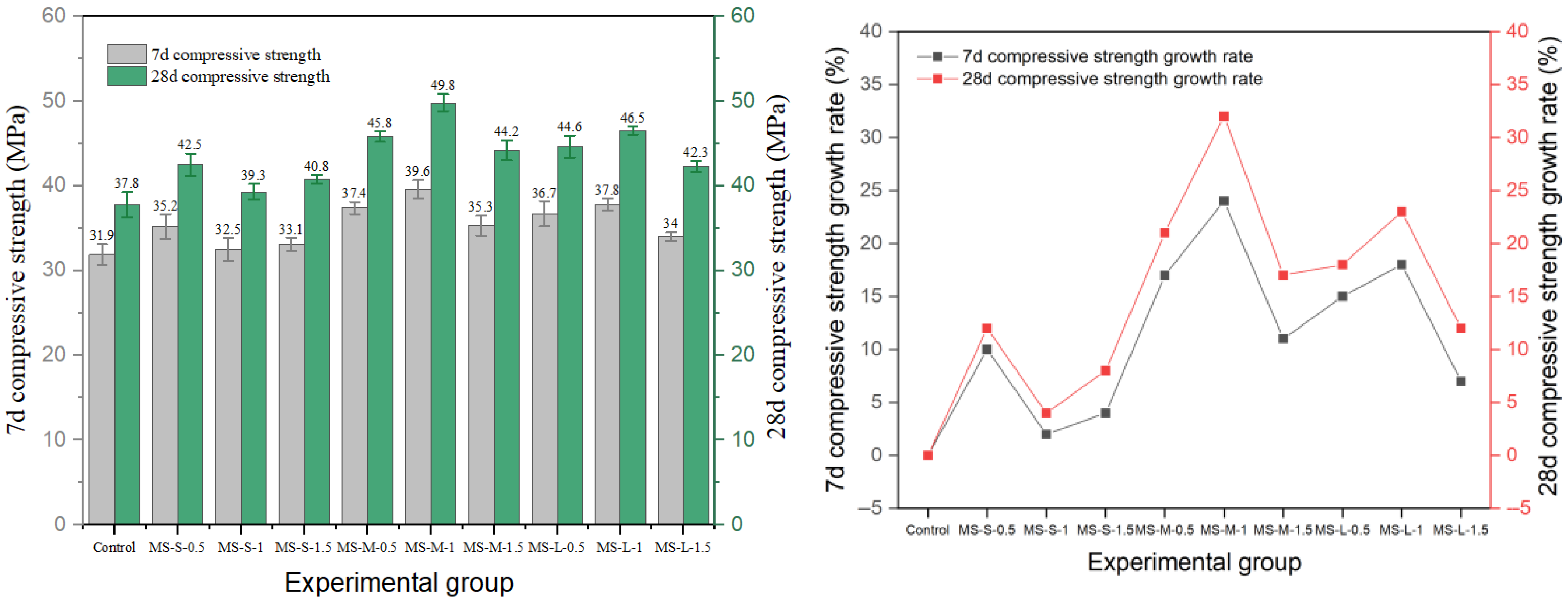
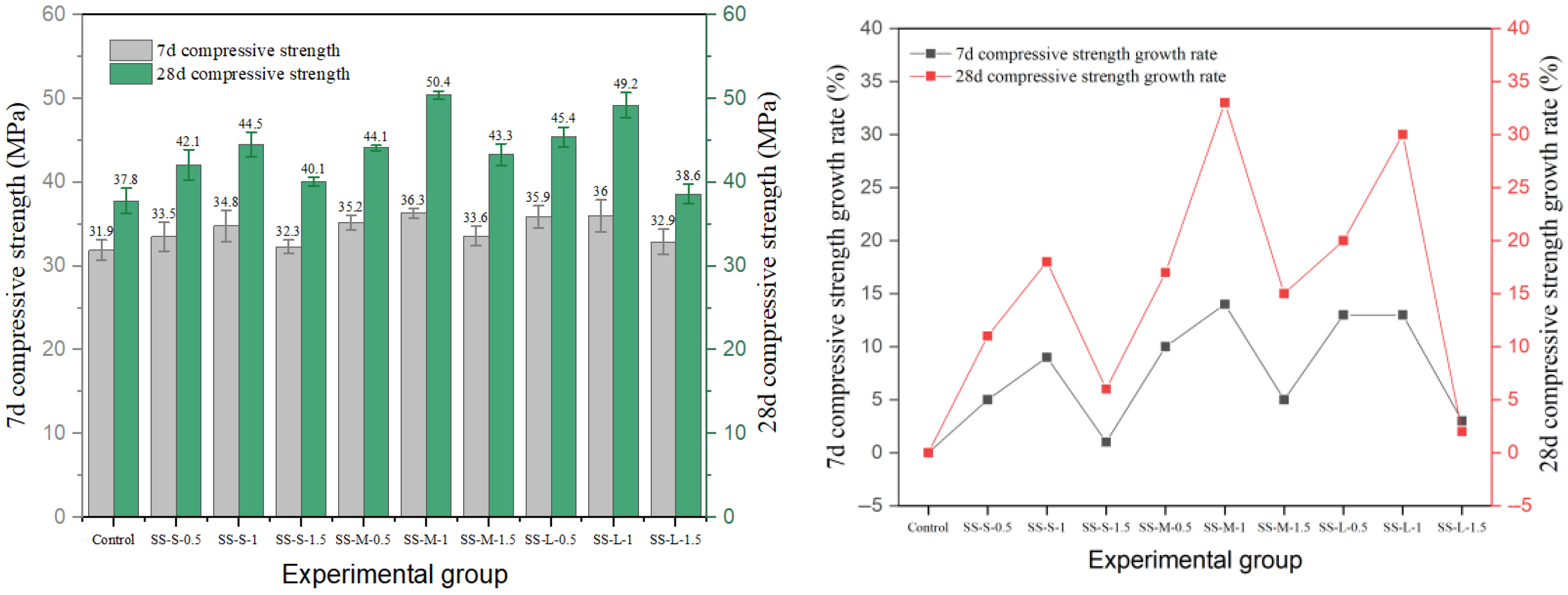
Shear type and milling steel fiber also have an obvious reinforcement effect, and the experimental results are shown in
Figure 11 and
Figure 12. The results show that the optimal parameter combination of shear-steel-fiber-reinforced concrete is different from that of milling-steel-fiber-reinforced concrete, and the shear steel fiber reaches the peak strength of 50.4 MPa at the medium length–diameter ratio and 1.0% content (SS-M-1). The strength of milled steel fiber changes more smoothly, and the peak strength of the medium length–diameter ratio group (MS-M-1) is 49.8 MPa, and the strength decreases by 11.2% after exceeding the optimal dosage, which is smaller than that of end-hook fiber and shear fiber, indicating that its surface texture enhances the mechanical bite force and is evenly distributed, with little damage to the continuity of the matrix.
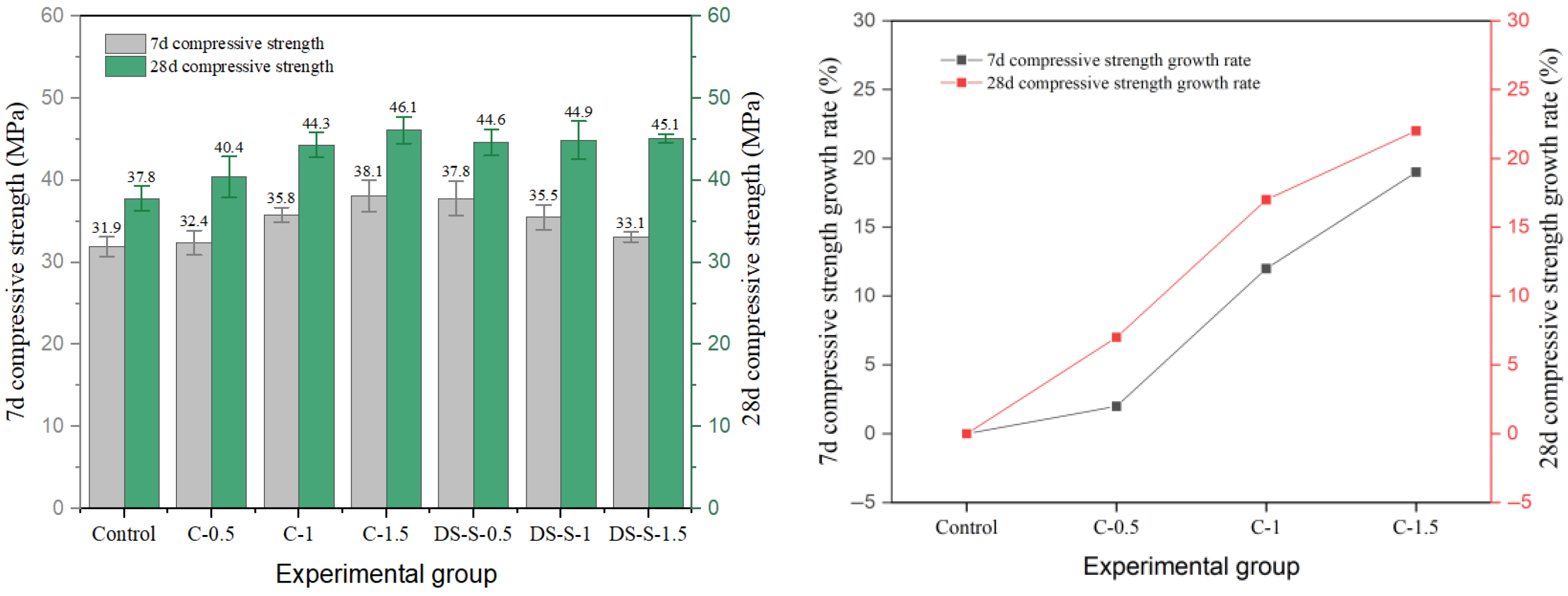
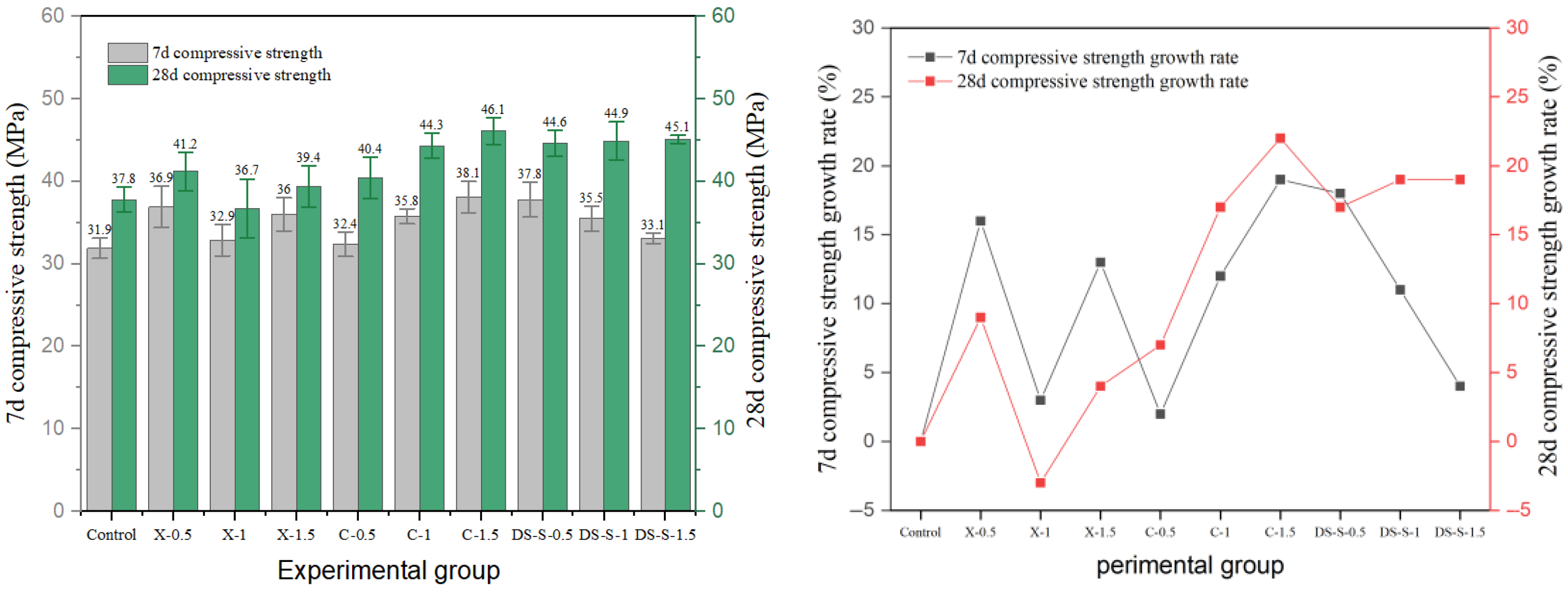
The experimental results of copper-plated steel-fiber-reinforced and corroded steel-fiber-reinforced are shown in
Figure 13 and
Figure 14. The performance of corroded steel fibers was even poorer, showing only a slight 9% increase at the 0.5% dosage (X-0.5). At higher dosages, the strength fell below that of the reference group. Furthermore, the later-age strength gain rate for all corroded fiber groups was significantly lower than that of the control group. Corrosion products disrupted the integrity of the fiber–matrix interface, hindered effective bonding, and may have inhibited cement hydration.
In summary, steel fibers can significantly improve the compressive strength of concrete, but their reinforcing effect is confined to an optimal window of content and aspect ratio. The enhancement effect of copper-plated and corroded steel fibers was limited due to interfacial issues. Fiber incorporation generally promoted later-age strength gain, demonstrating its positive role in bridging micro-cracks and enhancing long-term performance.
3.2. Flexural Strength
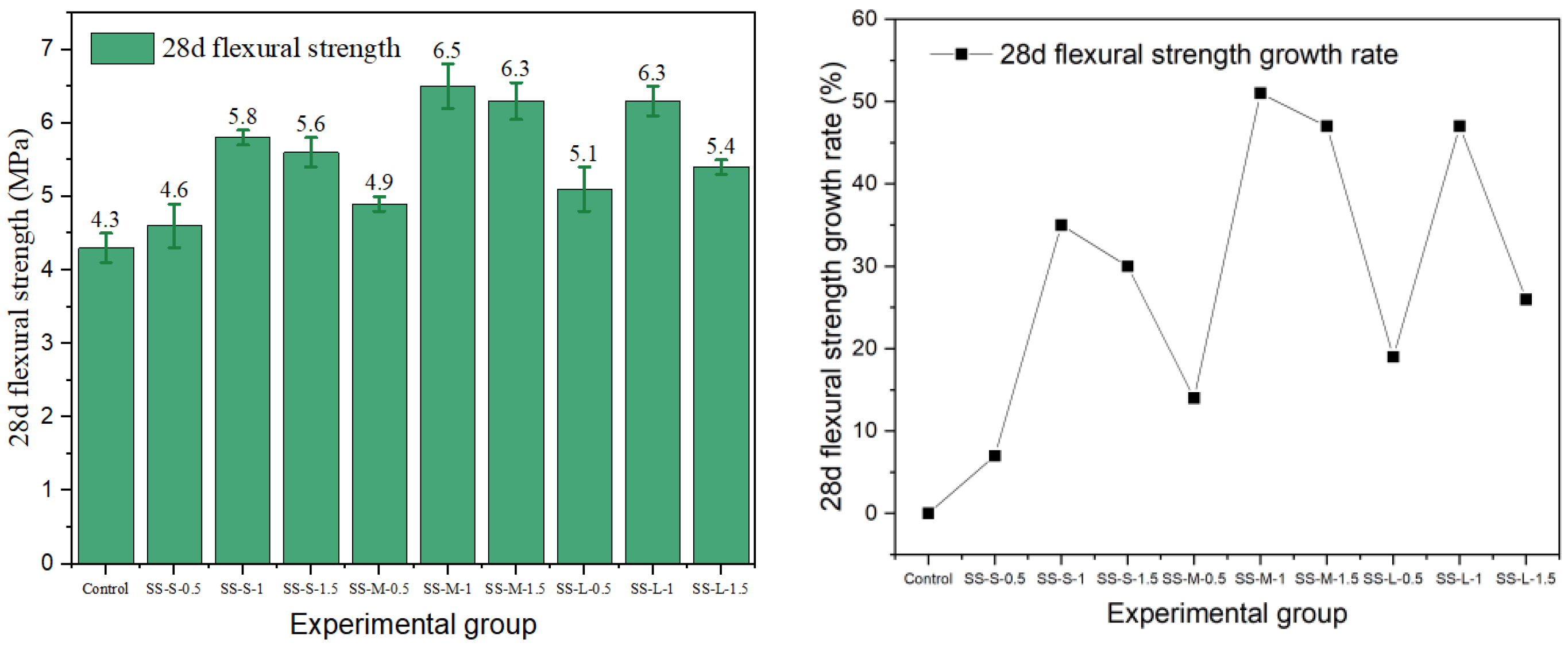
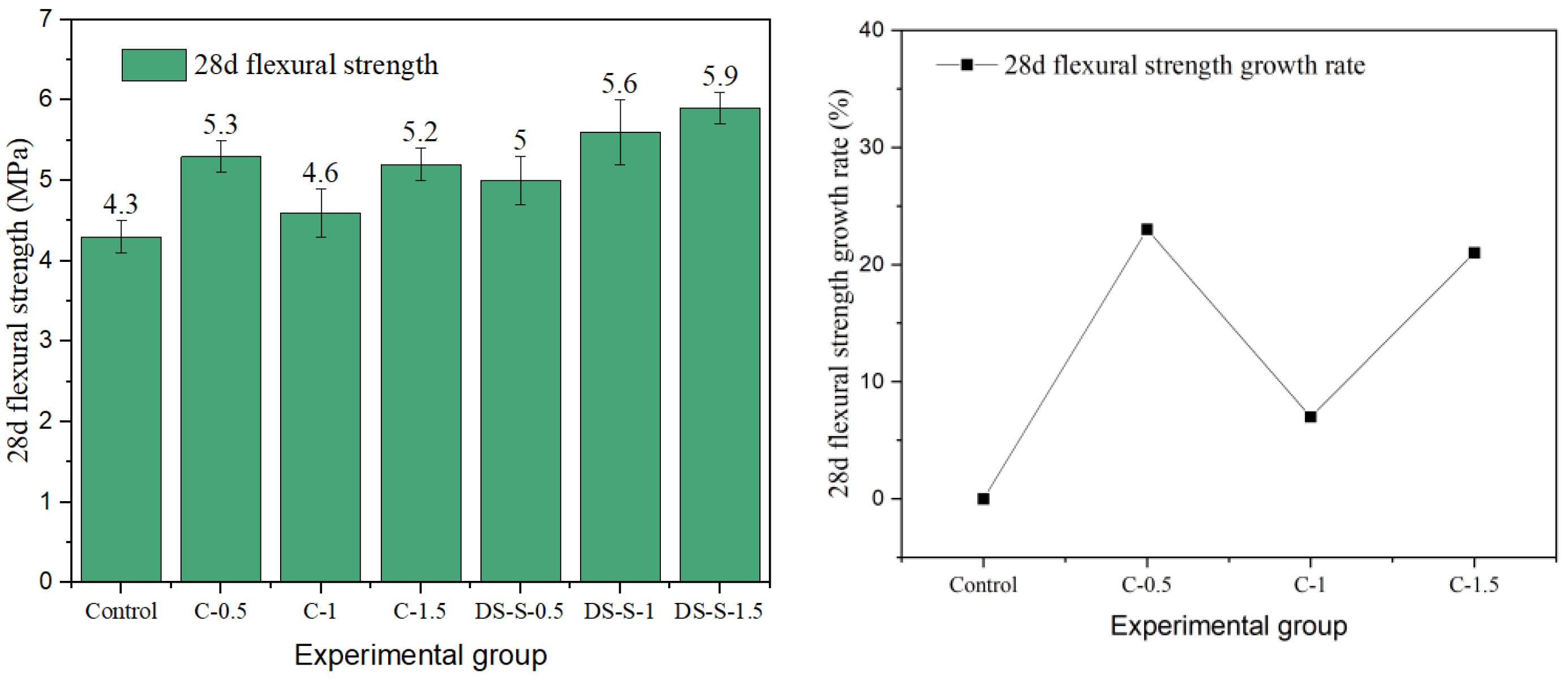
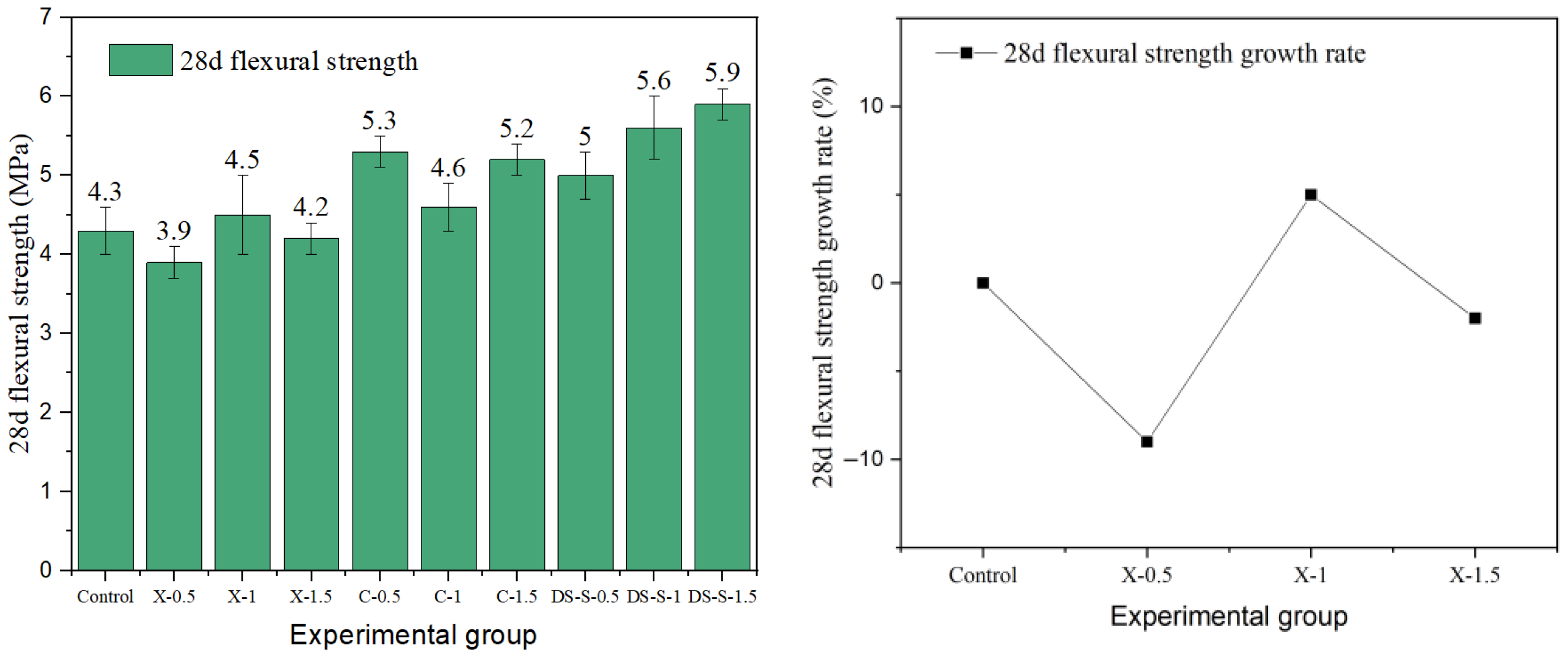
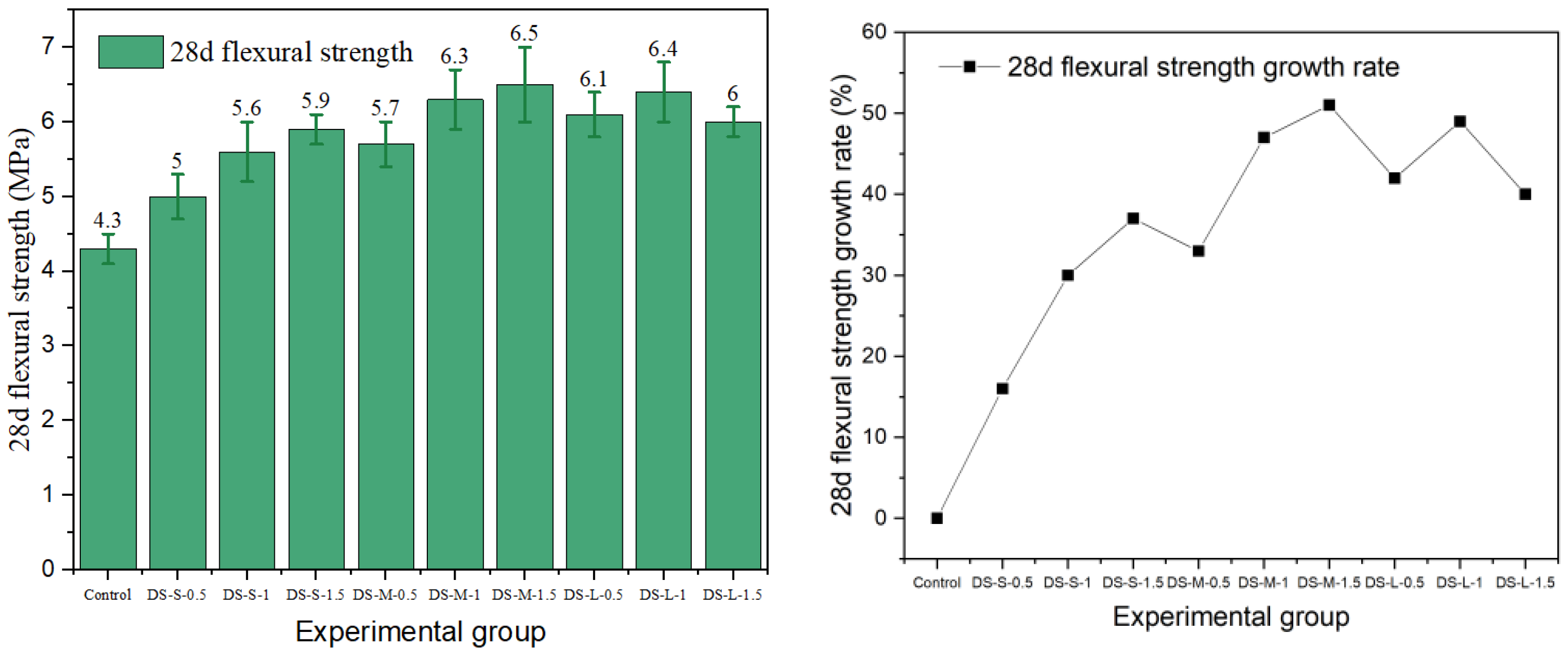
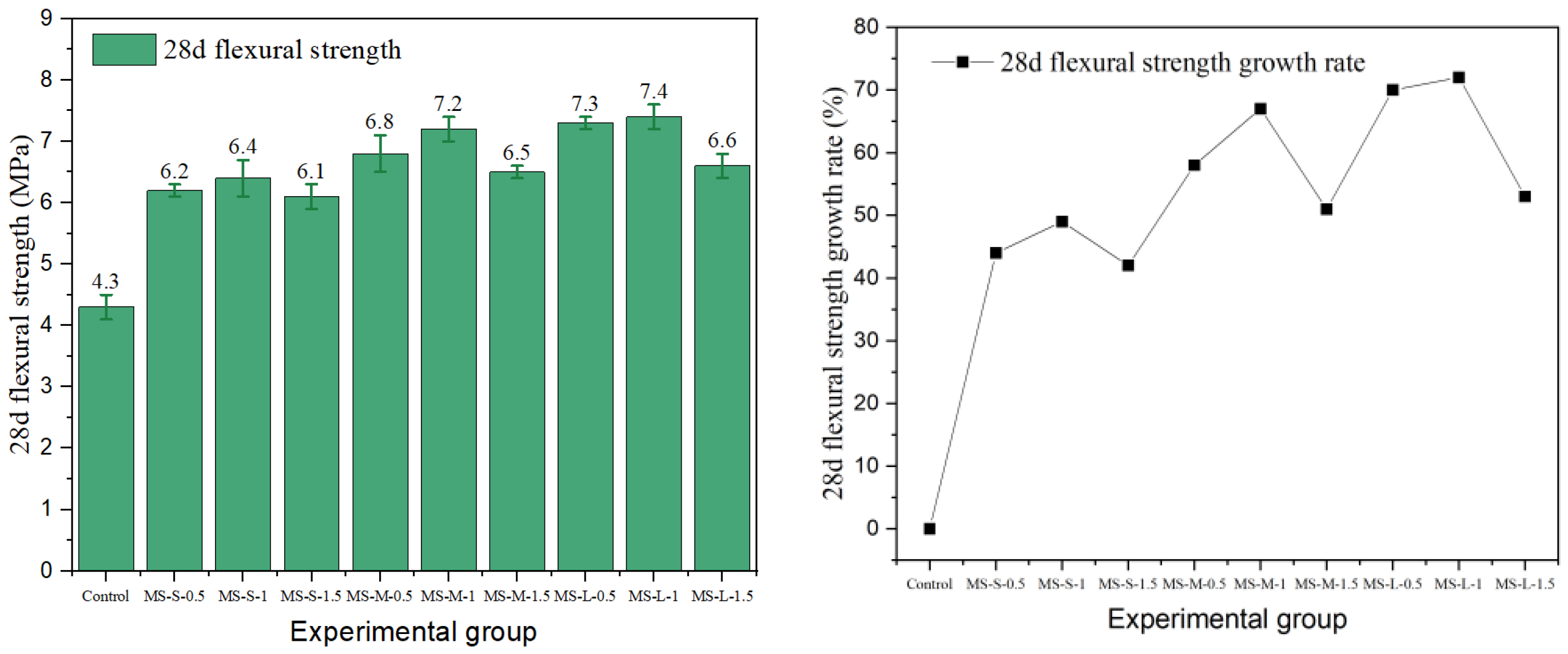
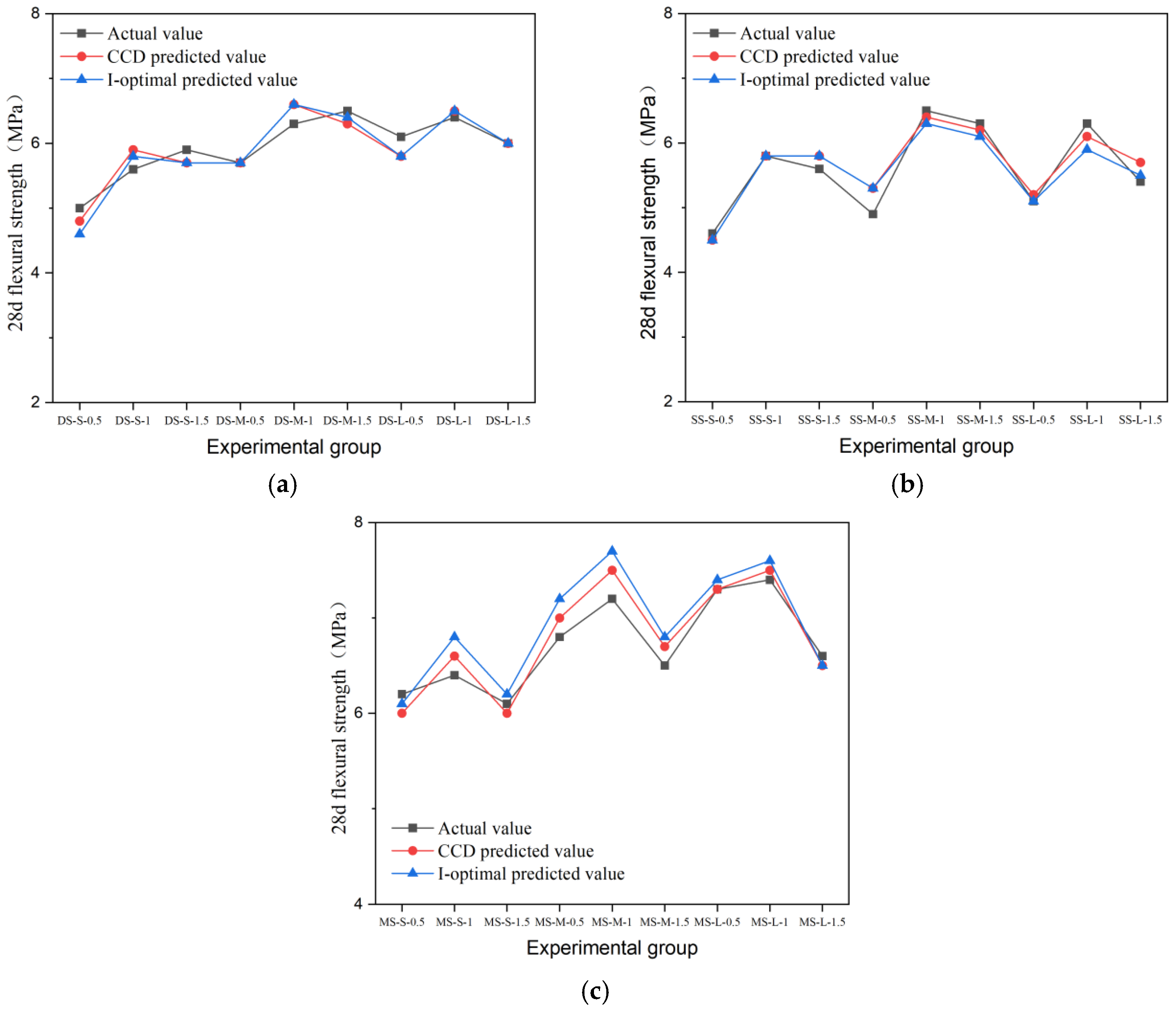
Flexural strength is a key index for evaluating the crack resistance and toughness of fiber-reinforced concrete. In this study, the effects of different fiber types and the parameters on the flexural properties of cement concrete were systematically investigated. The results are presented in
Figure 15,
Figure 16,
Figure 17,
Figure 18 and
Figure 19.
The data show that the addition of fibers can significantly alter the flexural properties of concrete, but the toughening effect is highly dependent on fiber geometry, surface characteristics, aspect ratio, and volume content. Generally, milling and end-hook type steel fibers were most effective in improving flexural strength, while other fibers exhibited limited or even negative reinforcing effects due to the inherent limitations.
The flexural performance of end-hook steel fiber relied primarily on its end-anchorage mechanism. Its optimum flexural strength was achieved in the medium aspect ratio group with 1.5% content (DS-M-1.5), reaching 6.5 MPa with a 51% increase. The anchoring mechanism of the hooked end has been independently quantified by pull-out experiments showing that the hook contributes 50–57% of total pull-out energy [
15], which directly underpins the flexural bridging capacity observed in this study. The end hook provides a mechanical interlock during fiber pull-out, effectively delaying crack propagation. Unlike the compressive behavior, the flexural strength of the composite increased continuously with fiber content within the tested range. This indicates that the anchoring effect can be fully utilized at higher contents. However, in the large-aspect-ratio group, strength decreased at the 1.5% dosage, suggesting that the combination of excessive fiber length and high content may impair dispersion uniformity.
Milling steel fiber exhibited the best flexural performance overall. Its 28-day flexural strength peaked in the MS-L-1 group at 7.4 MPa, which was 72% higher than the control group (4.3 MPa). This magnitude of improvement is supported by recent comparative studies: Zhao et al. [
43] demonstrated that milled fibers consistently outperformed hooked fibers in flexural performance across varying aspect ratios, attributing this advantage to the stronger mechanical interlock generated by their rough surface texture. This is attributed to its rough surface morphology, which enhances mechanical interlock and friction at the fiber–matrix interface, thereby providing higher bridging stress during crack propagation. The flexural strength increased with aspect ratio, with the large-aspect-ratio groups showing the best performance across all dosage levels. Its strength varied moderately with content, indicating that milling fiber can effectively realize its toughening potential even at lower contents.
The flexural performance of shear steel fiber was particularly sensitive to content. The strength of the best-performing group (SS-M-1) was 6.5 MPa, but strength decreased in all groups when the dosage increased to 1.5%. Due to the lack of end anchorage or distinct surface texture, it relies primarily on chemical bonding with the cement paste, resulting in a relatively weaker interface. At high contents, the straight fibers are prone to agglomeration, forming defects that disrupt stress transfer and lead to a decline in the reinforcing effect.
The flexural properties of copper-plated and corroded steel fibers were severely limited by interfacial issues. The copper-plated fiber achieved a strength of 5.3 MPa at 0.5% content. However, as the content increased, agglomeration induced by the smooth surface caused strength gain to stagnate, with a maximum increase of only 23%. The performance of corroded fiber was even poorer. The strength of the best group (X-1) was only 4.5 MPa, a mere 5% increase, while the strength of the other groups was even lower than that of the reference concrete. The loose oxide layer formed by corrosion products creates a weak transition zone at the interface, significantly weakening the fiber bridging effect.
Beyond the quantitative strength data reported above, the failure modes observed during the four-point bending tests provided important qualitative evidence of the ductility improvement imparted by steel fiber incorporation. Plain concrete specimens failed in a sudden and brittle manner: upon reaching peak load, a single dominant crack propagated rapidly through the cross-section, resulting in immediate and complete separation of the specimen with no residual load-carrying capacity. In contrast, all fiber-reinforced specimens exhibited a markedly different fracture behavior. After first cracking, the bridging fibers continued to transfer stress across the crack faces, preventing catastrophic separation and allowing the specimens to sustain a measurable residual load over considerably larger mid-span deflections before eventual failure by fiber pull-out or rupture. This transition from brittle fracture to quasi-ductile behavior was most evident in the milling and end-hook fiber groups, consistent with their superior interfacial bonding mechanisms; the rough surface texture of milling fibers and the mechanical anchorage of end-hook fibers both enhance the fiber–matrix interaction during crack opening, thereby prolonging energy dissipation. Shear steel fiber groups also demonstrated improved post-crack integrity compared to plain concrete, though the absence of mechanical anchorage made the fibers more susceptible to pull-out at higher deflections. The copper-plated and corroded fiber specimens showed the least improvement in post-crack behavior, with specimens exhibiting relatively abrupt load drops after peak, consistent with the weak interfacial bonding that also limited their strength performance. These observations confirm that the incorporation of steel fibers represents not merely a strength enhancement strategy but a fundamental improvement in the fracture ductility of concrete, a characteristic of critical importance for structural applications subjected to impact, seismic, or fatigue loading.
In summary, steel fibers can significantly improve the flexural strength and toughness of concrete through mechanisms such as mechanical interlock and end anchorage, with the milling type exhibiting the best overall performance. The enhancement provided by copper-plated and corroded fibers was limited by interfacial bonding. Unlike the trend for compressive strength, flexural strength generally increased with fiber content. This indicates that a higher fiber proportion can more effectively bridge macro-cracks and fully utilize the crack-resistance potential under flexural and tensile stresses.
3.3. Splitting Tensile Strength
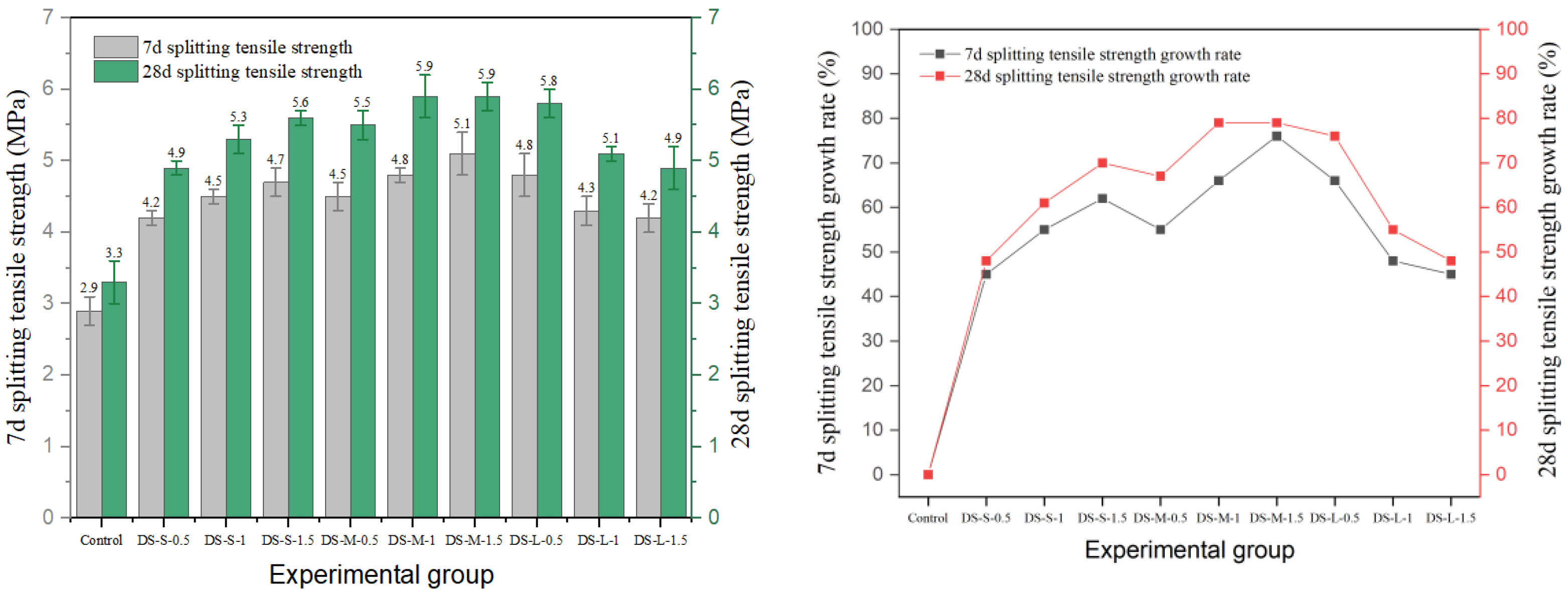
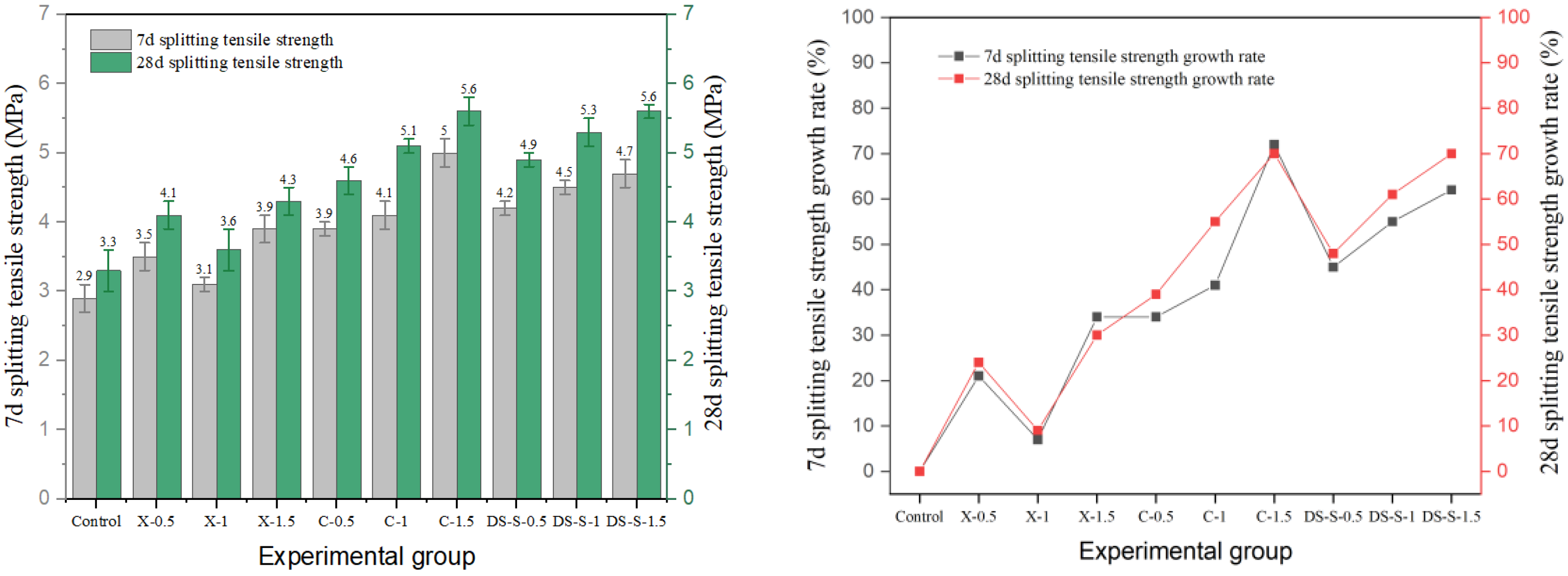
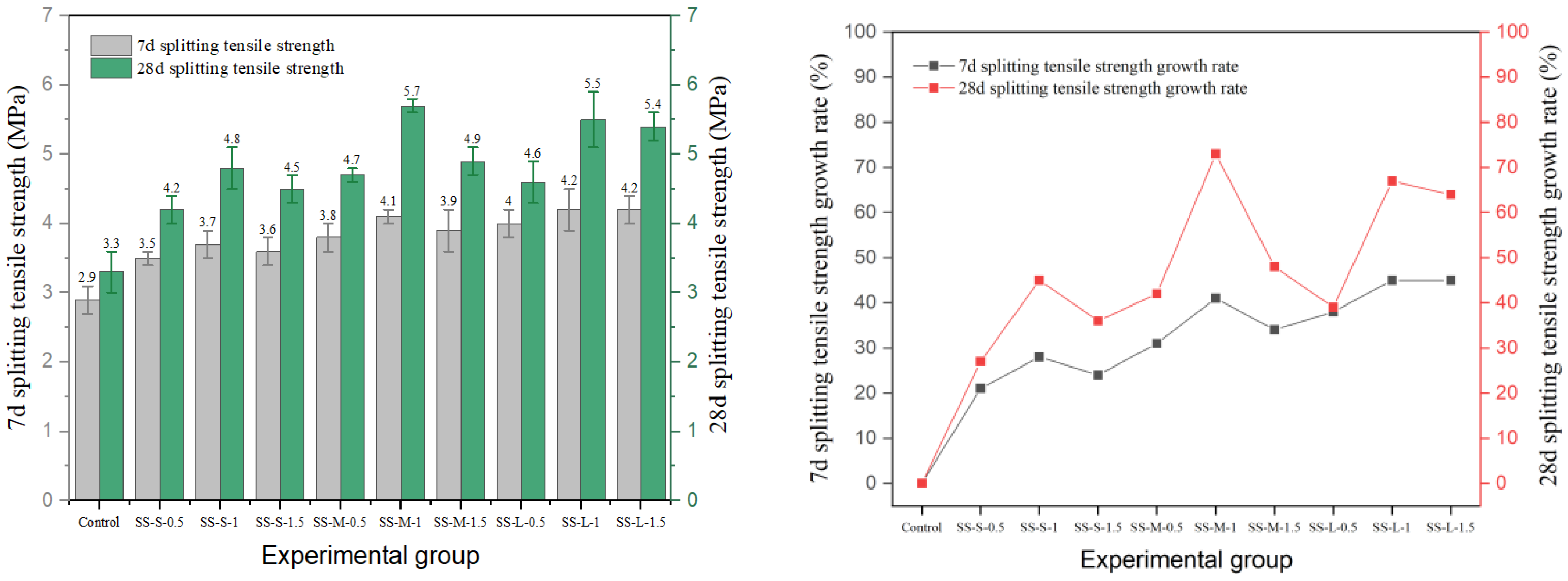
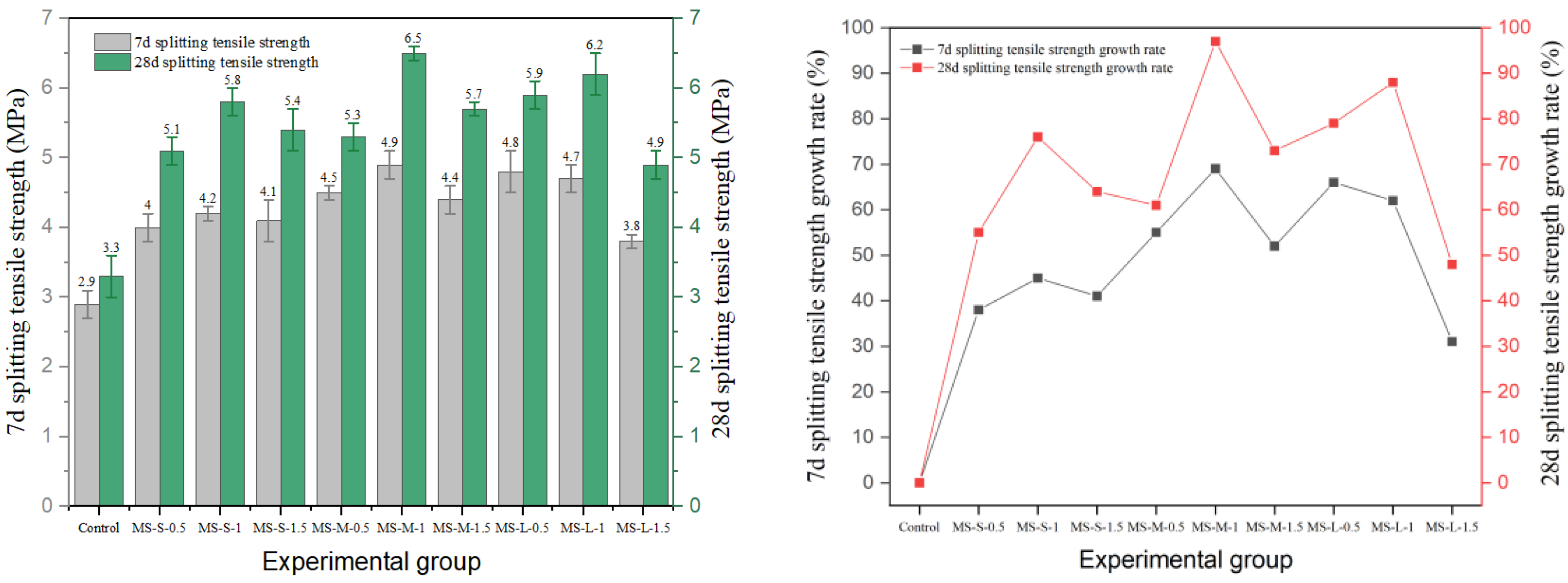
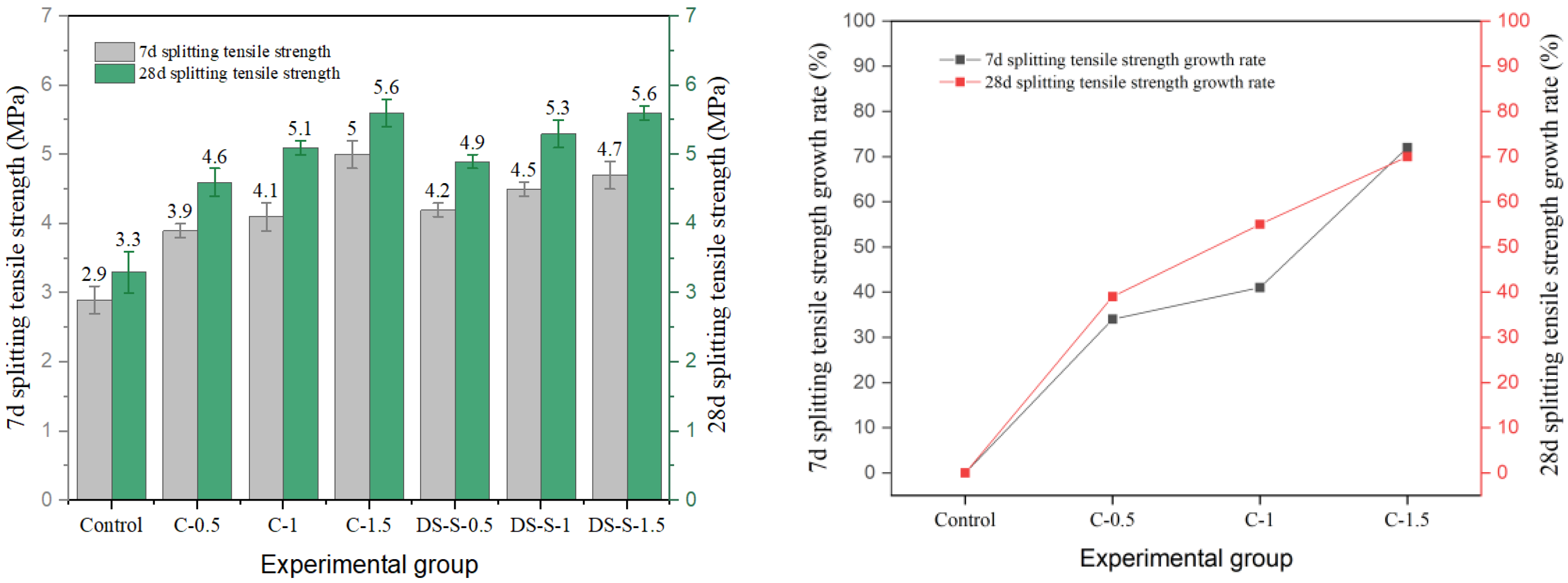
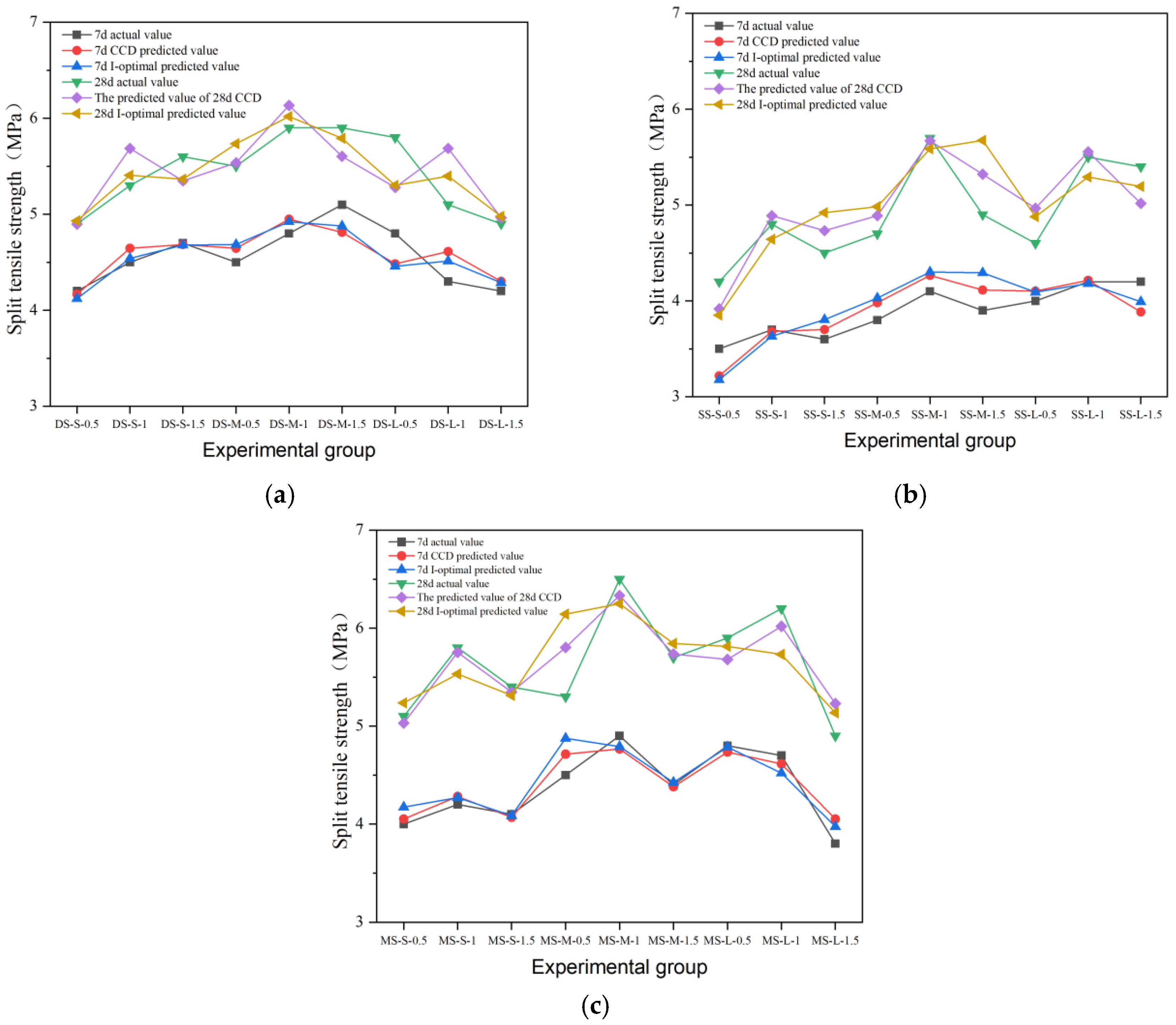
In this study, the effects of different types of fibers on the splitting tensile strength of cement concrete are systematically investigated. The results are shown in
Figure 20,
Figure 21,
Figure 22,
Figure 23 and
Figure 24, and the data show that there are significant differences in fiber reinforcement effects, which mainly depend on the mechanical properties, geometric characteristics of fibers and their interfacial bonding properties with the cement matrix.
Regarding splitting tensile strength, steel fibers exhibited an excellent reinforcing effect. The 28-day splitting tensile strength of end-hook steel fiber increased regularly with both content and aspect ratio. The strength of the medium-aspect-ratio group (DS-M-1.5) reached 5.9 MPa, representing a 79% increase over the reference group’s strength of 3.3 MPa. It is noteworthy that the splitting tensile strength continued to increase with fiber content, contrasting with the “optimal content” phenomenon observed in the compressive tests. This indicates that the end-anchorage effect is more fully mobilized under tensile stress.
Milling steel fiber performed best. The 28-day strength of the medium-aspect-ratio group (MS-M-1) reached 6.5 MPa, the highest value among all experimental groups and a 97% increase compared to the reference group. This is attributed to the strong mechanical interlock provided by the milled surface texture, which ensures effective stress transfer. However, when the content exceeded 1.0%, strength generally declined, indicating that the enhancement effect still exhibits an optimal threshold in terms of content.
The performance of shear steel fiber showed obvious sensitivity to content. In the medium-aspect-ratio group, peak strength (5.7 MPa) was achieved at 1.0% content (SS-M-1) and decreased to 4.9 MPa when the content increased to 1.5%. This inverted U-shaped trend stems from the straight fiber morphology, which is prone to agglomeration at high contents, leading to decreased stress transfer efficiency. In terms of strength development, shear steel fiber significantly promoted later-age strength gain. The strength gain rate from 7 to 28 days for the SS-M-1 group reached 39%, far exceeding the 14% of the reference group.
The splitting tensile strength of copper-plated steel fiber exhibited an initial increase followed by a decrease. At 1.5% content, the highest strength reached 5.6 MPa; however, the improvement was significantly lower than that achieved with ordinary steel fibers. The smooth copper-plated surface reduces the inter-fiber friction coefficient, leading to severe agglomeration when the content exceeds a critical value. The later-age strength gain rate of the C-1.5 group was only 12%, substantially lower than that of other dosage groups.
The behavior of corroded steel fiber was more complex, with strength showing non-monotonic changes. The strength was 4.1 MPa for the X-0.5 group, dropped to 3.6 MPa for X-1, and then rose to 4.3 MPa for X-1.5. This fluctuation stems from the dual effect of corrosion on the interface: moderate corrosion increases surface roughness and enhances mechanical interlock, whereas excessive corrosion causes the oxide layer to spall, creating a weak zone. The degradation of the fiber–matrix bond by corrosion products is consistent with findings from UHPC studies, where pre-corroded steel fibers caused a reduction in interfacial bond strength due to the formation of a loose, porous oxide layer at the fiber surface [
2]. The dual effect of moderate corrosion increasing surface roughness while excessive corrosion forming a weak zone, observed in this study, was also noted in single-fiber pull-out investigations [
18]. The later-age strength gain rate of all corroded fiber groups was lower than that of the reference group, indicating that interfacial damage continued to develop under long-term loading.
In summary, steel fibers, especially the end-hook and milling types, can significantly improve the splitting tensile strength of concrete. The enhancement is primarily achieved through end anchorage and the mechanical interlock provided by surface texture. The enhancement effect of copper-plated and corroded steel fibers was limited due to interfacial problems. The results of this study provide an important basis for the material design and engineering application of fiber-reinforced concrete in tensile-stress-dominated environments.