Research on the Prediction Method for Ultimate Bearing Capacity of Circular Concrete-Filled Steel Tubular Columns Based on Random Search-Optimized CatBoost Algorithm


Abstract
1. Introduction
2. Dataset and Feature Analysis
2.1. Database Compilation
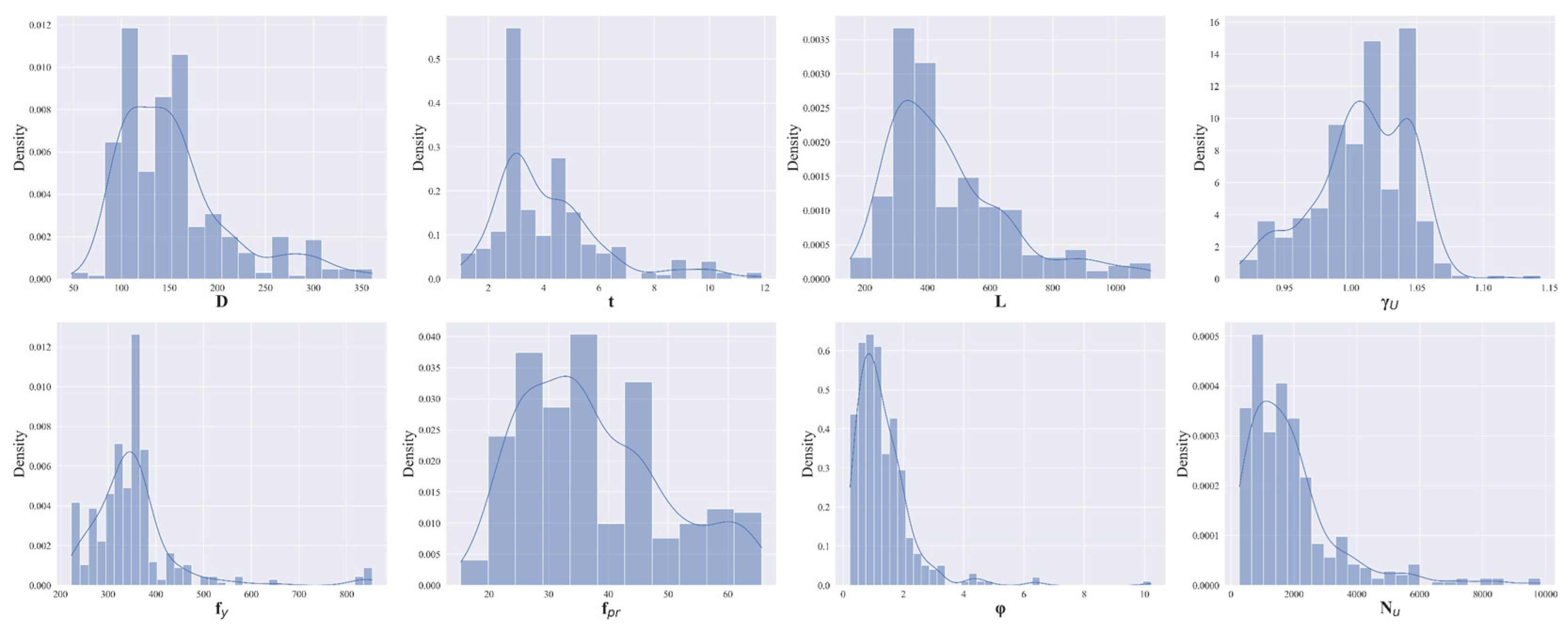
2.2. Statistical Description of the Database
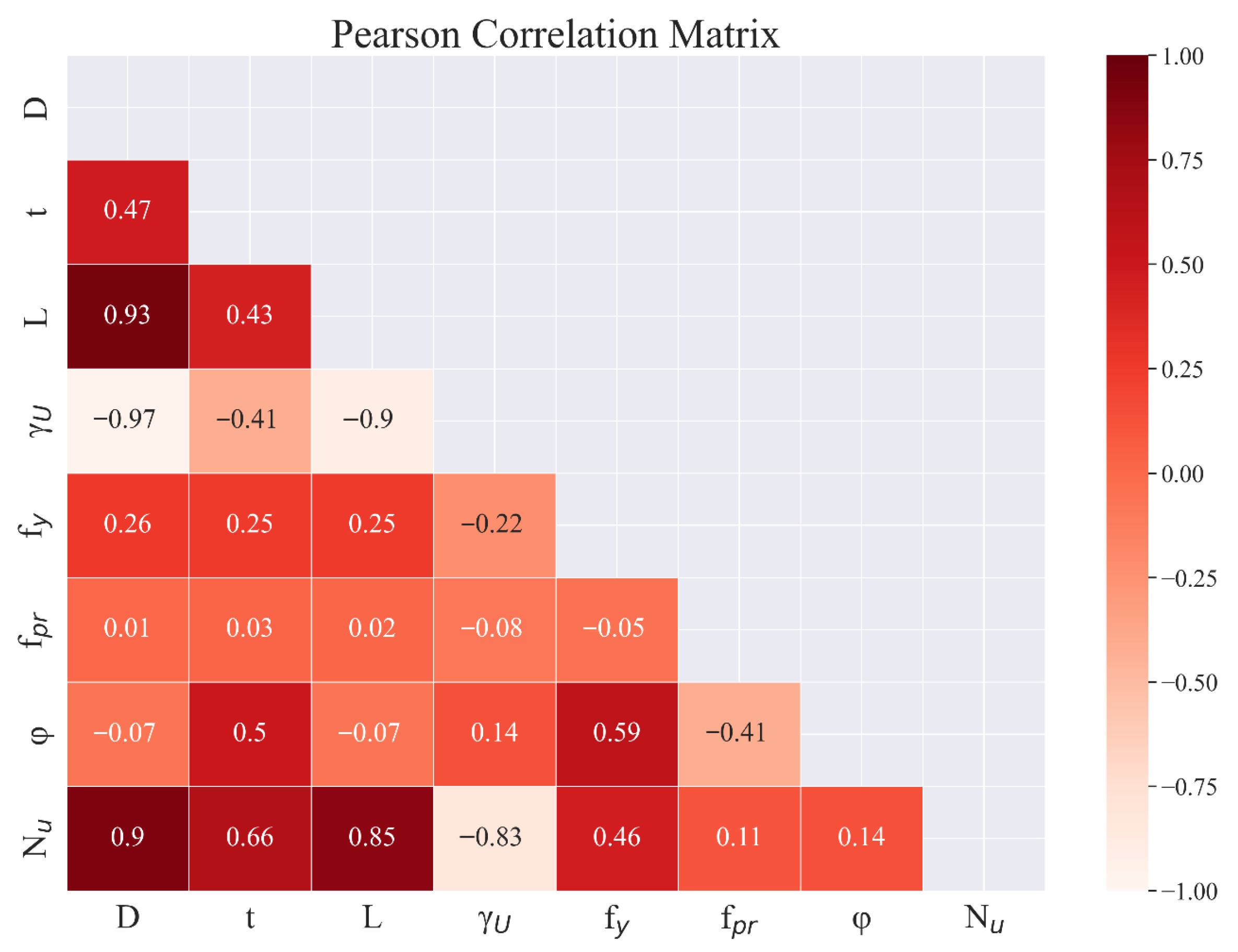
2.3. Feature Correlation Analysis
3. Theoretical Background of Machine Learning Algorithms
3.1. LightGBM Model
3.2. Random Forest (RF) Model
3.3. Gradient Boosting (GB) Model
3.4. K-Nearest Neighbors (KNN) Model
3.5. CatBoost Model
3.6. XGBoost Model
4. Model Optimization Strategies and Evaluation
4.1. Input Feature Standardization
- (1)
- Mitigating Numerical Instability. Z-Score standardization effectively averts the imbalance in model parameter weight distribution resulting from significant disparities in feature scales. By preventing features with large magnitudes from dominating weight updates during gradient descent, it preserves numerical stability in computations.
- (2)
- Enhancing Convergence Efficiency. By applying an approximately uniform scaling to the feature space, this method ensures that parameter dimensions exhibit comparable scales of variation during optimization, facilitating coordinated gradient updates across all directions. Consequently, the contours within the parameter search space approximate a spherical shape, which significantly improves the convergence efficiency of gradient-based optimization algorithms and accelerates model training.
- (3)
- Strengthening Feature Representation Capabilities. For learning algorithms reliant on distance metrics or inner-product structures, Z-Score standardization bolsters the model’s capacity for comprehensive multi-dimensional feature representation. By eliminating the “pseudo-importance” arising from variations in units and value ranges, it ensures that all dimensions contribute balanced weights to distance calculations, thereby more accurately characterizing the intrinsic similarity structure among samples.
- (4)
- Correcting Regularization Bias. Standardization eliminates model performance biases caused by feature scale heterogeneity. In linear models incorporating regularization terms, the absence of standardization often leads to features with larger scales being disproportionately penalized. Z-Score standardization prevents this systematic bias in parameter estimation, ensuring that regularization constraints are applied equitably across all dimensions.
4.2. Hyperparameter Optimization Based on Random Search
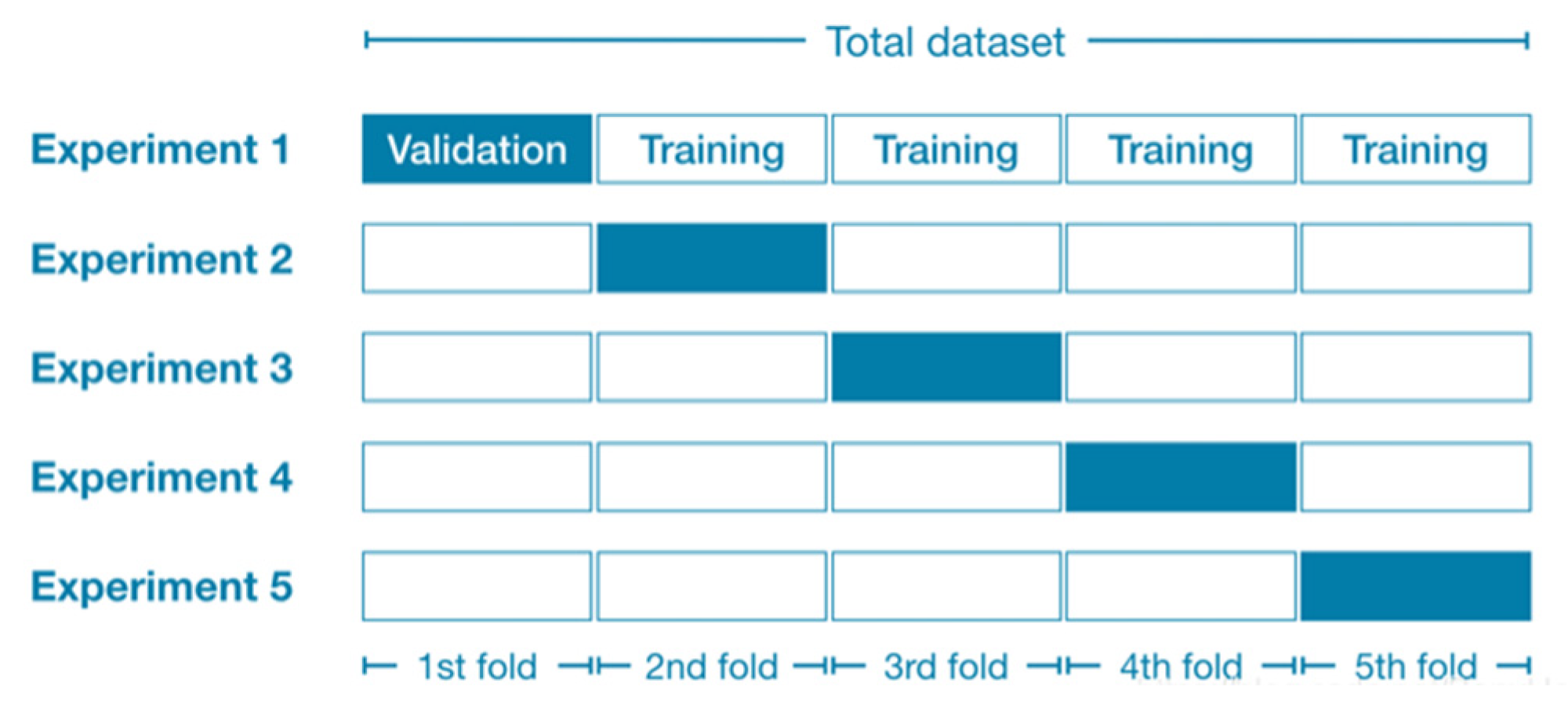
4.2.1. Five-Fold Cross-Validation
4.2.2. Random Search Algorithm
4.3. Evaluation Metrics for Machine Learning Models
5. Results and Analysis
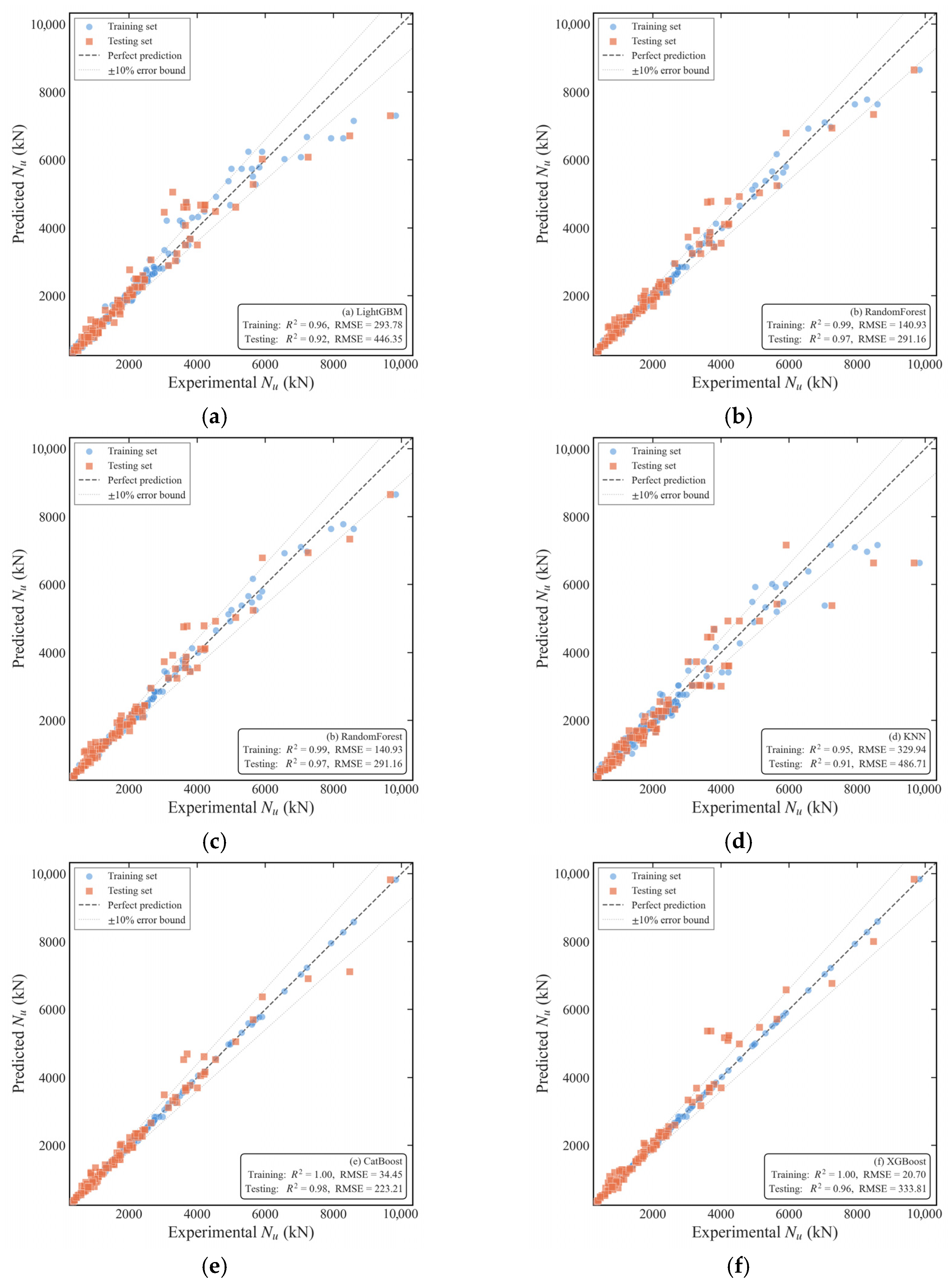
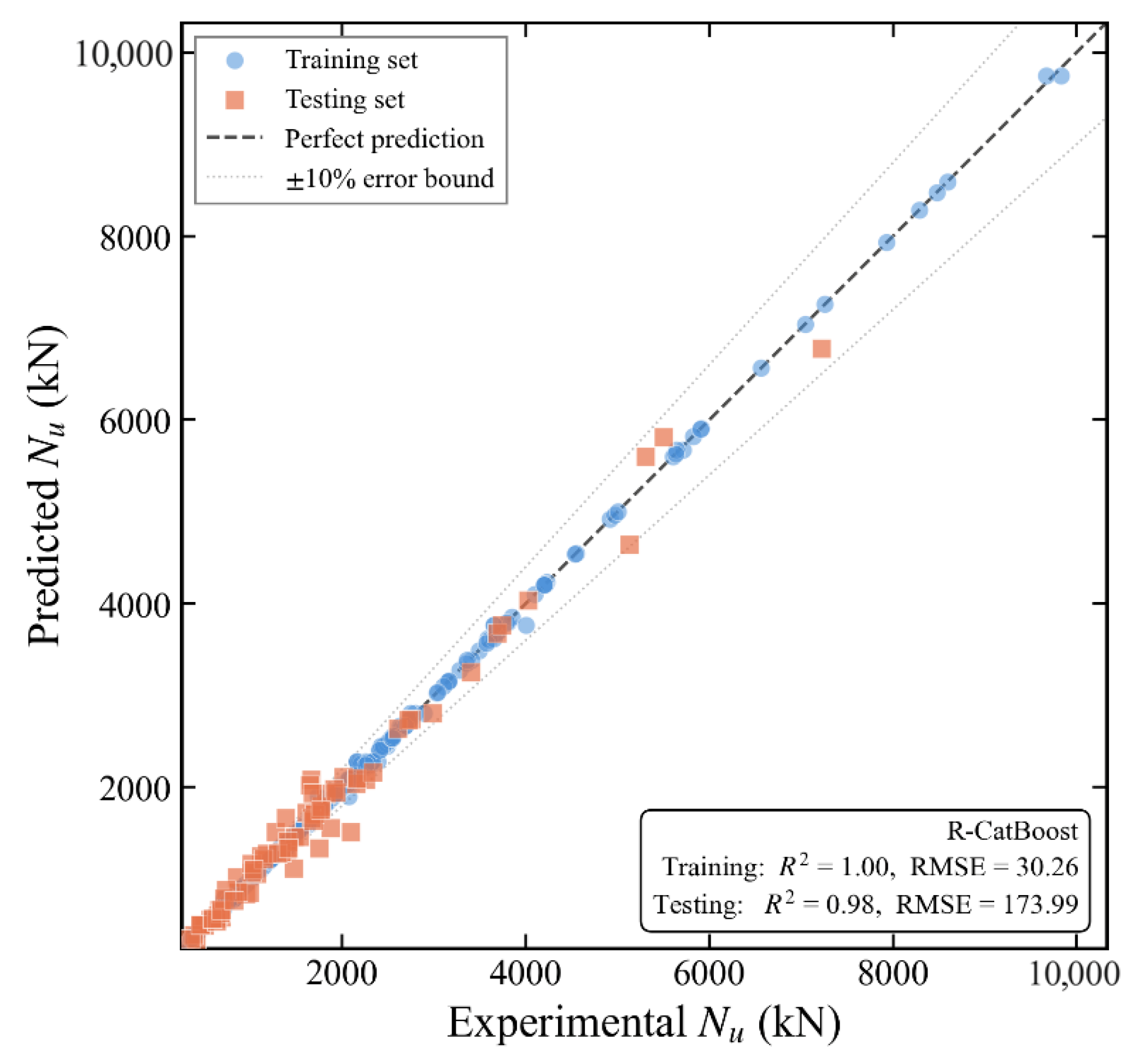
5.1. Basic Experimental Results
5.2. Results of 5-Fold Cross-Validation and Hyperparameter Optimization
5.3. Comparison Between Optimized and Original Models
5.4. Comparison of This Study with Existing Literature
- (1)
- Data-Driven Methodology: This study relies exclusively on 438 authentic experimental cases, prioritizing the physical reliability and empirical groundedness of the data. In contrast, Kazemi [19] and Xie [31] extensively utilized Finite Element Analysis (FEA) simulation data to compensate for the scarcity of experimental records. Kazemi [19] further advanced this by incorporating synthetic data generation techniques (GANs/VAEs) to address the challenges of small-sample learning.
- (2)
- Algorithmic Evolution: There is a clear transition in the complexity of the predictive models used. Early research, such as Lyu [30], focused on the heuristic optimization of individual base models (e.g., SVR). However, more recent studies—including this work, Xie [31], and Kazemi [19]—have shifted toward Ensemble Learning frameworks. Algorithms like CatBoost and XGBoost leverage multi-model synergy to significantly enhance generalization accuracy and predictive robustness.
- (3)
- Validation Depth: This study distinguishes itself by utilizing SHAP interpretability analysis to demonstrate the scientific alignment between machine learning results and classical structural mechanics, moving beyond simple curve fitting. For comparison, Li [29] emphasized the applicability of models to large-scale external specimens, while Zhao [32] focused on assessing model accuracy through in situ experimental validation.
6. SHAP-Based Interpretability Analysis
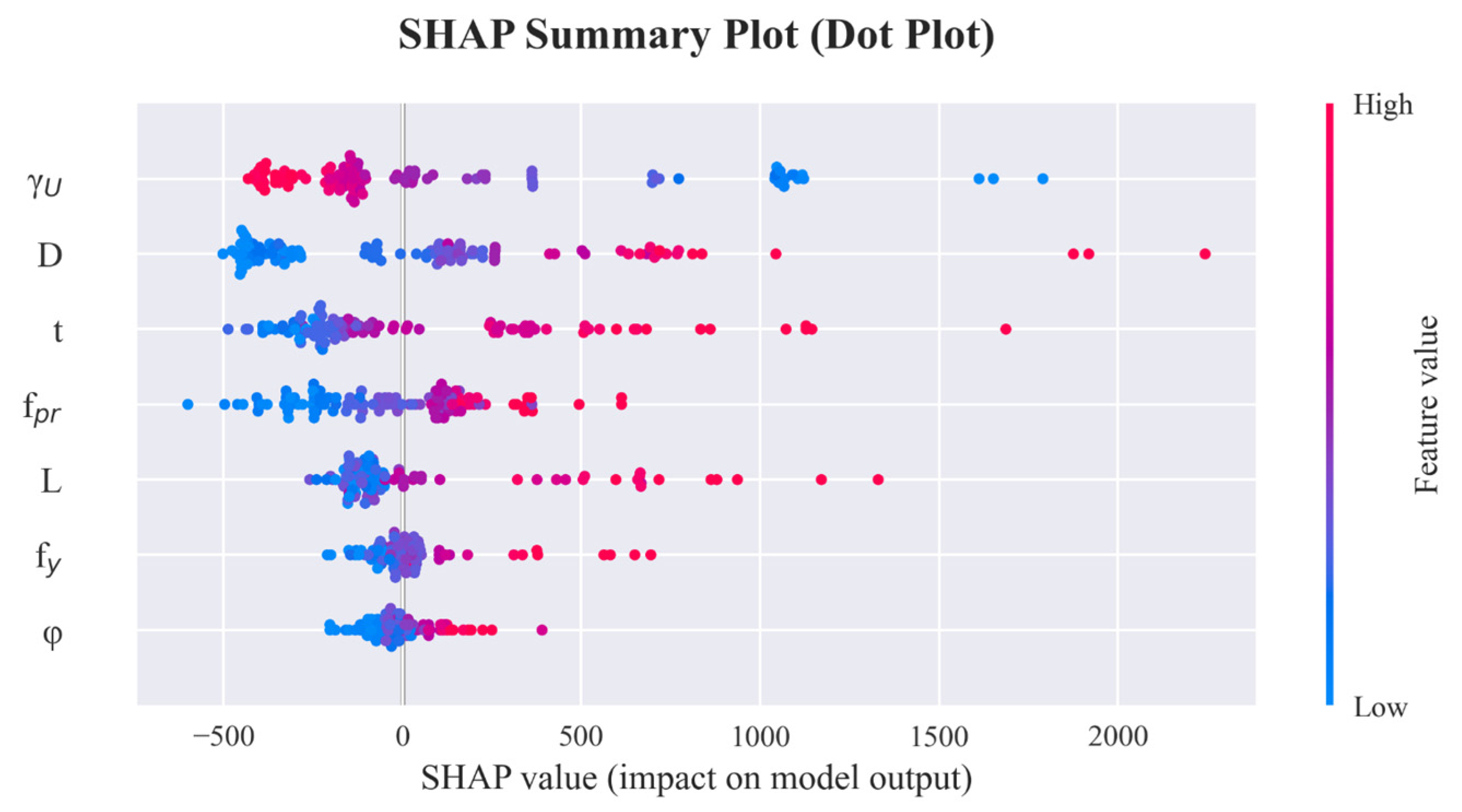
6.1. SHAP Summary Plot
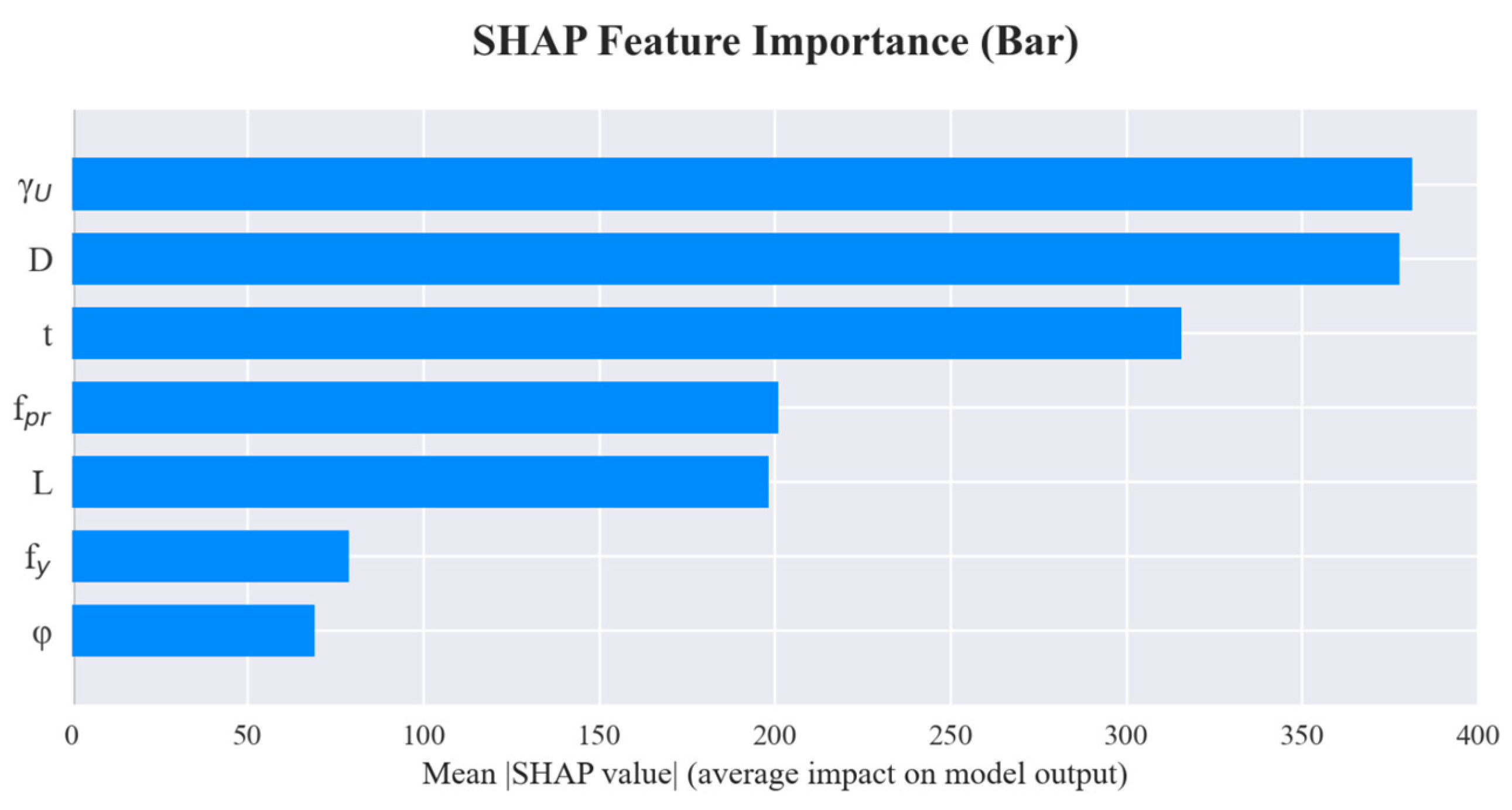
6.2. SHAP Feature Importance Plot
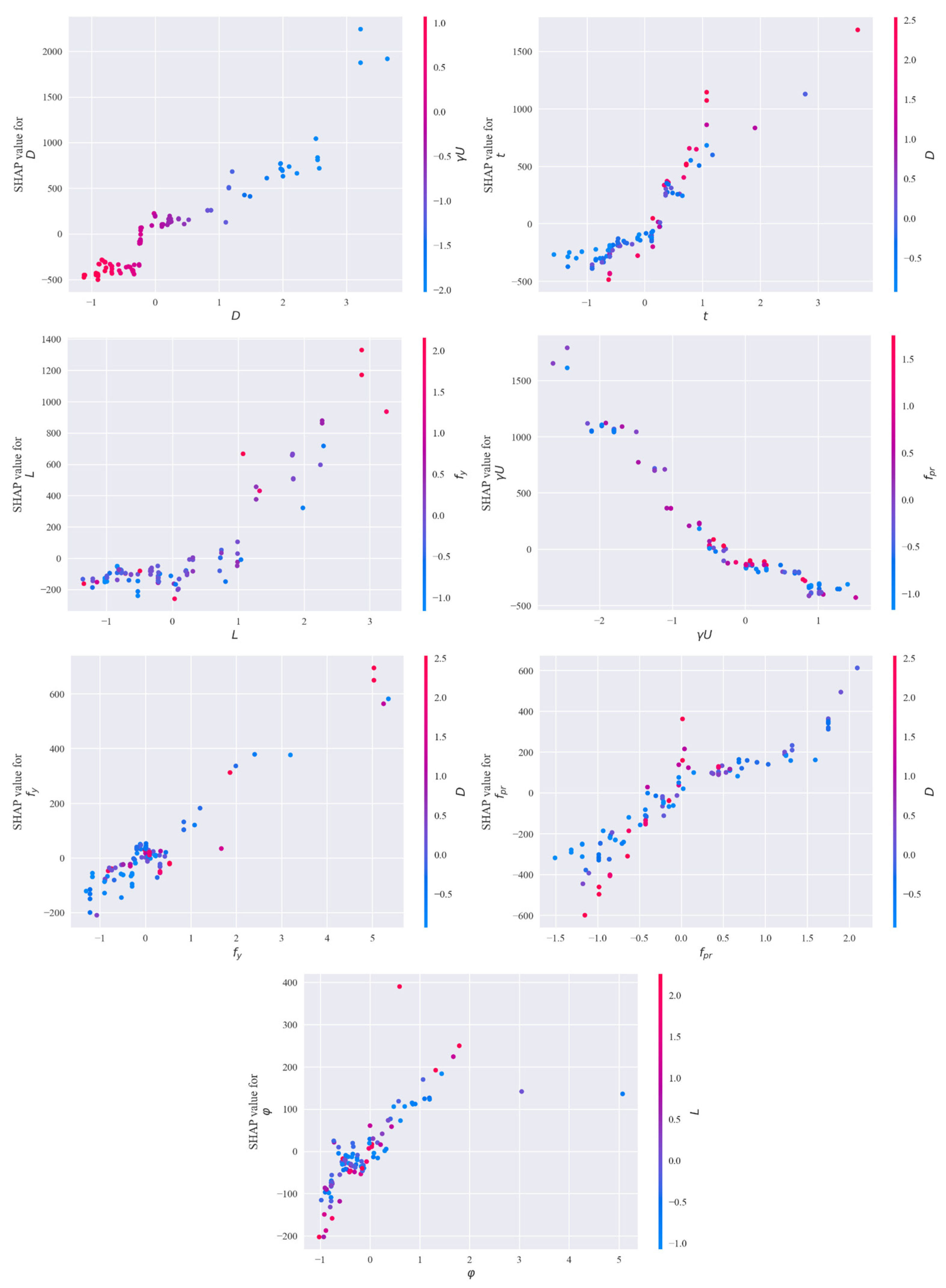
6.3. SHAP Dependence Plot
- (1)
- D and t: Their SHAP values generally show an upward trend as the feature values increase, indicating that larger diameters and thicker walls typically enhance the ultimate bearing capacity.
- (2)
- fy: This feature exhibits a non-linear relationship with SHAP values. The marginal influence is more sensitive in the medium strength range, while it plateaus at lower or higher ranges. This suggests that capacity gains in these extreme ranges may be limited by other failure modes or concrete/construction constraints.
- (3)
- fpr: There is an overall positive correlation, yet with fluctuations, reflecting that its effect is influenced by the confinement status and parameter combinations.
- (4)
- L: The influence of length is more complex. For small LL, SHAP values fluctuate near zero, showing minimal impact. However, once LL exceeds a certain threshold, SHAP values drop sharply into the negative range. This accurately captures the Euler Buckling phenomenon: as the slenderness ratio increases, the failure mode shifts from material failure to instability failure, and the P−δ effect significantly reduces the ultimate bearing capacity.
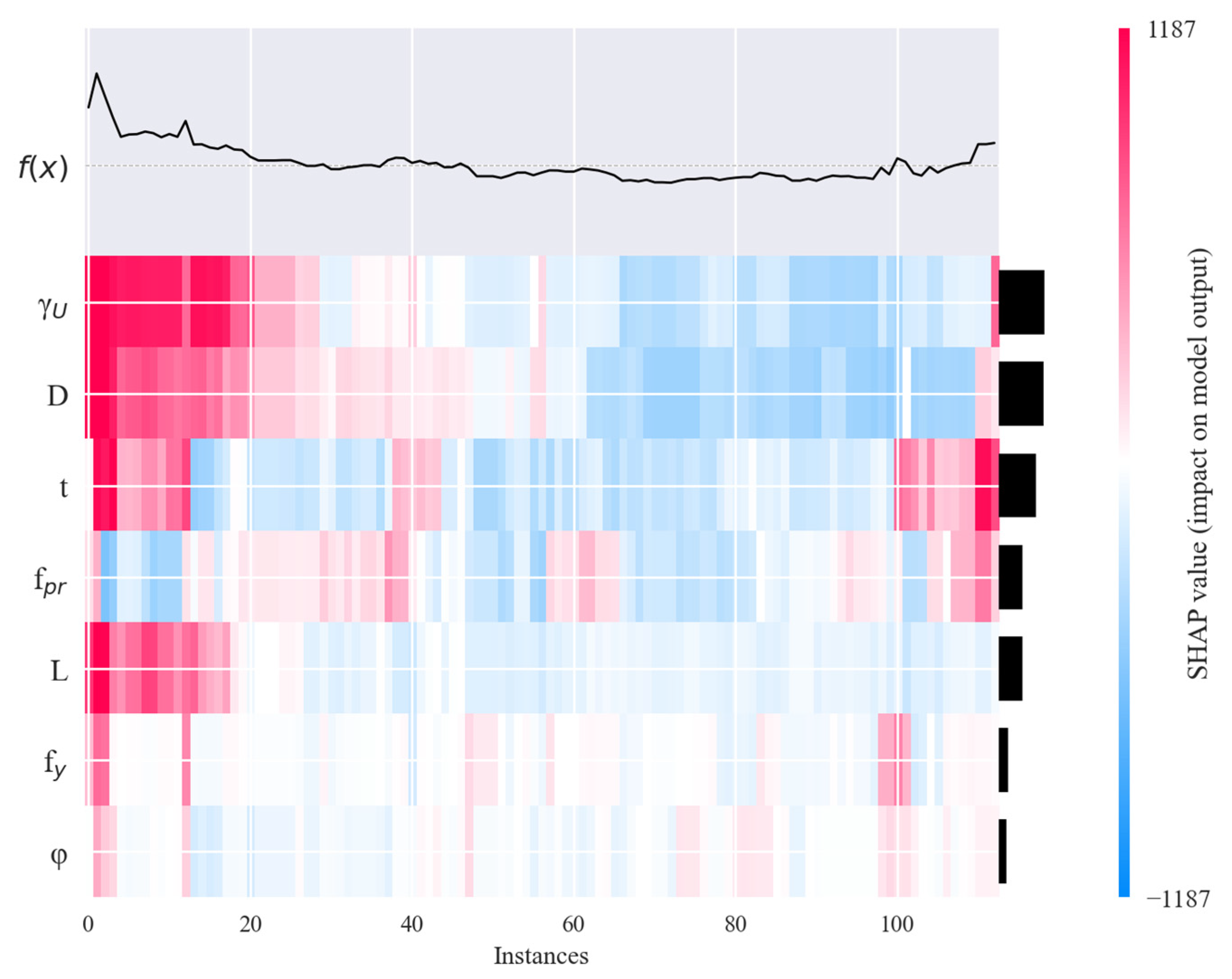
6.4. SHAP Value Heatmap
7. Conclusions
- (1)
- Through the training and evaluation of multiple machine learning models, and utilizing random search combined with five-fold cross-validation for hyperparameter optimization, the R-CatBoost model achieved optimal performance on the test set. With an RMSE of 174.29, MAPE of 0.06, MAE of 107.30, and a coefficient of determination (R2) as high as 0.99, the model demonstrates the ability to predict the ultimate bearing capacity of CFST members with high precision while maintaining strong generalization capabilities on unseen data. Compared with traditional empirical formulas and other mainstream machine learning methods, R-CatBoost exhibits significant advantages in terms of both accuracy and robustness, serving as a reliable numerical tool for engineering design and assessment.
- (2)
- Global interpretation results based on the SHAP framework indicate that the D and t are the primary factors influencing the ultimate bearing capacity, followed by the fy and the fpr. The impacts of L and the are relatively minor. This ranking of feature importance is highly consistent with existing theories and engineering experience: larger cross-sectional dimensions and thicker steel tube walls significantly enhance the bearing and confinement capacities of the member, while increasing steel and concrete strengths effectively raises the ultimate bearing capacity within a certain range. This consistency demonstrates that the R-CatBoost model not only possesses excellent numerical fitting performance but its internal decision logic also aligns with structural mechanical mechanisms, thereby enhancing the credibility of the model in engineering applications.
- (3)
- Systematic hyperparameter optimization plays a crucial role in enhancing model performance. By combining random search with five-fold cross-validation, this study effectively improved the generalization ability of multiple models. The improvement was particularly notable for the LightGBM model, which saw a 39.0% reduction in RMSE. This indicates that rational hyperparameter settings can fully unleash model potential while preventing overfitting, making it an indispensable step when applying machine learning models to practical engineering problems.
Author Contributions
Funding
Data Availability Statement
Acknowledgments
Conflicts of Interest
Appendix A

| No. | References | D/mm | t/mm | L/mm | Sample Size | Percentage/% |
|---|---|---|---|---|---|---|
| 1 | Wang [33] | 133.1~167.8 | 3.28~5.44 | 396~504 | 38 | 8.68 |
| 2 | Lam D [34] | 114~115 | 3.75~5.02 | 300 | 5 | 1.14 |
| 3 | Ho J C M [35] | 114~69.2 | 2.86~9.96 | 248~420 | 12 | 2.74 |
| 4 | Schneider S P [36] | 140 | 3~6.68 | 467~472 | 3 | 0.68 |
| 5 | Miao [37] | 100~273 | 1.45~8.75 | 309~1113 | 45 | 10.27 |
| 6 | Tang [38] | 92.0~210.0 | 1.5~4.0 | 276.0~630.0 | 16 | 3.65 |
| 7 | Cai [39] | 300/166 | 3/5 | 1000/660 | 4 | 0.91 |
| 8 | Ding [40] | 165~219 | 2.72~4.78 | 500~650 | 13 | 2.97 |
| 9 | Gu [41] | 152~166 | 4.5~10 | 480~500 | 6 | 1.37 |
| 10 | Jiang [42] | 166~202 | 3.0~4.5 | 500~600 | 12 | 2.74 |
| 11 | Yao [43] | 100~200 | 3 | 300~600 | 4 | 0.91 |
| 12 | Zhao [44] | 90 | 1.2~1.5 | 270 | 9 | 2.05 |
| 13 | Tan [45] | 133 | 4.7 | 465 | 4 | 0.91 |
| 14 | Motoi [46] | 101.6~139.8 | 2.37~2.99 | 305~419 | 18 | 4.11 |
| 15 | He [47] | 150~273 | 3.0~4.5 | 465~704 | 21 | 4.79 |
| 16 | Chen [48] | 100 | 1.6~2.5 | 300 | 8 | 1.83 |
| 17 | Goode [49] | 48~165 | 2.38~6.2 | 192~660 | 24 | 5.48 |
| 18 | Sakino [50] | 174~179 | 3.0~9.0 | 360 | 8 | 1.83 |
| 19 | Luksha [51] | 159~1020 | 5.07~13.25 | 477~3060 | 18 | 4.11 |
| 20 | Sakino [52] | 101.8 | 2.94~5.7 | 200 | 32 | 7.31 |
| 21 | Huang [53] | 159~164 | 3.8~6.3 | 520 | 12 | 2.74 |
| 22 | Shea O [54] | 165/190 | 1.94/2.82 | 580.5/663.5 | 6 | 1.37 |
| 24 | Gardner N J [55] | 76.5~152.6 | 1.7~4.09 | 153~305 | 8 | 1.83 |
| 25 | Kato [56] | 297.0~301.5 | 4.5~11.88 | 891~905 | 9 | 2.05 |
| 26 | Yamamoto [57] | 101.3~318.5 | 3.02~10.38 | 304~956 | 13 | 2.97 |
| 27 | Weng [58] | 200/280 | 5/4 | 600/840 | 4 | 0.91 |
| 28 | Johansson [59] | 159 | 5~10 | 650 | 3 | 0.68 |
| 29 | Gu [60] | 127~133 | 1.5~4.5 | 400 | 4 | 0.91 |
| 30 | Yu [61] | 100/200 | 3 | 300/600 | 16 | 3.65 |
| 31 | Gupta [62] | 89.3/112.6 | 2.89/2.74 | 340 | 16 | 3.65 |
| 32 | Abed [63] | 114~167 | 3.1~5.6 | 228~334 | 6 | 1.37 |
| 33 | Liao [64] | 180 | 3.8 | 720 | 2 | 0.46 |
| 34 | Zhao [44] | 140.0~216.3 | 4.5~8.2 | 420.0~648.9 | 24 | 5.48 |
| 35 | Ye [65] | 165 | 2.37 | 615 | 2 | 0.46 |
| 36 | Ekmekyapar [66] | 114.3 | 2.74/5.9 | 300 | 4 | 0.91 |
| 37 | Chang [67] | 111.64/113.64 | 1.9/3.64 | 400 | 6 | 1.37 |
| 38 | Han [68] | 120 | 2.65 | 360 | 2 | 0.46 |
| 39 | Uenaka [69] | 157.7 | 2.14 | 450 | 1 | 0.23 |
| Total | 438 | 100 | ||||
References
- Alatshan, F.; Osman, S.A.; Hamid, R.; Mashiri, F. Stiffened Concrete-Filled Steel Tubes: A Systematic Review. Thin-Walled Struct. 2020, 148, 106590. [Google Scholar] [CrossRef]
- Shaker, F.M.F.; Daif, M.S.; Deifalla, A.F.; Ayash, N.M. Parametric Study on the Behavior of Steel Tube Columns with Infilled Concrete—An Analytical Study. Sustainability 2022, 14, 14024. [Google Scholar] [CrossRef]
- Feng, Y.; Wan, X. Numerical simulation of dynamic response of RPC-FST columns under blast load. Prot. Eng. 2019, 41, 1–7. (In Chinese) [Google Scholar]
- Na, L.; Yiyan, L.; Shan, L.; Lan, L. Slenderness Effects on Concrete-Filled Steel Tube Columns Confined with CFRP. J. Constr. Steel Res. 2018, 143, 110–118. [Google Scholar] [CrossRef]
- Le, K.B.; Cao, V.V.; Cao, H.X. Circular Concrete Filled Thin-Walled Steel Tubes under Pure Torsion: Experiments. Thin-Walled Struct. 2021, 164, 107874. [Google Scholar] [CrossRef]
- Li, H.; Fang, Y.; Yang, H.; Wang, Y. Behaviour of Concrete-Filled Double-Skin Steel Tubular Columns with Outer Galvanized Corrugated Steel Tubes under Monotonic and Cyclic Axial Compression. Structures 2026, 84, 111083. [Google Scholar] [CrossRef]
- Li, W.; Zhu, C.-Y.; Chen, H. Performance of Square High-Strength Steel Concrete-Filled Steel Tubes Subjected to Long-Term Sustained Loading: Axial Compression. J. Build. Eng. 2025, 111, 113362. [Google Scholar] [CrossRef]
- Wang, T.; Yu, M.; Zhang, X.; Xu, L.; Huang, L. Experimental Study and Proposal of a Design Model of Ultra-High Performance Concrete Filled Steel Tube Columns Subjected to Fire. Eng. Struct. 2023, 280, 115697. [Google Scholar] [CrossRef]
- Yu, S.; Huang, S.; Li, Y.; Liang, Z. Insights into the Frost Cracking Mechanisms of Concrete by Using the Coupled Thermo-Hydro-Mechanical-Damage Meshless Method. Theor. Appl. Fract. Mech. 2025, 136, 104814. [Google Scholar] [CrossRef]
- Yu, S.; Ren, X.; Zhang, J. Modeling the Rock Frost Cracking Processes Using an Improved Ice-Stress-Damage Coupling Method. Theor. Appl. Fract. Mech. 2024, 131, 104421. [Google Scholar] [CrossRef]
- Feng, D.-C.; Liu, Z.-T.; Wang, X.-D.; Chen, Y.; Chang, J.-Q.; Wei, D.-F.; Jiang, Z.-M. Machine Learning-Based Compressive Strength Prediction for Concrete: An Adaptive Boosting Approach. Constr. Build. Mater. 2020, 230, 117000. [Google Scholar] [CrossRef]
- Chen, D.; Fan, Y.; Zha, X. Machine Learning-Based Strength Prediction of Round-Ended Concrete-Filled Steel Tube. Buildings 2024, 14, 3244. [Google Scholar] [CrossRef]
- Duong, T.H.; Le, T.-T.; Le, M.V. Practical Machine Learning Application for Predicting Axial Capacity of Composite Concrete-Filled Steel Tube Columns Considering Effect of Cross-Sectional Shapes. Int. J. Steel Struct. 2023, 23, 263–278. [Google Scholar] [CrossRef]
- Deng, C.; Xue, X.; Tao, L. Prediction of Ultimate Bearing Capacity of Concrete Filled Steel Tube Stub Columns via Machine Learning. Soft Comput. 2024, 28, 5953–5967. [Google Scholar] [CrossRef]
- Hai, X.; Hao, Q.; Hui, Z.H. Comparative study on the application of machine learning algorithms in lithology identification. Prot. Eng. 2024, 46, 54–61. (In Chinese) [Google Scholar]
- Tamimi, M.F.; Soliman, M.; Shojaeikhah, S.; Abu Qamar, M.I.; Alshannaq, A.A. Reliability-Based Design of Concrete-Filled Stainless-Steel Tubular Columns Using Machine Learning. Structures 2026, 85, 111193. [Google Scholar] [CrossRef]
- Lou, J.; Li, Y.; Zheng, S.; Feng, Q.; Wang, G.; Xu, R.; Qian, X. Predicting the Ultimate Strength of Rectangular Concrete-Filled Steel Tube Columns under Eccentric Loading Using a Knowledge-Enhanced Machine Learning Framework. Eng. Appl. Artif. Intell. 2025, 160, 111935. [Google Scholar] [CrossRef]
- Wei, B.; Wei, Y.; Yi, J.; Chen, J.; Lin, Y.; Ding, Y. Machine Learning-Driven Prediction of Axial Capacity of Concrete-Filled Steel Tubes Columns with Built-in Bamboo or Timber Cores. Eng. Struct. 2025, 341, 120817. [Google Scholar] [CrossRef]
- Kazemi, F.; Asgarkhani, N.; Ghanbari-Ghazijahani, T.; Jankowski, R. Ensemble Machine Learning Models for Estimating Mechanical Curves of Concrete-Timber-Filled Steel Tubes. Eng. Appl. Artif. Intell. 2025, 156, 111234. [Google Scholar] [CrossRef]
- Hafiz, H.; Li, D.; Luo, P.; Rasa, A.R.; Yang, B. Interpretable K-Nearest Neighbors for Rockburst Risk Prediction: Robust Performance and Mechanistic Insights for Deep Rock Engineering. Eng. Fail. Anal. 2026, 186, 110443. [Google Scholar] [CrossRef]
- Liang, D.; Xue, F. Integrating Automated Machine Learning and Interpretability Analysis in Architecture, Engineering and Construction Industry: A Case of Identifying Failure Modes of Reinforced Concrete Shear Walls. Comput. Ind. 2023, 147, 103883. [Google Scholar] [CrossRef]
- Yang, D.; Yang, J.; Shi, J. Interpretable Prediction and Simplified Calculation of Blast Load on Structure Surface Based on Machine Learning and Theoretical Model. Eng. Appl. Artif. Intell. 2026, 167, 113764. [Google Scholar] [CrossRef]
- Xinyu, L.; Fei, L.; Jian, Y.; Yong, M.; Hongtao, L. Deep Learning-Based Intelligent Safety Protection Identification Method at Construction Sites. Prot. Eng. 2025, 47, 44–50. (In Chinese) [Google Scholar]
- Kim, D.K.; Sung, S.H.; Song, S.W.; Kim, S.J.; Prabowo, A.R.; Kim, S.; Seo, J.H.; Ringsberg, J.W. A SHAP Value Method for Ultimate Strength Prediction of Stiffened Panel: A Data-Driven Tool in Engineering. Ocean Eng. 2026, 343, 123159. [Google Scholar] [CrossRef]
- Alotaibi, K.S.; Alkhalaf, A.M. Interpretable Machine Learning Framework for Predicting Cement Adhesive Bond Strength in NSM FRP Systems Using Differential Evolution and SHAP Analysis. Case Stud. Constr. Mater. 2026, 24, e05761. [Google Scholar] [CrossRef]
- Gen, T. Steel Structures and Steel–Concrete Composite Structure Design Method; China Architecture & Building Press: Beijing, China, 2022. [Google Scholar]
- Wang, H.; Qin, B.; Su, Y.; Li, F.; Hong, S.; Ding, T. Coordinated Planning of Mobile Electric-hydrogen Energy Storage for Remote Power System Resilience Enhancement. J. Energy Storage 2026, 147, 120160. [Google Scholar] [CrossRef]
- Qin, B.; Wang, H.; Liao, Y.; Li, H.; Ding, T.; Wang, Z.; Li, F.; Liu, D. Challenges and Opportunities for Long-Distance Renewable Energy Transmission in China. Sustain. Energy Technol. Assess. 2024, 69, 103925. [Google Scholar] [CrossRef]
- Li, S.-Z.; Wang, J.-J.; Jiang, L.; Deng, R.; Wang, Y.-H. Machine Learning-Based Strength Prediction for Circular Concrete-Filled Double-Skin Steel Tubular Columns under Axial Compression. Eng. Struct. 2025, 325, 119460. [Google Scholar] [CrossRef]
- Lyu, F.; Fan, X.; Ding, F.; Chen, Z. Prediction of the Axial Compressive Strength of Circular Concrete-Filled Steel Tube Columns Using Sine Cosine Algorithm-Support Vector Regression. Compos. Struct. 2021, 273, 114282. [Google Scholar] [CrossRef]
- Xie, S.; Isleem, H.F.; Almoghayer, W.J.K.; Ibrahim, A.A. Axial Compressive Behavior of Reinforced Concrete-Filled Circular Steel Tubular Columns: Finite Element and Machine Learning Modelling. J. Big Data 2025, 12, 233. [Google Scholar] [CrossRef]
- Zhao, Z.; Wei, Y.; Wang, G.; Lin, Y.; Ding, M. Evaluation of the Load-Carrying Effect of Rectangular Concrete-Filled Steel Tubular Columns under Axial Compression Based on the Multilevel Extension Method. Case Stud. Constr. Mater. 2023, 18, e02041. [Google Scholar] [CrossRef]
- Wang, Y.Y. Study on the Basic Performance of Axially Compressed Short Columns of High-Strength Concrete-Filled Circular Steel Tubes. Ph.D. Thesis, Harbin Institute of Technology, Harbin, China, 2004. (In Chinese) [Google Scholar]
- Giakoumelis, G.; Lam, D. Axial capacity of circular concrete-filled tube columns. J. Constr. Steel Res. 2004, 60, 1049–1068. [Google Scholar] [CrossRef]
- Lai, M.H.; Ho, J.C.M. A theoretical axial stress-strain model for circular concrete-filled-steel-tube columns. Eng. Struct. 2016, 125, 124–143. [Google Scholar] [CrossRef]
- Schneider, S.P. Axially loaded concrete-filled steel tubes. J. Struct. Eng. 1998, 124, 1125–1138. [Google Scholar] [CrossRef]
- Miao, R.Y. Application of plasticity theory to determine the bearing capacity of concrete-filled steel tube short columns under axial compression. J. Harbin Inst. Archit. Eng. 1982, 2, 36–39. [Google Scholar]
- Tang, G.Z.; Zhao, B.Q.; Zhu, H.X.; Shen, X.M. Study on the basic mechanical properties of concrete-filled steel tubes. J. Build. Struct. 1982, 3, 13–31. (In Chinese) [Google Scholar]
- Cai, S.H.; Jiao, Z.S. Basic Behavior and Strength Calculation of Concrete-Filled Steel Tubular Short Columns. J. Build. Struct. 1984, 6, 13–29. (In Chinese) [Google Scholar]
- Ding, F.X. Research on the Structural Performance and Design Method of Circular Concrete-Filled Steel Tubes. Ph.D. Thesis, Central South University, Changsha, China, 2006. (In Chinese) [Google Scholar]
- Gu, W.P.; Cai, S.H. Research on the behavior and bearing capacity of eccentrically loaded high-strength concrete-filled steel tubular columns. Build. Sci. 1993, 9, 8–12. (In Chinese) [Google Scholar]
- Jiang, J.W. Experimental Study on the Seismic Performance of High-Strength Concrete-Filled Steel Tubular Beam-Columns Under Cyclic Loading. Ph.D. Thesis, Tsinghua University, Beijing, China, 1997. (In Chinese) [Google Scholar]
- Yao, G.H.; Han, L.H. Mechanical behavior of concrete-filled steel tubular beam-columns with self-compacting high-performance concrete. J. Build. Struct. 2004, 25, 34–42. (In Chinese) [Google Scholar]
- Miao, S.F.; Zhao, J.H.; Gu, Q. Study on the bearing capacity of axially loaded concrete-filled steel tubes based on the twin-shear unified strength theory. Eng. Mech. 2002, 19, 32–35. (In Chinese) [Google Scholar]
- Tan, K.F. Study on the Mechanical Properties and Bearing Capacity of Steel Tube and Ultra-High-Strength Concrete Composites. Ph.D. Thesis, Chongqing Jianzhu University, Chongqing, China, 1999. (In Chinese) [Google Scholar]
- Motoi, M.; Abe, T.; Nakaya, H. Study on the ultimate bearing capacity of ultra-high-strength concrete-filled steel tubular columns. J. Struct. Constr. Eng. AIJ 1999, 523, 133–140. (In Japanese) [Google Scholar]
- He, F.; Zhou, X.H. Experimental study on the bearing behavior of axially compressed high-strength concrete-filled steel tubular stub columns. Eng. Mech. 2000, 17, 61–66. (In Chinese) [Google Scholar]
- Chen, Z.Y. Performance of Concrete-Filled Steel Tubular Stub Columns as Protective Structural Members. In Performance of Reinforced Concrete Structures under Impact Loads, Scientific Report Collection No. 4; Tsinghua University Press: Beijing, China, 1986; pp. 45–52. (In Chinese) [Google Scholar]
- Goode, C.D. Composite columns—1819 tests on concrete-filled steel tube columns compared with Eurocode 4. Struct. Eng. 2008, 86, 33–38. [Google Scholar]
- Sakino, K.; Hayashi, H. Behavior of concrete filled steel tubular stub columns under concentric loading. In Proceedings of the 3rd International Conference on Steel-Concrete Composite Structures, Fukuoka, Japan, 26–29 September 1991; pp. 25–30. [Google Scholar]
- Luksha, L.K.; Nesterovich, A.P. Strength test of large-diameter concrete on steel-concrete composite structures. In Proceedings of the 3rd International Conference on Steel-Concrete Composite Structures, Fukuoka, Japan, 26–29 September 1991; pp. 67–70. [Google Scholar]
- Sakino, K.; Nakahara, H.; Morino, S.; Nishiyama, I. Behavior of centrally loaded concrete-filled steel tube short columns. J. Struct. Eng. 2004, 130, 180–188. [Google Scholar] [CrossRef]
- Huang, M.K.; Li, B.; Wen, Y. Analysis of the influence of confinement effect coefficient on the mechanical properties of concrete-filled steel tubular members. J. Chongqing Jianzhu Univ. 2008, 30, 90–93. (In Chinese) [Google Scholar]
- Martin, D.; Shea, O.; Russell, Q. Bridge, design of circular thin-walled concrete filled steel tubes. J. Struct. Eng. 2000, 126, 1295–1303. [Google Scholar]
- Gardner, N.J.; Jacobson, E.R. Structural behavior of concrete filled steel tubes. ACI J. 1967, 64, 404–412. [Google Scholar]
- Kato, B. Compressive strength and deformation capacity of concrete-filled tubular stub columns. J. Struct. Constr. Eng. 1995, 468, 183–191. [Google Scholar] [CrossRef]
- Yamamoto, K.; Kawaguchi, J.; Morino, S. Experimental study of the size effect on the behaviour of concrete filled circular steel tube columns under axial compression. J. Struct. Constr. Eng. 2002, 561, 237–244. [Google Scholar] [CrossRef] [PubMed]
- Huang, C.S.; Yeh, Y.-K.; Liu, G.Y.; Hu, H.-T.; Tsai, K.C.; Weng, Y.T.; Wang, S.H.; Wu, M.-H. Axial load behavior of stiffened concrete-filled steel columns. J. Struct. Eng. 2002, 128, 1222–1230. [Google Scholar] [CrossRef]
- Johansson, M. The efficiency of passive confinement in CFT columns. Steel Compos. Struct. 2002, 2, 379–396. [Google Scholar] [CrossRef]
- Gu, W.; Guan, C.W.; Zhao, Y.H.; Cao, H. Experimental study on axially compressed circular CFRP-steel composite tubed concrete stub columns. J. Shenyang Jianzhu Univ. 2004, 20, 118–120. (In Chinese) [Google Scholar]
- Yu, Q.G.; Han, L.H. Experimental behaviour of thin-walled hollow structural steel (HSS) columns filled with self-consolidating concrete (SCC). Thin-Walled Struct. 2004, 42, 1357–1377. [Google Scholar]
- Gupta, P.K.; Sarda, S.M.; Kumar, M.S. Experimental and computational study of concrete filled steel tubular columns under axial loads. J. Constr. Steel Res. 2007, 63, 182–193. [Google Scholar] [CrossRef]
- Abed, F.; AlHamaydeh, M.; Abdalla, S. Experimental and numerical investigations of the compressive behavior of concrete filled steel tubes (CFSTs). J. Constr. Steel Res. 2013, 80, 429–439. [Google Scholar] [CrossRef]
- Liao, F.Y.; Han, L.H.; He, S. Behavior of CFST short column and beam with initial concrete imperfection: Experiments. J. Constr. Steel Res. 2011, 67, 1922–1935. [Google Scholar] [CrossRef]
- Ye, Y.; Han, L.H.; Sheehan, T.; Guo, Z.-X. Concrete-filled bimetallic tubes under axial compression: Experimental investigation. Thin-Walled Struct. 2016, 108, 321–332. [Google Scholar] [CrossRef]
- Ekmekyapar, T.; Al-Eliwi, B.J.M. Experimental behavior of circular concrete filled steel tube columns and design specifications. Thin-Walled Struct. 2016, 105, 220–230. [Google Scholar] [CrossRef]
- Chang, X.; Fu, L.; Zhao, H.B.; Zhang, Y.-B. Behaviors of axially loaded circular concrete-filled steel tube (CFT) stub columns with notch in steel tubes. Thin-Walled Struct. 2013, 73, 273–280. [Google Scholar] [CrossRef]
- Han, L.H.; Yao, G.H. Influence of initial stress in steel tube on the bearing capacity of concrete-filled steel tubular beam-columns. China Civ. Eng. J. 2003, 36, 9–18. (In Chinese) [Google Scholar]
- Uenaka, K.; Kitoh, H.; Sonoda, K. Concrete filled double skin circular stub columns under compression. Thin-Walled Struct. 2010, 48, 19–24. [Google Scholar] [CrossRef]






| Features | D/mm | t/mm | L/mm | γU | fy/MPa | fpr/MPa | Φ | Nu/kN |
|---|---|---|---|---|---|---|---|---|
| Max | 361 | 11.88 | 1113 | 1.14 | 853 | 65.60 | 10.21 | 9835 |
| Min | 48 | 1.00 | 153 | 0.92 | 223 | 15.28 | 0.23 | 273 |
| Mean | 155.77 | 4.18 | 464.81 | 1.01 | 352.95 | 37.41 | 1.30 | 1917.44 |
| Std. Dev | 59.03 | 1.98 | 194 | 0.04 | 100.48 | 12.02 | 0.96 | 1552.45 |
| Median | 140 | 3.56 | 419 | 1.0 | 347.90 | 34.72 | 1.09 | 1580 |
| 25% | 109.66 | 2.97 | 312 | 0.99 | 303.50 | 27.02 | 0.71 | 870.50 |
| 75% | 172.80 | 5.01 | 572.10 | 1.04 | 369.50 | 44.46 | 1.67 | 2270.25 |
| Algorithm | Hyperparameter | Search Space |
|---|---|---|
| Light GBM | colsample_bytree | [0.6–1.0] |
| learning_rate | [0.01–0.3] | |
| max_depth | [3–15] | |
| min_child_samples | [1–50] | |
| n_estimators | [50–500] | |
| num_leaves | [20–1500] | |
| reg_alpha | [0–2] | |
| reg_lambda | [0–2] | |
| subsample | [0.5–1.0] | |
| Random Forest | bootstrap | [True, False] |
| max_depth | [3–15] | |
| max_features | [0.1–1.0] | |
| min_samples_leaf | [1–10] | |
| min_samples_split | [2–20] | |
| n_estimators | [50–500] | |
| GradientBoosting | learning_rate | [0.01–0.3] |
| max_depth | [3–10] | |
| max_features | [0.1–1.0] | |
| min_samples_leaf | [1–20] | |
| min_samples_split | [2–20] | |
| n_estimators | [50–500] | |
| c | [0.5–1.0] | |
| KNN | leaf_size | [5–100] |
| n_neighbors | [1–20] | |
| p | [1, 2] | |
| CatBoost | n_estimators | [100–2000] |
| learning_rate | [0.01–0.3] | |
| l2_leaf_reg | [1–10] | |
| depth | [3–10] | |
| border_count | [32–255] | |
| bagging_temperature | [0–10] | |
| XGBoost | colsample_bytree | [0.3–1.0] |
| gamma | [0–1] | |
| learning_rate | [0.01–0.3] | |
| max_depth | [3–10] | |
| n_estimators | [50–1000] | |
| reg_alpha | [0–2] | |
| reg_lambda | [0–2] | |
| subsample | [0.5–1.0] |
| Model | Evaluation Indicators | ||||
|---|---|---|---|---|---|
| Dataset | RMSE | MAPE | MAE | R2 | |
| LightGBM | Training | 293.78 | 0.06 | 126.92 | 0.96 |
| Validation | 446.35 | 0.10 | 228.22 | 0.92 | |
| RandomForest | Training | 140.21 | 0.03 | 68.40 | 0.99 |
| Validation | 290.27 | 0.09 | 173.81 | 0.97 | |
| GradientBoosting | Training | 66.49 | 0.04 | 51.34 | 1.00 |
| Validation | 216.23 | 0.09 | 136.10 | 0.98 | |
| KNN | Training | 329.94 | 0.08 | 165.13 | 0.95 |
| Validation | 486.71 | 0.12 | 262.47 | 0.91 | |
| CatBoost | Training | 34.45 | 0.02 | 25.49 | 1.00 |
| Validation | 223.21 | 0.06 | 112.43 | 0.98 | |
| XGBoost | Training | 20.68 | 0.01 | 8.45 | 1.00 |
| Validation | 258.66 | 0.07 | 132.62 | 0.97 | |
| Algorithm | Hyperparameter | Optimal Parameters |
|---|---|---|
| Light GBM | colsample_bytree | 0.87 |
| max_depth | 13 | |
| n_estimators | 238 | |
| reg_alpha | 1.56 | |
| subsample | 0.56 | |
| learning_rate | 0.29 | |
| min_child_samples | 12 | |
| num_leaves | 1075 | |
| reg_lambda | 1.56 | |
| Random Forest | bootstrap | FALSE |
| max_features | 0.79 | |
| min_samples_split | 2 | |
| max_depth | 11 | |
| min_samples_leaf | 1 | |
| n_estimators | 288 | |
| GradientBoosting | learning_rate | 0.17 |
| max_features | 0.68 | |
| min_samples_split | 16 | |
| subsample | 0.96 | |
| max_depth | 5 | |
| min_samples_leaf | 11 | |
| n_estimators | 298 | |
| KNN | leaf_size | 54 |
| n_neighbors | 1 | |
| p | 1 | |
| CatBoost | n_estimators | 2000 |
| l2_leaf_reg | 3 | |
| border_count | 128 | |
| learning_rate | 0.3 | |
| depth | 4 | |
| bagging_temperature | 1.5 | |
| XGBoost | subsample | 0.6 |
| reg_alpha | 0.1 | |
| max_depth | 3 | |
| gamma | 0.5 | |
| reg_lambda | 0.1 | |
| n_estimators | 500 | |
| learning_rate | 0.1 | |
| colsample_bytree | 1 |
| Model | Evaluation Indicators | |||
|---|---|---|---|---|
| RMSE | MAPE | MAE | R2 | |
| LightGBM | 446.35 | 0.10 | 228.22 | 0.92 |
| R-LightGBM | 272.16 | 0.09 | 157.08 | 0.97 |
| RandomFores | 290.27 | 0.09 | 173.81 | 0.97 |
| R-RandomFores | 280.57 | 0.07 | 140.32 | 0.97 |
| GradientBoosting | 216.23 | 0.09 | 136.10 | 0.98 |
| R-GradientBoosting | 223.63 | 0.07 | 127.61 | 0.98 |
| KNN | 486.71 | 0.12 | 262.47 | 0.91 |
| R-KNN | 419.83 | 0.08 | 184.50 | 0.93 |
| CatBoost | 223.21 | 0.06 | 112.43 | 0.98 |
| R- CatBoost | 174.29 | 0.06 | 107.30 | 0.99 |
| XGBoost | 258.66 | 0.07 | 132.62 | 0.97 |
| R- XGBoost | 218.35 | 0.08 | 130.54 | 0.98 |
| Reference | Machine Learning Methods | Dataset Source & Scale | Validation & Evaluation Methods |
|---|---|---|---|
| This Study | R-CatBoost, LightGBM, RF, GB, KNN, XGBoost | 38 independent test programs; 438 data points | Train/Test = 70/30; 5-fold CV; SHAP interpretability analysis |
| Kazemi [19] | Ensemble learning framework (BR, XGBoost, GBM, RF, etc.) | 88 numerical models/12 tests; 2000 data points | Train/Test = 80/20; Multi-dimensional metrics; GUI interface showcase |
| Li [29] | PSO-GPR, BPNN, SVR, GPR | 15 independent test programs; 162 data points | Experimental data of large-scale members |
| Lyu [30] | SCA-SVR, ANN, RF, MLR | Experimental data; 478 data points | Train/Test = 70/30; 100 random trials for stability; Inverse design parameter prediction |
| Xie [31] | XGBoost, RF, LightGBM, AdaBoost, CatBoost, LSTM | 66 tests/134 numerical simulations; 200 data points | Train/Test = 70/30; Taylor diagram comparison; SHAP interpretability analysis |
| Zhao [32] | (Multilevel Extension) + AHP | 25 independent tests; 449 data points | 3-specimen uniaxial compression test |
Disclaimer/Publisher’s Note: The statements, opinions and data contained in all publications are solely those of the individual author(s) and contributor(s) and not of MDPI and/or the editor(s). MDPI and/or the editor(s) disclaim responsibility for any injury to people or property resulting from any ideas, methods, instructions or products referred to in the content. |
© 2026 by the authors. Licensee MDPI, Basel, Switzerland. This article is an open access article distributed under the terms and conditions of the Creative Commons Attribution (CC BY) license.
Share and Cite
Wang, Z.; Wang, Y.; Xu, X.; Zhang, Z.; Wei, Y.; Luo, D. Research on the Prediction Method for Ultimate Bearing Capacity of Circular Concrete-Filled Steel Tubular Columns Based on Random Search-Optimized CatBoost Algorithm. Materials 2026, 19, 1360. https://doi.org/10.3390/ma19071360
Wang Z, Wang Y, Xu X, Zhang Z, Wei Y, Luo D. Research on the Prediction Method for Ultimate Bearing Capacity of Circular Concrete-Filled Steel Tubular Columns Based on Random Search-Optimized CatBoost Algorithm. Materials. 2026; 19(7):1360. https://doi.org/10.3390/ma19071360
Chicago/Turabian StyleWang, Zhenyu, Yunqiang Wang, Xiangyu Xu, Zihan Zhang, Yaxing Wei, and Dan Luo. 2026. "Research on the Prediction Method for Ultimate Bearing Capacity of Circular Concrete-Filled Steel Tubular Columns Based on Random Search-Optimized CatBoost Algorithm" Materials 19, no. 7: 1360. https://doi.org/10.3390/ma19071360
APA StyleWang, Z., Wang, Y., Xu, X., Zhang, Z., Wei, Y., & Luo, D. (2026). Research on the Prediction Method for Ultimate Bearing Capacity of Circular Concrete-Filled Steel Tubular Columns Based on Random Search-Optimized CatBoost Algorithm. Materials, 19(7), 1360. https://doi.org/10.3390/ma19071360