Study on the Mechanism of Enhanced Early-Age Properties of Steel Slag Cement Mortar Through Modified Nano-SiO2
Abstract
1. Introduction
2. Methodology
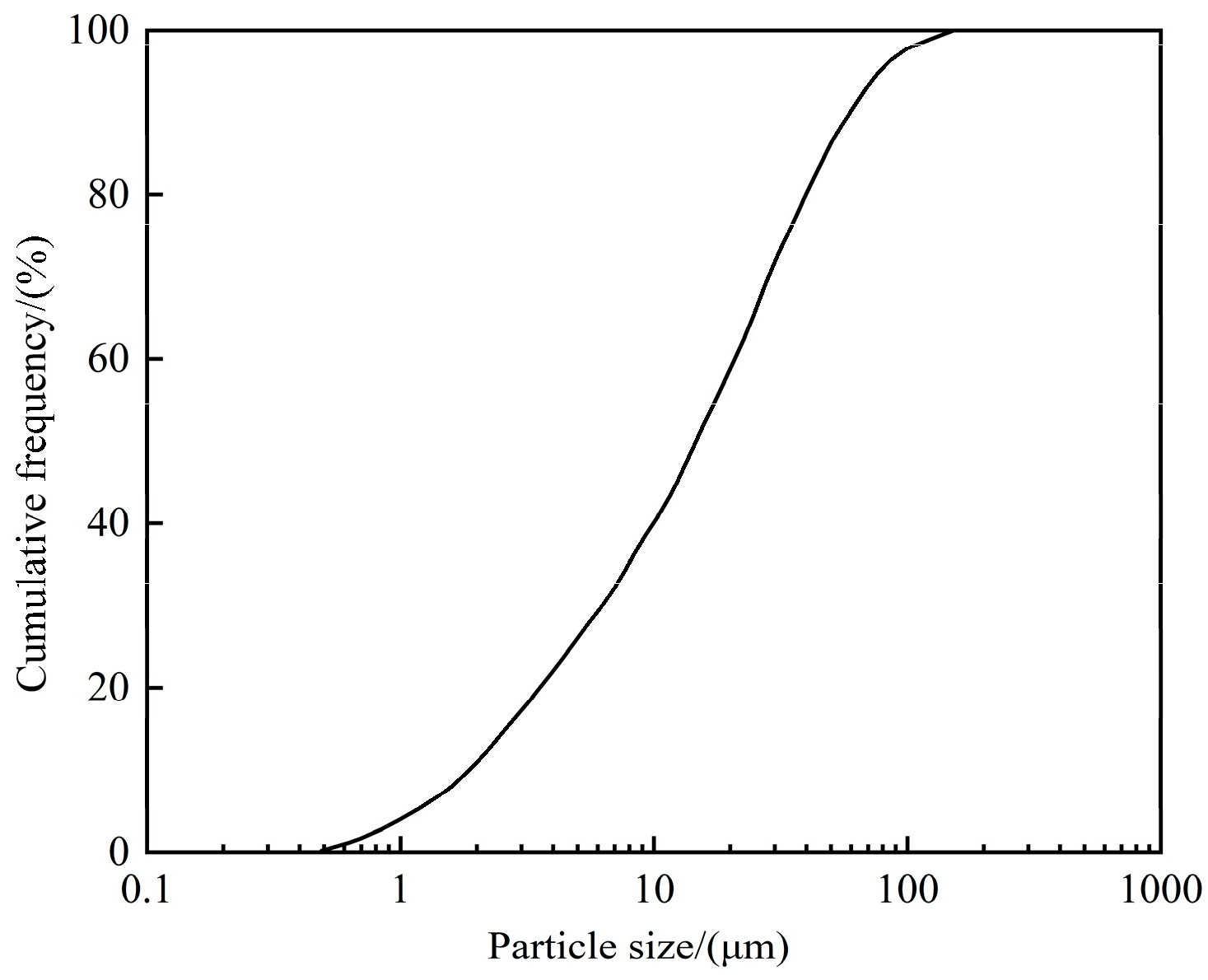
2.1. Raw Materials
2.2. Preparation of KH-NS
2.3. Preparation of Mortar Specimens
2.4. Testing Method
2.4.1. Setting Time Test
2.4.2. Mechanical Property Test
2.4.3. Porosity Test
2.4.4. Hydration Kinetics Test
2.4.5. Microscopic Test
3. Results and Discussion
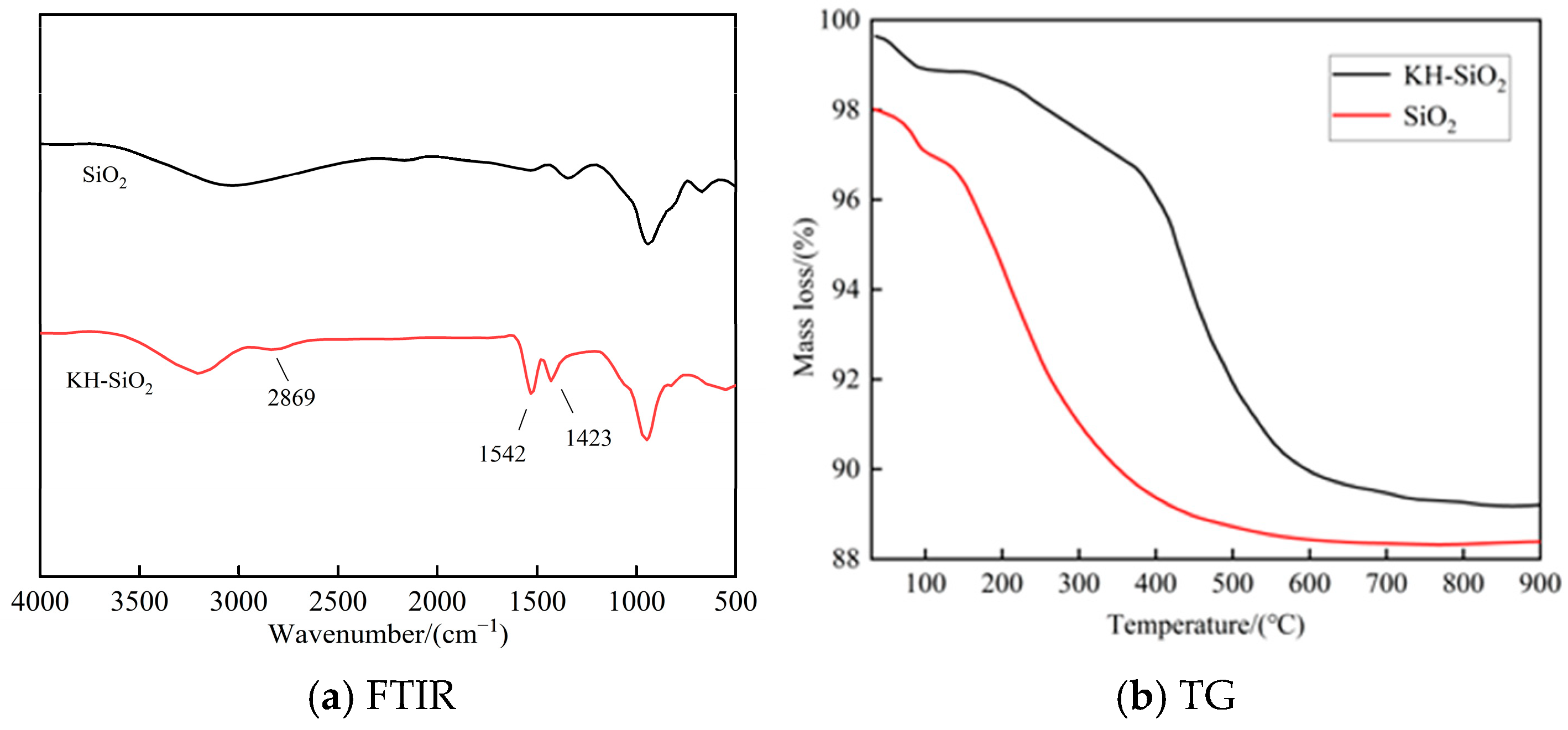
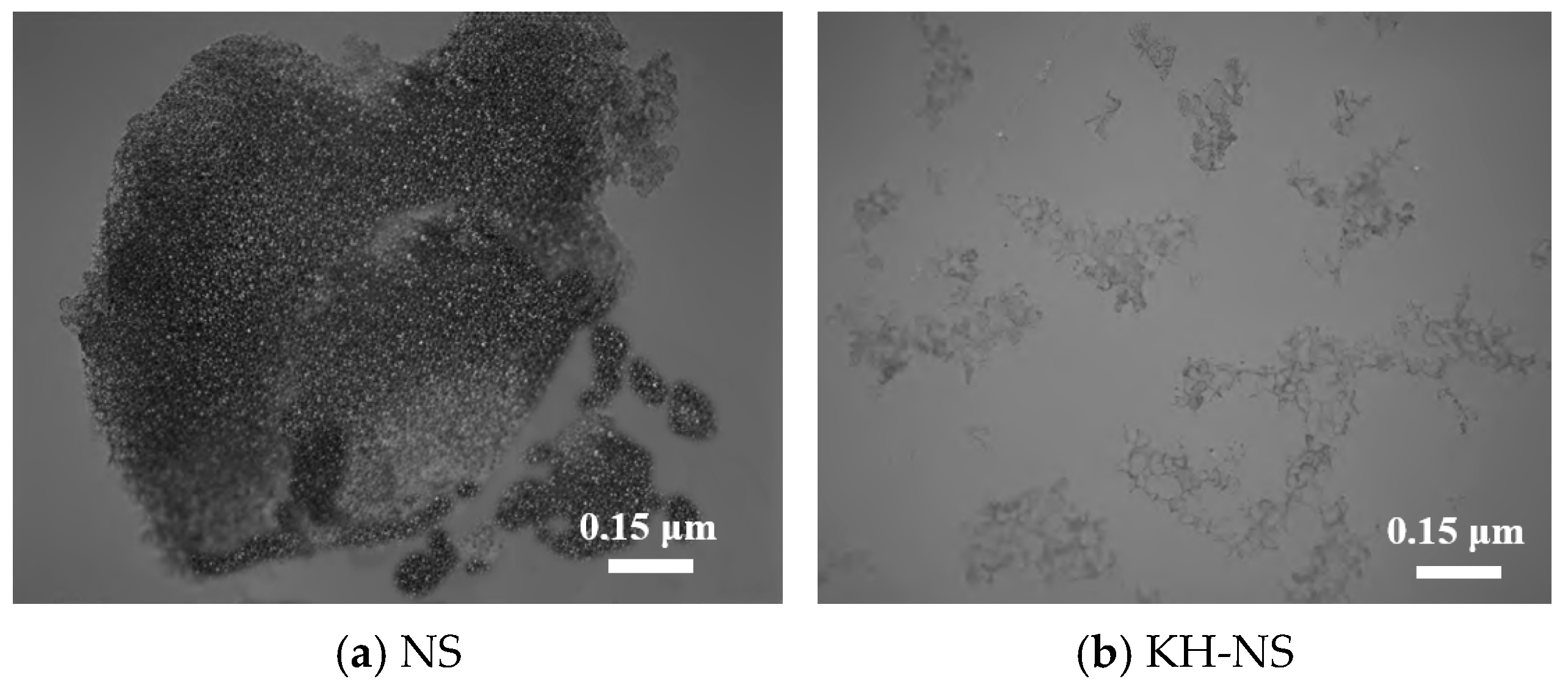
3.1. Characterization of KH-NS
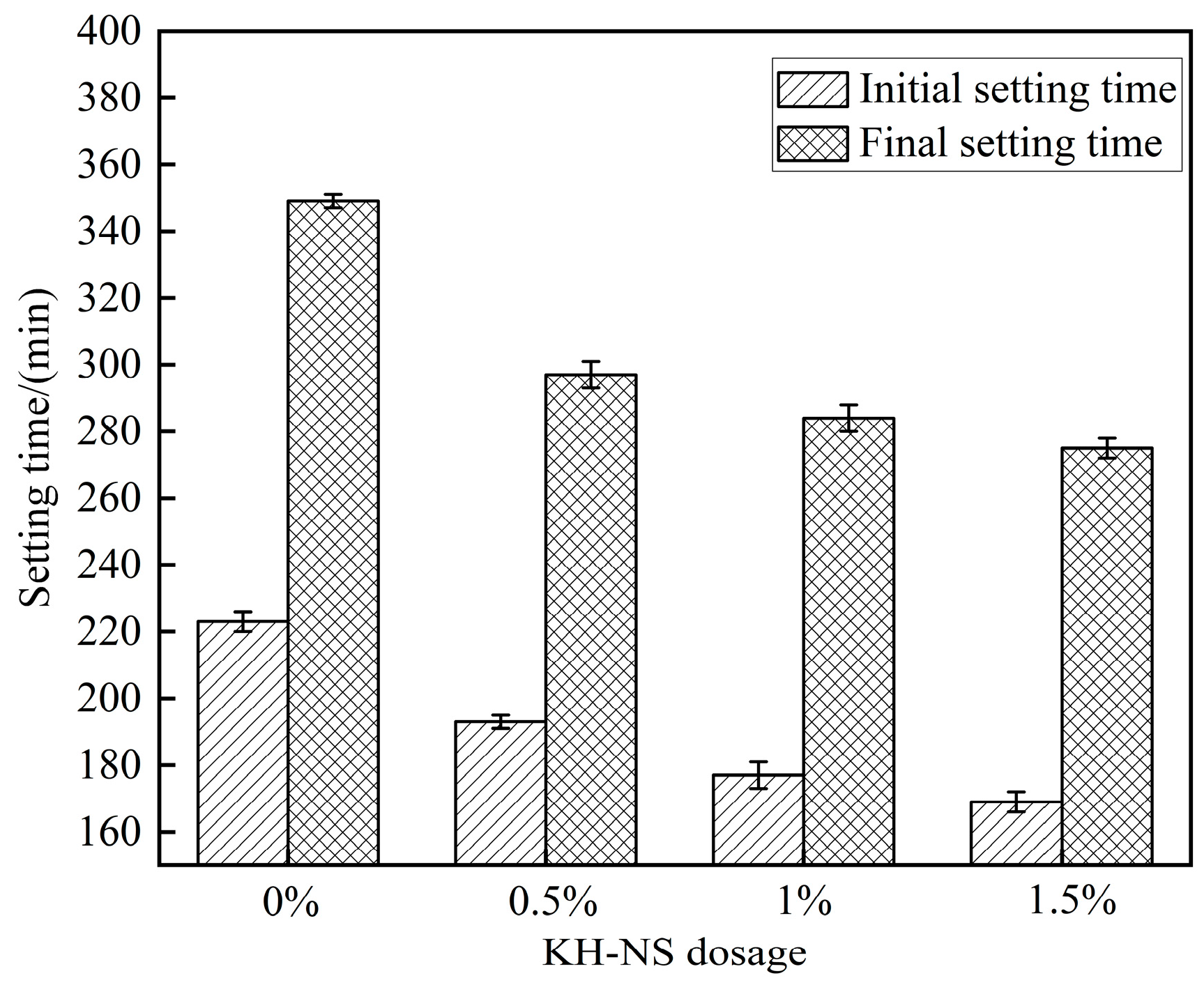
3.2. Setting Time
3.3. Compressive Strength
3.4. Pore Structure
3.5. Hydration Kinetics
3.6. Cement Hydration
3.7. Mechanism Analysis
3.7.1. Dispersion Optimization and Functional Group Activation of KH-NS
3.7.2. Dual-Path Acceleration of Hydration Reaction
3.7.3. Microstructure Densification via Dual Filling Effect
4. Conclusions
- (1)
- As the dosage of KH-NS increases, the setting time of the mortar is uniformly shortened. Moreover, at a given dosage level, the greater the amount of KH-NS added, the shorter the setting time of the steel slag mortar mixture becomes. When the KH-NS admixture content was 1.5%, the initial setting time of steel slag mortar progressively decreased from 223 min to 169 min (a reduction of 24.21%), while the final setting time decreased from 349 min to 275 min (a reduction of 21.20%).
- (2)
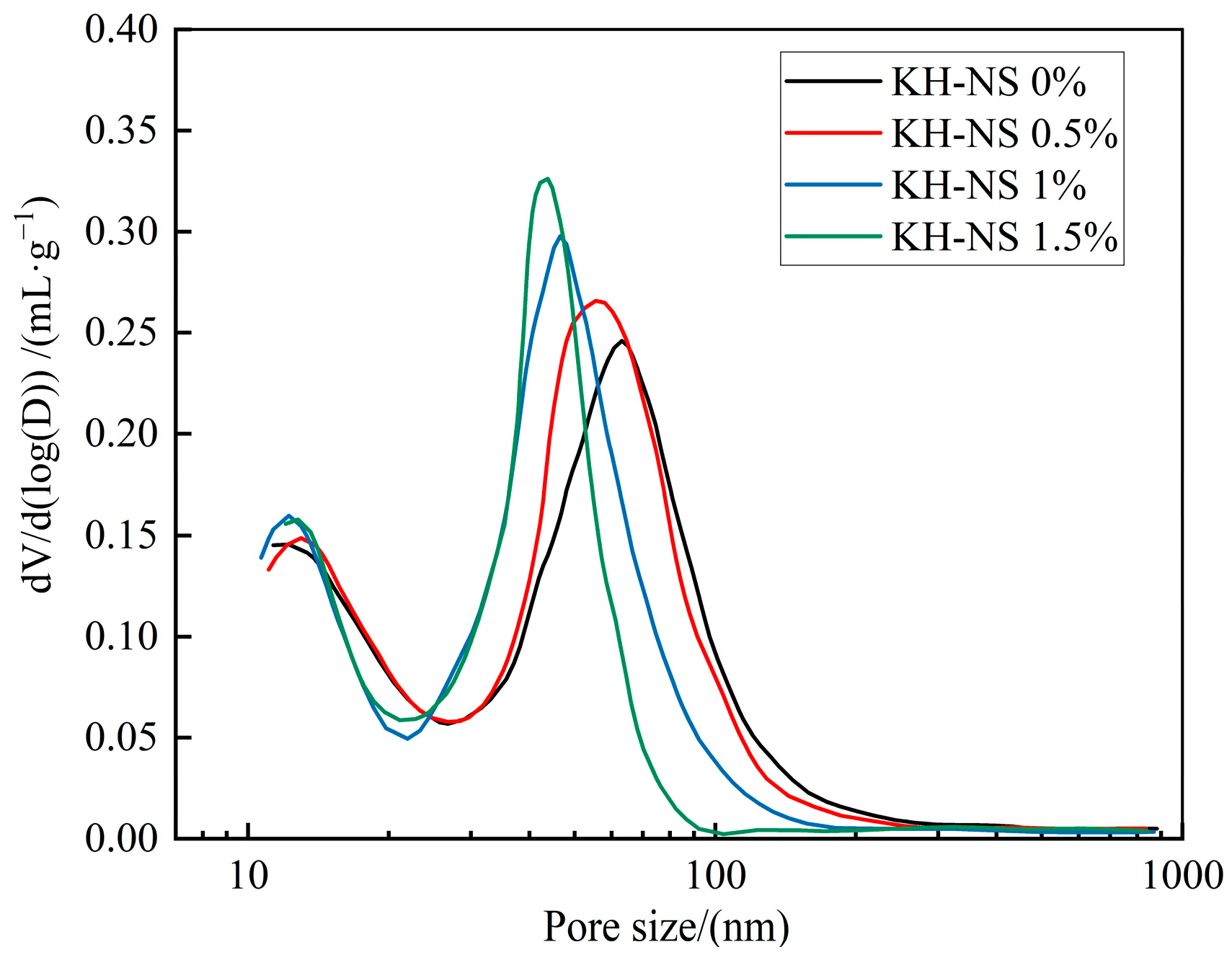
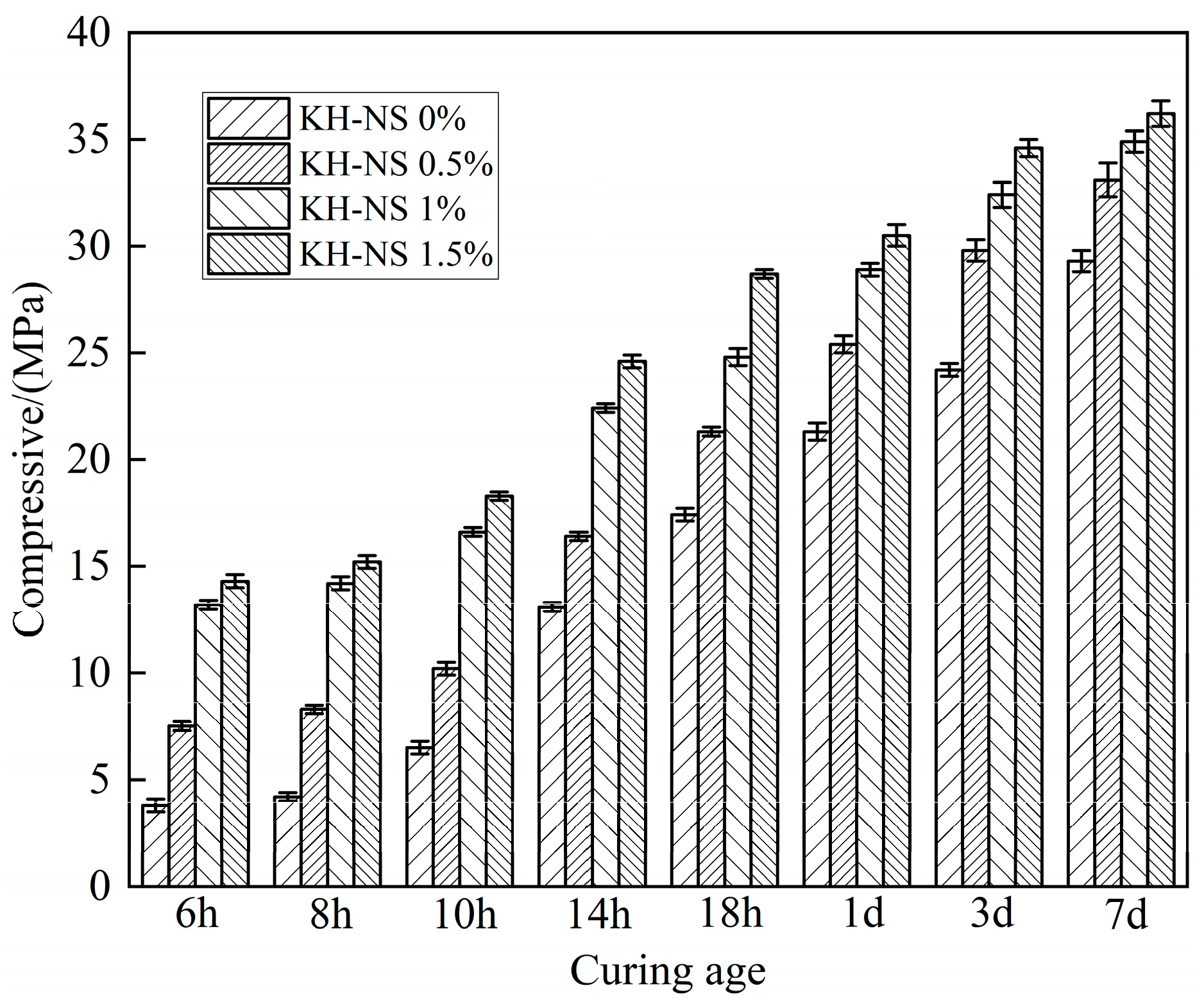
- The addition of KH-NS effectively enhances the compressive strength of steel slag mortar, with a particularly pronounced effect on early strength before 14 h of curing. At a KH-NS dosage of 1.5%, the 6 h strength increased by 276.3%, while the 28 d strength stabilized at 44.1 MPa (compared to 39.4 MPa for the control group), representing an 11.9% strength gain. Concurrently, at a KH-NS dosage of 1.5%, the mortar’s total porosity decreased from 32.28% to 28.21% (a reduction of 12.6%), with the pore size distribution shifting towards medium and small pores.
- (3)
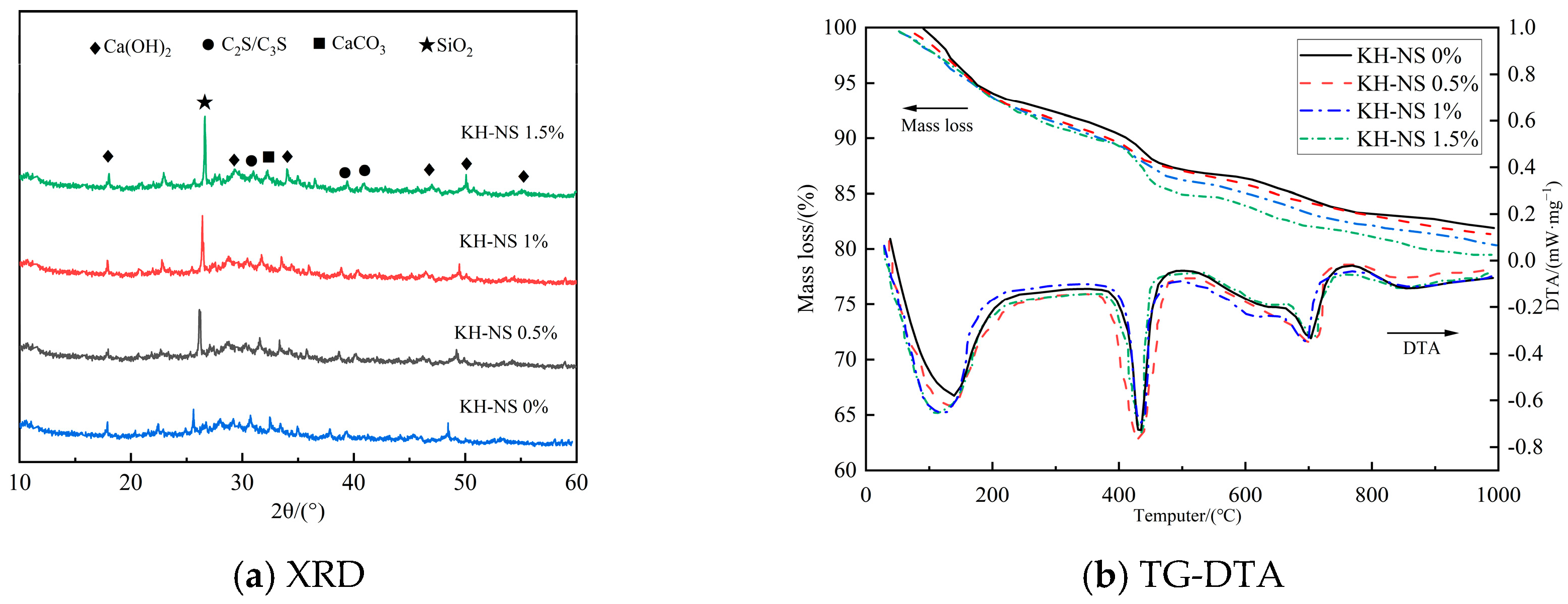
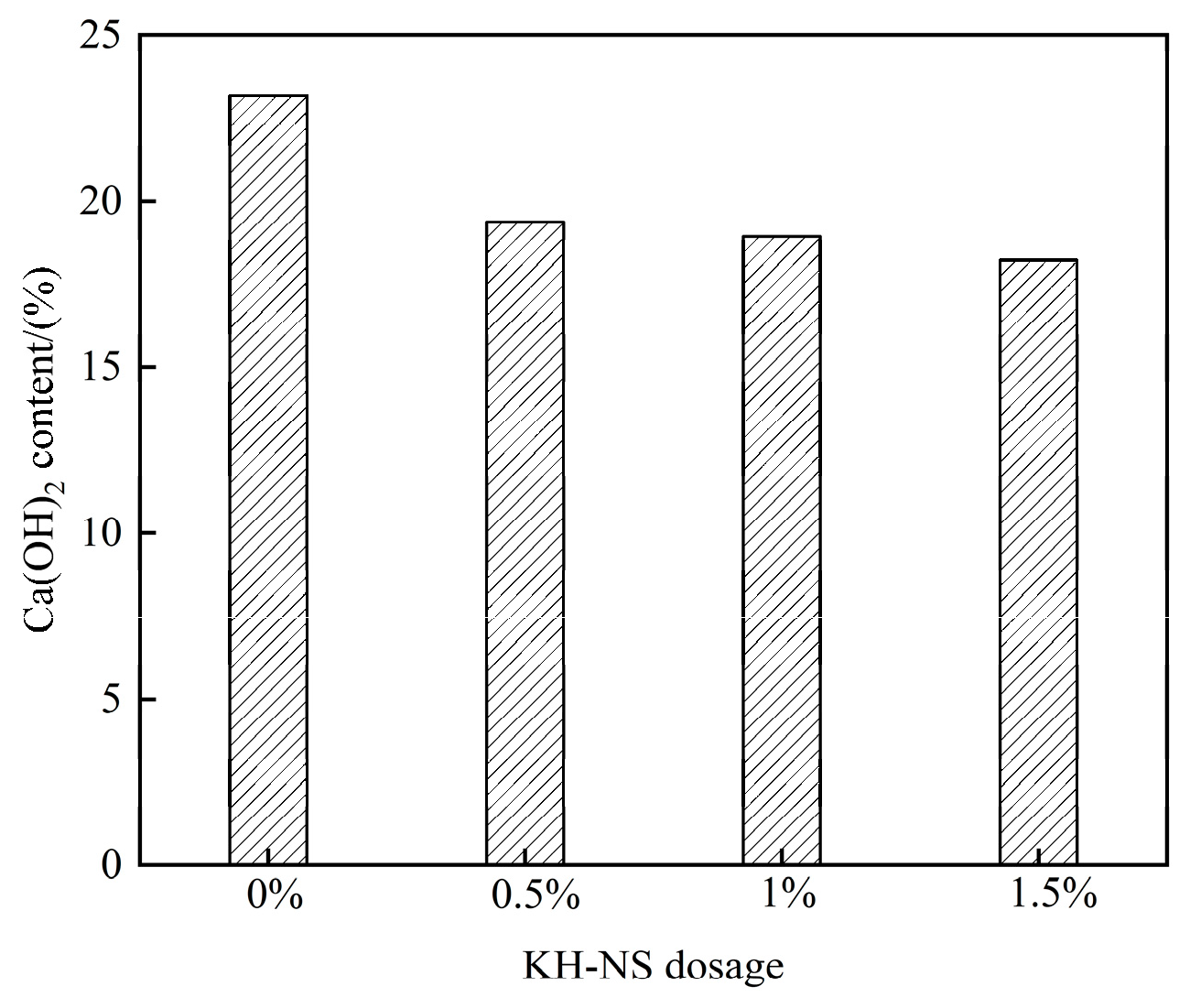
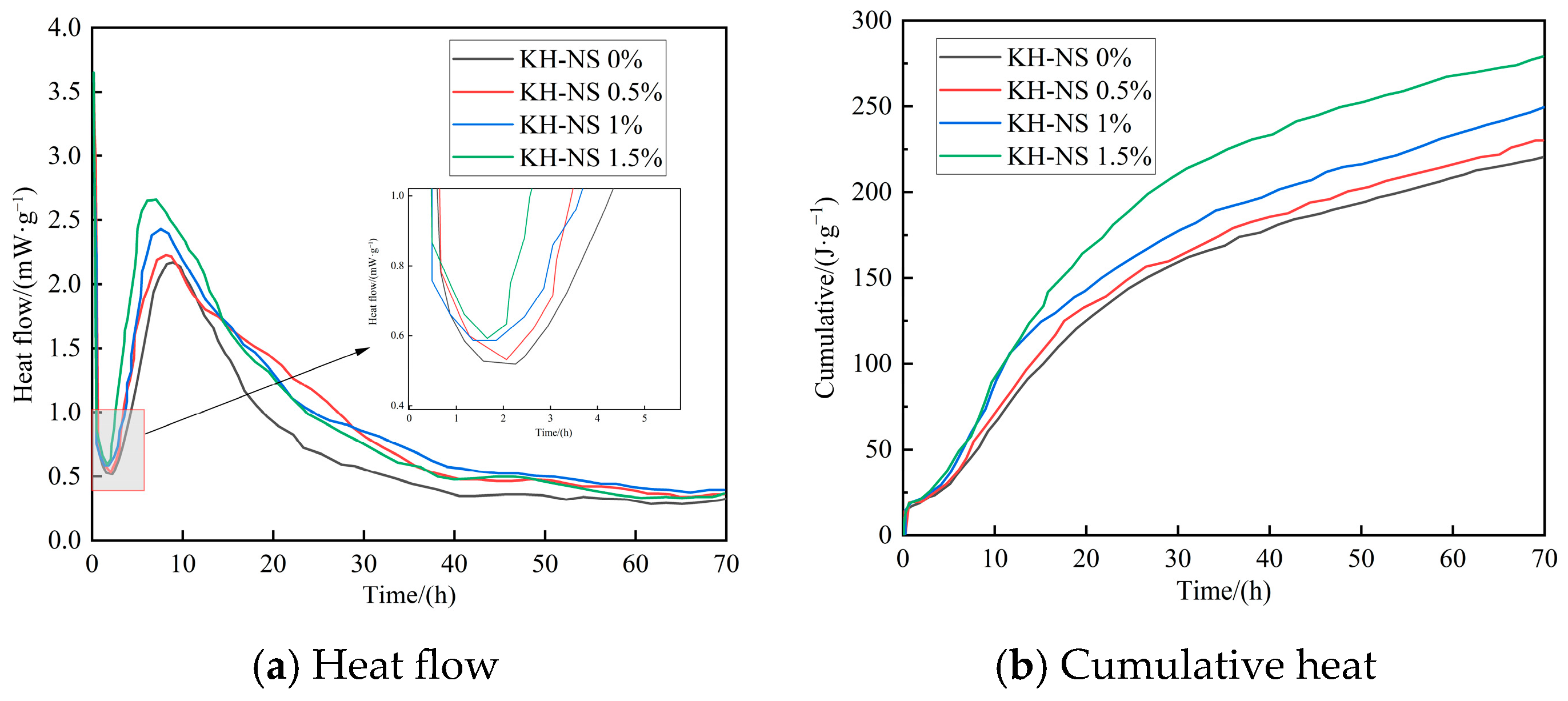
- With increasing KH-NS dosage, the onset time of the accelerated phase of steel slag mortar hydration heat release was brought forward by 2.5 h (in the 1.5% dosage group), with total heat release within 3 d increasing by 26.8%. The addition of KH-NS does not induce the formation of new hydration products in mortar and is capable of accelerating the cement hydration process. KH-NS can consume Ca(OH)2 through pozzolanic reactions to form C-S-H gel, with its reactivity increasing with higher dosage.
- (4)
- KH-NS simultaneously maximizes the nano-effect through dispersion optimization and activates the latent cementitious activity of steel slag via functional group regulation. This approach ultimately enhances material performance while promoting the high-value utilization of metallurgical solid waste, thereby providing theoretical support for the accelerated development of low-carbon building materials.
- (5)
- This study primarily focuses on the grafting configuration of the KH550 molecule on nanoparticle surfaces and its atomic-level interactions with the interface of the hydration products, but lacks verification through simulations based on first-principles calculations or molecular dynamics. Moreover, the tests primarily evaluated mortar performance under standard curing conditions. Systematic investigation remains necessary to determine the long-term durability and damage evolution patterns of KH-NS-modified slag mortar under complex and severe service conditions, such as sulfate attack, freeze–thaw cycles, and high temperatures.
Author Contributions
Funding
Data Availability Statement
Acknowledgments
Conflicts of Interest
References
- Rui, Y.; Li, N.; Tang, R.; Zhao, S.; Zhang, X.; Zhao, S.; Zheng, Y.; Huang, T. The influence of vanadium titanium slag and blast furnace slag on the properties of cement-based materials: Fluidity, mechanical properties, and hydration. Constr. Build. Mater. 2025, 504, 144679. [Google Scholar] [CrossRef] [Scilit]
- Li, Y.; Wang, H.; Lin, H.; Shen, J.; Song, T.; Jin, K. Properties and retarding mechanism of alkali-activated slag cement modified by zinc acetate. Bull. Chin. Ceram. Soc. 2026, 512, 145391. [Google Scholar] [CrossRef] [Scilit]
- Pîrvan, A.; Lothenbach, B.; Schröder, M.; Schwendinger, M.; Joumana, Y.; Winnefeld, F. Enhancing slag reaction in cement blends using calcium formate and sodium metasilicate activators. Cem. Concr. Compos. 2025, 164, 106215. [Google Scholar] [CrossRef] [Scilit]
- Jiang, J.; Jin, Y.; Feng, G.; Li, Y.; Dong, S.; Zhu, H. Assessing the mechanical properties, frost resistance, and microstructure of steel slag powder incorporated roadbeds for foamed concrete. Constr. Build. Mater. 2025, 502, 144452. [Google Scholar] [CrossRef] [Scilit]
- Juenger, M.; Winnefeld, F.; Provis, J.; Ideker, J. Advances in alternative cementitious binders. Cem. Concr. Res. 2011, 41, 1232–1243. [Google Scholar] [CrossRef] [Scilit]
- Lv, Y.; Li, T.; Xu, X.; Yang, J.; Du, Y.; Hu, X.; Chen, W. Effect of steel slag powder on the sulfate corrosion behaviour of magnesium potassium phosphate cement slurry. Constr. Build. Mater. 2024, 456, 139170. [Google Scholar] [CrossRef] [Scilit]
- Ma, C.; Peng, J.; Zhou, H.; Zhou, R.; Ren, W.; Du, Y. An effective method for preparing high early-strength cement-based materials: The effects of direct electric curing on Portland cement. J. Build. Eng. 2021, 43, 102485. [Google Scholar] [CrossRef] [Scilit]
- Liu, J.; Jin, H.; Gu, C.; Yang, Y. Effects of zinc oxide nanoparticles on early-age hydration and the mechanical properties of cement paste. Constr. Build. Mater. 2019, 217, 352–362. [Google Scholar] [CrossRef] [Scilit]
- Qian, C.; Xie, Y.; Hou, S. Enhancing the thermal stability of Portland cement and calcium sulfoaluminate cement composite systems by incorporating carbon-fixing steel slag powder. Constr. Build. Mater. 2026, 513, 145407. [Google Scholar] [CrossRef] [Scilit]
- Yang, S.; Dong, X.; Xu, C.; Cui, H. Influence of different curing regimes on the collaborative activation of glass powder and steel slag cement. Constr. Build. Mater. 2010, 494, 143327. [Google Scholar] [CrossRef] [Scilit]
- Yang, K.; Zhang, Q. Rational application of nano-SiO2 in cement paste incorporated with silane: Counterbalancing and synergistic effects. Cem. Concr. Compos. 2021, 118, 103959. [Google Scholar] [CrossRef] [Scilit]
- Nazari, A.; Riahi, S. Microstructural, thermal, physical, and mechanical behavior of the self-compacting concrete containing SiO2 nanoparticles. Mater. Sci. Eng. A 2010, 527, 7663–7672. [Google Scholar] [CrossRef] [Scilit]
- Li, H.; Zhang, M.; Ou, J. Abrasion resistance of concrete containing nano-particles for pavement. Wear 2006, 260, 1262–1266. [Google Scholar] [CrossRef] [Scilit]
- Wang, D.; Shi, C.; Wu, Z.; Wu, L.; Xiang, S.; Pan, X. Effects of nanomaterials on hardening of cement–silica fume–fly ash-based ultra-high-strength concrete. Adv. Cem. Res. 2016, 28, 555–566. [Google Scholar] [CrossRef] [Scilit]
- Xu, J.; Wang, B.; Zuo, J. Modification effects of nanosilica on the interfacial transition zone in concrete: A multiscale approach. Cem. Concr. Compos. 2017, 81, 1–10. [Google Scholar] [CrossRef] [Scilit]
- Feng, S.; Guan, S. Influence of nano-SiO2 and nano-TiO2 on early hydration process of cement: Hydration rate, hydration products microstructure, calcium ion solubility, and diffusion ability. Constr. Build. Mater. 2025, 491, 142629. [Google Scholar] [CrossRef] [Scilit]
- Torgal, F.; Jalali, S. Nanotechnology: Advantages and drawbacks in the field of construction and building materials. Constr. Build. Mater. 2011, 25, 582–590. [Google Scholar] [CrossRef] [Scilit]
- Maruo, Y.; Yoshihara, L.; Irie, M.; Nagaoka, N.; Kodama, N. Concentration-Dependent Synergistic Interfacial Interactions Between Multifunctional Acrylate and Silane Coupling Agents in an Organic–Inorganic Nanohybrid Material. Appl. Sci. 2026, 16, 2339. [Google Scholar] [CrossRef] [Scilit]
- Ma, C.; Zhao, R.; Wang, D. The Influence of Silane Coupling Agent-Modified Spherical Silica Powder on the Properties of Epoxy Molding Compounds. J. Appl. Polym. Sci. 2026, 143, e70412. [Google Scholar] [CrossRef] [Scilit]
- Wan, T.; Ke, G.; Jin, D.; Deng, Y.; Wang, H. Synergistic enhancement of hydrophobic stability in superhydrophobic cement mortar by modified nano-SiO2 and silane. Constr. Build. Mater. 2026, 506, 144869. [Google Scholar] [CrossRef] [Scilit]
- Sun, J.; Huang, W.; Wang, X.; Zhang, Z.; Wang, Y. Silane coupling agent-treated steel slag for sustainable asphalt pavements: Performance optimization and feasibility assessment. Constr. Build. Mater. 2025, 505, 144569. [Google Scholar] [CrossRef] [Scilit]
- Li, F.; Chen, Q.; Lu, Y.; Zou, Y.; Li, S. Dry shrinkage and micro-structure of alkali-activated fly ash/slag pastes incorporated with silane coupling agent modified MWCNTs. Cem. Concr. Res. 2024, 175, 107382. [Google Scholar] [CrossRef] [Scilit]
- GB/T 17671-2021; Test Method of Cement Mortar Strength (ISO Method). China Standards Press: Beijing, China, 2021.
- GB/T 1346-2011; Test Methods for Water Requirement of Normal Consistency, Setting Time and Soundness of the Portland Cement. China Standards Press: Beijing, China, 2011.
- Ali, N.; Wu, Y.; Zhang, Q.; Chen, Y. Preparation and characterization glass fiber reinforced BMI/DABA/KH550 composite. Adv. Cem. Res. 2013, 650, 220–225. [Google Scholar] [CrossRef] [Scilit]
- Zhang, X.; Zhou, S.; Li, D. The effect of the modification of graphene oxide with γ- aminopropyltriethoxysilane (KH550) on the properties and hydration of cement. Constr. Build. Mater. 2022, 322, 126497. [Google Scholar] [CrossRef] [Scilit]
- Feng, S.; Xiao, H.; Guan, S. Influence of Nano-SiO2 and Nano-TiO2 on properties and microstructure of cement-based materials. Constr. Build. Mater. 2025, 459, 139805. [Google Scholar] [CrossRef] [Scilit]
- Xu, Z.; Ji, Y.; Zhang, J.; Zhang, Z.; Xue, Q.; Gao, F. Mechanism of nano-SiO2 internal generation for modification of cement-based materials. J. Build. Eng. 2023, 76, 107247. [Google Scholar] [CrossRef] [Scilit]
- Sobolev, K.; Flores, I.; Torres, L.; Cuellar, E.; Valdez, P. Performance of Cement Systems with Nano-SiO2 Particles Produced by Using the Sol–Gel Method. Transp. Res. Rec. 2010, 2141, 10–14. [Google Scholar] [CrossRef] [Scilit]
- Ren, Z.; Liu, Y.; Yuan, L.; Luan, C.; Wang, J.; Cheng, X.; Zhou, Z. Optimizing the content of nano-SiO2, nano-TiO2 and nano-CaCO3 in Portland cement paste by response surface methodology. J. Build. Eng. 2020, 35, 102073. [Google Scholar] [CrossRef] [Scilit]
- Liu, B.; Lu, X.; Meng, H.; Pan, G.; Li, D. Dispersion of in-situ controllably grown nano-SiO2 in alkaline environment for improving cement paste. Constr. Build. Mater. 2023, 369, 130460. [Google Scholar] [CrossRef] [Scilit]
- Cheng, F.; Yu, S.; Zhao, C.; Guo, Q.; Shao, Z.; Lyu, S. Properties of Cellulose/Polypropylene Nanocomposites Modified by KH550 Silane Coupling Agent. J. Phys. Conf. Ser. 2023, 2553, 012002. [Google Scholar] [CrossRef] [Scilit]
- Luan, C.; Zhou, Y.; Liu, Y.; Ren, Z.; Wang, J.; Yuan, L.; Du, S.; Zhou, Z.; Huang, Y. Effects of nano-SiO2, nano-CaCO3, and nano-TiO2 on properties and microstructure of the high content calcium silicate phase cement (HCSC). Constr. Build. Mater. 2022, 314, 125377. [Google Scholar] [CrossRef] [Scilit]
- Shan, F.; Yu, Z.; Wang, M.; Zhang, Y. Study on Surface Modification of Nano-Alumina with Silicane Coupling Agent KH550. Adv. Cem. Res. 2012, 528, 263–266. [Google Scholar] [CrossRef] [Scilit]
- Meng, T.; Ying, K.; Hong, Y.; Xu, Q. Effect of different particle sizes of nano-SiO2 on the properties and microstructure of cement paste. Nanotechnol. Rev. 2020, 9, 833–842. [Google Scholar] [CrossRef] [Scilit]
- Liu, R.; Xiao, H.; Li, H.; Sun, L.; Pi, Z.; Waqar, G.; Du, T.; Yu, L. Effects of nano-SiO2 on the permeability-related properties of cement-based composites with different water/cement ratios. J. Mater. Sci. 2018, 53, 4974–4986. [Google Scholar] [CrossRef] [Scilit]
- Rong, Z.; Zhao, M.; Wang, Y. Effects of modified nano-SiO2 particles on properties of high-performance cement-based composites. Materials 2020, 13, 646. [Google Scholar] [CrossRef] [Scilit] [PubMed]
- Kumar, S.; Sirajudeen; Sivaranjani; Vani; Ali, N.; Begum, S.; Rahman, Z. Characterization, properties and microstructure studies of cement mortar incorporating nano-SiO2. Mater. Today Proc. 2021, 37, 425–430. [Google Scholar] [CrossRef] [Scilit]
- Zhang, T.; Ma, B.; Wu, S.; Jin, Z.; Wang, J. Mechanical properties and hydration process of steel slag-cement binder containing nano-SiO2. Constr. Build. Mater. 2022, 314, 125660. [Google Scholar] [CrossRef] [Scilit]
- Zhang, A.; Yang, W.; Ge, Y.; Du, Y.; Liu, P. Effects of nano-SiO2 and nano-Al2O3 on mechanical and durability properties of cement-based materials: A comparative study. J. Build. Eng. 2021, 34, 101936. [Google Scholar] [CrossRef] [Scilit]
- Collodetti, G.; Gleize, P.; Monteiro, P. Exploring the potential of siloxane surface modified nano-SiO2 to improve the Portland cement pastes hydration properties. Constr. Build. Mater. 2014, 54, 99–105. [Google Scholar] [CrossRef] [Scilit]
- Land, G.; Stephan, D. Controlling cement hydration with nanoparticles. Cem. Concr. Compos. 2015, 57, 64–67. [Google Scholar] [CrossRef] [Scilit]






| Composition | SiO2 | Al2O3 | Fe2O3 | CaO | SO3 | MgO | LOI |
|---|---|---|---|---|---|---|---|
| Mass fraction/% | 22.29 | 6.80 | 4.63 | 58.23 | 2.42 | 0.97 | 4.66 |
| Composition | CaO | Fe2O3 | SiO2 | CO2 | MnO | MgO | Al2O3 | TiO2 | Other |
|---|---|---|---|---|---|---|---|---|---|
| Mass fraction/% | 41.41 | 19.72 | 13.81 | 11.34 | 5.50 | 3.85 | 1.80 | 1.31 | 1.26 |
Disclaimer/Publisher’s Note: The statements, opinions and data contained in all publications are solely those of the individual author(s) and contributor(s) and not of MDPI and/or the editor(s). MDPI and/or the editor(s) disclaim responsibility for any injury to people or property resulting from any ideas, methods, instructions or products referred to in the content. |
© 2026 by the authors. Licensee MDPI, Basel, Switzerland. This article is an open access article distributed under the terms and conditions of the Creative Commons Attribution (CC BY) license.
Share and Cite
Fan, R.; Mao, B. Study on the Mechanism of Enhanced Early-Age Properties of Steel Slag Cement Mortar Through Modified Nano-SiO2. Materials 2026, 19, 1338. https://doi.org/10.3390/ma19071338
Fan R, Mao B. Study on the Mechanism of Enhanced Early-Age Properties of Steel Slag Cement Mortar Through Modified Nano-SiO2. Materials. 2026; 19(7):1338. https://doi.org/10.3390/ma19071338
Chicago/Turabian StyleFan, Ridong, and Baiyang Mao. 2026. "Study on the Mechanism of Enhanced Early-Age Properties of Steel Slag Cement Mortar Through Modified Nano-SiO2" Materials 19, no. 7: 1338. https://doi.org/10.3390/ma19071338
APA StyleFan, R., & Mao, B. (2026). Study on the Mechanism of Enhanced Early-Age Properties of Steel Slag Cement Mortar Through Modified Nano-SiO2. Materials, 19(7), 1338. https://doi.org/10.3390/ma19071338