3.1. Regulation of Clinker Phase Composition by Calcination Temperature and SiO2 Content
The SiO
2 dosage range of 1% to 9% was selected to encompass the typical impurity levels found in low-grade magnesite resources, which are reported to range from ~1% to over 17% SiO
2 depending on the ore source [
7,
9]. This range allows systematic investigation of the transition from minor impurity effects to severe performance deterioration, covering the majority of SiO
2 concentrations relevant to practical applications.
XRD patterns combined with Rietveld quantitative analysis clearly revealed the dual regulatory effects of calcination temperature and SiO2 content on the mineral composition of MgO-SiO2 system clinkers. The main crystalline phases in the clinker were periclase (MgO) and forsterite (Mg2SiO4). Unreacted cristobalite (SiO2) phase could be detected at high SiO2 dosages, with no other impurity phases formed. The quality of Rietveld refinement was good (Rwp = 12.75–14.35%, all ≤20%), confirming the reliability of the quantitative results.
SiO
2 content was the core factor determining the phase equilibrium of the clinker.
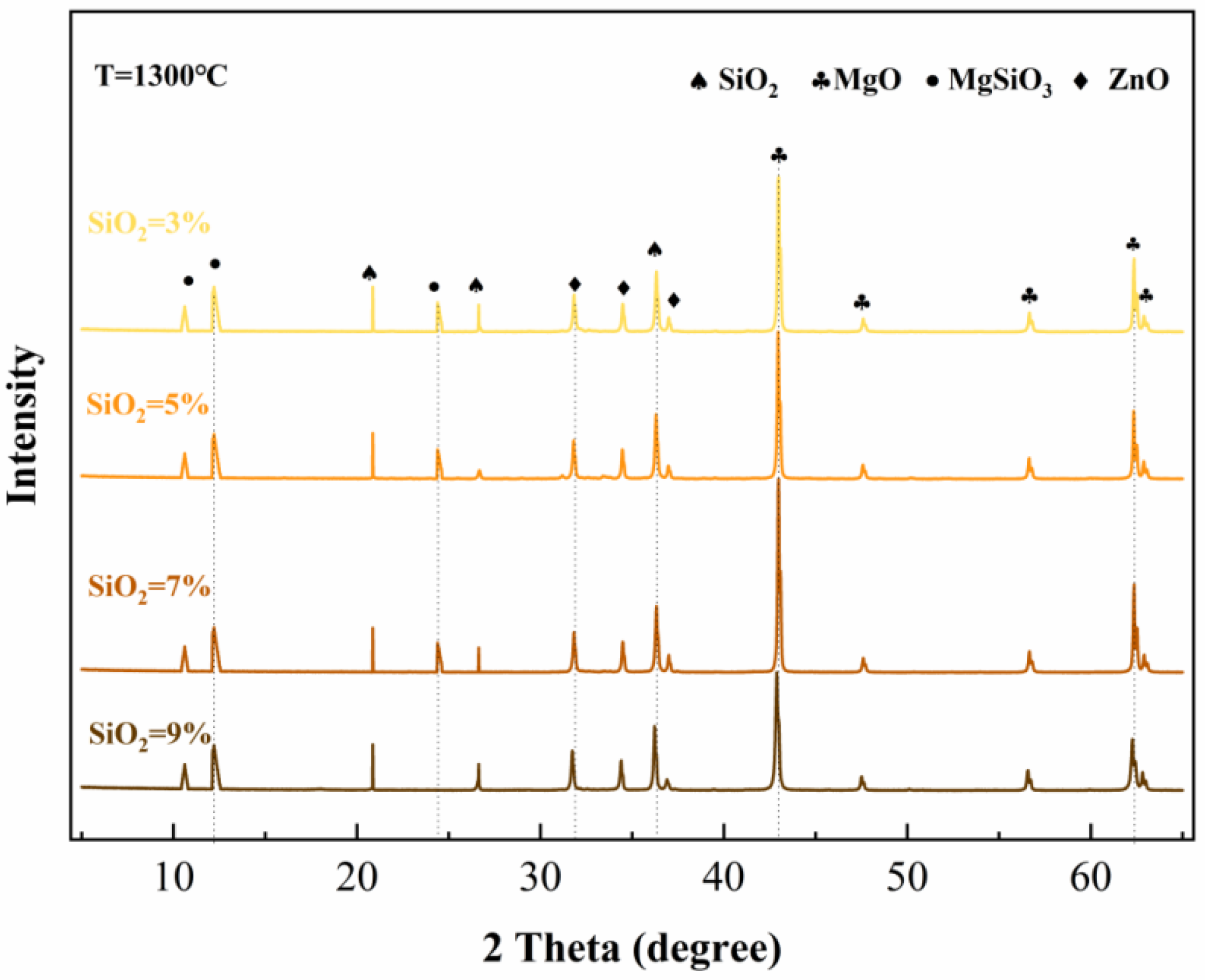
Figure 1 shows the XRD patterns and Rietveld quantitative results of clinkers with different SiO
2 dosages calcined at 1300 °C. As the SiO
2 content increased from 1% to 9%, the intensity of MgO diffraction peaks showed a trend of “initially increasing then decreasing”. When the SiO
2 dosage was between 1% and 5%, the MgO diffraction peaks gradually intensified, reaching peak crystallinity at 5% dosage. When the SiO
2 dosage exceeded 5%, the intensity of MgO diffraction peaks began to decline. This decline in diffraction intensity, coupled with the concurrent increase in Mg
2SiO
4 formation, provides direct crystallographic evidence for the physical deactivation mechanism: the envelopment of MgO particles by Mg
2SiO
4 not only consumes reactive MgO but also physically impedes MgO crystal growth and reduces the accessibility of remaining MgO surfaces to subsequent hydration. The broadening of MgO diffraction peaks (increased FWHM) at higher SiO
2 dosages further indicates increased microstrain and reduced crystallite size—both manifestations of physical disruption to the MgO crystal structure. However, when the SiO
2 dosage exceeded 5%, the substantial formation of Mg
2SiO
4 consumed MgO, and the product enveloped the surface of MgO particles, inhibiting their crystal growth, resulting in a decrease in diffraction peak intensity.
Concurrently, the amount of Mg
2SiO
4 formed increased approximately linearly with increasing SiO
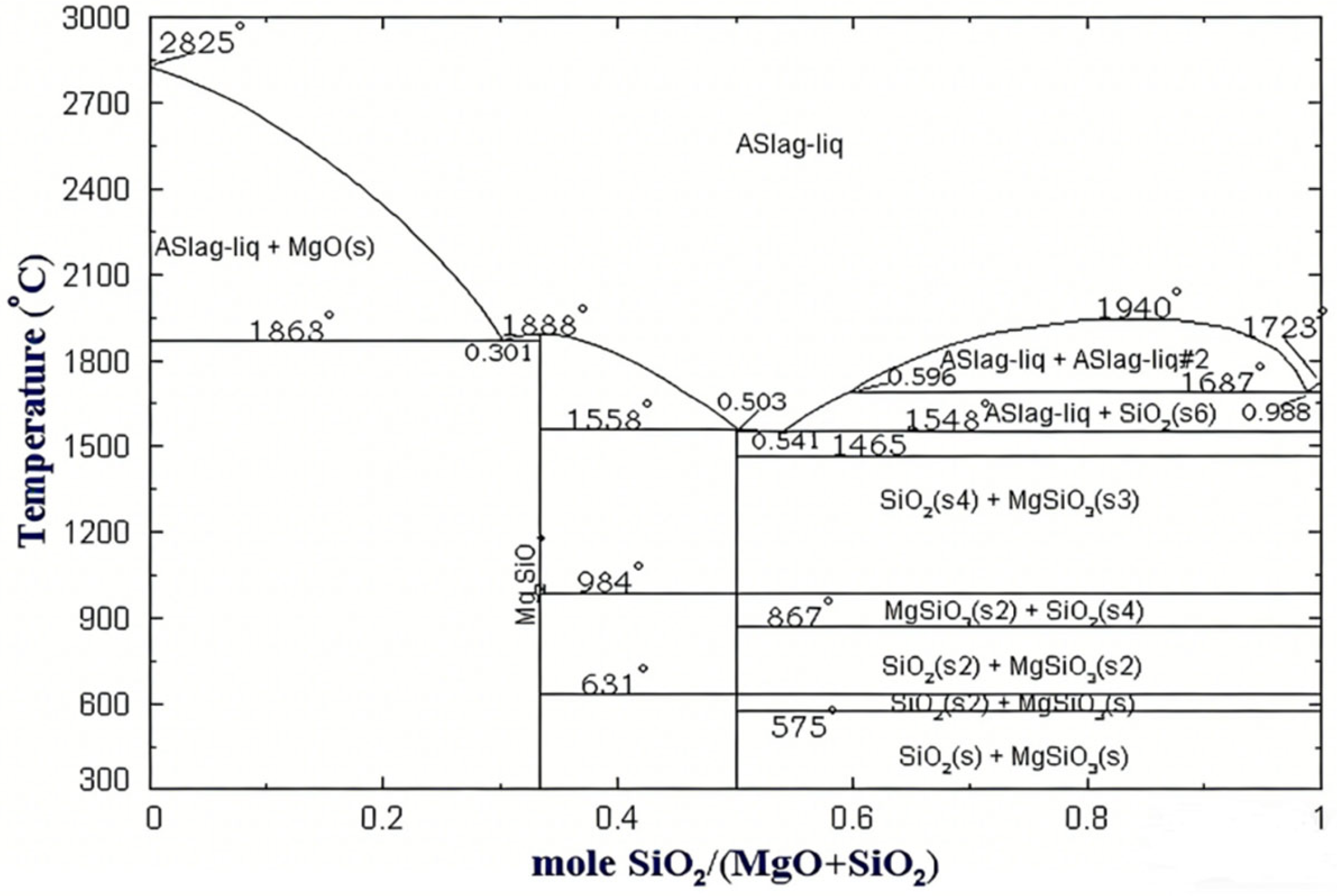
2 content, rising from trace levels (approx. 2.3%) at 1% dosage to a significant level (approx. 35.8%) at 9% dosage. Referring to the thermodynamic phase diagram of the MgO-SiO
2 system (
Figure 2), within the experimental proportion range of this study (MgO/SiO
2 molar ratio > 2:1), the system consistently lies within the two-phase region of MgO and Mg
2SiO
4. Any additional SiO
2 will continuously react with MgO via solid-state reaction to form Mg
2SiO
4 until SiO
2 becomes excessive or the reaction reaches equilibrium.
This solid-state reaction has dual negative effects. On the one hand, the “chemical consumption” effect irreversibly transforms reactive MgO into non-cementitious Mg2SiO4, reducing the absolute content of reactive components in the clinker. On the other hand, the “physical deactivation” effect occurs as the formed Mg2SiO4 coats the surface of the remaining MgO particles, potentially hindering their subsequent hydration reaction. These two effects together lay the precursor foundation for the deterioration of MPC hydration performance.
Calcination temperature further regulates the clinker phase composition by influencing the extent of the solid-state reaction and crystal development processes.
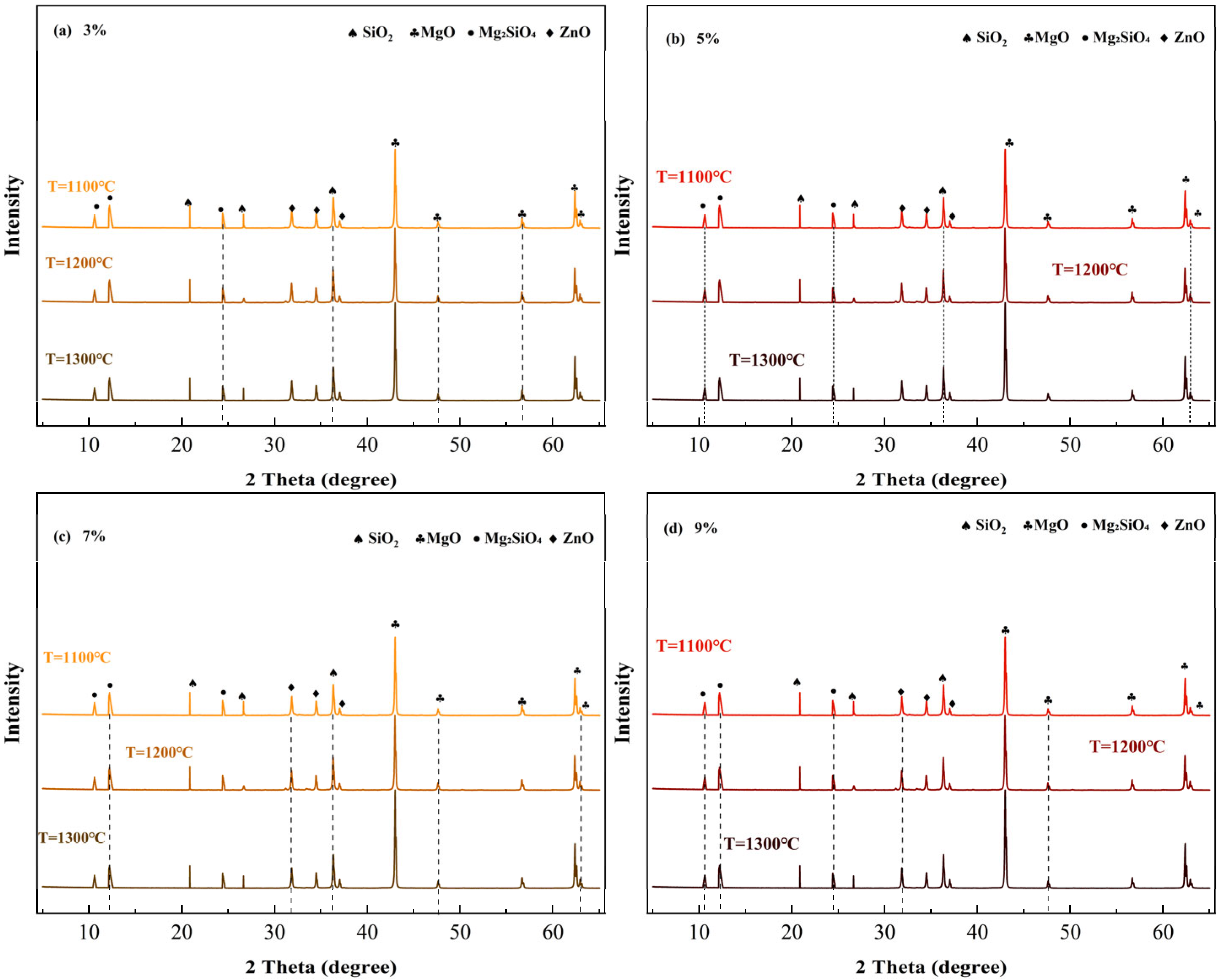
Figure 3 displays the XRD patterns of clinkers with a fixed SiO
2 dosage (5%) calcined at different temperatures (1100–1500 °C). As the calcination temperature increased, the intensity of Mg
2SiO
4 diffraction peaks continuously strengthened, and the peak shapes became sharper, indicating a deeper solid-state reaction and more perfected forsterite crystal development.
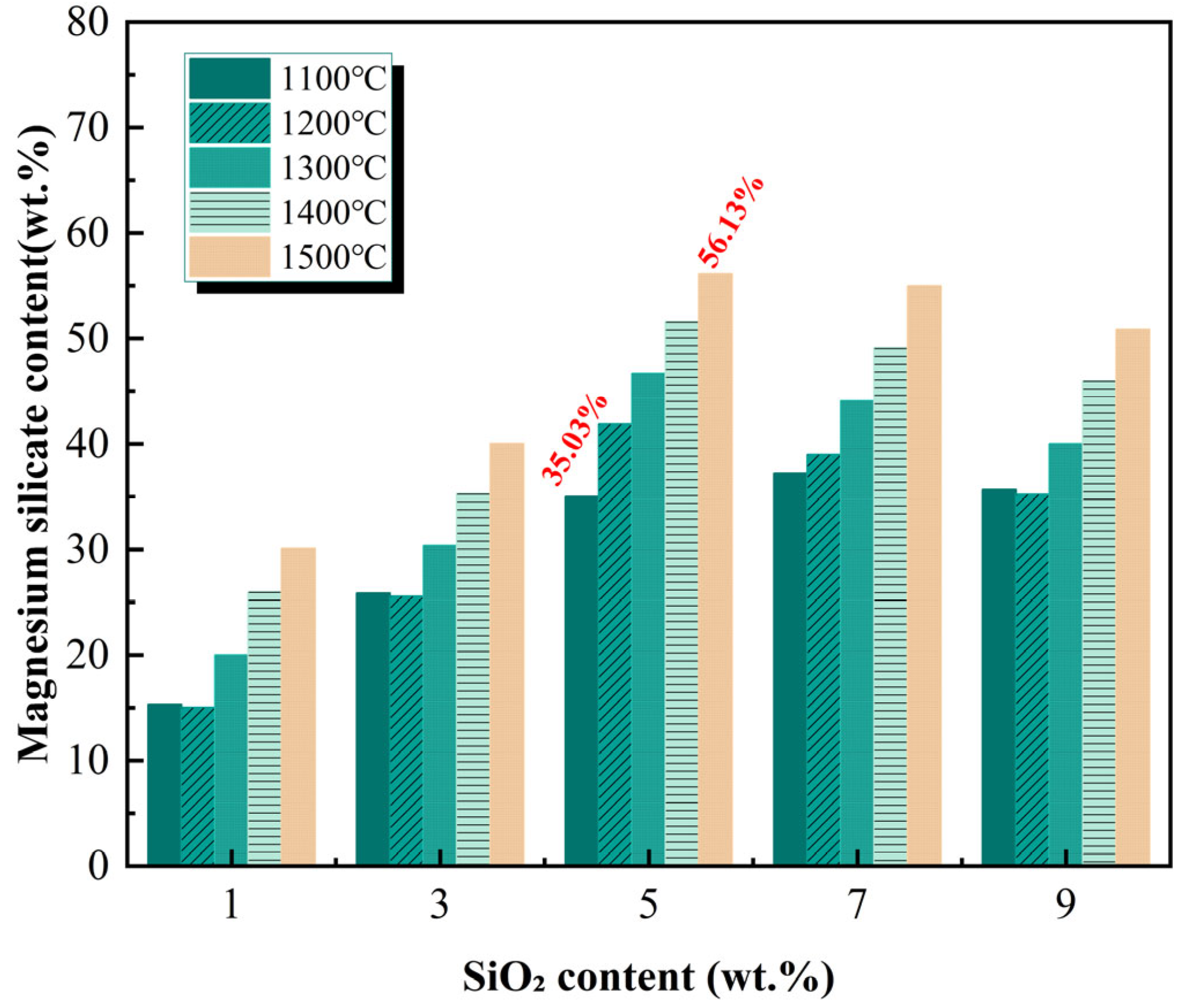
The Rietveld quantitative analysis results (
Figure 4) further reveal that the amount of Mg
2SiO
4 formed increases monotonically with rising calcination temperature: approximately 18.5% at 1100 °C, increasing to 21.3% at 1200 °C, 24.8% at 1300 °C, 28.6% at 1400 °C, and reaching 32.4% at 1500 °C. This trend indicates that high temperatures provide sufficient thermodynamic driving force and kinetic conditions for the solid-state reaction between MgO and SiO
2, promoting the reaction towards completion.
Simultaneously, the effect of high temperature on the MgO crystal structure exhibits a “double-edged sword” characteristic. On the one hand, high temperature promotes the growth of MgO grains and enhances crystallinity, resulting in a more perfect crystal structure, which benefits the physical strength of the clinker particles themselves. On the other hand, excessive sintering significantly reduces the number of reactive sites on the MgO surface—grain growth reduces specific surface area, and increased crystallinity decreases lattice defects. Both factors collectively diminish the intrinsic hydration reactivity of MgO. This phenomenon represents the intensified manifestation of SiO2’s “physical deactivation” effect at high temperatures.
The regulation of clinker phase composition by calcination temperature and SiO2 content directly establishes the material basis for SiO2-induced damage to MPC performance. On the one hand, the material basis for “chemical consumption” lies in the quantity of Mg2SiO4 formed from the reaction between SiO2 and MgO, which dictates the extent of reactive MgO consumption—higher SiO2 dosage and higher calcination temperature lead to greater Mg2SiO4 formation and less residual reactive MgO. On the other hand, the material basis for “physical deactivation” lies in the crystallinity and grain size of the remaining MgO, which determines the abundance of reactive sites on its surface. Although high-temperature calcination promotes Mg2SiO4 formation, it also increases the crystallinity and grain size of the residual MgO, significantly reducing surface reactive sites. Both effects are “inscribed” into the material’s microstructure during the clinker preparation stage and will comprehensively manifest their systematic influence on the workability of fresh paste, mechanical properties of hardened bodies, and hydration kinetics during subsequent MPC hydration.
It is important to clarify that while the “chemical consumption” of reactive MgO is directly and quantitatively evidenced by the increased Mg
2SiO
4 content from Rietveld analysis, the proposed “physical deactivation” effect operates through a combination of mechanisms that are more challenging to quantify directly. This deactivation is inferred from indirect but compelling evidence: (i) the systematic changes in MgO diffraction peak shapes and intensities (
Figure 1), suggesting altered crystallinity; (ii) the monotonic increase in early-age hydration heat flow (which will be discussed in
Section 3.4), which—combined with the decoupling from strength—indicates competition between heterogeneous nucleation and reduced reactive surface availability; (iii) the disproportionately severe loss of early-age (4 h) compressive strength compared to later-age (3 d) strength (which will be discussed in
Section 3.2), which points towards an immediate physical hindrance of the initial rapid hydration reactions. Therefore, in the following discussion, “physical deactivation” is presented as a mechanistic model that best explains the synergistic trends observed across our multi-faceted experimental data.
3.2. Influence of Clinker Characteristics on the Workability of Fresh MPC Paste
The setting time and fluidity of fresh MPC paste are key workability indicators for its engineering construction application. Experimental results demonstrate that both the calcination temperature of the clinker and the SiO2 dosage exert a regular regulatory effect on the workability of the paste, with the influence trends of the two factors being consistent.
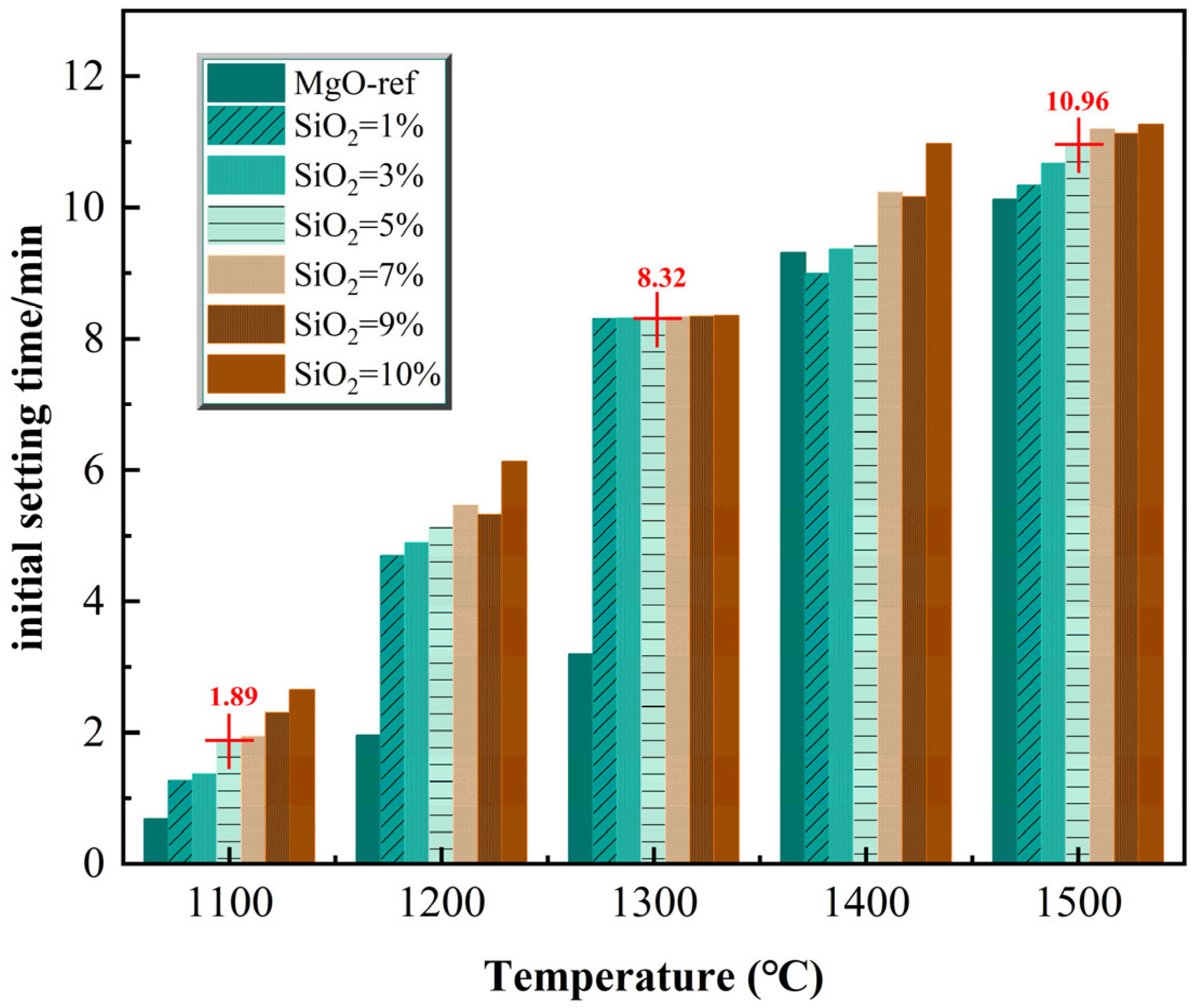
Setting time test results (
Figure 5) show that increasing calcination temperature and increasing SiO
2 content both significantly delay the initial setting process of the MPC paste. Taking the clinker with 5% SiO
2 dosage as an example, as the calcination temperature increased from 1100 °C to 1500 °C, the initial setting time extended from 1.89 min to 10.96 min; the setting time of the paste with clinker calcined at 1300 °C was approximately 6.5 min longer than that with clinker calcined at 1100 °C. The core reason for this phenomenon is the dual decrease in the content and reactivity of reactive MgO. High temperatures and high SiO
2 dosages promote the formation of more inert Mg
2SiO
4 while also increasing MgO crystallinity. This leads to a significant reduction in the number of reactive sites on the clinker that can rapidly undergo acid–base neutralization with potassium dihydrogen phosphate, substantially delaying the establishment of the hydration reaction network, ultimately manifesting as prolonged setting time. Additionally, the type and concentration of phosphate can also influence setting behavior; increased potassium dihydrogen phosphate concentration may further extend the setting time of the paste, creating a synergistic effect with reduced clinker reactivity.
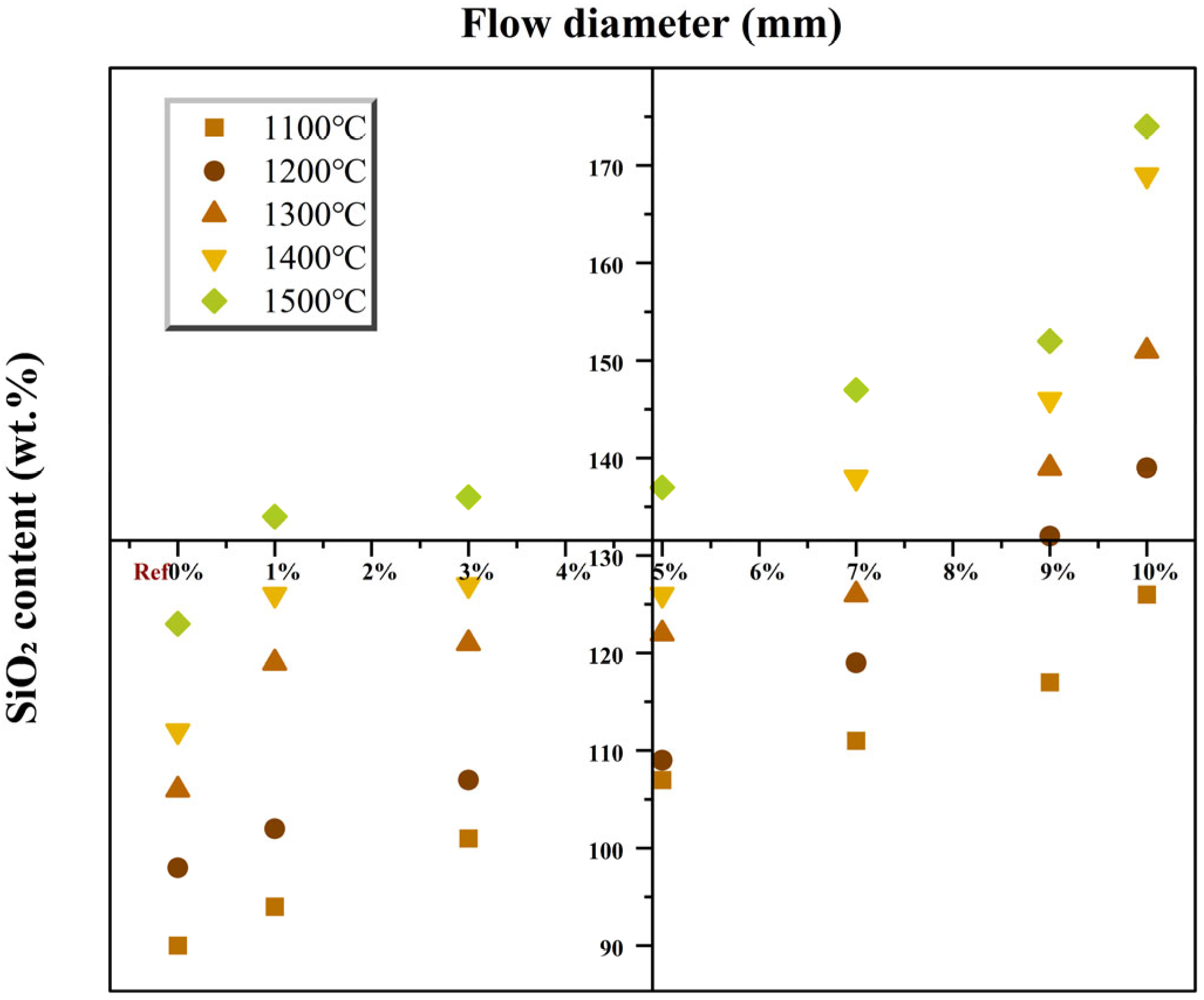
Furthermore, the SiO
2 content significantly influenced the fluidity of MPC at different calcination temperatures. As shown in
Figure 6, assuming a linear relationship between the two variables for illustration, the fluidity of the paste monotonically increased with increasing calcination temperature and SiO
2 content, correlating well with the trend observed for setting time. This change primarily stems from two aspects: First, the reduced clinker reactivity slows down the initial hydration reaction rate upon contact with water, postponing the structuration process of the paste and diminishing flocculation among particles within the system. Second, high-temperature calcination lowers the surface energy of clinker particles, reducing their adsorption capacity for mixing water, thereby releasing more free water to lubricate the contact interfaces between particles and effectively decreasing the internal frictional resistance of the paste. It is crucial to note that this improvement in workability comes at the expense of weakened hydration reaction kinetics. The increase in free water and the decrease in reaction rate both potentially negatively affect the early strength development of MPC, manifesting as slower early strength gain.
3.3. Mechanical Property of Hardened MPC Paste
Compressive strength is a core performance indicator for MPC as a rapid-repair structural cementitious material. Its development pattern is subject to the coupled regulation of calcination temperature and SiO
2 content, exhibiting differentiated responses at different ages (4 h, 1 d, 3 d).
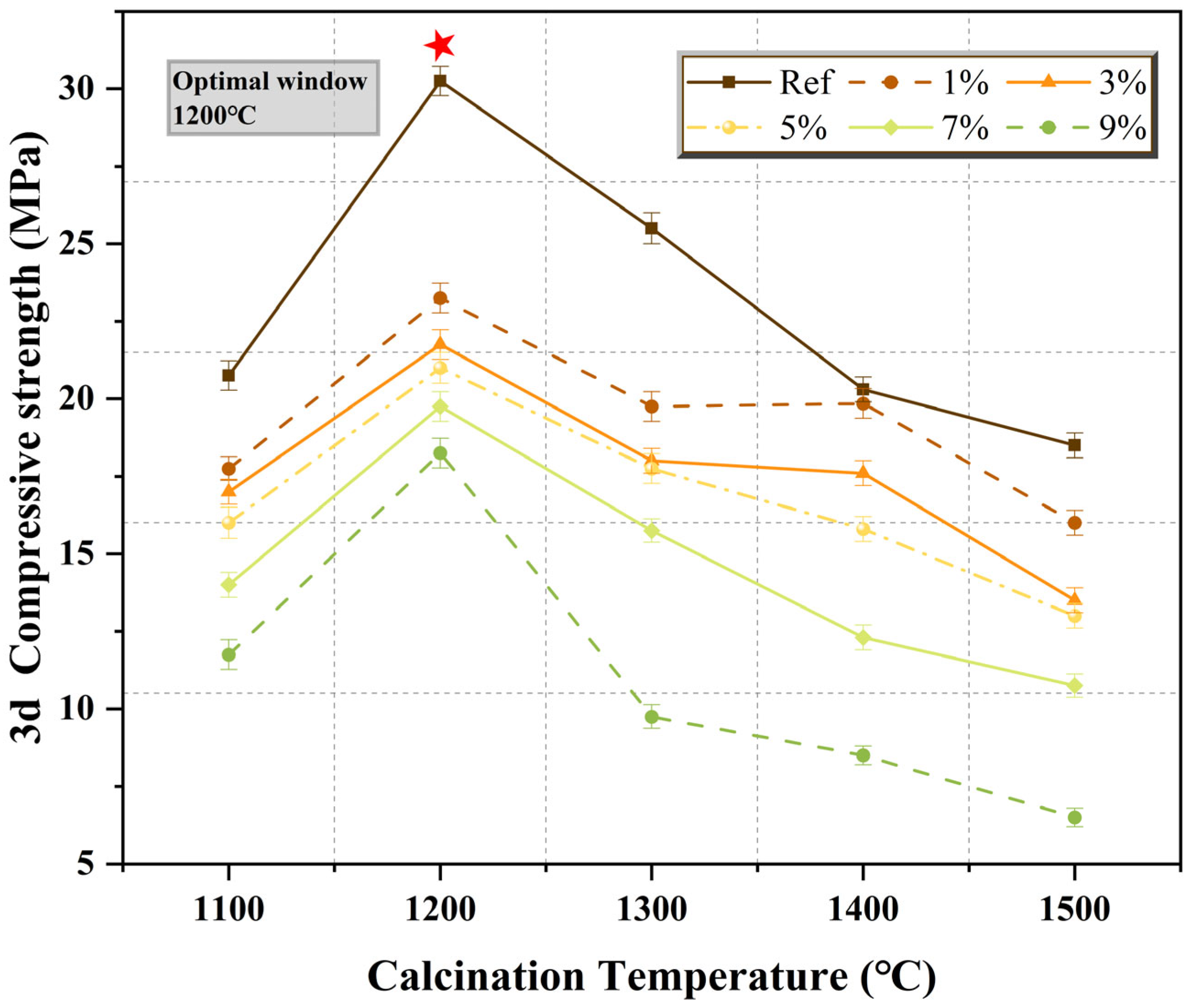
Figure 7 illustrates the distribution of 3 d compressive strength of MPC under different calcination temperatures and SiO
2 contents, while
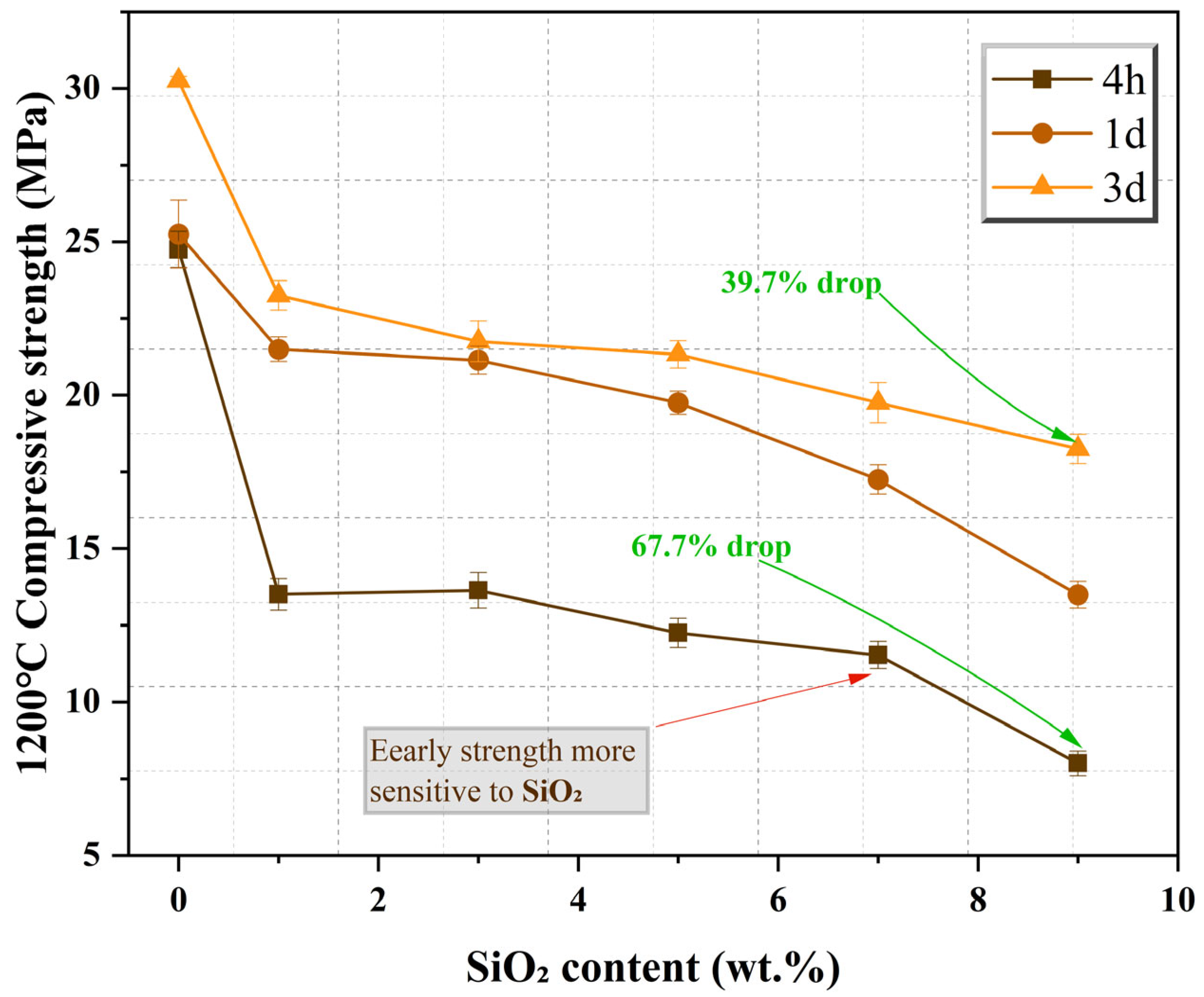
Figure 8 presents the trend of strength at various ages as a function of SiO
2 content at the optimal calcination temperature of 1200 °C.
Calcination temperature exhibits an optimal window effect on MPC compressive strength, and this effect is evident across all SiO
2 content groups. As seen in
Figure 7, the 3 d strength at 1200 °C calcination reached 30.25 MPa, a 45.8% increase compared to 1100 °C (20.75 MPa) and a 63.5% increase compared to 1500 °C (18.50 MPa). This pattern directly reflects the synergistic effect of the “dual damage mechanism” of SiO
2 on reactive MgO and the calcination temperature:
① 1100 °C Low-temperature Calcination: The solid-state reaction is incomplete, resulting in insufficient Mg2SiO4 formation, and unreacted free SiO2 exists in the clinker. At this point, the “chemical consumption” effect of SiO2 on reactive MgO is weak, but the “physical deactivation” effect is already apparent—unreacted SiO2 physically dilutes the reactive components, and the clinker particles themselves have a low degree of sintering and poor strength. At this temperature, the 3 d strengths of all SiO2 content groups are moderate, ranging from 20 to 30 MPa, with a clear downward trend as SiO2 increases.
② 1200 °C Optimal Calcination: The solid-state reaction is sufficient and moderately progressed, with SiO2 and MgO reacting to form an appropriate amount of Mg2SiO4. At this temperature, the “chemical consumption” effect of SiO2 is controlled (sufficient reactive MgO is retained), and the “physical deactivation” effect is not yet excessive (MgO crystallinity is moderate, reactive sites are abundant). The clinker possesses both good hydration reaction kinetics and particle structure, allowing hydration products to form a dense gel network. All curves peak at this temperature, confirming 1200 °C as the optimal calcination temperature window.
③ ≥1300 °C High-temperature Calcination: High temperatures provide ample thermodynamic driving force for the solid-state reaction between MgO and SiO
2, significantly intensifying the “dual damage mechanism” of SiO
2. On the one hand, the “chemical consumption” effect is exacerbated—the amount of Mg
2SiO
4 formed becomes excessive (see
Figure 4), drastically reducing the absolute content of reactive MgO. On the other hand, the “physical deactivation” effect becomes prominent—excessive sintering leads to a sharp increase in the grain size and excessive crystallinity of the remaining MgO, significantly reducing the number of reactive sites on its surface. The superposition of these dual damages results in severely insufficient hydration reaction kinetics, causing a significant decrease in strength across all SiO
2 content groups, with the decline being more drastic for high SiO
2 dosage groups (7%, 9%).
SiO
2 content has a significant negative monotonic impact on MPC compressive strength, and this negative effect is particularly pronounced at early ages (4 h). As shown in
Figure 8, at the optimal calcination temperature of 1200 °C, the compressive strength of MPC at all ages decreases almost linearly as the SiO
2 content in the clinker increases from 1% to 9%: 4 h strength: decreased from 24.75 MPa in the Ref group to 8.00 MPa in the 9% dosage group, a reduction of 67.7%; 1 d strength: decreased from 25.25 MPa to 13.50 MPa, a reduction of 46.5%; 3 d strength: decreased from 30.25 MPa to 18.25 MPa, a reduction of 39.7%.
The fundamental reason for this phenomenon is the superimposed amplification of the “dual damage” effect with increasing SiO
2 dosage. On the one hand, the “chemical consumption” effect intensifies with increasing SiO
2—more reactive MgO is converted into non-cementitious Mg
2SiO
4, irreversibly reducing the total amount of reactive components participating in the hydration reaction. On the other hand, the “physical deactivation” effect synchronously intensifies—unreacted SiO
2 and formed Mg
2SiO
4 physically dilute and encapsulate the remaining reactive MgO, while the synergistic effect of high temperature increases the crystallinity of the remaining MgO, reducing its surface reactivity. The dual damage ultimately leads to insufficient formation of cementitious products in the hardened paste, a loose structure, and a continuous decline in compressive strength. Notably, the strength loss at moderate SiO
2 levels (3~5%) observed in this study is comparable to or less severe than that reported for MPC containing other impurities such as iron tailings [
2] or nano-silica [
22], suggesting that SiO
2 is not uniquely detrimental when its dual effects are understood and controlled. The identification of 1200° Cas, the optimal calcination temperature, also provides a processing window that previous studies, which often focused on a single calcination temperature, did not systematically explore [
7,
8].
It is particularly noteworthy that early-age strength is more sensitive to SiO
2 content. The magnitude of decrease in 4 h strength (67.7%) is significantly higher than that in 3 d strength (39.7%). This indicates that the “physical deactivation” effect of SiO
2 is more pronounced in the very early stages of hydration—the encapsulation of reactive MgO surfaces by inert phases or increased crystallinity directly hinders the rapid progress of the acid–base neutralization reaction initially, while later slow hydration can still partially supplement the cementitious products. This phenomenon also explains why high SiO
2 dosage groups, although capable of enhancing the early heat flow rate through heterogeneous nucleation (see
Section 3.4), cannot translate this into corresponding early strength. This heightened sensitivity of very early-age strength to SiO
2 content provides the strongest macroscopic evidence for the “physical deactivation” mechanism, as chemical consumption alone would be expected to reduce strength proportionally across all ages, rather than exhibiting this pronounced age-dependent effect. This macroscopic evidence is further corroborated by the crystallographic observations presented in
Section 3.1, where systematic changes in MgO peak intensities and peak broadening directly indicated compromised surface reactivity and structural disruption of the remaining MgO—the microstructural origins of physical deactivation.
MPC compressive strength exhibits a clear age-dependent increase, with all formulation groups showing significantly higher 3 d strength compared to 1 d and 4 h strength. However, the magnitude of age-dependent increase is significantly regulated by SiO2 content: Low SiO2 dosage groups (Ref, 1%, 3%): High strength growth potential, with an absolute increase from 4 h to 3 d strength of 10–15 MPa and a relative increase of 22–36%. High SiO2 dosage groups (7%, 9%): Limited strength growth potential, with an absolute increase from 4 h to 3 d strength of only 6–10 MPa. Although the relative increase is high (75–128%), the absolute strength values remain far lower than those of the low-dosage groups.
Taking the 1200 °C group as an example, the Ref group had a 4 h strength of 24.75 MPa and a 3 d strength of 30.25 MPa, an increase of 22.2%. In contrast, the 9% dosage group had a 4 h strength of only 8.00 MPa and a 3 d strength of 18.25 MPa, an absolute increase of 10.25 MPa, but its 3 d strength was still less than 75% of the Ref group’s 4 h strength. This indicates that although high SiO2 dosage reduces the total amount of reactive MgO through “chemical consumption,” the remaining reactive MgO can still continue to hydrate. However, limited by the insufficient total amount of reactive components, the final strength remains difficult to elevate to application requirements.
This pattern further confirms that the continuous progress of the hydration reaction constantly supplements cementitious products and optimizes the microstructure of the hardened paste, while the retention of highly reactive MgO (i.e., mitigating the dual damage of SiO2) provides the material basis for the sustained hydration reaction. Therefore, controlling the SiO2 dosage (recommended not exceeding 5%) is crucial for ensuring the mechanical properties of MPC in practical applications.
3.4. Hydration Kinetics Process
To further elucidate the influence of SiO
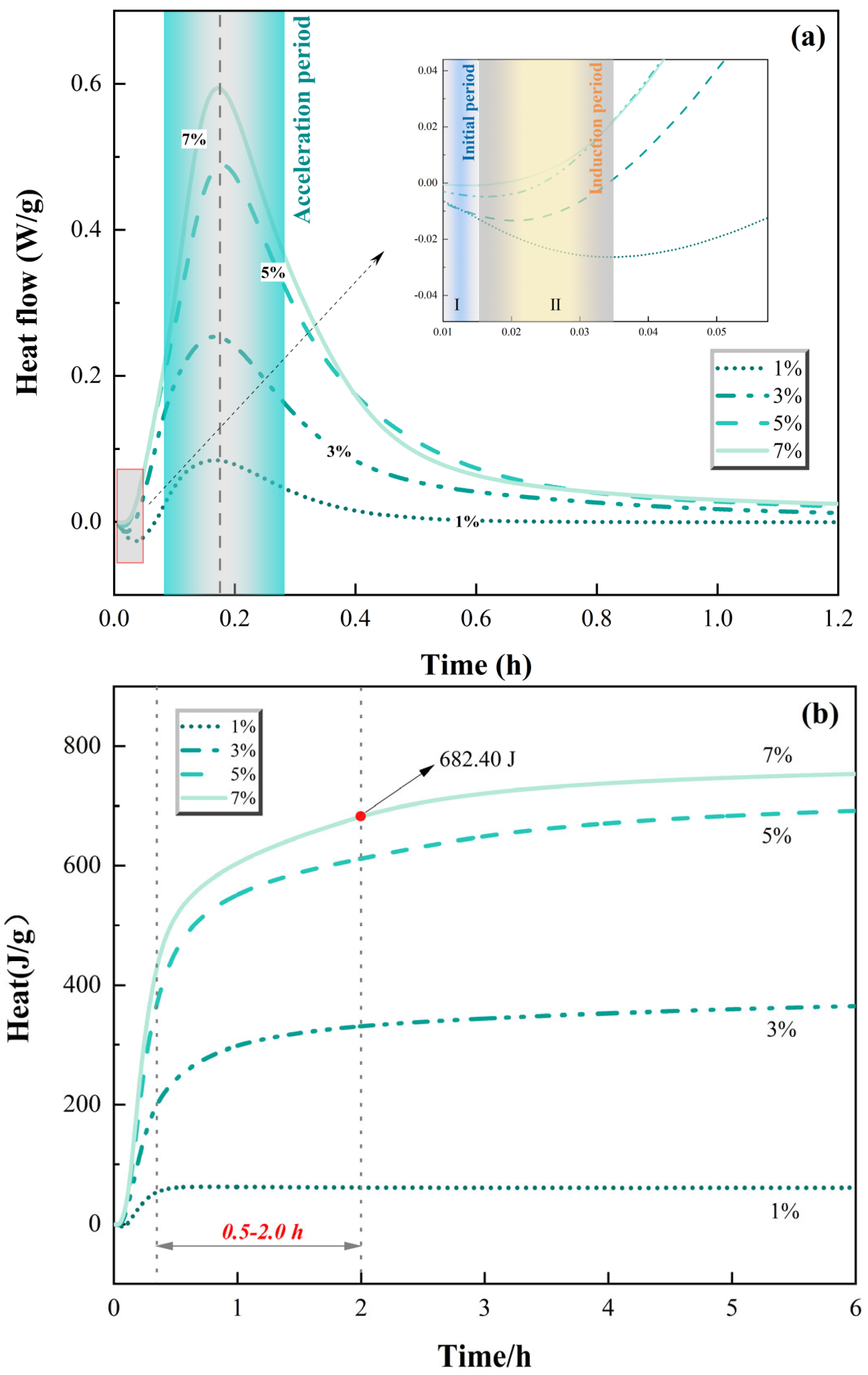
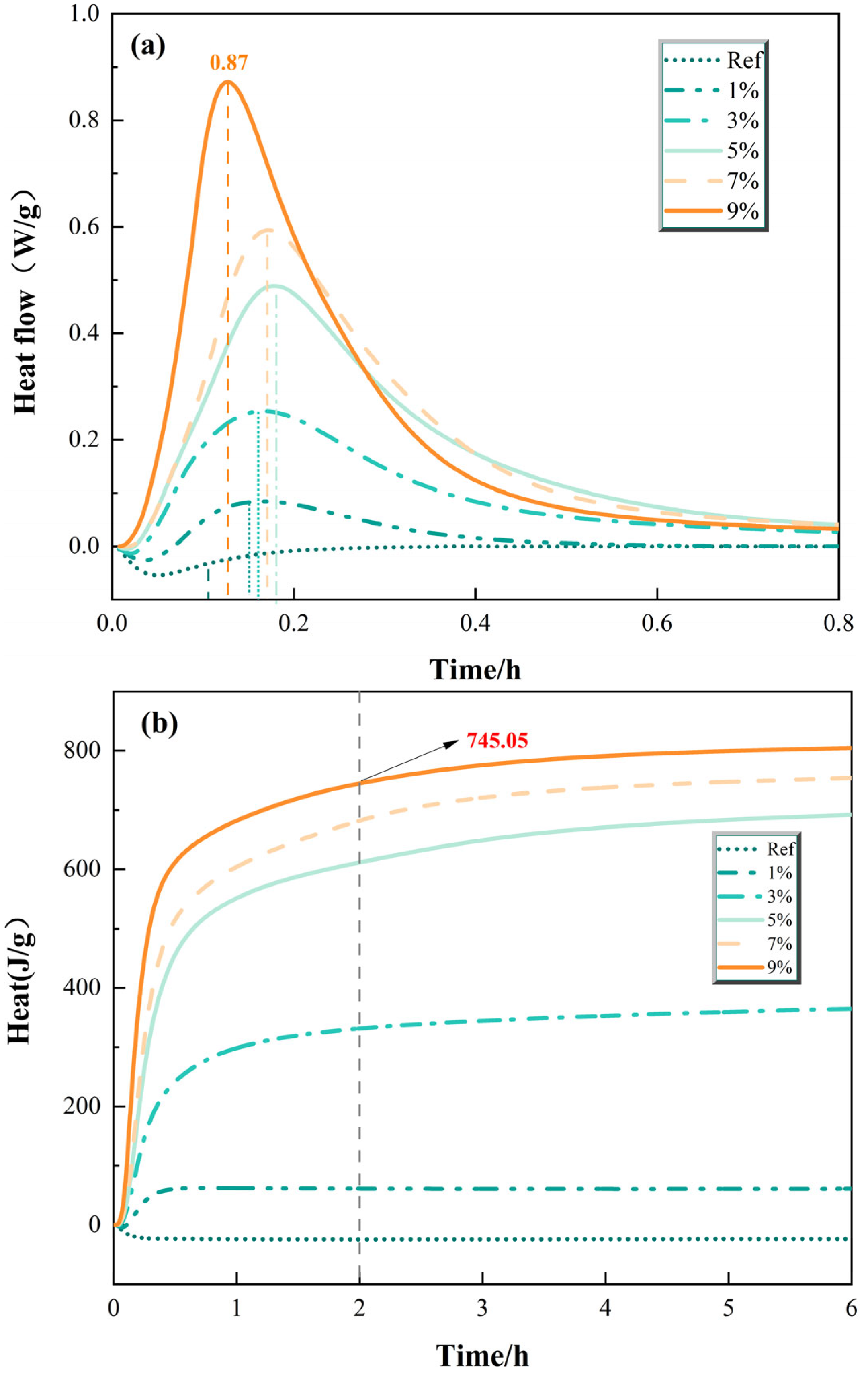
2 on the reaction mechanisms of MPC, the hydration heat evolution of pastes prepared from clinkers calcined at 1200 °C and 1300 °C was monitored using isothermal calorimetry. The heat flow rate curves and cumulative heat release are presented in
Figure 9 and
Figure 10.
Figure 9a shows the hydration heat flow rates of MPC prepared with clinkers containing 1%, 3%, 5%, and 7% SiO
2 calcined at 1200 °C. All pastes exhibited the typical rapid exothermic characteristic of MPC, with heat flow rising sharply upon contact with water and reaching a peak within minutes. The maximum heat flow rate increased progressively with increasing SiO
2 content: the 1% group exhibited a peak of 0.084 W/g, while the 3%, 5%, and 7% groups reached 0.254 W/g, 0.489 W/g, and 0.594 W/g, respectively.
This progressive enhancement of the early-age heat flow rate provides direct evidence for the heterogeneous nucleation effect of SiO
2-derived phases. As demonstrated by the Rietveld quantitative analysis in
Section 3.1, higher SiO
2 dosages lead to increased formation of forsterite (Mg
2SiO
4) during calcination. These Mg
2SiO
4 particles, along with any unreacted SiO
2, serve as effective nucleation substrates for hydration products (primarily K-struvite), accelerating the early-stage acid–base reaction and resulting in higher peak heat flow rates.
The cumulative heat release over 72 h (
Figure 9b) also increased monotonically with SiO
2 content. The 1% group released approximately 61 J/g over 72 h, while the 3%, 5%, and 7% groups released progressively higher amounts, with the 7% group reaching nearly 682 J/g at 2 h. This trend indicates that the overall extent of hydration reaction increases with SiO
2 dosage, despite the “chemical consumption” of reactive MgO through forsterite formation during calcination.
This apparent paradox—increased total heat release despite reduced absolute content of reactive MgO—can be reconciled by considering two factors operating in concert: First, the heterogeneous nucleation effect not only accelerates early kinetics but also promotes more complete hydration of the remaining reactive MgO. The abundant nucleation sites provided by Mg2SiO4 particles enable more efficient utilization of the available reactive surface, allowing hydration to proceed more extensively than in systems with fewer nucleation sites. Second, the physical dilution effect of inert phases (Mg2SiO4 and any unreacted SiO2) may increase the overall accessible surface area of the clinker. These inert particles create a more fragmented microstructure upon grinding, allowing the phosphate solution to penetrate more effectively and access reactive MgO surfaces that might otherwise remain encapsulated in a denser clinker particle.
Figure 10 presents the hydration heat characteristics of MPC prepared with clinkers containing 1% to 9% SiO
2 calcined at 1300 °C. The same monotonic trends were observed: both the maximum heat flow rate and the cumulative heat release increased progressively with increasing SiO
2 dosage.
The maximum heat flow rate increased from 0.08 W/g for the 1% group to 0.25 W/g, 0.49 W/g, 0.59 W/g, and 0.87 W/g for the 3%, 5%, 7%, and 9% groups, respectively. The cumulative heat release over 72 h followed a parallel trend, with the 9% group reaching approximately 745 J/g—the highest value observed across all formulations in this study.
Compared to the 1200 °C series, all groups at 1300 °C exhibited comparable or slightly lower total heat release values for equivalent SiO
2 dosages up to 7%, consistent with the enhanced formation of inert forsterite and increased MgO crystallinity at higher temperature (
Section 3.1). Nevertheless, the persistent monotonic increase with SiO
2 content confirms that the nucleation-enhancing effect of Mg
2SiO
4 remains operative even when the baseline clinker reactivity is reduced by high-temperature calcination. The continued increase up to 9% SiO
2 at 1300 °C further underscores that the relationship between SiO
2 content and hydration extent is robust across the entire dosage range studied.
The hydration heat characteristics provide critical insights into the strength development patterns discussed in
Section 3.3. The monotonic increase in both heat flow rate and cumulative heat release with SiO
2 content observed here contrasts with the behavior reported in some alkali-activated slag systems, where SiO
2 impurities can retard early hydration [
20,
21]. This difference likely reflects the distinct reaction mechanisms: in MPC, the rapid acid–base reaction is dominated by phosphate dissolution and struvite precipitation, where Mg
2SiO
4 acts primarily as a nucleation substrate rather than a reactive participant. Furthermore, the decoupling between heat release and strength observed at high SiO
2 dosages is a phenomenon not previously documented in MPC literature; most prior studies have implicitly assumed that higher heat release correlates with better mechanical performance [
22]. This finding challenges that assumption and highlights the importance of microstructural development beyond simple reaction extent. Perhaps the most significant finding of this study is the pronounced decoupling between total heat release and compressive strength at high SiO
2 dosages. At 1200 °C, the 7% SiO
2 group exhibited nearly 11 times the total heat release of the 1% group (682 J/g vs. 61 J/g over 72 h), yet its 3 d compressive strength (18.25 MPa) was only 60% of the 1% group’s strength (30.25 MPa). This striking disparity demonstrates that the sheer extent of hydration reaction—as measured by heat output—is not the primary determinant of mechanical performance in these systems.
This decoupling can be understood through the lens of the dual damage mechanism proposed in this study: At low SiO2 dosages (1%, 3%), the hydration reaction proceeds on highly reactive MgO surfaces with fewer but more effective nucleation sites. The limited number of Mg2SiO4 particles allows for controlled nucleation and growth, promoting the formation of a dense, interconnected gel network with superior mechanical properties. At high SiO2 dosages (7%, 9%), the abundant Mg2SiO4 particles trigger rapid, widespread nucleation across numerous sites. While this accelerates early kinetics and increases total heat output, the resulting hydration products precipitate in a more dispersed manner, forming a porous, less cohesive microstructure. This aligns with the “physical deactivation” mechanism: although Mg2SiO4 promotes nucleation, the coating of MgO surfaces by these inert phases and the increased crystallinity of the remaining MgO hinder the formation of a dense, load-bearing gel network. The hydration heat analysis thus reinforces the central thesis of this work: chemical consumption reduces the absolute quantity of reactive MgO, while physical deactivation compromises the microstructural quality of the hydration products formed from the remaining MgO. The combination of these dual effects explains why increased SiO2 content—despite enhancing early kinetics and total heat release—ultimately degrades the mechanical performance of MPC.