Nature Meets Science: The Role of Food-Grade Oils and Green Excipients in Pharmaceutical Nanoemulsion Formulation
 , , ,
, , ,  ,
,  ,
,  ,
,  and
and 
Abstract
1. Introduction
2. Food-Grade Oils in Nanoemulsions
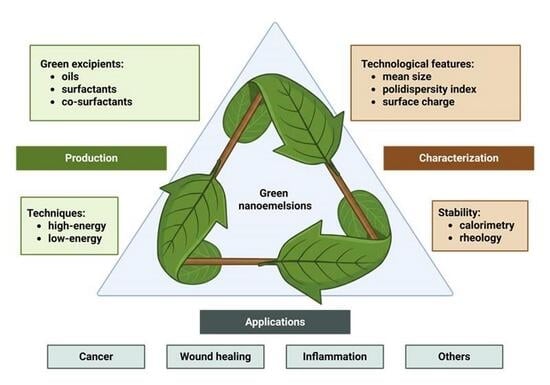
3. Green Surfactants in Nanoemulsion Formulation
4. Formulation Techniques Using Green Materials
4.1. High Energy Emulsification
4.1.1. High Pressure Homogenization
4.1.2. Ultrasonication
4.1.3. Microfluidization
4.2. Low Energy Emulsification
4.2.1. Phase Inversion Composition (PIC)
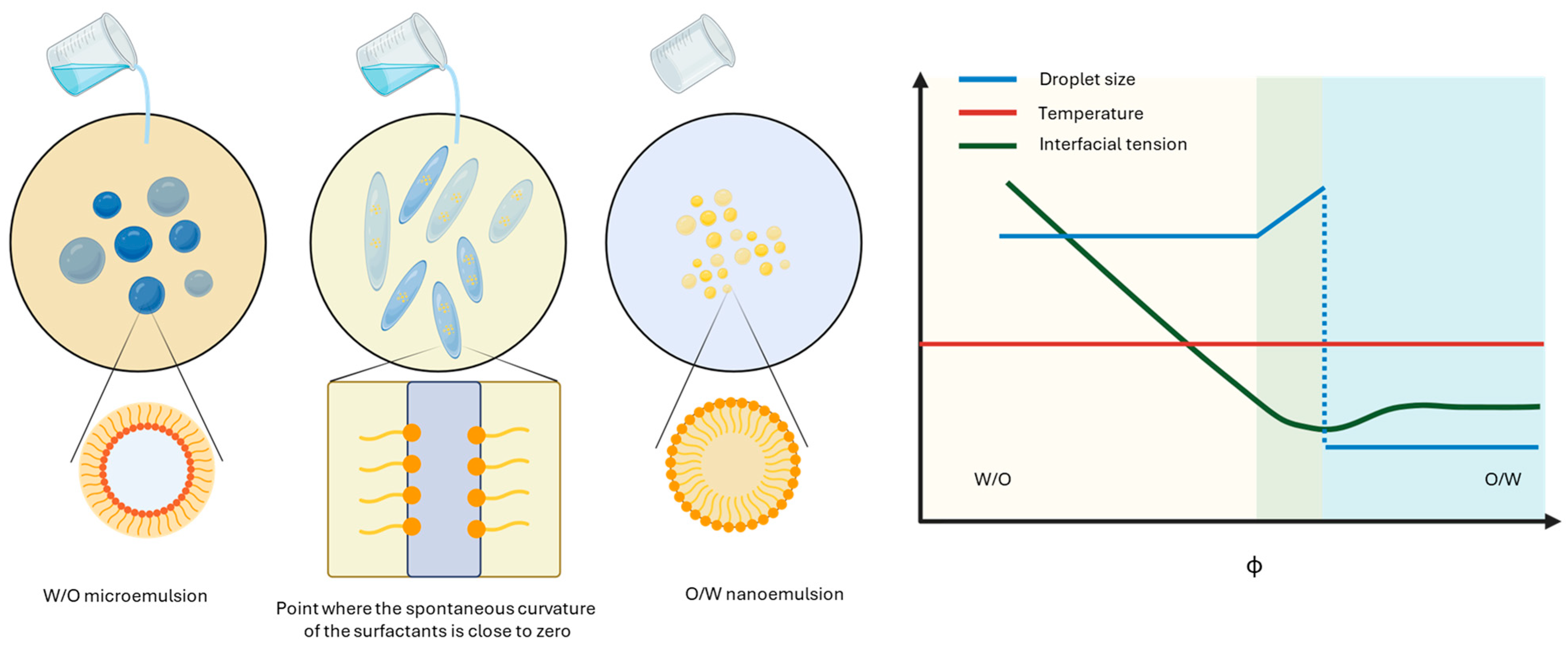
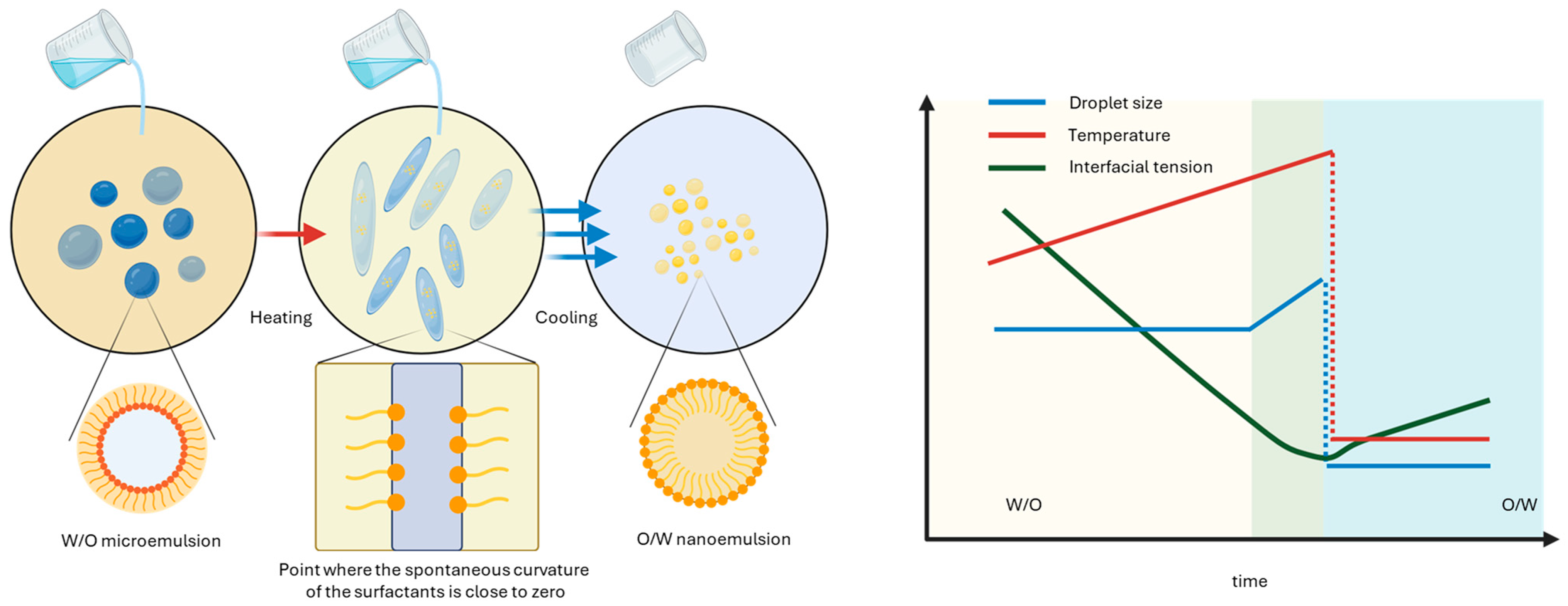
4.2.2. Phase Inversion Temperature (PIT)
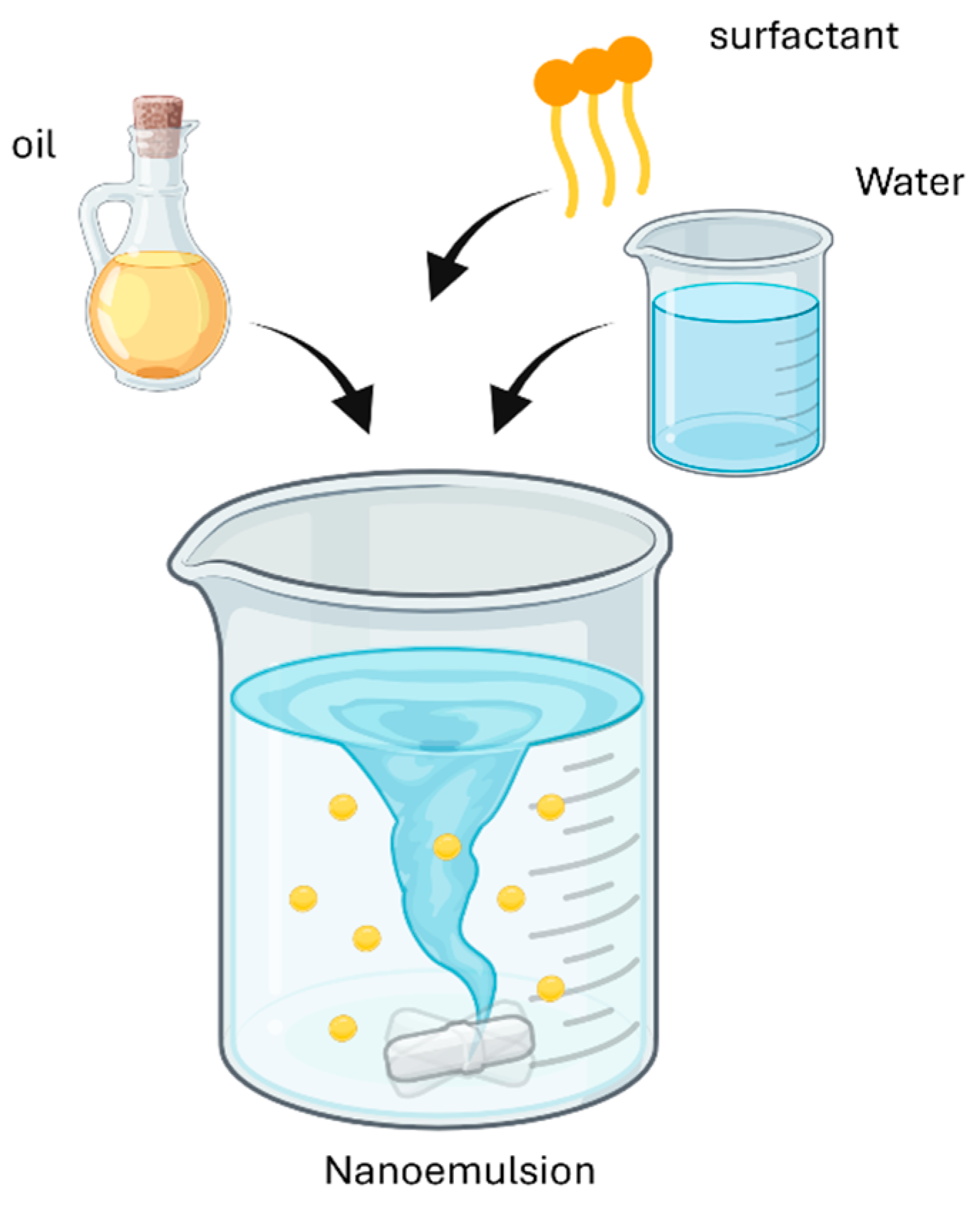
4.2.3. Spontaneous Emulsification
4.2.4. Vapor Condensation
5. Challenges and Optimization Strategies in Green Nanoemulsion Preparation
6. Pharmaceutical Applications of Green Nanoemulsions
7. Thermodynamic and Physico-Chemical Insights into Nanoemulsions Stability
8. Rheology of Nanoemulsions
9. Conclusions and Future Perspectives
Author Contributions
Funding
Data Availability Statement
Acknowledgments
Conflicts of Interest
References
- Beija, M.; Salvayre, R.; Lauth-de Viguerie, N.; Marty, J.-D. Colloidal Systems for Drug Delivery: From Design to Therapy. Trends Biotechnol. 2012, 30, 485–496. [Google Scholar] [CrossRef]
- Gupta, A.; Eral, H.B.; Hatton, T.A.; Doyle, P.S. Nanoemulsions: Formation, Properties and Applications. Soft Matter 2016, 12, 2826–2841. [Google Scholar] [CrossRef] [PubMed]
- Mason, T.G.; Wilking, J.N.; Meleson, K.; Chang, C.B.; Graves, S.M. Nanoemulsions: Formation, Structure, and Physical Properties. J. Phys. Condens. Matter 2006, 18, R635–R666. [Google Scholar] [CrossRef]
- Rao, J.; McClements, D.J. Formation of Flavor Oil Microemulsions, Nanoemulsions and Emulsions: Influence of Composition and Preparation Method. J. Agric. Food Chem. 2011, 59, 5026–5035. [Google Scholar] [CrossRef] [PubMed]
- Burguera, J.L.; Burguera, M. Analytical Applications of Emulsions and Microemulsions. Talanta 2012, 96, 11–20. [Google Scholar] [CrossRef]
- Jiang, J.; Wang, Z.; Wang, C.; Shi, L.; Hou, J.; Zhang, L. Model Emulsions Stabilized with Nonionic Surfactants: Structure and Rheology Across Catastrophic Phase Inversion. ACS Omega 2022, 7, 44012–44020. [Google Scholar] [CrossRef]
- Zhao, Y.; Peng, F.; Ke, Y. Design and Characterization of Oil-in-Water Nanoemulsion for Enhanced Oil Recovery Stabilized by Amphiphilic Copolymer, Nonionic Surfactant, and LAPONITE® RD. RSC Adv. 2021, 11, 1952–1959. [Google Scholar] [CrossRef]
- Marhamati, M.; Ranjbar, G.; Rezaie, M. Effects of Emulsifiers on the Physicochemical Stability of Oil-in-Water Nanoemulsions: A Critical Review. J. Mol. Liq. 2021, 340, 117218. [Google Scholar] [CrossRef]
- Xu, M.; Jiang, J.; Pei, X.; Song, B.; Cui, Z.; Binks, B.P. Novel Oil-in-Water Emulsions Stabilised by Ionic Surfactant and Similarly Charged Nanoparticles at Very Low Concentrations. Angew. Chem. Int. Ed. 2018, 57, 7738–7742. [Google Scholar] [CrossRef]
- Sun, G.; Li, Z.; Ngai, T. Inversion of Particle-Stabilized Emulsions to Form High-Internal-Phase Emulsions. Angew. Chem. Int. Ed. 2010, 49, 2163–2166. [Google Scholar] [CrossRef]
- Binks, B.P.; Fletcher, P.D.I.; Holt, B.L.; Beaussoubre, P.; Wong, K. Phase Inversion of Particle-Stabilised Perfume Oil–Water Emulsions: Experiment and Theory. Phys. Chem. Chem. Phys. 2010, 12, 11954. [Google Scholar] [CrossRef] [PubMed]
- Singh, Y.; Meher, J.G.; Raval, K.; Khan, F.A.; Chaurasia, M.; Jain, N.K.; Chourasia, M.K. Nanoemulsion: Concepts, Development and Applications in Drug Delivery. J. Control. Release 2017, 252, 28–49. [Google Scholar] [CrossRef] [PubMed]
- Tian, Y.; Jacobs, E.; Jones, D.S.; McCoy, C.P.; Wu, H.; Andrews, G.P. The Design and Development of High Drug Loading Amorphous Solid Dispersion for Hot-Melt Extrusion Platform. Int. J. Pharm. 2020, 586, 119545. [Google Scholar] [CrossRef] [PubMed]
- Matricardi, P.; Meo, C.D.; Coviello, T.; Alhaique, F. Recent Advances and Perspectives on Coated Alginate Microspheres for Modified Drug Delivery. Expert. Opin. Drug Deliv. 2008, 5, 417–425. [Google Scholar] [CrossRef] [PubMed]
- Garg, T.; Rath, G.; Goyal, A.K. Colloidal Drug Delivery Systems: Current Status and Future Directions. Crit. Rev. Ther. Drug Carr. Syst. 2015, 32, 89–147. [Google Scholar] [CrossRef]
- Zhang, R.; Zhang, Z.; McClements, D.J. Nanoemulsions: An Emerging Platform for Increasing the Efficacy of Nutraceuticals in Foods. Colloids Surf. B Biointerfaces 2020, 194, 111202. [Google Scholar] [CrossRef]
- Patel, M.R.; Patel, R.B.; Thakore, S.D. Nanoemulsion in Drug Delivery. In Applications of Nanocomposite Materials in Drug Delivery; Elsevier: Amsterdam, The Netherlands, 2018; pp. 667–700. ISBN 978-0-12-813741-3. [Google Scholar]
- Zhou, Q.; Wei, Z. Food-Grade Systems for Delivery of DHA and EPA: Opportunities, Fabrication, Characterization and Future Perspectives. Crit. Rev. Food Sci. Nutr. 2023, 63, 2348–2365. [Google Scholar] [CrossRef]
- Xia, Z.; McClements, D.J.; Xiao, H. Influence of Physical State of β-Carotene (Crystallized versus Solubilized) on Bioaccessibility. J. Agric. Food Chem. 2015, 63, 990–997. [Google Scholar] [CrossRef]
- Ganta, S.; Singh, A.; Rawal, Y.; Cacaccio, J.; Patel, N.R.; Kulkarni, P.; Ferris, C.F.; Amiji, M.M.; Coleman, T.P. Formulation Development of a Novel Targeted Theranostic Nanoemulsion of Docetaxel to Overcome Multidrug Resistance in Ovarian Cancer. Drug Deliv. 2016, 23, 958–970. [Google Scholar] [CrossRef]
- Schreiner, T.B.; Dias, M.M.; Barreiro, M.F.; Pinho, S.P. Saponins as Natural Emulsifiers for Nanoemulsions. J. Agric. Food Chem. 2022, 70, 6573–6590. [Google Scholar] [CrossRef]
- Ineffective Use of Family Planning Methods Among Eligible Couples and Its Effect on Maternal and Child Health. Available online: https://explore.openaire.eu/search/publication?pid=10.5281%2Fzenodo.1477649 (accessed on 11 December 2025).
- Liu, Q.; Huang, H.; Chen, H.; Lin, J.; Wang, Q. Food-Grade Nanoemulsions: Preparation, Stability and Application in Encapsulation of Bioactive Compounds. Molecules 2019, 24, 4242. [Google Scholar] [CrossRef] [PubMed]
- Akanbi, T.O.; Barrow, C.J. Candida Antarctica Lipase A Effectively Concentrates DHA from Fish and Thraustochytrid Oils. Food Chem. 2017, 229, 509–516. [Google Scholar] [CrossRef]
- Lane, K.E.; Li, W.; Smith, C.J.; Derbyshire, E.J. The Development of Vegetarian Omega-3 Oil in Water Nanoemulsions Suitable for Integration into Functional Food Products. J. Funct. Foods 2016, 23, 306–314. [Google Scholar] [CrossRef]
- Mazza, M.; Pomponi, M.; Janiri, L.; Bria, P.; Mazza, S. Omega-3 Fatty Acids and Antioxidants in Neurological and Psychiatric Diseases: An Overview. Prog. Neuropsychopharmacol. Biol. Psychiatry 2007, 31, 12–26. [Google Scholar] [CrossRef] [PubMed]
- Lohith Kumar, D.H.; Sarkar, P. Encapsulation of Bioactive Compounds Using Nanoemulsions. Environ. Chem. Lett. 2018, 16, 59–70. [Google Scholar] [CrossRef]
- Öztürk, B. Nanoemulsions for Food Fortification with Lipophilic Vitamins: Production Challenges Stability, and Bioavailability. Eur. J. Lipid Sci. Technol. 2017, 119, 1500539. [Google Scholar] [CrossRef]
- Lv, S.; Gu, J.; Zhang, R.; Zhang, Y.; Tan, H.; McClements, D.J. Vitamin E Encapsulation in Plant-Based Nanoemulsions Fabricated Using Dual-Channel Microfluidization: Formation, Stability, and Bioaccessibility. J. Agric. Food Chem. 2018, 66, 10532–10542. [Google Scholar] [CrossRef]
- Mayol, L.; Serri, C.; Menale, C.; Crispi, S.; Piccolo, M.T.; Mita, L.; Giarra, S.; Forte, M.; Saija, A.; Biondi, M.; et al. Curcumin Loaded PLGA–Poloxamer Blend Nanoparticles Induce Cell Cycle Arrest in Mesothelioma Cells. Eur. J. Pharm. Biopharm. 2015, 93, 37–45. [Google Scholar] [CrossRef]
- Sugasini, D.; Lokesh, B.R. Curcumin and Linseed Oil Co-Delivered in Phospholipid Nanoemulsions Enhances the Levels of Docosahexaenoic Acid in Serum and Tissue Lipids of Rats. Prostaglandins Leukot. Essent. Fat. Acids 2017, 119, 45–52. [Google Scholar] [CrossRef]
- Pawar, A.; Zade, A.; Khandelwal, H. Introduction to Pharmaceutical Excipients: History and Evolution. In Innovative Pharmaceutical Excipients: Natural Sources; Jailani, S., Vinchurkar, K., Suryawanshi, M., Mane, S., Eds.; Springer Nature: Singapore, 2025; pp. 1–27. [Google Scholar]
- Singh, I.R.; Pulikkal, A.K. Nano Emulsions Stabilized by Natural Emulsifiers: A Comprehensive Review on Feasibility, Stability and Bio-Applicability. J. Drug Deliv. Sci. Technol. 2024, 92, 105303. [Google Scholar] [CrossRef]
- Johnson, P.; Trybala, A.; Starov, V.; Pinfield, V.J. Effect of Synthetic Surfactants on the Environment and the Potential for Substitution by Biosurfactants. Adv. Colloid Interface Sci. 2021, 288, 102340. [Google Scholar] [CrossRef] [PubMed]
- Patil, H.V.; Badgujar, N.P.; Suresh; Kulkarni, R.D.; Nagaraj, K. Sustainable Bio-Based Surfactants: Advances in Green Chemistry and Environmental Applications. Mater. Today Commun. 2025, 48, 113583. [Google Scholar] [CrossRef]
- Sharma, R.; Lamsal, B.P. Understanding Bio-Based Surfactants, Their Production Strategies, Techno-Economic Viability, and Future Prospects of Producing Them on Sugar-Rich Renewable Resources. Processes 2025, 13, 2811. [Google Scholar] [CrossRef]
- Romero Vega, G.; Gallo Stampino, P. Bio-Based Surfactants and Biosurfactants: An Overview and Main Characteristics. Molecules 2025, 30, 863. [Google Scholar] [CrossRef] [PubMed]
- Abdulwahab, S.; Suardi, N.; Dheyab, M.A.; Abdullah, W.; Aziz, A.A.; Alanezi, S.T.; Alsardi, M.M.; Tarawneh, M.H.; Ghasemlou, M. Functional Green Nanoemulsions with Biosurfactants: Synthesis, Surface Engineering and Advanced Food, Cosmetic, Agricultural and Biomedical Applications. Adv. Colloid Interface Sci. 2025, 346, 103685. [Google Scholar] [CrossRef] [PubMed]
- Timilsena, Y.P.; Phosanam, A.; Stockmann, R. Perspectives on Saponins: Food Functionality and Applications. Int. J. Mol. Sci. 2023, 24, 13538. [Google Scholar] [CrossRef]
- Gao, W.; Jiang, Z.; Du, X.; Zhang, F.; Liu, Y.; Bai, X.; Sun, G. Impact of Surfactants on Nanoemulsions Based on Fractionated Coconut Oil: Emulsification Stability and in Vitro Digestion. J. Oleo Sci. 2020, 69, 227–239. [Google Scholar] [CrossRef]
- Jahan, R.; Bodratti, A.M.; Tsianou, M.; Alexandridis, P. Biosurfactants, Natural Alternatives to Synthetic Surfactants: Physicochemical Properties and Applications. Adv. Colloid Interface Sci. 2020, 275, 102061. [Google Scholar] [CrossRef]
- Medeiros-Neves, B.; Heidrich, D.; Schuh, R.S.; Brazil, N.T.; Fachel, F.N.S.; Cassel, E.; Vargas, R.M.F.; Scroferneker, M.L.; Poser, G.L.; Koester, L.S.; et al. Topical Nanoemulsions as Delivery Systems for Green Extracts of Pterocaulon balansae Aiming at the Treatment of Sporotrichosis. Pharmaceutics 2024, 16, 492. [Google Scholar] [CrossRef]
- Jurišić Dukovski, B.; Juretić, M.; Bračko, D.; Randjelović, D.; Savić, S.; Crespo Moral, M.; Diebold, Y.; Filipović-Grčić, J.; Pepić, I.; Lovrić, J. Functional Ibuprofen-Loaded Cationic Nanoemulsion: Development and Optimization for Dry Eye Disease Treatment. Int. J. Pharm. 2020, 576, 118979. [Google Scholar] [CrossRef]
- Zhu, Y.; Chen, T.; Feng, T.; Zhang, J.; Meng, Z.; Zhang, N.; Luo, G.; Wang, Z.; Pang, Y.; Zhou, Y. Fabrication and Biological Activities of All-in-One Composite Nanoemulsion Based on Blumea balsamifera Oil-Tea Tree Oil. Molecules 2023, 28, 5889. [Google Scholar] [CrossRef]
- Vu, G.M.; Tran, N.H.; Tran, M.P.L.; Dam, A.N.; Lieu, N.N.; Nguyen, N.M.; Ngo, N.Y.L.; Dinh, T.N.N.; Nguyen, D.Q. Saponin-Stabilized Nanoemulsions Co-Encapsulating Grape Seed Oil and Rosemary Essential Oil: Formulation, Characterization, Stability, and Antioxidant Capacity. J. Mol. Liq. 2025, 437, 128495. [Google Scholar] [CrossRef]
- Le, X.-T.; Tuan Le, M.; Manh Do, V.; Minh Bui, Q.; Tam Nguyen, A.; Cuong Luu, X.; Nhat Do, D. Fabrication of Cajeput Essential Oil Nanoemulsions by Phase Inversion Temperature Process. Mater. Today Proc. 2022, 59, 1178–1182. [Google Scholar] [CrossRef]
- Prakash, V.; Parida, L. Characterization and Rheological Behavior of Vitamin E Nanoemulsions Prepared by Phase Inversion Composition Technique. Results Eng. 2023, 18, 101175. [Google Scholar] [CrossRef]
- Hien, L.T.M.; Khoa, T.D.; Dao, D.T.A. Characterization of Black Pepper Essential Oil Nanoemulsion Fabricated by Emulsion Phase Inversion Method. J. Food Process. Preserv. 2022, 46, e16207. [Google Scholar] [CrossRef]
- Tawfik, N.F.; Abdel-Rashid, R.S.; El-Sayed, E.K.; Abdel-moneum, R.; Khattab, M.A.; Ahmed, A.A.; Lai, K.-H.; Hashad, N.; Moharram, F.A. Artemisia monosperma Essential Oil Nanoformulations Alleviate Imiquimod-Induced Psoriasis-like Dermatitis in Mice. Int. Immunopharmacol. 2024, 139, 112733. [Google Scholar] [CrossRef] [PubMed]
- Sherif, A.Y.; Altamimi, M.A.; Elzayat, E.M. Implementation of a Potential Industrial Green, Economical, and Safe Strategy to Enhance Commercial Viability of Liquid Self-Nanoemulsifying Drug Delivery System. Pharmaceutics 2025, 17, 1461. [Google Scholar] [CrossRef]
- Guha, I.F.; Anand, S.; Varanasi, K.K. Creating Nanoscale Emulsions Using Condensation. Nat. Commun. 2017, 8, 1371. [Google Scholar] [CrossRef]
- Osorio-Arias, J.C.; Vega-Castro, O.; Martínez-Monteagudo, S.I. Fundamentals of High-Pressure Homogenization of Foods. In Innovative Food Processing Technologies; Elsevier: Amsterdam, The Netherlands, 2021; pp. 244–273. [Google Scholar]
- Azmi, N.A.N.; Elgharbawy, A.A.M.; Motlagh, S.R.; Samsudin, N.; Salleh, H.M. Nanoemulsions: Factory for Food, Pharmaceutical and Cosmetics. Processes 2019, 7, 617. [Google Scholar] [CrossRef]
- Bai, L.; McClements, D.J. Development of Microfluidization Methods for Efficient Production of Concentrated Nanoemulsions: Comparison of Single- and Dual-Channel Microfluidizers. J. Colloid Interface Sci. 2016, 466, 206–2129. [Google Scholar] [CrossRef]
- Sadeghpour Galooyak, S.; Dabir, B. Three-Factor Response Surface Optimization of Nano-Emulsion Formation Using a Microfluidizer. J. Food Sci. Technol. 2015, 52, 2558–2571. [Google Scholar] [CrossRef]
- Dinshaw, I.J.; Ahmad, N.; Salim, N.; Leo, B.F. Nanoemulsions: A Review on the Conceptualization of Treatment for Psoriasis Using a ‘Green’ Surfactant with Low-Energy Emulsification Method. Pharmaceutics 2021, 13, 1024. [Google Scholar] [CrossRef] [PubMed]
- Zhang, H.; Zhou, Y.; Chen, S.; Zhang, X. Spontaneous Curvature of Compressed Surfactant Monolayer Induces Capillary Pressure. Langmuir 2025, 41, 14646–14655. [Google Scholar] [CrossRef] [PubMed]
- Feng, J.; Esquena, J.; Rodriguez-Abreu, C.; Solans, C. Key Features of Nano-Emulsion Formation by the Phase Inversion Temperature Method. J. Dispers. Sci. Technol. 2021, 42, 1073–1081. [Google Scholar] [CrossRef]
- Ee, S.L.; Duan, X.; Liew, J.; Nguyen, Q.D. Droplet Size and Stability of Nano-Emulsions Produced by the Temperature Phase Inversion Method. Chem. Eng. J. 2008, 140, 626–631. [Google Scholar] [CrossRef]
- Anton, N.; Gayet, P.; Benoit, J.-P.; Saulnier, P. Nano-Emulsions and Nanocapsules by the PIT Method: An Investigation on the Role of the Temperature Cycling on the Emulsion Phase Inversion. Int. J. Pharm. 2007, 344, 44–52. [Google Scholar] [CrossRef]
- Wang, C.; Sun, C.; Lu, W.; Gul, K.; Mata, A.; Fang, Y. Emulsion Structure Design for Improving the Oxidative Stability of Polyunsaturated Fatty Acids. Compr. Rev. Food Sci. Food Saf. 2020, 19, 2955–2971. [Google Scholar] [CrossRef]
- Jacobsen, C.; Let, M.B. Using Polyunsaturated Fatty Acids (PUFAs) as Functional Ingredients. In Improving the Fat Content of Foods, 1st ed.; Williams, C., Buttriss, J., Eds.; Elsevier: Cambridge, UK, 2006; pp. 428–453. [Google Scholar]
- Salvia-Trujillo, L.; McClements, D.J.; Martín-Belloso, O. Nanoemulsion Design for the Delivery of Omega-3 Fatty Acids. In Omega-3 Delivery Systems, 1st ed.; McClements, D.J., Decker, E.A., Eds.; Elsevier: Cambridge, UK, 2021; pp. 295–319. [Google Scholar]
- Jurić, S.; Jurić, M.; Siddique, M.A.B.; Fathi, M. Vegetable Oils Rich in Polyunsaturated Fatty Acids: Nanoencapsulation Methods and Stability Enhancement. Food Rev. Int. 2022, 38, 32–69. [Google Scholar] [CrossRef]
- Frankel, E.N. Antioxidants in Lipid Foods and Their Impact on Food Quality. Food Chem. 1996, 57, 51–55. [Google Scholar] [CrossRef]
- Frankel, E.N.; Huang, S.-W.; Kanner, J.; German, J.B. Interfacial Phenomena in the Evaluation of Antioxidants: Bulk Oils vs Emulsions. J. Agric. Food Chem. 1994, 42, 1054–1059. [Google Scholar] [CrossRef]
- Berton-Carabin, C.C.; Ropers, M.; Genot, C. Lipid Oxidation in Oil-in-Water Emulsions: Involvement of the Interfacial Layer. Compr. Rev. Food Sci. Food Saf. 2014, 13, 945–977. [Google Scholar] [CrossRef]
- Wang, X.; Chen, Y.; McClements, D.J.; Meng, C.; Zhang, M.; Chen, H.; Deng, Q. Recent Advances in Understanding the Interfacial Activity of Antioxidants in Association Colloids in Bulk Oil. Adv. Colloid Interface Sci. 2024, 325, 103117. [Google Scholar] [CrossRef] [PubMed]
- Schröder, A.; Laguerre, M.; Sprakel, J.; Schroën, K.; Berton-Carabin, C.C. Pickering Particles as Interfacial Reservoirs of Antioxidants. J. Colloid Interface Sci. 2020, 575, 489–498. [Google Scholar] [CrossRef] [PubMed]
- Jing, Y.; Wang, R.; Wen, H.; Xie, J. Effects of Water-Soluble and Fat-Soluble Antioxidant Combinations in Oil-in-Water Emulsions on the Oxidative Stability of Walnut Kernels. Foods 2025, 14, 1967. [Google Scholar] [CrossRef]
- Yahagi, S.S.; Roveda, A.C.; Sobral, A.T.; Oliveira, I.P.; Caires, A.R.L.; Gomes, R.S.; Trindade, M.A.G. An Analytical Evaluation of the Synergistic Effect on Biodiesel Oxidation Stability Promoted by Binary and Ternary Blends Containing Multifunctional Additives. Int. J. Anal. Chem. 2019, 2019, 6467183. [Google Scholar] [CrossRef]
- Keramat, M.; Ehsandoost, E.; Golmakani, M.-T. Recent Trends in Improving the Oxidative Stability of Oil-Based Food Products by Inhibiting Oxidation at the Interfacial Region. Foods 2023, 12, 1191. [Google Scholar] [CrossRef]
- Gudipati, V.; Sandra, S.; McClements, D.J.; Decker, E.A. Oxidative Stability and in Vitro Digestibility of Fish Oil-in-Water Emulsions Containing Multilayered Membranes. J. Agric. Food Chem. 2010, 58, 8093–8099. [Google Scholar] [CrossRef]
- Jacobsen, C. Some Strategies for the Stabilization of Long Chain N-3 PUFA-enriched Foods: A Review. Eur. J. Lipid Sci. Technol. 2015, 117, 1853–1866. [Google Scholar] [CrossRef]
- Ghelichi, S.; Hajfathalian, M.; Yesiltas, B.; Sørensen, A.M.; García-Moreno, P.J.; Jacobsen, C. Oxidation and Oxidative Stability in Emulsions. Compr. Rev. Food Sci. Food Saf. 2023, 22, 1864–1901. [Google Scholar] [CrossRef]
- Ambad Shruti, S.; Chaus, W.N.; Panchal Sushma, G. Polyherbal Hair Oil Used Against Dandruff-Causing Fungus, Malassezia Furfur. Int. J. of Pharm. Sci. 2025, 3, 1659–1665. [Google Scholar] [CrossRef]
- Chime, S.A.; Kenechukwu, F.C.; Attama, A.A. Nanoemulsions—Advances in Formulation, Characterization and Applications in Drug Delivery. In Application of Nanotechnology in Drug Delivery, 1st ed.; Sezer, A.D., Ed.; InTech: Rijeka, Croatia, 2014; pp. 77–126. [Google Scholar]
- Moghassemi, S.; Dadashzadeh, A.; Azevedo, R.B.; Amorim, C.A. Nanoemulsion Applications in Photodynamic Therapy. J. Control. Release 2022, 351, 164–173. [Google Scholar] [CrossRef] [PubMed]
- Preeti; Sambhakar, S.; Malik, R.; Bhatia, S.; Al Harrasi, A.; Rani, C.; Saharan, R.; Kumar, S.; Geeta; Sehrawat, R. Nanoemulsion: An Emerging Novel Technology for Improving the Bioavailability of Drugs. Scientifica 2023, 2023, 6640103. [Google Scholar] [CrossRef]
- Elzayat, A.; Adam-Cervera, I.; Álvarez-Bermúdez, O.; Muñoz-Espí, R. Nanoemulsions for Synthesis of Biomedical Nanocarriers. Colloids Surf. B Biointerfaces 2021, 203, 111764. [Google Scholar] [CrossRef] [PubMed]
- Ansari, L.; Mashayekhi-Sardoo, H.; Baradaran Rahimi, V.; Yahyazadeh, R.; Ghayour-Mobarhan, M.; Askari, V.R. Curcumin-based Nanoformulations Alleviate Wounds and Related Disorders: A Comprehensive Review. BioFactors 2023, 49, 736–781. [Google Scholar] [CrossRef] [PubMed]
- Cláudia Paiva-Santos, A.; Gama, M.; Peixoto, D.; Sousa-Oliveira, I.; Ferreira-Faria, I.; Zeinali, M.; Abbaspour-Ravasjani, S.; Mascarenhas-Melo, F.; Hamishehkar, H.; Veiga, F. Nanocarrier-Based Dermopharmaceutical Formulations for the Topical Management of Atopic Dermatitis. Int. J. Pharm. 2022, 618, 121656. [Google Scholar] [CrossRef]
- Haddadzadegan, S.; Dorkoosh, F.; Bernkop-Schnürch, A. Oral Delivery of Therapeutic Peptides and Proteins: Technology Landscape of Lipid-Based Nanocarriers. Adv. Drug Deliv. Rev. 2022, 182, 114097. [Google Scholar] [CrossRef]
- Ferreira, M.D.; Duarte, J.; Veiga, F.; Paiva-Santos, A.C.; Pires, P.C. Nanosystems for Brain Targeting of Antipsychotic Drugs: An Update on the Most Promising Nanocarriers for Increased Bioavailability and Therapeutic Efficacy. Pharmaceutics 2023, 15, 678. [Google Scholar] [CrossRef]
- Tatlipinar, S. Topical Ciclosporin in the Treatment of Ocular Surface Disorders. Br. J. Ophthalmol. 2005, 89, 1363–1367. [Google Scholar] [CrossRef]
- Thompson, K.A.; Goodale, D.B. The Recent Development of Propofol (DIPRIVAN®). Intensive Care Med. 2000, 26, S400–S404. [Google Scholar] [CrossRef]
- Zhou, Z.; Liu, C.; Wan, X.; Fang, L. Development of a w/o Emulsion Using Ionic Liquid Strategy for Transdermal Delivery of Anti—Aging Component α—Lipoic Acid: Mechanism of Different Ionic Liquids on Skin Retention and Efficacy Evaluation. Eur. J. Pharm. Sci. 2020, 141, 105042. [Google Scholar] [CrossRef]
- Sainakham, M.; Promma, B.; Ngernthong, A.; Kiattisin, K.; Boonpisuttinant, K.; Wuttikul, K.; Jantrawut, P.; Ruksiriwanich, W. Preparation and Stability Investigation of Ultrasound-Assisted W/O/W Multiple Nanoemulsions Co-Loaded with Hydrophobic Curcumin and Hydrophilic Arbutin for Tyrosinase Inhibition. Heliyon 2024, 10, e34665. [Google Scholar] [CrossRef] [PubMed]
- Tuncer Degim, I.; Celebi, N. Controlled Delivery of Peptides and Proteins. Curr. Pharm. Des. 2007, 13, 99–117. [Google Scholar] [CrossRef] [PubMed]
- Sun, W.; Ma, X.; Wei, X.; Xu, Y. Nano Composite Emulsion for Sustained Drug Release and Improved Bioavailability. Pharm. Res. 2014, 31, 2774–2783. [Google Scholar] [CrossRef] [PubMed]
- Kumar, N.; Mandal, A. Surfactant Stabilized Oil-in-Water Nanoemulsion: Stability, Interfacial Tension, and Rheology Study for Enhanced Oil Recovery Application. Energy Fuels 2018, 32, 6452–6466. [Google Scholar] [CrossRef]
- Handa, M.; Ujjwal, R.R.; Vasdev, N.; Flora, S.J.S.; Shukla, R. Optimization of Surfactant- and Cosurfactant-Aided Pine Oil Nanoemulsions by Isothermal Low-Energy Methods for Anticholinesterase Activity. ACS Omega 2021, 6, 559–568. [Google Scholar] [CrossRef]
- Chauhan, M.; Mazumder, R.; Rani, A.; Mishra, R.; Pal, R.S. Preparations, Applications, Patents, and Marketed Formulations of Nanoemulsions—A Comprehensive Review. Pharm. Nanotechnol. 2024, 13. [Google Scholar] [CrossRef]
- Azeem, A.; Rizwan, M.; Ahmad, F.J.; Iqbal, Z.; Khar, R.K.; Aqil, M.; Talegaonkar, S. Nanoemulsion Components Screening and Selection: A Technical Note. AAPS PharmSciTech 2009, 10, 69–76. [Google Scholar] [CrossRef]
- Nirmala, M.J.; Dhas, S.P.; Saikrishna, N.; Raj, U.S.; Sai, P.S.; Nagarajan, R. Green Nanoemulsions: Components, Formulation, Techniques of Characterization, and Applications. In Bio-Based Nanoemulsions for Agri-Food Applications; Elsevier: Amsterdam, The Netherlands, 2022; pp. 47–69. [Google Scholar]
- Pucek, A.; Tokarek, B.; Waglewska, E.; Bazylińska, U. Recent Advances in the Structural Design of Photosensitive Agent Formulations Using “Soft” Colloidal Nanocarriers. Pharmaceutics 2020, 12, 587. [Google Scholar] [CrossRef]
- Naseema, A.; Kovooru, L.; Behera, A.K.; Kumar, K.P.P.; Srivastava, P. A Critical Review of Synthesis Procedures, Applications and Future Potential of Nanoemulsions. Adv. Colloid Interface Sci. 2021, 287, 102318. [Google Scholar] [CrossRef]
- Musa, S.H.; Basri, M.; Fard Masoumi, H.R.; Shamsudin, N.; Salim, N. Enhancement of Physicochemical Properties of Nanocolloidal Carrier Loaded with Cyclosporine for Topical Treatment of Psoriasis: In Vitro Diffusion and in Vivo Hydrating Action. Int. J. Nanomed. 2017, 12, 2427–2441. [Google Scholar] [CrossRef]
- Sahu, S.; Katiyar, S.S.; Kushwah, V.; Jain, S. Active Natural Oil-Based Nanoemulsion Containing Tacrolimus for Synergistic Antipsoriatic Efficacy. Nanomedicine 2018, 13, 1985–1998. [Google Scholar] [CrossRef] [PubMed]
- Wiesmann, U.N.; DiDonato, S.; Herschkowitz, N.N. Effect of Chloroquine on Cultured Fibroblasts: Release of Lysosomal Hydrolases and Inhibition of Their Uptake. Biochem. Biophys. Res. Commun. 1975, 66, 1338–1343. [Google Scholar] [CrossRef] [PubMed]
- Eskandarii, F.; Monahdessi, M.; Islambulchilar, Z. Preparation and in Vitro Evaluation of Evening Primerose-Based Nanoemulsion for the Treatment of Acne. Int. Pharm. Acta 2018, 1, 125–126. [Google Scholar]
- Md, F. Biosurfactant: Production and Application. J. Pet. Environ. Biotechnol. 2012, 3, 124. [Google Scholar] [CrossRef]
- Khan, R.; Mirza, M.o.h.d.A.; Aqil, M.; Alex, T.S.; Raj, N.; Manzoor, N.; Naseef, P.P.; Saheer Kuruniyan, M.; Iqbal, Z. In Vitro and In Vivo Investigation of a Dual-Targeted Nanoemulsion Gel for the Amelioration of Psoriasis. Gels 2023, 9, 112. [Google Scholar] [CrossRef]
- Chhabra, J.; Chopra, H.; Pahwa, R.; Raina, N.; Wadhwa, K.; Saini, S.; Negi, P.; Gupta, M.; Singh, I.; Dureja, H.; et al. Potential of Nanoemulsions for Accelerated Wound Healing: Innovative Strategies. Int. J. Surg. 2023, 109, 2365–2377. [Google Scholar] [CrossRef]
- Dreifke, M.B.; Jayasuriya, A.A.; Jayasuriya, A.C. Current Wound Healing Procedures and Potential Care. Mater. Sci. Eng. C 2015, 48, 651–662. [Google Scholar] [CrossRef]
- Oliveira, A.; Simões, S.; Ascenso, A.; Reis, C.P. Therapeutic Advances in Wound Healing. J. Dermatol. Treat. 2022, 33, 2–22. [Google Scholar] [CrossRef]
- Du, L.; Ma, C.; Liu, B.; Liu, W.; Zhu, Y.; Wang, Z.; Chen, T.; Huang, L.; Pang, Y. Green Synthesis of Blumea balsamifera Oil Nanoemulsions Stabilized by Natural Emulsifiers and Its Effect on Wound Healing. Molecules 2024, 29, 1994. [Google Scholar] [CrossRef]
- Sánchez-López, E.; Guerra, M.; Dias-Ferreira, J.; Lopez-Machado, A.; Ettcheto, M.; Cano, A.; Espina, M.; Camins, A.; Garcia, M.L.; Souto, E.B. Current Applications of Nanoemulsions in Cancer Therapeutics. Nanomaterials 2019, 9, 821. [Google Scholar] [CrossRef]
- Alhakamy, N.A.; Badr-Eldin, S.M.; Ahmed, O.A.A.; Aldawsari, H.M.; Okbazghi, S.Z.; Alfaleh, M.A.; Abdulaal, W.H.; Neamatallah, T.; Al-Hejaili, O.D.; Fahmy, U.A. Green Nanoemulsion Stabilized by In Situ Self-Assembled Natural Oil/Native Cyclodextrin Complexes: An Eco-Friendly Approach for Enhancing Anticancer Activity of Costunolide against Lung Cancer Cells. Pharmaceutics 2022, 14, 227. [Google Scholar] [CrossRef]
- SEER Incidence Data—SEER Data & Software. Available online: https://seer.cancer.gov/data/index.html (accessed on 11 February 2026).
- Gostyńska, A.; Czerniel, J.; Kuźmińska, J.; Brzozowski, J.; Majchrzak-Celińska, A.; Krajka-Kuźniak, V.; Stawny, M. Honokiol-Loaded Nanoemulsion for Glioblastoma Treatment: Statistical Optimization, Physicochemical Characterization, and an In Vitro Toxicity Assay. Pharmaceutics 2023, 15, 448. [Google Scholar] [CrossRef] [PubMed]
- Mobaleghol Eslam, H.; Hataminia, F.; Esmaeili, F.; Salami, S.A.; Ghanbari, H.; Amani, A. Preparation of a Nanoemulsion Containing Active Ingredients of Cannabis Extract and Its Application for Glioblastoma: In Vitro and in Vivo Studies. BMC Pharmacol. Toxicol. 2024, 25, 73. [Google Scholar] [CrossRef]
- Chu, B.; Ichikawa, S.; Kanafusa, S.; Nakajima, M. Preparation of Protein-Stabilized β-Carotene Nanodispersions by Emulsification–Evaporation Method. J. Am. Oil Chem. Soc. 2007, 84, 1053–1062. [Google Scholar] [CrossRef]
- Khatri, P.; Shao, J. Mechanism and Structural Factors of Lipid and Surfactant in the Formation of Self-Emulsified Nanoemulsion. J. Pharm. Sci. 2018, 107, 2198–2207. [Google Scholar] [CrossRef] [PubMed]
- Tadros, T.; Izquierdo, P.; Esquena, J.; Solans, C. Formation and Stability of Nano-Emulsions. Adv. Colloid Interface Sci. 2004, 108–109, 303–318. [Google Scholar] [CrossRef]
- International Union of Pure and Applied Chemistry (IUPAC). Compendium of Chemical Terminology, 2nd ed.; McNaught, A.D., Wilkinson, A., Eds.; Blackwell Scientific Publications: Oxford, UK, 1997. [Google Scholar]
- Guo, Y.; Zhang, X.; Wang, X.; Zhang, L.; Xu, Z.; Sun, D. Nanoemulsions Stable against Ostwald Ripening. Langmuir 2024, 40, 1364–1372. [Google Scholar] [CrossRef]
- Fotticchia, I.; Fotticchia, T.; Mattia, C.A.; Giancola, C. Chitosan-Based Nanoparticles Studied by Isothermal Titration Calorimetry. J. Therm. Anal. Calorim. 2016, 125, 585–593. [Google Scholar] [CrossRef]
- Guerrero, M.; Braden, C.; Bao, Y. Applications of Isothermal Titration Calorimetry in Studying Biomimetic Nanocarriers. Biomolecules 2025, 15, 1349. [Google Scholar] [CrossRef]
- Prozeller, D.; Morsbach, S.; Landfester, K. Isothermal Titration Calorimetry as a Complementary Method for Investigating Nanoparticle–Protein Interactions. Nanoscale 2019, 11, 19265–19273. [Google Scholar] [CrossRef]
- Archer, W.R.; Schulz, M.D. Isothermal Titration Calorimetry: Practical Approaches and Current Applications in Soft Matter. Soft Matter 2020, 16, 8760–8774. [Google Scholar] [CrossRef] [PubMed]
- Fotticchia, I.; Fotticchia, T.; Mattia, C.A.; Netti, P.A.; Vecchione, R.; Giancola, C. Thermodynamic Signature of Secondary Nano-Emulsion Formation by Isothermal Titration Calorimetry. Langmuir 2014, 30, 14427–14433. [Google Scholar] [CrossRef] [PubMed]
- Lagreca, E.; Vecchione, R.; Di Cicco, C.; D’Aria, F.; La Rocca, A.; De Gregorio, V.; Izzo, L.; Crispino, R.; Mollo, V.; Bedini, E.; et al. Physicochemical and in Vitro Biological Validation of Food Grade Secondary Oil in Water Nanoemulsions with Enhanced Mucus-Adhesion Properties. Colloids Surf. Physicochem. Eng. Asp. 2022, 654, 129998. [Google Scholar] [CrossRef]
- Cong, Y.; Zhang, W.; Liu, C.; Huang, F. Composition and Oil-Water Interfacial Tension Studies in Different Vegetable Oils. Food Biophys. 2020, 15, 229–239. [Google Scholar] [CrossRef]
- Brigodiot, C.; Marsiglia, M.; Dalmazzone, C.; Schroën, K.; Colin, A. Studying Surfactant Mass Transport through Dynamic Interfacial Tension Measurements: A Review of the Models, Experiments, and the Contribution of Microfluidics. Adv. Colloid Interface Sci. 2024, 331, 103239. [Google Scholar] [CrossRef]
- Wang, J.; Hu, Y.; Chu, X.; Sun, G.; Lu, T. Roles and Thresholds of Viscosity and Interfacial Tension in Surfactant Flooding for Residual Oil Recovery. Front. Chem. 2025, 13, 1660041. [Google Scholar] [CrossRef]
- Rahman, A.; Eastoe, J. The Effects of Surfactant and Oil Chemical Structures on Self-Assembly in Apolar Media. Soft Matter 2022, 18, 9133–9152. [Google Scholar] [CrossRef]
- Lukosek, M.; Emmons-Burzyńska, M.; Alejski, K.; Szwach, I. Physicochemical Characterization of Ethoxylation Products of Fatty Acid Esters. Front. Chem. Eng. 2021, 3, 617701. [Google Scholar] [CrossRef]
- Rawicz, W.; Olbrich, K.C.; McIntosh, T.; Needham, D.; Evans, E. Effect of Chain Length and Unsaturation on Elasticity of Lipid Bilayers. Biophys. J. 2000, 79, 328–339. [Google Scholar] [CrossRef]
- Chen, Y.; Narayan, S.; Dutcher, C.S. Phase-Dependent Surfactant Transport on the Microscale: Interfacial Tension and Droplet Coalescence. Langmuir 2020, 36, 14904–14923. [Google Scholar] [CrossRef]
- Kalli, M.; Pico, P.; Chagot, L.; Kahouadji, L.; Shin, S.; Chergui, J.; Juric, D.; Matar, O.K.; Angeli, P. Effect of Surfactants during Drop Formation in a Microfluidic Channel: A Combined Experimental and Computational Fluid Dynamics Approach. J. Fluid Mech. 2023, 961, A15. [Google Scholar] [CrossRef]
- Jamoussi, Y.; Zaiter, T.; Desrumaux, C.; Acar, N.; Pellequer, Y.; Béduneau, A. Investigation of the Spontaneous Nanoemulsification Process with Medium- and Long-Chain Triglycerides. Colloids Surf. B Biointerfaces 2021, 197, 111432. [Google Scholar] [CrossRef] [PubMed]
- Park, J.I.; McClements, D.J.; Choi, S.J. Impact of Small Molecule Surfactant Type and Oil Phase Composition on Ostwald Ripening in Model Food Emulsions. Food Sci. Biotechnol. 2025, 34, 3067–3076. [Google Scholar] [CrossRef] [PubMed]
- Kim, J.; Noh, Y.; McClements, D.J.; Choi, S.J. Impact of Hydrophilic Substances on Ostwald Ripening in Emulsions Stabilized by Varied Hydrophilic Group Surfactants. Npj Sci. Food 2024, 8, 76. [Google Scholar] [CrossRef]
- Jang, Y.; Park, J.; Song, H.Y.; Choi, S.J. Ostwald Ripening Rate of Orange Oil Emulsions: Effects of Molecular Structure of Emulsifiers and Their Oil Composition. J. Food Sci. 2019, 84, 440–447. [Google Scholar] [CrossRef]
- Sonneville-Aubrun, O.; Simonnet, J.-T.; L’Alloret, F. Nanoemulsions: A New Vehicle for Skincare Products. Adv. Colloid Interface Sci. 2004, 108–109, 145–149. [Google Scholar] [CrossRef]
- Erramreddy, V.V.; Ghosh, S. Influence of Emulsifier Concentration on Nanoemulsion Gelation. Langmuir 2014, 30, 11062–11074. [Google Scholar] [CrossRef]
- Wilking, J.N.; Mason, T.G. Irreversible Shear-Induced Vitrification of Droplets into Elastic Nanoemulsions by Extreme Rupturing. Phys. Rev. E 2007, 75, 041407. [Google Scholar] [CrossRef]
- Yun, S.; Kim, G.W.; Jang, J.; Lee, J.B.; Kim, S.Y. Ensuring Long-Term Stability and Size Control of Nanoemulsion via Post-Microfluidization Dilution toward Energy Saving Scale-up Process. Colloids Surf. Physicochem. Eng. Asp. 2024, 691, 133845. [Google Scholar] [CrossRef]
- Henao-Ardila, A.; Quintanilla-Carvajal, M.X.; Moreno, F.L. Emulsification and Stabilisation Technologies Used for the Inclusion of Lipophilic Functional Ingredients in Food Systems. Heliyon 2024, 10, e32150. [Google Scholar] [CrossRef]
- Øye, G.; Simon, S.; Rustad, T.; Paso, K. Trends in Food Emulsion Technology: Pickering, Nano-, and Double Emulsions. Curr. Opin. Food Sci. 2023, 50, 101003. [Google Scholar] [CrossRef]
- Kim, G.W.; Yun, S.; Jang, J.; Lee, J.B.; Kim, S.Y. Enhanced Stability, Formulations, and Rheological Properties of Nanoemulsions Produced with Microfludization for Eco-Friendly Process. J. Colloid Interface Sci. 2023, 646, 311–319. [Google Scholar] [CrossRef]

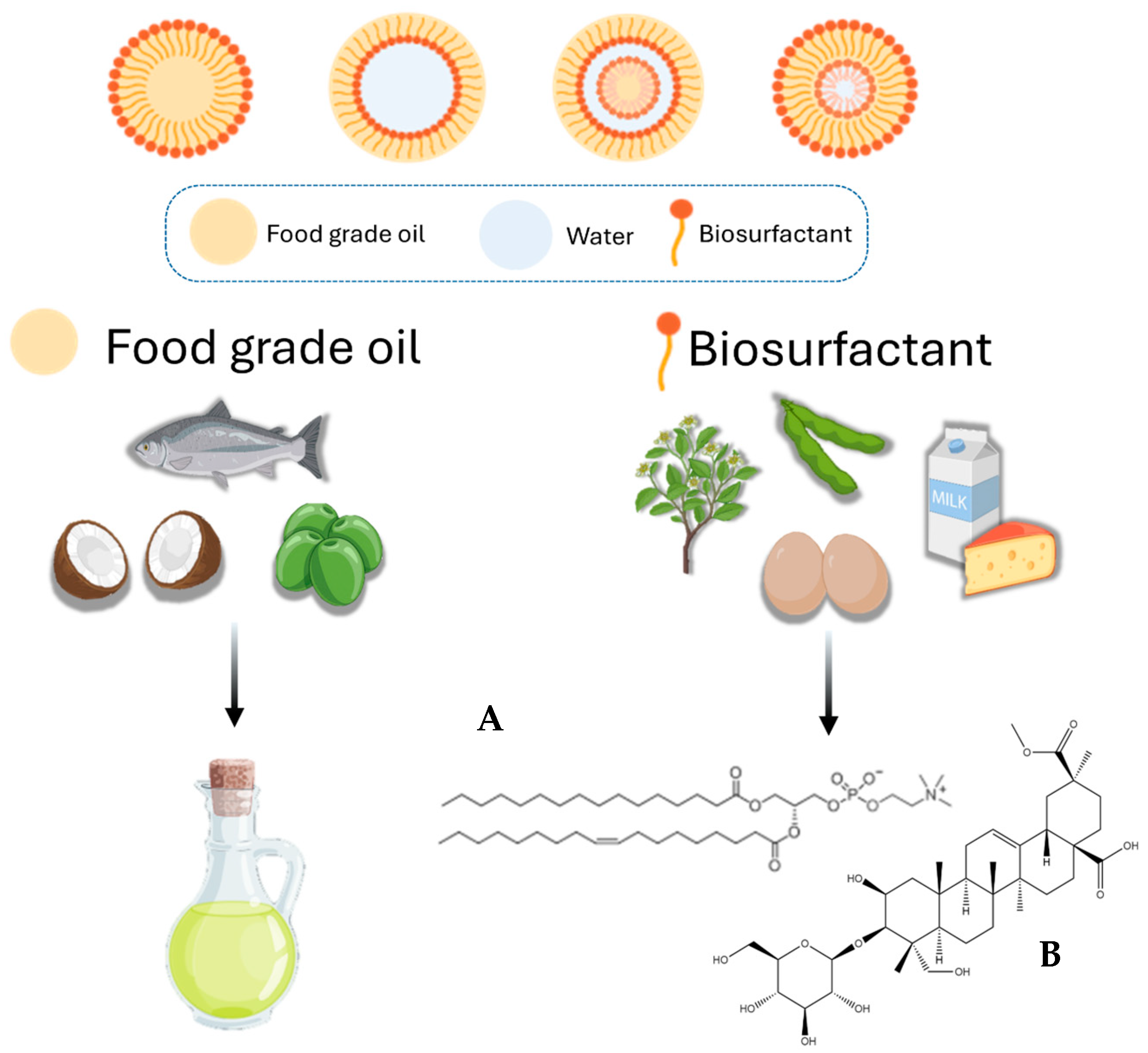


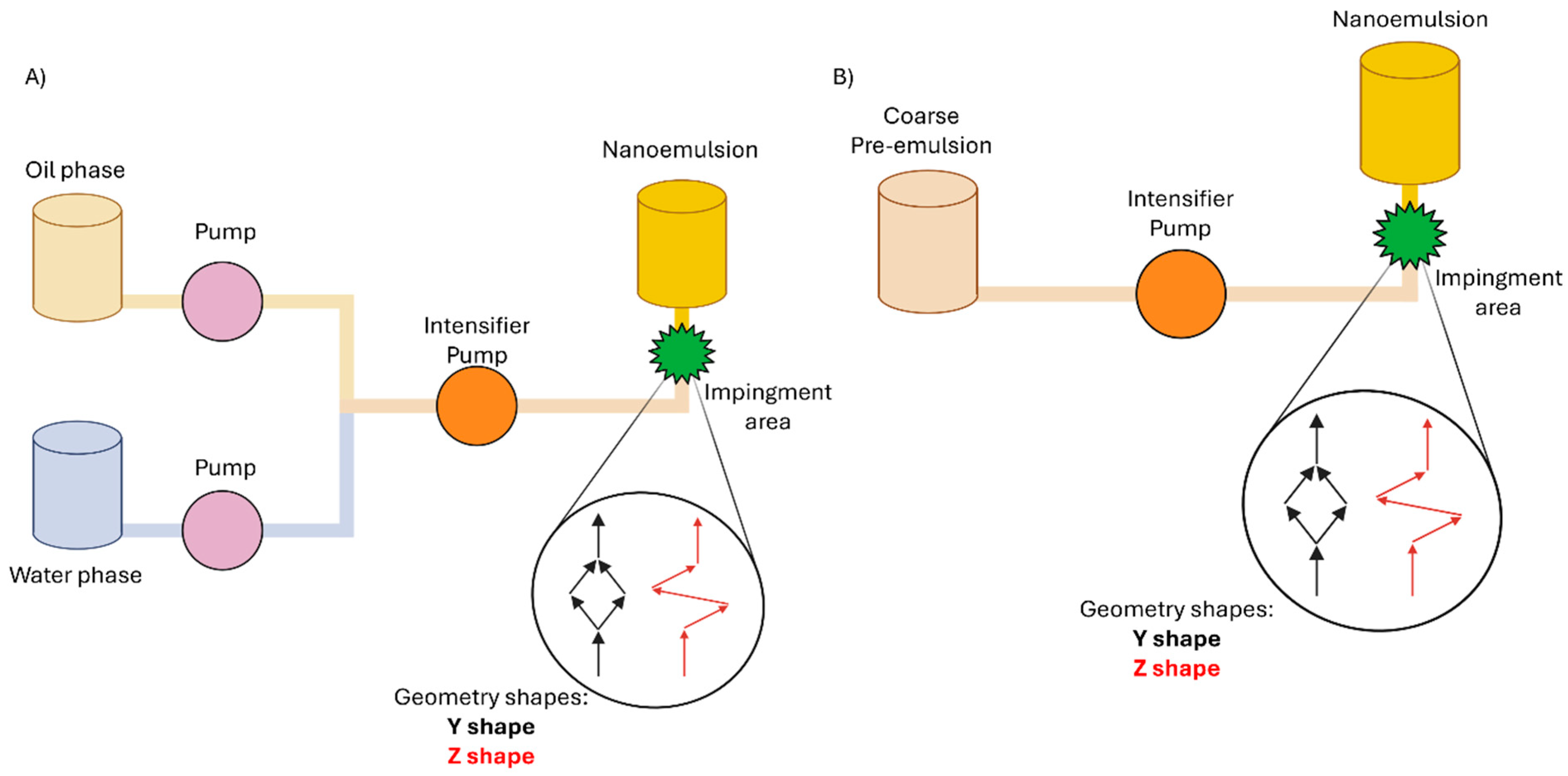


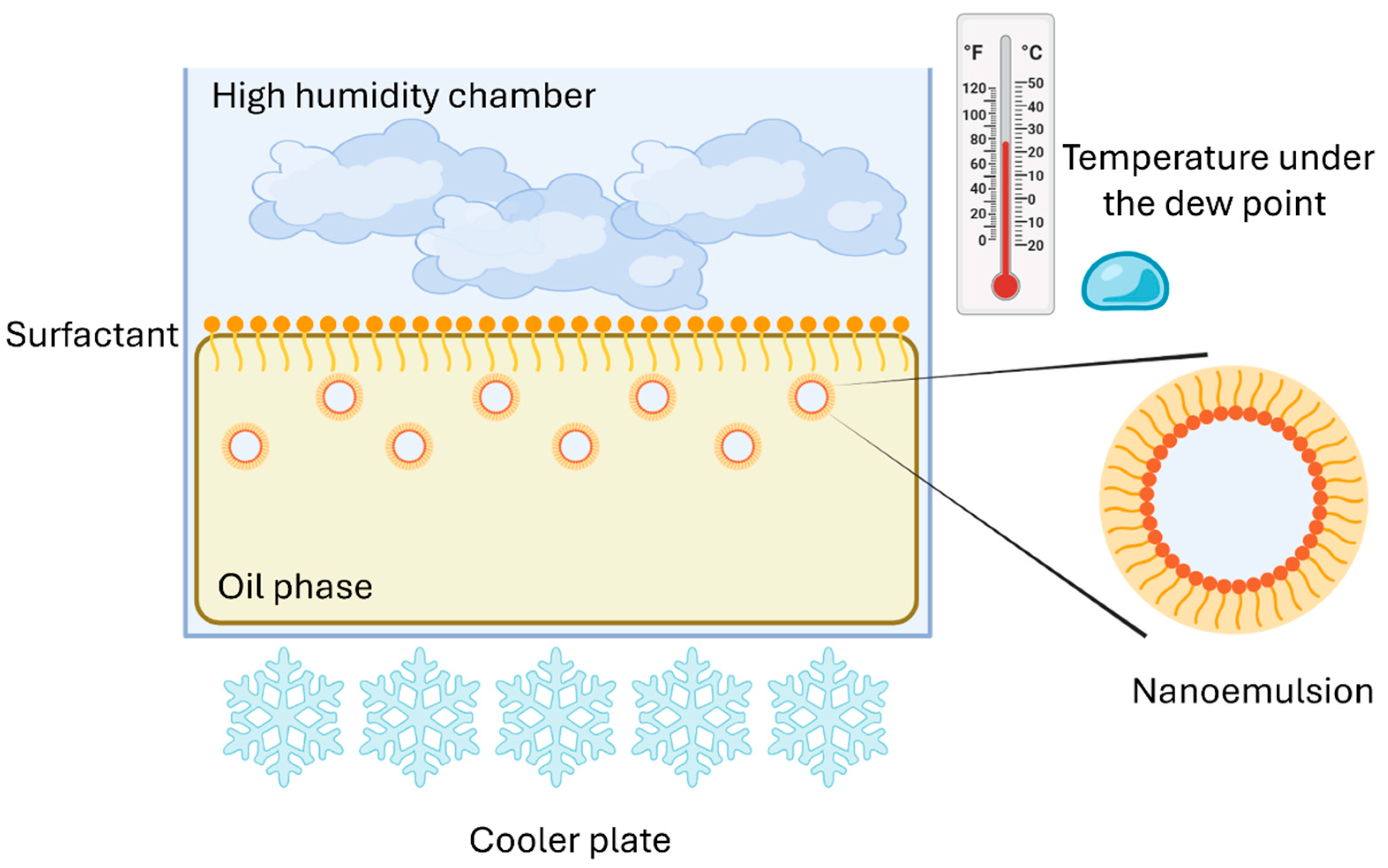

| Oil | SFA/MUFA/PUFA (% w/w) | OSI (h, 110–120 °C) | PV (meq O2/kg) | Solubilization Parameters |
|---|---|---|---|---|
| Coconut oil | 85–92/6–8/<2 | 30–40 | 0–10 | Solubilization capacity |
| MCT oil | >95/~0/~0 | >40 | <5 | Medium–High |
| Olive oil | 12–15/70–80/5–10 | 6–12 | 2–20 | Medium |
| Soybean oil | 12–15/25–30/55–60 | 1–7 | 1–5 | High |
| Sunflower oil | 8–10/20–30/55–65 | 1–4 | 4–16 | High |
| Fish oil | 25–35/20–30/30–45 | <1–2 | 5–15 | Medium |
| Surfactant | Chemical Class | HLB Range | CMC | pH/Ionic Sensitivity | Regulatory Notes |
|---|---|---|---|---|---|
| Whey protein isolate (WPI) | Protein | ~8–10 (apparent) | Not defined | Sensitive near isoelectric point (pH~4–5); affected by ionic strength | Widely used in pharmaceutical systems; not listed as standard excipient in major pharmacopeias |
| Soy protein isolate (SPI) | Protein | ~8–10 (apparent) | Not defined | pH- and salt-sensitive; reduced stability near pI | GRAS; no monograph in USP/Ph.Eur. |
| Soy lecithin | Phospholipid | ~4–8 | Not clearly defined | Moderate sensitivity to pH and ions due to charged headgroups | GRAS; listed in USP–NF and Ph.Eur. |
| Quillaja saponins | Saponins | Not defined | Low (reported micellization) | Sensitive to ionic strength; stable across pH 3–8 | Natural extract; regulatory limits depend on purity and region; no official monograph |
| Gum arabic | Polysaccharide | Not defined | Not applicable | Low sensitivity; | Pharmaceutical excipient; listed in USP–NF and Ph.Eur |
| Methods | Techniques | Physical Principles | Active Molucule | Technological Characterization | Stability | Activity | References |
|---|---|---|---|---|---|---|---|
| High-energy | High pressure homogenization (HPO) | High speed and high shear stress | Coumarins (P. balansae extracts) | Mean size: from 127 to 162 nm PDI: <0.15 ζ: from −21 to −39 mV | nd | Antifungal activity against S. schenckii strains | [42] |
| Ibuprofen | Mean size: 175.1 ± 1.1 nm PDI: 0.127 ± 0.013 ζ: 24.6 ± 0.4 mV | 30 days | Anti-inflammatory | [43] | |||
| Ultrasonication | Cavitation | Blumea balsamifera Oil Tea Tree Oil Glycyrrhetinic acid | mean size: 160.01 nm PDI: 0.125 ζ: −50.94 mV | 120 days | Antibacterial activity against Escherichia coli, Staphylococcus aureus, and Pseudomonas aeruginosa. Anti-inflammatory activity in Adjuvant-Induced Arthritis rats | [44] | |
| Microfluidization | Geometry of apparatus and surface area | Ibuprofen | Mean size: 175.1 ± 1.1 nm PDI: 0.127 ± 0.013 ζ: 24.6 ± 0.4 mV | 30 days | Anti-inflammatory | [43] | |
| Low-energy | Phase inversion temperature (PIT) | Temperature changing and spontaneous curvature of surfactant | Grape seed oil Rosemary essential oil | Mean size:109.6 ± 2.186 nm PDI: 0.124 ± 0.008 ζ: −18.7 ± 0.943 mV | 30 days | Antioxidant | [45] |
| Cajeput essential oil | Mean size: 20.5 nm PDI: 0.45 ζ: nd | 120 days | nd | [46] | |||
| Phase inversion composition (PIC) | spontaneous curvature of the surfactants | Vitamin E | Mean size: from 5.77 to 11.89 nm PDI: <0.35 ζ: from 14.3 to 10.6 mV | 30 days | nd | [47] | |
| Black pepper essential oil | Mean size: 9.60 nm PDI: 0.324 ζ = nd | 5 weeks | nd | [48] | |||
| Spontaneous emulsification | Self-assembling | Artemisia monosperma essential oil | Mean size: 228 nm PDI:0.406 ζ: −9.4 mV | 3 months | Anti-psoriatic | [49] | |
| Dapagliflozin | Mean size: 96.64 nm PDI: 0.402 ζ: −24.2 | 6 month | nd | [50] | |||
| Vapor condensation (VC) | Condensation | nd | Mean size: 215 nm PDI: 0.2 ζ: nd | nd | nd | [51] |
Disclaimer/Publisher’s Note: The statements, opinions and data contained in all publications are solely those of the individual author(s) and contributor(s) and not of MDPI and/or the editor(s). MDPI and/or the editor(s) disclaim responsibility for any injury to people or property resulting from any ideas, methods, instructions or products referred to in the content. |
© 2026 by the authors. Licensee MDPI, Basel, Switzerland. This article is an open access article distributed under the terms and conditions of the Creative Commons Attribution (CC BY) license.
Share and Cite
Villapiano, F.; Capuano, M.; D’Aria, F.; Giancola, C.; Campani, V.; De Rosa, G.; Biondi, M.; Mayol, L. Nature Meets Science: The Role of Food-Grade Oils and Green Excipients in Pharmaceutical Nanoemulsion Formulation. Materials 2026, 19, 1294. https://doi.org/10.3390/ma19071294
Villapiano F, Capuano M, D’Aria F, Giancola C, Campani V, De Rosa G, Biondi M, Mayol L. Nature Meets Science: The Role of Food-Grade Oils and Green Excipients in Pharmaceutical Nanoemulsion Formulation. Materials. 2026; 19(7):1294. https://doi.org/10.3390/ma19071294
Chicago/Turabian StyleVillapiano, Fabrizio, Maria Capuano, Federica D’Aria, Concetta Giancola, Virginia Campani, Giuseppe De Rosa, Marco Biondi, and Laura Mayol. 2026. "Nature Meets Science: The Role of Food-Grade Oils and Green Excipients in Pharmaceutical Nanoemulsion Formulation" Materials 19, no. 7: 1294. https://doi.org/10.3390/ma19071294
APA StyleVillapiano, F., Capuano, M., D’Aria, F., Giancola, C., Campani, V., De Rosa, G., Biondi, M., & Mayol, L. (2026). Nature Meets Science: The Role of Food-Grade Oils and Green Excipients in Pharmaceutical Nanoemulsion Formulation. Materials, 19(7), 1294. https://doi.org/10.3390/ma19071294