Article

Immunomodulatory Effects of Clinically Used Fat Emulsion to Promote Angiogenesis and Osteogenesis for Bone Repair


1
School of Biomedical Engineering, Southern University of Science and Technology, Shenzhen 518055, China
2
College of Medical Engineering, Shenzhen University of Advanced Technology, Shenzhen 518055, China
3
Centre for Translational Medicine Research & Development, Shenzhen Institutes of Advanced Technology, Chinese Academy of Sciences, Shenzhen 518055, China
4
School of Biomedical Sciences and Engineering, South China University of Technology, Guangzhou International Campus, Guangzhou 511442, China
5
National Innovation Center for Advanced Medical Devices, Shenzhen 518131, China
6
Department of Bone & Joint Surgery, Peking University Shenzhen Hospital, Shenzhen 518036, China
*
Authors to whom correspondence should be addressed.
Materials 2026, 19(7), 1290; https://doi.org/10.3390/ma19071290
Submission received: 15 February 2026 / Revised: 10 March 2026 / Accepted: 17 March 2026 / Published: 24 March 2026

Abstract

Bone defects have become a leading cause of disability and mortality. The pro-inflammatory state and impaired vascularization are major factors hindering bone defect repair. However, current bone regeneration materials lack the ability to regulate the osteoimmune microenvironment and promote vascularized bone regeneration. In this study, we employed clinically used fat emulsion (FE), which is intravenously administered to provide nutrition and energy for patients, to investigate the effect of immunomodulation on promoting angiogenesis and osteogenesis. Results from RT-qPCR analysis and immunofluorescence staining demonstrated that FE exhibited potent anti-inflammatory effects by reducing the expression of the pro-inflammatory marker inducible nitric oxide synthase (iNOS) and upregulating the expression of the anti-inflammatory marker transforming growth factor-beta (TGF-β). Endothelial tube formation and scratch assays demonstrated that FE promoted angiogenesis and cell migration by releasing vascular endothelial growth factor (VEGF) within the inflammatory microenvironment. Alkaline phosphatase (ALP) and alizarin red S (ARS) staining revealed that FE facilitated ALP activity and calcium nodule formation by releasing bone morphogenetic protein-2 (BMP-2) within the inflammatory microenvironment. These findings may prove promising and cost-effective for the clinical treatment of bone defects.

1. Introduction

Bone defects present a common clinical challenge, and their repair requires not only new bone formation but also a supportive immune environment and adequate blood supply [1,2,3,4,5,6,7,8,9]. Following bone defect formation, local blood supply disruption frequently occurs, leading to insufficient oxygen and nutrient delivery that severely impedes the bone repair process [5,6,10,11]. Concurrently, trauma triggers persistent inflammatory responses characterized by massive infiltration of inflammatory cells and cytokine release, further impairing new blood vessel formation and creating a vicious cycle that impedes recovery [11,12,13,14,15]. In recent years, numerous studies have highlighted the role of immune modulation in bone repair [16,17,18]. However, most biomaterials face challenges in clinical translation. Therefore, developing materials with clinical translation potential that can regulate immune responses to promote bone regeneration is of significant importance.
Local vascular injury induces ischemia and hypoxia, leading to elevated hypoxia inducible factor 1α (HIF-1α) and vascular endothelial growth factor (VEGF) expression [19,20]. Meanwhile, in the early stages of bone defects, M1 type macrophages release inflammatory mediators, including inducible nitric oxide synthase (iNOS) and interleukin-6 (IL-6), triggering acute inflammatory responses [21,22], and the excessive inflammation disrupts VEGF signaling, impairing angiogenesis and resulting in immature vascular function [23]. Therefore, modulating the early immune response, promoting macrophage polarization toward the M2 type to restore vascularization capacity are critical to breaking this cycle and achieving bone regeneration [24,25].
As a mature parenteral nutrition formulation, FE has expanded its clinical application beyond traditional nutritional support into multiple therapeutic domains. In perioperative cancer management, Tong et al.’s study of 88 patients undergoing radical resection for hilar cholangiocarcinoma demonstrated that, compared to conventional medium/long-chain fat emulsions, multi-oil fat emulsions significantly improved postoperative nutritional status while reducing levels of ALT, AST, total bilirubin, CRP, TNF-α, and IL-6. The complication rate decreased from 20.46% to 4.54%, confirming its dual anti-inflammatory and hepatoprotective effects [26]. In the field of neonatal nutritional support, Yao et al.’s study of 60 preterm infants revealed that the observation group receiving SMOF fat emulsion demonstrated superior immune function and clinical outcomes compared to the control group, alongside a lower incidence of complications [27]. In the field of neonatal nutritional support, Yao et al.’s study of 60 preterm infants revealed that the observation group receiving SMOF fat emulsion demonstrated superior immune function and clinical outcomes compared to the control group, alongside a lower incidence of complications [28].
Polyunsaturated fatty acids play a crucial role in inflammation regulation [29]. Specifically, ω-3 fatty acids actively promote inflammation resolution through distinct mechanisms by competitively inhibiting pro-inflammatory mediators and metabolizing into specific anti-inflammatory mediators such as resolvins and protectins [30,31]. As a precursor to pro-inflammatory signaling molecules like prostaglandins and leukotrienes, the ω-6 fatty acid arachidonic acid is indispensable for initiating immune responses [32,33]. Although oleic acid (ω-9 fatty acid) is non-essential, it indirectly exerts anti-inflammatory effects by enhancing cell membrane stability and partially replacing the uptake of pro-inflammatory lipids [34]. Fat emulsion (FE), emulsified fats rich in polyunsaturated fatty acids (including ω-3, ω-6, and ω-9), has long been developed as a dietary supplement for clinical use to provide nutrition and energy for patients through intravenous (i.v.) injection [35].
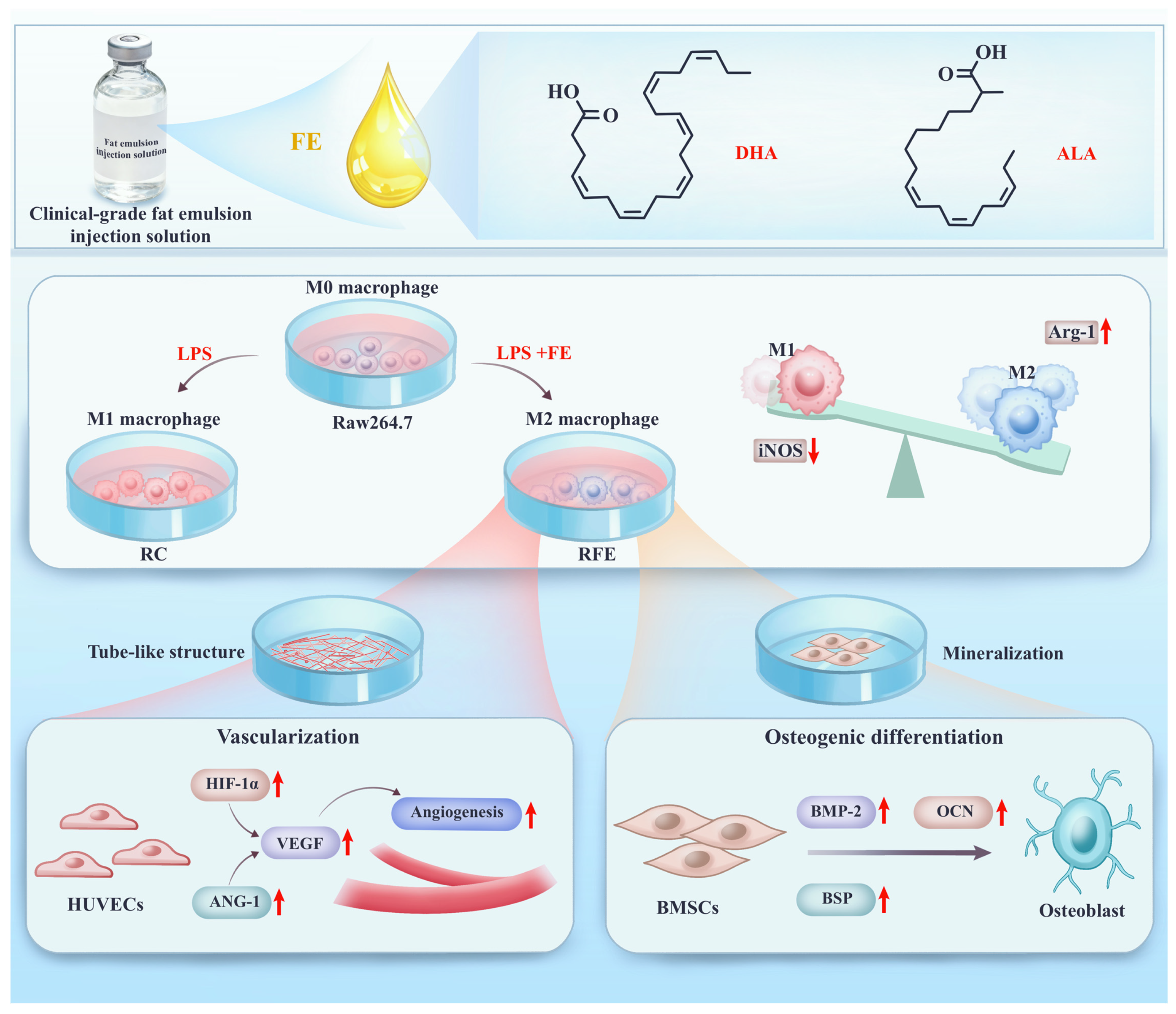
In light of these bioactive properties, FE emerges as a promising candidate for simultaneously suppressing inflammation while promoting vascular remodeling and bone regeneration. In this study, the potential of FE to promote angiogenesis and osteogenesis through immunomodulation was investigated in vitro. FE mediated potent anti-inflammatory activity by significantly downregulating the expression of the pro-inflammatory marker iNOS and upregulating the expression of the anti-inflammatory cytokine transforming growth factor-beta (TGF-β). Furthermore, within an inflammatory microenvironment, FE was shown to promote angiogenesis and cell migration by upregulating the expression of VEGF, and to facilitate alkaline phosphatase (ALP) activity and calcium nodule formation by upregulating the expression of bone morphogenetic protein-2 (BMP-2). These findings suggest FE represents a promising therapeutic strategy for clinical bone defect repair (Scheme 1).

2. Materials and Methods

2.1. Materials

Medium/long-chain FE injection was procured from Guangdong Jiabo Pharmaceutical Co., Ltd. (Guangzhou, China). The human 22-carbon hexaenoic acid ELISA kit was purchased from Tianjin Yue Teng Biotechnology Co., Ltd. (Tianjin, China) Dulbecco’s Modified Eagle Medium (DMEM), α-Minimum Essential Medium (α-MEM), fetal bovine serum (FBS), and penicillin/streptomycin (P/S) were all purchased from Gibco (New York, NY, USA). The Cell Counting Kit-8 (CCK-8) was procured from MIKX (Shenzhen, China). Lipopolysaccharide (LPS) was obtained from Sigma (St. Louis, MO, USA). The Total RNA Extraction Kit was sourced from Novazene (Nanjing, China). The Real-time Quantitative Reverse Transcription Polymerase Chain Reaction (RT-qPCR) Kit was purchased from Takara (Dalian, China). The Calcein-AM/PI Cell Viability and Cytotoxicity Assay Kit was procured from Beyotime Biotechnology (Shanghai, China). μ-Slide 15-well 3D culture plates and Matrigel basement membrane matrix were both purchased from ibidi (Grafenberg, Germany). Formaldehyde tissue fixative was sourced from TargetMol (Shanghai, China). The BCIP/NBT alkaline phosphatase color development kit and Alizarin Red S (ARS) staining kit were both purchased from Beyotime Biotechnology (Shanghai, China).

2.2. Characterization of FE

The morphology and structure of FE were characterized using transmission electron microscopy (TEM, JEOL, JEM-200CX, Tokyo, Japan). The surface potential and particle size of FE were determined via nanoparticle size and zeta potential analysis (Zetasizer Nano-ZS, Malvern Instruments Ltd., Malvern, UK). The DHA content in FE was assessed using a human docosahexaenoic acid ELISA kit.

2.3. Cell Culture

Abelson murine leukemia virus-induced tumor 264.7 (Raw 264.7), Human Umbilical Vein Endothelial Cells (HUVECs) and Human Bone Marrow-Derived Mesenchymal Stem Cells (hBMSCs) were all obtained from the American Type Culture Collection (ATCC, Manassas, VA, USA).
Raw 264.7 cells and HUVECs were all cultured using DMEM. During culture, 10% FBS and 1% P/S (by volume) were added. Cells were maintained at 37 °C in a 5% CO2 incubator, with medium changes performed every two days.
hBMSCs were cultured using α-MEM medium supplemented with 10% FBS and 1% P/S (v/v). Cells were maintained at 37 °C in a 5% CO2 incubator, with medium changes performed every two days.

2.4. Biocompatibility Assessment

To evaluate the biocompatibility of FE, three cell types were seeded at appropriate densities in 96-well plates. To each well, 100 µL of complete medium containing different concentrations of FE was added, and cells were cultured for 0, 1, 2, and 3 days. Cell proliferation capacity was assessed using the CCK-8 assay kit, with optical density (OD) values measured at 450 nm wavelength using a microplate reader (SpectraMax M4, Molecular Devices, San Jose, CA, USA). Cell viability and toxicity were assessed using the Calcein-AM/PI staining kit. Cells were seeded at appropriate densities in 12-well plates. Each well was supplemented with 1 mL of complete medium containing different concentrations of FE. After 1 day of culture, cells were stained with a 1000-fold diluted staining solution for 15 min. Imaging was performed using a fluorescence live-cell imaging system (Olympus IX73P1F, Tokyo, Japan), and live/dead cell states were observed and recorded.

2.5. RT-qPCR Analysis

Real-time quantitative PCR was employed to analyze mRNA expression levels of pro-inflammatory, anti-inflammatory, osteogenic, and angiogenesis-related genes. Following FE treatment, cells were harvested at different time points. RNA was extracted using a total RNA extraction kit and subsequently reverse transcribed into cDNA. A 10 µL reaction mixture containing TB Green, cDNA, and specific primers (Table 1) was prepared. Target genes were amplified using the LightCycler 96 system (Roche, Basel, Switzerland). Glyceraldehyde-3-phosphate dehydrogenase (GAPDH) was employed as an internal control to normalize the mRNA expression levels of different target genes. We calculated the relative expression levels of genes using the 2ΔΔCT method.

2.6. Immunofluorescence Staining

Immunofluorescence staining was employed to analyze protein levels associated with pro-inflammatory and anti-inflammatory processes. Cells were seeded in confocal culture dishes and treated with complete medium containing FE for one day before being fixed with formalin tissue fixative for 30 min. Subsequently, staining was performed using anti-iNOS and anti-Arg-1 antibodies, and images were acquired via a laser scanning confocal microscope (LSM900, ZEISS, Oberkochen, Germany).

2.7. Preparation of Immunomodulatory Conditioned Medium

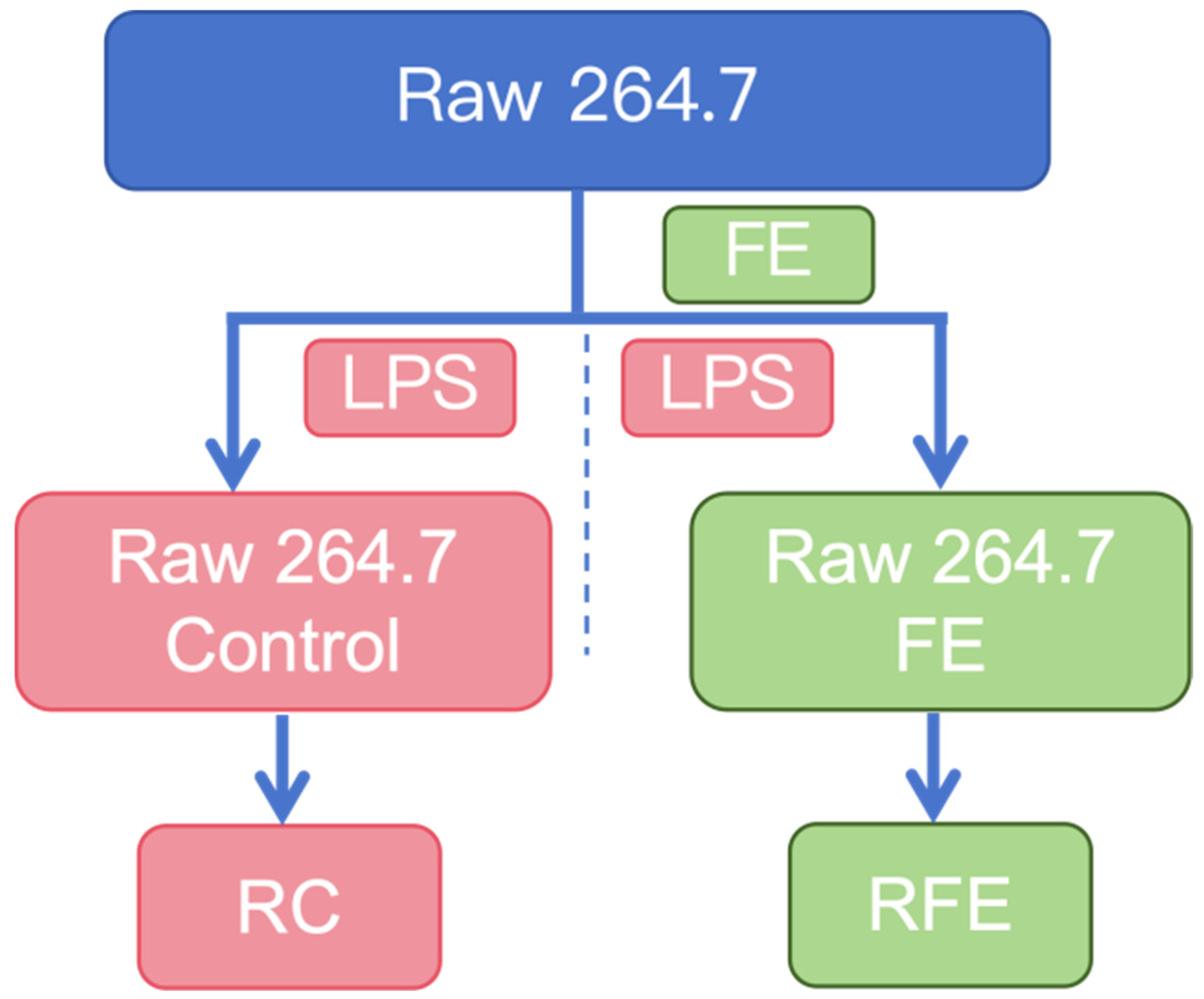
To simulate the effects of the inflammatory microenvironment on angiogenesis and osteogenesis in vitro, conditioned culture medium of Raw 264.7 cells was prepared. Raw 264.7 cells were cultured with LPS (1 μM), or LPS (1 μM) plus FE (200 μg/mL), for 1 day. Cell debris was removed from the cell culture supernatant collected by centrifugation to prepare Raw 264.7 conditioned medium (RC) and Raw 264.7 conditioned medium containing FE (RFE) (Figure 1). The conditioned medium prepared as described above was mixed with osteogenic induction solution in a 1:1 ratio to obtain osteogenic induction medium. Concurrently, the conditioned medium was mixed with DMEM complete medium in a 1:1 ratio to obtain angiogenic induction medium. These two media were subsequently employed for studies on osteogenic differentiation and angiogenesis under distinct immunological conditions.

2.8. Transwell Assay

The migration capacity of HUVECs was evaluated using the Transwell assay. Cells were resuspended in serum-free medium and seeded at an appropriate density into the upper chamber of Transwell plates. The lower chamber was filled with serum-free conditioned medium. After 12 h of incubation, cells were fixed with tissue fixative and stained with crystal violet. Non-migrated cells on the inner surface of the upper chamber membrane were carefully removed using a cotton swab. The number of cells migrating to the lower surface of the membrane was quantified by microscopic observation and counting to assess cell migration capacity.

2.9. Wound Healing Assay

Cell migration capacity was assessed using a wound healing assay. HUVECs were seeded at an appropriate cell density into ibidi four-well culture inserts within a 12-well plate and culture until 100% confluence is achieved. Subsequently, the four-well inserts were removed, and the complete medium was replaced with serum-free conditioned medium. Cell migration capacity was determined by measuring scratch width. Scratch width was recorded under a microscope at 0, 24, and 48 h. ImageJ software (ImageJ 1.54g, National Institutes of Health, Bethesda, MD, USA) was then used to measure scratch width at different time points and calculate the cell migration rate.

2.10. Tube Formation Assay

Collagen matrix solution was mixed with DMEM at a 1:1 ratio. After adding 15 µL of the mixture to ibidi culture slides at 4 °C, the slides were incubated at 37 °C for 30 min. Subsequently, 50 µL of cell suspension was seeded onto the gel surface at a density of 1.2 × 10⁵ cells per well. After 6 h, cells were stained using Calcein dye (diluted 1:1000). Following staining, tubular structures formed and were imaged under a microscope. The total length and number of nodes were analyzed using ImageJ.

2.11. ALP Staining

hBMSCs were seeded at an appropriate density into 12-well plates. After reaching 80–90% confluence, the complete medium was removed and osteogenic induction medium from different groups was added to induce osteogenesis. After 7 and 14 days of induction, cells were fixed with tissue fixative and stained with the BCIP/NBT alkaline phosphatase staining kit for 30 min. Results were ultimately observed under a microscope.

2.12. ARS Staining

The osteogenic mineralization capacity of hBMSCs was detected using the ARS staining method. hBMSCs were seeded at an appropriate cell density in 12-well plates and cultured until 80–90% confluence. The complete culture medium was then aspirated, and osteogenic induction medium from different groups was added for osteogenic induction. After 14 days of osteogenic induction, cells were fixed with tissue fixative, followed by ARS staining for 5 min. After two washes with ddH2O, samples were observed under a microscope. ARS was dissolved using a 10% hexadecylpyridinium chloride (CPC) solution, and absorbance was measured at 562 nm.

2.13. Statistical Analysis

Statistical analysis was performed using GraphPad Prism 9 software (San Diego, CA, USA). Each group comprised at least three samples, with all group data expressed as mean ± standard deviation (SD). Comparisons between multiple groups were conducted using one-way analysis of variance (ANOVA). * p < 0.05 was considered statistically significant.

3. Results and Discussion

3.1. Characteristics and Analysis of FE

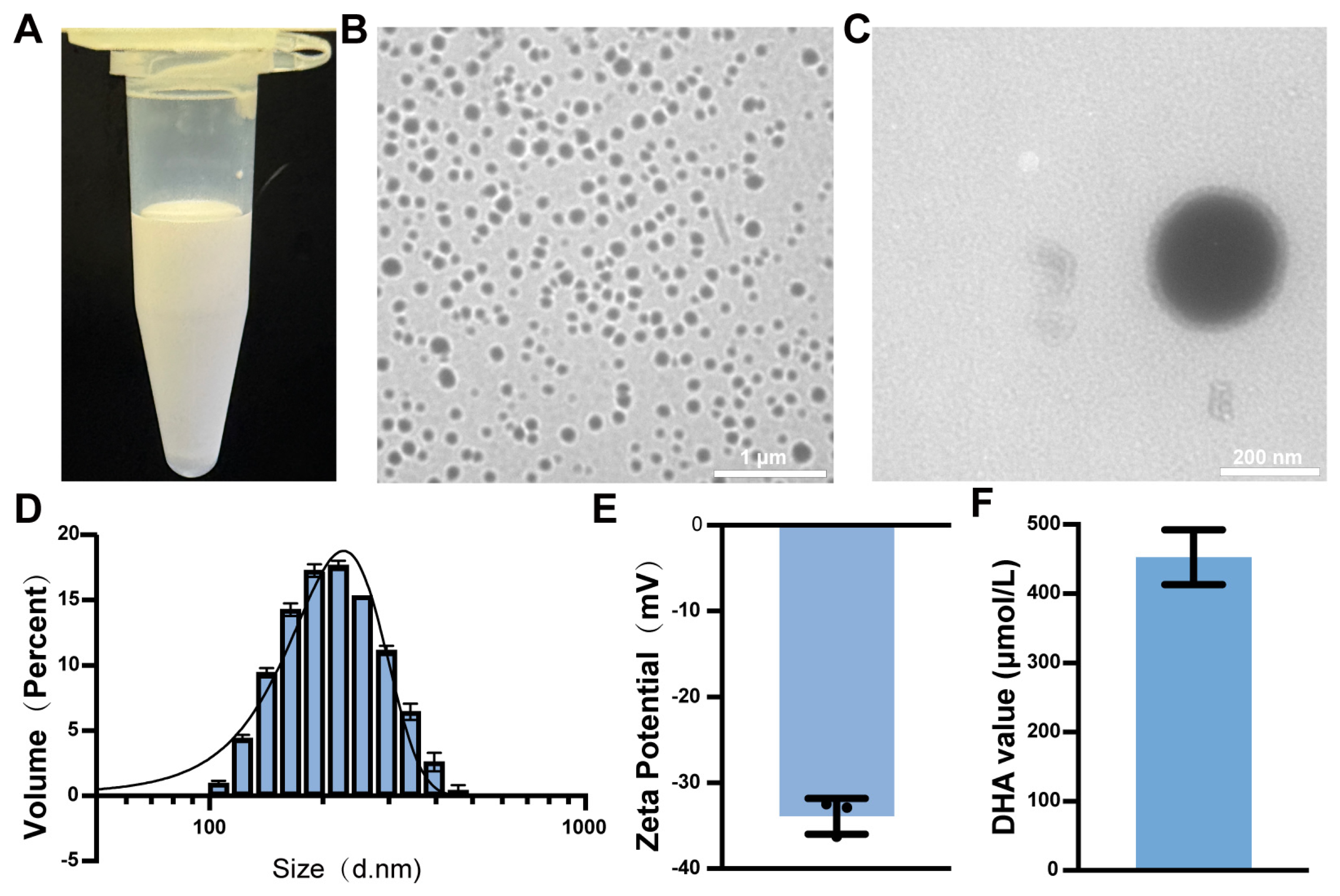
FE presented as a milky white, uniform liquid (Figure 2A). Its microstructure was characterized using TEM and DLS. TEM images revealed that FE exhibited a uniform droplet morphology (Figure 2B,C). DLS analysis further indicated that the particles had a mean hydrated particle size of approximately 215 ± 11 nm and a zeta potential of −33.9 ± 2.4 mV (Figure 2D,E). A quantitative analysis of the DHA content in FE revealed a concentration of approximately 480 μmol/L (Figure 2F). These results collectively confirmed that FE possessed a homogeneous particle size distribution and stable surface electrochemical properties. Studies have indicated that negatively charged materials exhibit higher biocompatibility [36,37].
Medium/long-chain triglyceride emulsions are intravenous nutritional support agents approved by the U.S. Food and Drug Administration (FDA), primarily used to provide essential energy and fatty acids for patients unable to obtain nutrition orally or enterally. This formulation is widely used clinically to reduce postoperative infection risks and other complications, as well as mitigate parenteral nutrition-associated liver injury [38,39,40]. However, its role in bone repair has not been systematically investigated [41,42,43,44].

3.2. Biocompatibility Assessment

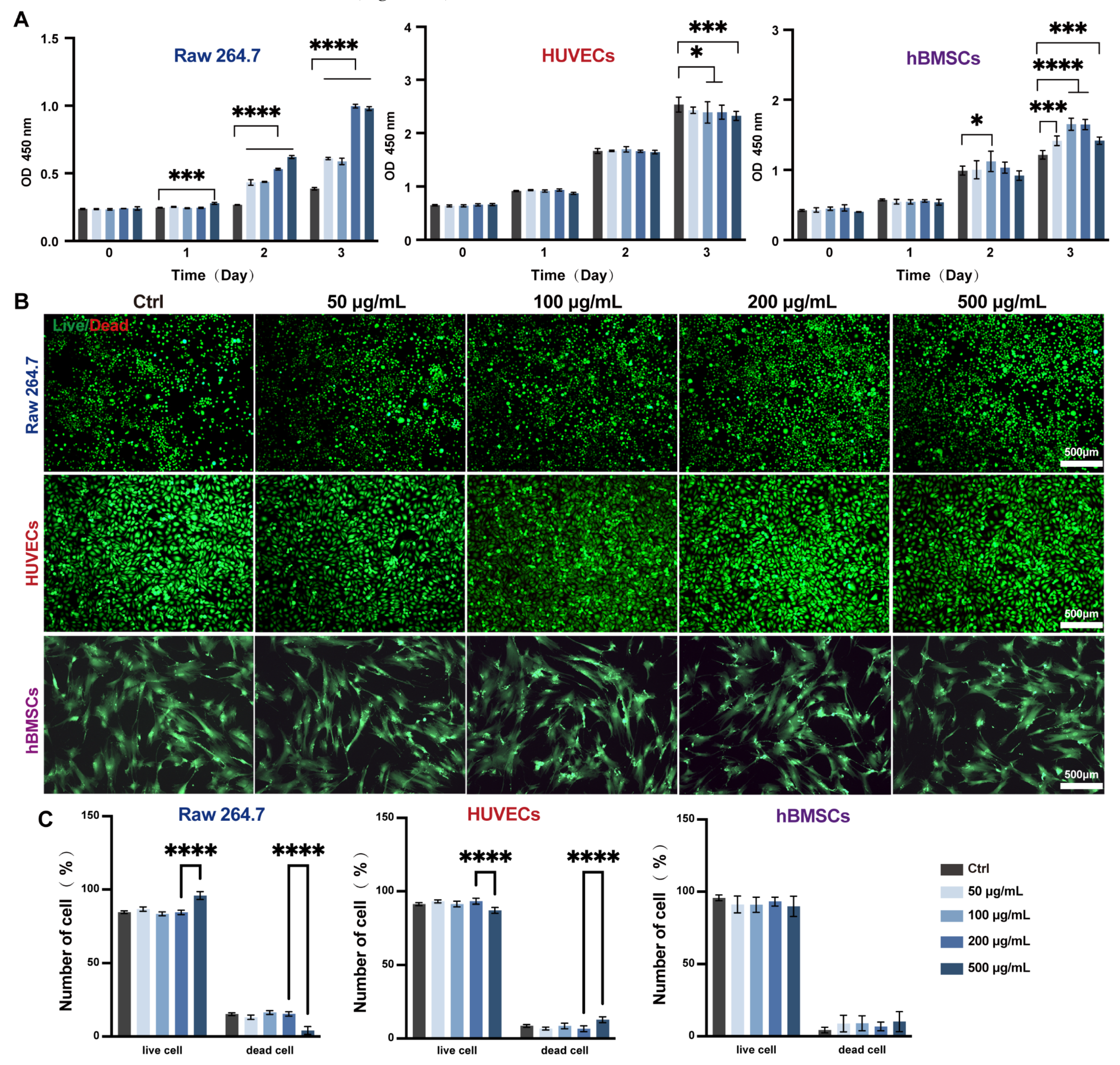
To verify the biocompatibility of FE, CCK-8 assays and live/dead staining experiments were conducted on Raw 264.7 cells, HUVECs, and hBMSCs. Results indicated that FE concentrations below 200 μg/mL had no adverse effects on the survival rates of Raw 264.7 cells and hBMSCs, while exhibiting a concentration-dependent pro-proliferative effect. However, at concentrations exceeding 200 μg/mL, its proliferative effect on hBMSCs diminished. At higher concentrations, FE mildly inhibited the proliferation of HUVECs (Figure 3A). Cell viability was qualitatively assessed using a live/dead cell staining method, wherein live cells and dead cells were labeled with Calcein-AM (green fluorescence) and propidium iodide (PI, red fluorescence), respectively. Following one day of treatment with varying concentrations of FE, microscopic examination revealed normal morphology in all three cell types (Figure 3B). Further quantitative analysis indicated that the proportion of viable cells in each treatment group exceeded 90%, confirming that FE exhibited no significant cytotoxicity towards these three cell types at the tested concentrations (Figure 3C).
In summary, we observed that within non-toxic concentration ranges, FE promotes the proliferation of Raw 264.7 cells and hBMSCs, whilst exhibiting a slight inhibitory effect on HUVEC proliferation. We hypothesize that this cell type-specific response may relate to FE’s composition and metabolic differences between the cell types. As a commonly used clinical fat supplement, FE is rich in multiple unsaturated fatty acids. Upon cellular uptake, these fatty acids undergo mitochondrial β-oxidation to generate additional ATP, thereby enhancing energy metabolism. For cells such as Raw 264.7 macrophages and hBMSCs, which possess high plasticity and proliferative potential, this supplementary energy supply likely promotes proliferation and division. However, HUVECs, as endothelial cells, exhibit heightened sensitivity to lipid peroxidation and oxidative stress levels within the microenvironment during proliferation, migration, and angiogenesis. High concentrations of unsaturated fatty acids may elevate the risk of lipid peroxidation, thereby exerting a mild inhibitory effect on endothelial cells. Consequently, while FE demonstrates favorable overall biocompatibility, its finely tuned regulatory effects vary across different cell types.
Based on the aforementioned biocompatibility assessment results and considering the responses of different cell types, we ultimately selected 200 μg/mL FE as the uniform treatment concentration for all subsequent experiments. This ensures its biological functions are maximized within a safe range.

3.3. Anti-Inflammatory Properties of FE

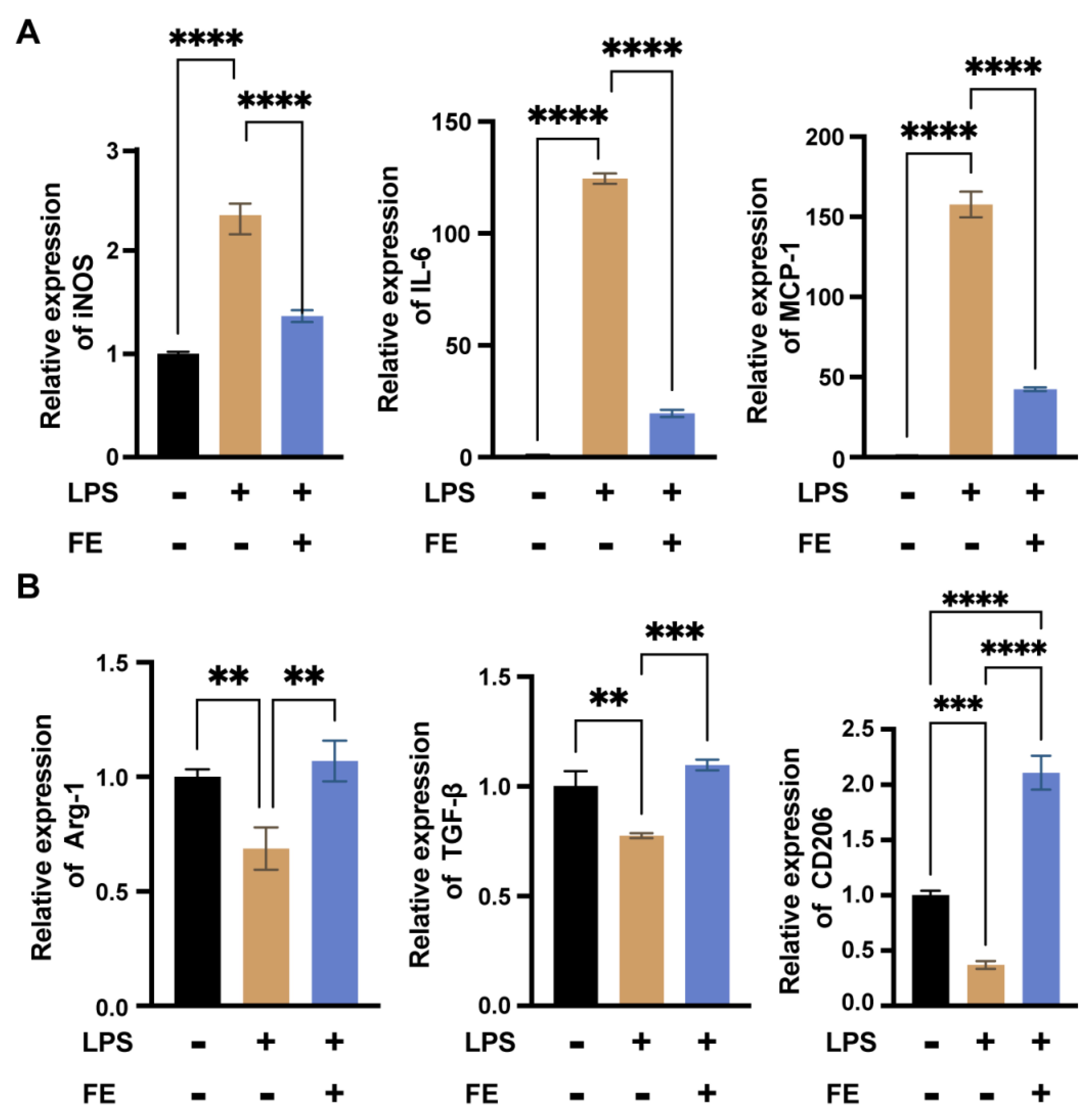
To evaluate the regulatory effects of FE on the immune microenvironment, this study conducted a comprehensive investigation at both the transcriptional and protein levels. Experimental results indicated that under LPS stimulation, FE exhibited significant anti-inflammatory effects, effectively downregulating mRNA expression of the pro-inflammatory markers iNOS (1-fold), IL-6 (6-fold), and monocyte chemotactic protein-1 (MCP-1) (3-fold) (Figure 4A). FE also upregulated the mRNA expression of anti-inflammatory markers, including arginase-1 (Arg-1) (1-fold), TGF-β (1.25-fold), and CD206 (4-fold) (Figure 4B).
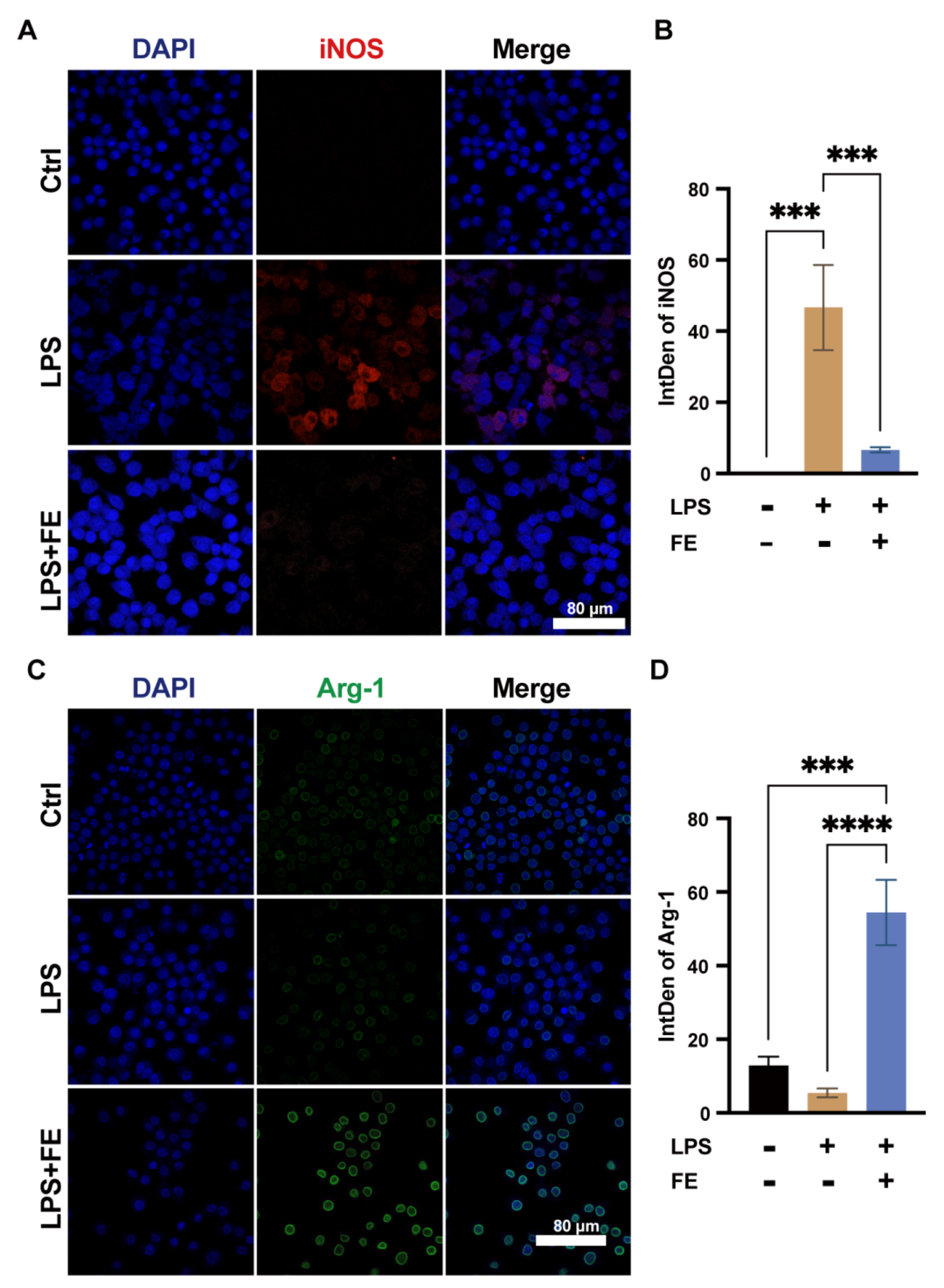
Immunofluorescence staining revealed that pro-inflammatory marker iNOS was significantly upregulated by 50-fold following LPS stimulation, whereas FE treatment downregulated iNOS expression by 10-fold (Figure 5A,B). Anti-inflammatory Arg-1 expression decreased by 5-fold under LPS stimulation, while FE treatment markedly increased Arg-1 expression by 12-fold (Figure 5C,D).
Genetic and protein-level analyses of M1 and M2 macrophages confirmed that FE modulated the immune microenvironment by downregulating M1 macrophages and upregulating M2 macrophages. Trauma and implant materials can induce abnormal immune responses, promoting macrophage polarization toward the pro-inflammatory phenotype (M1) [45,46]. Therefore, anti-inflammatory regulation within the bone defect microenvironment is a critical factor influencing the bone regeneration process, and bone repair materials with immunomodulatory functions hold significant potential [47]. The anti-inflammatory effects of fish oil may be mediated through multiple signaling pathways. The polyunsaturated fatty acids in fish oil can inhibit NF-κB activation by suppressing IκBα phosphorylation, thereby downregulating the expression of pro-inflammatory genes such as iNOS and IL-6 [48]. FE may also act as a natural ligand for PPARγ, activating the PPARγ signaling pathway to promote macrophage polarization towards the M2 phenotype and upregulate Arg-1 and TGF-β expression [49].

3.4. FE Promoted Angiogenesis via Immunomodulation

To evaluate the effect of FE on cell migration and tubule formation under improved immune conditions, migration and angiogenesis assays were performed. HUVECs were treated with conditioned medium from Raw 264.7 cells treated with LPS (RC), Raw 264.7 cells treated with LPS and FE (RFE), or standard culture medium.
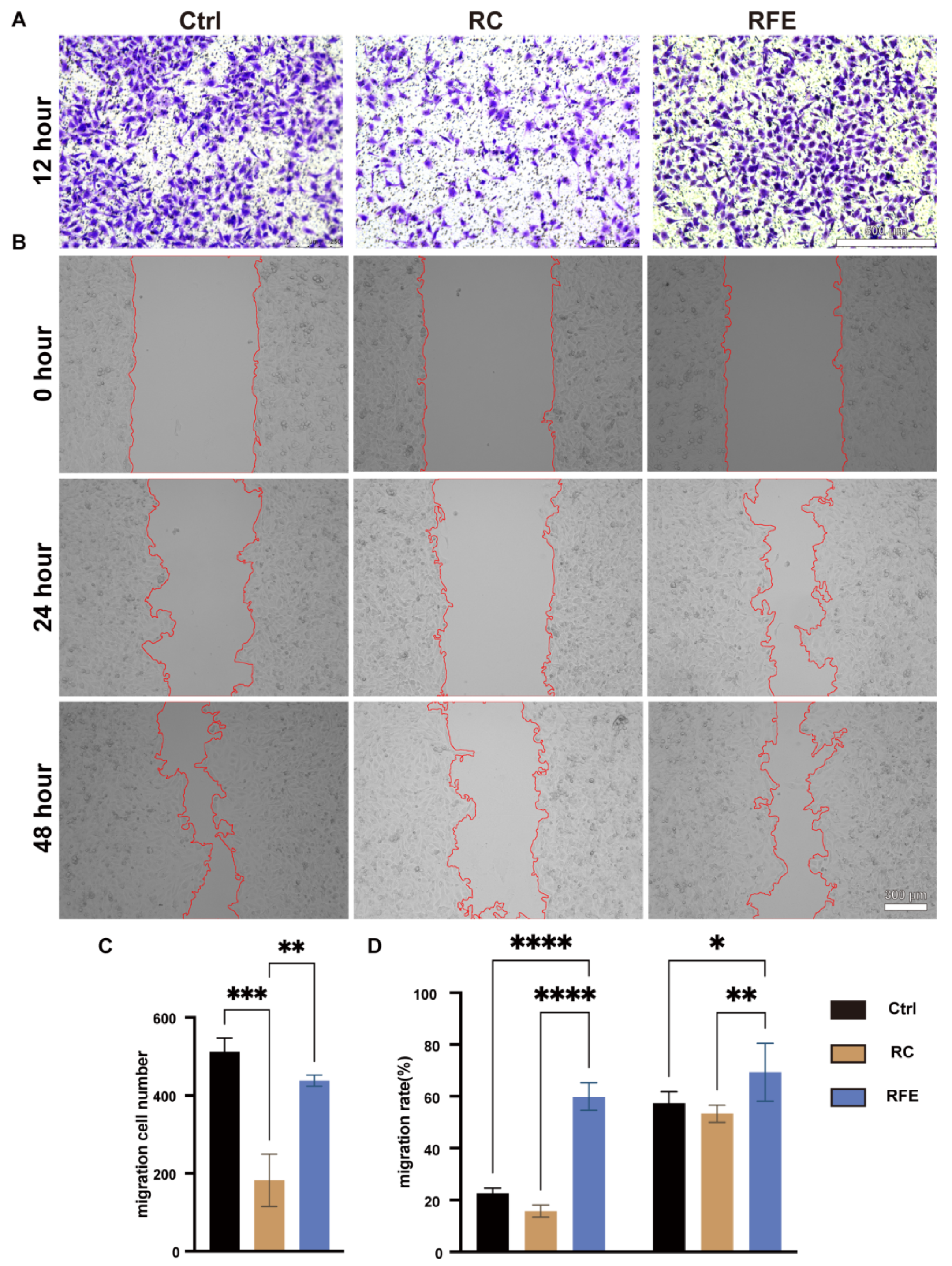
Regarding cell migration capacity, compared with the control group, the RC group exhibited significantly reduced cell migration capacity, as evidenced by a 2.5-fold decrease in the number of cells that traversed the filter membrane in the 12 h Transwell assay. In contrast, the RFE group demonstrated markedly enhanced cell migration compared with the RC group, with a 2-fold increase in the number of cells that traversed the filter membrane in the Transwell assay at 12 h (Figure 6A,C). Additionally, in wound healing assays at 12 and 24 h, the migration rate of the RC group was lower than that of the control group. Conversely, the RFE group exhibited significantly enhanced cell migration compared with the RC group, with migration rates 3-fold higher at 12 h and 1.3-fold higher at 24 h (Figure 6B,D).
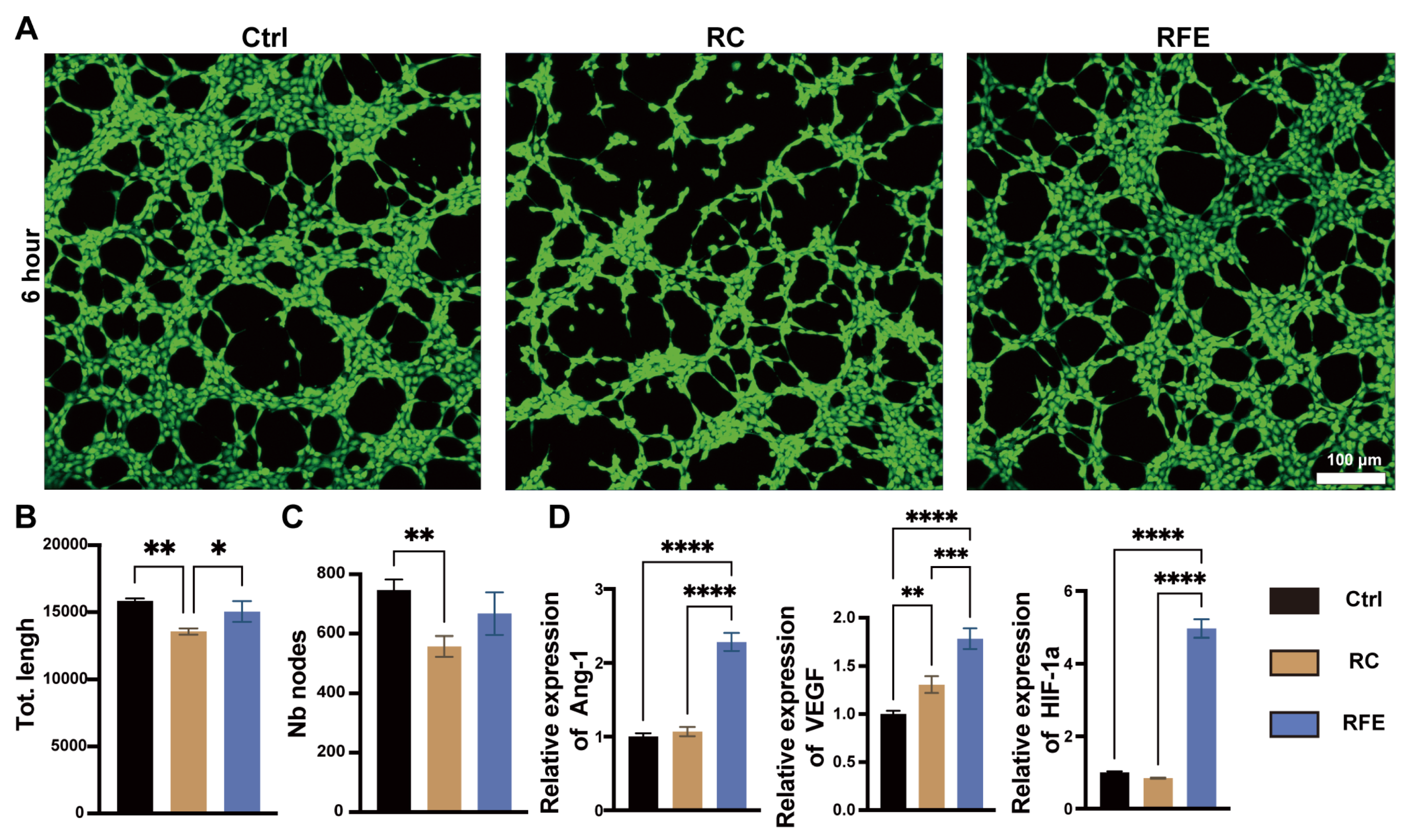
In the tube formation assay, the RFE group generated a more extensive and interconnected vascular network compared with the RC group. Quantitative analysis revealed significantly higher branch counts and total vessel lengths compared with the RC group (Figure 7A,C). RT-qPCR analysis indicated that HIF-1α mRNA expression was significantly upregulated approximately 4-fold in the RFE group, whereas it increased only 0.8-fold in the RC group. VEGF expression was upregulated 1.3-fold in the RC group and 1.7-fold in the RFE group. Human Angiopoietin-1 (Ang-1) expression followed a similar trend to VEGF, increasing 1.06-fold in the RC group and 2.3-fold in the RFE group (Figure 7D).
Bone, as a highly vascularized tissue, relies on the continuous delivery of oxygen and nutrients by the vascular system for the maintenance of its structure and function [50,51]. However, the inflammatory microenvironment of bone defects severely impedes angiogenesis by suppressing the release of key factors such as VEGF-A [44,50,52]. HIF-1α, as a core transcription factor in the hypoxic response, is not only induced by hypoxia but can also be activated by inflammatory signals, playing a pivotal role in linking the inflammatory microenvironment with angiogenesis. Ramanathan et al. demonstrated that lipopolysaccharide (LPS) can upregulate HIF-1α transcriptional expression in macrophages via the NF-κB signaling pathway, thereby promoting VEGF production and enabling the angiogenesis switch function of macrophages [53]. Qi et al. further confirmed that HIF-1α directly binds to the promoter region of the chemokine Ccl7, promoting macrophage recruitment through transcriptional regulation and thereby mediating vascular inflammation and remodeling. These studies reveal the key transcriptional mechanisms by which HIF-1α regulates angiogenesis under inflammatory conditions [54]. Wound healing assays and angiogenesis experiments indicated that FE enhanced angiogenesis by improving the immune microenvironment, thereby establishing foundational conditions for osteogenesis at bone defect sites.

3.5. Immunomodulatory Osteogenesis by FE

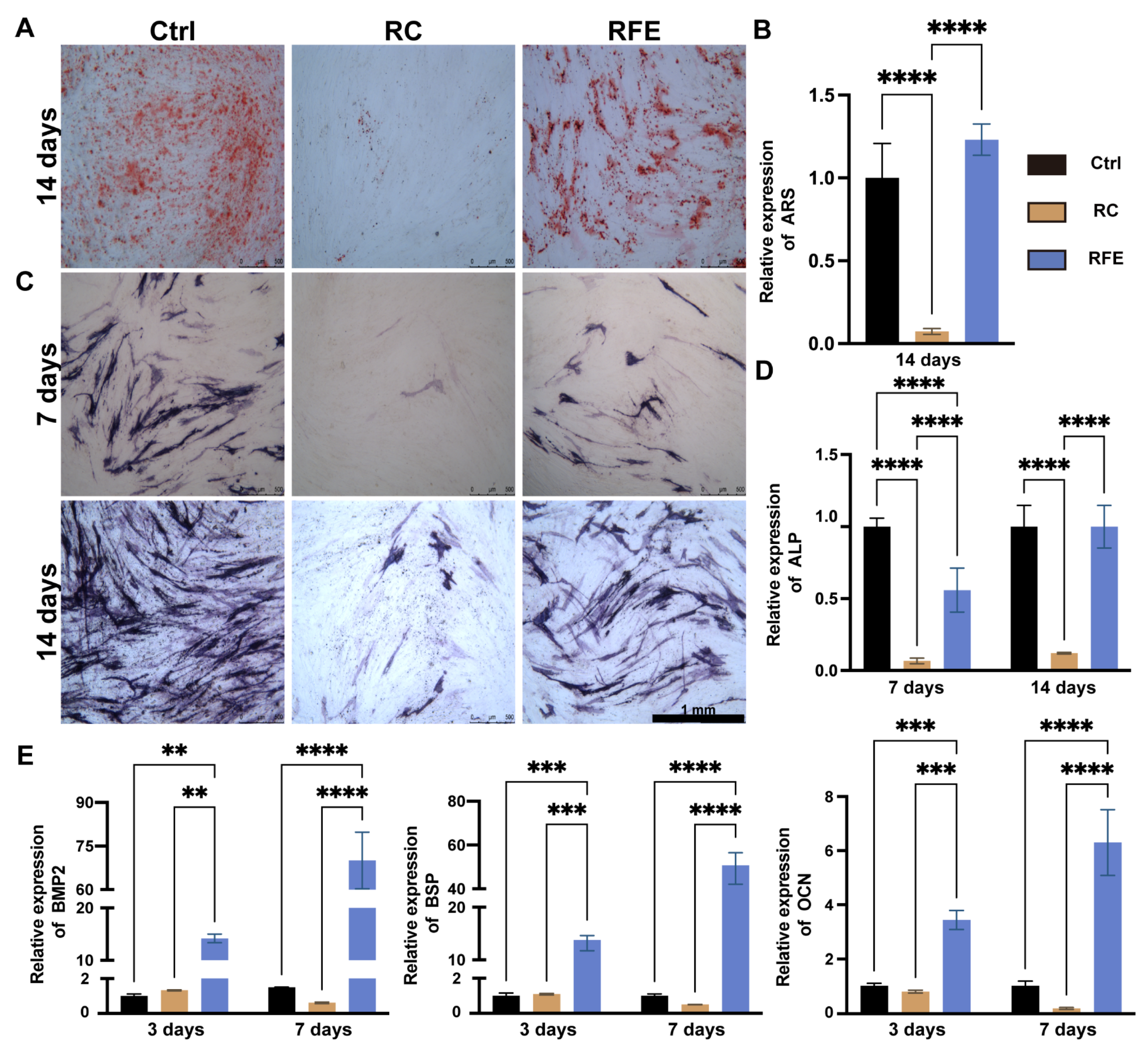
To validate the osteogenic effects of FE in the immune microenvironment, we conducted ALP and ARS assays. ALP expression serves as a key early osteogenic marker. Results demonstrated that, at both 7 and 14 days, ALP expression was significantly suppressed in the RC group compared with the C group. However, this suppression was markedly restored in the RFE group, which exhibited significantly higher ALP levels than the RC group (Figure 8C,D). After 14 days of osteogenic induction, cell mineralization was assessed via ARS staining, with calcium deposits dissolved using 10% CPC for semi-quantitative analysis. Results showed significantly fewer calcific nodules in the RC group compared with the control group, while the RFE group exhibited markedly more red mineralized nodules than the RC group (Figure 8A,B). Additionally, we measured expression levels of osteogenesis-related genes BMP2, bone sialoprotein (BSP), and osteocalcin (OCN). Results showed that after 3 days of osteogenic induction, the RFE group exhibited approximately 14-fold higher BMP2 expression, 14.5-fold higher BSP expression, and 3.4-fold higher OCN expression compared with the control group. After 7 days, expression levels of BMP2, BSP, and OCN in the RFE group were markedly upregulated, reaching approximately 70-fold, 50-fold, and 6.3-fold, respectively, relative to the control group (Figure 8E).
Excessive inflammation inhibits osteogenic differentiation, as pro-inflammatory cytokines have been shown to impede the expression of osteogenic genes in osteoblast-like cells [55]. To overcome the barriers to bone regeneration under pathological conditions, an ideal bone repair material must effectively induce osteogenic differentiation even within an inflammatory microenvironment12. Experiments have confirmed that FE effectively induced osteogenic differentiation under inflammatory conditions, demonstrating its potential as a promising bone repair material.

4. Conclusions

To address the challenge of bone repair, immune regulation plays a crucial role to promote vascularized bone regeneration during the bone healing process. This study evaluated the effects of FE on promoting bone repair by modulating the inflammatory environment. FE is a clinically used dietary supplement, and cellular viability studies have demonstrated its excellent biocompatibility. The anti-inflammatory effects of FE may be mediated through multiple signaling pathways. Firstly, the polyunsaturated fatty acids in FE can inhibit NF-κB activation by suppressing IκBα phosphorylation, thereby downregulating the expression of pro-inflammatory genes such as iNOS and IL-6. Secondly, fatty acids act as natural ligands for PPARγ, activating the PPARγ signaling pathway to promote macrophage M2 polarization and upregulate Arg-1 and TGF-β expression. The synergistic interaction of these pathways collectively mediates FE’s immunomodulatory effects. This study further confirms that FE significantly downregulates the pro-inflammatory marker iNOS while upregulating the anti-inflammatory cytokine TGF-β, demonstrating distinct anti-inflammatory activity. Building on this, an inflammatory environment was simulated in vitro to evaluate the effects of FE on HUVECs and hBMSCs. Results showed that FE significantly promoted the secretion of VEGF and BMP-2. Under inflammatory conditions, FE enhanced endothelial tube formation, cell migration, ALP activity, and calcium nodule deposition. These findings indicate that FE can promote angiogenesis and osteogenic differentiation in vitro by modulating inflammatory responses. In summary, this study reveals the potential of FE to regulate the inflammatory microenvironment at the cellular level and enhance bone repair-related cellular functions, providing preliminary theoretical support for subsequent in vivo studies and the development of bone tissue engineering materials.

Author Contributions

All authors contributed to the study’s conception and design. Material preparation, data collection and analysis were performed by L.C., Z.W., Y.L. (Yujie Liu), Y.Z., Y.G. and T.Z. The first draft of the manuscript was written by L.C., and all authors reviewed previous versions of the manuscript. All authors have read and agreed to the published version of the manuscript.

Funding

This work was financially supported by the National Key R&D Program of China (2024YFC2417900), National Natural Science Foundation of China (U22A20162, 82525040, U24A20374), Shenzhen Science and Technology Program (RCJC20231211090028053, KJZD20230923114303008, KJZD20230923114612025), Project funded by China Postdoctoral Science Foundation (2025M772930), Supported by the Postdoctoral Fellowship Program of CPSF (GZC20251928).

Institutional Review Board Statement

Not applicable.

Informed Consent Statement

Not applicable.

Data Availability Statement

The original contributions presented in this study are included in the article. Further inquiries can be directed to the corresponding authors.

Conflicts of Interest

The authors declare no conflicts of interest.

References

  1. He, X.; Li, Y.; Zou, D.; Zu, H.; Li, W.; Zheng, Y. An overview of magnesium-based implants in orthopaedics and a prospect of its application in spine fusion. Bioact. Mater. 2024, 39, 456–478. [Google Scholar] [CrossRef]
  2. Gong, M.; Zha, Y.; Lu, S.; Zhang, T.; Wang, X.; Liu, L.; Fan, C.; Zeng, H.; Wang, D.; Song, T.; et al. Efficacy and safety of the low-temperature-derived 3d printed biodegradable mg-containing composite porous scaffold for bone defect repair: A prospective and multi-center randomized controlled trial. Biomaterials 2026, 327, 123751. [Google Scholar] [CrossRef] [PubMed]
  3. Chen, C.; Wang, M.; Yue, X.; Xu, B.; Wu, Q.; Yu, D.; Tang, Z.; Yan, S.; Zhang, Y.; Li, X.; et al. Ultrasound-responsive drug-carrying microbubbles combined with piezoelectric porous titanium scaffolds for the treatment of infected bone defects. Mater. Today Bio 2025, 35, 102389. [Google Scholar] [CrossRef] [PubMed]
  4. Zhang, H.; Qiao, W.; Liu, Y.; Yao, X.; Zhai, Y.; Du, L. Addressing the challenges of infectious bone defects: A review of recent advances in bifunctional biomaterials. J. Nanobiotechnol. 2025, 23, 257. [Google Scholar] [CrossRef] [PubMed]
  5. Yan, C.; Zhang, P.; Qin, Q.; Jiang, K.; Luo, Y.; Xiang, C.; He, J.; Chen, L.; Jiang, D.; Cui, W.; et al. 3D-printed bone regeneration scaffolds modulate bone metabolic homeostasis through vascularization for osteoporotic bone defects. Biomaterials 2024, 311, 122699. [Google Scholar] [CrossRef]
  6. Chen, R.; Wang, Y.; Yu, C.; Zhang, X.; Wang, Y.; Yu, T.; Wu, T. bioactive glass-reinforced hybrid microfibrous spheres promote bone defect repair via stem cell delivery. Adv. Fiber Mater. 2024, 7, 240–253. [Google Scholar] [CrossRef]
  7. Zhang, W.; Li, L.; Wang, Z.; Nie, Y.; Yang, Y.; Li, C.; Zhang, Y.; Jiang, Y.; Kou, Y.; Zhang, W.; et al. Injectable and adhesive mgo2-potentiated hydrogel with sequential tumor synergistic therapy and osteogenesis for challenging postsurgical osteosarcoma treatment. Biomaterials 2025, 315, 122959. [Google Scholar] [CrossRef]
  8. Ma, W.; Yang, Z.; Lu, M.; Ma, H.; Wu, C.; Lu, H. Hierarchically structured biomaterials for tissue regeneration. Microstructures 2024, 4, 2024014. [Google Scholar] [CrossRef]
  9. Zhang, Y.; Li, C.; Zhang, W.; Deng, J.; Nie, Y.; Du, X.; Qin, L.; Lai, Y. 3D-printed nir-responsive shape memory polyurethane/magnesium scaffolds with tight-contact for robust bone regeneration. Bioact. Mater. 2022, 16, 218–231. [Google Scholar] [CrossRef]
  10. Yuan, B.; Peng, H.; Wang, Y.; Li, J.; Zhang, Y.; Chen, Z.; Li, K.; Tu, C.; Zhang, K.; Zhu, X.; et al. Micro/nanobiomimetic iron-based scaffold induces vascularized bone regeneration to repair large segmental bone defect in load-bearing sites. ACS Nano 2025, 19, 6840–6857. [Google Scholar] [CrossRef]
  11. Duan, Y.; Li, Y.; Wang, Y.; Su, L.; Li, Q.; Jiang, F.; Liu, S.; Huang, Z.; Zhou, X.; Tang, H.; et al. An all-in-one “multifunctional hydrogel”: Through antibacterial, anti-inflammatory, and angiogenic to promoting mrsa-infected bone defect repair. Chem. Eng. J. 2025, 503, 158132. [Google Scholar] [CrossRef]
  12. Zhao, Y.-Y.; Meng, Q.-F.; Cui, H.; Liu, W.; Chen, Y.; Lan, Z.; Chen, H.; Ma, D.-D.; Rao, L.; Yu, G.-T. Injectable cellular vesicle-based bone meal for inflammatory bone defect repair through restoring immune homeostasis. Theranostics 2025, 15, 4465–4480. [Google Scholar] [CrossRef] [PubMed]
  13. Qiu, P.; Ouyang, Y.; Liu, S.; Dai, J.; Wang, R.; Zhao, W.; Xu, C.; Fan, Z. Environmental response temporal release injectable hydrogel for controlled growth factor release to enhance inflammatory periodontal bone defect regeneration. Adv. Mater. 2025, 38, e12531. [Google Scholar] [CrossRef] [PubMed]
  14. Li, C.; Xu, W.; Li, L.; Zhou, Y.; Yao, G.; Chen, G.; Xu, L.; Yang, N.; Yan, Z.; Zhu, C.; et al. Concrete-inspired bionic bone glue repairs osteoporotic bone defects by gluing and remodeling aging macrophages. Adv. Sci. 2024, 11, 2408044. [Google Scholar] [CrossRef]
  15. Chen, X.; Li, W.; Ma, Y.; Zhang, W.; He, W.; Ding, F.; Guo, S.; Geng, D.; Pan, G. Nano-assisted dynamically assembled hydrogels with strong tissue adhesion and proactive immunomodulation for bone defect repair. Bioact. Mater. 2025, 53, 480–494. [Google Scholar] [CrossRef]
  16. Li, C.; Zhang, W.; Nie, Y.; Du, X.; Huang, C.; Li, L.; Long, J.; Wang, X.; Tong, W.; Qin, L.; et al. Time-sequential and multi-functional 3d printed mgo2/plga scaffold developed as a novel biodegradable and bioactive bone substitute for challenging postsurgical osteosarcoma treatment. Adv. Mater. 2023, 36, 2308875. [Google Scholar] [CrossRef]
  17. Jiang, T.; Su, S.; Tian, R.; Jiao, Y.; Zheng, S.; Liu, T.; Yu, Y.; Hua, P.; Cao, X.; Xing, Y.; et al. Immunoregulatory orchestrations in osteoarthritis and mesenchymal stromal cells for therapy. J. Orthop. Transl. 2025, 55, 38–54. [Google Scholar] [CrossRef]
  18. Wang, S.; Ou, Z.; Xiao, F.; Feng, X.; Tan, L.; Cheng, S.; Wu, D.; Yang, C.; Yao, H. Advanced bioactive materials and strategies for tendon repair and function restoration. J. Orthop. Transl. 2025, 55, 204–227. [Google Scholar] [CrossRef]
  19. Pei, X.; Kim, H.; Lee, M.; Wang, N.; Shin, J.; Lee, S.; Yoon, M.; Yang, V.C.; He, H. Local delivery of cardiac stem cells overexpressing hif-1α promotes angiogenesis and muscular tissue repair in a hind limb ischemia model. J. Control. Release 2020, 322, 610–621. [Google Scholar] [CrossRef]
  20. Madai, S.; Kilic, P.; Schmidt, R.M.; Bas-Orth, C.; Korff, T.; Büttner, M.; Klinke, G.; Poschet, G.; Marti, H.H.; Kunze, R. Activation of the hypoxia-inducible factor pathway protects against acute ischemic stroke by reprogramming central carbon metabolism. Theranostics 2024, 14, 2856–2880. [Google Scholar] [CrossRef]
  21. Gao, S.; Chen, T.; Deng, C.; Liu, G.; Wei, Z. An endoplasmic reticulum stress-responsive nanocomposite hydrogel for diabetic wound healing through a fibroblast-immune cell dual regulation hub. J. Nanobiotechnol. 2025, 23, 689. [Google Scholar] [CrossRef]
  22. Jin, C.; Jiang, P.; Zhang, Z.; Han, Y.; Wen, X.; Zheng, L.; Kuang, W.; Lian, J.; Yu, G.; Qian, X.; et al. Single-cell rna sequencing reveals the pro-inflammatory roles of liver-resident th1-like cells in primary biliary cholangitis. Nat. Commun. 2024, 15, 8690. [Google Scholar] [CrossRef]
  23. Li, D.; Jiu, J.; Liu, H.; Yan, X.; Li, X.; Yan, L.; Zhang, J.; Fan, Z.; Li, S.; Du, G.; et al. Tissue-engineered mesenchymal stem cell constructs alleviate tendinopathy by suppressing vascularization. Bioact. Mater. 2024, 36, 474–489. [Google Scholar] [CrossRef] [PubMed]
  24. Zhu, Y.; Liu, H.; Wu, P.; Chen, Y.; Deng, Z.; Cai, L.; Wu, M. Multifunctional injectable hydrogel system as a mild photothermal-assisted therapeutic platform for programmed regulation of inflammation and osteo-microenvironment for enhanced healing of diabetic bone defects in situ. Theranostics 2024, 14, 7140–7198. [Google Scholar] [CrossRef] [PubMed]
  25. Long, J.; Yao, Z.; Zhang, W.; Liu, B.; Chen, K.; Li, L.; Teng, B.; Du, X.F.; Li, C.; Yu, X.F.; et al. Regulation of osteoimmune microenvironment and osteogenesis by 3d-printed plag/black phosphorus scaffolds for bone regeneration. Adv. Sci. 2023, 10, 2302539. [Google Scholar] [CrossRef] [PubMed]
  26. Suh, Y.-A.; Park, J.H.; Park, B.; Choi, S.; Park, M.S.; Lee, J.H. Risk factors and impact of hypertriglyceridemia in preterm infants under 32 weeks of gestation: Optimizing intravenous lipid emulsion infusion rates–a single center retrospective study. Front. Pediatr. 2025, 13, 1520420. [Google Scholar] [CrossRef]
  27. Cabañas Poy, M.J.; Montoro Ronsano, J.B.; Castillo Salinas, F.; Martín-Begué, N.; Clemente Bautista, S.; Gorgas Torner, M.Q. Comparative effectiveness of two lipid emulsions in preventing retinopathy of prematurity in preterm infants requiring parenteral nutrition. Farm. Hosp. 2024, 48, 159–163. [Google Scholar] [CrossRef]
  28. Tong, Y.; Bai, S.; Bi, T.; Jin, L.; Tang, Y.; Zhou, Y.; Feng, X.; Zhang, W. Multi-oil fat emulsion improves postoperative nutritional status and reduces complications in patients with hilar cholangiocarcinoma. Front. Nutr. 2025, 12, 1628698. [Google Scholar] [CrossRef]
  29. Versari, I.; Bavelloni, A.; Traversari, M.; Burattini, S.; Battistelli, M.; Gobbi, P.; Faenza, I.; Salucci, S. Functional foods, a hope to delay muscle dystrophy progression: A potential role for omega fatty acids. Nutrients 2025, 17, 1039. [Google Scholar] [CrossRef]
  30. Bäck, M. Icosapent ethyl in cardiovascular prevention: Resolution of inflammation through the eicosapentaenoic acid-resolvin e1-chemr23 axis. Pharmacol. Ther. 2023, 247, 108439. [Google Scholar] [CrossRef]
  31. Han, L.; Haslam, R.P.; Silvestre, S.; Lu, C.; Napier, J.A. Enhancing the accumulation of eicosapentaenoic acid and docosahexaenoic acid in transgenic camelina through the crispr-cas9 inactivation of the competing fae1 pathway. Plant Biotechnol. J. 2022, 20, 1444–1446. [Google Scholar] [CrossRef]
  32. Kaviani, E.; Hajibabaie, F.; Abedpoor, N.; Safavi, K. Synergic effects and possible mechanism of omega-6 fatty acids (ω-6) on immune system, inflammation, and cancer. Mol. Nutr. Food Res. 2025, 69, e70092. [Google Scholar] [CrossRef]
  33. Dyall, S.C.; Balas, L.; Bazan, N.G.; Brenna, J.T.; Chiang, N.; da Costa Souza, F.; Dalli, J.; Durand, T.; Galano, J.-M.; Lein, P.J.; et al. Polyunsaturated fatty acids and fatty acid-derived lipid mediators: Recent advances in the understanding of their biosynthesis, structures, and functions. Prog. Lipid Res. 2022, 86, 101165. [Google Scholar] [CrossRef]
  34. Farag, M.A.; Gad, M.Z. Omega-9 fatty acids: Potential roles in inflammation and cancer management. J. Genet. Eng. Biotechnol. 2022, 20, 48. [Google Scholar] [CrossRef] [PubMed]
  35. Zhou, L.; Liu, H.; Zhang, B.; Wei, C.; Zhou, S.; Huang, X.; Zhong, X.; Zhang, L.; Bi, W.; Liu, J.; et al. A novel 3d-printed bi-layer cranial-brain patch promotesbrain injury repair and bone tissue regeneration. Adv. Funct. Mater. 2024, 34, 2314330. [Google Scholar] [CrossRef]
  36. Fernandes, S.; Xu, R.; De Rose, R.; Gu, Y.; Dominicis, A.; Bhangu, S.K.; Mahmoudinoodezh, H.; Zhu, H.; Forte, G.; Hagemeyer, C.E.; et al. Trafficking glycogen nanoparticles through lymph node tissues for the delivery of small and large bioactive molecules. ACS Nano 2025, 19, 38614–38629. [Google Scholar] [CrossRef] [PubMed]
  37. Ma, G.; Dimde, M.; Ludwig, K.; Abidal, L.; Adler, J.M.; Vidal, R.M.; Kaufer, B.B.; Trimpert, J.; Nie, C.; Haag, R. Bioactive polysulfate-based nano-assemblies against virus infection. Small 2025, 21, e04384. [Google Scholar] [CrossRef]
  38. Fligor, S.C.; Tsikis, S.T.; Hirsch, T.I.; Pan, A.; Moskowitzova, K.; Rincon-Cruz, L.; Whitlock, A.E.; Mitchell, P.D.; Nedder, A.P.; Gura, K.M.; et al. A medium-chain fatty acid analogue prevents intestinal failure–associated liver disease in preterm yorkshire piglets. Gastroenterology 2023, 165, 733–745.e739. [Google Scholar] [CrossRef]
  39. Friesecke, S.; Lotze, C.; Köhler, J.; Heinrich, A.; Felix, S.B.; Abel, P. Fish oil supplementation in the parenteral nutrition of critically ill medical patients: A randomised controlled trial. Intensive Care Med. 2008, 34, 1411–1420. [Google Scholar] [CrossRef]
  40. Wang, Y.; Wei, W.; Wang, Y.; Yu, L.; Xing, Z.; Zhang, J.; Meng, Z.; Wang, X. Innovative applications of medium- and long-chain triacylglycerol in nutritional support: Current perspectives and future directions. Compr. Rev. Food Sci. Food Saf. 2025, 24, e70116. [Google Scholar] [CrossRef]
  41. Yang, Y.; Yao, Z.; Sun, Y.; Nie, Y.; Zhang, Y.; Li, Z.; Luo, Z.; Zhang, W.; Wang, X.; Du, Y.; et al. 3D-printed manganese dioxide incorporated scaffold promotes osteogenic-angiogenic coupling for refractory bone defect by remodeling osteo-regenerative microenvironment. Bioact. Mater. 2025, 44, 354–370. [Google Scholar] [CrossRef] [PubMed]
  42. Ou, Z.; Wei, J.; Lei, J.; Wu, D.; Tong, B.; Liang, H.; Zhu, D.; Wang, H.; Zhou, X.; Xu, H.; et al. Biodegradable Janus sonozyme with continuous reactive oxygen species regulation for treating infected critical-sized bone defects. Nat. Commun. 2024, 15, 10525. [Google Scholar] [CrossRef] [PubMed]
  43. Liu, W.; Wang, Q.; Luo, H.; Luo, B.; Zhao, F.; Kang, Y.; Zhang, Y.; Shao, L. Nanographene oxide promotes angiogenesis by regulating osteoclast differentiation and platelet-derived growth factor secretion. ACS Nano 2024, 18, 22390–22403. [Google Scholar] [CrossRef] [PubMed]
  44. Liu, X.; Bi, Y.; Wei, C.; Zhang, Y.; Liu, X.; Guo, X.; Zhao, L.; Zhang, J.; Wang, C.; Gao, H. Engineered neutrophil nanovesicles for inhibiting corneal neovascularization by synergistic anti-inflammatory, anti-vegf, and chemoexcited photodynamic therapy. Adv. Mater. 2025, 37, 2411030. [Google Scholar] [CrossRef]
  45. Vichare, R.; Kulahci, Y.; McCallin, R.; Zor, F.; Selek, F.N.; Liu, L.; Crelli, C.; Troidle, A.; Herneisey, M.; Nichols, J.M.; et al. Theranostic nanoemulsions suppress macrophage-mediated acute inflammation in rats. J. Nanobiotechnol. 2025, 23, 80. [Google Scholar] [CrossRef]
  46. Kulkarni, M.M.; Popovic, B.; Nolfi, A.L.; Skillen, C.D.; Brown, B.N. Distinct impacts of aging on the immune responses to extracellular matrix-based versus synthetic biomaterials. Biomaterials 2025, 320, 123204. [Google Scholar] [CrossRef]
  47. Wang, X.; Liu, C.; Wang, M.; Yin, B.; Ge, Y.; Shu, L.; Sun, H.; Zhang, W. Multi-modal microcarriers reprogram mitochondrial metabolism and activate efferocytosis in macrophages for osteoporotic bone repair. Biomaterials 2025, 322, 123384. [Google Scholar] [CrossRef]
  48. Novak, T.E.; Babcock, T.A.; Jho, D.H.; Helton, W.S.; Espat, N.J. NF-κ B inhibition by ω-3 fatty acids modulates LPS-stimulated macrophage TNF-α transcription. Am. J. Physiol.-Lung Cell. Mol. Physiol. 2003, 284, L84–L89. [Google Scholar] [CrossRef]
  49. Rao, Y.P.C.; Lokesh, B.R. Down-regulation of NF-κB expression by n-3 fatty acid-rich linseed oil is modulated by PPARγ activation, eicosanoid cascade and secretion of cytokines by macrophages in rats fed partially hydrogenated vegetable fat. Eur. J. Nutr. 2016, 56, 1135–1147. [Google Scholar] [CrossRef]
  50. Xia, Y.; Wei, W.; Chen, P.; Zhu, Y.; Wu, X.; Dai, H. 3D printed flexible composite scaffold with ultrasonic-driven wireless electrical stimulation promotes neuro-vascularization for critical-size bone defects regeneration. Bioact. Mater. 2026, 56, 181–196. [Google Scholar] [CrossRef]
  51. Liu, H.; Chen, H.; Han, Q.; Sun, B.; Liu, Y.; Zhang, A.; Fan, D.; Xia, P.; Wang, J. Recent advancement in vascularized tissue-engineered bone based on materials design and modification. Mater. Today Bio 2023, 23, 100858. [Google Scholar] [CrossRef]
  52. Yoon, Y.J.; Bae, S.; Choi, E.J.; Kim, S.S.; Won, S.; Basukala, A.; Shin, H.; Lee, J.; Lee, J.O.; Lee, D.S.; et al. mouse tumor tissue-derived extracellular vesicles induce angiogenesis through vegf production from macrophages. J. Extracell. Vesicles 2025, 14, e70138. [Google Scholar] [CrossRef] [PubMed]
  53. Ramanathan, M.; Luo, W.; Csóka, B.; Haskó, G.; Lukashev, D.; Sitkovsky, M.V.; Leibovich, S.J. Differential regulation of hif-1α isoforms in murine macrophages by tlr4 and adenosine a2a receptor agonists. J. Leukoc. Biol. 2009, 86, 681–689. [Google Scholar] [CrossRef] [PubMed]
  54. Qi, D.; Wei, M.; Jiao, S.; Song, Y.; Wang, X.; Xie, G.; Taranto, J.; Liu, Y.; Duan, Y.; Yu, B.; et al. Hypoxia inducible factor 1α in vascular smooth muscle cells promotes angiotensin ii-induced vascular remodeling via activation of ccl7-mediated macrophage recruitment. Cell Death Dis. 2019, 10, 544. [Google Scholar] [CrossRef] [PubMed]
  55. Wang, J.; Li, H.; Fu, S.; Su, Y. Porous bcp ceramics with nanoscale whisker structure accelerate bone regeneration by regulating inflammatory response. Biomater. Adv. 2023, 147, 213313. [Google Scholar] [CrossRef]
Scheme 1. Schematic diagram of FE for promoting angiogenesis and osteogenesis through immunomodulation to accelerate bone regeneration.
Materials 19 01290 sch001
Figure 1. Preparation of immunomodulatory culture medium.
Materials 19 01290 g001
Figure 2. The characterization of FE. (A) Digital image of FE solution, (B,C) TEM images of FE at different magnifications, (D) FE particle size distribution, (E) FE zeta potential, (F) DHA content analysis.
Materials 19 01290 g002
Figure 3. Biocompatibility assessment of ferric chloride (FE). (A) CCK-8 assay results; (B) representative live/dead cell staining images of Raw 264.7, HUVEC, and hBMSC cells treated with different concentrations of FE; and (C) semi-quantitative analysis of live/dead staining for the three cell types. * p < 0.05, *** p < 0.001, **** p < 0.0001.
Materials 19 01290 g003
Figure 4. Analysis of the immunomodulatory effect of FE. (A) Pro-inflammatory factor mRNA expression, (B) anti-inflammatory factor mRNA expression. ** p < 0.01, *** p < 0.001, **** p < 0.0001.
Materials 19 01290 g004
Figure 5. Analysis of the immunomodulatory effect of FE. (A,B) Immunofluorescence validation of the pro-inflammatory cytokine iNOS, (C,D) immunofluorescence images of the anti-inflammatory cytokine Arg-1. *** p < 0.001, **** p < 0.0001.
Materials 19 01290 g005
Figure 6. Immunomodulatory effects of FE on cell migration of HUVECs. (A) Transwell assay of HUVECs after being cultured in immunomodulatory angiogenesis medium for 12 h, (B) wound healing assay (0, 12, 24 h), (C) semi-quantitative analysis of Transwell results, (D) semi-quantitative analysis of wound healing assay. * p < 0.05, ** p < 0.01, *** p < 0.001, **** p < 0.0001.
Materials 19 01290 g006
Figure 7. Immunomodulatory effects of FE on angiogenesis. (A) Angiogenesis assay after 6 h in immunomodulatory angiogenesis medium, (B,C) and their semi-quantitative analysis, (D) mRNA expression levels of HIF-1α, VEGF, and Ang-1 after 3 days of culture. * p < 0.05, ** p < 0.01, *** p < 0.001, **** p < 0.0001.
Materials 19 01290 g007
Figure 8. Immunomodulatory effect of FE on osteogenic differentiation of hBMSCs. (A,B) ARS staining after 14 days of culture in immunomodulatory osteogenic medium; (C,D) ALP staining after 7 and 14 days of culture; (E) detection of BMP2, BSP, and OCN gene expression after 3 and 7 days of culture. ** p < 0.01, *** p < 0.001, **** p < 0.0001.
Materials 19 01290 g008
Table 1. The primer sequences used for qRT-PCR.
GeneSpeciesForward Primer (5′–3′)Reverse Primer (5′–3′)
GAPDHMouseCATGTTCCAGTATGACTCCACTCGGCCTCACCCCATTTGATGT
iNOSMouseACCTTGTTCAGCTACGCCTTCATTCCCAAATGTGCTTGTC
MCP-1MouseCACTCACCTGCTGCTACTCATCAGATTTACGGGTCAACTTCAC
IL-6MouseCACATGTTCTCTGGGAAATCGTTGTATCTCTGGAAGTTTCAGATTGTT
Arg-1MouseCCAGAAGAATGGAAGAGTCAGTGTGCAGATATGCAGGGAGTCACC
TGF-βMouseACTGGAGTTGTACGGCAGTGGGGGCTGATCCCGTTGATT
CD206MouseTCATCCCTGTCTCTGTTCAGCATGGCACTTAGAGCGTCCAC
VEGFHumanTAGAGTACATCTTCAAGCCGTCCTTTCTTTGGTCTGCATTCACA
ANG-1HumanAGCGCCGAAGTCCAGAAAACTACTCTCACGACAGTTGCCAT
HIF-1αHumanGAACGTCGAAAAGAAAAGTCTCGCCTTATCAAGATGCGAACTCACA
BMP2HumanCGAAATTCCCCGTGACCAGATGTTTCTCCTCCAAGTGGGC
BSPHumanGAACCTCGTGGGGACAATTACATCATAGCCATCGTAGCCTTG
OCNHumanGCAGCGAGGTAGTGAAGAGACCAACTCGTCACAGTCCGGATT
GAPDHHumanACAACTTTGGTATCGTGGAAGGGCCATCACGCCACAGTTTC
Disclaimer/Publisher’s Note: The statements, opinions and data contained in all publications are solely those of the individual author(s) and contributor(s) and not of MDPI and/or the editor(s). MDPI and/or the editor(s) disclaim responsibility for any injury to people or property resulting from any ideas, methods, instructions or products referred to in the content.