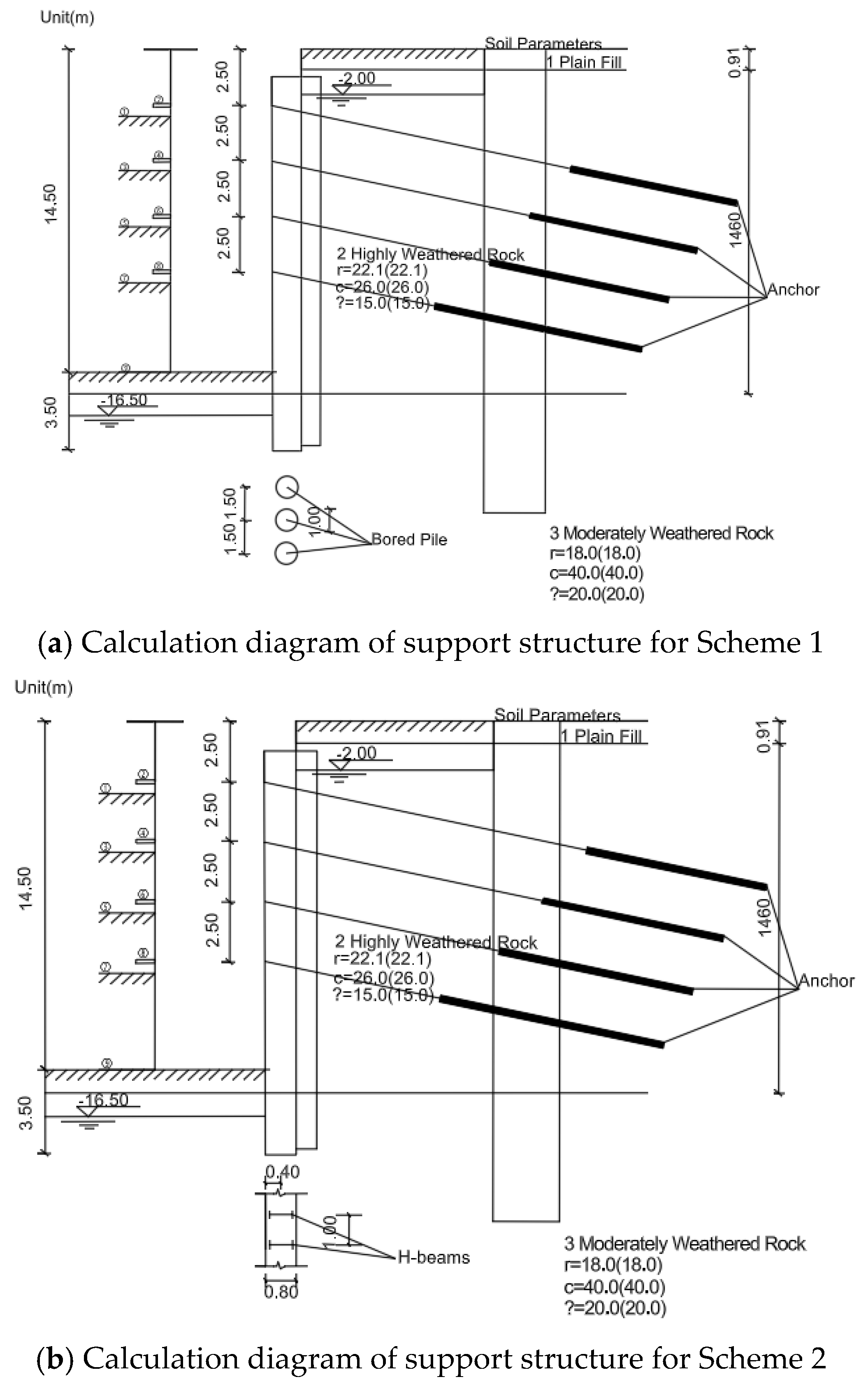
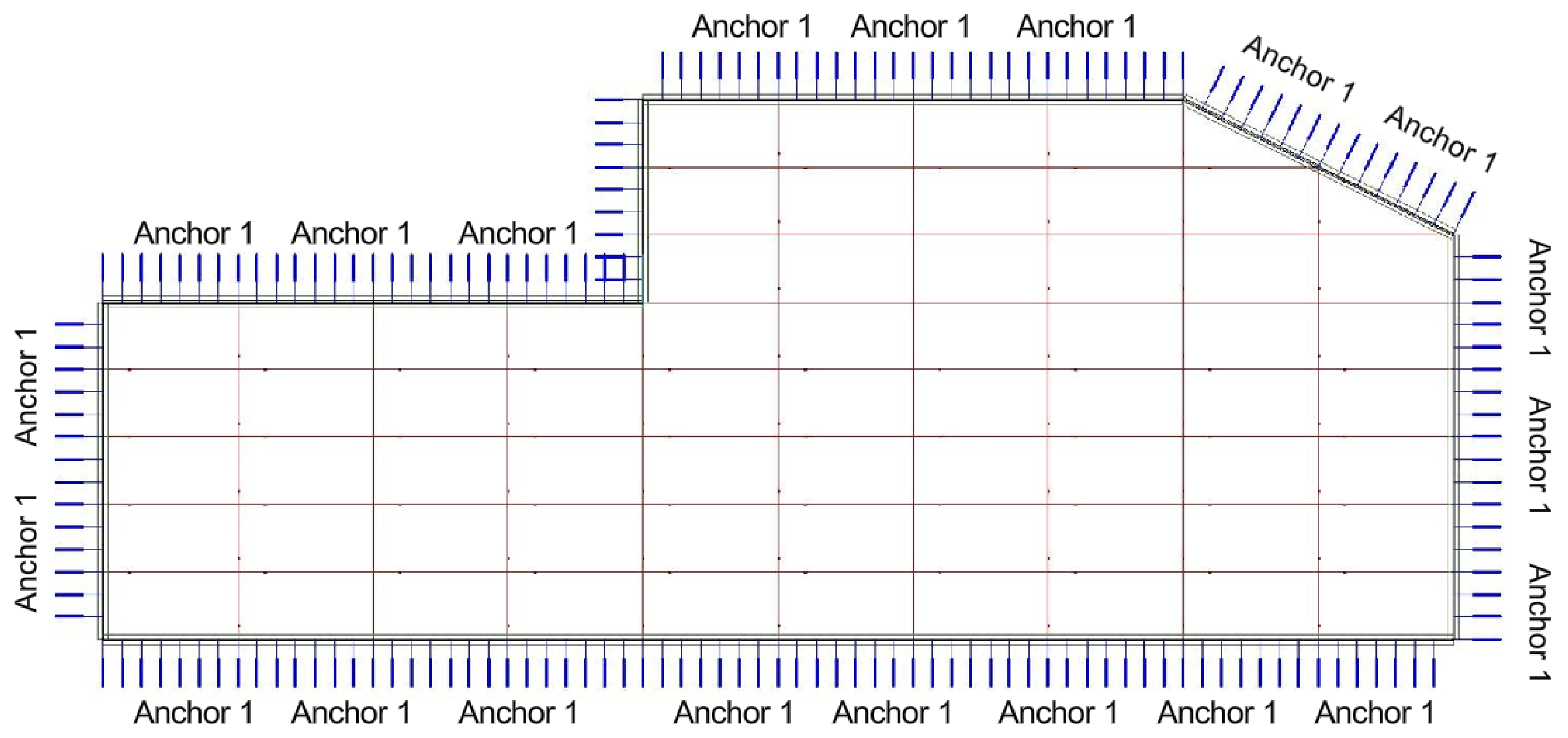
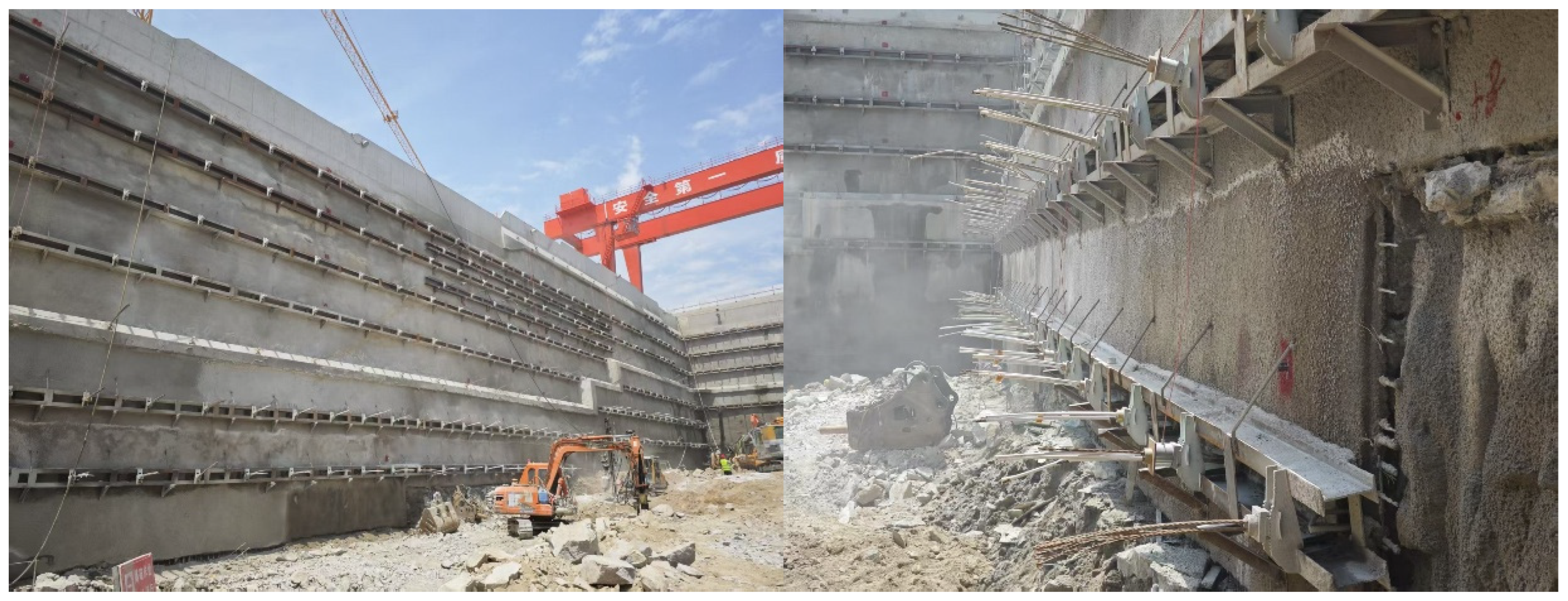
In conventional foundation pit support design, the use of CSM bored piles combined with anchor cables can effectively ensure stability during excavation. However, such temporary support structures are permanently buried upon completion of the foundation pit construction, resulting in neither recyclability nor significant wastage of construction materials, which contradicts the principles of green construction and sustainable development. To address this issue, this study proposes a more economical and environmentally friendly optimization scheme: leveraging the excellent waterproofing performance of the CSM method while replacing traditional bored piles with high–strength recyclable steel sections as the primary load–bearing components. This is combined with a detachable anchor cable system to form a composite support system. This approach not only meets stability requirements during excavation but also enables the recovery of key components such as steel sections and anchor cables upon project completion, facilitating material recycling. This innovative design maintains the reliability of the original support system while significantly reducing engineering costs and minimizing construction waste, offering a more economical, environmentally friendly, and sustainable support solution for foundation pit engineering.
Numerical simulations were conducted using two software packages: COMSOL Multiphysics (Version 6.0, developed by COMSOL AB, Stockholm, Sweden) for the simplified foundation pit model, and Lizheng Deep Foundation Pit Support Structure Design Software (version 7.5, developed by Beijing Lizheng Software Co., Ltd., Beijing, China) for the entire foundation pit.
2.3. Calculation Results
- (1)
Global Displacement
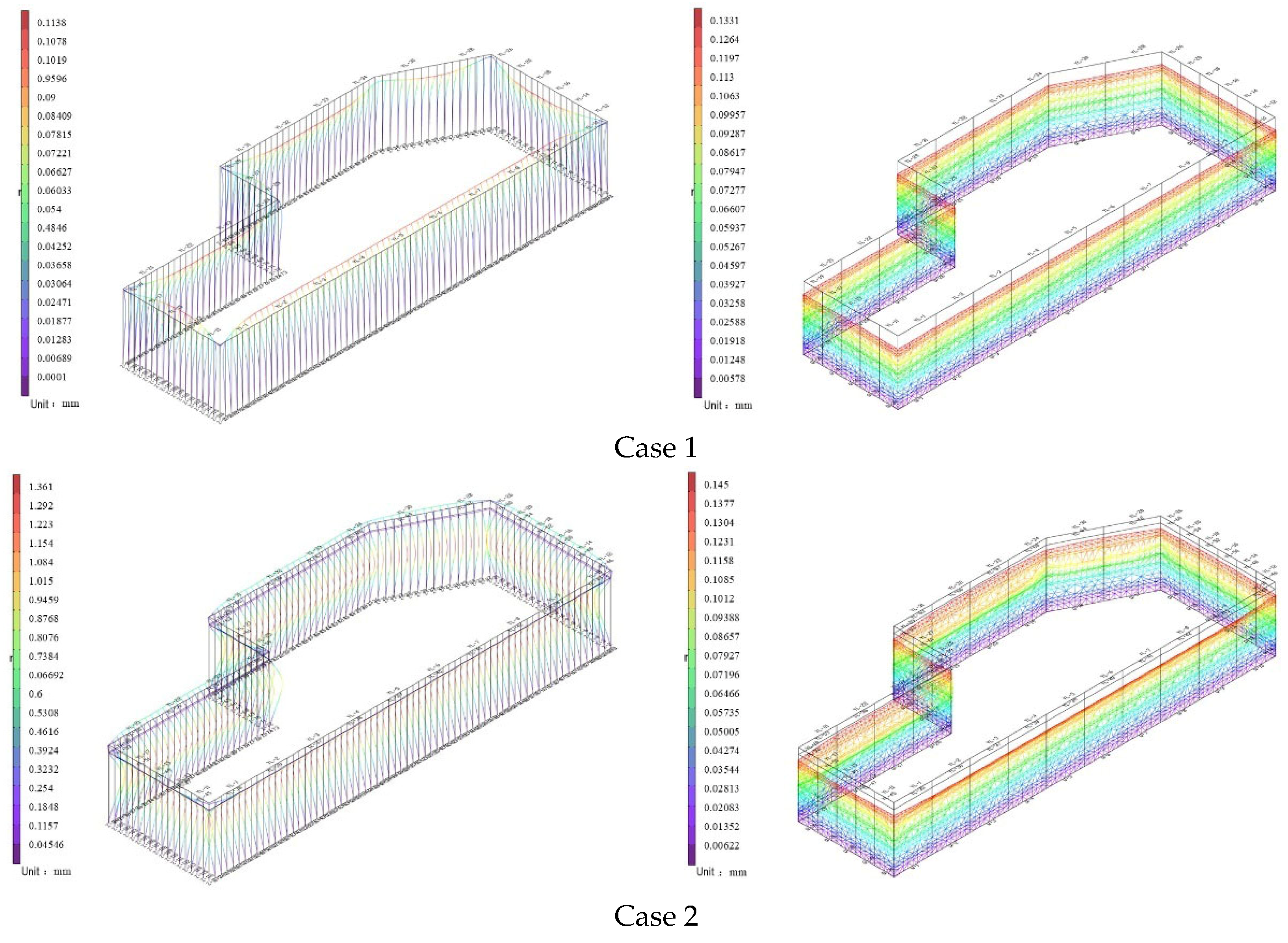
As shown in
Figure 3, the variation process of the global displacement of the two support structures during the foundation pit excavation is illustrated.
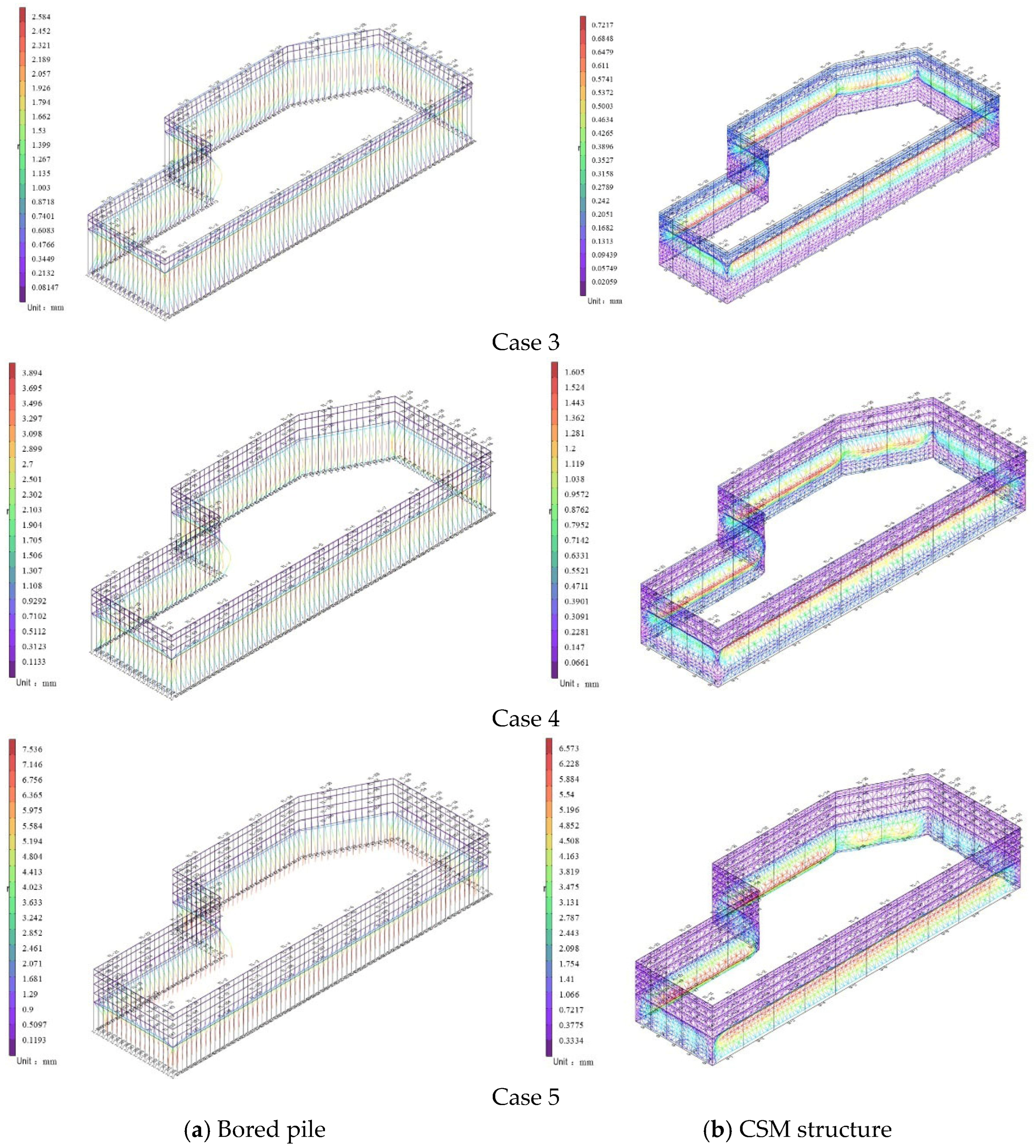
In Case 1, due to the absence of any constraints and the relatively shallow excavation depth, the displacement of the support structure was most pronounced at the top of the piles and walls, with horizontal displacement directed toward the interior of the foundation pit. As excavation proceeded further, both types of foundation pit support exhibited rigid support behavior; consequently, the wall displacement manifested as triangular horizontal displacement. This differs from flexible walls, which, after the installation of struts or anchor cables, typically show unchanged displacement at the wall top or movement toward the exterior of the pit. As indicated by Case 3, the wall abdomen bulged toward the interior of the pit. By the time excavation reached the pit bottom (Case 5), the inward displacement of the walls or piles gradually decreased from the bottom upward. The variation characteristics of wall displacement during excavation generally conform to the typical patterns observed in foundation pit excavation.
Additionally, due to the release of self–weight stress during soil excavation, the piles and walls exhibited a tendency to heave upward. This upward movement negatively impacts pit stability, surface settlement safety, and the effectiveness of the support structure. This phenomenon was reflected in the pile and wall deformations calculated by Lizheng 7.5, although the changes were not pronounced.
- (2)
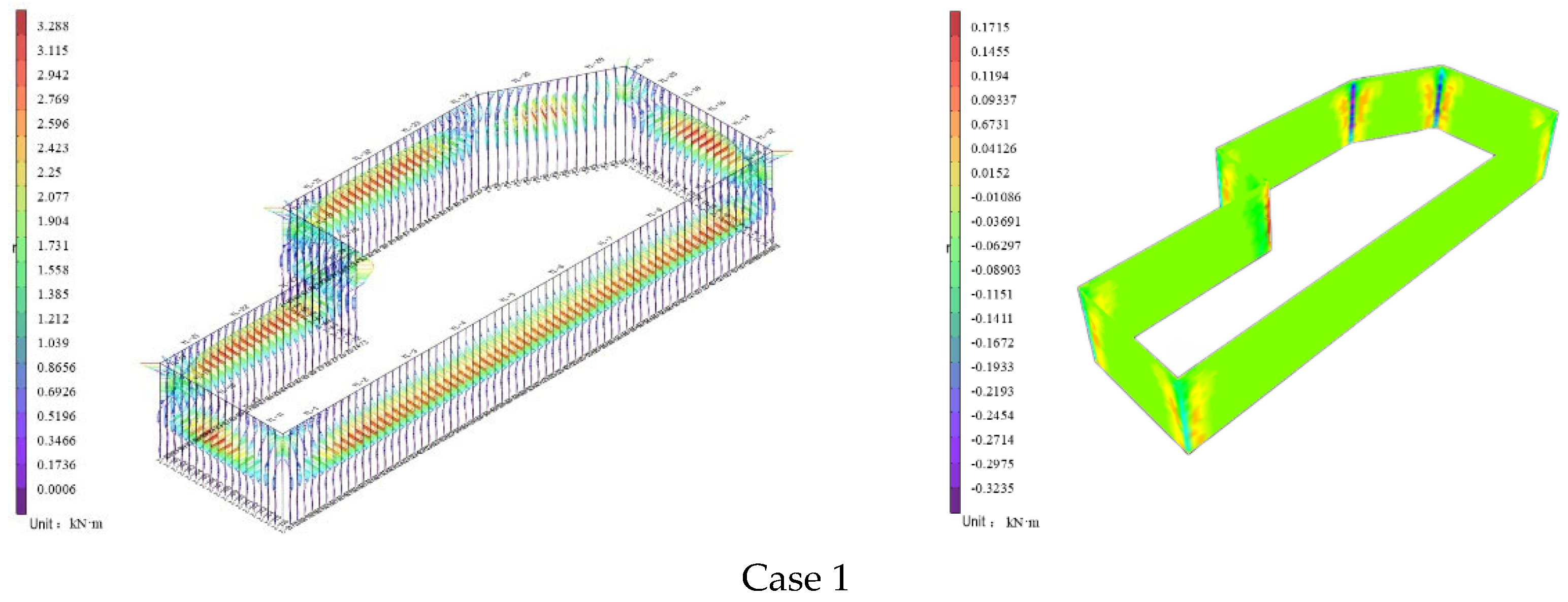
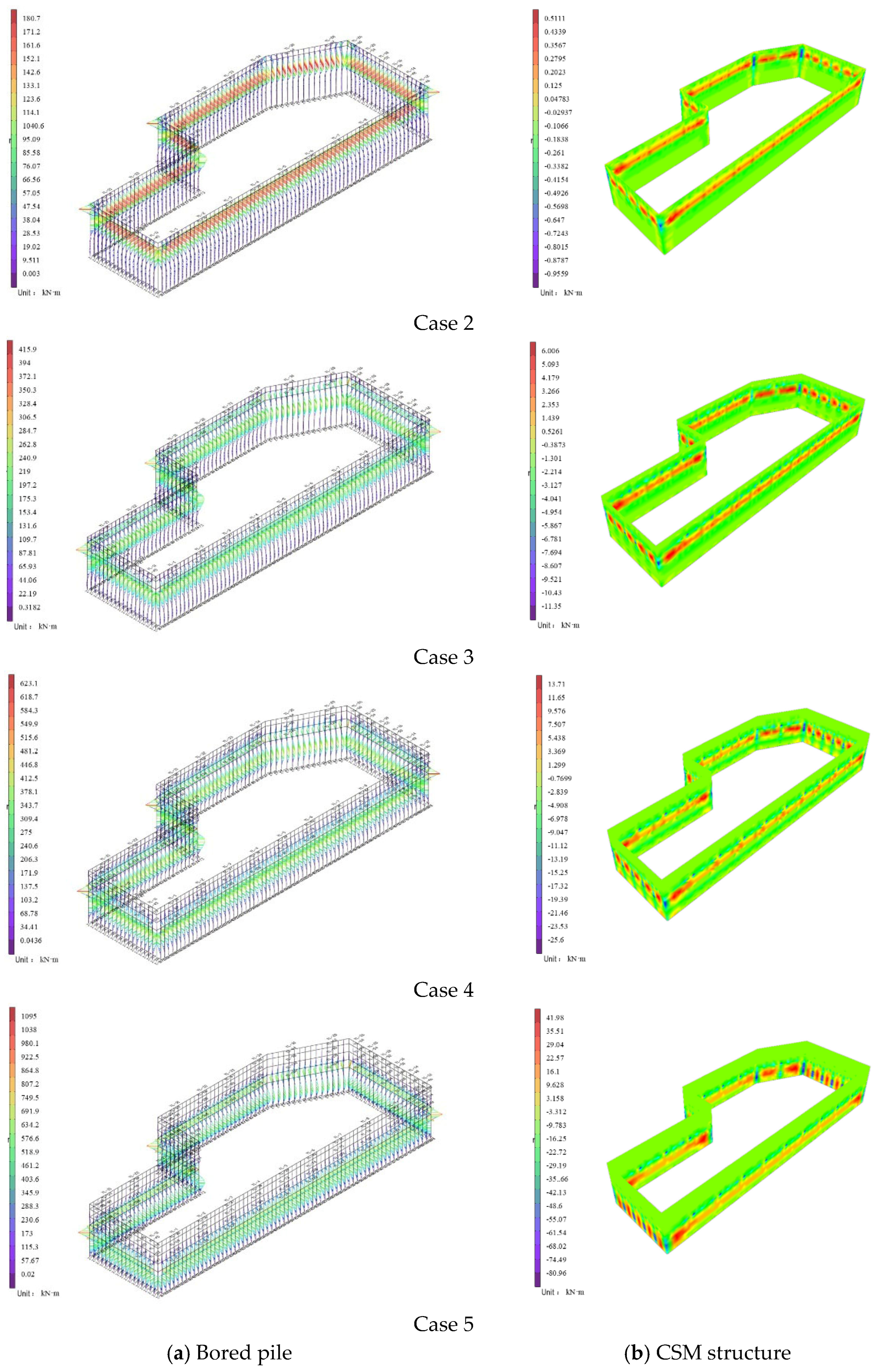
Internal Forces in Retaining Structures
Figure 4 illustrates the development process of internal forces in piles and walls during foundation pit excavation, based on theoretically calculated earth pressure distributions at different depths, and considering the effects of hydrostatic pressure and seepage caused by groundwater level changes on piles and walls.
In the bored pile support structure, as excavation progresses, the location of the maximum bending moment of the pile moves toward the pile bottom. The maximum bending moment on the excavation side is 423.95 kN·m, located near the pile bottom, indicating that earth pressure is concentrated in the deep zone of the retaining side. The maximum bending moment on the retaining side is −653.1 kN·m, directed toward the exterior of the foundation pit, caused by soil rebound after excavation unloading and the constraint effect of the foundation base. As excavation depth increases, the location of the extreme bending moment shifts from the pile top to the pile bottom, reflecting the gradual mobilization of the passive zone soil constraint.
The maximum shear force and axial force also appear at the location of the maximum bending moment, with values of 494.77 kN. At the maximum bending moment on the excavation side, the axial force is 222.29 kN, while on the retaining side it is 155.27 kN, possibly due to uneven distribution of earth pressure on both sides or asymmetric reinforcement of the support structure. The migration of the bending moment location is attributed to the staged excavation effect: in the initial stage, the pile top is free, and the extreme bending moment is located at the pile top; as excavation deepens, the passive resistance of the foundation soil increases, constraining pile bottom displacement, and the extreme bending moment moves downward. The higher modulus of deep soil layers limits pile deformation, exacerbating the bending moment at the pile bottom.
The internal force distribution of foundation pit support piles is jointly influenced by earth pressure, water level changes, and construction sequence. The concentration of bending moment in the deep zone of the retaining side requires optimization through increased pile diameter, reinforcement, and collaborative support. During dynamic construction, the support scheme should be adjusted in real–time based on monitoring data to ensure structural safety.
In the CSM method support structure, as the support process progresses, the region of maximum wall bending moment divides the entire wall into three parts: the upper stabilized support zone, the middle stress zone, and the lower unexcavated zone. The location of the maximum bending moment of the wall moves toward the wall bottom. The vertical bending moment is 88.88 kN·m on the excavation side and −166.93 kN·m on the retaining side. The former is mainly caused by active earth pressure, while the latter reflects the constraint effect of the passive zone soil and the concentration of deep earth pressure. The horizontal bending moment is 37.83 kN·m on the excavation side and −64.10 kN·m on the retaining side, indicating the presence of asymmetric loads in the horizontal direction, which arise due to the asymmetric form of the foundation pit. The vertical shear force is 32.45 kN, and the horizontal shear force is 54.47 kN.
During foundation pit excavation, the internal force distribution of the CSM method support structure is jointly influenced by earth pressure, water level, and synergistic effects. The concentration of vertical bending moment on the retaining side requires optimization by improving interfacial shear stiffness and increasing support density. Although the horizontal bending moment is relatively small, attention should be paid to the influence of asymmetric loads. During construction, the support scheme should be adjusted in real–time based on monitoring data to ensure foundation pit stability.
Through the above comparison, the CSM support structure demonstrates good adaptability in design and construction. Future research could further study the mechanism of interface interaction to enhance engineering reliability under complex geological conditions.
- (3)
Internal Forces (Axial Force) in Top Beam or Waling Beams
As horizontal support members, the top beam or waling primarily bears the horizontal loads transmitted from earth pressure to the retaining piles or diaphragm walls and transfers these loads to the opposing support structures or anchor systems through its axial stiffness.
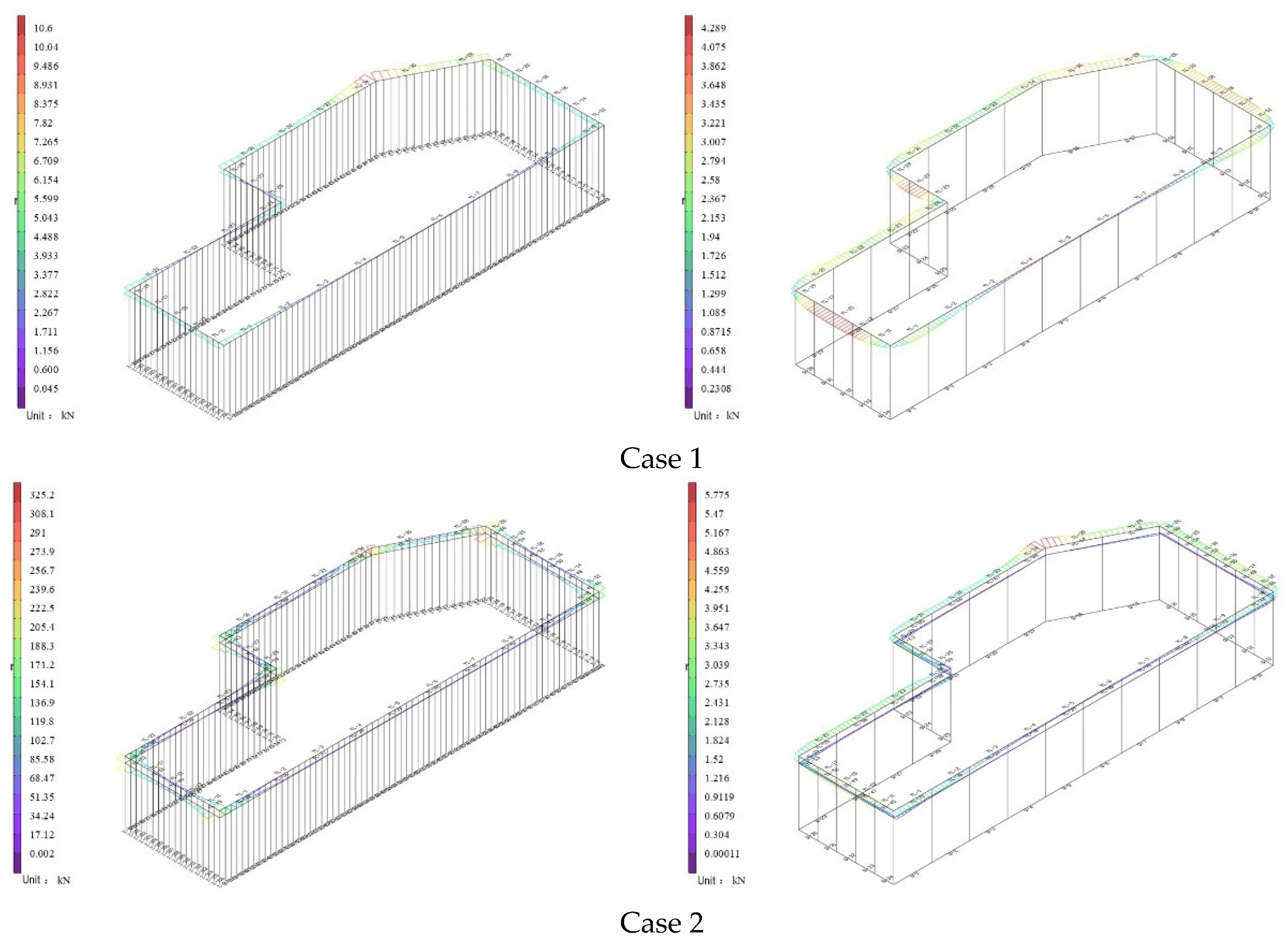
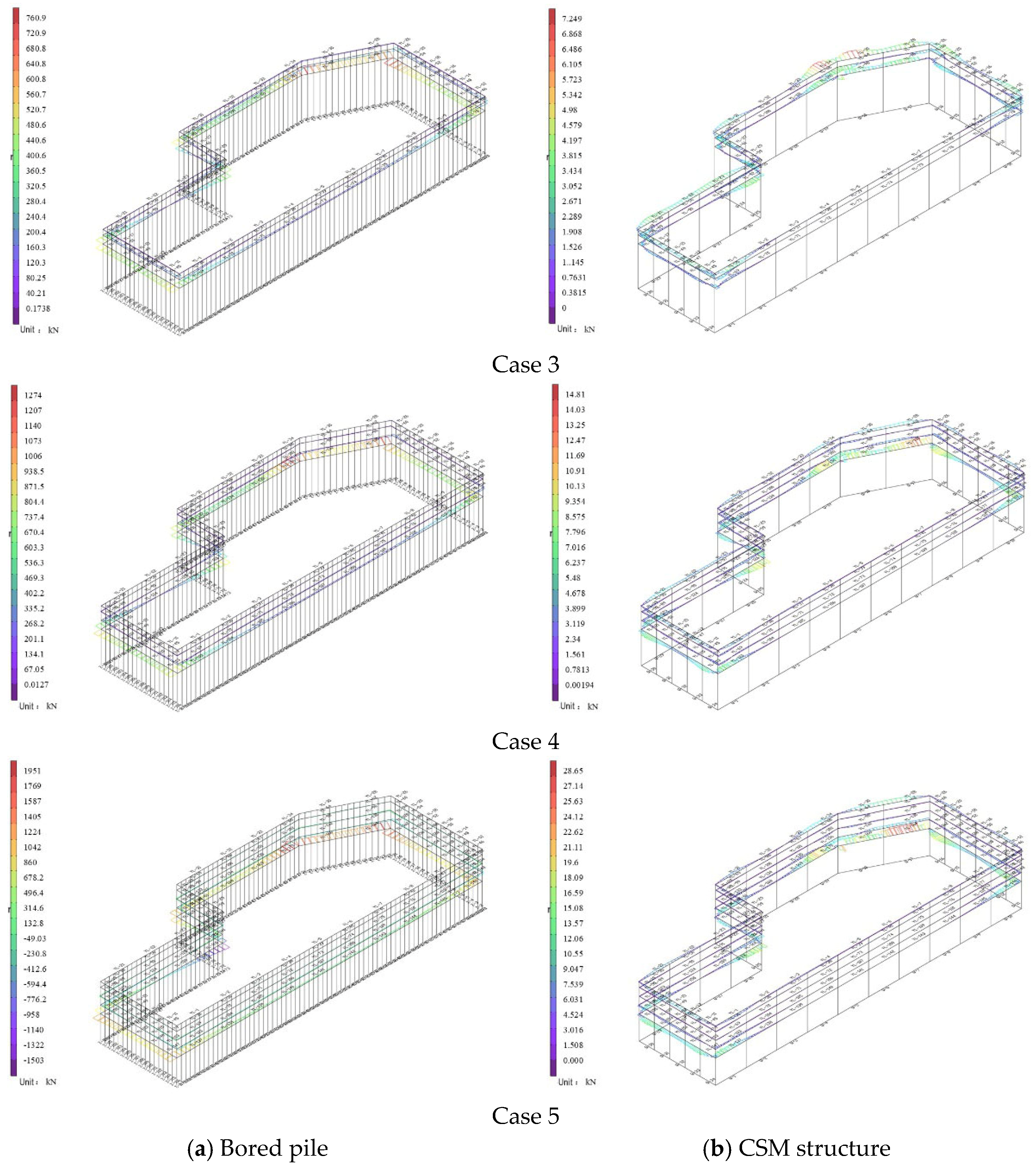
Figure 5 shows the axial force of the waling when the retaining structure is excavated to the pit bottom; the magnitude of this axial force directly reflects the level of earth pressure sustained by the support system.
Figure 5a presents the axial force in the waist beam of the bored pile support system upon excavation to the pit bottom. For waist beams with large spans, bending deformation may occur due to non–uniform earth pressure distribution, construction–induced eccentric loads, or support spacing, while insufficient joint stiffness can induce additional moments. Taking waist beam YL–50 as an example (with compression taken as positive), the maximum axial force is 19.51 kN, indicating that the waist beam is in compression and resists horizontal earth pressure. The relatively low axial force may be attributed to: (1) uniform load sharing within the support system, with the waist beam bearing only localized earth pressure; (2) small support spacing or high beam stiffness leading to load dispersion; or (3) the absence of soil nonlinearity or seepage coupling in the numerical model, potentially underestimating the axial force. The axial force distribution in the piles follows a trend consistent with that in the waist beam (higher at the pile top and lower in the waist beam), confirming effective load transfer and a collaborative load–bearing mechanism.
Figure 5b shows the axial force in the waist beam of the CSM support system at the pit bottom. The maximum axial force reaches 28.65 kN at the wall corner, and the internal force distribution in the wall aligns with the axial force trend in the waist beam, indicating effective load transfer and a collaborative system. Anchor bolts carry the majority of the load, while the waist beam acts as a secondary load transfer path, resulting in lower axial forces. In practice, construction monitoring should be enhanced by installing vibrating–wire axial force gauges at critical sections of the waist beam to track axial force variations in real time and validate design assumptions.
Through the above comparison, both the bored pile and CSM support structures meet safety requirements under the current working conditions. Future designs could further optimize the load distribution mechanism to enhance the economy and reliability of the support system.




 and
and