Investigation of Microstructural Characterization and Tensile Deformation Mechanisms in Inconel 617 Welded Joints Produced by GTAW

Abstract
1. Introduction
2. Materials and Methods
2.1. Materials and Experimental Procedures
2.2. Material Characterization
3. Results and Discussion
3.1. Microstructure of the Joint
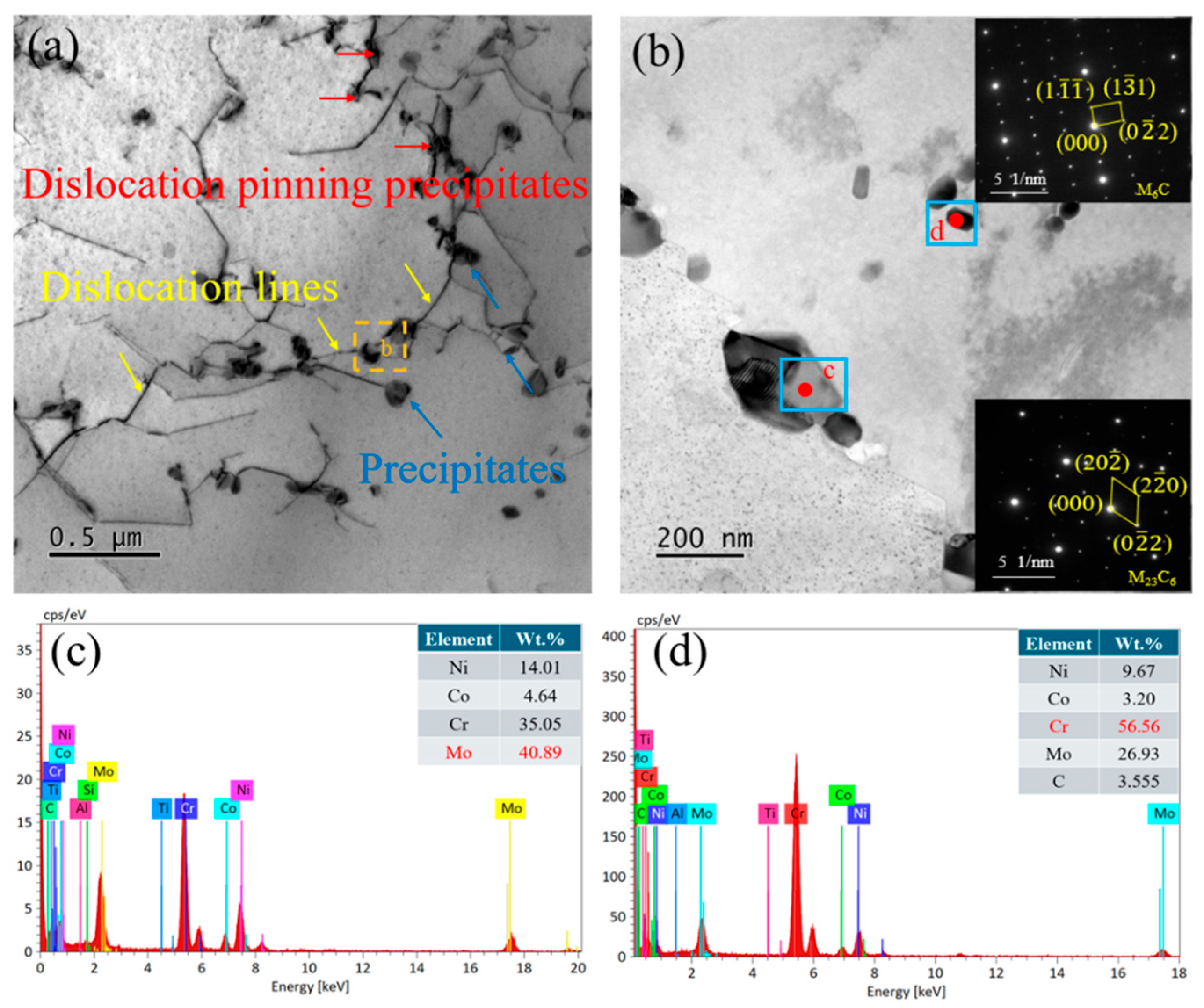
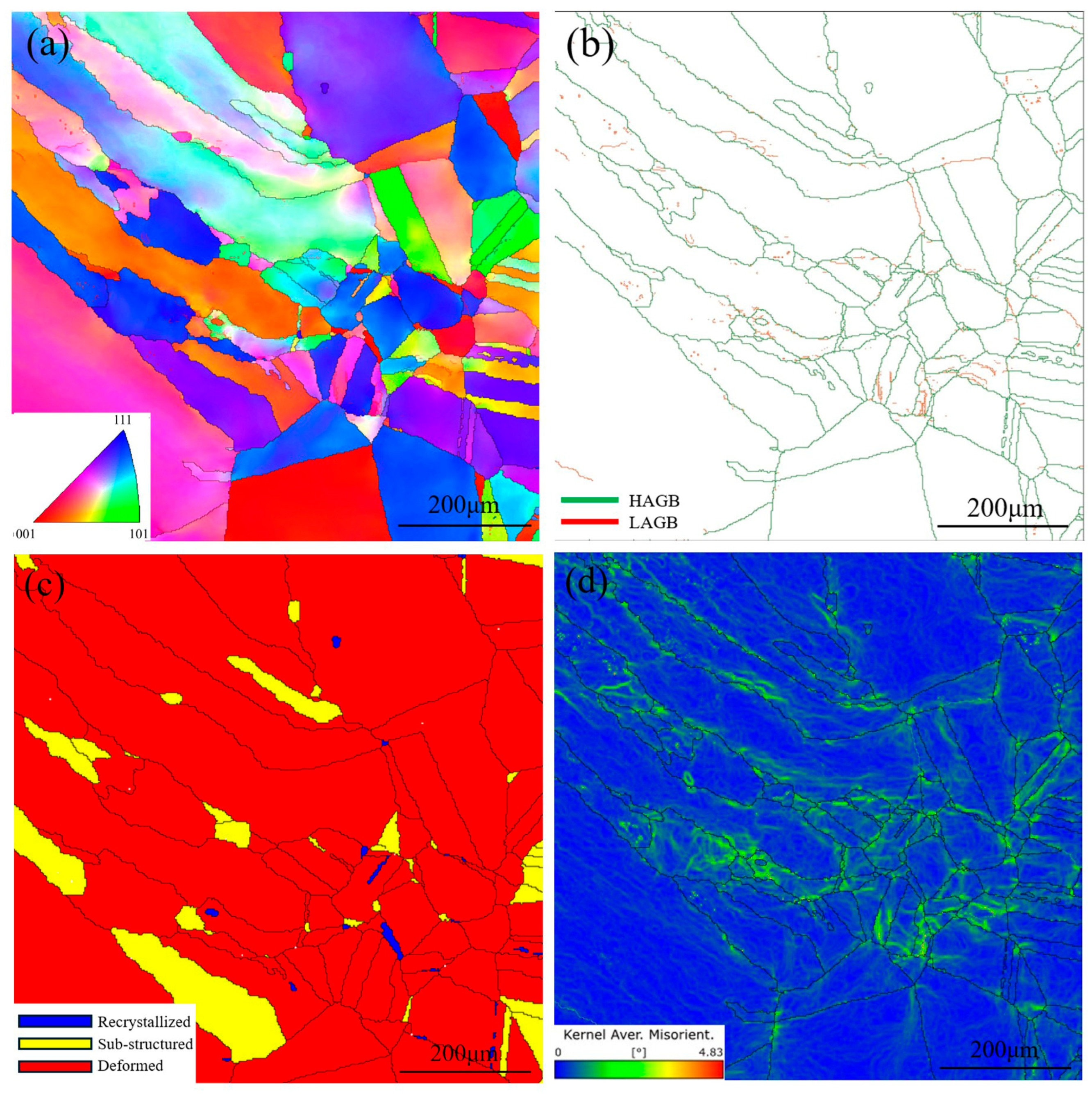
3.1.1. Microstructure and Analysis of the Base Metal
3.1.2. Microstructure and Analysis of the Fusion Zone
3.1.3. Microstructure and Analysis of the Weld Metal
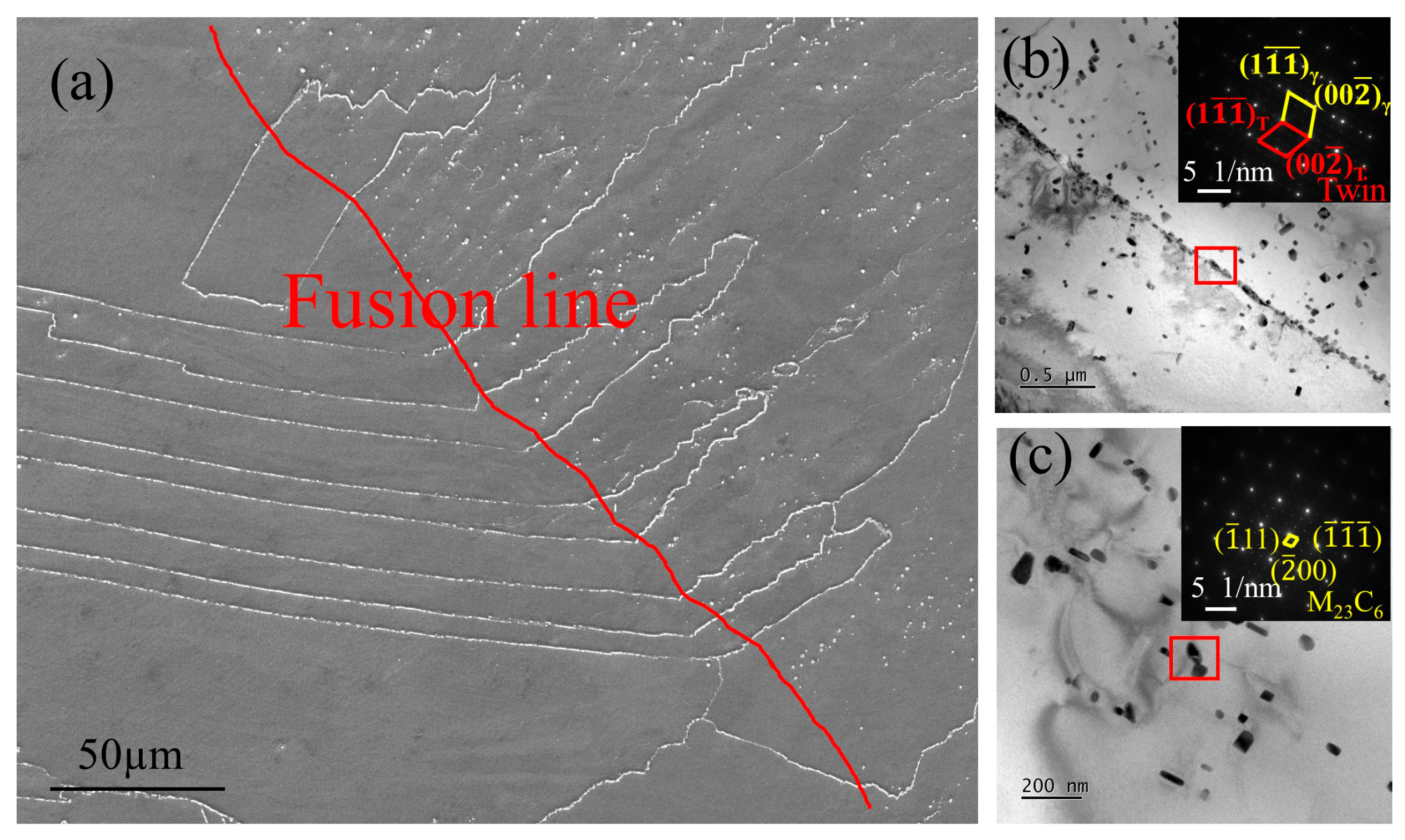
3.1.4. Microstructures at the Interface
3.2. Mechanical Properties
3.2.1. Microhardness
3.2.2. Tensile Properties
3.3. Fracture Morphology and Deformation Mechanism Analysis of Tensile Specimens
3.3.1. Fracture Morphology
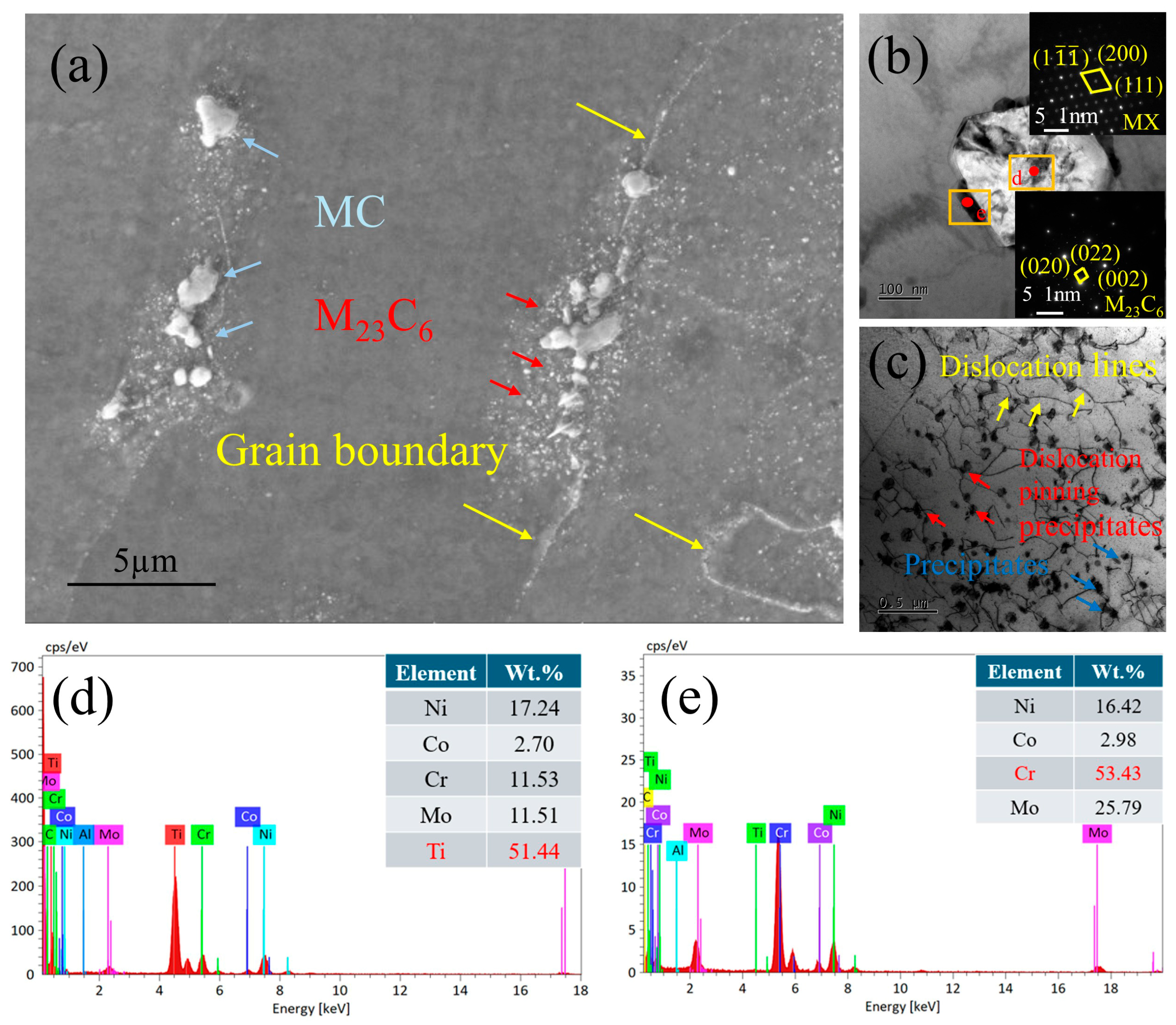
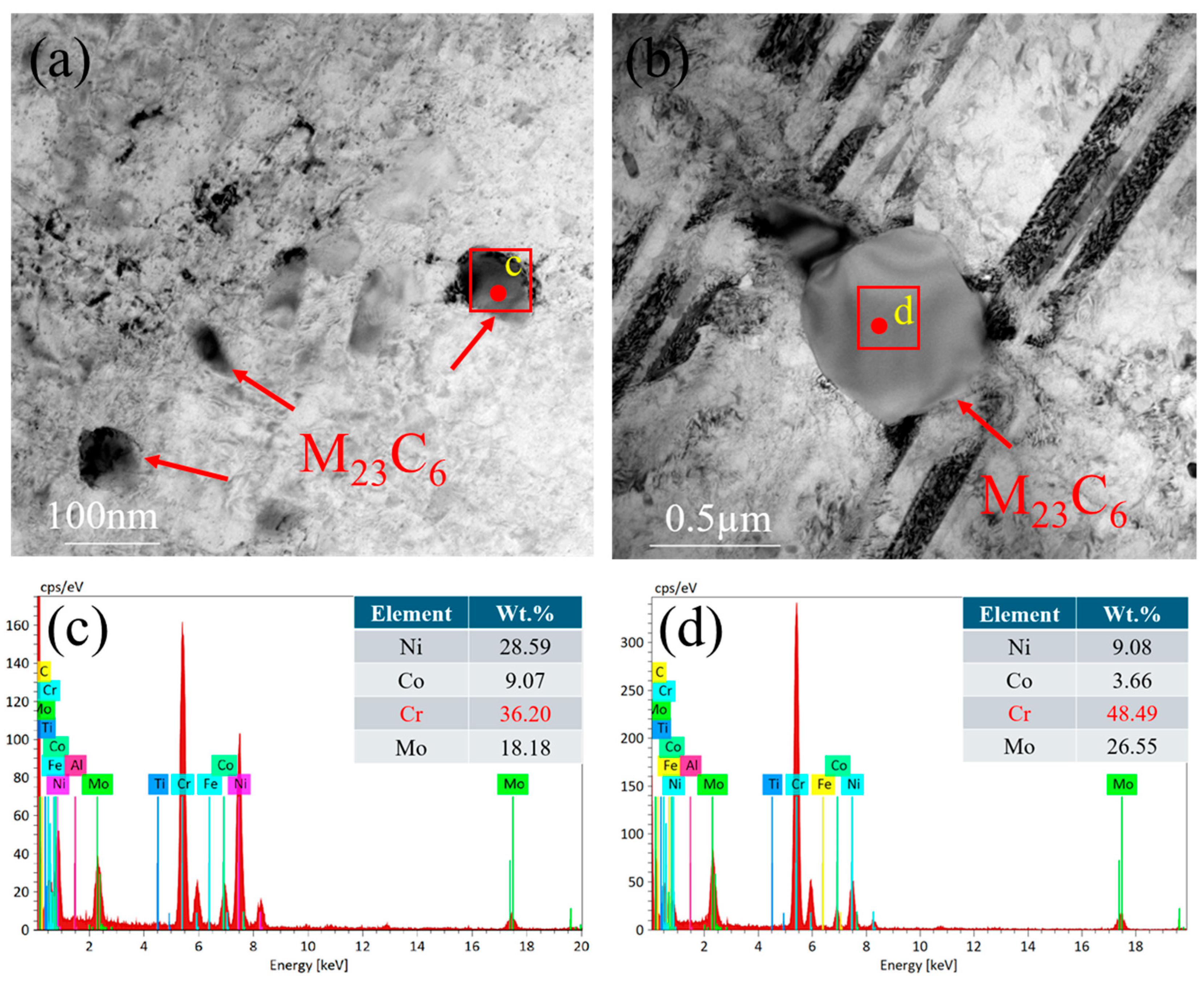
3.3.2. Deformation Microstructure and Precipitation Analysis of the Joint
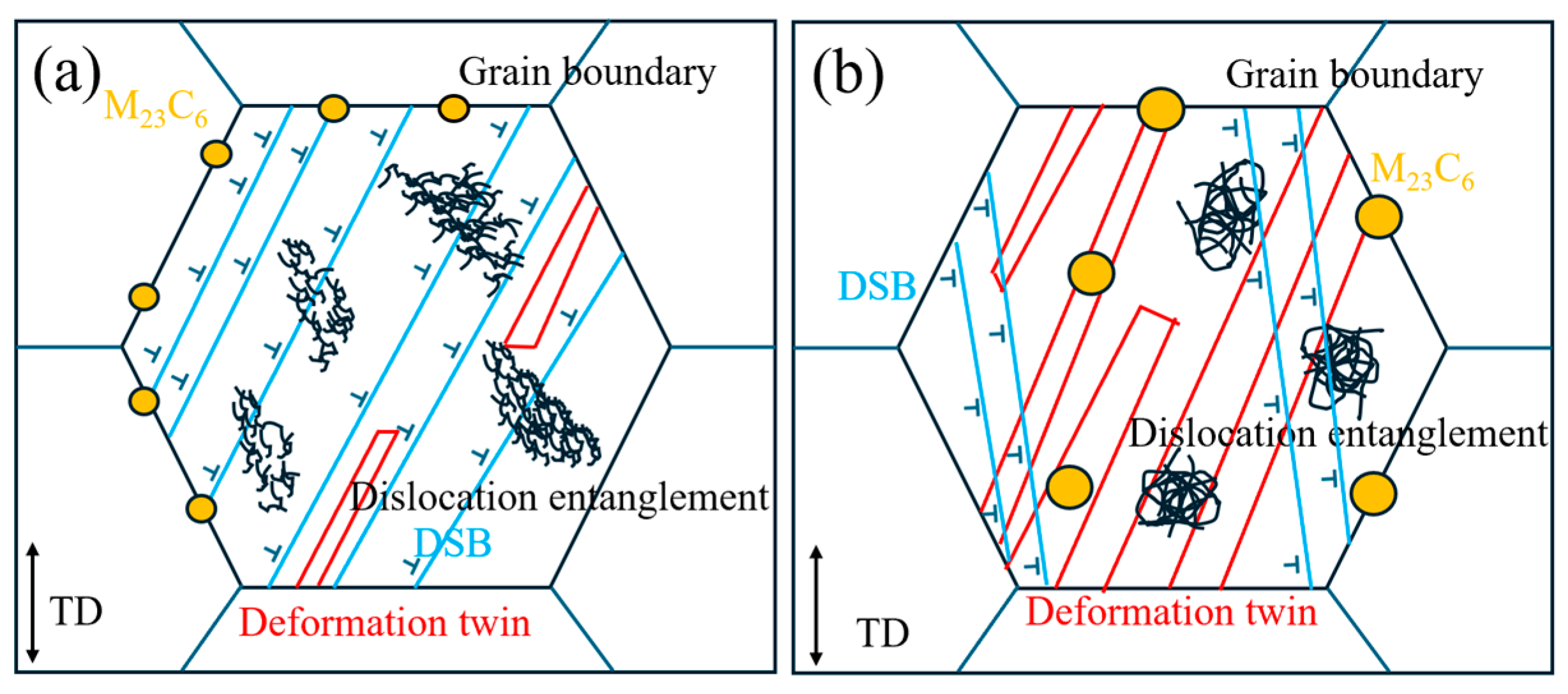
3.3.3. Overview of the Deformation Mechanisms in the Tensile Behavior of the Joint
4. Conclusions
- (1)
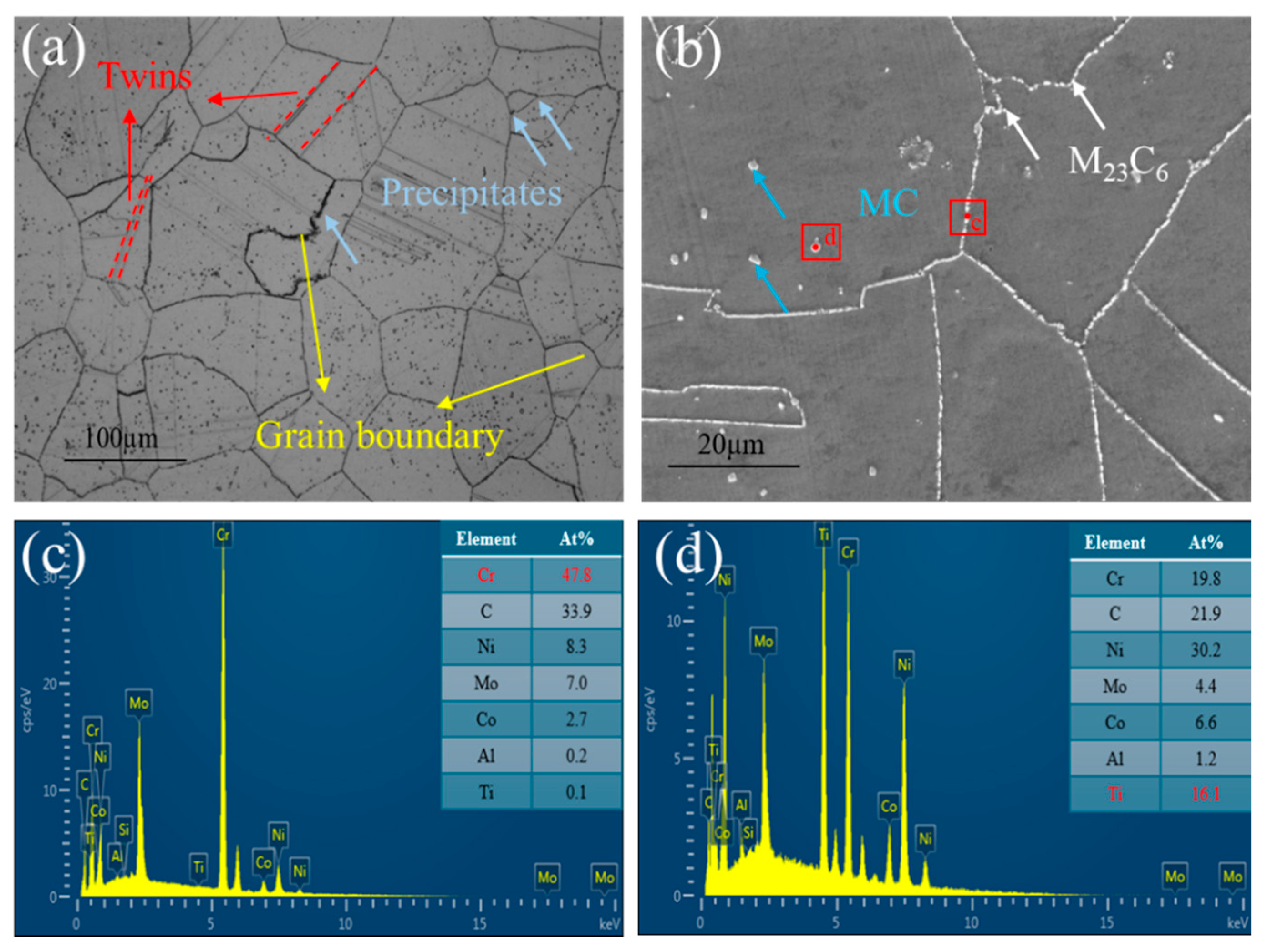
- The welded joint shows excellent metallurgical compatibility, with co-crystallization at the interface and no observable transition zone. M23C6 and MC carbides formed during thermal cycling near the fusion line pin dislocations, which enhances strength while slightly reducing plasticity. Plastic deformation mainly occurs in the base metal, indicating strong interfacial bonding and structural stability.
- (2)
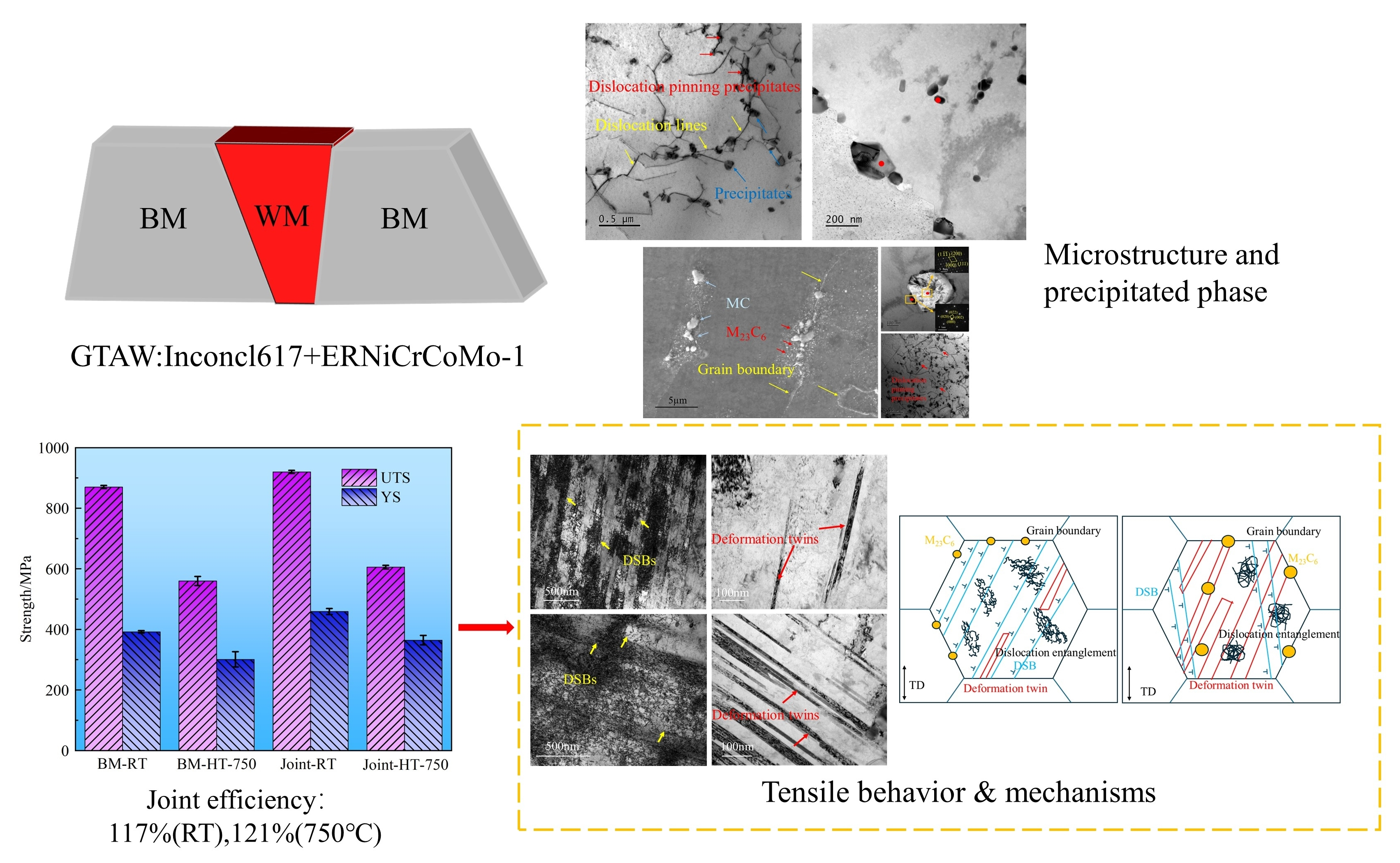
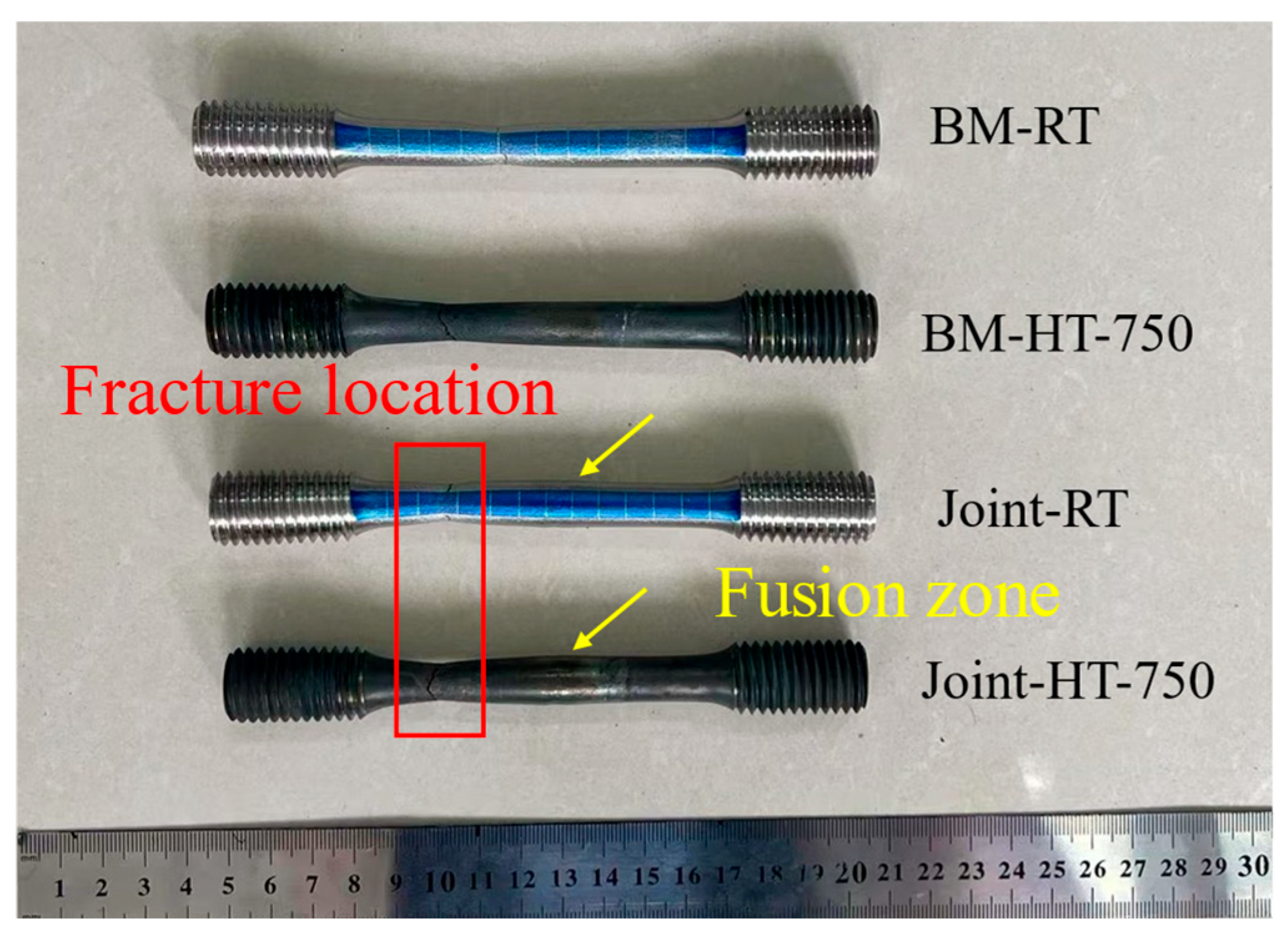
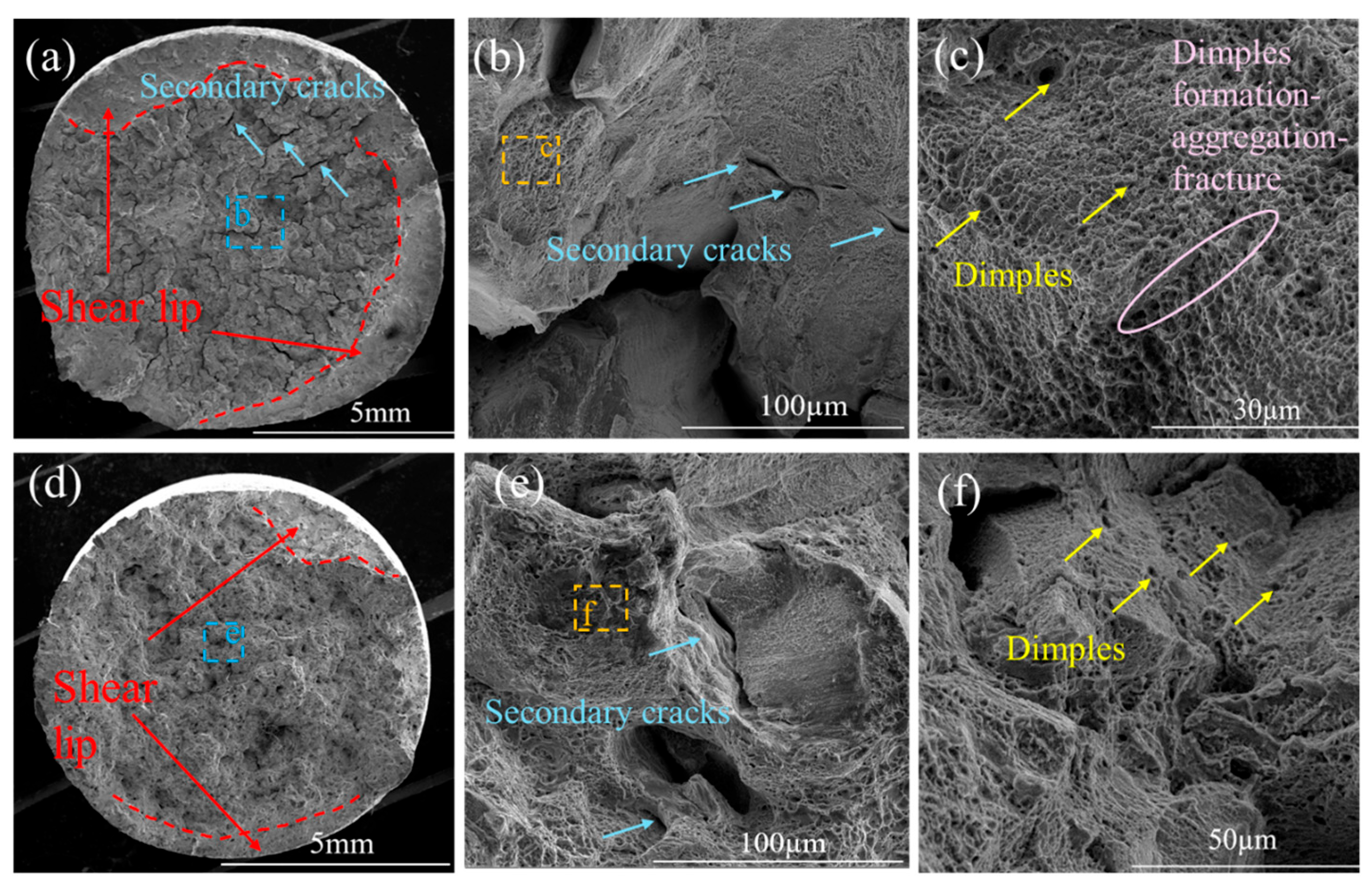
- The welded joints exhibit excellent mechanical integrity, achieving tensile strengths of 920 MPa at room temperature and 605.5 MPa at 750 °C, corresponding to joint efficiencies of 117% and 121%, respectively. All fractures occur within the base metal, confirming the high quality and reliability of the welds.
- (3)
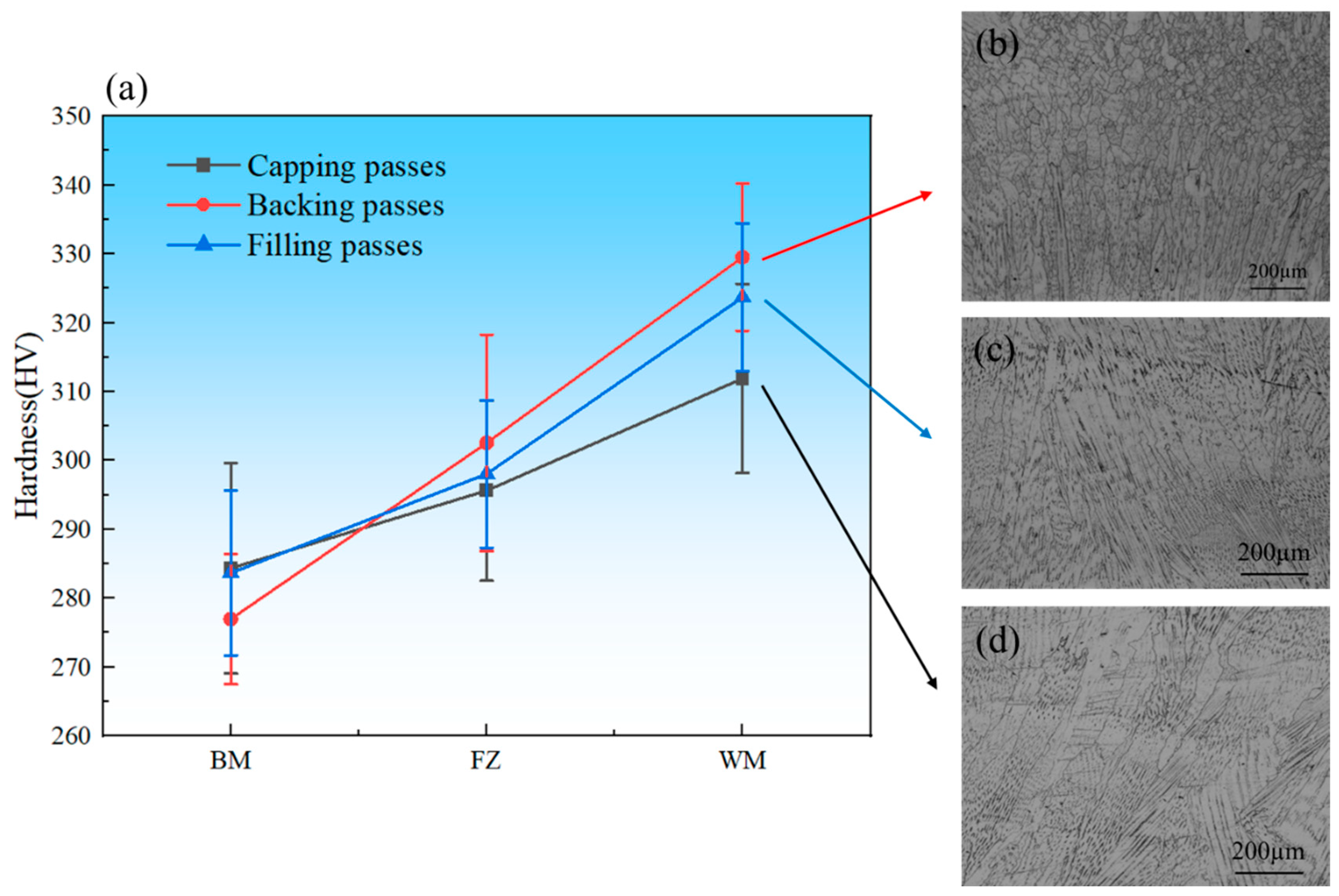
- The hardness of the welded joint varies significantly across different welding passes, with the highest value of 329 HV observed in the backing pass and the lowest of 311 HV in the cap pass. The weld metal exhibits higher hardness than the base metal, primarily due to grain refinement and precipitation strengthening during welding. The elevated hardness and strength of the weld region are attributed to grain refinement, precipitation hardening, and dislocation–precipitate interactions, consistent with the Hall–Petch relationship. The dense distribution of M23C6 precipitates and the fine dendritic substructure collectively contribute to local strengthening.
- (4)
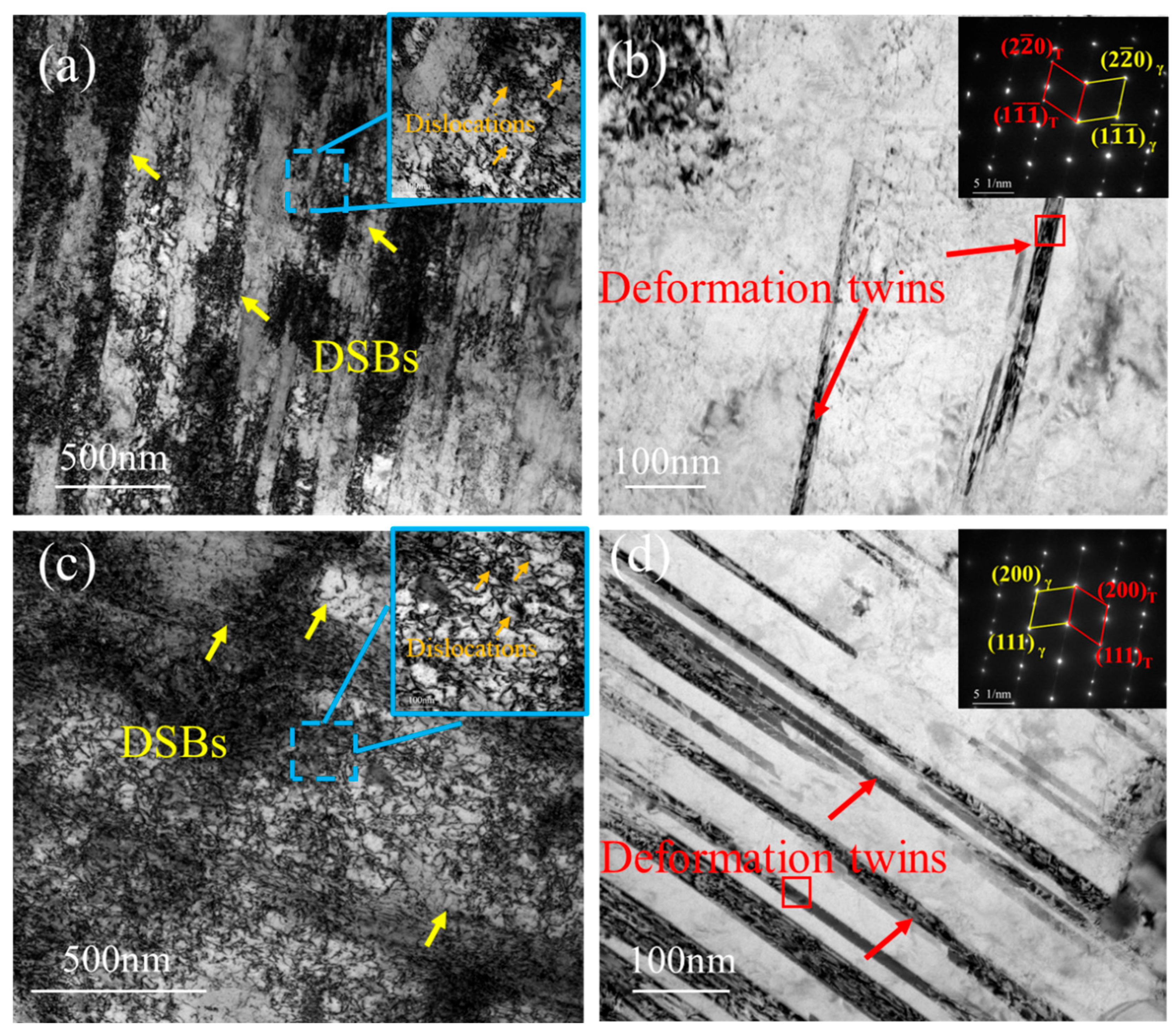
- Deformation behavior is strongly temperature-dependent. At room temperature, plasticity is governed by planar slip and dislocation entanglement, with limited twinning. At elevated temperatures, deformation twinning becomes the dominant mechanism due to the reduced stacking-fault energy and the pinning effect of M23C6 carbides on dislocation motion. These mechanisms collectively account for the excellent high-temperature strength and ductility of the GTAW-welded Inconel 617 joints.
- (5)
- From a technological standpoint, the combination of a low-heat-input GTAW procedure and compositionally compatible ERNiCrCoMo-1 filler produces overmatched Inconel 617 welded joints with a very narrow HAZ and a refined weld metal microstructure. These features are desirable for high-temperature nuclear components, as they reduce the likelihood of weld metal failure and offer a favorable basis for subsequent creep and creep–fatigue life assessment.
Author Contributions
Funding
Data Availability Statement
Conflicts of Interest
References
- Chen, Y.; Xu, M.; Zhang, T.; Xie, J.; Wei, K.; Wang, S.; Yin, L.; He, P. Grain refinement and mechanical properties improvement of Inconel 625 alloy fabricated by ultrasonic-assisted wire and arc additive manufacturing. J. Alloys Compd. 2022, 910, 164957. [Google Scholar] [CrossRef]
- Tsigkis, V.; Rahman, M.S.; Hackel, L.; Davami, K.; Beheshti, A.; Polycarpou, A.A. Helium tribology of Inconel 617 subjected to laser peening for high temperature nuclear reactor applications. Appl. Surf. Sci. 2022, 577, 151961. [Google Scholar] [CrossRef]
- Sah, I.; Park, J.; Kim, E.S. Fatigue life curves of alloy 617 in the temperature range of 800–950 °C. Nucl. Eng. Technol. 2023, 55, 546–554. [Google Scholar] [CrossRef]
- Chen, M.S.; Wang, G.Q.; Li, H.B.; Lin, Y.-C.; Zou, Z.-H.; Ma, Y.-Y. Annealing treatment methods and mechanisms for refining mixed and coarse grains in a solution treatment nickel-based superalloy. Adv. Eng. Mater. 2019, 21, 1900558. [Google Scholar] [CrossRef]
- He, D.G.; Lin, Y.C.; Tang, Y.; Li, L.; Chen, J.; Chen, M.-S.; Chen, X.-M. Influences of solution cooling on microstructures, mechanical properties and hot corrosion resistance of a nickel-based superalloy. Mater. Sci. Eng. A 2019, 746, 372–383. [Google Scholar] [CrossRef]
- Adamiec, J.; Konieczna, N. Assessment of the hot cracking susceptibility of the Inconel 617 nickel-based alloy. Arch. Met. Mater. 2021, 66, 241–248. [Google Scholar] [CrossRef]
- Zhang, Y.; Jing, H.; Xu, L.; Han, Y.; Zhao, L.; Wang, D.; Xiao, B. Design and performance of weld filler metal to match an advanced heat-resistant Fe-Cr-Ni alloy. Mater. Sci. Eng. A 2018, 721, 103–116. [Google Scholar] [CrossRef]
- Zhao, L.; Jing, H.; Xu, L.; An, J.; Xiao, G.; Xu, D.; Chen, Y.; Han, Y. Investigation on mechanism of type IV cracking in P92 steel at 650 °C. J. Mater. Res. 2011, 26, 934–943. [Google Scholar] [CrossRef]
- Zhao, L.; Jing, H.; Xu, L.; Han, Y.; Xiu, J. Experimental study on creep damage evolution process of Type IV cracking in 9Cr–0.5 Mo–1.8 W–VNb steel welded joint. Eng. Fail. Anal. 2012, 19, 22–31. [Google Scholar] [CrossRef]
- Zhang, Y.; Jing, H.; Xu, L.; Han, Y.; Zhao, L.; Xiao, B. Microstructure and mechanical performance of welded joint between a novel heat-resistant steel and Inconel 617 weld metal. Mater. Charact. 2018, 139, 279–292. [Google Scholar] [CrossRef]
- Kumar, A.; Pandey, C. The Behavior of Dissimilar Welded Joint of Alloy 617/P92 Steel at High Temperatures. J. Mater. Eng. Perform. 2025, 34, 25993–26001. [Google Scholar] [CrossRef]
- Kumar, A.; Pandey, C. Creep rupture and microstructural analysis of dissimilar welded joints of P92 steel and Alloy 617. Weld. Int. 2025, 39, 23–31. [Google Scholar] [CrossRef]
- Kumar, R.; Sirohi, S. Microstructure and Mechanical Behavior Study of the GTAW Joint of AISI 310 and Modified 9Cr-1Mo (P91) Steel. J. Mater. Eng. Perform. 2025, 34, 22266–22284. [Google Scholar] [CrossRef]
- Dak, G.; Guguloth, K.; Bhattacharyya, A.; Kumar, P.; Pandey, C. Failure study of creep and high-temperature tensile tested tungsten inert gas welded P92 steel and AISI 304L steel dissimilar weld joints. J. Mater. Eng. Perform. 2025, 34, 658–685. [Google Scholar] [CrossRef]
- Bass, J.L. ASME BPVC Section III Division 5 Application; Idaho National Laboratory (INL): Idaho Falls, ID, USA, 2022. [Google Scholar]
- Keating, R.; McKillop, S. Technical Basis for Proposed ASME Code Case for Construction of Compact Heat Exchangers in High Temperature Reactors. In Proceedings of the Pressure Vessels and Piping Conference, Virtual, 13–15 July 2021; Volume 85321, p. V002T03A015. [Google Scholar]
- Che, L. Uncertainty Control in Microhardness Measurement: Integrating GUM, Monte Carlo, and IoT under ISO 6507-1:2023. Int. J. High Speed Electron. Syst. 2025, 2540884. [Google Scholar] [CrossRef]
- Lee, J.S.; Nguyen, T.; Galloway, J.; Walbridge, S. Arc Additively Manufactured Structural. In Proceedings of the Canadian Society for Civil Engineering Annual Conference 2024, Volume 13: Structural Engineering; Springer Nature: Cham, Switzerland, 2025; Volume 13, p. 215. [Google Scholar]
- Senthil, T.S.; Puviyarasan, M.; Babu, S.R.; Senthil, S. Mechanical characterization of wire arc additive manufactured and cast Inconel 825: A comparative study. Mater. Today Proc. 2022, 62, 973–976. [Google Scholar] [CrossRef]
- Kumar, A.; Singhal, A.; Sirohi, S.; Hirshikesh; Fydrych, D.; Pandey, C. Pulsed current GTAW Inconel 625/AISI 304 L steel dissimilar joint: Microstructure and mechanical properties. J. Constr. Steel Res. 2025, 231, 109602. [Google Scholar] [CrossRef]
- Hao, J.; Wang, C.; Duan, H.; Yan, Z.; Yuan, G.; Wang, G.-D. Prediction model for austenite grain size in CGHAZ of TiN-containing steel: Considering minimum pinning force and austenite coarsening dynamics. J. Iron Steel Res. Int. 2025, 32, 2564–2578. [Google Scholar] [CrossRef]
- Shi, X.; Liu, Y.; Zhang, M.; Sun, Z. Dual-constricted plasma arc cladding of Inconel 625 alloy: Arc characteristics, microstructure, and corrosion resistance. J. Mater. Sci. Mater. Eng. 2025, 20, 43. [Google Scholar] [CrossRef]
- Amirian, B.; Asad, A.; Krezan, L.; Yakout, M.; Hogan, J.D. A new perspective on the mechanical behavior of Inconel 617 at elevated temperatures for small modular reactors. Scr. Mater. 2025, 261, 116605. [Google Scholar] [CrossRef]
- Kumar, A.; Pandey, C. Some studies on dissimilar welds joint P92 steel and Inconel 617 alloy for AUSC power plant application. Int. J. Press. Vessels Pip. 2022, 198, 104678. [Google Scholar] [CrossRef]
- Kumar, A.; Pandey, S.M.; Sirohi, S.; Fydrych, D.; Pandey, C. P92 steel and inconel 617 alloy welds joint produced using ERNiCr-3 filler with GTAW process: Solidification mechanism, microstructure, mechanical properties and residual stresses. Pandey Arch. Civ. Mech. Eng. 2023, 9, e18959. [Google Scholar] [CrossRef]
- Kumar, G.P.; Balasubramanian, K.R. Experimental investigation on high-temperature tensile behavior of cold metal transfer pulse multi-control welding of Inconel 617 alloy. Results Surf. Interfaces 2023, 10, 100100. [Google Scholar] [CrossRef]
- Rathore, S.; Kumar, A.; Sirohi, S.; Singh, V.; Gupta, A.; Fydrych, D.; Pandey, C. Role of buttering layer composition on microstructural heterogeneity and mechanical properties of Alloy 617 and P92 steel dissimilar welded joints for future Indian AUSC program. Int. J. Adv. Manuf. Technol. 2024, 133, 671–700. [Google Scholar] [CrossRef]
- Cui, Y.; Xu, C.L.; Han, Q. Effect of ultrasonic vibration on unmixed zone formation. Scr. Mater. 2006, 55, 975–978. [Google Scholar] [CrossRef]
- Soysal, T.; Kou, S.; Tat, D.; Pasang, T. Macrosegregation in dissimilar-metal fusion welding. Acta Mater. 2016, 110, 149–160. [Google Scholar] [CrossRef]
- Jian, H.G.; Wang, Y.; Tang, X.M.; Ou, L. Microstructure characteristics in multi-pass welding interface of Al-Mg alloy. Appl. Mech. Mater. 2014, 584, 921–924. [Google Scholar] [CrossRef]
- Ghumman, K.Z.; Ali, S.; Din, E.U.; Mubashar, A.; Khan, N.B.; Ahmed, S.W. Experimental investigation of effect of welding parameters on surface roughness, micro-hardness and tensile strength of AISI 316L stainless steel welded joints using 308L filler material by TIG welding. J. Mater. Res. Technol. 2022, 1, 220–236. [Google Scholar] [CrossRef]
- Song, J.; Chen, Y.; Hao, X.; Wang, M.; Ma, Y.; Xie, J. Microstructure and mechanical properties of novel Ni–Cr–Co-based superalloy GTAW joints. J. Mater. Res. Technol. 2024, 29, 2758–2767. [Google Scholar] [CrossRef]
- Singh, A.N.; Moitra, A.; Bhaskar, P.; Sasikala, G.; Dasgupta, A.; Bhaduri, A. Effect of thermal aging on microstructure, hardness, tensile and impact properties of Alloy 617. Mater. Sci. Eng. A 2018, 710, 47–56. [Google Scholar] [CrossRef]
- Remy, L. The interaction between slip and twinning systems and the influence of twinning on the mechanical behavior of fcc metals and alloys. Metall. Trans. A 1981, 12, 387–408. [Google Scholar] [CrossRef]
- Zhang, Y.; Tao, N.R.; Lu, K. Effects of stacking fault energy, strain rate and temperature on microstructure and strength of nanostructured Cu–Al alloys subjected to plastic deformation. Acta Mater. 2011, 59, 6048–6058. [Google Scholar] [CrossRef]
- Meyers, M.A.; Vöhringer, O.; Lubarda, V.A. The onset of twinning in metals: A constitutive description. Acta Mater. 2001, 49, 4025–4039. [Google Scholar] [CrossRef]
- Kaoumi, D.; Hrutkay, K. Tensile deformation behavior and microstructure evolution of Ni-based superalloy 617. J. Nucl. Mater. 2014, 454, 265–273. [Google Scholar] [CrossRef]
- Chomette, S.; Gentzbittel, J.M.; Viguier, B. Creep behaviour of as received, aged and cold worked INCONEL 617 at 850 °C and 950 °C. J. Nucl. Mater. 2010, 399, 266–274. [Google Scholar] [CrossRef]
- Kihara, S.; Newkirk, J.B.; Ohtomo, A.; Saiga, Y. Morphological changes of carbides during creep and their effects on the creep properties of Inconel 617 at 1000 °C. Metall. Trans. A 1980, 11, 1019–1031. [Google Scholar] [CrossRef]
- Roy, A.K.; Marthandam, V. Mechanism of yield strength anomaly of Alloy 617. Mater. Sci. Eng. A 2009, 517, 276–280. [Google Scholar] [CrossRef]
- Kourtoukova, G.L.; Demetry, C.; Ramanath, S.; Andrews, R.M.; Jacobs, D.S.; Biederman, R.R. Design and tailoring of Ni–Sn–W composites for bonded abrasive applications. Mater. Sci. Eng. A 2000, 276, 58–69. [Google Scholar] [CrossRef]

| C | Si | Cr | Mo | Ti | Al | Co | Fe | Ni | |
|---|---|---|---|---|---|---|---|---|---|
| BM | 0.065 | 0.021 | 21.81 | 8.73 | 0.41 | 1.10 | 12.03 | 0.19 | Bal. |
| WM | 0.05 | 0.1 | 21.5 | 9.0 | 0.3 | 1.3 | 11.0 | 0.5 | Bal. |
| Sample No. | Tensile Properties | |||
|---|---|---|---|---|
| UTS (MPa) | YS (MPa) | EL (%) | AR (%) | |
| BM-RT | 870 ± 5 | 392 ± 4 | 48 ± 1 | 51 ± 2 |
| BM-HT-750 | 560 ± 15 | 301 ± 25 | 47.5 ± 2 | 45.5 ± 3 |
| Joint-RT | 920 ± 5 | 459 ± 10 | 37 ± 1 | 51 ± 2 |
| Joint-HT-750 | 605.5 ± 6 | 364 ± 15 | 30 ± 4 | 43.5 ± 4 |
Disclaimer/Publisher’s Note: The statements, opinions and data contained in all publications are solely those of the individual author(s) and contributor(s) and not of MDPI and/or the editor(s). MDPI and/or the editor(s) disclaim responsibility for any injury to people or property resulting from any ideas, methods, instructions or products referred to in the content. |
© 2026 by the authors. Licensee MDPI, Basel, Switzerland. This article is an open access article distributed under the terms and conditions of the Creative Commons Attribution (CC BY) license.
Share and Cite
Zhao, M.; Wang, L.; Ren, W.; Wang, Y.; Zhang, T.; Chen, Z. Investigation of Microstructural Characterization and Tensile Deformation Mechanisms in Inconel 617 Welded Joints Produced by GTAW. Materials 2026, 19, 1251. https://doi.org/10.3390/ma19061251
Zhao M, Wang L, Ren W, Wang Y, Zhang T, Chen Z. Investigation of Microstructural Characterization and Tensile Deformation Mechanisms in Inconel 617 Welded Joints Produced by GTAW. Materials. 2026; 19(6):1251. https://doi.org/10.3390/ma19061251
Chicago/Turabian StyleZhao, Mingyang, Lang Wang, Wenhao Ren, Yuxin Wang, Tao Zhang, and Zhengzong Chen. 2026. "Investigation of Microstructural Characterization and Tensile Deformation Mechanisms in Inconel 617 Welded Joints Produced by GTAW" Materials 19, no. 6: 1251. https://doi.org/10.3390/ma19061251
APA StyleZhao, M., Wang, L., Ren, W., Wang, Y., Zhang, T., & Chen, Z. (2026). Investigation of Microstructural Characterization and Tensile Deformation Mechanisms in Inconel 617 Welded Joints Produced by GTAW. Materials, 19(6), 1251. https://doi.org/10.3390/ma19061251