Article

Synergistic Effects of Pre-Stretching and Aging Temperature on Precipitation Behavior and Damage Tolerance of an Al-Cu-Li Alloy

1
State Key Laboratory of Nonferrous Structural Materials, China GRINM Group Co., Ltd., Beijing 100088, China
2
General Research Institute for Nonferrous Metals, Beijing 100088, China
3
China Academy of Launch Vehicle Technology, Beijing 100076, China
4
GRIMAT Engineering Institute Co., Ltd., Beijing 101407, China
*
Authors to whom correspondence should be addressed.
Materials 2026, 19(6), 1245; https://doi.org/10.3390/ma19061245
Submission received: 27 February 2026 / Revised: 16 March 2026 / Accepted: 19 March 2026 / Published: 21 March 2026
(This article belongs to the Special Issue Physical Metallurgy of Metals and Alloys (4th Edition))

Abstract

This study systematically investigates the synergistic effects of the pre-stretching deformation and aging temperature on the precipitation behavior and mechanical properties of an Al-Cu-Li alloy. The results indicate that increasing the pre-stretching deformation significantly refines and increases the number density of T1 and θ′ phases while optimizing the grain boundary precipitate morphology, thereby enhancing the fracture toughness and fatigue resistance without compromising the high strength. In contrast, elevating the aging temperature promotes the coarsening of the T1 phase, inhibits θ′ precipitation, and coarsens the grain boundary precipitates, leading to a deteriorated damage tolerance. By matching 3.5~4.5% pre-stretching with 145~155 °C aging, a synergistic optimization of ultra-high strength and damage tolerance can be achieved.

1. Introduction

Lightweight high-strength aluminum alloys are increasingly utilized in aerospace, transportation, and other industries. Among them, Al-Cu-Li alloys are now considered ideal for aerospace structural components, offering a low density, high specific strength and stiffness, and favorable damage tolerance [1,2,3]. These modern Al-Li alloys, primarily strengthened by the T1 (Al2CuLi) phase, exhibit significant lightweighting advantages in load-bearing components such as the propellant tank and wing panels [4,5,6]. However, achieving ultra-high strength while maintaining fracture toughness and fatigue resistance remains a critical scientific challenge for the application of these alloys [7,8].
In Al-Cu-Li alloys, the primary strengthening phases include the T1 phase, the θ′ (Al2Cu) phase, and the S′ (Al2CuMg) phase [9]. The T1 phase exhibits a thin plate-like morphology, with a habit plane of {111}Al and a semi-coherent interface with the Al matrix, enabling it to effectively impede the dislocation motion [10,11]. Cu and Li enhance the strength of the alloy by forming strengthening phases such as T1 (Al2CuLi) and δ′ (Al3Li). Mg, Ag, and Zn act synergistically to promote the nucleation and dispersed precipitation of the primary strengthening phase T1 (Al2CuLi), thereby significantly increasing the aging response rate and strength of the alloy. Mn and Zr, meanwhile, primarily contribute to grain refinement, the inhibition of recrystallization, and an improvement in the anisotropy and toughness through the formation of dispersoids such as Mn-containing phases or Al3Zr [12].
Research has demonstrated that the T1 phase strongly depends on crystal defects, particularly dislocations and subgrain boundaries. Consequently, introducing pre-stretching deformation has become an important processing method for regulating T1-phase precipitation. The pre-stretching process introduces abundant dislocations into the matrix, creating heterogeneous nucleation points that facilitate the precipitation of a finely dispersed T1 phase. Consequently, the alloy’s mechanical performance is significantly enhanced. However, the synergistic regulation mechanism of pre-stretching on both the T1 and θ′ phases, as well as its influence on the strength-toughness matching of the alloy, still requires in-depth investigation [13,14,15,16].
The aging temperature is another critical process parameter affecting the precipitation behavior. The aging temperature governs the atomic diffusion rate, nucleation driving force, and thermal stability of precipitates, consequently influencing their size, number density, and distribution characteristics [17,18]. Lower temperatures favor the formation of fine, dispersed precipitates, while higher temperatures promote precipitate growth and coarsening, potentially altering the grain boundary precipitation behavior and interfacial coherency, thereby significantly affecting the fracture toughness and fatigue properties [19,20,21]. Therefore, under the combined regulation of the pre-deformation and aging temperature, the competitive relationships between precipitates (T1 and θ′), the coordination mechanism between intragranular and intergranular precipitation, and their synergistic influence on damage tolerance require systematic investigation.
The 2055 alloy is developed with the objective of replacing the high-performance 7055 alloy, aiming to achieve a structural weight reduction while maintaining comparable or superior comprehensive properties. According to AMS 4257, its mid-composition limits are Al-3.7Cu-1.15Li-0.5Zn-0.45Ag-0.4Mg-0.3Mn-0.1Zr (in wt.%), and the extruded profiles exhibit a tensile strength of up to 600 MPa. However, research on the thick plates of this alloy remains limited, particularly regarding its damage tolerance performance, which warrants further investigation. In recent years, the increasing demands for damage tolerance in aerospace structures have drawn growing attention to Al-Li alloys, particularly regarding their fracture toughness and fatigue crack propagation behavior [22,23,24]. The damage tolerance performance depends not only on the strength level of the alloy but is also closely related to the microstructural characteristics. Studies have shown that fine, dispersed intragranular precipitates facilitate uniform deformation and delay void nucleation, while discontinuous grain boundary precipitates can effectively inhibit intergranular fracture and enhance the fracture toughness [25,26,27,28]. However, current research on the synergistic regulation of precipitation behavior in Al-Li alloys by pre-stretching and the aging temperature, and its impact on damage tolerance, remains insufficient, and the underlying mechanisms require further elucidation.
Based on the above considerations, we investigate an Al-Cu-Li alloy to systematically evaluate the effects of the pre-stretching levels (2.5%, 3.5%, and 4.5%) and aging temperatures (145 °C, 155 °C, and 165 °C) on the microstructural evolution, tensile properties, fracture toughness, and fatigue crack growth behavior. A detailed transmission electron microscopy (TEM) characterization was conducted to quantify the precipitation features, complemented by a fractographic analysis to elucidate the fracture mechanisms. The objective is to clarify the regulatory mechanisms of pre-stretching and the aging temperature on the competitive precipitation of the T1 and θ′ phases, grain boundary characteristics, and damage tolerance, thereby providing theoretical guidance for the heat-treatment optimization and engineering application of the investigated alloy.

2. Experimental

2.1. Material Preparations

The alloy was prepared by conventional melting methods. The raw materials consisted of commercial purity Al (99.9%), Li, Mg, Ag, and Zn (99.99%), as well as Al-Zr (5%) and Al-Mn (10%) master alloys. The alloy was melted using a non-vacuum resistance furnace and subsequently cast into a water-cooled copper mold to produce an ingot (200 mm × 200 mm × 50 mm). The actual chemical composition of the alloy is presented in Table 1. The ingot was subjected to homogenization heat treatment (440 °C/24 h + 505 °C/24 h), followed by scalping to remove the surface oxide layer. Subsequently, hot rolling was performed using a two-high reversing rolling mill. The rolling temperature was 420 °C, with a total deformation of 80%. The deformation per pass was 10%, and the sample was reheated in the furnace for 15 min between passes. The final thickness of the rolled plate was 10 mm. Homogenization and solution heat treatments were carried out in an air circulation box-type resistance furnace with a temperature deviation of less than 2 °C. The quenching medium was water at a temperature ranging from 20 to 25 °C, and the quench transfer time did not exceed 5 s. Aging treatments were conducted in a thermostatic oven, with a precision of ±1 °C.

2.2. Property Tests and Microstructure Observations

All experiments were conducted at room temperature, and three parallel specimens were tested for each condition. Tensile tests were conducted on an MTS CMC 4304 (Eden Prairie, MN, USA) universal testing machine at a constant strain rate of 2 mm/min, in accordance with GB/T 16865-2023 [28]. Round specimens with a parallel section diameter of 5 mm and a parallel section length of 25 mm were used. Fracture toughness testing was performed on an MTS-370.10 hydraulic servo fatigue-testing machine at room temperature with a loading frequency of 20 Hz, following the GB/T 42914-2023 standard [29]. Compact tension (CT) specimens with a thickness (B) of 10 mm, a width (W) of 20 mm, and an initial notch length (a0) of 9 mm were used, and the orientation was L-T. Fatigue crack growth rate tests were conducted on an MTS 370.10 hydraulic servo fatigue-testing machine according to the GB/T 6398-2017 standard [30]. Compact tension (CT) specimens with a thickness of 10 mm and a width of 50 mm were used, and the sampling orientation was L-T to evaluate crack propagation behavior along the specific orientation. The experiments were carried out with a loading frequency of 10 Hz and a stress ratio (R) of 0.1. Experimental data were processed using the seven-point incremental polynomial method. Microstructure observations for scanning electron microscope (SEM) were performed on a JEOL JSM 7900F field emission gun scanning electron microscope operating at 20 KV. The precipitates were characterized by transmission electron microscopy (TEM) in FEI Tecnai G2 F20 (Hillsboro, OR, USA) field emission transmission electron microscope operated at 200 kV. The samples for SEM characterization were mechanically ground and polished. TEM foils were prepared by mechanical grinding to a thickness of roughly 50 μm and subsequent twin-jet electropolishing. The process was carried out at –30 °C using a mixture of 30% nitric acid and 70% methanol.

3. Results

3.1. Mechanical Properties

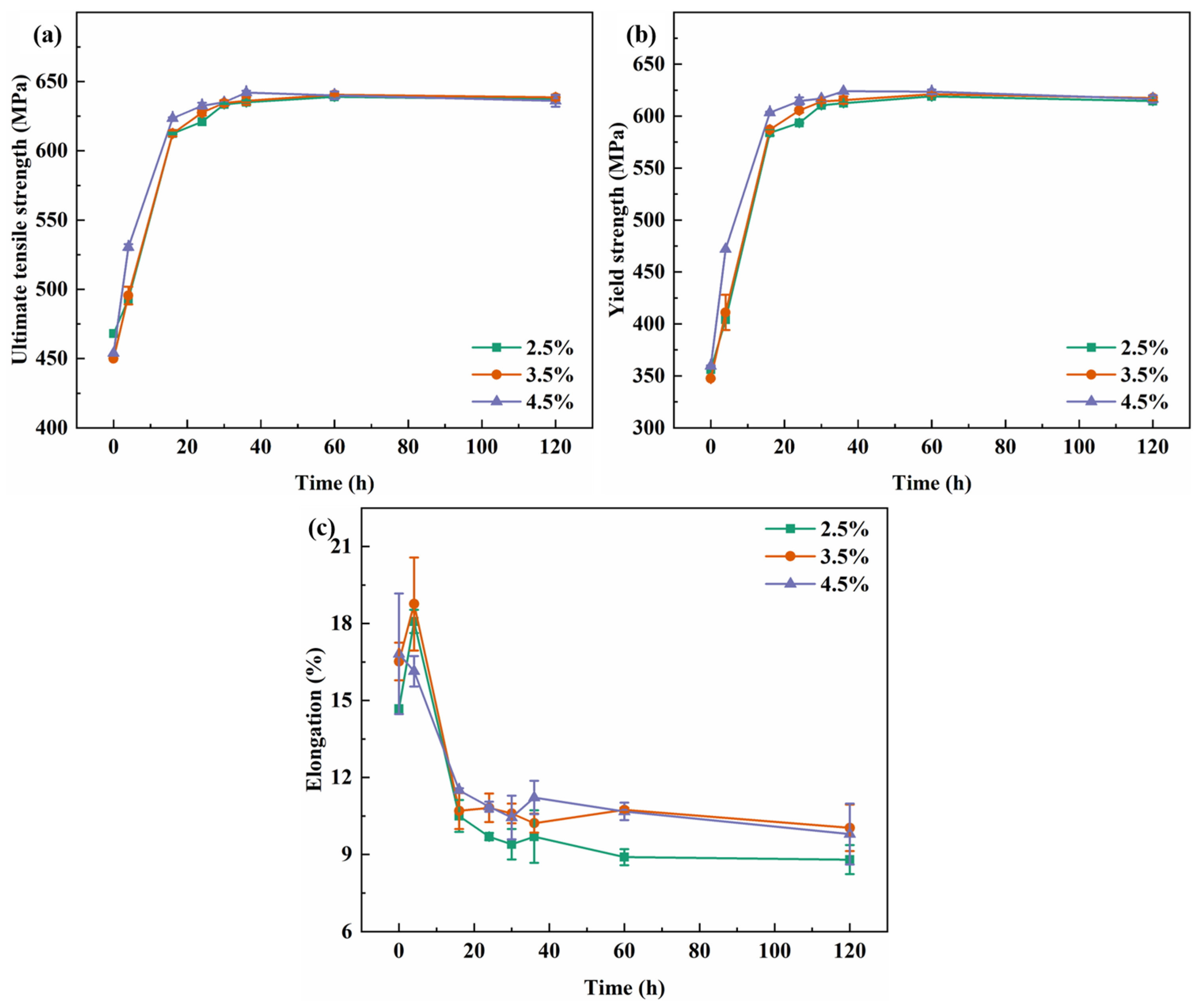
Figure 1 illustrates the evolution of room-temperature tensile properties with the aging time at 155 °C for different pre-stretch levels (2.5%, 3.5%, and 4.5%). The tensile and yield strengths follow similar trends across all pre-stretch conditions: they increase rapidly in the early stages of aging, slow down after approximately 16 h, and peak between 30 h and 36 h. Beyond this period, further aging leads to a gradual decrease in strength. In contrast, elongation shows the opposite behavior, declining sharply initially and then decreasing more slowly before stabilizing with prolonged aging. A slight increase in both the tensile and yield strength is observed with increasing pre-stretch deformation. Based on these results, 30 h was identified as the peak-aging condition for all three pre-stretch levels. At this aging time, comparative investigations were carried out on the fracture toughness, fatigue crack propagation behavior, and precipitation characteristics of the alloys.
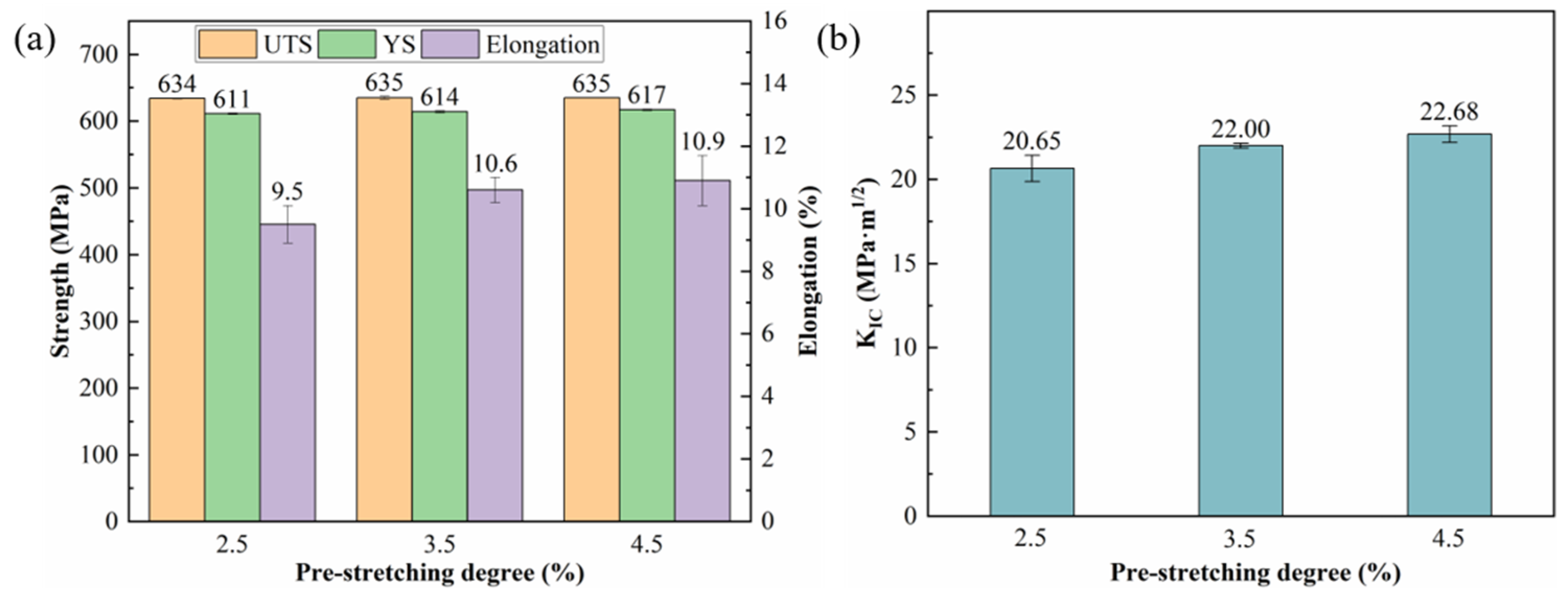
Figure 2 shows the tensile properties and fracture toughness (KIC) of the alloy subjected to different pre-stretching deformations prior to aging at 155 °C for 30 h. It is found that the tensile strength remains largely unchanged across the range of pre-stretching levels applied, whereas the yield strength increases slightly. In contrast, the elongation exhibits a gradual rise with increasing pre-stretch deformation. Furthermore, the KIC values also follow an upward trend, though the rate of improvement diminishes at pre-stretching levels of 3.5% and above.
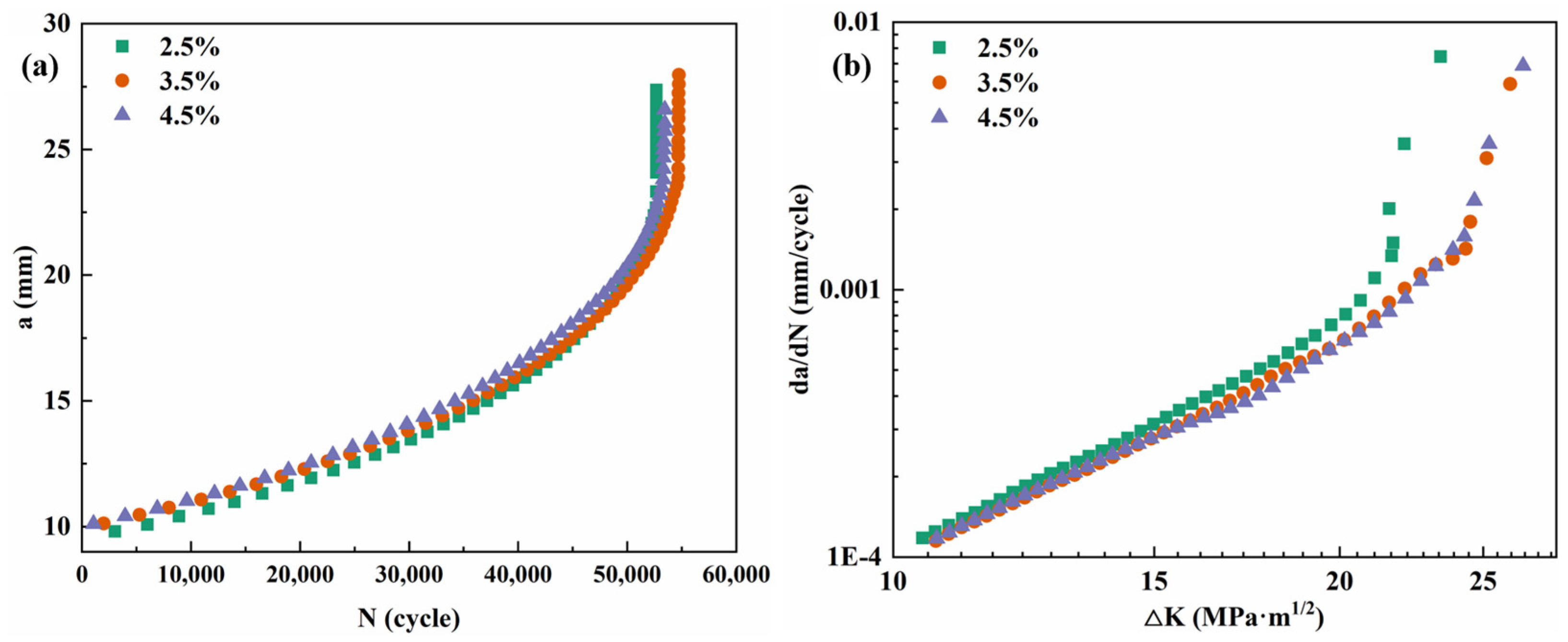
Figure 3 presents the fatigue crack growth behavior of the alloy under different pre-stretching deformations followed by aging at 155 °C for 30 h. Minor differences are observed among the a-N curves across the various pre-stretching levels, whereas the da/dN-ΔK curves exhibit more distinct variations. As the deformation increases from 2.5% to 3.5%, the crack growth rate decreases notably in the medium-to-high ΔK regime. Further increasing the pre-stretch to 4.5% results in little additional change in the crack propagation rate. At ΔK ≈ 18 MPa·m1/2, the crack growth rate for the 2.5% pre-stretched alloy was 5.12 × 10⁻⁴ mm/cycle, compared with 4.95 × 10⁻⁴ mm/cycle for both the 3.5% and 4.5% conditions. This difference becomes more pronounced at ΔK ≈ 22 MPa·m1/2, where the growth rate reaches 1.70 × 10⁻³ mm/cycle for the 2.5% pre-stretched alloy, while remaining at only 1.1 × 10⁻³ mm/cycle for the 3.5% and 4.5% pre-stretched conditions.
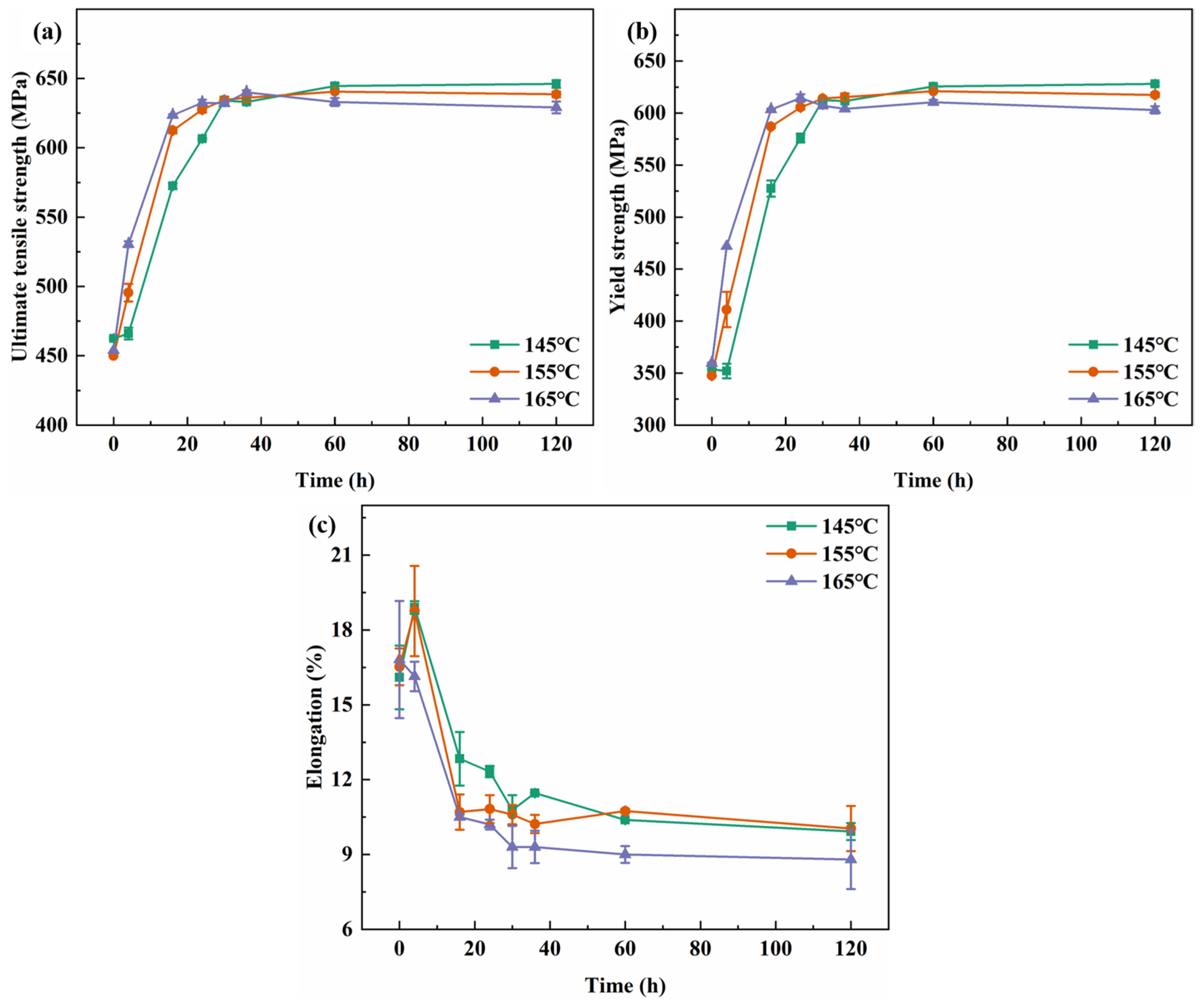
Figure 4 presents the evolution of tensile properties over time for the alloy following a uniform 3.5% pre-stretching deformation and subsequent aging at various temperatures. As observed, the strength of the alloy displays similar trends with the aging time across different aging temperatures. They increase rapidly during the under-aging, slow down after approximately 16 h, and peak between 30 and 36 h. Moreover, a higher aging temperature leads to a faster attainment of the peak aging strength. Beyond this peak, a further extension of the aging time results in a gradual decline in strength. In contrast, the elongation exhibits an inverse relationship to the strength variations. It drops sharply in the early aging period, then continues to decrease more slowly before eventually stabilizing as the aging time proceeds.
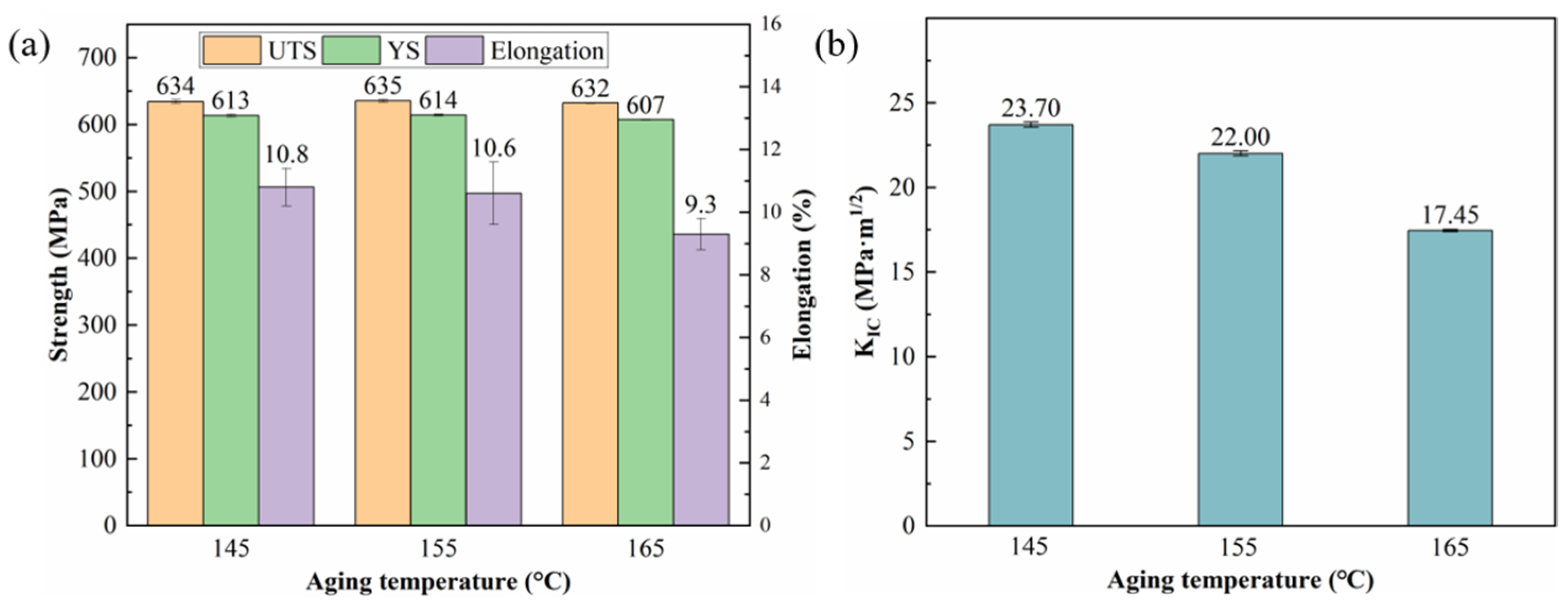
The tensile properties and fracture toughness values of the alloy after 30 h aging at different temperatures are shown in Figure 5. As the aging temperature increases, the strength of the alloy remains at essentially the same level. However, at 165 °C, both the yield strength and elongation exhibit a slight decline. In contrast, the fracture toughness decreases monotonically as the aging temperature rises. When the temperature increases from 145 °C to 155 °C, the KIC value drops from 23.70·MPa·m1/2 to 22.00 MPa·m1/2. A further increase to 165 °C leads to a more pronounced reduction, with the KIC value falling significantly to 17.45·MPa·m1/2.
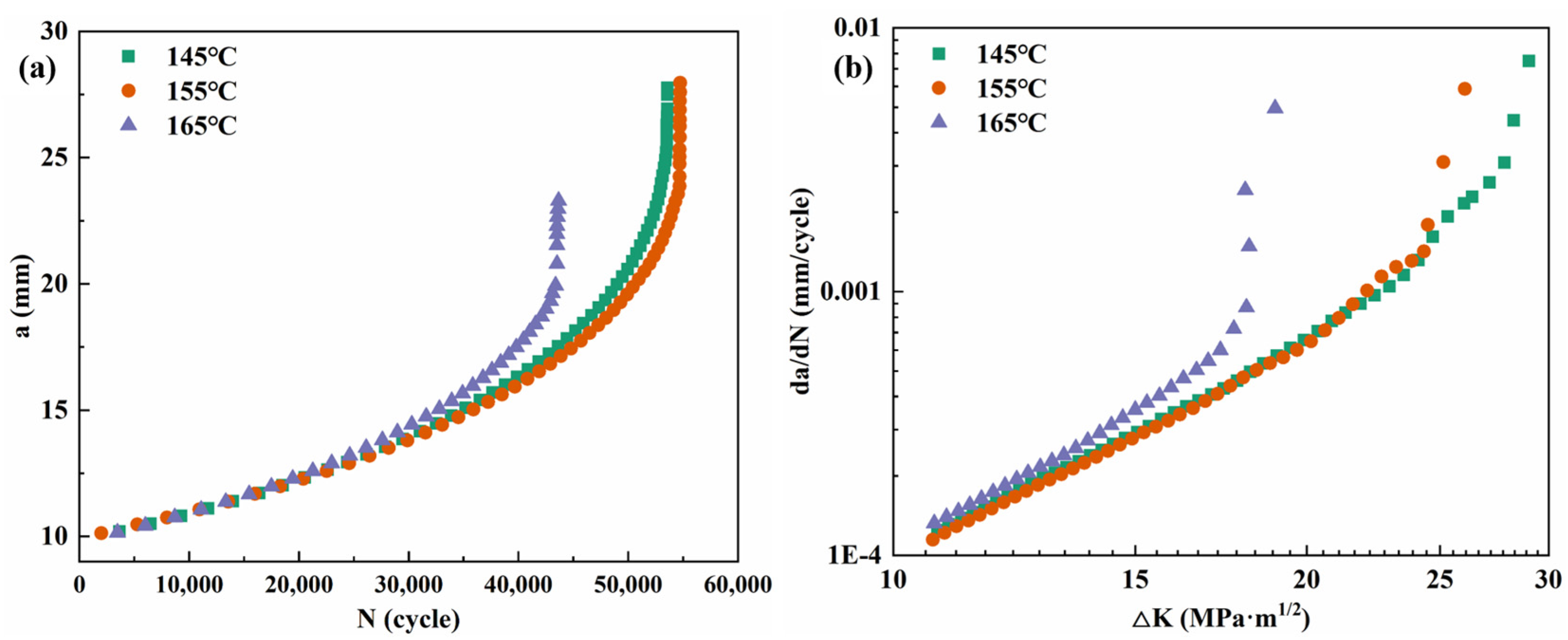
Figure 6 illustrates the fatigue crack growth curves of the alloy after the 3.5% pre-stretching deformation and 30 h of aging at different temperatures. It can be observed that the crack growth rates for samples aged at 145 °C and 155 °C show a minimal difference across the entire range of the stress intensity factor (ΔK), with the two curves nearly overlapping. However, when the aging temperature is raised to 165 °C, the crack growth rate increases rapidly within the medium ΔK range (15~18 MPa·m1/2), corresponding to the steady-state propagation stage. At ΔK ≈ 18 MPa·m1/2, the crack growth rates for the alloys aged at 145 °C and 155 °C were 4.73 × 10⁻⁴ mm/cycle and 4.95 × 10⁻⁴ mm/cycle, respectively, indicating little variation. In contrast, the alloy aged at 165 °C exhibited a significantly higher growth rate of 8.71 × 10⁻⁴ mm/cycle, which represents an 84.1% increase compared to the 145 °C condition.

3.2. Precipitation Behavior

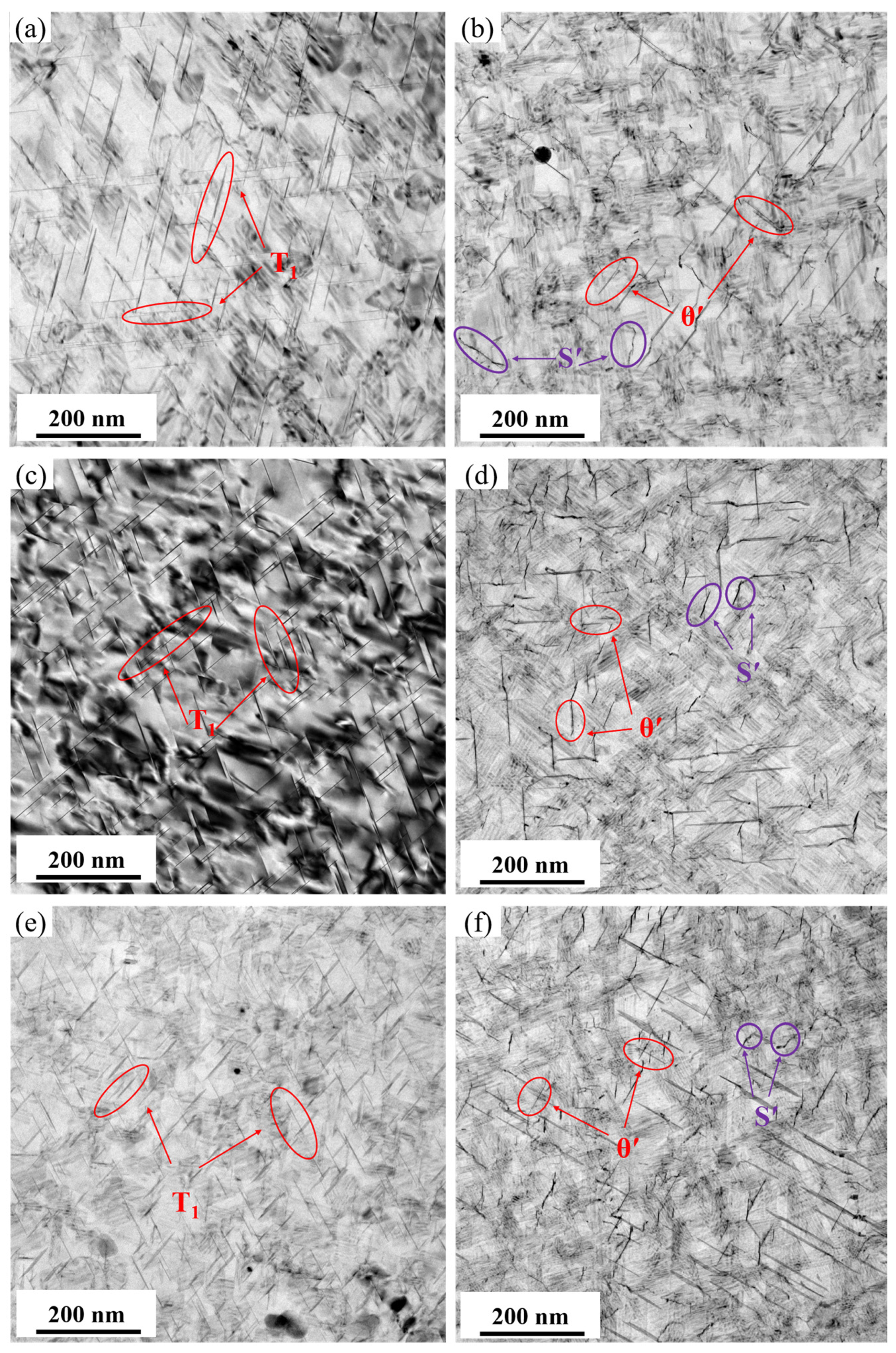
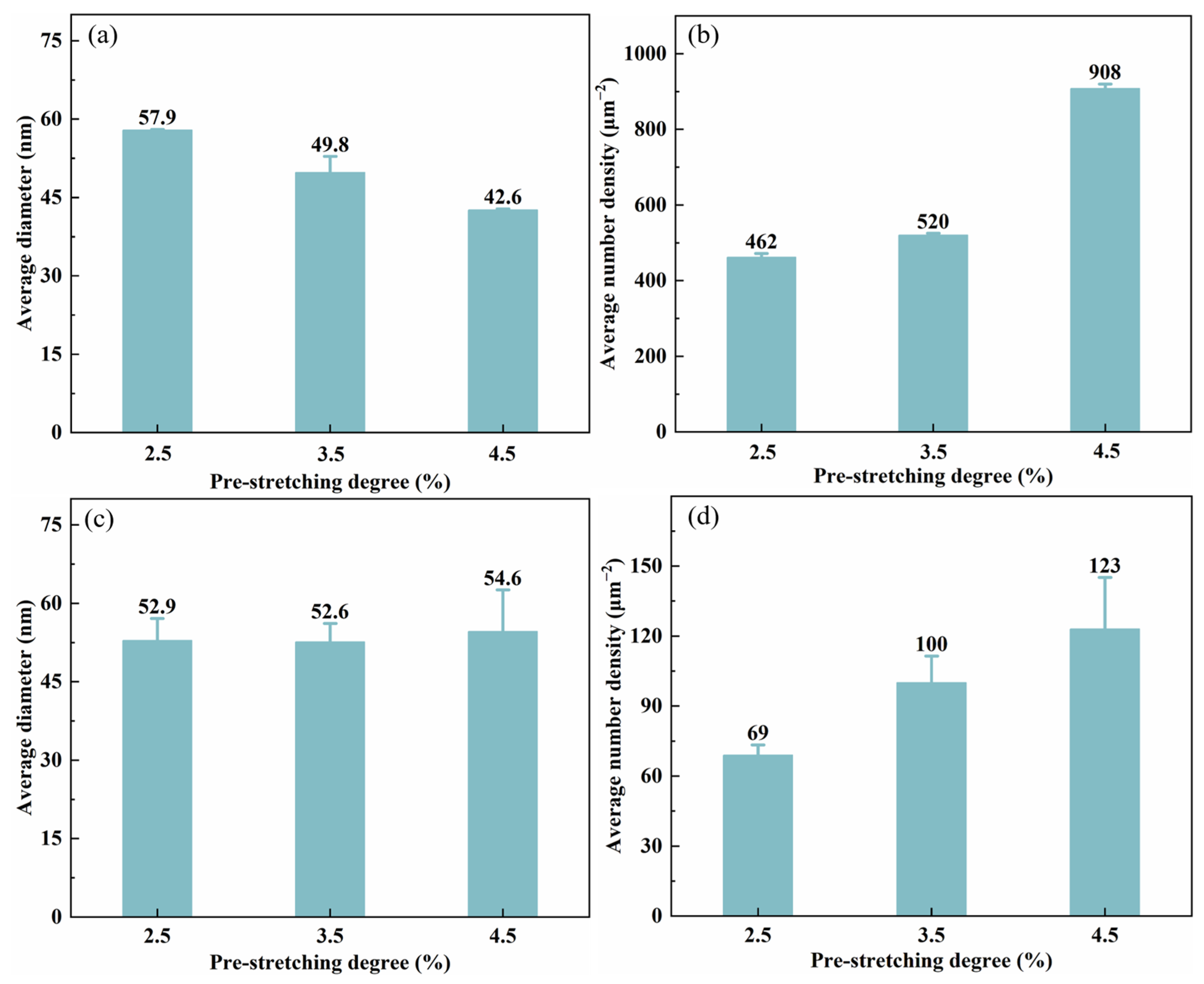
The TEM bright-field images in Figure 7 show the precipitates within the grains after aging at 155 °C for 30 h under different pre-stretching levels (2.5%, 3.5%, and 4.5%). The corresponding statistical results of the precipitates are presented in Figure 8. The alloy contains the primary strengthening phase T1, along with the secondary strengthening phases θ′ and S′. When observed along the <110>Al zone axis, it is evident that, as the pre-stretching level increases, the size of the T1 phase progressively decreases while its number density continuously increases. A statistical analysis indicates that, at 2.5% pre-stretching, the T1 phase has an average diameter of 57.9 nm with a number density of 462 μm−2. When the pre-stretching increases to 3.5%, the average diameter decreases to 49.8 nm, while the number density rises slightly to 520 μm−2. With a further increase in pre-stretching to 4.5%, the average diameter declines linearly to 42.6 nm, accompanied by a significant increase in the number density to 908 μm−2. Similarly, an observation along the <100>Al zone axis reveals that the influence of the pre-stretching level on the areal number density of the θ′ phase is similar to that on the T1 phase, whereas its effect on the precipitate size is not significant. According to the statistical results of the θ′ phase precipitation characteristics, as the pre-stretching level increases, the average diameter of the θ′ phase remains essentially constant at around 52 nm, while the areal number density increases monotonically and linearly from 69 μm−2 to 123 μm−2. These results demonstrate that increasing the pre-stretching level significantly affects the characteristics of the nanoscale precipitates in the alloy.
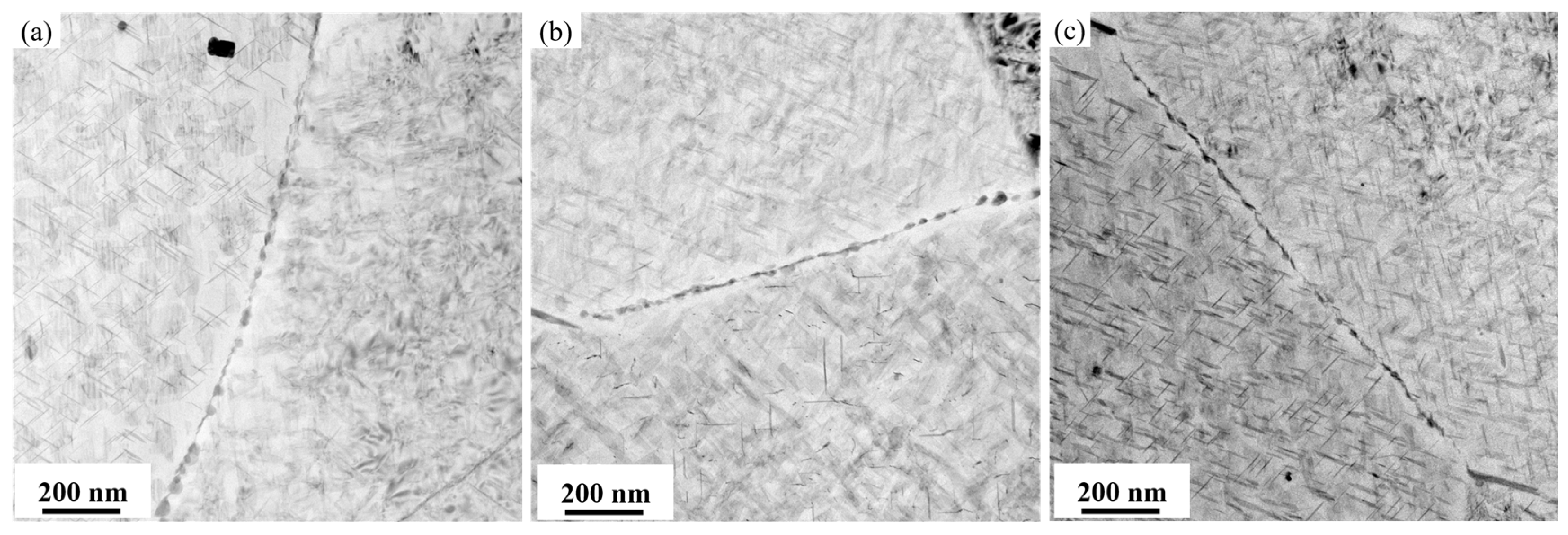
Figure 9 presents bright-field TEM images showing large-angle grain boundary precipitates in the alloy after aging at 155 °C for 30 h under different levels of pre-stretching. It is observed that, as the pre-stretching level increases, the size of the grain boundary precipitates continuously decreases, and their distribution progressively shifts from continuous to discontinuous. Additionally, the width of the precipitate-free zone narrows. This trend is fully consistent with the characteristics of intergranular precipitation behavior. The greater pre-stretching deformation introduces a higher density of dislocations within the grains, which effectively promotes the intragranular precipitation of the T1 and θ′ phases. This process consumes a substantial number of solute atoms, thereby suppressing the coarsening of precipitates at the grain boundaries.
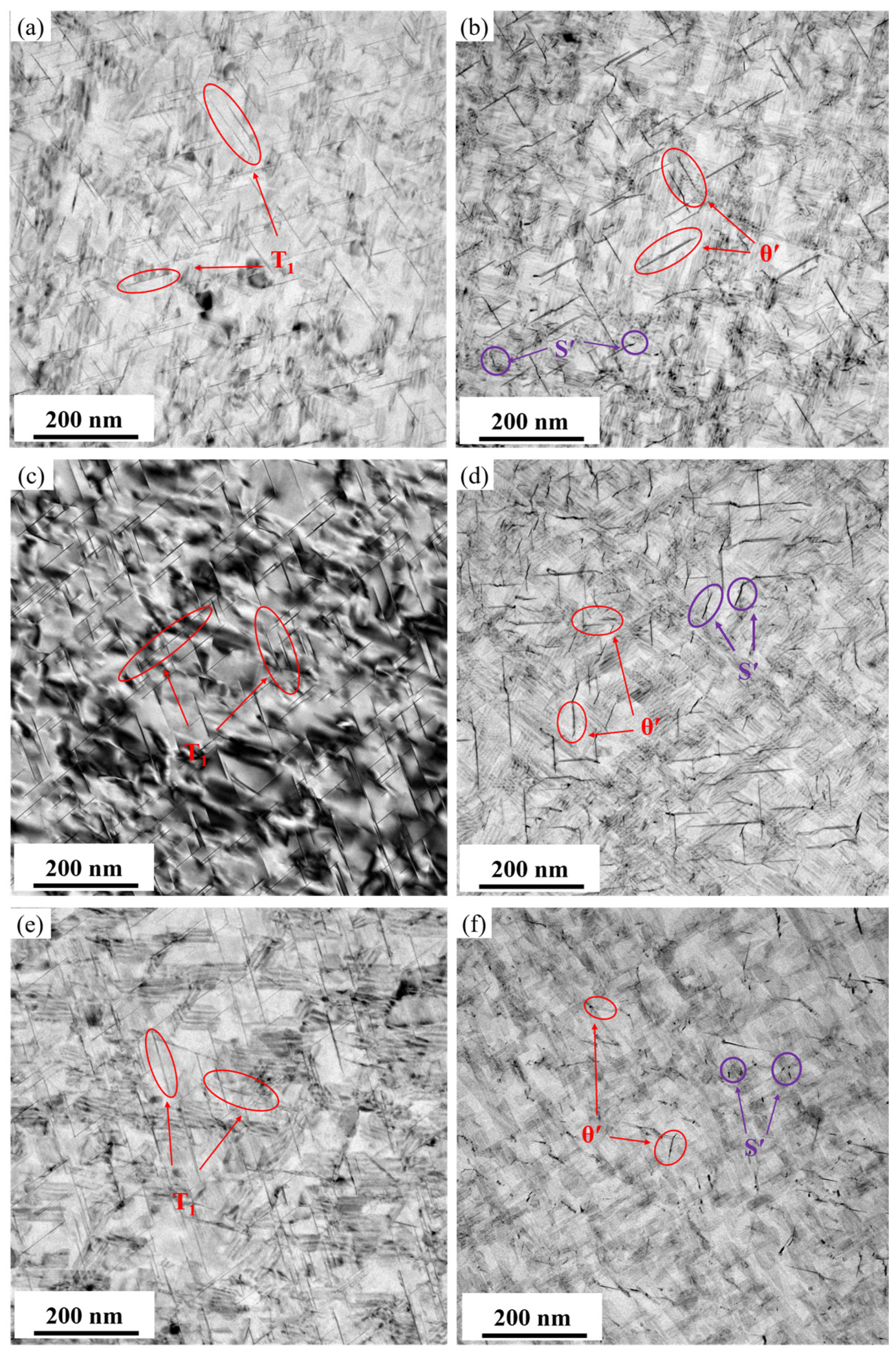
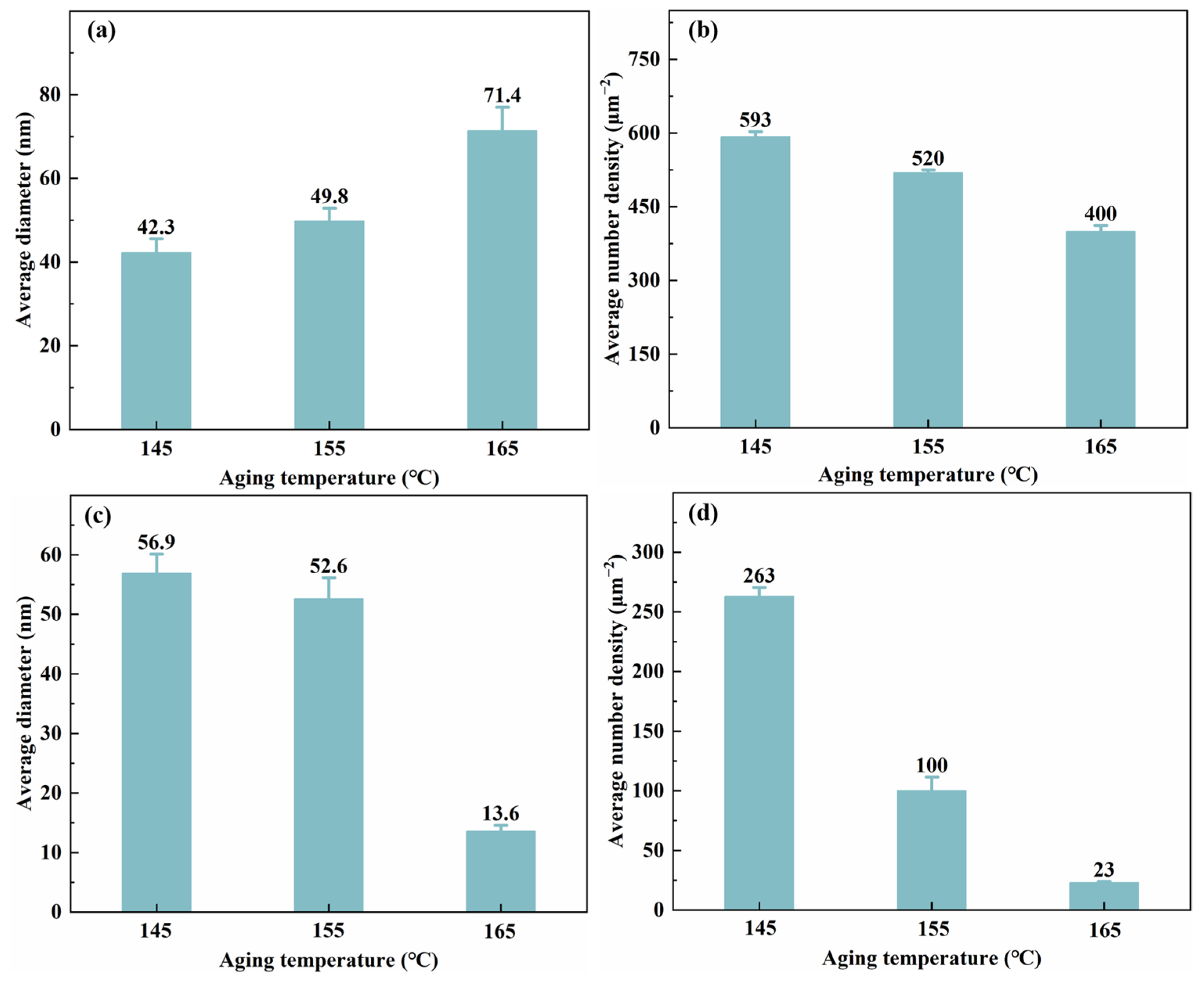
Figure 10 displays the bright-field TEM images of intragranular precipitates after aging for 30 h at different temperatures (145, 155, and 165 °C) following a 3.5% pre-stretch deformation. Figure 11 provides the corresponding statistical results for the average diameter and number density of the precipitates. When observed along the <110>Al zone axis, the T1 phase shows an increase in size but a decrease in quantity as the aging temperature rises. According to the statistical analysis, at 145 °C, the T1 phase has an average diameter of only 42.3 nm and an average area number density of 593 μm−2. When the aging temperature is increased to 165 °C, the average diameter grows to 71.4 nm, while the number density drops to 400 μm−2. The increase in average diameter was particularly notable when the aging temperature was raised from 155 °C to 165 °C. In contrast, when observed along the <100>Al zone axis and combined with the statistical results of the θ′ phase precipitation characteristics, it is found that, as the aging temperature increases, the trend of the average number density of the θ′ phase changes similarly to that of the T1 phase, showing a monotonically decreasing trend from 263 to 23 μm−2. Meanwhile, the average diameter slightly decreases from 56.9 nm to 52.6 nm. At 165 °C, the average diameter significantly decreased to 13.6 nm. It is observed that, although the average diameters and number densities of the precipitated phases differ markedly at different aging temperatures, the differences in peak strength are relatively small. This indicates that the strength contributions of the different precipitated phases are essentially equivalent.
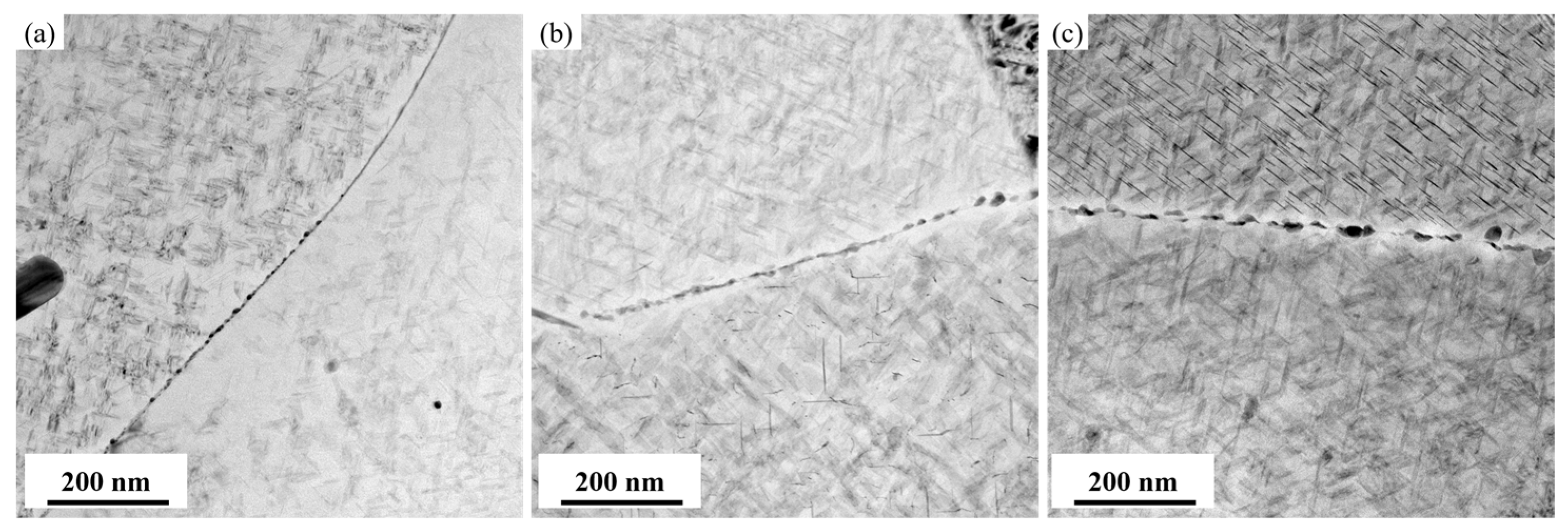
Figure 12 shows bright-field TEM images of grain boundary precipitates in the alloy after aging at different temperatures for 30 h. It can be observed that, as the aging temperature increases, the size of the grain boundary precipitates continues to grow. Therefore, by combining the precipitation characteristics within the grains and at the grain boundaries, it can be concluded that increasing the aging temperature suppresses the nucleation of the T1 phase, while promoting its growth and coarsening. Simultaneously, it accelerates the nucleation and growth of grain boundary precipitates, consuming a large amount of Cu atoms. As a result, the precipitation behavior of the θ′ phase is significantly inhibited.

3.3. Fracture Morphology

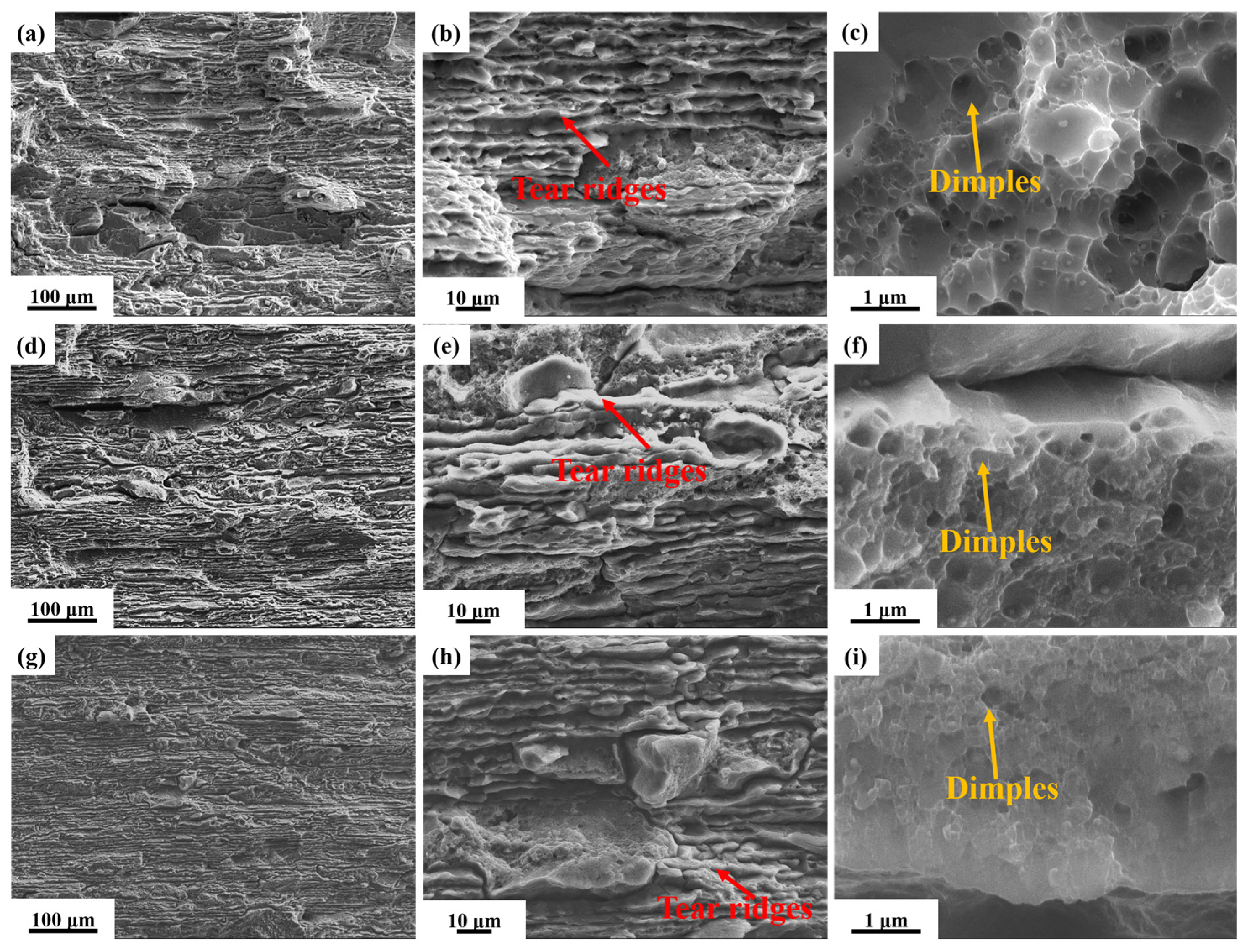
Figure 13 shows the SEM images of fracture morphology at ΔK ≈ 22 MPa·m1/2. The low-magnification SEM image reveals that the fracture surface exhibits relatively distinct secondary cracks, tear ridges, and small planar facets. Under high magnification(yellow box), fatigue striations can be observed. At the same stress intensity factor range, the width of the fatigue striations gradually decreases with increasing pre-stretching deformation. Figure 14 shows the SEM images of fracture surfaces during the instability propagation stage. Low-magnification SEM reveals that, after 2.5% pre-stretching deformation, the fracture surface of the alloy tends to be flat with minimal surface roughness. As the pre-stretching deformation increases, the fracture surface becomes increasingly uneven with greater height variations. High-magnification SEM reveals that the proportion of ductile dimple zones increases with greater pre-stretching deformation, which is consistent with the enhanced fatigue crack propagation resistance of the alloy. Therefore, the optimal pre-stretching deformation range is 3.5~4.5%, achieving an optimal balance between strength and damage tolerance for the investigated alloy.
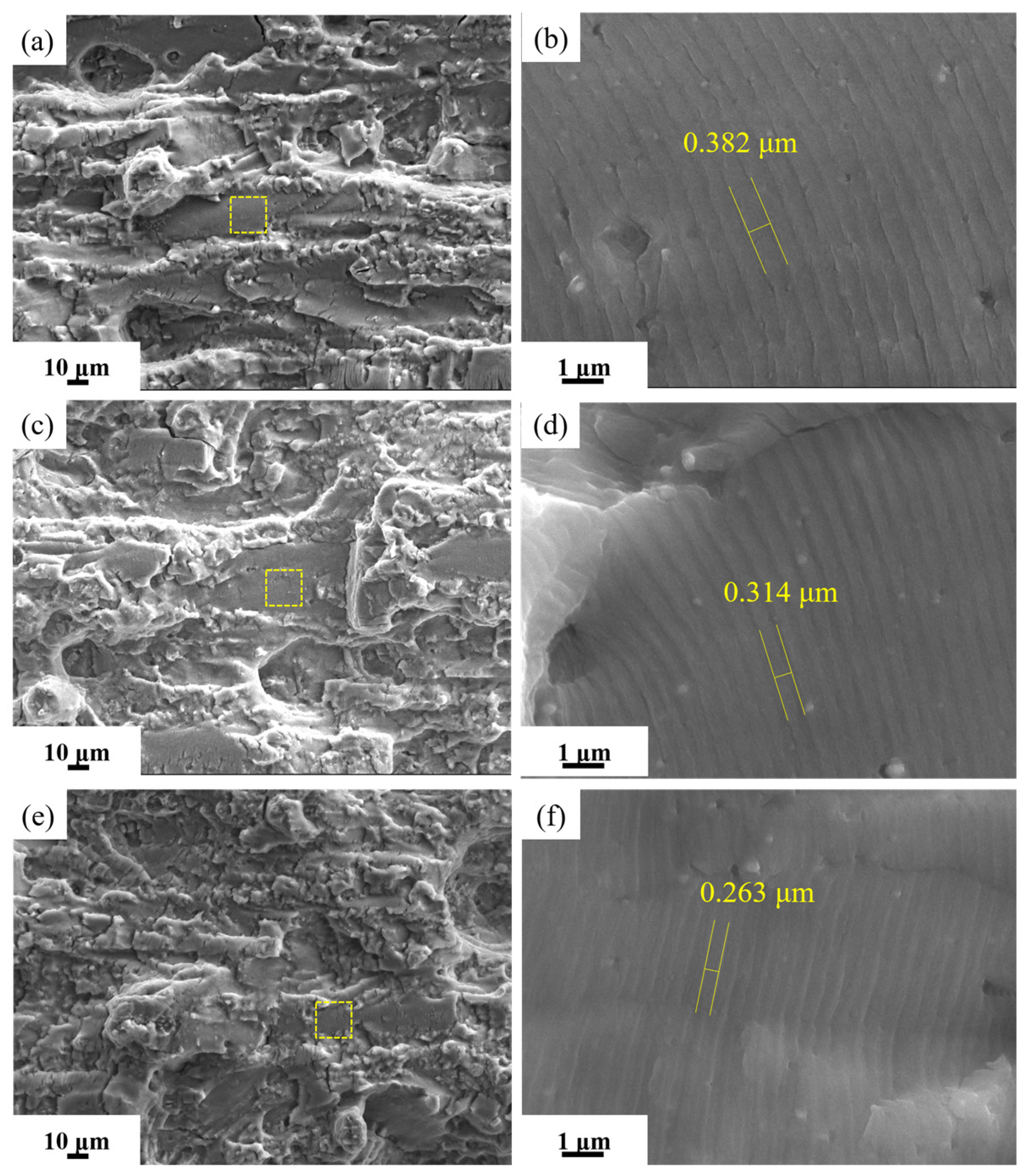
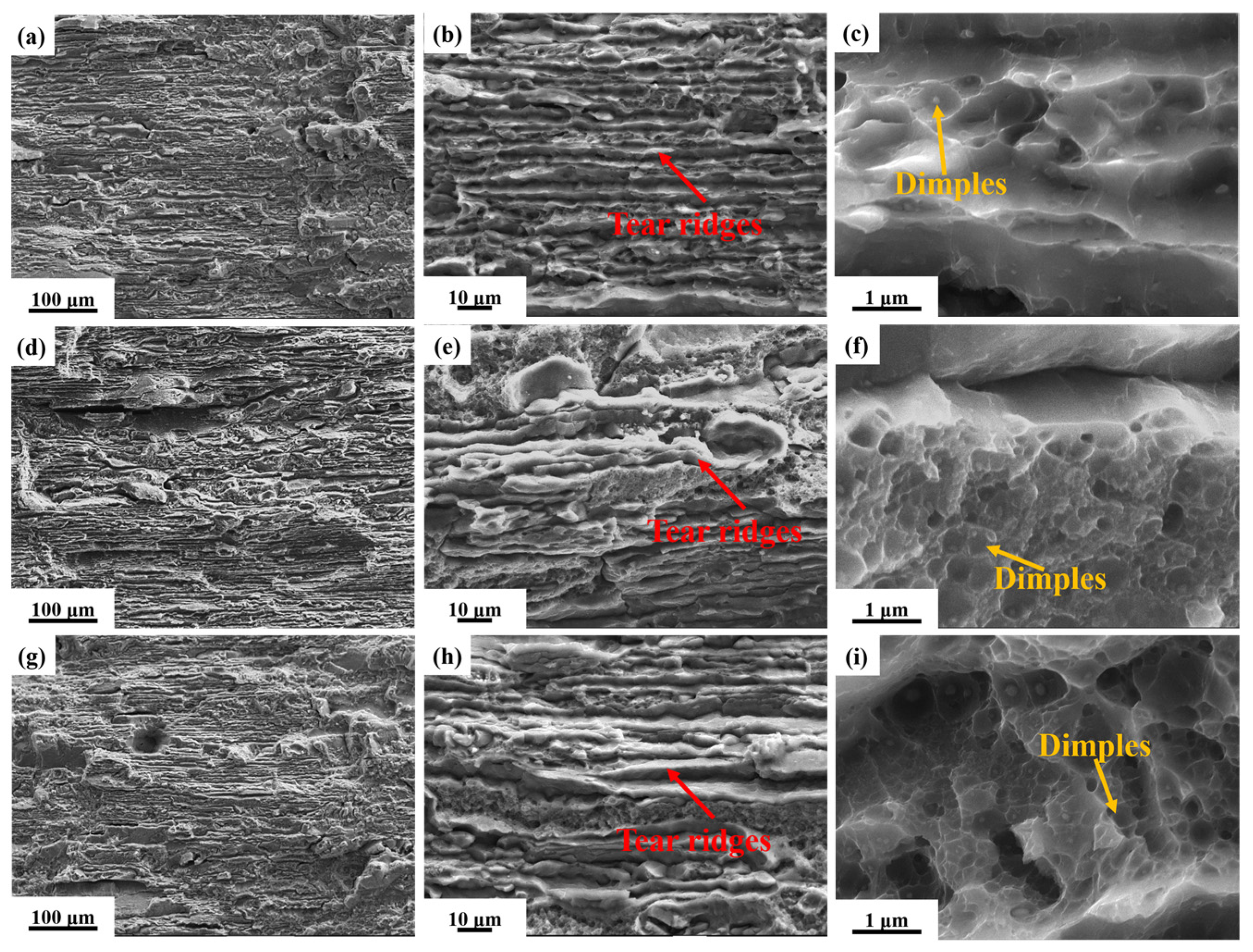
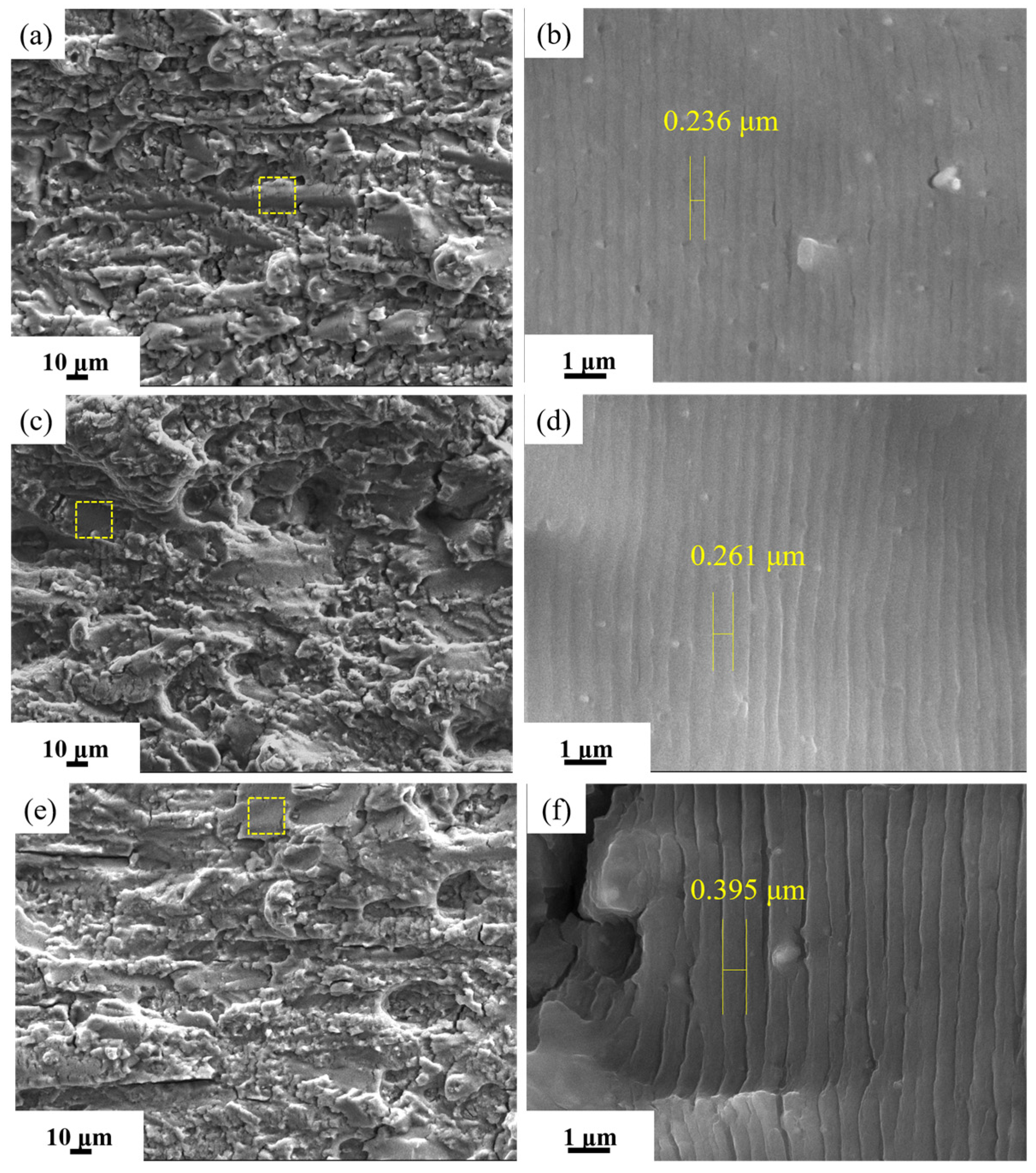
Figure 15 presents the corresponding fracture morphology at ΔK ≈ 18 MPa·m1/2. The low-magnification SEM observation reveals that the fracture surface contains relatively evident secondary cracks, tear ridges, and small planar facets. The corresponding high-magnification SEM image (yellow box) clearly shows striations formed during the crack propagation process. As the aging temperature increases, the striation width increases from 0.236 μm to 0.395 μm. Figure 16 presents SEM fractographs of the fracture surfaces from the unstable crack propagation stage in alloys subjected to different aging treatments. The low-magnification SEM images (Figure 16a,d,g) reveal that the fracture surface of the alloy treated at higher aging temperatures becomes relatively flat, with a noticeable reduction in surface height variation. Observations at medium magnification (Figure 16b,e,h) indicate that all alloys exhibit a mixed ductile–brittle fracture mode. However, the proportion of the dimple region continuously decreases with increasing aging temperature, while the proportion of cleavage steps formed by intergranular fracture increases. This suggests that a growing number of grain boundaries act as weak interfaces during the fracture process. A detailed examination of the dimple morphology, as shown in Figure 16c,f,i, demonstrates that, as the aging temperature rises, the dimples become smaller and more shallow, further corroborating the decline in toughness. Consequently, the optimal aging temperature range is identified as 145~155 °C, which ensures an ultra-high strength without significantly compromising the toughness, thereby achieving a better balance between strength and damage tolerance.

4. Discussion

4.1. Mechanism of Precipitation Modulation by Pre-Stretching

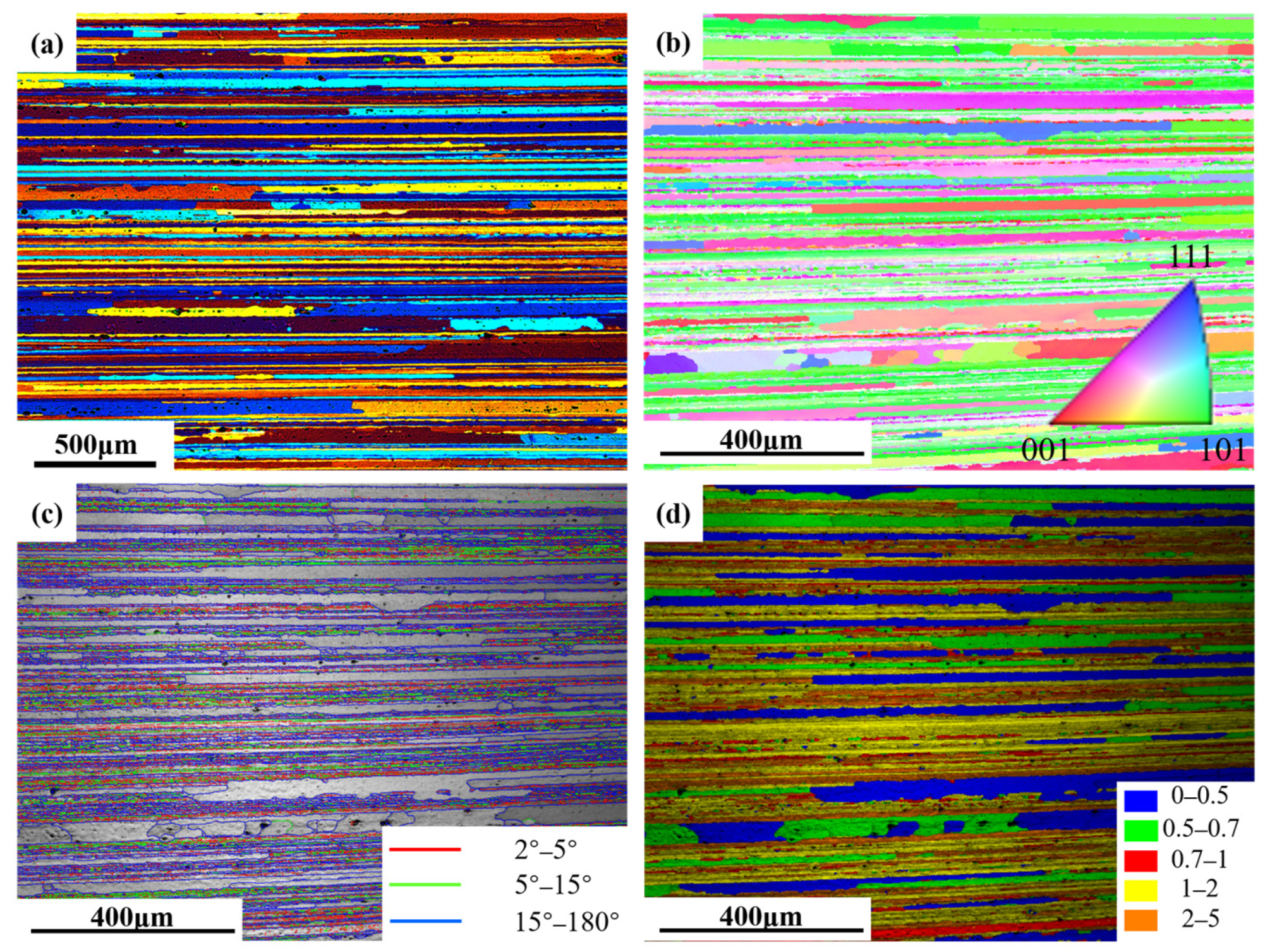
Figure 17 presents the optical microscopy and electron backscatter diffraction (EBSD) results for the alloy after 3.5% pre-stretching followed by aging at 155 °C. An analysis of the EBSD data reveals that the alloy exhibits an average grain aspect ratio of approximately 12.68 and a degree of recrystallization of 42.7%. The grain structure of aluminum alloys is primarily determined by the thermomechanical processing history prior to solution treatment. The grain characteristics are considered to be essentially consistent across all tested conditions. Therefore, the influence of the grain structure on the variation in mechanical properties among different samples can be considered negligible, allowing the discussion to focus primarily on the role of precipitation behavior. Pre-stretching deformation significantly alters the nucleation, growth, and competitive relationships of precipitation phases during subsequent aging by introducing high-density dislocations into the matrix. The TEM observations and statistical analysis along the <110>Al zone axis (Figure 7 and Figure 8) show that increasing the pre-stretch deformation from 2.5% to 4.5% leads to a continuous refinement of the T1 phase. Specifically, its average diameter drops from 57.9 nm to 42.6 nm, accompanied by a sharp rise in the area density from 462 μm−2 to 908 μm−2. Observations along the <100>Al zone axis reveal that the average diameter of the θ′ phase remained essentially constant at approximately 52 nm, while its number density increased linearly from 69 μm−2 to 123 μm−2. The T1 phase exhibits a significant lattice mismatch with the Al matrix, resulting in high interfacial energy and difficulty in uniform nucleation. Consequently, it strongly depends on crystal defects such as dislocations. The large number of dislocations introduced by pre-stretching provides dense, non-uniform nucleation sites for the T1 phase, significantly lowering the nucleation barrier. This promotes its precipitation with a higher density and smaller size. Notably, a competitive precipitation relationship exists between the T1 phase and the θ′ phase for Cu atoms. The stoichiometry of the T1 phase is Al2CuLi, and its precipitation process consumes Cu atoms. Under pre-stretching conditions, the extensive and rapid precipitation of the T1 phase inevitably consumes a large number of Cu atoms in the solid solution within the matrix, thereby inhibiting the growth behavior of the θ′ phase. This elucidates the observed increase in the number density of the θ′ phase following pre-stretching, despite the lack of commensurate growth in its size. The evolution of grain boundary precipitates arises as an indirect consequence of the aforementioned intragranular precipitation reactions. The enhanced precipitation of the T1 and θ′ phases within the grains consumes substantial quantities of Cu and Li solutes, leading to a localized solute depletion in the vicinity of the grain boundaries. This, in turn, suppresses the growth kinetics of grain boundary precipitates, resulting in finer precipitate sizes and a discontinuous morphological distribution.
The T1 phase is the most dominant strengthening phase in Al-Li alloy systems, with its strengthening contribution significantly exceeding that of the θ′ phase and the S′ phase. According to the precipitation strengthening theory, when the size of the precipitate phase is smaller than the critical shearing size (<55 nm) [31], the relationship between dislocations and precipitates follows a shearing mechanism, and the strength model is given as follows [32,33]:
σ T 1 = 1.211 M d T 1 γ e f f 3 / 2 t T 1 2 b f T 1 Γ
When the size exceeds the critical shearing size, the strengthening mechanism transitions to Orowan bypassing, and the strengthening effect diminishes as the size increases. The strength model is given as follows [34,35,36]:
σ T 1 = 0.12 M G b d T 1 t T 1 ( f T 1 + 0.7 d T 1 t T 1 f v + 0.12 d T 1 t T 1 f T 1 3 / 2 ) ln ( 0.079 d T 1 b )
where γeff is the effective interfacial energy term (~0.107 J/m2), and b is the Burgers vector. Γ is the dislocation line tension (≈1/2Gb2), M is the average Taylor factor, and tT1, dT1, and fT1 are the average thickness, diameter, and volume fraction of T1 precipitates, respectively.
The Orowan strengthening contribution of the θ′ phase to the yield strength can be described as follows [33,37]:
σ θ = K θ 0.931 0.306 π t θ f θ d θ π 8 ( d θ ) 2 1.061 t θ K θ = ( G b 2 π 1 v ) ( ln 1.225 t θ 2 b )
where υ is Poisson’s ratio (0.339), and tθ, dθ, and fθ are the average thickness, diameter, and volume fraction of θ′ precipitates, respectively.
While the S′ phase was occasionally observed, its volume fraction was minimal under the current pre-stretching conditions, and, thus, its influence on the mechanical properties is not discussed in detail. With increasing pre-stretching deformation, a higher dislocation density is introduced, thereby enhancing the contribution of strain hardening. Concurrently, this leads to a refinement in the size and an increase in the number density of the T1 phase. In the vicinity of the critical size, the strengthening contribution of the T1 phase is correlated with its diameter, thickness, and volume fraction, as described by the shearing model. Although the number density increases in the alloy with 4.5% pre-stretching, its diameter concurrently decreases. The findings reported by Xie et al. [38,39] also demonstrate that, under the T8 temper, the strengthening contribution of the T1 phase progressively diminishes with increasing pre-stretching. Consequently, the combined effects of precipitation strengthening and strain hardening result in comparable overall strength levels across the alloys investigated in this study.
Nevertheless, the intragranular distribution of the T1 and θ′ phases becomes more homogeneous and refined, effectively alleviating the stress concentration at the precipitate–matrix interface and delaying void nucleation and coalescence. Moreover, the grain boundary precipitates a transition from a continuous network to a discontinuous particulate morphology, substantially reducing the susceptibility to intergranular brittle fracture. These microstructural evolutions contribute to the enhanced ductility and toughness observed in alloys subjected to higher pre-stretching levels. The improvement in fatigue crack growth resistance can be attributed to the shrinkage of the cyclic plastic zone at the crack tip. The finely dispersed T1 phases effectively pin dislocations, suppressing the formation and propagation of cyclic slip bands and mitigating the cumulative damage per stress cycle [39]. Fractographic observations reveal that the fatigue striation spacing gradually decreases with increasing pre-stretching, providing indirect evidence for the reduced extent of crack tip blunting during cyclic loading.

4.2. Influence of Aging Temperature on Precipitation Competition and Boundary Characteristics

Aging temperature governs the nucleation, growth, and coarsening kinetics of precipitates. As the aging temperature increases, the average size of the T1 phase increases while its number density decreases. Aging at 165 °C promotes the coarsening of the T1 phase, leading to a reduced increment in strength. Furthermore, the grain boundary precipitates become noticeably coarser and exhibit a continuous distribution, providing a preferential path for crack propagation. This results in a decreased fracture toughness and an accelerated fatigue crack growth rate in the alloy. A fractographic analysis reveals that, after aging at 165 °C, the fracture surface tends to be flattened, with dimples becoming smaller and shallower, accompanied by an increased proportion of intergranular fracture. In contrast, aging within the temperature range of 145~155 °C achieves an optimal match between the size and number density of the T1 and θ′ phases. The intragranular precipitates exhibit a dispersed distribution, while grain boundary precipitates remain discontinuously distributed. This microstructure not only maintains a high strength but also effectively impedes crack propagation, thereby achieving an optimal balance between strength and toughness.
From the perspective of precipitation kinetics, the influence of aging temperature on precipitate evolution is primarily manifested in the following aspects: First, an increase in temperature enhances the diffusion capacity of atoms, thereby accelerating the nucleation and growth processes of precipitates. During the early stages of aging, a higher temperature facilitates rapid precipitate nucleation; however, as aging progresses, elevated temperatures promote the dissolution of smaller precipitates and the further growth of larger ones, leading to precipitate coarsening. Second, variations in the temperature affect the competitive relationships among different precipitate phases. Excessively high temperatures may induce the transformation of the T1 phase into other thermodynamically more stable phases, thereby compromising the strengthening effect.
Furthermore, the aging temperature exerts a significant influence on the structure of the precipitate–matrix interface. Aging at 155 °C maintains a coherent relationship between the precipitates and the matrix, characterized by low interfacial energy, which is conducive to enhancing the strength of the alloy. When the aging temperature is increased to 165 °C, the interface may lose coherency, transforming into a semi-coherent or incoherent interface. Although this may slightly improve the stability of the precipitates, it diminishes their capacity to impede the dislocation motion, thereby compromising the strengthening effect. The precipitation behavior at the grain boundaries is particularly sensitive to the aging temperature. Aging at 145 °C results in relatively fine, discontinuously distributed grain boundary precipitates. As the temperature increases, these grain boundary precipitates rapidly coarsen and eventually interconnect to form a continuous network. This continuous network structure provides a preferential path for crack propagation, significantly degrading the toughness and fatigue properties of the alloy [40]. Therefore, precise control of the aging temperature is crucial for balancing the intragranular strengthening and grain boundary precipitation behavior. To achieve an optimal combination of strength and toughness, the suitable aging temperature range for this alloy is identified as 145~155 °C.

5. Conclusions

In this study, the effects of pre-stretching deformation and aging temperature on the microstructural evolution and mechanical properties of an Al-Cu-Li alloy were investigated. The main conclusions are as follows:
(1)
Increasing the pre-stretching deformation significantly enhances the number density and refines the size of the intragranular T1 and θ′ phases, while promoting a discontinuous distribution of grain boundary precipitates. This results in an improved plasticity and fracture toughness of the alloy without compromising its high strength, as well as a reduction in the fatigue crack growth rate.
(2)
An increase in the aging temperature accelerates the coarsening of the T1 phase and reduces its number density, while inhibiting the precipitation of the θ′ phase. Grain boundary precipitates coarsen and exhibit a discontinuous distribution. Although the peak strength is not significantly affected, both the fracture toughness and fatigue crack growth resistance deteriorate markedly.
(3)
The microstructure–property relationship of the alloy indicates that, by appropriately controlling the pre-stretching deformation (3.5~4.5%) and aging temperature (145~155 °C), the size, distribution, and grain boundary characteristics of the precipitates can be optimized. This enables a synergistic enhancement of high strength and excellent damage tolerance.

Author Contributions

Methodology, B.L., C.L., X.L., Y.Z., K.W. and H.Y.; software, B.L., K.W. and L.Y.; validation, C.L. and L.Y.; investigation, X.L. and Y.L. (Yanan Li); resources, Y.Z., Y.L. (Ying Li), Y.L. (Yanan Li) and B.X.; data curation, K.W., Y.L. (Ying Li), Y.L. (Yanan Li), H.Y., Z.L. and B.X.; writing—original draft, B.L., C.L., K.W., Y.L. (Ying Li), L.Y. and H.Y.; writing—review and editing, B.L., C.L., Y.L. (Ying Li), L.Y., H.Y., Z.L. and B.X.; supervision, X.L., Y.Z., Y.L. (Yanan Li) and Z.L.; funding acquisition, X.L. and Y.Z. All authors have read and agreed to the published version of the manuscript.

Funding

This study was financially supported by the relevant national programs and the Youth Fund Project of GRINM.

Data Availability Statement

The original contributions presented in this study are included in the article. Further inquiries can be directed to the corresponding authors.

Conflicts of Interest

Author Ben Lin was employed by State Key Laboratory of Nonferrous Structural Materials, China GRINM Group Co., Ltd., Beijing 100088, China; General Research Institute for Nonferrous Metals, Beijing 100088, China; and China Academy of Launch Vehicle Technology, Beijing 100076, China. Authors Changlin Li and Ying Li were employed by State Key Laboratory of Nonferrous Structural Materials, China GRINM Group Co., Ltd., Beijing 100088, China; and GRIMAT Engineering Institute Co., Ltd., Beijing 101407, China. Authors Xiwu Li, Yongan Zhang, Kai Wen, Lizhen Yan, Yanan Li, and Hongwei Yan were employed by State Key Laboratory of Nonferrous Structural Materials, China GRINM Group Co., Ltd., Beijing 100088, China; GRIMAT Engineering Institute Co., Ltd., Beijing 101407, China; and General Research Institute for Nonferrous Metals, Beijing 100088, China. Authors Zhihui Li and Baiqing Xiong were employed by State Key Laboratory of Nonferrous Structural Materials, China GRINM Group Co., Ltd., Beijing 100088, China; and General Research Institute for Nonferrous Metals, Beijing 100088, China. All authors declare that the research was conducted in the absence of any commercial or financial relationships that could be construed as potential conflicts of interest.

References

  1. Dursun, T.; Soutis, C. Recent developments in advanced aircraft aluminium alloys. Mater. Des. 2014, 56, 862–871. [Google Scholar] [CrossRef]
  2. Rioja, R.J.; Liu, J. The Evolution of Al-Li Base Products for Aerospace and Space Applications. Metall. Mater. Trans. A 2012, 43, 3325–3337. [Google Scholar] [CrossRef]
  3. Chen, Y.Q.; He, Z.M.; Heng, L.L.; Song, Y.F.; Zhan, L.H.; Pan, S.P.; Liu, W.H. Corrosion fatigue mechanisms and control technologies in aviation aluminum alloys: A critical review. Chin. J. Aeronaut. 2026, 39, 103496. [Google Scholar] [CrossRef]
  4. Suresh, M.; Kalsar, R.; More, A.M.; Bisht, A.; Nayan, N.; Suwas, S. Evolution of microstructure and texture in the third generation Al-Li alloy AA2195 during warm hybrid processing. J. Alloys Compd. 2021, 855, 156750. [Google Scholar] [CrossRef]
  5. Chen, P.C.; Li, X.W.; Yao, Y.; Shi, G.H.; Wen, K.; Li, Z.H.; Zhang, Y.A.; Xiong, B.Q. Hot Deformation Analysis and Microstructure Evolution of a Novel Al-Cu-Li Alloy by Isothermal Compression. Adv. Eng. Mater. 2023, 25, 2201884. [Google Scholar] [CrossRef]
  6. Liu, D.; Ma, Y.; Li, J.; Liu, C.; Du, Y.; Chen, Y.; Zhang, X.; You, W.; Zhang, R. Quench sensitivity and microstructure evolution of the 2060 Al-Cu-Li alloy with a low Mg content. Mater. Charact. 2021, 177, 111156. [Google Scholar] [CrossRef]
  7. Liu, F.Y.; Du, Z.L.; Wang, G.T.; Guo, E.Y.; Chen, Z.N.; Xu, Y.J.; Zhang, Z.R.; Kang, H.J.; Wang, T.M. Damage evolution and fracture mechanisms of Al-Cu-Li alloy during elevated-temperature tensile deformation via in-situ synchrotron tomography. J. Mater. Sci. Technol. 2026, 271, 31–42. [Google Scholar] [CrossRef]
  8. Wang, P.; Ye, L.Y.; Li, Z.P.; Guo, X.B.; Tang, J.G.; Liu, S.D.; Zhang, Y. Effect of microstructure characteristics on fatigue properties of Al-Cu-Li alloy and damage accumulation mode of fatigue crack propagation under constant load. J. Alloys Compd. 2025, 1038, 182978. [Google Scholar] [CrossRef]
  9. Gumbmann, E.; Lefebvre, W.; Geuser, F.D. The effect of minor solute additions on the precipitation path of an Al-Cu-Li alloy. Acta Mater. 2016, 115, 104–114. [Google Scholar] [CrossRef]
  10. Han, J.Q.; Wang, H.M.; Xu, A.J.; Niu, K.M. Enhanced matrix precipitation of T1 (Al2CuLi) phase in AA2055 Al-Li alloy during stress aging process. Mater. Sci. Eng. A 2021, 827, 142057. [Google Scholar] [CrossRef]
  11. Decreus, B.; Deschamps, A.; Geuser, F.D.; Donnadieu, P.; Sigli, C.; Weyland, M. The influence of Cu/Li ratio on precipitation in Al-Cu-Li-x alloys. Acta Mater. 2013, 61, 2207–2218. [Google Scholar] [CrossRef]
  12. Zhao, X.Y.; Liu, W.S.; Xiao, D.H.; Ma, Y.Z.; Huang, L.P.; Tang, Y. A critical review: Crystal structure, evolution and interaction mechanism with dislocations of nano precipitates in Al-Li alloys. Mater. Des. 2022, 217, 110629. [Google Scholar] [CrossRef]
  13. Meng, J.Y.; Zhou, H.B.; Wang, R.Q.; Liu, W. Quantitative analysis on T1 phase precipitation behaviors and mechanical properties of 2195 Al-Li alloy after cryogenic deformation and aging. Trans. Nonferrous Met. Soc. China 2026, 36, 25–42. [Google Scholar] [CrossRef]
  14. Rodgers, B.I.; Prangnell, P.B. Quantification of the influence of increased pre-stretching on microstructure-strength relationships in the Al-Cu-Li alloy AA2195. Acta Mater. 2016, 108, 55–67. [Google Scholar] [CrossRef]
  15. Li, C.L.; Li, X.W.; Zhang, Y.A.; Wen, K.; Xiao, W.; Li, Y.; Yu, M.Y.; Gao, G.; Li, Z.H.; Xiong, B.Q. Effect of Sc content on microstructure characteristics and evolution of W phase in Al-Cu-Li alloys under as-cast and homogenization conditions. J. Mater. Res. Technol. 2023, 25, 7335–7352. [Google Scholar] [CrossRef]
  16. Dong, F.; Huang, S.Q.; Yi, Y.P.; He, H.L.; Huang, K.; Gao, S.L.; Jia, Y.Z.; Yu, W.W. Effect of increased stretching deformation at cryogenic temperature on the precipitation behavior and mechanical properties of 2060 Al–Li alloy. Mater. Sci. Eng. A 2022, 834, 142585. [Google Scholar] [CrossRef]
  17. Xiong, Y.; Yang, Y.L.; Xie, H.G.; Zhan, L.H. Effect of ageing temperature on the mechanical properties and microstructures of cryogenic-rolled 2195 Al-Cu-Li alloy. Mater. Sci. Eng. A 2025, 924, 147855. [Google Scholar] [CrossRef]
  18. Radan, L.; Songmene, V.; Zedan, Y.; Samuel, F.H. Investigating the Effect of Heat Treatment on the Microstructure and Hardness of Aluminum-Lithium Alloys. Materials 2023, 16, 6502. [Google Scholar] [CrossRef]
  19. Hajjioui, E.A.; Bouchaâla, K.; Faqir, M.; Essadiqi, E. A review of manufacturing processes, mechanical properties and precipitations for aluminum lithium alloys used in aeronautic applications. Heliyon 2023, 9, e12565. [Google Scholar] [CrossRef]
  20. Li, C.; Li, X.; Zhang, Y.; Wen, K.; Yan, L.; Li, Y.; Li, Y.; Yu, M.; Gao, G.; Yan, H.; et al. Effect of Cu/Li Ratio on Mechanical Properties and Corrosion Behavior of Sc-Containing Al-Cu-Li Alloys. Materials 2025, 18, 2254. [Google Scholar] [CrossRef] [PubMed]
  21. Cui, S.; Zhang, C.S.; Liu, M.F.; Chen, L.; Zhao, G.Q. Precipitation behavior of an Al-Cu-Li-X alloy and competing relationships among precipitates at different aging temperatures. Mater. Sci. Eng. A 2021, 814, 141125. [Google Scholar] [CrossRef]
  22. Starink MJGao, N.; Kamp, N.; Wang, S.C.; Pitcher, P.D.; Sinclair, I. Relations between microstructure, precipitation, age-formability and damage tolerance of Al-Cu-Mg-Li (Mn, Zr, Sc) alloys for age forming. Mater. Sci. Eng. A 2006, 418, 241–249. [Google Scholar] [CrossRef]
  23. Kermanidis, A.T.; Charalampidou, C.M.; Goulas, I.; Skarvelis, P.; Alexopoulos, N.D. Fatigue and fracture behaviour of (Al-Cu-Li) AA2198 under different ageing conditions. Int. J. Fatigue 2024, 184, 108286. [Google Scholar] [CrossRef]
  24. Xia, P.; Hu, Y.W.; Tong, M.M.; Hao, J.F. Delayed precipitation of S′ phases and accelerated fatigue crack propagation induced by coarsened grain boundary precipitates in an Al-Cu-Li alloy. Mater. Charact. 2025, 230, 115763. [Google Scholar] [CrossRef]
  25. Chen, P.; Li, X.; Lin, H.; Wen, K.; Li, Y.; Wang, S.; Xun, C.; Li, C.; Yan, L.; Zhang, Y.; et al. Influence of Cu Content on Precipitation Behavior and Mechanical Properties Under Aging Treatment of Al-Cu-Li Alloys. Materials 2025, 18, 2172. [Google Scholar] [CrossRef] [PubMed]
  26. Wang, P.; Ye, L.Y.; Li, Z.P.; Guo, X.B. Influence of pre-deformation on the fatigue crack growth and fracture behavior of Al-Cu-Li-Sc alloy. Theor. Appl. Fract. Mech. 2025, 138, 104913. [Google Scholar] [CrossRef]
  27. Liu, M.; Tao, X.; Di, Z.; Qin, M.; Liu, Z.; Bai, S. Effect of Pre-Rolling on Microstructure and Fatigue Crack Propagation Resistance of a Third-Generation Al-Li Alloy. Materials 2023, 16, 7540. [Google Scholar] [CrossRef]
  28. GB/T 16865-2023; Test Pieces and Method for Tensile Test for Wrought Aluminium and Magnesium Alloys Products. National Standard of the People’s Republic of China: Beijing, China, 2023.
  29. GB/T 42914-2023; Test Method for Fracture Toughness of Aluminium Alloy Products. National Standard of the People’s Republic of China: Beijing, China, 2023.
  30. GB/T 6398-2017; Metallic Materials—Fatigue Testing—Fatigue Crack Growth Method. National Standard of the People’s Republic of China: Beijing, China, 2017.
  31. Zeng, G.J.; Guo, Y.J.; Xiong, C.C.; Li, H.R.; Zhou, W. Enhanced fatigue crack propagation resistance of Al-Cu-Li alloys via regulating grain structure and precipitation behavior. Int. J. Fatigue 2025, 197, 108916. [Google Scholar] [CrossRef]
  32. Zhu, A.W.; Starke, E.A. Strengthening effect of unshearable particles of finite size: A computer experimental study. Acta Mater. 1999, 47, 3263–3269. [Google Scholar] [CrossRef]
  33. Deng, S.X.; Li, J.F.; Ning, H.; Lu, D.D.; Zeng, G.J.; Liu, Z.Z.; Xiang, H.; Que, J.R.; Liu, D.Y. Effect of Zr addition on the microstructure evolution and mechanical properties of extruded Al-Cu-Li-Mn alloys. Mater. Charact. 2023, 202, 113011. [Google Scholar] [CrossRef]
  34. Zeng, G.; Li, H.; Deng, S.; Ma, P.; Chen, Y.; Liu, T.; Li, J.; Liu, D.; Xu, G. Detailed investigation on microstructure and strengthening contribution of Al-xCu-1.3Li-X alloy sheets. Mater. Charact. 2023, 205, 113278. [Google Scholar] [CrossRef]
  35. Xu, X.; Wu, G.; Zhang, L.; Tong, X.; Zhang, X.; Sun, J.; Li, L.; Xiong, X. Effects of heat treatment and pre-stretching on the mechanical properties and microstructure evolution of extruded 2050 Al-Cu-Li alloy. Mater. Sci. Eng. A 2022, 845, 143236. [Google Scholar] [CrossRef]
  36. Nie, J.F.; Muddle, B.C. Microstructural design of high-strength aluminum alloys. J. Phase Equilib. 1998, 19, 543–551. [Google Scholar] [CrossRef]
  37. Deng, S.X.; Li, J.F.; Wang, L.; Chen, Y.Y.; Xiang, Z.W.; Ma, P.C.; Chen, Y.L.; Liu, D.Y. Strengthening mechanism of T8-aged Al-Cu-Li alloy with increased pre-deformation. Trans. Nonferrous Met. Soc. China 2024, 34, 3151–3169. [Google Scholar] [CrossRef]
  38. Xie, Y.K.; Liu, S.; Guo, X.; Liang, C.; Deng, Y. Enhancing the strength of Sc-containing Al-Cu-Li alloys by modifying the precipitation behavior through plastic deformation and heat treatment. Mater. Charact. 2024, 207, 113558. [Google Scholar] [CrossRef]
  39. Xie, Y.K.; Liu, S.; Guo, X.; Liang, C.; Deng, Y. Development of ultra-high strength Al-Cu-Li alloys containing high Mg through the combination of pre-stretching and age-hardening. Mater. Sci. Eng. A 2024, 896, 146289. [Google Scholar] [CrossRef]
  40. Lu, D.D.; Wang, G.; Li, J.F.; Deng, S.X. Effect of grain structure and precipitate on tensile properties and low-cycle fatigue behaviors of 2A55 Al-Cu-Li alloy. Int. J. Fatigue 2022, 159, 106834. [Google Scholar] [CrossRef]
Figure 1. Tensile properties curves of alloy for different time after different pre-stretching deformation: (a) UTS; (b) YS; and (c) elongation.
Materials 19 01245 g001
Figure 2. Mechanical properties values of alloy with different pre-stretching deformation: (a) tensile properties; and (b) fracture toughness.
Materials 19 01245 g002
Figure 3. Fatigue crack growth curves of alloy under aging treatment at 155 °C/30 h after different pre-stretching deformation: (a) a-N curves; and (b) da/dN-ΔK curves.
Materials 19 01245 g003
Figure 4. Tensile properties curves of alloy aged at different temperature for different time: (a) UTS; (b) YS; and (c) elongation.
Materials 19 01245 g004
Figure 5. Mechanical properties values of alloy aged at different temperature for 30 h: (a) tensile properties; and (b) fracture toughness.
Materials 19 01245 g005
Figure 6. Fatigue crack growth curves of alloy aged at different temperature for 30 h: (a) a-N; and (b) da/dN-ΔK.
Materials 19 01245 g006
Figure 7. Bright-field TEM images of precipitates of alloy at 155 °C/30 h after different pre-stretching deformation: (a,b) 2.5%; (c,d) 3.5%; (e,f) 4.5%; (a,c,e) <110>Al zone axis; and (b,d,f) <100>Al zone axis.
Materials 19 01245 g007
Figure 8. Statistic results of precipitation feature of T1 and θ′ precipitates under aging treatment at 155 °C/30 h after different pre-stretching deformation: (a,b) average diameter and number density of T1 phase; and (c,d) average diameter and number density of θ′ phase.
Materials 19 01245 g008
Figure 9. Bright-field TEM images of inter-granular precipitates of alloy under aging treatment.at 155 °C/30 h after different pre-stretching deformation: (a) 2.5%; (b) 3.5%; and (c) 4.5%.
Materials 19 01245 g009
Figure 10. Bright-field TEM images of precipitates of alloys aged at different temperature for 30 h: (a,b) 145 °C; (c,d) 155 °C; (e,f) 165 °C; (a,c,e) <110>Al zone axis; and (b,d,f) <100>Al zone axis.
Materials 19 01245 g010
Figure 11. Statistic results of precipitation feature of T1 and θ′ precipitates of alloys aged at different temperature for 30 h: (a,b) average diameter and number density of T1 phase; and (c,d) average diameter and number density of θ′ phase.
Materials 19 01245 g011
Figure 12. Bright-field TEM images of inter-granular precipitates of alloy aged at different temperature for 30 h: (a) 145 °C; (b) 155 °C; and (c) 165 °C.
Materials 19 01245 g012
Figure 13. SEM images of fracture of fatigue crack growth samples of alloy under aging treatment at 155 °C/30 h after different pre-stretching deformation during steady expansion stage: (a,b) 2.5%; (c,d) 3.5%; and (e,f) 4.5% (ΔK ≈ 22 MPa·m1/2, a ≈ 11 mm).
Materials 19 01245 g013
Figure 14. SEM images of fracture of fatigue crack growth samples of alloy under aging treatment at 155 °C/30 h after different pre-stretching deformation during unstable expansion stage: (ac) 2.5%; (df) 3.5%; and (gi) 4.5%.
Materials 19 01245 g014
Figure 15. SEM images of fracture of fatigue crack growth samples of alloy aged at different temperature for 30 h during steady expansion stage: (a,b) 145 °C; (c,d) 155 °C; and (e,f) 165 °C (ΔK ≈ 18 MPa·m1/2, a ≈ 9 mm).
Materials 19 01245 g015
Figure 16. SEM images of fracture of fatigue crack growth samples of alloy aged at different temperature for 30 h during unstable expansion stage: (ac) 145 °C; (df) 155 °C; and (gi) 165 °C.
Materials 19 01245 g016
Figure 17. Polarized light OM and EBSD images of microstructure of the aged alloy: (a) polarized light micrography image; (b) auto grain image; (c) auto grain boundary image; and (d) grain average misorientation image.
Materials 19 01245 g017
Table 1. Chemical composition of the novel Al-Cu-Li alloy (wt.%).
CuLiMgAgZnMnZrAl
4.041.290.440.420.390.300.10Bal.
Disclaimer/Publisher’s Note: The statements, opinions and data contained in all publications are solely those of the individual author(s) and contributor(s) and not of MDPI and/or the editor(s). MDPI and/or the editor(s) disclaim responsibility for any injury to people or property resulting from any ideas, methods, instructions or products referred to in the content.