Mechanical Properties and Freeze–Thaw Cycling Degradation of Loess Improved with an Ionic Curing Agent and Cement Composite


Abstract
1. Introduction
2. Materials and Methods
2.1. Materials
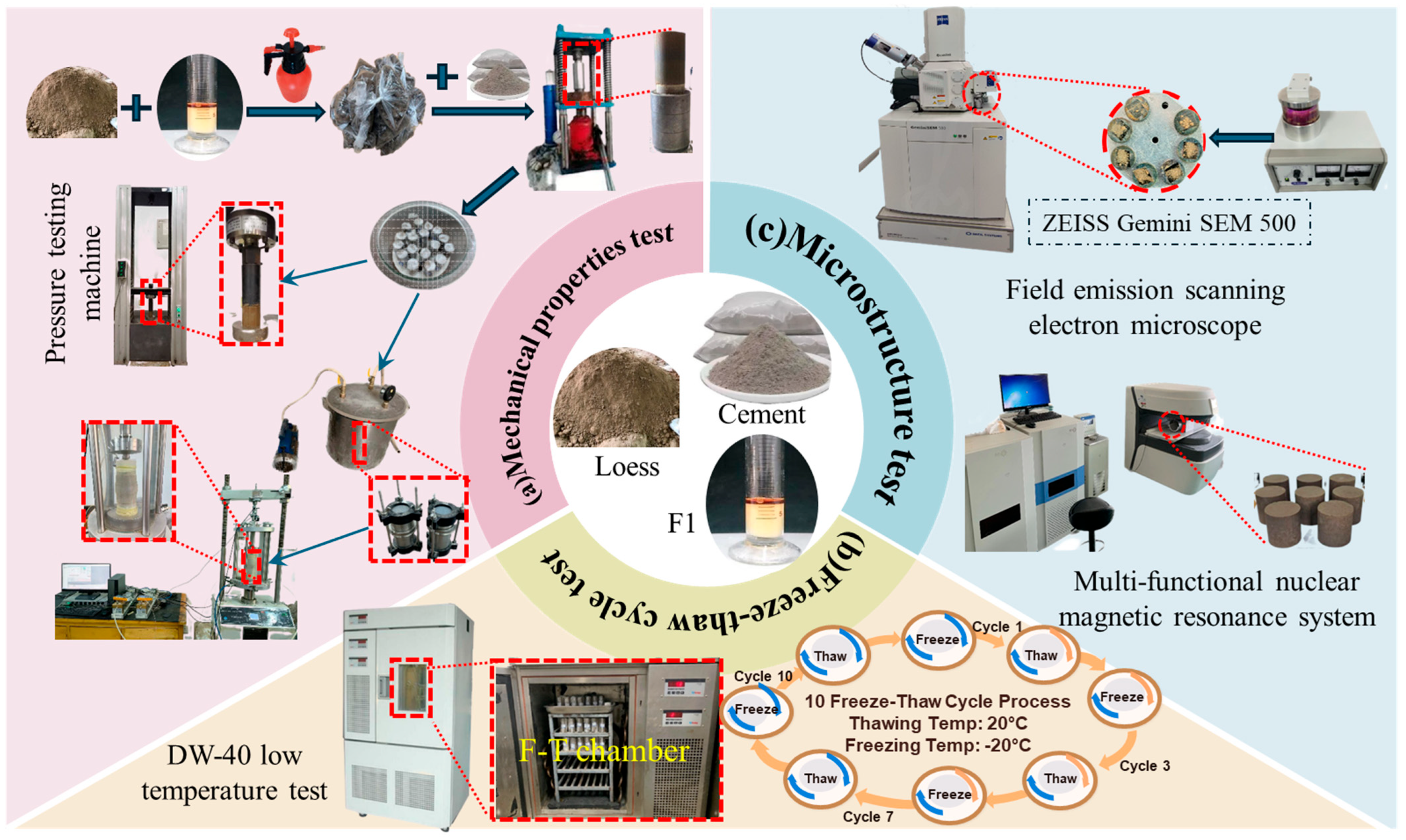
2.2. Test Scheme Design and Sample Preparation
- (1)
- Sample preparation
- (2)
- Mechanical properties test
- (3)
- Freeze–Thaw cycle tests
- (4)
- Microstructure test
3. Results and Discussion
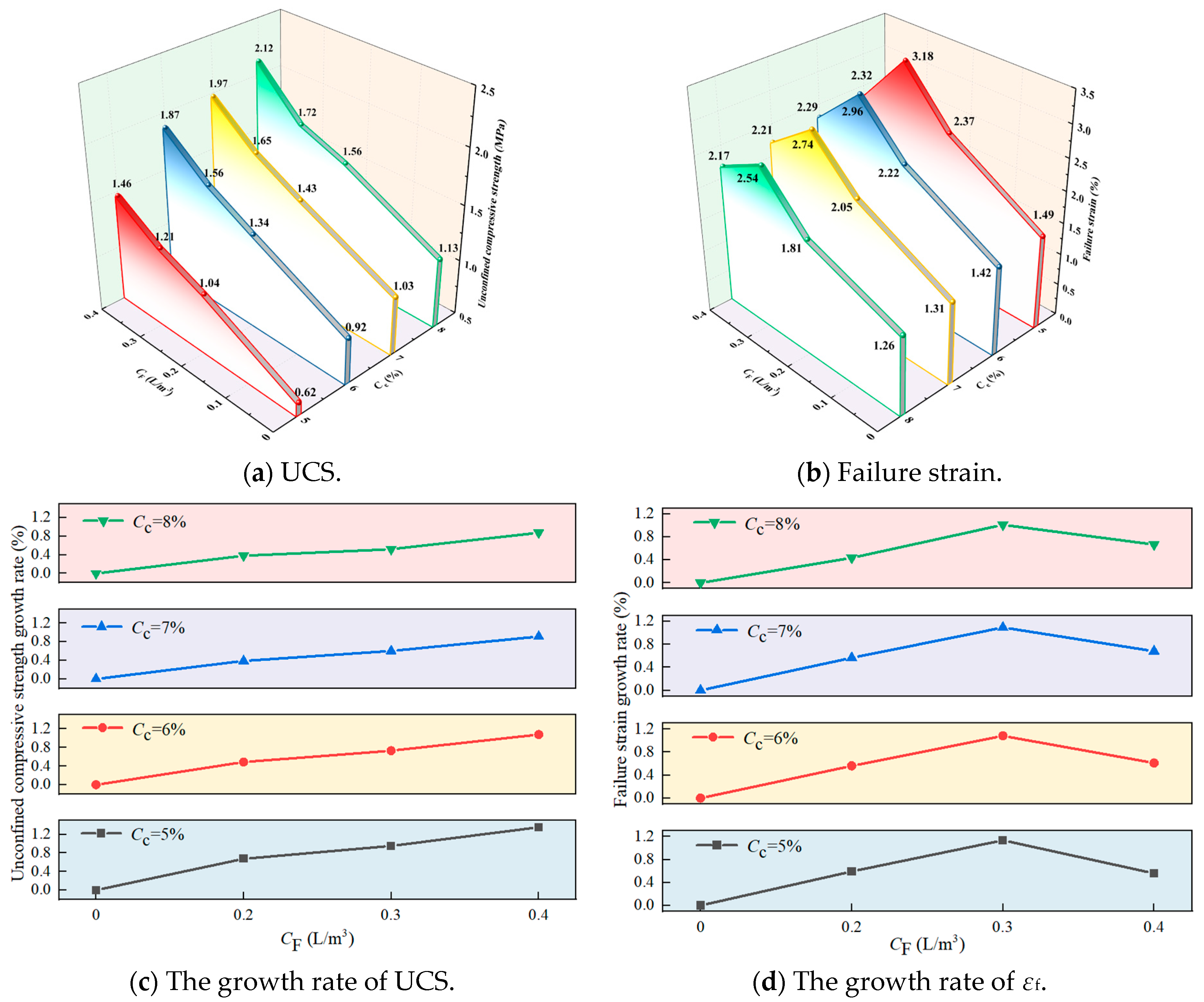
3.1. Effect of Cc and CF on UCS
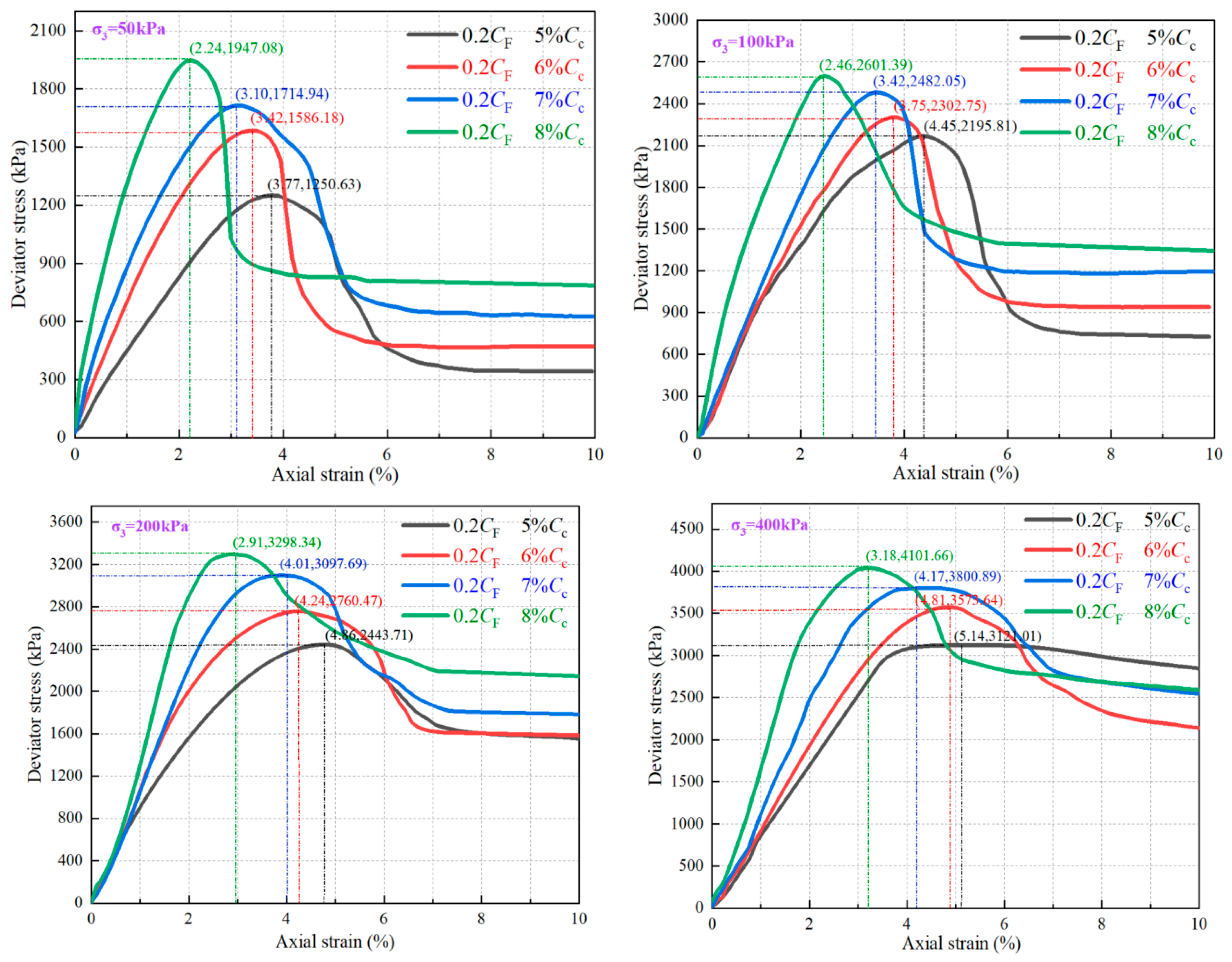
3.2. Effect of Cc on FCIL Stress–Strain Relationship
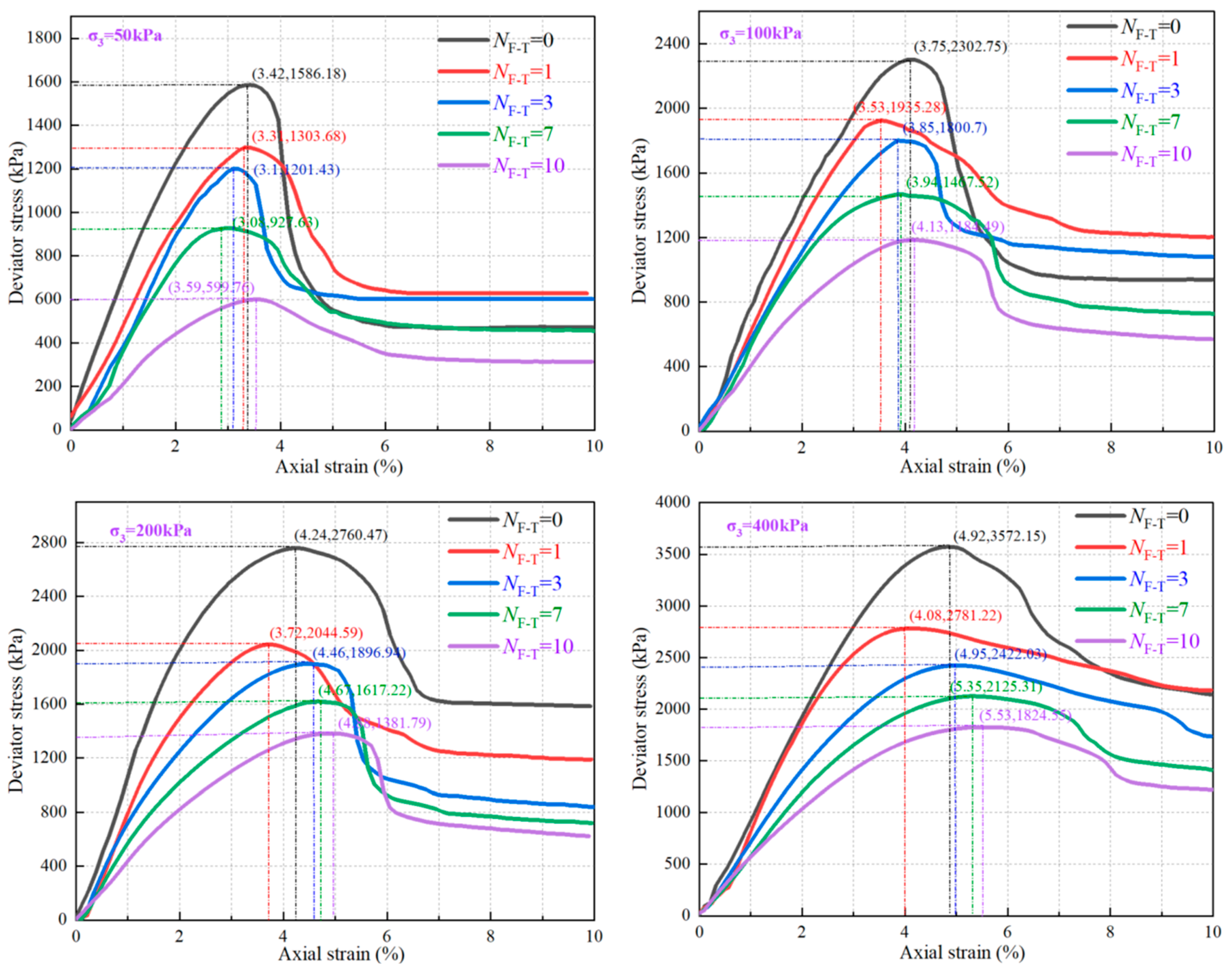
3.3. Effect of NF-T on FCIL Stress–Strain Relationship
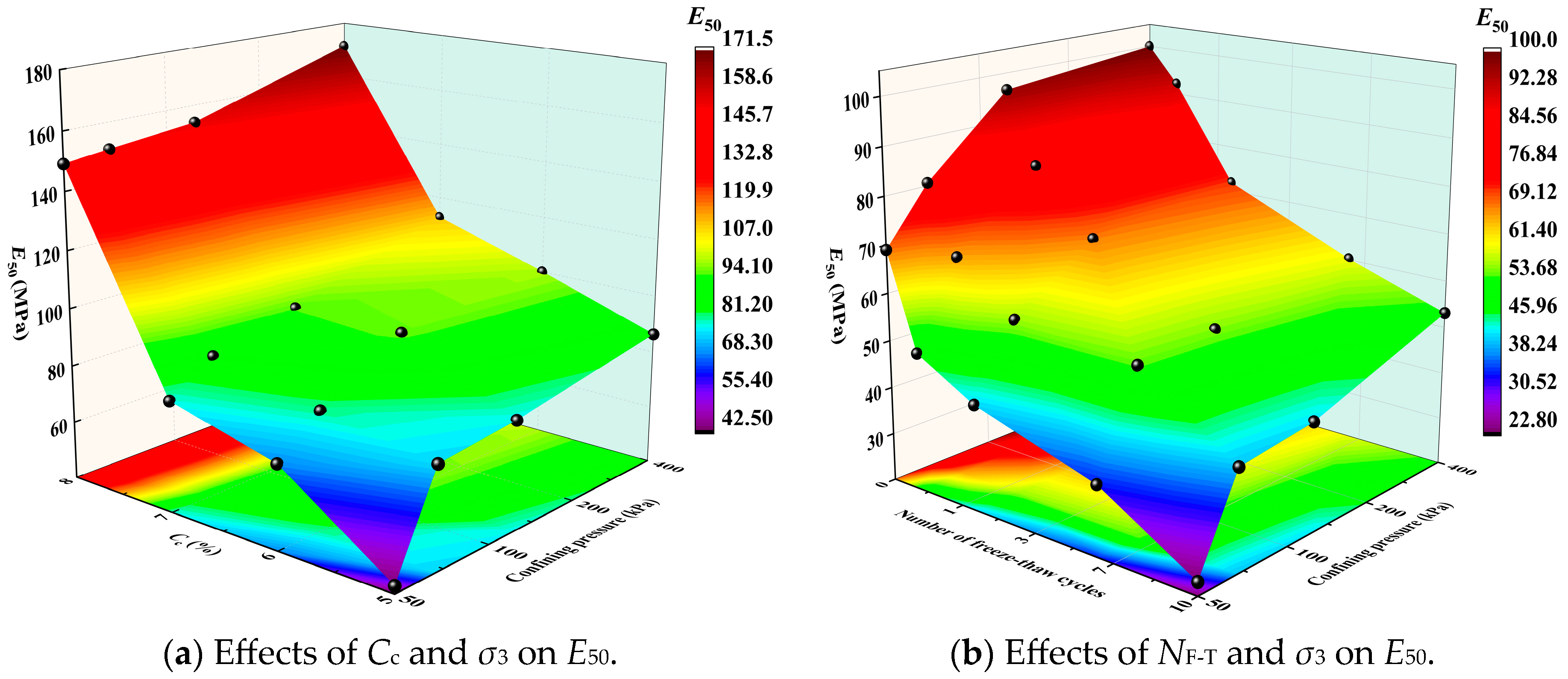
3.4. Secant Deformation Modulus at 50% of Peak Strength
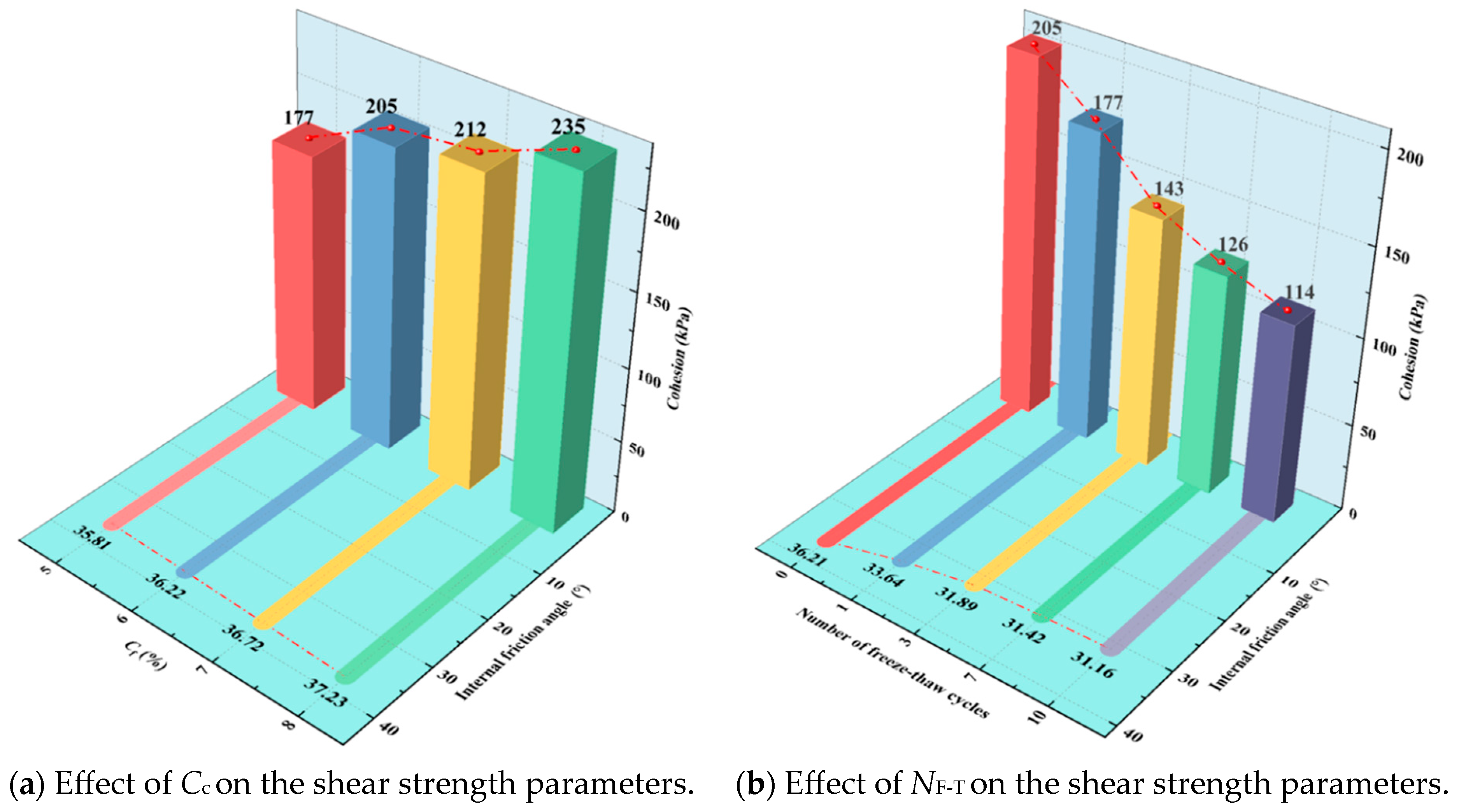
3.5. Shear Strength Parameter on FCIL
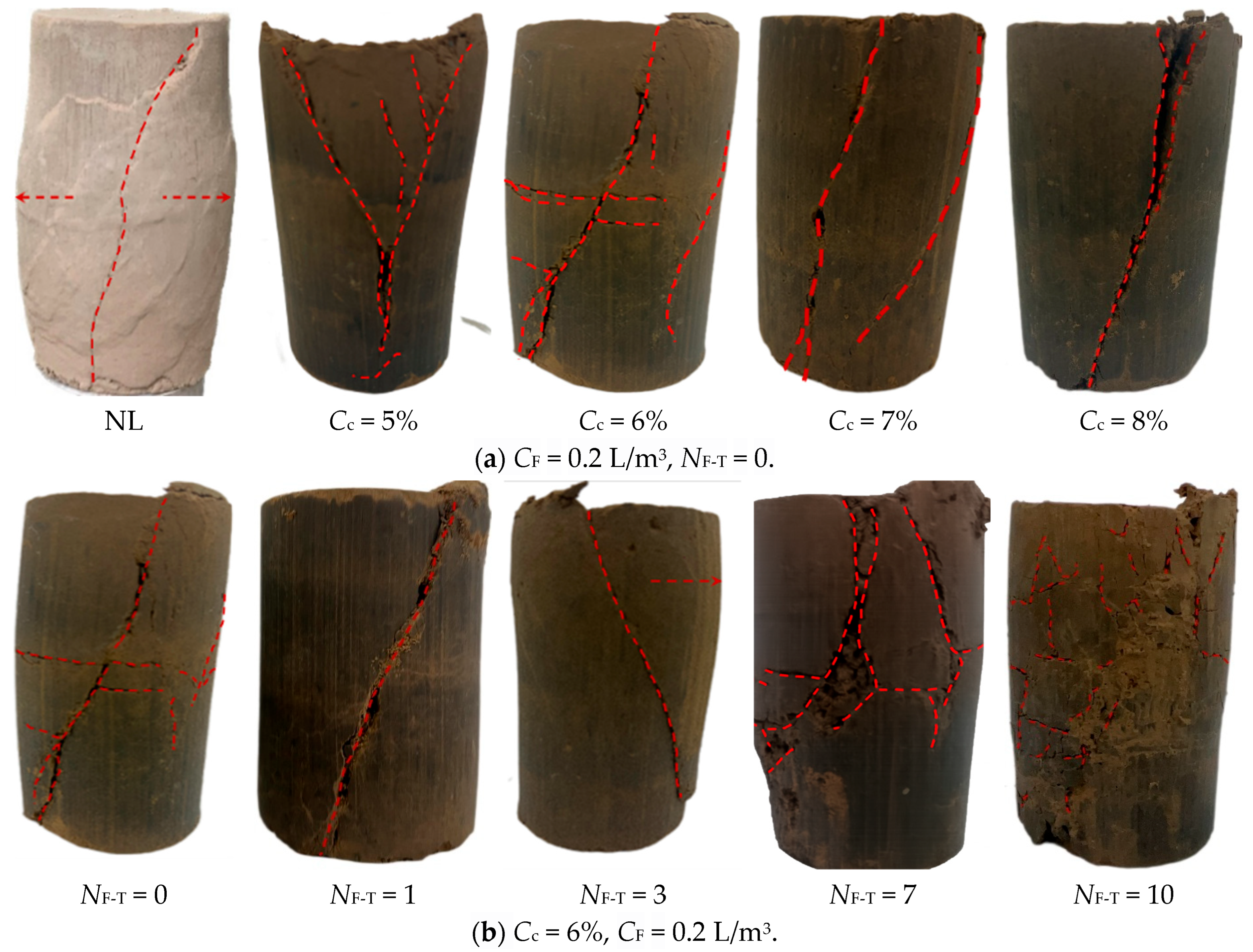
3.6. Failure Characteristics of FCIL
3.7. Microstructural Characteristics and Synergistic Improvement Mechanism Analysis
3.7.1. Pore Characteristics of the FCIL
- (1)
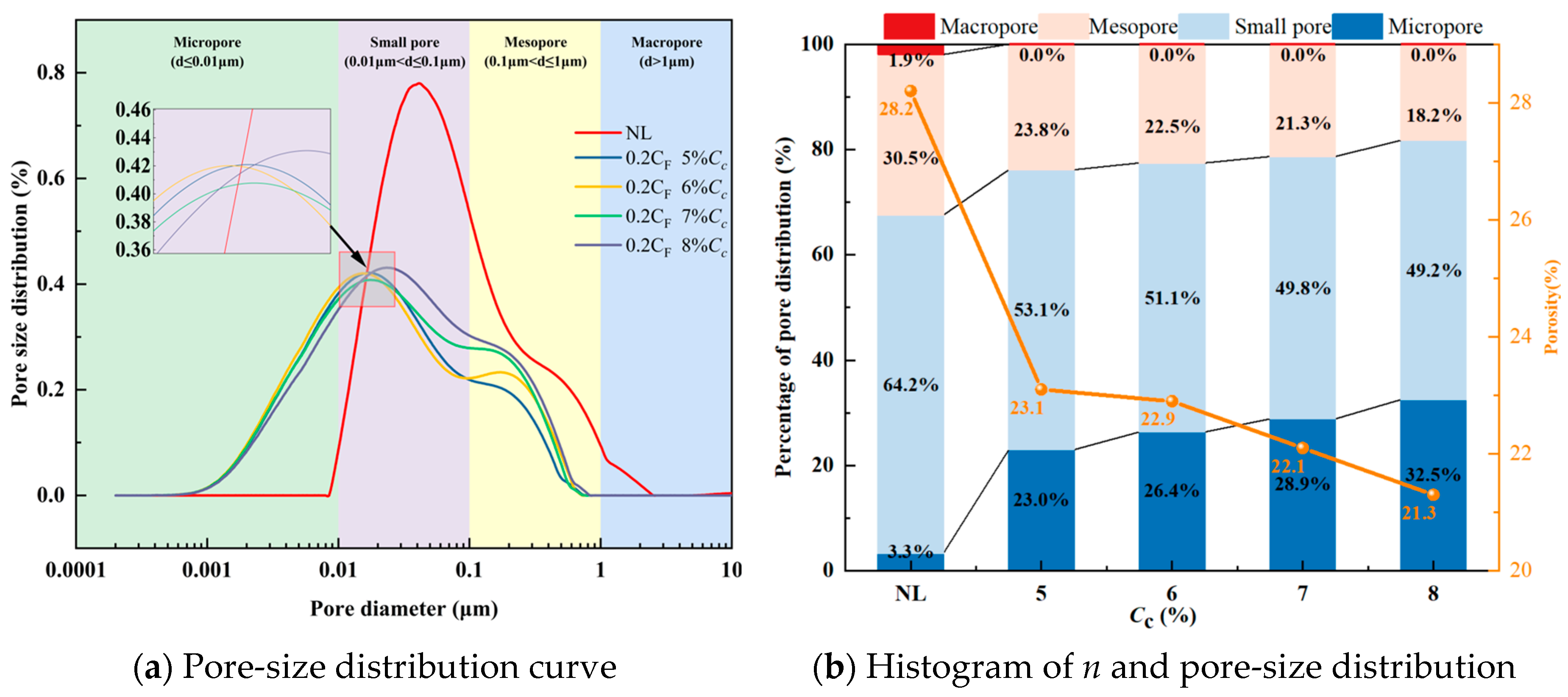
- Effect of Cc on the pore characteristics of FCIL
- (2)
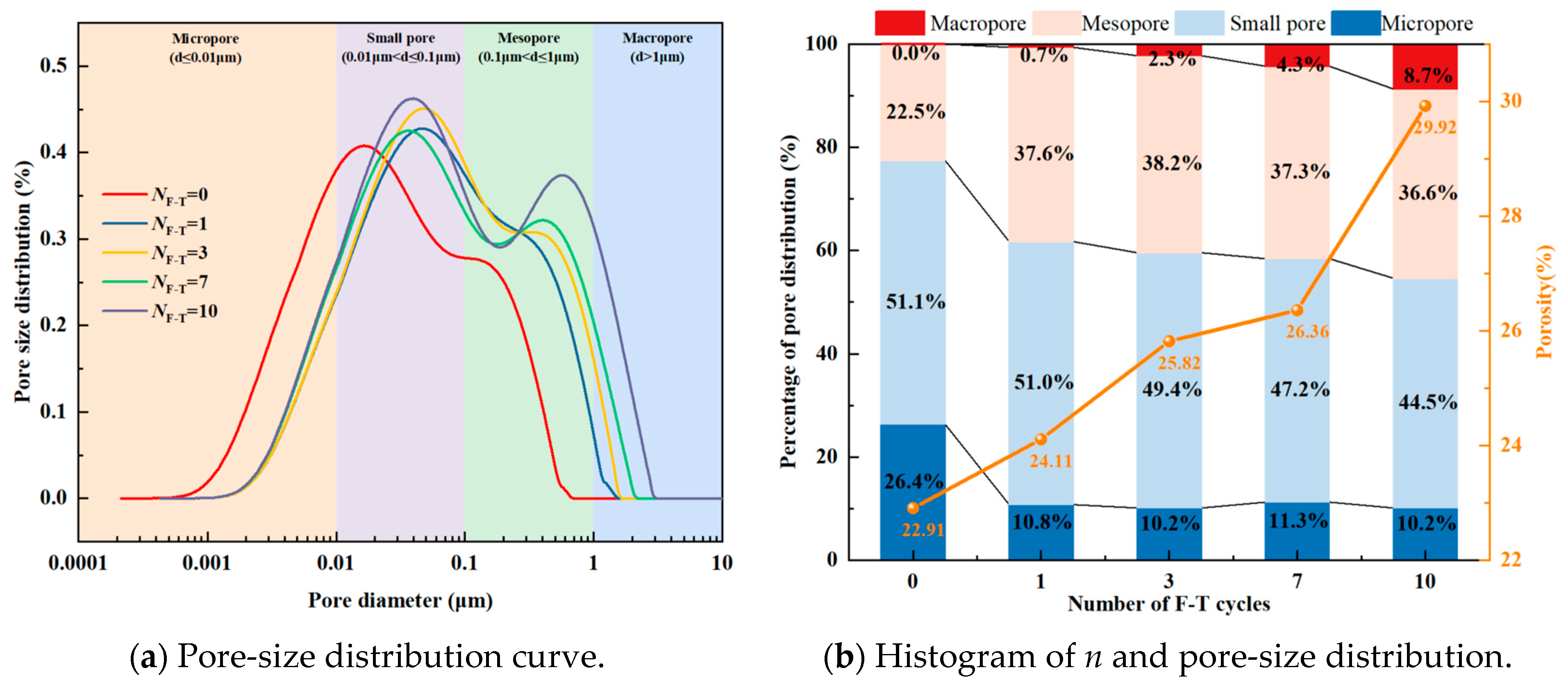
- The effect of NF-T on the pore characteristics of FCIL
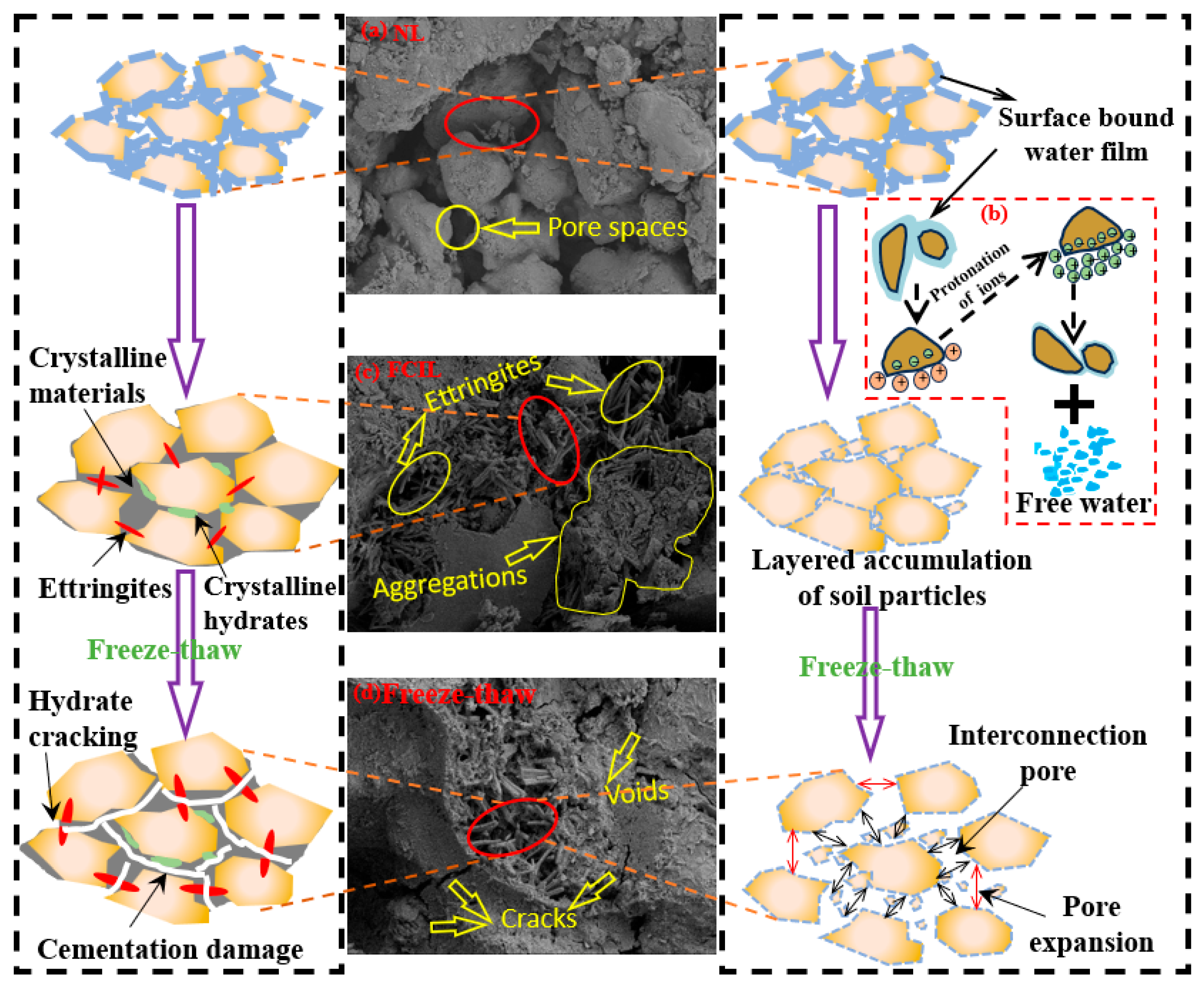
3.7.2. Mechanism Analysis of FCIL Under Freeze–Thaw Cycling
4. Conclusions
- (1)
- The cement content is the primary factor governing the strength of improved loess, while the incorporation of F1 can synergistically enhance strength and markedly increase the failure strain, thereby achieving a simultaneous optimization of strength and ductility. Based on the UC test results, the optimal mix proportion of FCIL was determined as Cc = 6% and CF = 0.2 L/m3. After 7 days of curing, the UCS and εf of FCIL reached 1.35 MPa and 2.21%, respectively. This mix proportion not only satisfies the strength requirements for subgrade materials but also effectively reduces cement consumption and alleviates the brittleness of cement-improved loess, demonstrating good engineering and economic benefits.
- (2)
- Compared with CF = 0 L/m3 (Cc = 6%), when CF = 0.2, 0.3, and 0.4 L/m3, the UCS of FCIL increased by 48.89%, 73.33%, and 108.11%, respectively, and the corresponding εf increased by 56.28%, 108.38%, and 61.07%, respectively. With increasing Cc, enhanced interparticle cementation significantly increases the c of FCIL, resulting in higher stiffness and a more brittle failure behavior of the specimens, whereas the increase in φ is relatively limited. With increasing NF-T, numerous intersecting cracks develop on the lateral surface and top of the specimens; the single shear plane gradually transitions into a crushed shear band, and the bulging phenomenon becomes more pronounced. Accordingly, the stress–strain curves exhibit a plastic failure feature characterized by a marked decrease in qmax and a flatter post-peak response.
- (3)
- NMR and SEM analyses indicate that, after improvement with cement and F1, the proportions of small and medium pores, as well as the n, decreased significantly, whereas micropores increased and large pores almost disappeared. With increasing NF-T, the proportions of medium and large pores and n increased markedly, while small pores and micropores decreased, indicating that the pore-size distribution evolved toward medium and large pores. F1 can thin the water film and reduce interparticle spacing through ion exchange. Cement hydration products can bond soil particles and fill interparticle pores, while the sulfonated oil component of F1 forms a hydrophobic barrier that suppresses water migration and microcrack propagation. Consequently, the pore structure of loess is substantially improved, leading to enhanced strength and improved stability against freeze–thaw cycling.
Author Contributions
Funding
Institutional Review Board Statement
Informed Consent Statement
Data Availability Statement
Acknowledgments
Conflicts of Interest
References
- Li, Y.; Shi, W.; Aydin, A.; Beroya-Eitner, M.A.; Gao, G. Loess genesis and worldwide distribution. Earth-Sci. Rev. 2020, 201, 102947. [Google Scholar] [CrossRef]
- Long, Z.; Ye, S.; Hao, Y.; He, L.; Zhu, Y.; Mu, J.; Li, X. Modeling loess collapsibility using oedometer tests for foundation and pile settlement prediction. Sci. Rep. 2025, 15, 42211. [Google Scholar] [CrossRef]
- Sun, H.; Xie, M.; Cui, W.; Xie, X.; Zong, S. Research progress of loess reinforcement technology: A bibliometric network analysis. Constr. Build. Mater. 2024, 436, 136942. [Google Scholar] [CrossRef]
- Guo, J.; Jia, L.; Wei, Z.; Yao, K.; Wu, R. Mechanical properties and engineering applications of low-dosage cement/lime-stabilized loess improved with nano-MgO and nan-SiO2. Transp. Geotech. 2024, 49, 101450. [Google Scholar] [CrossRef]
- Niu, Y.; Hou, L.; Qin, Z.; Wang, X.; Zhang, Y.; Shao, W.; Jiang, G.; Guo, X.; Zhang, J. Mechanical properties and constitutive model of the cement-improved loess under freeze-thaw conditions. Materials 2022, 15, 7042. [Google Scholar] [CrossRef]
- Mishra, A.; Dixit, A.; Singh, A.K.; Das, S.K. Strength, deformation, and environmental impact assessment of cement stabilized mine overburden soil. J. Clean. Prod. 2024, 447, 141475. [Google Scholar] [CrossRef]
- Li, Z.; Wang, Y.H.; Ma, C.H.; Mok, C.M.B. Experimental characterization and 3D DEM simulation of bond breakages in artificially cemented sands with different bond strengths when subjected to triaxial shearing. Acta Geotech. 2017, 12, 987–1002. [Google Scholar] [CrossRef]
- Wang, L.; Na, B.; Chen, W. Synergistic Effects of Lignin Fiber and Sodium Sulfate on Mechanical Properties and Micro-Structure of Cement-Stabilized Soil. Materials 2025, 18, 3929. [Google Scholar] [CrossRef] [PubMed]
- Xue, Z.; Zhu, W.; Li, L.; Jiang, C.; Yan, C.; Wang, Y.; Gao, J.; Luo, J. Carbon emissions assessment of cement mixing piles for soft loess improvement and carbon emission reduction using white mud-cement composite material. Case Stud. Constr. Mater. 2024, 21, e03397. [Google Scholar] [CrossRef]
- Wu, T.; Ng, S.T.; Chen, J. Incorporating carbon capture and storage in decarbonizing China’s cement sector. Renew. Sustain. Energy Rev. 2025, 209, 115098. [Google Scholar] [CrossRef]
- Li, J.; Li, B.; Zhang, Y.; Wang, X.; Liu, D.; Niu, Y.; He, F. Research situation and prospect of loess reinforcement by new soil stabilizer material. Mater. Rep. 2025, 39, 369–379. [Google Scholar]
- Li, J.; Li, B.; Zhang, Y.; Jiang, D.; Liu, D.; Wang, J.; Steven. A Mechanism Study of Trial Loess Reinforced by F1 Ionic Soil Stabilizer on Curing Mechanism and Strength Characteristics. Mater. Rep. 2021, 35, 6100–6106. [Google Scholar]
- Yang, B.; Weng, X.; Liu, J.; Kou, Y.-N.; Jiang, L.; Li, H.-L.; Yan, X.-C. Strength characteristics of modified polypropylene fiber and cement-reinforced loess. J. Cent. South Univ. 2017, 24, 560–568. [Google Scholar] [CrossRef]
- Xue, C.; Wang, X.; Lian, B.; Luo, L.; Liu, K. Research on the mechanism of composite improvement of loess based on quantitative analysis of microstructure and mechanical strength. Constr. Build. Mater. 2023, 379, 131215. [Google Scholar] [CrossRef]
- Wang, X.; Xu, Q.; Xu, P.; Pu, C.; Zhou, L.; Dong, S.; Xiao, D.; Gong, X. Composite-improved loess with fly ash-based solid waste materials. J. Rock Mech. Geotech. Eng. 2025; in press. [Google Scholar] [CrossRef]
- Wang, Q.; Li, Y.; Li, P.; Qi, Y. Using cement and calcium lignosulfonate to improve the mechanical properties and microstructure of loess in a seasonal freezing zone. Buildings 2024, 14, 1495. [Google Scholar] [CrossRef]
- Ma, X.; Liu, Y.; Hao, Z.; Yin, W. Study on mechanical properties and durability of composite improved loess using CG-2 curing agent and cement. Constr. Build. Mater. 2024, 451, 138801. [Google Scholar] [CrossRef]
- Niu, Y.; Li, Q.; Wang, X.; Cheng, Y.; Zhang, Y.; Li, T. Study on mechanical properties and constitutive model of cement and polypropylene fiber improved loess considering freeze-thaw cycles. Constr. Build. Mater. 2025, 462, 140011. [Google Scholar] [CrossRef]
- Ghadakpour, M.; Choobbasti, A.J.; Kutanaei, S.S. Experimental study of impact of cement treatment on the shear behavior of loess and clay. Arab. J. Geosci. 2020, 13, 184. [Google Scholar] [CrossRef]
- Axel, M.; Li, X.; Wen, F.; An, M.-X. Microstructure and strength parameters of cement-stabilized loess. Geotechnics 2023, 3, 161–178. [Google Scholar] [CrossRef]
- Yuan, K.; Ni, W.; Lü, X.; Zhu, M. Experimental study on the performance of the modified loess by polypropylene fiber mixed with bentonite and cement. Bull. Eng. Geol. Environ. 2022, 81, 302. [Google Scholar] [CrossRef]
- Gu, K.; Chen, B. Loess stabilization using cement, waste phosphogypsum, fly ash and quicklime for self-compacting rammed earth construction. Constr. Build. Mater. 2020, 231, 117195. [Google Scholar] [CrossRef]
- Xu, Z.; Wu, Y.; Ma, Q.; Wang, J.; Li, L. Study of the law of strength attenuation and microstructure damage to cement improved loess under acid rain erosion. Environ. Earth Sci. 2024, 83, 555. [Google Scholar] [CrossRef]
- Ma, X.; Liu, Y.; Yin, W.; Wang, X.; Guo, S. Experimental study on strength and microstructure of loess improved by CG-2 curing agent and cement. Buildings 2024, 14, 877. [Google Scholar] [CrossRef]
- Tchakalova, B.; Iliev, T. Scanning electron microscopy investigation of loess soil stabilized with cement and natural zeolite. Geol. Balc. 2022, 51, 15–21. [Google Scholar] [CrossRef]
- Li, J.; Wang, X.; Zhang, Y.; Jiang, D.; Liu, D.; Ma, X.; Wang, J. Experimental study on strength and microstructure of loess reinforced with F1 ionic soil stabilizer. J. Southeast Univ. (Nat. Sci. Ed.) 2021, 51, 618–624. [Google Scholar]
- Zhang, L.; Bian, M.; Xiao, Z.; Wang, X.; Han, B. A comprehensive review of cementitious composites modified with nano silica: Fabrication, microstructures, properties and applications. Constr. Build. Mater. 2023, 409, 133922. [Google Scholar] [CrossRef]
- Research Institute of Highway, Ministry of Transport. Technical Guidelines for Construction of Highway Roadbases; People’s Communications Publishing House Co., Ltd.: Beijing, China, 2021; pp. 13–15. [Google Scholar]
- Shen, Y.; Tang, Y.; Yin, J.; Li, M.-P.; Wen, T. An experimental investigation on strength characteristics of fiber-reinforced clayey soil treated with lime or cement. Constr. Build. Mater. 2021, 294, 123537. [Google Scholar] [CrossRef]
- Wang, J.; Chi, S.; Shao, X.; Zhao, F. Application of orthogonal-contour method in calibration of microscopic parameters of rockfill materials. Chin. J. Geotech. Eng. 2020, 42, 1867–1875. [Google Scholar]
- Lu, Y.; Liu, S.; Zhang, Y.; Li, Z.; Xu, L. Freeze-thaw performance of a cement-treated expansive soil. Cold Reg. Sci. Technol. 2020, 170, 102926. [Google Scholar] [CrossRef]
- Jiang, Y.; Ni, C.; Sha, H.; Li, Z.-H.; Cai, L.-Y. Deterioration characteristics of cement-improved loess under dry–wet and freeze–thaw cycles. PLoS ONE 2021, 16, e0253199. [Google Scholar] [CrossRef] [PubMed]
- Nie, Y.; Ni, W.; Wang, H.; Yuan, K.; Zhao, Y. The influence of dry-wet cycles on loess erodibility and microscopic interpretation based on SEM and NMR. Catena 2026, 262, 109633. [Google Scholar] [CrossRef]
- Kong, F.; Nie, L.; Xu, Y.; Rui, X.; He, Y.; Zhang, T.; Wang, Y.; Du, C.; Bao, C. Effects of freeze-thaw cycles on the erodibility and microstructure of soda-saline loessal soil in Northeastern China. Catena 2022, 209, 105812. [Google Scholar] [CrossRef]
- Wu, X.T.; Qi, Y.; Chen, B. Solidification effect and mechanism of ionic soil stabilizer applied on high-water-content clay. Bull. Eng. Geol. Environ. 2021, 80, 8583–8595. [Google Scholar] [CrossRef]



| NL | F1 | Cement |
|---|---|---|
| Natural density: 1.39 g/cm3 | Density: 1.34 g/cm3 | Strength grade: 42.5 |
| Liquid limit: 26.3% | Water solubility: 100% | Density: 3.12 g/cm3 |
| Plastic limit: 18.86% | Acidity: 0.5~1.5 | Initial setting time: 261 min |
| Optimal water content: 14.64% | Volatilization rate: <1% | Final setting time: 312 min |
| Maximum dry density: 1.787 g/cm3 | Boiling point: >100 °C | Compressive strength (3/28 d): 20/40.1 MPa |
| Plasticity index: 7.44 | Solidifying point: <0 °C | Flexural strength (3/28 d): 4.3/7.2 MPa |
| NF-T | σ3 (kPa) | CF (L/m3) | Cc (%) | v (mm/min) | |
|---|---|---|---|---|---|
| UC tests | 0 | 0, 0.2, 0.3, 0.4 | 5, 6, 7, 8 | 1 | |
| CU tests | 0 | 50, 100, 200, 400 | 0.2 | 5, 6, 7, 8 | 0.5 |
| 1, 3, 7, 10 | 50, 100, 200, 400 | 0.2 | 6 | 0.5 | |
| NMR | 0 | 0, 0.2 | 0, 5, 6, 7, 8 | ||
| 1, 3, 7, 10 | 0.2 | 6 | |||
| SEM tests | 0, 10 | 0, 0.2 | 0, 6 |
Disclaimer/Publisher’s Note: The statements, opinions and data contained in all publications are solely those of the individual author(s) and contributor(s) and not of MDPI and/or the editor(s). MDPI and/or the editor(s) disclaim responsibility for any injury to people or property resulting from any ideas, methods, instructions or products referred to in the content. |
© 2026 by the authors. Licensee MDPI, Basel, Switzerland. This article is an open access article distributed under the terms and conditions of the Creative Commons Attribution (CC BY) license.
Share and Cite
Wang, X.; Li, J.; Wang, X.; Li, B.; Zhang, Y.; Zuo, Z. Mechanical Properties and Freeze–Thaw Cycling Degradation of Loess Improved with an Ionic Curing Agent and Cement Composite. Materials 2026, 19, 1242. https://doi.org/10.3390/ma19061242
Wang X, Li J, Wang X, Li B, Zhang Y, Zuo Z. Mechanical Properties and Freeze–Thaw Cycling Degradation of Loess Improved with an Ionic Curing Agent and Cement Composite. Materials. 2026; 19(6):1242. https://doi.org/10.3390/ma19061242
Chicago/Turabian StyleWang, Xingwei, Jiandong Li, Xu Wang, Baiwei Li, Yanjie Zhang, and Zhen Zuo. 2026. "Mechanical Properties and Freeze–Thaw Cycling Degradation of Loess Improved with an Ionic Curing Agent and Cement Composite" Materials 19, no. 6: 1242. https://doi.org/10.3390/ma19061242
APA StyleWang, X., Li, J., Wang, X., Li, B., Zhang, Y., & Zuo, Z. (2026). Mechanical Properties and Freeze–Thaw Cycling Degradation of Loess Improved with an Ionic Curing Agent and Cement Composite. Materials, 19(6), 1242. https://doi.org/10.3390/ma19061242