Influence of Industrial Waste Gypsums in Excess-Sulfated Slag Cement: The Role of Wet Grinding

Abstract
1. Introduction
2. Materials and Methods
2.1. Raw Materials
2.2. Sample Preparation and Experimental Procedures
2.3. Experimental Test
3. Results and Discussions
3.1. Properties of Gypsums and Fresh Pastes
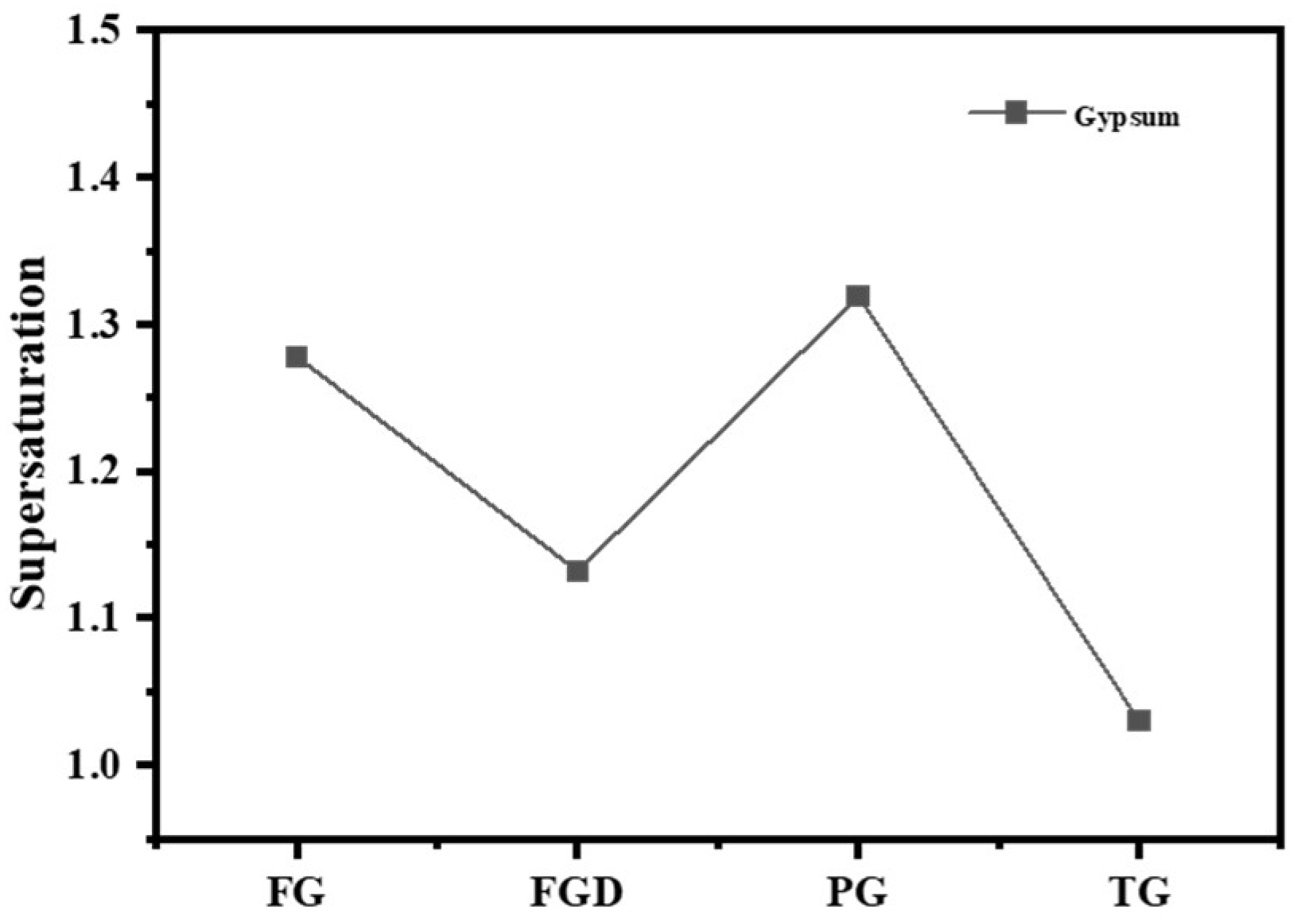
3.1.1. Gypsum Dissolution Behavior Analysis
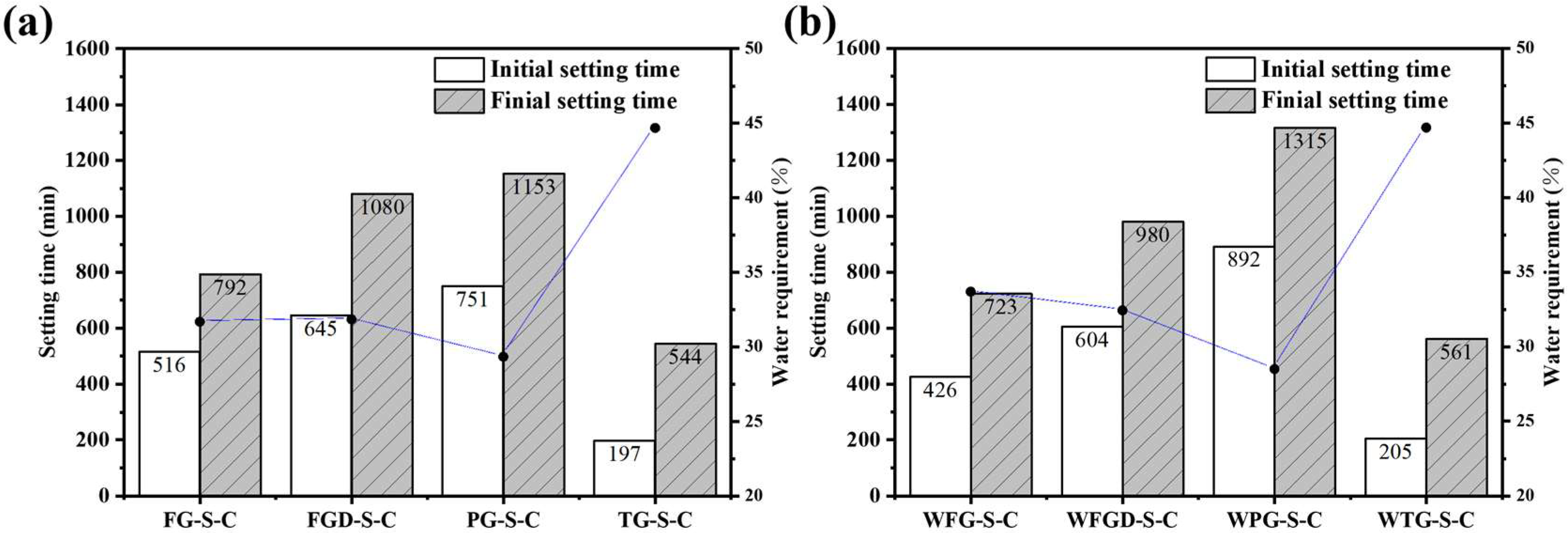
3.1.2. Setting Time
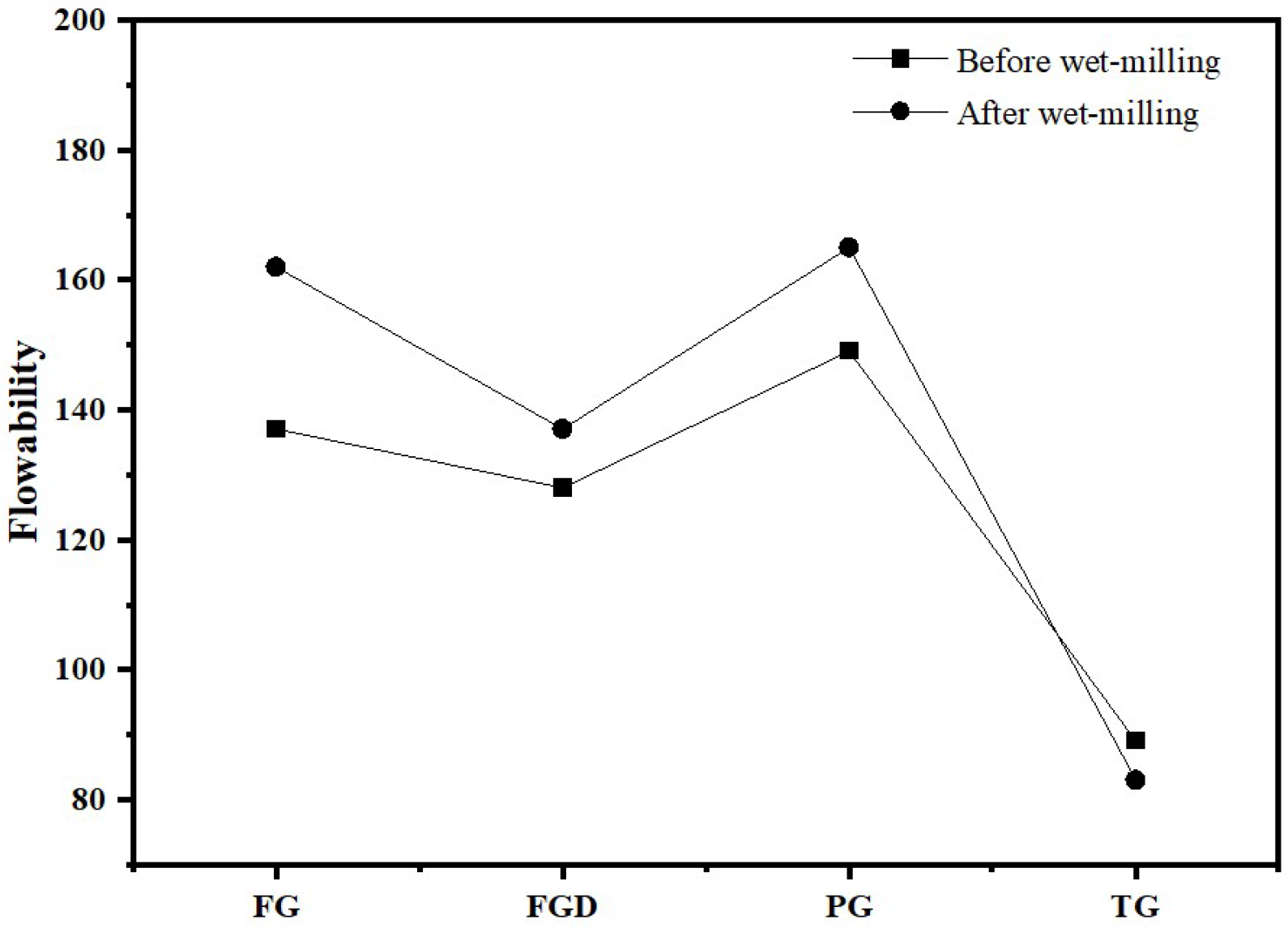
3.1.3. Flowability
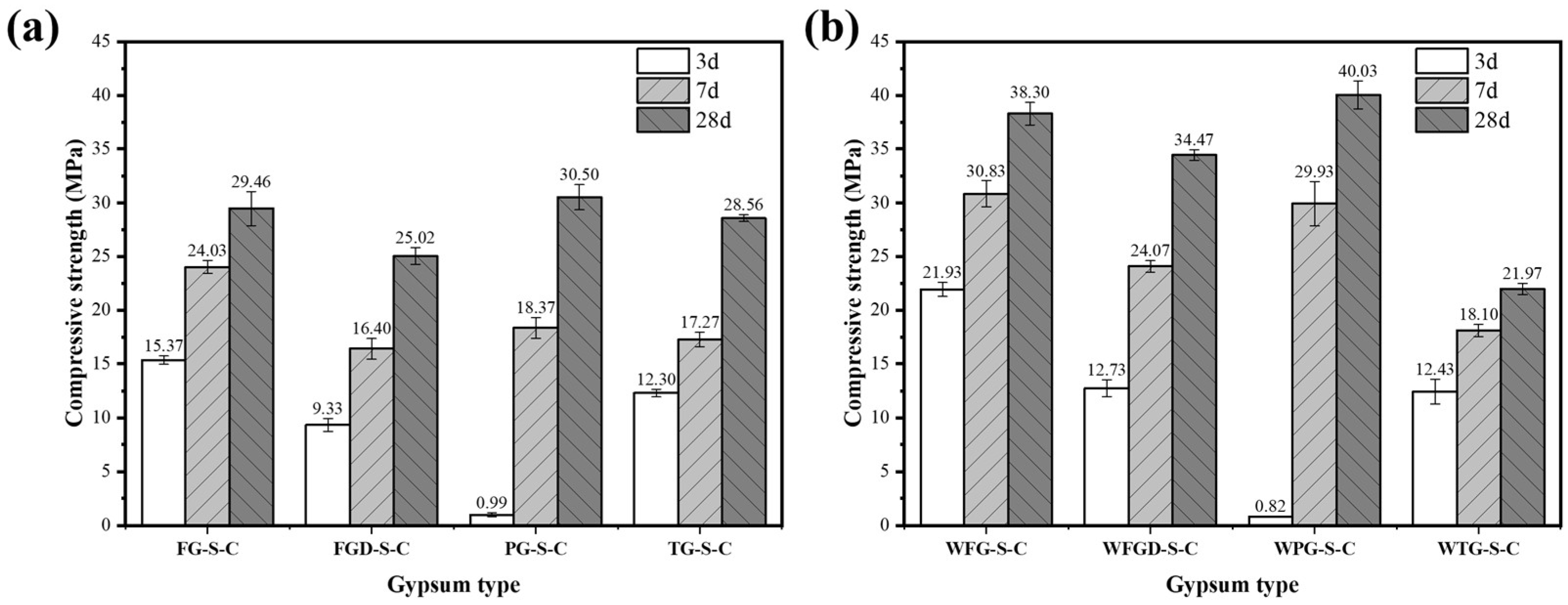
3.2. Compressive Strength
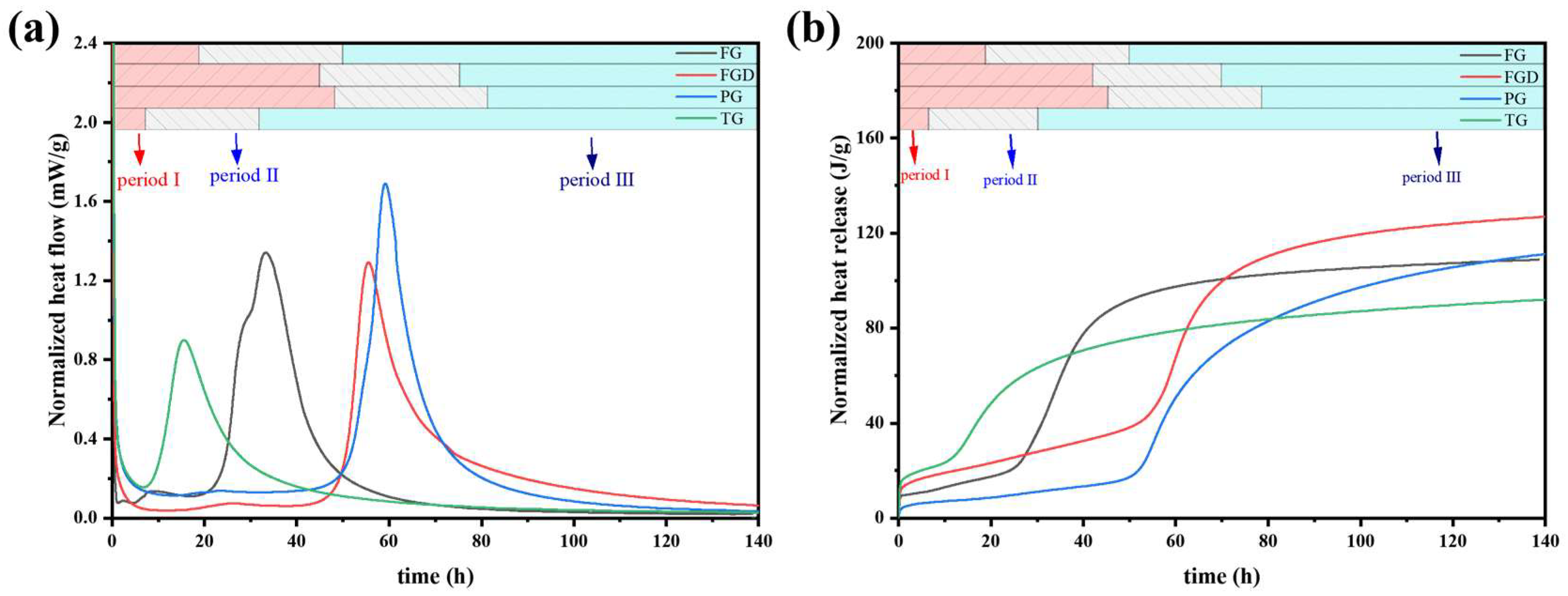
3.3. Hydration Heat
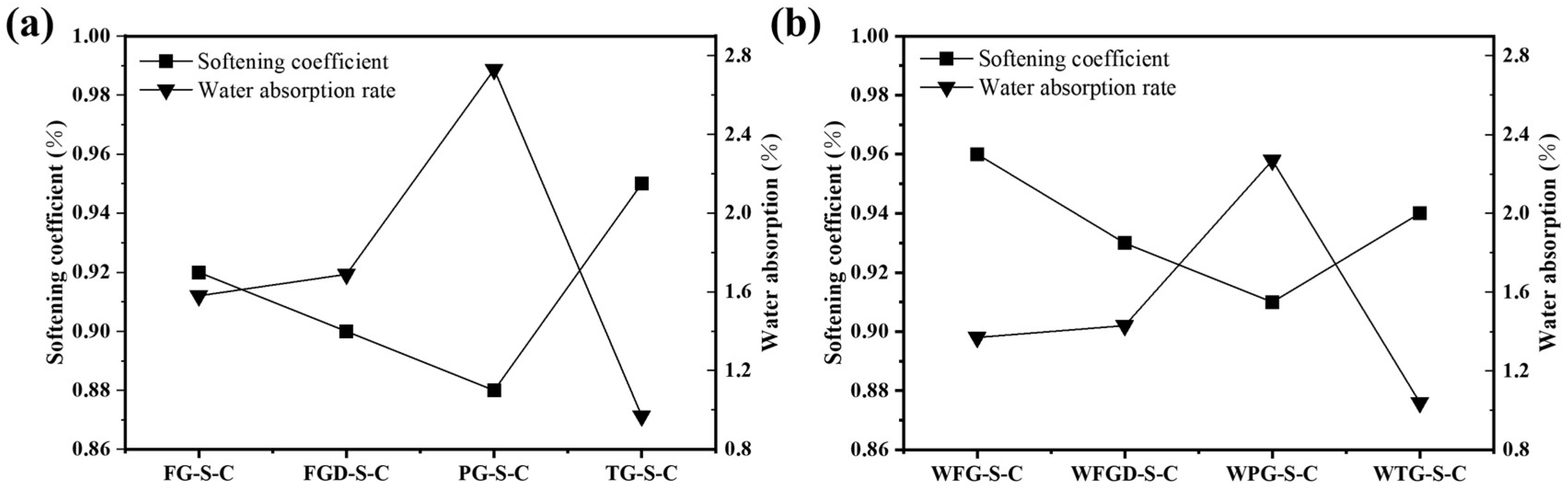
3.4. Softening Coefficient and Water Absorption Rate
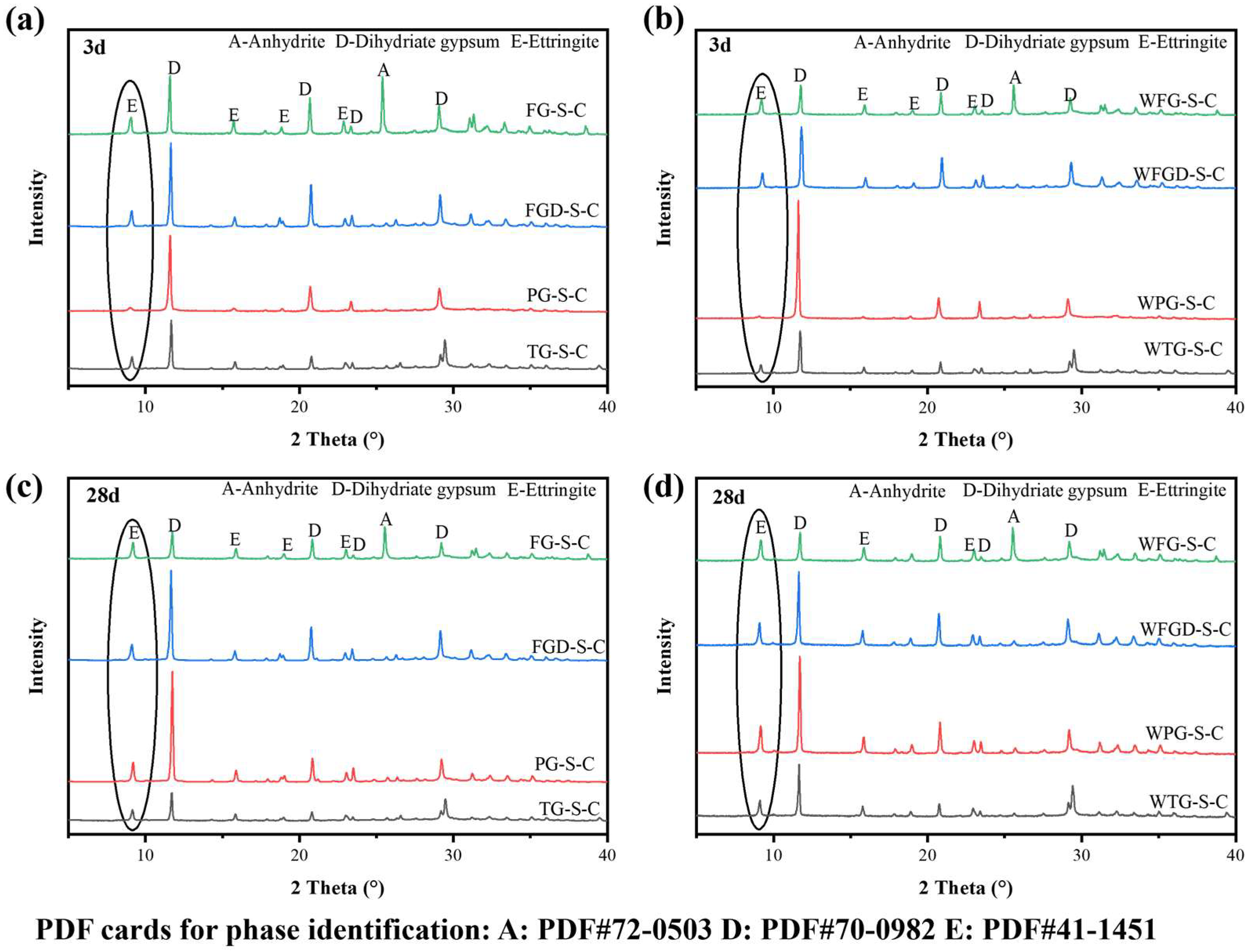
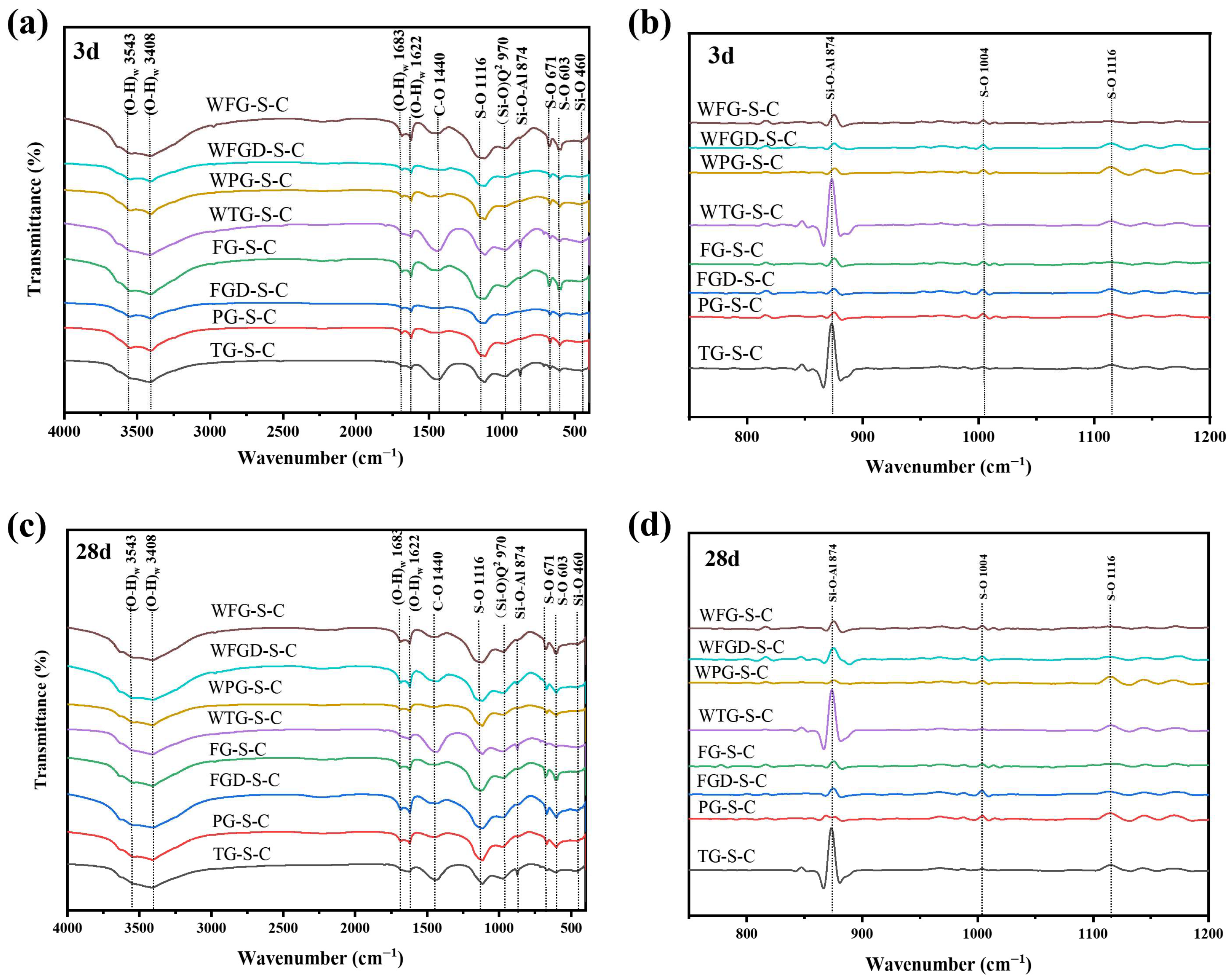
3.5. Hydration Phase Analysis
3.5.1. XRD
3.5.2. FTIR Results
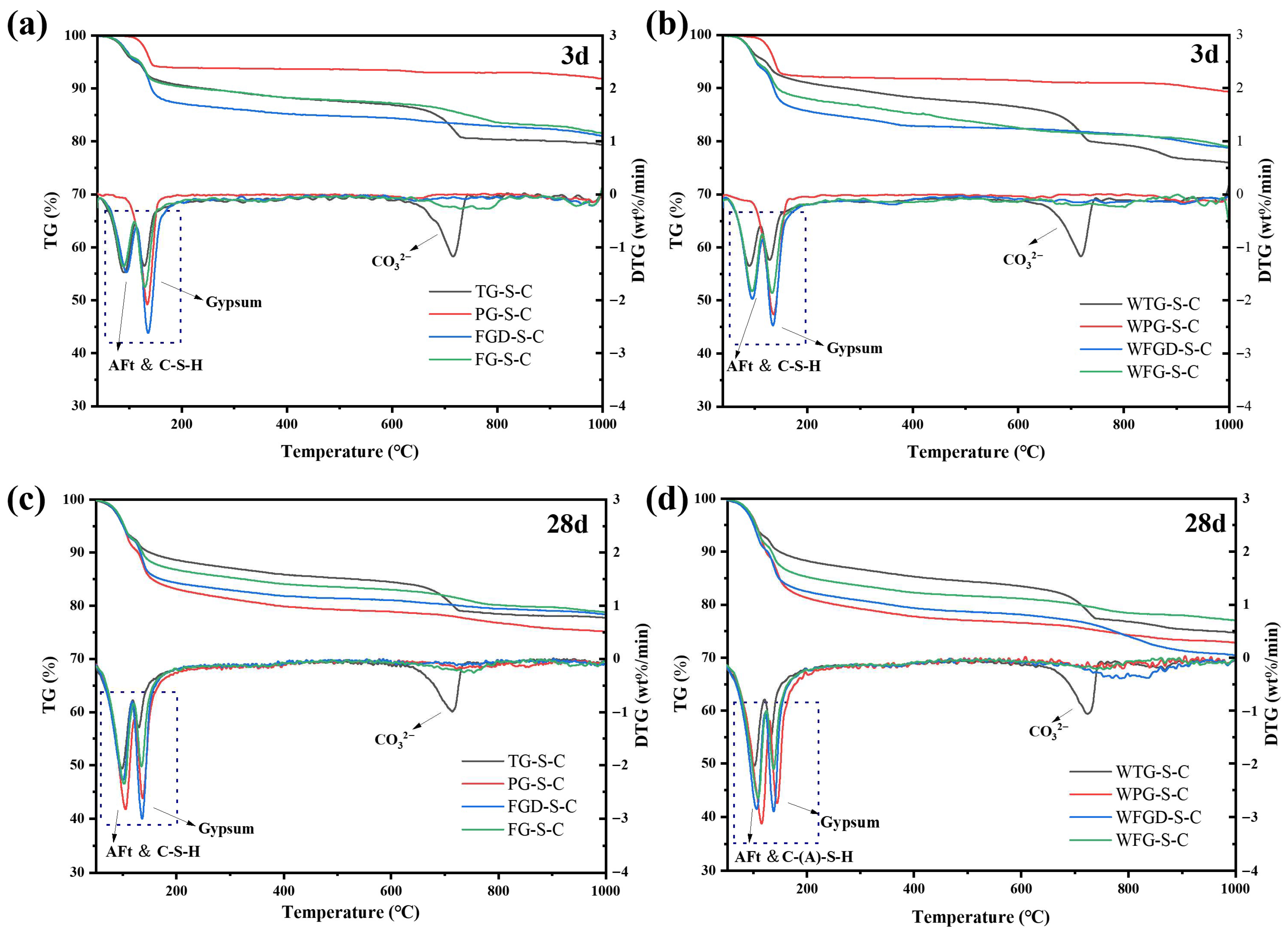
3.5.3. Thermogravimetric Analysis
3.6. Microstructure
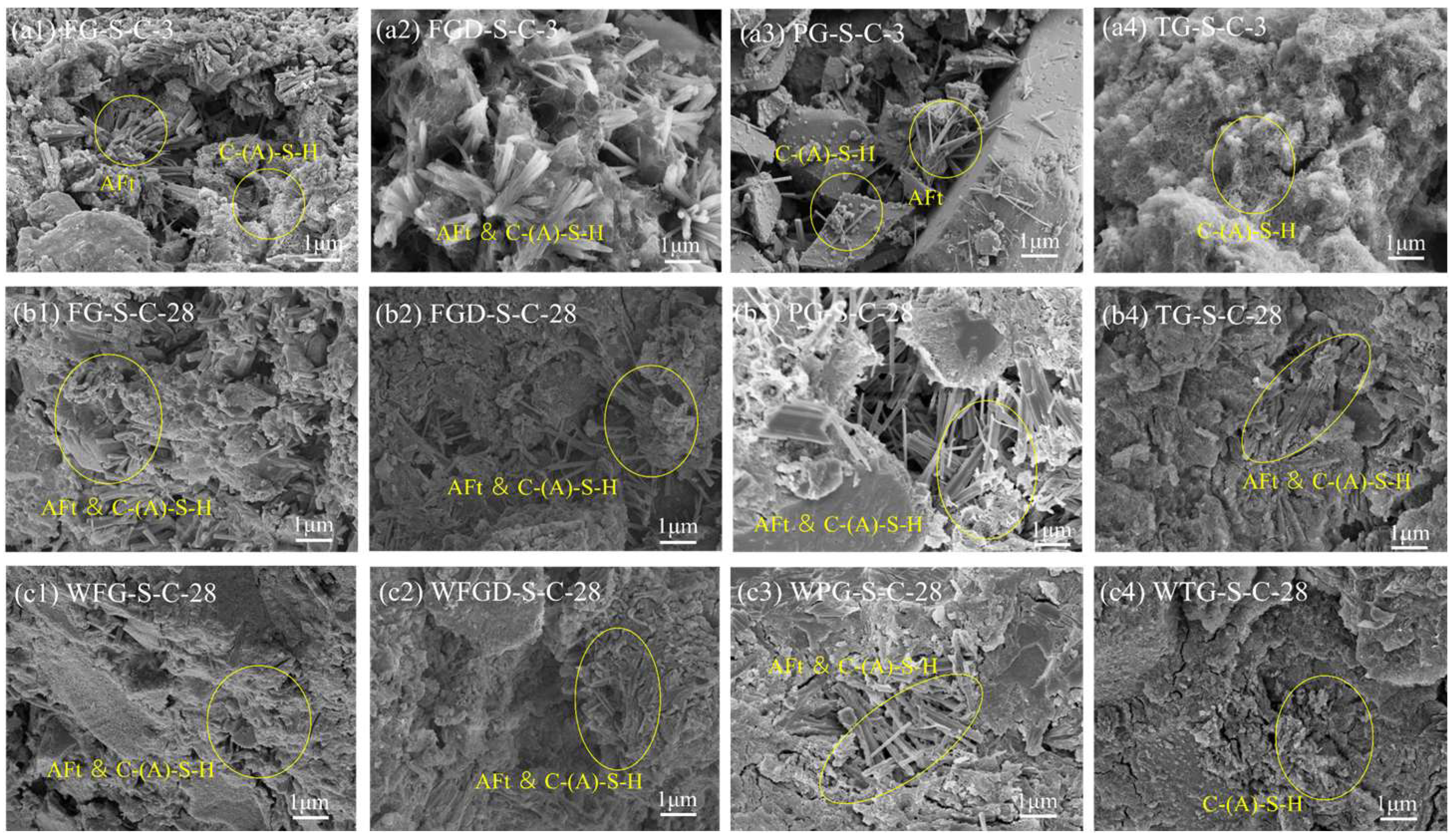
3.6.1. SEM Analysis
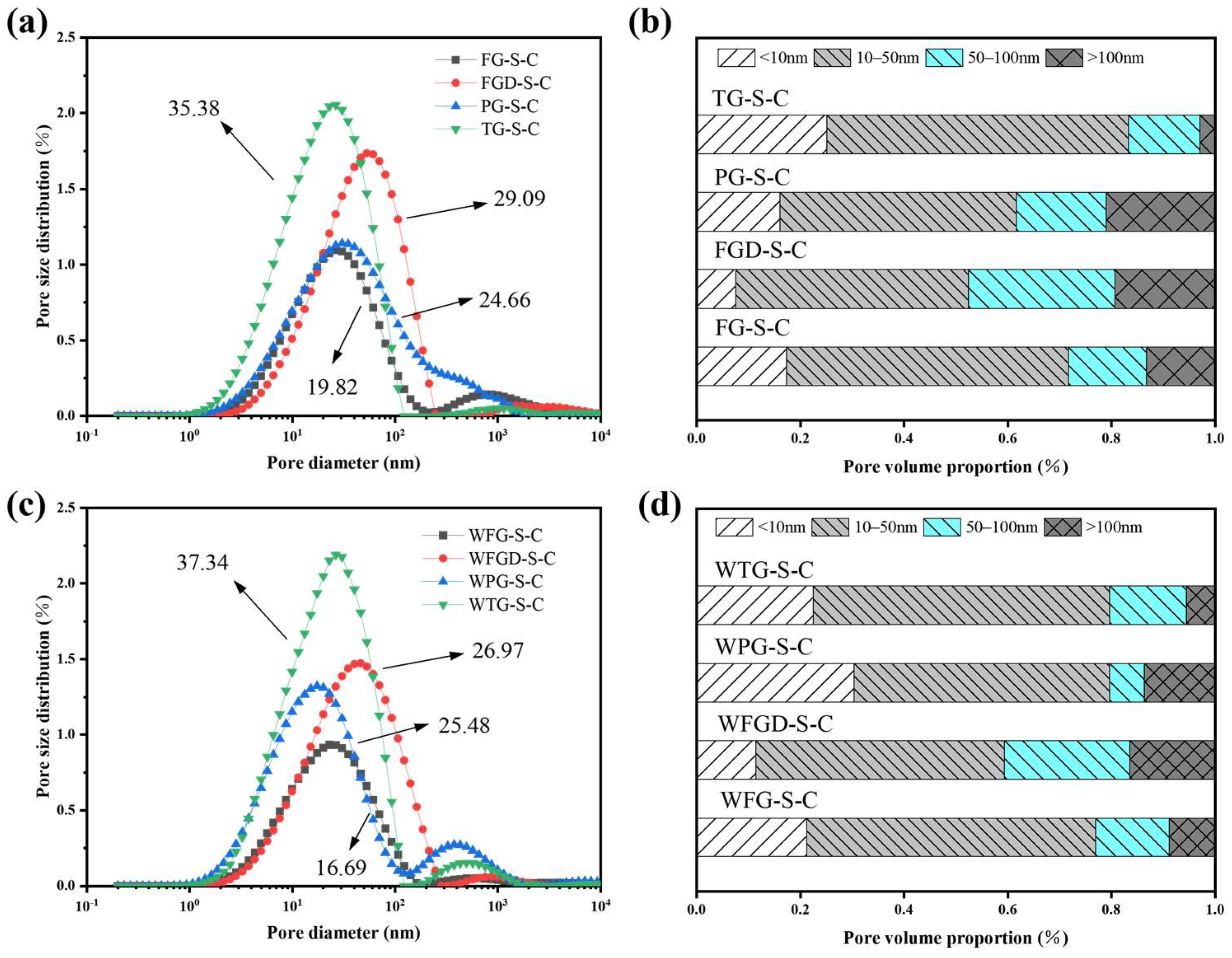
3.6.2. Pore Structure
3.7. Further Discussion
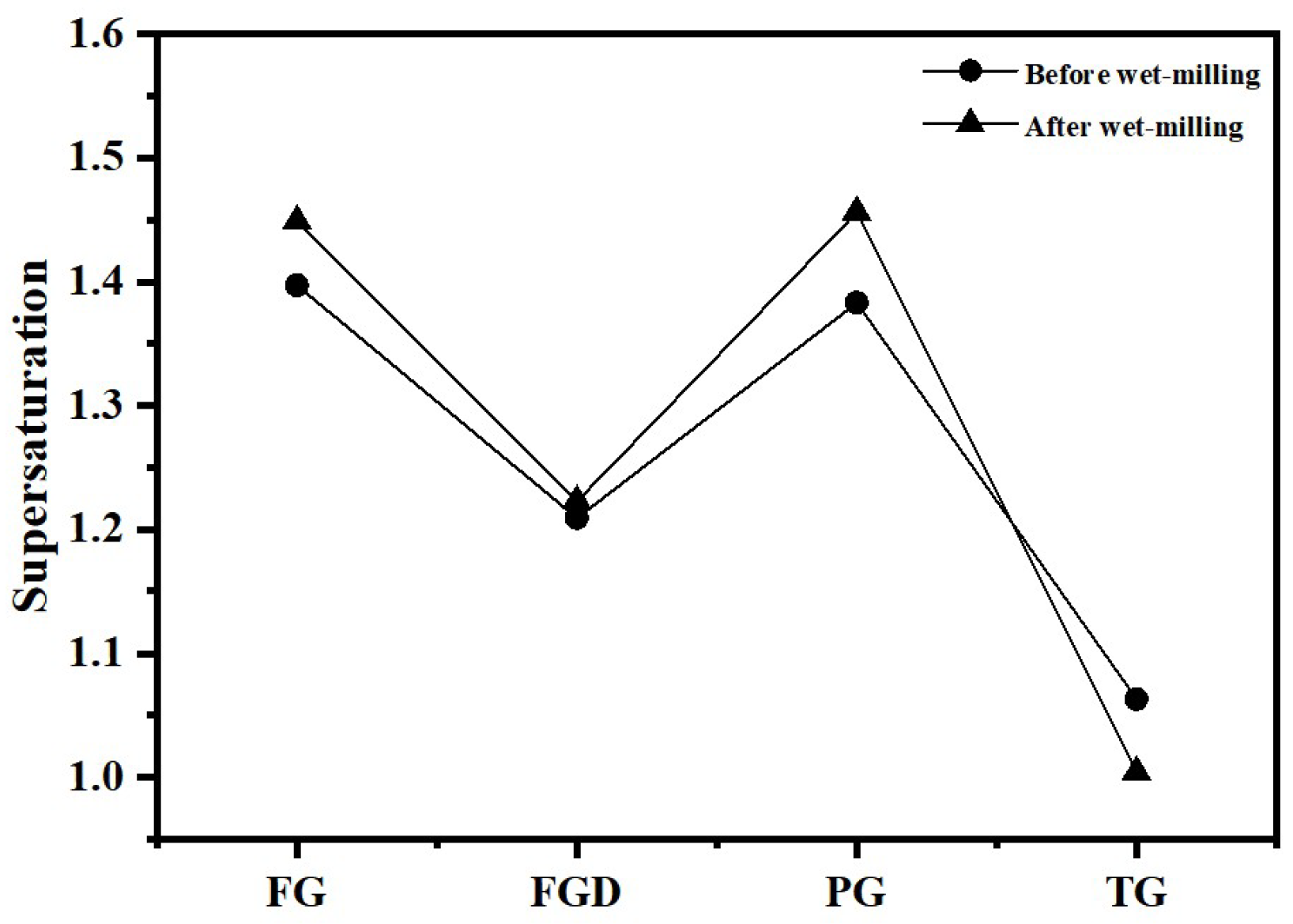
3.7.1. Paste Dissolution Behavior Analysis
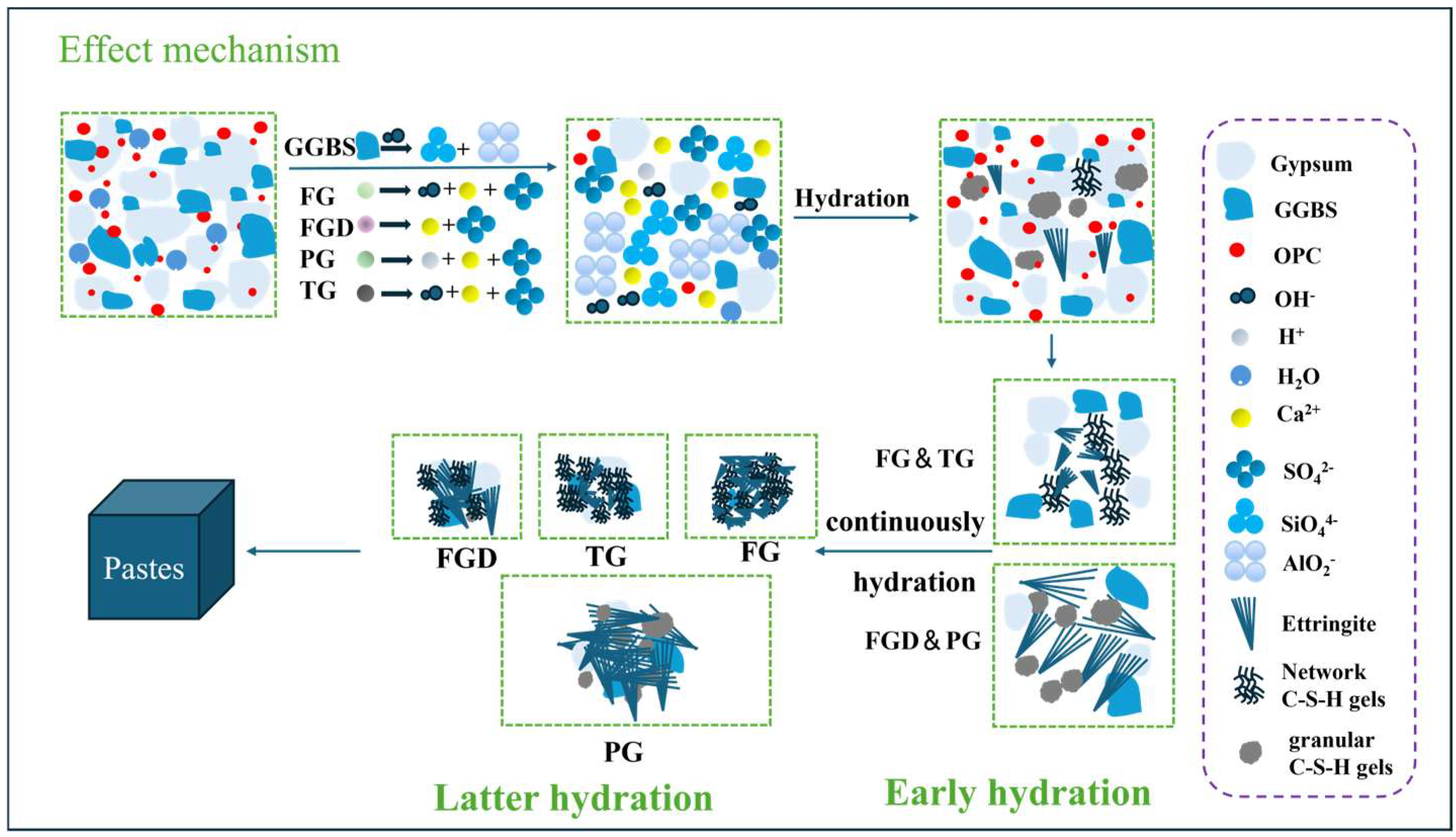
3.7.2. Hydration Mechanism of Wet Grinding in Regulating Different ESSC
4. Conclusions
- (1)
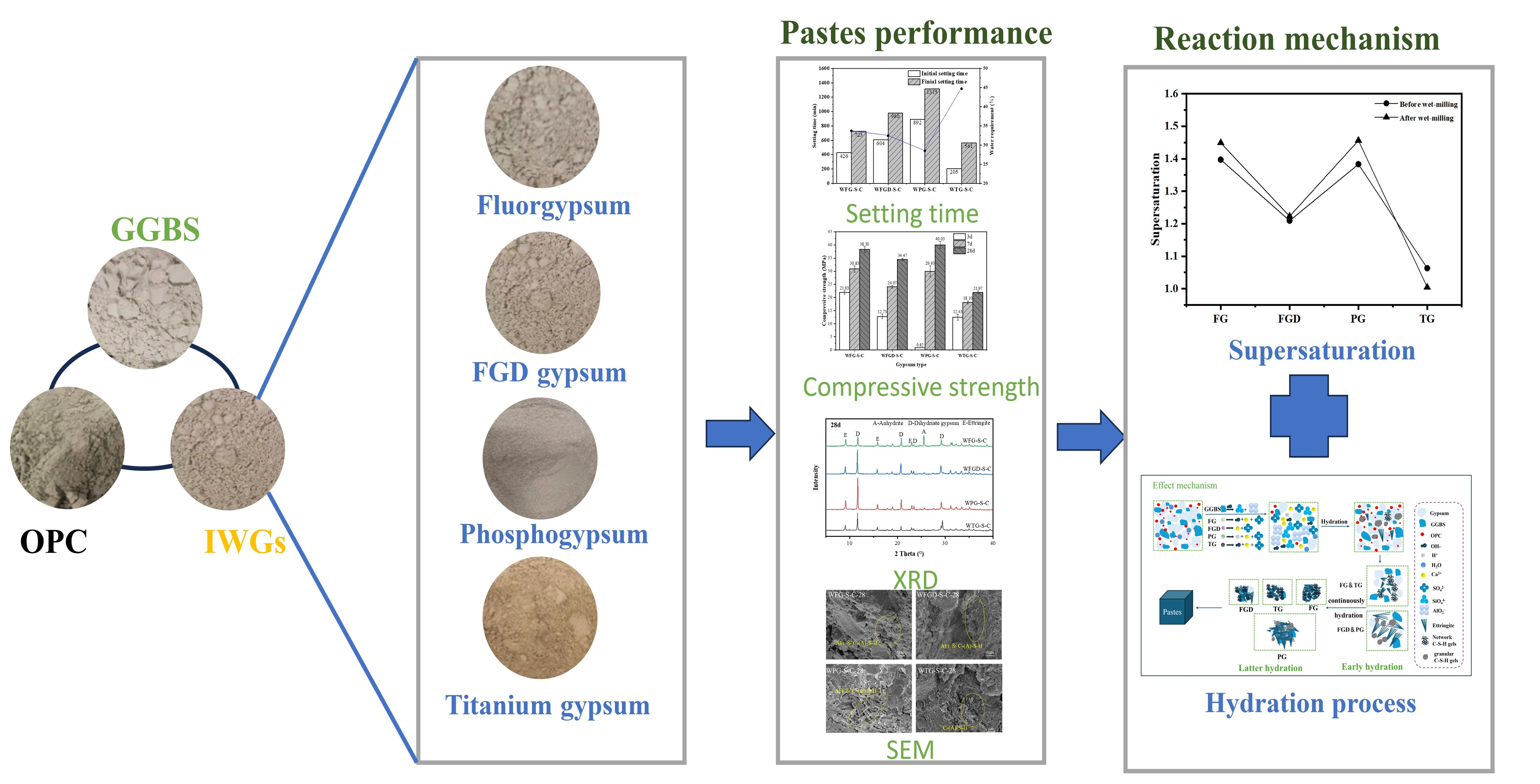
- Different types of IWGs did not alter the types of ESSC hydration products, which mainly included ettringite, C-(A)-S-H gel and stratlingite. However, they led to obvious differences in compressive strength: FG-S-C and TG-S-C had higher early compressive strength due to their higher initial pH values, while PG-S-C exhibited better late compressive strength, benefiting from the high solubility of PG that ensured a continuous sulfate supply for sustained hydration.
- (2)
- Setting time and hydration heat analyses indicated that FGD-S-C and PG-S-C exhibited longer setting times and induction periods due to their lower initial pH values. Conversely, the higher initial pH of FG-S-C and TG-S-C accelerated the dissolution and hydration of GGBS.
- (3)
- Microstructural analysis revealed that the quantity and volume of hydration products in ESSC gradually increased with curing time, thereby enhancing compressive strength. Wet grinding treatment increased gel pores and reduced capillary pores in the samples, optimizing the pore structure and improving compressive strength.
- (4)
- Wet grinding technology reduced particle surface energy and agglomeration, enhancing the reactivity of ESSC and promoting paste strength development. Compared with existing literature on gypsum-based cementitious materials, the softening coefficient of ESSC prepared using FG in this study reached 0.96, significantly higher than the typically reported range of 0.60–0.85 for conventional industrial by-product gypsum-based cementitious materials. Additionally, the 28-day compressive strength of WPG-S-C reached 40.03 MPa, representing a 31.25% increase. This strength enhancement is notably more pronounced compared to most studies employing conventional grinding or single alkali activation methods.
Author Contributions
Funding
Institutional Review Board Statement
Informed Consent Statement
Data Availability Statement
Conflicts of Interest
References
- Miller, S.A.; Habert, G.; Myers, R.J.; Harvey, J.T. Achieving Net Zero Greenhouse Gas Emissions in the Cement Industry via Value Chain Mitigation Strategies. One Earth 2021, 4, 1398–1411. [Google Scholar] [CrossRef] [Scilit]
- Lin, R.; Zhou, J.; Ye, C.; Ma, H.; Ba, M. Influence of Ground Heavy Metal Sludge Sintered Ceramsite Powder on Mechanical Properties and Shrinkage Behavior of Portland Cement-Based Materials. J. Build. Eng. 2025, 109, 112972. [Google Scholar] [CrossRef] [Scilit]
- Paris, J.M.; Roessler, J.G.; Ferraro, C.C.; DeFord, H.D.; Townsend, T.G. A Review of Waste Products Utilized as Supplements to Portland Cement in Concrete. J. Clean. Prod. 2016, 121, 1–18. [Google Scholar] [CrossRef] [Scilit]
- Li, H.; Xu, F.; Li, B.; Sun, T.; Huang, X.; Zhu, J.; Peng, C.; Lin, J.; Chen, Z. Investigation on Mechanical Properties of Excess-Sulfate Phosphogypsum Slag Cement: From Experiments to Molecular Dynamics Simulation. Constr. Build. Mater. 2022, 315, 125685. [Google Scholar] [CrossRef] [Scilit]
- Tang, P.; Wen, J.; Fu, Y.; Liu, X.; Chen, W. Improving the Early-Age Properties of Eco-Binder with High Volume Waste Gypsum: Hydration Process and Ettringite Formation. J. Build. Eng. 2024, 86, 108988. [Google Scholar] [CrossRef] [Scilit]
- Zhang, S.; Lu, X.; Wang, J.; Deng, X.; Tan, H. Improving the Properties of Phosphogypsum-Based Clinker-Free Cement System by In-Situ Precipitation of Ettringite Seeds: Strength, Hydration, Microstructure and Sustainability. Mater. Today Commun. 2025, 44, 111982. [Google Scholar] [CrossRef] [Scilit]
- Jiang, B.; Xia, D. Toward Carbon Neutrality in China: A National Wide Carbon Flow Tracing and the Co2 Emission Control Strategies for Co2-Intensive Industries. Sci. Total Environ. 2023, 879, 163009. [Google Scholar] [CrossRef] [Scilit]
- Wang, Z.; Shui, Z.; Sun, T.; Li, X.; Zhang, M. Recycling Utilization of Phosphogypsum in Eco Excess-Sulphate Cement: Synergistic Effects of Metakaolin and Slag Additives on Hydration, Strength and Microstructure. J. Clean. Prod. 2022, 358, 131901. [Google Scholar] [CrossRef] [Scilit]
- Dvorkin, L.; Zhitkovsky, V.; Hager, I.; Tracz, T.; Zdeb, T. Structure Formation and Properties of Activated Supersulfate Cement. Materials 2025, 18, 1912. [Google Scholar] [CrossRef] [Scilit] [PubMed]
- Wang, J.; Li, T.; Wang, J.; Zhang, C.; Zhang, X.; Duan, G. Enhancing the Early Hydration of Supersulfate Cement: The Effect of Sodium Aluminate. Materials 2025, 18, 1228. [Google Scholar] [CrossRef] [Scilit]
- Liu, T.; Sun, D.; Wang, Y.; Liu, K.; Wang, A. Study on the Mechanical Properties and Sulfate Resistance of Desert Sand-Supersulfated Cement Mortar with Different Curing Methods. J. Build. Eng. 2025, 103, 112162. [Google Scholar] [CrossRef] [Scilit]
- Xue, L.; Ni, Z.; Zhou, Z.; Zhang, Z.; Xiong, H.; Wang, H.; Zhuge, X.; Liu, H. Effects of Desulfurized Gypsum on Shrinkage Behavior of Alkali-Activated Slag (Aas) and Hybrid Alkali-Activated Cement (Hac). Case Stud. Constr. Mater. 2025, 22, e04320. [Google Scholar] [CrossRef] [Scilit]
- Pang, M.; Sun, Z.; Huang, H. Compressive Strength and Durability of Fgd Gypsum-Based Mortars Blended with Ground Granulated Blast Furnace Slag. Materials 2020, 13, 3383. [Google Scholar] [CrossRef] [Scilit] [PubMed]
- Rubert, S.; Luz, C.A.D.; Varela, M.V.F.; Filho, J.I.P.; Hooton, R.D. Hydration Mechanisms of Supersulfated Cement. J. Therm. Anal. Calorim. 2018, 134, 971–980. [Google Scholar] [CrossRef] [Scilit]
- E, F.; Zhang, X.; Liu, B.; Su, L.; Li, B. Exploring the Effects of Alkali and Sulfate Content on the Gypsum-Activated Slag Cementitious System: Hydration Products and Rheological Properties. Constr. Build. Mater. 2025, 493, 143229. [Google Scholar] [CrossRef] [Scilit]
- Luo, J.; Liu, X.; Guan, X.; Zhang, C.; Li, C.; Zhao, X.; Li, H. Effect of Cao on Hydration and Water Resistance of Fluorine Gypsum-Based Composite Cementitious Materials. Constr. Build. Mater. 2025, 485, 141913. [Google Scholar] [CrossRef] [Scilit]
- Meng, W.; Dong, Y.; Zang, M.; Zou, N.; Lu, H. Mechanical Properties and Chemical Microscopic Characteristics of All-Solid-Waste Composite Cementitious Materials Prepared from Phosphogypsum and Granulated Blast Furnace Slag. Mater. Today Commun. 2024, 41, 110809. [Google Scholar] [CrossRef] [Scilit]
- Ma, Y.; Chu, H.; Rong, H.; Ba, M. Influence of Sodium Silicate on the Properties of Ground Granulated Blast Furnace Slag-Desulfurized Gypsum (Ggbs-Dg) Based Composite Cementitious Materials and Lca Evaluation. Sustain. Chem. Pharm. 2025, 46, 102066. [Google Scholar] [CrossRef] [Scilit]
- Li, X.; Gu, X.; Liu, B.; Li, Z.; Zhang, W.; Liu, J.; Nehdi, M.L. Evaluation of Waste Powder From Open Pit Mines as Supplementary Cementitious Material: Crystal Structure and Hydration Characteristics. J. Build. Eng. 2023, 71, 106514. [Google Scholar] [CrossRef] [Scilit]
- Wang, Z.; Chu, H.; Wang, J.; Feng, E.; Zhang, Y.; Lyu, X. Mechanical Activation of Siliceous Tailings and its Application as Cement Admixtures. Miner. Eng. 2022, 177, 107366. [Google Scholar] [CrossRef] [Scilit]
- Liu, G.; Florea, M.V.A.; Brouwers, H.J.H. Characterization and Performance of High Volume Recycled Waste Glass and Ground Granulated Blast Furnace Slag or Fly Ash Blended Mortars. J. Clean. Prod. 2019, 235, 461–472. [Google Scholar] [CrossRef] [Scilit]
- Zhao, J.; Hu, Y.; Wang, H.; Xue, S.; Cheng, Y. Study on the Activation Effect of Mechanical Force in the Process of Ultrafine Grinding of Coal Gangue. Min. Metall. Explor. 2025, 42, 1141–1148. [Google Scholar] [CrossRef] [Scilit]
- Akmalaiuly, K.; Berdikul, N.; Pundienė, I.; Pranckevičienė, J. The Effect of Mechanical Activation of Fly Ash on Cement-Based Materials Hydration and Hardened State Properties. Materials 2023, 16, 2959. [Google Scholar] [CrossRef] [Scilit] [PubMed]
- Zhu, L.; Liu, C.; Duan, G.; Liu, Z.; Jin, L.; Zhou, Y.; Fang, K. Research on the Mechanical Activation Mechanism of Coal Gangue and its CO2 Mineralization Effect. Sustainability 2025, 17, 2364. [Google Scholar] [CrossRef] [Scilit]
- Wang, Y.; Jia, X.; Liu, H. Effect of Mechanical Activation on Acid Leaching of Molybdenum From Low-Grade Refractory Ore. Min. Metall. Explor. 2025, 42, 1877–1888. [Google Scholar] [CrossRef] [Scilit]
- Jiao, Y.; Liu, Y.; Zhang, S.; Zhang, Z.; Feng, Y.; Zhang, Y.; Wei, G. The Effects of Dry Grinding and Wet Grinding on Synthesizing Iodosodalite. J. Solid State Chem. 2023, 320, 123832. [Google Scholar] [CrossRef] [Scilit]
- Guo, H.; Wang, H.; Li, H.; Xue, H.; Wei, L.; Li, Y.; Chen, Y.; Li, Q.; Dong, H. Comparison of Performance, Hydration Behavior, and Environmental Benefits of Coal Gangue Cementitious Materials Prepared by Wet and Dry Grinding Methods. Constr. Build. Mater. 2025, 471, 140665. [Google Scholar] [CrossRef] [Scilit]
- Yang, Y.; Chen, L.; Mao, Y. Different Effects of Wet and Dry Grinding on the Activation of Iron Ore Tailings. J. Renew. Mater. 2021, 9, 2261–2276. [Google Scholar] [CrossRef] [Scilit]
- Wang, S.; Liu, J.; Tian, Y.; Zhao, P. Influence of Composite C-S-H Seed Prepared by Wet Grinding on High-Volume Fly Ash Concrete. Buildings 2025, 15, 270. [Google Scholar] [CrossRef] [Scilit]
- Li, Y.; Wu, Y.; He, X.; Su, Y.; Yang, Q.; Chen, W.; Jin, Z. Utilization of High-Magnesium Ferronickel Slag Activated by Wet Grinding in Mkpc Under Humid Conditions. Mater. Chem. Phys. 2025, 340, 130843. [Google Scholar] [CrossRef] [Scilit]
- Su, Y.; Zhao, H.; He, X.; Zheng, Z.; Ma, Q.; Ding, J.; Bao, M. The Effect of Wet-Grinding Phosphorus Slag on the Hydration Kinetics of Portland Cement. Constr. Build. Mater. 2023, 364, 129942. [Google Scholar] [CrossRef] [Scilit]
- Wang, Z.; Shui, Z.; Sun, T.; Hu, T.; Xiao, X.; Fan, J. Reutilization of Gangue Wastes in Phosphogypsum-Based Excess-Sulphate Cementitious Materials: Effects of Wet Co-Milling on the Rheology, Hydration and Strength Development. Constr. Build. Mater. 2023, 363, 129778. [Google Scholar] [CrossRef] [Scilit]
- GB/T 1346-2024; Test Methods for Water Requirement of Standard Consistency, Setting Time and Soundness of the Portland Cement. State Administration for Market Regulation: Beijing, China, 2024.
- GB/T 8077-2023; Methods for Testing Uniformity of Concrete Admixtures. State Administration for Market Regulation: Beijing, China, 2023.
- Mun, K.J.; Hyoung, W.K.; Lee, C.W.; So, S.Y.; Soh, Y.S. Basic Properties of Non-Sintering Cement Using Phosphogypsum and Waste Lime as Activator. Constr. Build. Mater. 2007, 21, 1342–1350. [Google Scholar] [CrossRef] [Scilit]
- Fu, J.; Jones, A.M.; Bligh, M.W.; Holt, C.; Keyte, L.M.; Moghaddam, F.; Foster, S.J.; Waite, T.D. Mechanisms of Enhancement in Early Hydration by Sodium Sulfate in a Slag-Cement Blend—Insights from Pore Solution Chemistry. Cem. Concr. Res. 2020, 135, 106110. [Google Scholar] [CrossRef] [Scilit]
- Huang, Y.; Qian, J.; Liu, C.; Liu, N.; Shen, Y.; Ma, Y.; Sun, H.; Fan, Y. Influence of Phosphorus Impurities on the Performances of Calcium Sulfoaluminate Cement. Constr. Build. Mater. 2017, 149, 37–44. [Google Scholar] [CrossRef] [Scilit]
- Zhou, Z.; Chen, Y.; Fan, H.; Jiang, Z.; Liu, N.; Peng, L. Effect of Ph and Sodium Citrate on the Preparation of A-Caso4·0.5 H2O and the Leaching of Impurity Phosphorus From Phosphogypsum. Constr. Build. Mater. 2025, 483, 141796. [Google Scholar] [CrossRef] [Scilit]
- Li, Y.; Jia, Z.; Li, S.; Li, P.; Jiang, X.; Zhang, Z.; Yu, B. Effect of Impurity Components in Titanium Gypsum on the Setting Time and Mechanical Properties of Gypsum-Slag Cementitious Materials. Rev. Adv. Mater. Sci. 2024, 63, 20240005. [Google Scholar] [CrossRef] [Scilit]
- Liu, X.; Tang, P.; Chen, W. Development of an Ettringite-Based Low Carbon Binder by Promoting the Nucleation and Ostwald Ripening Process. Constr. Build. Mater. 2024, 427, 136282. [Google Scholar] [CrossRef] [Scilit]
- Gaviria, X.; Borrachero, M.V.; Payá, J.; Monzó, J.M.; Tobón, J.I. Mineralogical Evolution of Cement Pastes at Early Ages Based on Thermogravimetric Analysis (Tg). J. Therm. Anal. Calorim. 2017, 132, 39–46. [Google Scholar] [CrossRef] [Scilit]
- Padilla-Encinas, P.; Palomo, A.; Blanco-Varela, M.T.; Fernández-Jiménez, A. Calcium Sulfoaluminate Clinker Hydration at Different Alkali Concentrations. Cem. Concr. Res. 2020, 138, 106251. [Google Scholar] [CrossRef] [Scilit]
- He, Y.; Zheng, X.; Lü, L.; Yu, S.; Deng, G.; Hu, S. Dehydration Characteristics of C-S-H with Ca/Si Ratio 1.0 Prepared Via Precipitation. J. Wuhan Univ. Technol.-Mater. Sci. Ed. 2018, 33, 619–624. [Google Scholar] [CrossRef] [Scilit]
- Zhu, X.; Richardson, I.G. Morphology-Structural Change of C-a-S-H Gel in Blended Cements. Cem. Concr. Res. 2023, 168, 107156. [Google Scholar] [CrossRef] [Scilit]
- Masoudi, R.; Hooton, R.D. Examining the Hydration Mechanism of Supersulfated Cements Made with High and Low-Alumina Slags. Cem. Concr. Compos. 2019, 103, 193–203. [Google Scholar] [CrossRef] [Scilit]
- Shao, C.; Gong, Y.; Zhang, Q.; Zhu, G. Recycling Waste Gypsum and Calcium Carbide Slag for the Production of All-Solid-Waste Supersulfated Cement. Phys. Fluids 2024, 36, 127159. [Google Scholar] [CrossRef] [Scilit]



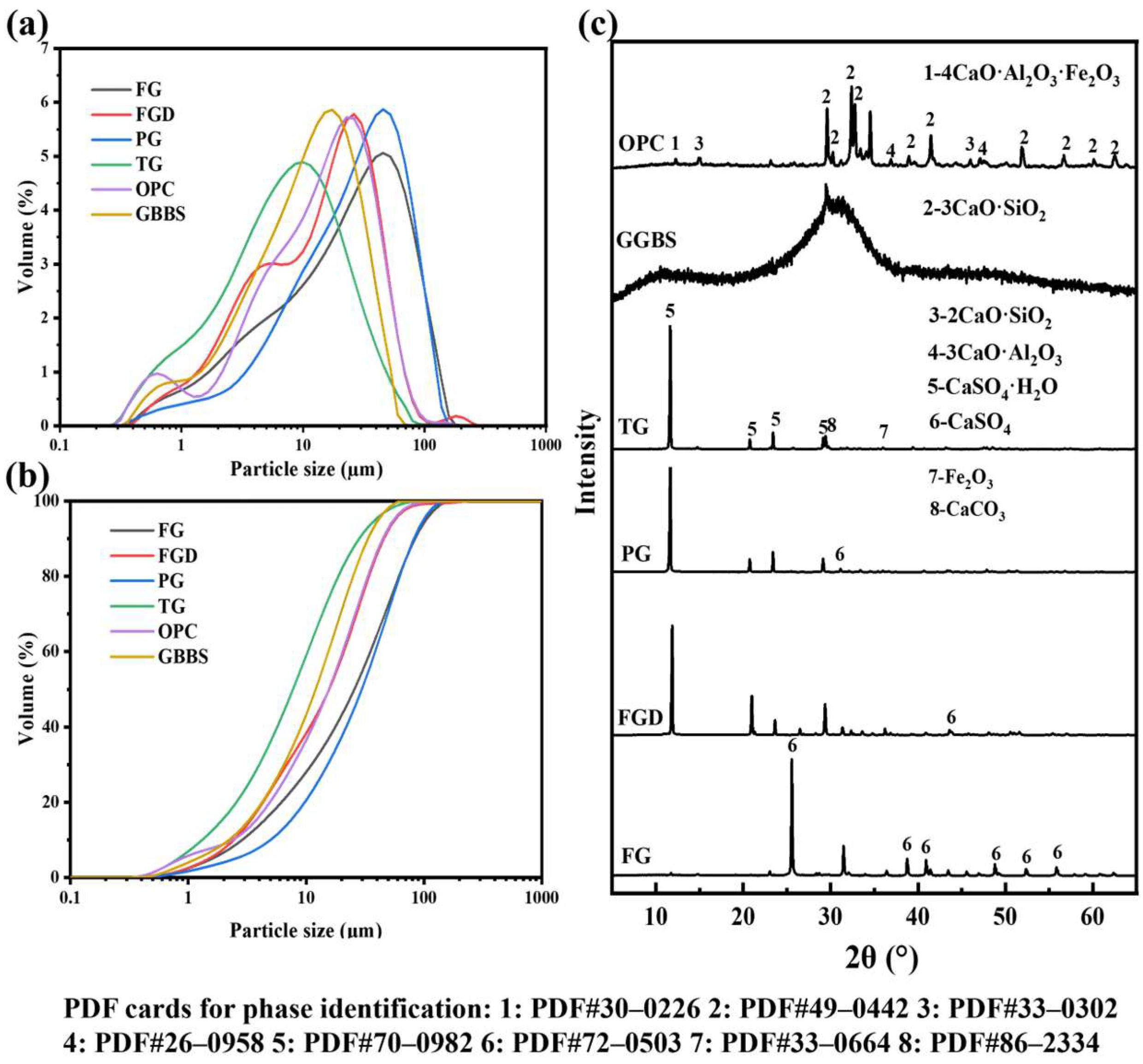
| Materials | CaO | Al2O3 | SiO2 | SO3 | Fe2O3 | MgO | Other | LOI | pH |
|---|---|---|---|---|---|---|---|---|---|
| OPC | 63.30 | 4.98 | 19.17 | 3.85 | 3.29 | 1.25 | 2.52 | 1.64 | 12.52 |
| GGBS | 42.83 | 14.43 | 30.21 | 2.33 | 0.30 | 7.96 | 1.94 | N.D | 9.73 |
| FG | 39.30 | 0.28 | 0.48 | 54.45 | 0.56 | 0.34 | 2.32 | 2.27 | 10.63 |
| FGD | 32.20 | 0.60 | 1.51 | 42.98 | 0.20 | 0.51 | 0.36 | 21.64 | 7.41 |
| PG | 31.93 | 0.27 | 1.80 | 41.87 | 0.08 | 0.04 | 2.03 | 21.98 | 4.24 |
| TG | 33.66 | 0.93 | 7.43 | 20.88 | 6.59 | 1.32 | 4.20 | 24.99 | 8.62 |
| Sample Label | Ca2+ (mg/L) | S (SO42−) (mg/L) | pH |
|---|---|---|---|
| FG | 615.85 | 1434.35 | 10.63 |
| FGD | 550.37 | 1258.35 | 7.41 |
| PG | 627.76 | 1498.38 | 4.24 |
| TG | 499.31 | 1147.37 | 8.62 |
| Samples | Inflection (h) | Exothermic Rate (mW/g) | Peak (h) | Exothermic Rate (mW/g) | Total Heat Release (J/g) |
|---|---|---|---|---|---|
| FG-S-C | 18.51 | 0.11 | 33.29 | 1.34 | 108.87 |
| FGD-S-C | 42.07 | 0.07 | 55.81 | 1.29 | 128.04 |
| PG-S-C | 45.40 | 0.16 | 59.17 | 1.70 | 111.88 |
| TG-S-C | 6.05 | 0.16 | 15.53 | 0.90 | 92.32 |
| Samples | 3 d | 28 d | ||
|---|---|---|---|---|
| 55–120 °C | 120–160 °C | 55–120 °C | 120–160 °C | |
| FG-S-C | 4.03 | 4.72 | 7.28 | 4.57 |
| FGD-S-C | 4.65 | 7.01 | 7.42 | 6.87 |
| PG-S-C | 0.13 | 5.76 | 8.85 | 6.27 |
| TG-S-C | 4.74 | 3.61 | 6.96 | 3.05 |
| WFG-S-C | 5.69 | 5.05 | 8.92 | 5.04 |
| WFGD-S-C | 6.39 | 6.55 | 8.07 | 6.71 |
| WPG-S-C | 0.34 | 7.97 | 9.03 | 7.54 |
| TG-S-C | 4.42 | 3.44 | 6.67 | 3.45 |
| Sample Label | Ca2+ (mg/L) | S (SO42−) (mg/L) | pH |
|---|---|---|---|
| FG-S-C | 775.78 | 1359.35 | 12.54 |
| FGD-S-C | 637.91 | 1235.89 | 11.98 |
| PG-S-C | 712.64 | 1447.53 | 11.76 |
| TG-S-C | 513.79 | 1189.24 | 12.23 |
| WFG-S-C | 744.18 | 1524.24 | 11.76 |
| WFGD-S-C | 595.63 | 1355.37 | 11.23 |
| WPG-S-C | 689.24 | 1662.25 | 11.11 |
| WTG-S-C | 474.14 | 1149.74 | 11.57 |
Disclaimer/Publisher’s Note: The statements, opinions and data contained in all publications are solely those of the individual author(s) and contributor(s) and not of MDPI and/or the editor(s). MDPI and/or the editor(s) disclaim responsibility for any injury to people or property resulting from any ideas, methods, instructions or products referred to in the content. |
© 2026 by the authors. Licensee MDPI, Basel, Switzerland. This article is an open access article distributed under the terms and conditions of the Creative Commons Attribution (CC BY) license.
Share and Cite
Tang, P.; Yang, H.; Zhou, S. Influence of Industrial Waste Gypsums in Excess-Sulfated Slag Cement: The Role of Wet Grinding. Materials 2026, 19, 999. https://doi.org/10.3390/ma19050999
Tang P, Yang H, Zhou S. Influence of Industrial Waste Gypsums in Excess-Sulfated Slag Cement: The Role of Wet Grinding. Materials. 2026; 19(5):999. https://doi.org/10.3390/ma19050999
Chicago/Turabian StyleTang, Pei, Hai Yang, and Shuai Zhou. 2026. "Influence of Industrial Waste Gypsums in Excess-Sulfated Slag Cement: The Role of Wet Grinding" Materials 19, no. 5: 999. https://doi.org/10.3390/ma19050999
APA StyleTang, P., Yang, H., & Zhou, S. (2026). Influence of Industrial Waste Gypsums in Excess-Sulfated Slag Cement: The Role of Wet Grinding. Materials, 19(5), 999. https://doi.org/10.3390/ma19050999