


Abstract
Porous Ca2Mg2Al28O46 (C2M2A14) ceramics are highly competitive candidates in the field of critical metal filtration due to their attractive non-metallic-inclusions removal capacity. However, the low mechanical strength and inadequate thermal shock resistance (TSR) of these materials restrict their further application. In this work, ZrO2-toughened C2M2A14-based porous ceramics are fabricated by using the polymer sponge replica method. Nano-sized ZrO2 particles derived from nano-ZrO2 sol are beneficial to enhance the mechanical properties and TSR of porous ceramics. The optimized porous C2M2A14 ceramics exhibit robust compressive strength (2.15 MPa), good residual strength ratio (66.4%) and excellent filtration efficiency in the reduction in total oxygen content (68.4%) by adding 3 wt% ZrO2 sol. These excellent comprehensive properties show that as-prepared porous C2M2A14 ceramics are promising candidate materials for application in the field of critical metal filtration.
1. Introduction
The rapid development of high-quality steel products requires efficient and multifunctional filtration materials that possess excellent filtration capacity, thermal stability, and mechanical robustness [1,2,3,4,5]. Various three-dimensional (3D) reticulated ceramics (e.g., SiC, Al2O3 and CaO) have been widely applied to remove the non-metallic inclusions (mainly Al2O3 inclusions) owing to their intricate pore network and high refractoriness [6,7,8,9,10,11,12]. However, the inadequate filtration capacity, poor thermal shock resistance (TSR) and being prone to hydration limit their broad applications. Recently, Ca2Mg2Al28O46 (C2M2A14)-based ceramics have shown greater potential for filtering Al2O3 inclusions because they contain non-free calcium oxide (CaO) that would react with Al2O3 inclusions [13,14,15,16]. Nevertheless, the relatively high thermal expansion coefficient (TEC, 8.92 × 10⁻⁶/°C) and low thermal conductivity (κ, 23.25 W·m−1·K−1, 25 °C) of C2M2A14 lead to the easy accumulation of thermal stress inside the material, deteriorating its thermal shock resistance [14]. Therefore, the promotion of the TSR of porous C2M2A14 ceramics is an urgent task.
Recently, the introduction of the second phase in porous ceramics has been demonstrated to be a versatile approach for enhancing their TSR [9,17,18]. The major reinforced phases for porous ceramics are mullite, magnesium aluminate spinel (MgAl2O4) [17,18,19] and silicon carbide (SiC) [20,21,22] and zirconia (ZrO2) [23,24,25]. Among various second phases, zirconia (ZrO2) has attracted widespread attention due to its enhanced fracture toughness through stress-induced tetragonal-monoclinic transformation, low thermal-expansion coefficient, and excellent high-temperature stability [26,27]. For instance, Chen et al. [28] prepared porous Al2O3-ZrO2-mullite composites with enhanced TSR through the transformation toughening of ZrO2 originating from the decomposition of ZrSiO4. Mao et al. [23] optimized the TSR of porous Si3N4-based ceramics by adding ZrO2 powder as the reinforcing phase. However, the direct introduction of these coarse and large-sized ZrO2 particles would inevitably lead to insufficient phase transformation of porous ceramic, limiting their further application. It has been demonstrated that incorporating nano-sized ZrO2 particles can substantially enhance the phase transformation degree [29]. However, the introduction of these nano-sized particles would inevitably lead to the agglomeration in the highly viscous ceramic slurry [30]. These present major challenges that must be tackled before extensive application.
Herein, we demonstrate a robust method for fabricating highly porous C2M2A14 ceramics with improved TSR by using ZrO2 sol as the reinforced composition. The homogeneously distributed nano-sized ZrO2 particles originating from ZrO2 sol effectively promote densification and phase transformation, thereby enhancing mechanical properties and TSR of porous ceramics. The as-prepared C2M2A14 ceramics demonstrate the integrated properties of relatively high porosity (81.12%), robust cold-compressive strength (2.15 MPa), good residual-strength ratio (66.4%) and excellent filtration efficiency (68.4%). These results demonstrate that the proposed C2M2A14 reticulated ceramics show great potential for application in molten steel purification.
2. Experimental
2.1. Materials and Fabrication Process of Porous C2M2A14 Ceramics
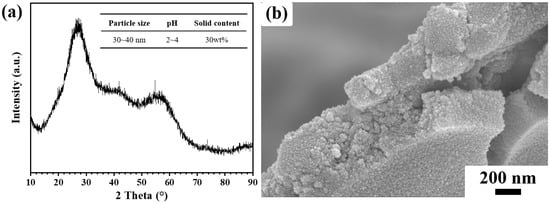
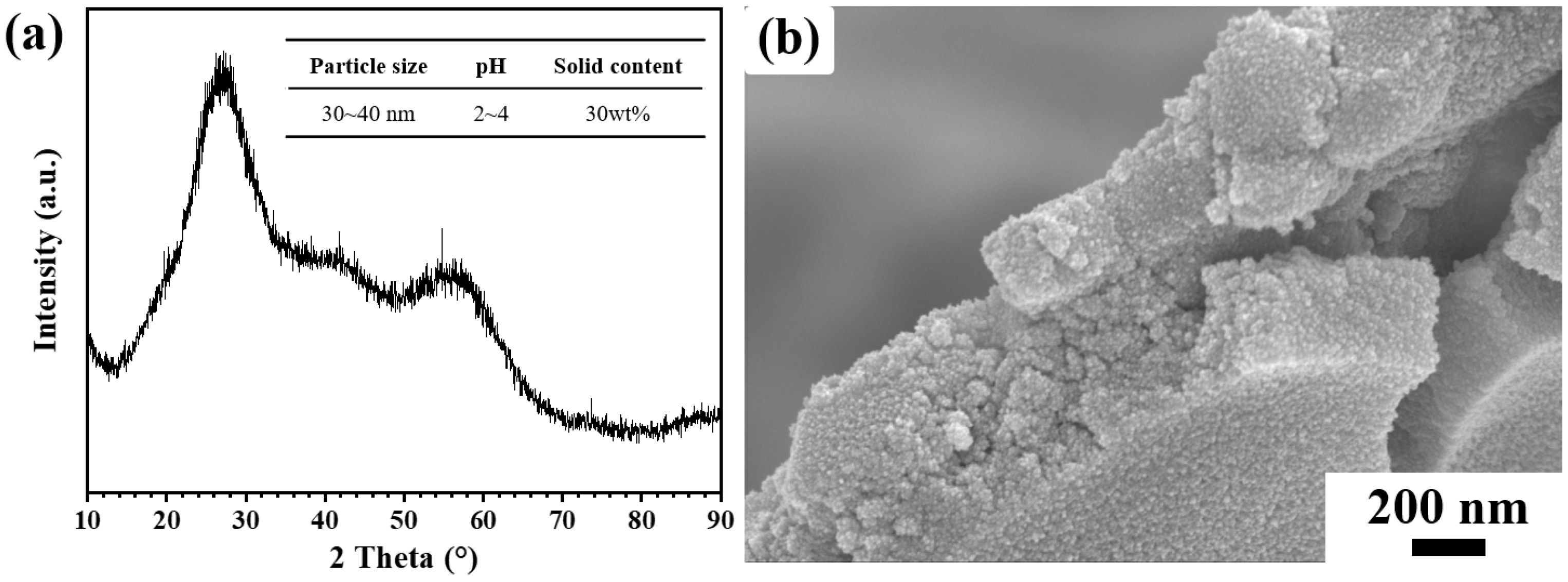
The C2M2A14 powder (d50 = 20 μm) was synthesized by the solid phase reaction method. The synthetic procedure of C2M2A14 is as follows: The preparation process of C2M2A14 powders was as follows: Firstly, the mixture powders containing Al2O3, MgO and CaO according to the stoichiometric ratio were homogenized for 2 h at a rotating speed of 300 r/min using ethanol as the grinding medium. Subsequently, the mixture slurry was dried in an oven at 110 °C, ground and uniaxially pressed under 150 MPa to obtain green bodies with dimensions of 10 cm × 10 cm × 2 cm. These green bodies were calcined in a muffle furnace (KSL-1800X, Zhengzhou Kejing Electric Furnace Co., Ltd., Zhengzhou, China) at 1700 °C for 6 h before being dried at 110 °C for 24 h. Lastly, the calcined bulks were crushed and sieved to obtain C2M2A14 powder. The ZrO2 sol was purchased from Dezhou Jinghuo Technology Glass Co., Ltd., Dezhou, China, while polyurethane foam (PU, 15 PPI) was supplied by Wuxi Chenguang Refractory Materials Co., Ltd., Wuxi, China. Figure 1 shows the XRD patterns and SEM images of ZrO2 sol. It can be seen that the ZrO2 sol is amorphous, with its microstructure consisting of agglomerated spherical particles 20~30 nm in size. The solid content of the ZrO2 sol is 30 wt% and the pH value is 2~4. The carboxymethyl cellulose (CMC), ammonium lignosulfonate (AL) and polycarboxylate (WSM-M) were obtained from Shanghai Aladdin Biochemical Technology Co., Ltd., Shanghai, China, which were used as the thickener, binder and dispersant, respectively. The CMC, AL and WSM-M are introduced as external admixtures and are not incorporated into the matrix. They are collectively referred to as additives and are added to the ceramic slurry after mixing. In order to enhance the surface roughness of the PU foam and improve the adhesion of the ceramic slurry, the PU foam was pretreated by immersion in a 5 wt% NaOH solution at 25 °C for 24 h, based on relevant literature [31,32]. It was then washed with high-purity deionized water and dried.
Figure 1.
XRD patterns (a) and SEM images (b) of the ZrO2 sol.
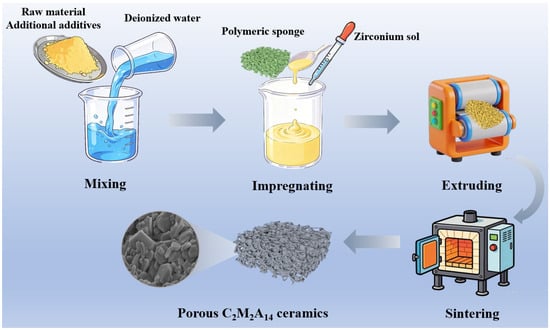
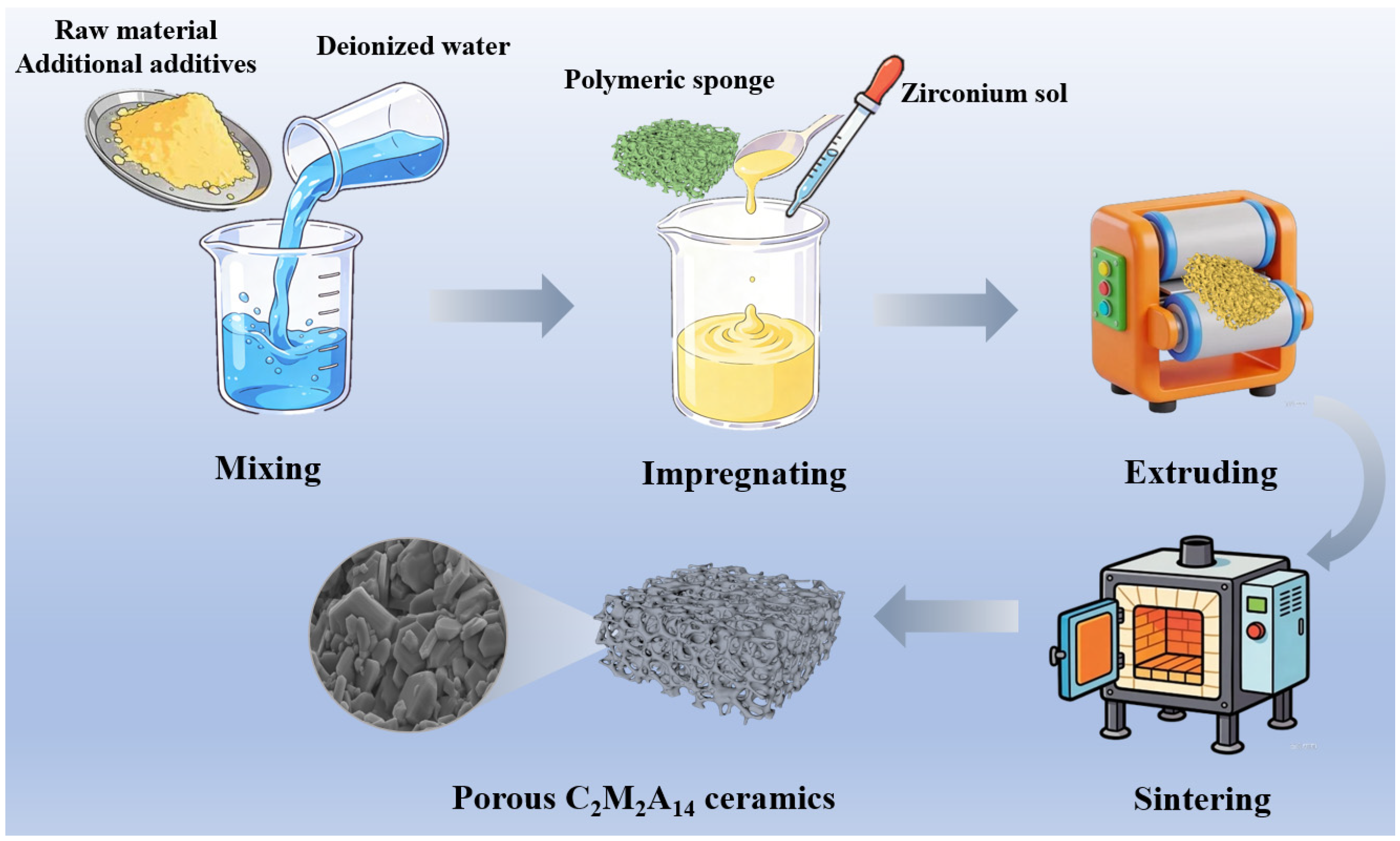
Figure 2 schematically depicts the fabrication procedure of the porous C2M2A14 ceramics. Firstly, the C2M2A14 ceramic powders, CMC, AL and WSM-M powders were mixed with deionized water and underwent high-speed mechanical stirring for 5 min to obtain the homogeneous ceramic slurry. The ZrO2 sol was added to the slurry, followed by an additional 3 min of high-speed stirring to ensure its uniform dispersion. Unless mentioned, the stirring speed used in this experiment is 2000 r/min. Subsequently, the pretreated PU foam (45 mm × 45 mm × 20 mm) was then immersed in the prepared ceramic slurry and pressed with tweezers to ensure complete immersion. Excess slurry was removed using a squeeze-roller device (SR-112, Hongjuyuan Jewelry Equipment Co., Ltd., Jinan, China). This immersion–squeezing cycle was repeated three times to obtain the porous C2M2A14 ceramics green body. The green body was first dried naturally for 24 h, then dried at 110 °C for another 6 h. Finally, the dried green body was calcined at 1600 °C for 2 h. According to the addition amount of ZrO2 sol (0, 1, 2, 3 and 4 wt%), the corresponding specimens were labeled as ZS0, ZS1, ZS2, ZS3 and ZS4 (Table 1), respectively.
Figure 2.
Schematic of the preparation process of porous C2M2A14 ceramics.
Table 1.
Experimental formulations of the porous C2M2A14 ceramics (wt%).
2.2. Immersion Test
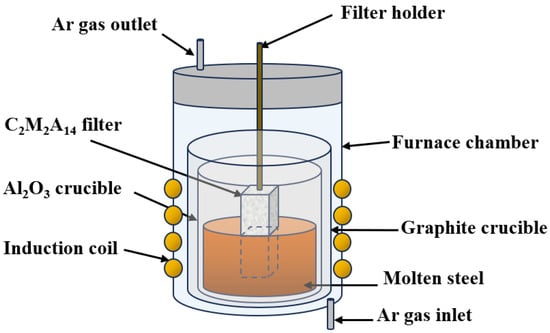
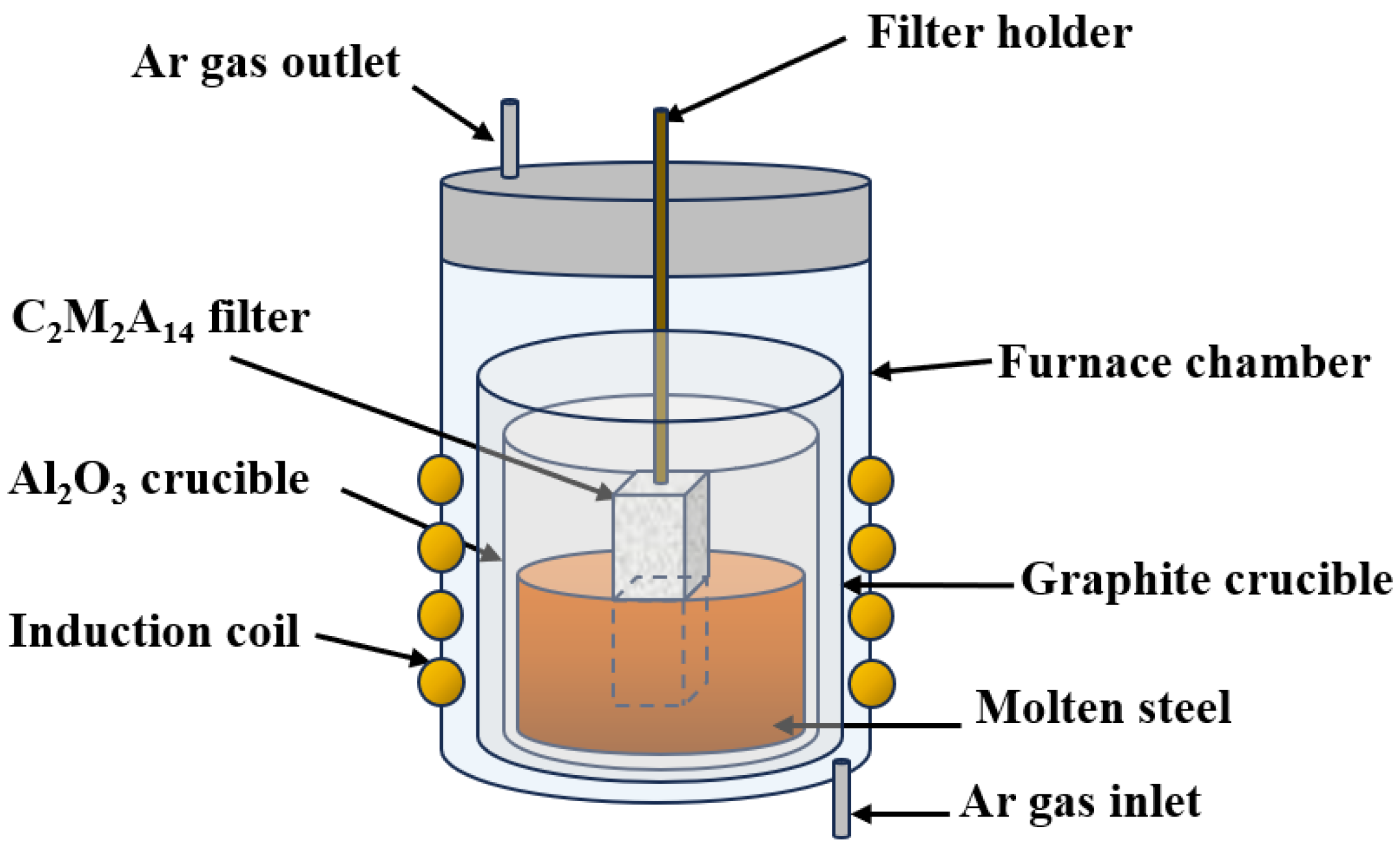
To evaluate the purification effect of porous C2M2A14 ceramics on molten steel, aluminum-killed steel was selected as the target melt, whose chemical composition is given in Table 2. The specific immersion test was carried out as illustrated in Figure 3. Firstly, a 200 g steel block was placed in ZrO2 crucible, and the porous ceramic was suspended above a block, then both were positioned together inside a graphite crucible. The assembly was placed in a vacuum-induction furnace (VIM-2, Nanjing Boyuntong Instrument Technology Co., Ltd, Nanjing, Jiangsu, China) and heated to 1600 °C at a rate of 15 °C/min under an argon atmosphere (The purity and flow rate of argon are 99.99% and 300 mL/min). Subsequently, the porous ceramic was immersed in the melt and held for 20 min when the steel was completely molten. Finally, the porous ceramic was removed, and the molten steel was cooled in a furnace. For each immersion test, three parallel specimens were tested, and the average value was taken.
Table 2.
Chemical compositions of the aluminum-killed steel.
Figure 3.
Schematic of the experimental setup for simulating molten steel immersion.
2.3. Characterization
The rheological property of the C2M2A14 ceramic slurry at room temperature (25 °C) was measured using a stress-controlled rheometer (Haake Mars40, Karlsruhe, Germany) under continuous shear mode. The phase composition of the specimens was characterized by an X-ray diffractometer (XRD, D8 DISCOVER A25, Bruker AXS GmbH, Karlsruhe, Germany) with the Cu-Kα radiation (test 2θ angle range: 10~80°, scanning speed: 5°/min). Scanning electron microscopy (SEM, NanoSEM 450, Thermo Fisher Scientific, Hillsboro, OR, USA) equipped with an energy dispersive spectrometer (EDS, AMETEK EDAX, Mahwah, NJ, USA) was used to characterize the morphology and microstructure of the specimens. The bulk density and apparent porosity were determined via the Archimedes principle. The cold compressive strength (CCS) of the specimens was measured by the universal testing machine (ETM, MTS E45.105, Eden Prairie, MN, USA) according to the GB/T 1964-2023. Each performance was tested three times for the average value. The TSR of specimens was evaluated based on GB/T 16536-1996 via a water-cooling method [30,33]. The residual strength ratio (CCS after thermal shock testing/CCS before thermal shock testing) of the porous C2M2A14 ceramics was calculated to evaluate its TSR. The thermal-shock stability of the test specimens was averaged using three parallel specimens. The contents of [Al] and total oxygen (T.O.) in the steel were analyzed using an inductively coupled plasma spectrometer (ICP, Agilent 7800, Santa Clara, CA, USA) and oxygen-nitrogen analyzer equipment (HORIBA EMGA-830, Kyoto, Japan). Thermodynamic calculations were performed according to reference [34], and the mass fraction of ZrO2 was fixed at 1.25 wt%, while the mass fractions of CaO, Al2O3 and MgO were each varied from 0 to 1. The calculations were conducted at 1600 °C under a total pressure of 1 atm. The inclusion quantity statistics in steel were examined with a fully automatic inclusion analyzer (ARL iSpark 8860, Thermo Fisher Equipment Co., Ltd., Waltham, MA, USA). The removal efficiency of inclusions was evaluated based on Equation (1) by comparing the T.O. before and after immersion of molten steel.
where A and B represent the contents of T.O. in steel before and after immersion using the porous C2M2A14 ceramics, respectively, and F is the removal efficiency of inclusions in steel.
3. Results and Discussion
3.1. Physical Properties of Porous C2M2A14 Ceramics
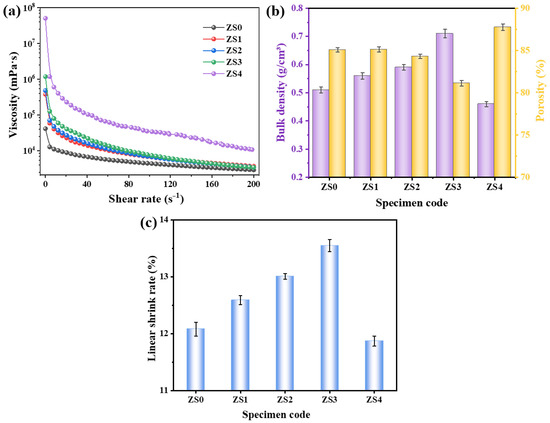
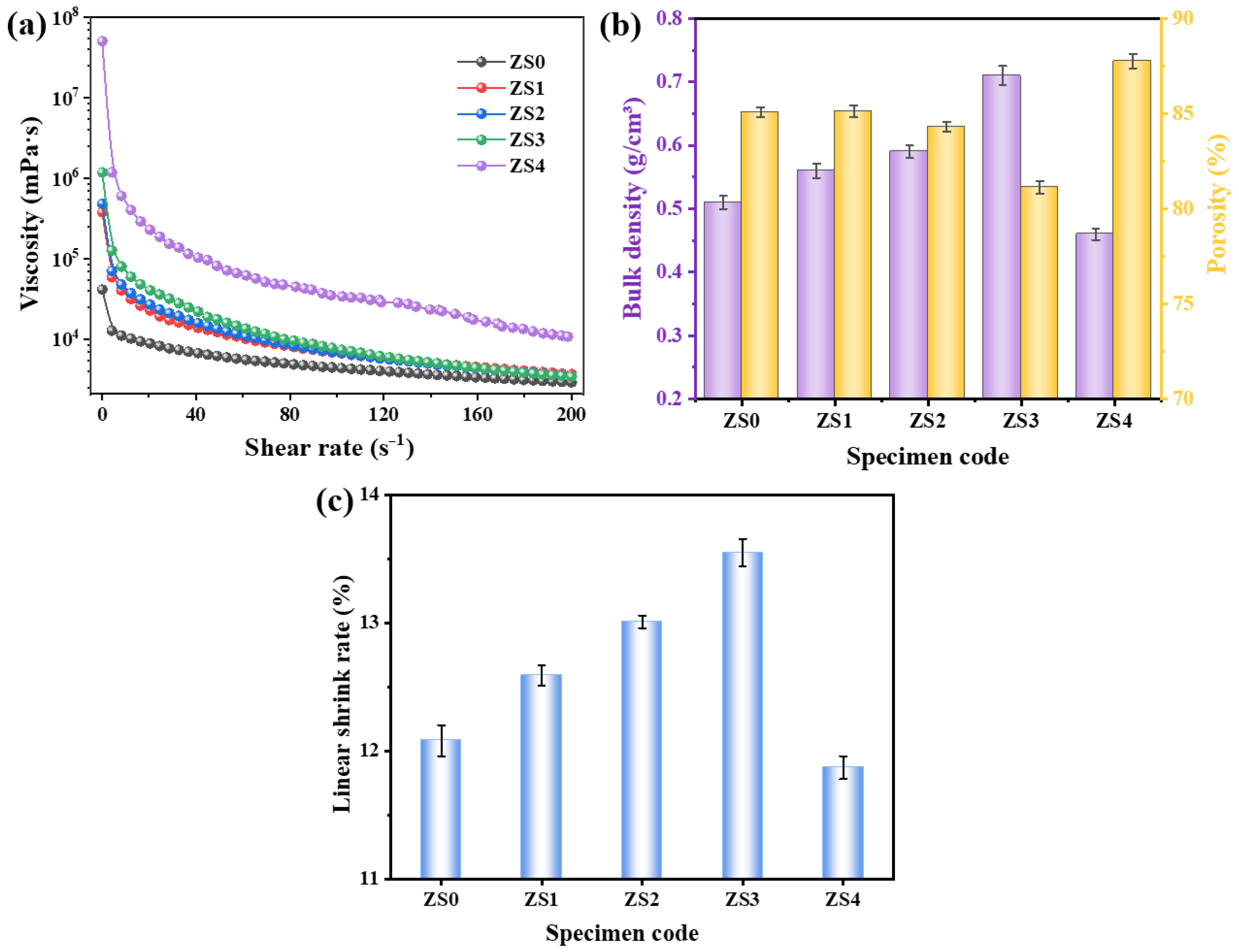
The rheological properties of the ceramic slurry critically influence the microstructure and performance of the final ceramic product. Figure 4a illustrates the rheological behavior of C2M2A14 ceramics slurries containing different additions of ZrO2 sol. From Figure 4a, the viscosity of all ceramic slurries decreases with increasing shear rate, exhibiting significant shear-thinning behavior. This characteristic facilitates rapid adhesion of the ceramic slurry to the PU foam scaffold surface during immersion. Furthermore, the viscosity of the ceramic slurry increases with the increase in ZrO2 sol addition, which is due to the enhanced interaction between the ZrO2 sol network that increases the resistance to flow within the slurry. For all specimens, the slurry with 3 wt% ZrO2 sol addition demonstrates the most favorable rheological properties. Figure 4b,c show the bulk density, porosity and linear shrinkage ratio of as-prepared porous C2M2A14 ceramics. Apparently, as the content of ZrO2 sol increases from 0 to 3 wt%, the bulk density rises from 0.51 to 0.71 g/cm3, while the porosity decreases from 85.06 to 81.12% (Figure 4b). This phenomenon is mainly attributed to the fact that nano-sized ZrO2 particles have an extremely high specific surface area and chemical activity, promoting the sintering of ceramic particles. However, as the ZrO2 sol further increases to 4 wt%, the bulk density decreases to 0.46 g/cm3, which is due to the poor rheological properties and relatively high-volume expansion from the phase transformation of ZrO2. The linear shrinkage rate shown in Figure 4c increases first and then decreases and the specimen ZS3 possesses the highest linear shrinkage of 13.55%.
Figure 4.
(a) Rheological properties, (b) bulk density and porosity and (c) linear shrinkage rate of as-prepared porous C2M2A14 ceramics containing various ZrO2 sol.
3.2. Phase Composition and Microstructure
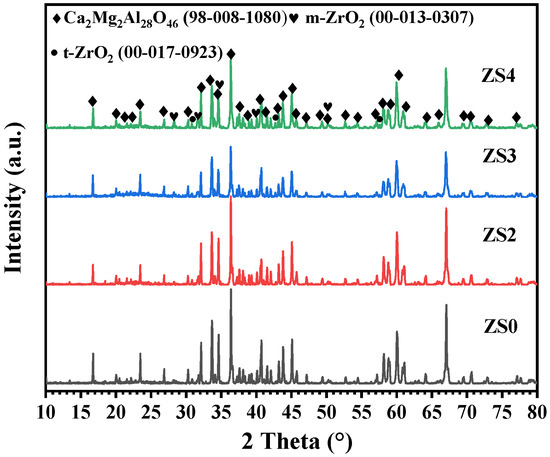
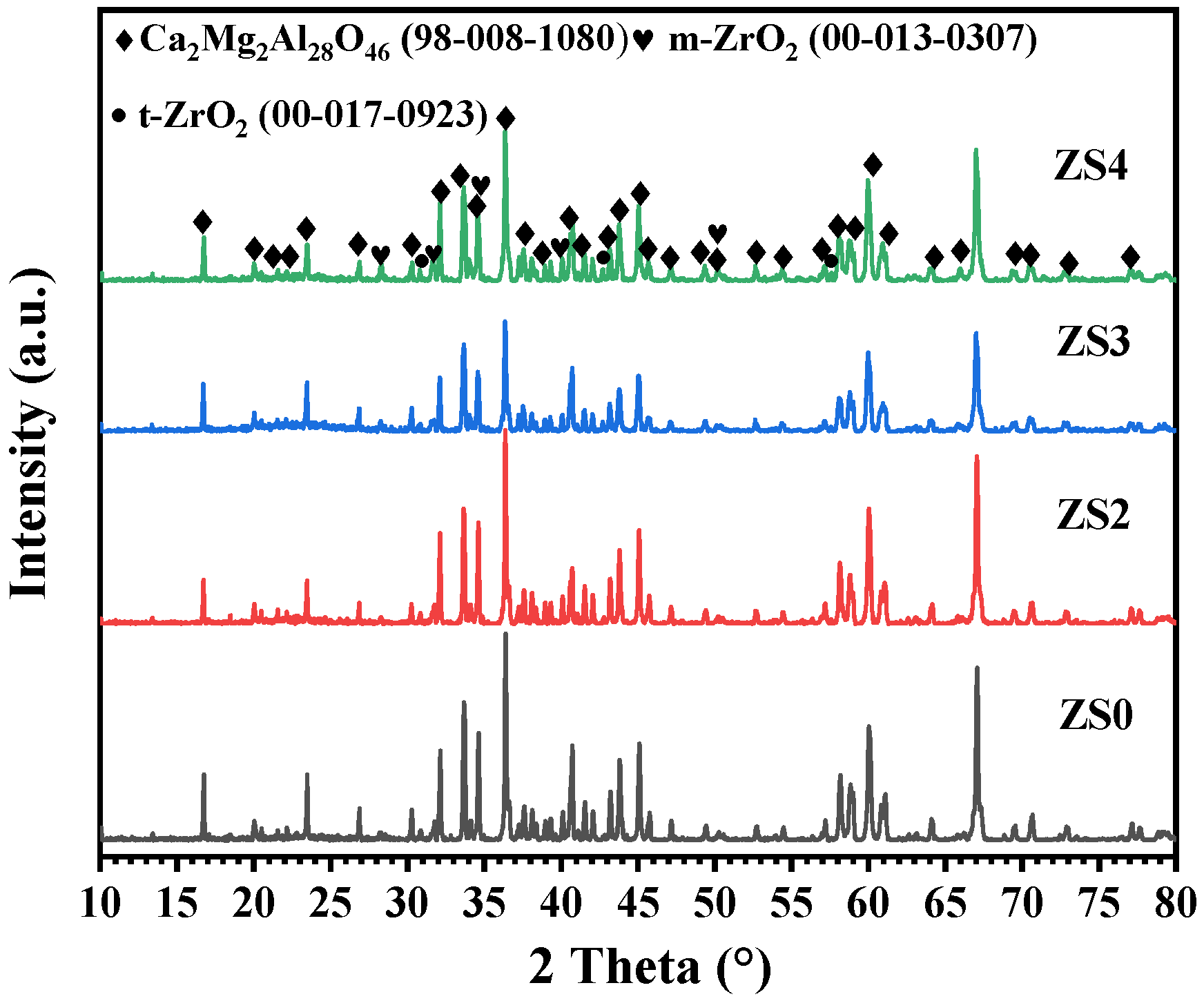
Figure 5 shows the phase composition of as-prepared porous C2M2A14 ceramics with different ZrO2 sol additions. For specimen ZS0, the C2M2A14 is identified as the main phase. In contrast, for the porous C2M2A14 ceramics containing various ZrO2 sol additions (ZS2~ZS4), the C2M2A14, m-ZrO2 and a small amount of t-ZrO2 phase phases are detected, indicating ZrO2 sol has been successfully introduced into the porous C2M2A14 ceramics. With the increase in ZrO2 sol content, the intensity of m-ZrO2 diffraction peak does not change significantly, which may be due to the relatively low addition of ZrO2 sol.
Figure 5.
The XRD patterns of as-prepared porous C2M2A14 ceramics containing various ZrO2 sol additions.
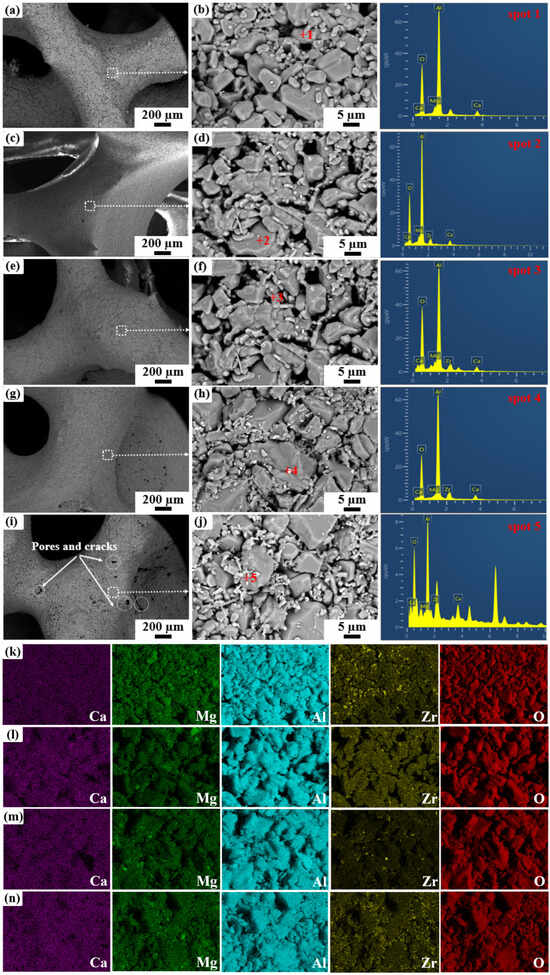
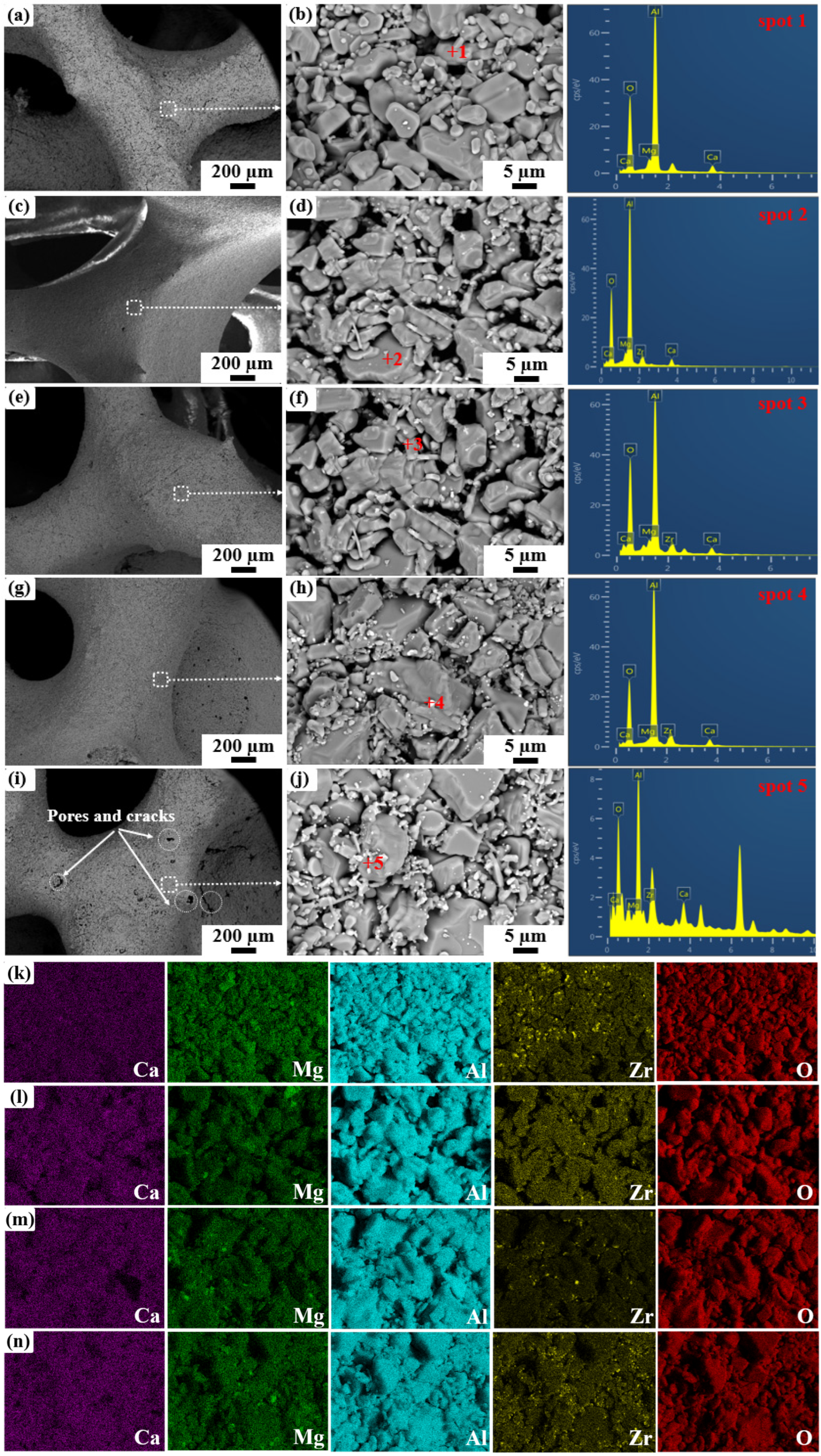
Figure 6 presents the microstructure of as-prepared porous C2M2A14 ceramics. For the specimen ZS0 (Figure 6a,b), the ceramic strut surface is composed of hexagonal plate-like grains and irregular particles packed together, with discernible interparticle pores. EDS result (spot 1) verified that these plate grains are mainly C2M2A14. With the addition of ZrO2 sol, as shown in Figure 6c–j, the strut becomes dense, which is attributed to the relatively high chemical activity of the nano-sized ZrO2 particles, promoting the sintering of the strut. The EDS analysis results from spot 2~5 indicate the presence of Zr in addition to Ca, Mg, Al and O, verifying that ZrO2 sol is successfully incorporated into the C2M2A14. It can be seen that the bright white nano-sized ZrO2 particles are uniformly dispersed on the plate-like C2M2A14 grains. Meanwhile, the number of bright white ZrO2 particles increases with increasing ZrO2 sol addition. The elemental mapping of specimen ZS1~ZS4 displayed in Figure 6k–n indicates that the elements Ca, Mg, Al and Zr are uniformly distributed in the scanned area, confirming the uniform dispersion of nano-sized ZrO2 particles. However, when the ZrO2 sol further increases to 4 wt%, some pores and cracks appeared on the strut surface. This may be due to excessive volume expansion from the phase transformation, leading to more formation of pores and cracks.
Figure 6.
BSE images and EDS analysis of as-prepared porous C2M2A14 ceramics containing various ZrO2 sol after calcination at 1600 °C. (a,b): 0 wt%, (c,d): 1 wt%, (e,f): 2 wt%, (g,h): 3 wt%, (i,j): 4 wt%, (k–n): EDS mapping of porous C2M2A14 ceramics containing1, 2, 3 and 4 wt% ZrO2 sol. (The red number of +1~+5 is the position of EDS spot).
3.3. Thermal Shock Resistance
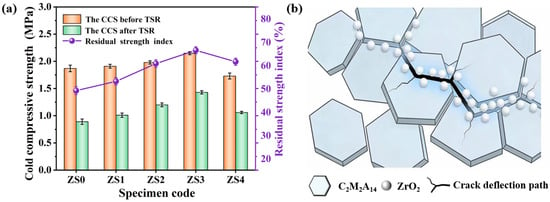
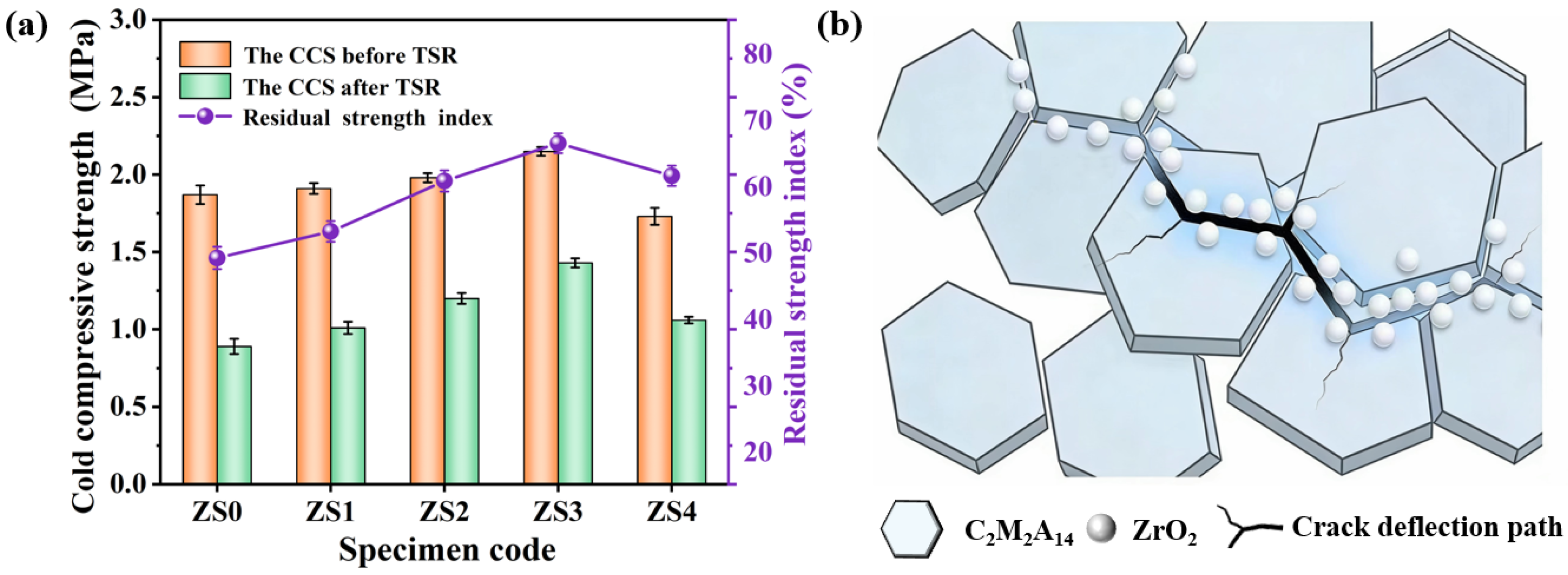
The impact of ZrO2 sol addition on the CCS and TSR of porous C2M2A14 ceramics is presented in Figure 7. From Figure 7a, the CCS firstly increased and then decreased with the increasing of ZrO2 sol addition, which is consistent with the bulk density and porosity of specimens. The residual strength ratio (CCS after thermal shocks/CCS before thermal shocks) of porous C2M2A14 ceramics first increases and then decreases when the ZrO2 sol “µm” addition increases from 0 wt% to 4 wt%, and specimen ZS3 possesses the highest residual-strength ratio of 66.4%. Figure 7b illustrates the TSR mechanism of as-prepared porous C2M2A14 ceramics. Firstly, the hexagonal plate-like C2M2A14 grains can facilitate crack deflection and dissipate crack energy during thermal shock. Furthermore, the phase transformation of uniformly distributed nano-sized ZrO2 generates a few microcracks, which contribute to dispersing the propagation energy of the main crack. Meanwhile, owing to its high specific surface area, ZrO2 sol promotes the sintering of the strut, improving the ability to resist thermal shock. These combined effects would lead to the excellent TSR of as-prepared porous C2M2A14 ceramics. However, when the ZrO2 sol addition reaches 4 wt%, the excessive volume expansion during the phase transformation of ZrO2 leads to relatively more cracks, which inevitably deteriorate its TSR.
Figure 7.
(a) The CCS before and after thermal shocks and the residual strength ratio of porous C2M2A14 ceramics, (b) Schematic diagram of the mechanism of thermal shock stability improvement.
Table 3 compares the CCS and TSR of specimen ZS3 with other porous ceramics reported in the literature [11,30,35,36,37,38]. It can be seen that when the porosity is comparable, specimen ZS3 exhibits a high compressive strength of 2.15 MPa and relatively high residual strength retention of 66.4%. This is attributed to the sintering promotion effect of ZrO2 sol, the cross-stacked hexagonal platelet structure characteristics and the phase-transformation toughening effect of nano-sized ZrO2 particles. Unlike irregular ceramic particles such as Al2O3, MgO, ZrO2, SiC and MgAl2O4, the interlock hexagonal plate-like skeletal structure facilitates crack deflection and dissipates crack energy. Furthermore, the microcracks generated through the phase transformation between m-ZrO2 and t-ZrO2 are also beneficial for absorbing stress and dissipating crack energy [39,40,41,42].
Table 3.
The performance comparison of the specimen ZS3 with other reported works.
3.4. Filter Performance
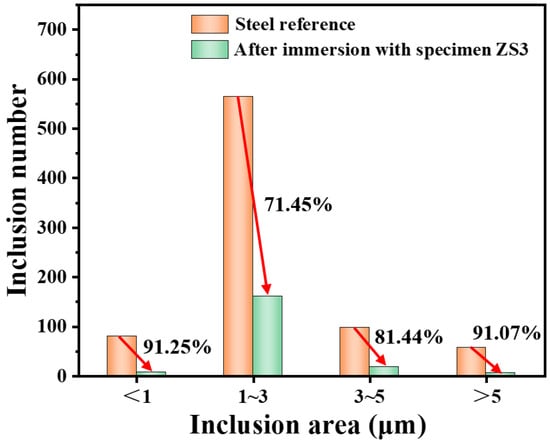
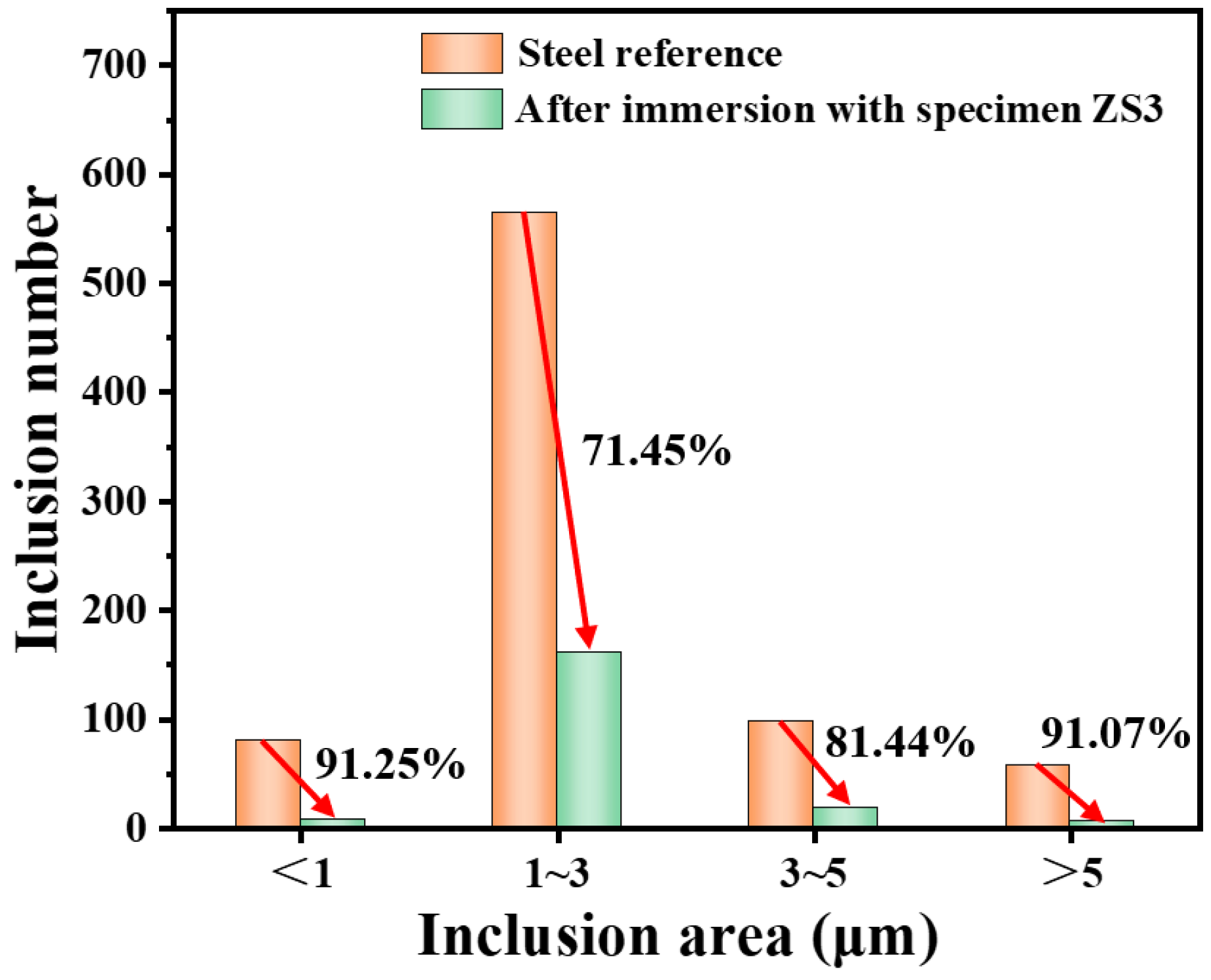
Considering both mechanical strength and TSR, specimen ZS3 is selected to evaluate its filter performance. Figure 8 displays the size and quantity of inclusions per 20 mm2 scanned area in the steel before and after immersion tests using the specimen ZS3. It can be seen that the number of inclusions smaller than 1 μm, 1~3 μm, 3~5 μm and those larger than 5 μm in the impregnated steel is significantly reduced compared with those in unimpregnated steel. The removal efficiencies for those inclusions are calculated to be 91.25%, 71.45%, 81.44% and 91.07%, respectively, indicating an effective removal capability for various sizes of inclusions. Meanwhile, the content of Al and total oxygen also decreases markedly from 0.251 and 0.005 to 0.101 and 0.00158 after immersion with specimen ZS3 (Table 4), which proves that Al2O3 inclusions are effectively removed.
Figure 8.
Inclusions in steel before and after immersion with specimen ZS3. (The red arrow indicates descending direction).
Table 4.
Chemical compositions of the steel specimens after immersion testing.
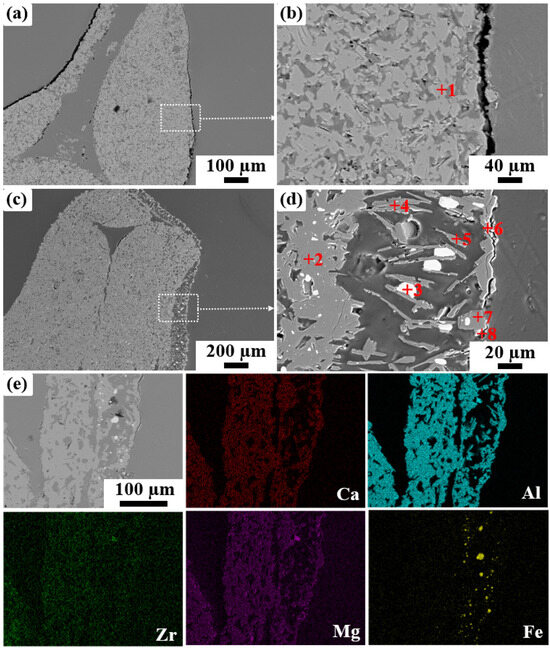
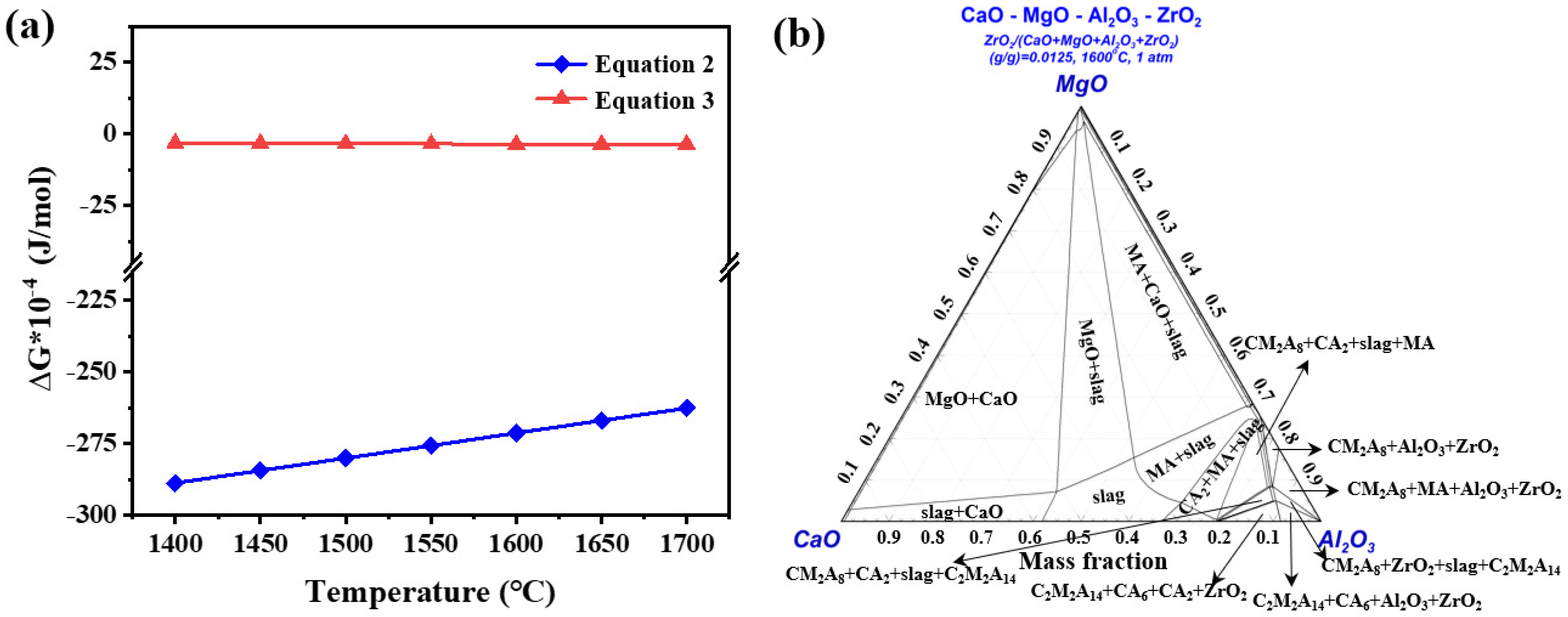
In order to clarify removal mechanism of the specimen ZS3, the cross-sectional microstructure of ZS3 before and after immersion is analyzed and the results are shown in Figure 9 and Table 5. Before immersion, the ceramic strut of specimen ZS3 consists of interlocked plate-like grains (Figure 9a,b), which are composed mainly of Ca, Mg, Al and O, with a small amount of Zr, confirming that they are ZrO2-toughened C2M2A14 (spot 1~2). After immersion, a reaction layer with an approximate thickness of 100 μm is formed (Figure 9c,d). For the reaction layer, the white particles primarily contain Fe (spot 3) and the elongated plate-like regions mainly contain Al, Ca and O, which correspond to the residual condensed Fe and mixtures of CaAl12O19 and CaAl4O7 (spot 4~5) inclusions. The irregular particles near the steel side consist mainly of Ca, Al, Mg and O, and are inferred to be mixtures of MgAl2O4, Al2O3, CaAl4O7 and CaAl2O4 (spot 6~8). This is consistent with the elemental mapping distribution in Figure 9e. Based on the above results, we infer that the removal mechanism of specimen ZS3 can be divided into two aspects: physical interception and chemical adsorption. For physical interception, the rough surface of the ceramic strut, created by the stacking of flake-like structure C2M2A14, increases the contact area with molten steel, thereby enhancing the inclusions interception probability. For chemical-reaction adsorption, under experimental conditions, C2M2A14 (Ca2Mg2Al28O46) would firstly react with [Mg], [Ca] and [O] in molten steel to form CaAl4O7, CaAl2O4 and MgAl2O4 (Equation (2)), and these three phases further form a liquid phase under smelting conditions, adsorbing the Al2O3 inclusions in molten steel. On the other hand, these Al2O3 inclusions can further react with CaAl4O7 and CaAl4O7 to form the CaAl12O19 phase (Equation (3)), resulting in the presence of CaAl12O19 at the interface between the C2M2A14 filter and molten steel, which further purifies the molten steel. Figure 10a shows the Gibbs free energy (ΔG) change in Equations (2) and (3) under thermodynamic conditions. The negative value of ΔG at 1600 °C indicates that these reactions are thermodynamically favorable, providing theoretical support for the proposed filtration mechanism. Figure 10b shows the ternary phase diagram of Al2O3 (ZrO2)-MgO-CaO phase diagram, which is employed to assess the phase transformation between C2M2A14 and molten steel at 1600 °C. The phase diagram result confirms the formation of new phases corresponding to Equations (2) and (3) in experimental conditions, along with the presence of a liquid phase in certain regions. These thermodynamic analyses are also consistent with the microstructural observations.
Ca2Mg2Al28O46 (s) + 4[Ca] + [Mg] + 5[O] = CaAl2O4 + 5CaAl4O7 + 3MgAl2O4
CaAl2O4 (s) + CaAl4O7 (s) + 9Al2O3 (s) = 2CaAl12O19 (s)
Figure 9.
BSE images and mapping analysis of the specimen ZS3 after immersion. (a,b) the specimen ZS3 before immersion, (c,d) the specimen ZS3 after immersion, (e) the mapping of specimen ZS3 after immersion. (The red number of +1~+8 is the position of EDS spot).
Table 5.
The element content at points in Figure 9 (at%).
Figure 10.
(a) Gibbs free energy of Equations (2) and (3) and (b) liquid phase region diagram for the reaction between C2M2A14 and molten steel at 1600 °C.
4. Conclusions
This study systematically investigates the influence of ZrO2 sol on the rheological properties, physical properties and thermal-shock resistance as well as the inclusions-removal mechanism of porous C2M2A14 ceramics. The main conclusions can be drawn as follows:
- (1)
- The incorporation of highly active ZrO2 sol promotes sintering, thereby enhancing compressive strength. Moreover, an appropriate amount of ZrO2 sol improves the TSR by generating microcracks via phase transformation. These cracks can facilitate crack deflection and crack dissipation, which enhances thermal shock stability.
- (2)
- The optimized porous ZS3 ceramics exhibit a high compressive strength of 2.15 MPa and an excellent residual-strength ratio of 66.4%. Owing to the synergistic effect of physical interception and chemical reaction, the as-prepared porous C2M2A14-based ceramics achieve a high removal efficiency of 68.4% in total oxygen content. Given these superior properties, as-prepared porous C2M2A14 ceramic is a promising candidate for molten-metal filtration applications.
Author Contributions
Methodology, J.S., H.X., P.Z. and B.R.; Software, H.X., P.Z., E.W. and B.R.; Validation, B.R.; Formal analysis, J.S., H.X. and P.Z.; Investigation, J.S., H.X., P.Z. and E.W.; Resources, J.S., J.L. and E.W.; Data curation, J.S. and P.Z.; Writing—original draft, J.S.; Writing—review and editing, J.L.; Supervision, J.L. and X.H.; Project administration, J.L. and X.H.; Funding acquisition, J.L. and X.H. All authors have read and agreed to the published version of the manuscript.
Funding
This research was funded by the financial support of the National Natural Science Foundation of China (Grant Nos. 52302014, 52574366, 52450003 and U2341267) and Open Fund of the Key Laboratory of Mineral Metallurgical Resources Utilization and Pollution Control, Ministry of Ecology and Environment of the People’s Republic of China (No. HB202403).
Data Availability Statement
The original contributions presented in this study are included in the article. Further inquiries can be directed to the corresponding authors.
Conflicts of Interest
The authors declare no conflict of interest.
Abbreviations
The abbreviations table.
| Abbreviations | Technical Term |
| TEC | Thermal expansion coefficient |
| TSR | Thermal shock resistance |
| κ | Thermal conductivity |
| CMC | Carboxymethyl cellulose |
| AL | Ammonium lignosulfonate |
| WSM-M | Polycarboxylate |
| PU | Polyurethane foam |
| XRD | X-ray diffractometer |
| SEM | Scanning electron microscopy |
| EDS | Energy dispersive spectrometer |
| CCS | Cold compressive strength |
| T.O. | Total oxygen |
| ΔG | Gibbs free energy |
| CA2 | CaAl4O7 |
| CA | CaAl2O4 |
| CA6 | CaAl12O19 |
| C2M2A14 | Ca2Mg2Al28O46 |
| CM2A8 | CaMg2Al16O27 |
| MA | MgAl2O4 |
References
- Wetzig, T.; Baaske, A.; Karrasch, S.; Brachhold, N.; Rudolph, M.; Aneziris, C.G. Application of exchangeable carbon-bonded alumina foam filters in an industrial tundish for the continuous casting of steel. Ceram. Int. 2018, 44, 23024. [Google Scholar] [CrossRef] [Scilit]
- Chen, C.; Xue, Z.X.; Mu, W.Z. Advanced stainless steel-from making, shaping, treating to products. Materials 2025, 18, 4730. [Google Scholar] [CrossRef] [Scilit]
- You, D.; Bernhard, C.; Mayerhofer, A.; Michelic, S.K. Influence of slag viscosity and composition on the inclusion content in steel. ISIJ Int. 2021, 61, 2991. [Google Scholar] [CrossRef] [Scilit]
- Li, W.Y.; Chen, H.J.; Li, Y.; Jiang, Z.H.; Yang, H.; Xia, L.; Wang, Y.H.; Zhang, D.F. Effect of refractory composition on nonmetallic inclusion characteristics in valve spring steel. Steel Res. Int. 2026, 97, 497–510. [Google Scholar] [CrossRef] [Scilit]
- Ali, B.; Amir Abbas, N.; Kahrizsangi, R.E. Inclusion removal mechanisms of Al-Killed 304 low carbon stainless steel melt using hercynite coated Al2O3-C ceramic foam filters. J. Adv. Mater. Process. 2021, 9, 27. [Google Scholar]
- Omerašević, M.; Pavkov, V.; Rosić, M.; Egerić, M.; Nenadović, S.; Bučevac, D.; Potkonjak, N. Fabrication of porous anorthite ceramic insulation using solid wastes. Materials 2024, 17, 1478. [Google Scholar] [CrossRef] [Scilit] [PubMed]
- Chen, R.Y.; Zhu, H.P.; He, Q.; Li, S.S. Fabrication of SiC reticulated porous ceramics with dense struts by in-situ generation of SiC. J. Eur. Ceram. Soc. 2024, 44, 635. [Google Scholar] [CrossRef] [Scilit]
- Liu, Y.; Yan, W.; Chen, Z.; Chen, J.F.; Liu, Y.; Li, G.Q. Preparation of high performance MgO ceramic filter and its interaction with molten steel: Effect of porous MgO powder. J. Eur. Ceram. Soc. 2023, 43, 3794. [Google Scholar] [CrossRef] [Scilit]
- Chen, X.D.; Betke, U.; Rannabauer, S.; Peters, P.; Söffker, G.; Scheffler, M. Improving the strength of ZTA foams with different strategies: Immersion infiltration and recoating. Materials 2017, 10, 735. [Google Scholar] [CrossRef] [Scilit]
- Jun, I.K.; Kong, Y.M.; Lee, S.H.; Kim, H.E.; Kim, H.W.; Goretta, K.C. Reinforcement of a reticulated porous ceramic by a novel infiltration technique. J. Am. Ceram. Soc. 2006, 89, 2317. [Google Scholar] [CrossRef] [Scilit]
- Zhang, Y.H.; Liang, X.; Li, Y.W.; Pan, L.P.; Wang, Q.H.; Dai, Y.J.; Sang, S.B. Preparation of silicon carbide reticulated porous ceramics with enhanced thermal shock resistance and high combustion efficiency. Ceram. Int. 2024, 50, 44383. [Google Scholar] [CrossRef] [Scilit]
- Yan, W.; Song, J.W.; Dai, Y.J.; Liu, Y.; Chen, Q.L.; Han, Z.; Li, H.F.; Hong, S.S. High-performance Al2O3-MgAl2O4-C ceramic filters for molten steel filtration: A comparative study with Al2O3-C, ZrO2 and SiC ceramic filters. Ceram. Int. 2025, 51, 61958. [Google Scholar] [CrossRef] [Scilit]
- de Aza Antonio, H.; Pena, P.; de Aza, S. Ternary system Al2O3-MgO-CaO part 1, primary phase field of crystallization of spinel in the subsystem MgAl2O4-CaAl4O7-CaO-MgO. J. Am. Ceram. Soc. 1999, 82, 2193. [Google Scholar] [CrossRef] [Scilit]
- Li, B.; Li, G.Q.; Chen, H.Y.; Chen, J.H.; Hou, X.M.; Li, Y. Physical and mechanical properties of hot-press sintering ternary CM2A8 (CaMg2Al16O27) and C2M2A14 (Ca2Mg2Al28O46) ceramics. J. Adv. Ceram. 2018, 7, 229. [Google Scholar] [CrossRef] [Scilit]
- Li, B.; Chen, H.Y.; Chen, J.H.; Wang, E.H.; Hou, X.M.; Li, Y. Preparation, growth mechanism and slag resistance behavior of ternary Ca2Mg2Al28O46 (C2M2A14). Int. J. Appl. Ceram. Tec. 2019, 16, 1126. [Google Scholar] [CrossRef] [Scilit]
- Chen, J.H.; Chen, H.Y.; Mi, W.J.; Cao, Z.; Li, B.; Li, G.Q. Synthesis of CaO·2MgO·8Al2O3 (CM2A8) and its slag resistance mechanism. J. Eur. Ceram. Soc. 2017, 37, 1799. [Google Scholar] [CrossRef] [Scilit]
- Song, J.W.; Yan, W.; Volkova, O.; Andrä, S.; Bellé, M.R.; Neubert, L.; Tian, C.; Li, Y.B. Effect of microporous Al2O3-MgAl2O4 content on the thermal shock resistance and molten steel purification performance of β-SiC whisker-reinforced Al2O3-MgAl2O4-C ceramic filters. J. Mater. Res. Technol. 2025, 39, 7124. [Google Scholar] [CrossRef] [Scilit]
- Yu, Z.Y.; Zhao, N.Q.; Liu, E.Z.; Shi, C.S.; Du, X.W.; Wang, J. Fabrication of aluminum matrix composites with enhanced mechanical properties reinforced by in situ generated MgAl2O4 whiskers. Compos. Part A Appl. Sci. Manufac. 2012, 43, 631. [Google Scholar] [CrossRef] [Scilit]
- Shu, J.L.; Wang, H.; Huang, H.Y.; Dai, Y.J.; Zhu, T.B.; Fan, L.X.; Li, Y.W.; Zhang, F. Effect of in-situ formed MgAl2O4 on the microstructure, mechanical properties, and service performance of the BN-SiC-ZrO2 composite. J. Alloys Compd. 2026, 1050, 185800. [Google Scholar] [CrossRef] [Scilit]
- Xu, H.C.; Liu, Y.; Cheng, J.F.; Wang, K. Tailoring whisker orientation and content in binder jetting SiCw/SiC composites: Regulating microstructures for enhanced mechanical properties. J. Eur. Ceram. Soc. 2026, 46, 117897. [Google Scholar] [CrossRef] [Scilit]
- Zheng, C.X.; Yu, J.; Li, X.Y.; Duan, J.B.; Huang, Z.L.; Li, M.; Hu, X.Y.; Li, Y. Synthesis of carbon fiber reinforced SiC aerogel composites with enhanced mechanical and antioxidant properties for high temperature insulation. J. Mater. Res. Technol. 2025, 36, 4547. [Google Scholar] [CrossRef] [Scilit]
- Wei, Y.C.; Ye, F.; Cheng, L.F. Enhanced mechanical properties and ablation resistance of ZrCw/ZrB2-SiC composites. J. Alloys Compd. 2025, 1022, 179576. [Google Scholar] [CrossRef] [Scilit]
- Mao, G.X.; Wu, J.M.; Tian, C.; Liu, C.L.; Guo, L.; Cai, W.H.; Zhang, Y.Z.; Lin, X.; Wang, F.; Xu, H.S.; et al. ZrO2 reinforced porous Si3N4-based ceramics with improved mechanical properties fabricated via vat photopolymerization (VPP). Addit. Manuf. 2024, 91, 104327. [Google Scholar] [CrossRef] [Scilit]
- Wang, L.L.; Ma, B.Y.; Ren, X.M.; Yu, C.; Tian, J.L.; Liu, C.M.; Deng, C.J.; Hu, C.B.; Liu, Z.Y.; Yu, J.K.; et al. Phase-engineering strategy of ZrO2 for enhancing the mechanical properties of porous cordierite ceramics. Mater. Today Commun. 2022, 30, 103032. [Google Scholar] [CrossRef] [Scilit]
- Mahnicka-Goremikina, L.; Svinka, R.; Svinka, V.; Grase, L.; Juhnevica, I.; Rundans, M.; Goremikins, V.; Tolendiuly, S.; Fomenko, S. Thermal properties of porous mullite ceramics modified with microsized ZrO2 and WO3. Materials 2022, 15, 7935. [Google Scholar] [CrossRef] [Scilit]
- Qi, B.; Liang, S.S.; Li, Y.J.; Zhou, C.C.; Yu, H.B.; Li, J. ZrO2 matrix toughened ceramic material-strength and toughness. Adv. Eng. Mater. 2022, 24, 2101278. [Google Scholar] [CrossRef] [Scilit]
- Murugesan, A.; Biswas, K. Tailoring toughening mechanisms for enhanced mechanical performance in an Al2O3-B4C-ZrO2 composite fabricated via hot pressing. J. Alloys Compd. 2025, 1039, 182793. [Google Scholar] [CrossRef] [Scilit]
- Chen, M.; Song, Z.J.; Lei, H.Y.; Wang, H.L.; Zhang, S.J.; Zhang, R.; Li, H.X.; Fan, B.B.; Chen, Y.Q. Reaction mechanisms and properties of in situ porous Al2O3-ZrO2-mullite composites. Ceram. Int. 2023, 49, 29829. [Google Scholar] [CrossRef] [Scilit]
- Jiang, J.P.; Chen, Y.N.; Jiang, C.P.; Zhang, Y.; Zhao, Q.Y.; Zhang, Z.; Yang, Z.H.; Wang, S.P.; Li, H.Z. Composite ceramic coating with enhanced thermal shock resistance formed by the in-situ synthesis of nano-ZrO2. Ceram. Int. 2022, 48, 10629. [Google Scholar] [CrossRef] [Scilit]
- Chen, Z.; Yan, W.; Li, G.Q.; Hong, S.S.; Li, N. Enhanced mechanical properties of novel Al2O3-based ceramic filter by using microporous corundum-spinel and nano-Al2O3 powders. J. Eur. Ceram. Soc. 2024, 44, 1070. [Google Scholar] [CrossRef] [Scilit]
- Pu, X.P.; Jia, L.P.; Zhang, D.F.; Su, C.H.; Liu, X.J. Surface treatment of templates for fabrication of reticulated porous ceramics. J. Am. Ceram. Soc. 2007, 90, 2998. [Google Scholar] [CrossRef] [Scilit]
- Liu, J.T.; Xu, L.L.; Yue, W.J.; Zhang, M.Q.; Li, X.K.; Wang, S.H.; Liu, Q.Q.; Ma, C.L.; Yuan, H.Y.; Cui, J.Y.; et al. Preparation of β-SiAlON/SiC composite ceramic foam filters and their oxidation resistance. Ceram. Int. 2024, 50, 38200. [Google Scholar] [CrossRef] [Scilit]
- Chen, Z.; Yan, W.; Li, H.; Xia, Z.; Li, G.Q.; Li, N.; Yang, J.L. Improved purification performance on molten steel of Al2O3-C based foam filter enhanced by microporous corundum-spinel powder. Ceram. Int. 2025, 51, 41694. [Google Scholar] [CrossRef] [Scilit]
- Calvo, W.A.; Pena, P.; Tomba Martinez, A.G. Post-mortem analysis of alumina-magnesia-carbon refractory bricks used in steelmaking ladles. Ceram. Int. 2019, 45, 185. [Google Scholar] [CrossRef] [Scilit]
- Peng, W.D.; Chen, Z.; Yan, W.; Liu, Y.; Li, G.Q. Impact of functional coatings on microstructure and properties of periclase-magnesium aluminate spinel ceramic filter and its purification capacity on molten steel. Ceram. Int. 2024, 50, 25293. [Google Scholar] [CrossRef] [Scilit]
- Lao, D.; Lin, P.; Liu, X.J.; Chen, R.Y.; Jia, W.B.; Li, M.H.; Hei, D.Q. A novel approach to prepare high strength and high porosity reticulated porous ceramics by in-situ synthesis of mullite whiskers. Ceram. Int. 2021, 47, 14561. [Google Scholar] [CrossRef] [Scilit]
- Guo, F.J.; Wu, F.; Li, J.; Liu, L.; Huang, Y.D. A facile approach for preparing Al2O3 reticulated porous ceramics with optimized closed-cell struts and excellent mechanical properties. Ceram. Int. 2023, 49, 22054. [Google Scholar] [CrossRef] [Scilit]
- Wu, Z.; Liang, X.; Li, Y.W.; Tie, J.; Wang, Q.H.; Pan, L.P.; Sang, S.B. Improvement of the strength and water-oxygen corrosion resistance of SiC reticulated porous ceramics via residual compressive stress. J. Alloys Compd. 2026, 1050, 185600. [Google Scholar] [CrossRef] [Scilit]
- Gu, Q.; Ma, T.; Zhao, F.; Jia, Q.L.; Liu, X.H.; Liu, G.Q.; Li, H.X. Enhancement of the thermal shock resistance of MgO-C slide plate materials with the addition of nano-ZrO2 modified magnesia aggregates. J. Alloys Compd. 2020, 847, 156339. [Google Scholar] [CrossRef] [Scilit]
- Dudczig, S.; Veres, D.; Aneziris, C.G.; Skierab, E.; Steinbrech, R.W. Nano-and micrometre additions of SiO2, ZrO2 and TiO2 in fine grained. Ceram. Int. 2012, 38, 2011. [Google Scholar] [CrossRef] [Scilit]
- Wu, J.F.; Zhang, C.; Xu, X.H.; Liu, X.; Zhou, S.X.; Wu, C.H. Enhanced thermal shock resistance of ZrO2-reinforced Al2O3-CaAl12O19 composites prepared from ferrotitanium slag: Crack propagation resistance mechanisms. Ceram. Int. 2021, 47, 14540. [Google Scholar] [CrossRef] [Scilit]
- Mi, Y.; Xu, Y.B.; Li, Y.W.; Sang, S.B.; Wang, Q.H. Fabrication and thermal shock behavior of ZrO2 toughened. Ceram. Int. 2021, 47, 26475. [Google Scholar] [CrossRef] [Scilit]

Disclaimer/Publisher’s Note: The statements, opinions and data contained in all publications are solely those of the individual author(s) and contributor(s) and not of MDPI and/or the editor(s). MDPI and/or the editor(s) disclaim responsibility for any injury to people or property resulting from any ideas, methods, instructions or products referred to in the content. |
© 2026 by the authors. Licensee MDPI, Basel, Switzerland. This article is an open access article distributed under the terms and conditions of the Creative Commons Attribution (CC BY) license.