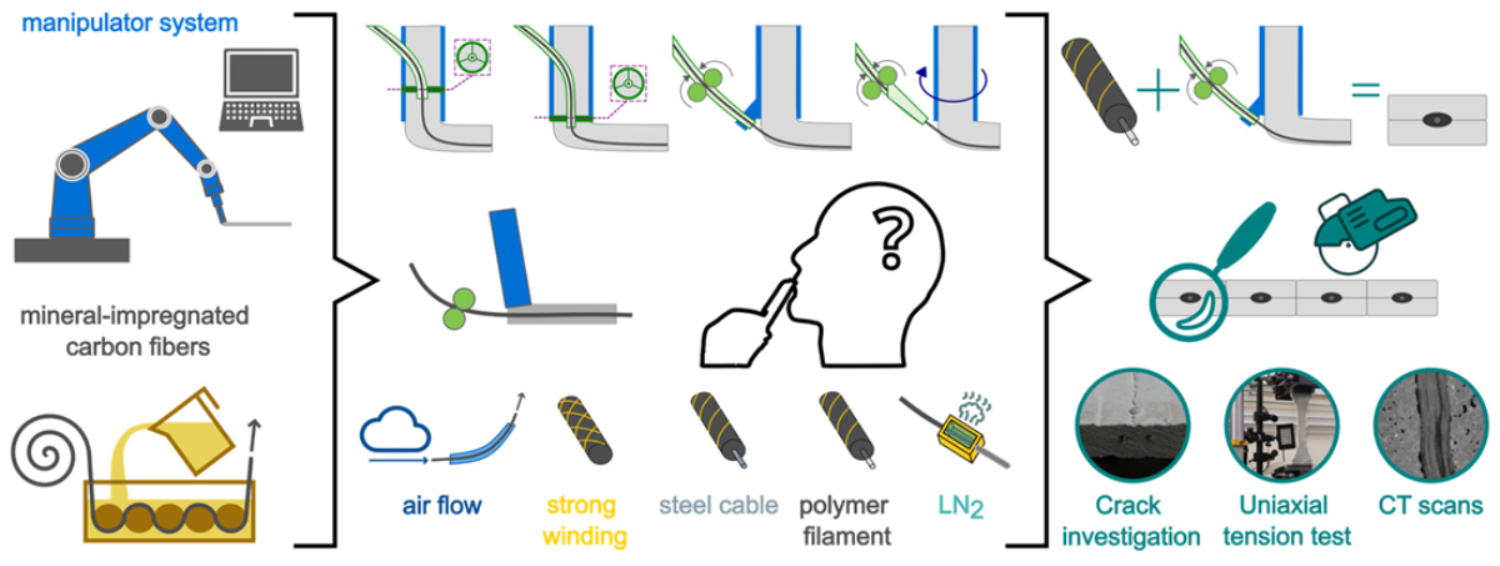
Methodology for Integrating Mineral-Impregnated Carbon Fibers as Reinforcement in Fine Filament 3D Concrete Printing


Abstract
1. Introduction
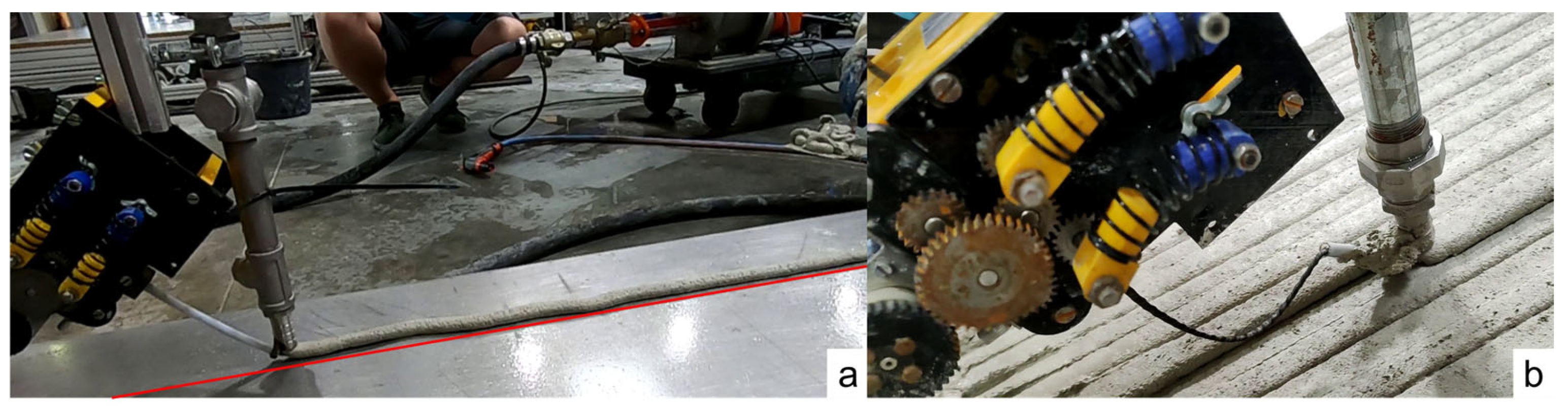
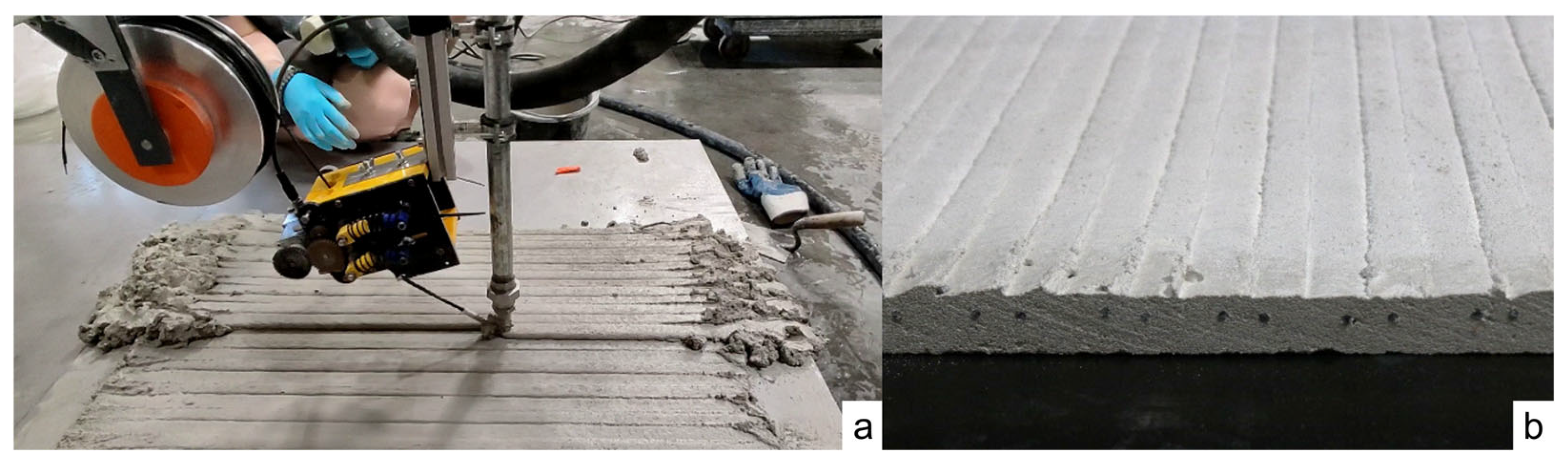
- The fine filament printing process requires soft-consistency concrete, as it must be pumped through a narrow rubber hose to the nozzle. This softer fresh concrete lacks the strength to effectively pull and carry the fiber into the extruded strand through volumetric flow.
- Increasing the reinforcement ratio reduces the available volume of concrete, further limiting its ability to pull and embed the MCF.
- Despite imposing a uniform nozzle speed via the robotic arm, slight deviations in movement were observed due to physical and technical constraints set by the robot’s controller. These minor speed fluctuations resulted in either overfeeding, causing blockages in fiber deposition, or underfeeding, leading to excessive tension and fiber extraction from already deposited concrete strands. Although a software-based synchronization of fiber delivery speed with the robot arm movement was implemented, a hardware-based buffer at the fiber deposition station was ultimately required to resolve these issues.
2. Materials and Setup
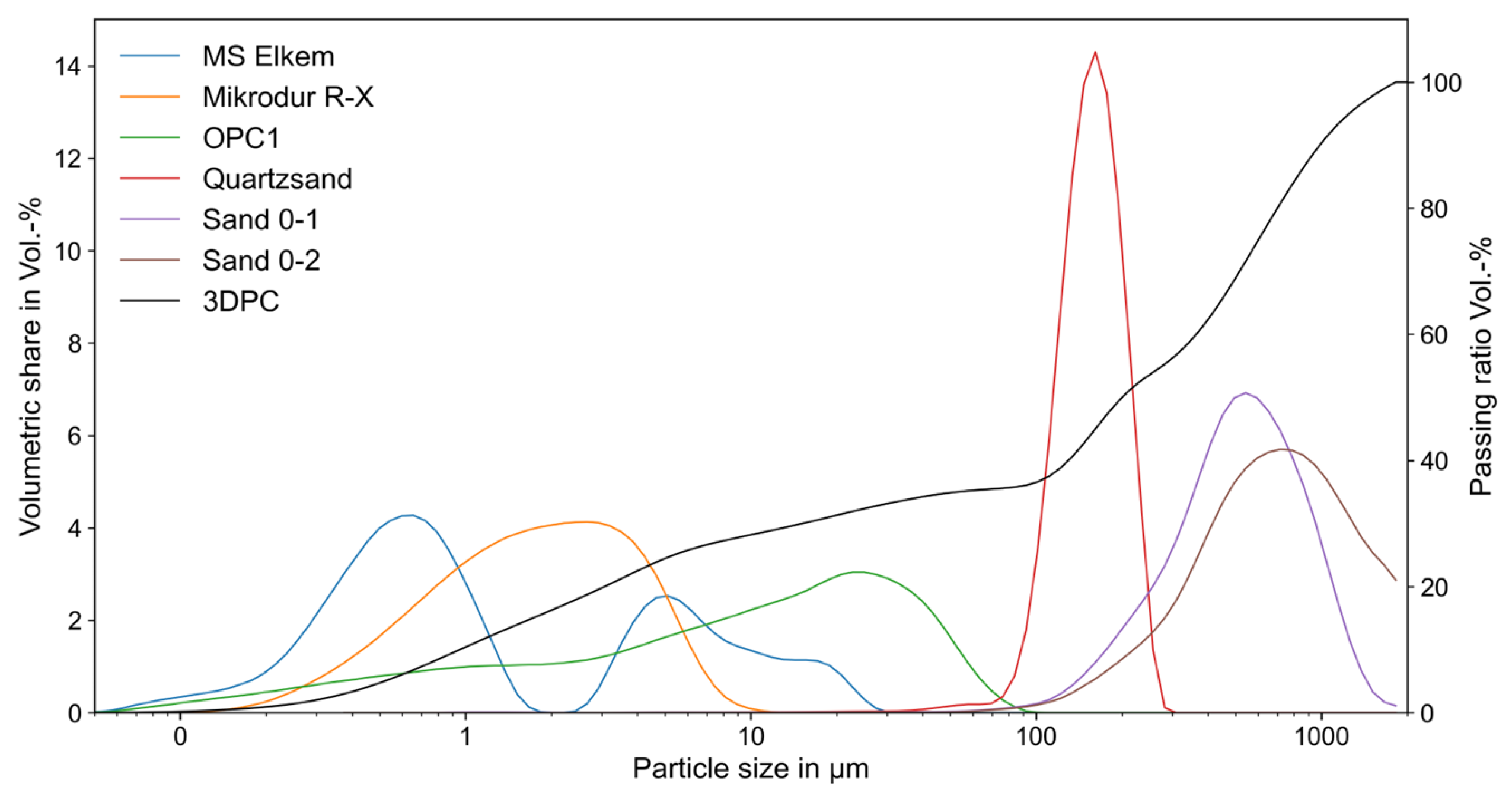
2.1. Fine Grained Concrete for 3D Printing
2.2. Fiber Impregnation Process for MCF
2.3. Manipulator System
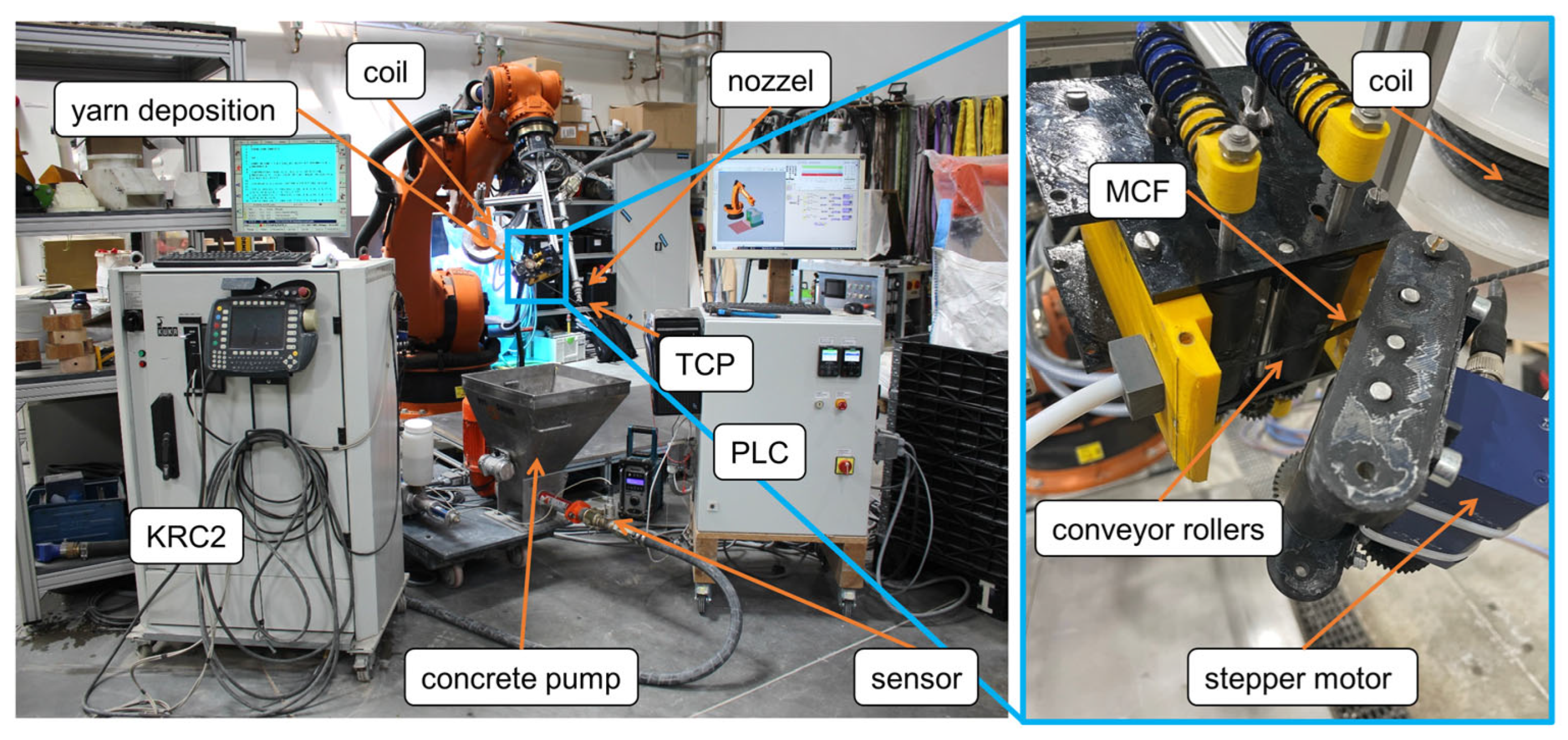
- A digital pressure sensor installed between the pump and the hose halts the pump if concrete pressure exceeds 20 bar, detecting potential blockages and enhancing safety.
- A 15 m-long hose with a nominal diameter of DN25 transports concrete from the pump to the nozzle.
- A nozzle mounted on a robot’s arm shapes the pumped concrete. Adjacent to the nozzle, the fibers feeding unit and spool are affixed to the robot’s arm end plate. This unit, comprising several rubber rollers driven by a stepper motor, feeds fibers from the spool to the nozzle.
- A six-axis industrial robot, KR 240-2 2000 by KUKA Deutschland GmbH, Augsburg in Germany, with a nominal payload of 240 kg and a maximum reach of 2.7 m, moves the assembly of the nozzle, hose, spool, and feeding unit precisely. The robot follows commands from the KRC2 controller, which processes the pre-generated printing path.
- A second control cabinet houses electronics for controlling the mortar pump, stepper motors, and sensors, and for integrating signals from the KRC2 controller.
3. Integration of Fresh MCF in the 3D Printing Process
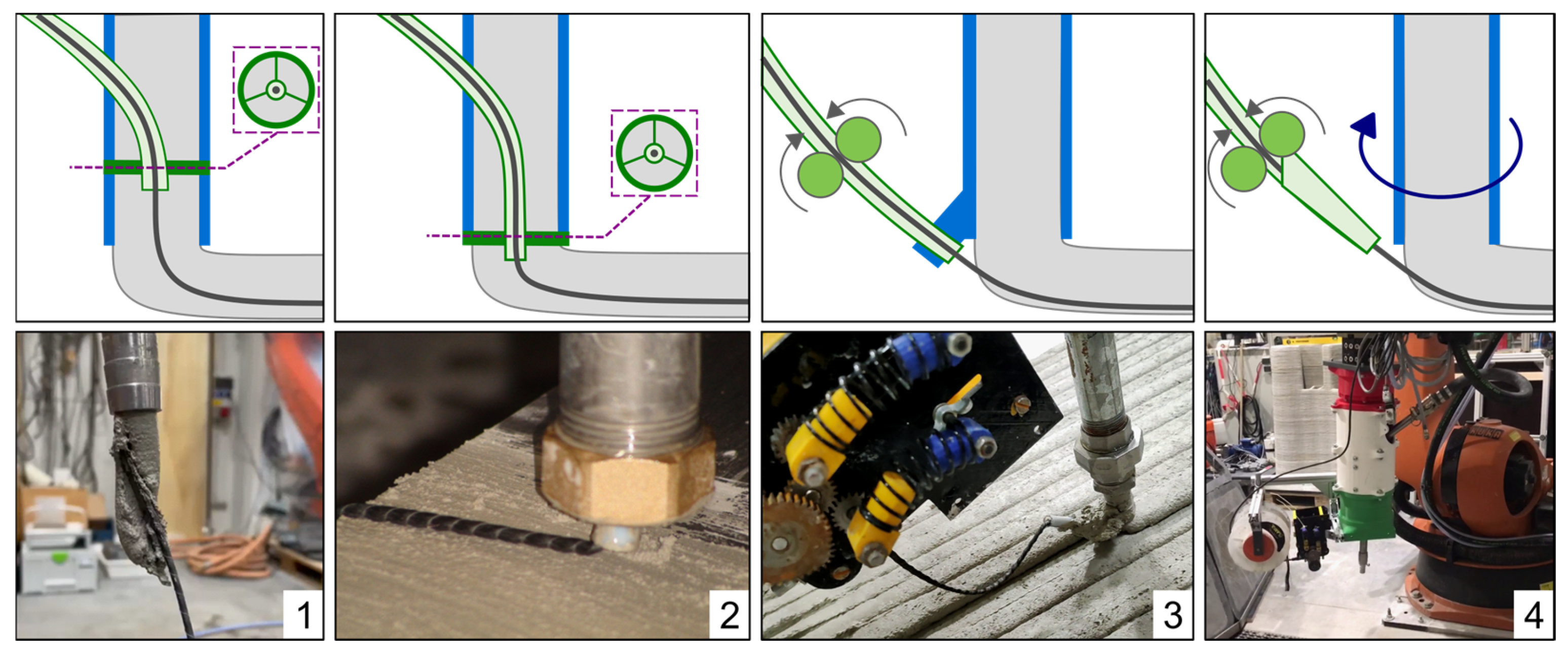
3.1. Modification of the Nozzle—Location of the MCF Insertion
- (1)
- MCF Insertion Before Nozzle Tip
- (2)
- Centric Insertion After Nozzle Tip
- (3)
- MCF Deposition Before Nozzle
- (4)
- MCF Deposition with Rotating Nozzle
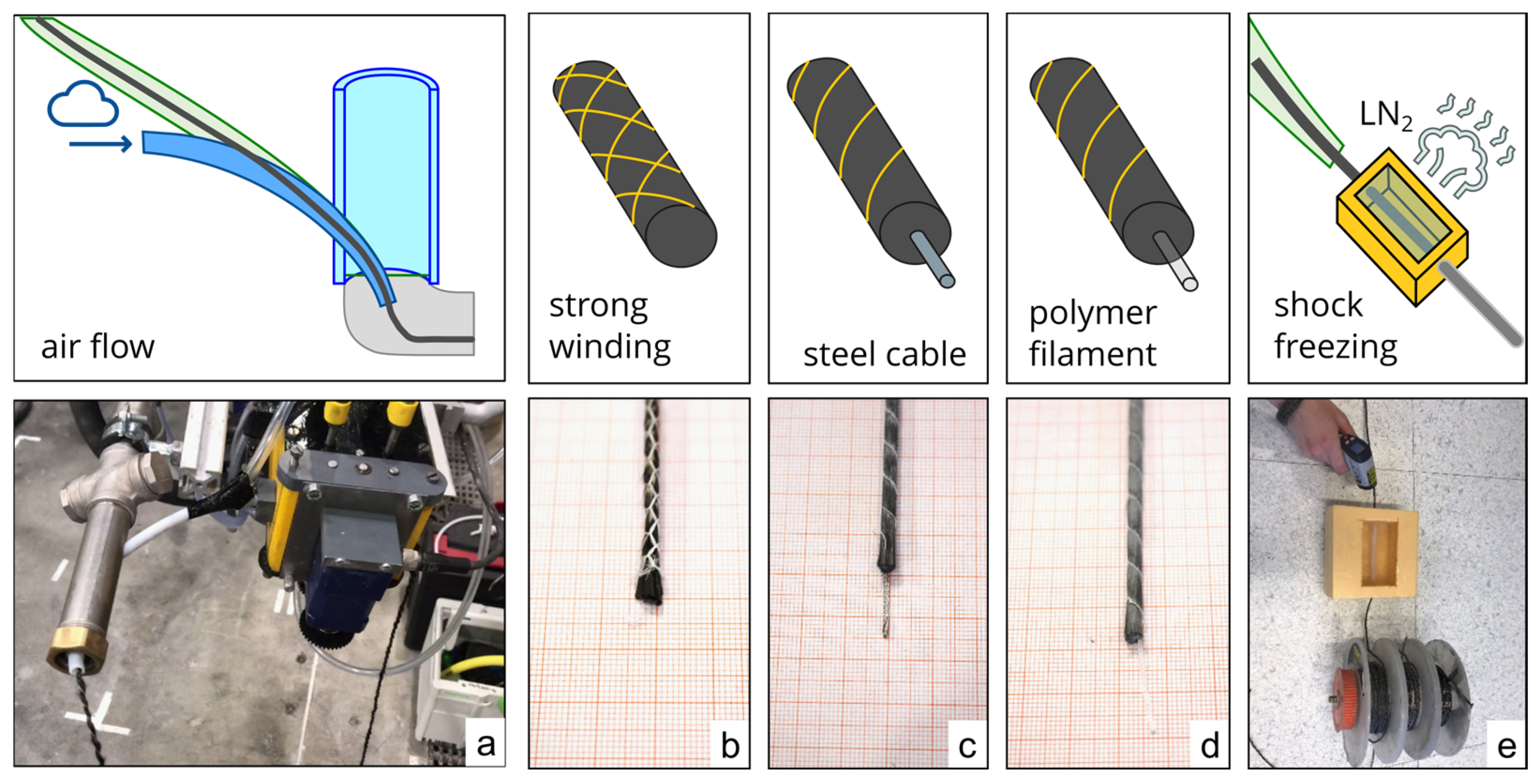
3.2. Modification of the MCF and the Fibers Feeding
- (a)
- Conveying the filament with a continuous airflow
- (b)
- Increasing stiffness through strong winding
- (c)
- Increasing stiffness by inserting a steel cable into the MCF
- (d)
- Increasing stiffness by inserting a polymer filament
- (e)
- Temporary increase in stiffness through shock freezing
3.3. Successful Modification of Nozzle, MCF, and Fibers Feeding
4. Mechanical Properties
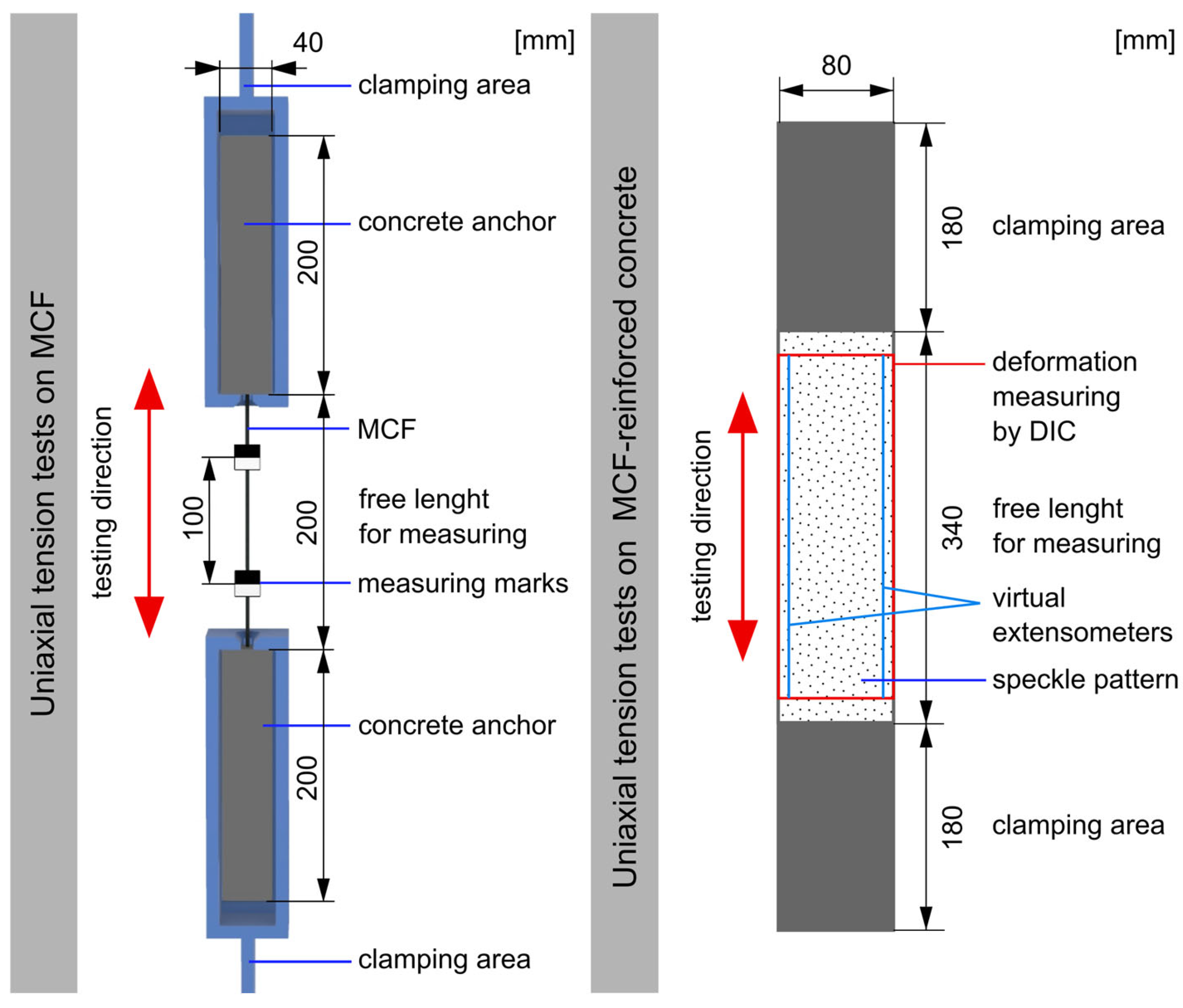
4.1. Uniaxial Tension Tests on MCF and Its Modifications
4.2. Uniaxial Tension Tests on Deposited and Cast MCF-Reinforced Concrete Specimens
4.2.1. Sample Preparation and Test Setup
4.2.2. Results of the Tensile Tests
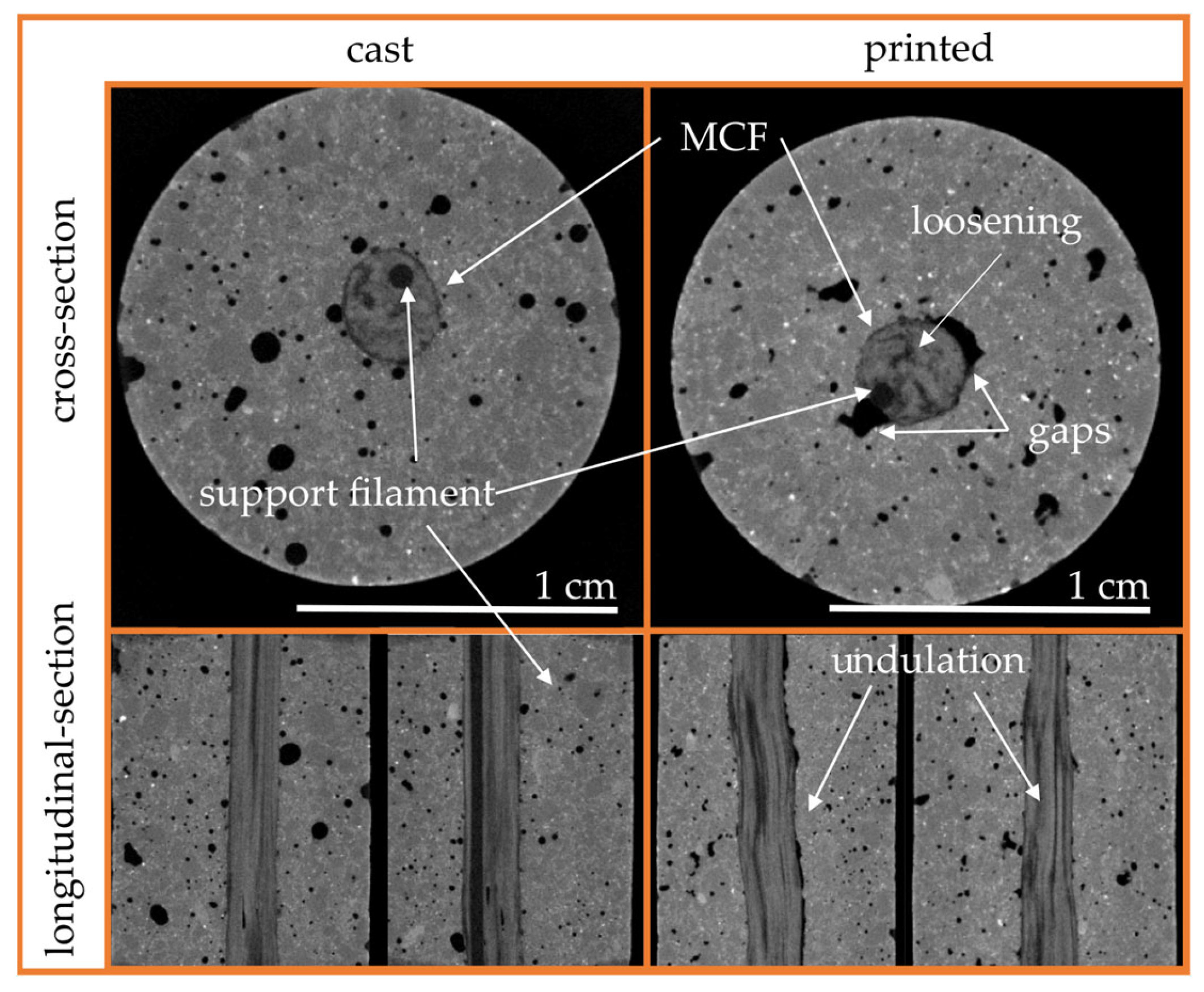
4.3. Visual Inspection
5. Conclusions
6. Outlook
Author Contributions
Funding
Data Availability Statement
Conflicts of Interest
References
- Bühler, M.M.; Nübel, K.; Jelinek, T.; Köhler, L.; Hollenbach, P. Bridging the Construction Productivity Gap—A Hierarchical Framework for the Age of Automation, Robotics, and AI. Buildings 2025, 15, 2899. [Google Scholar] [CrossRef]
- Improving Construction Productivity. McKinsey. Available online: https://www.mckinsey.com/capabilities/operations/our-insights/improving-construction-productivity (accessed on 19 January 2026).
- Schöberl, M.; Huber, A.; Kreppold, S.; Dirnaichner, J.; Kessler, S.; Fottner, J. Cobot uptake in construction: Embedding collaborative robots in digital construction processes. Constr. Robot. 2023, 7, 89–103. [Google Scholar] [CrossRef]
- Khajavi, S.H.; Tetik, M.; Mohite, A.; Peltokorpi, A.; Li, M.; Weng, Y.; Holmström, J. Additive Manufacturing in the Construction Industry: The Comparative Competitiveness of 3D Concrete Printing. Appl. Sci. 2021, 11, 3865. [Google Scholar] [CrossRef]
- Wu, P.; Wang, J.; Wang, X. A critical review of the use of 3-D printing in the construction industry. Autom. Constr. 2016, 68, 21–31. [Google Scholar] [CrossRef]
- Buswell, R.A.; Leal de Silva, W.R.; Jones, S.Z.; Dirrenberger, J. 3D printing using concrete extrusion: A roadmap for research. Cem. Concr. Res. 2018, 112, 37–49. [Google Scholar] [CrossRef]
- Wangler, T.; Roussel, N.; Bos, F.P.; Salet, T.A.M.; Flatt, R.J. Digital Concrete: A Review. Cem. Concr. Res. 2019, 123, 105780. [Google Scholar] [CrossRef]
- Khoshnevis, B. Automated construction by contour crafting—Related robotics and information technologies. Autom. Constr. 2004, 13, 5–19. [Google Scholar] [CrossRef]
- Mechtcherine, V.; Buswell, R.; Kloft, H.; Bos, F.P.; Hack, N.; Wolfs, R.; Sanjayan, J.; Nematollahi, B.; Ivaniuk, E.; Neef, T. Integrating reinforcement in digital fabrication with concrete: A review and classification framework. Cem. Concr. Compos. 2021, 119, 103964. [Google Scholar] [CrossRef]
- Perrot, A.; Jacquet, Y.; Rangeard, D.; Courteille, E.; Sonebi, M. Nailing of Layers: A Promising Way to Reinforce Concrete 3D Printing Structures. Materials 2020, 13, 1518. [Google Scholar] [CrossRef]
- Marchment, T.; Sanjayan, J. Bond properties of reinforcing bar penetrations in 3D concrete printing. Autom. Constr. 2020, 120, 103394. [Google Scholar] [CrossRef]
- Salet, T.A.M.; Ahmed, Z.Y.; Bos, F.P.; Laagland, H.L.M. Design of a 3D printed concrete bridge by testing. Virtual Phys. Prototyp. 2018, 13, 222–236. [Google Scholar] [CrossRef]
- Bos, F.P.; Ahmed, Z.Y.; Wolfs, R.J.M.; Salet, T.A.M. 3D printing concrete with reinforcement. In High Tech Concrete: Where Technology and Engineering Meet—Proceedings of the 2017 fib Symposium; Springer International Publishing: Berlin/Heidelberg, Germany, 2017; pp. 2484–2493. [Google Scholar] [CrossRef]
- Bos, F.P.; Ahmed, Z.Y.; Jutinov, E.R.; Salet, T.A.M. Experimental exploration of metal cable as reinforcement in 3D printed concrete. Materials 2017, 10, 1314. [Google Scholar] [CrossRef] [PubMed]
- Lim, J.H.; Panda, B.; Pham, Q.-C.C. Improving flexural characteristics of 3D printed geopolymer composites with in-process steel cable reinforcement. Constr. Build. Mater. 2018, 178, 32–41. [Google Scholar] [CrossRef]
- Ma, G.; Li, Z.; Wang, L.; Bai, G. Micro-cable reinforced geopolymer composite for extrusion-based 3D printing. Mater. Lett. 2019, 235, 144–147. [Google Scholar] [CrossRef]
- Demont, L.; Ducoulombier, N.; Mesnil, R.; Caron, J.F. Flow-based pultrusion of continuous fibers for cement-based composite material and additive manufacturing: Rheological and technological requirements. Compos. Struct. 2021, 262, 113564. [Google Scholar] [CrossRef]
- Neef, T.; Müller, S.; Mechtcherine, V. 3D-Druck mit Carbonbeton: Technologie und die ersten Untersuchungsergebnisse. Beton Stahlbetonbau 2020, 115, 943–951. [Google Scholar] [CrossRef]
- Mechtcherine, V.; Michel, A.; Liebscher, M.; Schneider, K.; Großmann, C. Mineral-impregnated carbon fiber composites as novel reinforcement for concrete construction: Material and automation perspectives. Autom. Constr. 2020, 110, 103002. [Google Scholar] [CrossRef]
- Caron, J.F.; Demont, L.; Ducoulombier, N.; Mesnil, R. 3D printing of mortar with continuous fibres: Principle, properties and potential for application. Autom. Constr. 2021, 129, 103806. [Google Scholar] [CrossRef]
- Marchment, T.; Sanjayan, J. Mesh reinforcing method for 3D Concrete Printing. Autom. Constr. 2020, 109, 102992. [Google Scholar] [CrossRef]
- Wang, W.; Konstantinidis, N.; Austin, S.A.; Buswell, R.A.; Cavalaro, S.; Cecinia, D. Flexural Behaviour of AR-Glass Textile Reinforced 3D Printed Concrete Beams. In RILEM Bookseries; Springer: Berlin/Heidelberg, Germany, 2020; Volume 28, pp. 728–737. [Google Scholar] [CrossRef]
- Zeng, J.-J.J.; Yan, Z.-T.T.; Jiang, Y.-Y.Y.; Li, P.-L.L. 3D printing of FRP grid and bar reinforcement for reinforced concrete plates: Development and effectiveness. Compos. Struct. 2024, 335, 117946. [Google Scholar] [CrossRef]
- Ayres, P.; Da Silva, W.; Nicholas, P.; Andersen, T.; Greisen, J.R. Robotic Fabrication in Architecture, Art and Design 2018; Springer International Publishing: Berlin/Heidelberg, Germany, 2019. [Google Scholar] [CrossRef]
- Makarov, I.S.; Golova, L.K.; Bondarenko, G.N.; Skvortsov, I.Y.; Berkovich, A.K.; Bermeshev, M.V.; Mironova, M.V. Carbon—Silicon-Carbide Fibers Prepared from Solid Solutions of Cellulose in N-Methylmorpholine-N-Oxide with Added Tetraethoxysilane. Fibre Chem. 2017, 49, 231–236. [Google Scholar] [CrossRef]
- Schneider, K.; Michel, A.; Liebscher, M.; Mechtcherine, V. Verbundverhalten mineralisch gebundener und polymergebundener Bewehrungsstrukturen aus Carbonfasern bei Temperaturen bis 500 °C. Beton Stahlbetonbau 2018, 113, 886–894. [Google Scholar] [CrossRef]
- Schneider, K.; Michel, A.; Liebscher, M.; Terreri, L.; Hempel, S.; Mechtcherine, V. Mineral-impregnated carbon fibre reinforcement for high temperature resistance of thin-walled concrete structures. Cem. Concr. Compos. 2019, 97, 68–77. [Google Scholar] [CrossRef]
- Neef, T.; Kalthoff, M.; Müller, S.; Backes, J.G.; Raupach, M.; Matschei, T.; Traverso, M.; Mechtcherine, V. Extrusion of High Yield Strength Carbon Reinforced Concrete with Mineral Impregnated Rovings. In Building for the Future: Durable, Sustainable, Resilient—Proceedings of the Fib Symposium 2023; Springer: Berlin/Heidelberg, Germany, 2023; Volume 2, pp. 1568–1576. [Google Scholar] [CrossRef]
- Scerrato, D.; Giorgio, I.; Della Corte, A.; Madeo, A.; Dowling, N.E.; Darve, F. Towards the design of an enriched concrete with enhanced dissipation performances. Cem. Concr. Res. 2016, 84, 48–61. [Google Scholar] [CrossRef]
- Neef, T.; Kalthoff, M.; Müller, S.; Morales Cruz, C.; Raupach, M.; Matschei, T.; Mechtcherine, V. Mineral-impregnated carbon fibers reinforcement for concrete elements manufactured by extrusion. Cem. Concr. Compos. 2025, 157, 105909. [Google Scholar] [CrossRef]
- Friese, D.; Scheurer, M.; Hahn, L.; Gries, T.; Cherif, C. Textile reinforcement structures for concrete construction applications––A review. J. Compos. Mater. 2022, 56, 4041–4064. [Google Scholar] [CrossRef]
- Friese, D.; Hahn, L.; Cherif, C. Biologically Inspiried Load Adapted 3D Textile Reinforcement Structures. Mater. Sci. Forum 2022, 1063, 101–110. [Google Scholar] [CrossRef]
- EN 1015-3:1999+A1:2004+A2:2006; Methods of Test for Mortar for Masonry—Part 3: Determination of Consistence of Fresh Mortar (by Flow Table). German Version. DIN-Normenausschuss Bauwesen (NABau). DIN Standards Committee Building and Civil Energeering: Berlin, Germany; Vienna, Austria; Zurich, Switzerland, 2007.
- EN 12390-5:2019; Testing Hardened Concrete—Part 5: Flexural Strength of Test Specimens. German Version. DIN-Normenausschuss Bauwesen (NABau). DIN Standards Committee Building and Civil Energeering: Berlin, Germany; Vienna, Austria; Zurich, Switzerland, 2019.
- EN 445:2007; Grout for Prestressing Tendons—Test Methods. German Version. DIN-Normenausschuss Bauwesen (NABau). DIN Standards Committee Building and Civil Energeering: Berlin, Germany; Vienna, Austria; Zurich, Switzerland, 2007.
- Neef, T.; Müller, S.; Mechtcherine, V. Integrating continuous mineral-impregnated carbon fibers into digital fabrication with concrete. Mater. Des. 2024, 239, 112794. [Google Scholar] [CrossRef]
- Roscini, F.; Rezaei, N.; Placidi, L. A damage elasto-plastic discrete model for the nonlinear characterization of pullout tests. Math. Mech. Complex Syst. 2025, 13, 73–97. [Google Scholar] [CrossRef]
- Junger, D.; Liebscher, M.; Zhao, J.; Mechtcherine, V. Joule heating as a smart approach in enhancing early strength development of mineral-impregnated carbon-fibre composites (MCF) made with geopolymer. Compos. Part A Appl. Sci. Manuf. 2022, 153, 106750. [Google Scholar] [CrossRef]
- Vicente, M.A.; Mínguez, J.; González, D.C. Computed tomography scanning of the internal microstructure, crack mechanisms, and structural behavior of fiber-reinforced concrete under static and cyclic bending tests. Int. J. Fatigue 2019, 121, 9–19. [Google Scholar] [CrossRef]





| Composition | Grain Size | Volume [kg/m3] |
|---|---|---|
| Micro silica | d95 < 14 µm | 14 |
| Micro cement Mikrodur R-X | d95 < 6 µm | 395 |
| OPC I 42.5R | d95 < 9 µm | 335 |
| Fine quartz sand | 0.06/0.2 mm | 230 |
| Sand | 0–1 mm | 370 |
| Sand | 0–2 mm | 795 |
| Water | 279 | |
| Superplasticizer | 17 | |
| w/b | 0.42 |
| Micro Silica d90 < 0.7 μm | Micro Cement 1 d95 < 6 μm | Micro Cement 2 d95 < 11 μm | Superplasticizer | Water | w/b |
|---|---|---|---|---|---|
| 345.4 | 345.4 | 345.4 | 31.1 | 493.3 | 0.8 |
| Tensile Strength | Strain at Failure | Young’s Modulus | ||||
|---|---|---|---|---|---|---|
| MPa | m/mm | GPa | ||||
| MCF | AV | SD | AV | SD | AV | SD |
| Reference | 2149 | 166 | 10.6 | 1.0 | 194 | 13 |
| Support filament 0.4 mm | 2206 | 153 | 9.4 | 1.7 | 226 | 35 |
| Support filament 0.7 mm | 2316 | 306 | 10.1 | 2.2 | 195 | 16 |
| Support filament 1.0 mm | 2257 | 99 | 10.1 | 2.2 | 199 | 21 |
| Shock freezing | 2002 | 21 | 11.0 | 3.5 | 217 | 40 |
| Tensile Strength | Failure Strain | Number of Cracks per Meter | ||||
|---|---|---|---|---|---|---|
| MPa | mm/m | - | ||||
| Method | AV | SD | AV | SD | AV | SD |
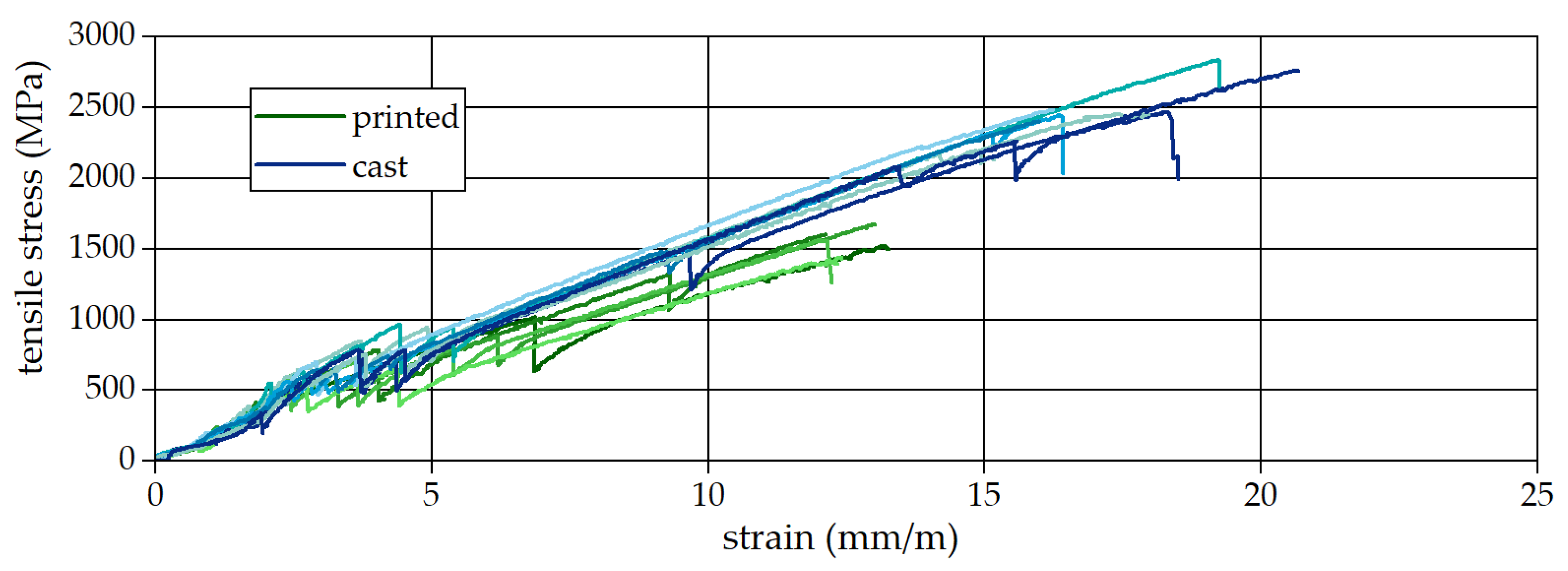
| Cast | 2470 | 207 | 17.4 | 2.1 | 13 | 5 |
| Printed | 1560 | 87 | 12.7 | 0.5 | 6 | 2 |
Disclaimer/Publisher’s Note: The statements, opinions and data contained in all publications are solely those of the individual author(s) and contributor(s) and not of MDPI and/or the editor(s). MDPI and/or the editor(s) disclaim responsibility for any injury to people or property resulting from any ideas, methods, instructions or products referred to in the content. |
© 2026 by the authors. Licensee MDPI, Basel, Switzerland. This article is an open access article distributed under the terms and conditions of the Creative Commons Attribution (CC BY) license.
Share and Cite
Neef, T.; Butler, M.; Mechtcherine, V. Methodology for Integrating Mineral-Impregnated Carbon Fibers as Reinforcement in Fine Filament 3D Concrete Printing. Materials 2026, 19, 786. https://doi.org/10.3390/ma19040786
Neef T, Butler M, Mechtcherine V. Methodology for Integrating Mineral-Impregnated Carbon Fibers as Reinforcement in Fine Filament 3D Concrete Printing. Materials. 2026; 19(4):786. https://doi.org/10.3390/ma19040786
Chicago/Turabian StyleNeef, Tobias, Marko Butler, and Viktor Mechtcherine. 2026. "Methodology for Integrating Mineral-Impregnated Carbon Fibers as Reinforcement in Fine Filament 3D Concrete Printing" Materials 19, no. 4: 786. https://doi.org/10.3390/ma19040786
APA StyleNeef, T., Butler, M., & Mechtcherine, V. (2026). Methodology for Integrating Mineral-Impregnated Carbon Fibers as Reinforcement in Fine Filament 3D Concrete Printing. Materials, 19(4), 786. https://doi.org/10.3390/ma19040786