Fiber-Reinforced Coral Aggregate Concrete: A Review of Mechanical, Dynamic, and Durability Properties



Abstract
1. Introduction
2. Constituent Materials of FRCAC
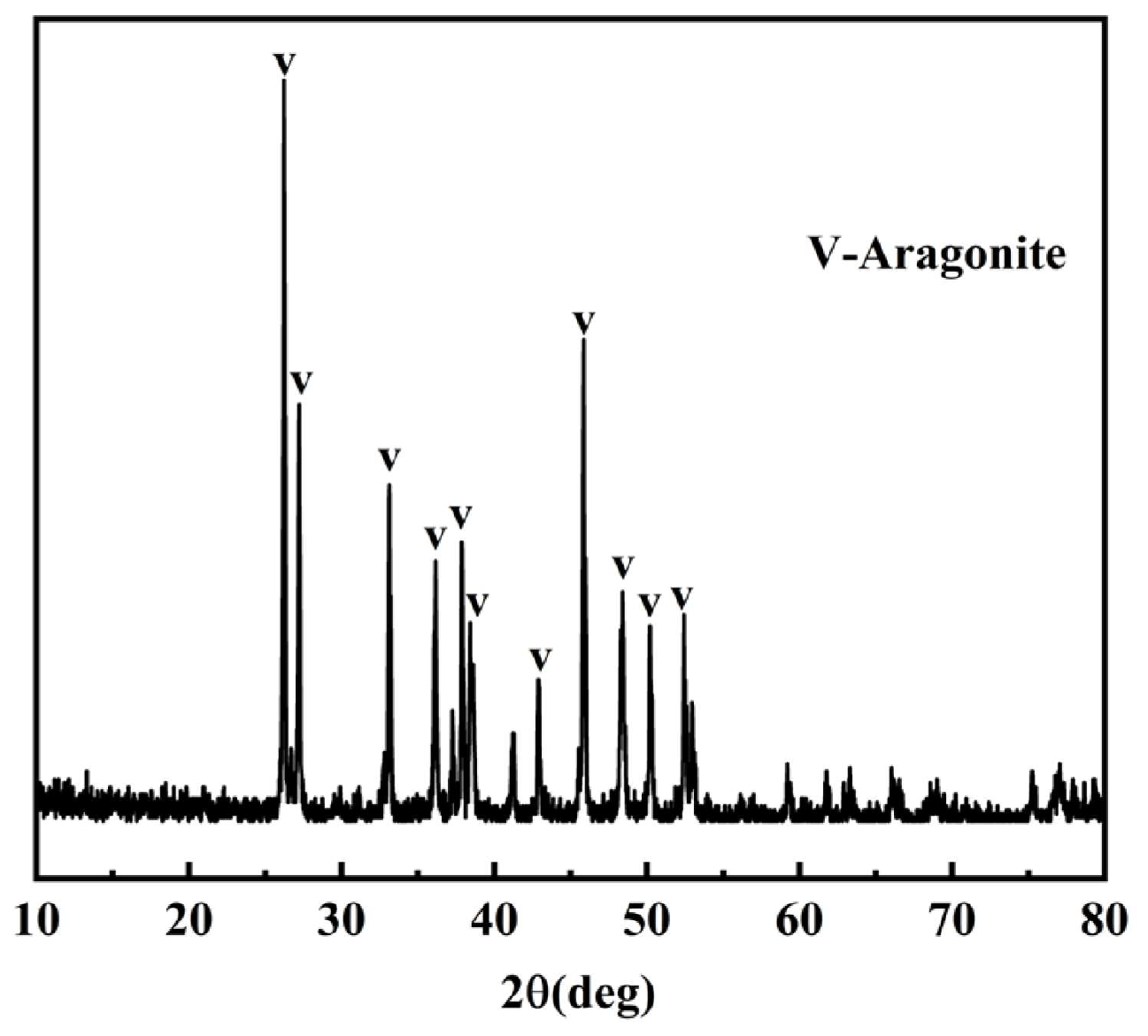
2.1. Coral Aggregates
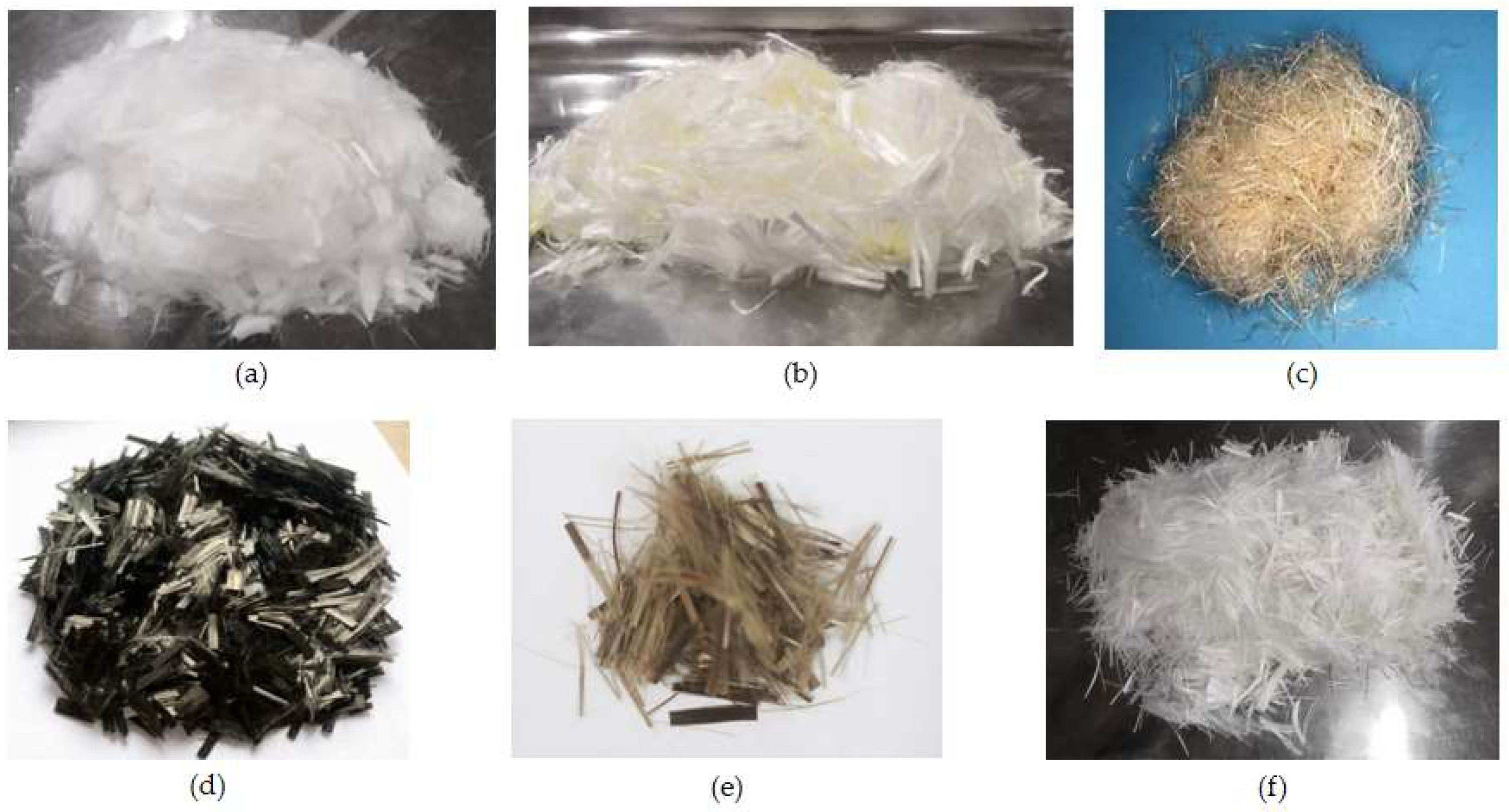
2.2. Fiber Types and Characteristics
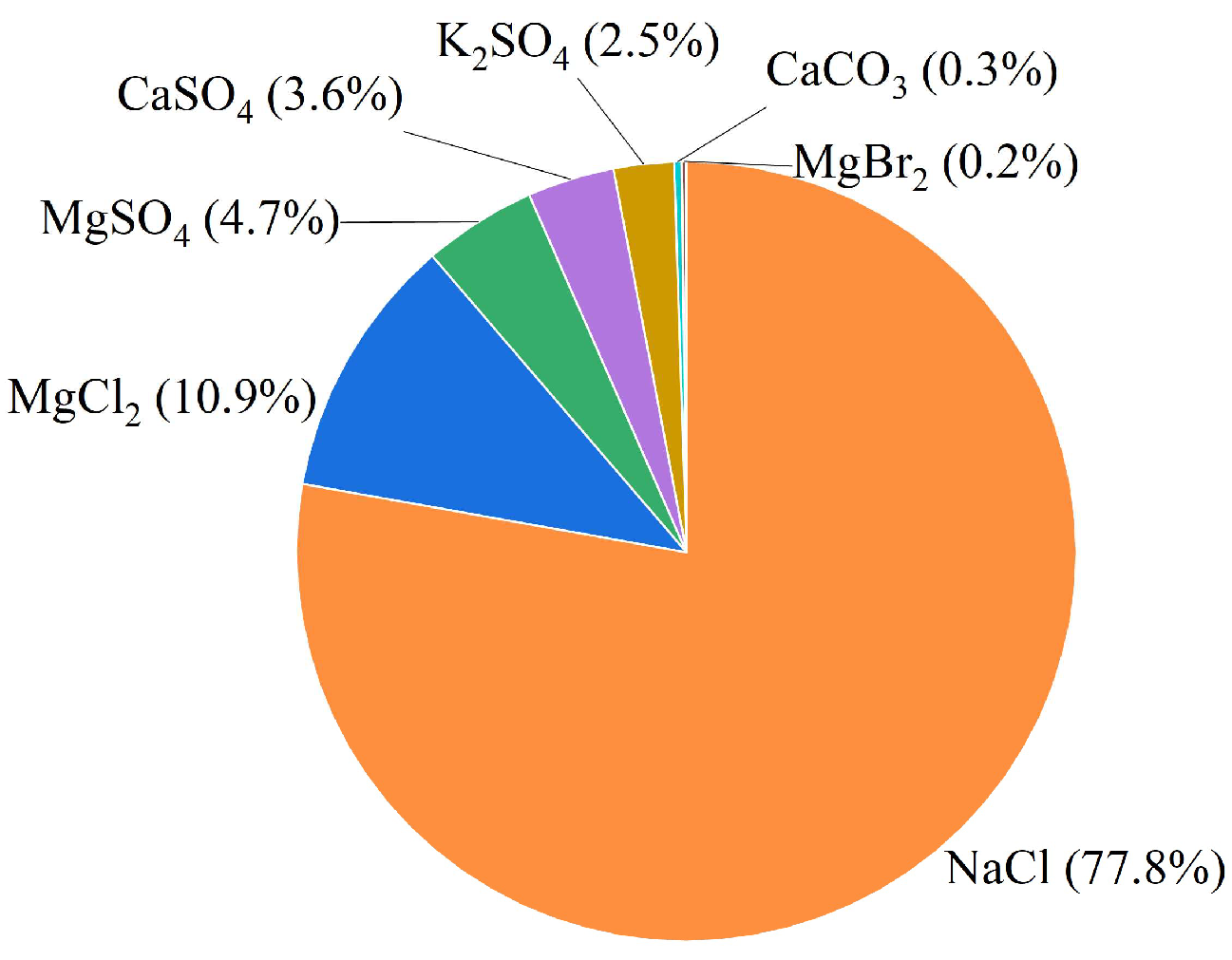
2.3. Seawater as a Mixing Medium
3. Mechanical Properties of FRCAC
3.1. Compressive Strength
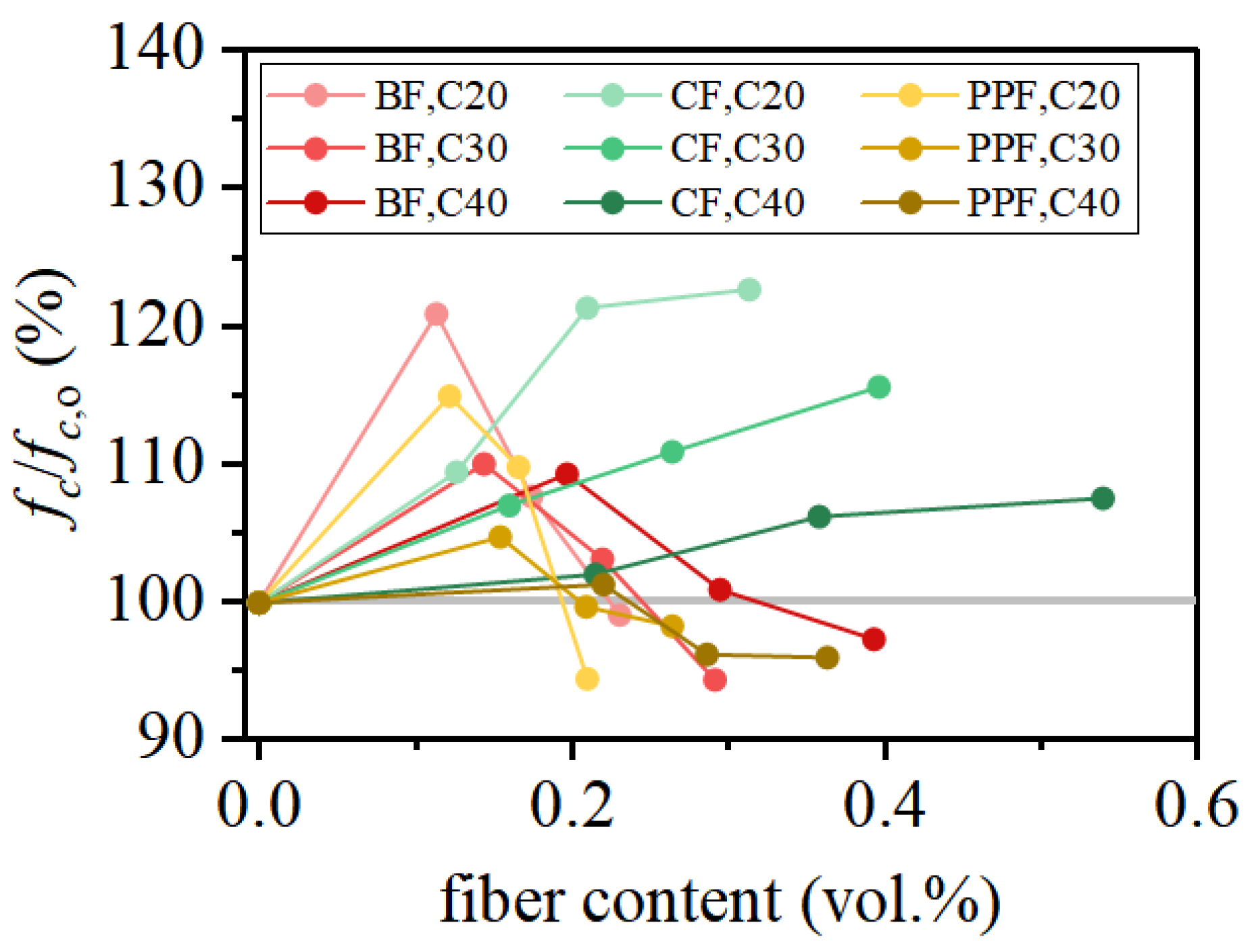
3.1.1. Overall Trends
3.1.2. Effect of Fiber Category
3.1.3. Effect of Fiber Geometry
3.1.4. Effect of Fiber Stiffness
3.1.5. Effect of Curing Age and Hydration Development
3.1.6. Summary of Compressive Behavior
3.2. Splitting Tensile Strength
3.3. Flexural Strength
3.4. Elastic Modulus
3.5. Summary of Basic Mechanical Properties
4. Dynamic Mechanical Properties
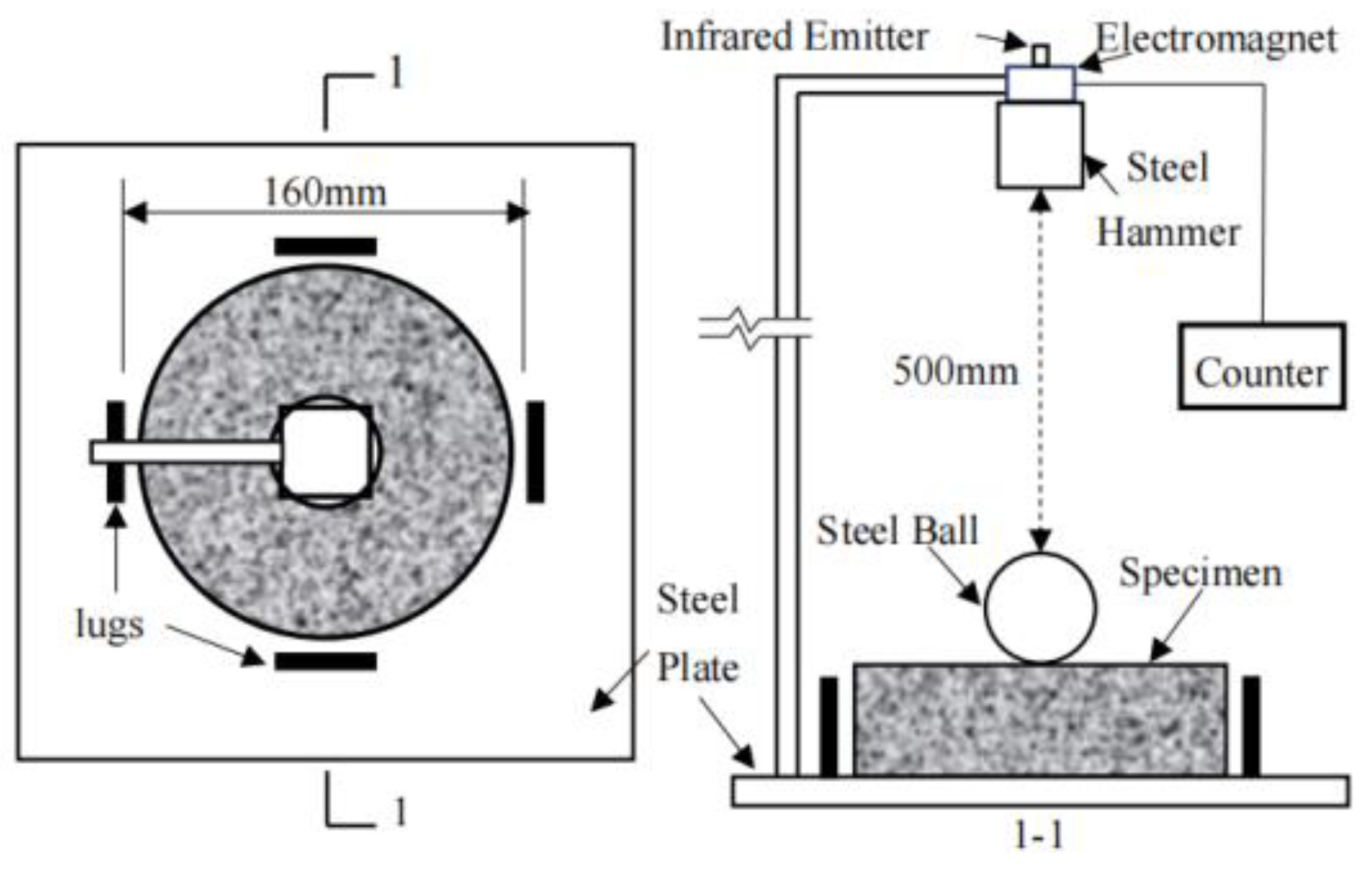
4.1. The Drop-Weight Impact Test
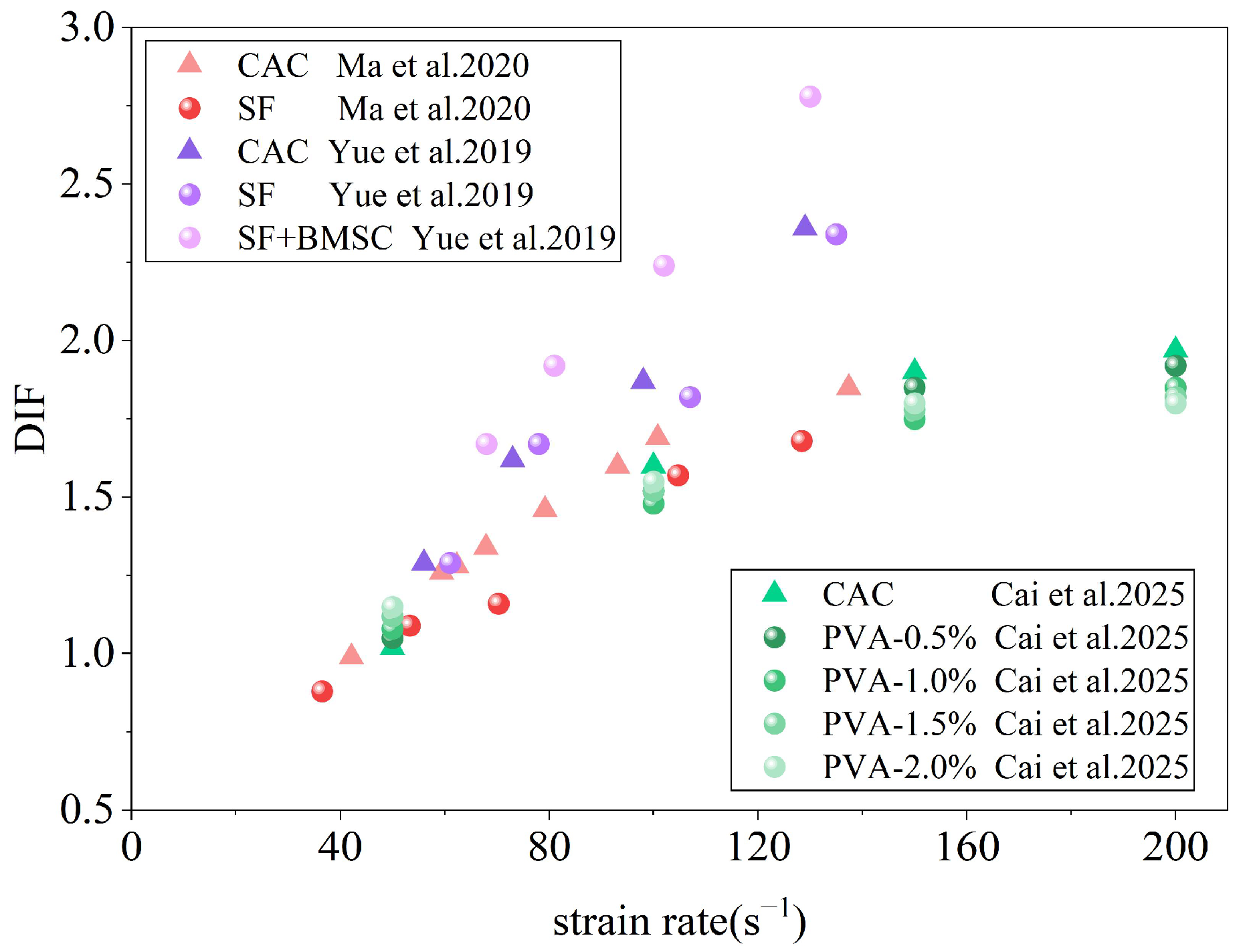
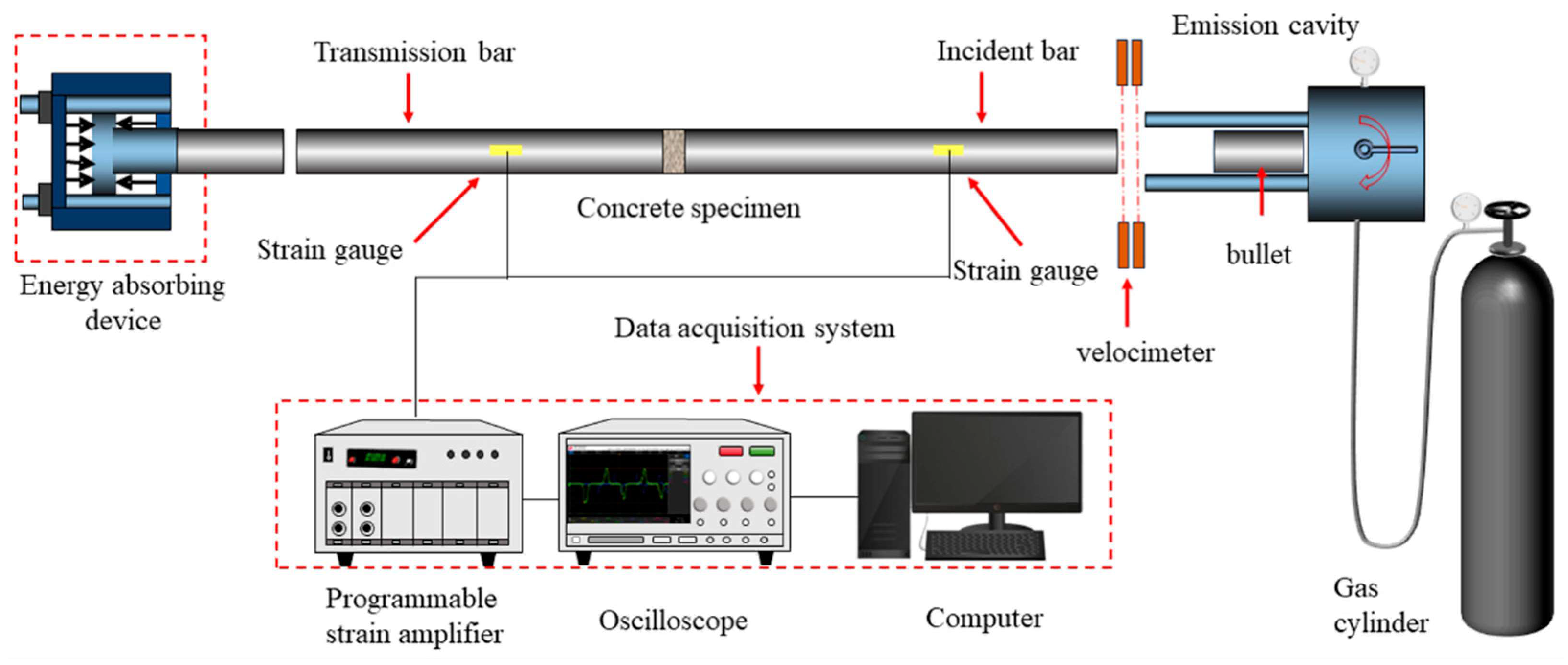
4.2. The Split Hopkinson Pressure Bar (SHPB) Test
4.3. Summary of Dynamic Mechanical Properties
5. Mechanical Response Under Complex Loading Conditions
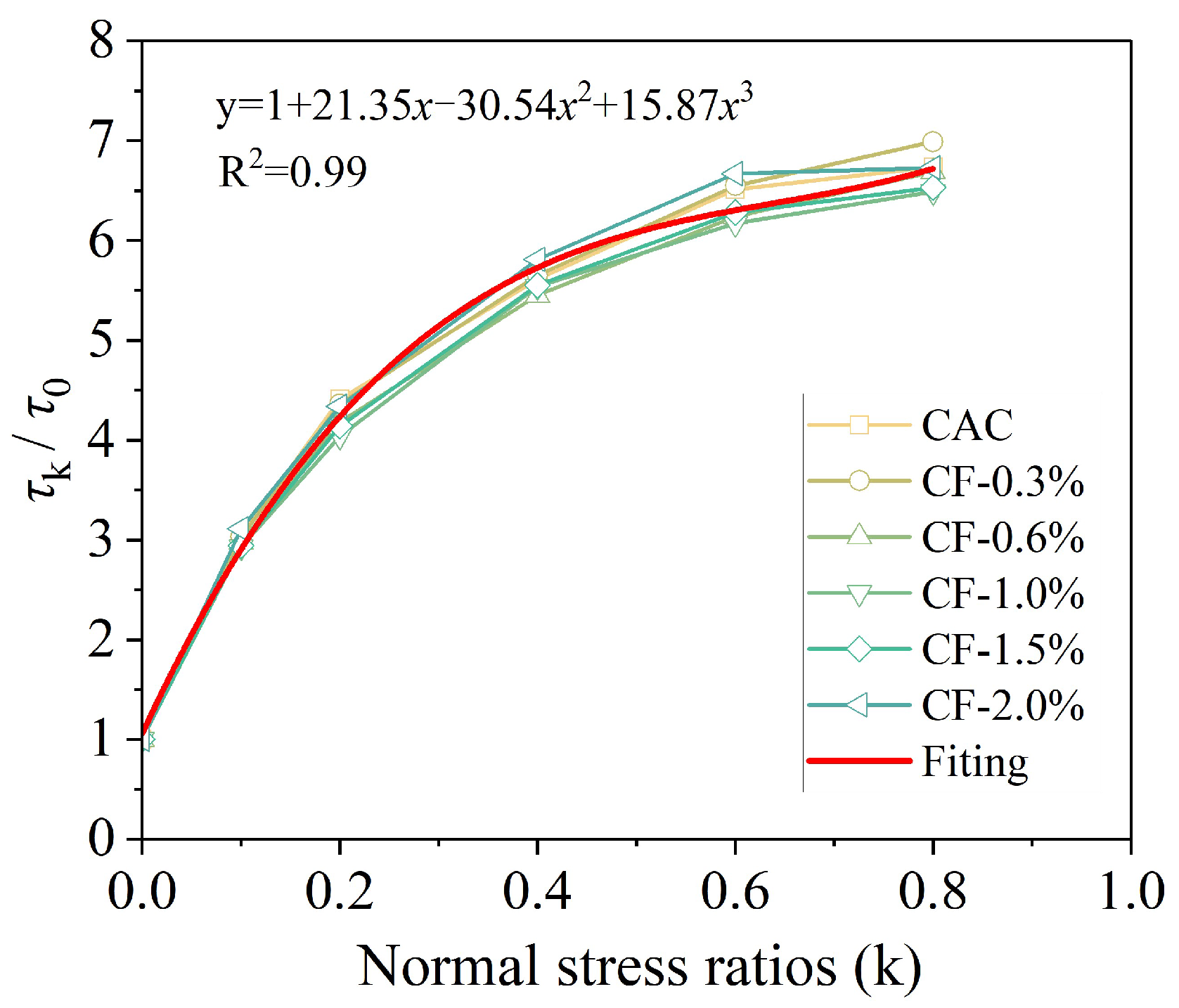
5.1. Combined Compression–Shear Stresses
5.2. Uniaxial Cyclic Compression
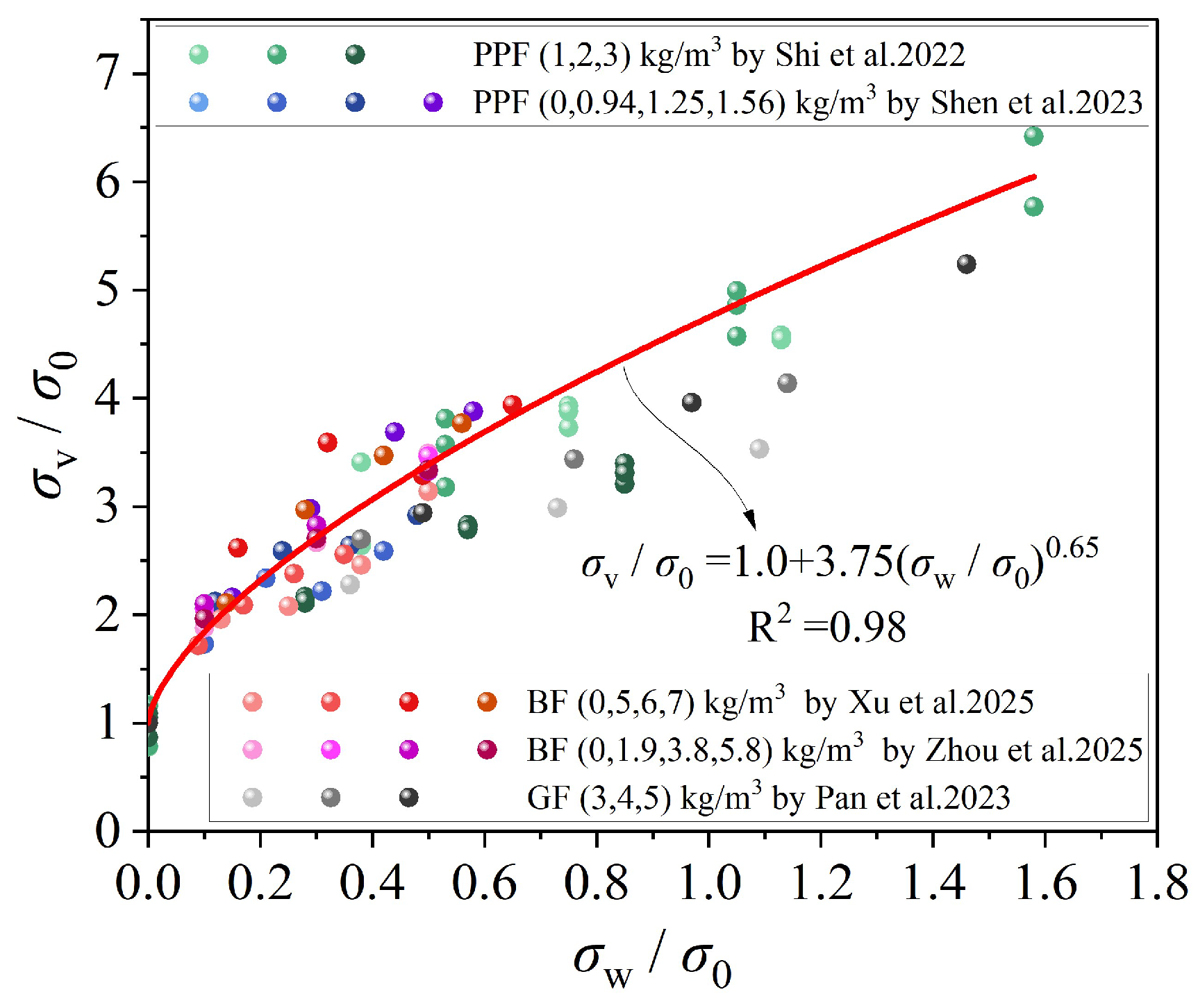
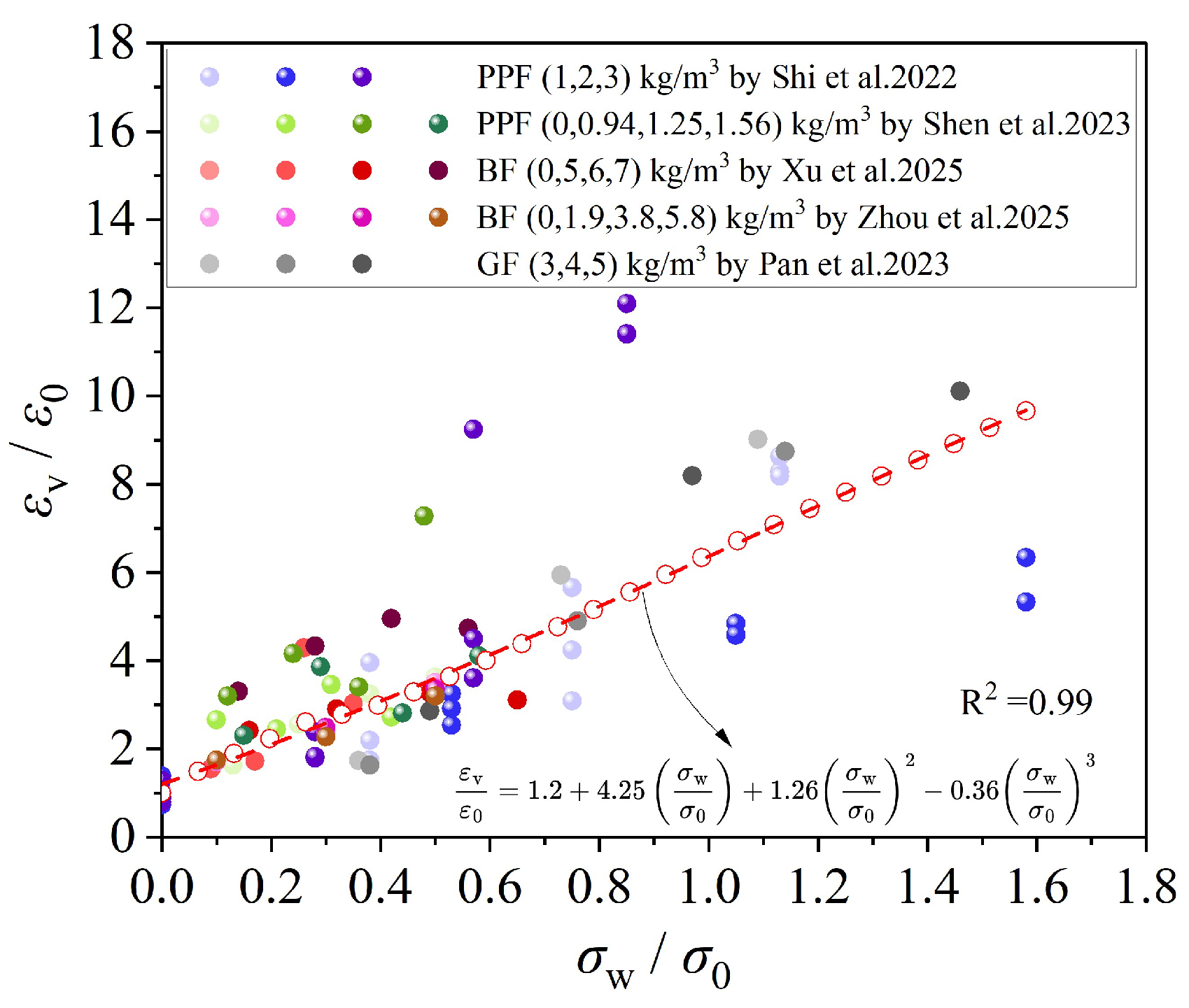
5.3. Triaxial Compression
5.4. Summary of Complex Loading Conditions
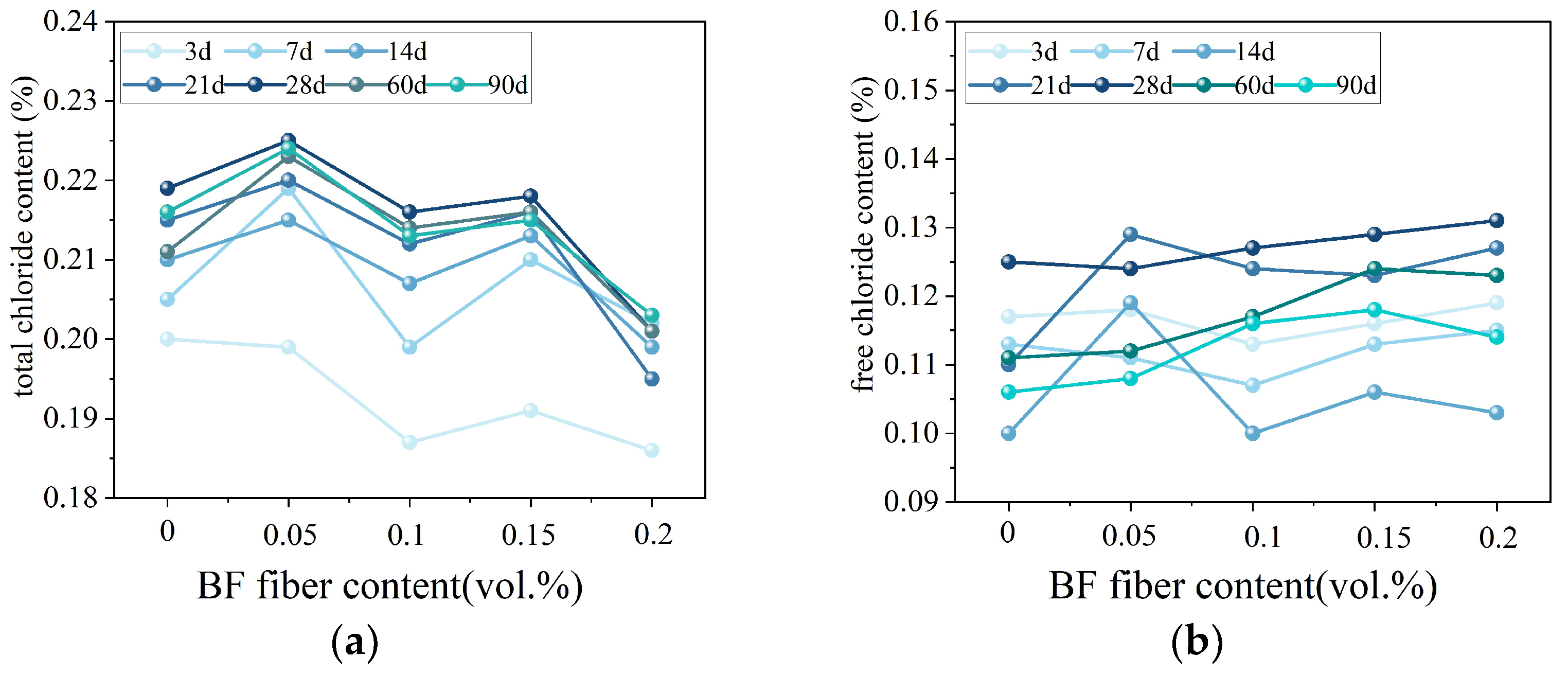
6. Durability Performance
7. Environmental Considerations and Sustainability of FRCAC
8. Conclusions and Future Research Directions
8.1. Conclusions
- (1)
- The high porosity and water absorption of coral aggregates significantly weaken the mechanical strength and durability of coral aggregate concrete. Additionally, the ions in seawater used for mixing substantially alter cement hydration, accelerating early strength development but negatively impacting later-stage strength and long-term durability.
- (2)
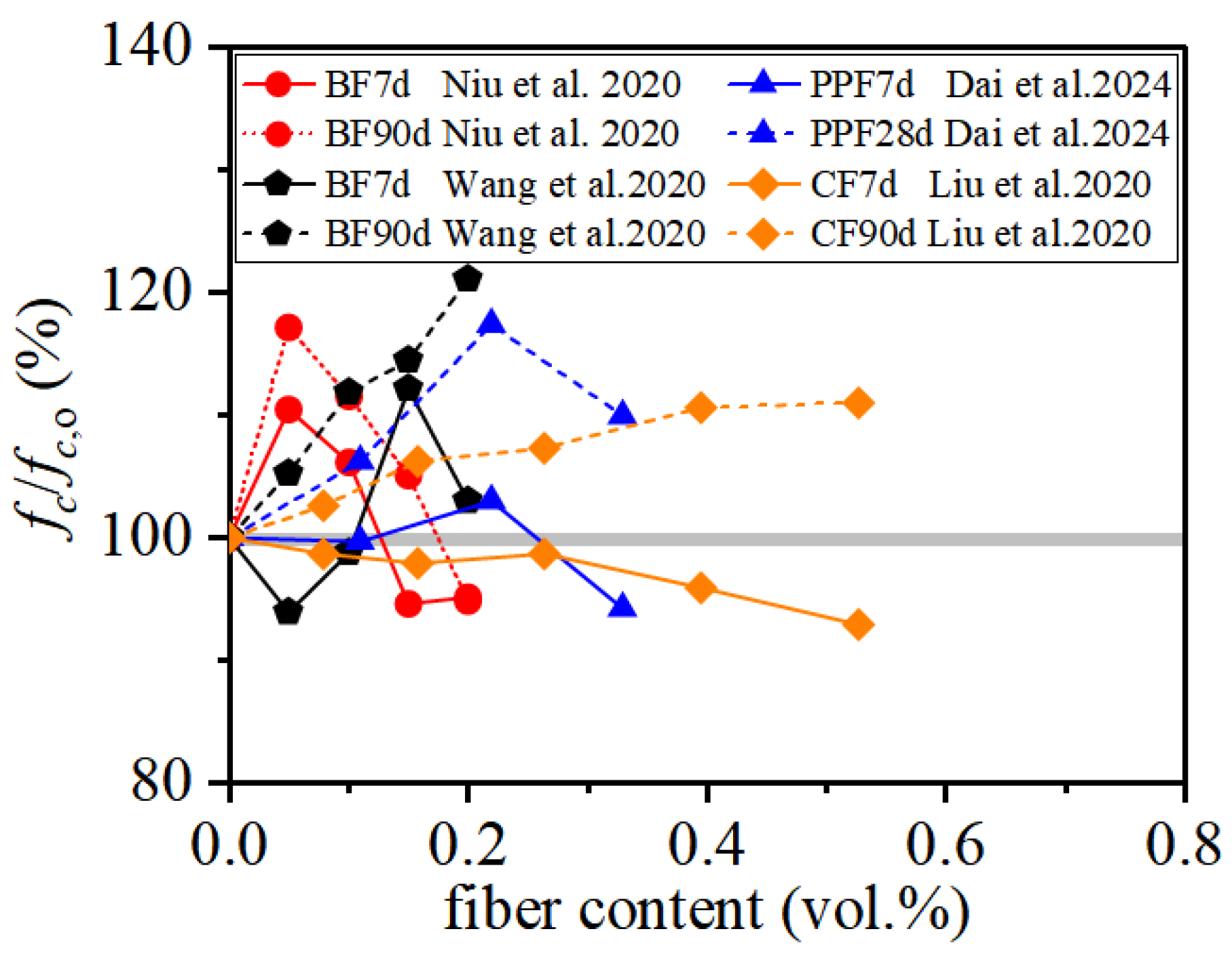
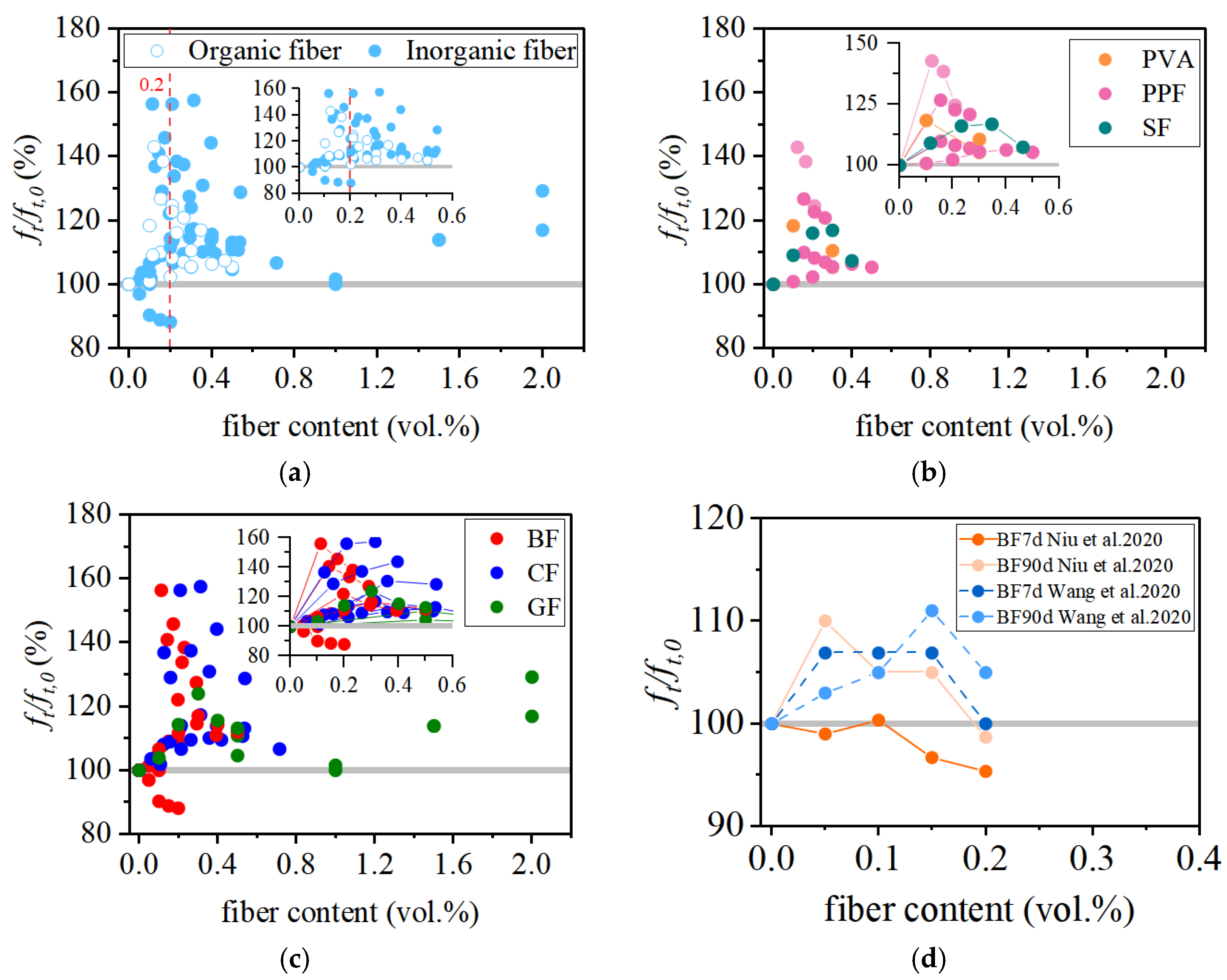
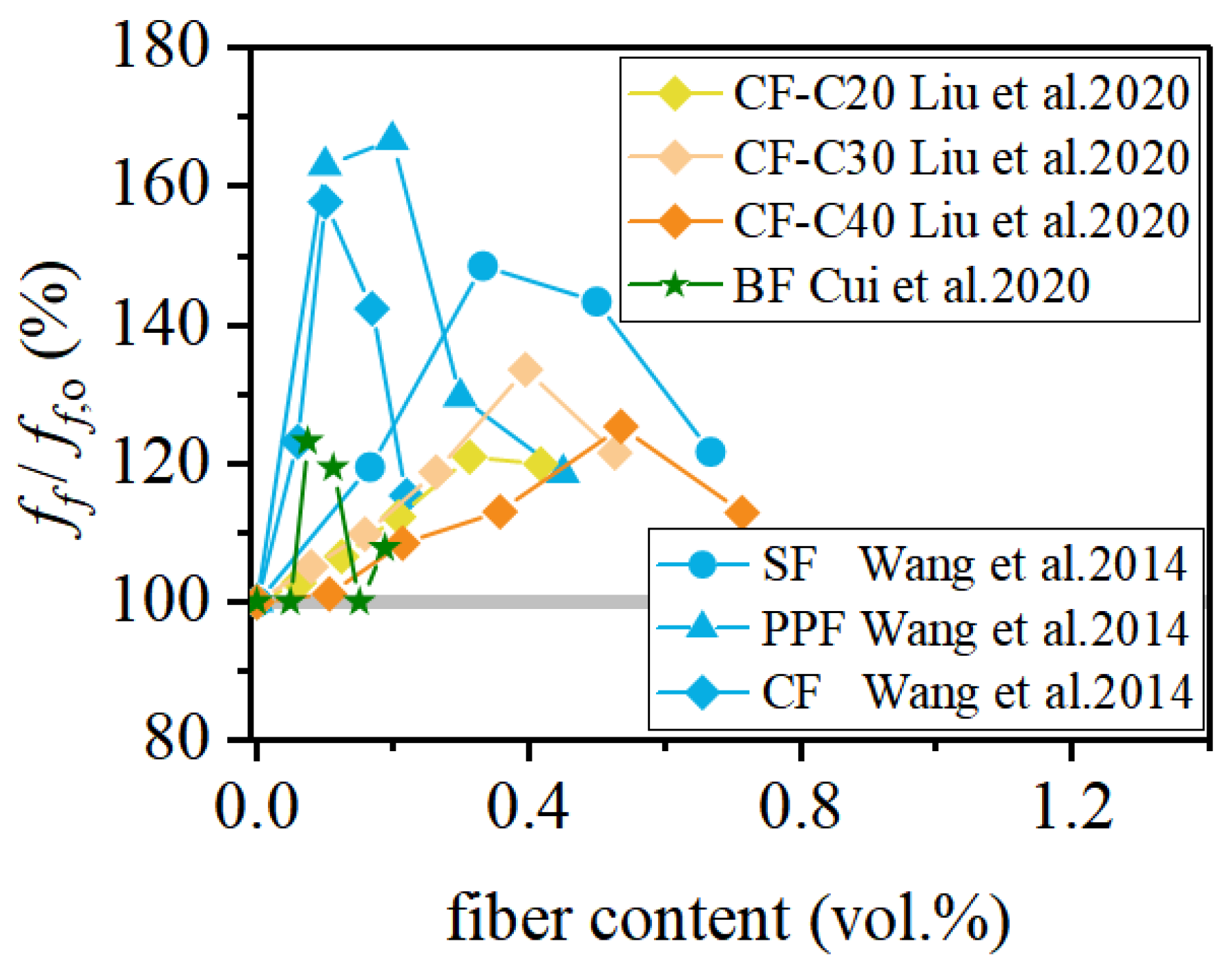
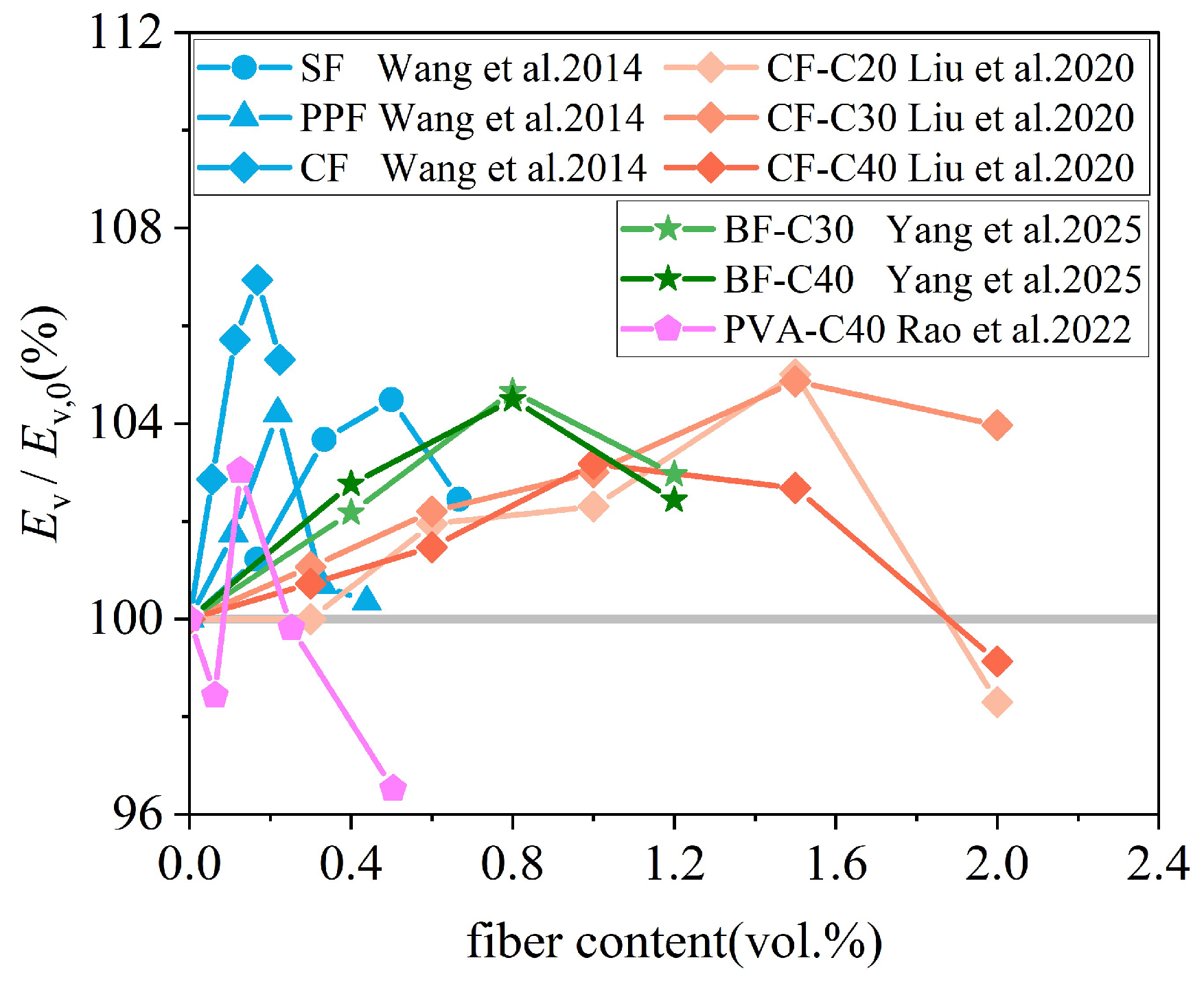
- Fiber incorporation significantly enhances the flexural and splitting tensile strengths of coral aggregate concrete, with reported improvement ranges of 0–67% and 0–58% (excluding basalt fibers), respectively, depending on fiber type, dosage, and matrix quality. In contrast, the effects on compressive strength and elastic modulus are generally limited, with variations of approximately −10% to 23% and −3% to 7%, respectively. Under dynamic and impact loading, fiber reinforcement further improves impact resistance and energy dissipation capacity. Accordingly, the reinforcing action of fibers in FRCAC is primarily associated with crack bridging and crack control mechanisms.
- (3)
- Under complex loading conditions (combined compression–shear, triaxial compression, and cyclic loading), fibers contribute to reducing fragmentation and delaying damage evolution in coral concrete through crack-bridging action. Fiber reinforcement helps mitigate strength degradation under cyclic compression and can slightly modify failure modes under triaxial compression.
- (4)
- Fiber incorporation can reduce crack connectivity and, to a certain extent, mitigate chloride ingress in coral aggregate concrete. However, under extreme marine environments and long-term service conditions, the durability mechanisms of FRCAC remain insufficiently understood and are not yet adequate to support reliable durability-oriented design.
8.2. Future Research Directions
- (1)
- Future research should focus on conducting long-term exposure tests to systematically evaluate the service performance of FRCAC under realistic marine conditions, including wet–dry cycles, chloride and sulfate corrosion, and sustained loading. Continuous monitoring of performance changes in FRCAC components and structures within the marine environment is essential to validate laboratory findings and assess the actual behavior of FRCAC during service.
- (2)
- Systematic investigations are required to optimize fiber geometry, dosage, and dispersion strategies in relation to matrix quality and coral aggregate characteristics. Emphasis should be placed on performance-based mix design approaches that balance mechanical enhancement, workability, and durability requirements, rather than relying solely on fiber type selection.
- (3)
- The use of coral aggregates must be balanced with coral reef protection. Future FRCAC development should therefore prioritize efficient fiber utilization, recycled or bio-based fibers, and low-carbon binders to achieve both structural performance and environmental responsibility.
Author Contributions
Funding
Data Availability Statement
Acknowledgments
Conflicts of Interest
References
- Zhang, B.; Zhu, H.; Li, F.; Dong, Z.; Zhang, P. Compressive Stress-Strain Behavior of Seawater Coral Aggregate Concrete Incorporating Eco-Efficient Alkali-Activated Slag Materials. Constr. Build. Mater. 2021, 299, 123886. [Google Scholar] [CrossRef] [Scilit]
- Ma, L.; Li, Z.; Liu, J.; Duan, L.; Wu, J. Mechanical Properties of Coral Concrete Subjected to Uniaxial Dynamic Compression. Constr. Build. Mater. 2019, 199, 244–255. [Google Scholar] [CrossRef] [Scilit]
- Cheng, S.; Shui, Z.; Sun, T.; Yu, R.; Zhang, G. Durability and Microstructure of Coral Sand Concrete Incorporating Supplementary Cementitious Materials. Constr. Build. Mater. 2018, 171, 44–53. [Google Scholar] [CrossRef] [Scilit]
- Sun, Z.; Huang, D. Research Progresses on Coral Reef Engineering Geology. Adv. Earth Sci. 1999, 14, 577–581. [Google Scholar] [CrossRef]
- Zhou, L.; Guo, S.; Zhang, Z.; Shi, C.; Jin, Z.; Zhu, D. Mechanical Behavior and Durability of Coral Aggregate Concrete and Bonding Performance with Fiber-Reinforced Polymer (FRP) Bars: A Critical Review. J. Clean. Prod. 2021, 289, 125652. [Google Scholar] [CrossRef] [Scilit]
- Wang, Y.; Shui, Z.; Gao, X.; Huang, Y.; Yu, R.; Li, X.; Yang, R. Utilizing Coral Waste and Metakaolin to Produce Eco-Friendly Marine Mortar: Hydration, Mechanical Properties and Durability. J. Clean. Prod. 2019, 219, 763–774. [Google Scholar] [CrossRef] [Scilit]
- Zhou, W.; Feng, P.; Lin, H. Constitutive Relations of Coral Aggregate Concrete under Uniaxial and Triaxial Compression. Constr. Build. Mater. 2020, 251, 118957. [Google Scholar] [CrossRef] [Scilit]
- Nutter, B.E. The Use of Coral Aggregate. ACI J. Proc. 1943, 15, 61–65. [Google Scholar]
- Perry, J.R. Coral-A Good Aggregate in Concrete. Eng. News-Rcord 1945, 8, 116–122. [Google Scholar]
- Rasmusson, I.S. Concrete at Advance Bases. J. Am. Concr. Inst. 1946, 42, 541–552. [Google Scholar]
- Duke, C.M. Engineering Properties of Coral Reef Materials. Am. Soc. Test. Materials. Proc. 1949, 49, 964–976. [Google Scholar]
- Narver, D.L. Good Concrete Made with Coral and Sea Water. Civ. Eng. 1954, 24, 49–52. [Google Scholar]
- Lorman, W.K. Characteristics of Coral Aggregate from Selected Loeations in the Pacific Ocean Area; TN-335A; USN Civil Engineering Laboratory USN CEL: Port Hueneme, CA, USA, 1958. [Google Scholar]
- Lorman, W.R. Characteristics of Coral Mortars; Naval Civil Engineering Laboratory: Port Hueneme, CA, USA, 1960. [Google Scholar]
- Ehlert, R.A. Coral Concrete at Bikini Atoll. Concr. Int. 1991, 13, 19–24. [Google Scholar]
- Ma, L.; Li, Z.; Chen, X.; Gao, K.; Wu, H. Research Progress on Properties and Applications of Coral Concrete. Bull. Chin. Ceram. Soc. 2018, 37, 2471–2477. (In Chinese) [Google Scholar]
- Yu, K.; Zhao, J.; Collerson, K.D.; Shi, Q.; Chen, T.; Wang, P.; Liu, T. Storm Cycles in the Last Millennium Recorded in Yongshu Reef, Southern South China Sea. Palaeogeogr. Palaeoclimatol. Palaeoecol. 2004, 210, 89–100. [Google Scholar] [CrossRef] [Scilit]
- Zhang, J.; Tang, W.; Yi, J.; Huang, D.; Wang, L.; Qin, Q. A Review of Coral Aggregate Concrete and FRP-Reinforced Coral Aggregate Concrete: From Materials Characterization to Structural Applications. Structures 2025, 82, 110617. [Google Scholar] [CrossRef] [Scilit]
- Su, W.; Liu, J.; Liu, L.; Chen, Z.; Shi, C. Progresses of High-Performance Coral Aggregate Concrete (HPCAC): A Review. Cem. Concr. Compos. 2023, 140, 105059. [Google Scholar] [CrossRef] [Scilit]
- Liu, J.; Ou, Z.; Peng, W.; Guo, T.; Deng, W.; Chen, Y. Literature Review of Coral Concrete. Arab. J. Sci. Eng. 2018, 43, 1529–1541. [Google Scholar] [CrossRef] [Scilit]
- Wang, X.Z.; Jiao, Y.Y.; Wang, R.; Hu, M.J.; Meng, Q.S.; Tan, F.Y. Engineering Characteristics of the Calcareous Sand in Nansha Islands, South China Sea. Eng. Geol. 2011, 120, 40–47. [Google Scholar] [CrossRef] [Scilit]
- Xu, R.; Li, B.; Liu, X.; Peng, B.; Lu, G.; Yue, C.; Zhang, L. MICP-Treated Coral Aggregate and Its Application in Marine Concrete. Materials 2025, 18, 3619. [Google Scholar] [CrossRef] [Scilit]
- Lyu, B.; Wang, A.; Zhang, Z.; Liu, K.; Xu, H.; Shi, L.; Sun, D. Coral Aggregate Concrete: Numerical Description of Physical, Chemical and Morphological Properties of Coral Aggregate. Cem. Concr. Compos. 2019, 100, 25–34. [Google Scholar] [CrossRef] [Scilit]
- Wang, F.; Hua, J.; Xue, X.; Wang, N.; Yan, F.; Feng, D. Effect of Superfine Cement Modification on Properties of Coral Aggregate Concrete. Materials 2023, 16, 1103. [Google Scholar] [CrossRef] [Scilit]
- Niu, D.; Su, L.; Luo, Y.; Huang, D.; Luo, D. Experimental Study on Mechanical Properties and Durability of Basalt Fiber Reinforced Coral Aggregate Concrete. Constr. Build. Mater. 2020, 237, 117628. [Google Scholar] [CrossRef] [Scilit]
- Han, C. Experimental Research on the Fundamental Mechanical Behavior of Seawater Coral Concrete. Ph.D. Thesis, Guangxi University, Nanning, China, 2011. (In Chinese) [Google Scholar]
- Su, C.; Ma, H.; Yu, H. Effect of Different Coral Aggregates on Mechanical Properties of Coral Concrete. J. Chin. Ceram. Soc. 2020, 48, 1771–1780. (In Chinese) [Google Scholar]
- Liu, B.; Guo, J.; Zhou, J.; Wen, X.; Deng, Z.; Wang, H.; Zhang, X. The Mechanical Properties and Microstructure of Carbon Fibers Reinforced Coral Concrete. Constr. Build. Mater. 2020, 249, 118771. [Google Scholar] [CrossRef] [Scilit]
- Cai, X.; Zhao, Q.; Chen, H. Research Progress in Coral Concrete. J. Chin. Ceram. Soc. 2021, 49, 1753–1764. (In Chinese) [Google Scholar]
- Lo, T.Y.; Cui, H.Z. Effect of Porous Lightweight Aggregate on Strength of Concrete. Mater. Lett. 2004, 58, 916–919. [Google Scholar] [CrossRef] [Scilit]
- Chen, Z.; Chen, T.; Qu, J. Feasibility Study on the Application of Coral Reef Sand Concrete. Ocean. Eng. 1991, 9, 67–80. (In Chinese) [Google Scholar]
- Wang, Q.; Li, P.; Tian, Y.; Chen, W.; Su, C. Mechanical Properties and Microstructure of Portland Cement Concrete Prepared with Coral Reef Sand. J. Wuhan Univ. Technol.-Mater. Sci. Ed. 2016, 31, 996–1001. [Google Scholar] [CrossRef] [Scilit]
- Pan, B.; Wei, Z. Experimental Study on the Effect of Raw Materials on the Compressive Strength of Coral Sand Concrete. Eng. Mech. 2015, 32, 221–225. (In Chinese) [Google Scholar]
- Wei, Z.; Li, Z.; Shen, J. Study on the Factors Influencing the Performance and Early Mechanical Properties of Coral Concrete. Ind. Build. 2017, 47, 130–136. (In Chinese) [Google Scholar]
- T/CECS 10090-2020; Coral Aggregates for Concrete. Standards Press of China: Beijing, China, 2020. (In Chinese)
- T/CECS 694-2020; Technical Specification for Coral Aggregate Concrete. Beijing China Planning Publishing House: Beijing, China, 2020. (In Chinese)
- Wang, L.; Xiong, Z.; Liu, C.; Li, Q. Mechanical Property Tests of Coral Concrete with Polypropylene Fiber. Concrete 2014, 7, 96–99. (In Chinese) [Google Scholar]
- Zhou, J.; Long, Z.; Guo, R.; Kuang, D.; Cai, Y.; Chen, S.; Chen, J. Experimental Study on Static and Dynamic Mechanical Properties of PVA Fiber-Reinforced Coral Concrete. J. China Foreign Highw. 2024, 44, 138–147. (In Chinese) [Google Scholar]
- Li, Y.; Mai, Y.-W.; Ye, L. Sisal Fibre and Its Composites: A Review of Recent Developments. Compos. Sci. Technol. 2000, 60, 2037–2055. [Google Scholar] [CrossRef] [Scilit]
- Liu, B.; Guo, J.; Wen, X.; Zhou, J.; Deng, Z. Study on Flexural Behavior of Carbon Fibers Reinforced Coral Concrete Using Digital Image Correlation. Constr. Build. Mater. 2020, 242, 117968. [Google Scholar] [CrossRef] [Scilit]
- Wang, Y.; Zhang, S.; Niu, D.; Su, L.; Luo, D. Strength and Chloride Ion Distribution Brought by Aggregate of Basalt Fiber Reinforced Coral Aggregate Concrete. Constr. Build. Mater. 2020, 234, 117390. [Google Scholar] [CrossRef] [Scilit]
- Dai, J.; Yin, S.; Wang, F.; Ge, M. Analysis of Microstructure and Compressive Properties of Full Coral Concrete under Fiber Reinforcement. J. Build. Eng. 2024, 93, 109826. [Google Scholar] [CrossRef] [Scilit]
- Xu, Z. Fibre Concrete Technology and Applications; China Architecture & Building Press: Beijing, China, 2003; ISBN 9787112055838. (In Chinese) [Google Scholar]
- Kanda, T.; Li, V.C. Interface Property and Apparent Strength of High-Strength Hydrophilic Fiber in Cement Matrix. J. Mater. Civ. Eng. 1998, 10, 5–13. [Google Scholar] [CrossRef] [Scilit]
- Jia, Z.; Jiang, B.; Cheng, G.; Yang, X. Research Progress of Fibers Reinforced Cement Based Composites. Concrete 2007, 8, 65–68. (In Chinese) [Google Scholar]
- Han, B.; Zhang, L.; Zhang, C.; Wang, Y.; Yu, X.; Ou, J. Reinforcement Effect and Mechanism of Carbon Fibers to Mechanical and Electrically Conductive Properties of Cement-Based Materials. Constr. Build. Mater. 2016, 125, 479–489. [Google Scholar] [CrossRef] [Scilit]
- Sim, J.; Park, C.; Moon, D.Y. Characteristics of Basalt Fiber as a Strengthening Material for Concrete Structures. Compos. Part B Eng. 2005, 36, 504–512. [Google Scholar] [CrossRef] [Scilit]
- Moceikis, R.; Karpova, E.; Kicaite, A.; Skripkiunas, G. Effect of Aggregates on the Technological and Mechanical Properties of Glass and Basalt Fibres Reinforced Concrete. IOP Conf. Ser. Mater. Sci. Eng. 2019, 471, 032008. [Google Scholar] [CrossRef] [Scilit]
- Li, Y. Development of Ocean Engineering Technology and Aspect on Development of State Ocean Economy. J. Dalian Univ. Technol. 2002, 42, 1–5. (In Chinese) [Google Scholar]
- Li, W.; Guan, J.; Ma, S.H. Application of Sea Sand and Coral Reefs in the Production of Concrete Mixed with Seawater. Concrete 2016, 5, 148–152. (In Chinese) [Google Scholar]
- Yang, W.; Qian, J.; Fan, Y. Effect of Ground Granulated Blastfurnace Slag on Both Frost-resistance and Chloride Ions Diffusion Properties of Marine Concrete. J. Chin. Ceram. Soc. 2009, 37, 29–34. (In Chinese) [Google Scholar]
- Zhao, Y.; Han, C.; Zhang, S.; Ge, R. Experimental Study on the Compression Age Strength of Seawater Coral Concrete. Concrete 2011, 2, 43–45. (In Chinese) [Google Scholar]
- Ubbriaco, P.; Calabrese, D. Hydration Behaviour of Mixtures of Cement and Fly Ash with High Sulphate and Chloride Content. J. Therm. Anal. Calorim. 2000, 61, 615–623. [Google Scholar] [CrossRef] [Scilit]
- Chen, Z.; Tang, X.; Sun, G.; Liu, Y. Research on Durability and Application of Seawater Concrete. Ocean Eng. 2008, 26, 102–106. (In Chinese) [Google Scholar]
- Wattanachai, P.; Otsuki, N.; Saito, T.; Nishida, T. A Study on Chloride Ion Diffusivity of Porous Aggregate Concretes and Improvement Method. Doboku Gakkai Ronbunshuu E 2009, 65, 30–44. [Google Scholar] [CrossRef] [Scilit]
- Kakooei, S.; Akil, H.M.; Dolati, A.; Rouhi, J. The Corrosion Investigation of Rebar Embedded in the Fibers Reinforced Concrete. Constr. Build. Mater. 2012, 35, 564–570. [Google Scholar] [CrossRef] [Scilit]
- Niu, D.-T.; Zhang, L.; Fu, Q.; Wen, B.; Luo, D. Critical Conditions and Life Prediction of Reinforcement Corrosion in Coral Aggregate Concrete. Constr. Build. Mater. 2020, 238, 117685. [Google Scholar] [CrossRef] [Scilit]
- Wu, Z.; Yu, H.; Ma, H.; Zhang, J.; Da, B.; Zhu, H. Rebar Corrosion in Coral Aggregate Concrete: Determination of Chloride Threshold by LPR. Corros. Sci. 2020, 163, 108238. [Google Scholar] [CrossRef] [Scilit]
- Tang, J. Study on the Mechanical Properties of BFRP Reinforced Coral Reef and Sand Concrete Structural Members. Master’s Thesis, Southeast University, Nanjing, China, 2018. (In Chinese) [Google Scholar]
- Da, B.; Yu, H.; Ma, H.; Wu, Z. Research on Compression Behavior of Coral Aggregate Reinforced Concrete Columns under Large Eccentric Compression Loading. Ocean Eng. 2018, 155, 251–260. [Google Scholar] [CrossRef] [Scilit]
- Cheng, S.; Shui, Z.; Sun, T.; Yu, R.; Zhang, G.; Ding, S. Effects of Fly Ash, Blast Furnace Slag and Metakaolin on Mechanical Properties and Durability of Coral Sand Concrete. Appl. Clay Sci. 2017, 141, 111–117. [Google Scholar] [CrossRef] [Scilit]
- Wang, S.; Zhang, M.; Zhou, Y.; Jiang, Q.; Pan, Q.; Wang, F. Enhancement of Mechanical Properties in Coral Concrete via Seawater and Sea-Sand: Experimental Insights into the Use of Dual Plastic Fibers. Polym. Test. 2024, 139, 108559. [Google Scholar] [CrossRef] [Scilit]
- Deng, Z.; Zhou, Y.; Jiang, J.; Huang, X.; Liu, B. Mechanical Properties and Uniaxial Constitutive Model of Fiber-reinforced Coral Aggregate Concrete. Struct. Concr. 2023, 24, 4259–4275. [Google Scholar] [CrossRef] [Scilit]
- Wang, Z.B.; Liu, W.K.; Zuo, J.P.; Han, Y.D.; Li, P.F.; Hao, R.S. Strength and Fracture Properties of Coral Concrete under Impact of Coral Aggregate Type and Fiber Hybridization. J. Cent. South Univ. 2024, 31, 1592–1607. [Google Scholar] [CrossRef] [Scilit]
- Rao, L.; Wang, L.; Zheng, Y. Experimental Research on Mechanical Properties and Compression Constitutive Relationship of PVA Fiber-Reinforced Coral Concrete. Materials 2022, 15, 1762. [Google Scholar] [CrossRef] [Scilit]
- Wang, L.; Liu, C.; Xiong, Z. Study Test on Mechanical Property of Sisal Fiber Reinforced Coral Concrete. J. Henan Polytech. Univ. (Nat. Sci.) 2014, 33, 826–830. (In Chinese) [Google Scholar]
- Shao, W.; Cao, R.; Zhang, W.; Shi, D. Experimental Study on the Compressive Mechanical Behavior and Constitutive Model of Basalt Fiber Reinforced Coral Concrete. Constr. Build. Mater. 2025, 489, 142284. [Google Scholar] [CrossRef] [Scilit]
- Yang, S.; Yu, M.; Dong, K.; Yang, Y. Properties of Alkali-Resistant Glass Fiber Reinforced Coral Aggregate Concrete. Materials 2020, 13, 3450. [Google Scholar] [CrossRef] [Scilit]
- Yi, J.; Wang, L.; Ma, L.; Zhang, Q.; Zhang, J.; Chi, J. Experimental Study on Basic Mechanical Properties of PVA Fiber-Reinforced Coral Cement-Based Composites. Materials 2023, 16, 2914. [Google Scholar] [CrossRef] [Scilit]
- Park, J.-J.; Yoo, D.-Y.; Kim, S.; Kim, S.-W. Benefits of Synthetic Fibers on the Residual Mechanical Performance of UHPFRC after Exposure to ISO Standard Fire. Cem. Concr. Compos. 2019, 104, 103401. [Google Scholar] [CrossRef] [Scilit]
- Pham, T.M. Fibre-Reinforced Concrete: State-of-the-Art-Review on Bridging Mechanism, Mechanical Properties, Durability, and Eco-Economic Analysis. Case Stud. Constr. Mater. 2025, 22, e04574. [Google Scholar] [CrossRef] [Scilit]
- Ranjbar, N.; Zhang, M. Fiber-Reinforced Geopolymer Composites: A Review. Cem. Concr. Compos. 2020, 107, 103498. [Google Scholar] [CrossRef] [Scilit]
- Yang, L.; Long, Z.; Long, T.; Liu, X.; Kuang, D.; Gong, C. Split Tensile Strength of Fiber-Reinforced Coral Aggregate Concrete: Deep Learning Model and Experimental Validation. Constr. Build. Mater. 2024, 450, 138679. [Google Scholar] [CrossRef] [Scilit]
- Sun, Z.; Li, Y.; Yang, Y.; Su, L.; Xie, S. Splitting Tensile Strength of Basalt Fiber Reinforced Coral Aggregate Concrete: Optimized XGBoost Models and Experimental Validation. Constr. Build. Mater. 2024, 416, 135133. [Google Scholar] [CrossRef] [Scilit]
- Cui, Y.; Zheng, Y.; Rao, L. Experimental Study on Mechanical Properties of Basalt Fiber Coral Concrete. Concrete 2020, 12, 74–76. (In Chinese) [Google Scholar]
- Wang, L.; Wang, G.; Deng, X. Research on the Mechanical Properties of Different Content Carbon Fiber Coral Concrete. China Rural Water Hydropower 2014, 9, 148–156. (In Chinese) [Google Scholar]
- Liu, B.; Zhou, J.; Wen, X.; Hu, X.; Deng, Z. Mechanical Properties and Constitutive Model of Carbon Fiber Reinforced Coral Concrete under Uniaxial Compression. Constr. Build. Mater. 2020, 263, 120649. [Google Scholar] [CrossRef] [Scilit]
- Yang, H.; Huang, J.; Zhou, Y.; Mei, J.; Deng, Z. Characteristics of Stress–Strain Behaviors of Basalt Fiber-reinforced Coral Aggregate Concrete under Uniaxial Compression. Struct. Concr. 2025. early view. [Google Scholar] [CrossRef] [Scilit]
- Liu, B.; Zhang, X.; Ye, J.; Liu, X.; Deng, Z. Mechanical Properties of Hybrid Fiber Reinforced Coral Concrete. Case Stud. Constr. Mater. 2022, 16, e00865. [Google Scholar] [CrossRef] [Scilit]
- Junyan, D.; Shiping, Y. Mechanical Properties of Hybrid Fiber Reinforced Coral Aggregate Seawater Concrete Based on Scanning Electron Microscopy (SEM). J. Build. Eng. 2025, 111, 113194. [Google Scholar] [CrossRef] [Scilit]
- Zhang, M.H.; Li, L.; Paramasivam, P. Flexural Toughness and Impact Resistance of Steel-Fibre-Reinforced Lightweight Concrete. Mag. Concr. Res. 2004, 56, 251–262. [Google Scholar] [CrossRef]
- Liu, B.; Zhou, J.; Wen, X.; Guo, J.; Zhang, X.; Deng, Z.; Wang, H. Experimental Investigation on the Impact Resistance of Carbon Fibers Reinforced Coral Concrete. Materials 2019, 12, 4000. [Google Scholar] [CrossRef] [Scilit]
- Wang, L.; Gu, W.; Wang, R.; Liu, C. Experimental Study on Shock Resistance of Carbon Fiber Reinforced Coral Concrete. Bull. Chin. Ceram. Soc. 2019, 38, 3339–3343. (In Chinese) [Google Scholar]
- Yi, J.; Liu, C.; Wang, L. Experimental Study on Shock Resistance of Polypropylene Fiber Reinforced Coral Concrete. Sci. Technol. Eng. 2019, 19, 244–248. (In Chinese) [Google Scholar]
- Zhong, Y.; Liang, X.; Tang, Y.; Zhang, L.; Guo, Z.; He, S.; Luo, Y.; Yu, P. Degradation Law and Constitutive Model of Dynamic Mechanical Properties of Sisal Fiber-Reinforced Coral Aggregate Concrete Under Marine Semi-Submerged Environment. Buildings 2026, 16, 520. [Google Scholar] [CrossRef] [Scilit]
- Ma, H.; Yue, C.; Yu, H.; Mei, Q.; Chen, L.; Zhang, J.; Zhang, Y.; Jiang, X. Experimental Study and Numerical Simulation of Impact Compression Mechanical Properties of High Strength Coral Aggregate Seawater Concrete. Int. J. Impact Eng. 2020, 137, 103466. [Google Scholar] [CrossRef] [Scilit]
- Yue, C.; Yu, H.; Ma, H.; Zhang, Y.; Mei, Q.; Da, B. Experiment Study on Dynamic Impact Properties of Coral Aggregate Seawater Concrete. Mater. Rep. 2019, 33, 2697–2703. (In Chinese) [Google Scholar]
- Cai, Y.; Fang, Z.; Guo, R.; Kuang, D.; He, J. The Compressive Behavior of PVA Fiber Reinforced Coral Aggregate Concrete under High-Strain Rate Loading. Constr. Build. Mater. 2025, 497, 143843. [Google Scholar] [CrossRef] [Scilit]
- Zhang, X.; Niu, D. Dynamic Compressive Behavior of Hybrid Basalt-Polypropylene Fibers Reinforced Coral Aggregate Concrete. J. Build. Eng. 2024, 95, 110291. [Google Scholar] [CrossRef] [Scilit]
- Yu, Z.; Huang, Q.; Xie, X.; Xiao, N. Experimental Study and Failure Criterion Analysis of Plain Concrete under Combined Compression-Shear Stress. Constr. Build. Mater. 2018, 179, 198–206. [Google Scholar] [CrossRef] [Scilit]
- Liu, B.; Geng, S.; Li, Z.; Guo, J.; Deng, Z.; Qian, K. Experimental and Modeling Research on Compression-Shear Behavior of Carbon Fiber Reinforced Coral Concrete. Constr. Build. Mater. 2021, 301, 124347. [Google Scholar] [CrossRef] [Scilit]
- Liu, B.; Ye, J.; Liu, X.; Lin, W.; Deng, Z.; Liu, Q. Shear Strength and Failure Criterion of Carbon Fiber Reinforced Coral Concrete under Combined Compression-Shear Stresses. Constr. Build. Mater. 2022, 325, 126728. [Google Scholar] [CrossRef] [Scilit]
- Chen, Z.; Qin, Q.; Liang, Y.; Zhou, J. Cyclic Compression Test and Stress-Strain Constitutive Relationship of Polypropylene Fiber Coral Seawater Concrete. Acta Mater. Compos. Sin. 2024, 41, 4259–4271. (In Chinese) [Google Scholar]
- Chen, Z.; Liang, Y.; Qin, Q.; Ning, F.; Liang, Y. Mechanical Properties and Constitutive Model of Sisal Fiber Coral Seawater Concrete under Uniaxial Cyclic Compression. J. Build. Eng. 2025, 100, 111646. [Google Scholar] [CrossRef] [Scilit]
- Shi, H.; Mo, L.; Pan, M.; Liu, L.; Chen, Z. Experimental Study on Triaxial Compressive Mechanical Properties of Polypropylene Fiber Coral Seawater Concrete. Materials 2022, 15, 4234. [Google Scholar] [CrossRef] [Scilit] [PubMed]
- Shen, J.; Xu, W.; Liang, Y.; Chen, Z. Mechanical properties test of polypropylene fiber coral seawater concrete under triaxial compression. Concrete 2023, 5, 96–102,107. (In Chinese) [Google Scholar]
- Xu, W.; Chen, Z.; Liang, Y.; Tu, S.; Ning, F. Mechanical Properties and Constitutive Model of Basalt-Fibre-Reinforced Coral Aggregate Seawater Concrete under Triaxial Compression. Mag. Concr. Res. 2025, 77, 1160–1172. [Google Scholar] [CrossRef] [Scilit]
- Zhou, Y.; Xiao, J.; Deng, Z.; Yang, H.; Mei, J.; Huang, J. Experimental and Modelling Investigation of Stress-Strain Behavior of Basalt Fiber-Reinforced Coral Aggregate Concrete under Uniaxial and Triaxial Compression. Constr. Build. Mater. 2025, 496, 143856. [Google Scholar] [CrossRef] [Scilit]
- Pan, M.; Li, X.; Liu, L.; Qin, L.; Liang, Y.; Chen, Z. Investigation on Triaxial Compressive Mechanical Properties of Glass Fiber Coral Seawater Concrete. Acta Mater. Compos. Sin. 2023, 40, 3459–3472. (In Chinese) [Google Scholar]
- Lu, J.; Chen, H.; Lin, Y. Effect of Glass Fiber on Mechanical Properties and Durability of Coral Concrete. Guangzhou Chem. 2016, 44, 52–54. (In Chinese) [Google Scholar]
- Hossain, M.U.; Poon, C.S.; Lo, I.M.C.; Cheng, J.C.P. Comparative Environmental Evaluation of Aggregate Production from Recycled Waste Materials and Virgin Sources by LCA. Resour. Conserv. Recycl. 2016, 109, 67–77. [Google Scholar] [CrossRef] [Scilit]
- Jackson, J.B.C.; Donovan, M.K.; Cramer, K.L. (Eds.) Caribbean Coral Reefs: Status Report 1970–2012; Global Coral Reef Monitoring Network (GCRMN): Washington, DC, USA, 2012. [Google Scholar]
- Hoegh-Guldberg, O.; Bruno, J.F. The Impact of Climate Change on the World’s Marine Ecosystems. Science 2010, 328, 1523–1528. [Google Scholar] [CrossRef] [Scilit]
- Zhou, W.; Feng, P.; Yang, J.Q. Advances in Coral Aggregate Concrete and Its Combination with FRP: A State-of-the-Art Review. Adv. Struct. Eng. 2021, 24, 1161–1181. [Google Scholar] [CrossRef] [Scilit]
- Zhong, H.; Zhao, Y.; Lu, Y. Experimental Study on the Recycling of Coral Aggregate Concrete. New Build. Mater. 2022, 49, 17–22. (In Chinese) [Google Scholar]
- Mandal, A.; Banerjee, M. Understanding and Improving Sustainable Use of Coral Reef Resources. Acad. Environ. Sci. Sustain. 2025, 2, 7569. [Google Scholar] [CrossRef] [Scilit]

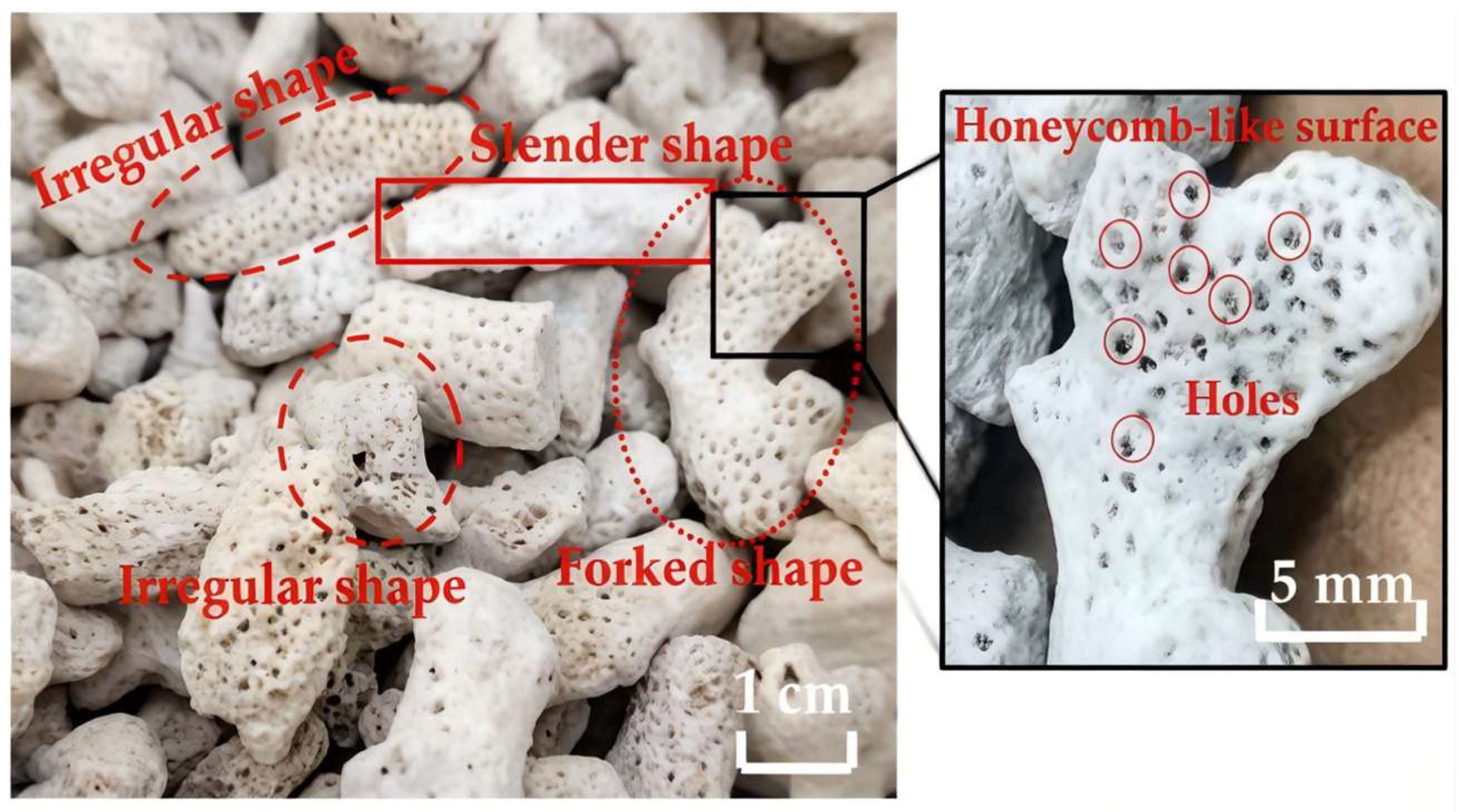


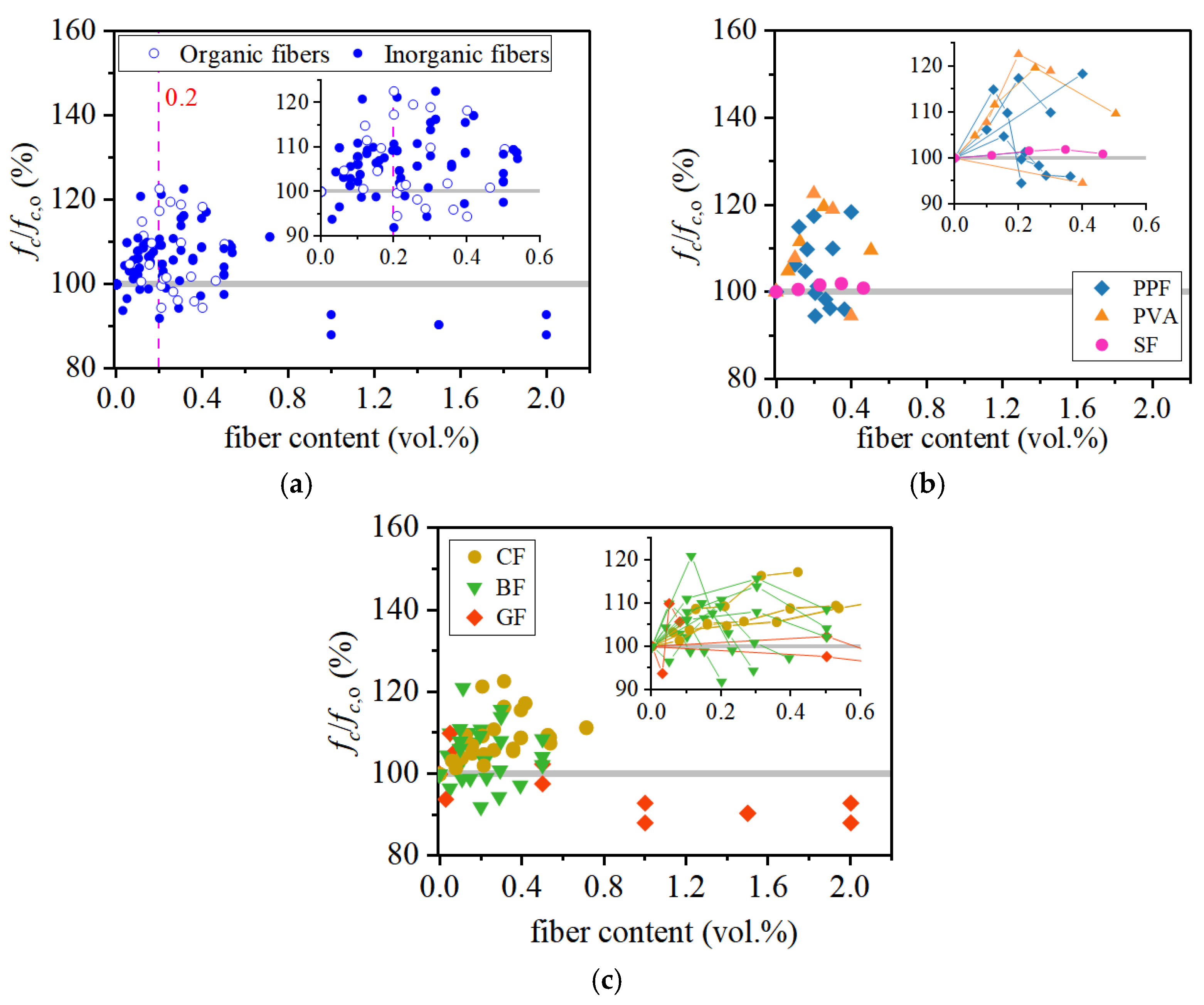
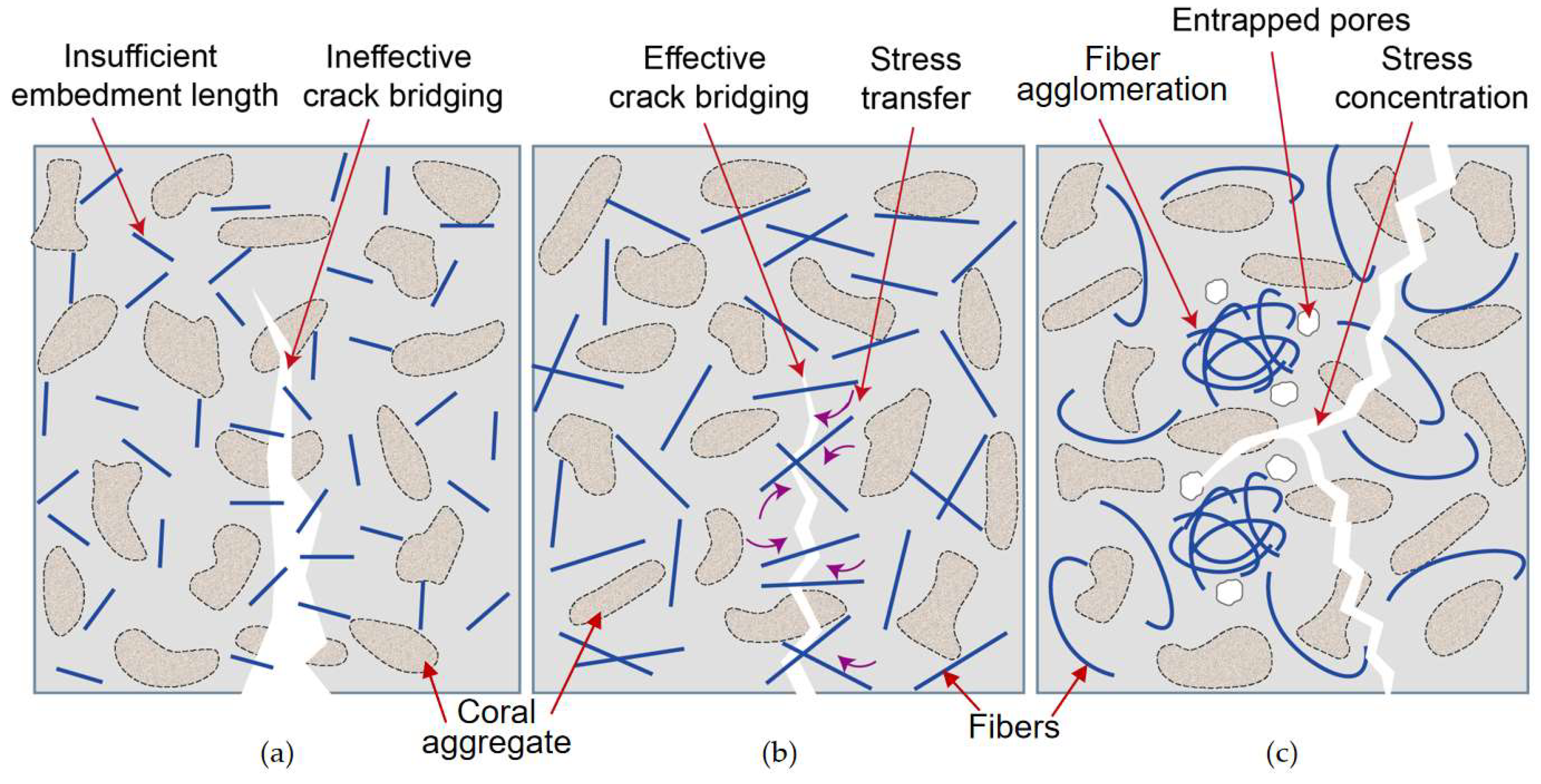


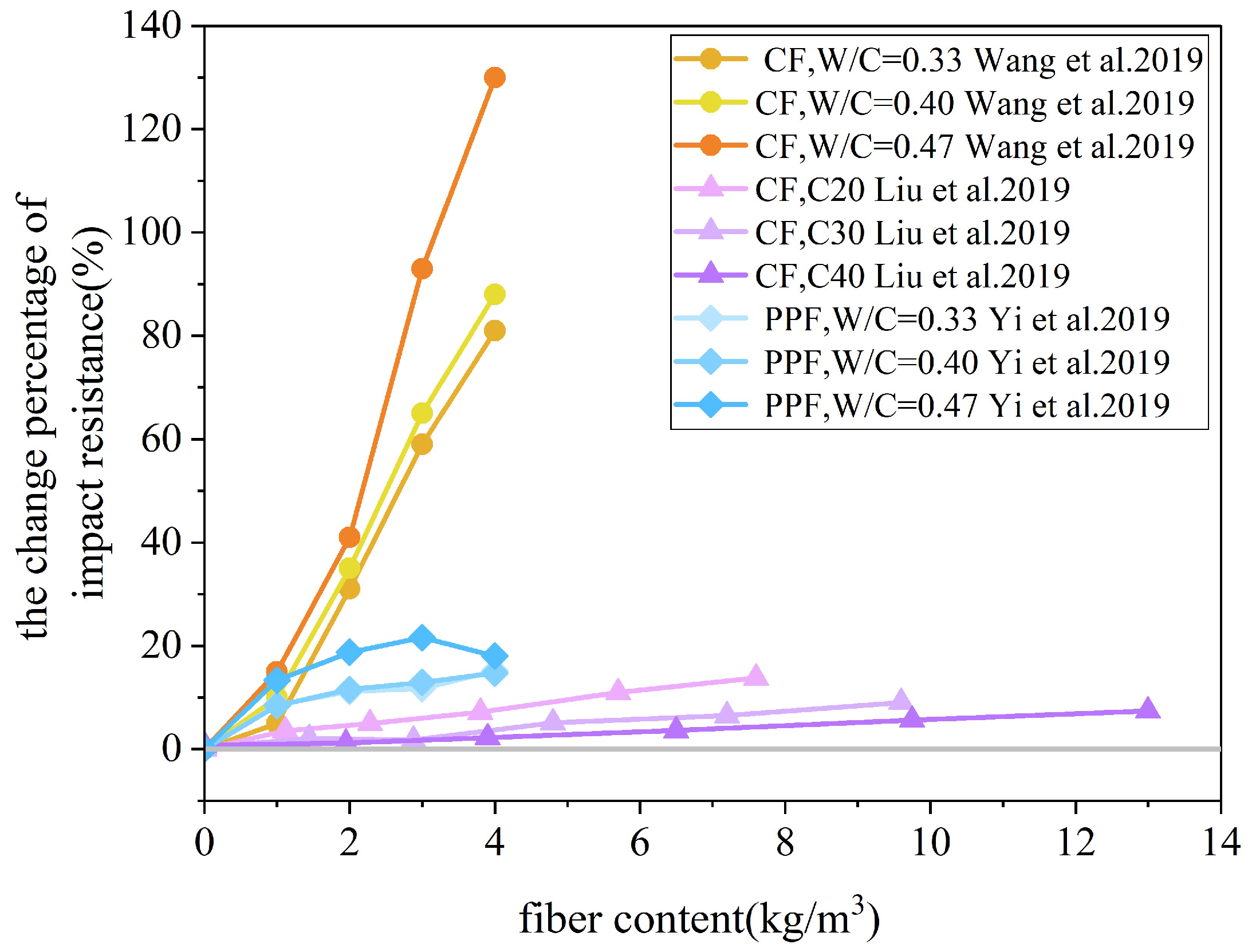



| Reference | Apparent Density (kg/m3) | Bulk Density (kg/m3) | Tube Compressive Strength (MPa) | l h Water Absorption (%) | 24 h Water Absorption (%) | Porosity (%) |
|---|---|---|---|---|---|---|
| [25] | 1724 | 909 | 2.27 | - | 15.0 | 47.3 |
| [28] | 1841 | 915 | 3.10 | 8.50 | 11.0 | 50.0 |
| [31] | 1966 | 938 | 3.07 | 8.26 | - | 52.3 |
| [26] | 1806 | 918 | 2.01 | - | 15.4 | 49.6 |
| Reference | Apparent Density (kg/m3) | Bulk Density (kg/m3) | l h Water Absorption (%) | Mass Fraction % | |
|---|---|---|---|---|---|
| Void | Clay | ||||
| [32] | 2350 | 1320 | - | 16.9 | - |
| [33] | 1538 | 1138 | - | 23.2 | 1.5 |
| [34] | 1638 | 1348 | 2.97 | 17.6 | - |
| [27] | 1659 | 1394 | 3.04 | - | - |
| Fiber | Category | Properties | Reference | |||
|---|---|---|---|---|---|---|
| Density (g/cm3) | Tensile Strength (MPa) | Elastic Modulus (GPa) | Elongation at Break (%) | |||
| Polypropylene fiber (PPF) | Organic fiber | 0.91 | 694 | 4.24 | 15.4 | [37] |
| Polyvinyl alcohol fiber (PVA) | Organic fiber | 1.3 | 1600 | 42 | - | [38] |
| Sisal fiber (SF) | Organic fiber | 1.45 | 450~700 | 7~21 | 5~14 | [39] |
| Carbon fiber (CF) | Inorganic fiber | 1.82 | 4558 | 231 | 2.05 | [40] |
| Basalt fiber (BF) | Inorganic fiber | 2.56 | 2400 | 40 | 3.1 | [41] |
| Glass fiber (GF) | Inorganic fiber | 4.0 | 1700 | - | - | [42] |
| Fiber Type | Fiber Content by Volume (%) | Coarse Aggregate | Fine Aggregate | Water/Binder Ratio | 28 d Flexural Strength (MPa) | Reference |
|---|---|---|---|---|---|---|
| SF | 0–0.67 | Coral | river sand | 0.40 | 2.72–4.04 | [66] |
| PPF | 0–0.45 | Coral | Normal sand | 0.40 | 2.70–4.50 | [37] |
| CF | 0–0.22 | Coral | Normal sand | 0.40 | 2.60–4.10 | [76] |
| CF | 0–0.7 | Coral | coral sand | 0.28–0.35 | 3.68–6.72 | [40] |
| BF | 0–0.2 | Coral | coral sand | 0.45 | 5.1–6.3 | [75] |
| Fiber Type | Typical Improvement in Compressive Strength | Typical Improvement in Splitting Tensile Strength | Typical Improvement in Flexural Strength | Effect on Elastic Modulus | Main Engineering Advantages | Main Limitations/Concerns |
|---|---|---|---|---|---|---|
| Polypropylene fiber (PPF) | −5%~18% | 0%~38% | 18%~67% | 0%~4% | Effective crack control; significant improvement in flexural and tensile performance; good workability | Limited contribution to compressive strength and stiffness |
| Polyvinyl alcohol fiber (PVA) | −5%~22% | 5%~18% | -- | −3%~3% | Strong fiber–matrix bonding; enhanced ductility and post-cracking behavior | Higher cost; sensitive to fiber dispersion |
| Sisal fiber (SF) | 0%~2% | 7%~17% | 19%~48% | 1%~4% | Sustainable and renewable; effective crack-bridging in tension | Variability in fiber quality; durability under long-term exposure uncertain |
| Carbon fiber (CF) | 1%~23% | 1%~58% | 1%~58% | −1~7% | High elastic modulus; effective stress redistribution; strong impact and tensile enhancement | High cost; dispersion and workability issues |
| Basalt fiber (BF) | −8%~15% | −12%~56% | 0%~19% | 2%~5% | Potential improvement in tensile performance and durability-related properties | Pronounced scatter; sensitive to fiber–matrix interaction and matrix quality |
| Glass fiber (GF) | −10%~9% | 0%~29% | -- | -- | Uniform fiber distribution; moderate enhancement in tensile performance | Limited contribution to compressive strength; durability benefits remain unclear |
| Fiber Type | Fiber Content by Volume (%) | Loading Regime | Key Observations | Reference |
|---|---|---|---|---|
| PPF | 0.05–0.30 vol.% | Uniaxial cyclic compression | Peak stress increased by 10.45%, peak strain increased by 6.45%. Increasing fiber content reduces plastic strain accumulation and enhances the elastic stiffness ratio. Constitutive and damage models proposed. | [93] |
| SF | 0.05–0.20 vol.% | Uniaxial cyclic compression | Peak stress increased by 2.34%, peak strain increased by 10.11%, maximum stiffness retention increased by 31.07%, and total energy dissipation increased by 51.36%. A stress–strain constitutive model and a damage evolution model were established. | [94] |
Disclaimer/Publisher’s Note: The statements, opinions and data contained in all publications are solely those of the individual author(s) and contributor(s) and not of MDPI and/or the editor(s). MDPI and/or the editor(s) disclaim responsibility for any injury to people or property resulting from any ideas, methods, instructions or products referred to in the content. |
© 2026 by the authors. Licensee MDPI, Basel, Switzerland. This article is an open access article distributed under the terms and conditions of the Creative Commons Attribution (CC BY) license.
Share and Cite
Wei, Y.; Shakimon, M.N.; Ye, P.; Chen, Y. Fiber-Reinforced Coral Aggregate Concrete: A Review of Mechanical, Dynamic, and Durability Properties. Materials 2026, 19, 765. https://doi.org/10.3390/ma19040765
Wei Y, Shakimon MN, Ye P, Chen Y. Fiber-Reinforced Coral Aggregate Concrete: A Review of Mechanical, Dynamic, and Durability Properties. Materials. 2026; 19(4):765. https://doi.org/10.3390/ma19040765
Chicago/Turabian StyleWei, Yuliu, Mohd Nizam Shakimon, Peihuan Ye, and Yuliang Chen. 2026. "Fiber-Reinforced Coral Aggregate Concrete: A Review of Mechanical, Dynamic, and Durability Properties" Materials 19, no. 4: 765. https://doi.org/10.3390/ma19040765
APA StyleWei, Y., Shakimon, M. N., Ye, P., & Chen, Y. (2026). Fiber-Reinforced Coral Aggregate Concrete: A Review of Mechanical, Dynamic, and Durability Properties. Materials, 19(4), 765. https://doi.org/10.3390/ma19040765