Steel Slag-Enhanced Cement-Stabilized Recycled Aggregate Bases: Mechanical Performance and PINN-Based Sulfate Diffusion Prediction


Abstract
1. Introduction
2. Materials and Methods
2.1. Raw Materials
2.2. Specimen Preparation
2.3. Experimental Program
2.3.1. Unconfined Compressive Strength Test
2.3.2. Indirect Tensile Strength Test
2.3.3. Thermal Shrinkage Test
2.3.4. Sulfate Resistance Test
2.3.5. Sulfate Diffusion Modeling Using PINN
- PINN theoretical model;
- 2.
- Sulfate diffusion coefficient;
- Sulfate diffusion coefficient in new mortar;
- Sulfate diffusion coefficient in attached mortar;
- Sulfate diffusion coefficients in ITZs;
- 3.
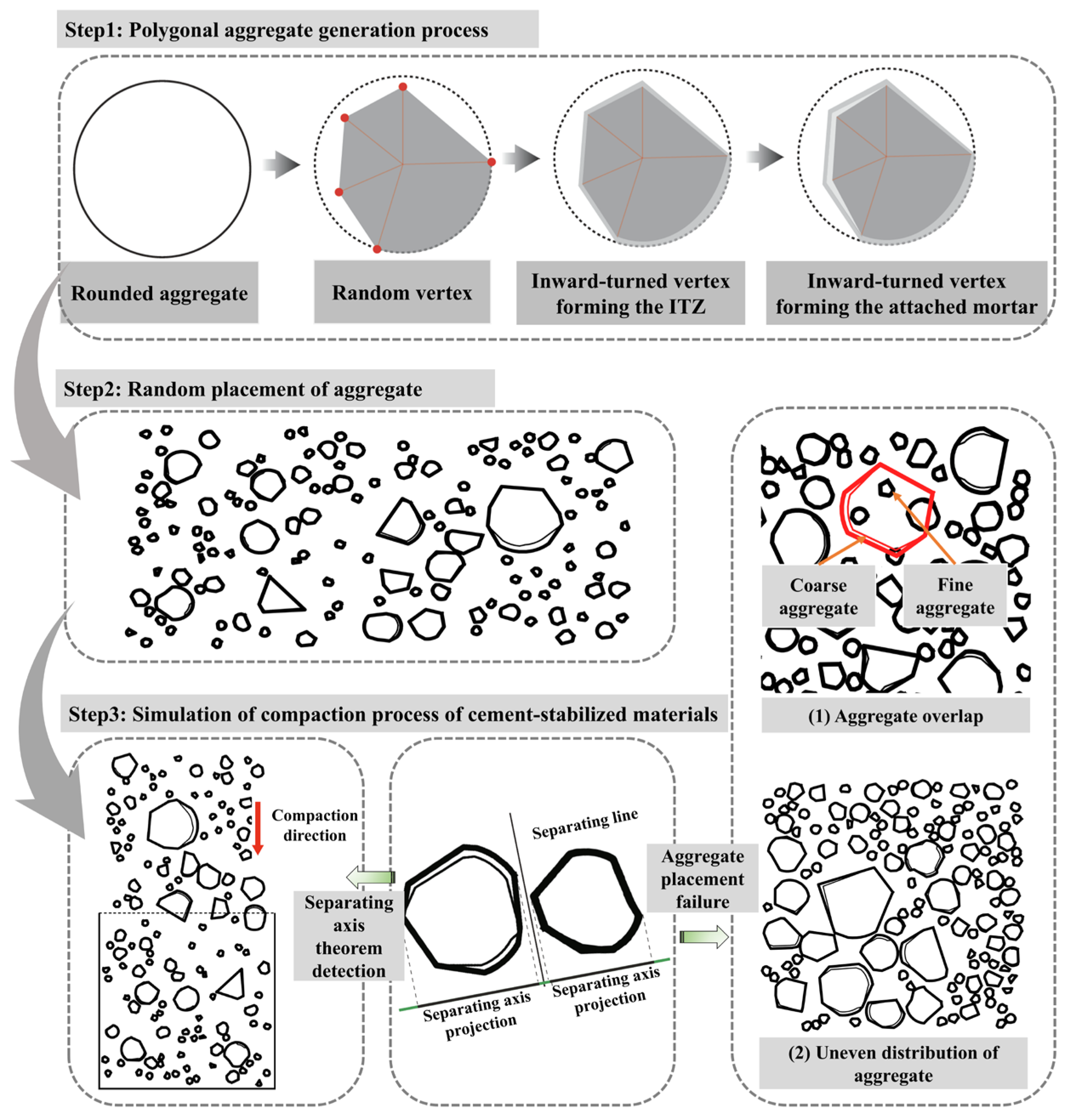
- Random aggregate modeling;
- 4.
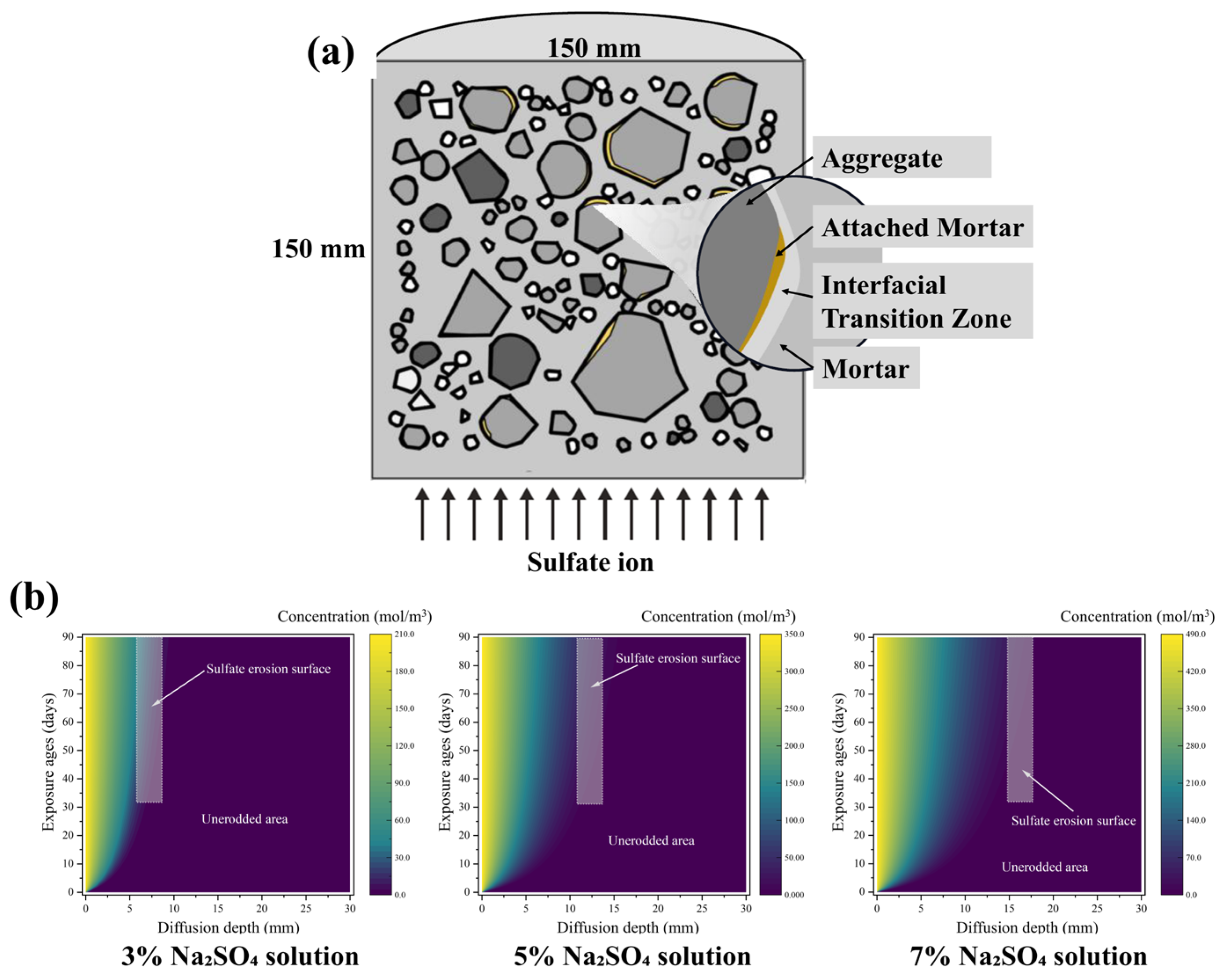
- Sulfate diffusion model development;
3. Results
3.1. Unconfined Compressive Strength Analysis
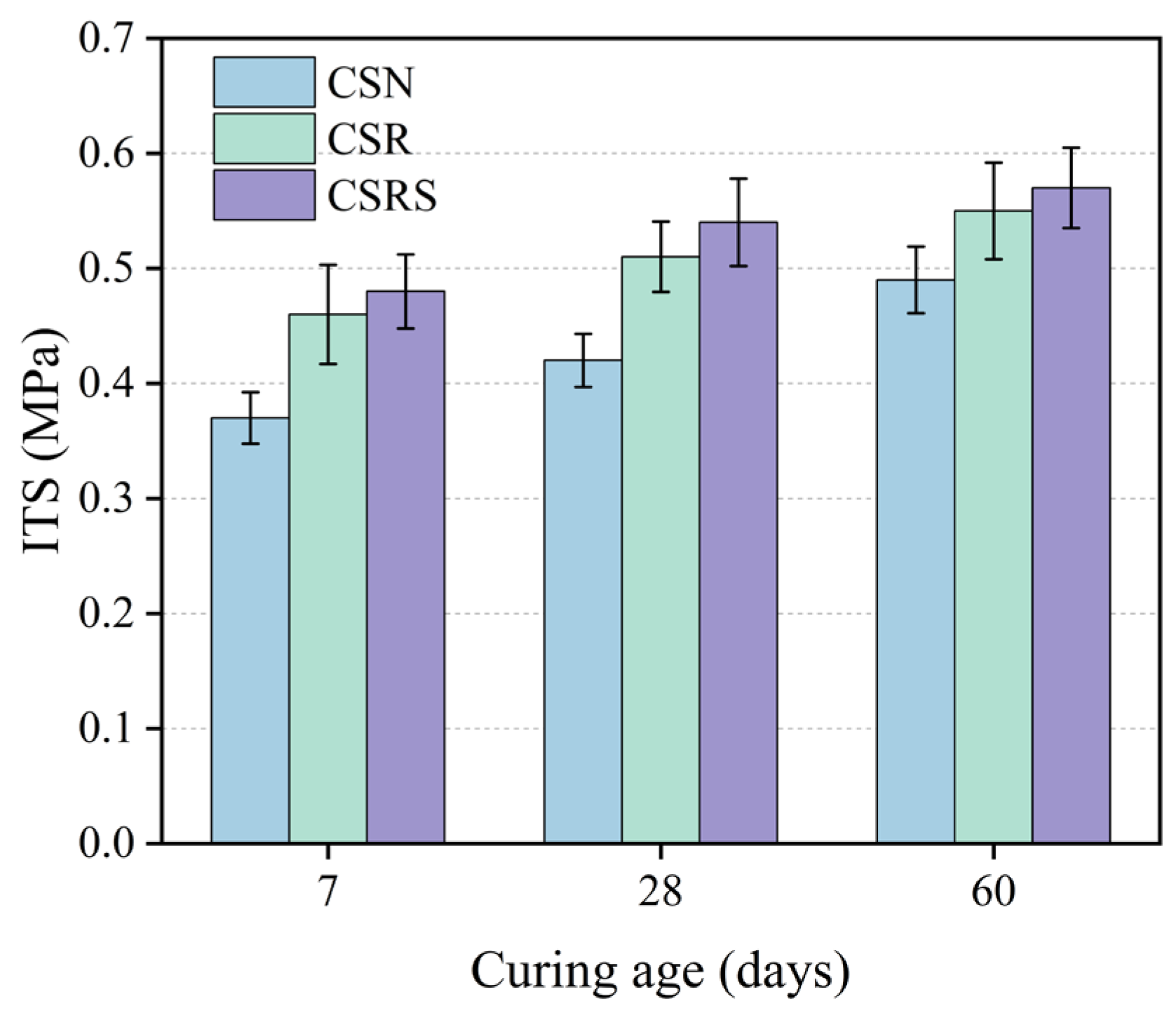
3.2. Indirect Tensile Strength Analysis
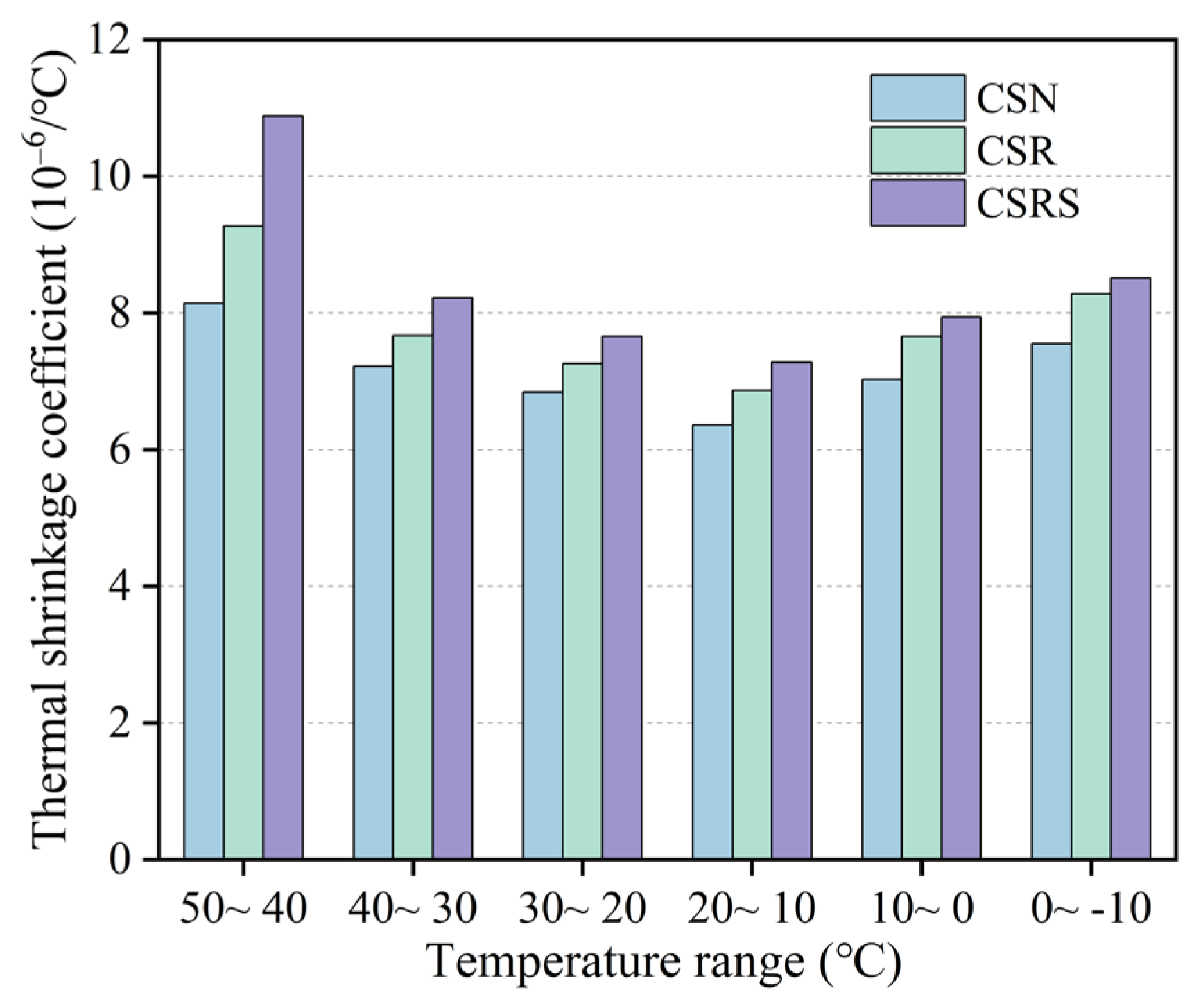
3.3. Thermal Shrinkage Performance Analysis
3.4. Sulfate Resistance Analysis
3.5. Prediction and Validation of the PINN-Based Sulfate Diffusion Model
4. Conclusions
- (1)
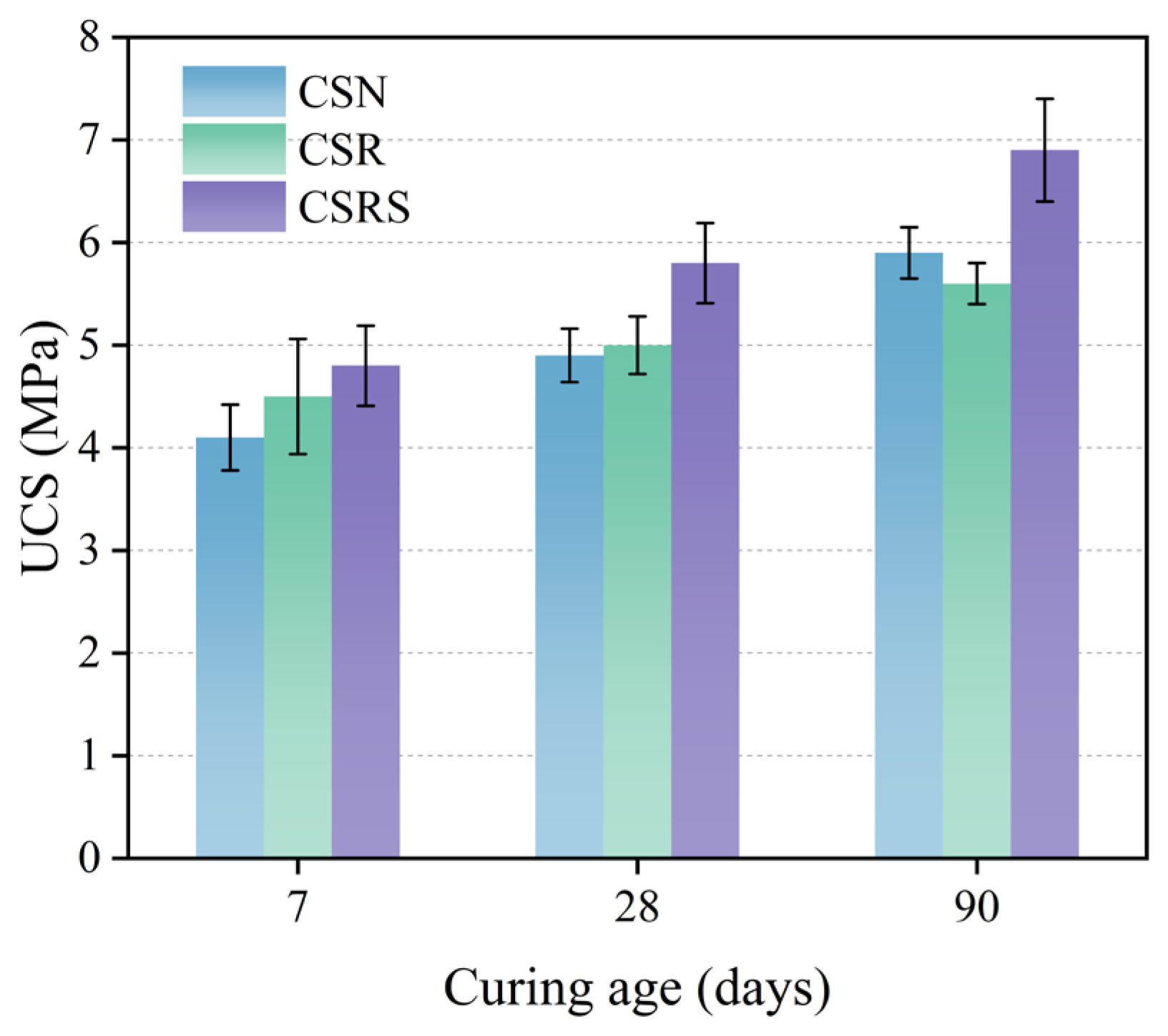
- The incorporation of SSA significantly improved the mechanical properties of CSR. Compared with CSR, the UCS of CSRS at 7, 28, and 90 days increased by 6.7%, 16.0%, and 23.2%, respectively. For ITS, CSRS exhibited increases of 4.3%, 5.9%, and 3.6% at 7, 28, and 60 days, respectively. These enhancements were mainly attributed to the hydration of reactive mineral phases in SSA and its rough surface texture, which strengthened the interfacial bonding between aggregates and mortar and consequently improved the overall mechanical performance of the mixture.
- (2)
- The incorporation of RA and SSA increased the thermal shrinkage sensitivity of the mixtures. The average thermal shrinkage coefficients of CSR and CSRS increased by 9.0% and 17.1% relative to CSN. This finding highlights a potential risk associated with temperature-induced deformation, particularly in regions with large temperature fluctuations. Therefore, appropriate control of SSA content and the adoption of shrinkage mitigation measures should be considered in practical applications.
- (3)
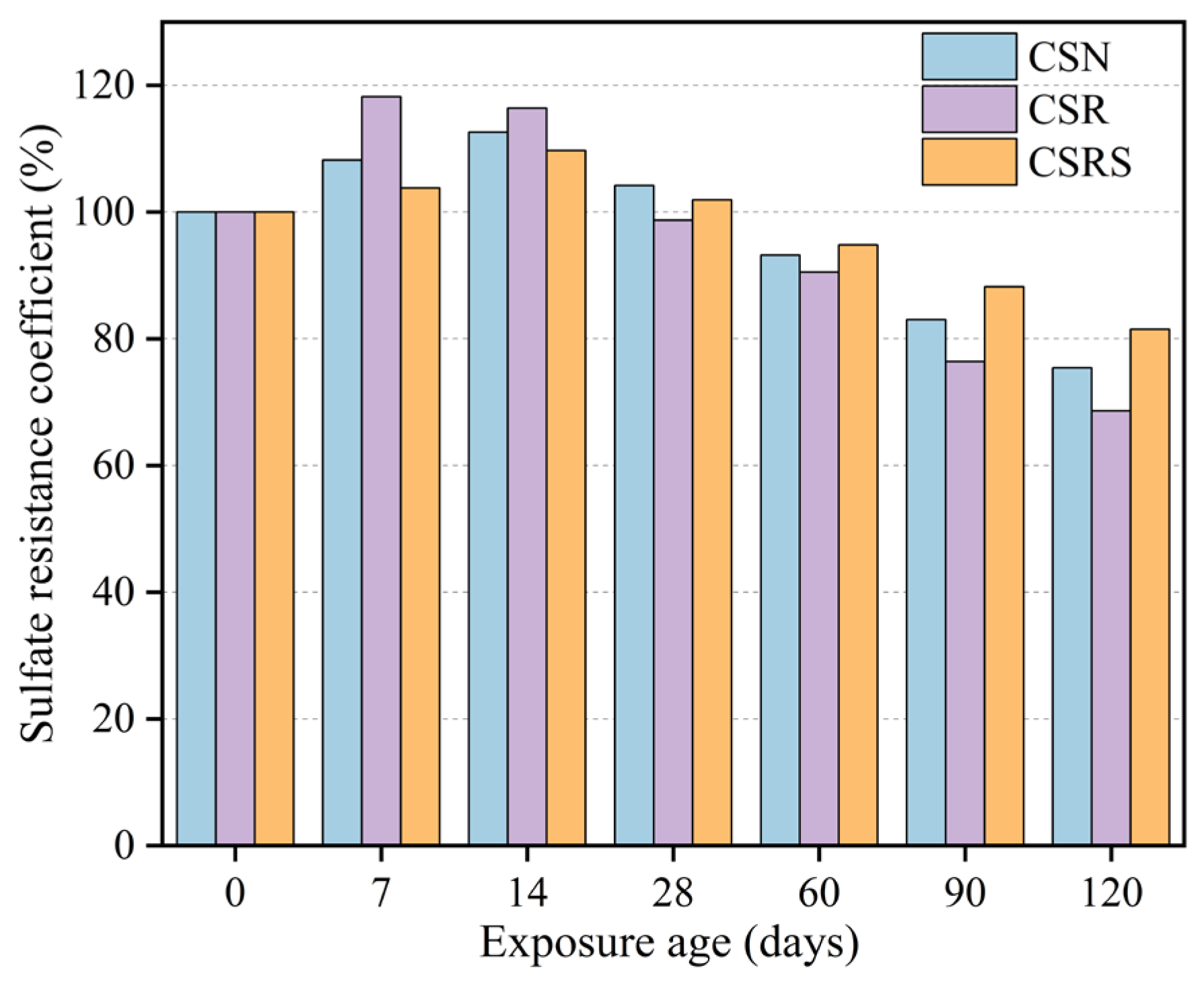
- SSA significantly enhanced the sulfate resistance of CSR. Compared with CSR, the sulfate resistance coefficient of CSRS at 120 days increased by 18.8%. The weaker performance of CSR was associated with the greater amount of internal defects and pores in RA, which accelerated deterioration under prolonged sulfate exposure. The incorporation of SSA reduced these defects, improved the compactness of the mixture, and slowed the progression of sulfate attack, thereby enhancing the long-term durability of the pavement base.
- (4)
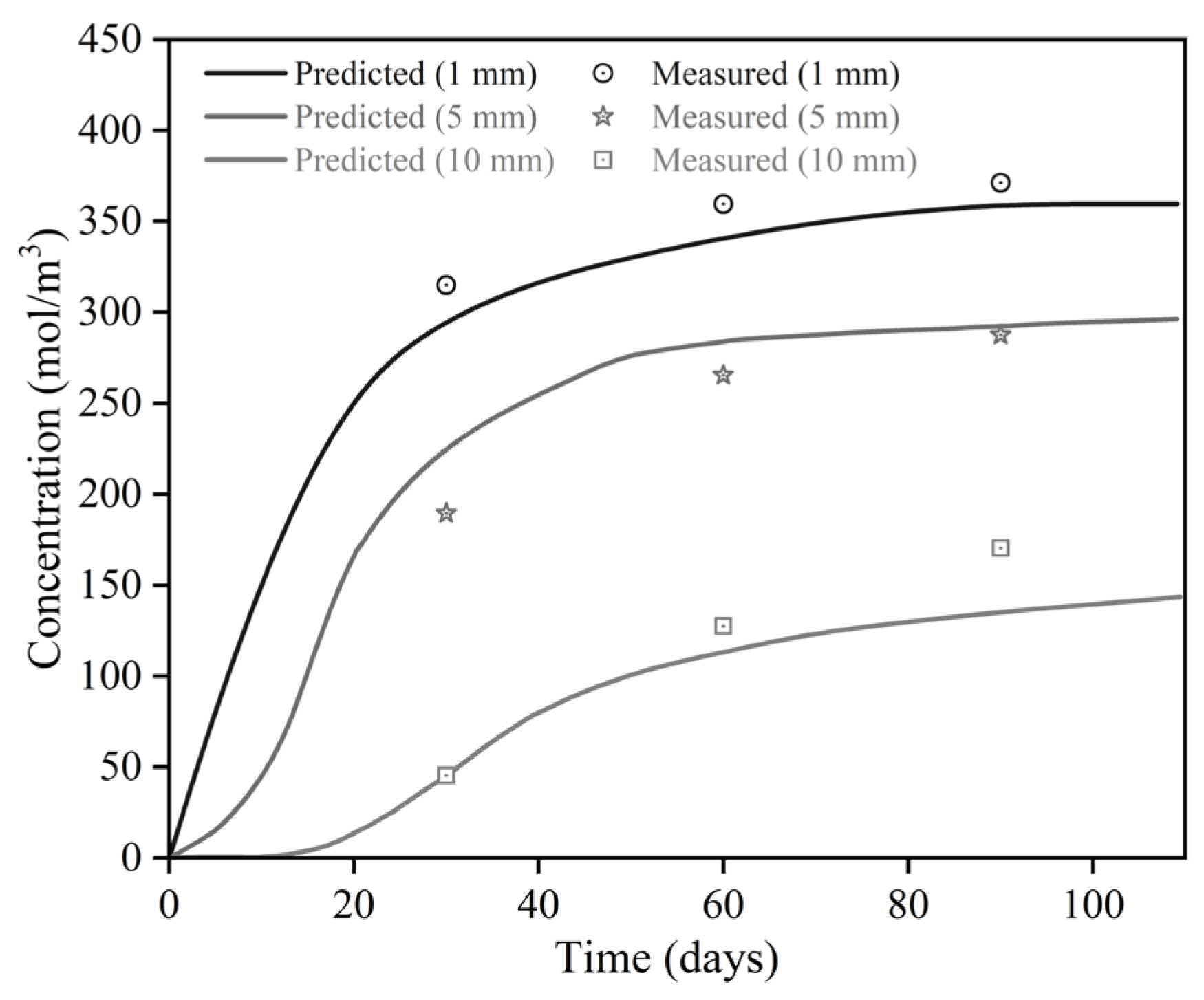
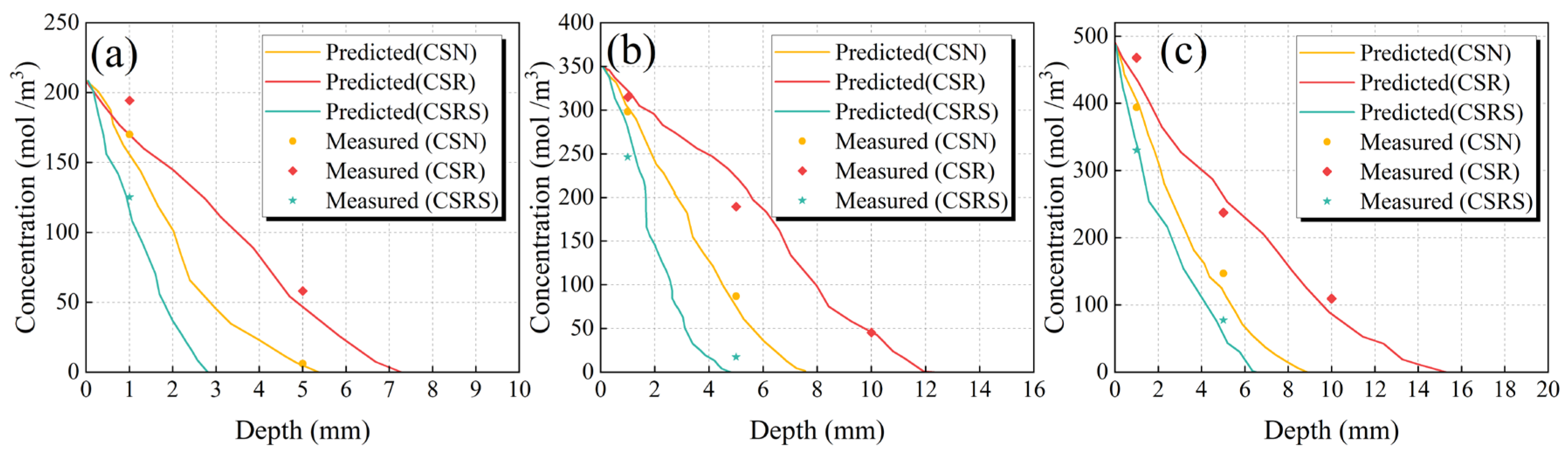
- A novel sulfate diffusion model for pavement base mixtures was developed based on PINN, and the results showed that the incorporation of SSA effectively reduced sulfate ingress, with sulfate concentrations in CSRS samples at 1 mm lower than those in CSR by 35.6%, 21.8%, and 29.4%, respectively, under 3%, 5%, and 7% sulfate solutions. The PINN model exhibited reliable predictive accuracy, with average relative errors of 13.9%, 8.3%, and 12.8% for 3%, 5%, and 7% sulfate solutions. This confirms the feasibility of the proposed PINN framework for simulating sulfate transport in cement-stabilized mixtures and supporting durability assessment.
Author Contributions
Funding
Institutional Review Board Statement
Informed Consent Statement
Data Availability Statement
Conflicts of Interest
Abbreviations
| RA | Recycled aggregate |
| NA | Natural aggregate |
| SSA | Steel slag aggregate |
| CSR | Cement-stabilized recycled aggregate |
| CSN | Cement-stabilized natural aggregate |
| CSRS | Cement-stabilized recycled aggregate with steel slag |
| CSS | Cement-stabilized steel slag |
| PINN | Physics-informed neural network |
| OPC | Ordinary Portland cement |
| UCS | Unconfined compressive strength |
| ITS | Indirect tensile strength |
| C&D | Construction and demolition |
| ITZ | Interfacial transition zone |
| AFt | Ettringite |
References
- Akhtar, A.; Sarmah, A.K. Construction and Demolition Waste Generation and Properties of Recycled Aggregate Concrete: A Global Perspective. J. Clean. Prod. 2018, 186, 262–281. [Google Scholar] [CrossRef]
- Nedeljković, M.; Visser, J.; Šavija, B.; Valcke, S.; Schlangen, E. Use of Fine Recycled Concrete Aggregates in Concrete: A Critical Review. J. Build. Eng. 2021, 38, 102196. [Google Scholar] [CrossRef]
- Zeng, Q.; Jike, N.; Xu, C.; Yang, R.; Peng, Y.; Wang, J.; Gong, F.; Zhang, M.; Zhao, Y. Total Recycling of Low-Quality Urban-Fringe Construction and Demolition Waste towards the Development of Sustainable Cement-Free Pervious Concrete: The Proof of Concept. J. Clean. Prod. 2022, 352, 131464. [Google Scholar] [CrossRef]
- Gálvez-Martos, J.-L.; Styles, D.; Schoenberger, H.; Zeschmar-Lahl, B. Construction and Demolition Waste Best Management Practice in Europe. Resour. Conserv. Recycl. 2018, 136, 166–178. [Google Scholar] [CrossRef]
- Chakravarthi, S.; Shankar, S. Utilization of Recycled Aggregates in Cement-Treated Bases: A State-of-the-Art Review. Innov. Infrastruct. Solut. 2021, 6, 191. [Google Scholar] [CrossRef]
- Yuan, Y.; Hu, X.; Wang, K.; Liu, Z.; Zhong, M.; Meng, K. Study on Mechanical Properties of Road Cement-Stabilized Macadam Base Material Prepared with Construction Waste Recycled Aggregate. Buildings 2024, 14, 2605. [Google Scholar] [CrossRef]
- Joseph, H.S.; Pachiappan, T.; Avudaiappan, S.; Maureira-Carsalade, N.; Roco-Videla, Á.; Guindos, P.; Parra, P.F. A Comprehensive Review on Recycling of Construction Demolition Waste in Concrete. Sustainability 2023, 15, 4932. [Google Scholar] [CrossRef]
- Zega, C.J.; Santillán, L.R.; Sosa, M.E.; Villagrán Zaccardi, Y.A. Durable Performance of Recycled Aggregate Concrete in Aggressive Environments. J. Mater. Civ. Eng. 2020, 32, 03120002. [Google Scholar] [CrossRef]
- Shi, X.; Mukhopadhyay, A.; Zollinger, D. Long-Term Performance Evaluation of Concrete Pavements Containing Recycled Concrete Aggregate in Oklahoma. Transp. Res. Rec. 2019, 2673, 429–442. [Google Scholar] [CrossRef]
- Sadati, S.; Khayat, K.H. Field Performance of Concrete Pavement Incorporating Recycled Concrete Aggregate. Constr. Build. Mater. 2016, 126, 691–700. [Google Scholar] [CrossRef]
- Medina, C.; Zhu, W.; Howind, T.; Sánchez de Rojas, M.I.; Frías, M. Influence of Mixed Recycled Aggregate on the Physical—Mechanical Properties of Recycled Concrete. J. Clean. Prod. 2014, 68, 216–225. [Google Scholar] [CrossRef]
- Fan, M.; Lyu, Z.; Liu, L.; Qin, J.; Liang, G.; Huang, N. Preparation of Pavement Base Material by Using Steel Slag Powder and Steel Slag Aggregate. Matéria 2024, 29, e20240257. [Google Scholar] [CrossRef]
- Liu, J.; Yu, B.; Wang, Q. Application of Steel Slag in Cement Treated Aggregate Base Course. J. Clean. Prod. 2020, 269, 121733. [Google Scholar] [CrossRef]
- Aiban, S. Utilization of Steel Slag Aggregate for Road Bases. J. Test. Eval. 2006, 34, 65–75. [Google Scholar] [CrossRef]
- Guo, Y.; Zhang, W.; Su, H.; Li, J.; Xu, P.; Wang, J.; Tian, B. Optimal Selection of Chemical Composition of Pavement Materials Based on Wave-Absorbing Heating Characteristics and Design of de-Icing Functional Layer for Pavements. Case Stud. Constr. Mater. 2025, 23, e05224. [Google Scholar] [CrossRef]
- Liu, Q.; Xue, G.; Dong, W.; Li, J. Compressive Behavior of Steel Slag Fine Aggregate Concrete under Impact Loading. Struct. Concr. 2025, 26, 1368–1387. [Google Scholar] [CrossRef]
- Wang, Z.; Feng, Z.; Cui, Q.; Li, X.; Zhang, L.; Yang, X.; Li, X. Crack Monitoring and Self-Healing Properties of Multifunctional Asphalt Mixture Containing Steel Slag and Carbon Fiber towards Sustainable Pavement. Sustain. Mater. Technol. 2025, 45, e01511. [Google Scholar] [CrossRef]
- Kumar, P.; Shukla, S. Utilization of Steel Slag Waste as Construction Material: A Review. Mater. Today Proc. 2023, 78, 145–152. [Google Scholar] [CrossRef]
- Ren, Z.; Li, D.; Ren, Z.; Li, D. Application of Steel Slag as an Aggregate in Concrete Production: A Review. Materials 2023, 16, 5841. [Google Scholar] [CrossRef] [PubMed]
- Li, Y.; Liu, F.; Yu, F.; Du, T. A Review of the Application of Steel Slag in Concrete. Structures 2024, 63, 106352. [Google Scholar] [CrossRef]
- Cai, Y.-H.; Huang, T.; Huang, B.-Y.; Hua, C.-B.; Huang, Q.; Chen, J.-W.; Liu, H.-L.; He, Z.-J.; Rouzi, N.-B.; Xie, Z.-H.; et al. Investigation into the Static Mechanical Properties of Ultra-High-Performance Geopolymer Concrete Incorporating Steel Slag, Ground Granulated Blast-Furnace Slag, and Fly Ash. Buildings 2025, 15, 2535. [Google Scholar] [CrossRef]
- Zhao, Y.; Shi, T.; Cao, L.; Kan, L.; Wu, M. Influence of Steel Slag on the Properties of Alkali-Activated Fly Ash and Blast-Furnace Slag Based Fiber Reinforced Composites. Cem. Concr. Compos. 2021, 116, 103875. [Google Scholar] [CrossRef]
- Chen, G.; Wang, S. Research on Macro-Microscopic Mechanical Evolution Mechanism of Cement-Stabilized Steel Slag. J. Build. Eng. 2023, 75, 107047. [Google Scholar] [CrossRef]
- Tozsin, G.; Yonar, F.; Yucel, O.; Dikbas, A. Utilization Possibilities of Steel Slag as Backfill Material in Coastal Structures. Sci. Rep. 2023, 13, 4318. [Google Scholar] [CrossRef]
- Song, P.-C.; Chen, G.-X.; Chen, Y.-J.; Song, P.-C.; Chen, G.-X.; Chen, Y.-J. Optimizing the Utilization of Steel Slag in Cement-Stabilized Base Layers: Insights from Freeze–Thaw and Fatigue Testing. Materials 2024, 17, 2576. [Google Scholar] [CrossRef] [PubMed]
- Huang, Y.; Yang, X.; Wang, S.; Liu, Z.; Liu, L.; Xu, B.; Huang, Y.; Yang, X.; Wang, S.; Liu, Z.; et al. Evaluating Cement Treated Aggregate Base Containing Steel Slag: Mechanical Properties, Volume Stability and Environmental Impacts. Materials 2022, 15, 8277. [Google Scholar] [CrossRef]
- Soliman, N.; Roghani, H.; Aghayan, I.; Omran, A.; Sobolev, K. Utilization of Steelmaking By-Products in the Construction Industry: A Comprehensive Review of Steel Slag and Steel Mill Scale. Case Stud. Constr. Mater. 2025, 23, e05077. [Google Scholar] [CrossRef]
- Zhang, J.; Su, P.; Li, L. Microbial Induced Carbonate Precipitation Modified Steel Slag: Mechanical Improvement and Erosion Resistance to Sulfate Attack. J. Clean. Prod. 2023, 405, 136982. [Google Scholar] [CrossRef]
- Cheng, X.; Tian, W.; Gao, J.; Gao, Y. Performance Evaluation and Lifetime Prediction of Steel Slag Coarse Aggregate Concrete under Sulfate Attack. Constr. Build. Mater. 2022, 344, 128203. [Google Scholar] [CrossRef]
- Vo, D.-H.; Do, N.-D.; Mamuye, Y.; Liao, M.-C.; Hwang, C.-L.; Tran, Q.-T. Engineering Properties and Durability of Concrete Samples Designed by Densified Mixture Design Algorithm (DMDA) Method Incorporating Steel Reducing Slag Aggregate. Constr. Build. Mater. 2022, 354, 129180. [Google Scholar] [CrossRef]
- Feng, T.; Wang, W.; Li, N.; Luo, J.; Li, B.; Jiang, P.; Pu, S. Mechanical Properties and Microscopic Mechanism of Steel Slag, Sodium Sulfate and Cement Stabilized Road Demolition Waste. Results Eng. 2024, 24, 103338. [Google Scholar] [CrossRef]
- O’Connor, J.; Nguyen, T.B.T.; Honeyands, T.; Monaghan, B.; O’Dea, D.; Rinklebe, J.; Vinu, A.; Hoang, S.A.; Singh, G.; Kirkham, M.B.; et al. Production, Characterisation, Utilisation, and Beneficial Soil Application of Steel Slag: A Review. J. Hazard. Mater. 2021, 419, 126478. [Google Scholar] [CrossRef] [PubMed]
- Baras, A.; Li, J.; Ni, W.; Hussain, Z.; Hitch, M. Evaluation of Potential Factors Affecting Steel Slag Carbonation. Processes 2023, 11, 2590. [Google Scholar] [CrossRef]
- Guo, J.; Bao, Y.; Wang, M. Steel Slag in China: Treatment, Recycling, and Management. Waste Manag. 2018, 78, 318–330. [Google Scholar] [CrossRef]
- Zhang, X.; Li, H.; Li, S.; Ding, Y.; Zhang, H.; Tong, Y.; Hua, S. Test and Microstructural Analysis of a Steel Slag Cement-Based Material Using the Response Surface Method. Materials 2022, 15, 3114. [Google Scholar] [CrossRef] [PubMed]
- Deng, Y.; Wang, X.; Zhou, B.; Xu, X.; Chen, L. Systematic Assessment of a Multi-Solid Waste Cementitious Material: Feasibility and Environmental Impact. Constr. Build. Mater. 2024, 428, 136323. [Google Scholar] [CrossRef]
- Sharba, A.A. The Efficiency of Steel Slag and Recycled Concrete Aggregate on the Strength Properties of Concrete. KSCE J. Civ. Eng. 2019, 23, 4846–4851. [Google Scholar] [CrossRef]
- Qin, S.; Chen, C.; Zhang, M.; Qin, S.; Chen, C.; Zhang, M. Modeling of Concrete Deterioration under External Sulfate Attack and Drying–Wetting Cycles: A Review. Materials 2024, 17, 3334. [Google Scholar] [CrossRef] [PubMed]
- Wu, H.; Lv, C.; Xu, Y.; Sun, Y.; Qu, S.; Zhou, X.; Wu, H.; Lv, C.; Xu, Y.; Sun, Y.; et al. Deterioration of Concrete Under the Combined Action of Sulfate Attack and Freeze–Thaw Cycles: A Review. Materials 2025, 18, 4309. [Google Scholar] [CrossRef]
- Zhuang, Z.; Mu, S.; Guo, Z.; Liu, G.; Zhang, J.; Miao, C. Diffusion-Reaction Models for Concrete Exposed to Chloride-Sulfate Attack Based on Porosity and Water Saturation. Cem. Concr. Compos. 2024, 146, 105378. [Google Scholar] [CrossRef]
- Zhang, T.; Wang, D.; Lu, Y. RheologyNet: A Physics-Informed Neural Network Solution to Evaluate the Thixotropic Properties of Cementitious Materials. Cem. Concr. Res. 2023, 168, 107157. [Google Scholar] [CrossRef]
- Gao, Z.; Fu, Z.; Wen, M.; Guo, Y.; Zhang, Y. Physical Informed Neural Network for Thermo-Hydral Analysis of Fire-Loaded Concrete. Eng. Anal. Bound. Elem. 2024, 158, 252–261. [Google Scholar] [CrossRef]
- Pasupunuri, S.K.; Thom, N.; Li, L. Roughness Prediction of Jointed Plain Concrete Pavement Using Physics Informed Neural Networks. Transp. Res. Rec. 2024, 2678, 1733–1746. [Google Scholar] [CrossRef]
- Rahman, M.A.; Lu, Y. EcoBlendNet: A Physics-Informed Neural Network for Optimizing Supplementary Material Replacement to Reduce the Carbon Footprint during Cement Hydration. J. Clean. Prod. 2024, 464, 142777. [Google Scholar] [CrossRef]
- Shaban, W.M.; Elbaz, K.; Zhou, A.; Shen, S.-L. Physics-Informed Deep Neural Network for Modeling the Chloride Diffusion in Concrete. Eng. Appl. Artif. Intell. 2023, 125, 106691. [Google Scholar] [CrossRef]
- JTG 3420-2020; Testing Methods of Cement and Concrete for Highway Engineering. China Communications Press: Beijing, China, 2020.
- JTG/T 2321-2021; Technical Specifications for Utilization of Construction Waste in Highway Engineering. China Communications Press: Beijing, China, 2021.
- GB/T 24175-2009; Test Method for Stability of Steel Slag. China Standards Press: Beijing, China, 2009.
- GB/T 25824-2010; Steel Slag for Road. China Standards Press: Beijing, China, 2010.
- JTG 3432-2024; Test Methods of Aggregates for Highway Engineering. China Communications Press: Beijing, China, 2024.
- JTG/T F20-2015; Technical Guidelines for Construction of Highway Roadbases. China Communications Press: Beijing, China, 2015.
- JTG 3441-2024; Test Methods of Materials Stabilized with Inorganic Binders for Highway Engineering. China Communications Press: Beijing, China, 2024.
- Deng, Y.; Wang, X.; Zhao, J.; Liu, H.; Chen, L. Enhancing Sulfate Resistance of Cement-Stabilized Recycled Aggregate with Steel Slag: Optimized Mix Design and Mechanistic Insights. Case Stud. Constr. Mater. 2025, 23, e04904. [Google Scholar] [CrossRef]
- GB/T 50082-2024; Standard for Test Methods of Long-Term Performance and Durability of Concrete. China Architecture & Building Press: Beijing, China, 2024.
- Min, H.; Sui, L.; Xing, F.; Tian, H.; Zhou, Y. An Effective Transport Model of Sulfate Attack in Concrete. Constr. Build. Mater. 2019, 216, 365–378. [Google Scholar] [CrossRef]
- Wu, J.; Wen, X.; Guan, B.; Yin, G.; Qiu, H.; Zhao, H.; Li, C. Numerical Investigation of Sulfate Diffusion Characteristics in Recycled Aggregate Concrete Based on Mesoscale Multiphase Analysis. J. Mater. Civ. Eng. 2023, 35, 04023172. [Google Scholar] [CrossRef]
- Xiao, J.; Li, W.; Sun, Z.; Lange, D.A.; Shah, S.P. Properties of Interfacial Transition Zones in Recycled Aggregate Concrete Tested by Nanoindentation. Cem. Concr. Compos. 2013, 37, 276–292. [Google Scholar] [CrossRef]
- Khan, Z.A.; Balunaini, U.; Nguyen, N.H.T.; Costa, S. Evaluation of Cement-Treated Recycled Concrete Aggregates for Sustainable Pavement Base/Subbase Construction. Constr. Build. Mater. 2024, 449, 138417. [Google Scholar] [CrossRef]
- Wang, Q.; Liu, J.; Wang, P.; Liu, J.; Sun, M.; Wang, Q.; Liu, J.; Wang, P.; Liu, J.; Sun, M. Effect of Sulfate Attack on the Expansion Behavior of Cement-Treated Aggregates. Materials 2024, 17, 660. [Google Scholar] [CrossRef] [PubMed]
- Caré, S. Influence of Aggregates on Chloride Diffusion Coefficient into Mortar. Cem. Concr. Res. 2003, 33, 1021–1028. [Google Scholar] [CrossRef]





| Test Items | Test Results | Technical Requirements | |
|---|---|---|---|
| Specific surface area (m2/kg) | 343 | ≥300 | |
| 80 μm square-hole sieve, weigh to residue (%) | 2.3 | ≤10 | |
| Setting time (min) | Initial setting | 235 | ≥180 |
| Final setting | 425 | ≤600 | |
| Compressive strength (MPa) | 3d | 29.7 | ≥17.0 |
| 28d | 58.4 | ≥42.5 | |
| Flexural strength (MPa) | 3d | 5.2 | ≥4.0 |
| 28d | 7.9 | ≥7.0 | |
| Test Items | Crushing Value | Needle-Like Particle Content | Apparent Density (g/m3) | Water Absorption (%) | Dust Content Below 0.075 mm (%) | Sulfate Content (%) | Water Immersion Expansion Rate (%) |
|---|---|---|---|---|---|---|---|
| RA (5–10 mm) | 23 | 7.5 | 2.435 | 4.35 | 0.8 | 0.2 | - |
| RA (10–20 mm) | 23 | 7.5 | 2.467 | 4.42 | 0.8 | 0.2 | - |
| SSA (5–10 mm) | 13.4 | 0.8 | 3.282 | 1.93 | - | - | 1.76 |
| SSA (10–20 mm) | 13.4 | 0.8 | 3.341 | 1.88 | - | - | 1.76 |
| NA (5–30 mm) | 17.3 | 11.2 | 2.68 | 1.26 | - | - | - |
| NA (0–5 mm) | - | - | 2.63 | 2.45 | - | - | - |
| Technical Requirements | ≤30 | ≤18 | ≥2.35 | ≤5.0 | ≤1.2 | ≤0.25 | ≤2.0 |
| Experimental Program | OPC Content (%) | RA (%) | SSA (%) | Optimum Moisture Content (%) | Maximum Dry Density (g/cm3) |
|---|---|---|---|---|---|
| CSN | 4.5 | 0 | 0 | 3.9 | 2.394 |
| CSR | 4.5 | 48.5 | 0 | 5.0 | 2.276 |
| CSRS | 4.5 | 48.5 | 17 | 5.3 | 2.378 |
| Aggregate Types | ITZ | Porosity (%) | Effective Diffusion Coefficient |
|---|---|---|---|
| NA | ITZ1 | 27.0 | 9.48 Deff-new |
| SSA | ITZ2 | 14.24 | 0.88 Deff-new |
| RA | ITZ3 | 22.5 | 2.05 Deff-new |
| ITZ4 | 33.75 | 1.25 Deff-new | |
| ITZ5 | 27.0 | 9.48 Deff-new |
| Temperature Range (°C) | Cumulative Thermal Strain (×10−6) | Thermal Shrinkage Coefficient (×10−6/°C) | ||||
|---|---|---|---|---|---|---|
| CSN | CSR | CSRS | CSN | CSR | CSRS | |
| 50~40 | 81.4 | 92.7 | 108.8 | 8.14 | 9.27 | 10.88 |
| 40~30 | 162.8 | 185.4 | 217.6 | 7.22 | 7.67 | 8.22 |
| 30~20 | 235.0 | 262.1 | 299.8 | 6.84 | 7.26 | 7.66 |
| 20~10 | 303.4 | 334.7 | 376.4 | 6.36 | 6.87 | 7.28 |
| 10~0 | 367 | 403.4 | 449.2 | 7.03 | 7.66 | 7.94 |
| 0~−10 | 437.3 | 480 | 528.6 | 7.55 | 8.28 | 8.51 |
| Average | 7.19 | 7.84 | 8.42 | |||
Disclaimer/Publisher’s Note: The statements, opinions and data contained in all publications are solely those of the individual author(s) and contributor(s) and not of MDPI and/or the editor(s). MDPI and/or the editor(s) disclaim responsibility for any injury to people or property resulting from any ideas, methods, instructions or products referred to in the content. |
© 2026 by the authors. Licensee MDPI, Basel, Switzerland. This article is an open access article distributed under the terms and conditions of the Creative Commons Attribution (CC BY) license.
Share and Cite
Zeng, G.; Li, H.; Deng, Y.; Wang, X.; Fang, Y.; Liu, H. Steel Slag-Enhanced Cement-Stabilized Recycled Aggregate Bases: Mechanical Performance and PINN-Based Sulfate Diffusion Prediction. Materials 2026, 19, 546. https://doi.org/10.3390/ma19030546
Zeng G, Li H, Deng Y, Wang X, Fang Y, Liu H. Steel Slag-Enhanced Cement-Stabilized Recycled Aggregate Bases: Mechanical Performance and PINN-Based Sulfate Diffusion Prediction. Materials. 2026; 19(3):546. https://doi.org/10.3390/ma19030546
Chicago/Turabian StyleZeng, Guodong, Hao Li, Yuyuan Deng, Xuancang Wang, Yang Fang, and Haoxiang Liu. 2026. "Steel Slag-Enhanced Cement-Stabilized Recycled Aggregate Bases: Mechanical Performance and PINN-Based Sulfate Diffusion Prediction" Materials 19, no. 3: 546. https://doi.org/10.3390/ma19030546
APA StyleZeng, G., Li, H., Deng, Y., Wang, X., Fang, Y., & Liu, H. (2026). Steel Slag-Enhanced Cement-Stabilized Recycled Aggregate Bases: Mechanical Performance and PINN-Based Sulfate Diffusion Prediction. Materials, 19(3), 546. https://doi.org/10.3390/ma19030546