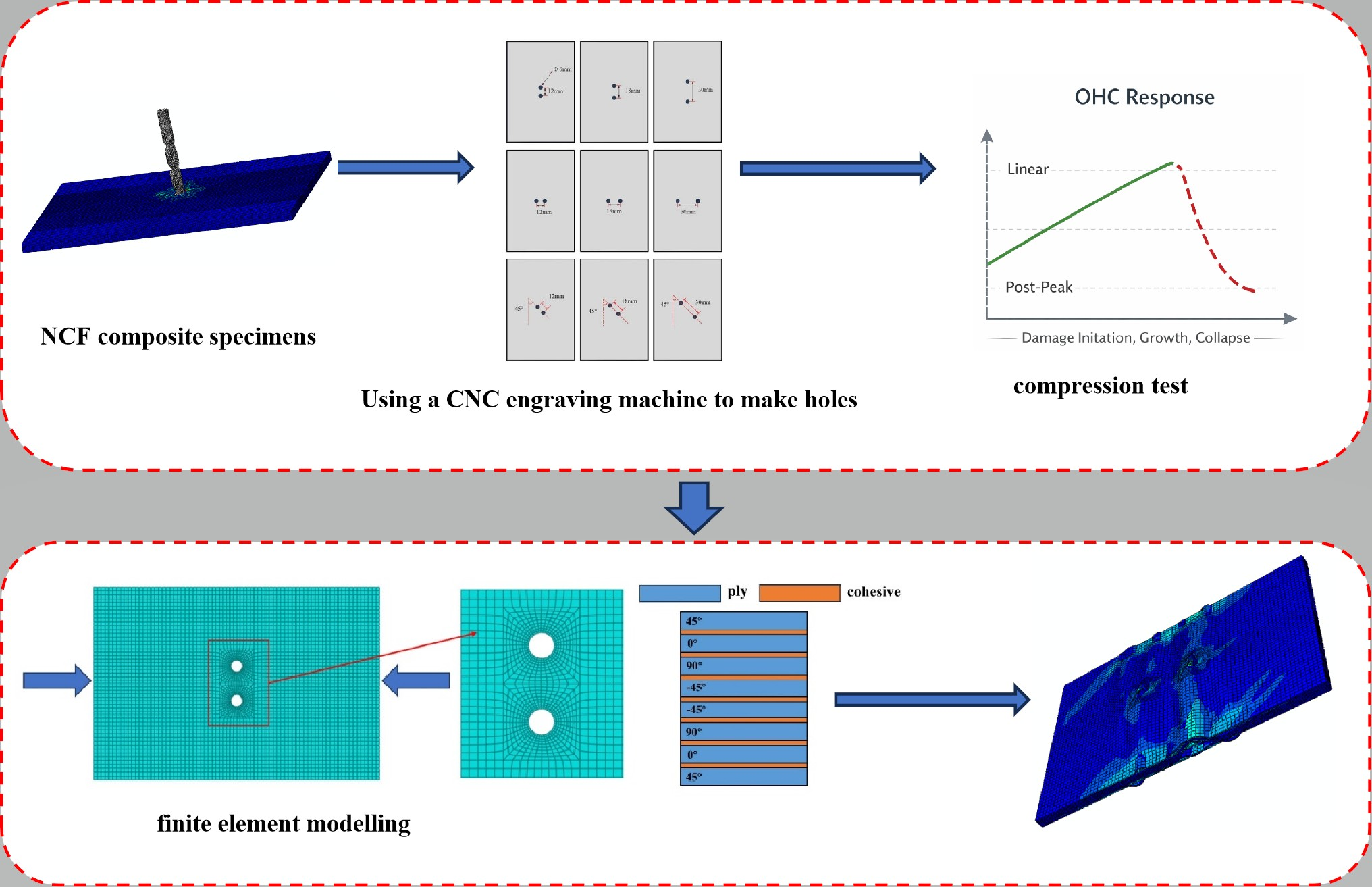
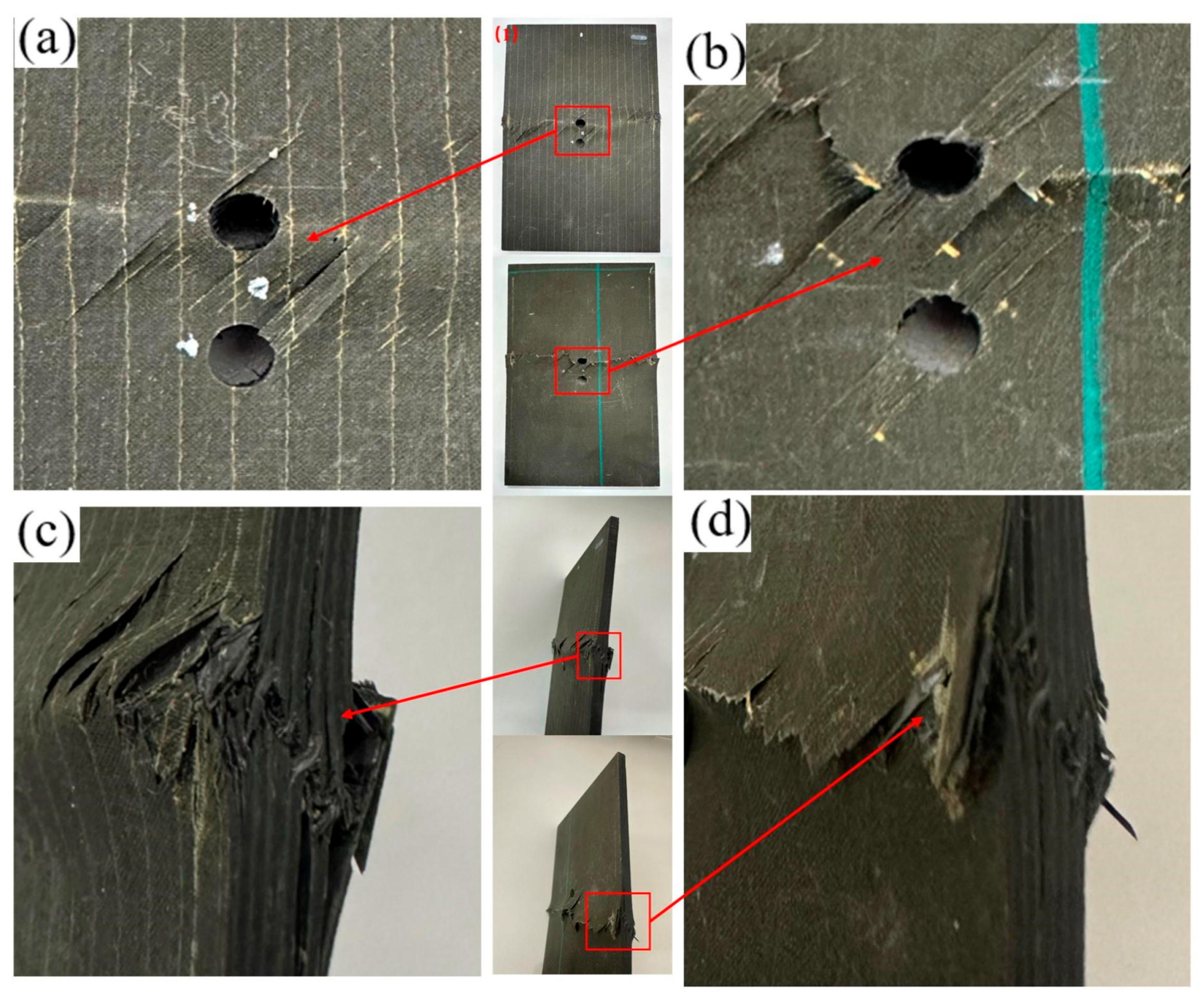
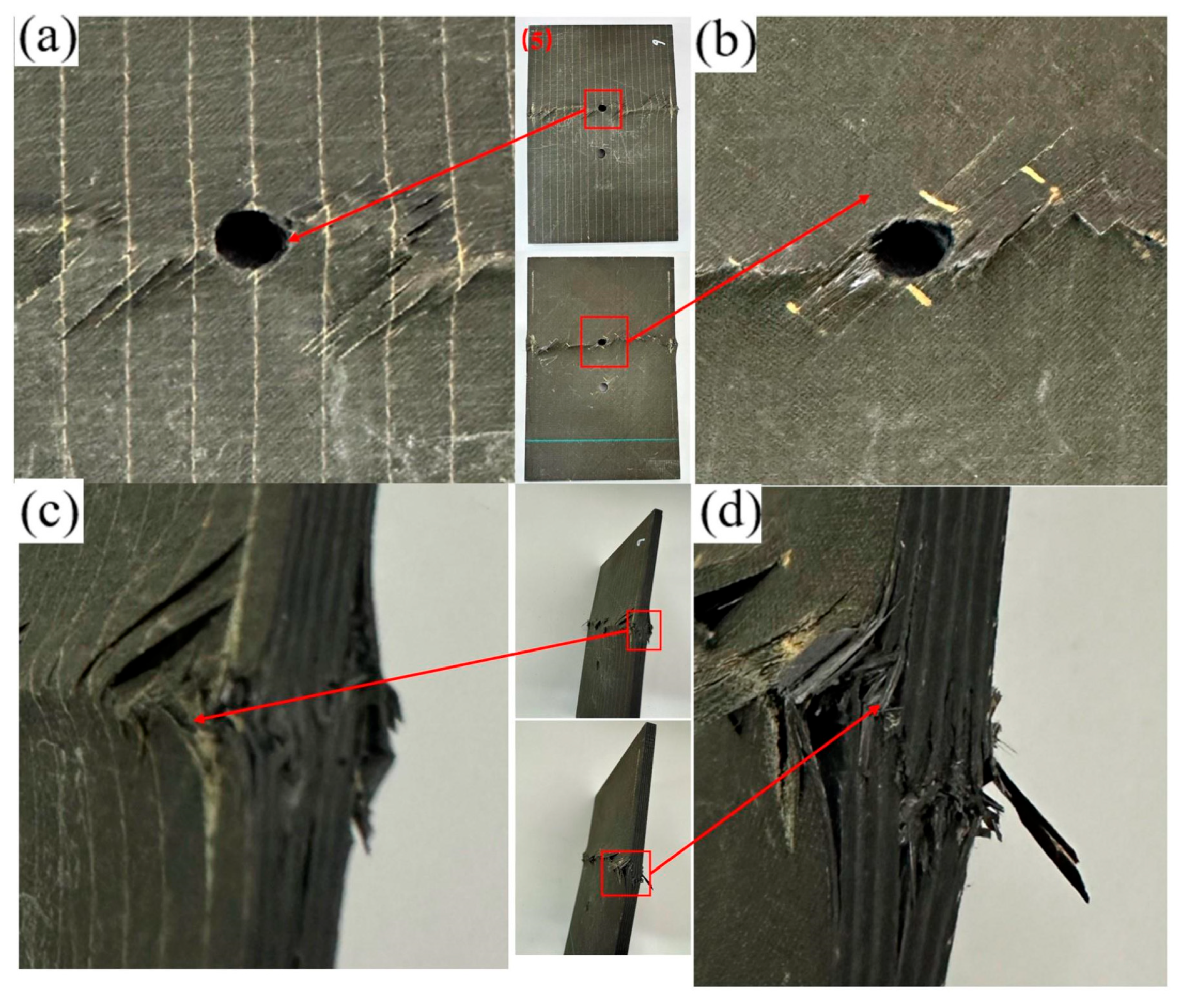
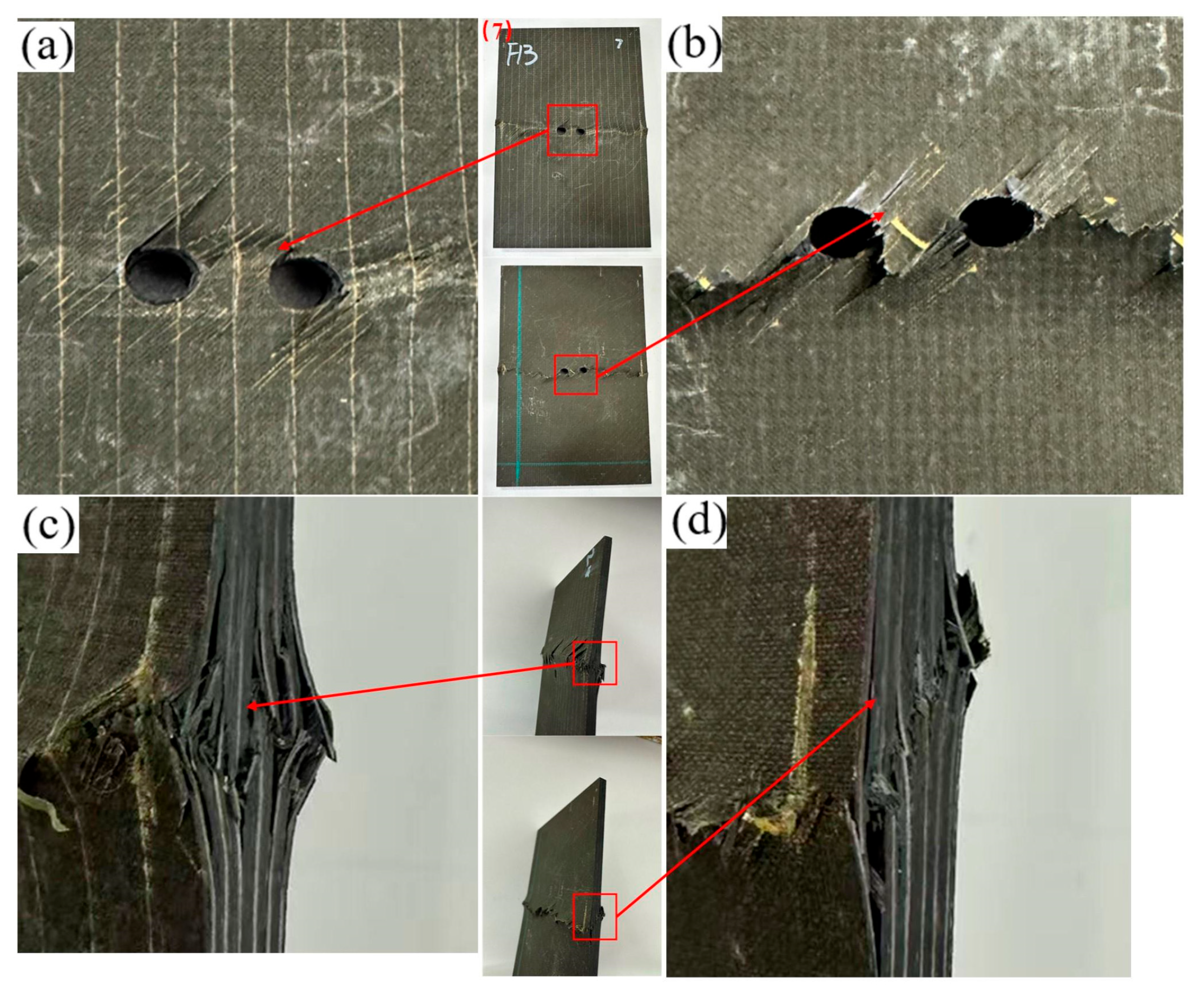
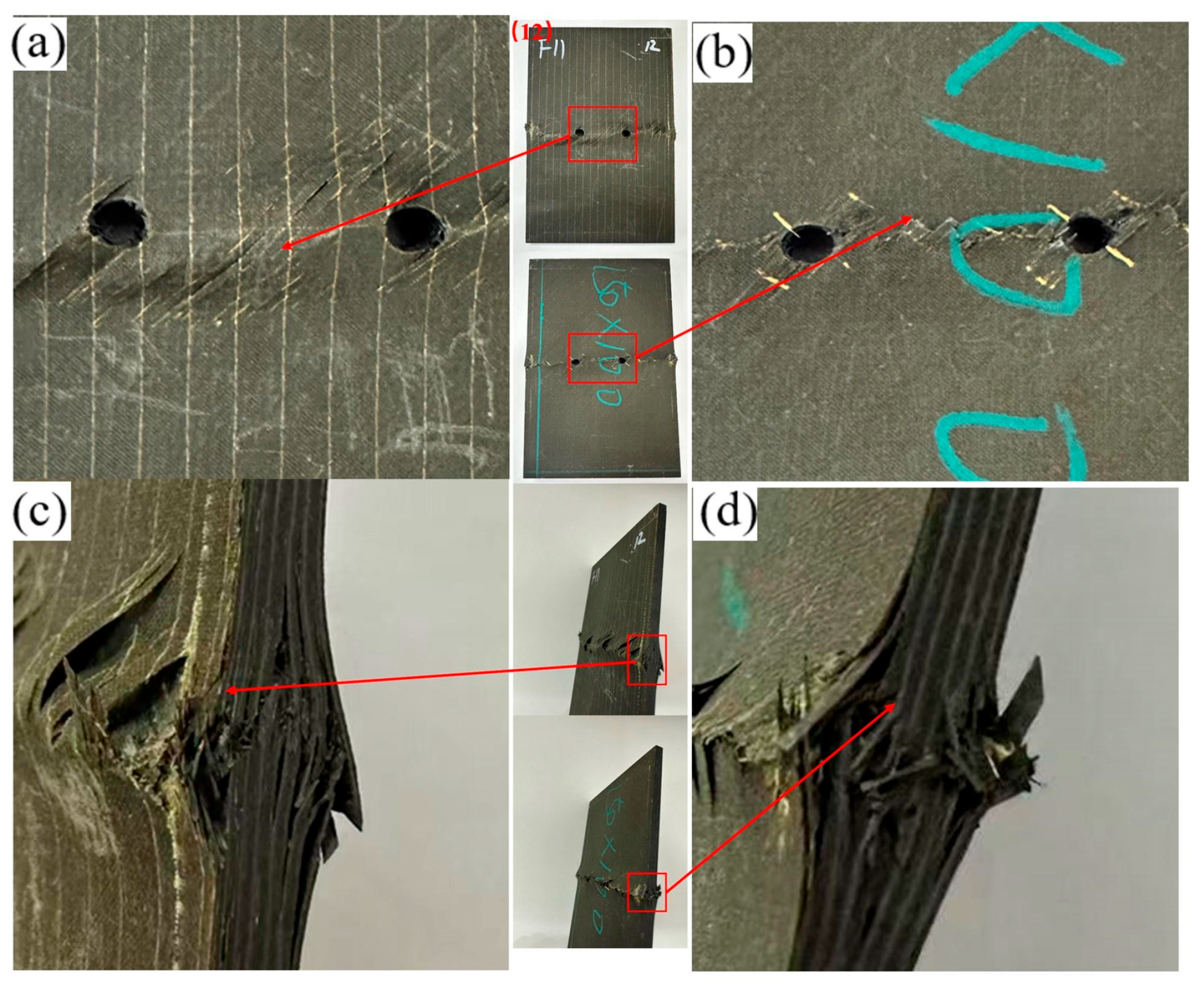
Compressive Failure Mechanisms of NCF Laminates with Double-Hole Defects

Highlights
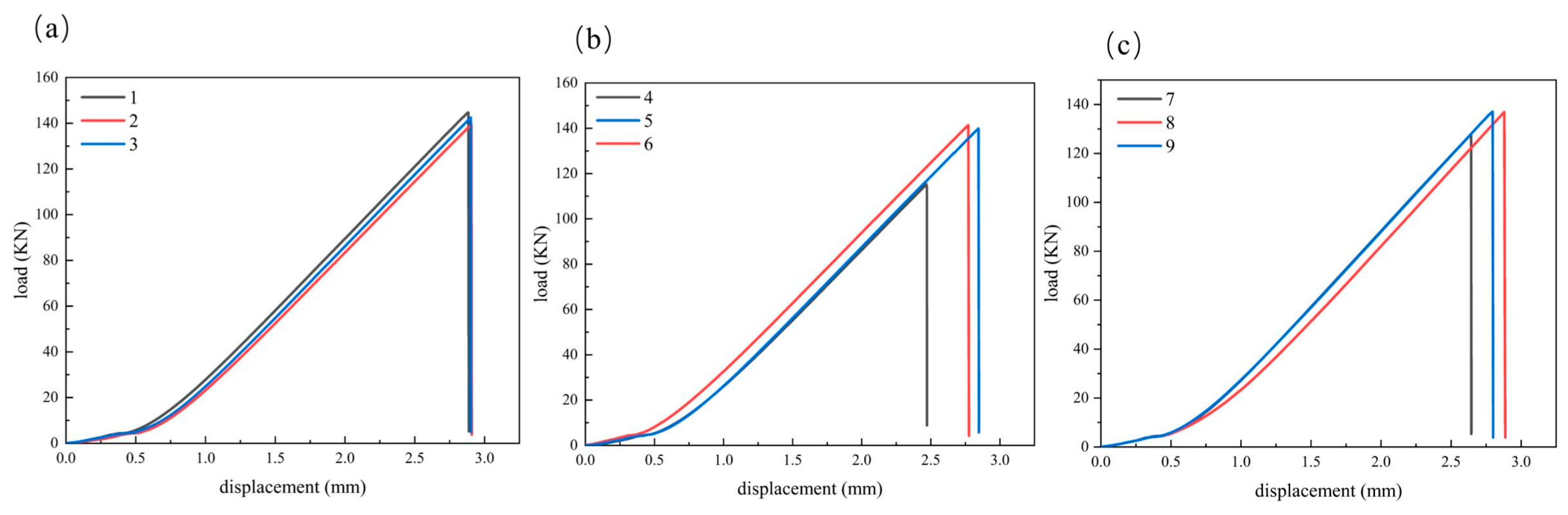
- OHC strength shows a spacing threshold: changes beyond s/D ≥ 3 are small.
- At s/D = 2, transverse alignment is the weakest; direction sensitivity diminishes at larger spacing.
- Apparent elastic stiffness stays nearly constant across all nine configurations (≤~1% variation).
- Design-wise, increasing spacing from s/D = 2 → 3 is the key gain; further spacing gives diminishing returns.
- NCF stitching/drilling defects can promote ligament damage coalescence at small spacing, so narrow ligaments should be avoided.
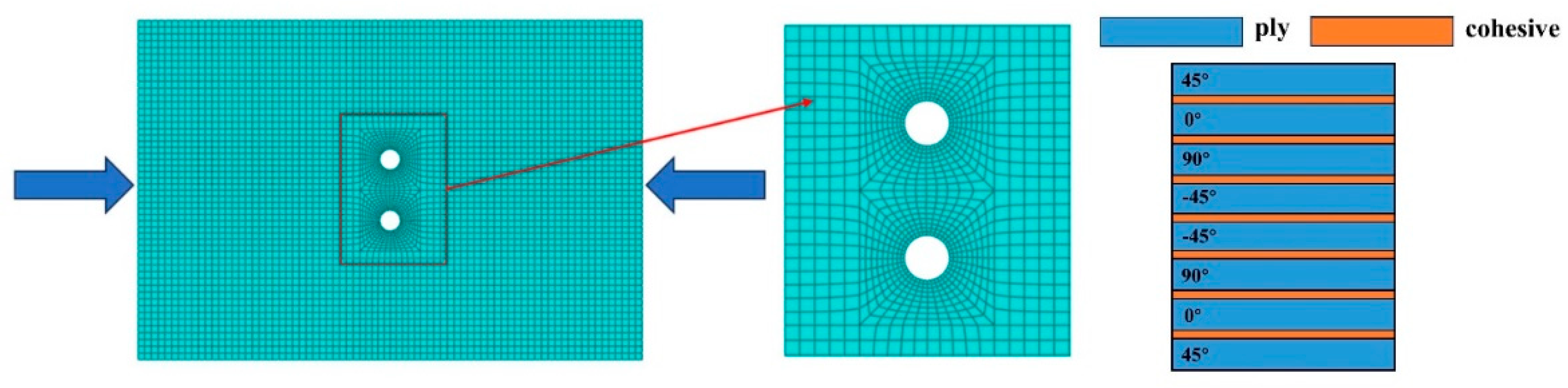
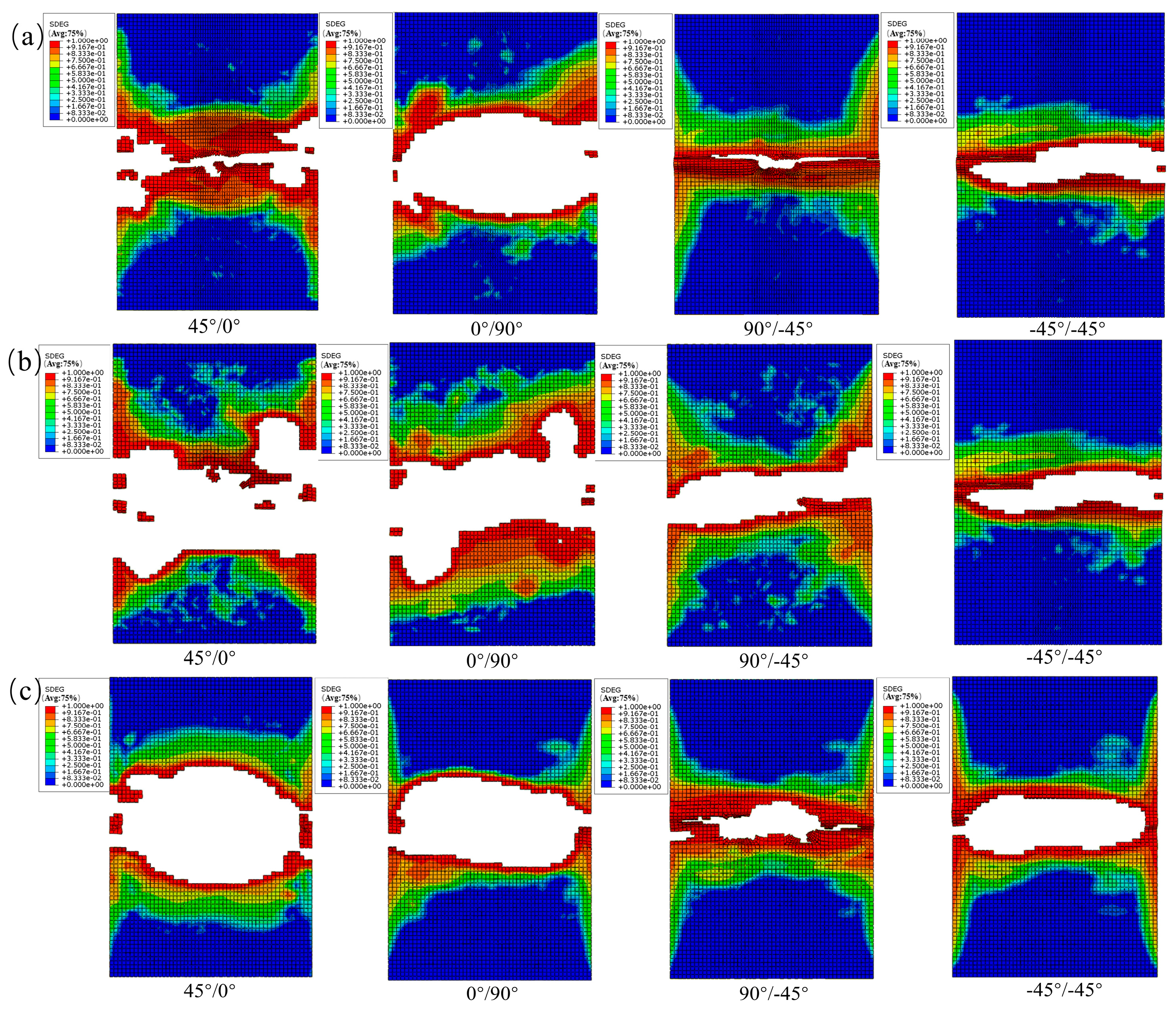
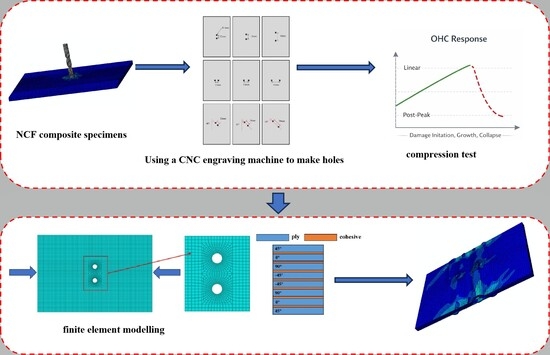
- The FE framework (3D Hashin + shear-coupled matrix compression + cohesive delamination) reproduces response and failure mechanisms.
Abstract
1. Introduction
2. Theoretical Background
Mechanics of Multi-Hole Interference Effects
- (1)
- Stress Amplification: The peak tangential stress at the hole edge is elevated due to the proximity of the second stress singularity. This effect is particularly pronounced in transverse configurations (θ = 90°), where the interacting stress fields create a high-stress corridor within the ligament.
- (2)
- Ligament Instability: The material ligament between holes undergoes accelerated micro-buckling or shear collapse. Due to the constrained volume, stress redistribution is inhibited, leading to premature instability compared to an isolated hole [25].
3. Experiments
3.1. Materials and Equipment
3.2. Experimental Method
3.3. Compression Test
4. Finite Element Analysis
4.1. Finite Element Model
4.2. Rationale for Using Abaqus/Explicit and VUMAT
4.3. Intralaminar Damage Criterion
4.4. Interlaminar Damage Model
5. Results and Discussion
5.1. Damage Propagation and Failure Mechanism
Influence of Meso-Scale Stitching Defects on Hole Interaction
5.2. Summary of Experimental Results
5.3. Finite Element Analysis
6. Conclusions
Supplementary Materials
Author Contributions
Funding
Data Availability Statement
Conflicts of Interest
References
- Chen, W.C. Some experimental investigations in the drilling of carbon fiber-reinforced plastic (CFRP) composite laminates. Int. J. Mach. Tools Manuf. 1997, 37, 1097–1108. [Google Scholar] [CrossRef]
- Xu, J.; Yin, Y.; Davim, J.P.; Li, L.; Ji, M.; Geier, N.; Chen, M. A critical review addressing drilling-induced damage of CFRP composites. Compos. Struct. 2022, 294, 115594. [Google Scholar] [CrossRef]
- Xu, Y.; Zhu, P.; Wang, W. Study of multiple impact behaviors of CFRP based on peridynamics. Compos. Struct. 2023, 322, 117380. [Google Scholar] [CrossRef]
- Oliveira, T.L.L.; Zitoune, R.; Ancelotti, A.C., Jr.; da Cunha, S.S., Jr. Smart machining: Monitoring of CFRP milling using AE and IR. Compos. Struct. 2020, 249, 112611. [Google Scholar] [CrossRef]
- Xu, J.; Li, C.; Chen, M.; El Mansori, M.; Ren, F. Damage investigation in drilling of non-crimp fabric reinforced composites. Int. J. Adv. Manuf. Technol. 2015, 77, 691–700. [Google Scholar]
- Vallons, K.; Beirlant, P.; Watanabe, E.; Lomov, S.V.; Verpoest, I. The influence of the stitching pattern on the internal geometry and the tension–tension fatigue life of glass fiber non-crimp fabric composites. Compos. Part A-Appl. S 2011, 42, 827–835. [Google Scholar]
- Gao, Y.; Wang, J.; Song, X.; Ding, H.; Wang, H.; Bi, Y.; Ke, Y. Investigation on the compressive mechanical properties of ultra-thick CFRP laminates. Int. J. Mech. Sci. 2023, 241, 107966. [Google Scholar] [CrossRef]
- Zhang, D.; Zhou, J.; Wang, J.; Zhang, W.; Guan, Z. A comparative study on failure mechanisms of open-hole and filled-hole composite laminates: Experiment and numerical simulation. Thin Walled Struct. 2024, 198, 111730. [Google Scholar]
- Zheng, K.; Hu, H.; Cao, D.; Zhong, Y.; Li, S. Experimental and numerical studies on the tensile behaviors of thin-ply and thick-ply open-hole laminates. Thin Walled Struct. 2023, 186, 110649. [Google Scholar]
- Shirasu, K.; Tsuyuki, J.; Higuchi, R.; Onodera, S.; Okabe, T. Experimental and numerical study on open-hole tension/compression properties of carbon-fiber-reinforced thermoplastic laminates. J. Compos. Mater. 2022, 56, 2211–2225. [Google Scholar]
- Su, Z.C.; Tay, T.E.; Ridha, M.; Chen, B.Y. Progressive damage modeling of open-hole composite laminates under compression. Compos. Struct. 2015, 122, 507–517. [Google Scholar] [CrossRef]
- Saeed, M.U.; Chen, Z.F.; Chen, Z.H.; Li, B. Compression behavior of laminated composites subjected to damage induced by low velocity impact and drilling. Compos. Part B-Eng. 2014, 56, 815–820. [Google Scholar] [CrossRef]
- Takamoto, K.; Ogasawara, T.; Kodama, H.; Mikami, T.; Oshima, S.; Aoki, K.; Higuchi, R.; Yokozeki, T. Experimental and numerical studies of the open-hole compressive strength of thin-ply CFRP laminates. Compos. Part A-Appl. Sci. Manuf. 2021, 145, 106365. [Google Scholar]
- Shimizu, S.; Sato, M.; Koyanagi, J.; Suemasu, H.; Kogo, Y. Numerical simulation of compressive failure of carbon-fiber-reinforced plastic laminates with various hole shapes. Adv. Compos. Mater. 2021, 30, 58–75. [Google Scholar]
- Soutis, C.; Curtis, P.T. Prediction of the post-impact compressive strength of CFRP laminated composites. Compos. Sci. Technol. 1996, 56, 677–684. [Google Scholar] [CrossRef]
- Rodríguez-Sereno, J.M.; Pernas-Sánchez, J.; Artero-Guerrero, J.A.; López-Puente, J.; Lukić, B. Experimental study of off-axis compression behaviour in dynamic loading: The open-hole effect. Compos Part A-Appl. Sci. Manuf. 2023, 173, 107653. [Google Scholar] [CrossRef]
- Özaslan, E.; Güler, M.A.; Yetgin, A.; Acar, B. Stress analysis and strength prediction of composite laminates with two interacting holes. Compos. Struct. 2019, 221, 110869. [Google Scholar] [CrossRef]
- Solis, A.; Sanchez-Saez, S.; Martinez, X.; Barbero-Pozuelo, E. Numerical analysis of interlaminar stresses in open-hole laminates under compression. Compos. Struct. 2019, 217, 89–99. [Google Scholar] [CrossRef]
- Solis, A.; Barbero, E.; Sánchez-Sáez, S. Analysis of damage and interlaminar stresses in laminate plates with interacting holes. Int. J. Mech. Sci. 2020, 165, 105189. [Google Scholar] [CrossRef]
- Suemasu, H.; Takahashi, H.; Ishikawa, T. On failure mechanisms of composite laminates with an open-hole subjected to compressive load. Compos. Sci. Technol. 2006, 66, 634–641. [Google Scholar]
- Komur, M.A.; Sen, F.; Ataş, A.; Arslan, N. Buckling analysis of laminated composite plates with an elliptical/circular cutout using Fem. Adv. Eng. Softw. 2010, 41, 161–164. [Google Scholar] [CrossRef]
- Zhou, S.; Zhang, J.; Sun, Y.; Tian, K. Experimental and numerical investigation of open-hole carbon fiber composite laminates under compression with three different stacking sequences. J. Mater. Res. Technol. 2019, 8, 2957–2968. [Google Scholar] [CrossRef]
- Li, W.; Cai, H.; Li, C.; Wang, K.; Fang, L. Progressive failure of laminated composites with a hole under compressive loading based on micro-mechanics. Adv. Compos. Mater. 2014, 23, 477–490. [Google Scholar] [CrossRef]
- Lekhnitskii, S.G. Anisotropic Plates; Gordon and Breach: New York, NY, USA, 1968. [Google Scholar]
- Soutis, C.; Fleck, N.A.; Smith, P.A. Failure prediction technique for compression loaded carbon fibre-epoxy laminate with open holes. J. Compos. Mater. 1991, 25, 1476–1498. [Google Scholar] [CrossRef]
- Pilkey, W.D.; Pilkey, D.F. Peterson’s Stress Concentration Factors; John Wiley & Sons: Hoboken, NJ, USA, 2008. [Google Scholar]
- ASTM D7137/D7137M-05; Standard Test Method for Measuring the Damage Resistance of a Fiber-Rein-Forced Polymer Matrix Composite to a Drop-Weight Impact Event. ASTM International: West Conshohocken, PA, USA, 2005; Volume 1, pp. 1–16.
- ASTM D6484/D6484M-23; Standard Test Method for Open-Hole Compressive Strength of Polymer Matrix Composite Laminates. ASTM International: West Conshohocken, PA, USA, 2023.

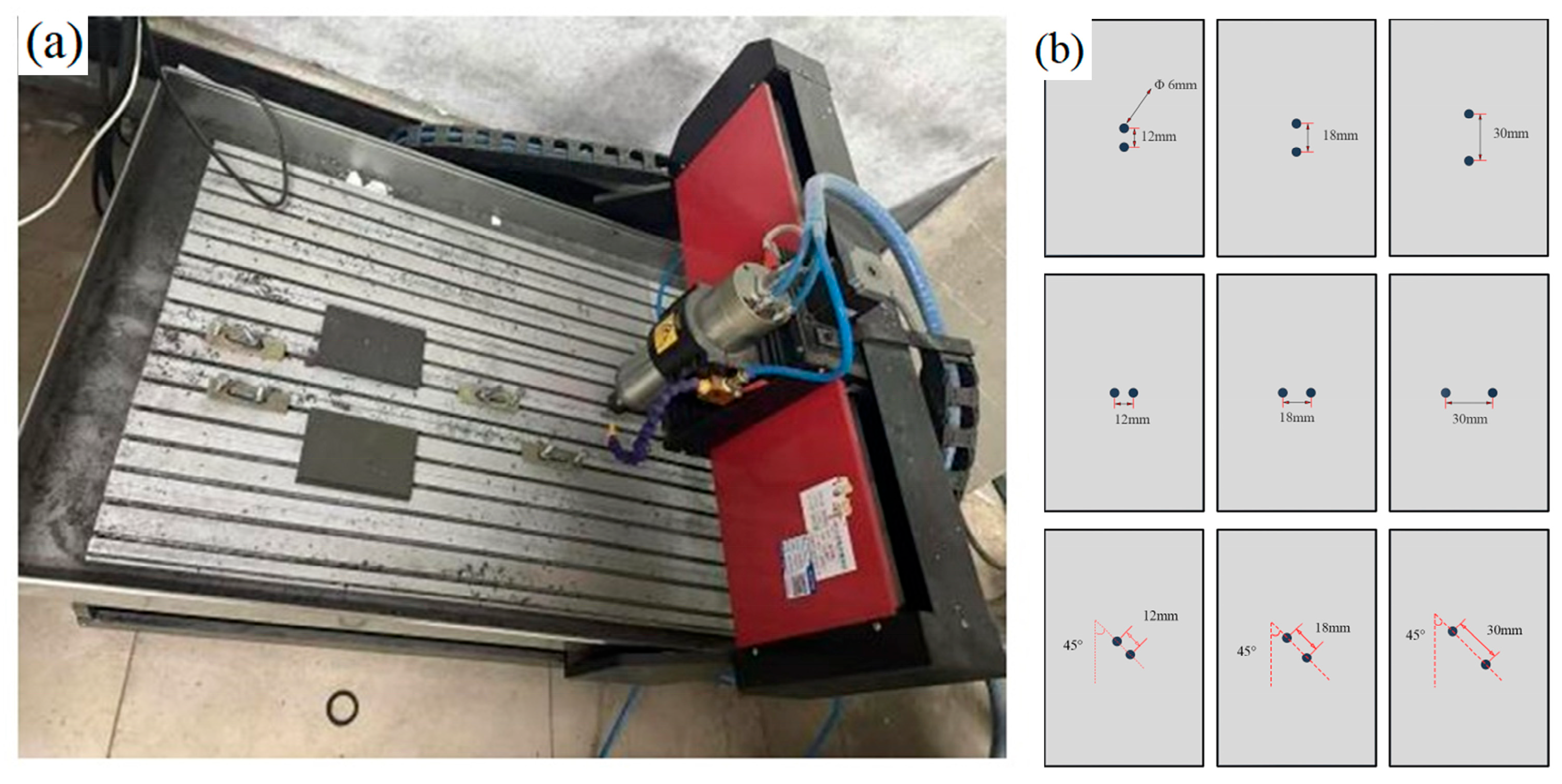





| Fiber Type | Tensile Strength (MPa) | E (GPa) | Elongation at Break (%) | Density (g·cm−3) |
|---|---|---|---|---|
| CCF300 3k | 3900 | 220 | 1.86 | 1.78 |
| Sample ID | Center-to-Center | Opening Direction |
|---|---|---|
| 1 | 12 mm | long direction |
| 2 | 18 mm | long direction |
| 3 | 30 mm | long direction |
| 4 | 12 mm | cross direction |
| 5 | 18 mm | cross direction |
| 6 | 30 mm | cross direction |
| 7 | 12 mm | 45° direction |
| 8 | 18 mm | 45° direction |
| 9 | 30 mm | 45° direction |
| Parameter | Parameter Value |
|---|---|
| Longitudinal tensile strength Xt | 3900 MPa |
| Longitudinal compressive strength XC | 2340 MPa |
| Transverse tensile strength Yt | 70 MPa |
| Transverse compressive strength YC | 140 MPa |
| Through-thickness tensile strength Zt | 70 MPa |
| Through-thickness compressive strength ZC | 140 MPa |
| Shearing strength S12 | 70 MPa |
| Shearing strength S13 | 70 MPa |
| Shearing strength S23 | 56 MPa |
| Longitudinal tensile fracture energy G1t | 40 kJ/m2 |
| Longitudinal compression fracture energy G1c | 100 kJ/m2 |
| Transverse tensile fracture energy G2t | 0.5 kJ/m2 |
| Transverse tensile fracture energy G2c | 1.5 kJ/m2 |
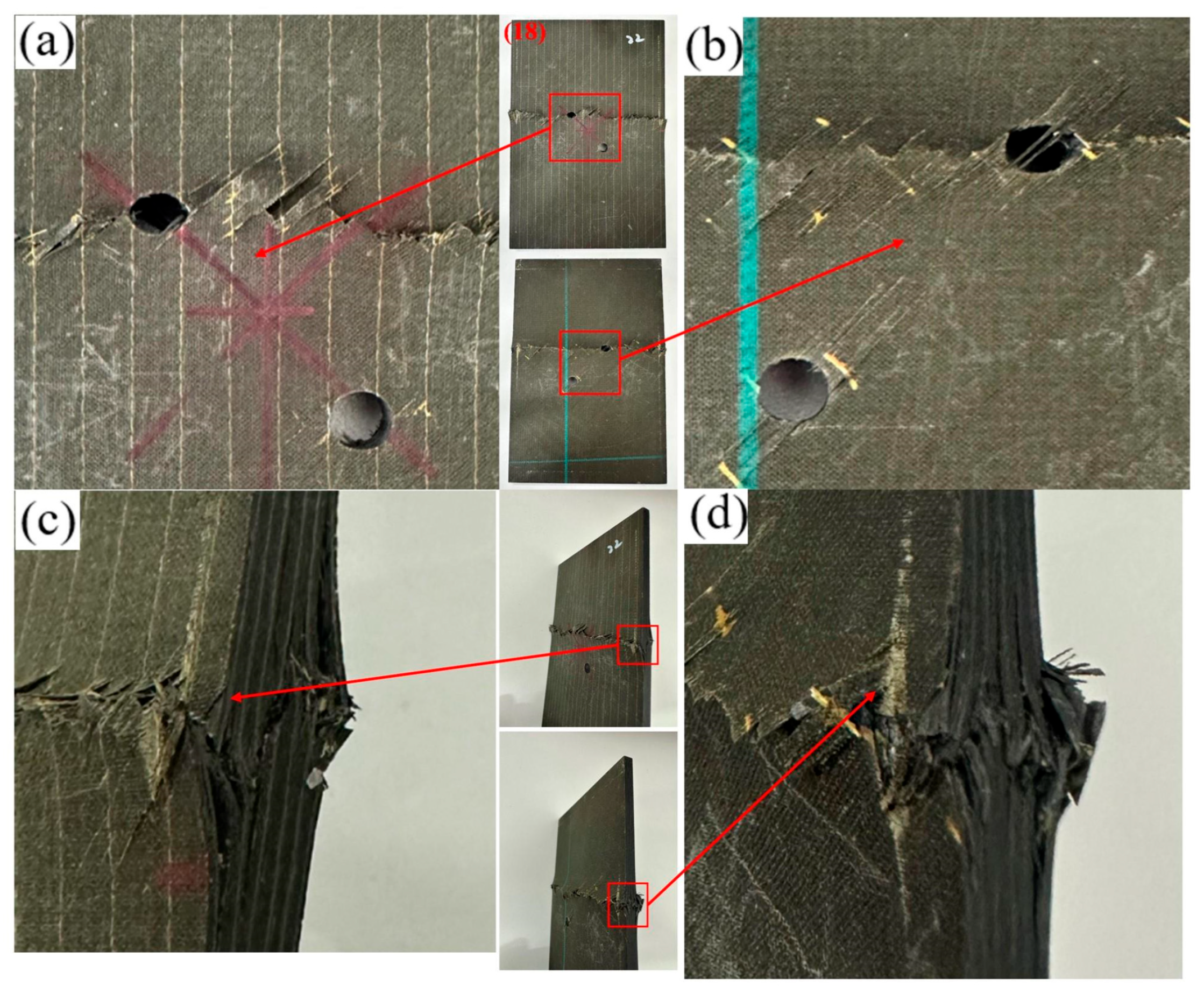
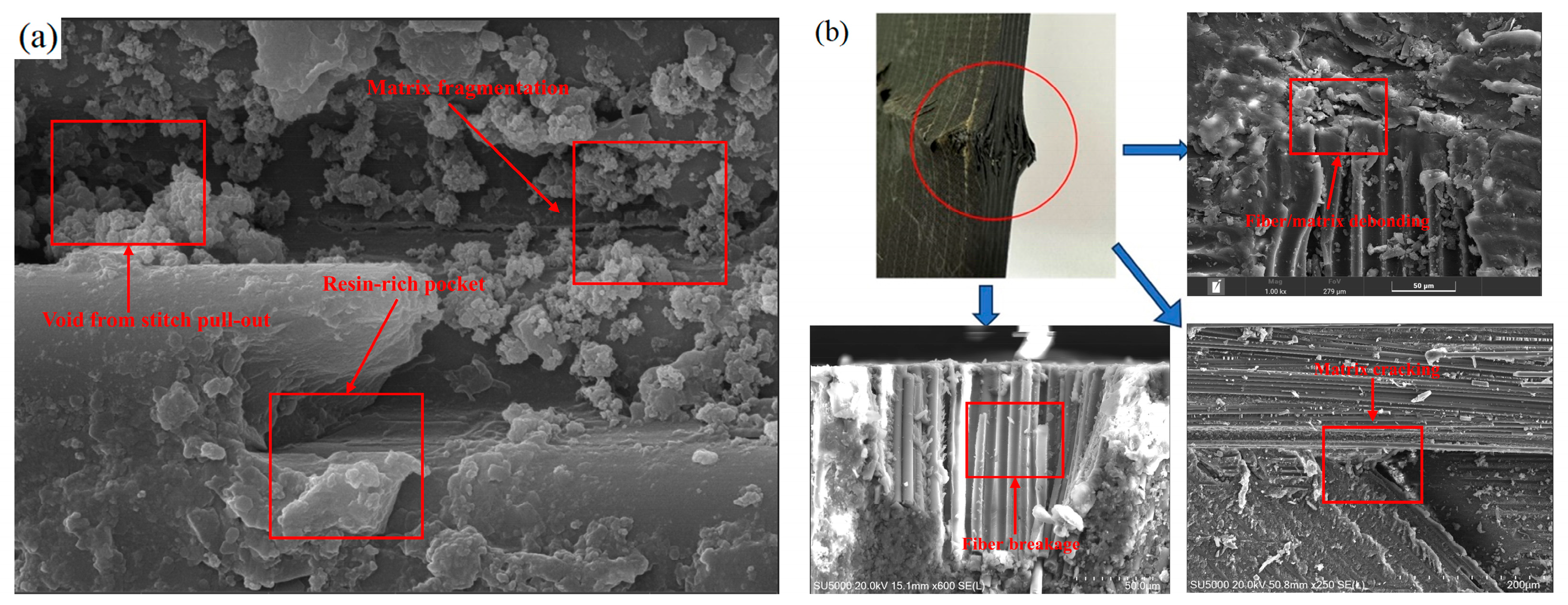
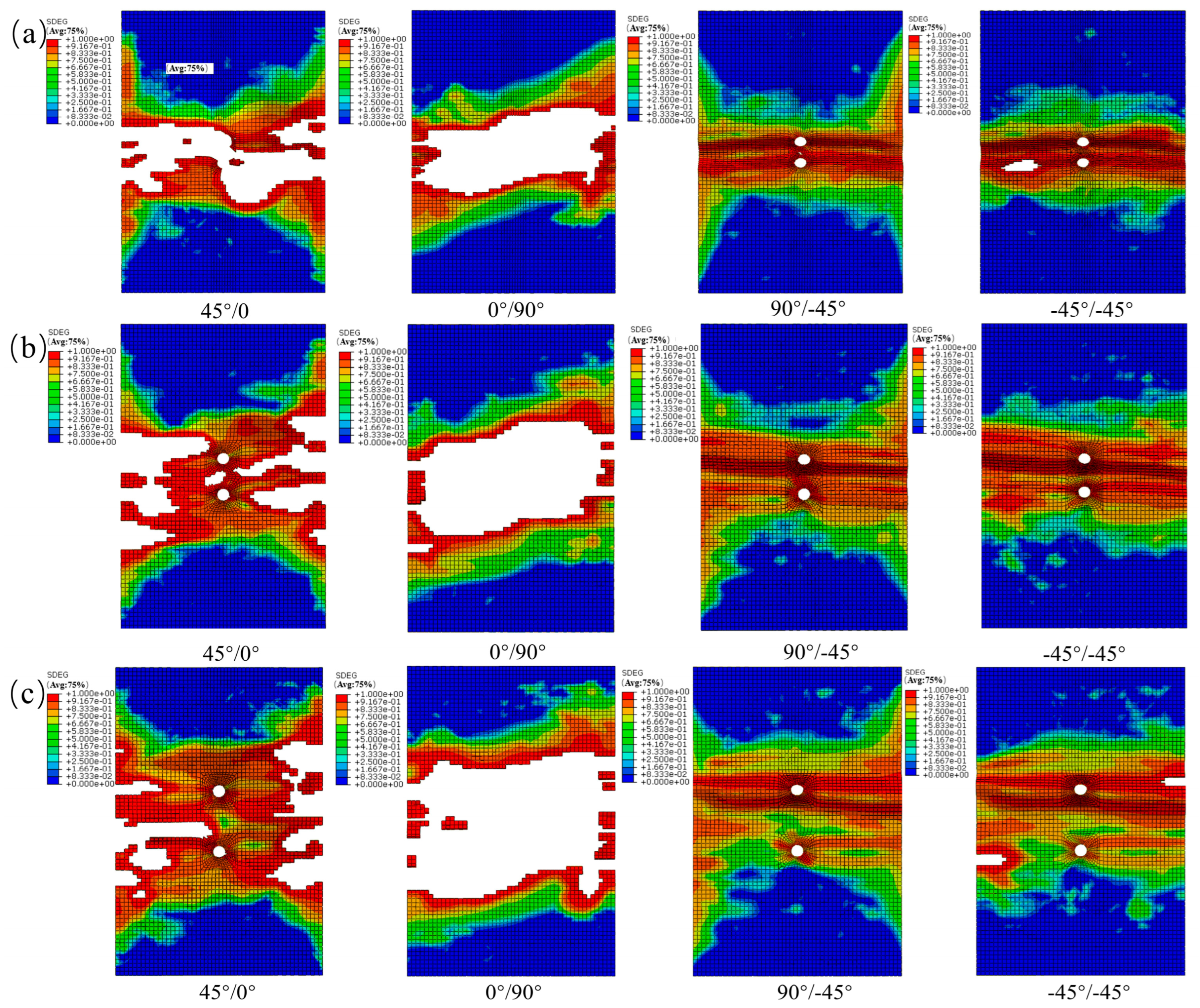
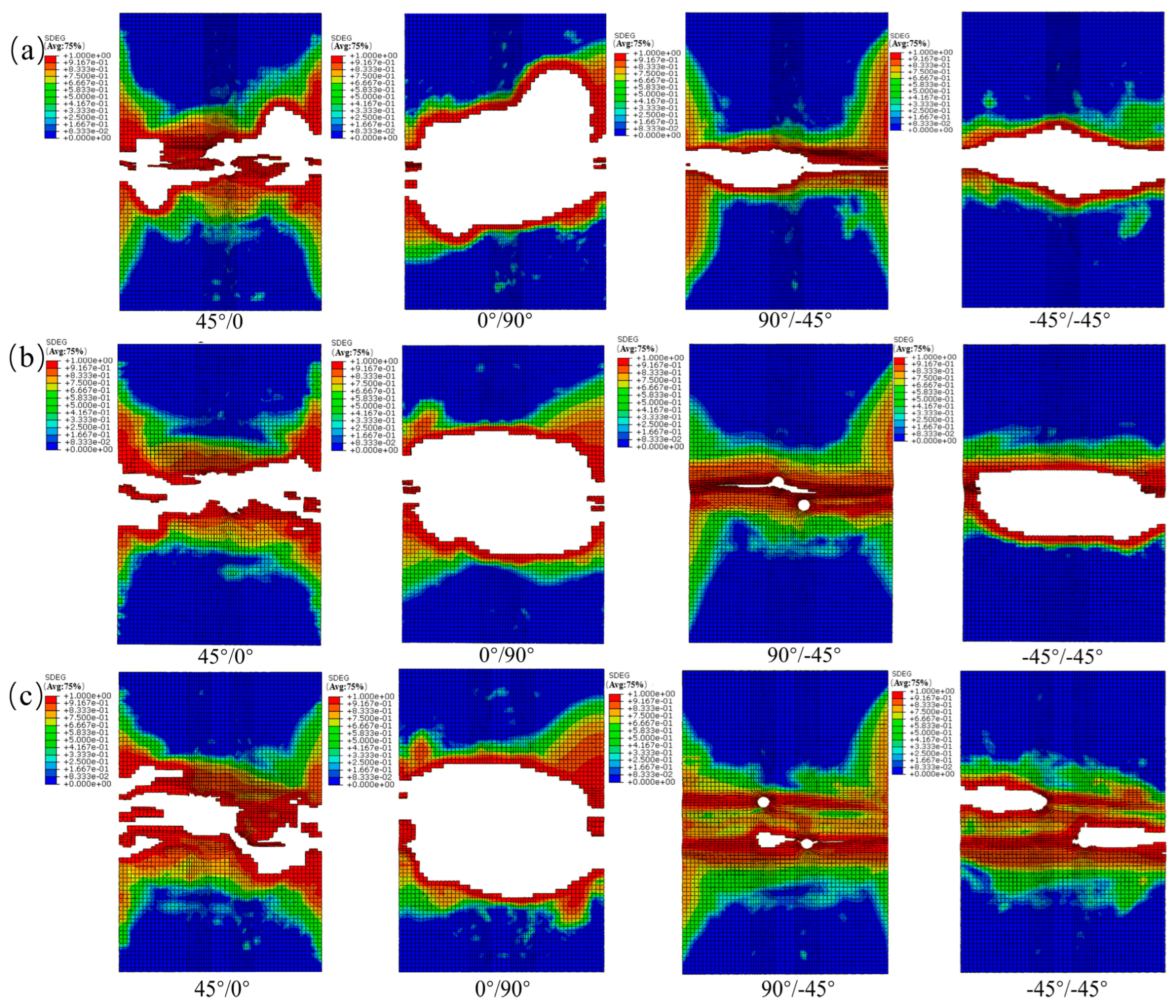
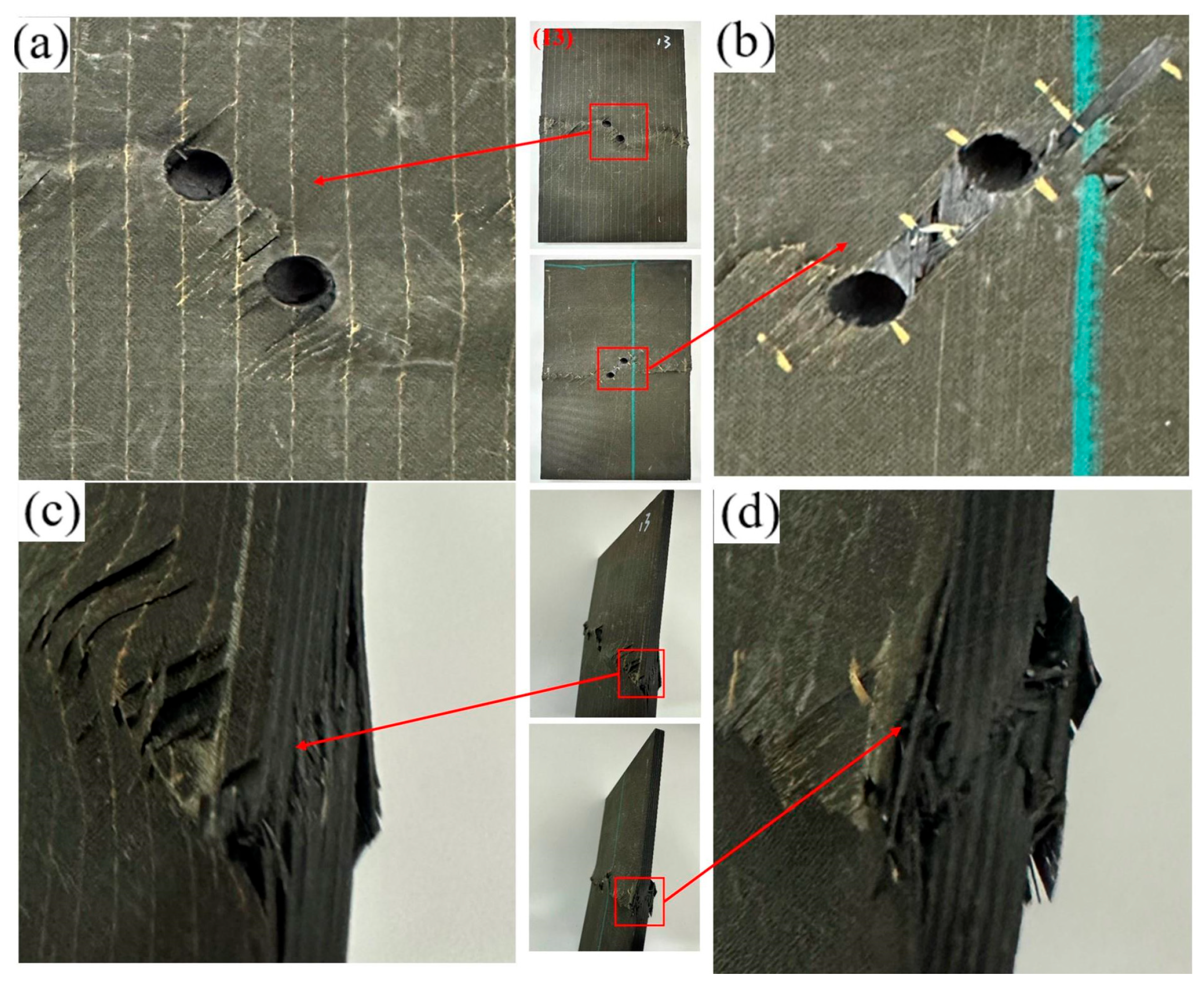
| Position | Main Failure Models |
|---|---|
| Hole edge area | Bearing failure and shear failure |
| Inter-hole area | Shear failure and interlaminar delamination |
| Plate edge | Interlayer delamination and fiber buckling/breaking |
| Plate side | Interlayer delamination and matrix cracking |
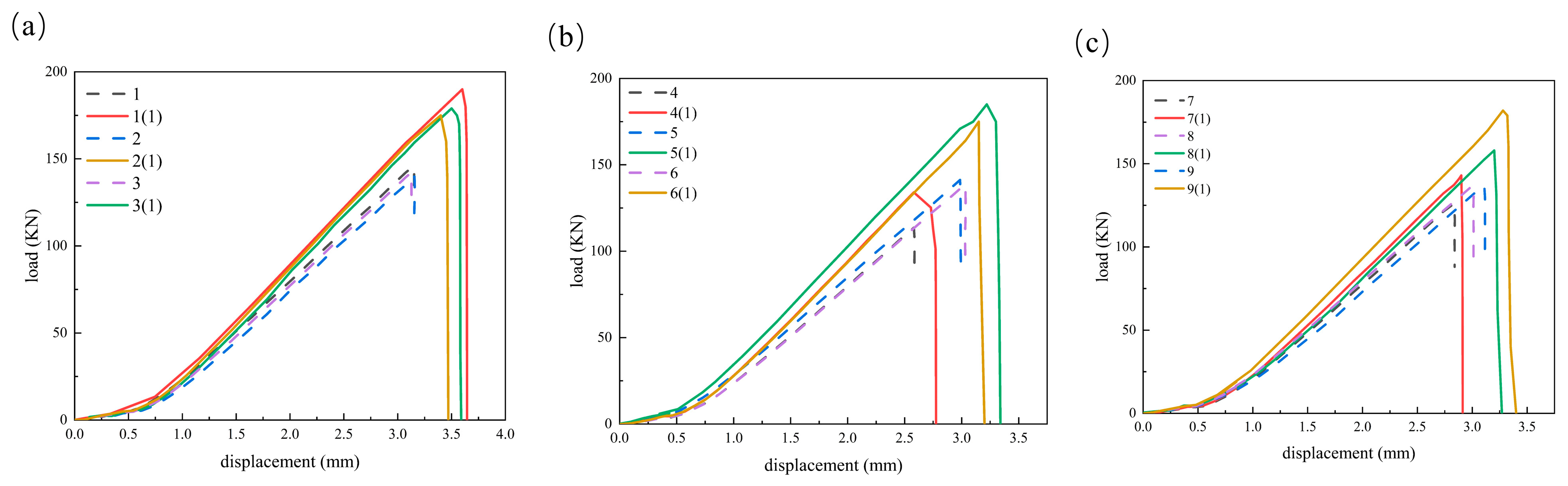
| Number | Fm (kN) | Rm (MPa) | E (GPa) | c–c Spacing | Hole Alignment | CV of Rm (%) |
|---|---|---|---|---|---|---|
| 1 | 145.47 ± 4.5 | 291 ± 9.0 | 48.857 ± 0.73 | 12 mm | Longitudinal | 3.1% |
| 2 | 139.45 ± 5.9 | 279 ± 11.7 | 48.559 ± 0.68 | 18 mm | Longitudinal | 4.2% |
| 3 | 141.20 ± 3.9 | 282 ± 7.9 | 48.826 ± 0.58 | 30 mm | Longitudinal | 2.8% |
| 4 | 114.42 ± 5.2 | 229 ± 10.3 | 48.592 ± 0.97 | 12 mm | Transverse | 4.5% |
| 5 | 139.91 ± 2.8 | 280 ± 5.6 | 48.665 ± 0.49 | 18 mm | Transverse | 2.0% |
| 6 | 139.56 ± 4.2 | 280 ± 8.4 | 48.798 ± 0.78 | 30 mm | Transverse | 3.0% |
| 7 | 126.69 ± 4.8 | 253 ± 9.6 | 48.865 ± 0.83 | 12 mm | 45° orientation | 3.8% |
| 8 | 136.53 ± 3.5 | 273 ± 7.1 | 48.657 ± 0.53 | 18 mm | 45° orientation | 2.6% |
| 9 | 137.13 ± 4.1 | 274 ± 8.2 | 48.611 ± 0.63 | 30 mm | 45° orientation | 3.0% |
Disclaimer/Publisher’s Note: The statements, opinions and data contained in all publications are solely those of the individual author(s) and contributor(s) and not of MDPI and/or the editor(s). MDPI and/or the editor(s) disclaim responsibility for any injury to people or property resulting from any ideas, methods, instructions or products referred to in the content. |
© 2026 by the authors. Licensee MDPI, Basel, Switzerland. This article is an open access article distributed under the terms and conditions of the Creative Commons Attribution (CC BY) license.
Share and Cite
Cai, S.; Yan, S.; Jiang, L.; Meng, Z.; Niu, Y. Compressive Failure Mechanisms of NCF Laminates with Double-Hole Defects. Materials 2026, 19, 495. https://doi.org/10.3390/ma19030495
Cai S, Yan S, Jiang L, Meng Z, Niu Y. Compressive Failure Mechanisms of NCF Laminates with Double-Hole Defects. Materials. 2026; 19(3):495. https://doi.org/10.3390/ma19030495
Chicago/Turabian StyleCai, Songming, Shi Yan, Lili Jiang, Zixiang Meng, and Yongxin Niu. 2026. "Compressive Failure Mechanisms of NCF Laminates with Double-Hole Defects" Materials 19, no. 3: 495. https://doi.org/10.3390/ma19030495
APA StyleCai, S., Yan, S., Jiang, L., Meng, Z., & Niu, Y. (2026). Compressive Failure Mechanisms of NCF Laminates with Double-Hole Defects. Materials, 19(3), 495. https://doi.org/10.3390/ma19030495