Strength Enhancement of 3D-Printed Phosphogypsum Concrete Based on Synergistic Activation of Multi-Solid Wastes



Highlights
- Proposes a novel route for large-scale phosphogypsum valorization in 3D-printed concrete.
- Achieves dual-function utilization of phosphogypsum as a binder and sulfate activator.
- Elucidates the synergistic mechanism between slag and phosphogypsum.
- Resolves the inherent strength-deficiency of 3DPPGC.
- Integrates solid waste recycling with low-carbon construction goals.
- Paves the way for large-scale engineering deployment of phosphogypsum-based materials.
Abstract
1. Introduction
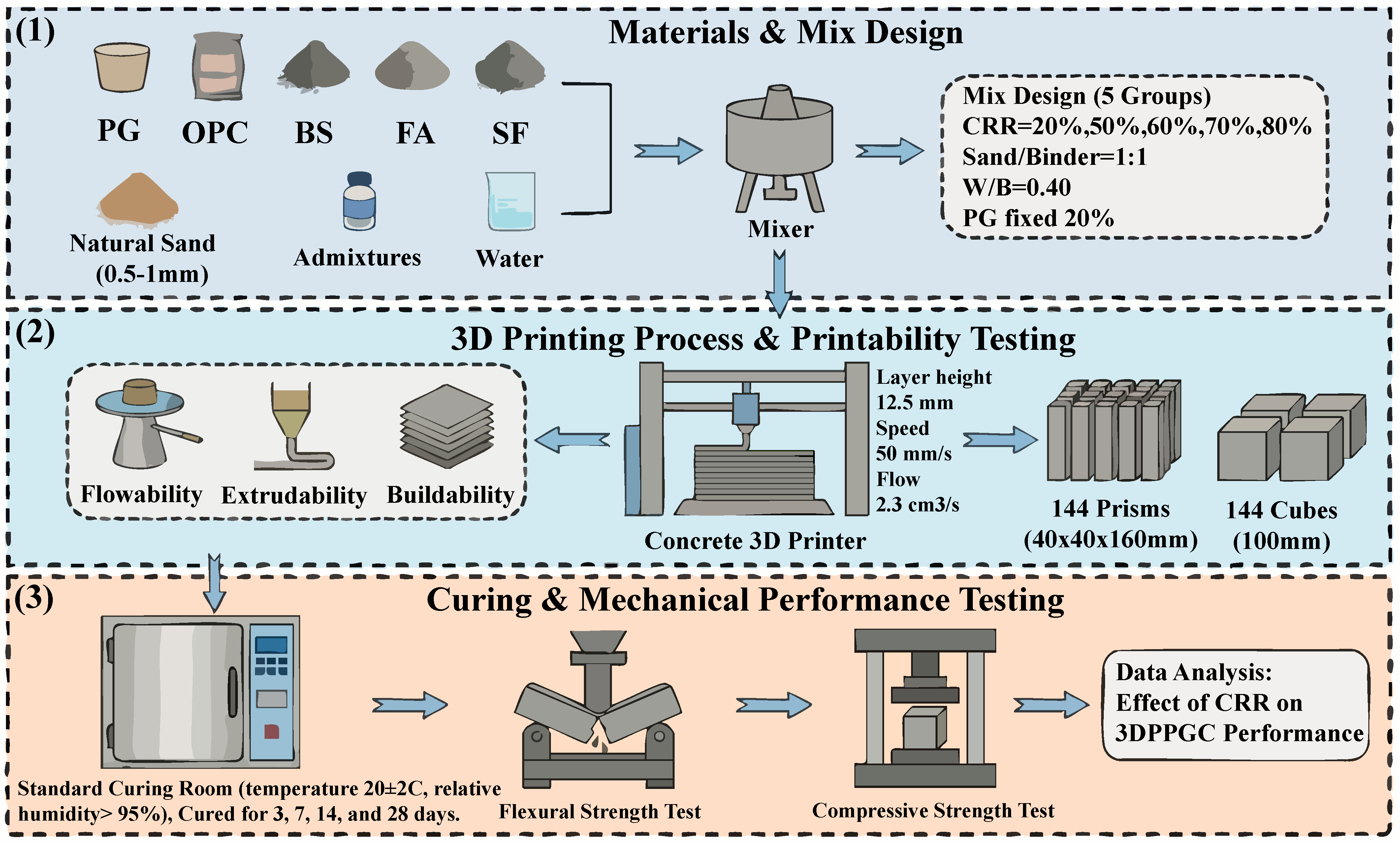
2. Experimental Raw Materials and Protocol Design
2.1. Experimental Raw Materials
2.2. Mixture Proportion Design
2.3. Experimental Setup
3. Experimental Procedures
3.1. Setting-Time and Flowability Tests
3.2. Extrudability Assessment
3.3. Buildability Evaluation
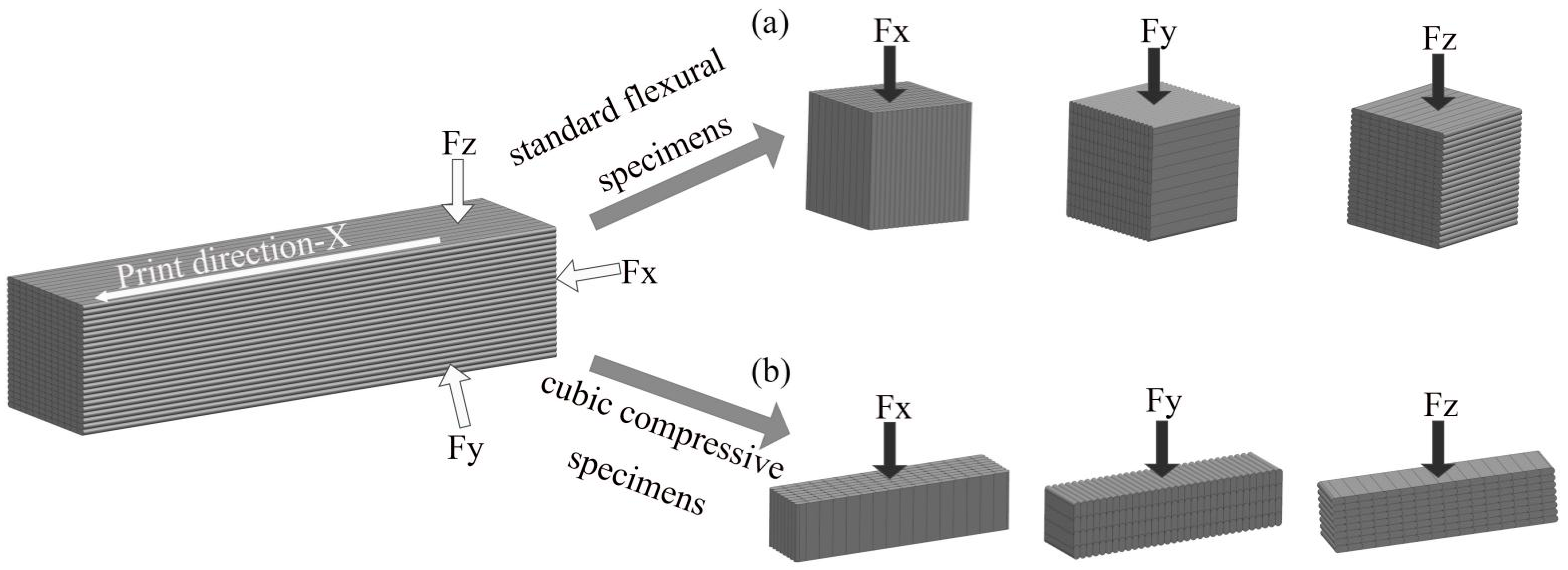
3.4. Mechanical Property Characterization
4. Results and Discussion
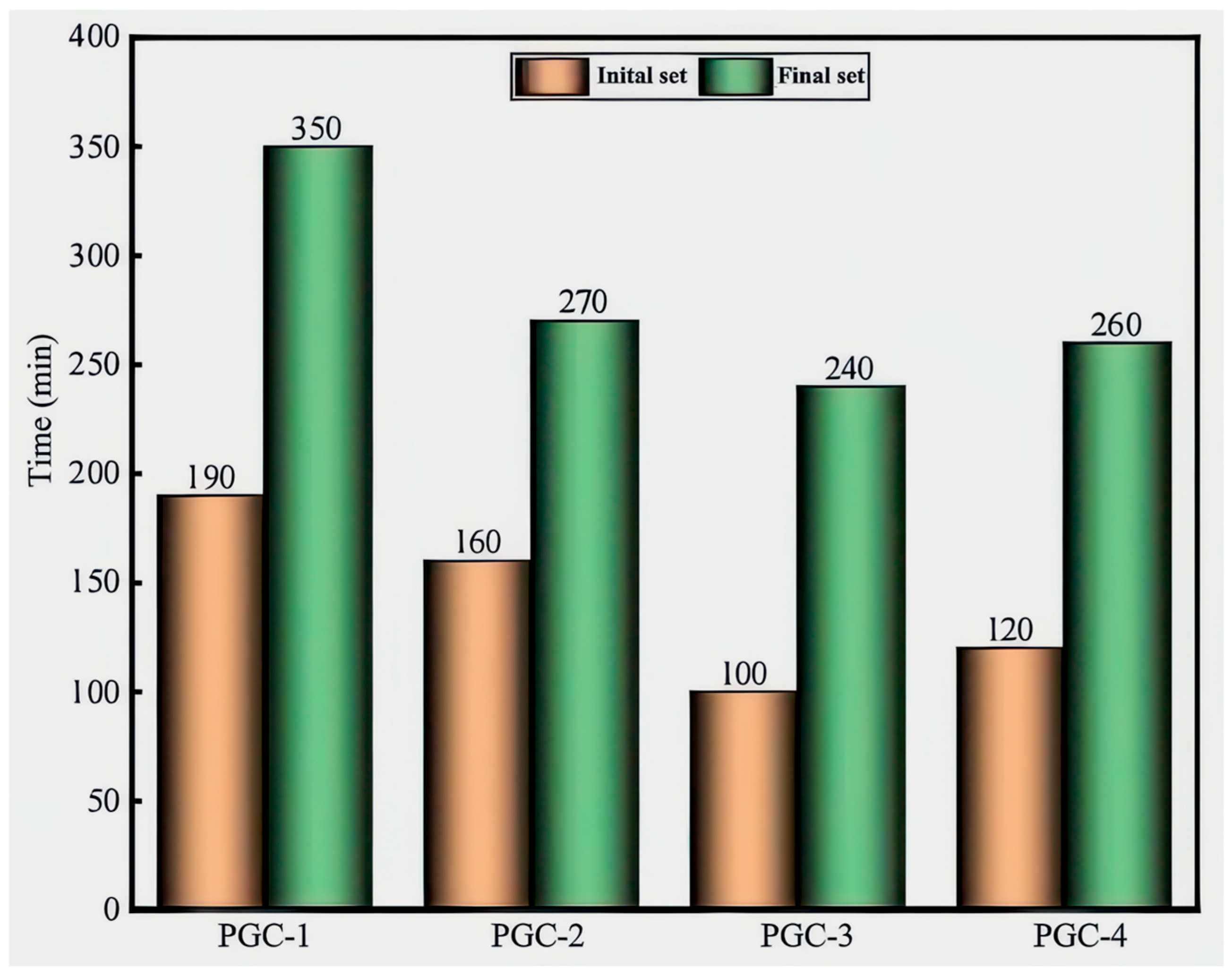
4.1. Setting Time
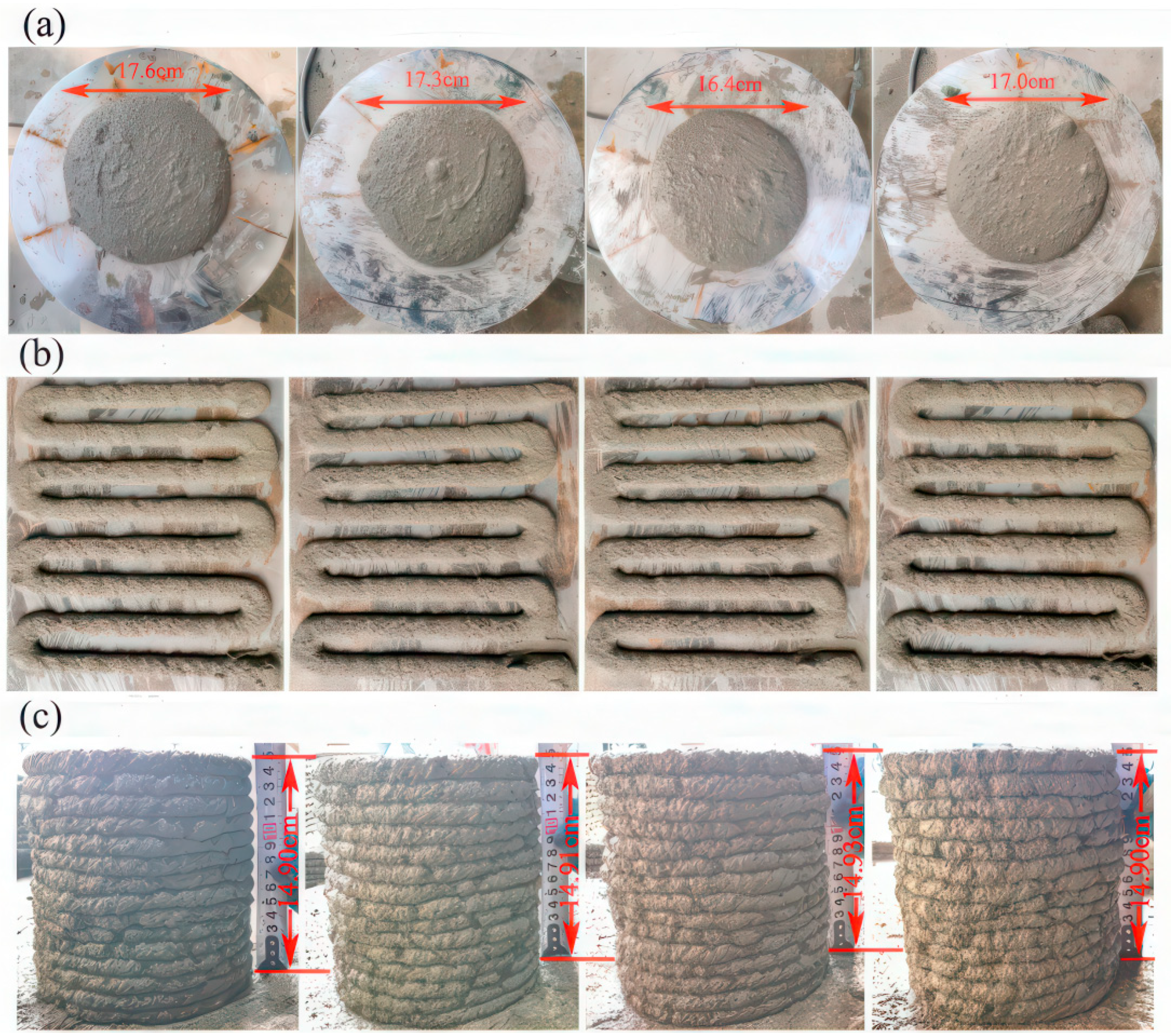
4.2. Flowability
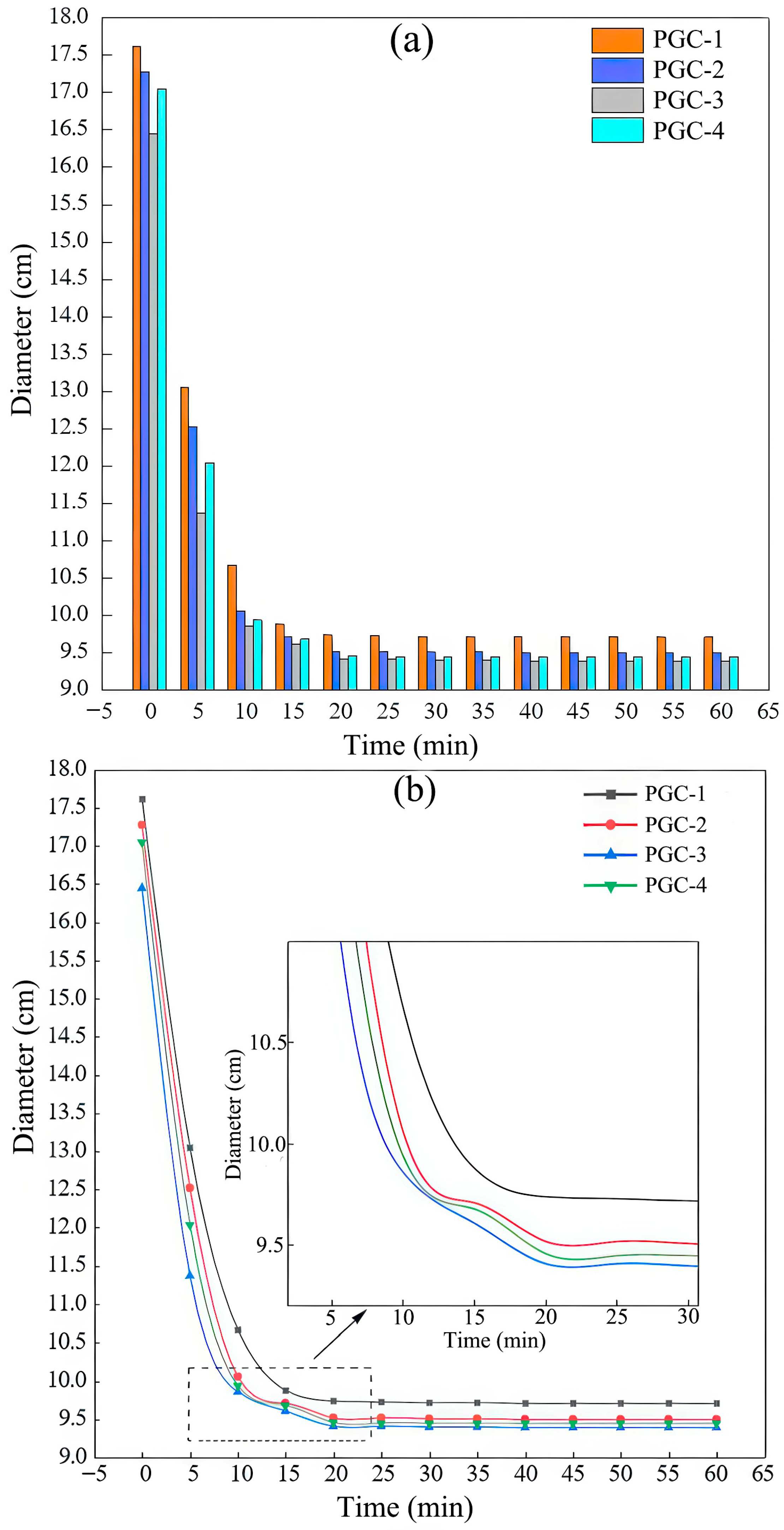
4.3. Extrudability
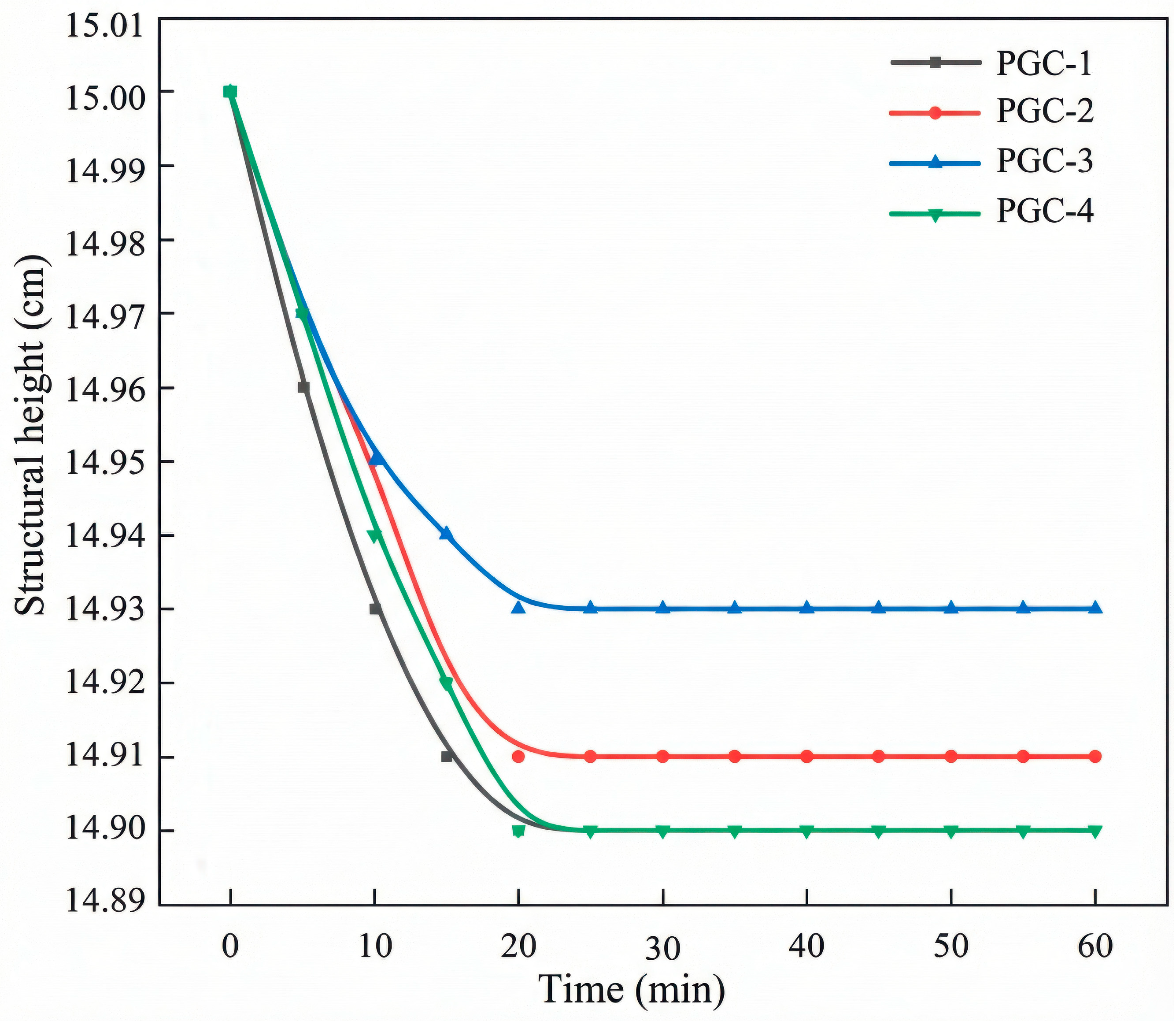
4.4. Buildability
4.5. Mechanical Performance: Experimental Results and Analysis
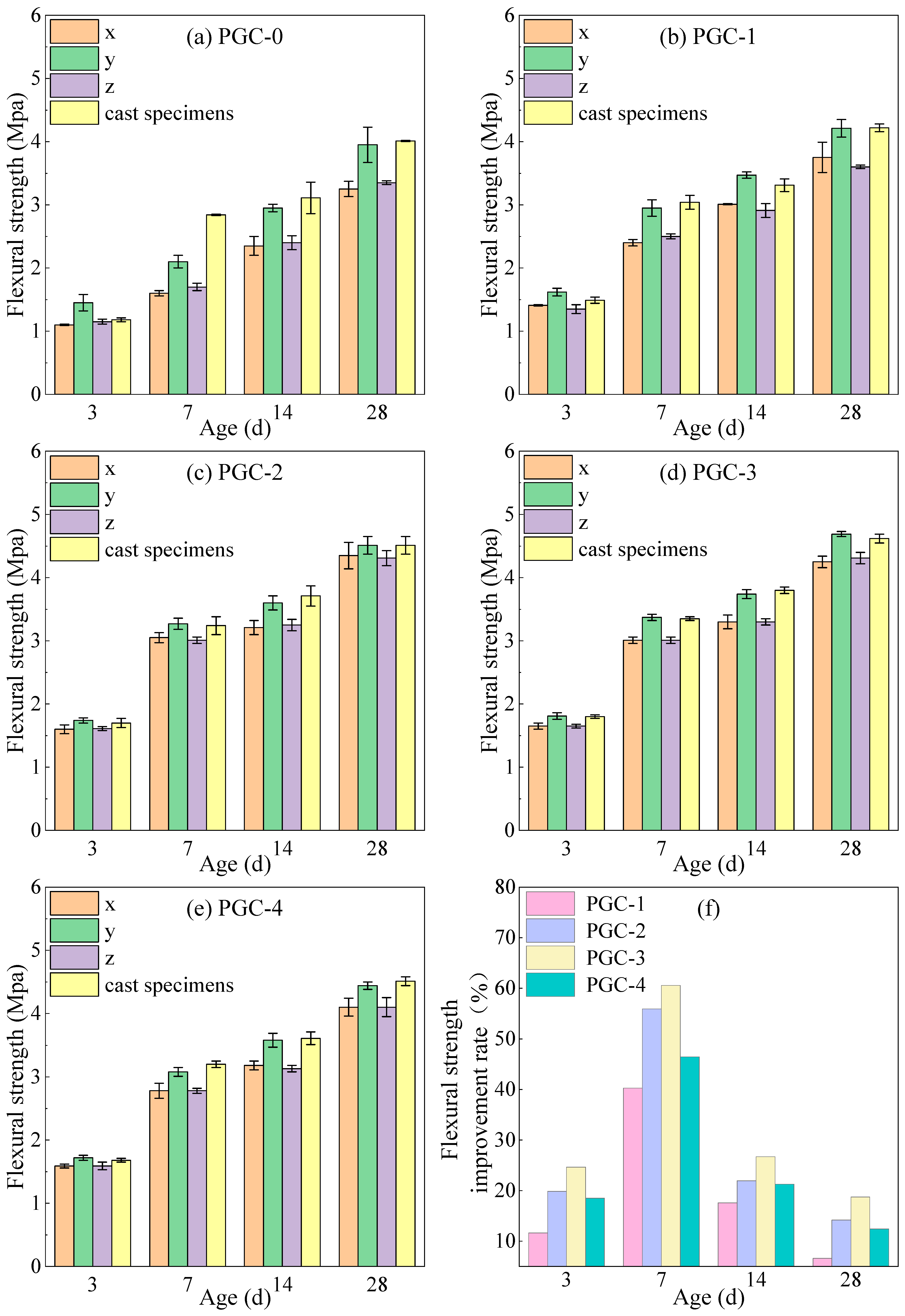
4.5.1. Flexural Strength
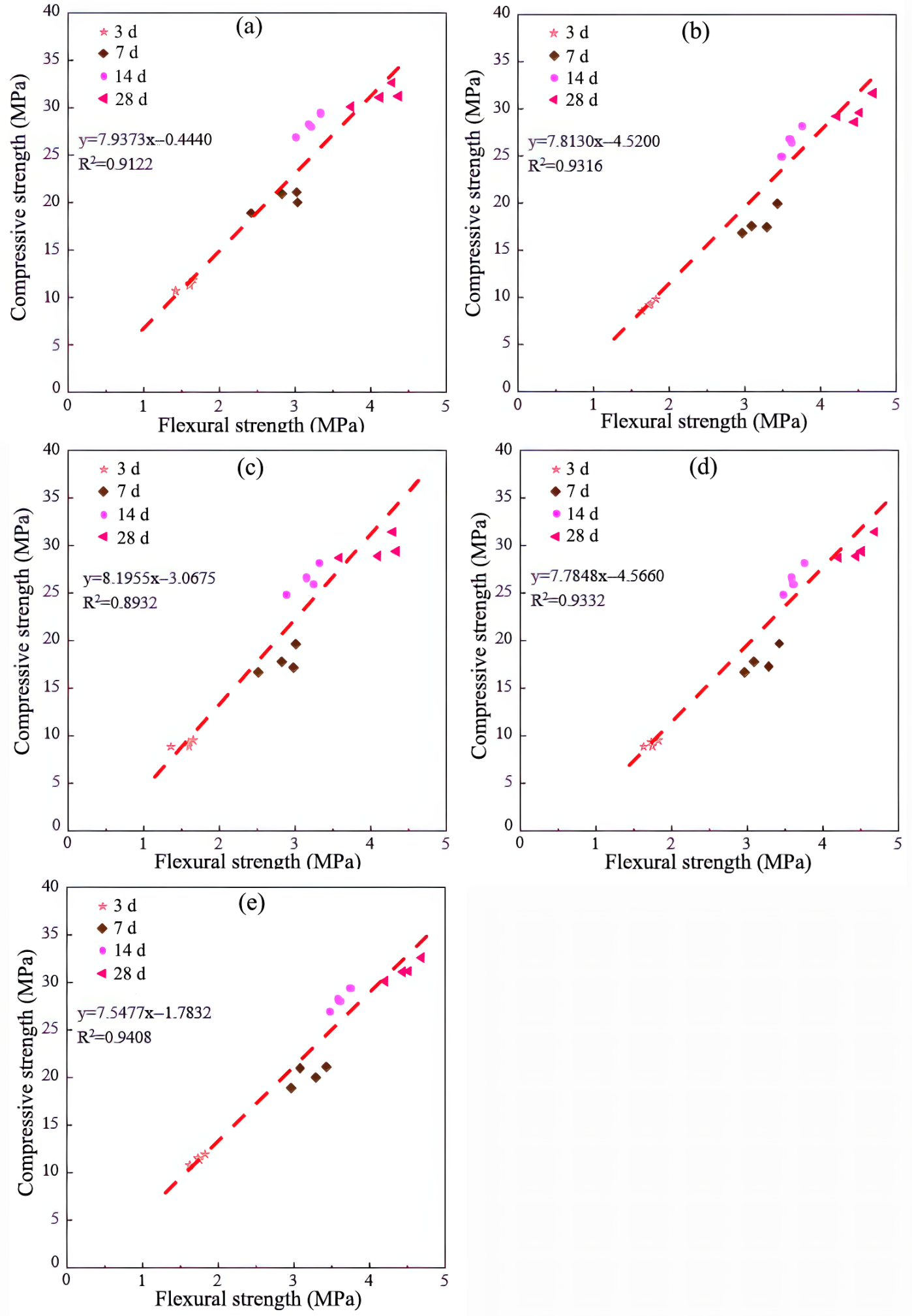
4.5.2. Compressive Strength
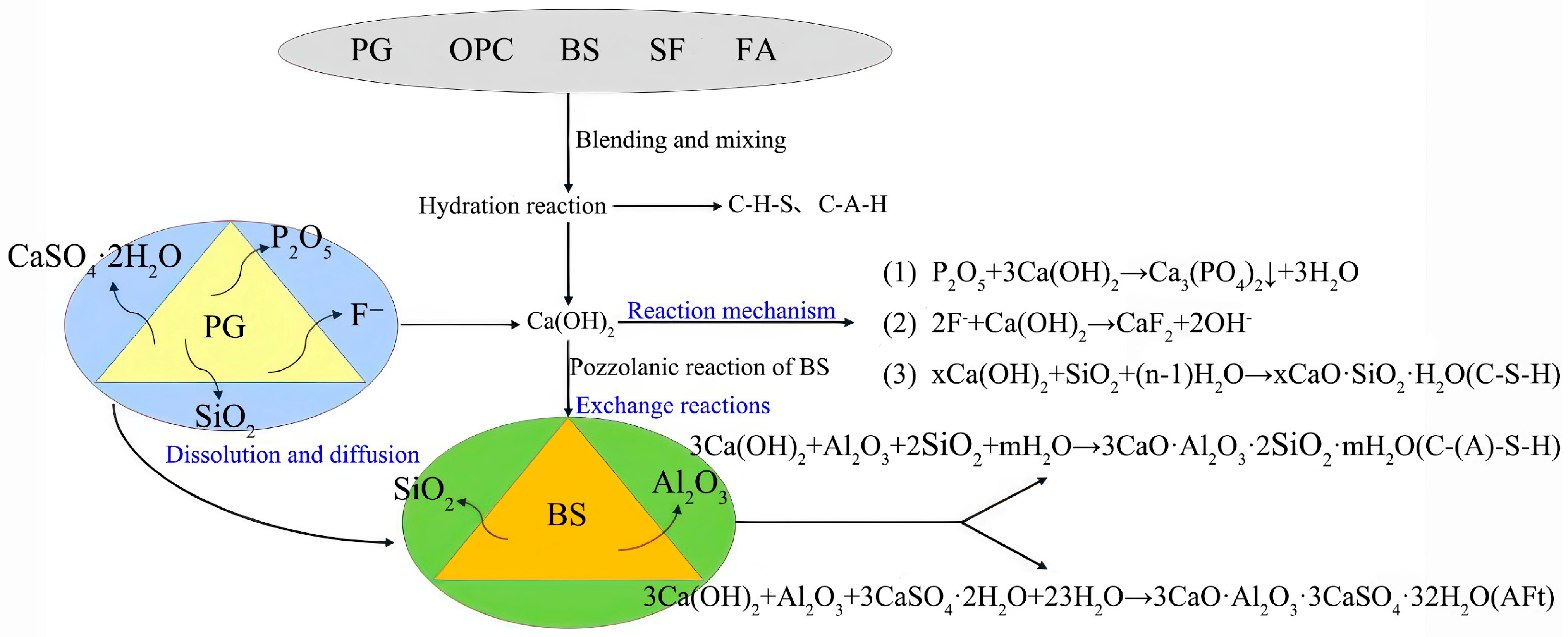
4.5.3. Strengthening Mechanism of BS and PG in 3DPPGC
5. Conclusions
Author Contributions
Funding
Institutional Review Board Statement
Informed Consent Statement
Data Availability Statement
Conflicts of Interest
Abbreviation
| 3DPPGC | 3D-printed phosphogypsum concrete |
| 3DPC | 3D-printed concrete |
| PG | Phosphogypsum |
| GCP | Gypsum–cement–pozzolan |
| CRR | Cement replacement ratio |
| BS | Blast-furnace slag |
| FA | Fly ash |
| SF | Silica fume |
| PGC | Phosphogypsum concrete |
| WR | Polycarboxylate-based high-range water-reducing admixture |
| TEOA | Triethanolamine |
References
- Agustí-Juan, I.; Müller, F.; Hack, N.; Wangler, T.; Habert, G. Potential benefits of digital fabrication for complex structures: Environmental assessment of a robotically fabricated concrete wall. J. Clean. Prod. 2017, 154, 330–340. [Google Scholar] [CrossRef]
- Lim, J.H.; Weng, Y.; Pham, Q.-C. 3D printing of curved concrete surfaces using Adaptable Membrane Formwork. Constr. Build. Mater. 2020, 232, 117075. [Google Scholar] [CrossRef]
- Mechtcherine, V.; Grafe, J.; Nerella, V.N.; Spaniol, E.; Hertel, M.; Füssel, U. 3D-printed steel reinforcement for digital concrete construction–Manufacture, mechanical properties and bond behaviour. Constr. Build. Mater. 2018, 179, 125–137. [Google Scholar] [CrossRef]
- Ma, G.; Wang, L.; Ju, Y. State-of-the-art of 3D printing technology of cementitious material—An emerging technique for construction. Sci. China Technol. Sci. 2018, 61, 475–495. [Google Scholar] [CrossRef]
- Mechtcherine, V.; Nerella, V.N.; Will, F.; Näther, M.; Otto, J.; Krause, M. Large-scale digital concrete construction–CONPrint3D concept for on-site, monolithic 3D-printing. Autom. Constr. 2019, 107, 102933. [Google Scholar] [CrossRef]
- Ngo, T.D.; Kashani, A.; Imbalzano, G.; Nguyen, K.T.; Hui, D. Additive manufacturing (3D printing): A review of materials, methods, applications and challenges. Compos. Part B 2018, 143, 172–196. [Google Scholar] [CrossRef]
- Lyu, F.; Zhao, D.; Hou, X.; Sun, L.; Zhang, Q. Overview of the development of 3D-printing concrete: A review. Appl. Sci. 2021, 11, 9822. [Google Scholar] [CrossRef]
- Zhang, C.; Deng, Z.; Ma, L.; Liu, C.; Chen, Y.; Wang, Z.; Jia, Z.; Wang, X.; Jia, L.; Chen, C.; et al. Research Progress and Application of 3D Printing Concrete. Bull. Chin. Ceram. Soc. 2021, 40, 1769–1795. [Google Scholar]
- Li, Z.; Chen, J.; Zhang, Q.; Shen, Z. A Study on the removal of phosphorus and fluorine impurities from phosphogypsum. Acta Mineral. Sin. 2020, 40, 639–646. [Google Scholar]
- Saadaoui, E.; Ghazel, N.; Ben Romdhane, C.; Massoudi, N. Phosphogypsum: Potential uses and problems—A review. Int. J. Environ. Stud. 2017, 74, 558–567. [Google Scholar] [CrossRef]
- Rashad, A.M. Phosphogypsum as a construction material. J. Clean. Prod. 2017, 166, 732–743. [Google Scholar] [CrossRef]
- Gu, S.; Miao, J.; Hou, C.; Wang, Y.; Wang, H.; Xu, X. Comprehensive utilization of phosphogypsum and research suggestions on key common technology innovation. Conserv. Util. Miner. Resour. 2020, 40, 115–120. [Google Scholar]
- Gao, Y.; Sun, D.; Han, C.; Huang, J. Comprehensive utilization of phosphogypsum: Adsorption of methylene blue and its application in bricks. Surf. Rev. Lett. 2021, 28, 2150075. [Google Scholar] [CrossRef]
- Pérez-López, R.; Macías, F.; Cánovas, C.R.; Sarmiento, A.M.; Pérez-Moreno, S.M. Pollutant flows from a phosphogypsum disposal area to an estuarine environment: An insight from geochemical signatures. Sci. Total Environ. 2016, 553, 42–51. [Google Scholar] [CrossRef] [PubMed]
- Chernysh, Y.; Yakhnenko, O.; Chubur, V.; Roubík, H. Phosphogypsum recycling: A review of environmental issues, current trends, and prospects. Appl. Sci. 2021, 11, 1575. [Google Scholar] [CrossRef]
- Zhou, M.; Tao, X.; Liao, X.; Lv, J. Production and discharge of phosphogypsum and research progress on its resource utilization. Yunnan Chem. Technol. 2022, 49, 4–8. [Google Scholar]
- Cui, R.; Wang, C.; Xiu, X. Analysis of comprehensive utilization and industrial development status of phosphogypsum in China in 2023. Eco-Ind. Sci. Phosphorus Fluor. Eng. 2024, 39, 1–6. [Google Scholar]
- Zhou, W.; Li, Y.; Feng, W. Research progress on comprehensive utilization of phosphogypsum and its application in the field of building materials. Bull. Chin. Ceram. Soc. 2024, 43, 534–542. [Google Scholar]
- Zhang, J.; Xie, W.; Dong, X.; Yang, H. Research progress on comprehensive utilization of phosphogypsum for materials: A review. Mater. Rep. 2023, 37, 167–178. [Google Scholar]
- Guo, S.; Xing, D.; Guo, X.; Ji, X.; Tang, J.; Hua, Q.; Wang, B.; Liu, Y. Study on preparation and modification of phosphogypsum-based architectural gypsum. Inorg. Chem. Ind. 2023, 55, 102–110. [Google Scholar]
- Wang, G.; Liao, S.; Zhang, Q.; Wang, S.; Chen, Z. Experimental Investigation on Gypsum-Based Self-Leveling Building Putty Materials. Mater. Sci. 2022, 12, 801. [Google Scholar]
- Wang, Z.; Xu, X.; Su, L.; Gao, X. Preparation and properties of phosphogypsum based cement cementitious 3D printing materials. Concrete 2025, 168–172. [Google Scholar]
- Mao, Y.; Guo, Z.; Chen, H.; Zhang, J.; Luo, J.; Liu, C.; Shang, H. Study Progress on Reinforcement Technology for 3D Printing Concrete. Bull. Chin. Ceram. Soc. 2024, 43, 1557–1568. [Google Scholar]
- Zhang, J.; Jin, Y.; Li, W.; Li, F. Review on the Performance of Concrete in 3D Printing—Fast-Setting and Early-Strength Concrete. Hans J. Civ. Eng. 2019, 8, 184–193. [Google Scholar] [CrossRef]
- Falliano, D.; De Domenico, D.; Ricciardi, G.; Gugliandolo, E. 3D-printable lightweight foamed concrete and comparison with classical foamed concrete in terms of fresh state properties and mechanical strength. Constr. Build. Mater. 2020, 254, 119271. [Google Scholar] [CrossRef]
- Bai, G.; Wang, L.; Wang, F.; Cheng, X. Investigation of the printability and mechanical properties of 3D printing UHPC. Mater. Rep. 2021, 35, 67–73. [Google Scholar]
- Liu, X.; Li, Q.; Wang, L.; Wang, F.; Ma, G. Systematic approach for printability evaluation and mechanical property optimization of spray-based 3D printed mortar. Cem. Concr. Compos. 2022, 133, 104688. [Google Scholar] [CrossRef]
- Dai, S.; Zhu, H.; Zhai, M.; Wu, Q.; Yin, Z.; Qian, H.; Hua, S. Stability of steel slag as fine aggregate and its application in 3D printing materials. Constr. Build. Mater. 2021, 299, 123938. [Google Scholar] [CrossRef]
- Xu, Z.; Li, H.; Zhang, D.; Sun, X.; Zhao, K.; Wang, Y. Research progress of cementitious materials and related properties for building 3D printing. Mater. Rep. 2023, 12, 97–110. [Google Scholar]
- Yan, C.; Peng, Q.; Zhu, M. Comprehensive utilization and impurity removal methods of phosphogypsum. Phosphate Compd. Fertil. 2023, 38, 27–33. [Google Scholar]
- Guo, Z.; Wang, Q.; Zhang, Q.; Zheng, H.; Liu, K. Effect of fluoride on structure and properties of gypsum-based cementitious materials. Bull. Chin. Ceram. Soc. 2023, 42, 3248–3257. [Google Scholar]
- Sinka, M.; Vaičiukynienė, D.; Nizevičienė, D.; Sapata, A.; Fornés, I.V.; Vaitkevičius, V.; Šerelis, E. Utilisation of By-Product Phosphogypsum Through Extrusion-Based 3D Printing. Materials 2024, 17, 5570. [Google Scholar] [CrossRef] [PubMed]
- Ren, Z.; Wang, L.; Wang, H.; Gao, F.; Liu, S.; Ren, J. Synergistic solidification/stabilization mechanism of cadmium in phosphogypsum slag-based cementitious material. Constr. Build. Mater. 2023, 400, 132802. [Google Scholar] [CrossRef]
- Zhang, T.; Xie, F.; Guo, J. Study on performance optimization and mechanism of phosphogypsumbased composite cementitious materials. Inorg. Chem. Ind. 2022, 54, 136–142. [Google Scholar]
- Sahmenko, G.; Puzule, L.; Sapata, A.; Slosbergs, P.; Bumanis, G.; Sinka, M.; Bajare, D. Gypsum–cement–Pozzolan composites for 3D printing: Properties and life cycle assessment. J. Compos. Sci. 2024, 8, 212. [Google Scholar] [CrossRef]
- Liu, X.; Zhai, S.; Zhang, X. Research on the Effect of Sodium Aluminate on the Early Performance Enhancement and Mechanism of Phosphogypsum-Based Cementitious Materials. Materials 2025, 18, 2707. [Google Scholar] [CrossRef]
- Tarhan, Y.; Atalay, B.J.P. Phosphogypsum and Borogypsum as Additives for Sustainable and High-Performance 3D-Printable Concrete. Polymers 2025, 17, 2530. [Google Scholar] [CrossRef] [PubMed]
- Moini, M.; Olek, J.; Youngblood, J.P.; Magee, B.; Zavattieri, P.D. Additive manufacturing and performance of architectured cement-based materials. Adv. Mater. 2018, 30, 1802123. [Google Scholar] [CrossRef] [PubMed]
- Xiao, J.; Lyu, Z.; Liu, H. A Fundamental Study Progress on Reinforcement Enhancement of 3D Printed Concrete. Bull. Chin. Ceram. Soc. 2024, 43, 1545–1556. [Google Scholar]
- Huang, Y.; Lin, Z. Investigation on phosphogypsum–steel slag–granulated blast-furnace slag–limestone cement. Constr. Build. Mater. 2010, 24, 1296–1301. [Google Scholar] [CrossRef]
- GB/T 5484-2012; Methods for Chemical Analysis of Gypsum. General Administration of Quality Supervision, Inspection and Quarantine of the People’s Republic of China; Chinese National Committee on Standardization: Beijing, China, 2012.
- Yaphary, Y.L.; Yu, Z.; Lam, R.H.; Lau, D. Effect of triethanolamine on cement hydration toward initial setting time. Constr. Build. Mater. 2017, 141, 94–103. [Google Scholar] [CrossRef]
- Xia, D.; Wu, C.; Cui, K.; Wu, F.; Li, B.; Wang, Y.; Yu, S.; Li, Y. Effect of Fly Ash and Silica Fume Contents on Mechanical Properties of Alkali-Activated Slag-Based Concrete. J. Southwest Jiaotong Univ. 2023, 59, 1113–1122. [Google Scholar]
- JGJ/T 70-2009; Standard for Test Method of Basic Properties of Construction Mortar. Construction Industry Standard: Beijing, China, 2009.
- GB/T 2419-2005; Test Method for Fluidity of Cement Mortar. General Administration of Quality Supervision, Inspection and Quarantine of the People’s Republic of China; Chinese National Committee on Standardization: Beijing, China, 2005.
- Lafhaj, Z.; Rabenantoandro, A.Z.; El Moussaoui, S.; Dakhli, Z.; Youssef, N. Experimental approach for printability assessment: Toward a practical decision-making framework of printability for cementitious materials. Buildings 2019, 9, 245. [Google Scholar] [CrossRef]
- Bhattacherjee, S.; Santhanam, M. Enhancing buildability of 3D printable concrete by spraying of accelerating admixture on surface. In Proceedings of the Second RILEM International Conference on Concrete and Digital Fabrication: Digital Concrete; Springer: Cham, Switzerland, 2020; pp. 13–22. [Google Scholar]
- Liu, H.; Liu, C.; Wu, Y.; Bai, G.; He, C.; Zhang, R.; Wang, Y. Hardened properties of 3D printed concrete with recycled coarse aggregate. Cem. Concr. Res. 2022, 159, 106868. [Google Scholar] [CrossRef]
- GB/T 50081-2002; Standard for Test Method of Mechanical Properties on Ordinary Concrete. General Administration of Quality Supervision, Inspection and Quarantine of the People’s Republic of China: Beijing, China, 2003.
- Li, Z.; Zhang, J.; Li, S.; Gao, Y.; Liu, C.; Qi, Y. Effect of different gypsums on the workability and mechanical properties of red mud-slag based grouting materials. J. Clean. Prod. 2020, 245, 118759. [Google Scholar] [CrossRef]
- Zheng, T.; Lu, Y.; Luo, S.; Kong, D.; Fu, R. Effect of the phosphogypsum calcination time on the compressive mechanical properties of phosphogypsum-based composite cementitious materials. Mater. Res. Express 2022, 9, 035506. [Google Scholar] [CrossRef]
- Li, H.; Xu, F.; Li, B.; Sun, T.; Huang, X.; Zhu, J.; Peng, C.; Lin, J.; Chen, Z. Investigation on mechanical properties of excess-sulfate phosphogypsum slag cement: From experiments to molecular dynamics simulation. Constr. Build. Mater. 2022, 315, 125685. [Google Scholar] [CrossRef]
- Huang, Y.; Lin, Z. Effect of sodium hydroxide on the properties of phosphogypsum based cement. J. Wuhan Univ. Technol. Mater. Sci. Ed. 2010, 25, 342–345. [Google Scholar] [CrossRef]
- Si, C. Basic Research on the Solidification of Bayer Process Red Mud. Master’s Thesis, Kunming University, Kunming, China, 2013. (In Chinese) [Google Scholar]
- Li, K.; Song, Z. Analysis of Bayer red mud activation mechanism and performance based on orthogonal experiment. Mater. Rep. 2022, 16, 172–178. [Google Scholar]
- Lam, L.; Wong, Y.; Poon, C.S. Degree of hydration and gel/space ratio of high-volume fly ash/cement systems. Cem. Concr. Res. 2000, 30, 747–756. [Google Scholar] [CrossRef]
- Deng, Y.; Zhang, C.; Wei, X. Influence of lithium sulfate addition on the properties of Portland cement paste. Constr. Build. Mater. 2014, 50, 457–462. [Google Scholar] [CrossRef]
- Lin, R.-S.; Wang, X.-Y.; Lee, H.-S.; Cho, H.-K. Hydration and microstructure of cement pastes with calcined Hwangtoh clay. Materials 2019, 12, 458. [Google Scholar] [CrossRef]
- Boonserm, K.; Sata, V.; Pimraksa, K.; Chindaprasirt, P. Improved geopolymerization of bottom ash by incorporating fly ash and using waste gypsum as additive. Cem. Concr. Compos. 2012, 34, 819–824. [Google Scholar] [CrossRef]
- Adesina, A.; Kaze, C.R. Physico-mechanical and microstructural properties of sodium sulfate activated materials: A review. Constr. Build. Mater. 2021, 295, 123668. [Google Scholar] [CrossRef]
- Luo, Z.; Si, C.; Fan, B.; Zhou, X. Solidification of Red Mud from Bayer Process Using Chemically Bonded Ceramics. Bull. Chin. Ceram. Soc. 2014, 33, 782–786. [Google Scholar]
- Lin, C.; Dai, W.; Li, Z.; Wang, Y. Study on the inorganic synthesis from recycled cement and solid waste gypsum system: Application in grouting materials. Constr. Build. Mater. 2020, 251, 118930. [Google Scholar] [CrossRef]
- Shen, W.; Zhou, M.; Zhao, Q. Study on lime–fly ash–phosphogypsum binder. Constr. Build. Mater. 2007, 21, 1480–1485. [Google Scholar] [CrossRef]
- Liu, S.; Wang, L.; Yu, B. Effect of modified phosphogypsum on the hydration properties of the phosphogypsum-based supersulfated cement. Constr. Build. Mater. 2019, 214, 9–16. [Google Scholar] [CrossRef]
- Gong, X.; Liu, J.; Zhang, T.; Jiao, Z. Effect of modified phosphogypsum on properties of cement mortar. J. Test. Eval. 2020, 48, 2803–2812. [Google Scholar] [CrossRef]
- Garg, M.; Pundir, A. Investigation of properties of fluorogypsum-slag composite binders–hydration, strength and microstructure. Cem. Concr. Compos. 2014, 45, 227–233. [Google Scholar] [CrossRef]
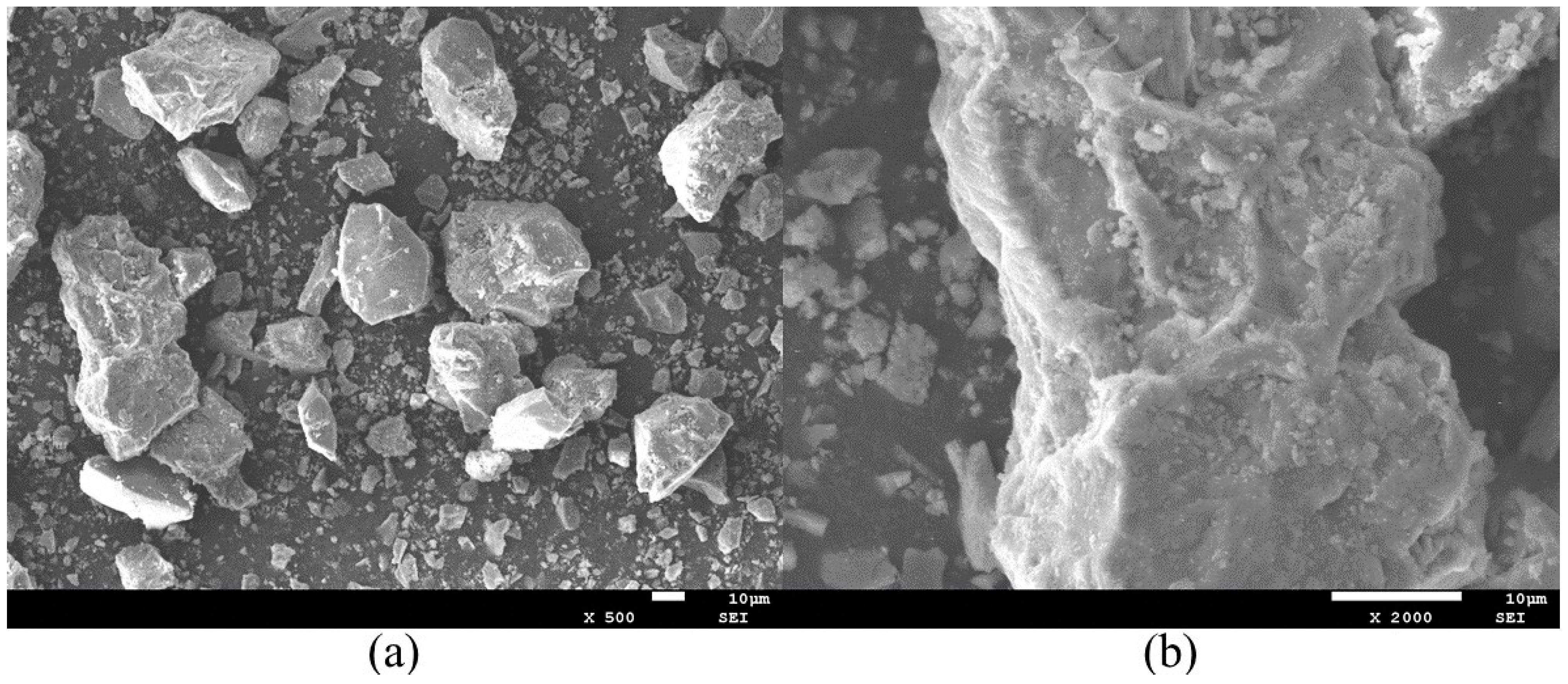

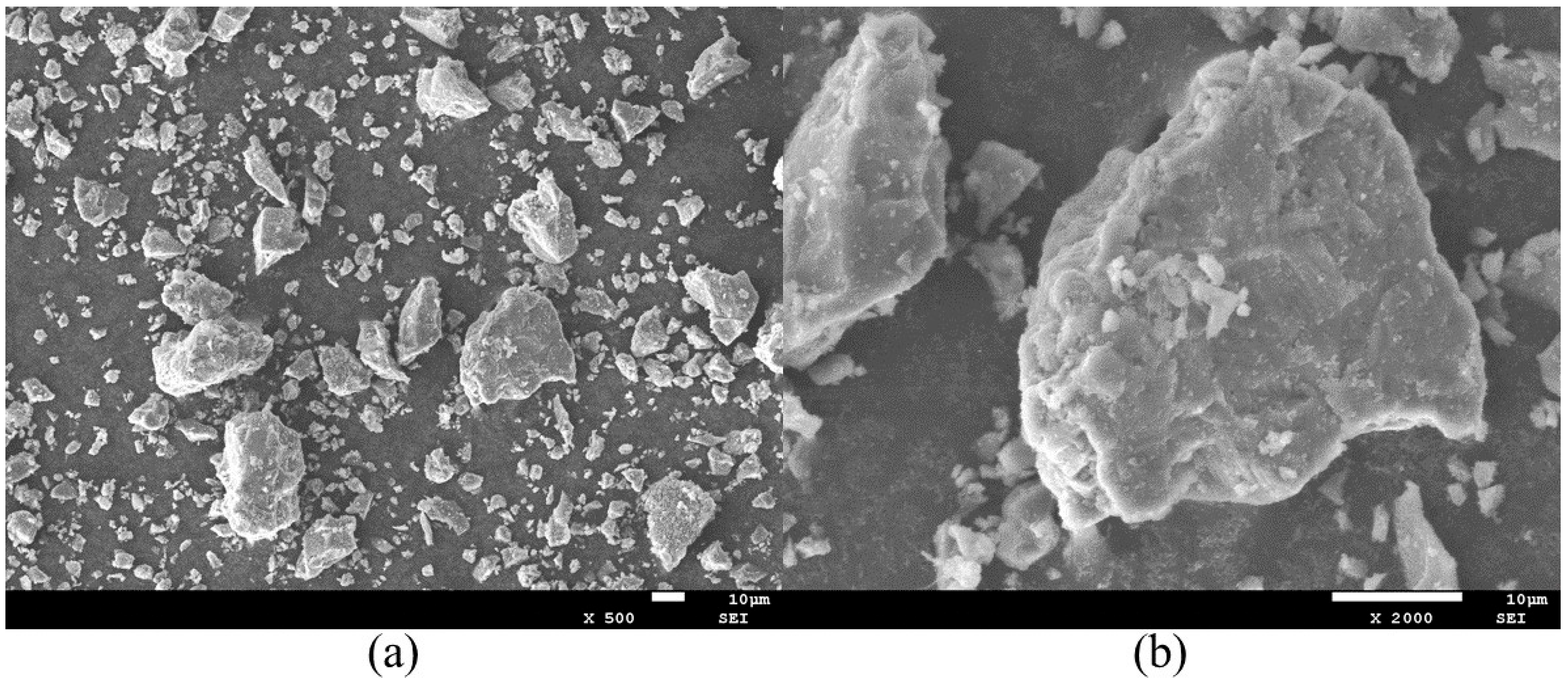
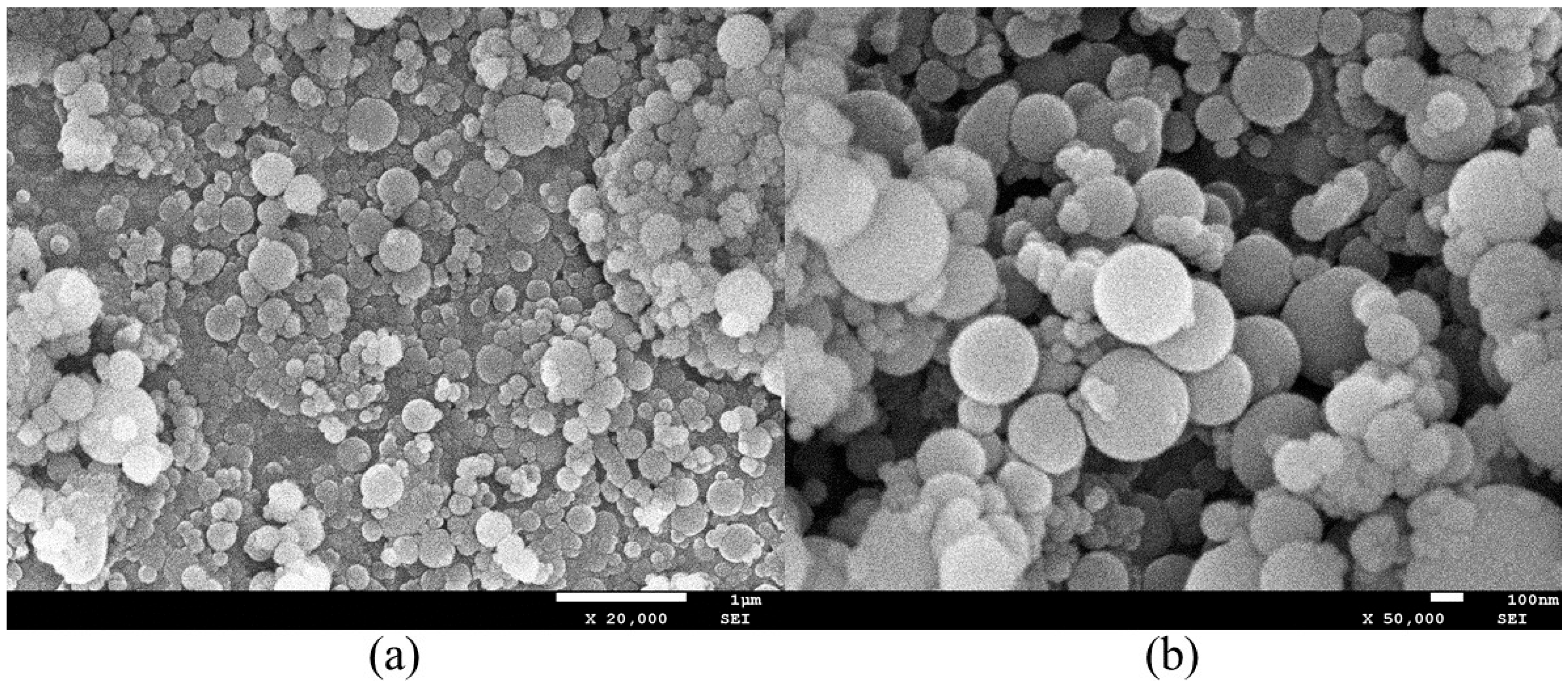
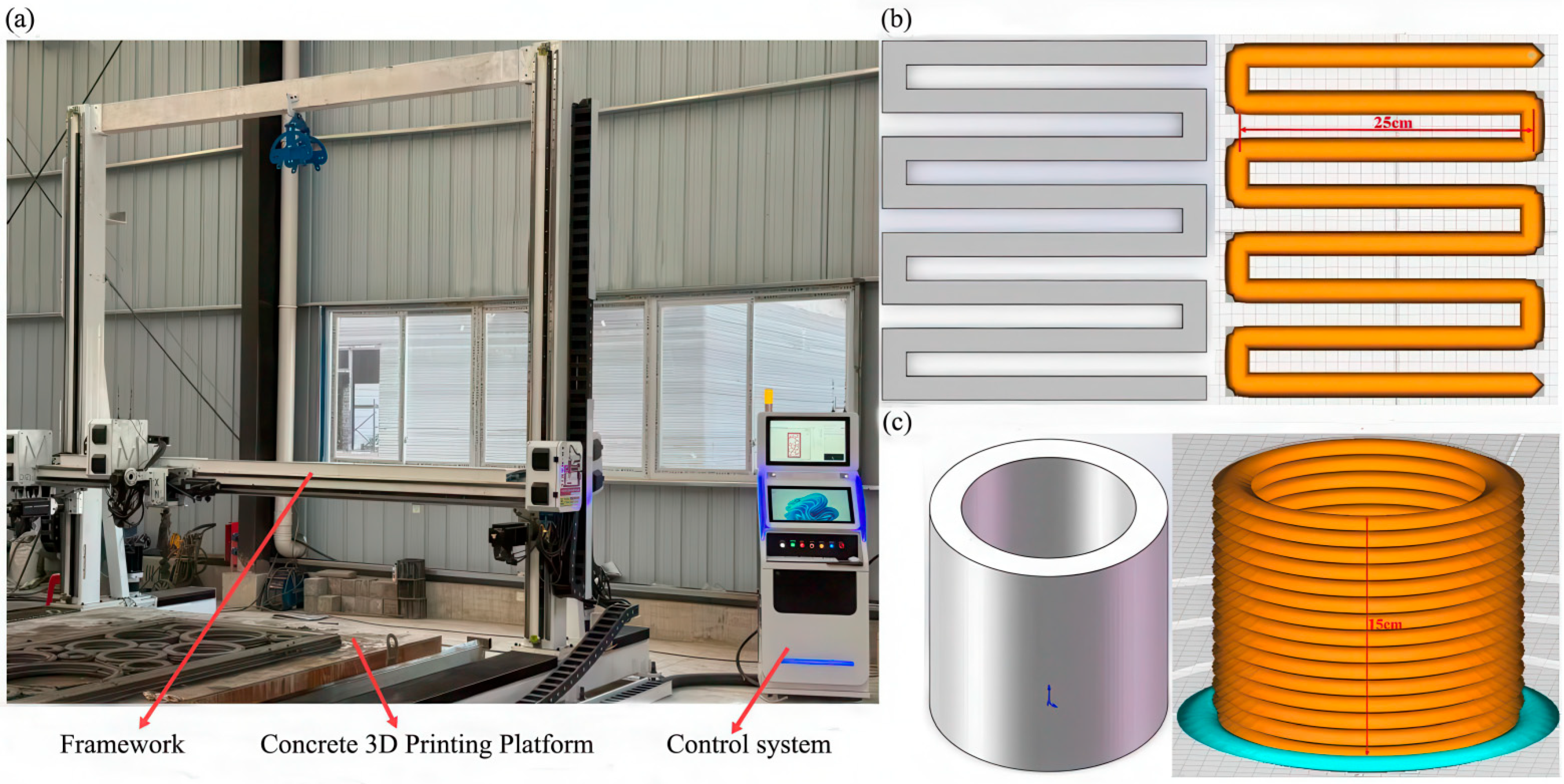


| Constituents | PG | OPC | SF | BS | FA |
|---|---|---|---|---|---|
| CaO | 36.212 | 59.122 | 0.512 | 41.213 | 2.720 |
| SiO2 | 7.032 | 22.654 | 92.511 | 35.153 | 57.26 |
| SO3 | 39.158 | 2.715 | 2.111 | 1.159 | 0.125 |
| Al2O3 | 1.108 | 5.266 | 0.082 | 13.556 | 30.562 |
| Fe2O3 | 0.568 | 3.325 | 0.092 | 0 | 1.156 |
| MgO | 0.125 | 2.215 | 0.633 | 3.561 | 0.685 |
| K2O | 0.806 | 0.812 | 0.531 | 0.259 | 1.562 |
| TiO2 | 0.123 | 0.516 | 0.297 | 0.112 | 2.756 |
| H2O | 10.445 | 0 | 0 | 0 | 0 |
| Others | 4.423 | 3.375 | 3.231 | 4.987 | 3.174 |
| Sum | 100 | 100 | 100 | 100 | 100 |
| No. | Mass/g | ||||
|---|---|---|---|---|---|
| PG | OPC | BS | FA | SF | |
| 0 | 1200 | 4800 | 0 | 0 | 0 |
| 1 | 1200 | 3000 | 1170 | 420 | 210 |
| 2 | 1200 | 2400 | 1896 | 336 | 168 |
| 3 | 1200 | 1800 | 2622 | 252 | 126 |
| 4 | 1200 | 1200 | 3348 | 168 | 84 |
| No. | Mass/g | ||||||||||
|---|---|---|---|---|---|---|---|---|---|---|---|
| CRR | PG | OPC | BS | FA | SF | Sand | CaO | CL | WR | TEOA | |
| PGC-0 | 20% | 1200 | 4800 | 0 | 0 | 0 | 6000 | 96 | 20 | 10 | 1 |
| PGC-1 | 50% | 1200 | 3000 | 1170 | 420 | 210 | 6000 | 96 | 20 | 10 | 1 |
| PGC-2 | 60% | 1200 | 2400 | 1896 | 336 | 168 | 6000 | 96 | 20 | 10 | 1 |
| PGC-3 | 70% | 1200 | 1800 | 2622 | 252 | 126 | 6000 | 96 | 20 | 10 | 1 |
| PGC-4 | 80% | 1200 | 1200 | 3348 | 168 | 84 | 6000 | 96 | 20 | 10 | 1 |
| Layer Height (mm) | Line Width (mm) | Infill Density (%) | Print Speed (mm/s) | Extrusion Flow Rate (cm3/s) |
|---|---|---|---|---|
| 12.5 | 25 | 100 | 50 | 2.3 |
| CRR | Average Rate of Increase in Flexural Strength (×10−2 MPa/d) | |||
|---|---|---|---|---|
| 0–3 d | 3–7 d | 7–14 d | 14–28 d | |
| Cast specimen | 60.70 | 38.64 | 6.37 | 5.78 |
| 20% | 48.67 | 16.25 | 10.71 | 7.07 |
| 50% | 54.33 | 33.5 | 7.34 | 5.21 |
| 60% | 58.33 | 38.50 | 6.43 | 4.57 |
| 70% | 60.67 | 40.25 | 6.71 | 4.59 |
| 80% | 57.67 | 34.00 | 6.07 | 4.27 |
| CRR | Average Rate of Increase in Compressive Strength (×10−1 MPa/d) | |||
|---|---|---|---|---|
| 0–3 d | 3–7 d | 7–14 d | 14–28 d | |
| Cast specimen | 40.33 | 23.38 | 11.56 | 2.62 |
| 20% | 33.33 | 22.49 | 8.25 | 4.87 |
| 50% | 35.67 | 20.50 | 11.43 | 2.29 |
| 60% | 37.67 | 21.75 | 11.43 | 2.29 |
| 70% | 39.67 | 23.00 | 11.86 | 2.29 |
| 80% | 38.33 | 23.50 | 10.43 | 2.07 |
| Forming Method | Mix Proportion (wt.%) | Compressive Strength | Flexural Strength | |
|---|---|---|---|---|
| Huang et al. [40] | casting | PG: 45% Steel slag (SS): 10% Ground granulated blast furnace slag (GGBFS): 35% Limestone (LS): 10% | 28-day compressive strength greater than 40 MPa. | 28-day flexural strength greater than 8 MPa. |
| Liu et al. [36] | casting | PG: 45% Ground Granulated Blast Furnace Slag (GGBFS): 53% Lime: 2%, Sodium Aluminate: 1 wt.%. | The 28-day compressive strength is 18.25 MPa. The 3 d compressive strength of specimens after adding 0.2 wt.%, 0.5 wt.%, 0.8 wt.%, and 1 wt.% sodium aluminate increased by 82.26%, 309.19%, 491.88%, and 587.39%, respectively. | |
| Sahmenko et al. [35] | 3D printing | Recycled Gypsum (RG), PG: 55% Metakaolin (MK): 22.5% Portland Cement (CEM I): 22.5% | Gypsum–cement–pozzolanic (PG-based): 28-day compressive strength, wet = 29.6 MPa, dry = 38.6 MPa. | |
| Tarhan et al. [37] | 3D printing | Cement: 60%, FA or ground granulated blast-furnace slag (GGBS) as supplementary cementitious materials account for 20%; Gypsum accounts for 20%, in which PG and borogypsum serve as partial replacements for gypsum (replacement ratio ranges from 2.5% to 10%). | With the addition of 7.5% PG to the GGBS system, the 28-day compressive strength reached 51 MPa. | |
| Sinka et al. [32] | 3D printing | 40% binder (consisting of calcined PG and 0.5% quicklime) and 60% sand. | Printed specimen (u-direction): 7-day compressive strength 0.95 MPa Cast specimen: 7-day compressive strength 0.81 MPa | Printed specimen: 7-day tensile strength 0.83 MPa, 0.92 MPa Cast specimen: 7-day tensile strength 0.71 MPa |
| This study | 3D printing | PG: 20%; Using PG, blast furnace slag (BFS), FA (FA), and SF as replacements for cement (CRR = 50–80%). | CRR = 70%: the 28-day printed specimen (in the x-direction) achieves 98.19% of the compressive strength of cast specimens, while the compressive strength in the z-direction ranges from 72% to 95% of that of cast specimens. | CRR = 70%: The 28-day printed sample (Y-direction) achieved 4.69 MPa, which is 1.52% higher than the cast sample. |
Disclaimer/Publisher’s Note: The statements, opinions and data contained in all publications are solely those of the individual author(s) and contributor(s) and not of MDPI and/or the editor(s). MDPI and/or the editor(s) disclaim responsibility for any injury to people or property resulting from any ideas, methods, instructions or products referred to in the content. |
© 2026 by the authors. Licensee MDPI, Basel, Switzerland. This article is an open access article distributed under the terms and conditions of the Creative Commons Attribution (CC BY) license.
Share and Cite
Li, J.; Li, Y.; Ge, X.; Li, K.; Yang, Y.; Wang, S. Strength Enhancement of 3D-Printed Phosphogypsum Concrete Based on Synergistic Activation of Multi-Solid Wastes. Materials 2026, 19, 482. https://doi.org/10.3390/ma19030482
Li J, Li Y, Ge X, Li K, Yang Y, Wang S. Strength Enhancement of 3D-Printed Phosphogypsum Concrete Based on Synergistic Activation of Multi-Solid Wastes. Materials. 2026; 19(3):482. https://doi.org/10.3390/ma19030482
Chicago/Turabian StyleLi, Junjie, Yangbo Li, Xianqiang Ge, Ke Li, Yahui Yang, and Shuo Wang. 2026. "Strength Enhancement of 3D-Printed Phosphogypsum Concrete Based on Synergistic Activation of Multi-Solid Wastes" Materials 19, no. 3: 482. https://doi.org/10.3390/ma19030482
APA StyleLi, J., Li, Y., Ge, X., Li, K., Yang, Y., & Wang, S. (2026). Strength Enhancement of 3D-Printed Phosphogypsum Concrete Based on Synergistic Activation of Multi-Solid Wastes. Materials, 19(3), 482. https://doi.org/10.3390/ma19030482