Design and Characterization of Gelatin-Based Interpenetrating Polymer Networks for Biomedical Use: Rheological, Thermal, and Physicochemical Evaluation

 , , ,
, , ,  , and
, and
Highlights
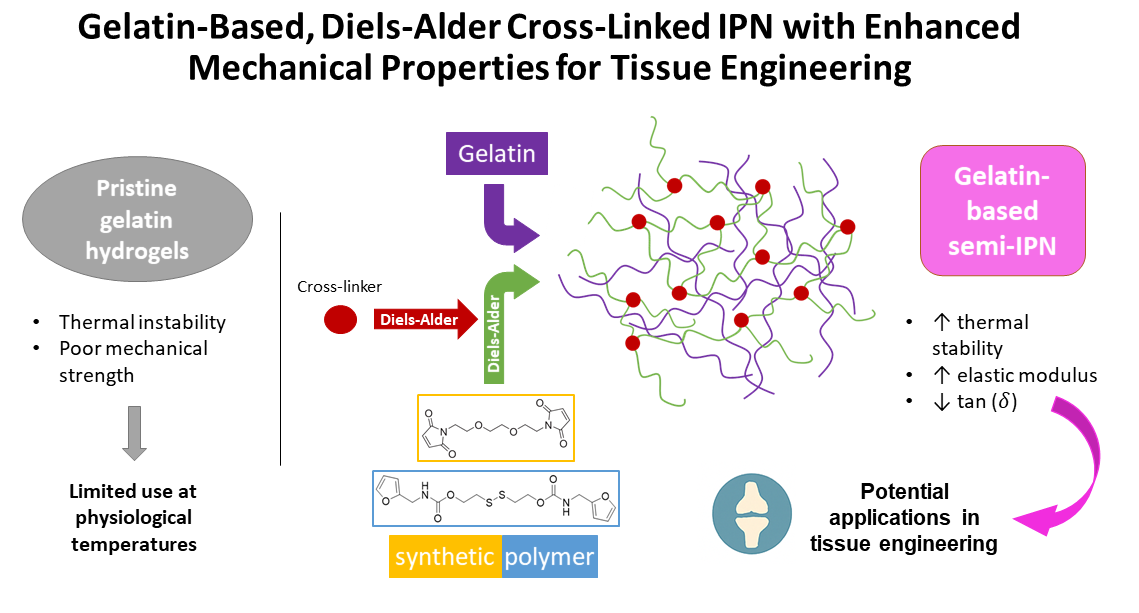
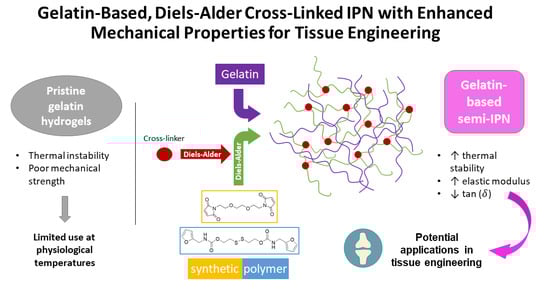
- Gelatin-based IPN showed enhanced mechanical and thermal stability via Diels–Alder chemistry;
- Optimal mechanical performance occurred at ~3% (w/v) gelatin and low–moderate crosslinking;
- Excessive crosslink density caused network heterogeneity and reduced moduli and viscosity;
- Systems remained stable at physiological temperature.
- Gelatin content enables controlled and tunable degradation;
- Tunable properties allow application-specific design for tissue engineering.
Abstract
1. Introduction
2. Materials and Methods
2.1. Materials and General Methods
2.2. Synthesis of IPN
2.3. Characterization of IPN
2.4. Box–Behnken Experimental Design
3. Results and Discussion
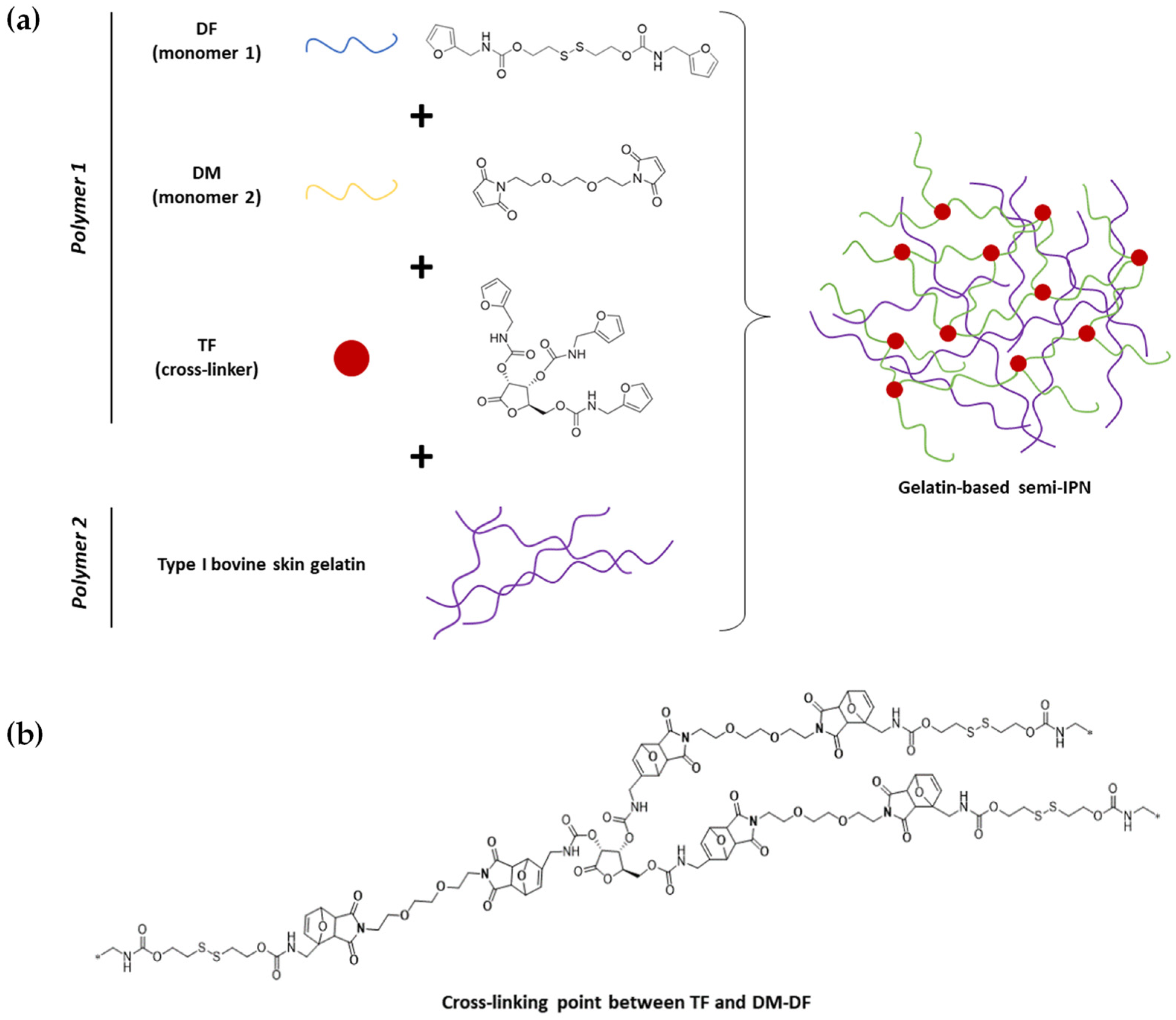
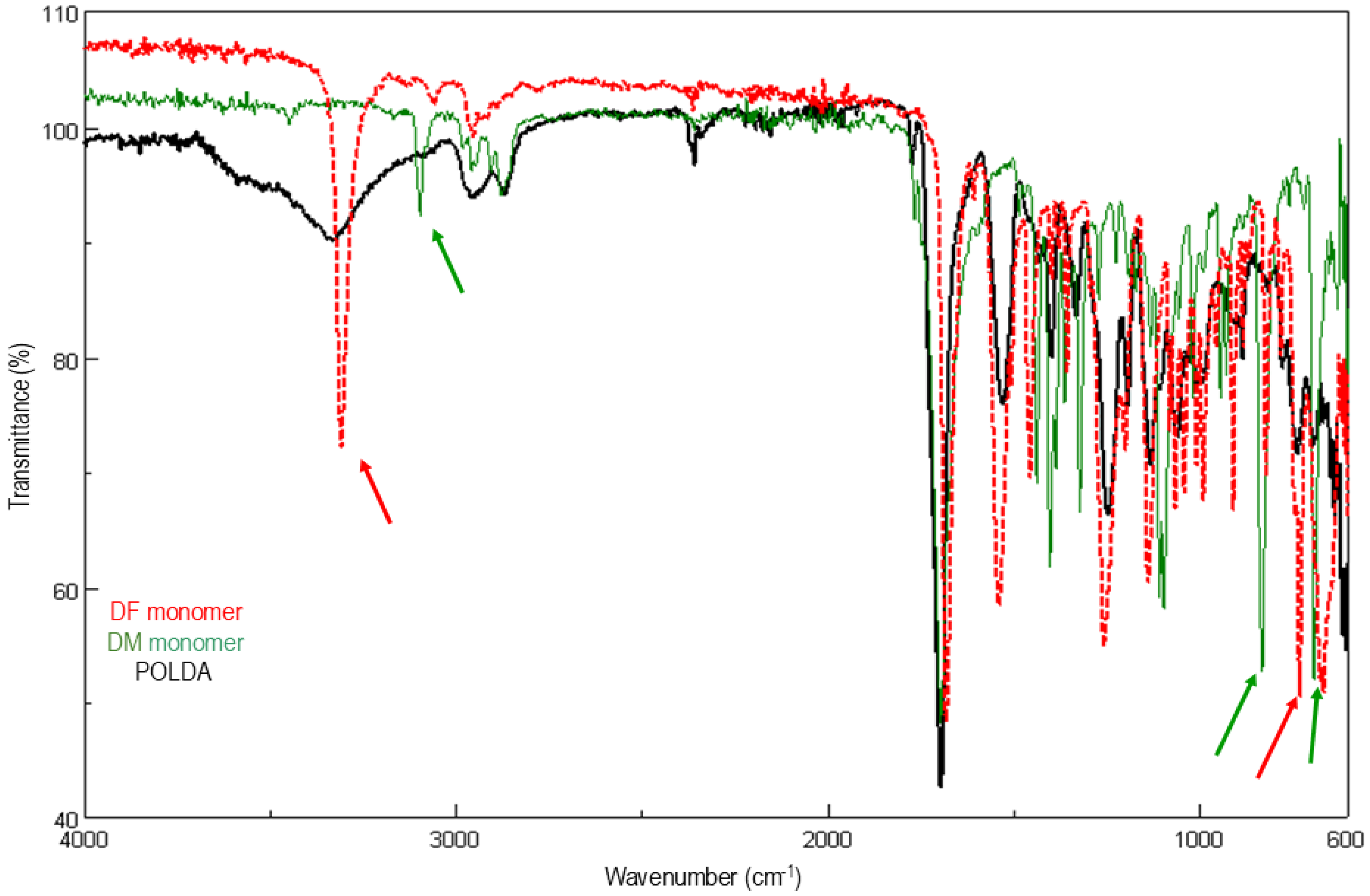
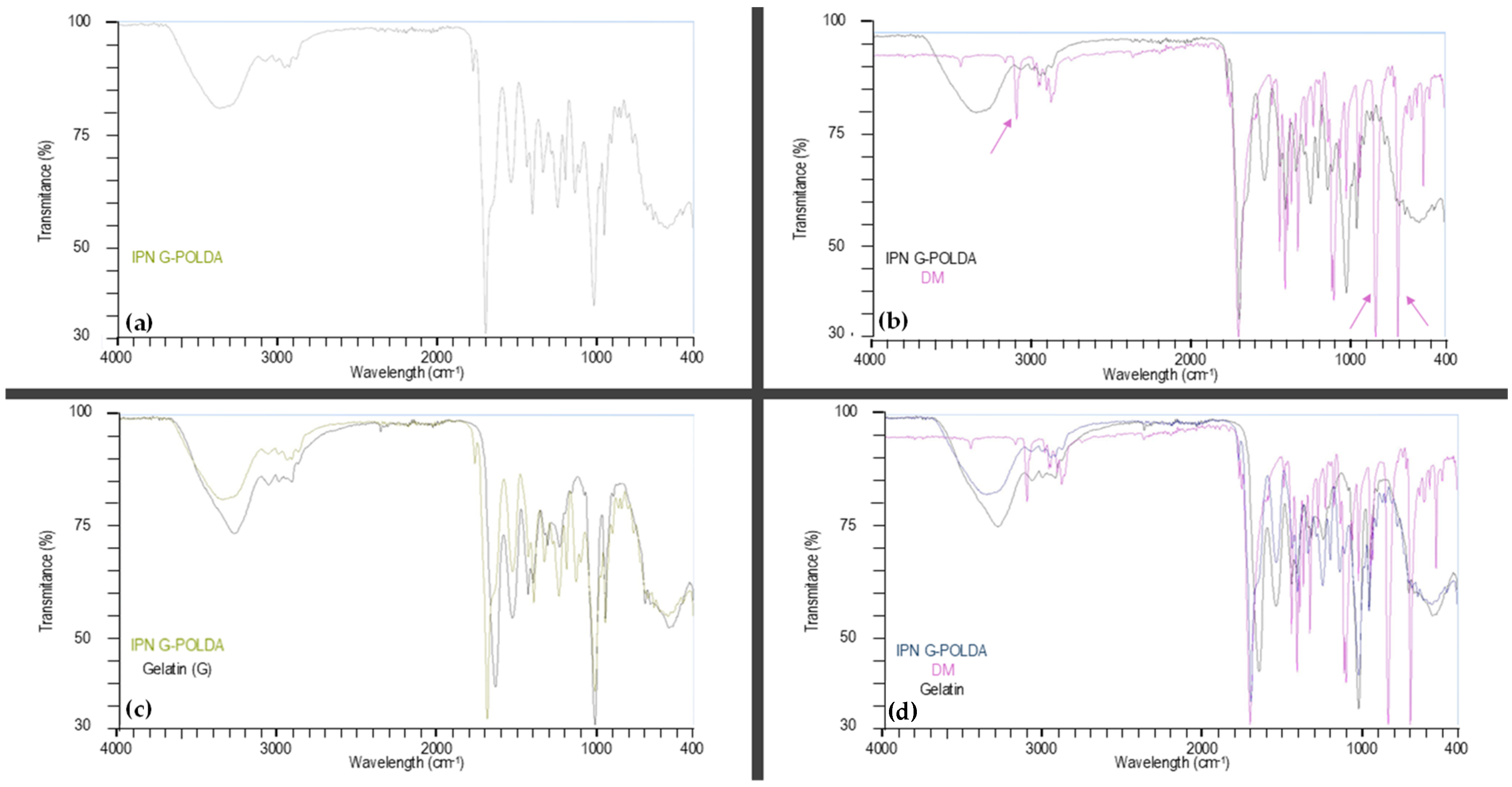
3.1. Synthesis of IPN
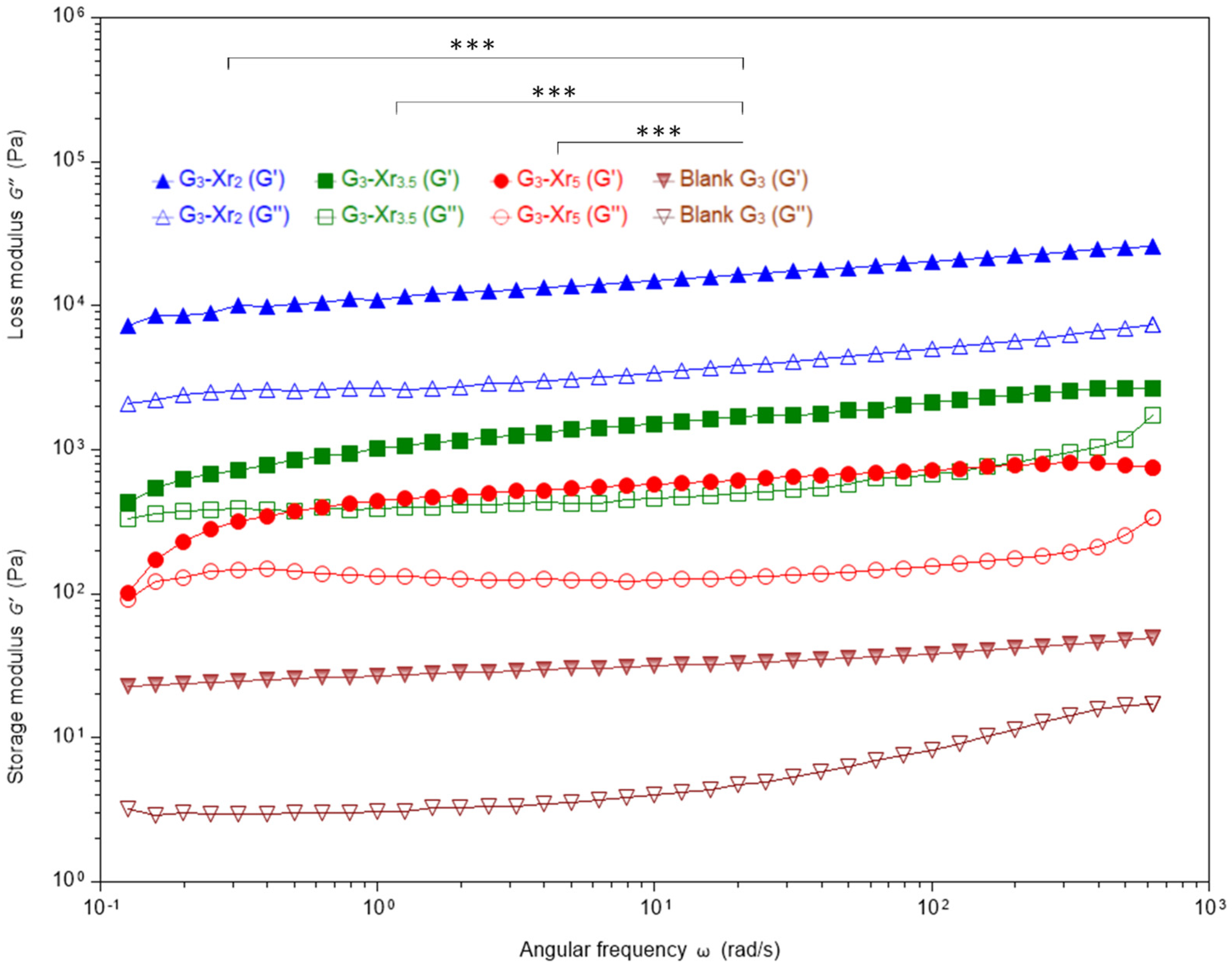
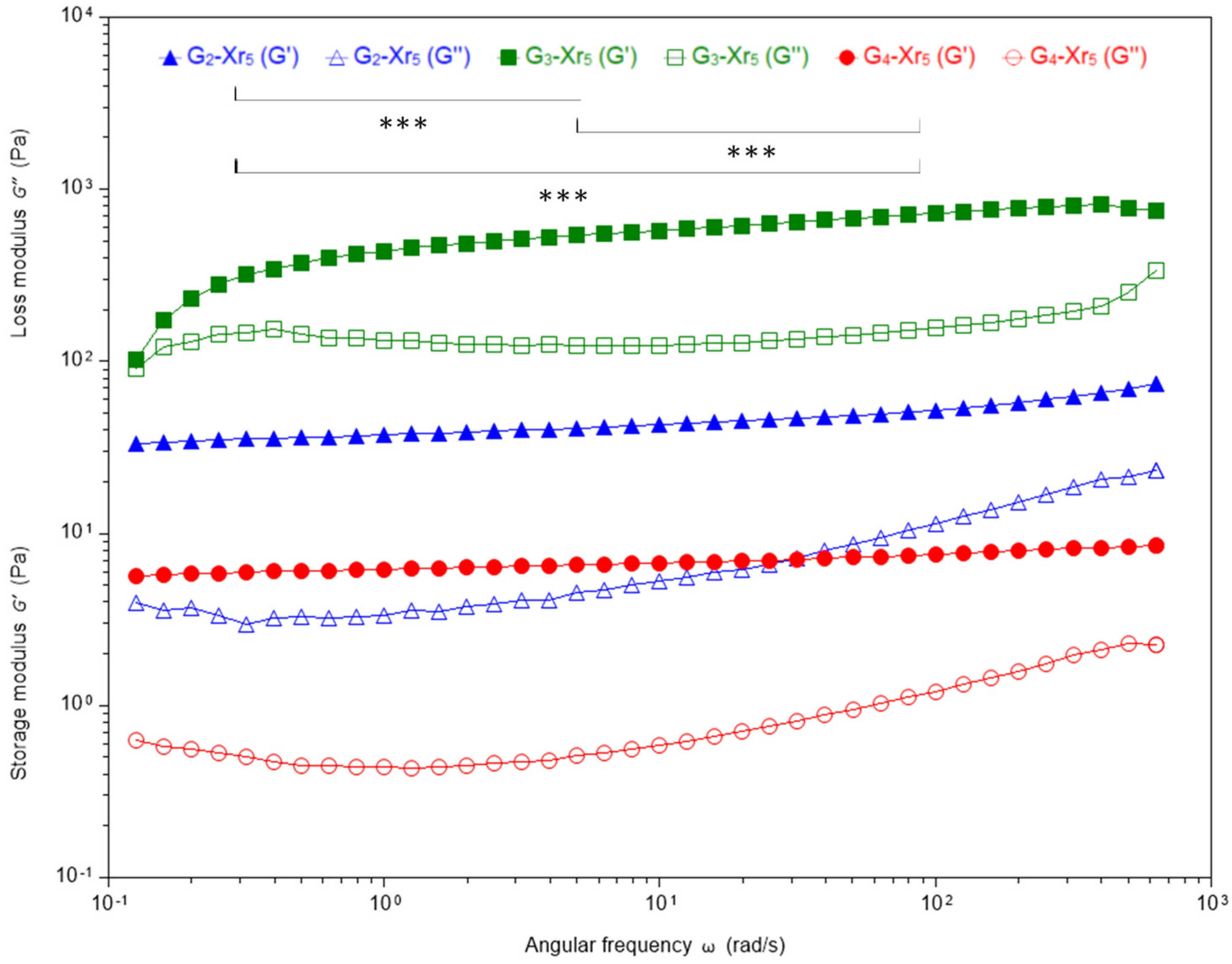
3.2. Rheological Characterization of IPN
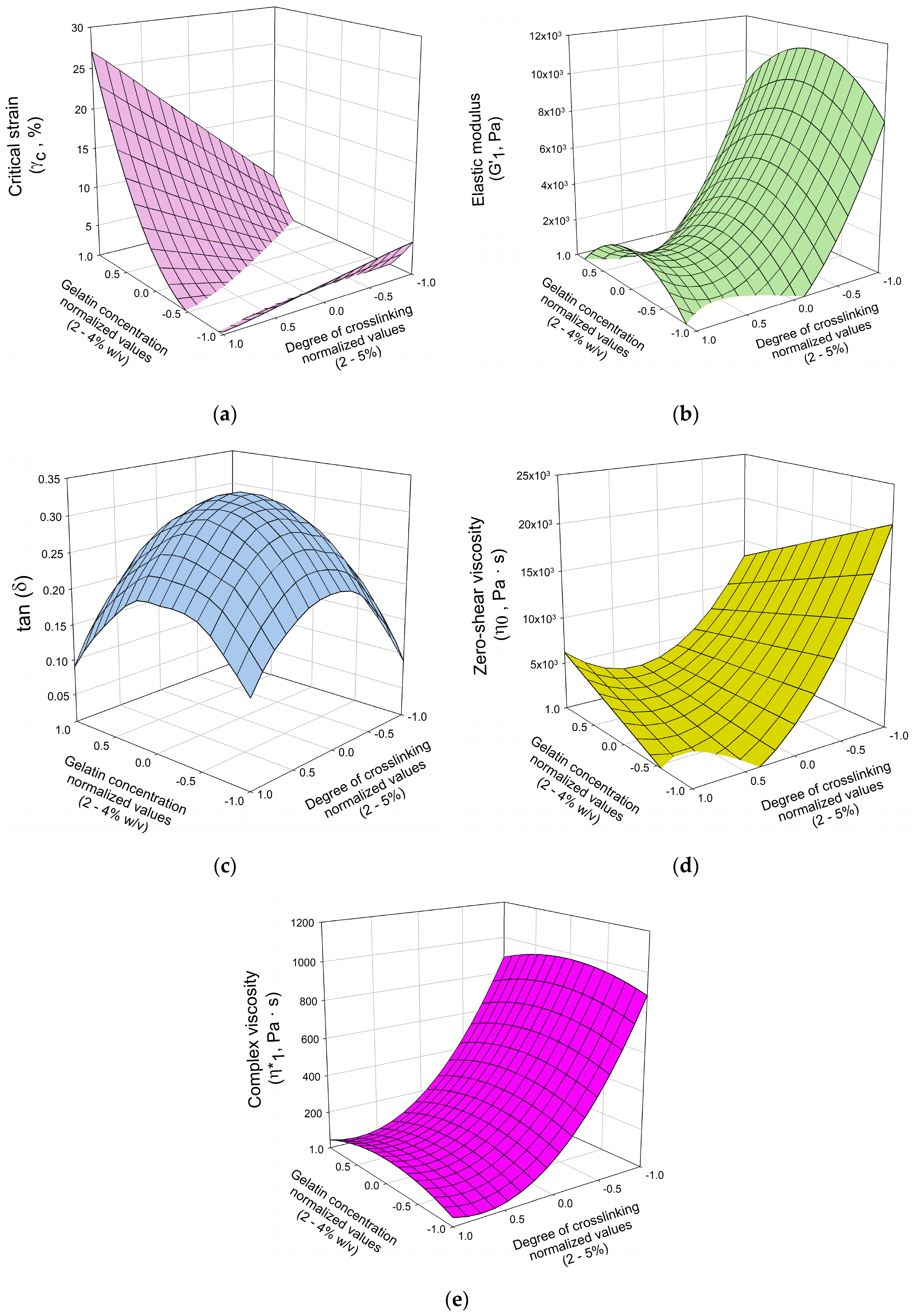
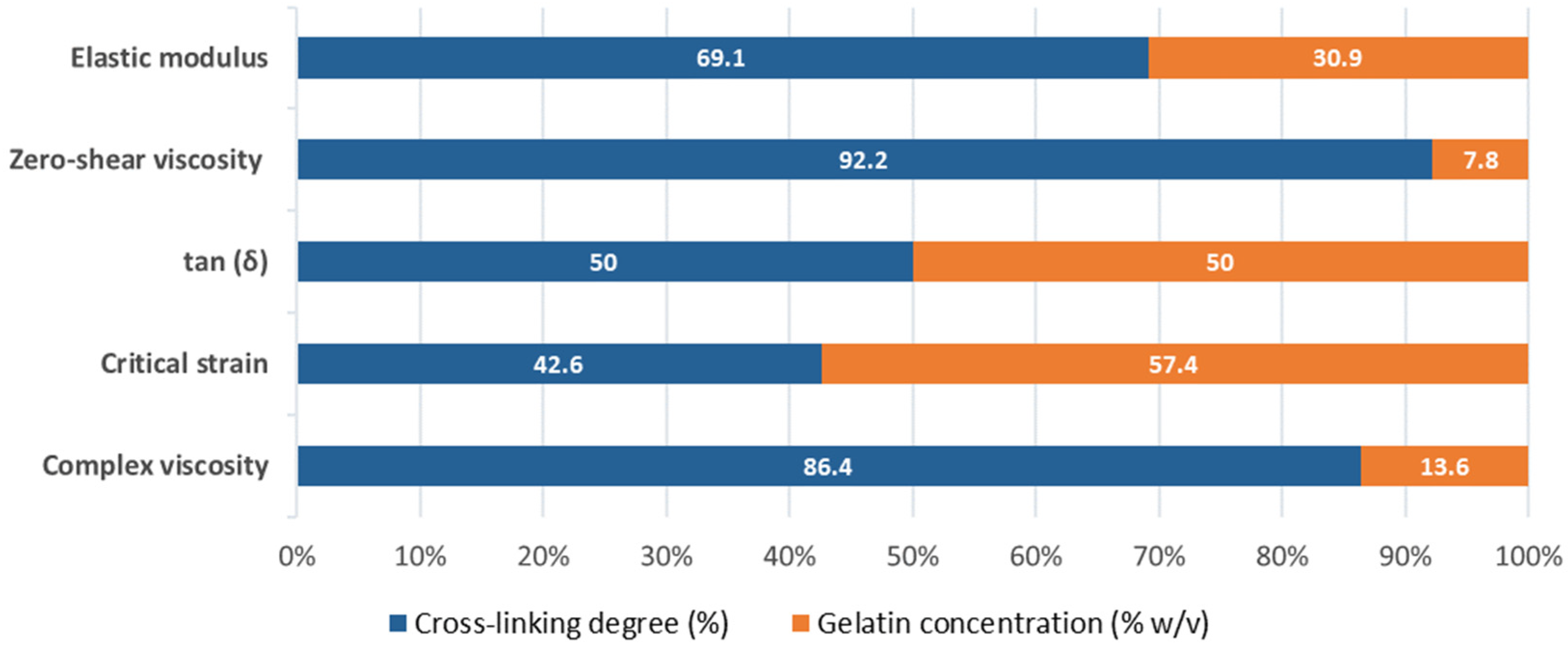
3.3. Box–Behnken Analysis
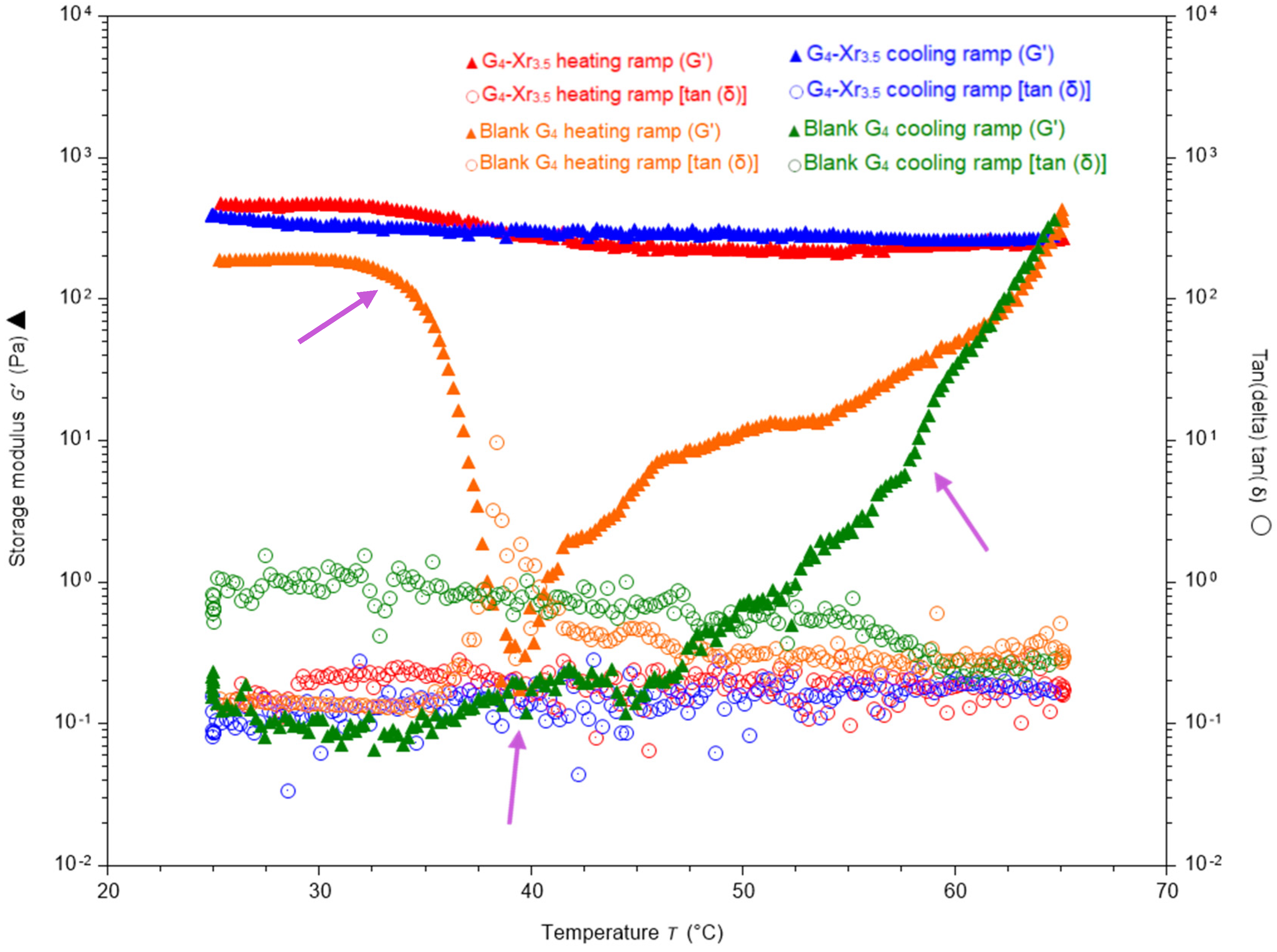
3.4. Thermal Evaluation of IPN
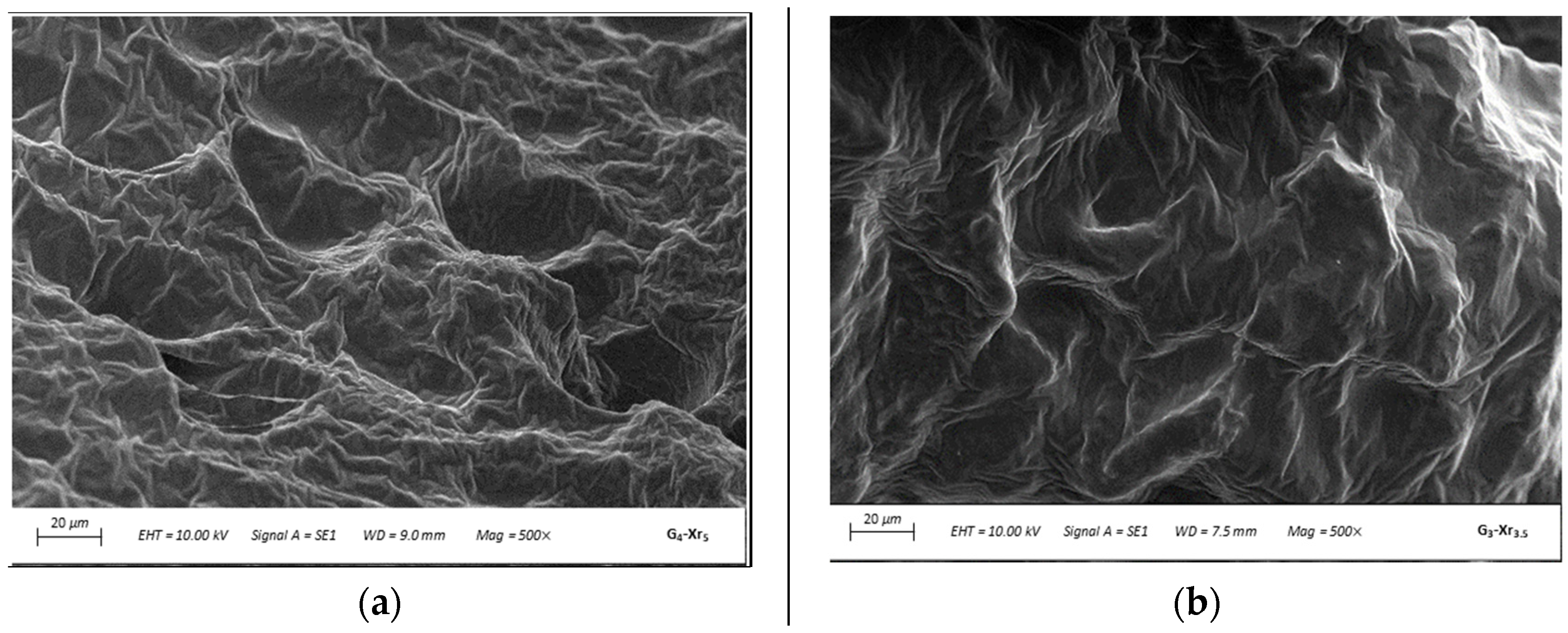
3.5. Swelling, Degradation, Morphology and Application-Oriented Design of IPN
4. Conclusions
Author Contributions
Funding
Institutional Review Board Statement
Informed Consent Statement
Data Availability Statement
Acknowledgments
Conflicts of Interest
References
- Lukin, I.; Erezuma, I.; Maeso, L.; Zarate, J.; Desimone, M.F.; Al-Tel, T.H.; Dolatshahi-Pirouz, A.; Orive, G. Progress in Gelatin as Biomaterial for Tissue Engineering. Pharmaceutics 2022, 14, 1177. [Google Scholar] [CrossRef] [PubMed]
- Berthiaume, F.; Maguire, T.J.; Yarmush, M.L. Tissue Engineering and Regenerative Medicine: History, Progress, and Challenges. Annu. Rev. Chem. Biomol. Eng. 2011, 2, 403–430. [Google Scholar] [CrossRef] [PubMed]
- Ahmad, T.; Ismail, A.; Ahmad, S.A.; Khalil, K.A.; Kumar, Y.; Adeyemi, K.D.; Sazili, A.Q. Recent Advances on the Role of Process Variables Affecting Gelatin Yield and Characteristics with Special Reference to Enzymatic Extraction: A Review. Food Hydrocoll. 2017, 63, 85–96. [Google Scholar] [CrossRef]
- El-Seedi, H.R.; Said, N.S.; Yosri, N.; Hawash, H.B.; El-Sherif, D.M.; Abouzid, M.; Abdel-Daim, M.M.; Yaseen, M.; Omar, H.; Shou, Q.; et al. Gelatin Nanofibers: Recent Insights in Synthesis, Bio-Medical Applications and Limitations. Heliyon 2023, 9, e16228. [Google Scholar] [CrossRef]
- Ahmad, M.I.; Li, Y.; Pan, J.; Liu, F.; Dai, H.; Fu, Y.; Huang, T.; Farooq, S.; Zhang, H. Collagen and Gelatin: Structure, Properties, and Applications in Food Industry. Int. J. Biol. Macromol. 2024, 254, 128037. [Google Scholar] [CrossRef]
- Mikhailov, O.V. Gelatin as It Is: History and Modernity. Int. J. Mol. Sci. 2023, 24, 3583. [Google Scholar] [CrossRef]
- Mehdi-Sefiani, H.; Granados-Carrera, C.M.; Romero, A.; Chicardi, E.; Domínguez-Robles, J.; Perez-Puyana, V.M. Chitosan–Type-A-Gelatin Hydrogels Used as Potential Platforms in Tissue Engineering for Drug Delivery. Gels 2024, 10, 419. [Google Scholar] [CrossRef]
- Troy, E.; Tilbury, M.A.; Power, A.M.; Wall, J.G. Nature-Based Biomaterials and Their Application in Biomedicine. Polymers 2021, 13, 3321. [Google Scholar] [CrossRef]
- Ahmady, A.; Abu Samah, N.H. A Review: Gelatine as a Bioadhesive Material for Medical and Pharmaceutical Applications. Int. J. Pharm. 2021, 608, 121037. [Google Scholar] [CrossRef]
- Santhamoorthy, M.; Kim, S.-C. A Review of the Development of Biopolymer Hydrogel-Based Scaffold Materials for Drug Delivery and Tissue Engineering Applications. Gels 2025, 11, 178. [Google Scholar] [CrossRef]
- Khader, B.A.; Waldman, S.D.; Hwang, D.K. Immiscible Phase Separation-Driven Microfabrication of Gelatin Methacryloyl Scaffolds for BMP-2 Delivery and Osteogenic Enhancement. Macromol. Biosci. 2025, 25, e00296. [Google Scholar] [CrossRef] [PubMed]
- Lv, B.; Lu, L.; Hu, L.; Cheng, P.; Hu, Y.; Xie, X.; Dai, G.; Mi, B.; Liu, X.; Liu, G. Recent Advances in GelMA Hydrogel Transplantation for Musculoskeletal Disorders and Related Disease Treatment. Theranostics 2023, 13, 2015–2039. [Google Scholar] [CrossRef] [PubMed]
- Zhang, L.; Liu, J.; Zheng, X.; Zhang, A.; Zhang, X.; Tang, K. Pullulan Dialdehyde Crosslinked Gelatin Hydrogels with High Strength for Biomedical Applications. Carbohydr. Polym. 2019, 216, 45–53. [Google Scholar] [CrossRef] [PubMed]
- Asl, S.K.; Rahimzadegan, M.; Asl, A.K. Progress in Cardiac Tissue Engineering and Regeneration: Implications of Gelatin-Based Hybrid Scaffolds. Int. J. Biol. Macromol. 2024, 261, 129924. [Google Scholar] [CrossRef]
- Song, Y.; Nagai, N.; Saijo, S.; Kaji, H.; Nishizawa, M.; Abe, T. In Situ Formation of Injectable Chitosan-Gelatin Hydrogels through Double Crosslinking for Sustained Intraocular Drug Delivery. Mater. Sci. Eng. C 2018, 88, 1–12. [Google Scholar] [CrossRef]
- Luo, J.; Liu, C.; Wu, J.; Zhao, D.; Lin, L.; Fan, H.; Sun, Y. In Situ Forming Gelatin/Hyaluronic Acid Hydrogel for Tissue Sealing and Hemostasis. J. Biomed. Mater. Res. Part B Appl. Biomater. 2020, 108, 790–797. [Google Scholar] [CrossRef]
- Alarake, N.Z.; Frohberg, P.; Groth, T.; Pietzsch, M. Mechanical Properties and Biocompatibility of in Situ Enzymatically Cross-Linked Gelatin Hydrogels. Int. J. Artif. Organs 2017, 40, 159–168. [Google Scholar] [CrossRef]
- Campiglio, C.E.; Contessi Negrini, N.; Farè, S.; Draghi, L. Cross-Linking Strategies for Electrospun Gelatin Scaffolds. Materials 2019, 12, 2476. [Google Scholar] [CrossRef]
- Masutani, E.M.; Kinoshita, C.K.; Tanaka, T.T.; Ellison, A.K.D.; Yoza, B.A. Increasing Thermal Stability of Gelatin by UV-Induced Cross-Linking with Glucose. Int. J. Biomater. 2014, 2014, 979636. [Google Scholar] [CrossRef]
- Dong, Y.; Zhao, S.; Lu, W.; Chen, N.; Zhu, D.; Li, Y. Preparation and Characterization of Enzymatically Cross-Linked Gelatin/Cellulose Nanocrystal Composite Hydrogels. RSC Adv. 2021, 11, 10794–10803. [Google Scholar] [CrossRef]
- Yokoyama, K.; Nio, N.; Kikuchi, Y. Properties and Applications of Microbial Transglutaminase. Appl. Microbiol. Biotechnol. 2004, 64, 447–454. [Google Scholar] [CrossRef] [PubMed]
- Liu, Y.; Weng, R.; Wang, W.; Wei, X.; Li, J.; Chen, X.; Liu, Y.; Lu, F.; Li, Y. Tunable Physical and Mechanical Properties of Gelatin Hydrogel after Transglutaminase Crosslinking on Two Gelatin Types. Int. J. Biol. Macromol. 2020, 162, 405–413. [Google Scholar] [CrossRef] [PubMed]
- Mugnaini, G.; Gelli, R.; Mori, L.; Bonini, M. How to Cross-Link Gelatin: The Effect of Glutaraldehyde and Glyceraldehyde on the Hydrogel Properties. ACS Appl. Polym. Mater. 2023, 5, 9192–9202. [Google Scholar] [CrossRef]
- Dash, R.; Foston, M.; Ragauskas, A.J. Improving the Mechanical and Thermal Properties of Gelatin Hydrogels Cross-Linked by Cellulose Nanowhiskers. Carbohydr. Polym. 2013, 91, 638–645. [Google Scholar] [CrossRef]
- Kolour, A.K.; Shahrousvand, M.; Mohammadi-Rovshandeh, J.; Puppi, D.; Farzaneh, D. Absorbable and Biodegradable Enzyme-Crosslinked Gelatin/Alginate Semi-IPN Hydrogel Wound Dressings Containing Curcumin. Int. J. Biol. Macromol. 2024, 279, 134938. [Google Scholar] [CrossRef]
- Li, Z.; Liu, H.; Liao, Y.; Wang, H.; Sun, X.; Chen, X.; Yan, H.; Lin, Q. Design and Properties of Alginate/Gelatin/Cellulose Nanocrystals Interpenetrating Polymer Network Composite Hydrogels Based on In Situ Cross-Linking. Eur. Polym. J. 2023, 201, 112556. [Google Scholar] [CrossRef]
- Sever, E.; Pulat, M. Development of a Controlled Released System Based on IPN Types Hydrogel for Cartilage Repair. Gazi Univ. J. Sci. 2024, 37, 576–591. [Google Scholar] [CrossRef]
- Vuković, J.S.; Filipović, V.V.; Babić Radić, M.M.; Vukomanović, M.; Milivojevic, D.; Ilic-Tomic, T.; Nikodinovic-Runic, J.; Tomić, S.L. In Vitro and In Vivo Biocompatible and Controlled Resveratrol Release Performances of HEMA/Alginate and HEMA/Gelatin IPN Hydrogel Scaffolds. Polymers 2022, 14, 4459. [Google Scholar] [CrossRef]
- Escutia-Guadarrama, L.; Morales, D.; Pérez-Calixto, D.; Burillo, G. Development of Polyphenol-Functionalized Gelatin-Poly(Vinylpyrrolidone) IPN for Potential Biomedical Applications. Polymers 2022, 14, 4705. [Google Scholar] [CrossRef]
- Wang, Y.; Zhang, X.; Qiu, D.; Li, Y.; Yao, L.; Duan, J. Ultrasonic Assisted Microwave Synthesis of Poly (Chitosan-Co-Gelatin)/Polyvinyl Pyrrolidone IPN Hydrogel. Ultrason. Sonochem. 2018, 40, 714–719. [Google Scholar] [CrossRef]
- Ciftbudak, S.; Orakdogen, N. Assessing the Compressive Elasticity and Multi-Responsive Property of Gelatin-Containing Weakly Anionic Copolymer Gels via Semi-IPN Strategy. Soft Matter 2022, 18, 7181–7200. [Google Scholar] [CrossRef] [PubMed]
- Pulat, M.; Uğurlu, N. Preparation and Characterization of Biodegradable Gelatin-PAAm-Based IPN Hydrogels for Controlled Release of Maleic Acid to Improve the Solubility of Phosphate Fertilizers. Soft Mater. 2016, 14, 217–227. [Google Scholar] [CrossRef]
- Park, S.; Edwards, S.; Hou, S.; Boudreau, R.; Yee, R.; Jeong, K.J. A Multi-Interpenetrating Network (IPN) Hydrogel with Gelatin and Silk Fibroin. Biomater. Sci. 2019, 7, 1276–1280. [Google Scholar] [CrossRef] [PubMed]
- Carbajo-Gordillo, A.I.; Benito, E.; Galbis, E.; Grosso, R.; Iglesias, N.; Valencia, C.; Lucas, R.; García-Martín, M.-G.; de-Paz, M.-V. Simultaneous Formation of Polyhydroxyurethanes and Multicomponent Semi-IPN Hydrogels. Polymers 2024, 16, 880. [Google Scholar] [CrossRef]
- Kang, M.; Liang, H.; Hu, Y.; Wei, Y.; Huang, D. Gelatin-Based Hydrogels with Tunable Network Structure and Mechanical Property for Promoting Osteogenic Differentiation. Int. J. Biol. Macromol. 2024, 281, 136312. [Google Scholar] [CrossRef]
- Dromel, P.C.; Singh, D.; Alexander-Katz, A.; Kurisawa, M.; Spector, M.; Young, M. Mechano-Chemical Effect of Gelatin- and HA-Based Hydrogels on Human Retinal Progenitor Cells. Gels 2023, 9, 58. [Google Scholar] [CrossRef]
- Yousefi-Mashouf, H.; Bailly, L.; Orgéas, L.; Henrich Bernardoni, N. Mechanics of Gelatin-Based Hydrogels during Finite Strain Tension, Compression and Shear. Front. Bioeng. Biotechnol. 2023, 10, 1094197. [Google Scholar] [CrossRef]
- Ratanavaraporn, J.; Rangkupan, R.; Jeeratawatchai, H.; Kanokpanont, S.; Damrongsakkul, S. Influences of Physical and Chemical Crosslinking Techniques on Electrospun Type A and B Gelatin Fiber Mats. Int. J. Biol. Macromol. 2010, 47, 431–438. [Google Scholar] [CrossRef]
- Morozova, S.M. Recent Advances in Hydrogels via Diels–Alder Crosslinking: Design and Applications. Gels 2023, 9, 102. [Google Scholar] [CrossRef]
- Ruiz-Pardo, C.; Silva-Gutiérrez, L.; Lizardi-Mendoza, J.; López-Franco, Y.; Peniche-Covas, C.; Argüelles-Monal, W. Chitosan Hydrogels Based on the Diels–Alder Click Reaction: Rheological and Kinetic Study. Polymers 2022, 14, 1202. [Google Scholar] [CrossRef]
- Gregoritza, M.; Brandl, F.P. The Diels–Alder Reaction: A Powerful Tool for the Design of Drug Delivery Systems and Biomaterials. Eur. J. Pharm. Biopharm. 2015, 97, 438–453. [Google Scholar] [CrossRef]
- Huang, J.; Huang, Z.; Liang, Y.; Yuan, W.; Bian, L.; Duan, L.; Rong, Z.; Xiong, J.; Wang, D.; Xia, J. 3D Printed Gelatin/Hydroxyapatite Scaffolds for Stem Cell Chondrogenic Differentiation and Articular Cartilage Repair. Biomater. Sci. 2021, 9, 2620–2630. [Google Scholar] [CrossRef]
- Xu, X.; Gu, Z.; Chen, X.; Shi, C.; Liu, C.; Liu, M.; Wang, L.; Sun, M.; Zhang, K.; Liu, Q.; et al. An Injectable and Thermosensitive Hydrogel: Promoting Periodontal Regeneration by Controlled-Release of Aspirin and Erythropoietin. Acta Biomater. 2019, 86, 235–246. [Google Scholar] [CrossRef]
- Li, G.; Liu, S.; Chen, Y.; Zhao, J.; Xu, H.; Weng, J.; Yu, F.; Xiong, A.; Udduttula, A.; Wang, D.; et al. An Injectable Liposome-Anchored Teriparatide Incorporated Gallic Acid-Grafted Gelatin Hydrogel for Osteoarthritis Treatment. Nat. Commun. 2023, 14, 3159. [Google Scholar] [CrossRef] [PubMed]
- Iglesias, N.; Galbis, E.; Romero-Azogil, L.; Benito, E.; Díaz-Blanco, M.-J.; García-Martín, M.-G.; de-Paz, M.-V. Experimental Model Design: Exploration and Optimization of Customized Polymerization Conditions for the Preparation of Targeted Smart Materials by the Diels Alder Click Reaction. Polym. Chem. 2019, 10, 5473–5486. [Google Scholar] [CrossRef]
- Díaz-Carrasco, F.; Benito, E.; García-Martín, M.-G.; de-Paz, M.-V. Closed-Loop Biomaterial Design: Diels-Alder Hydrogels from Renewable Polymers for Biomedical Devices. Int. J. Biol. Macromol. 2025, 323, 147146. [Google Scholar] [CrossRef] [PubMed]
- Galbis, E.; de Paz, M.V.; McGuinness, K.L.; Angulo, M.; Valencia, C.; Galbis, J.A. Tandem ATRP/Diels-Alder Synthesis of PolyHEMA-Based Hydrogels. Polym. Chem. 2014, 5, 5391–5402. [Google Scholar] [CrossRef]
- Brüning, J.; Petereit, A.C.; Alig, E.; Bolte, M.; Dressman, J.B.; Schmidt, M.U. Characterization of a New Solvate of Risedronate. J. Pharm. Sci. 2011, 100, 863–873. [Google Scholar] [CrossRef]
- de Paz, M.V.; Zamora, F.; Begines, B.; Ferris, C.; Galbis, J.A. Glutathione-Mediated Biodegradable Polyurethanes Derived from Arabinitol. Biomacromolecules 2010, 11, 269–276. [Google Scholar] [CrossRef]
- Benito, E.; Romero-Azogil, L.; Galbis, E.; de-Paz, M.-V.; García-Martín, M.-G. Structurally Simple Redox Polymersomes for Doxorubicin Delivery. Eur. Polym. J. 2020, 137, 109952. [Google Scholar] [CrossRef]
- Gubaidullin, A.; Makarova, A.; Derkach, S.; Voron’ko, N.; Kadyirov, A.; Ziganshina, S.; Salnikov, V.; Zueva, O.; Zuev, Y. Modulation of Molecular Structure and Mechanical Properties of κ-Carrageenan-Gelatin Hydrogel with Multi-Walled Carbon Nanotubes. Polymers 2022, 14, 2346. [Google Scholar] [CrossRef]
- Chen, X.; Chen, Q.; Yan, T.; Liu, J. Characterization of Konjac Glucomannan-Gelatin IPN Physical Hydrogel Scaffold. IOP Conf. Ser. Mater. Sci. Eng. 2017, 207, 012029. [Google Scholar] [CrossRef]
- Xiao, W.; He, J.; Nichol, J.W.; Wang, L.; Hutson, C.B.; Wang, B.; Du, Y.; Fan, H.; Khademhosseini, A. Synthesis and Characterization of Photocrosslinkable Gelatin and Silk Fibroin Interpenetrating Polymer Network Hydrogels. Acta Biomater. 2011, 7, 2384–2393. [Google Scholar] [CrossRef] [PubMed]
- Djabourov, M.; Leblond, J.; Papon, P. Gelation of Aqueous Gelatin Solutions. I. Structural Investigation. J. Phys. 1988, 49, 319–332. [Google Scholar] [CrossRef]
- Echeverría, C.; Mijangos, C. Geles Poliméricos. 1. Algunos Conceptos Básicos y Reología de Geles. An. Quím. RSEQ 2024, 120, 24. [Google Scholar] [CrossRef]
- Bonhome-Espinosa, A.B.; Campos, F.; Rodriguez, I.A.; Carriel, V.; Marins, J.A.; Zubarev, A.; Duran, J.D.G.; Lopez-Lopez, M.T. Effect of Particle Concentration on the Microstructural and Macromechanical Properties of Biocompatible Magnetic Hydrogels. Soft Matter 2017, 13, 2928–2941. [Google Scholar] [CrossRef]
- Wereley, N.M.; Chaudhuri, A.; Yoo, J.-H.; John, S.; Kotha, S.; Suggs, A.; Radhakrishnan, R.; Love, B.J.; Sudarshan, T.S. Bidisperse Magnetorheological Fluids Using Fe Particles at Nanometer and Micron Scale. J. Intell. Mater. Syst. Struct. 2006, 17, 393–401. [Google Scholar] [CrossRef]
- Ning, X.; Huang, J.; A, Y.; Yuan, N.; Chen, C.; Lin, D. Research Advances in Mechanical Properties and Applications of Dual Network Hydrogels. Int. J. Mol. Sci. 2022, 23, 15757. [Google Scholar] [CrossRef]
- León-Campos, M.I.; Mendoza, J.J.; Aguayo-Morales, H.; Cobos-Puc, L.E.; Cabrera-Munguía, D.A.; Claudio-Rizo, J.A. The Biological Applications of IPN Hydrogels. ADMET DMPK 2024, 12, 581–621. [Google Scholar] [CrossRef]
- Shrivastava, A.; Supreeth, M.; Gundiah, N. Crack Propagation and Arrests in Gelatin Hydrogels Are Linked to Tip Curvatures. Soft Matter 2023, 19, 6911–6919. [Google Scholar] [CrossRef]
- Evageliou, V. Shear and Extensional Rheology of Selected Polysaccharides. Int. J. Food Sci. Technol. 2020, 55, 1853–1861. [Google Scholar] [CrossRef]
- Li, J.; Mooney, D.J. Designing Hydrogels for Controlled Drug Delivery. Nat. Rev. Mater. 2016, 1, 16071. [Google Scholar] [CrossRef] [PubMed]
- Wu, Q.; Xu, Y.; Han, S.; Chen, A.; Zhang, J.; Chen, Y.; Yang, X.; Guan, L. Versatile Hydrogel Based on a Controlled Microphase-Separation Strategy for Both Liquid- and Solid-Phase 3D Printing. ACS Nano 2024, 18, 31148–31159. [Google Scholar] [CrossRef] [PubMed]
- Sun, M.; Sun, H.; Wang, Y.; Sánchez-Soto, M.; Schiraldi, D. The Relation between the Rheological Properties of Gels and the Mechanical Properties of Their Corresponding Aerogels. Gels 2018, 4, 33. [Google Scholar] [CrossRef]
- Li, M.; Shi, T.; Yao, D.; Yue, X.; Wang, H.; Liu, K. High-Cytocompatible Semi-IPN Bio-Ink with Wide Molecular Weight Distribution for Extrusion 3D Bioprinting. Sci. Rep. 2022, 12, 6349. [Google Scholar] [CrossRef]
- Chen, Y.; Gao, X.; Su, W.; Zhou, X.; Ding, Y.; Liu, S.; Ding, Y. Insight into Transglutaminase Cross-linking Induced Gel Strength and Thermal Stability Improving of Gelatin-based Emulsion-filled Gels. Int. J. Food Sci. Technol. 2023, 58, 2909–2920. [Google Scholar] [CrossRef]
- Feng, W.; Wang, Z. Tailoring the Swelling-Shrinkable Behavior of Hydrogels for Biomedical Applications. Adv. Sci. 2023, 10, 2303326. [Google Scholar] [CrossRef]
- Jensen, P.J.; Graham, J.P.; Busch, T.K.; Fitz, O.; Jayanadh, S.; Pashuck, T.E.; Gonzalez-Fernandez, T. Biocompatible Composite Hydrogel with On-Demand Swelling-Shrinking Properties for 4D Bioprinting. Biomater. Sci. 2025, 13, 3264–3279. [Google Scholar] [CrossRef]
- Chen, Y.-C.; Ho, H.-O.; Liu, D.-Z.; Siow, W.-S.; Sheu, M.-T. Swelling/Floating Capability and Drug Release Characterizations of Gastroretentive Drug Delivery System Based on a Combination of Hydroxyethyl Cellulose and Sodium Carboxymethyl Cellulose. PLoS ONE 2015, 10, e0116914. [Google Scholar] [CrossRef]
- Entekhabi, E.; Haghbin Nazarpak, M.; Sedighi, M.; Kazemzadeh, A. Predicting Degradation Rate of Genipin Cross-Linked Gelatin Scaffolds with Machine Learning. Mater. Sci. Eng. C 2020, 107, 110362. [Google Scholar] [CrossRef]
- Maroufi, L.Y.; Shahabi, N.; Ghanbarzadeh, M.D.; Ghorbani, M. Development of Antimicrobial Active Food Packaging Film Based on Gelatin/Dialdehyde Quince Seed Gum Incorporated with Apple Peel Polyphenols. Food Bioprocess Technol. 2022, 15, 693–705. [Google Scholar] [CrossRef]
- Çalbaş, B.; Albreiki, F.; Carey, Z.; Wang, K.; Ford, R.; Nair, A.K.; Nguyen, N.; Wright, T.A. Polymer Network Architecture of Single Network and Semi-Interpenetrating Network Hydrogels Modulates Water Retention and Degradation in Soil Conditioning Applications. Chem Bio Eng. 2025, 2, 423–430. [Google Scholar] [CrossRef] [PubMed]



| IPN Systems | Polymer 1 | Polymer 2 | Solvent | ||||||||||||
|---|---|---|---|---|---|---|---|---|---|---|---|---|---|---|---|
| DF | Furfuryl Group | DM | Maleimide Group | TF † | Furfuryl Group | Gelatin | H2O | DMSO | |||||||
| mg | mmol | mmol | mg | mmol | mmol | mg | mmol | mol (%) | mmol | mg | % w/v | mL | mL | ||
| 1 | G2-Xr2 | 111 | 0.277 | 0.554 | 87 | 0.282 | 0.564 | 2 | 0.00387 | 2.0 | 0.0116 | 200 | 2 | 5 | 5 |
| 2 | G2-Xr3.5 | 110 | 0.275 | 0.549 | 87 | 0.282 | 0.564 | 3 | 0.00580 | 3.5 | 0.0174 | 200 | 2 | 5 | 5 |
| 3 | G2-Xr5 | 108 | 0.270 | 0.539 | 87 | 0.282 | 0.564 | 5 | 0.00967 | 5.0 | 0.0290 | 200 | 2 | 5 | 5 |
| 4 | G3-Xr2 | 166 | 0.415 | 0.829 | 131 | 0.425 | 0.850 | 3 | 0.00580 | 2.0 | 0.0174 | 300 | 3 | 5 | 5 |
| 5 | G3-Xr3.5 | 164 | 0.410 | 0.819 | 131 | 0.425 | 0.850 | 5 | 0.00967 | 3.5 | 0.0290 | 300 | 3 | 5 | 5 |
| 6 | G3-Xr3.5 | 164 | 0.410 | 0.819 | 131 | 0.425 | 0.850 | 5 | 0.00967 | 3.5 | 0.0290 | 300 | 3 | 5 | 5 |
| 7 | G3-Xr5 | 162 | 0.405 | 0.809 | 131 | 0.425 | 0.850 | 7 | 0.01354 | 5.0 | 0.0406 | 300 | 3 | 5 | 5 |
| 8 | G4-Xr2 | 222 | 0.554 | 1.109 | 174 | 0.564 | 1.129 | 4 | 0.00774 | 2.0 | 0.0232 | 400 | 4 | 5 | 5 |
| 9 | G4-Xr3.5 | 218 | 0.544 | 1.089 | 175 | 0.568 | 1.135 | 7 | 0.01354 | 3.5 | 0.0406 | 400 | 4 | 5 | 5 |
| 10 | G4-Xr5 | 215 | 0.537 | 1.074 | 175 | 0.568 | 1.135 | 10 | 0.01934 | 5.0 | 0.0580 | 400 | 4 | 5 | 5 |
| IPN System | Polymer Concentration (Gelatin and Synthetic Polymer) (Non-Normalized Values, % w/v) | Polymer Concentration (Gelatin and Synthetic Polymer) (Normalized Values) | Targeted mol (%) of Crosslinking † (Non-Normalized Values) | Targeted mol (%) of Crosslinking (Normalized Values) | |
|---|---|---|---|---|---|
| 1 | G2-Xr2 | 2 | −1 | 2 | −1 |
| 2 | G2-Xr3.5 | 2 | −1 | 3.5 | 0 |
| 3 | G2-Xr5 | 2 | −1 | 5 | +1 |
| 4 | G3-Xr2 | 3 | 0 | 2 | −1 |
| 5 | G3-Xr3.5 | 3 | 0 | 3.5 | 0 |
| 6 | G3-Xr3.5 | 3 | 0 | 3.5 | 0 |
| 7 | G3-Xr5 | 3 | 0 | 5 | +1 |
| 8 | G4-Xr2 | 4 | +1 | 2 | −1 |
| 9 | G4-Xr3.5 | 4 | +1 | 3.5 | 0 |
| 10 | G4-Xr5 | 4 | +1 | 5 | +1 |
| Evolution in Intensity of the FTIR Bands During DA Polymerization † | DF | DM | POLDA | Bands Suitable to Be Followed in Analysis of DA Polymerization by FTIR |
|---|---|---|---|---|
| Marked decrease | 3309 | 3325 | 3309 | |
| Almost undetectable | 3098 | 3098 | ||
| No significant change in intensity | 1681 | 1698 | 1690 | |
| Small decrease | 1538 | 1539 | ||
| Small decrease | 1436 | ~1430 | ||
| Small decrease | 1256 | 1243 | ||
| Almost undetectable | 820 | 832 | 820/832 | |
| Marked decrease | 692 | 692 |
| IPN System | (%) | (Pa) | (Pa) | (Pa) | (Pa·s) | (Pa·s) | (δ) | |
|---|---|---|---|---|---|---|---|---|
| Blank G2 | 80.50 | 8.3 | 8.3 | 0.9 | 49.35 | 1.3 | 0.11 | |
| 1 | G2-Xr2 | 4.71 | 7583.2 | 7916.5 | 712.5 | 20,982.4 | 719.4 | 0.09 |
| 2 | G2-Xr3.5 | 0.80 | 18.8 | 18.1 | 5.1 | 1386.0 | 15.4 | 0.29 |
| 3 | G2-Xr5 | 4.02 | 41.3 | 41.5 | 4.7 | 267.99 | 6.6 | 0.11 |
| Blank G3 | 40.31 | 30.6 | 30.6 | 3.7 | 184.06 | 4.9 | 0.12 | |
| 4 | G3-Xr2 | 0.75 | 14,493.0 | 14,100.4 | 3179.5 | 20,122.67 | 1295.1 | 0.23 |
| 5 | G3-Xr3.5 | 0.40 | 1451.6 | 1417.4 | 428.0 | 4333.14 | 235.1 | 0.30 |
| 6 | G3-Xr3.5 | 0.43 | 1430.9 | 1425.0 | 439.6 | 4320.58 | 249.7 | 0.31 |
| 7 | G3-Xr5 | 2.03 | 631.9 | 551.4 | 123.5 | 1092.72 | 89.7 | 0.22 |
| Blank G4 | 1.62 | 190.4 | 187.9 | 28.7 | 1187.37 | 30.3 | 0.15 | |
| 8 | G4-Xr2 | 6.26 | 5422.4 | 5028.1 | 928.1 | 10,210.41 | 811.8 | 0.18 |
| 9 | G4-Xr3.5 | 12.79 | 472.6 | 476.3 | 64.9 | 2829.82 | 76.3 | 0.14 |
| 10 | G4-Xr5 | 30.70 | 6.8 | 6.6 | 0.5 | 450.24 | 13.6 | 0.08 |
| Equation | R2 | df | F |
|---|---|---|---|
| 0.90 | 3.6 | 13.12 | |
| 0.94 | 3.6 | 33.27 | |
| 0.92 | 3.6 | 24.27 | |
| 0.92 | 4.5 | 14.51 | |
| 0.97 | 3.6 | 54.99 |
| Stage | System | Para-meter | Temperature (°C) −  + + | ||||||||||
| 25.00 | 32.14 | 32.55 | 37.91 | 38.15 | 40.37 | 44.92 | 59.90 | 63.50 | 64.03 | 65.01 | |||
| Heating | Blank G4 | (Pa) | 187.90 | 178.40 | 167.20 | 1.02 | 0.70 | 0.53 | 4.93 | 48.80 | 148.80 | 183.30 | 379.40 |
| tan () | 0.15 | 0.14 | 0.13 | 0.73 | 3.27 | 0.93 | 0.47 | 0.28 | 0.37 | 0.38 | 0.29 | ||
| Trend | gel-like, stable | sol-like | gel-like | ||||||||||
| G4-Xr3.5 | (Pa) | 475.31 | 453.59 | 454.38 | 323.61 | 313.64 | 277.16 | 243.24 | 245.59 | 245.18 | 258.16 | 277.00 | |
| tan () | 0.14 | 0.22 | 0.18 | 0.21 | 0.21 | 0.17 | 0.24 | 0.19 | 0.31 | 0.25 | 0.17 | ||
| Trend | gel-like, stable | gel-like | gel-like, stable | ||||||||||
| Stage | System | Para-meter | Temperature (°C) −  + + | ||||||||||
| 25.00 | 32.14 | 32.55 | 37.91 | 38.15 | 40.37 | 44.92 | 59.90 | 63.50 | 64.03 | 65.01 | |||
| Cooling | Blank G4 | (Pa) | 0.14 | 0.10 | 0.11 | 0.16 | 0.15 | 0.21 | 0.14 | 32.20 | 178.60 | 277.00 | 361.77 |
| tan () | 1.08 | 1.56 | 0.88 | 0.71 | 0.78 | 0.74 | 0.73 | 0.23 | 0.28 | 0.28 | 0.29 | ||
| Trend | sol-like | gel-like | |||||||||||
| G4-Xr3.5 | (Pa) | 397.08 | 323.82 | 324.60 | 309.33 | 313.25 | 304.30 | 308.02 | 261.91 | 269.53 | 269.26 | 265.00 | |
| tan () | 0.09 | 0.12 | 0.13 | 0.18 | 0.11 | 0.14 | 0.15 | 0.19 | 0.19 | 0.18 | 0.17 | ||
| Trend | gel-like, stable | ||||||||||||
| Buoyancy Tests | Degradability Tests | ||||||||
|---|---|---|---|---|---|---|---|---|---|
| Name | Swelling Index (%) | FLT1 (min) | FT1 (min) | FLT2 (min) | FT2 (min) | Stage 1 25 °C/12 days | Stage 2 37 °C/48 h | Stage 3 37 °C/12 days | Stage 4 65 °C/48 h |
| G2-Xr2 | 135 ± 12 | 0 | 4 | 176 | 240 | ✗ | ✗ | ✗ | ✓✓ |
| G2-Xr5 | 166 ± 35 | 0 | 4 | 66 | >340 | ✗ | ✗ | ✗ | ✓ § |
| G3-Xr3.5 | 264 ± 44 | 0 | 8 | 42 | >360 | ✗ | ✗ | ✓ † |  |
| G3-Xr5 | 291 ± 41 | 0 | 60 | | | ✗ | ✗ | ✓ † | |
| G4-Xr2 | 302 ± 58 | 0 | 9 | 51 | 360 | ✗ | ✗ | ✓✓ | |
| G4-Xr3.5 | 278 ± 22 | 0 | 40 | 60 | 120 | ✗ | ✗ | ✓✓ | |
| G4-Xr5 | 366 ± 5 | 0 | 9 | 111 | >300 | ✗ | ✗ | ✓✓ | |
| IPN System | Rheological Remarks | Potential Biomedical Uses | Expected Performance | |
|---|---|---|---|---|
| 4 | G3-Xr2 |
|
| +++ |
| 5/6 | G3-Xr3.5 |
|
| +++ |
| 8 | G4-Xr2 |
|
| +++ |
| 9 | G4-Xr3.5 |
|
| ++ |
Disclaimer/Publisher’s Note: The statements, opinions and data contained in all publications are solely those of the individual author(s) and contributor(s) and not of MDPI and/or the editor(s). MDPI and/or the editor(s) disclaim responsibility for any injury to people or property resulting from any ideas, methods, instructions or products referred to in the content. |
© 2026 by the authors. Licensee MDPI, Basel, Switzerland. This article is an open access article distributed under the terms and conditions of the Creative Commons Attribution (CC BY) license.
Share and Cite
Grosso, R.; Díaz-Carrasco, F.; Vidal-Nogales, E.; de-Paz, M.-V.; Díaz-Blanco, M.-J.; Benito, E. Design and Characterization of Gelatin-Based Interpenetrating Polymer Networks for Biomedical Use: Rheological, Thermal, and Physicochemical Evaluation. Materials 2026, 19, 289. https://doi.org/10.3390/ma19020289
Grosso R, Díaz-Carrasco F, Vidal-Nogales E, de-Paz M-V, Díaz-Blanco M-J, Benito E. Design and Characterization of Gelatin-Based Interpenetrating Polymer Networks for Biomedical Use: Rheological, Thermal, and Physicochemical Evaluation. Materials. 2026; 19(2):289. https://doi.org/10.3390/ma19020289
Chicago/Turabian StyleGrosso, Roberto, Fátima Díaz-Carrasco, Elena Vidal-Nogales, M.-Violante de-Paz, M.-Jesús Díaz-Blanco, and Elena Benito. 2026. "Design and Characterization of Gelatin-Based Interpenetrating Polymer Networks for Biomedical Use: Rheological, Thermal, and Physicochemical Evaluation" Materials 19, no. 2: 289. https://doi.org/10.3390/ma19020289
APA StyleGrosso, R., Díaz-Carrasco, F., Vidal-Nogales, E., de-Paz, M.-V., Díaz-Blanco, M.-J., & Benito, E. (2026). Design and Characterization of Gelatin-Based Interpenetrating Polymer Networks for Biomedical Use: Rheological, Thermal, and Physicochemical Evaluation. Materials, 19(2), 289. https://doi.org/10.3390/ma19020289