Numerical Investigation of Material Flow and Defect Formation in FRAM-6061 Al Alloy Ring Component Using CEL Simulation

Abstract
1. Introduction
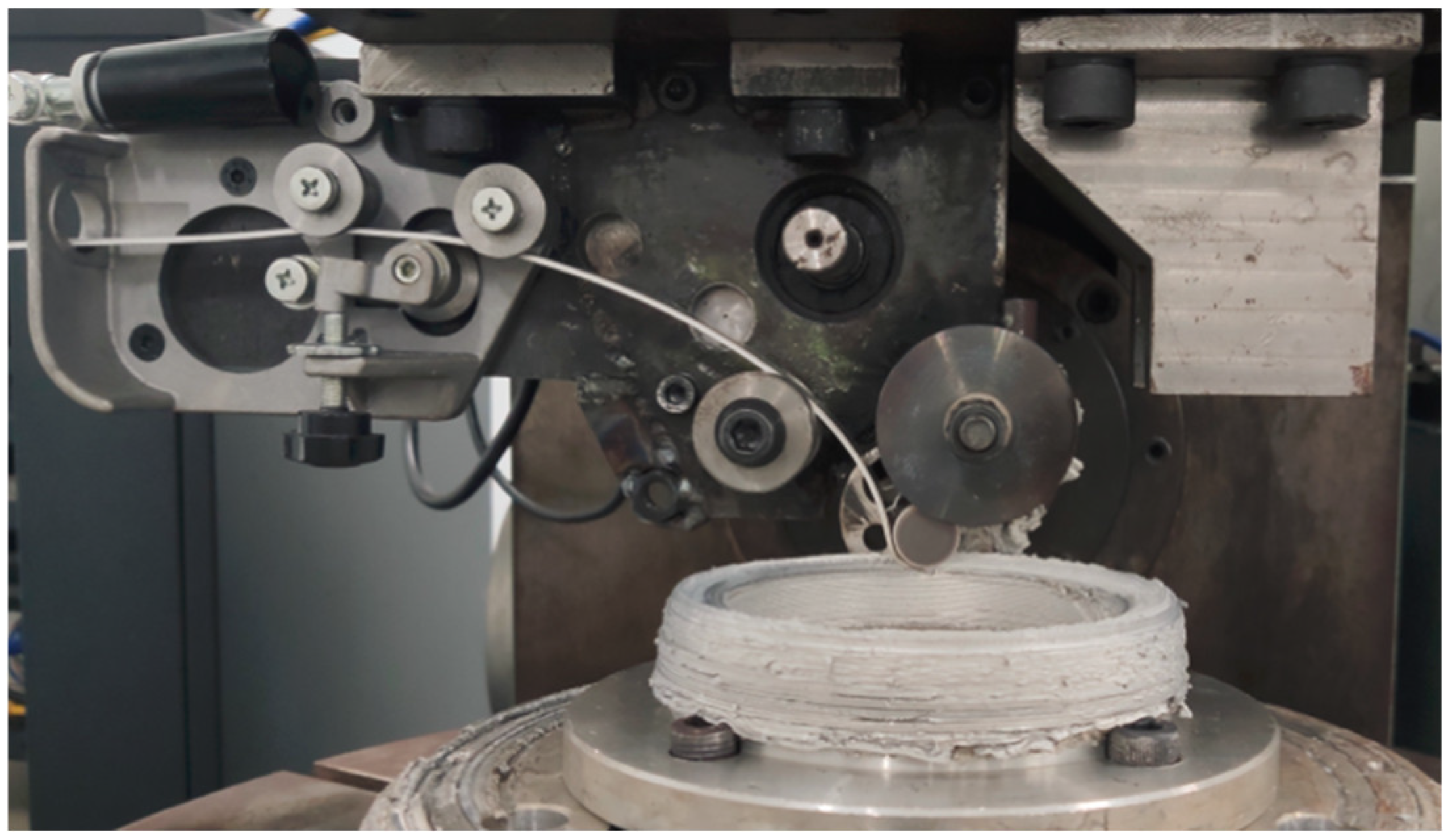
2. Experimental Procedures
Materials and Methods
3. Establishment of Thermomechanical Coupled Model
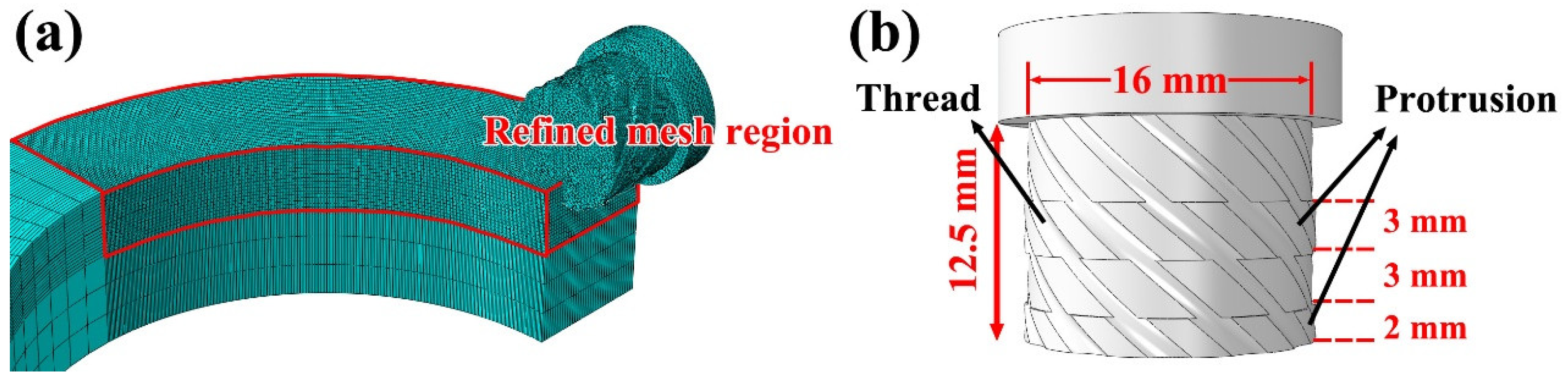
3.1. Geometric Model and Mesh
3.2. Material Model and Boundary Conditions
- (1)
- In this study, the contact heat transfer between the workpiece and the backing plate was neglected, and the contact heat transfer between the workpiece and the platen was simplified as convective heat transfer.
- (2)
- The friction coefficient was simplified as a constant value.
- (3)
- The sheet and substrate materials were considered homogeneous and isotropic, while the tool tip was assumed to be a rigid body with incompressible volume.
4. Result and Discussion
4.1. Numerical Simulation
4.1.1. Temperature Distribution Characteristics
4.1.2. Stress Distribution Characteristics
4.1.3. Material Flow Simulation
4.2. Experimental Verification
4.2.1. Residual Stress
4.2.2. Microstructure and Defect Characterization
4.3. Mechanism of Texture Formation of FRAM
5. Conclusions
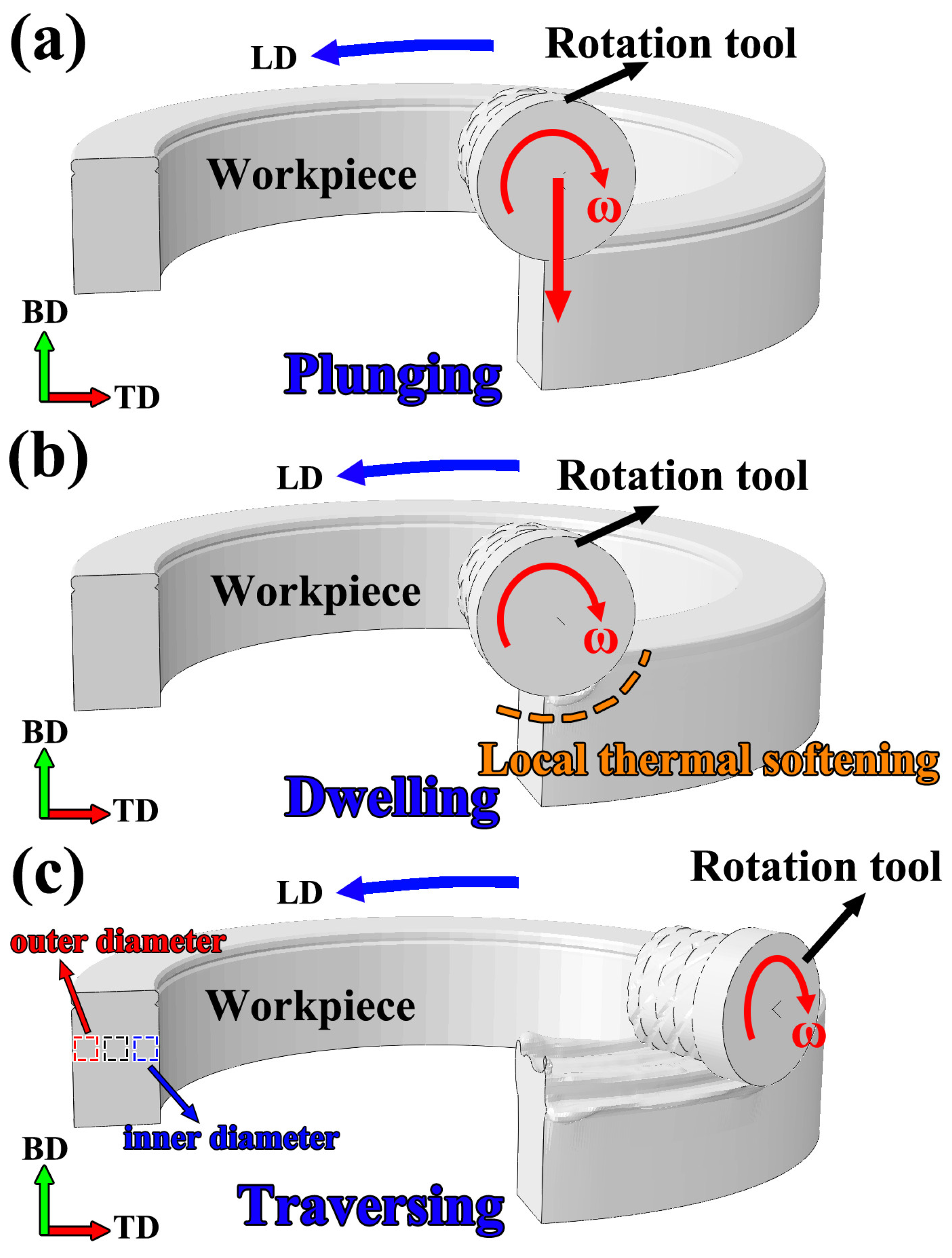
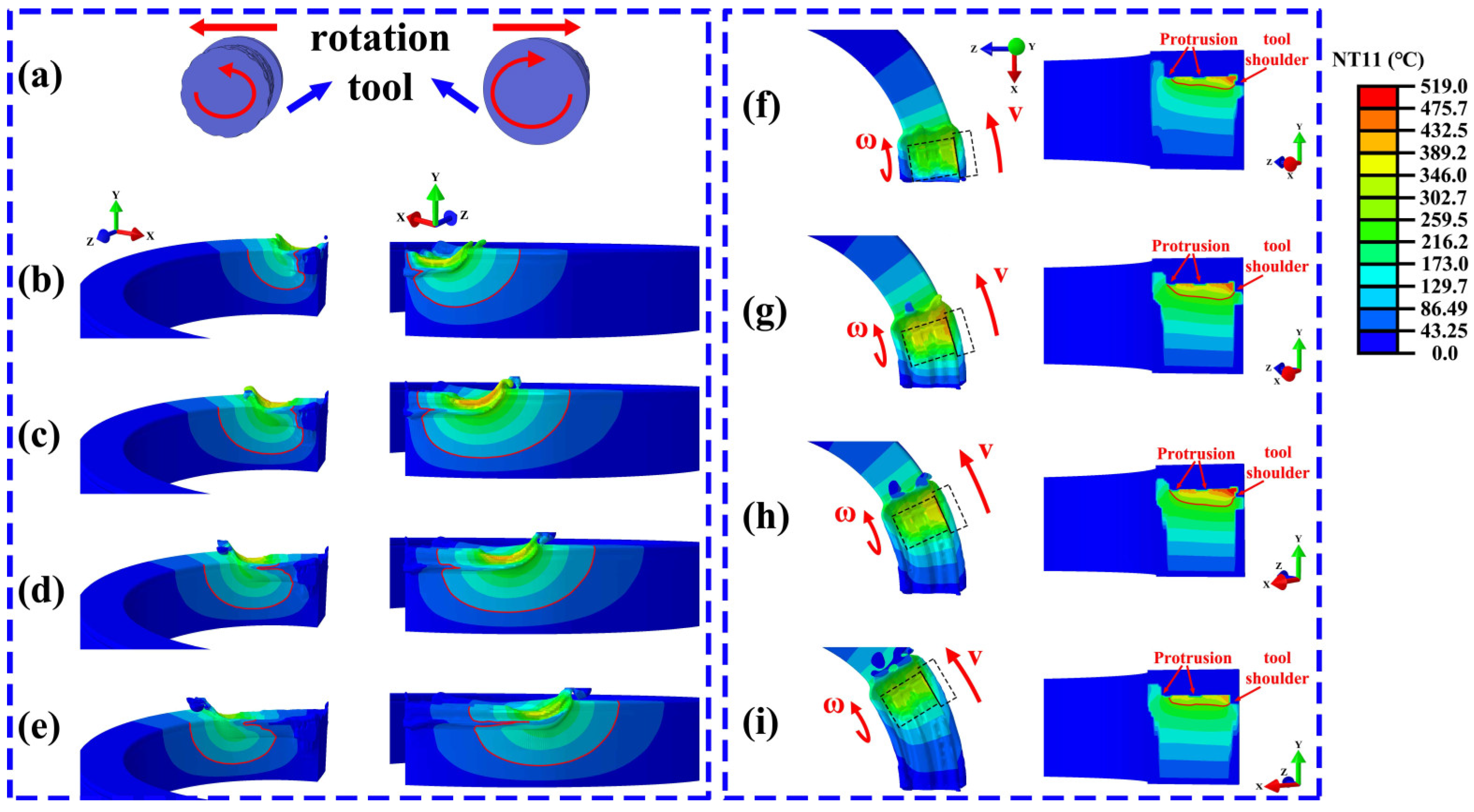
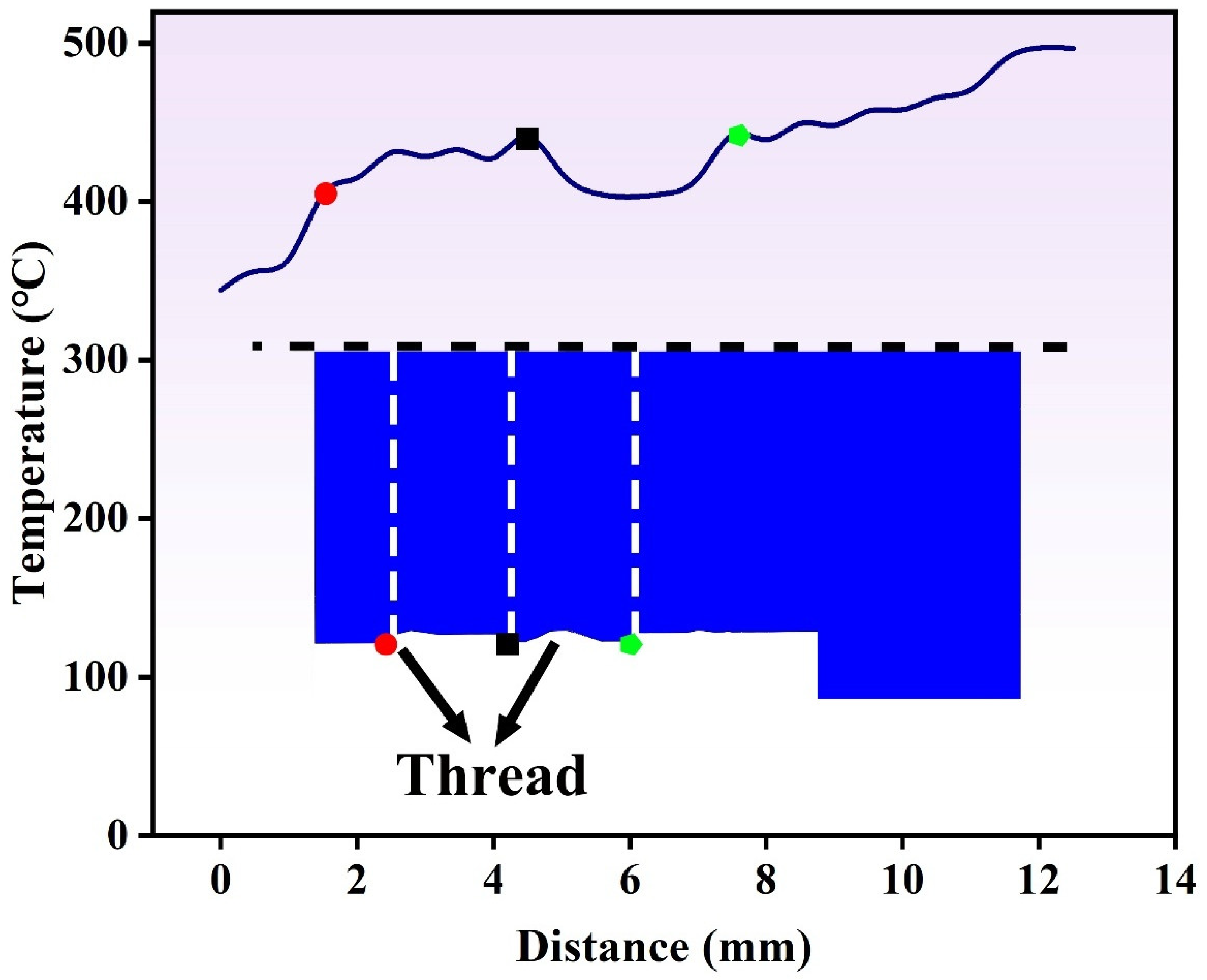
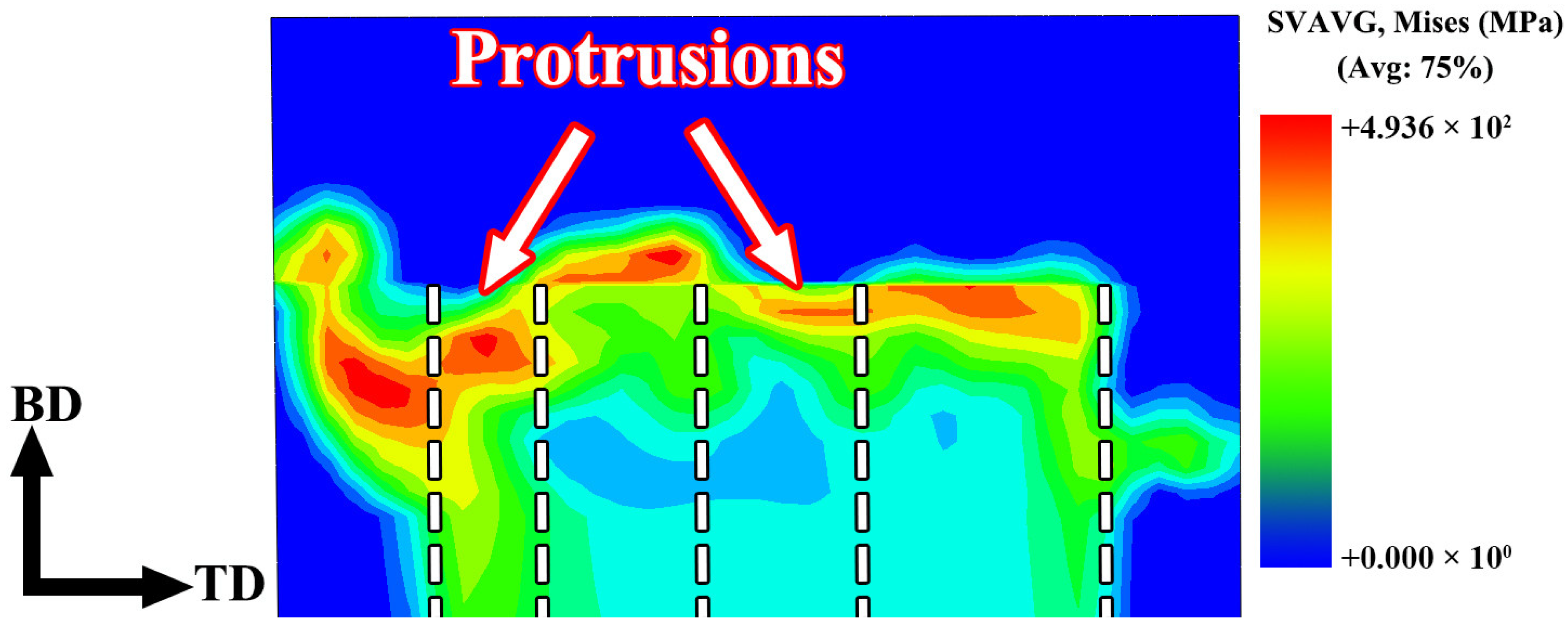
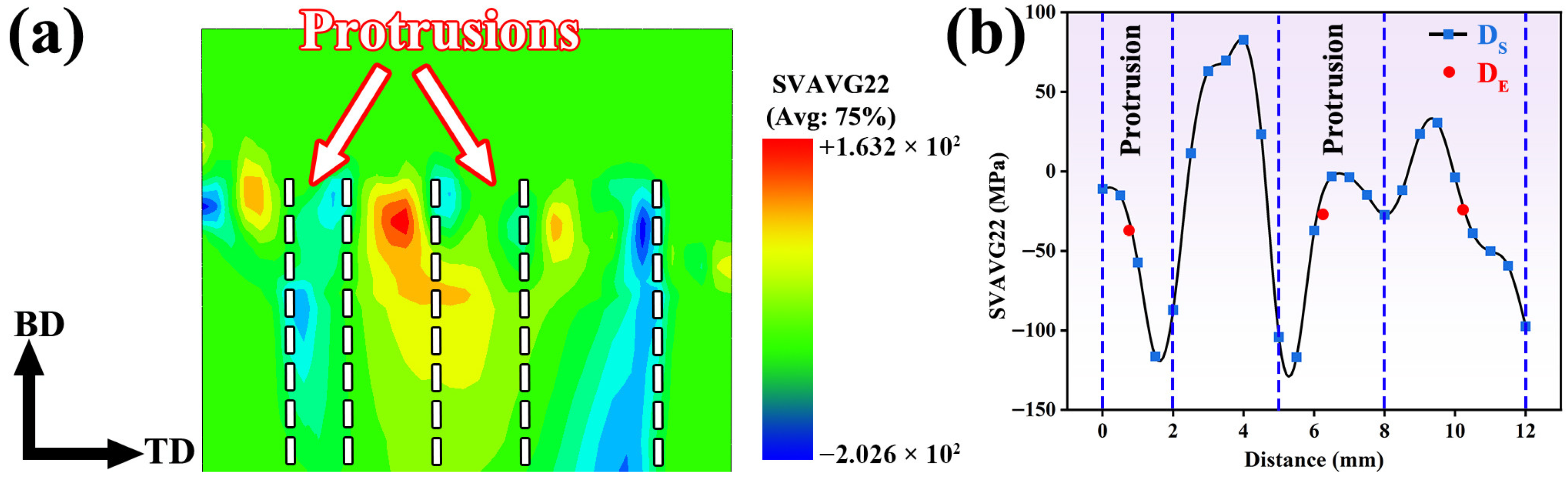
- During the FRAM process for fabricating ring component, the peak temperature was primarily concentrated in the front region of the rotating tool along the advancing direction. Moreover, the more pronounced friction between the tool shoulder and the outer-diameter side of the ring resulted in the temperature on the outer-diameter side remaining consistently higher than that on the inner-diameter side throughout the additive process. The simulation results of residual stress revealed that, due to the absence of frictional effect with the tool shoulder on the inner-diameter side, the cooling rate in this region increased, resulting in higher residual stress compared to other regions. The measured residual stress along the BD indicated close consistency with the corresponding simulation results, thereby indirectly validating the reliability and applicability of the thermo-mechanical coupling model established in this study.
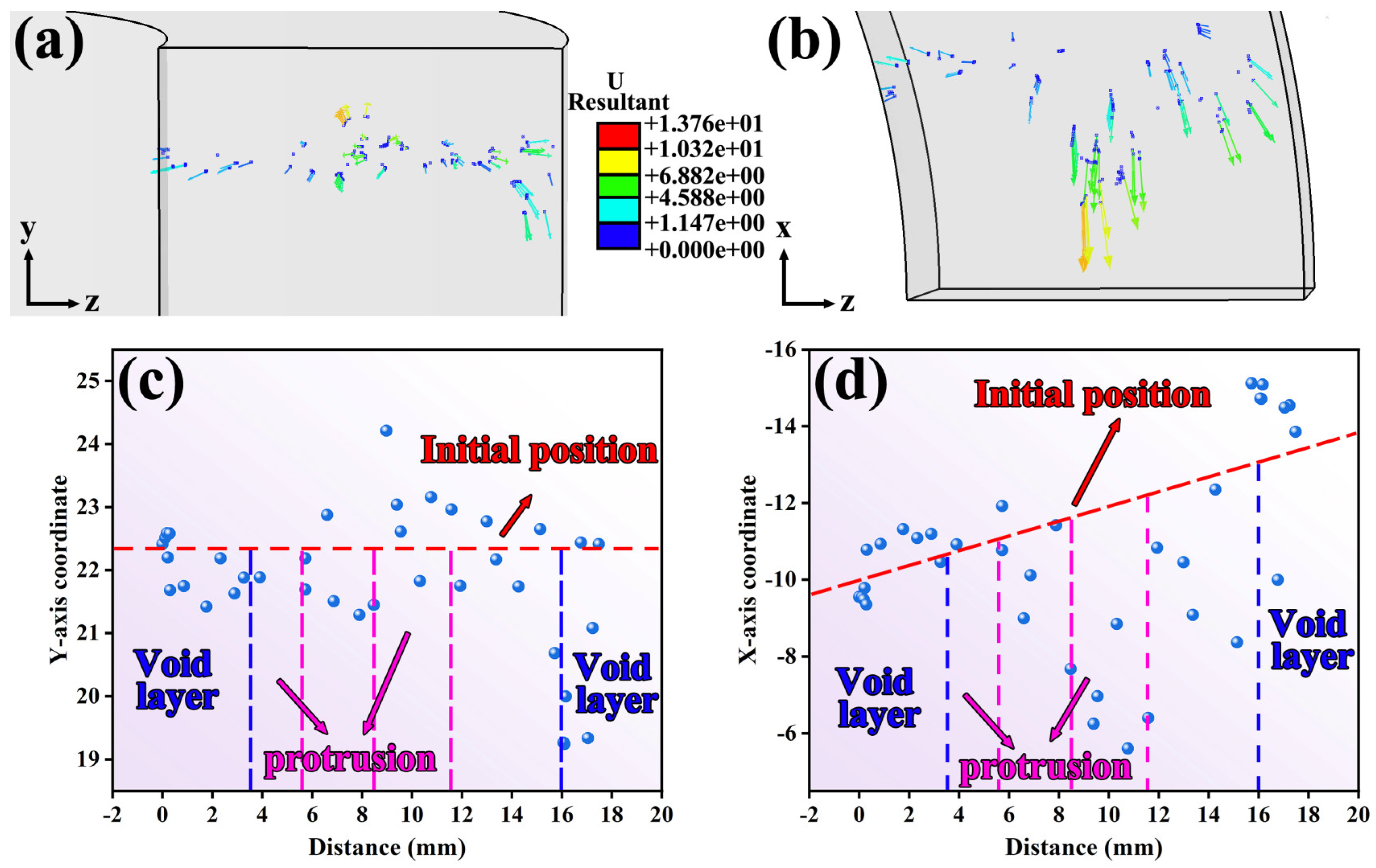
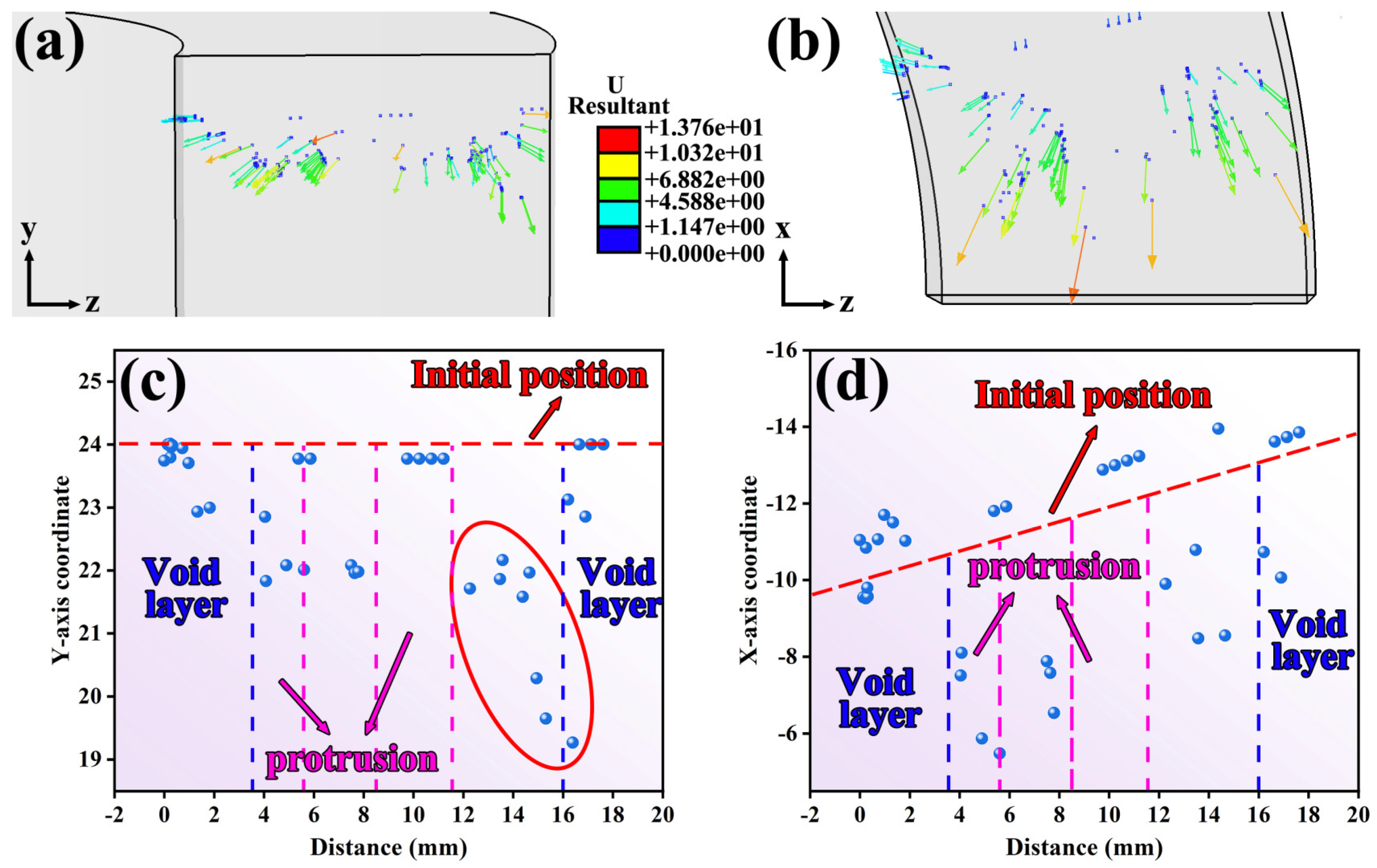
- Tracer particle analysis revealed that, during the FRAM process of ring components, the material initially flowed downward along the build direction and subsequently accumulated behind the rotating tool. The material tended to migrate toward the inner-diameter side under the combined effect of tool threads and the geometric constraints imposed by the ring. Notably, in the outer-diameter edge region, the constraints imposed by the tool shoulder and the ring geometry produced a pronounced inclined downward flow, leading to microstructural variations between the edge and central regions.
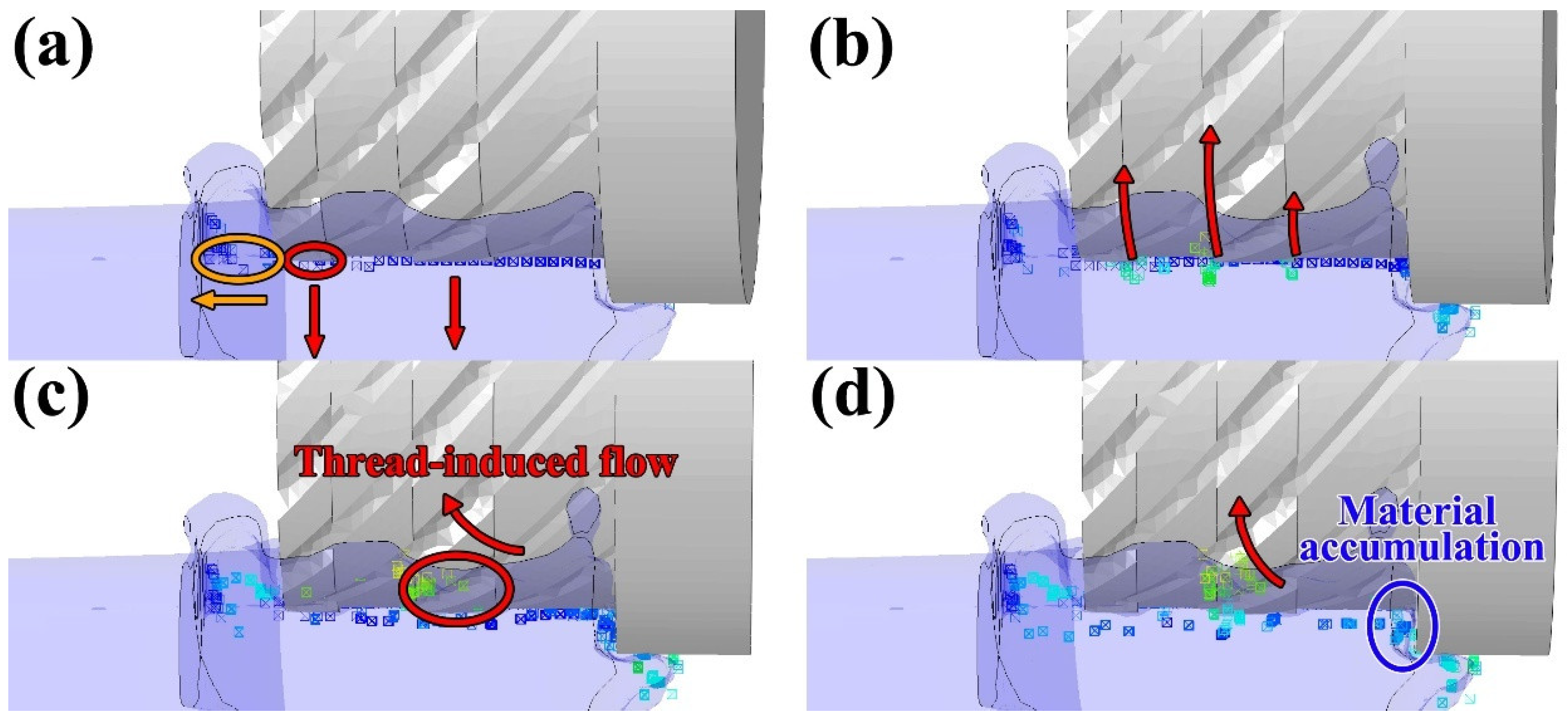
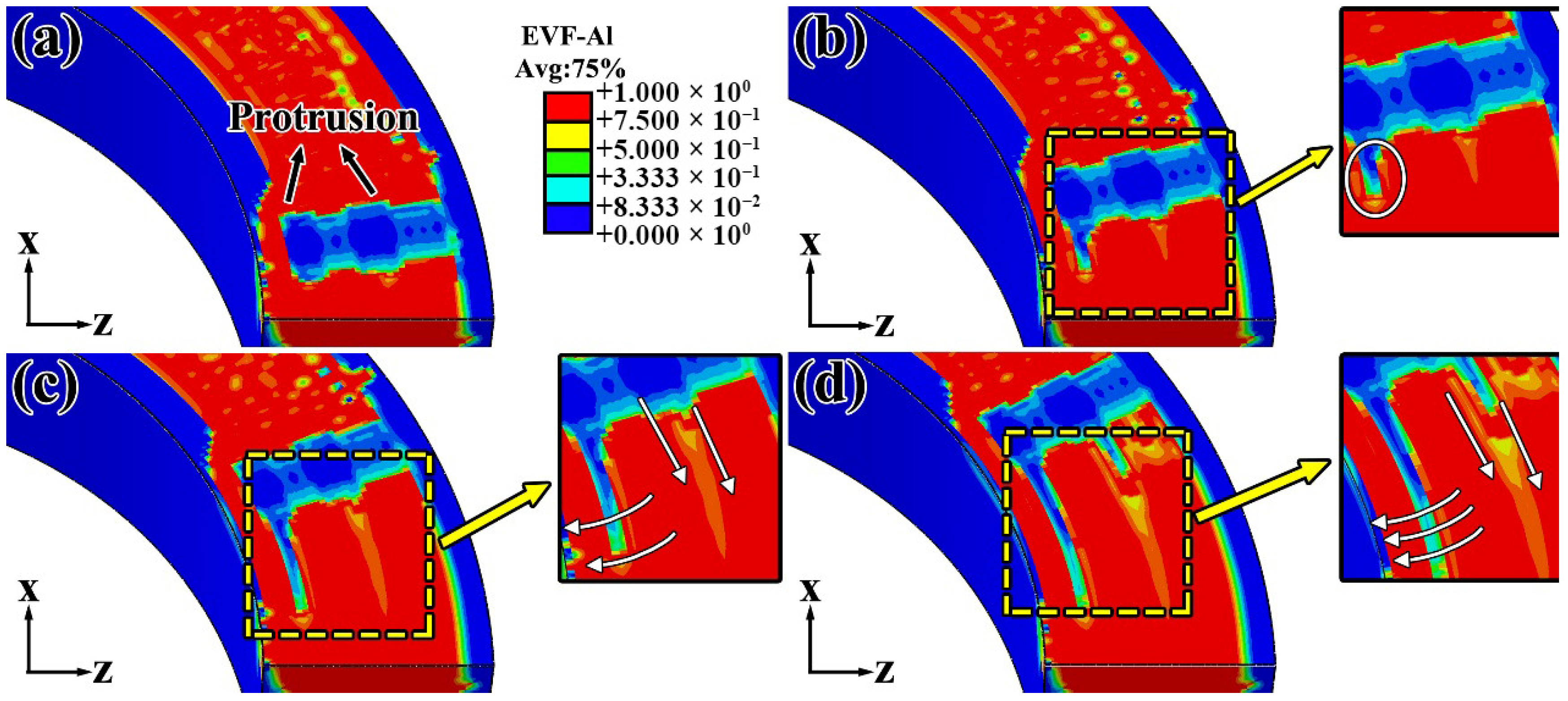
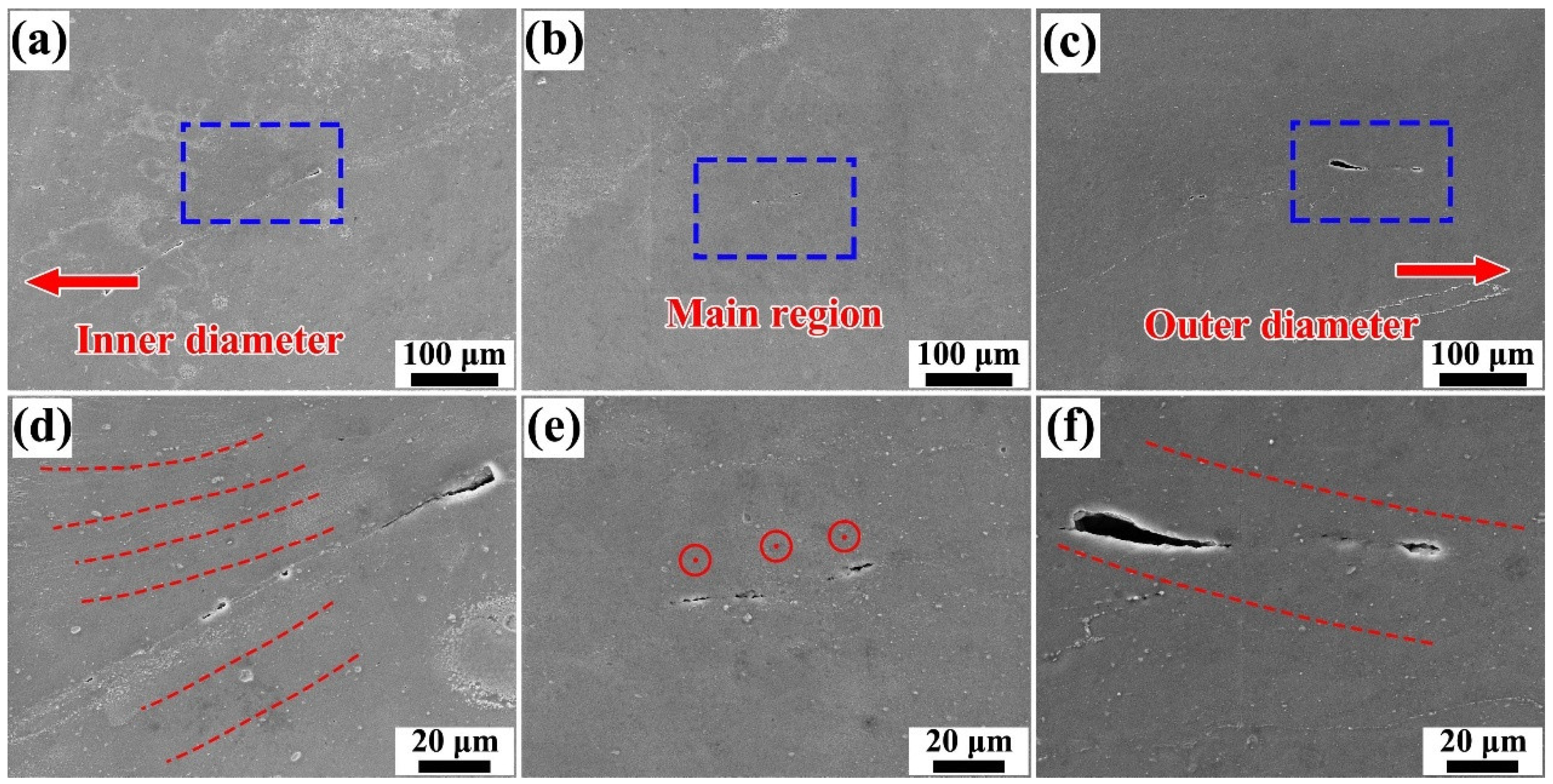
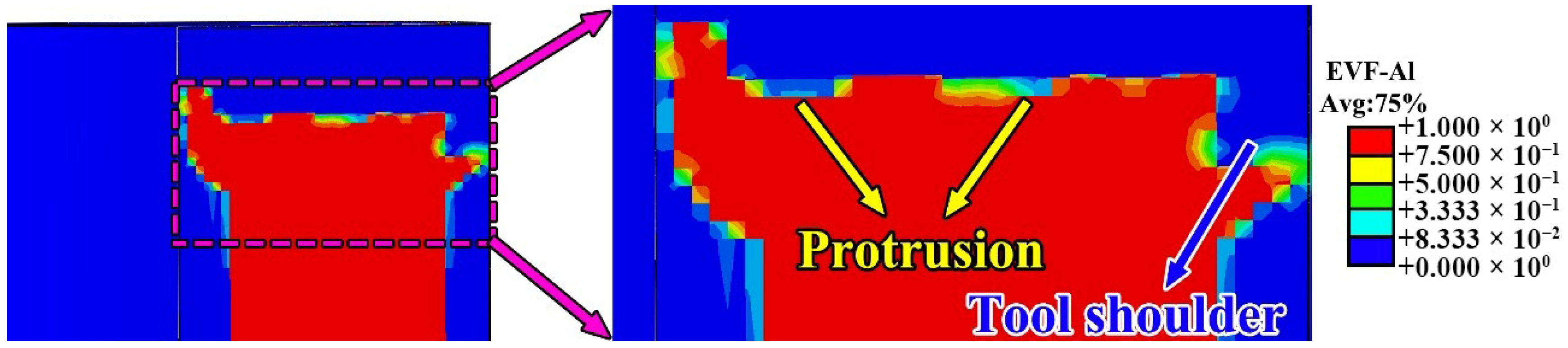
- EVF analysis further elucidated the material filling mechanism during the FRAM process of ring component. As the material accumulated behind the rotating tool, the material in the inner-diameter and central regions exhibited a tendency to migrate toward the inner-diameter side, with this trend being more pronounced in the inner-diameter region due to the absence of shoulder constraint. In contrast, in the outer-diameter edge region, the combined action of the tool shoulder and the ring geometry caused the material to accumulate behind the tool and to exhibit a pronounced downward flow along an inclined path. These distinct flow patterns ultimately resulted in variations in the morphology of unbonded defects across different regions.
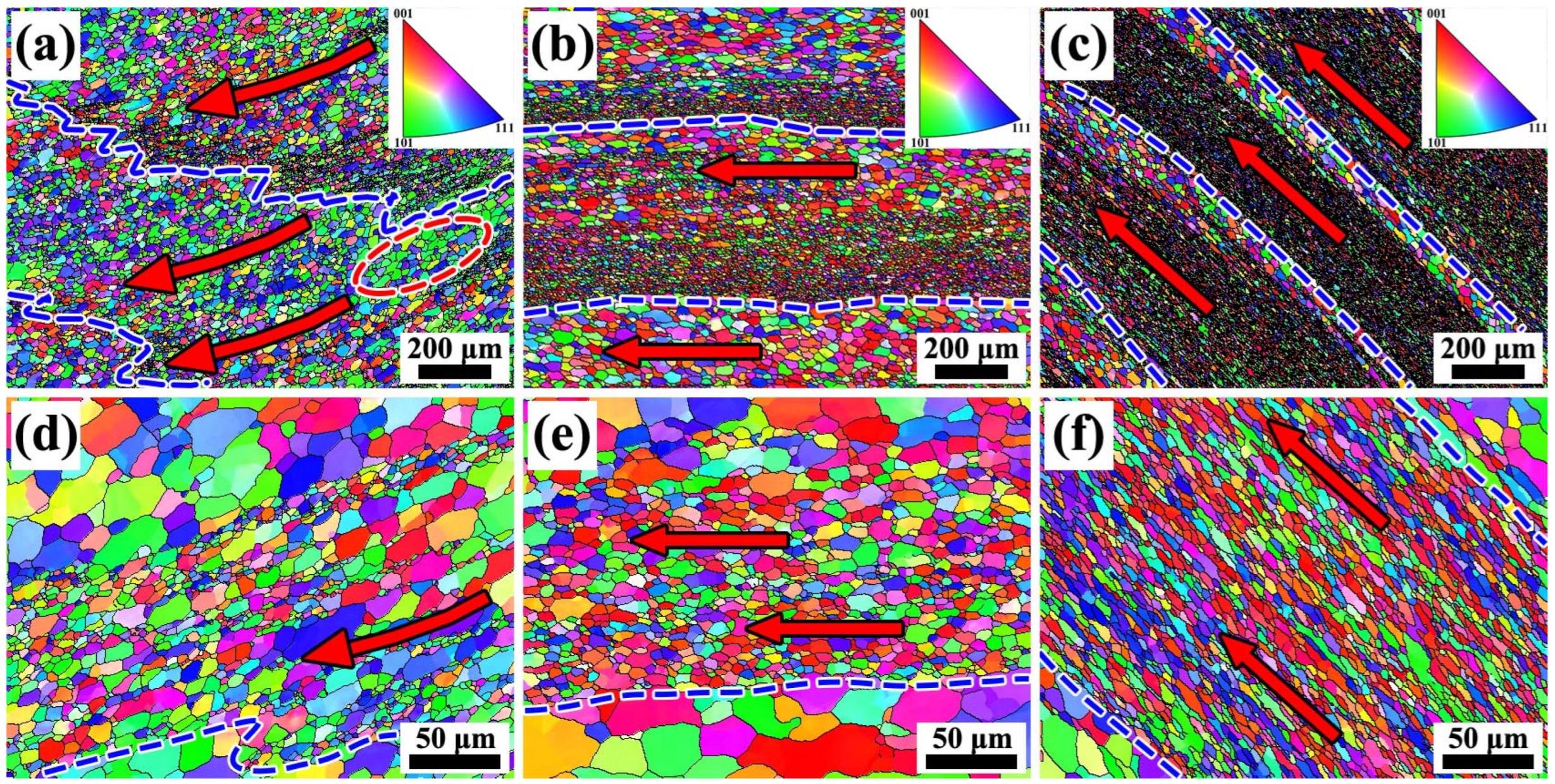
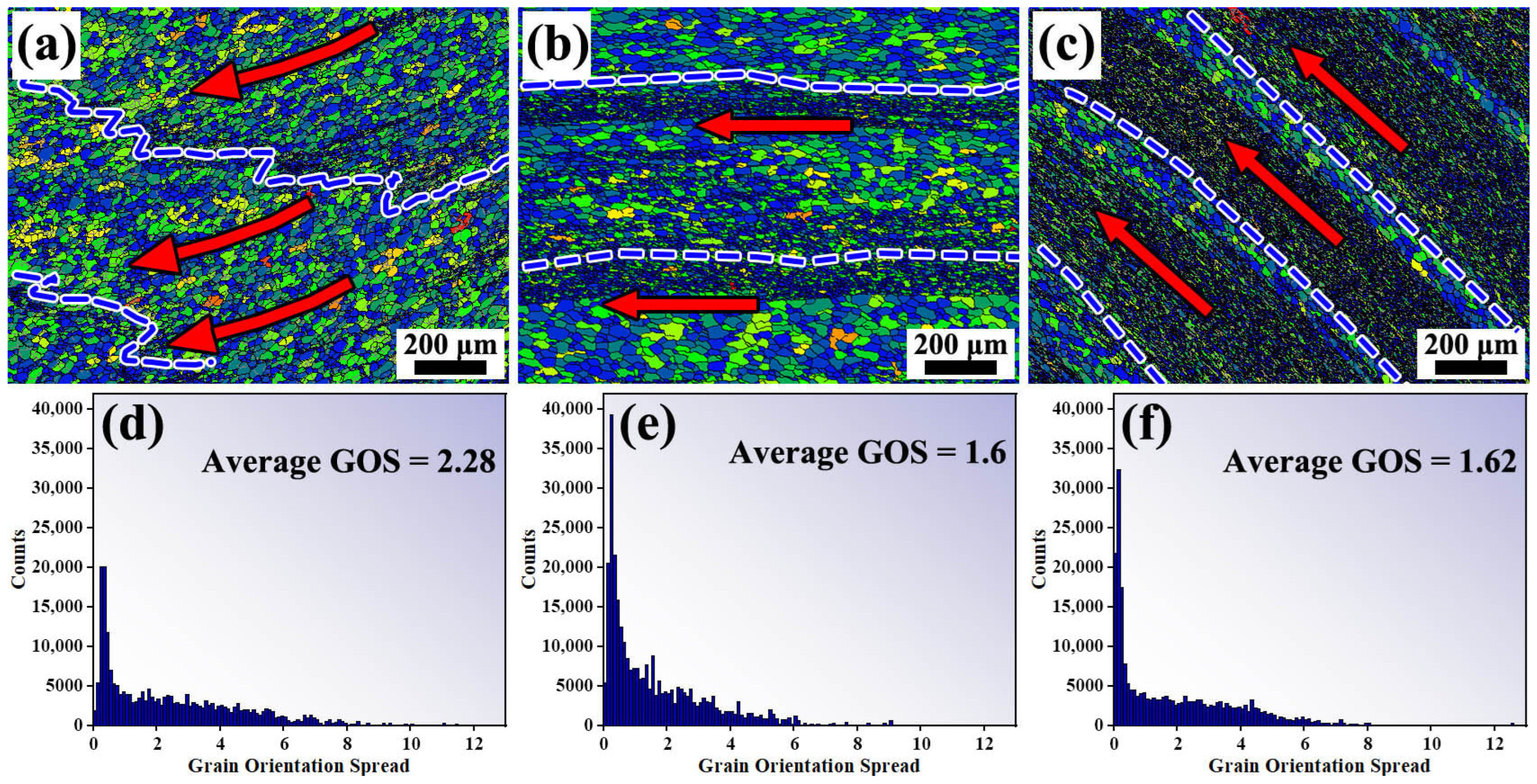
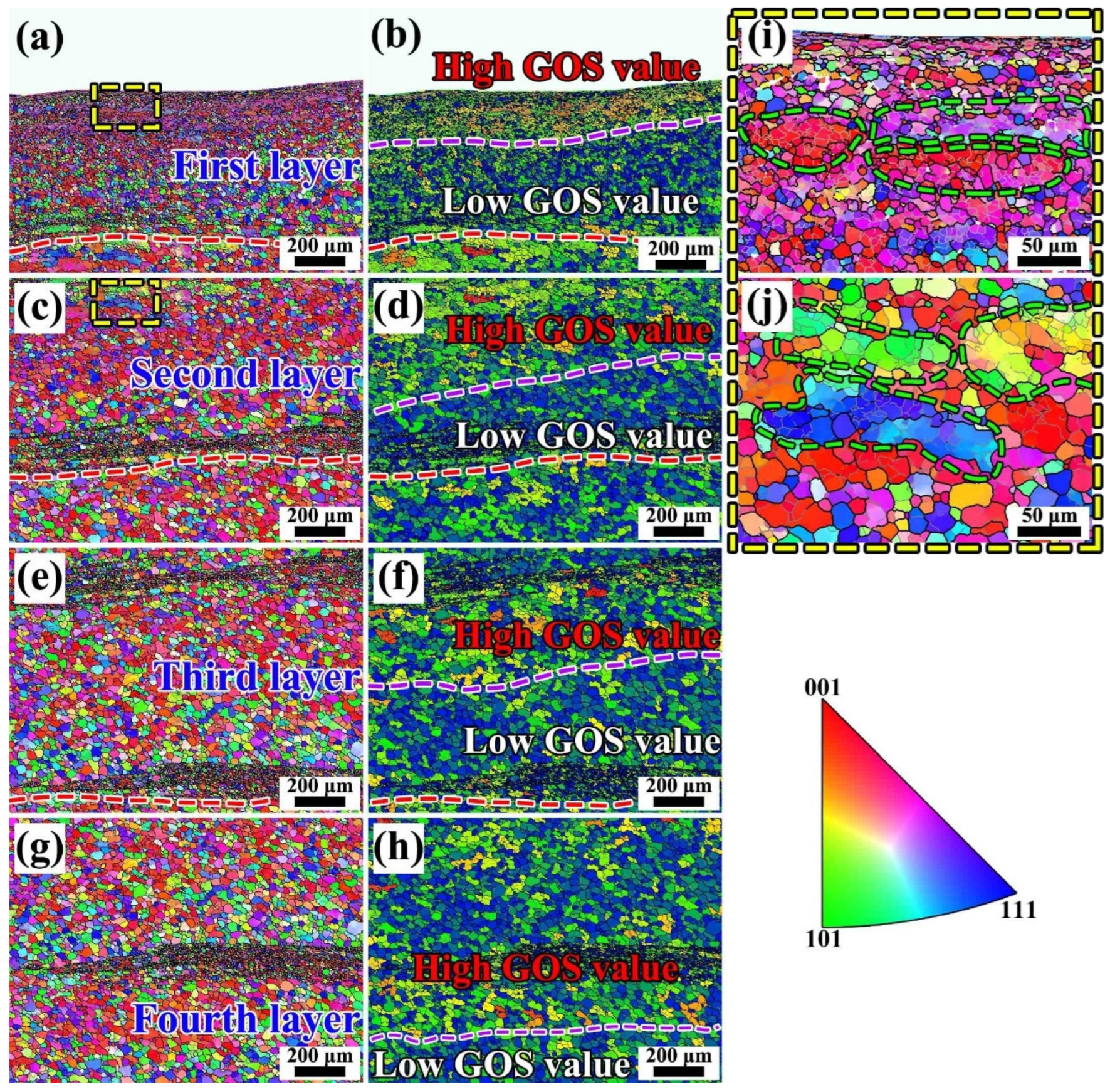
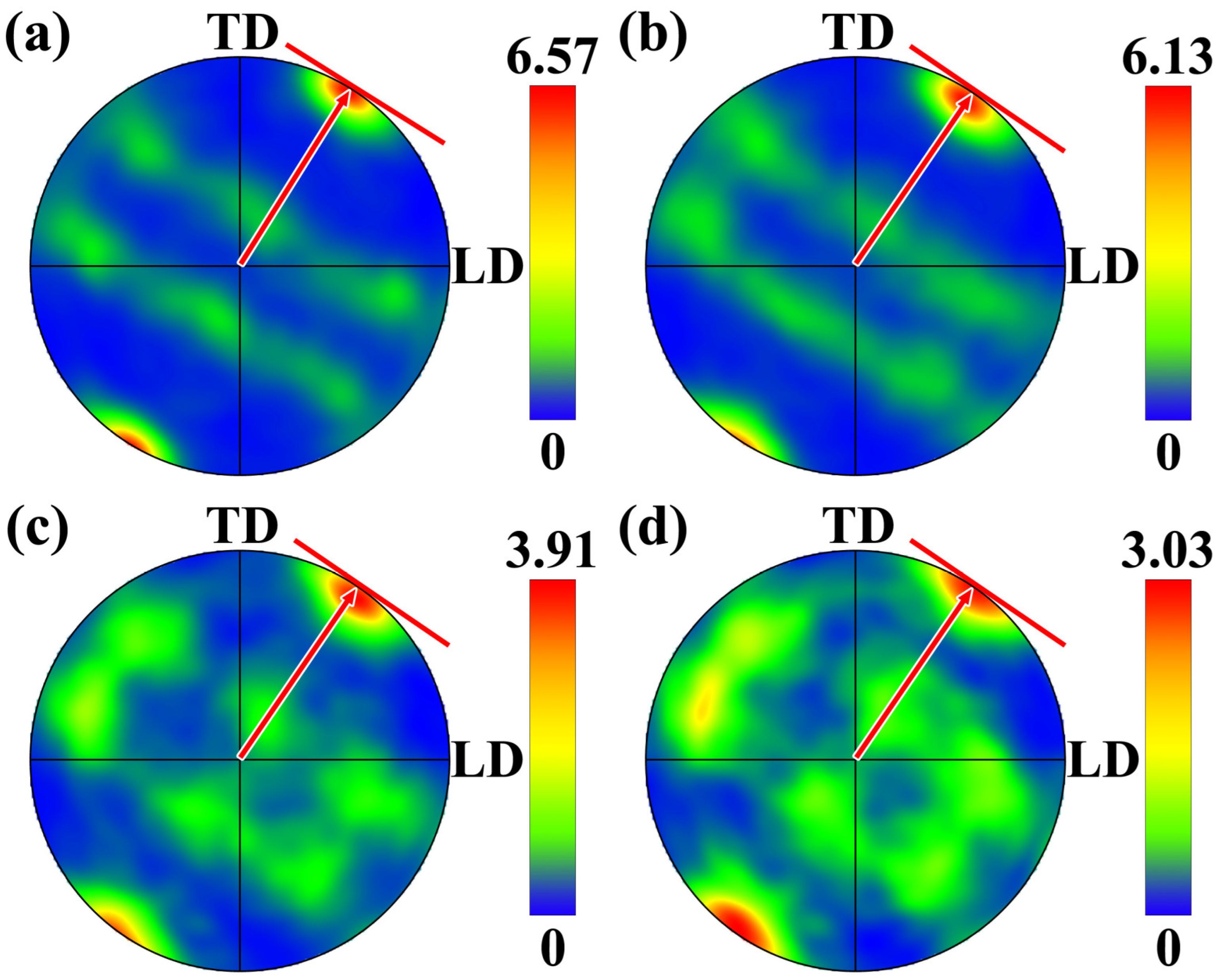
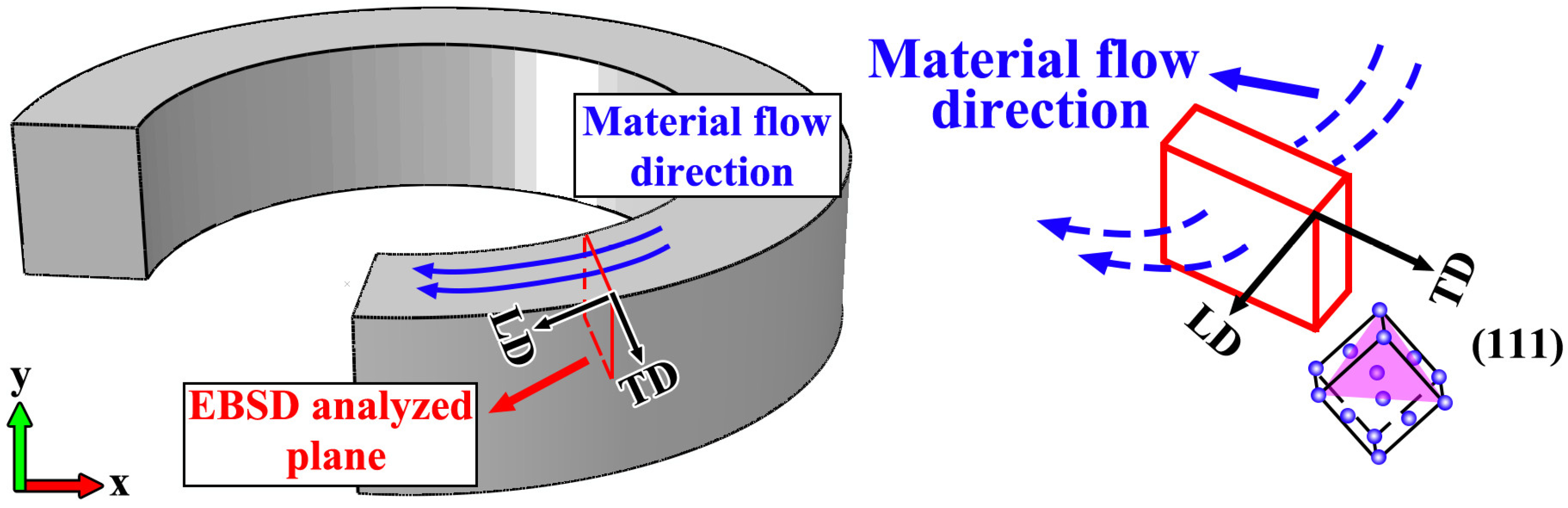
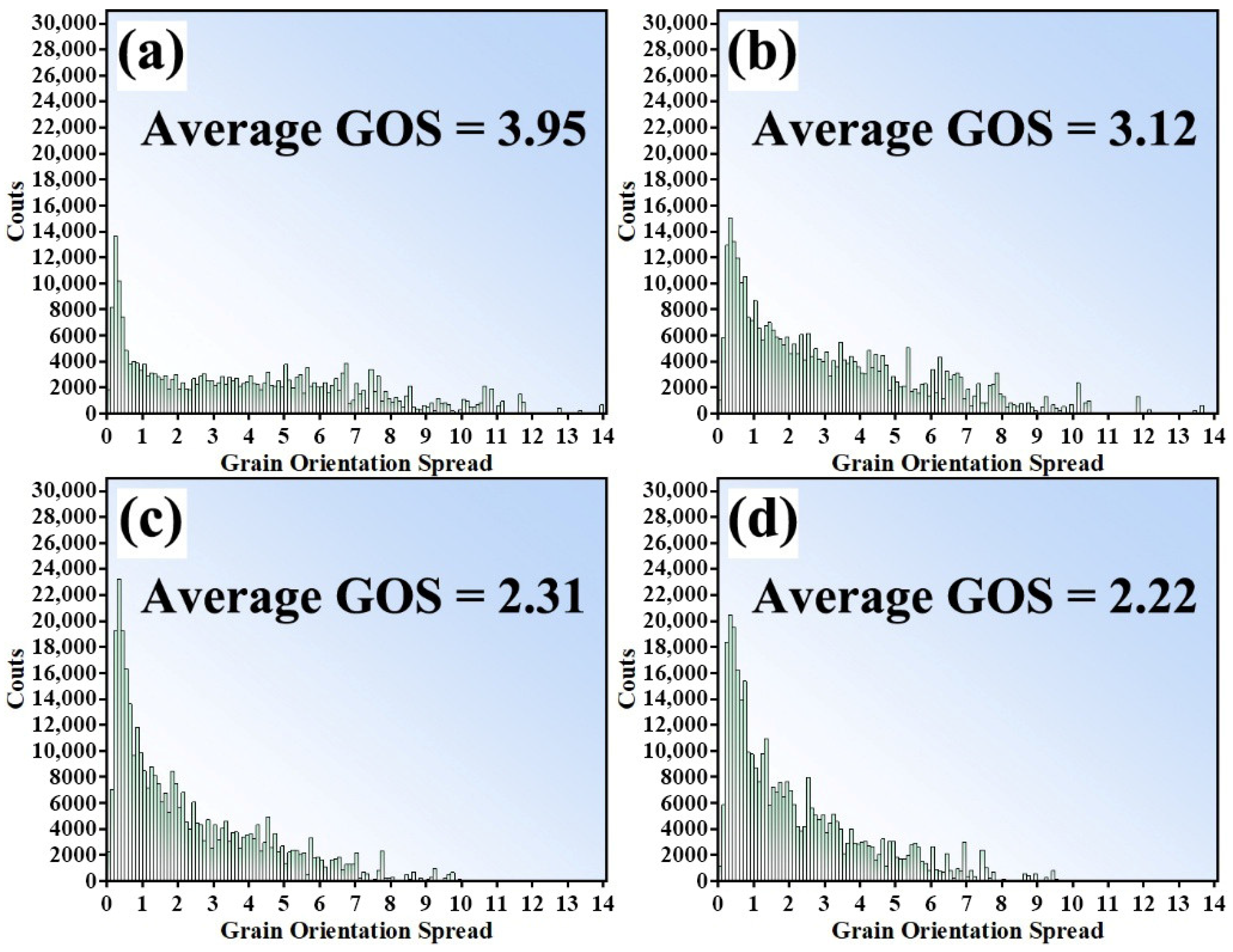
- Describing the temporal evolution process through the layer-by-layer deposition sequence along the build direction, the microstructural evolution of the first deposited layer under different deposition sequences was systematically investigated. The results demonstrated that, during the deposition of the first layer, intense shear deformation in the top region led to the development of a pronounced texture with {111} planes aligned parallel to the shear direction, accompanied by a high density of subgrain structures within the grains. As additional layers were deposited, the temperature rise promoted continuous dynamic recrystallization in the underlying grains, gradually transforming the microstructure into a fully recrystallized equiaxed grain structure, and with the deposition of the fourth layer, the recrystallization process was complete.
Author Contributions
Funding
Data Availability Statement
Conflicts of Interest
References
- Zhu, S.; Yang, H.; Guo, L.; Gu, R. Investigation of deformation degree and initial forming temperature dependences of microstructure in hot ring rolling of TA15 titanium alloy by multi-scale simulations. Comput. Mater. Sci. 2012, 65, 221–229. [Google Scholar] [CrossRef] [Scilit]
- Zhou, G.; Hua, L.; Qian, D. 3D coupled thermo-mechanical FE analysis of roll size effects on the radial–axial ring rolling process. Comput. Mater. Sci. 2011, 50, 911–924. [Google Scholar] [CrossRef] [Scilit]
- Zhou, G.; Hua, L.; Lan, J.; Qian, D. FE analysis of coupled thermo-mechanical behaviors in radial–axial rolling of alloy steel large ring. Comput. Mater. Sci. 2010, 50, 65–76. [Google Scholar] [CrossRef] [Scilit]
- Francesco, G.; Leonardo, C.; Barbara, P.; Gökhan, D. The influence of novel beam shapes on melt pool shape and mechanical properties of LPBF produced Al-alloy. J. Manuf. Process. 2023, 85, 1024–1036. [Google Scholar]
- Sun, Z.; Yang, H.; Ou, X. Effects of process parameters on microstructural evolution during hot ring rolling of AISI 5140 steel. Comput. Mater. Sci. 2010, 49, 134–142. [Google Scholar] [CrossRef] [Scilit]
- Qian, D.; Pan, Y. 3D coupled macro–microscopic finite element modelling and simulation for combined blank-forging and rolling process of alloy steel large ring. Comput. Mater. Sci. 2013, 70, 24–36. [Google Scholar] [CrossRef] [Scilit]
- Zhang, Y.; Jiang, S.; Zhao, Y.; Shan, D. Isothermal precision forging of complex-shape rotating disk of aluminum alloy based on processing map and digitized technology. Mater. Sci. Eng. A 2013, 580, 294–304. [Google Scholar] [CrossRef] [Scilit]
- Zheng, G.; Wang, X.; Huang, K.; Liu, Z.; Han, X.; Hua, L. A multi-sensor information fusion method for measuring geometric states in ring rolling processes. J. Manuf. Process. 2025, 149, 664–678. [Google Scholar] [CrossRef] [Scilit]
- Arbak, M.; Tekkaya, A.E.; Özhan, F. Comparison of various preforms for hot forging of bearing rings. J. Mater. Process. Technol. 2005, 169, 72–82. [Google Scholar] [CrossRef] [Scilit]
- Li, R.; Wang, G.; Zhao, X.; Dai, F.; Huang, C.; Zhang, M.; Chen, X.; Song, H.; Zhang, H. Effect of path strategy on residual stress and distortion in laser and cold metal transfer hybrid additive manufacturing. Addit. Manuf. 2021, 46, 102203. [Google Scholar] [CrossRef] [Scilit]
- Cheng, J.; Huo, Y.; Fernandez-Zelaia, P.; Hu, X.; Li, M.; Sun, X. A Gaussian Process-Based extended Goldak heat source model for finite element simulation of laser powder bed fusion additive manufacturing process. Comput. Mater. Sci. 2024, 244, 113185. [Google Scholar] [CrossRef] [Scilit]
- Staroselsky, A.; Voytovych, D.; Acharya, R. Prediction of Ni-based alloy microstructure in wire arc additive manufacturing from cellular automata model. Comput. Mater. Sci. 2024, 233, 112721. [Google Scholar] [CrossRef] [Scilit]
- Wei, J.; He, C.; Zhao, Y.; Qie, M.; Qin, G.; Zuo, L. Evolution of microstructure and properties in 2219 aluminum alloy produced by wire arc additive manufacturing assisted by interlayer friction stir processing. Mater. Sci. Eng. A 2023, 868, 144794. [Google Scholar] [CrossRef] [Scilit]
- Chaudhary, B.; Jain, N.K.; Murugesan, J.; Patel, V. Friction stir powder additive manufacturing of Al 6061 alloy: Enhancing microstructure and mechanical properties by reducing thermal gradient. J. Mater. Res. Technol. 2023, 26, 1168–1184. [Google Scholar] [CrossRef] [Scilit]
- Chaudhary, B.; Jain, N.K.; Murugesan, J.; Patel, V. Exploring temperature-controlled friction stir powder additive manufacturing process for multi-layer deposition of aluminum alloys. J. Mater. Res. Technol. 2022, 20, 260–268. [Google Scholar] [CrossRef] [Scilit]
- Rivera, O.G.; Allison, P.G.; Jordon, J.B.; Rodriguez, O.L.; Brewer, L.N.; McClelland, Z.; Whittington, W.R.; Francis, D.; Su, J.; Martens, R.L.; et al. Microstructures and mechanical behavior of Inconel 625 fabricated by solid-state additive manufacturing. Mater. Sci. Eng. A 2017, 694, 1–9. [Google Scholar] [CrossRef] [Scilit]
- Stubblefield, G.G.; Fraser, K.; Phillips, B.J.; Jordon, J.B.; Allison, P.G. A meshfree computational framework for the numerical simulation of the solid-state additive manufacturing process, additive friction stir-deposition (AFS-D). Mater. Des. 2021, 202, 109514. [Google Scholar] [CrossRef] [Scilit]
- Kirka, M.M.; Nandwana, P.; Lee, Y.; Dehoff, R.R. Solidification and solid-state transformation sciences in metals additive manufacturing. Scr. Mater. 2017, 135, 130–134. [Google Scholar] [CrossRef] [Scilit]
- Ji, Y.; Zhang, L.; Dong, Q.; Song, X.; Yang, B. Microstructure and tensile properties of 6061 aluminum alloy prepared by friction rolling additive manufacturing. J. Mater. Res. Technol. 2025, 35, 5464–5474. [Google Scholar] [CrossRef] [Scilit]
- Ji, Y.; Zhang, L.; Dong, Q.; Yang, B. Microstructure, texture and mechanical properties of FRAM-6061 aluminum alloy under rolling at different temperatures. Mater. Sci. Eng. A 2025, 942, 148713. [Google Scholar] [CrossRef] [Scilit]
- Xie, R.; Shi, Y.; Liu, H.; Chen, S. A novel friction and rolling based solid-state additive manufacturing method: Microstructure and mechanical properties evaluation. Mater. Today Commun. 2021, 29, 103005. [Google Scholar] [CrossRef] [Scilit]
- Xie, R.; Chen, P.; Shi, Y.; Chen, Y.; Liu, H.; Chen, S. Effect of feeding material shape on microstructures and mechanical properties in friction rolling additive manufacturing. Mater. Des. 2024, 241, 112952. [Google Scholar] [CrossRef] [Scilit]
- Xie, R.; Liang, T.; Chen, S.; Liu, H. In-depth understanding of rotating toolhead-induced heat generation and material flow behavior in friction-rolling additive manufacturing. Addit. Manuf. 2023, 67, 103496. [Google Scholar] [CrossRef] [Scilit]
- Liu, H.; Liu, Y.; Liang, T.; Xie, R.; Liu, B.; Wang, Z.; Han, Y.; Chen, S. Effect of press depth on defect formation in friction-rolling additive manufacturing. J. Manuf. Process. 2024, 119, 305–320. [Google Scholar] [CrossRef] [Scilit]
- GB/T 3190-2020; Chemical Composition of Wrought Aluminium and Aluminium Alloys. National Standard of the People’s Republic of China: Beijing, China, 2020.
- Tan, Z. Numerical Simulation of Microstructure and Mechanical Property of Material in Friction Stir Additive Manufacturing. Ph.D. Thesis, Dalian University of Technology, Dalian, China, 2022. [Google Scholar]
- Zhu, Z.; Wang, M.; Zhang, H.; Zhang, X.; Tan, Y.; Wu, Z. A Finite Element Model to Simulate Defect Formation during Friction Stir Welding. Metals 2017, 7, 256. [Google Scholar] [CrossRef] [Scilit]
- Atharifar, H.; Lin, D.; Kovacevic, R. Numerical and Experimental Investigations on the Loads Carried by the Tool During Friction Stir Welding. J. Mater. Eng. Perform. 2009, 18, 339–350. [Google Scholar] [CrossRef] [Scilit]
- Jiang, T.; Jiao, T.; Dai, G.; Shen, Z.; Guo, Y.; Sun, Z.; Li, W. Microstructure evolution and mechanical properties of 2060 Al-Li alloy via friction stir additive manufacturing. J. Alloys Compd. 2023, 935, 168019. [Google Scholar] [CrossRef] [Scilit]
- Xu, S.; He, J.; Zhang, R.; Zhang, F.; Wang, X. Hot deformation behaviors and dynamic softening mechanisms of 7Mo super-austenitic stainless steel with high stacking fault energy. J. Mater. Res. Technol. 2023, 23, 1738–1752. [Google Scholar] [CrossRef] [Scilit]
- Hadadzadeh, A.; Mokdad, F.; Wells, M.A.; Chen, D.L. A new grain orientation spread approach to analyze the dynamic recrystallization behavior of a cast-homogenized Mg-Zn-Zr alloy using electron backscattered diffraction. Mater. Sci. Eng. A 2018, 709, 285–289. [Google Scholar] [CrossRef] [Scilit]
- Sato, Y.S.; Kokawa, H.; Ikeda, K.; Enomoto, M.; Hashimoto, T.; Jogan, S. Microtexture in the friction-stir weld of an aluminum alloy. Metall. Mater. Trans. A 2001, 32, 941–948. [Google Scholar] [CrossRef] [Scilit]
- Fan, W.; Yang, X.; Su, Y.; Ma, T.; Chu, Q.; Xu, H.; Guo, Z.; Ma, S.; Meng, T.; Li, W. Investigation of material flow mechanisms and interface bonding in probeless friction stir spot welding of 2198-T8 aluminum-lithium alloy. Mater. Charact. 2025, 227, 115266. [Google Scholar] [CrossRef] [Scilit]










| Cu | Mn | Mg | Zn | Cr | Ti | Si | Fe | Al |
|---|---|---|---|---|---|---|---|---|
| 0.15~0.4 | 0.15 | 0.8~1.2 | 0.25 | 0.04~0.35 | 0.15 | 0.4~0.8 | 0.7 | Bal. |
| A (MPa) | B (MPa) | C | n | m | Tr (°C) | Tm (°C) |
|---|---|---|---|---|---|---|
| 324 | 114 | 0.002 | 0.42 | 1.34 | 25 | 583 |
Disclaimer/Publisher’s Note: The statements, opinions and data contained in all publications are solely those of the individual author(s) and contributor(s) and not of MDPI and/or the editor(s). MDPI and/or the editor(s) disclaim responsibility for any injury to people or property resulting from any ideas, methods, instructions or products referred to in the content. |
© 2026 by the authors. Licensee MDPI, Basel, Switzerland. This article is an open access article distributed under the terms and conditions of the Creative Commons Attribution (CC BY) license.
Share and Cite
Ji, Y.; Yang, B. Numerical Investigation of Material Flow and Defect Formation in FRAM-6061 Al Alloy Ring Component Using CEL Simulation. Materials 2026, 19, 236. https://doi.org/10.3390/ma19020236
Ji Y, Yang B. Numerical Investigation of Material Flow and Defect Formation in FRAM-6061 Al Alloy Ring Component Using CEL Simulation. Materials. 2026; 19(2):236. https://doi.org/10.3390/ma19020236
Chicago/Turabian StyleJi, Yan, and Bin Yang. 2026. "Numerical Investigation of Material Flow and Defect Formation in FRAM-6061 Al Alloy Ring Component Using CEL Simulation" Materials 19, no. 2: 236. https://doi.org/10.3390/ma19020236
APA StyleJi, Y., & Yang, B. (2026). Numerical Investigation of Material Flow and Defect Formation in FRAM-6061 Al Alloy Ring Component Using CEL Simulation. Materials, 19(2), 236. https://doi.org/10.3390/ma19020236