Article

Engineering-Oriented Genetic Algorithm Framework for Ultra-Broadband Metasurface Absorber Inverse Design

Engineering Research Center of Optical Instrument and Systems, Ministry of Education and Shanghai Key Lab of Modern Optical System, University of Shanghai for Science and Technology, Shanghai 200093, China
*
Author to whom correspondence should be addressed.
Materials 2026, 19(18), 3930; https://doi.org/10.3390/ma19183930
Submission received: 14 August 2026 / Revised: 10 September 2026 / Accepted: 14 September 2026 / Published: 16 September 2026
(This article belongs to the Section Advanced Nanomaterials and Nanotechnology)

Abstract

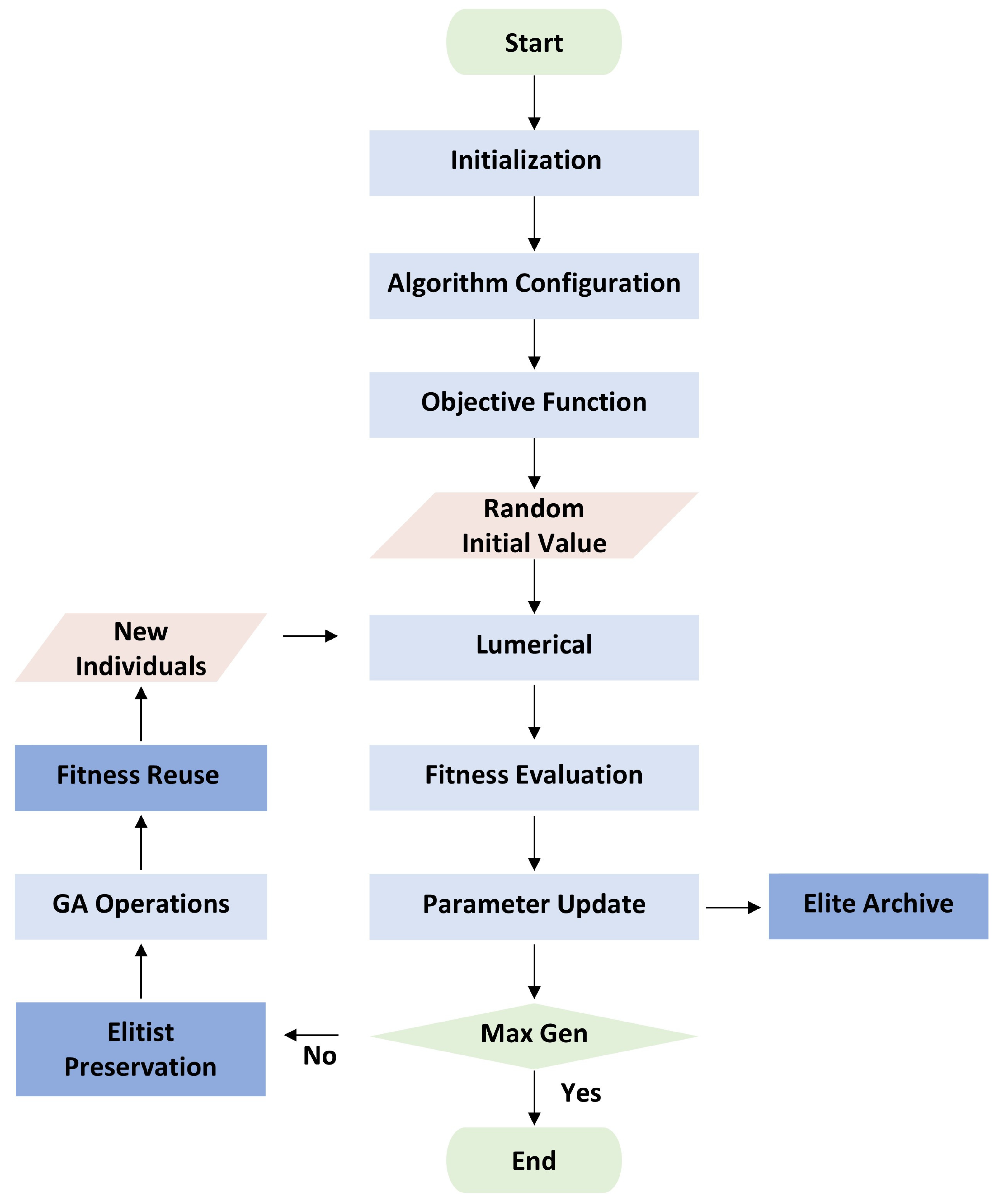
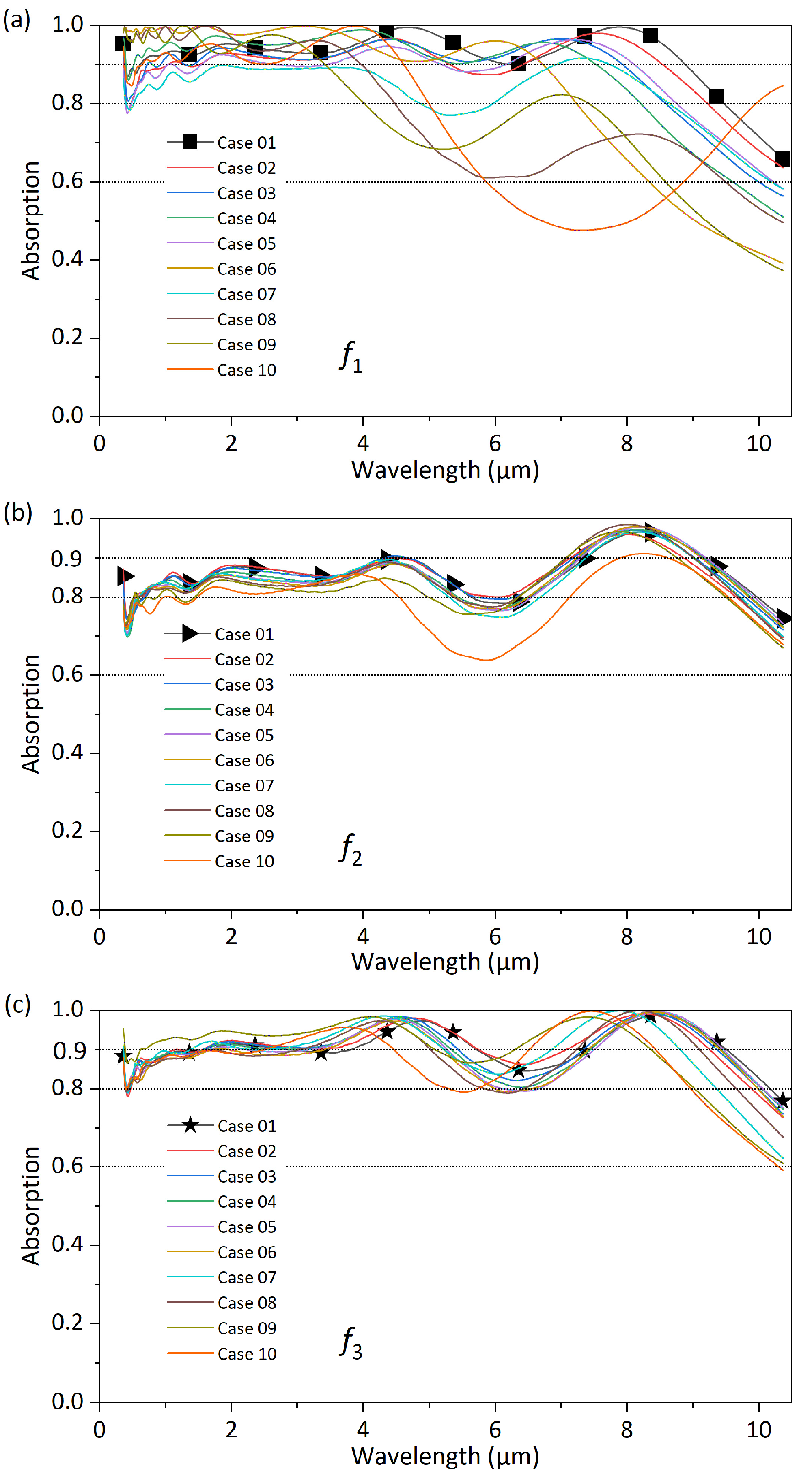
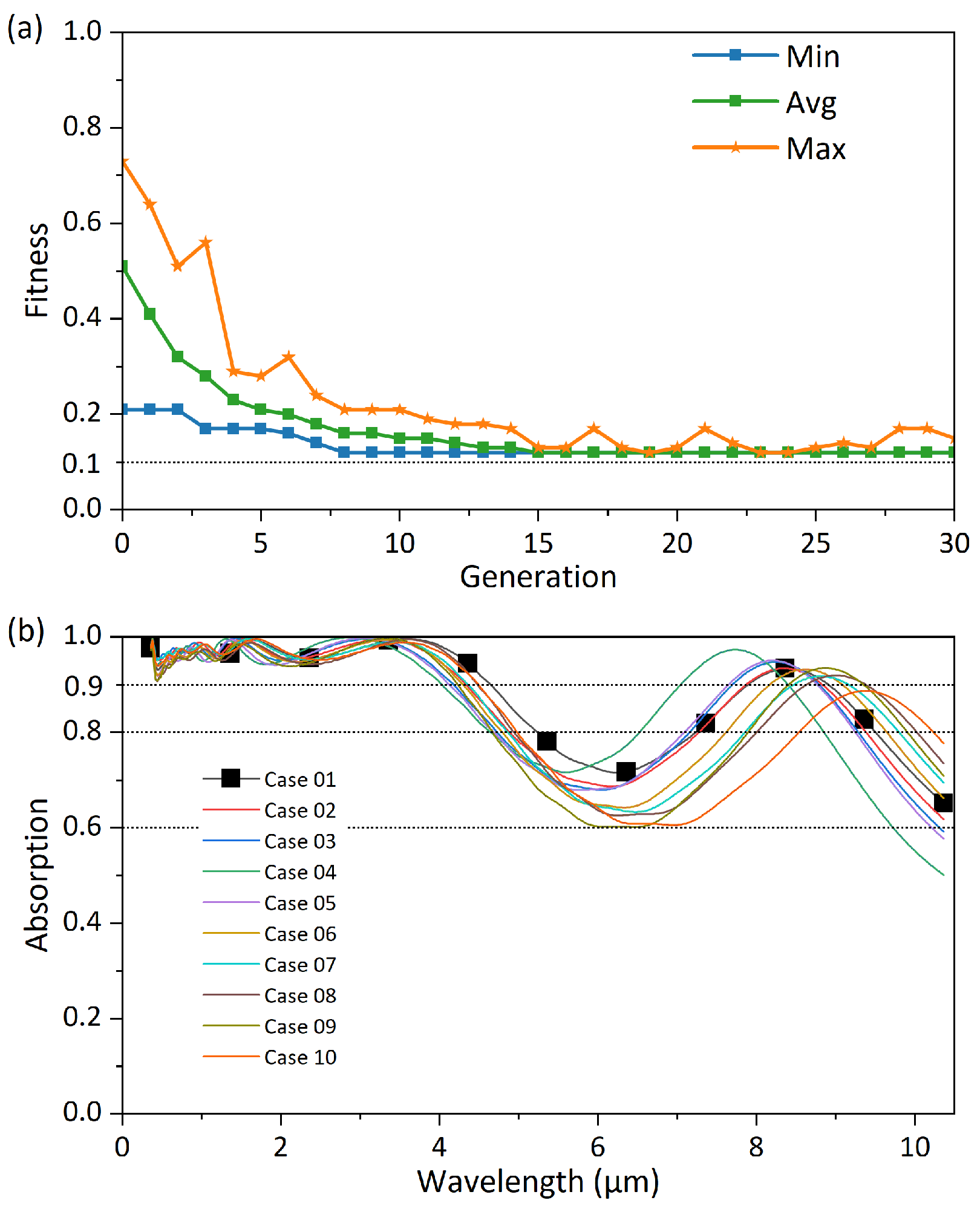
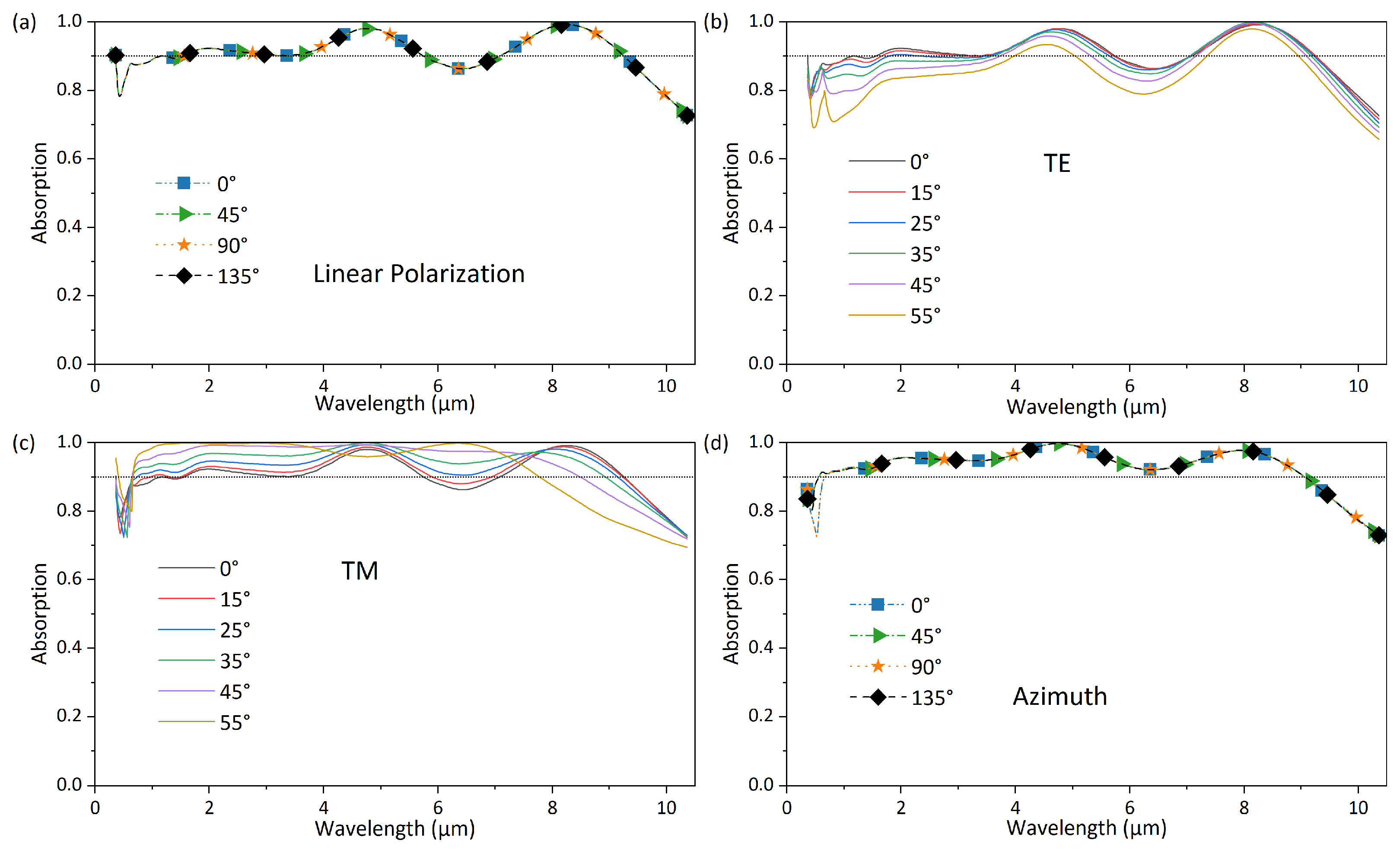
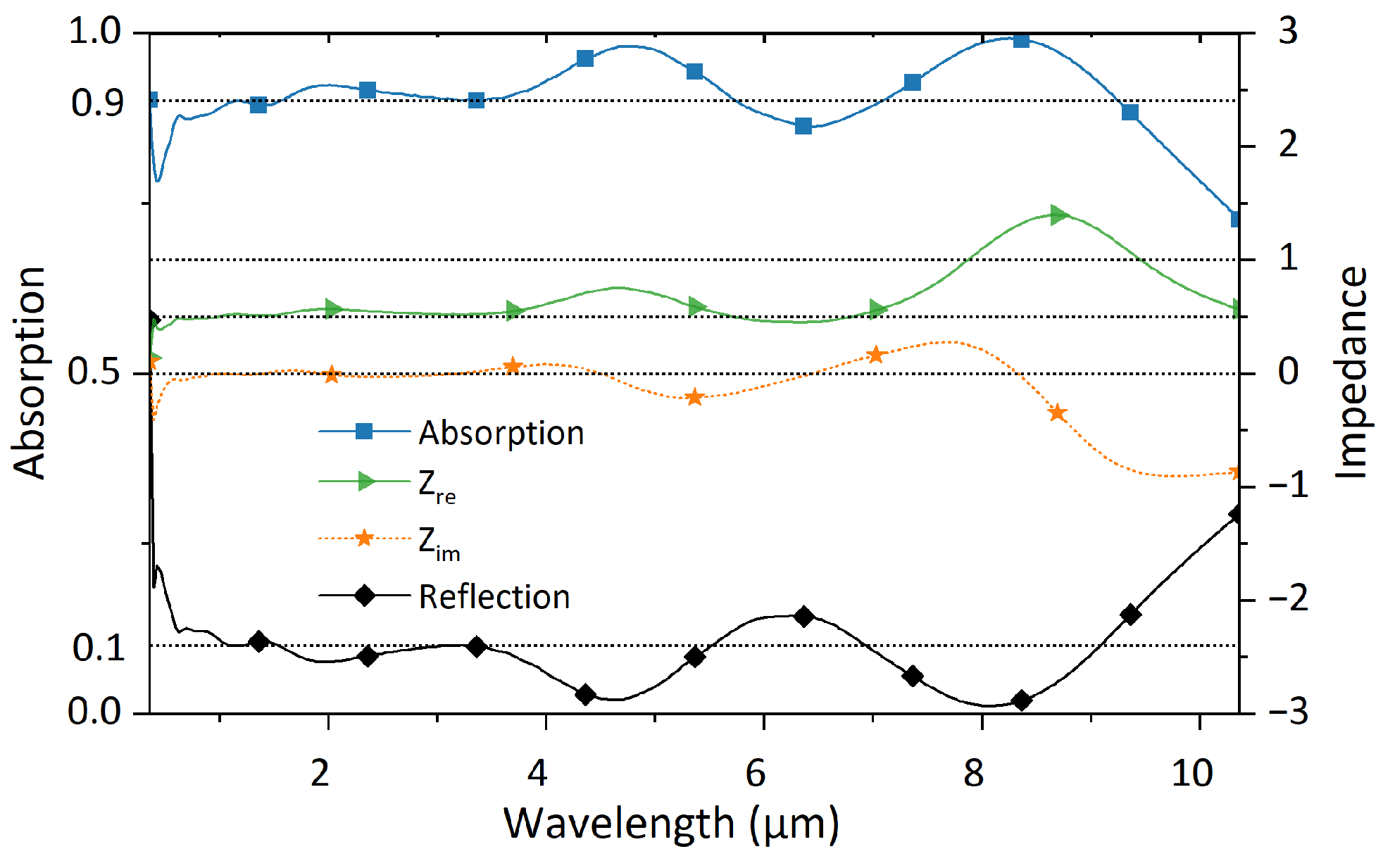
This paper proposes an engineering-oriented inverse-design framework to engineer metasurface nanostructures for ultra-broadband electromagnetic absorption over 0.36–10.36 μm. The framework integrates a genetic algorithm (GA) with finite difference time domain (FDTD) simulation and uses a composite objective function combining full-spectrum average reflectance and absorptivity standard deviation to balance absorption level and spectral uniformity. Three strategies, namely dynamic elitist preservation, fitness reuse, and diversified candidate expansion, are introduced to improve the search ability, reduce redundant FDTD evaluations, and retain multiple engineering-relevant candidate solutions. The optimized structure exhibits an average absorptivity of 90.9%, a standard deviation of 0.054, a coefficient of variation of 0.059, a deviation of 0.044, and a Relative Deviation of 0.049. The absorber also maintains robust performance under different polarization states and oblique incidence; over 0–55°, the average absorptivity is 88.9% for TE polarization and 92.5% for TM polarization, with an overall unpolarized average absorptivity of 90.7%. These results demonstrate a design workflow that extends GA inverse design from searching for a single minimum-fitness structure toward engineering-oriented multi-criteria candidate selection.
Keywords: improved genetic algorithm; metasurface absorber; ultra-broadband; FDTD; nanostructure array improved genetic algorithm; metasurface absorber; ultra-broadband; FDTD; nanostructure array