Article

Three-Dimensional Micro-CT Assessment of Radiopacity and Intra-Cavity Distribution of Universal Adhesives


Department of Operative Dentistry, Cariology and Pulp Biology, Tokyo Dental College, 2-9-18, Kanda-Misakicho, Chiyoda-ku, Tokyo 101-0061, Japan
*
Author to whom correspondence should be addressed.
Materials 2026, 19(14), 3080; https://doi.org/10.3390/ma19143080
Submission received: 16 June 2026 / Revised: 4 July 2026 / Accepted: 14 July 2026 / Published: 17 July 2026
(This article belongs to the Special Issue Innovative Restorative Dental Materials and Fabrication Techniques)

Abstract

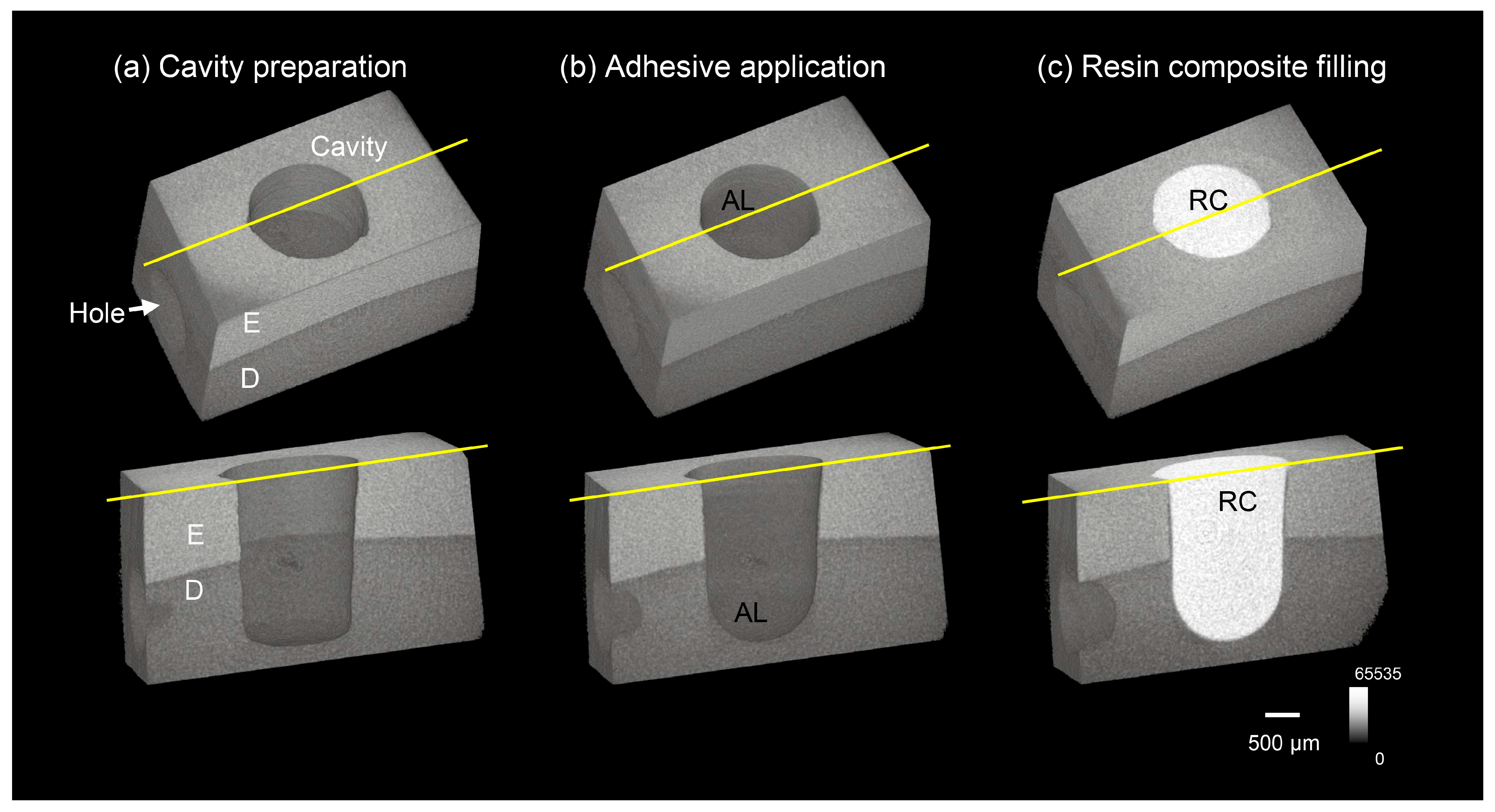
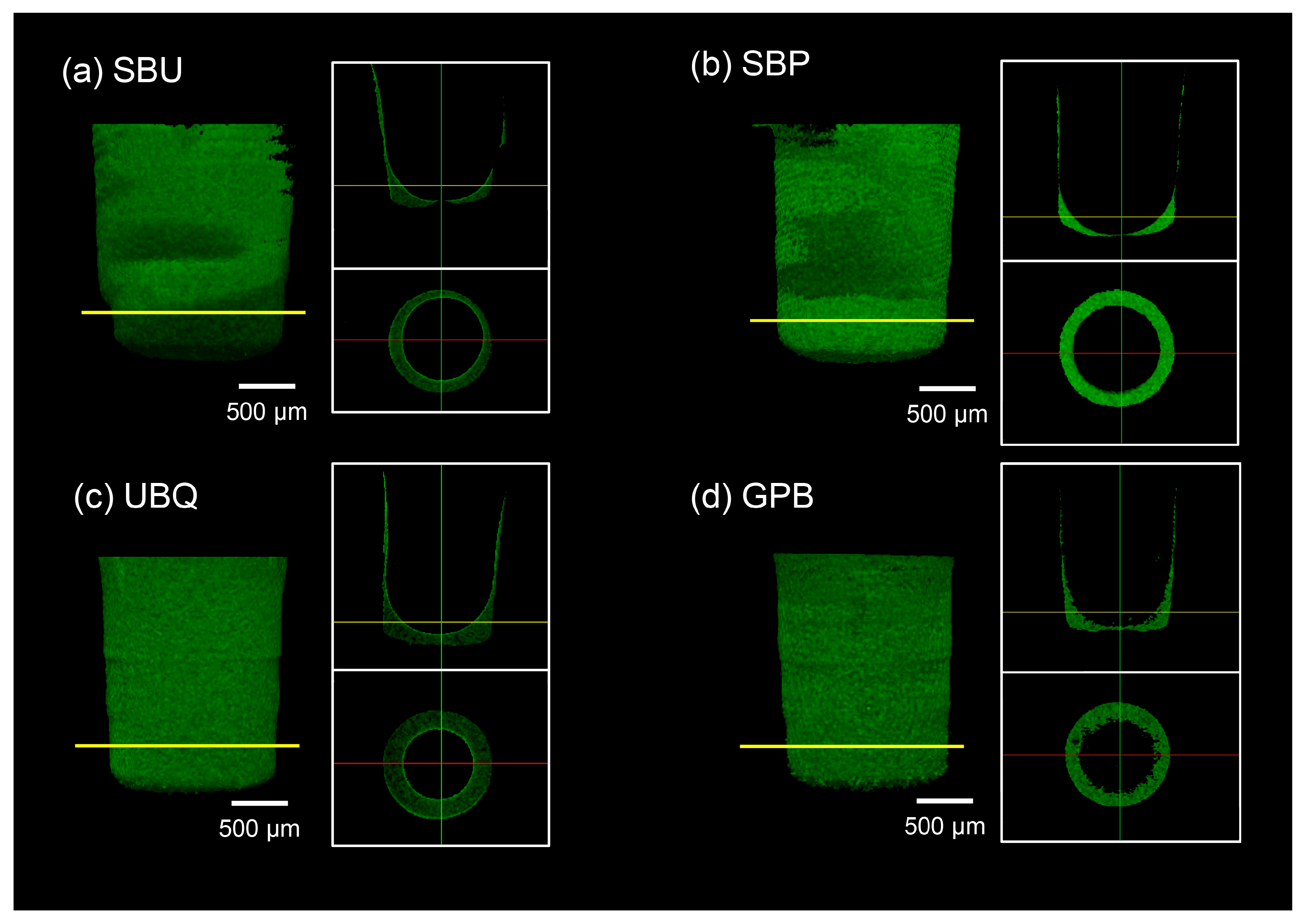
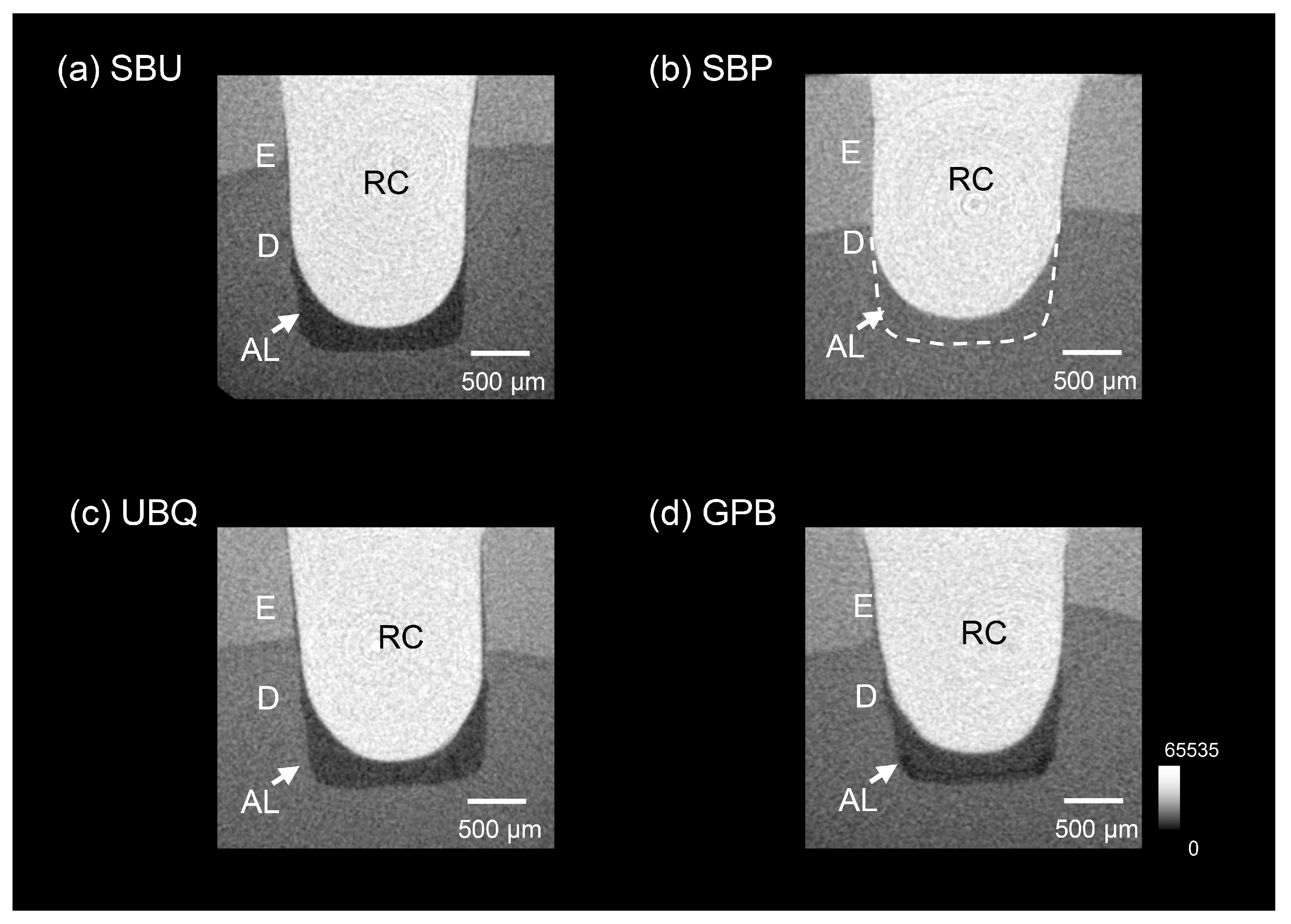
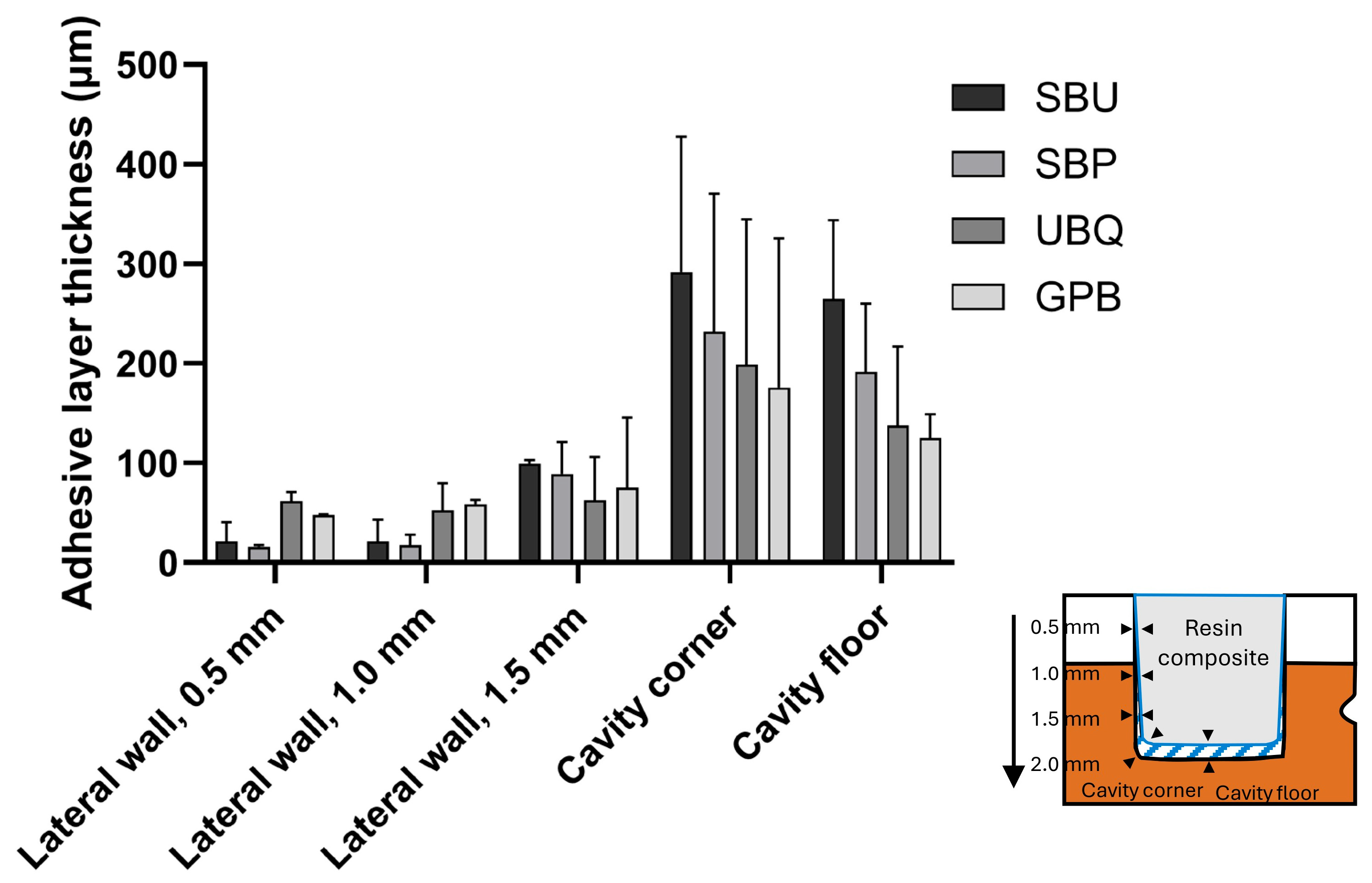
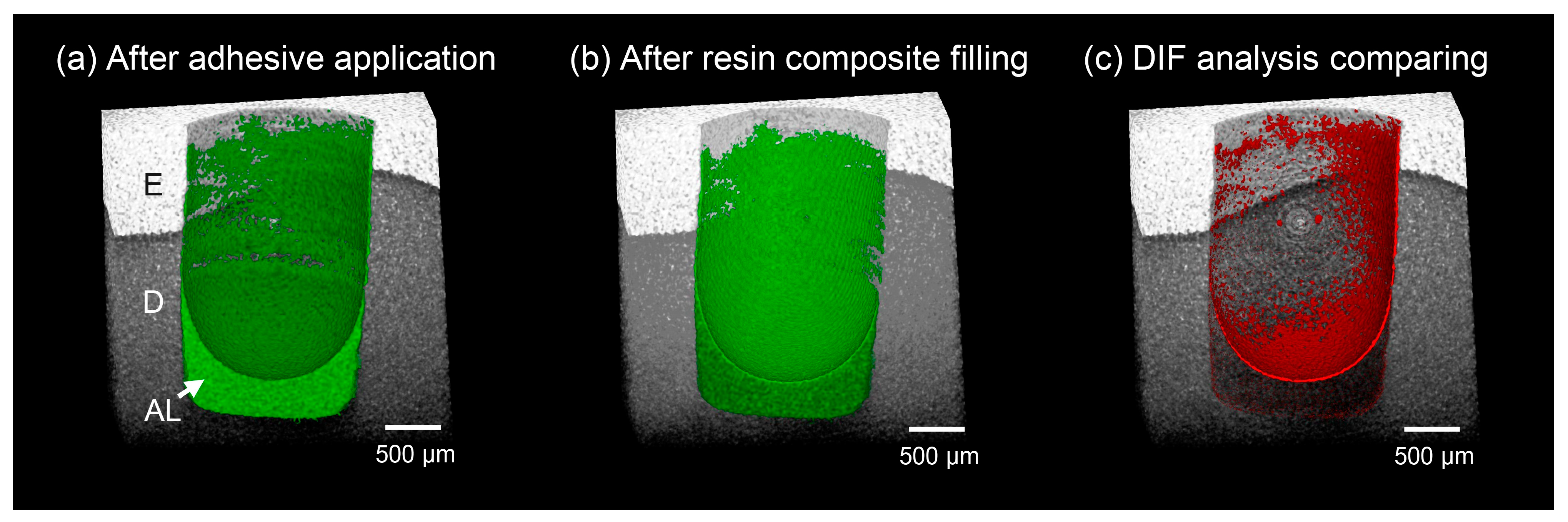
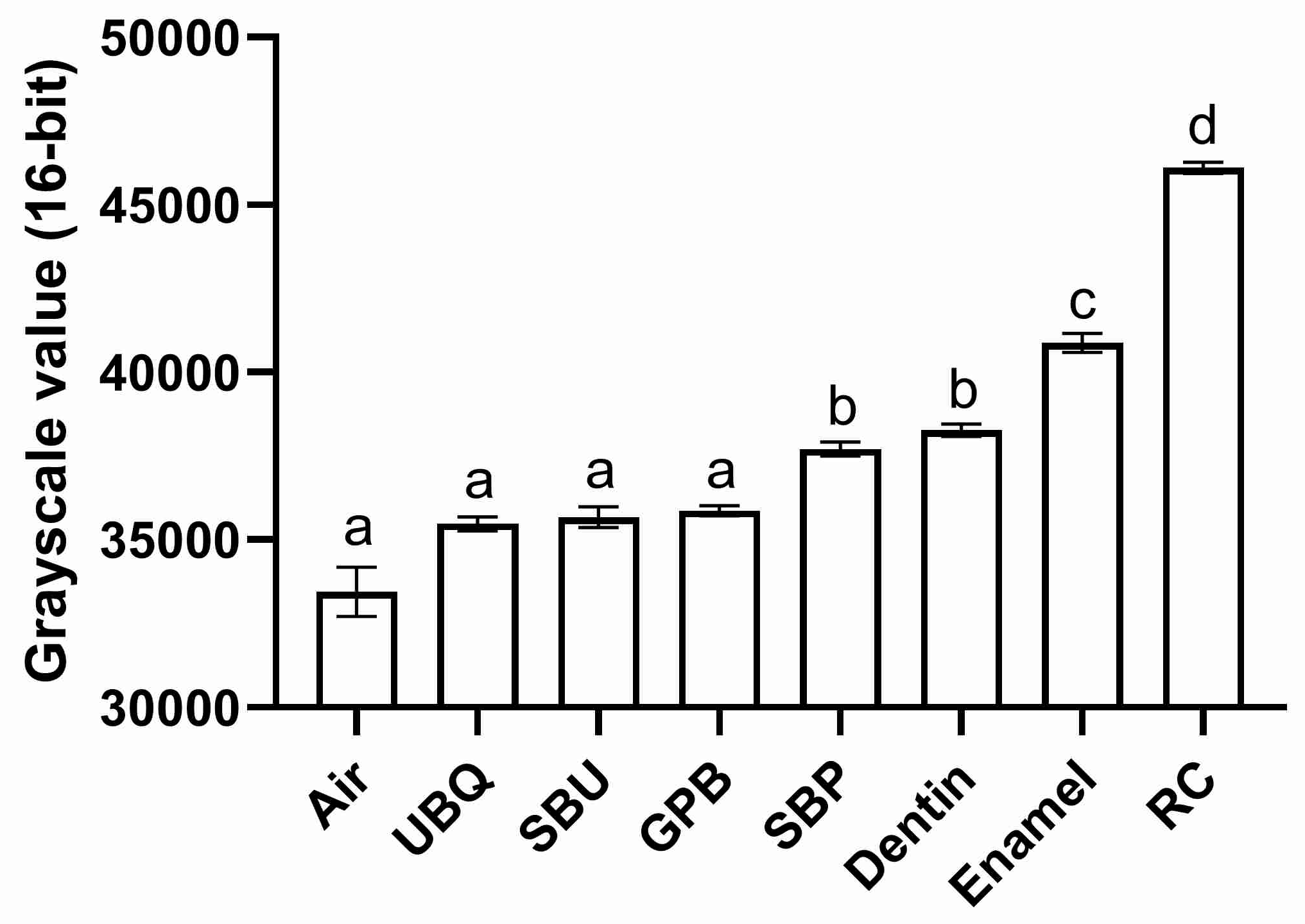
The radiopacity of adhesives is important for radiographic diagnosis and micro-computed tomography (micro-CT) evaluation of adhesive restorations. However, most universal adhesives lack sufficient radiopacity. This study examined the radiopacity and intracavity distribution of four universal adhesives—Scotchbond Universal Adhesive (SBU), Scotchbond Universal Plus Adhesive (SBP), Clearfil Universal Bond Quick ER (UBQ), and G-Premio Bond (GPB)—using a cylindrical cavity model. Cavities were prepared in bovine enamel–dentin blocks and scanned using micro-CT at 5.0 μm/voxel after cavity preparation, adhesive application, and resin composite filling (n = 3). The adhesive layer region was geometrically defined from sequential datasets and analyzed using actual 16-bit grayscale values. Grayscale values, adhesive layer thickness, and composite-filling-induced volume changes were evaluated by three-dimensional difference analysis. SBP showed a grayscale value equivalent to that of dentin, whereas SBU, UBQ, and GPB were statistically indistinguishable from air. Adhesive thickness increased from the lateral walls to the cavity floor, and reduced-density regions were observed in UBQ and GPB. Therefore, SBP was the only tested universal adhesive with dentin-equivalent radiopacity, enabling reliable micro-CT evaluation and reducing the risk of radiographic misdiagnosis. The proposed grayscale-based approach may support future non-destructive investigations of dental adhesive behavior.
Keywords: universal bonding agent; radiopacity; micro-CT; cylindrical cavity; adhesive layer thickness; three-dimensional analysis universal bonding agent; radiopacity; micro-CT; cylindrical cavity; adhesive layer thickness; three-dimensional analysis